← Women Designers You Should Know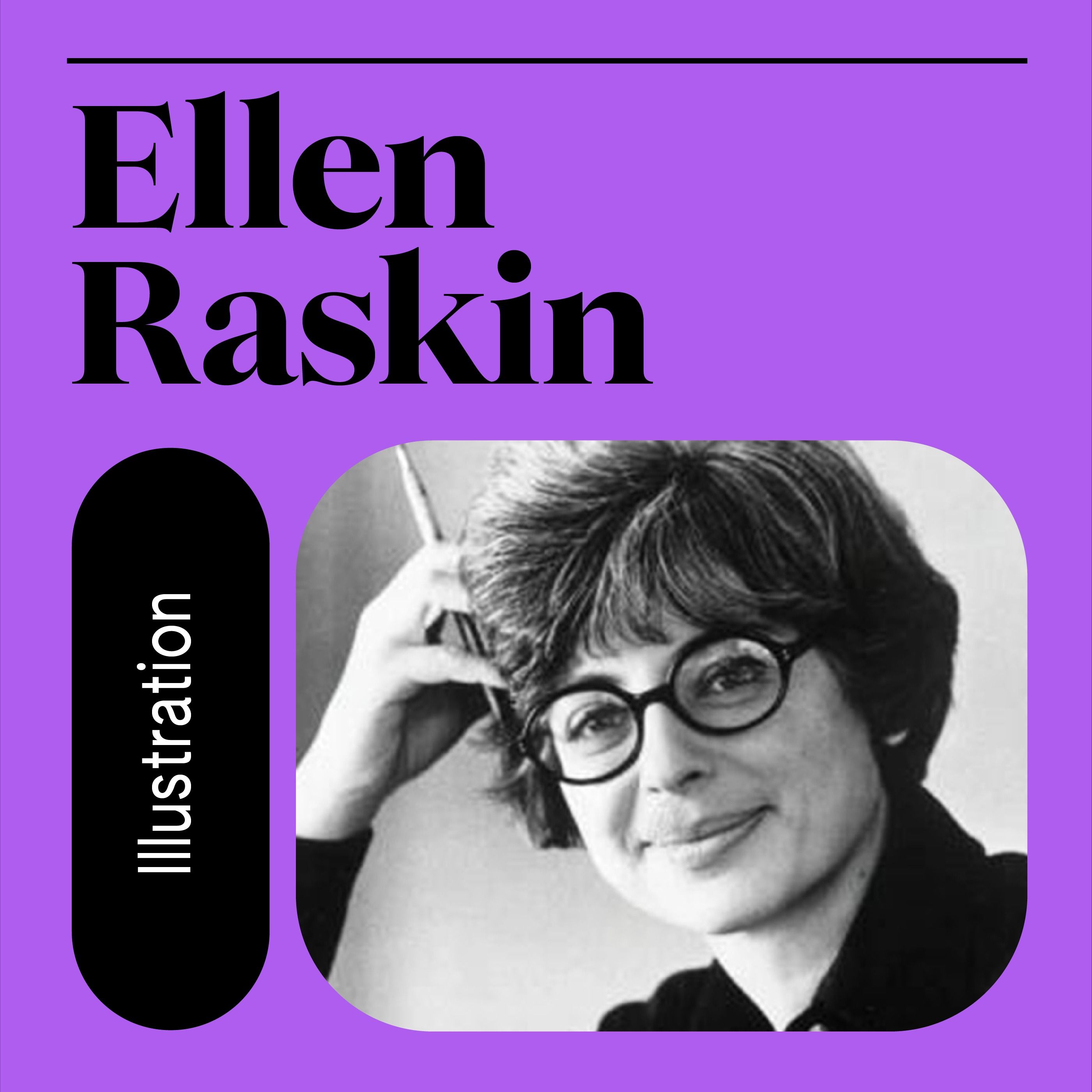
Women Designers You Should Know
026. Ellen Raskin: Designer Turned Author (w/ Briar Levit)
00:44:49
Ellen Raskin transformed from a prolific book designer to an award-winning author, blending design and storytelling in classics like The Westing Game, with insights from Briar Levit, designer, filmmaker, and advocate for women in design.
Loading summary
Transcript83 lines
- [00:10]
Amber A.C.
Hello and welcome back to Women Designers. You should know where feminism meets design, one hidden story at a time. I'm your host, Amber A.C. and today we're diving into the fascinating life of Ellen Raskin, a visionary who uniquely blended her skill in graphic design with her passion for storytelling, creating children's books that are as visually engaging as they are intellectually challenging. Raskin's approach brought us classics like the Westing Game, the Mysterious Disappearance of Leon I mean Null, and her mix of design and fiction has left a lasting mark on children's literature. I actually first heard about Ellen Raskin from Briar Levitt, and I am thrilled to have her here as today's guest to add her expertise to this episode. Briar Levitt is a designer, educator and fierce advocate for women in graphic design. She's known for her documentary Graphic Means, which delves into the evolution of graphic design production, spotlighting the essential roles women played during the industry shift from manual to digital methods. Her early career as art director at Bitch Magazine solidified her view of graphic design as a tool for activism and cultural critique, and she is now going on nearly 18 years teaching design at Portland State University with this ethos. Breyer's book Baseline Shift is another powerful example of her commitment to bringing women's names to the forefront of design history, and we'll be discussing that as well as her latest book project, which she's here to tell us about. So if you're interested in design history, feminist advocacy, and the stories behind the hidden figures of design, stay tuned. You won't want to miss it. Welcome Briar to the podcast.
- [02:08]
Briar Levitt
Thanks so much for having me.
- [02:09]
Amber A.C.
Amber, I am so excited to talk to you. I've been following you for a while now and have been admiring all the work that you're doing from afar. And so I would love to chat all about your career and dive into what your career has been like and all of that. And I always like to go way back to your early life too. Your work often explores the lesser known aspects of design history, like in your documentary Graphic Means. I'd love to start with your personal journey. Can you tell us about your early life and any experiences or influences that sparked your interest in design or storytelling?
- [02:52]
Briar Levitt
For me, I think like a lot of designers of my generation, Generation X, we were drawn to mute album covers and album art. So there's that. But ultimately I was more interested in the telling of stories and that came through a lot of trips to museums, science museums, natural history museums in the Bay Area.
- [03:19]
Amber A.C.
That's Great. There's a lot there too.
- [03:21]
Briar Levitt
There are. So there was a long period where I thought I wanted to be a paleontologist until I realized I really just wanted to design the exhibition that I loved so much more than the actual content. So I decided to try and create a major that entailed three dimensional design and two dimensional design. I had to make it myself because there was no exhibition design at my school. And then in the end, I interned at the Smithsonian's office of exhibit central. But I also realized that there's a lot of bottlenecking that happens with exhibitions. When I discovered publications could be like a portable exhibition. They're packed with content. You drive a narrative. Similarly, I changed directions to publications.
- [04:12]
Amber A.C.
So what was that transition like? Was it just that internship? Was that kind of underwhelming once you got into it and you switched gears or how did that work?
- [04:20]
Briar Levitt
I was still very excited when I was at the Smithsonian, but there were things I witnessed that I thought, wow, this can be an uphill battle to do anything. There weren't a lot of museum agencies, studios at the time. I didn't get a job in those. The first job I got was at Discovery Channel retail designing little, oh, yeah, price cards. And eventually I got to do, you know, the posters that went in the window, which was very exciting. And. But the transition was being sent a email for art director position at Bitch magazine. When I was a teenager, I had looked at Bitch magazine thinking, I'd love to work at a place like this, but there would never be enough spots. You know, you always know places like that are like, tiny. And then here it was like coming into my inbox.
- [05:06]
Amber A.C.
So you were only a couple years into your career at this point. When you got into Bitch magazine, the.
- [05:12]
Briar Levitt
Title was art director, but there was only me. It was a part time job because it was a quarterly magazine. It was a nonprofit magazine. I think what cinched the job for me was I had a zine that I'd already made that was obsession about pop culture. So I already showed that I was obsessed with pop culture.
- [05:34]
Amber A.C.
Was it already around for a while by the time you got there?
- [05:38]
Briar Levitt
Yeah, it had been around for five years.
- [05:40]
Amber A.C.
How exciting.
- [05:42]
Briar Levitt
Yeah. So three days out of the week I was at this corporate posh office, and then two days a week I was at this, like, rundown office in the Mission in San Francisco. But I was very happy there because I was a critical creative member of that team. You know, I wasn't just some peon in a cubicle.
- [06:03]
Amber A.C.
And so then your career has not only taken that transition, but you also transitioned into filmmaking too, which is very unique. And you've worked as a designer exploring design history and then brought that history to life in graphic means. What led you to move from one area of storytelling to another? Was there a specific project or experience that made you realize you wanted to dig deeper into the history of design?
- [06:31]
Briar Levitt
I had started working as an adjunct instructor at Portland State University and eventually got more and more involved and I applied for a tenure track position. And when you're a tenure track professor, part of your work is to do research, which is a real gift. I had started collecting these obsolete production manuals from the Goodwill. I experienced some portions of these manual production methods being a student in the late 90s, but not much. I had a very cursory understanding of how it all worked. And so I thought, maybe I'll make a book about this process, how things were done. I realized that the complexity of it would probably do better with film, where there could be animations to show these complex machines and processes, but also there's a certain level of emotion and tone that you can get by interviewing people firsthand about their experiences. I remember that I had seen a film called Linotype which explained the advent of that machine and its integration into workflow in the US And I thought that movie taught me so much in 75 minutes. And then I found out the director was a graphic designer. I got in touch with him and he ultimately was like a mentor. That was huge is knowing that Doug Wilson had done this with a topic like the Linotype. And I thought, well, if that graphic designer can do it, maybe I can do it.
- [08:06]
Amber A.C.
It's so funny because the further we get into the digital world, this documentary is even more necessary because it's true. Like, there's so many designers coming out into design even in just the last three years, and so many that just go straight to Figma. It's so interesting to think back about that pre digital design process and how slow and archaic and requires even more patience and all of that. I even interviewed Gail Anderson and she touched on it a little bit about how that process went. And you shifted a little here and then get it back and shifted a little there. And it was just like so funny to hear about that process. Now I looked it up. Is it true you can rent it on Amazon prime now if someone does want to watch it?
- [09:01]
Briar Levitt
Yes. And on December 6, you can rent it on Apple, if that's your preference.
- [09:06]
Amber A.C.
Great. I'm going to link all of that in the show notes, too, because I feel like this is such a great resource that more and more, especially budding designers should watch and learn about and all of that. I feel like you've done so much for the design community, too. Like, we're barely brushing on the surface of what you've done. I mean, you're a designer and also an educator, and you're in this unique position to impact both the work you create and the way others see design. When it comes to your own design projects, do you have a specific philosophy or approach to your work?
- [09:43]
Briar Levitt
I do, and it is essentially something that Varvara stepanova painted in 1919. She said, steady the old, but create the new. I don't think there's a better way to think about how history relates to what we make today. So understanding what has come before, why it was important, and then make something that works for today. I mean, I have it tattooed on my arm. This is the Russian.
- [10:16]
Amber A.C.
Oh, okay, cool. So study the old, create the new. I remember we talked a little bit about that when we were talking about Barbara Kruger in an earlier episode and how there was even reasoning behind using Futura, and using her font choices were very specific. And even now, today, when you see other people using, like, a Futura condensed, it's also kind of referencing Barbara Kruger. And so it's all coming from somewhere and leading to something new. And I love that you have a tattoo of that, because that is, like, the quote of all quotes, really.
- [10:58]
Briar Levitt
It's a guiding light for me and just an easy thing to remember.
- [11:03]
Amber A.C.
There's so much to talk about. But one thing I really wanted to talk about today is your book Baseline Shift, which I think was the first thing that introduced me to you and your work. And you've done such valuable work in bringing women's names into design history with this book. Baseline Shift covers tons of women. So how has working on this book changed your perspective on design's legacy or on your role as a designer and educator?
- [11:33]
Briar Levitt
Baseline Shift was a great way to share what I was seeing. A lot of people doing incredible research on topics that were not always the most glamorous aspects of graphic design. The same works get published, and the same people get published, and the same people speak at conferences that we get this familiarity effect where other people don't get into the mix. So that was the reason for doing it. And I think in the response I've gotten, it's been good because people have learned about maybe even kinds of design that are important in different ways than a poster or an annual report to.
- [12:16]
Amber A.C.
Sing your praises too. I feel like you have brought names to the forefront that literally no one has ever heard of. And I think that's so amazing that you've been able to do all the research, dig up this old stuff, figure out who designed it, and bring all of that to the forefront. And I think that that's so valuable and so meaningful for women designers everywhere.
- [12:42]
Briar Levitt
I chose to publish it with PA Press rather than in an academic journal. That's the big difference. So some of these people have been written about in academic places, but even I would probably wouldn't have heard of them. To my mind, it's much more important to make an accessible book. The writing is accessible and the book is affordable. And the beauty of having like a mainstream publisher like PA Press is they get the book like it shows up in places I would never. I have no idea. And I love that.
- [13:15]
Amber A.C.
Yeah, I actually picked it up in the Bay Area when I was there, so that's very, very appropriate. But then coming full circle to your early career, do you think you would ever turn Baseline Shift into an exhibit?
- [13:30]
Briar Levitt
I would be open to an exhibition of Baseline Shift. I would also be very open to an exhibition for graphic means, because I don't know if you can tell, but I have a lot of stuff, artifacts that relate to Graphic Means. So that in and of itself would be probably the first exhibition I would think of. But yeah, I think that could definitely happen.
- [13:55]
Amber A.C.
Yeah. And for those that are listening just to describe the backdrop, I see an old Russian poster that looks huge on your wall. I see an old imac or the orange one. What are those called? Ibook. Yeah. So, yeah, you've got like all sorts of rolled up papers, posters, all sorts of like tchotchkes back there. And I bet that's a treasure trove that could fully be on display.
- [14:24]
Briar Levitt
Yeah, I'm not a minimalist.
- [14:27]
Amber A.C.
Yeah, well. And when you collect those things, I mean, where is it going to live really?
- [14:33]
Briar Levitt
Our school is getting a new building and I've already earmarked space for my machines that I have.
- [14:39]
Amber A.C.
Good, that's impressive. Not only that, but there's a book about you and it's an interview book that is a visually illustrated interview series called Marginalias. And it's published by two publishers, Bikini Books, who's new, and then an older publisher that's been around called Klugi Dolivro Do Design. And it's all about your career. And I love all of the topics on feminism and you even brush on other women You've been inspired by. You have a directory of feminist books on design, too, which is so valuable as well. I'm like, I think that's such a great resource for people. So I'm so excited about this book, and I'm going to link this in the show notes as well so that people can pick this up, because it's, like, such a great interview, and I think you cover so many great topics. And I'd love to hear more about what you want to say about this book, too.
- [15:42]
Briar Levitt
This book is published by two designers, Nina Paim and Teresa Bettinardi, and they are just two forces of energy. And they have decided we really need a feminist design publisher, which I can't think of one. There have been books that cover feminism and design, but this may be the first that's both. It just feels so right, and I feel like they were so thorough and really nice.
- [16:15]
Amber A.C.
There's so many layers to your story, too. And so I think that idea of feminism is definitely the center of your career and your story. And also this idea we've been talking about today, about storytelling and that you've created so many ways to really pull out a story, whether it's in a book or in a zine or in an exhibit or in a film. I love hearing more about your story. And so I definitely recommend everyone dive into this book because it's very beautiful. And today we're talking about Ellen Raskin. And so just to quickly brush on who she is. For those who don't know, she is a name that might not be immediately familiar, but her work, especially the Westing Game, has left a lasting mark. The Westing Game is a classic, still considered one of the best children's mysteries out there. And Ellen was the mind behind it. But her journey started long before she ever wrote a word.
- [17:16]
Briar Levitt
So Ellen grew up in Milwaukee during the Great Depression. She described this as a miserable and frugal time. It was a tough time for her family. Her dad ended up losing a lot of money. I mean, a lot of people did. And I think this is why she ended up having a really lifelong fixation on maintaining financial stability, both for her work and for her life.
- [17:44]
Amber A.C.
She went to university at the University.
- [17:47]
Briar Levitt
Of Wisconsin, and she had this dream of journalism, but ultimately she changed her major because she saw an incredible art exhibition at the Art Institute of Chicago. So she decided to study fine art. I think this is really notable because right there you see that pairing of an interest in words and an interest in imagery and visual art. So it's Been in her whole life, really. Another thing to note about her childhood is that she felt like an outsider, being the only Jewish kid in her class. And you know, this was like Pre World War II Milwaukee. She and her sisters literally saw signs that said no Jews allowed.
- [18:37]
Amber A.C.
Wow.
- [18:38]
Briar Levitt
She definitely had antisemitic experiences, which I think probably led to her writing some of the outsider type characters that she wrote.
- [18:49]
Amber A.C.
What a foundation that, that laid the Great Depression and growing up Jewish and feeling really like an outcast kind of a thing. I love the part where she was so inspired by going to an exhibit about art and all of that. It kind of sounds a little similar to your story. And the idea of experiencing those things in real life and going through that journey was just as inspiring for you as well. Her career actually started as a graphic designer. She originally moved to New York in the 50s to become a painter though. So she had that fine arts degree and background. But of course, like many artists of the time, she found it challenging to make a living through fine arts, especially as a new arrival without established connections. So of course she had to figure out a way to earn a living. And so she adapted by taking a production job at an ad agency where she learned the production process needed for graphic design. And once she felt secure in this kind of commercial work, she struck out on her own, doing freelance work and creating book covers basically. And this was a time when book design was booming because more and more publishers recognized the value of eye catching covers to attract readers. Her illustration and printmaking and newly developed typography skills combined with her inventive eye, made her a natural fitness for book jacket design. Once she dove into the world of book design, she quickly became a powerhouse in the field. In her career, she designed more than a thousand book covers, including some truly iconic ones like the original cover for a wrinkle and time. I did the math on this too. I think it comes to like a book or two every week through her like about 15 year book design career. And that's pretty impressive, I would imagine. Each book came with several iterations or sketches before and an approval process. And she was doing a lot of this freelancing too. Right. So there was probably quite a process with all of it.
- [21:09]
Briar Levitt
And then she was working from home where she could take care of her kid and then do the work. She had a very long day because she was a mom and a designer, single mom.
- [21:20]
Amber A.C.
Oh, that's what's so sad about her story is you can't really find all of these details and information, even though she became an author. I don't know that there's really much that she wrote about her own life. Do you know if there is?
- [21:35]
Briar Levitt
Ellen didn't write much about her own life, but there is a little book about her by a friend. Her husband wrote a sweet essay about her called the Raskin Conglomerate or something. There are pieces written about her, but she never wrote any sort of memoir. There are some interviews that you can access at archives, but they're not available freely.
- [22:00]
Amber A.C.
That's what's so challenging about a lot of these women, is their archives usually live somewhere, but you have to be a member to have access to that archive. And sometimes it's not even digitized. And it's not something that so easily Googleable as, like other men designers that have surfaced so much more than someone like Ellen Raskin.
- [22:23]
Briar Levitt
The archives, generally, they'll let you take pictures for research, but you're not really supposed to post them or publish them unless you pay them. It'd be lovely to have eventually, someday, a monograph that shows essentially her look design, her illustration period, and then her YA novel and design period.
- [22:45]
Amber A.C.
Yeah. Oh, that would be amazing. It's so frustrating that there's all these barriers to getting women's names out there. Like, it doesn't make our lives any easier when all of this stuff is basically locked up and behind a paywall or things like that. Just to talk a little more about her style, it was really distinctive. She'd pack in details and play with typography, and she was almost creating these like puzzles or hidden clues on each cover too. And book design back then wasn't the most glamorous job. It often went uncredited. But Ellen made her work stand out and she became very sought after. Her designs felt like they were asking readers to look closer and to pay attention. And that attention to detail carried into her own writing later on.
- [23:38]
Briar Levitt
I mean, she worked almost equally with typography and illustration, but she worked with them together more than most illustrators. I don't think she ever had one illustration style, though you can sometimes recognize her work. Early on she did a lot of wood cuts, which I think worked well. She had a little press in her house that she also used to teach herself and practice typography, typesetting. This was the way she made a lot of illustrations. Early on she would cut her own lettering, which had a very distinctive look to it. And she had some sort of styles that she'd return to a lot. With the woodcut lettering, she once said, I wanted to make letters do something besides spell Words. And so words continued to be a major part of her work for her whole career. Wasn't as if she was an images person who decided to write stories. They were always very much integrated with one another. Later on. She also illustrated for kids books. Sometimes it would be kind of a cartoonish style. She integrated a lot of hand lettering into those books and often using typographic styles that were very popular for the time periods. And she was definitely looking at what was hot at the time and integrating those into her stories, perhaps to appeal to a young audience.
- [25:09]
Amber A.C.
In fact, it was in the mid-60s that she shifted from illustrating other people's books and doing all the book cover designs to writing and illustrating her own. She started out doing these picture books before doing the young adult books and thinking about her personal life at this time, too. She got married in 1960 to her second husband, and he was the one who was an editor. And I imagine that she probably had this itch for a while to write her own books. And he seemed like he was very supportive. And it was probably with him that she really had the encouragement to do this on her own and to really start. And she had all sorts of connections to publishers at this point, especially with her husband and with all of the book covers that she was designing. And so it seemed like all the stars aligned now. This was her moment to do this. Her first children's book was Nothing Ever Happens on My block, released in 1966. And I love the illustrations of it because there are these big, almost like wood block, like, changing type, every line kind of style, where it's very eclectic and then it's very charming with this character who's basically complaining that nothing interesting happens while all of these, like, wild, crazy stuff is happening right behind him. It's very cute. I really want to pick up a copy sometime, if it's even achievable. But after this kind of phase of children's books, then her first young adult book was Figs and Phantoms. And this one won a Newbery Honor and gave readers a taste of her unique, layered storytelling style. And every book she wrote was like a puzzle. It was full of twists and with themes that went beyond just entertainment. She once said, I tried to say one important thing in each book, whether it was about family, self discovery or identity. And so writing became a way for her to explore big ideas. And with all the playfulness and mystery that had defined her design work, too.
- [27:25]
Briar Levitt
Ellen had an interesting creative process that might have been a little different from other illustrators. And that came through in the way that she typeset all these little clues and notes throughout the book, sometimes puzzles. She wanted to create a whole experience for kids to make them feel like they're discovering all these little clues.
- [27:49]
Amber A.C.
She would design the whole book.
- [27:51]
Briar Levitt
She designed the interior as well as the exterior. She did all her paste ups, she specified the type, she did all the mockups, drew out everything as she wanted it before she specified the type. She was very determined to have each page lay out a certain way so it felt accessible to her readers. Like she really thought about young people and how they will be engaged and continue to stay engaged on the page. She was definitely interested in the whole thing, and having her foot in both worlds of design and illustration was what.
- [28:27]
Amber A.C.
Allowed her to do that. There's something really magical about being good at both of those things and being able to bring them together like that. There's an episode I did with Marion Banshees, and she brought up the same concept too, where she said, I can't stand it when you read a book and it says figure A. And you're like, where's figure A? And you have to turn the page and it's on a completely different page than where it's talking about it. And she would integrate those concepts into her designs and make sure the visuals were right there with the dialogue and all of that. And so it's kind of this similar concept with Ellen Raskin where she would pull the visuals out, bring them into play with the words, and vice versa, like you're mentioning, where she would adjust words for the visuals. And she really had a way of bringing it all together like that. And so there's two books that I wanted to talk about today. It's the story of Iris Fogel, a little girl with poor eyesight who constantly misinterprets what she sees before she gets classes. And so it's really creative and imaginative. And even these humorous scenes where Iris mistakes everyday things for these wild, wacky images. So, like a tree becomes a giant chicken, or a dog looks like a lion. And it's a story that's both relatable and fun for children, especially for young readers who might have had their own glasses. Moment. Each illustration invites readers to step into her mind and see things from her perspective. And so the humor is definitely in the visuals as much as it is in the text. And the book becomes a visual guessing game for readers. This mix of humor and empathy is very much part of Ellen Raskin's way of storytelling, too. There's a dog that maybe she's imagining as a girl in a bathtub, but I can't tell if it's the reverse. And then there's a woman with a couch standing next to a potted plant. And when you look at the basically outline or silhouette of this person or these objects together, it creates this horse. So it's really fun to see and something that you don't really see very often these days. Nobody's really doing a whole lot of this kind of visual play. And it's pretty fun to see, especially in the context of a children's book.
- [31:08]
Briar Levitt
Another major book of hers called the Mysterious Disappearance of Leon, I mean Noel, a 1971 classic Raskin mystery. It's her first chapter book, and even with the title, she's playing on his name, Leon, with an ambigram null. The story follows Mrs. Caroline Little Dumpling Carillion as she tries to track down her missing husband. He's vanished and leaving behind these strange messages. So she hadn't planned on doing illustrations for this book. And her editor asked her what she planned for her illustrations. She said, the only thing that I could think of to possibly do was to make word pictures. And what she's talking about are the characters being drawn in the shape of words. So they each have an illustrated face, but their bodies are formed by words that relate to their personalities.
- [32:11]
Amber A.C.
Yeah. In fact, I had to pull this out, too. I'm, like, looking at some of the illustrations, and there's maybe the father of Leon, and on his body are words like, money is money, boys will be boys. Maybe some of the recurring phrases are just part of his body. I also love that illustration where this asterisk dress that the wife is wearing, she's sitting on a couch, and her dress seamlessly blends into an asterisk couch, too. Essentially becoming invisible.
- [32:46]
Briar Levitt
Yeah. Especially for kids who are in that earlier stages of reading. It's a fun way for them to dig into this lettering and enjoy the silly descriptions of these characters. This kind of lettering illustration is a great way for early readers to engage with words. And it does feel like you have to explore it to really understand it.
- [33:10]
Amber A.C.
Beyond her books and writing and illustrating and designing, she struggled with a connective tissue disease. It affected her ability to work, especially in her later years. It caused daily symptoms like pain and fatigue and joint stiffness. And she just, like, pushed through it and had to deal with this on a regular basis. And that meant, of course, creating and writing over time became more challenging for her. She was diagnosed as a teenager, and while she didn't talk about it much. We know that her health was declining in her final years. So despite these setback, she continued to write and illustrate with such dedication, winning awards for her work and all of that. And so there's a sense in her work of pushing through and finding strength and even when things aren't easy, which might have been influenced by her own struggles with chronic illness, too. And so I think that says a lot about her.
- [34:08]
Briar Levitt
Yeah, I don't think she talked much about her illness. Hopefully she got the support she needed from family. I'm guessing she did. It sounds like she had a great marriage. So the Westingame is probably going to continue being a classic and read by kids for generations. It won a Newbery Medal in 1979. This is about the biggest honor you can get for a young adult book in American children's literature. So it's a mystery with this zany cast of characters. There's clues, there's twists and turns. It's like one of these movies where they're all these random characters come together and they're basically fighting for an inheritance. In fact, a lot of people think that Knives out was heavily inspired by the Westing game. And just a side note, I see that there's a production listing for a series of the Westing games, and it is complicated. Like, you know, it's a mystery. You're trying to follow these clues. The characters do weird stuff that you don't understand. Whenever I talk about Raskin and this book comes up, people just, especially for my generation, just go nuts because they just haven't thought about it for a while, and then they remember it. And it's just like a feeling. It's just a feeling of excitement and discovery. And of course, she designed everything. The jacket, the insides, everything.
- [35:42]
Amber A.C.
Yeah. I'm like, now I want to read this book and actually pick up a copy to read it, which I usually just listen to audio books. And so I'm like, well, if she designed it and she has, like, purposeful typographic moments in the book that obviously I have to read the physical thing.
- [36:01]
Briar Levitt
I think that the COVID of Westingame is kind of iconic, even though, of course, they always come out with new covers because new generations won't respond to older styles and typography. I think now it's probably circled back and maybe kids would respond to her original cover. Again, I think it's Bookman swash on the COVID if I remember correctly.
- [36:22]
Amber A.C.
Oh, yeah. And this book's like 45 years old, too.
- [36:26]
Briar Levitt
Yeah.
- [36:26]
Amber A.C.
So. Yeah.
- [36:27]
Briar Levitt
And it Was her last book a nice way to go out, which, by the way, I understand that she took her own life to end the pain that she was in, which, wow. It also tracks with Ellen Raskin. Like she was in control of her life always. And for her to be in control of how she left this world, I think is really powerful. I mean, I envy that, frankly.
- [36:58]
Amber A.C.
Yeah.
- [36:59]
Briar Levitt
And I'm sure, again, she had a great family, but that's Raskin. She was in control.
- [37:05]
Amber A.C.
Again, I'm getting so mad at what's available or accessible on the Internet. But yeah, the fact that she died by suicide should definitely be like, noted in her story too, because I think it says a lot about what's happened.
- [37:21]
Briar Levitt
I don't think the fact that she essentially euthanized herself was discussed much. I read it in one place. I don't think it was discussed in her New York Times obituary, for instance.
- [37:33]
Amber A.C.
Okay, so maybe somebody wanted to bury that information.
- [37:38]
Briar Levitt
I think that we talk about these things differently now, you know, But I think she probably was of the mindset like, I don't want sorrow, I want, you know, if anything, celebrate my life, that kind of mentality.
- [37:51]
Amber A.C.
I wanted to talk about this idea of her perspective as a female creator in a male dominated industry too, especially since that's kind of the topic of the podcast. And so sometimes we can get a little insight into their view or their perspective of being a woman within the landscape or the industry. And so her career was of course been book design and writing and illustrating, and it unfolded in a time when these fields were of course, dominated by men. And so at least one client she subcontracted at an ad agency for didn't want women designers. So she worked under the name E Dot Raskin, which I feel like is a very common thing with women authors back in the day too. They didn't want the woman's name so apparent and to be more elusive like that was their solution or the way that they would be able to continue working. But that said, the publishing industry has always offered more opportunities for women as editors, illustrators, and even designers. Like many working women of her generation, she didn't spend a lot of time talking about the challenges of working and raising a kid. And when she does, it's clear just how packed a given day was for her, especially when her daughter was younger. And being recognized as both a designer and an author was a major achievement as a woman. It's important to note that Raskin received repeated recognition throughout her life from the Society of Illustrators, American Institute of Graphic Artists, the Art Directors Club of New York, and even the Type Directors Club. That's very big for her to have received all of that recognition too. And when she made the shift to writing, she showed that a woman in a supportive background role could step forward and make a name in her own right. So she did do some paving in her time too, and really creating this new unique identity of being both design and author.
- [39:55]
Briar Levitt
In the 90s, there was a lot of talk about the designer as author. And Ellen Raskin is that she controlled every aspect of her books. She achieved a coveted position that most of us dream of. I mean, I feel lucky I've been able to do some of that. And looking at her work has been helpful. Looking at her progression has been helpful.
- [40:23]
Amber A.C.
Yeah. And so we talked a little bit about her death and all of that, but maybe you can dive into kind of like the last days for her and all of that.
- [40:34]
Briar Levitt
Ellen was married twice. The first time was to another graphic designer, Roy Coleman. They had one daughter who Ellen taught to do paste up mechanicals and help her do color separations. One, to give her some skills, and two, she would pay her. So it was another way of helping her understand the value of money, which comes up repeatedly for her. And while she was relatively private, she did give some talks. At one of these talks, I'd mentioned this in my essay in Baseline Shit, someone asked her, who makes the bed in your house?
- [41:12]
Amber A.C.
And of course she said something like.
- [41:14]
Briar Levitt
We make the bed together or something. But I think she was relatively annoyed about that comment. She would also offer her services to friends. She would help them with their portfolios.
- [41:25]
Amber A.C.
Wow.
- [41:26]
Briar Levitt
She was really obsessed with rare books. And she collected first editions of books. She loved books deeply, you know, not just as someone who made illustrations and wrote children's stories. A lot of her life was spent reading and collecting.
- [41:44]
Amber A.C.
Yeah. And she once said that she wanted to, quote, shake up young minds. And honestly, she's still doing that. She brought such a unique style and perspective, blending words and art into something that really felt personal and complex. And writers and illustrators alike have cited her work as influence, especially her mix of storytelling and design. And so I'd love to know what inspires you the most about her journey.
- [42:15]
Briar Levitt
Initially, I was inspired by her work, but ultimately, after researching her, it was the creative ownership that she took, the way she was crafting narratives and then designing the whole package. I'm just amazed by her drive and unabashed ambition to do the things she wanted to do.
- [42:39]
Amber A.C.
It's so interesting to have such a complex mind, too. And I imagine that she's probably very methodical about everything she did too, because even her writing and all of that, it's all in the details. And even living your life out in the details, too. It's what I think of her life as a whole is really very much about that too. But I'm so glad that you were on the podcast and to talk about your life and also you know so much about Ellen Raskin and you've been so helpful in today's discussion too. So thank you so much.
- [43:14]
Briar Levitt
Thank you for bringing these stories to a bigger audience because the practitioners need to hear about these women. So thank you. Amber.
- [43:27]
Amber A.C.
Okay, that was an incredible conversation with Briar Levitt. She brings such a fresh and vital perspective to the field of graphic design. Her dedication to uncovering the contributions of women in design history and her commitment to feminist advocacy continue to resonate deeply with me and the rest of the design community. So thank you, Briar, for all of your work. Whether it's through her documentary Graphic means, her work with Baseline Shift or her thoughtful teaching practices at Portland State University, Breyer is shifting the narrative around design, reminding us that this field isn't just about aesthetics, but about culture, history, and advocacy. If you'd like to keep up with Breyer's work, you can find her on Instagram Reyerlovt and of course visit her website@brbriarlevitt.com and don't forget to check out the new book that she is part of. I'm linking that in the show notes for you. If you've enjoyed today's episode, please, please, please take a moment to leave a review, hit those five stars or share it with someone who'd appreciate hearing these stories. Thank you again for listening and being here. And as always, let's redesign history by celebrating women.