← Women Designers You Should Know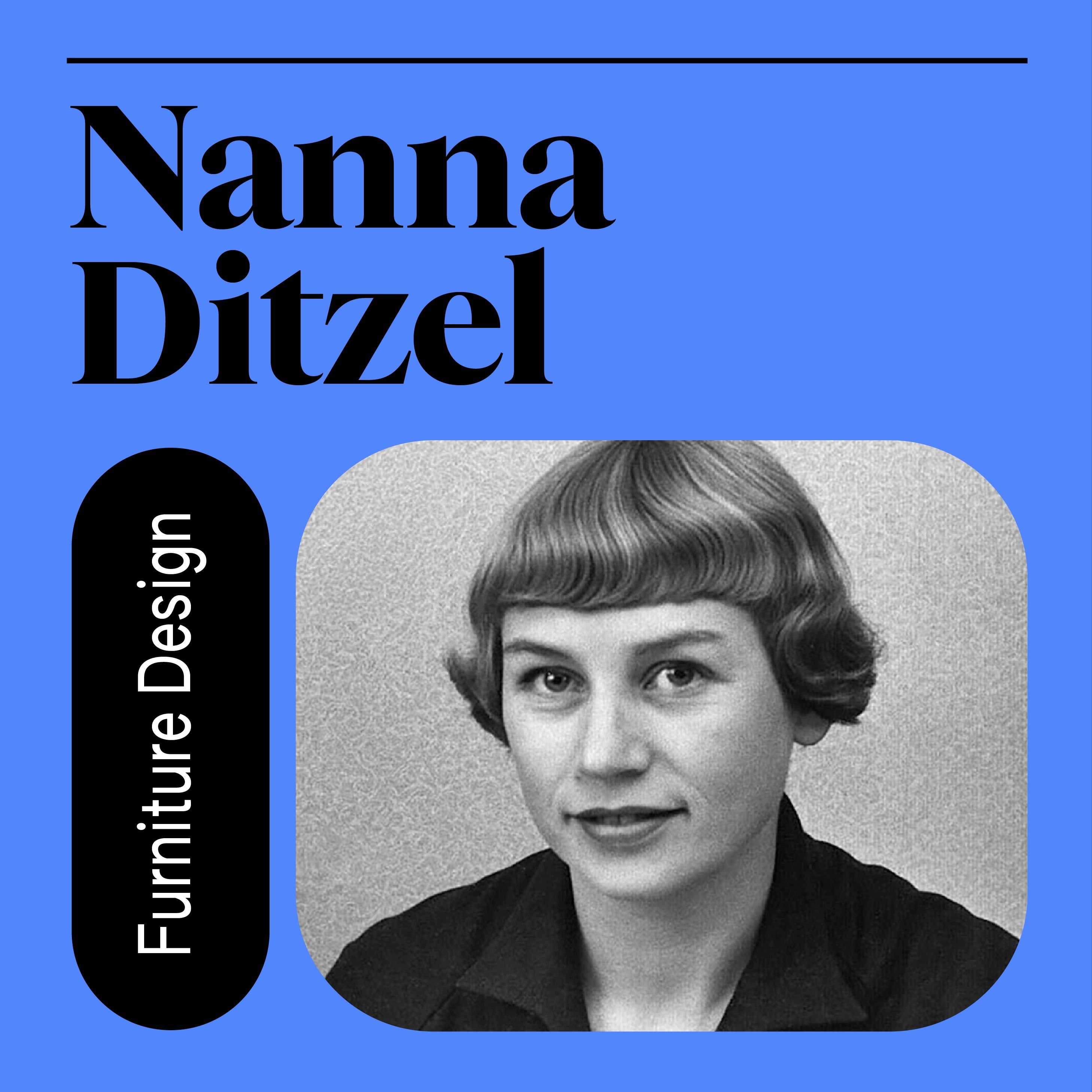
Women Designers You Should Know
033. Nanna Ditzel and Kate Arends: Furniture That Sparks Conversation
00:49:14
This dual feature episode explores the visionary work of Nanna Ditzel—who designed furniture for movement, conversation, and mental well-being—alongside Kate Arends, founder of Wit & Delight, as we discuss how design shapes our emotions, interactions, and everyday lives.
Loading summary
Transcript86 lines
- [00:00]
A
Foreign.
- [00:08]
B
Welcome to Women Designers. You should know the podcast that celebrates the trailblazers who transform design against all odds. I'm your host, Amber Aiesi. Today we're shining a light on Nana Ditzel, a designer whose name deserves to be as iconic as her work. Her male peers have become household names, but Nana's contributions to Danish modernism, like the hanging egg chair and her vivid textiles, are only now getting the attention they deserve. Nana reimagined how design could shape our lives, creating pieces that encouraged connection, conversation, and creative freedom. And joining me for this conversation is the incredible Kate Ahrens, founder of Wit and Delight. Kate is a creative powerhouse known for blending storytelling with thoughtful design. Over the years, she's built wit and delight into a multifaceted lifestyle brand that inspires everything from interiors to personal growth. Kate's deep understanding of how design impacts our well being makes her the perfect guest to explore Nana's legacy. Together we'll discuss why Nana Ditzel deserves to be a household name. How her designs broke conventions, and how her resilience allowed her to thrive in a male dominated industry. So let's dive in. Her and she breaking boundaries, building better world. Women Designers, you should know. Women Designers, you should know. Welcome, Kate, to the podcast.
- [02:23]
A
Thanks for having me. I'm so excited to chat.
- [02:26]
B
Me too. I've been following you and have known about you for probably a good decade now. Have been admiring you from afar. This is the first time that I'm actually talking to you, which is so exciting. I want to fully dive into your career and your life. It's always fun to get this really big retrospective. And of course after that, we'll talk about Nana Ditzel and dive into her career too, which I'm excited about. So you grew up in the Chicago suburbs where you've mentioned being surrounded by creativity from a young age. So I'd love to hear more about your childhood. What specific experiences, people or places sparked your interest in art and design early on?
- [03:13]
A
Yeah, it wasn't until I began reflecting on my childhood that I realized how much creativity was around me. And I think that's telling. My grandparents were all creative. I learned about Bertoia chairs and Danish modern design from my grandmother. And it wasn't until I got down to art school that I was like, oh, you know, I, I thought I sort of had randomly found myself there. I had never thought of myself as sort of this creative person.
- [03:41]
B
And it's so interesting when some people I've talked to, they had a creative life early on or were Surrounded by creativity and didn't know that wasn't normal or that was really unique. It's so funny and so interesting that once we get out of that childhood bubble and we realize what sets us apart, what made our childhood unique. And so after high school, you went on to earn a BFA in graphic design at Iowa State University.
- [04:11]
A
Yep.
- [04:12]
B
What drew you initially to graphic design?
- [04:15]
A
I just really stumbled into graphic design. I had full intentions of being an architect, and that's how I found, you know, myself at Iowa State. And I thought, you know, architecture seems quite respectable and serious. And when I looked into architecture, I got so bored. And when I found out what graphic design was, I was hooked. And ironically, my dad and my grandpa, they ran an advertising agency, and so I was around a lot of graphic design, but it wasn't something that was really, I think, pushed. And I remember having a conversation with my dad who was just like, are you sure it's can be really kind of a tough living. And I. I just was like, no. I just never really questioned it.
- [04:56]
B
Yeah, that's amazing. What was the male to female ratio like in that program?
- [05:01]
A
It was a little bit better than the other ones. I think we were like 60% male, 40% female.
- [05:08]
B
Okay.
- [05:09]
A
And we had a lot of really great female professors, and I felt it was a really safe place to be female, which I know is rare.
- [05:18]
B
And so that set you up for your early career. In fact, before launching Wit and Delight and everything we know you as today, you actually worked at small brand design agencies, especially one in downtown Minneapolis. And it was during this time you collaborated with all sorts of clients. And I would love to hear, were there lessons or challenges in your early career that still inform how you work today?
- [05:46]
A
I took probably some of the most foundational beliefs and values that I have, especially as a entrepreneur, creative. I think sometimes it gets a bit twisted for creatives too. Maybe back in childhood that making money off of creativity somehow makes it not as pure. And that's what I loved about being in a creative industry like advertising and branding was we brought value and meaning through visuals, and I was able to learn how businesses ran. And I ended up getting really into branding and really understanding the strength of what story means for brands. I got to work really closely with the two owners of the agency. I just was a sponge. Being able to have a seat at the big table in your early 20s, that was a gift, you know, and it was part of the risk of taking a small job at a small firm that really paid off.
- [06:37]
B
Did you wear a Lot of hats.
- [06:39]
A
I wore all of the hats at the firm. And I. One of the things that stuck with me most, Alan Calvin, who was the creative director, told me to keep speaking up in meetings. And I'm not the strategist. I am the pixel pusher. But they recognized that I had a gift for communicating my ideas in ways that were not just about, I like this color, but what does this color mean? And it's a very powerful thing, thing to have someone in a position of power who knows a lot more than you to say, you know, keep talking.
- [07:11]
B
It's true, because it's one thing to design, but then it's another thing to be able to communicate your design and sell it to the client and have reasoning and rationales behind the design too. And I think that's such an important thing for young designers to learn, is to really know how to talk about it. And clients want to hear that. And at the end of the day, the good designs out in the world were probably sold and pushed and communicated clearly.
- [07:42]
A
I just loved that. I was like, the first time I really lit up, you know, was being able to start communicating about my creative work.
- [07:50]
B
Yeah. And so it was during that time you, like many other OG 1.0 content creators, you started Wit and Delight in 2009 as a blog, and it has since evolved so much. How did your personal experiences and design background influence its growth into this lifestyle brand that we see today?
- [08:14]
A
It's like every step I was taking really led me right to the moment when it was new. And also, it just made a lot of sense for me. It was something I think I couldn't not do. I felt drawn like a moth to a flame. And I had the benefit of watching the first wave of really, really O blogs pop up. Design spudge and Joy. And I remember reading those, and I was really into the design sphere of all of this because before I would have to go to a library and pull stuff off the shelf to get inspiration for my client work. I was like, now I can find all these people who have really interesting takes and they're curating things, and it's just like whole world just burst open. And you coming from this branding background, I thought there are a lot of people saying things that I love, but I haven't found someone who's really mirroring back what I think. And I just was like, well, I should do it. And I figured out how to do it. And I've really come to realize that I am a more organic type of creative entrepreneur. And the entire Experience, I think, has been a lesson in showing me what matters to me and a lesson in how to evolve and change, because that is the world we live in. And that's been the hardest thing to do, is to, I think, let go of old versions that sometimes we want to hold on to. But it's also been the most exciting thing to remember that every little step led me to beginning this, and these little steps are leading me through this practice of expanding my creative horizons constantly. And that's really what Wit and Delight has been about. It's been about those words more than it has been the product.
- [09:54]
B
I think from my perspective, you're such a multi hyphenate designer. One thing I've noticed about you too, is you are so good at forecasting design trends. That's probably a very specific and very like, niche characteristic or like forte to have. But I. I think about your previous home, and it was all about minimalism and neutral tones, and that was ahead of its time. And now your new home boldly leans into color and maximalism. And that was ahead of the time too, because now everyone's embracing that. And so how do you stay ahead of the curve when it comes to design trends? I don't know if you can pinpoint that.
- [10:39]
A
I can. It is something that I have recognized as this weird superpower that I've had. And I think for a while I thought it was like, I'm just young and plugged in. But as I've gotten older, I've realized that it is a lot more about being a listener of both myself, I think, creatively, and also just really being aware of what's happening around me. There was a moment in my old house where I realized that this entire space wasn't for me. I had hired a bunch of people. I couldn't keep up with everything. I had two kids really close to one another, and in trying to sort of delegate this thing that is very much reliant on me, there was this big disconnect. And something in me was just like, I just want to be able to express myself or just say, I don't really know what I'm doing here, but I'm going to figure it out. And I think that maximalism and the sort of embracing of color, I think I knew people were going to pull further because there was so much constraint around the way that people were expressing themselves in the home. It's like one thing to kind of like, you know, no history and how things swing. It's another thing to read the room. I Think when we have the opportunity to read the room in real time with the Internet, it takes us the ability to detach ourselves from it and to see where things are going.
- [12:00]
B
The word that comes to mind is intuition. When you were talking about all of that. Yeah, And I think that's even for the listeners out there too. Like, I think watching Kate and like being in with what you're doing and really responding to it, there is a lot of intuition there. And it's really fun and fascinating to see what you're doing next. And then when it does become next, I was like, I first saw that with Kate and so I am curious to know, like design and creative wise, what do you think is next?
- [12:34]
A
I think it's going to be a lot about the individual for a really long time. And I'm not, I'm not talking about the individual in sort of this, you know, social, political sense. I think we're going to really see people take ownership of what their homes mean to them because they are craving it. Even as we are living through a era of great change and upheaval. There's no doubt about that, that the home will be the place of old center. I think we're gonna see a lot more talk about wellness in the home, about how design heals, having the courage to express ourselves individually. And through that, I hope we find that we begin showing up for people who come into our house or show up for each other with a bit more vulnerability. And I really think we've hit a tipping point with trend flatness. And I think people are tired.
- [13:24]
B
That's such great insight because the way that social media has expanded and especially with things like TikTok and reels and all of these videos is more so than ever before. Everyone's a designer in some form and everyone is pulling out their creativity for these things and to speak to each other and the communities around that and all of that really draws people in and we're all interested in. And this person's take on creativity and design and this person's take and it really does become a lot more personal and layered and all of that.
- [14:05]
A
Yeah, I really hope for more of that. It's oftentimes scary, you know, when you see things that appear to be flat, where it's the same conversation being had over and over again. And I think sometimes we think somehow that we need to, I think is people who have a platform, you know, or a podcast. We want to add value our personal experience with our creative work. And then we say, okay, how can I make this valuable for someone else. But I think it's just valuable to show up and to be like, this is what I think and not what is trending. And I always ask myself, am I speaking from the heart or am I speaking from the algorithm? And we live in Zuckerberg's world, but we are people within it.
- [14:49]
B
The man of the hour.
- [14:51]
A
The man of the hour. But I think as we're talking about the temperature in the room and of design, creatives are always the ones who push back. People willing to say, I'm going to speak from a place of my knowing. Sometimes it takes big shifts in culture for people to feel brave enough to do so.
- [15:11]
B
Speaking of braveness and personal storytelling, you've been so open about your mental health and the journey involved with that. How has sharing this part of you shaped your creative process?
- [15:25]
A
Yeah, man. You know, I think with anything I've shared the things that have been really close to my heart, it's always felt that I am not the only person to be experiencing this and that through my story, hopefully someone else can find their way through their own suffering knowing that they're less alone. And, I mean, so much of my depression and apathy and where I had gotten to the point where I had to make a big change for my mental health had come from, I think living in this trend cycle that we've been talking about, but also just not having access to my creative life force. And the antidepressants I went on when I had my kids for postpartum were incredibly important. And I would never, ever say that that was something I shouldn't have done, but it was never talked about. Okay, what does life look like off of antidepressants? And there came a time, you know, in. In 2022, where I was just like, something is off. I can't feel anything. My whole story is about intuition, you know, really. And I lost touch with it. And I thought, you know, I'm at a place, you know, where I can handle a bit more of this. I don't think I could have gotten to this place where I'm seeing things clearly again and also have found myself again without making some big changes with my mental health. And so, for anyone who doesn't know, I shared my story about. I've shared my story about anxiety and depression and having adhd. But then I also shared a little bit about going off of Vanessa's RI that I had been on for seven years, and I was nervous to share it because it's controversial and these drugs save lives. And I'm not saying don't go on it, but I think for creative people, it's an essential part of who we are is to feel and to, I think, understand that there are multiple ways that we support our mental health. And knowing how to feel it all and take care of yourself is a key part of that. I just feel called to share it because it feels like it's important.
- [17:30]
B
It goes really well with this idea that you've been speaking about life cycles and the ebbs and flows of your own personal journeys. And there's never just like one timeline or set story with mental health. It's so layered. There's so many different experiences out there. And I think when people feel compelled to share about it, it really brings people together. And that's very valuable.
- [17:55]
A
Yeah, absolutely.
- [17:57]
B
Yeah. And thinking about life cycles and the ebbs and flows of life and intuition and all of that. We are talking about Nana Ditzel today and her story is so incredible. She goes through all sorts of different journeys and of grief and loss and creativity and working through the cycles of creativity too. And so before we dive in, I wanted to know from your perspective, what is the most inspiring thing about her story to you?
- [18:32]
A
The story of perseverance and reinvention for me, speak to my heart. And the timelessness of what she has created that comes from really understanding your time and place and executing on that and stepping out and being seen as a woman designer. I mean, you know, so many of the women that you cover do that, but in her particular instance, it's, I think the clarity and the simplicity of which she executes these strong visions that I think really show her strength and resilience.
- [19:06]
B
Yeah. Oh, I love all that. So just to kind of touch on her early life and education. So she is a Danish designer. And when we think about Danish designers, I think there's a handful of men that come to mind or that people know of or that are talked about the most. But honestly, Nana should be right up there in the top five or maybe even three Danish designers. And she had her own moments of being able to enter this space with a man alongside her. And I think that was the advantage that she had that we hear about with so many other women designers from mid century era. And all of that is because at that time they just didn't respect women and didn't fully believe them as designers and didn't think that they could have a design mind and create something that can be functional. The fact that she had a husband and collaborator with her is A big part of her story in kind of entering her into this space. And then she outgrew that and became her own person and is now seen as an individual and not necessarily a collective. And so she was born in 1923, over 100 years ago. They celebrated her 100 year centennial like a couple of years ago. But she was born in Copenhagen, Denmark, and grew up in a liberal minded, middle class family. And even as a teenager, I thought this was so interesting. She knew she wanted to be a furniture designer. At the age of 17, she told her parents she wanted to study furniture architecture, a path they initially resisted, but later supported wholeheartedly once they saw her passion in it. I think that's so incredible and again, so intuitive for her to know that about herself.
- [21:00]
A
Yeah, absolutely.
- [21:01]
B
Did you know that about yourself as a teenager?
- [21:04]
A
It wasn't until I probably got to like, you know, around 17 or 18 that I knew it. When I saw it, being in a creative career that had to do with communicating visually. For me it was. It was either architecture, you know, as I spoke about graphic design, I remember feeling really grateful for that clarity.
- [21:21]
B
So then it was in 1943, during World War II, while she's in Copenhagen, of all places, like in the middle of that war basically, that she started studying at the School of Arts and Crafts in Copenhagen. And this is where she met her future husband. His name's Jorgen Ditzel. They got married in 1946, so just three years after she started studying there. And that was the same year they graduated and also began working together. I also wanted to touch on Danish design too. When you think about Danish design, what are the first things that come to mind for you?
- [22:01]
A
Yeah, I always think about this contrast between natural materials and nature. There's something strong in the contrast, yet they're borrowed from one another. And to strike both beauty and functionality, the Danes do it in a way that I think is really special. And you see that influence in, you know, American modernism as well. And just also not afraid to use color and pattern too.
- [22:28]
B
Yeah, absolutely. It's all about clean lines and timelessness. As you mentioned, functionality meets beauty. And what's interesting is that Nana had this way of acknowledging and understanding and knowing a lot about Danish design and also finding ways to break free from that mold, which is so groundbreaking and so cool of her to do. There were times when she distanced herself from the rigidity of functionalism and when she was experimenting with bright colors and bold patterns. That was kind of ahead of its time, I think, like Danish designers Frowned upon incorporating fabrics and things that felt a little more classic or traditional, but she found ways to incorporate those things. The reason why they didn't like it is because they didn't think it was timeless. And that chair would be just as functional decades into the future if there's fabric involved. But she found ways to incorporate those things to soften the design while also making sure it stayed timeless. And I think that's really something to note here about her place in the world of Danish design.
- [23:36]
A
I love that story and how we're talking about where we look at the functionality of design, but the more emotive side of function, what function provides, whether it's a tactile feeling, a sense of being held. I think about her, you know, iconic egg chair, this sort of, like, space within a space. Those things are inherently emotive. And, you know, and a lot of times modern design often gets labeled as cold or a little bit heartless or sort of lifeless. And sometimes we kind of lose the sense of humanity or sort of the fact that we are organic beings. And that's what I love, what she could have intuitively been touching on. You know, maybe she had the finesse and the understanding to add that in. In a way that really, you know, was able to take these new ideas of modern functionality and apply that emotive filter.
- [24:22]
B
One of my favorite stories about them is, so they graduated in 1946, this is the early 50s at this point. And they decided to conduct an insightful experiment that really influenced their design philosophy from that point forward. They were noticing that traditional furniture often cluttered spaces with all sorts of legs. There were just legs on everything, and everything required at least four legs. And it restricted movement and creativity in this busy environment because it was like a forest of legs. And so to address this, they stood on their dining table to experience the room free from all of the furniture legs. They really wanted to see a bird's eye view of what does it look like without the legs? And this perspective is what led them to explore designs that minimized or eliminated legs and aimed to create more open, fluid spaces.
- [25:27]
A
And that's what a kid does, right? You know, get a new vantage point, a new perspective, you know, and thinking about, what if it looked like this? What if we experienced it like that?
- [25:35]
B
Exactly. It's like that type of childlike curiosity and experimentation that I think is a really unique characteristic of creatives in general, or especially the most groundbreaking ones that we talk about on this podcast, because it's that part that always reminds me, I need to stay curious, I need to have that kind of perspective if I want to keep my creativity flowing and just, you know, uncovering things and discovering things and eliminating things and all of that. And that experiment led to some of these iconic designs that I wanted to talk through. So one of the first things that she created coming out of that is the padded cell. And it's this multi level, terraced seating arrangement. When we think about sunken rooms, it's kind of like the reverse of a sunken room where it's this stair step moment. It encourages relaxation and social interaction without the confinement of traditional seating structures. So suddenly you're not just sitting upright, you're in a more relaxed, almost laying position. And they understood that. And that's what's interesting is they knew that space created more human interaction and social engagement. And I think that's so intuitive to know. Your body language is going to play into that.
- [27:00]
A
Oh, man, you are like tapping into one of the things I'm most interested in right now, which is the way the body experiences space and the way that we experience, you know, connectedness in our own bodies sort of are the original OG home. And so, you know, design has a profound impact on that, mostly in our subconscious. And to understand it is tapping into a massive body of inspiration to apply either curiosity or sort of ask, why hasn't anyone thought of this in that way? And the reality is most of us are disconnected from our bodily experience when we're in spaces.
- [27:35]
B
It's so true. And I don't know if I'm wrong in this or not, but it feels like we got away from that. Like people are starting to remember, oh, like these conversation pits or whatever it might be, these different environments, some of them are bringing it back, but it still feels like no one's really talking about it or acknowledging it as much as the ditzels were back in the 50s.
- [27:58]
A
Yeah, I don't hear a lot of people thinking about, or at least in the home design space, what do I need from this space or what do I want to have happen here? We are talking about sort of a day to day thing, but I don't think we're talking about this deeper need to be held and connected. And yeah, I think it's ripe for us to, you know, return to that. Well, because, you know, like everything we talked about, trends, we can come back to that when we feel that it might be missing.
- [28:23]
B
I think people are incorporating in these probably more corporate environments to create the creative collaboration and brainstorming sessions. And so you see it in These huge campuses and the stair stepping and rooms. Or maybe there's more cushions and things like that. But yeah, like, as you were saying, no one's really doing it in the home environment. And it's definitely less focused on. And in that environment, there's also this chair that's legless and it's almost like a pillow. But it's really unique because it looks like somebody literally chopped the legs off of a chair. And it's just the top of a chair kind of a thing and still has a supported back and is still angled so that it fits ergonomically. But I thought that was so interesting.
- [29:12]
A
What I love about stuff like that is it's a different way of bringing everyone to the same level. Connecting, being silly. Oh, we're sitting on the floor. We don't really do that as adults. There are these subtle ways that it just shifts the way that we're relating to space.
- [29:27]
B
Maybe there's something to your legs being closer to your chest and your heart that creates more blood flow and more ideas and all of that. So I imagine that that's at play here too.
- [29:40]
A
I love, too, that it's like. But if you flip the way that you begin to think about, you know, the problem, then you have this sort of like, surprise, wacky idea that makes sense to people once they experience it. You know, you hit on something that the world needs.
- [29:54]
B
Another iconic chair of Nana's is the hanging egg chair. It's a suspended chair that eliminated the need for legs altogether and offered more of a floating, seated experience and contributed to a more open and airy environment. You probably want to kind of swing a little bit and relax. And yeah, again, it's almost kind of this, like, cocoon of rattan with a cushion on the bottom. So you feel like in this little safe space. And that's probably one of the first chairs I think about when I think about Nana Ditzel.
- [30:32]
A
Oh, yeah, absolutely. And in the influence that it had all through the 50s and the 60s and the 70s and even, you know, now they're hanging chairs everywhere. And it's. Yeah, that sense of weightlessness, the sense of a room within a room. The brain literally sort of rearranges itself when we find ourselves in a more enclosed space. When you enter, there's an image of.
- [30:52]
B
It that I've seen where it's hanging from a tree outside, as if it's like a swing. And I'd imagine the breeze would go through that and sounds like a very, like very much a place I want to be. Right now.
- [31:05]
A
Yeah, it's on my bucket list. To someday have. Have a chair like that. I've never had the opportunity to. To bring it into my space, but got me thinking.
- [31:14]
B
And then another chair that comes to mind, too, is the Nanny rocking chair. It's one of the first chairs designed without legs, too, further embodying their commitment to freeing spaces from conventional furniture constraints. Because it's a rocking chair, it's not just straight legs, of course, with a bowed bottom. All of it's circular, and it moves with each other and forms this kind of a circular moment that you're going to rock within. And it's all made out of wicker, and I believe it's bamboo. The, like, much thicker parts, too, that are curving and things like that, too. So very cool. I would love one of these chairs as well.
- [32:01]
A
I know this is, you know, a hallmark of modern design, but how we interact with geometry and in the shape of things, too, to. To bring it back to such. Such simplicity and then, you know, have it work so beautifully and look so beautifully is sort of like this magic in its own sense. You know, it holds. And. Yeah, I think it's a really lovely example of their work.
- [32:24]
B
I kind of want to touch on her design process and ethos a little bit, too, while we're on the topic of these iconic designs. So her ethos was, of course, rooted in curiosity and innovation. She would often say that design wasn't just about making objects, it was about solving problems and creating something that felt inevitable. Her oldest daughter once asked her how she knew when a piece was finished. This is one of my favorite quotes from her. She replied, it's when it looks like it has always been there. And so it's so interesting to hear her process. And it would take such a long time for a single chair, because not only would she go through all of these different sketches and put it away and come back to it, but then she also went through all of these prototypes and exploring if that works and would have different variations of it and really trying to figure out which one feels the most correct and the best solution. And, like, it's always been there. I imagine that she's definitely thinking about that human interaction with that piece.
- [33:38]
A
There isn't anything more true to timelessness than to create something that feels that you already know it. It's such a service. It's such a. Like, a gift to design in that way, because it is for people. Of course, that's one thing I love about design, is it is in the service of others.
- [33:57]
B
Yeah. And then I would say another big call out of hers is she understood the materials that she was working with. So one part that I missed earlier is before she went to school for design, she actually studied carpentry and was doing carpentry for a little bit. And as she was trying to figure out how to be a chair designer and how to make these elements work together and using maybe as few materials as possible and having the wood come together seamlessly and all of that. And so throughout her career, she experimented with all sorts of materials like foam rubber, fiberglass, and wicker. And her willingness to explore new materials allowed her to create unique and groundbreaking designs. And she was really all about combining the, like, aesthetic appeal of those materials with also the comfort and functionality of it, too.
- [34:55]
A
Yeah. And this is what I love so much about this era. Like, of course, I love the aesthetics of it, but when you really think about the place and time that they're in and the movements that have happened specifically in Europe, you have the moveable feast in the 20s and kind of like the Surrealists and all of that. But to have it trickle into spaces that are so traditional and held up by sort of, this is the way that it always has been. And to look at it from a sense of, okay, these are the materials that are available. We'd like for it to be available to more people. And I think, you know, you really have to have a strong sense of your medium in order to sort of say, okay, it could be manipulated in this way. This ability to really understand how things are made really contributed to her being such an important figure.
- [35:37]
B
Yeah. And like, she also had this sense of creating a room within a room. And it goes along with all the stuff we've been talking about, too. With the hanging egg chair, for example, she also created chairs that went together like a two person chair that was like sharing a leg or coming together to create more intimate moments and more conversation. And so she really understood this idea of enclosure and feeling like you're in this little safe space to start to open up and talk and all of that. The heart sofa. That's what I'm thinking about. That's what it was called, where it kind of mimicked a heart. Very appropriate for Valentine's Day, where you just like, come together. And that one was designed in 1949, so that was actually like one of her earlier pieces as well.
- [36:32]
A
Such an icon. Not only are you one of the only women in this field, you're going to make a heart sofa. I just got done reading Didion And Babbitt's letters. And it's. A lot of it talks about how they have a different approaches to being a female in these, like, art spaces and how hard it is to be taken seriously. And it just gave me another sense of context, this is 20 years before, of how brave you have to be to embrace your femininity, your feminine qualities within this world.
- [36:58]
B
Yeah. Because you had the tendency to want to morph, to. If the men are more accepted, maybe I should be more male, like, and maybe I need to operate like them. And I've done that in my career in the past too, where I've just. I felt like I needed to lean into that. But it's true, like leaning into what makes you unique as a woman and what you can bring to the table. And that. I always say this on this podcast, but that empathetic moment, which I think of as kind of a feminine trait that, like, both men and women can have. Of course. But being able to be empathetic and to think about someone else's perspective and experience is like a very big key in design.
- [37:41]
A
Yeah. You know, there's this strong pull to be able to, I think, sell and communicate and sort of bring things to life that comes from that energy. But so much of understanding people and who we're designing for comes from that more feminine side.
- [37:53]
B
Yeah. And so going back to this husband and wife duo, Nana and Yorin, they established their design studio. They'd been working together for a good two decades, and their work wasn't just about aesthetics. It reflected their own needs as a growing family. So they had three kids together. They designed children's furniture, like high chairs and beds that were innovative and space saving. They were solving these problems for their own life. And that reminds me a lot of you and thinking about creating the haven of your home and thinking through your kids and what works really well for your entire family. I'm curious to know, how does that play into your own design choices?
- [38:40]
A
Yeah, it's about really knowing myself first and, you know, knowing the needs of my family first and then letting that creative problem solving wellspring come up and take me where it's going to take me. And it's a path I think all creatives take and come back to. I think it's like a grounding place for getting back to your reason of why the home matters. I always think about other people, you know, when I am working through these aspects in my home, I think because inherently I'm a. I'm a storyteller or I have this sort of impulse to have a revelation or try something and be like, oh, everyone needs to know. Like, it's just who I am. And so I am always thinking about what people could possibly need. I think there comes a place, especially speaking from myself, identifying as a woman, I feel really called to the role of ensuring everyone's well being is cared for. You know, I can relate to that in the sense of it being not necessarily a limitation to have a full life where I'm really thinking about a lot of other people. That sometimes is exhausting, but that I have the capacity to do that.
- [39:43]
B
Yeah, well, I have to correct myself from earlier. So they weren't collaborating for two decades. It was actually only 15 years before her husband passed away from cancer. And this was just days before his 40th birthday. And so here Nana is dealing with all of the grief of that, and suddenly a single mother of three daughters and running their design studio on her own. This basically could have been the end of her chapter, but instead it marked a new chapter for her and she surrounded herself with collaborators and friends who encouraged her to keep going. And one of these collaborations resulted in the creation of the Hollingdale fabric, which is this iconic fabric that remains a staple in modern design to this day, and is this checkered, two color woven fabric that is requested all the time on a lot of her pieces.
- [40:43]
A
When I was reading about that piece of her history, I really connected with that. You know, in the arc of all of our careers, there are, you know, losses and deaths and changes and things. We're reinventing ourselves. And what struck me the most was the community aspect of going through what she went through and the community that she had made to help her reinvent when she needed to. I don't know exactly how that went down or what it looks like, but I think it's an important thing to call out that we can maybe imagine in our minds that we can be visionary and create things that no one has seen before that will change the course of modern design. There will be times when community is there to help us figure out what's next.
- [41:24]
B
Absolutely. She didn't just lose her husband, she lost her creative partner. And one thing that she said about their collaboration is that it was their differences that made them strong. She'd say if one hit a wall, the other one would take over and find the solution. And so I imagine that probably turned out more work. They were like flowing together. And then now she's in this space where she doesn't have that person and needs to push through those creative blocks on her own, or maybe takes longer for her to land with the final design of a chair. I imagine there was so much she had to work through and shift in her own creative process after that, you.
- [42:06]
A
Know, and to pivot in a way that, you know, opens up entirely other, you know, side of her creativity and vision to go from three dimensional pieces to print and pattern. Whether or not she's experimenting with fibers and things like that, I think sometimes it appears by her timeline having this sort of rebirth and soul focus on a different medium for reasons that are physically or functionally doesn't work the way it did before. That is the hallmark of resilience and pivoting and knowing that we aren't just one thing or we aren't even the partnership that we have with someone, Even though it might seem impossible to think of any other thing that could maybe match that. For me, that's what this story, you know, in this part of her career represents, is that there are lots of doors and lots of creative paths to explore, oftentimes forged out of loss.
- [42:55]
B
Yeah. In fact, so much work came after his death too. And so it's so great that she was resilient, persisted through that and continued to create. Otherwise we wouldn't have all of these amazing designs that so many people cherish decades later. And it was in 1968, so about seven years after his death, she relocated to London and she did that with her second husband. So she ended up remarrying. Kurt Hyde was his name. And they founded Inner Space, which was a showroom and design studio. So she did find another kind of design partner to collaborate with. And her designs during this time became increasingly colorful and playful, reflecting on the vibrant spirit of the 70s in London, which was such a iconic time. And she created striking fiberglass furniture and more of these woven textiles we were talking about, and wicker designs that pushed the boundaries of traditional Danish design. And then it was in the late 80s, so about 10 years later that she returned to Copenhagen and she wanted to go back where she set up a new studio and home. She continued experimenting with materials, and this is when she created another iconic piece of hers that a lot of people think about is the Trinidad chair. And she did this for Fredericia Furniture, which is a laser cut chair. I believe it's fiberglass, where it has these very thin kind of fanning out thread like windows that light comes through. And it's very much a chair that plays with light and shadow. And she passed away in 2005, and it was her daughters and her granddaughter that have taken over her legacy and ensured that her designs remained relevant for future generations. And they are. They're still being sold today. Sika Design sells her products. I think Frederica still sells a lot of her products or her designs as well, and so you can still own it, still fully in production. A lot of her work, I have.
- [45:11]
A
Scoured for some worse stuff. You know, you can still find, you know, originals from the 60s. And, you know, I think whenever I'm looking at, you know, new furniture, it's just always really good to, you know, look at these lists, especially from women designers, and see what's available, what you can find, because, you know, sometimes they're within reach.
- [45:32]
B
It's so incredible, and I think it's so important to bring these names back to the forefront and to remind people there are so many amazing women designers out there that have pushed through the hardest moments, the hardest decades, and also innovated and became pioneers in what they do. And I love going back through her story, really hearing and learning all of these details about her and how inspiring she is, even for me as a designer. And I'd love to know what inspires you again about her story.
- [46:08]
A
Reflecting back on it all, her resilience and willing to let this softer side of herself in this more masculine time. Time period. It's something that resonates with me personally right now as I look at what it means to be a whole person and making things is this wonderful reminder that there's a whole well of inspiration, maybe something that has we've dismissed inside ourselves. It also just reminds me, too, you know, that each object we bring into our house, you know, we have the opportunity to let it speak to our values, tell stories that inspire us, but also help us feel more at home. And I love that her pieces represent all of that, their experiences. I think it's a wonderful filter, not only for my own work, but I think for everyone out there who is working so hard to create spaces that they love to be in.
- [47:02]
B
Yeah. The first thing I think about is there's so many legs in my room, in my home. I need to get rid of these legs. There's too many legs.
- [47:11]
A
I love it.
- [47:12]
B
It's so funny. Yeah.
- [47:14]
A
It's so true.
- [47:16]
B
Well, thank you so much for joining me today.
- [47:19]
A
It was an absolute blast. I could have chatted forever.
- [47:22]
B
You have been such an inspiration to me, and I look forward to keeping up with everything you're doing and watching every creative thing that you fill your life with.
- [47:32]
A
Thank you so much. For seeing me and for cheering me on as I figure out what's next.
- [47:40]
B
Thank you so much for joining us today on this journey through Nana Ditzel's life and work. Her designs weren't just about beauty. They were about creating spaces for connection and comfort, breaking down barriers both physically and socially. In fact, I said this earlier, but I have to emphasize it again. There are over 50 pieces designed by Nana that are still available today. And I only want to call this out because I want to make sure her legacy stays alive and that we're supporting brands who really support women designers. So you can find a lot of her pieces like the Hanging Egg Chair and Trinidad Chair through brands like Fredericia Furniture, Kavadra and George Jensen and Sika Design and Designery. By supporting these brands, you're keeping her legacy alive. Also, a huge thank you to my guest Kate Aaron for sharing her incredible insights today. Be sure to follow Kate on Instagram itandelight and check out her incredible work and writings@witanddelight.com and finally, if you enjoyed this episode, please leave a review, share it with a friend, give it a five star rating and let's keep celebrating the women who've shaped our world one story at a time. As always, let's redesign history by celebrating women.