← Women Designers You Should Know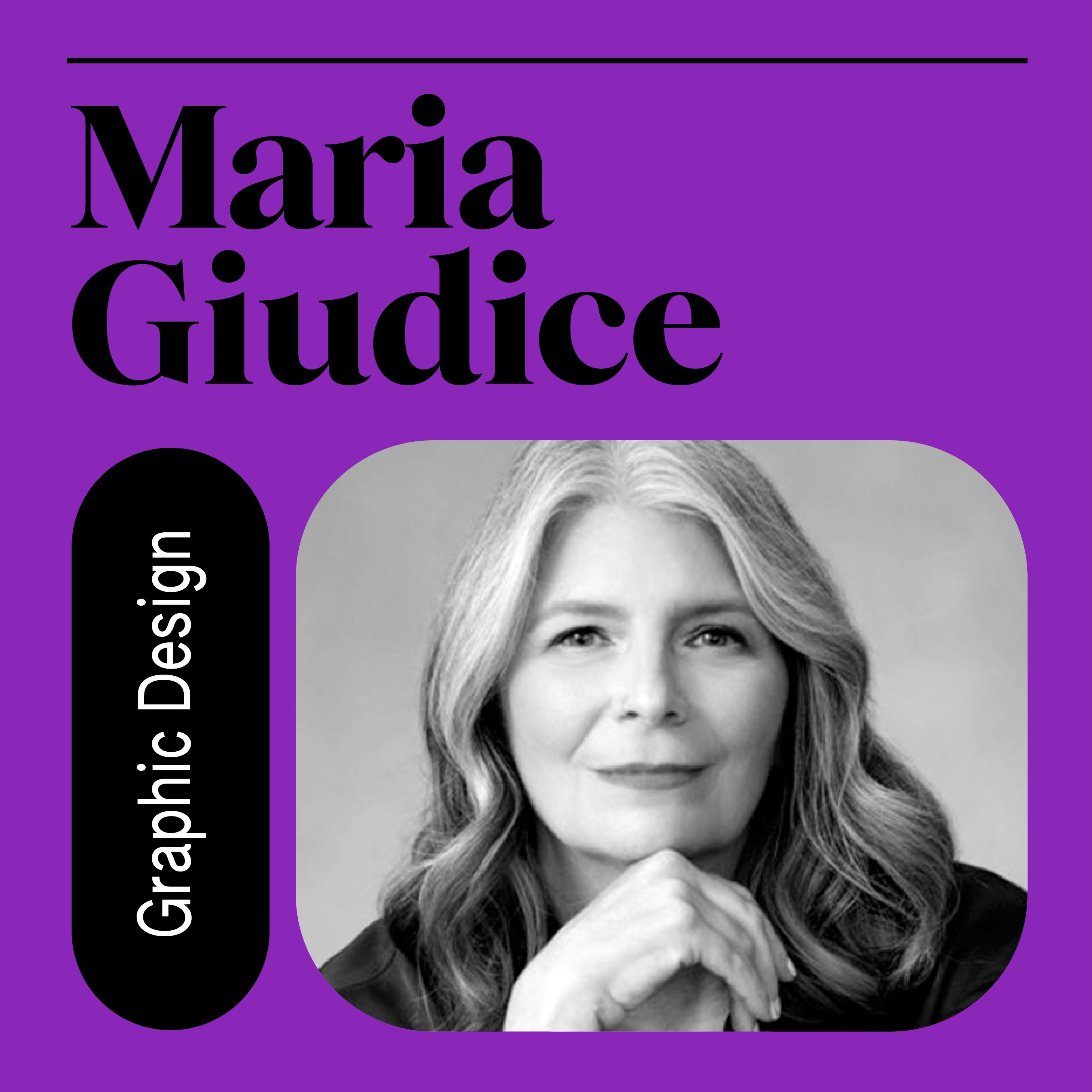
Women Designers You Should Know
041. Maria Giudice: Design Superpowers, Burnout, Big Tech
00:49:13
This episode features legendary designer and leader Maria Giudice, who shares her journey from Staten Island art kid to founding Hot Studio, navigating Facebook’s acquisition, and using design to shift culture, leadership, and the C-suite.
Loading summary
Transcript207 lines
- [00:03]
Amber Asey
Welcome back to Women Designers yous Should Know, the podcast where we uncover the stories of women who've shaped design history and the ones shaping it. Right now, I'm your host, Amber Asey, founder of the award winning design studio, Nice People. Hello to all the new listeners. I'm so glad to have you here. And speaking of awards, I had to squeeze this little announcement in here, but Nice People just won Studio of the Year at the Dyline Awards. It's such an honor. And honestly, this moment feels especially meaningful because today's guest is someone who's helped pave the way for women like me to lead studios and to speak up in boardrooms and make creative work that truly matters. And that guest today is Maria Giudice, the woman who brought empathy to tech. A painter turned information designer, Maria graduated from Cooper Union in 1985 alongside classmates like Ellen Lupton and Abbott Miller. Right as New York City's art scene was exploding with energy from Keith Haring, Basquiat and Warhol. Maria went on to start Hot Studio, one of the first woman led digital design studios, and later brought her people centered design ethos into leadership roles at Facebook and Autodesk. In this episode, she talks candidly about breaking into a male dominated industry, what it felt like to be acquired by Facebook, and and how she's helped shift not only how designers lead, but how companies value design at the highest level. We also dive into her books, Rise of the DEO and Change Makers, and what it means to lead with creativity, empathy, and systems thinking in a world that desperately needs all three. So here's my conversation with Maria inside.
- [01:56]
Maria Giudice
Their legacy. These women, baby, wait for you and.
- [02:05]
Amber Asey
Me and her and she breaking boundaries.
- [02:10]
Maria Giudice
Still in better world you should know.
- [02:26]
Amber Asey
Women desires you should know.
- [02:32]
Maria Giudice
You should know foreign.
- [02:41]
Amber Asey
Welcome, Maria, to the podcast.
- [02:44]
Maria Giudice
I'm so excited to be here today and talk about women leaders.
- [02:48]
Amber Asey
I feel like, I mean, there are just so many women from your era that I have yet to talk to and it just excites me, talking to women who are doing things first and who were doing things that like no one else was doing. And you were, you know, going into these uncharted territories and it was just. Yeah, it's just so amazing the work that you've done and the career that you've had. And I always like to go way back to your childhood. So you were raised in New York, is that right?
- [03:19]
Maria Giudice
Yes.
- [03:20]
Amber Asey
And you studied design at Cooper Union?
- [03:22]
Maria Giudice
I did.
- [03:23]
Amber Asey
What year did you graduate?
- [03:25]
Maria Giudice
1985.
- [03:27]
Amber Asey
Amazing.
- [03:27]
Maria Giudice
Amazing time to be in New York City.
- [03:30]
Amber Asey
Yeah. What was that like?
- [03:33]
Maria Giudice
You know, first of all, even though I've lived in California longer, you know, I like to say I accidentally moved to California and there's a story there, but, but I'm still like, my heart is still stuck in New York. Still a die hard New Yorker.
- [03:49]
Amber Asey
That makes sense.
- [03:50]
Maria Giudice
And I was born in Brooklyn, raised in Staten island, and I commuted every day to go to school to Cooper Union, taking married an hour and a half, going back and forth. And then I, I got the chance to live in Manhattan when I graduated. And it was just an amazing time to be in New York. It was gritty, but, you know, the art was just bursting out of the scenes. Like Basquiat was, was doing his stuff on the street and Keith Haring was actually doing his drawings on chalk in the.
- [04:25]
Amber Asey
Oh yeah, wow.
- [04:28]
Maria Giudice
Like you get on the subway and you'd see like Keith Harringsby. You didn't know back then that he was going to be like Keith.
- [04:34]
Amber Asey
Yeah, that gives me chills.
- [04:35]
Maria Giudice
Yeah. And you know, like Warhol was alive and, you know, we see him at parties. Madonna was coming of age, you know. Yeah, it was a really great time to be in New York, but I think there's no bad time to be in New York. I still love New York City and all it offers.
- [04:54]
Amber Asey
I remember hearing that from Ellen Lupton too, when she was going to school and around that era too.
- [05:02]
Maria Giudice
Well, Ellen and I were in the same classes together. We both graduated Cooper Union with Abbott Miller and Alex Isley who did Spy magazine, and Emily from Pentagram. Like, we're all friends coming of age together.
- [05:18]
Amber Asey
Oh, that is so cool. I, I mean, that would be so fun to just like go back to that time and. Yeah, like, very iconic, I would say.
- [05:29]
Maria Giudice
Yeah, we were all kind of discovering ourselves at exactly the same time.
- [05:33]
Amber Asey
What drew you to design in the first place? Were you interested in it in high school? Or how did you like, come across it?
- [05:41]
Maria Giudice
I had no desire to be a graphic designer at all. I remember I had like a, a reaction against being a graphic designer actually. So I started out as a painter finally. So I started painting when I was like 8 years old. So I. Classes every weekend painting. And my uncle Frank, his name was Frank Frazetta, he was a very famous fantasy artist painter. And you know, I wanted to do what he was doing. And so I really was just immersed in being an artist. I was that person in school that was in charge of like designing the posters and, you know, designing the displays in the, in the school hallways. And like, I always Designed the yearbooks. You know, I was really interesting early on in lettering and calligraphy.
- [06:39]
Amber Asey
Okay.
- [06:40]
Maria Giudice
I was using all the calligraphy books and stuff like that. So I was actually doing design, but not really thinking I was a designer because I was a painter and I was messy and I was, you know, generative. And design was very reductive and clean. And I never thought of myself as a clean, clean, organized person, as you could see from all the stuff in my background. Right.
- [07:05]
Amber Asey
A true creative.
- [07:07]
Maria Giudice
Yeah. And so I never really defined myself as a graphic designer. And then when I went to Cooper Union, I went in as a painter and fine artist. I already was very good at sign painting and calligraphy, so I continued studying calligraphy. And I like to say that calligraphy was like the gateway drug to design. Right. Because you have to organize letters and that became design. But again, I was not a designer yet. I took design classes and with Ellen Lupton and Abbott, who were like, well, Ellen is a painter in her own right. But they were so good at graphic design. Like, they had that, like, ethos and aesthetic and they live and breathed it. And I felt like a total outsider. Like I wasn't getting it. And. But I was struggling through graphic design, thinking that I was not good at this. And it wasn't until my senior year of Cooper Union, I had a class with a teacher named Peter Bradford. And what I loved about his class is he had us, like, come up with our own design problems to solve. And that, like, fired me up. Like, I started looking around saying, what's broken? How can I make sense of this world? How can I be, you know, like, create these projects that are more information based rather than thinking design. Was this all about posters and Helvetica and white space and flush left, right, that I was in my mind, design was really about decoration. And he had a guest teacher in the class that came in. And also, I want to say Design in the 80s, very male dominated. Oh, yeah, Readily male dominated. And remind me to tell you the story about my first teacher. But yeah, it was, you know, you had to look and act a certain way. And it was like, you know, wear black, buttoned up. Most designers were men. And I was this, like, girl from Staten Island. And you could actually see, you see that picture back there with the. You like, I was like rock and roll. I had my hair up. I had it teased. I look like Wendy from Prince and the Revolution. I was like, rocking. Like, I was like, you know, kind of rough. So this guest teacher came in, named Richard Saul Wurman. Who was actually trained as an architect. And this man walks in, short, fat, with a big scarf. Looks nothing like the aesthetic of what design was in the 80s, right? Like, you know, he looked good, but, you know, he wasn't like, buttoned up, sharp, right?
- [09:47]
Amber Asey
Yeah.
- [09:48]
Maria Giudice
He walked in, this cute little Jewish man, but very intimidated. He looks at us all in the class, and I'm paraphrasing, but this is the story that I tell myself. He looks at us all and goes, you are all full of shit. Looks at all of us like, Carson, wow. I, of course, fell in love with him immediately. He's like, you're all full of shit.
- [10:11]
Amber Asey
Why?
- [10:12]
Maria Giudice
Design is not about, you know, the prettiest pictures, the best way to communicate. You know, it wasn't about the aesthetics. Design was about helping people make sense in the world. And it was this, like, lightning bolt in the chest moment. Like, that's why I'm curious and interested in this. Design is about helping others. Design is about being in service to others. It's about helping people understand and feel and communicate. And it was like that moment, which was very people centered at the time. They didn't call it that then. That was the purpose that I needed to hear. Like, oh, I'm here for this reason. I love beautifully designed pieces, and that's a vehicle, but it's really at its core and its essence, our jobs as designers is to help people make sense of the world. Wow.
- [11:15]
Amber Asey
And that's what hit the trajectory of the rest of your career.
- [11:19]
Maria Giudice
Consistent. It was my why and it. It propelled me like that. Why was why I got so interested in design. It kept that. That sort of like putting people at the center of everything you do. That really propelled my career. It gave me a pathway and, you know, here I am 40 years later.
- [11:45]
Amber Asey
That's beautiful. Okay, so now that's like the, you know, iconic part of your school. What was the. What is this, Professor?
- [11:54]
Maria Giudice
Oh, yes, we were talking about earlier, we were talking about, like, women in design like that they are classically underrepresented in history. I mean, it started with. In the art world. Right. I mean, there's. Museums are starting to understand what DEI actually means, which is about including everybody, right?
- [12:16]
Amber Asey
Yeah.
- [12:17]
Maria Giudice
You know, women were like the first group to really. One not wouldn't say the first group, but they are a group of, you know, that get excluded constantly. Right. And so when I was coming of age and in my Design class, over 50% of the people in the class were women. Women were in design. They were interesting design.
- [12:39]
Amber Asey
Like, you wouldn't know that in, like. Right. You know, where we are now, because the 80s and 90s to us and the history of that is all very male design oriented.
- [12:51]
Maria Giudice
Yeah.
- [12:52]
Amber Asey
You wouldn't know. All these women were in school at the time.
- [12:56]
Maria Giudice
We're all in the class. We're all studying design. And my very first teacher in design was a famous designer named Rudy deharrick.
- [13:06]
Amber Asey
Okay.
- [13:06]
Maria Giudice
Like a well known, you know, sort of Mad Men era designer. And he gave an assignment in, like, the very beginning of the semester where he each assigned us a famous designer. You know, every single person got a designer to investigate, to create a poster of that designer. Right. That was the first class. And I noticed when he gave out the assignments that there were very, very.
- [13:34]
Amber Asey
Few women assigned because he was putting that list together.
- [13:38]
Maria Giudice
He put the list together, and one of them was April Griman.
- [13:43]
Amber Asey
Okay.
- [13:44]
Maria Giudice
Right. And I think the other one might have been Muriel Cooper.
- [13:49]
Amber Asey
Okay.
- [13:50]
Maria Giudice
No other women were assigned.
- [13:53]
Amber Asey
Wow.
- [13:54]
Maria Giudice
And I remember asking the question, why aren't there more women on this list? And he said, well, there aren't that many great women designers.
- [14:06]
Amber Asey
Whoa. What a statement. Wow.
- [14:13]
Maria Giudice
Freshman year of Cooper Union.
- [14:16]
Amber Asey
Yeah. And it's one of those things where there are so many layers to the reason why we don't see those women. Because they weren't getting the clients, they weren't getting the same jobs. But also their work wasn't saved, it wasn't published, and so a lot of that stuff got thrown away. Yeah, there's. Yeah, there's just like, so much digging to pull up that stuff and that work. And it's in archives and museums. And there's probably still women that we're learning about today.
- [14:50]
Maria Giudice
Yeah. Or they were working in the same studios of these famous, iconic men. But not giving you credit, it's shocking. It sounds shocking, but that was the reality growing up and still is to this day. I constantly tell my. My daughter, the journey, the struggle continues. Right. We are still not treated equally anywhere across the board. Right.
- [15:14]
Amber Asey
Yeah.
- [15:15]
Maria Giudice
And I do believe, and I know this may be a popular, unpopular thing, but women have to work three times harder to be serious. Seen and recognized still to this day. But I had that fire and spark in me as a very young child. Even before I got to group reunion, I was a tomboy. And I always were like, you're not better than me. I'm going to prove to you that I can play softball better than you, or kickball or run faster. Like, I had that verb, that energy. And as a matter of fact, in my sixth grade yearbook, I Think I said something like I wanted to be a Raquel Welch lookalike or a roller derby queen. But, you know, at the very beginning I was showing my feminist roots and I always felt like I had something to prove. And frankly, that really propelled me throughout my career. As well as, you know, a woman CEO building a really successful company. I was one of the very few female design leaders and CEOs running agencies back then. Yeah, a handful of women in that era.
- [16:30]
Amber Asey
So you founded your studio in 97. Hot studio.
- [16:33]
Maria Giudice
Yeah.
- [16:34]
Amber Asey
What other women do you remember who felt like your equals at the time? Like, were there any.
- [16:40]
Maria Giudice
Yeah, there were. And my memory is a little fuzzy because I'm old now, but Janice Fraser was somebody who was a client and then, you know, she was one of my clients at one point and then she was a competitor. And Kelly Goto had a company called Goto Media. And you know, there were just some other smaller design led shops that were women run, women owned. At one point, the CEO of Frog was woman.
- [17:11]
Amber Asey
Okay.
- [17:12]
Maria Giudice
And I'm sorry, I can't remember her name right now, but she teaches now at University of Austin. We're friends. But like she was running Frog as like high level woman leader. Killing it, crushing it.
- [17:27]
Amber Asey
Okay.
- [17:27]
Maria Giudice
But yet, you know, again, it was like a sea of male dominated design agencies. And in some ways I used my being a female is a competitive differentiator and an advantage. Right. Because when you're a designer, what do you want to do? You want to stand out from your competitors? Well, I ran a company as a female CEO. I ran my company very differently. I was able to attract more women to come to Hot Studio because they knew that they would be treated well, equally.
- [18:01]
Amber Asey
Was your studio, was it a lot of women or what was the ratio then? 50.
- [18:04]
Maria Giudice
50. And diverse through color, sexuality. You know, I really wanted Hot Studio to be a reflection of what the people were designing for.
- [18:16]
Amber Asey
Yeah.
- [18:17]
Maria Giudice
How can you get close to the people that you're designing for? Well, you hire people like them. And, you know, I would really, I, you know, encourage people of color to get into design and you know, women and people who just felt marginalized. So I brought that in. But I also experienced a lot of sexism pitching work. So there were some clients that really appreciated the fact that I was a woman pitching.
- [18:47]
Amber Asey
Okay.
- [18:47]
Maria Giudice
But whenever I had to pitch to some of the big companies down in Silicon Valley back then, like Oracle and you know, these, they were so bro centric, I felt like I wasn't being heard in some cases. So in those cases I would Bring down my coo Rajan Dave, who is a wonderful man, and we worked really together closely in partnership to lead Hot Studio. But I often would be like, oh, we're pitching Oracle or we're pitching Tesla. Was an asshole then, is an asshole now.
- [19:24]
Amber Asey
What do you know?
- [19:25]
Maria Giudice
Yeah, right.
- [19:26]
Amber Asey
Go figure.
- [19:27]
Maria Giudice
I would be like, I would put the men in front because they weren't looking at me anyway.
- [19:32]
Amber Asey
Yeah. Isn't that weird? We have to play that game sometimes too. Like, I've done that before too, where it's like, okay, what man can I bring into this conversation to help me, like, win this person over? And it's just, it's such a weird tactic and strategy that women have to use sometimes.
- [19:52]
Maria Giudice
Yeah. I did think of another woman that had a small company called Swim Studio named Geeta Solomon. Early, early days doing work. So they're. They're there. Yeah. Actually, you must know that Erin Malone just wrote a book on UX design leaders.
- [20:11]
Amber Asey
Oh, okay.
- [20:12]
Maria Giudice
She's creating these maps of early designers in UX in the digital world. So not necessarily going back as far as I'm in IT for my working in the digital work, and I show up as Hot Studio, but she's now trying to capture all the women back in those early days of tech and connecting the dots.
- [20:37]
Amber Asey
That's great.
- [20:39]
Maria Giudice
You should interview Erin.
- [20:40]
Amber Asey
I should, yeah. That's good to know.
- [20:43]
Maria Giudice
She's also on the same sort of mission that you're on.
- [20:46]
Amber Asey
Good. I love that. I've, like, I've been watching other women doing the same thing and it's like, yes, we're going to get somewhere. Hopefully slowly but surely it will get somewhere. And so you founded hot studio in 97, and what did you feel was missing from the industry at the time? Like, what was hot to you then in the landscape?
- [21:08]
Maria Giudice
Yeah. Well, when I graduated Cooper Union, I went to go work for Richard Wurman, and he had a company called Access Press and he designed guidebooks back then. And how I accidentally got to California was he got the gig to redesign the Pacific Bell Yellow Pages. And this was the late 80s and it was this beginning of the intersection of design and tech. It was like max wound up on designers desktops and there was like two fonts, Helvetica and Times New Roman. And there was Adobe Illustrator, PageMaker and Photoshop came along. It was like very bare bones tools. But I didn't realize. But I got really interested around using technology as a design medium. And these were early pioneering days where people were just trying to figure out how to use this to make design work. And I was an early adopter, so I built a lot of expertise and institutional knowledge about how to use technology to create design first in the print realm. Right. Actually, in 93, I co wrote a book with Darcy Denucci and Lynn Stiles called Elements of Web Design. It was at the very beginning, and it was a book to teach print designers how to become web designers. And the HTML code was in the back of the book. It was like three pages long. Right. You know, it was tiny.
- [22:41]
Amber Asey
Yeah. It reminds me a lot about Muriel Cooper because she got her start in books.
- [22:47]
Maria Giudice
Yeah.
- [22:47]
Amber Asey
And organizing information and that kind of idea of information design. And she quickly started to understand it in a tech space and how can we navigate digital spaces? And she didn't necessarily foresee, like scrolling through a page, but she saw some kind of an animated version of going through information.
- [23:10]
Maria Giudice
Yes.
- [23:11]
Amber Asey
Back in the 80s. And that, I mean, that's very, like pivotal for her to do that.
- [23:17]
Maria Giudice
Oh, experimental. Right. And so that information design, I became an information designer. And Richard actually coined the phrase information architect. He wrote a book called Information Architects.
- [23:31]
Amber Asey
And.
- [23:32]
Maria Giudice
And I'm in that book which shows the very first website that I designed in 1993. But I used my information systems thinking skills that were inherent in me because of my belief in people centered design. And I applied that from a print and spatial realm into the digital space. So I was part of this whole transition from analog print design to digital print design to UX and digital. There were so few people who knew how to do that. And so I came out here, I worked on the Yellow Pages for a couple of years. I was in charge of designing all the maps for California, Nevada.
- [24:18]
Amber Asey
Wow.
- [24:19]
Maria Giudice
First we did them analog with, and eventually they became digital artifacts. So that whole transition, and I had built so much institutional knowledge that I became very valuable as a resource. And so when I finally left what was called the understanding business and started freelancing, people started seeking me out because I understood the secret sauce to working digitally. And I just kept getting busier because I was like getting clients. And I was like, maybe I should bring this friend on. Maybe I should bring this person on. And suddenly I had a company. You know, it was like, oh, I have people working for me. Now I have to create a company. How do I do that? So I again, like, treat everything like a design problem. And I used my design superpowers to design a company.
- [25:12]
Amber Asey
I love that phrase. Design superpowers.
- [25:15]
Maria Giudice
Yeah. Yeah. And so, you know, Hot studio was in 97, but I actually started working for myself in 1990.
- [25:24]
Amber Asey
Okay.
- [25:25]
Maria Giudice
And then I took a partner on in 92, and the company was called Yo. And Lynn and I. Lynn also worked at the Understanding business. We became partners, and we worked together for five years. And during that time, we. We created that book. We designed books, and we both entered sort of the nascent field of web design.
- [25:47]
Amber Asey
Okay.
- [25:48]
Maria Giudice
This was Netscape 1.0.
- [25:50]
Amber Asey
Yeah.
- [25:51]
Maria Giudice
Janice Frazier, who I told you, worked at Adaptive Path. She was my client because she worked at Netscape.
- [25:58]
Amber Asey
Oh, okay. Seeing it all come together and the stepping stones, like, it feels very gradual where you got to or how you got to where you are.
- [26:08]
Maria Giudice
And that was so early. And Linda Weinman was around, and she was writing books, I was writing books. So we were connected. But she would have, like, this secret mailing list, and you had to get on the secret mailing list. And then it was like this, like, secret list of people asking questions like, where do you download the web? Safe color palette. Linda knew. Right. So she taught us. All right. Wow. And so we were all in this, like, pioneering, trying to figure out what this new medium and making sense of it. And that really built my reputation. Information design. Information architect, web designer. And my partnership with lynn ended in 97 because I had ambitions to go big and Lynn had ambitions to stay small. And so we parted ways, and I then blew. Then I was on this path for Hot Studio.
- [27:04]
Amber Asey
Yeah. And in fact, like, fast forward maybe, what, 10 years or something. You were acquired by Facebook and became the director of product design.
- [27:13]
Maria Giudice
Yes.
- [27:14]
Amber Asey
And so I want to know more about what an acquisition like that looks like. Were they a client of yours at first, and then did they initiate that acquisition or that conversation? What did that look like?
- [27:26]
Maria Giudice
Yeah, it was actually more than 10 years. So HotSU was founded in 97, where it was just really like, me and a few people to 2013 is when I got acquired by Facebook.
- [27:36]
Amber Asey
Okay.
- [27:37]
Maria Giudice
It was 15 plus years. And the company at that point was big. It was like 80 people. There was an office in New York, and there was an office in San Francisco. We had a lot of great clients, big and small. And Facebook started working with us because they didn't have design talent. And one of the women who worked at Facebook named Margaret Stewart, we knew each other through the TED conference. And we, you know, just professionally. And she brought us in to supplement the design team. And so they kept on taking my people and bringing them in to do the work. And then there was just a moment which was like, should you get acquired? And at that time, I had Turned I was in my late 40s, okay. So I was getting really tired of running Hot Studio. Like, I was like, we had survived three major downturns, and I really took it personally, like, protecting my employees and making sure that I can give them work. And because I kept thinking for every employee that I hired, there were two or three or four other people behind them that they had to support, I carried this heavy burden about making sure that I can keep a great culture and great talent and keep people employed. And it was really starting to wear on me. And so I told the universe that I wanted to sell my company by the time I turned 50. So I was like, in that space already.
- [29:11]
Amber Asey
Yeah.
- [29:12]
Maria Giudice
And so when Margaret raised the idea of getting acquired, I was kind of all in. Right. I was, like, ready for this. This felt like the right moments, this felt like the right acquisition, and that again, like being a woman in a, in a very, like, high stakes acquisition environment, you know, Hot studio was making 20 million a year back then.
- [29:40]
Amber Asey
Right.
- [29:40]
Maria Giudice
Like, we just, to break even, we had to bring in $1.3 million a month.
- [29:46]
Amber Asey
Whoa.
- [29:47]
Maria Giudice
Just to break even. So imagine carrying that kind of burn, right? And so we were highly valuable. But I was ready. I felt like I was on a hamster wheel. I was no longer really enjoying running the company. And, you know, I also have two kids, so I was like mom as well.
- [30:07]
Amber Asey
Did you stay on after the acquisition for a while?
- [30:11]
Maria Giudice
Yeah, I did. So I had a lot of great mentors around me who gave me great advice. And another woman that you should interview and know is Christopher Ireland, who's my co author.
- [30:25]
Amber Asey
Okay.
- [30:26]
Maria Giudice
So Christopher Ireland was the CEO of a design research company called Cheskin. Christopher had sold her company about two years before me, so I was really leaning heavily on her life experience. So I felt like I had great mentors of Clement Mock and Christopher, all of these design leaders who had sold their companies, who gave me a lot generous feedback on how to do it.
- [30:56]
Amber Asey
Yeah. Because, I mean, there's not a lot of information out there for something like that.
- [31:02]
Maria Giudice
So I had, I, I, I was surrounded by other men, like, who were trying to do the deal. But I also was armored with a lot of life experience, context, like what to look out for. I was able to negotiate based on that kind of input.
- [31:20]
Amber Asey
Yeah.
- [31:21]
Maria Giudice
And, you know, at the end of the day, it really came down to Margaret and I negotiating the deal and getting it done. Good women in this tech environment negotiating a big fucking deal.
- [31:37]
Amber Asey
Is there anything you would change about the acquisition, or are you happy about.
- [31:40]
Maria Giudice
It, there's a million things that would have changed.
- [31:43]
Amber Asey
Okay.
- [31:43]
Maria Giudice
Right. And there's a million mistakes. But I learned and now I get to share my knowledge with others. But it was the right acquisition. It was an important acquisition. It was in the news that Hot Studio was acquired. I love that because it was a moment where people started taking notice that design was valuable in tech.
- [32:06]
Amber Asey
Yeah.
- [32:06]
Maria Giudice
And it became this avalanche. I was at the early beginnings of all of this acquisition action. But it became an avalanche after that of design studios getting subsumed by tech.
- [32:20]
Amber Asey
Yeah. Like a huge industry shift that you were part of.
- [32:24]
Maria Giudice
Incredible. And people were surprised and shocked that Facebook would acquire a design suit. And it was a great deal. You know, it was not a garage sale. It was a good deal. And many people benefited and I obviously benefited. And then I had to work at Facebook for two years as a director. But I, I actually, it was, I suffered. I really struggled to be in that environment.
- [32:54]
Amber Asey
What were the biggest hurdles at that time?
- [32:57]
Maria Giudice
It was very male dominated.
- [32:59]
Amber Asey
So Even as a 50 year old woman, you still didn't get the respect you deserved.
- [33:05]
Maria Giudice
No, the opposite. That was what was hard. I was a 50 year old woman. Mark Zuckerberg was 25 years old. Sheryl Sandberg was 10 years younger than me.
- [33:19]
Amber Asey
Wow.
- [33:20]
Maria Giudice
And it wasn't like, oh, Maria, you have so much life experience and wisdom that you can share with others. It was more like, none of that matters. What are you going to do now? It was like suddenly like my, my, you know, brand and my experience and all of the value that I bring didn't matter. You are going to be put in this box. You are responsible for these people. You are going to ship these projects and they better be highly successful. And that's the way tech worked. But I didn't know and it was very soul sucking for me. I didn't do well. Now other women and other men at Hot Su did great. So it wasn't like bad for everybody. It wasn't just the right fit for me.
- [34:06]
Amber Asey
Okay.
- [34:06]
Maria Giudice
Because I'm more of a people centered leader than a product centered leader. And being a people centered leader in tech is not really valued as much as it is about shipping product. And so I lasted two years and then I got recruited over to, to Autodesk, which was a much better fit for me.
- [34:29]
Amber Asey
Okay. Why is that?
- [34:31]
Maria Giudice
It was great because the people at Autodesk, they knew me. They hired me from me.
- [34:36]
Amber Asey
That's good.
- [34:37]
Maria Giudice
When I was talking to my boss, who became my boss, Amar Hans Paul, looking for a design leader like A director, low level. And I said, look, I can't leave, I have a four year earn out, but maybe I can help you. So we met in the bar and I was really like just trying to understand what he was looking for, giving him advice, recommending people, just being helpful. And at some point he said, no, you're the one I need. And I said, you can't afford me.
- [35:06]
Amber Asey
Yeah, well, it's interesting. You went from selling your business and a really good deal to not retiring early but going into more work. Why is that?
- [35:18]
Maria Giudice
I still had fire in my belly. I still wasn't ready to retire. I still, that word scares the shit out of me. Even though I'm not, I'm actually returning to becoming a fine artist now and I'm spending more time as a painter. That retire word still is. You know, my mother worked till she was 80 years old, so it's like it's in my blood to be a worker.
- [35:43]
Amber Asey
Yeah.
- [35:43]
Maria Giudice
What? Autodesk made it worth my while to come over and I loved that job and it was a much better fit for the kind of work that I wanted to do.
- [35:52]
Amber Asey
What are the biggest things you did for Facebook? Like everyone, you know, all the listeners are very familiar with Facebook. What would you say was like your pride and joy?
- [36:03]
Maria Giudice
I, I have to honestly say that I really wasn't proud. It was so low level to me. Like, remember I said that design can change the world?
- [36:12]
Amber Asey
Yeah.
- [36:12]
Maria Giudice
I'm this type of person who wants to be thinking much bigger and doing big things. And at Facebook I was like, you're the developer tools. You have to like organize all the ads. You're going to figure out the gaming platform. Like I was so bored with the problems they were asking me to solve. I didn't do a good job because I wasn't passionate about defending the work because I didn't feel like it wasn't that important in the grand scheme of things.
- [36:44]
Amber Asey
So then what about Autodesk? What are some of those moments that you feel like you really helped shift the thinking within those worlds?
- [36:53]
Maria Giudice
Now that I'm very proud of. So like when I think about like being put in a box and being doing very narrow, low level things at Autodesk, it was the opposite. My boss was a true visionary and he wanted the company culture to shift to become more, I wouldn't say design focused, more people centered. In my mind it was design focused, but it was more about let's get people to stop thinking about product features and thinking more about like customer experience. And they never had a Design leader at the VP job level.
- [37:32]
Amber Asey
Okay.
- [37:33]
Maria Giudice
They weren't even looking for a vp. Right. But they wanted to afford me, and in court me, they gave me this VP title which was, of course I should be a vp. And so I spent like three months just traveling the world and learning what problems need to be solved. That. See, that's like my happy place, right?
- [37:55]
Amber Asey
Yeah.
- [37:55]
Maria Giudice
Give me something that's completely undesigned or undefined. I'm going to make sense of it and I'm going to propose something that's going to be good for the business and good for people.
- [38:07]
Amber Asey
Yeah.
- [38:08]
Maria Giudice
And I had to build like. We didn't call it design Ops back then. No. You know, again, no. It was like it felt like being a pioneer in a tech company where there was no structure for design. Designers were all like buried at the bowels of like scrum teams. They were like centralized way that designers can communicate and share information. So I created that horizontal structure where designers came out of the woodwork. There were like 400 designers worldwide, and suddenly they were seen and heard and it was community of designers. And they were able to share information with each other and the researchers were able to have community. And we actually defined content writers to be content designers. That was like a thing like you guys are designers and you need to, you know, you also need to have a community. So I, you know, created this sort of like, ops structure where designers could thrive. I also looked at experiences across the product, like customer life cycle experiences. You know, you could see the seams of the product based on what org you were in. I brought that to light. So I did a lot, a lot of things at Autodesk in the two years I was there that I was so proud of.
- [39:31]
Amber Asey
That's amazing. Just two years too.
- [39:34]
Maria Giudice
And what a difference, right? At Facebook, I was feeling like a loser. Like me, an overachiever. I felt like I was like a failure. Monday came around. I would like cry.
- [39:45]
Amber Asey
Oh, wow.
- [39:48]
Maria Giudice
To be there for four years so I can get my earn out, right?
- [39:51]
Amber Asey
Yeah.
- [39:51]
Maria Giudice
I made it to two. But again, I did okay on the other side at Autodesk. So I'm not complaining. I'm happy with the life that I have. And I benefited financially from it, which I well deserved. And so when I look at that, like getting acquired, having a really hard time at Facebook, having a successful time at Autodesk, then actually getting kicked out of Autodesk because the CEO left and there was a new CEO, and the new CEO didn't think design was important. So I got booted and essentially getting fired. All of that gave me so much experience that I could share with others, information that I can now help others get through, which pointed me to coaching.
- [40:42]
Amber Asey
Yeah. Yeah. In fact, you've written two books, Rise of the deo. Or you have more than that, right?
- [40:47]
Maria Giudice
I have four books.
- [40:48]
Amber Asey
Four books. But then the ones I'm thinking of are Rise of the DEO and Change Makers.
- [40:53]
Maria Giudice
Yeah.
- [40:54]
Amber Asey
That talk about this new breed of leadership in design. And it blends creativity and empathy and systems thinking, which I think is so important in such an AI world today, too. And really infusing all of this technology with humanity. And so is it this experience as a whole that really helped you write these books? And what would you say today's creative leaders need the most from those books?
- [41:22]
Maria Giudice
Yeah, going and doing books is going back to my roots as a book designer.
- [41:26]
Amber Asey
Right.
- [41:26]
Maria Giudice
So I started out as a book designer.
- [41:28]
Amber Asey
Did you design your books?
- [41:29]
Maria Giudice
Yes. Cool. I. I designed it in collaboration with others.
- [41:34]
Amber Asey
Okay.
- [41:34]
Maria Giudice
Yeah.
- [41:35]
Amber Asey
I.
- [41:35]
Maria Giudice
No, nobody ever designed things in a vacuum. Right. So. So. But I'm really good at bringing a team of people together in collaboration to create experiences that I want to see in the world. So I gave a TEDx talk in 2011. I was CEO of Hot Studio, and it was a leadership conference for Ted, and I basically came up with this provocative idea that the best leaders will be combining design and business acumen. When you think of designers and you think of the powers and skills they have, which are being a change agent, taking risks, using intuition as well as analytics, thinking about systems, being centered on people, and getting shit done, these are things designers are trained to do. These are amazing superpowers that I feel like you take that and you could apply it to anything in life. These are going to be very strong principles that. That can help you be successful. So what if you took those powers and you applied it to thinking about how to lead companies or people or teams? And so my provocation was if. That more leaders need to embrace design skills. You don't have to be a designer to be a deo. You just have to embrace those skills that designers inherently have and apply them.
- [43:04]
Amber Asey
To business and value them and trust them kind of a thing.
- [43:10]
Maria Giudice
So that was. That was the provocation for Rise of the deo.
- [43:13]
Amber Asey
Okay.
- [43:14]
Maria Giudice
And then in Change Makers came out. Because when I did lose my job at Autodesk, I was a change maker at Autodesk. Like, I was asked to influence culture that is very different than shipping products. And whether or not I was told that that's what I did at Autodesk. My feeling was I was trying to change people's hearts and minds, to embrace people centered design principles, to create better product experiences for their customers. Turns out there were people in positions of power who didn't share the same thing. They were kind of threatened by my power and they wanted control within their fiefdoms. And I was the person who was breaking silos. So there's this and inherent friction between what I was doing and what they wanted to control. And so after, like licking my wounds and feeling bad and grieving that job I loved, I started thinking about what I do right, that I want to celebrate, that I want to share with others. What could I have done better? I want to understand what other people are doing when they find themselves in that position. I made a short list of people who were ascending in companies as design leaders and I started interviewing them like 40. And this was through the pandemic.
- [44:34]
Amber Asey
Okay.
- [44:35]
Maria Giudice
And I had so much great content. But it turned out that most of us were just learning on the job. There was really no playbook to be a design leader in corporate America. And that was like, I am going to share all of this incredible knowledge. And then I recruited Christopher Ireland, my mentor, who also co wrote Rise of the DO to do Change Makers with me. We work really well together and she's an amazing writer, but she writes like it's poetry. And then we spent like a year or so doing the book and called the Changemakers.
- [45:14]
Amber Asey
I'm going to link these books in the show notes too, for the listeners. But I mean, when I think about your entire career as a whole and just like all of the stuff that you've done and everything you've influenced, from being an author to tech leadership and speaking and really these like high level concepts that aren't just for designers, it goes beyond that. I would love to know what's the legacy that you hope to leave for the next generation of women in design?
- [45:46]
Maria Giudice
Wow, that's such a great question. I have to say that I'm really enjoying my life right now. Like, I. I'm in my 60s and these kind of podcasts are so important because there's so much wisdom out there and life experiences from people like me who can share them with others. So when I sold Hot Studio, it was super important that I kept my integrity intact.
- [46:14]
Amber Asey
Yeah.
- [46:14]
Maria Giudice
My whole life is do the right thing and be a good person and be in service to others. Like from the very beginning. My job is to help make the world a better place. And if I have Knowledge and wisdom and life experiences that is going to benefit just one other person that is going to put them on a path that is going to be their forever legacy. That to me, is a life well lived. That's what makes me happy. When somebody comes up to me that I haven't met, says, you gave that lecture in my school 20 years ago, that inspired me so much that I actually became a designer. That gives me life energy. That's beautiful. That's the legacy. That's the legacy.
- [47:01]
Amber Asey
Yeah. I'm still waiting for you to get your AIGA medal. If AIG is listening.
- [47:07]
Maria Giudice
What's fucking taking them so long?
- [47:10]
Amber Asey
Yes. Yeah. Like you, you should have had that, you know, five, 10 years ago.
- [47:17]
Maria Giudice
I should have and I pay dues.
- [47:20]
Amber Asey
What happened?
- [47:23]
Maria Giudice
Thank you for that push.
- [47:24]
Amber Asey
I appreciate it. Well, thank you so much for joining me today and for all of your wisdom and all of the work that you've done for the designers and the design community. I think, like, I speak on behalf of everyone when I say, like, you've done so much and thank you.
- [47:42]
Maria Giudice
Thank you. Thank you for having me and thank you for allowing me to tell my story.
- [47:47]
Amber Asey
Wow. Maria Giudice. What a powerhouse. From Staten island to Cooper Union to founding a design studio that got acquired by Facebook, she's lived through so many chapters of the design world and honestly, I just keep thinking about how ahead of her time she was. She built a woman led digital studio in the 90s, getting acquired by one of the biggest tech companies and advocating for empathy in rooms that didn't always value it. It's rare to hear someone talk about their wins and their struggles with that kind of honesty. And as someone who also runs a studio, it hit personal and hit home in a very big way for me. Also, side note, I loved that she said design superpowers, because if there's one thing she made clear, it's that we all have them and we just need the right space to use them. If this episode moved you, inspired you, or made you want to pull out a calligraphy pen, please take a second to leave a review or share it with someone who needs to hear. Hear it. It really helps for people to find this show. Thank you so much for being part of my podcast. It means the world. And until next time, let's redesign history by celebrating.