← Women Designers You Should Know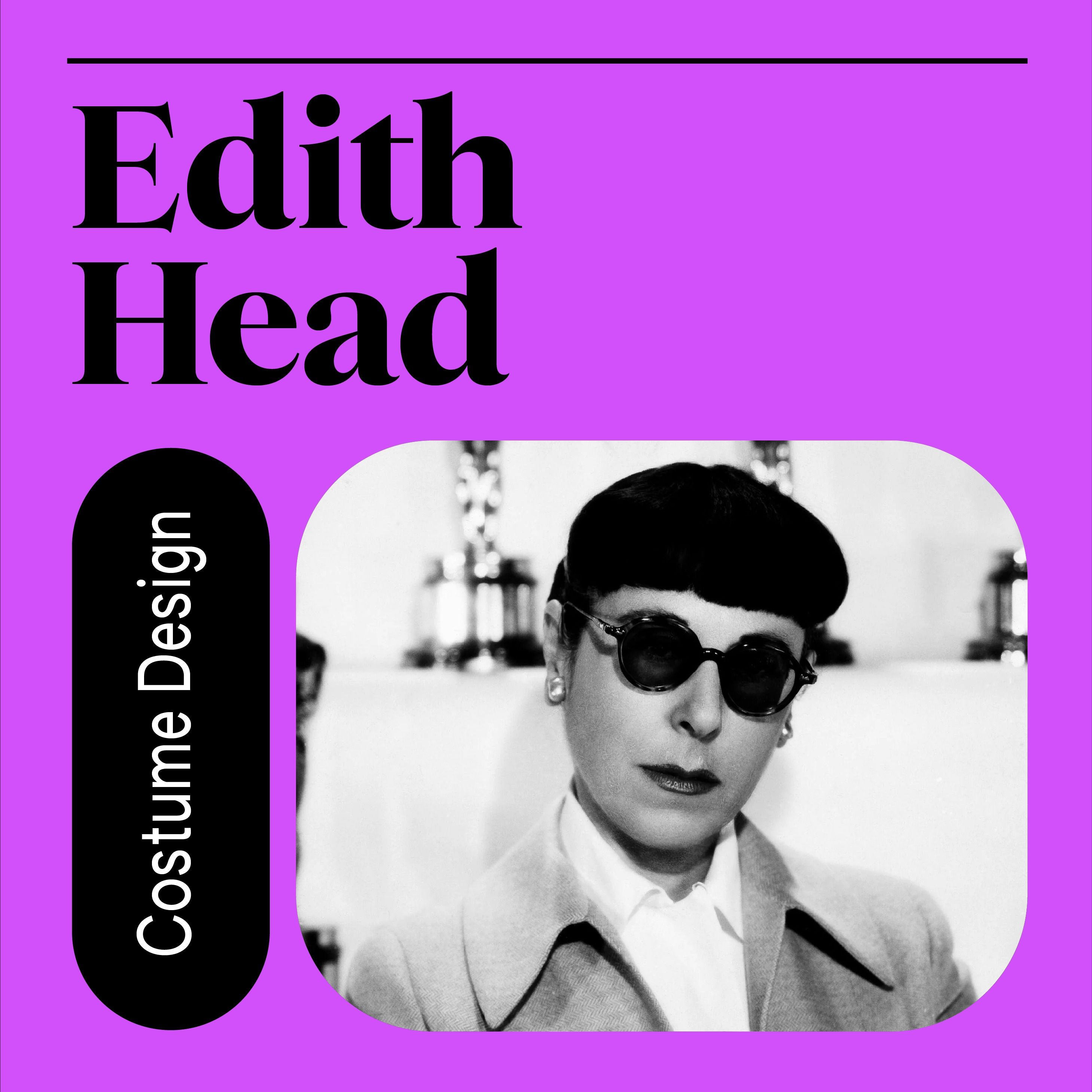
Women Designers You Should Know
043. Edith Head: Hollywood Costumes & Controversies
00:53:33
This deep-dive episode explores the jaw-dropping career of costume designer Edith Head—Hollywood’s most awarded woman—whose designs for stars like Audrey Hepburn and Grace Kelly came with a trail of secrets, rivalries, and reinvention, with fashion enthusiast Darrian Wright joining for the ride.
Loading summary
Transcript107 lines
- [00:03]
Amber A.C.
Hey there. Welcome to Women Designers yous Should Know, the podcast where we uncover the boundary breaking, spotlight stealing and often credit overlooked women who shape design history. I'm Amber A.C. founder of Design studio Nice People. And today's episode is a long one, but it's worth every minute because we're talking about the queen of the costume department, the woman and the iconic glasses. And the most Oscar awarded woman in Academy history. Yes. We are diving into the story of Edith Head. She dressed every major star from Grace Kelly to Audrey Hepburn. She worked on over 400 films and won eight Oscars. But behind all of these major wins is a story full of ambition and rivalry and reinvention and even lies. From borrowing other people's sketches to claiming Givenchy's designs as her own, Edith Head didn't just design for the movies. She played the game of Hollywood better than anyone. Joining me today is one of my favorite people, my friend and fashion design enthusiast extraordinaire, Darian Wright. We're going deep on everything, so grab a cocktail or your sketch pad or both, because this is going to be a cinematic ride inspired by their legacy.
- [01:33]
Darian Wright
These women, they wait for you and me and her and she. Breaking boundaries, building better world design. Designers, you should know when it. Designers, you should know. You should know, you should know.
- [02:12]
Amber A.C.
So you were on the podcast back in. Was it January? February?
- [02:17]
Darian Wright
Yes.
- [02:17]
Amber A.C.
And that episode ended up being one of the top listens. Did you know that?
- [02:24]
Darian Wright
No, you never told me that. That's great to hear. Tell me this at the beginning. Hype me up.
- [02:30]
Amber A.C.
It is number three. Ray Eames is at the top. And then Eileen Gray with Emily Farnham. Ray Eames with Amanda Jane Jones. And then number three is Elsa Schiaparelli.
- [02:43]
Darian Wright
Shut up.
- [02:44]
Amber A.C.
With Darian Wright.
- [02:46]
Darian Wright
Wow. Top three. I am honored.
- [02:50]
Amber A.C.
I think so many people must have been fascinated by her story or are huge fans or want to know more about her. I don't know what it is about her that drew so many people to that episode, but it's kind of exciting.
- [03:03]
Darian Wright
Yeah. I mean, her name has ended up having this resurgence that you're hearing that name all the time, similar to Edith, that we'll be talking about. Like you do know this person. Her designs and her aesthetic are part of what you are seeing in fashion today. And so maybe people are drawn to understand that background because she is present.
- [03:30]
Amber A.C.
Yeah. And as you mentioned, today we're talking about Edith Head, Hollywood's most powerful costume designer. She was born in San Bernardino, California in 1897. So just before the turn of The Century era. And her parents got divorced while she was young. Her mother remarried a mining engineer named Frank Spare, and she ended up taking this name as her maiden name. To avoid antisemitism in Hollywood, she's crafting.
- [04:04]
Darian Wright
Her own narrative from the start.
- [04:06]
Amber A.C.
She also went on to receive a master's degree in Romance Languages from Stanford University in 1920. So she actually became fluent in French and Spanish. She earned her bachelor's degree at the University of California, Berkeley in 1919 with a degree in letters and sciences. She used all of this to go on to teach French and Spanish at the Hollywood School for Girls and Bishop's School in La Jolla.
- [04:35]
Darian Wright
Yeah, working at the Hollywood School for Girls definitely exposed her to the film industry. Many of the parents at the school worked, you know, at Paramount or MGM, including the famous director Cecil DeMille. At times, they would close down the entire school for the day if he invited students and families to watch him film. So she had some exposure to the film industry as a teacher and did feel drawn to it, mostly for financial reasons.
- [05:07]
Amber A.C.
Like, I imagine she found or saw some kind of opportunity there of like, why don't I try this? And, you know, I want to make a little more money than what she was making, which was like nothing.
- [05:19]
Darian Wright
She also got married right before or during this teaching experience, but was not happily married and I think was looking for more fulfillment.
- [05:29]
Amber A.C.
Yeah, she married one of her classmates, Charles Head, who turned out to be an alcoholic. And the marriage never really was all that great. And they were separated a lot of it and ended up getting divorced. Was that her classmate from Chouinard?
- [05:47]
Darian Wright
She wanted to try to pick up more teaching at the Hollywood School for Girls. And it was suggested she could attempt to teach art. And she picked up some night classes at the art school and was introduced through a classmate to her first husband.
- [06:03]
Amber A.C.
And fun fact, Chouinard is also the same school that Mary Blair went to. Mary Blair graduated in 1933, so probably about a decade after her, somewhere around there was when Mary Blair went after Edith Head. Was there. Nice.
- [06:21]
Darian Wright
Edith obviously did not pick up the skill. Paramount's head designer at the time was a man named Howard Greer. So Howard Greer puts out a ad in the Los Angeles paper for a sketch artist. Edith wants a change. She knows that she doesn't have the proper portfolio and has learned through her classmates that some people have looked at this job and have been turned down because they lacked versatility. So she takes that information, collects a handful of sketches from her friends at the art school, erases their name puts her name. She takes this collected portfolio of other students in an attempt to combat the idea that she's not versatile. And she goes into her interview with Howard Greer, who finds these sketches interesting and essentially hires her on the spot. She shows up for work. But the interesting thing about the lie or the dishonesty is when Howard Greer notices right away that she doesn't have the skill that he felt was promised, he does a politically savvy thing. And he keeps her on because there's only so many jobs and so many positions in the highly competitive world of filmmaking. And he believes that Edith will be less of a threat because she's less talented. He likes her tenacity. He likes the fact that she has grit. And then he keeps her in the job even though knowing that she lied. Because he wants a loyal assistant who won't be taking his job in a.
- [08:06]
Amber A.C.
Few years that is wildly competitive to be like, I'm going to hire someone, and turns out she's not that good, but maybe I'm okay with that because I don't want someone to be better than me.
- [08:19]
Darian Wright
Right. And she would engage in similar behavior later on in her career where who you hired and the assistants that followed you were always, in a way, threats. And she was constantly monitoring those threats. And she picked that up very early from her very first mentor. How.
- [08:37]
Amber A.C.
Yeah, she picks up, okay, this is the environment I'm in. I'm going to adjust for this and now be this person that I need to be to, like, make it in this business.
- [08:48]
Darian Wright
Yeah. So her quote in her biography, when her biographer asks about this exchange, this is how she claims that she didn't lie. Greer asked, could I see some work? I didn't say it was mine. I said, this is the sort of thing we do in our school. He said, come back to work tomorrow at $40 a week. So she claims she's like, he thought.
- [09:11]
Amber A.C.
That was my work, but I never said it was my work.
- [09:14]
Darian Wright
Yeah, this is the kind of work we do at the school, which. Not untrue.
- [09:19]
Amber A.C.
I love that. Plus, they were looking for diversity. And she brings different types of sketches. Right. Here's several people's work that's obviously going to be diverse.
- [09:31]
Darian Wright
Honestly, it's interesting to think about the truth behind Howard hiring an assistant. Was he turning down these candidates because of versatility issues, or was he turning them down because he possibly felt threatened? And then you get a tenacious woman, a hard worker who isn't necessarily talented in your eyes at the time, and he makes the right hire. So in my view of this event, it feels like it was meant to be. It was all meant to work out that way based on what he really wanted. She would eventually sketch, another mentor would enter the picture who would replace Howard. And so she picked up on his sketching style. That man was named Travis Banton. But at the time, the way that studios operated is costume designers were not seamstresses. So it wouldn't have been unusual for her to hold pins or oversee construction and the sewing. But she was not a very talented sketch artist yet. That would come later when she intersects with the right mentor. But at the time, it's not unusual for her to be holding pins because she was neither a sketch artist nor could she work as a seamstress. That's just not how the studio would work.
- [10:46]
Amber A.C.
I think that's the story she loves to tell too. Not necessarily this sketch lie that we all love to talk about now, but when she's talking about, oh, way back when I started at Paramount, I was a pin girl and I had such a humble beginning and look where I am now. Kind of a storyline that she would hold onto.
- [11:05]
Darian Wright
Yeah, she gets to rewrite history a little bit by saying I was lowly and gets to gloss over the true origin of her first job.
- [11:13]
Amber A.C.
She repeatedly put herself into positions she technically wasn't qualified for but excelled once she got in the door.
- [11:22]
Darian Wright
She works under Howard for most of the 20s. She's picking up how the industry works. She's understanding how Paramount functions, which Howard is not always adept at the politics of Paramount, but Edith is. Maybe he understood that in his first interview with her, but she is not in a high position in the costume department. Howard hires a very close friend of his named Travis Banton, who comes on as an assistant and does exactly what Howard had feared with Edith, which is he eventually replaces Howard when he exits Paramount. The learning that Edith picks up from Travis is this whimsical way of sketching that works really well with the Paramount community and actresses. Kind of a very round face, very doe eyed looking in the sketch. And this is where she truly picks up that skill and builds upon what Travis establishes at Paramount, which is very beautiful flowing gowns for stars and leading ladies. Travis is the head designer, so he works with the stars. There is a differentiation in Hollywood at the time that stars are the absolute leading name in a movie. It's the name that appears before the title of the film because that's how big of a draw. But leading ladies, we use that term today for the star. But at the time Leading ladies was a secondary billing. So you would get the title of the film and then a leading lady would be billed afterward. So Edith gets all the leading ladies. She's not the head designer, but she is getting women who are up and coming. There were so many potential actresses at the time. She forges relationships with women that Travis brushed off. And Edith is so skilled at connecting with women and she does interact with them in a way that the studio doesn't fully realize that she's doing it. But the studio had told her, hey, we take what's in the script. We take notes from the director. We don't ask the actress if they like this idea or how they want it done. Edith takes no direction from the studio and starts building relationships under Travis that would cement her eventual replacement of him. However, Travis doesn't leave and get immediately replaced by Edith. He struggles with alcoholism, professionalism. He doesn't come to work. This is in the 30s. And eventually, when Travis exits Paramount after asking for a raise in 1937, which they don't give him Edith is not immediately promoted because it was not common for women to just be in a leadership role. But at the time, that was not at all where people's mind went. And so the studio had attempted to replace him with another man. But none of those situations worked out. And so eventually, by default, Edith takes his role as head designer at Paramount with little fanfare. It's not announced. It's not some amazing get. But that is the timeline of Howard Greer to Travis Banton to how Edith gets her position. So much of her sketching and her reliability as a designer is under Travis Banton's tutelage. So he should get credit there.
- [15:03]
Amber A.C.
Yeah. And so this is 1938. She becomes the head designer. It was probably also in benefit to Paramount to be like, oh, we don't pay Edith as much as Travis.
- [15:14]
Darian Wright
Yeah, that's a great point. She is less expensive also, because the Roaring Twenties have concluded and we've had a big stock crash. And her more, I don't want to say austere but generally conservative approach to design works really well in this time period. So many things come together for her to really shine. In the 30s, money was a part of that.
- [15:38]
Amber A.C.
And so she's now entering the prime of her career. She's been working with a lot of these major actresses. She's starting to get her footing and settling into her style, getting very familiar with all that she's doing because now she's a good 15 or so years into her career and being at Paramount. And so like her design approach is said to be character over couture. She really emphasized the character in films and didn't design for ego. She designed for the arc of the story. She'd even read full scripts and had these very in depth conversations with these actors about their characters and motivations. Before that, they weren't really running things by the actors. They would just do what they do. And then now it sounded like she's working very closely with them and also maintaining files on each actor, like the insecurities of their body, their concerns, their preferences. She's getting so in with these people and this entire industry and they're probably excited to work with Edith because she gets them and makes them look good and that's really all they're looking for.
- [16:58]
Darian Wright
Yeah, she does have a breakout moment because of this exact skill set. When she's designing for Dorothy Lamour in the jungle princess in 1938. Dorothy is considered to have a little bit more of a backside by today's Sandra. The average eye doesn't see that. I certainly didn't. Edith designs a sarong, which is her first, I would consider real breakout moment as Travis Banton era is coming to a close and she's finding her footing. She does a sarong for Dorothy that popularizes sarongs and really speaks to the way that she designs for the actress's body with so much thoughtfulness. And it's her breakout moment, thanks to her approach that many designers that preceded her and then in other studios didn't have.
- [18:01]
Amber A.C.
That's a really good example. If someone had a large bust, she'd minimize it with dark fabrics. If they had short legs, she would elongate them with vertical lines. If they had a prominent chin, she would distract that with brooches or bigger shoulders. And so she really understood a lot of those design tools and tricks.
- [18:23]
Darian Wright
It's funny to read about em because she sees things that the average person doesn't see. She was no fan of Aubrey Hepburn's body type. I think she called her neck, her arms, like sinewy. She did praise her very small waist, but yeah, she had a real understanding of what was, you know, considered somebody's physical strengths, the positive traits, and she worked to emphasize those. That skill set would also translate into her own media personality and Persona. She was bringing that to work. And then she used that same approach of find your strengths and emphasize them to speak to the public in different media opportunities. People absolutely ate it up like a.
- [19:15]
Amber A.C.
Few other notable designs, just to call them out. Grace Kelly's white chiffon gown in To Catch a Thief was designed to billow in the breeze. And then there's Elizabeth Taylor's white ball gown in A Place in the Sun. After Elizabeth Taylor wears this white ball gown, then everyone's wearing this to the prom after that.
- [19:36]
Darian Wright
Yes. That ball gown is the ball gown sketch featured on her biography.
- [19:41]
Amber A.C.
Oh, okay.
- [19:42]
Darian Wright
Edith Head. So that's by far one of her most iconic looks. And I think this shows how prolific she was at designing for the woman. I think of all her actresses, Grace Kelly was by far her favorite. I think her best work is done with grace, which is a little unfair because Grace Kelly's proportions and her general aura is flawless. She enhanced grace, and she would be considerate of other actresses flaws. You mentioned trying to minimize a chest. Bette Davis is, I think, a wonderful example of that in which she really took to Betty's preferences. Betty hated wearing bras. Oh, okay. And so Edith would work over time to build construction and support into a dress, you know, similar like how we would think of swimsuits today that have built in support or underwire. She would do that for Bette Davis's dresses. And one notable anecdote about that is in the film All About Eve, the measurements of the very first dress that they designed for Bette Davis in the party scene comes back, and Edith has the wrong measurements and the sleeves are falling off the shoulder. And this is not okay because the brassiere is in the dress and it's not on the shoulder. This is a major issue. But through a collaboration with Betty, they had a great friendship, and I'm pretty sure Betty spoke at her funeral. Betty convinces Edith that it's going to be okay to wear it off the shoulder. She actually finds that look beautiful. But Edith understands now that the chest is not being supported as well as she'd like. So she adds a fur to the sides of the arms.
- [21:30]
Amber A.C.
Okay.
- [21:30]
Darian Wright
To draw the eye away from the chest, which is a little bit lower than Edith would have liked. But I think this demonstrates just how custom she was in her approach to these dresses. And while she was known as a difficult person to get to know personally, she does forge really meaningful relationships with these women because of the way she took care of their bodies and was very thoughtful and considerate about the roles that they were in and the scene that they were in, and they really appreciated that.
- [22:02]
Amber A.C.
She really understood the designer client relationship, which some women that we've talked about on this podcast or really do understand that. And I think that really plays to some of these women's strengths, like, really, at the end of the day, making the clients happy is all that matters. And then, of course, winning the awards. The fact that she won over all of these actresses also made it so that she could work on more films. And of course, she was at Paramount, so she was naturally kind of already in to all of these things. It amped up her career tenfold because she's working on so many films every year. In fact, I think it was said that when she was really at the height of her career, she was working on somewhere around 25 or 30 films every year, which is a huge amount.
- [22:56]
Darian Wright
Yes, especially year after year. There were some slow times, for sure. But I think where this dedication came from is Edith never really got very comfortable in her position. She never had an attitude or an ego of, I'm going to keep my job. She was terrified of being laid off constantly, economically and industry wise, film is going through a lot. And she never got too comfortable in her position and really worked very hard. Was extremely dedicated to the craft as well as client relations. And I think that shows in her work ethic and her care for her clients and her directors.
- [23:42]
Amber A.C.
Yes. Speaking of directors, we have to talk about her and Hitchcock. They worked on 11 films together. And she became his go to designer, which is big because he's very particular about the details that go into everything. It'd be like Wes Anderson today, where if you're his go to designer, that's saying a lot about your work.
- [24:06]
Darian Wright
As much of a visionary as Alfred Hitchcock was, Edith Head was the person that wanted to execute. She saw those notes, she took the script. She was always inspired, but extremely dedicated to delivering. And I think that pairing of her and Alfred Hitchcock is a really wonderful one because of those characteristics in each of them. Alfred being so deeply dedicated to the details and Edith so deeply dedicated to getting it right. And they had some incredible looks.
- [24:40]
Amber A.C.
He saw costume as narrative, just like she did. And he believed clothing should foreshadow plot points and evoke mood and express the character psychology. She delivered on all of that. He really trusted her with the secrets and the visual strategy behind the film. I think he even added color notes to the scripts.
- [25:06]
Darian Wright
My understanding is, in his films, the color green for him was a bit of a death signifier. And so for that reason, he would also know where is green in the scene elsewhere, because there were all types of Easter eggs, if you will, that he was pointing out. And Edith really thrived in that type of environment. So many of her counterparts, you know, including Howard Greer that we mentioned at the beginning would go on to open retail stores or their own couture or wedding dresses, or they'd work more in retail manufacturing. And she never did. She just didn't thrive in a space where she had to come up with her own creative vision. She always stayed in her lane and stayed in cinema for so long because she really enjoyed the detail given by a director, the vision provided by a script, and then executing on that.
- [25:58]
Amber A.C.
The films that they collaborated on were Rear Window, To Catch a Thief, Vertigo, the Birds, Marnie and Notorious. So a bunch of films starting in 46, which was the first one that they'd worked on, Notorious, and then through the 50s and 60s, and, like, some of the notable stuff that she. She, like, really pulled it out of those films, too. For the Birds, Tippi Hedren's mint green suit that she's wearing throughout the entire film, that's supposed to represent restraint and order, and then it also represents femininity slowly unraveling. I thought that was really interesting. Another one, Vertigo, Kim Novak's gray suit, was selected to be ghostly but timeless and slightly unsettling. It was really interesting, the details they wanted each of these characters to wear.
- [26:58]
Darian Wright
Absolutely. I have a funny anecdote about that suit. Regarding Edith's own narrative in the biography, her biographer is working on a different book called Hollywood Costume Design, and he tells Edith, I'm under the impression that you chose that color with a hint of lavender because you understood that to be Kim Novak's favorite color. It says she exploded and said, whoever told you this? And he tells her, that's what you wrote in your own book. And she goes, you should know better than to believe anything in that book. I thought that was so funny. You're never sure when the stories she's telling are totally true. I think that goes to the. You know, I was a lowly pin girl that had no real job. Was that really true? It's hard to know.
- [27:41]
Amber A.C.
Yeah. Another movie, to Rear Window, she worked on Grace Kelly's wardrobe, and it was so elegant and so, so chic that to this day, designers still reference it. And one gown was a black bodice with a full white tulle skirt, which was one of the unforgettable moments of that film.
- [28:04]
Darian Wright
Yeah. I think that Edith's relationship with Grace Kelly produced some of her best work. Her favorite film to work on was To Catch a Thief. Unbelievably, Edith did not take home the Oscar for costume design in that film.
- [28:19]
Amber A.C.
Okay.
- [28:20]
Darian Wright
Hard to believe, but that was the last film that Grace Kelly and Edith would work on before Grace would meet the Prince of Monaco. I thought of an interesting anecdote about Edith and Grace, which is just this small misconnection and maybe we would know Edith so much more if this didn't happen, is when Grace married the Prince of Monaco. Edith was extremely upset that Grace did not ask her to design her wedding dress.
- [28:52]
Amber A.C.
Wow.
- [28:52]
Darian Wright
Which Grace Kelly's wedding dress, to me is the most iconic wedding dress of all time. My personal opinion greatly influenced Kate Middleton's wedding dress to Prince William. Grace was such a big star at the time and was contracted through MGM that MGM agreed to cover the cost of creating and having their design team design Grace Kelly's wedding dress. Edith goes to Grace and says, how could you have Helen Rose, who. Which was a little bit of Edith's nemesis. Not nemesis, but just a.
- [29:30]
Amber A.C.
Like a competitor, a little bit of a rival.
- [29:32]
Darian Wright
Yeah. How could you have Helen design your wedding dress, Grace, like I've. We've created what we know now is the most iconic looks of colden Hollywood. And Grace said, if you can get Paramount to pay for this. Just so funny to think about, you know, she's becoming a princess, but says if you can get Paramount to pay, you can do it.
- [29:55]
Amber A.C.
Damn.
- [29:56]
Darian Wright
Edith knew better than to even ask that. So we were so close to Edith Head being the designer of Grace Kelly's wedding dress. And I think she would have been much more of a household name had she been that designer.
- [30:13]
Amber A.C.
Yeah. That's a very interesting story, I would say. We can't not talk about Edith Head and the Givenchy controversy. Right. It's one of the most infamous stories of Edith Head's career. And so it takes place during 1954, all centered around the film Sabrina that Audrey Hepburn is in. She's actually still rising to stardom at this point too. And she wanted her wardrobe to reflect the story's French transformation. That's when she was really wanting a French designer to work on her wardrobe. But Edith Head is already assigned to this film. She's already the one to work on it. Audrey personally traveled to Paris to ask him in person, Hubert de Givenchy, to design her character's key looks. And Givenchy, not knowing who she was, initially thought that he was being summoned by Katharine Hepburn. He agreed to it and created Sabrina's most iconic pieces, including the black cocktail dress and the white embroidered evening gown. Edith Head being the official costume designer, she, like, supervised all the non Givenchy looks. I don't really know what that included because maybe everything else in the film outside of Audrey's wardrobe. Yeah, here's the kicker. Despite the fact that she wasn't even really included in Audrey Hepburn's wardrobe, Edith won the Academy Award for Best Costume Design for Sabrina and gave Givenchy no credit at the time. And the Academy didn't even recognize foreign designers unless they were part of the larger studio system. So it just was all kind of brushed under the rug, which is really awkward for this era. Audrey and Givenchy, of course, began this lifelong friendship after this and collaborated together on nearly all of her future films. And now the fashion world often credits Givenchy with creating Hepburn's signature style. Even though Edith took home the Oscar, Edith never publicly corrected this.
- [32:37]
Darian Wright
This was absolutely a huge career snub. It is difficult to express the. The snub that this is. Despite this snub, he would go on to obviously build this relationship and have a huge, successful career. I think what was so difficult for Edith is that the idea of an actress bringing in designs was so out of the ordinary. I think she deeply resented what was happening and felt justified in her actions. She was absolutely fully dedicated throughout her career to never allowing the costume designers of studios to ever even appear as if they weren't necessary. She would never buy anything. And she was deeply practical in reusing garments and taking garments out of the costume stock and reworking them. She did everything she could to make costume designers essential and economical. This was such a slap in the face. I've always wondered what led Audrey Hepburn to make those decisions. And I mentioned this earlier, but I can't find anywhere where they truly had a feud. In Roman Holiday, when Edith was designing for Audrey, there is a costume in which she does not. It's a T shirt. Because in her biography, she mentioned she found her arms too frail. Yeah. She lengthened dresses because she thought, you know, legs are too thin, or she put on a scarf because she thought the neck was too scrawny. And I just wonder if Audrey heard this and then. I don't know. This is pure speculation, but that Audrey was kind of tired of being told all her flaws and feeling like she had to be covered up and deciding she wanted to go elsewhere. She'd initially wanted to go to Balenciaga and they weren't available, and so they offered up Siobhan as an option. And, yeah, he was unknown and undiscovered and this would be his big break. This is also not the last time that Edith takes credit for work.
- [34:44]
Amber A.C.
Was there another story?
- [34:46]
Darian Wright
So there's another incident of her taking credit For a dress in the movie lady in the Dark, directed by Mitchell Leeson, who was very involved with costuming. The lead actress, Ginger Rogers, has a scene in which she wears a very famous, you know, sequin gowned gown with a lot of mink. And this was the showstopper in the movie. And legend has it that she did not actually design that dress. That the director played a large part. That is unusual, but that the director played a large part in designing what is known as the mink dress. In her biography, it says, years later, when Edith was giving a fashion show for charity, she included the mink dress, a recreation of it. She took credit for it and made no mention of Leeson, which infuriated him since he was present at the fashion show. He has a quote in her biography. With all her Academy Awards, she has to go claiming other people's designs. Our whole table practically got up and threw things at her. He would later tell the biographer. Edith's response was, I didn't know what to do. He gave me credit for the picture, which was very generous. Since he did more of it. He didn't want people to know how much he was working on the clothes. This feud is interesting because it's unusual for a director to be so involved, but that dress ended up being so iconic that he was bothered by her taking credit for it, even though she was credited. It's a gray area, for sure. And I think Edith lived in the gray a lot with credit.
- [36:25]
Amber A.C.
Yeah, well, it's a very unique dress, too. Kind of a reddish pink. In one photo, it looks. In another photo, it looks red. It's full of sequins. Long sleeve, long dress. Then there's a mink skirt on the outside of it, kind of wrapping the sequin dress, it has really high slit. If you dance in it and wave it around, you'll see a peekaboo of the inside of the dress is all the same swirly sequin pattern that's on the top of the dress. And so it's very specific and it's really interesting. If he did design it, and if, like, it sounds like if he's so riled up and angry by her taking any credit for this dress, then it almost sounds as if she had nothing to do with this dress and it was all him.
- [37:14]
Darian Wright
My understanding from the biography is that she didn't have a lot to do with the dress. There's confusion. There's two dresses, actually, that were shot in the film. One when she opens the box that Edith apparently designed, and then the second one which is on display in the scene was designed by him.
- [37:35]
Amber A.C.
There was also a negative critique on this dress, that it cost 35,000 during this time. It's 1944 during wartime and 35,000 on mink. And such an expensive gown is outrageous to the public. Critics were appalled at how much was spent on fabric, especially during this time of rationing. I did a quick number check and that means this dress would have been like half a million today. It's interesting because if this was happening right after the movie, that I'm assuming Edith Head got all the bad press centered around this dress too.
- [38:16]
Darian Wright
Yes. The controversy around the mink and the cost of it is the number one indicator that Edith did not have anything to do with this dress. She was too economical and the director was eccentric. It has his fingerprints all over it. However, she gets the costume design credit. He had a team and there was an assistant who claimed they supervised the making of the dress. And to the biographer in the Edith Head book, she said Edith had had nothing to do with it. The way that it would cost so much. It's just not her style. Yeah, but what is she to do? I don't know.
- [38:53]
Amber A.C.
Yeah, it's probably frustrating for her when she's going into these films expecting to design everything and then when some pieces are out of her hands and she doesn't get to work on those. I bet there's a bit of ego at play where she's like, what? No, this is supposed to be my film and now I'm going to take all the credit for this stuff and act like nobody else contributed. Going back to Howard Greer and the dog eat dog world and nature of where she's working. Being a woman in this industry and constantly having to fight her way through it all. Sometimes it makes her look bad and sometimes she doesn't make the best choices because of this pressure.
- [39:38]
Darian Wright
Yeah. And I think it's unfair to her as well. She's working within the system she has been given. She is the costume designer. It's in her contract.
- [39:48]
Amber A.C.
Yeah.
- [39:48]
Darian Wright
If a director or someone wants to step in and do a design, isn't it their prerogative to do that, understanding they're not going to be credited in the film? She spent many years a decade plus under Howard Greer and Travis Banton not getting credit for things she worked on. So.
- [40:08]
Amber A.C.
Yeah. In fact, would this ever happen to a man? I think you were bringing this up earlier, fighting for credit and wanting to make sure every detail is noted. Would that have ever happened to a man? All these controversies or is it because she's a woman that all of this is coming out?
- [40:27]
Darian Wright
I think it's the latter. She was one of a kind. She stood alone in terms of her presence and influence in Hollywood at that time. I think it's very difficult for people to see a woman elevated in a position in which it's very uncommon for her to be there. And, yeah, I think she received pretty harsh criticism. Granted, in addition to the Givenchy controversy, she didn't learn her lesson. And in 1973, she would take home the Oscar for costume design for the Sting, which was one of her big positions in men's costume design, which, this is the end of her career. And she is certainly pivoting, trying to keep work and keep jobs because she was not a men's designer. She got a lot of help from the men's costume department at Universal because she moved to Universal later in her career. So there's an entire men's department that helped her heavily with costuming for the Sting. She got up there at the Academy Awards and thanked no one from the men's department. No other influence. She was hated for this.
- [41:41]
Amber A.C.
Wow.
- [41:41]
Darian Wright
And she told her biographer that she handled it poorly, but she did everything she can from that moment on to avoid anyone in the men's department at Universal. There was one point where she couldn't avoid it anymore. She was looking for her driver. He was in the men's department. She described going in there after winning the Oscar for the Sting and people were at work tables and turned their back on her as she walked through the halls. So.
- [42:07]
Amber A.C.
Wow.
- [42:08]
Darian Wright
I don't know if she ever made a formal apology. So this wasn't a one time incident. But yeah, she was heavily scrutinized for credit and sometimes taking credit where people felt it was not due. For me, it's hard to believe it's not due.
- [42:25]
Amber A.C.
Yeah. Like, I bet she kind of became a controversial figure within Hollywood where people either loved her or hated her. And it, I think it depends on what side of the coin you were on and how you worked with her.
- [42:38]
Darian Wright
And I mean, she was well loved in places where it really mattered. And she has many fun, interesting anecdotes of hosting Grace Kelly and the Prince and her children when they came back to la, they would stay with her.
- [42:54]
Amber A.C.
Wow.
- [42:55]
Darian Wright
When Elizabeth Taylor was attempting to leave Burton, many times she would come and stay at Edith's home. Edith had a plaque fashioned for the room that Elizabeth Taylor would sleep in that said, elizabeth Taylor sleeps here. She had deep, abiding relationships with figures In Hollywood, she was adored by the public. People absolutely loved her practical approach. She at times was more famous than some of the stars she was dressing.
- [43:28]
Amber A.C.
Yeah, absolutely. And I want to go through all of her Oscars, all of the wins. So we talked a little bit about Sabrina and the. And so she did win for Roman Holiday. You mentioned that one as well. Audrey's outfits were modest and relatable, but elegant and were very accurate for this idea of a princess in hiding. And then she also won for all about Eve in 1950. And I have a note here that the costumes did half the acting. In 1949, she won for the Heiress. That was her first win. And this was a period piece that showed transformation through silhouette. And so it went from like this idea of romanticism to something that looked much more severe. And speaking of her first one, her first win, that was actually the first time they added costume design to the Oscars. In 1949, she petitioned for it and really pushed the Academy for adding it as an award.
- [44:35]
Darian Wright
Yeah, she did lobby for the Oscars to recognize costume design. The Oscars started recognizing that category in 1948, and she didn't win the first one.
- [44:46]
Amber A.C.
Okay.
- [44:47]
Darian Wright
That went to the Emperor Waltz.
- [44:49]
Amber A.C.
Okay.
- [44:51]
Darian Wright
But yeah, then in 1949, she won for black and white film. I don't think there is any minimization to her wins that can be applied here. For a time, the Oscars had categories for costume design in black and white film and color film. The following year, in 1950, you mentioned all About Eve. She won for that film that was in black and white. And then she also won that same year what would be her third Oscar for Samson and Delilah, which was in color.
- [45:22]
Amber A.C.
Okay. I didn't know that's how it was separated in the past, which is so interesting. And then in 1951, she won for A Place in the sun, which is Elizabeth Taylor's iconic tulle ball gown that we talked about. In 1960, she won for the Facts of Life, which was Lucille Ball in these chic, age appropriate outfits that made the romance believable. So in total, eight Oscars. But what's crazy is she has been nominated for 35 Oscars, which is amazing. Now that you mentioned that black and white and color thing, that makes a lot of sense because that meant she was probably being nominated for two different films in one year.
- [46:10]
Darian Wright
She was nominated for two different films. In 1963, she was nominated for three films in one year. She did not win anything in 1963, but got a lot of nominations because they split the category until sometime in the late 60s.
- [46:26]
Amber A.C.
And in total, she's worked on over 440 films, which is kind of incredible if you think about it. That is a lot of films, but also back then, a lot of films were being made every year. And they weren't these big budget productions as they are today.
- [46:46]
Darian Wright
Right. And there was a lot of genre work and they had a lot of stages and things they were reusing. And so it wasn't quite the film industry that we know today, but still an incredible amount of work. When you look at her films published in the 30s and 40s, I mean, it is 50 plus films a year. It's absolutely wild.
- [47:08]
Amber A.C.
Yeah. So her final years, as you mentioned, she moved to Universal in 1960, 67 at the age of 70, she was still going. She had an amazing work ethic and kept designing until her death. She appeared as herself on the Lucy Show. She did commercial work and wrote two books. The final film she worked on was Dead Men don't wear plaid in 1982, which ended up being released posthumously. One thing that's kind of a fun fact is that she is now haunting her old office in paramount. Dressing room 5 is rumored to be haunted by Edith Head. The Paramount staff have reported cold spots, flickering lights, a woman's voice offering unsolicited.
- [48:00]
Darian Wright
Style, advice to be offered, advice by Edith Head.
- [48:05]
Amber A.C.
So legend has it, she never missed a fitting, not even from the other side. So where do you see Edith Head today, since you follow fashion really well now, I'm curious to hear, like, are people being inspired by her wearing things on the red carpet that are. Yes, loosely based off of her work?
- [48:25]
Darian Wright
They are at the highest level, at the most basic level, anytime you see what you consider old Hollywood glamour, this is Edith's signature. It was the golden age of Hollywood glamour that Edith was inspiring. It just went so well with who she was as a person. She was slightly more conservative, very feminine. When Dior came out with what was considered the new look in the late 40s, and what would influence so much of dressing in the 50s and the grace Kelly aesthetic, that was just her bread and butter. It was her approach to feminine dressing. So when you see that on the red carpet, there's many stars that embody that. I think Jessica Chastain is someone who turns to old Hollywood glamour a lot. I do see some of it in Emma Stone as well. Just more of that silhouette. That's Edith's mark at the highest level, which to me is Hollywood's signature forever and ever. But on a more Granular level. Just recently, Sabrina Carpenter at the Grammys wore what I would consider a recreation of an Edith Head design. So she wore a look from the movie what a Way to Go, which Edith was designing for in 1964 was worn by Shirley MacLaine. It's a blue dress. So that is from Edith Head film. But I think so much of Sabrina Carpenter's look and aesthetic, especially in her tour, is very Edith Head coded to me. I think, you know, Edith made kind of the capri pant that Grace Kelly was styled in. She made that look become so much more popular. She is today, for me, the modern leading lady that Edith Head would be designing for. I also think that Emily in Paris in season one, there's a scene where Emily wears a necklace on her head styled as a tiara. And Audrey, obviously, as we've discussed you so much of Givenchy and her designs, but what Edith's role was in overseeing those designs, in addition to tailoring or minor changes, is she would also style the look, which she found she was not there to do. And so in Funny Face, an iconic scene in which Audrey appears wearing a necklace as a tiara. That is an Edith Head moment.
- [50:56]
Amber A.C.
Yeah.
- [50:56]
Darian Wright
That exists in modern television that we're watching. So there's just these little touches and glimmers of Edith Head's work that we see all the time, and that is still influencing fashion and I think will continue to influence fashion because it was such a classic and feminine approach to design.
- [51:17]
Amber A.C.
Yeah, I remember her loving styling, too, and saying it's all about the accessories. And she really was down to those kinds of details as well. I love those full circle moments. And I so appreciate designers today pulling from history and giving subtle nods to Edith Head. That's how we still talk about these designers today, and that's how they stay relevant is like really knowing and understanding their contributions and how we still see them today. That's what keeps these women alive in our history.
- [51:49]
Darian Wright
Absolutely.
- [51:50]
Amber A.C.
Well, thank you so much for joining me today. This was so fun to dive into this with you.
- [51:57]
Darian Wright
Thank you so much. I love chatting with you about these women and diving into fashion history. It is super interesting. So fun. I love seeing how fashion is touching my current life today, and so I really appreciate it.
- [52:11]
Amber A.C.
And that's it for our deep dive into Edith Head, an absolute force in Hollywood who bent the rules or broke them and stitched together her own legacy and proved that power doesn't always come from center stage. Sometimes it comes from behind the scenes. Huge thanks to my guest, my friend Darian Wright, who brought all of her fashion nerd energy to this episode. If you loved this one, be sure to leave a five star review, share it with a friend or movie buff, and check the show notes for our sources. And also, don't forget to check out Instagram for more images, since this is, of course, a podcast and you can't always see all of the images that we're talking about. If you'd like to support the show, there's also a donation link in the show notes, so don't forget about that. I put so many hours into research and making sure that every episode episode has a reel and and has all of the information and inspiration that you're all looking for, so your support helps keep this going. Thanks for listening. I'll see you in a couple of weeks for our next episode. Until then, let's redesign history by celebrating women.