← Women Designers You Should Know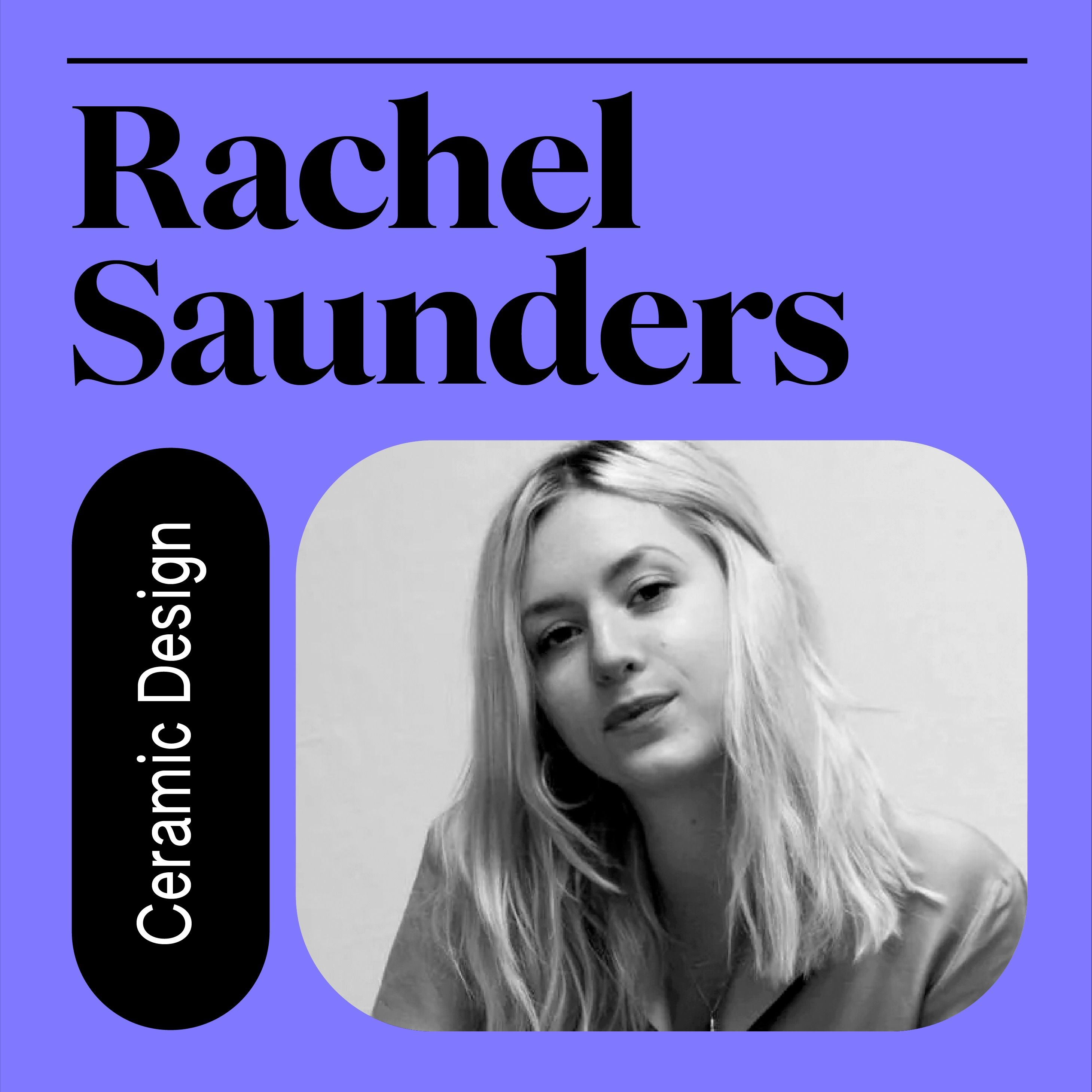
Women Designers You Should Know
044. Rachel Saunders: From Burnout to Alignment
00:35:11
Ceramicist Rachel Saunders shares her self-taught creative journey—from leaving LA burnout behind to launching a soul-led business, shifting into retreats, and redefining success on her own terms.
Loading summary
Transcript70 lines
- [00:03]
A
Hello. Hello.
- [00:04]
B
Welcome to Women Designers yous Should Know, the podcast that celebrates women across all creative disciplines and dives into the stories behind their work. I'm your host, Amber Asey, founder of graphic design studio Nice People. Today's guest is someone I've admired for a long time, not only for her sculptural ceramic work, but for how she's approached her creative life with so much intention and evolution. Talking about Rachel Saunders. Rachel began her career in visual merchandising in la only to realize very quickly that the path she was on wasn't aligned with the life she wanted. What followed was a radical pivot back to her roots in Canada and a deeply personal, self taught journey into ceramics that would grow into the brand. Rachel Saunders Ceramics. In this conversation we talk about everything from Rachel's early signs of burnout to to her evolving relationship with money and her bold decision to shut down her product based business and her new chapter hosting sold out creative retreats in places like Greece and Tuscany. She shares her thoughts on imperfection, intuition, and she even talks about how she redefines success not by how much you grow, but by how grounded you feel while doing it. So here's my conversation with Rachel Designers, you should know.
- [01:59]
A
Women desire.
- [02:01]
B
You should know. Hi, welcome Rachel, to the podcast.
- [02:16]
A
Thank you so much. So good to be here.
- [02:19]
B
I always like to go way back to the beginning because it's really interesting and kind of inspiring to see how people started, how they got to where they are. What was interesting about your journey is you went from visual merchandising to ceramics. You began your career as a visual merchandiser in LA before returning to Vancouver island to establish Rachel saunders ceramics in 2015. Can you share what motivated this career shift?
- [02:50]
A
Absolutely. And the title visual merchandiser feels so much bigger than what I was actually doing. Honestly at the time I was like 21 or something and thinking I was about to embark on some kind of big dream of mine. I'm from Canada originally. I'm from a small town on a small island and it was always my dream to work in the States, to find my way to California, to la. And I was able to through the company I worked for. So I made it down there and I felt like I had figured out something for myself. And quite shortly after the reality hit that, you know, the environment that I was working in was very toxic and unhealthy. The creativity that I was kind of promised or had thought I was embarking on was absolutely not there. I was literally working in the warehouse district, downtown LA 12 hours a day. And so I realized I was in a situation that I never really saw for myself. Kind of being pushed up against this edge really made it so clear what I did want for myself in a whole new way. In one hand, I wanted to live in this big city and to work for someone else. And then this opportunity came, and it made it very clear that I actually wanted to work for myself in very harmonious environment and to actually work more with my hands versus looking at a screen all day.
- [04:23]
B
How long were you doing that for?
- [04:26]
A
Honestly, it was a brief stint of about four months of being in LA before I turned back around.
- [04:34]
B
Okay, so it was like a very quick, no, this is not for me.
- [04:38]
A
It was a full body no. The stress signals, the symptoms. Oh, my God, this is not. It turned around, went back to Canada and started volunteering in pottery studios. Wow.
- [04:51]
B
I admire the check in with yourself and the very quick shift because, I mean, you could go on for years and years doing the wrong thing and just living in that place of this is not for me, and yet here I am doing it.
- [05:07]
A
Absolutely. I do look back and kind of. I have to give myself some credit and acknowledge that that was actually a really brave move because actually, like, a chance at somewhat of security or living this dream that we've been sold. And I turned around, packed it in, and kind of lived a quite unglamorous life for a little bit, forging this new path.
- [05:30]
B
So tell me a little more about what that aftermath looked like. You were taking pottery classes and then what?
- [05:36]
A
Yeah, you know, I couldn't even afford pottery classes at first. I was becoming really inspired by ceramics. It was. What year would this have been? I don't know, 2012, 13:14? There was this amazing resurgence of modern ceramics hitting the Internet and the globe. This seemed like a creative outlet that merged functionality with design. Had always been creative and an artist, but struggled with the lack of functionality and purpose with drawing or painting. I basically committed to ceramics. I didn't know how to start, but I just found myself, you know, a community studio that could allow me to trade mopping the floors for a few hours at the wheel. And that combined with YouTube videos and watching the older potters sit at the wheel and understanding a little better allowed me to teach myself the craft. And then eventually I did get some lessons and was too stubborn that I couldn't actually be taught, and I wanted to do it my own way. So then I went back to teaching myself too.
- [06:48]
B
That's amazing. I think what's really cool about you is that you embrace this new form of ceramics or that there is no one way to do it. And embracing this idea of self taught techniques too. And so what ways do you think not following the traditional path shaped your voice as a designer?
- [07:12]
A
Well, developing my own style definitely takes a while. But the more I was able to break free of what everyone else was doing or how everyone else has done, this craft just allowed me to approach it in a whole new way that was honestly like I was the first one to discover it in my own experience. I didn't get a lot of advice or input, which is a blessing and a curse. There's two sides to that, of course. But I was able to put my head down and do it my own way. I remember when I would be throwing in the communal studio, so many people would look at me and, and tell me that I was doing it wrong or, you know, I had to like move my body differently and. And there's probably some truth to that. You know, I think there's like ergonomic factors about things, but things always feel best to me when I figure them out for myself. And I'm, I'm a learner by doing. Never really like listening. And so I have to physically and somatically kind of go through that process myself. And I think it really fortifies this connection and this relationship in a really big way. You know, learning by doing versus being taught technically. A high school dropout. I didn't graduate high school. I never even went on to post secondary. I am an avid student of life and I think there's so much to be taught and to be learned just by being in the world around us. And it's definitely my favorite way to form an understanding of something.
- [08:47]
B
Did you drop out of school when you moved to la?
- [08:50]
A
No, I had, I had technically finished up high school. This was like maybe a year or two after I went to a kind of work at your own pace, high school, graduate early or not at all or do grade 13. And it was a little bit more geared to the arts, which is really great. But as soon as I got my first job at 15 and bought my first car, you know, I was kind of just really geared towards travel and experiences outside of the classroom. And 10 years later I'm diagnosed with ADHD and realize I learn very differently in the classroom environment. Actually wasn't supportive at all for me. And it makes a lot of sense looking back now.
- [09:31]
B
Yeah, I mean, to be honest, school's not for everyone. And if there's only one way to teach and learn in a lot of schools that can set a lot of people up for failure. Yeah.
- [09:41]
A
I think we're really dealing with some of the repercussions of that and hopefully reimagining a whole new education system that supports us a lot better.
- [09:51]
B
Yeah. You said the school you went to was kind of an art school.
- [09:56]
A
There was just more funding for the arts. And honestly, now I know that it has been defunded. It's kind of just more of a classics school. But I spent most of my years in my high school in the art room with really cool teachers. And there was this little back room with this huge stack of vintage National Geographics that we would just collage from and draw from. And those were definitely some very formative, important years.
- [10:24]
B
Yeah, that's great. And I feel like there's something about kind of figuring yourself out in high school, and then when you look back, you realize, oh, yeah. That she was there all along.
- [10:35]
A
Absolutely. And it's so beautiful to pull into that kind of authentic self and that, like, inner child, too, because oftentimes they knew best and they're the realest parts of you.
- [10:46]
B
Yeah. So I want to talk about your work. Your pieces are grounded in connection, and there's something simple yet functional about your work. And I love your drive towards sustainability and all of that. Your work also carries symbolic elements and kind of a sense of playfulness. I think about this. The now iconic woman vase, for example. How do you balance aesthetics with meaning when approaching new design?
- [11:16]
A
I feel like the aesthetic aspect of my work comes very inherently. It's not really something I think a whole lot about. It just forms itself based on my instincts and my kind of particularity around shape and form. I don't even know how that was created in my own self. It feels like it was just there and has always been there. And the functionality piece. Like I mentioned before, my approach to ceramics was mainly intrigued by this sense of usefulness and purposeful element. Now, I grew up on a farm with not a lot going on around me. And from a very early age, I had to be very innovative with even just my own entertainment and toys, like making fairies out of sticks and flowers in the back forest and. Which sounds very romantic, like, yeah, what a dream. Right. But if I could have just had, like, a real doll or a Barbie or, like, you know, what other kids had, would have loved that. But clay always represented this ability to make anything I needed, like, tool wise, functionality wise, or beauty wise. That's always an element of what I like to create. So driven by, like, what is a useful tool, whether that's a beautiful vessel or something like my ceramic massager or the phone home, the purpose is always there. There's always also, like, double meanings and multiple purposes from what I like to design.
- [12:55]
B
Yeah. I mean, going back to the inner child, I think that there definitely is a sense of imagination at work there, where what you're describing is you had to make, imagine, and create something out of nothing. And that could be what you're going back to when you're creating all of your pieces.
- [13:14]
A
Absolutely. It's just basically like a single material. I also think of bread dough, like, all the things you can make out of flour and water. It keeps me endlessly inspired and connected to this ancient sense of creation and functionality that's within all of us.
- [13:30]
B
Yeah. And what's interesting, we talk a lot about different design disciplines on this podcast, but what's interesting about yours is you're creating stuff with your hands.
- [13:40]
A
Yeah. Which is what got me on this path, is starting from a place where I was so disconnected from, you know, any kind of craftsmanship. You know, working downtown la, and then realizing, oh, my gosh, all I want to do is make things with my hands. And my hands have always been a very important part of my experience in this world. And just through senses and touch and discovery, that tactile element is so crucial.
- [14:09]
B
Yeah. There's something to not just like seeing elements come together. And me as a graphic designer, I'm working on the computer all the time and really framing and shaping stuff on computer. But there's really something amazing and almost even Buddhist about holding something in your hands that someone made with their hands and feeling connected to that person because they made that thing that's now sitting in front of you.
- [14:36]
A
I think there's so many beautiful metaphysical qualities, energetic qualities of craft, of human made objects that, of course, are filled with flaws and little marks of human life and mistakes. And as we tumble into the future here, that's a whole separate conversation, of course. But as things become perfected and real, refined and. And machine made and machine made, and I am so passionate even more about this kind of rudimentary craft that is not able to be perfect. And I think we're going to be even more interested in anything that can have these flaws. I really hope this kind of bleeds into beauty standards and how we view each other and our bodies and all of this. And I think clay can really speak to all of that in a really poetic way.
- [15:36]
B
Yeah. That's beautiful. And I think it's why we love vintage stuff so much too, is you can kind of see the human, the analog in all of these vintage pieces.
- [15:47]
A
And the energy of the actual material itself. You know, I think so many of us are attracted to vintage pieces because they're made of natural materials, too, which have a certain frequency, versus all the new things we're buying, which are made out of polyester or plastic, which you can scientifically test the frequency of these materials.
- [16:07]
B
Yeah, absolutely. And what's really impressive about your career, too, is you're not just a designer. You're an entrepreneur, too, and a business owner. And you've been open about a lot of those topics on social media. You've been open about the challenges around money, too, and saying things like the shame, the scarcity, the avoidance. So as someone who built a creative business from scratch, how has your relationship with money evolved?
- [16:36]
A
Well, I think how I started was very much garnered towards survival. I've been working since I was 14, 15, always had a job, always believed that I needed to work very, very hard. One of the reasons I started my business was to be able to make money. It wasn't just this romantic hobby that I had that, you know, I. I turned into this successful business. I had the intentions of creating a business to make my livelihood through these standards of working with my hands, working for myself, being my own boss. I've really had to learn a lot of hard lessons. Not having any real financial education in my background, a lot of trial and error. Moving through a place of scarcity to seeing what is possible when resources get in the hands of compassionate, intentional people. Just seeing it evolve, being able to use what I earn to invest in my community and create a beautiful team to work with. These are the things that have really fulfilled me throughout. Experiencing some kind of success. Now I've really pivoted my business because the model that I was taught, which is to just grow and expand and maximize, didn't feel authentic to me and didn't feel healthy or sustainable anymore. I actually pivoted my business model about two years ago. Ironically enough, moving away from that expansion and constant growth has actually resulted in even more abundance and a much healthier nervous system, which I think is a big signifier of success.
- [18:26]
B
I love that. That speaks so much to me because I've felt that in my own business too, of do I really want to get bigger or is this a really nice place to stay and coast? I think that's also important as designers because we have to protect our own creativity and mindset, mental health and all those things that people are finally talking about now, when you push yourself and expand too much, it could affect the work and it could affect the relationships and that human connection that's really meaningful in the work that you're doing too.
- [19:01]
A
I mean, I could talk about this for years, and I think I will, because I think we're all ready for that conversation in a very big way. You know, we're seeing all over the downfall of capitalism and what we've prioritized and what we've. We're burnt out, we're out of balance, we're out of whack. There feels to be less true artists than ever, because who's able to be an artist and monetize our work? We have to get corporate jobs just to survive in this society. And that's something that really pains me and something that I believe my life path will be a little bit more geared towards in reimagining a better world for us beautiful, sensitive, compassionate, artistic, creative beings who need that support system and be these amazing minds that change the world. We need periods of rest and support and resources.
- [19:59]
B
I mean, we were talking at the beginning about your career transition early on, but then it sounds like even within your own business there are transitions happening. The business evolves as you evolve and as you kind of figure out what you want and what's working and what isn't. I'm curious to know, with this shift that you made, was there a big moment where you were questioning your path or you kind of hit a wall? What did that moment look like?
- [20:28]
A
It was similar to a death. It's not even a hyperbole. It was the death of an identity, a sense of security, a sure path. You know, this happened over the course of a few years, but many businesses and entrepreneurs experienced a big change, either for the worse or for better. Post 2020. For me, I experienced a really big surge in my business, which is common for homewares and types of companies like that.
- [21:02]
B
Yeah, it seems like everyone wanted to make their homes like their cozy place because they were stuck at home now.
- [21:08]
A
And that was such a beautiful thing. And it really allowed me to expand in such a way that I never expected. That was so beautiful for the time that it was meant to happen. When I practiced honoring myself and listening to my intuition, I realized that this path of producing a product, being stuck in that specific system, having so much overhead, managing a team and wearing 50 different hats, was just leaving me burnt out. And I felt like I had a greater purpose that wasn't being efficiently expressed and so confronting that felt so shameful. And I definitely felt like I was going to let everyone down if I decided to make a change to what was doing because it was working and it was working really well. So if I'm unhealthy and I'm unwell, then that can't really last. And so this change really started in this kind of chain reaction. And the ripple forward happened just when I got honest with myself and clear from that point forward, the help and support and the magical synchronistic moments started to happen where I was able to change my model from being like a primarily production based business to now I have an online membership that's deeply fulfilling for creative people and essentially a destination for inspiration. And it's a communal platform for us to create and grow together. And I host retreats and creative artist residencies and resets in my favorite places in the world. And I'm really prioritizing and investing in, in the tools that I think are the most helpful, as well as coming back to the original reasons why I started working with Clay.
- [23:03]
B
Going back to that challenging moment. Who were you afraid of?
- [23:08]
A
Like, letting down, I guess the community that I had built because in my mind I was loved and accepted because I made a pretty product that people liked, you know, and if there wasn't the pretty product, would all of that love and community and acceptance disappear? You know, I think these are kind of like a classic human survival kind of question, you know, will we be loved and accepted?
- [23:37]
B
It's like tied into your self worth. And as designers, I think that's what's really interesting is there is a lot of value in what we're doing and creating and designing. But is our self worth tied in those designs or can we really separate ourselves from that and see our worth beyond that?
- [23:57]
A
Yeah. And, you know, some of the artists who I respect most in this world or who inspire me the most are the ones who have been able to just really not give a damn. They put out weird stuff, unsuccessful stuff, they put out great stuff, but the consistent is they're just putting out their work. So this was absolutely, you know, this initiation into a deeper sense of self worth that didn't come from just producing our being, which society has put onto us. We're only good if we're of service or of value in the workforce or whatever. And so I really got to test that and see and I'm very happy to report that I feel better than ever and I have a stronger community than ever. And the people who just want to See ceramics, they're free to leave. And ones who want to come on this more holistic and balanced journey are welcome to join. Acceptance and freedom is paramount. Otherwise you just get pigeonholed into one iteration of yourself and that's not liberating.
- [25:11]
B
I love that you offer retreats now too. I'm curious to know what like that. That is a big shift to go from creating products to these like experienced based offerings. What inspired that shift? I mean, of course it was probably this own moment within yourself, but to actually like, make that happen is a whole other step.
- [25:32]
A
Absolutely. And what started it all was right before I made this big pivot in my business and I still had a big team and a big studio producing work we'd send out all over the globe. I was struggling and looking for a way out. I was just like, there must be a way for me to still connect with my art, artist self and creative inner child. What came to me was going on an artist residency and I. I had heard of like a couple people who have done this thing called an artist residency before, and I felt intrigued. So I did my research and I ended up finding one. I had done one in Oaxaca before. That was a small self led one. And then I found one in Greece that was rooted in pottery and different disciplines. I took a big leap of faith and I stepped away from my business for two or three weeks, which was huge at the time. I lived in this tiny village in Greece for two weeks with about 15 other artists from all over the world. All we did was talk, eat, make art, and walk. It radicalized me in the way where I realized how important these periods of rest and play and, and creation and thinking and sitting around a table and talking like, what a revolutionary idea. These are things that we've done our whole history of being human until now. I started doing more artist residencies and I started really thinking about and imagining the ways in which I would love to host an experience like this. The kind of locations and environments and how I would do things differently and what I would want to offer. And it all divinely unfolded into hosting these experiences, experiences in my own life, which have been some of the most gratifying that I've had.
- [27:24]
B
Yeah, you have one coming up, don't you? It's already sold out.
- [27:28]
A
Yes, I do. So I'll be returning to an island in Greece that I have fallen in love with. I hosted two retreats there last year and I'll be returning again in June. It is sold out, but I will be hosting more every year. It's a week focused on creativity, rest, connection, nature and everything I'm passionate about and, and that I'm very passionate about us needing and having more of.
- [27:56]
B
That sounds beautiful. Do you do one a year or how many do you usually do?
- [28:00]
A
Last year I did three. I did two in Greece and one in Tuscany, which were a little bit different from each other. And I believe I'll continue probably doing a few a year at least because these in person experiences are just more important than ever and the lasting effects are lifelong. It's not like, okay, you get a really beautiful product or you have a one off connection. It's like these are immersive experiences where you create lifelong connections, are able to have these creative downloads become unblocked and learn lots of different tools and resources to take home and have that continue expanding.
- [28:39]
B
You've moved from collection to collection with your products and now all these retreats that sell out and your products often sell out. I'd be curious to know with where you are at with your business. How do you define success now?
- [28:54]
A
I think I define success now as a healthy nervous system which is opposite of how I I was viewing it when I first started. Being super busy and stressed out all the time seemed like a pretty successful marker. Balance and sustainability in the sense of I can continue doing this and not burn myself into the ground is a really good marker of success. As well as having the resources that support me and having a business that is able to grow in a really healthy way versus that up, down, kind of adrenaline pumping, like huge months, smaller months and who knows what's gonna happen next. And okay, I'm gonna be up till 4am designing and that's actually really fun. And I thrived off of that. My ADHD mind thrived off of that chaos for many, many years. But as I've learned more about myself and the life that sustains me, the most success is having freedom and time. Time to rest, to think, play, time to do nothing. That for me is the ultimate form of success, simplicity.
- [30:11]
B
It's funny because it's so easy to get caught up in the hustle and thrive off of that. Like, yes, this is happening and I'm gonna keep going and I'm gonna kill next month and it's gonna be amazing. And it really is hard to put a stop to that. Slow down and take your time because it's so easy to just keep chasing that success.
- [30:35]
A
We're not sold like a slow burn as something to seek, not in our relationships or our businesses. We're taught to chase those extreme fireworks and the super high highs and low lows. It's a radical act to take a step back from what we've been conditioned to believe is good, right, and valuable and to really ask what works for us. And don't get me wrong, I still create chaos in my business all the time. In my personal life, I think that's being an artist and the ebbs and.
- [31:10]
B
Flows of it all.
- [31:11]
A
The ebbs and flows and being an emotional being and having feelings in this extremely challenging world. Creating a business that supports you to have chapters of rest and chapters of busyness all in the same go is what I'm really investing in these days. I feel really happy to have found that currently. And also I know everything will continue to evolve and change. I'll have endless pivots in my life because that's just a sign of evolution and growth.
- [31:44]
B
What does the next season look like for you?
- [31:47]
A
So I'm currently coming a bit full circle back to my ceramic practice because it's been about two years since I've had my own studio to work, work in and I've gotten some help in producing some of my pieces. I'm experimenting more with that. But I'm also in the process of building my own little hobby studio. I'm essentially turning my career into a hobby. This is my next experiment.
- [32:18]
B
Usually it's the other way around, hobby that becomes a career.
- [32:22]
A
It never really got that honeymoon phase. It was almost too soon a business. I'm lucky in that way. But I never got that honeymoon phase where I can just experiment and take my time and make really terrible work that no one wants to see and smash it and do it again. And so I'm really excited for that. I just finished my third iteration of Going through the Artist's Way, the book by Julia Cameron.
- [32:52]
B
I've been wanting to read that.
- [32:53]
A
Oh, you have to.
- [32:54]
B
I haven't read it yet.
- [32:55]
A
My joke is that you have to buy it and then have it on your shelf for 10 years and then you can. Having an accountability group for it is really important. I'm about to start a two week morning pages practice for my community, the sanctuary where we all, we all have a little accountability group for that. But yeah, this next chapter is really about seeing how comfortable I can get with having balance, doing less and impacting more. Getting off that hamster wheel more and more, creating even more sustainable systems that can have an even deeper impact and reach. Focusing on spaces and environments and creating more opportunities for people just like me to have breaks, get re inspired and and in touch with their deepest, most authentic expressions of their creative self and focusing on adding beauty and value into the world in a way that doesn't completely deplete me.
- [34:03]
B
Yeah, I love that. I think that's so great and it's so inspiring for designers everywhere and also me as a business owner and trying to really remind myself to slow down and take care of myself. So beautifully said and thank you so much for joining me today.
- [34:20]
A
Thank you for having me. This is a really great talk.
- [34:24]
B
That's all for today's episode. If Rachel's story resonated with you, you're not alone. Her honesty about creative burnout, self worth, and making space for rest is something so many of us need to hear, including, including me. Make sure to follow Rachel at RachelSondersceramics and explore her creative retreats, her online community, and her ceramics@rachelsandersceramics.com and as always, if you loved this episode, leave a review or a rating. It's the best way to support this podcast. You can also check out the show notes for links. Thank you so much for listening. And until next time, let's redesign history by celebrating women.