← Women Designers You Should Know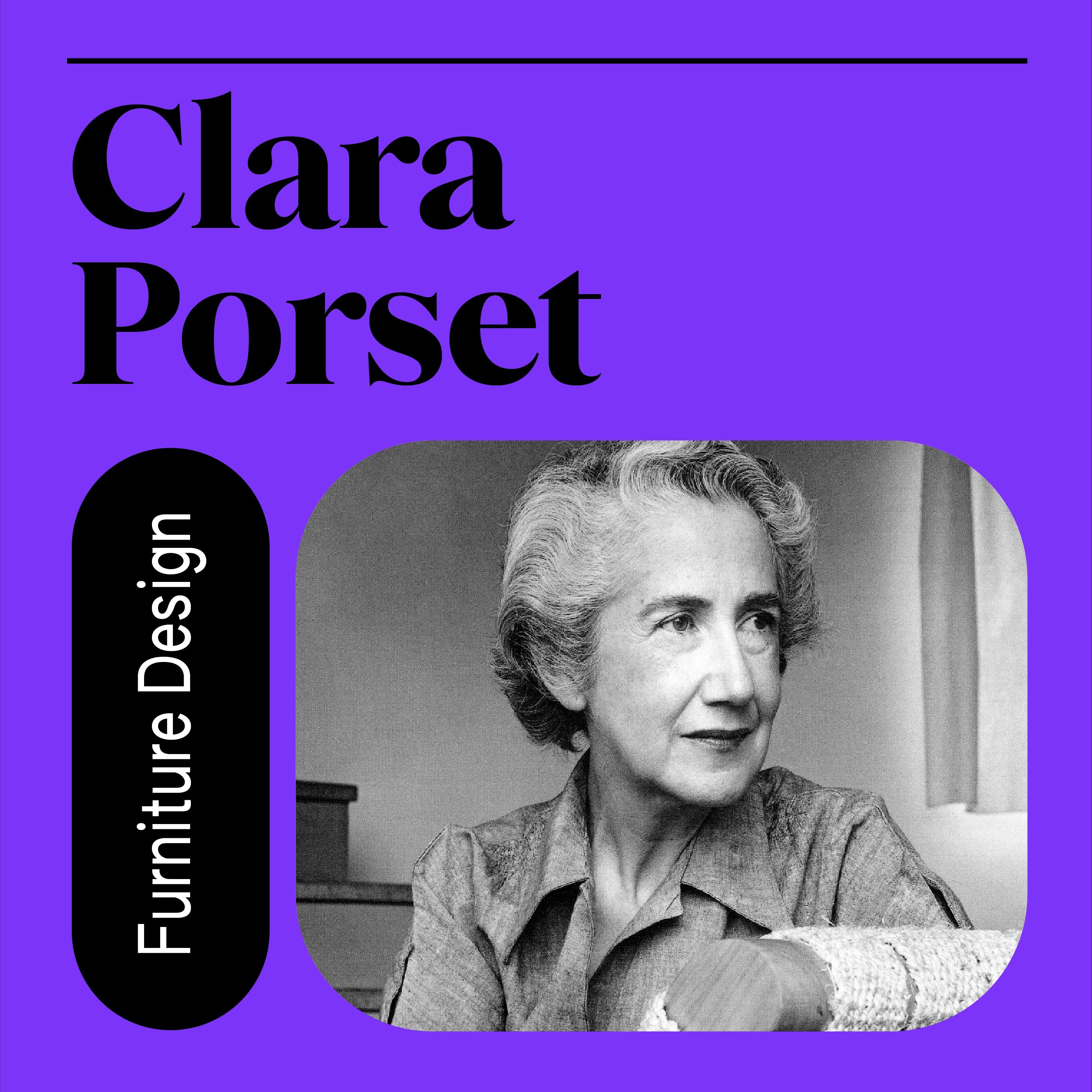
Women Designers You Should Know
045. Clara Porset and Lindsey Colhoun: Frida Kahlo’s Favorite Chair
00:47:11
This designer-on-designer episode explores Clara Porset’s legacy of cultural modernism and political courage, with insights from interior designer Lindsey Colhoun, whose own work echoes Clara’s timeless use of natural materials and storytelling.
Loading summary
Transcript89 lines
- [00:03]
Amber Ac
Hi everyone. Welcome to Women Designers yous Should Know, the podcast where we celebrate the women who've shaped the world of design one story at a time. It's very much a Women Designers on Women Designers kind of setup. I'm your host, Amber ac, founder of the Creative studio Nice People. Today's episode is about Clara Porsette, the Cuban born, Mexico adopted designer who championed local materials and modernist forms long before any of those things were trends. She was exiled for her politics. She's even been overlooked in design history books for decades. But now, with a new book of her writings released and a chair still sitting in Frida Kahlo's studio, her work is finally getting the attention it deserves. And joining me today is Lindsay Colquhoun, interior designer who transforms homes into livable sanctuaries that merge function and beauty. Her signature aesthetic captures the spirit of Southern California, living natural, elegant and deeply personal. An LA native who grew up in a Frank Gary home, Lindsay was immersed in design from an early age and was influenced by her mother who was also an interior designer. Today she works with celebrities and Hollywood executives known for her thoughtful approach to timeless design. Together we talk about Claire's legacy, her belief in design as a cultural force, and how her ethos still lives on, from desert inspired pallets to artisan made furniture and the rise of storytelling in interiors. Honestly, after reviewing this episode, I can't think of a better duo to talk about today. If you were to put Clara and Lindsay's work next to each other, you would see that it's similar aesthetics but from completely different decades. A sign that they share a similar ethos in design. So let's get into it him and wait for you and me and her and she breaking boundaries. You should know foreign welcome to the podcast. Thank you. I'm so happy to have you. I in fact I feel like this kind of a recurring theme on this podcast is this idea of multi hyphenate designers and having a very layered design career, being able to change disciplines or switch back and forth and designing different things and everything. I was fascinated by the fact that you've been in both fashion design and interior design. Is that right?
- [03:18]
Lindsay Colquhoun
Yes, from when I was a little girl I always wanted to design. I would look at shoes or a pair of jeans, accessories and always want to recreate and make it my own. And so obviously at the time I didn't know I wanted to be a designer, but I was always reworking things in my head. It would be so cool to have a pair of shoes like this. But if they had a higher heel and they were in this color and this material. So the older I got, it was very apparent that I wanted to be a designer. My dad was a producer and my mom was an interior designer. I grew up around design creativity and never thought I'd get into homes. Thought, oh, that's what my mom and adults do. And worked in fashion for many years and it's a very similar business to homes. Not as complicated, not as layered, but it's definitely, you know, with texture and merchandising and scale. But yeah, and eventually ended up in homes. And it's so complicated home design, it's not. So many people think interior designers just pick pretty colors and furnishing. And we actually work with architects and contractors and come up with the design of the whole house. We're really instrumental in that. Look at it from a very early stage so things can flow and function properly. And there's a lot of details that a lot of contractors or even cabinet makers will leave out in a kitchen or not think of putting a pull out trash in this area. And those things matter. We get involved pretty early on and it's all the thousands of details that come together. It's hard to explain what we do because people think, oh, it's just picking this pretty material and that and comes together. There's so many details. You know, how is that edge going to be formed? Is that going to. How thick is it going to be? How far apart is the tile going? All these little nuances that really give a look and a feel.
- [05:21]
Amber Ac
Mm. You bring up a really interesting point that there's this idea of fashion versus interior design and the similarities between those two, which it's true, not a lot of people really think about that. But with fashion, you're probably working with manufacturers. And you were doing bag design too, weren't you?
- [05:40]
Lindsay Colquhoun
Yes, I did handbags. I've dabbled in shoes and belts and a lot of clothing brands.
- [05:46]
Amber Ac
And then like on the flip side, with interior design, you're working with the contractors and really navigating through all of those details. And there's this sense of controlling the vision and the end result with working with other people and craftsmen on realizing those designs.
- [06:06]
Lindsay Colquhoun
Exactly. And I think too, you know, when you work with certain tradespeople for long enough, you end up speaking the same language and they understand what you want. And sometimes when we're working with new people who we haven't worked with in the past, everyone has an idea of how things should be done. And there's no right. There's no wrong. It's just the look we want in the end. So that's definitely a challenge on our end, navigating those details. Someone will say, I've been a cabinet maker for 40 years. And it's like, that's great. But there's different ways to do it and a different look. And it's. You know, I compare it to. You can see a kitchen that looks like it was straight out of Home Depot, or a kitchen that looks like it was in a European castle, but modernized, you know, so it's two different looks. You know, I'm so big on analogies. It's kind of. I was thinking the other day, I'm always looking for ways to explain to clients how all those things come together and something that came to mind. It's kind of like chicken. You could make chicken that's really simple and boring, or you can also make a simple chicken that's full of soul and flavor and it's the same thing with design or it doesn't.
- [07:19]
Amber Ac
What an interesting analogy. I love that so much because sometimes I feel like I'm drawing analogies all the time. Like when I'm talking about design, sometimes I'm talking about it in the framework of a car and how if you were to have a custom one off car, that's going to be a lot of maintenance to maintain that car because it's custom designed for you, you're kind of out of the norm. But I love this chicken idea too, because there's so many different ways to have a chicken and to cook a chicken. And I bet you're also having to challenge these makers into not making the same chicken over and over.
- [07:57]
Lindsay Colquhoun
What if that's gonna be a really bland, boring chicken? Yes. It could be white and look cookie cutter, like every contractor home. It'll be well built. But does it have the warmth, soul, and character the client wants? Not necessarily. And so that's where designers come into play and really give that feeling. I always say it's like a feeling. There's so many parts of the recipe that come together to give a feeling in the end. So it's the difference of walking into a house and going, this is pretty. This looks like a sterile hotel, or, wow, I could, like, relax and live here.
- [08:35]
Amber Ac
It's also really, really cool that your mom was an interior designer. Like, what was her career like, Especially in an age when that was even less normal for women to be designing and working in that capacity.
- [08:49]
Lindsay Colquhoun
My mom started out as an actress, and then she moved into opening a store and then a full design studio. And I've kind of walked in her path, if you will. I just recently opened my own store and have a design studio.
- [09:04]
Amber Ac
I think your store is called Haven, right?
- [09:06]
Lindsay Colquhoun
It's called Haven, yes. It's in.
- [09:09]
Amber Ac
You had that for.
- [09:10]
Lindsay Colquhoun
We opened in November and it's like a little capsule of what we do in home. So I took a. Not to get back to my analogies, but this very bland, boring chicken of a space. It literally looks like it could be an urgent care facility. It was so sterile and we gave it a soul. We did our warm paint colors and curtains. And it's those little touches and how they come together. So people do walk in and they say, oh my gosh, I want to live here. You know, it's. It's such a cozy sanctuary. So it's.
- [09:45]
Amber Ac
That's incredible.
- [09:46]
Lindsay Colquhoun
Really fun to also be at the store and meet people in the public. We're so behind the scenes with what we do and referred and sometimes on projects for a long time. It's a really fun venture to socialize and give our little design tips and play store.
- [10:05]
Amber Ac
Yeah. So your mom even owned a store before.
- [10:08]
Lindsay Colquhoun
She had a store store in Studio City. It was called Ferret Home Design. And a lot of older generation know about it and she worked with a lot of great clients. And I think I definitely learned how to multitask and manage and do all the things through her. She's a very hard worker and she still designs now on a smaller scale because she's a little older, but she loves it.
- [10:34]
Amber Ac
I love that story. And I found this little tidbit of a fact. Was it true that you grew up in a Frank Gehry home?
- [10:42]
Lindsay Colquhoun
Yes, I did. My dad loved mid century modern, more architectural homes. My parents divorced when I was really young and my mom had a very traditional home. So I think I get my aesthetic from a little bit of both because I do love to mix it all together and I can appreciate traditional transitional mid century modern. You know, I don't like anything overly designed. I think my aesthetic comes from the two of their houses that were so completely different.
- [11:18]
Amber Ac
That makes so much sense, seeing your work and hearing that backstory. Yeah.
- [11:24]
Lindsay Colquhoun
So, you know, I want that comfortable, lived in look. But I'm really big on less is more.
- [11:30]
Amber Ac
Yeah, that makes a lot of sense. And you use a lot of natural materials in your interiors, like wood and linen and plaster. When you're working with clients, do you experience challenges with staying true to your vision, but also trying to Match their requests and all of the decisions that are at play there.
- [11:52]
Lindsay Colquhoun
Yeah. I think a lot of times people come to us because they're drawn to our aesthetics and then they want to explain the esthetic they want. We have a pretty involved process in getting to the point where we're hearing them and speaking their language. We want to get them what they want. But, you know, if they said, oh, we want pink and purple walls, we're probably not the designer for them, though. A lot of times people say, it's just so boring in here. I need color, I need this. And they're using words where we know they really want dimension, they really want texture, they want a vibe. And they think the way to get that is from a big, bright piece of art or doing an accent wall. And I think the biggest thing is us educating our clients and steering them, because ultimately what they tie back to is our work, and that's why they hired us and why they like it. So they'll try to put into semantics what they think their look is. But we've never had a client that's been not happy with the outcome. I mean, maybe the process isn't so.
- [12:58]
Amber Ac
Fun sometimes, but takes a lot of patience and back and forth. Yep.
- [13:05]
Lindsay Colquhoun
I think visualizing the end result is really hard for people. And, you know, with AI, you can do some pretty, but people are very literal and want to see. Renderings can get very costly. So we definitely suggest you either trust us or you don't. If you don't trust us, you're going to spend a lot more money. And ultimately, I'd rather see somebody have a home that's more valuable than overpay our firm to hold their hand along the way. Of course we provide visuals and, you know, but like, the full blown realistic renderings are hard and things shift and change as you're going. Well, a lot of unknowns come up.
- [13:44]
Amber Ac
Yeah. And like, the really great thing about your work is that you create this sense of warmth, this idea of lived in beauty, even in a brand new home or a blank slate like you're talking about with Haven. You're really bringing this sense of design ethos to these homes, creating something that feels warm, modern, and timeless. Kind of like that, you know, a little bit from dad and a little bit from mom kind of an idea. What would you say makes a space timeless?
- [14:15]
Lindsay Colquhoun
I think that very careful blend of not falling too far into trends. I mean, there's trends that are also timeless. And so I don't sit back and follow trends so closely. I Think when it comes down to natural materials, they're pretty timeless. So I think using lighter stones, if you get into. Okay, I'm going to do a, you know, chocolate brown tiled bathroom. Okay. In 12 years, that might look dated again, but, you know, there's ways of incorporating color and trends and spaces. There's definitely areas I'll do those splashes and pops, but I like to remain a little bit more neutral and pull trends in with, like, towel. Okay, let's put chocolate brown towels. So if you're so concerned that you're going to put want to redo your bathroom and, you know, the next five years, let's not do the chocolate brown tile. So it's really picking our battles. So, you know, another thing that I focus on is I like to mix metals, so I'll use brass, but I'll do a lot of mixed metal throughout. So I always used, you know, polished nickel and iron and brass, where there's a little bit of everything. And again, it makes sense and tells a story and ties together.
- [15:42]
Amber Ac
That really brings it together and I think really helps for designers everywhere, too. You could apply that to any industry or discipline. This idea of a little bit of everything, of being aware of trends but not leaning into them too much.
- [15:57]
Lindsay Colquhoun
Yeah. And it's like, you know, if you go to, okay, drop crotches and every single pair of pants you own, is it going to be drop crotch? And if it was, that's who you are. So it's really the same thing. And it's really, you know, because we do this all day, there's so many pieces in a home, and people get fixated on some of the weirdest pieces sometimes, you know, that, like, really don't matter. But our job is to really walk them through it and have them understand. But it is. It's a very complicated balance that we're striking.
- [16:33]
Amber Ac
Yeah, absolutely. I would love for you to walk us through a favorite recent project, maybe one that challenged you or pushed you creatively or, like, really excited you.
- [16:44]
Lindsay Colquhoun
As a designer, I always love a challenge. So the more decrepit, the more horrible the house is. I'm all in. We're working on one of those right now, a home in the hills. And it needs a lot of work. There's been a lot of water damage, a lot of restoration. We weren't expecting. So those challenges, you know, play with the budget, but everything's a creative puzzle, and how can we still get this outcome? So I'm very excited to see the result of this particular project.
- [17:23]
Amber Ac
Cool. When does that One get completed that.
- [17:27]
Lindsay Colquhoun
Will be complete in September.
- [17:29]
Amber Ac
Exciting. Very soon. Yeah, yeah, yeah. I love projects like that where it's like you're in the middle of it. It's turning out really well. The end is near. It's getting really exciting.
- [17:42]
Lindsay Colquhoun
I know. It's so much fun. It's. It's definitely a process for the clients. And, you know, I think us managing the clients along the way is more work than the design itself, you know, so we're really working with expectations and they want to understand and it's a. It's a complicated business.
- [18:01]
Amber Ac
Yeah, that's so true. Tell me more about your team too. What does it look like? How have you shifted into leadership roles and things like that?
- [18:11]
Lindsay Colquhoun
So I have a really great team. There's five of us. And with this kind of business and all the moving parts, it's so important to have people that specialize in what they do and really see everybody's strengths and let them run with those strengths. There's thousands of details in a remodel, so if you can imagine our files, our way of tracking things, I mean, there are so much organization involved on our end and communications, and everybody definitely has their strengths. I have a designer that I love on my team. We have an assistant designer, and the three of us are. We divide and conquer on all the projects and then we have a full time accountant. And so, yeah, I think it's coming up with systems is really important and a trial and error to figure those systems out. We're always looking for more efficient ways to communicate with clients. And I'm really big on customer service and making clients feel well taken care of. I mean, we put our heart and soul into every project we do. And I can say everyone on my team is very passionate about it.
- [19:23]
Amber Ac
So I love that. So shifting gears a little bit, we're talking about Clara Porcet today, and I would love to know a little more from you. What is it about Clara that inspires you?
- [19:38]
Lindsay Colquhoun
I think first of all, how forward she was for her time. I love that. Her philosophy about combining form and function and really using natural materials, I can really relate to that. I think things should be beautiful, they should be comfortable, they should be. All the things. I think that interplay between soulfulness and simplicity I can really relate to. And I love that about her designs. They feel very grounded, yet clean and modern and simple.
- [20:12]
Amber Ac
Yeah, absolutely. It's really telling her story and what she's pushed through and the challenges she faced. Her design ethos matches yours so much. And if you Put your work side by side. You could easily see a Clara Porcet chair in the spaces you're creating. I feel like this is a match made in heaven, where it's like, yeah, you know, this historical woman, and then you being a woman designer today and how there's these through lines that, you know, keep recurring through history of creating warm spaces that are functional, beautiful, and timeless. So I'm going to dive into her story and her life a little bit just to help listeners understand who she is, where she came from, all of that. She was born in 1895 in Cuba to a wealthy family that prioritized education and travel. Even though she was a woman in the 20th century and had all of these challenges, she also was coming from a place of privilege. With the wealth that she had, the education she was able to get, the traveling that she did, all of that really paved the way for her being a globally aware designer, understanding design from different regions of the world and marrying them together. And I think that's really the heart of her story. She initially went to Columbia University. She was going to study political science and fine art, and she was also multilingual too. So growing up, she learned English and she later learned French and all of that. And so you kind of see that in her travels to France and different parts of Europe. She went to Columbia University initially and then had a shift from there. She ended up going to Paris to study at the Ecole des Beaux Arts School, which is the iconic fine art school in France. I think even Julia Morgan, the architect who came before her, had studied there too. In the late 20s, she visited the Bauhaus in Germany. And so she wasn't an official student there, but met them, absorbed their radical design philosophy, and even integrated that into this idea of form meets function and craft, but also ways to mass production. It's so incredible. One thing that I was really in awe of is that she went to school throughout her 20s and even throughout her 30s, going back and forth, going from home and then back out to learn something new. I think that's so incredible to keep learning and to keep adding more things and inspiration to your bucket. I'm curious to know, have you had any experiences with that in your life? How are you constantly filling your bucket of inspiration?
- [23:13]
Lindsay Colquhoun
I'm always out shopping, seeing, doing traveling. I love cultural references. You know, if I'm visiting a different country and seeing what materials I'm. I love immersing myself in cultures and just using all the different things. You know, there's so much fun to incorporate and design and give you that texture, dimension, warmth.
- [23:41]
Amber Ac
I think that's really what Clara was all about, was appreciating different cultures and bringing those cultures together and saying, like, you know, there isn't just one way to do it all. There's all of these things that people are really good at and have their strengths and bringing those elements together and creating these timeless homes with a little bit of everything where there's a lot of humanism and culture at the heart of what she was doing.
- [24:08]
Lindsay Colquhoun
Absolutely. And I think what's, you know, she used a lot of native materials like oak and mahogany, wicker and leather. But, you know, I think having elements of that, really an ode to these natural, iconic materials.
- [24:27]
Amber Ac
Yeah. It's so true. In fact, her work was so ahead of its time, it feels like stuff you'd see today. She had this ability to travel and step back and really see design as a whole. That was happening all over the place at the same time. And of course, we have that advantage now because we've got social media and the Internet, where globalization is happening. Were all taking inspiration from other places. But the fact she was doing that in the 30s, up until she died in the 80s, that's pretty incredible.
- [25:00]
Lindsay Colquhoun
Absolutely. And I think her eye was so forward, too, for her time and understanding curves and lines and all those subtleties and how they come together. And that's what I appreciate so much about Clara's, you know, bootaka chair. I love that it's that mixture of form and material and how they come together and the curves and the lines and it's just, you know, so in line with the aesthetic that I love. Like a very simple understated sofa with an elongated cushion and a great textured rug and a, you know, really iconic sculptural chair. Next to it is like the jewelry of the room. Like, there. That's what you need. You know, I think having everything overly designed isn't. You don't know where to look.
- [25:52]
Amber Ac
Yeah. In fact, to dive deeper into this chair, it's considered a colonial chair. It apparently emerged from Venezuela in the 16th century. And it kind of has this Spanish X frame element or aesthetic to it. If you were to look at side by side of this historical chair and her chair, hers is a completely reimagined, like, I don't know why we're even calling it that chair anymore, because hers looks so different from what this historical colonial era, Spanish, pre Columbian chair looked like. This basically became her signature piece. It's kind of this low slung profile, kind of a sloped back, very relaxing looking chair that you'd sit low to the ground in. She brought a modern aesthetic and idea of ergonomics into play. Like, how can we make this more comfortable? Because she, like, really believed in this idea of everyone deserves comfort and to bring good design to the masses and that objects should serve people, not the other way around. I really appreciated her ethos behind all of that. In fact, that plays into this next part I wanted to touch on. She was even an activist, heavily into politics. After traveling and all of that, she returned to Cuba in 1932 and she had all of this global design knowledge and ambition, ready to get to work, and probably had a major confidence boost at this point in her life too. She was giving lectures, designing homes in Colombia or in Cuba, and really bringing this idea of modern design to Cuba. This was also during a point of major political repression for Cuba. And she was outspoken. Her, like, public criticism of the current president at the time. And all of that led to her being blacklisted. So I don't know what she did or how far she really pushed all of this, but it got to a point where she was being so loud, so disruptive, that the government noticed she was blacklisted. She had the kind of, like, socialist leanings too, and really wanting to make sure that, like, everyone was taken care of. And so she had a lot of this idea of empathy and getting out there. She was exiled. They didn't want her in Cuba anymore and she had to flee. I can't imagine what that would have been like. In 1935, she fled to Mexico and from that point on became known as a Mexican designer, even though she was from Cuba.
- [28:34]
Lindsay Colquhoun
So interesting.
- [28:35]
Amber Ac
I feel like sometimes these women designers from history have such ambition and gumption. I guess you could say they're the ones we're talking about now because they were strong forces that didn't just sit in the backseat and let things go. Like, she really had an opinion and she let that be known.
- [28:58]
Lindsay Colquhoun
Yeah. And I think that passion and that fire to do what she loves, you know, and not sit back and let that get taken away from her.
- [29:08]
Amber Ac
And that probably played a lot into her design and how she approached the business of it and everything too.
- [29:15]
Lindsay Colquhoun
Definitely.
- [29:16]
Amber Ac
Another really cool part of her story is Frida Kahlo. So she has a home in Mexico City that you can actually tour now called Casa Azul. And turns out one of Claire's chair, the Butaka chair that we were just talking about, is in Frida Kahlo's home right now. And Next to her wheelchair and her easel. I think that's a really cool layer to her story. She and Frida knew each other in passing. I think that they're actually like 15 years or so apart, Frida being younger, but they were kind of intermingling in the same circles. I think maybe Frida's husband knew Clara's husband. They were all design couples and people who were pushing for better design in Mexico, bringing modernism to Mexico, and kind of these, like, avant garde ideas in the art scene. And so I just love that there's kind of this overlap to both of these iconic women's stories.
- [30:20]
Lindsay Colquhoun
I'd love to be at that dinner party.
- [30:24]
Amber Ac
Right. Speaking of friends and design friendships, there's another friend that Clara Porcet had, and that's Anni Albers. This is a really interesting story because Annie came from the Bauhaus. She married Josef Albers, who's iconic for his color squares that are in modern museums everywhere. And it turns out that Anni Albers came from a weaving background at the Bauhaus. She ended up having to flee Germany during the height of the war and politics and everything that was happening at that point, too. And so they kind of had similar stories. And they actually ended up meeting in Mexico because Annie and Josef Albers loved travel and learning about art and design and other places and things like that. And then Clara ended up visiting Annie and Joseph at Black Mountain College in the U.S. she called this a turning point in her creative thinking. Black Mountain College was really iconic because it was kind of like this idea of Bauhaus and creating new design thinking and ethos from the old and trying to, like, shift the world of design and everything. But now set up in the US In North Carolina. So having this Bauhaus design ethos set up in North Carolina with all of these teachers that had a similar design ethos and Annie and Joseph also teaching. She even talked about it as if they were giving away these really complex design ideas freely and that they really created an experimental environment, too. One thing that Clara said on this experience, she said, seeing is better than reading. So I went to Black Mountain College, a place lost in the mountains of North Carolina. Beautiful, if there is anything beautiful. And so I love that the idea of she loved to just like she was a sponge that soaked up experiences from seeing and experimenting even more than reading. Can you relate to that at all?
- [32:37]
Lindsay Colquhoun
Yeah, I mean, that so true. It's like, almost like if you go to the desert, you know, even palm desert, Palm Springs, Joshua Tree, you immediately unwind and it's a feeling and it's a energy. So I feel like you can read about something, you can visualize it, but you might not feel the energy. And I think that's like, ultimately what designers are trying to bring to, whether it's a home or a product or this or that is like a feeling and an energy. So, yes, you can read about it, you can look at it online, but you're not going to get that immediate feeling of like, oh my gosh, I feel so relaxed. I feel like, what are all the things that come along with it? So I love that it's like to experience it and see it is very different.
- [33:31]
Amber Ac
And one thing that she was really all about was she was adamant about her profession being taken seriously. And she rejected the term interior decoration, viewing it as trivializing and gendered, which is so true. She fought so true, established the name interior design as an architectural discipline grounded in ethics, environment and human behavior. She really saw her work as being architectural and being design and not about this idea of decoration.
- [34:06]
Lindsay Colquhoun
I can definitely relate to that term being not so ideal.
- [34:11]
Amber Ac
And I wish we could say that she was the one responsible for transforming that word. But really, in the era that she lived in, she was so unknown and she was even erased at times or not. Very many people knew about her. And it hasn't even been until recently that more and more people have been talking about her. Of course, a lot of design in Mexico knows her name, but in the US we are just now talking about her in the last several years. One really interesting story is, so she married a muralist. His name's Javier Guerrero. He's a well connected figure in the Mexican art scene. And they even collaborated professionally in at least one major design competition that they entered. They both contributed to it. A lot of it was driven by Clara and her design ethos. And a lot of it mirrored her work too. It turned out that Javier was the one who was given sole credit for that exhibit of work and for that competition they entered. And so it's just like another example of a male partner being credited over a woman who did the work. And this isn't necessarily his fault or his doing, but just society as a whole. And the fact that they saw these two names and then for whatever reason, erased Claire's name and only gave it to him, thinking he was the one behind the entire project.
- [35:45]
Lindsay Colquhoun
Wow.
- [35:46]
Amber Ac
It's similar to Charles and Ray Eames. And for the longest time, everyone thought or assumed it was all Charles or, you know, there's so many Other stories similar to that, where when there is a woman who's tied to a man in some form in the design industry, it's assumed the man did all the work, and she just stood next to him, smiling and cheering him on.
- [36:09]
Lindsay Colquhoun
It's amazing how much that happens.
- [36:11]
Amber Ac
Still. Yes.
- [36:11]
Lindsay Colquhoun
Right?
- [36:12]
Amber Ac
Yeah.
- [36:13]
Lindsay Colquhoun
Still, I know.
- [36:16]
Amber Ac
To touch on a few more of her design objects. It's interesting because you can really just Google her name and find all of these vintage pieces that are still being sold today for thousands of dollars. And so another one of her pieces is a chaise lounge that she created. It feels like it's sculpted by light. It's long, elegant proportions with a woven seat and backrest that creates both structure and softness. And it's also blends this idea of modernism softened by texture. And that's really at the core of the work that she did. She also designed all sorts of screens or folding room dividers. I have one behind me. This one's actually adjusting of Blakeney piece. She just told me on a recent episode that this was her piece, and I didn't even know because I bought it secondhand.
- [37:11]
Lindsay Colquhoun
Oh, my God. It's so cool.
- [37:13]
Amber Ac
But it does remind me a lot of Clara Porcet and all these conversations today about, like, woven things mixed with. I mean, this one's actually with bamboo, but she would create these folding dividers and took inspiration from the idea of, like, Japanese screens at the time too. And then these panels would be made of palm or ixal. It's like dried agave. And then she would arrange it in these clean geometric patterns where the light would filter through them, basically turning it into, like, an art form. And so I just loved. Even if you see some of her sketches, she has these beautiful lines and forms and this sense of structure in her work. And then she brings some kind of a soft element, like you pointed out, the leather, the woven stuff, the rattan, things like that.
- [38:07]
Lindsay Colquhoun
And I think, you know, all of those materials, anything that you can find in nature or that are natural or historical, I think, like, Earth is so timeless. Everything that you can find in nature, natural materials, and balancing those in a way in a home that's comfortable, what's outside what mountain range can I see the beach? You know, taupes and creams and this and that. And any colors in nature are pretty timeless. I mean, there's mountain ranges that have, like, rust on them or. But all of those color palettes and layering, different tones and colors and tans and browns and rusts and give it.
- [38:49]
Amber Ac
All that dimension and I feel like that was what she really understood at that time, which is kind of incredible. A lot of people were doing all sorts of different things in the 40s and 50s, but she would go to the market, observe and see what craftsmen in Mexico were doing. Even just indigenous folk art and stuff like that. She was really observing and seeing all of these things and being inspired by them. She's one of those very rare designers from history that took this idea of the Bauhaus mixed with these textures and this folk art and indigenous design and all of that. Like you can't really pinpoint a whole lot of people that did that. Maybe that was an ethos of Danish design and a little bit of Scandinavian design too. They were doing that a little bit. But I feel like she was quintessential in bringing that idea to Mexico. And then now today we all love bringing Mexican design into our homes. It's spread throughout the whole country. This idea of California. Cool. There's definitely a blend with California and Mexico, the desert and all of that. And it's so relevant for today. Her work is so on theme.
- [40:09]
Lindsay Colquhoun
Oh yeah, it's on brand.
- [40:11]
Amber Ac
Yeah. So near the end of her life, she ended up turning into a teacher for a lot of other women, women designers. She kind of like paid it forward a little bit in terms of all of this stuff that she had learned over the decades and infusing it into the design scene at the time and especially into women. So she taught at a woman only design school that is now called Unamot. I believe now it's for everyone, but at the time it was just for women. But what was really interesting about this is she was such a great teacher. And even near the end of her life when she continued teaching, she couldn't go to school every day or go to class. So her students came to her house and she was teaching from her home. I feel like that's such a movie moment where she's teaching these women about design in her own home. And she was so dedicated to being a teacher that she ended up creating a scholarship fund that when her home was sold after her death, she wanted the money from her home to go towards the scholarship fund for Women in Design. The peso at the time was not very valuable, so only two were awarded. But it turned into this never ending award that's even still going on today. It was established in 1993, a good decade after she passed away, to really continue her mission and her original intent on continuing to help support women in design, which is incredible. And then she Also donated her archives. She documented everything which was really self aware of her and donated these archives to create the Clara Porcet Library, which to this day is a major resource for Mexican design and is full of books, sketches and design work that other designers can get a lot of value from. Oh, one final thing. Just last year there's a new book about her called Living the Writings of Clara Porcet. It's published and edited by Zoe Ryan and Valentina Sarmiento Cruz and they translated her writings into English. It's a book full of essays, critiques and lectures from Clara's work and ideas. I'm going to put the link for that in the show notes if you want to check it out. Even just a week ago, the Hammer Museum at UCLA had an event where they were talking about her legacy, about this book and kind of this urgency of recentering women in Design history. And so I think that was so timely and I kind of wish I went to the event a week ago, but totally missed it. In closing and thinking about her broad, layered, really amazing life, I'd love to know what is it about Clara that's a major standout to you?
- [43:24]
Lindsay Colquhoun
I think a major standout to me is her drive, passion, her education, how well rounded she was, how traveled and cultured she was as a person and how she integrated all those different philosophies into her design and how creative she was with how the light comes through all of those things and how the form and function and ergonomics involved. You know, a lot of people look at mid century design and go, that looks awful and uncomfortable. And the fact is, no, it's actually very comfortable. It's, it's was designed in an ergonomic way, as we know at that time. Wait, we can make things look sculptural and actually be comfortable. I love how dedicated she was and how she stuck true to her craft.
- [44:17]
Amber Ac
Yeah.
- [44:18]
Lindsay Colquhoun
You know, and wanting to spread that love and enthusiasm and knowledge even in her very older years, you know, by teaching from her home. I, I love that. I love when somebody has such fire and passion and determination and it's so incredible.
- [44:37]
Amber Ac
She, I mean, to echo all of that. Yes. I love everything you just said. And she may have been left out of textbooks up until now. And now we're really talking about her and learning from her. She didn't design for prestige and for this idea of here's a beautiful thing I made that's going to sit in a museum and just be stared at.
- [45:00]
Lindsay Colquhoun
Exactly.
- [45:01]
Amber Ac
Designed for purpose. And she understood what makes a home. A home. And she leaned into that and benefited other people's lives with her designs. There's so much I want to know more about from her. I guess I'll have to buy that book. And I know. Me too. She is just such beautiful words and ideas and designs and she's incredible. I hope everyone knows about her.
- [45:28]
Lindsay Colquhoun
I agree.
- [45:30]
Amber Ac
Thank you so much for joining me today.
- [45:33]
Lindsay Colquhoun
That was so much fun.
- [45:34]
Amber Ac
It was podcast. Oh. Oh, good.
- [45:38]
Lindsay Colquhoun
Yeah.
- [45:39]
Amber Ac
But there, I mean, there are just so many through lines with your story, your work and design ethos and aesthetic. This is such a perfect pairing, talking about your story and hers. So thank you.
- [45:50]
Lindsay Colquhoun
It was such a natural fit because I love what I do. I live and breathe and love creating and designing, and I'm so inspired by women like her.
- [46:03]
Amber Ac
I love that. Well, thank you again.
- [46:06]
Lindsay Colquhoun
Thank you so much.
- [46:09]
Amber Ac
That's it for today's episode. Thank you so much for listening. I hope Claire Porcett's story left you inspired and maybe even questioning what's really behind the designs we see every day. A huge thank you to my guest, Lindsey Colquhoun. You can find Lindsay's work and portfolio@lindsaycolhoon.com or on Instagram @lindsey colhundesign. I'll link both of those in the show notes, so be sure to check that out. And as always, if you enjoyed the episode, please consider leaving a five star rating and review you. It really helps more people discover the stories of these incredible women. And if you want to go a step further, you can support the podcast through the donation link in the show notes. Every dollar helps keep this going. The research, the editing, the deep dives. And we've got over 100 more women to cover. So please keep this alive until next time. Let's redesign history by celebrating women.