← Women Designers You Should Know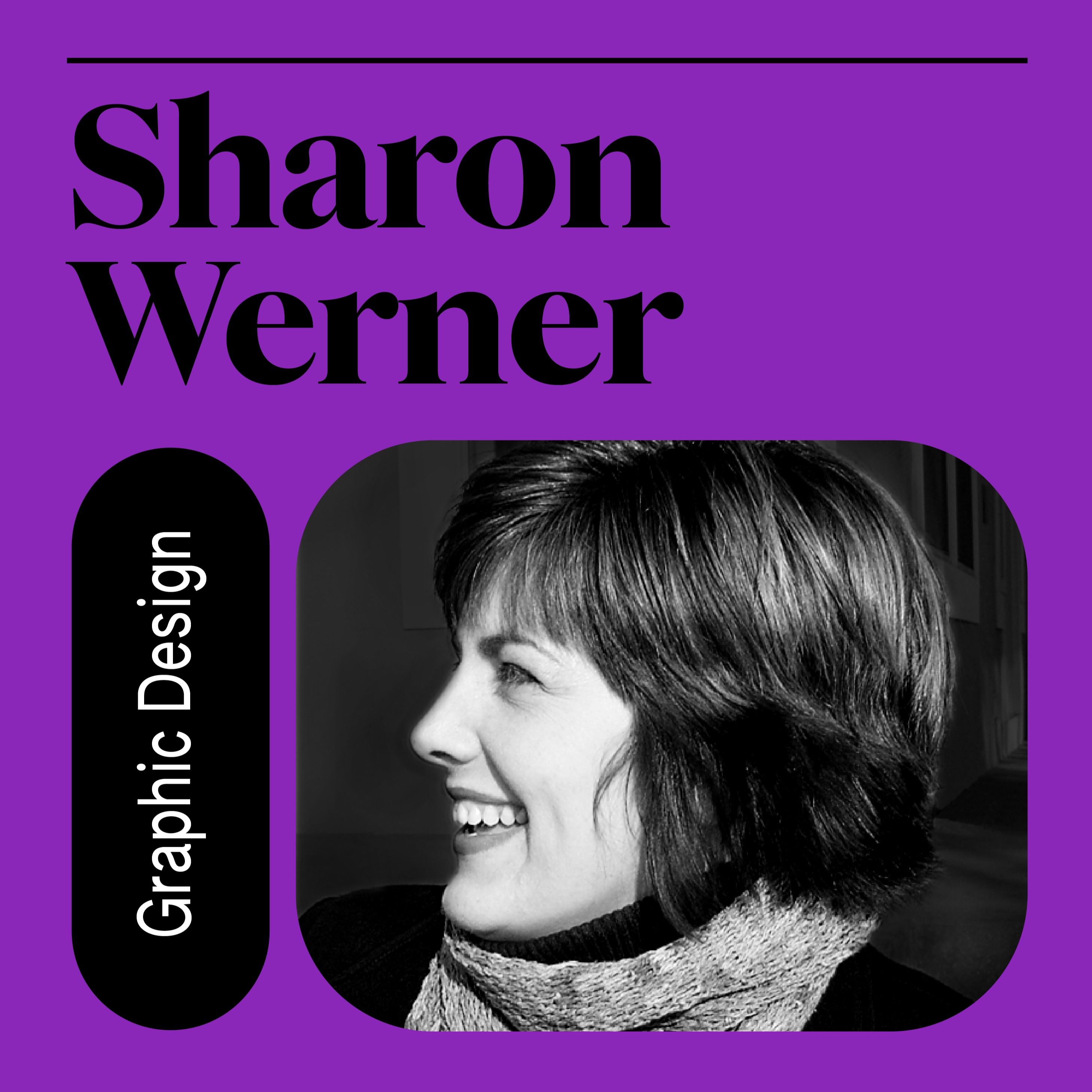
Women Designers You Should Know
046: Sharon Werner: Imposter Syndrome
00:45:53
This episode explores the remarkable career of Sharon Werner, founder of Werner Design Werks, and her candid reflections on misogyny, imposter syndrome, and staying small by choice. From childhood paper dolls to running a studio for nearly 35 years, Sharon’s story is filled with wit, honesty, and hard-earned wisdom.
Loading summary
Transcript147 lines
- [00:03]
Amber Aiesee
Hi there. Welcome back to Women Designers. You should know the podcast where we tell the inspiring yet heartbreaking stories of what it was and is still like to be a woman designer. I'm your host, Amber Aiesee, founder and creative director of the design studio Nice People. We work on branding, packaging, websites and everything in between. And today I'm joined by the incredible Sharon Warner, founder of Warner Design Works, her Minneapolis based studio that's been going strong for years, nearly 35 years. Her work spans from Nick at night to Moet, Tennessee to Planned Parenthood. But this episode isn't just about her portfolio. We go way back to her childhood in a tiny Minnesota town where she spent her days cutting up paper dolls and building Barbie furniture from packaging scraps. We also talk about how she forged her career path, going against her parents wishes, faking it till she made it at Duffy Design Group, started her own studio at a time when few women did. What I like about my conversation with Sharon is that she gets real about the misogyny she's faced from pressmen calling her, quote, little lady to clients assuming she only designs for women. And she shares her refreshingly honest take on imposter syndrome, that it's not just something that shows up early in your career, but that it can be a recurring visitor showing up on project after project. But the thing is, Sharon doesn't resist it. She sees it as part of the process, even giving herself a few days to live in that doubt before the ideas start flowing. So this episode is going to be full of career lessons and generous wisdom from someone who's been at the forefront and still believes in staying small, scrappy, and deeply collaborative. So whether you're in the thick of building your career or leading your own studio, I hope you get something out of this one.
- [02:36]
Sharon Warner
You should know. You should know. Women desires.
- [02:43]
Amber Aiesee
You should know. Welcome, Sharon, to the podcast.
- [02:58]
Sharon Warner
Yeah, thanks for having me, Amber.
- [03:00]
Amber Aiesee
I always love having women who have been trailblazers on this podcast who have been doing this for decades. I always like to go way back to your early life. In fact, you grew up in a large family in a small Minnesota town and you've even talked about how you you found solace and creativity and cutting out paper dolls and collecting travel brochures. And I'd love to know more about these early experiences of how these shaped your passion for design and storytelling.
- [03:37]
Sharon Warner
Yeah, I had a very large family. There were seven children.
- [03:41]
Amber Aiesee
Wow.
- [03:42]
Sharon Warner
And I was kind of one of the middle. I'd say I'm a middle child, even though I'm not. But I think I found I really love to look at magazines and catalogs, you know, at the days when you'd actually get big catalogs. And I used to cut them apart and, you know, make my own little furniture from them and, you know, make 3D things as well, and my Barbie doll, little products like canned goods and things like that for their shel. And I think there just wasn't a lot to do. We lived in very small town. There was probably like 500 people, and my parents were very strict, so we had very limited time with our friends. We couldn't just run around and do whatever we wanted. We had chores. We had all of those things to do. And so I spent a lot of time, I think, just trying to be creative on my own, not really knowing that it was leading to anything or even thought it was my passion. I think it was just something I did. My siblings were either much older or much younger, so they didn't really participate with me. So it was kind of a little bit of alone time. But I didn't really feel that. I felt like I had lots of friends and lots of things. But I loved paper and I loved print, and I loved drawing. And my mom wasn't an artist, but she would draw for me and when I was really young, and then she would draw me, like a drawing, and I would color it in. You know, she didn't want to buy us coloring books, so she just drew the things for us. So it was like. It was very much like old school. And then my dad had a farm implement dealership which was only about a block away from where I lived. So I would go there a lot and look at all the packaging of the bolts and the nuts and the things that were coming in to repair the equipment. And I would, like, grab the packaging and I would make furniture and stack it up and make things out of it. So it was very, very tactile. And I think packaging was a big part of it. I didn't really realize why.
- [05:42]
Amber Aiesee
Or would you say you were the most creative among your siblings?
- [05:47]
Sharon Warner
I think all of my siblings were pretty creative, but no one, I think, knew what to do with that, so none of them pursued that.
- [05:55]
Amber Aiesee
Okay.
- [05:56]
Sharon Warner
But all of us, like all of my sisters, sewed, and we would make our own clothes. You know, not all of them, but my mom sewed. And my brother is super creative. He does a lot of welding and big sculpture projects in his yard and all around. So I think everyone's creative in their own way. They just didn't Pursue it as a.
- [06:17]
Amber Aiesee
Career that makes sense. And, yeah, I mean, I love that story of being isolated and figuring out how to make time go by with something fun or creative.
- [06:30]
Sharon Warner
And I used to get so envious in design school and you hear the people who, oh, my parents were designers or my parents are artists. And I used to be so envious of that because I thought, you know, they'd go to museums and things like that in New York, and we didn't do that. And I thought, you know what? I think I'm better off maybe for it. Yeah.
- [06:49]
Amber Aiesee
For me personally, there's so many different backgrounds and different ways that you can come to having a creative career. Where did you go to school?
- [07:00]
Sharon Warner
I went to a state school in Northern Minnesota, so. Morehead State. Yeah.
- [07:05]
Amber Aiesee
What did you graduate in?
- [07:06]
Sharon Warner
It was a Bachelor of Fine arts.
- [07:08]
Amber Aiesee
Okay.
- [07:09]
Sharon Warner
With a concentration of graphic design.
- [07:11]
Amber Aiesee
And that was in the 80s.
- [07:14]
Sharon Warner
I graduated in 85.
- [07:16]
Amber Aiesee
So that's very unique to select graphic design within a Bachelor of Fine Arts. What were your experiences up to that point with graphic design? Or how did you know you wanted to select that at such an early stage for the industry?
- [07:32]
Sharon Warner
I started in school as an accounting major and lasted one semester and just over. I couldn't do it. I couldn't, like, make myself go to class. I was just really not happy with that. I thought it's a good career, but it was not for me. A girl who lived across the hall from me, she was an art major, and I would find myself working with her, watching her or doing projects beside her. She was doing her assignments, and I was just doing it as extra for myself. And I thought, well, I'm having more fun and loving what she's doing and working on. And so then the second semester, I switched to an art major.
- [08:15]
Amber Aiesee
Oh, cool.
- [08:16]
Sharon Warner
Against my parents.
- [08:17]
Amber Aiesee
You know, from accounting to art.
- [08:20]
Sharon Warner
Yeah. You remember velvet paintings that would sell on the corner? That's what my parents were convinced that I was going to be doing.
- [08:26]
Amber Aiesee
Oh, okay.
- [08:27]
Sharon Warner
I was going to be sitting on the corner selling my velvet paintings.
- [08:31]
Amber Aiesee
Did you ever prove to them that you could have a creative career?
- [08:35]
Sharon Warner
They're no longer with us, but I think they definitely understood finally. You know, it took a few years, a few projects for them to really understand. When I decided to go into art major, they stopped paying for my college.
- [08:48]
Amber Aiesee
Wow.
- [08:49]
Sharon Warner
So it was a big commitment on my part to say, okay, I'm going to take out loans and I'm going to figure this out. And then upon graduation, they paid my loans off, but they were like, if you're really committed to this, then you're gonna pay for your own.
- [09:02]
Amber Aiesee
Wow.
- [09:03]
Sharon Warner
But that was okay. In hindsight, I think that was probably the best thing for me, probably a good thing for them to do, knowing my personality, because fear set in and I was motivated by fear.
- [09:14]
Amber Aiesee
So that's good work.
- [09:16]
Sharon Warner
Yeah.
- [09:17]
Amber Aiesee
Like a twisted motivation. Yeah, exactly. There's nothing like being thrown into, you know, the deep end and having to figure out how to swim. Sometimes that force of independence can be good for certain people too. And so I'm glad that worked out for you.
- [09:38]
Sharon Warner
Yeah, it could have actually had the opposite effect, but yeah, I think it worked for me.
- [09:42]
Amber Aiesee
Was it after school that your career began with working at Duffy Design Group for seven years, is that right?
- [09:50]
Sharon Warner
Yeah. So I started at Duffy as an intern and that was kind of a happenstance thing as well, because I knew of Duffy and I knew of Chuck Anderson, like Charles Spencer Anderson people might know him as, but I didn't really have any connection to that. And I was babysitting for my sister and her husband, sending resumes. My brother in law said like, oh, Joe Duffy. I know Joe Duffy. Is it the same Joe Duffy? And I said, well, I don't know, maybe. So he reached out to Joe and said, hey, would, would you take a look at, you know, my sister in law's portfolio? And you know, could she come in? And. And so I met with Joe and he's like, well, we've never had an intern. What would you do for us? You know, why would I hire you? What are you capable of doing? And I said, I can go to the library, I can do research, I can get coffee, get lunch, I can do whatever you need. I can organize files, I can whatever. So he gave me an internship and then I stayed on for seven years. So it was kind of like, well, babysitting, that was how that started.
- [10:54]
Amber Aiesee
But then you ended up working on brands like Jim Beam and Specialized Bicycles. And I'd love to know more about the lessons that you took from that time, especially in such a male dominated industry. Did you encounter any gender based challenges in that environment?
- [11:13]
Sharon Warner
I don't think we did. And I was wanting to talk about this subject a little bit more because I felt like I didn't. I just got in there and worked like I worked like my brothers would work always. Throughout my entire life, I just worked as hard as they did. So I, I never really felt like I was being held down or, you know, anything because of that. I think there were times, I will say, not necessarily within Our studio. Or, like, with Joe or Chuck Anderson or anyone like that, or even clients. But sometimes, like, printers would call me, like, oh, little lady. Or. Or, you know, I'd be on a press. Okay. You know, in Wisconsin, some middle of Wisconsin somewhere. And the pressman would say, well, usually when the ladies come for a press. Okay. They go shopping.
- [12:04]
Amber Aiesee
Oh.
- [12:04]
Sharon Warner
And I'd be like, no, I can find better places to shop than the middle of Wisconsin, for one. But I can be like, oh, okay, well, that's not me. I'm being paid to be here. Like, whether you like it or not.
- [12:19]
Amber Aiesee
Yeah, yeah, exactly. You have to kind of prove yourself to them and.
- [12:23]
Sharon Warner
Yeah.
- [12:24]
Amber Aiesee
Earn their respect somehow more than men had to.
- [12:28]
Sharon Warner
Yeah. And they would, you know, question maybe if I was asking them to change something or to, like, adjust the color on press, and I'd say, you know what? I'm being paid by the client to be here, so this is my job. Like, just because it makes your life easier, that's not my consideration. It's to get the best product for our clients.
- [12:47]
Amber Aiesee
Yeah.
- [12:48]
Sharon Warner
Sometimes it works. Sometimes they ended up calling my boss. But, you know, it's like, I'm doing my job. So that's really. It was really only then that I did. But as far as with clients or anything, not really. It was really more. More like suppliers or vendors that were maybe used to dealing with men and usually from smaller towns. Yeah.
- [13:11]
Amber Aiesee
Were there other women that worked at Duffy? There were.
- [13:14]
Sharon Warner
We had an account person that did. And then. Do you know Haley Johnson? She works on a lot of Blue Q.
- [13:20]
Amber Aiesee
No, I don't.
- [13:21]
Sharon Warner
So she's like the creative director of Blue Q or she worked at Duffy for a long time. We worked together, actually. We went to school together as well. Well, I mean, it was a small studio, so we didn't have a ton of people. We were a part of Fallon, the ad agency. So they were on a different floor and they had lots of women. So.
- [13:38]
Amber Aiesee
Okay.
- [13:39]
Sharon Warner
Yeah.
- [13:40]
Amber Aiesee
Was it after being there that in 1991, you founded your own studio, Werner Design Works?
- [13:49]
Sharon Warner
Yes. Yeah. So I kind of took some time off from Duffy because we had been working super hard and really intensely on a few projects, and I asked if I could take a sabbatical. I just needed, like, a more extended downtime. I started thinking about what I wanted to do next and if there was anywhere I wanted to work. After seven years, it's like, what. What am I doing? How's my career going? And. And I basically just thought there really was nowhere else in the Twin Cities. That I was going to have as good of experience as I already had. Like, I was already doing more than a lot of the studios were doing. And so I just decided that I was going to start my own. And a lot of other designers, kind of my mentors, if you will, said, you're ready, it's time. And then I talked to Joe and just said, I think I'm going to start my own studio. And he said, you were ready a long time ago. I can't believe you stayed this long. You should go ahead and do it. It's perfect. And so it was just like with his blessing, I rented a studio down the street and started working. Wow.
- [14:56]
Amber Aiesee
I mean, that's so brave. Like, first of all, it's brave to, you know, go against your parents wishes and major in something that you really are passionate about. But then again, it's also brave. You're in your 20s. This is 1991. Women aren't just starting their own studios. So what gave you that confidence? What were your first clients? How did you navigate all of that?
- [15:24]
Sharon Warner
I really love design. I love doing design. And so I decided early on that I was going to keep it pretty small, grow to be this massive thing, which, you know, even if I had done that, even if I had grown, I think that was a great way to step out because it kind of lessened the bar a little bit. I didn't think I have to do this by such and such a date, but I really had no clients. I just was like, okay, I'm gonna go out and I'm going to find clients and I'm gonna just start. I had. I didn't even have a computer at that point, and people were using computers, but I didn't have one. And I hadn't been taught that in school, so I kind of had to teach myself. You know, I had some people that I worked with who helped me, but I started with a dressing table, a telephone, and a moving cart for furniture. That's what I had. And all my stuff was like laying on the floor, you know, again, Ember, it's really like fear, you know, fear is a motivator. So I went out and I pounded the pavement. And Target's really big in the city. And so I went to see Target people. And, you know, having come from Duffy at that time, Duffy Design had a great reputation. And so people like Target were willing to see me. That's good, because I think they were curious because of the reputation that came with me. Not just mine, but the whole studio. So lots of people were willing to see me and set up meetings. One day I was in the studio working on some projects. The phone rings and my husband answered. Actually, he was there. And he said, oh, it's Nick at night. And I'm like, shut up, you're lying. You know, you're joking. He's. No, it really is. And it was. They called about something I had worked on and wanted to know if Duffy could work on this project. And they said, well, we didn't actually do that. Sharon did. And then they gave him my number. And then that kind of started this relationship with the cable networks at that time. So that was great. Yeah, it's like, don't burn a bridge.
- [17:28]
Amber Aiesee
Your past employer became your mentor and your referral, Right?
- [17:33]
Sharon Warner
Yeah. So it was, you know, it was like, good relationship. So, you know, started to win awards with those kinds of things and had some bigger budgets to work with, so we could do some interesting techniques and things and.
- [17:46]
Amber Aiesee
Yeah, maybe you can tell me more about what kinds of projects you worked on at the time. What excited you about the work, all of that.
- [17:55]
Sharon Warner
Yeah, so we probably did. I did probably less packaging at that time, like branding and packaging and more event kinds of things. Like, we would do upfront packages for cable network, so where they put together a whole package of the shows that they're going to have for the upcoming season, and they present them at the upfront events. They would do lots of swag and things like that to go with that, like watches and, you know, whatever else they wanted to give advertising buyers. And so we worked on a lot of those things. So we worked on Nick at Night upfront for three consecutive years, which was a tricky project because Nick at Nite has no new programming. So it's all existing images. It's not like you can have new photos of anything because there isn't anything. So for one of those, it was kind of fun. We didn't have any imagery to work with. All of it was low lo fi video film content, and it was pretty low resolution. So I wanted somebody to do these paintings of, like, the different artists that were on Nick at night. And I literally looked in the phone book for someone who did portrait paintings, and she lived on the west side of town and she did these canvases of the Dragnet characters and Mary Tyler Moore, and she just did these portraits. They were so funky because they were kind of not good, but kind of cool and charming. They're innocence. They hired her to do, like, big, huge canvases for their lobbies in New York. So it was really fun. And those portraits cost, like, $150 for the ones we used in the book. And she was excited. We were excited. And Nick and I was excited. You know, it's just like. Just trying to see, like, okay, would this. Would this work?
- [19:47]
Amber Aiesee
Yeah. Well, especially thinking of such an archaic way of working, looking for someone in the yellow Pages, you know, there's, like, there's no website to look at their work, and it takes twice as long, three times as long to do those things as today. And I feel like there's so much more patience and effort that goes into coordinating all of that, too. Yeah.
- [20:12]
Sharon Warner
I mean, I feel like in this time, I feel like some of the spontaneity is gone because so much can be figured out beforehand. There isn't any, like, aha moments when something comes off the press or you get the artwork back because you pretty much know what it's going to look like.
- [20:30]
Amber Aiesee
Yeah.
- [20:31]
Sharon Warner
And the client knows what. And there's no even leap of faith, even on the client's part. Everything needs to be dialed in perfectly. And I feel like some of that spontaneity and wit and charm is lost because of that. I would love to let myself go a little bit again, you know, and just not try to control every movement and moment and precise pixel, you know?
- [20:56]
Amber Aiesee
Yeah.
- [20:56]
Sharon Warner
And see what happens again, because that was really fun.
- [21:00]
Amber Aiesee
And so that's. Those are like. We're talking about the early days of your studio, which is still around today. So does that make your studio, like, almost 35 years?
- [21:13]
Sharon Warner
Yeah, I think I. 91. So 34 years, is that right? Yeah, yeah, 34 years. I know.
- [21:20]
Amber Aiesee
That is incredible.
- [21:22]
Sharon Warner
And a long time.
- [21:24]
Amber Aiesee
I mean, to think about all the projects you've worked on, all the experience that you've had, I imagine that there were probably also moments of imposter syndrome that crept in. I'd love to know more about that. How did you manage feelings like that throughout your career?
- [21:41]
Sharon Warner
Every day I have that.
- [21:43]
Amber Aiesee
Oh, wow. Every day.
- [21:45]
Sharon Warner
Every day. And particularly every new project, I think obviously there are days where I have it less, but when we're starting a new project, I tend to have it. Over the years, I think I've come to figure out what that cycle is for me. Like, on a project where I. And now I just allow myself to have it. Like I allow myself one. I just say, okay, it is what it is, and I just do my best. Maybe I'll do menial things around the studio as I'm thinking about a project versus forcing myself to Try to come up with ideas, because I know it's not going to work in that time. It's just not. And I'm going to end up really frustrated. So I try to do other things, like clean out a drawer or mop the floor or whatever around the studio. And we do still go into the studio and just allow myself to have those. Those few days, you know, usually by the third days, sometimes by the second day, it's gone. And I come to the studio with lots of, like, ideas firing in my head. But if I try to push my way through it and struggle through it, I tend to have it for much longer.
- [22:58]
Amber Aiesee
Yeah. And, like, I mean, that's very relatable. I feel like a lot of creatives have that process where they're feeling uninspired at the beginning, and it takes stepping away from the computer, getting out, doing something, ruminating over the ideas and concepts until you come back to the work and get started.
- [23:19]
Sharon Warner
Yeah. And so I think when you try something new that you've not done before, you work in a category that you've not worked in before, which is one of my favorite projects to do.
- [23:30]
Amber Aiesee
Okay. Like, something new and fresh that I.
- [23:33]
Sharon Warner
Have to learn everything about them to do. Another beauty brand is really fun, but, you know, you probably do, too. You know so much about the beauty industry that you can get a bit tainted, I think, by it. And I love being inspired by other categories, and how I can do that is by working in a lot of different categories and being inspired. Like bringing a little beauty industry into the hardware industry and bringing a little hardware into the beauty and. And kind of mix. Like, a little bit more of a mix of everything. So we love. I think the more variety we have, the better. Yeah, I think we are better designers. The more variety we have.
- [24:14]
Amber Aiesee
Don't you hate the questions from clients when they want to see exact representations of that industry or project type?
- [24:23]
Sharon Warner
Yeah. And what do you say? Like, what do you say to them when they ask you that?
- [24:27]
Amber Aiesee
Well, yeah, I feel like there's several ways that you could tackle that. You could, first of all say, I don't see this kind of industry being so different from yours, or showing the similarities and showing that crossover kind of a thing. Sometimes I always point out that it's not good to get the same work and the same result from the same agency that just does the same thing. It's just like, you're gonna get a lot of sameness in that. And it's kind of nice to have fresh eyes to change things up. We don't work a whole lot in that industry. But I don't see a problem with that because we have a thorough discovery process, and we're gonna go through it together. That's the fun in creativity. Sometimes people are committed and ready to say yes. And some are like, well, we went with someone else because they have more experience in this exact type of product.
- [25:20]
Sharon Warner
Right. And I think we have a very similar answer to what you're saying. Just that if they already have a knowledge base of what your category is, then they think they're the experts. And really, you're the experts, and we want to learn from you and then try to come up with something that will address your specific problem, not just like a general blanket statement. So. Of what? So I don't know. Sometimes it works and sometimes it doesn't. And then when it doesn't, I think, thank God. I think I just dodged a bullet.
- [25:52]
Amber Aiesee
Yeah, that's true. Sometimes it's all about helping them break out of their own industry, too. Like, we would hope that the inspiration we're gonna bring into this project and think about and be inspired by will be other industries and not your own, so that you don't become, you know, what everyone else is doing. Or like, I always like to point that out with specific industries, that they are all regurgitating the same work because they're all looking at each other and they aren't looking anywhere else.
- [26:22]
Sharon Warner
Right. And the reality is, especially if you're not a B2B business, I mean, consumers are looking everywhere, so you have to speak to them if it's a business. I kind of get, like, maybe there might be a little bit more insular exploration, if you will. But still, I hope that you would broaden the conversation and move the wheel forward as opposed to just keep going around in circles with all the work.
- [26:48]
Amber Aiesee
That you've done in all the various industries. Would you say your imposter syndrome mostly shows up in the design process, or does it show up in other places, too?
- [26:58]
Sharon Warner
I would say it's mostly the design. The beginning of the design process, for sure. Like, I've had my last good idea. I don't have any more good ideas left.
- [27:06]
Amber Aiesee
Can I do this again?
- [27:08]
Sharon Warner
Possibly? Yeah, possibly do this again, or I shouldn't be doing this at all. So, you know, I get over it, though. Like, you know, I know that I will get over it. That's helped ease that burden a little bit, at least. You know, if you ask my husband, he'll say, that's where we are in the cycle. Of your project. He can tell exactly where we are in the project by my mood and how I'm dealing with the project.
- [27:32]
Amber Aiesee
Like, does the imposter syndrome get pushed away when you're winning awards or when you're getting recognized by the industry or press or anything like that?
- [27:45]
Sharon Warner
You know, it probably helps a little, but that cycle is pretty far out. You work on a project, and maybe a year later is when that happens. You know, by then I've already moved on to, like, five other projects or 10 other projects. So, you know, it's. It's back in full force. So I think, yes, it definitely helps, but it's still there. And then you see other designers work like your work, and, you know, other people, and you're just like, never, you know, or the pentagrams of the world or things like that or. Or Collins or, you know, which. I used to work with Brian, so. Brian Collins. So when. So at Duffy. He worked at Duffy, too, at the very end. I think we both left pretty close to the same time. He might have left a little after I did. He was our account person, our business person.
- [28:35]
Amber Aiesee
Yeah.
- [28:35]
Sharon Warner
Yeah. And then he had a studio right next to my studio for many years. So, like, literally, we were, you know, a wall away then, and we would about things together. So.
- [28:46]
Amber Aiesee
Yeah, that's so fun. I love that.
- [28:50]
Sharon Warner
Yeah, I see him, like, exploding and doing lots of projects, and. Not that I want that. Like, I don't want that, but he just exploded. And he's doing amazing projects, and he's got a great eye and a great art direction, I think, too. Yeah, he is like, his mind is like a cycle that's spinning all the time.
- [29:09]
Amber Aiesee
Yeah, he's very inspiring. He's really good at communicating design, too, which is fun to listen and read his thoughts and ideas and everything.
- [29:17]
Sharon Warner
Yeah, he is.
- [29:18]
Amber Aiesee
Your studio also emphasizes collaboration and inclusivity, and you're involving team members at all levels in client interactions, which is really impressive. So how does this approach challenge traditional hierarchies? Or have you faced any resistance when implementing this? Like, what are the pros and cons you've seen from this?
- [29:42]
Sharon Warner
Obviously, the pro of having, like, every player that's going to be on a project in the meeting, hearing directly from the clients, like, what they want or what they need, or if it's a critique at the middle of the project or it's downloading us with what they need at the beginning of the project. I really feel like hearing it directly from them is really important for everyone, you know, whether it's A writer or the designer, whoever. Even if it's an intern or something. Like, I feel like I can filter that for them, I can communicate it, but I'm always going to be putting my own spin on it and that's not really fair to them. So I try to make sure that once the proposal is accepted, everyone gets on board. Because we're writing a. I'm writing the proposal, which I do all of that. But once the proposal is accepted and we're working on the project, then everyone gets involved. Clients really love that because each of us is presenting, you know, or contributing maybe two ideas to what we're presenting to the client, or one idea they get to hear directly. The designer gets to hear directly from the client, like what they like about something, what they don't like about something, and then can move it forward. The client already has a relationship with that designer in some respects. So if they're going to be continuing forward for the next year on something, they don't feel like they just got pushed off to like a junior level designer because that person's been involved from day one. So I think clients feel really comfortable too with that because they feel like they're getting the A team no matter what. Whereas I think a lot of times if a bigger agency and those junior or, you know, maybe even senior designers, but junior designers don't get involved in the meetings. The client can sometimes feel like they got pushed aside. Yeah.
- [31:28]
Amber Aiesee
Or like they're the lesser client.
- [31:31]
Sharon Warner
Yes. Yeah. So I think that there isn't really a con to that or a problem with it. The only time there maybe is a problem is when, you know, a designer wants to leave and start their own studio. They have these relationships already with that client and they, you know, may end up contacting them directly, but that's fine, you know, like, if the client prefers that, then that's what they should do. They should continue doing that. There's enough work out there. I don't think we have to worry about it.
- [32:00]
Amber Aiesee
Was this always your approach or do you think the industry shifted and you shifted with it, or.
- [32:06]
Sharon Warner
No, I think it was always my approach. And actually at Duffy, we were always involved in the meetings as well.
- [32:12]
Amber Aiesee
Cool.
- [32:12]
Sharon Warner
Yeah. So I would be in pretty much every meeting. I might not say much because Joe or Chuck would talk the most, but I was there in the background, not just taking notes or anything. And, you know, and if I. If Joe didn't know something, he might, you know, turn to me and ask me. But he was a good presenter, so I didn't really need to do that. Very often, you downloading him before the meeting say, okay, this is my idea. This is what I was thinking. And he would remember it and just kind of present it as if it was his own. And when I say as if it was his own, it wasn't in a bad way. Like, I never felt like he was stealing my ideas. It was more like whatever sells the project. I'm happy with that.
- [32:51]
Amber Aiesee
All of this is making me think about how there's almost, like, two types of agencies. There's the agency that's going to have everyone included and talking about the project and presenting, and then there's the agency where it's really just the higher ups presenting. And I've experienced both, and it's interesting that both still exist to this day.
- [33:12]
Sharon Warner
I think that's very true. I think that sometimes, like, the higher ups, especially the bigger the agency, for sure, like, they don't really trust the person actually doing the work, sort of. I think that the generalization of, like, that designers aren't good salespeople, and I don't think that's true, but I think that's sometimes what happens. There was a stint a few years ago, there was a advertising agency in town here that had lost their design creative director. They asked me if I would step in and guide their creative team, you know, along with running my business, and be in meetings, because they thought they needed the designers represented. I said, your designers are really smart. They don't need me. I mean, if you want to pay me and I will come in and I'll talk to them and I'll spend time with them and I'll be in meetings, but really, you don't need me. They are good. They're good at selling their own. They know their ideas. So I did it for, like, two months and said, okay, let me do a short stint, then we can assess and see how it's working. But I think you're gonna find you don't need me.
- [34:16]
Amber Aiesee
Yeah, it's almost like that sink or swim scenario where if they aren't familiar with that process and have never been given the torch to present and everything, then they're gonna do what they need to do and they're gonna figure it out.
- [34:30]
Sharon Warner
They're gonna figure it out, right? Yeah. Their designers were good, and some of them were kind of quiet, so that was probably the hesitation. They were too quiet. But, you know, I kind of would try to prep them and say, okay, you talk about this, talk about this, talk about this.
- [34:45]
Amber Aiesee
It makes me Think of past conversations I've had on this podcast where the mentor moment was all about use your voice to talk about your design and learn how to use it. And I know you have it and I know it's in there. And it's true. Like, there's gonna be that pivotal moment for every designer where they're gonna go from. I don't really know how to talk about this and I'm really shy and timid about this process to becoming more confident and being able to really sell the work.
- [35:13]
Sharon Warner
Right. And don't you think after you've worked on a project for a while, I forget, why did I arrive at this solution? And like, what were those pivotal points along the way? So I actually have to stop and make a list of like, oh, yeah, that's why I did that. And you know, so I don't forget when I'm presenting even that the. There were reasons for everything. And these are the reasons. If, you know, if being proposed, like, why did you do that? Or what's that for? Or, you know, you have a reason.
- [35:42]
Amber Aiesee
I remember at one agency I worked at, we rehearsed our presentation.
- [35:46]
Sharon Warner
Oh, that would be good. Yeah.
- [35:48]
Amber Aiesee
In front of each other, we would talk about the ideas and the concepts and how they all came together. We did that a couple of times preparing for a really big presentation that was going to be 10 or 20 people. Big kind of a thing.
- [36:03]
Sharon Warner
That would be good. I should probably do that instead of just in my head. I rehearse it, but not actually out.
- [36:08]
Amber Aiesee
Loud or like encouraging your designers to do that if they're new at it, you know, like, it gives me ideas to do that to my own designers. They do have some that I really want them to present on calls. And I can tell they're not used to it. They're a little shy about it. And I should, I mean, for the next one, I should tell them, just rehearse it on your own or put the list together of the concepts. You want to go over kind of a thing. Because this is your moment to really sell the work.
- [36:39]
Sharon Warner
Yeah. Even if it's just a small part of it, like you set it up and then turn to them like, let's talk about the color or let's talk about the whatever. Like, give them one little bite to start out with.
- [36:50]
Amber Aiesee
So what's so impressive is you've worked with such a range of clients from Moet Hennessy to Planned Parenthood. What have you observed about different client relationships, especially as being a woman owned studio? Were there any, like, subtle Forms of misogyny with all the range of clients you work with, or how do you approach relationships like that?
- [37:12]
Sharon Warner
So I think the liquor industry is definitely a little bit more so because it's mostly dominated. But I wouldn't even, as much as I can think that it works against me, I can also use it to my advantage. I try to do that as well. So that it's not only the bad parts of being a bit sexist, but I can actually turn it around and get the positives of it too.
- [37:36]
Amber Aiesee
What would you say are the positives of that?
- [37:38]
Sharon Warner
I think of Moet Hennessy in particular. They're French. They were used to dealing with a lot of men. I think what I tried to do is make it more human. They weren't really used to that, so they got a little taken aback by it. But I tried to say, brands are human. You're speaking to humanity, the human soul. It's not just the finances. We need to speak to people. They took that from me a little bit better because I was a woman versus a man. And I think men do it too. Like a brand needs to speak to the person, you know, that standing in front of them. But I think they understood it a little bit more, maybe. So I think that's good. But then on the other hand, like, we'll get people coming to us and say, well, you're. You're a woman. Like, we want you to design this project for women. How about for people? It can be a bit more feminine or a bit softer or something, but let's do it for people. Like, if you're only in one lane, it's going to be a very limiting product. So I think, especially when you get into brands, it's like, we need to speak to a broader audience. With Planned Parenthood, our first thought was, oh, right, we're speaking to women. And they were the first to tell us, no, you're not. Oh, speaking to trans people. You're speaking to a broad range of people. Yeah, to just women. And that was really eye opening for us. Like, right, you're right. You know, we try to just like when people want it to be feminine, we're like, no, we can make it appeal to women, but we want to cross that line too. And we want to halo out so it appeals to a broader range. Your core can be here, but we want to make sure that we halo out to here. So, like, Current State is a beauty brand that we've worked on. And I think they were thinking it was more feminine. I think we created A brand that actually halos out way beyond that.
- [39:35]
Amber Aiesee
Yeah.
- [39:36]
Sharon Warner
Like men will buy it and not be embarrassed. It's skin care, so they should be able to buy it.
- [39:41]
Amber Aiesee
It's so interesting in today's world that even products women buy, they don't necessarily need to be overly feminine either.
- [39:51]
Sharon Warner
No, I don't want to buy that.
- [39:53]
Amber Aiesee
Yeah. And so sometimes brands or companies, especially like male owned companies, may sometimes think that or think, oh, if our buyers, majority women, then let's make this feminine. It's, it's actually nice that they at first think that working with a woman owned studio is going to benefit them, but then I think we're also the ones to say women don't need everything to be pink and frilly.
- [40:19]
Sharon Warner
Right.
- [40:20]
Amber Aiesee
Let's do something that is feminine, but feminine for a modern woman today.
- [40:26]
Sharon Warner
So sometimes I think it's worked in my favor as I get older. I think I'm just much more open to saying things like, I am not your daughter, you know, so don't try to tell me how I should act or whatever without saying it. It's like, we are the experts. We have been doing this a long time. We have a lot of successes. So you should listen to us.
- [40:46]
Amber Aiesee
You know, thinking about your entire journey, I would say a very brave, very admirable career path to this point too. And like, you know, you're going on nearly 35 years strong. I would love to know what advice would you offer to young women entering the design field who might be grappling with things like imposter syndrome or the systemic biases we've been talking about.
- [41:13]
Sharon Warner
The one thing I always tell women, or any designer entering the field actually, is to just really love where you work and hold that bar high if you can, as you come out of school to make sure you're inspired by the people around you and the people you work with, which I think is a little bit sad now with people working remotely so much, you don't get that camaraderie and play off of each other, the community that you get from a studio, as much as I think people used to, especially for those young designers. So I would say always hold the bar pretty high above and always be sort of reaching higher and higher. Be passionate. I know it's cool to be like, I don't work. Ugh. You know, that's also kind of cool. But I actually think this is a fun business. Have fun, like experiment, explore. Just be happy with, you know what you're doing and love it because it'll come off in the work. And it will come off to clients that you love what you do, and, you know, that's a really important thing. And just, you know, be civil to other designers and be civil to your employees to be civil to each other. Share ideas, you know, especially the community around you. I think, like, we're, you know, we. We have a really good relationship with the designers, you know, that are in the city and are really open to letting people come in and, like, borrow something or use something. As far as imposter syndrome, let yourself have it if you need to, like, which is what I do. And then just get over it, move on, put your head down, get to work. At the end of the day, you know you're capable. You know you are. But, yeah, I think another thing too, like, if you're. For us anyway, what was really important is, like, we didn't row. We don't have a ton of people. We had many opportunities probably to scale and. But the reality is the bigger the machine, the more fuel that machine needs to, like, keep going. So you're going to end up taking projects you don't love or taking projects that maybe there might be some red flags, but you're ignoring them because you need to pay the payroll. We just stayed small and lean, which means we have to turn work away sometimes, but it's worth it. And most clients understand that we have to do that or they're willing to wait, which. That happens a lot too. Or they go somewhere else and then they come back because they, you know, they were like, you know, we should have just waited.
- [43:40]
Amber Aiesee
So, yeah, that's so true. And, yeah, like, I mean, I'm always struggling with that and navigating that with my own studio of what's going to make this worth it, realizing I don't ever want to be too big and too big for me to handle. And so I kind of like to keep it small. And that really is my happy place kind of a thing.
- [44:00]
Sharon Warner
Right. And don't, I think, define that for yourself. Everyone's is different.
- [44:05]
Amber Aiesee
Yeah.
- [44:06]
Sharon Warner
Early on, we had a paper rep or salesperson come in, and she said, oh, your studio is so quaint and small. Someday you'll be successful. And I was like, what does that mean?
- [44:17]
Amber Aiesee
We're successful now? We've been for 35 years.
- [44:21]
Sharon Warner
I think it was, you know, it's all about the size of your studio. And I thought, that's not my success.
- [44:28]
Amber Aiesee
Yeah, everyone's success looks different.
- [44:30]
Sharon Warner
Just define it for yourself. I think that's a big takeaway.
- [44:34]
Amber Aiesee
Yeah. Thank you so much for joining me today and for sharing your career path, your journey, your thoughts and wisdom. It's all been very much appreciated.
- [44:47]
Sharon Warner
You're welcome. Thank you.
- [44:49]
Amber Aiesee
That's it for today's episode. Honestly, Sharon Warner is the kind of guest who leaves you feeling both affirmed and challenged. Affirmed in your self doubt because yes, even she has it, and challenged to stop letting it win. Her path is proof that you can carve out a creative career on your own terms, and one that can resist industry norms, can question sexist assumptions, and can thrive without having to scale to something massive. So if this conversation resonated with you like it did with me, I'd love it if you left a review or shared the episode with someone who needs it, or give it a five star rating. Those little things really make a big difference for this podcast. And if you're in a moment of imposter syndrome yourself, Sharon would say let it run its course, then get back to work. Thanks for listening. And until next time, let's redesign history by celebrating women.