← Women Designers You Should Know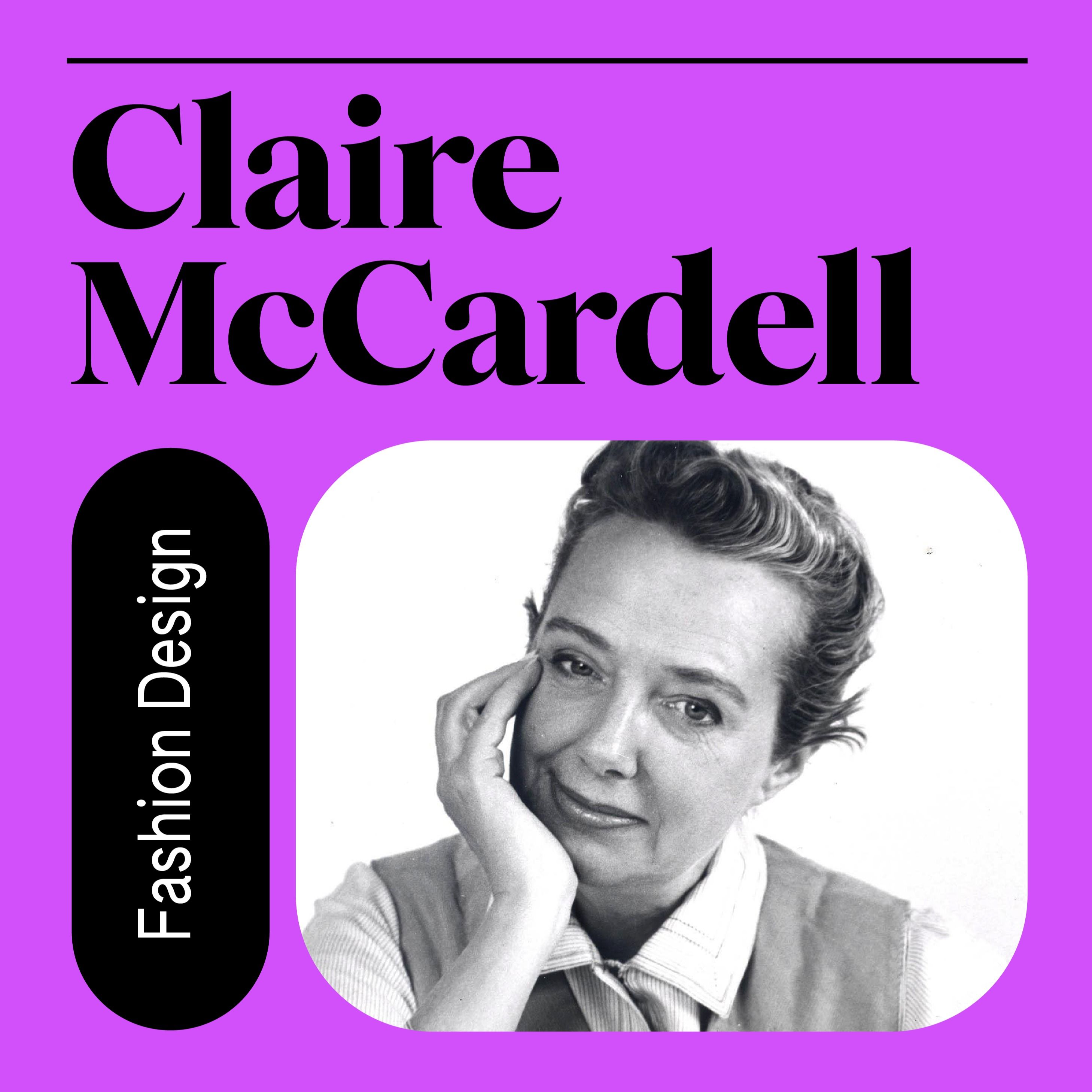
Women Designers You Should Know
047. Claire McCardell: Inventor of Casual Fashion (w/ Elizabeth Evitts Dickinson)
00:56:29
Discover the untold story of Claire McCardell, the woman who invented casual wear, defied Dior, and changed the way American women dress (with insight from author Elizabeth Evitts Dickinson, who finally put her name back on the label).
Loading summary
Transcript87 lines
- [00:03]
Amber A.C.
Hello. Hello. I hope all of you are having another wonderful Tuesday. Welcome back to Women Designers. You should know this is the podcast where we uncover the overlooked stories of women in design. If you don't know me, I'm Your host, Amber A.C. i am the owner of a graphic design studio called Nice People, and I just love talking about women in design. Today's episode, we're spotlighting a designer whose influence is literally all around us in fashion. Her name is Claire McCardell. I hope you've heard of her, but if you haven't, stick around because her story's pretty incredible. I'm joined by author and journalist Elizabeth Evitz Dickinson, who back in June just released a biography about Claire McCardell. It's called the Designer who Set Women Free. And that title is so perfect because she literally fought for putting pockets in women's clothes and for elevating denim into an everyday look and mixing and matching separates and popularizing ballet flats and basically making women's lives a hell of a lot easier. She was doing this way back when women, if they wore pants in public, would literally go to jail. And she was doing all of this while Christian Dior was tightening corsets and putting even more restrictions on women. And yet his is the name we still talk about today and not Claire McCardell. We have her to thank for so many things. It's pretty incredible. And this would be. This conversation with Elizabeth is going to be so eye opening. The thing that I love about her book so much is it doesn't feel like a biography. It feels like a fictional story. You get very lost in the storyline of it all, her life, what she's doing in New York. And I honestly couldn't put it down. In fact, the New York Times Book Review even called it the first cradle to grave biography of Claire McCardell and that now we have everything there is to know about her under one cover. I cannot believe the amount of sheer research that went into this book. And I am so excited to be talking with Elizabeth and all about her book. So, of course, without further ado, let's dive into my conversation with Elizabeth. You should know. Women desires. You should know. Women desires.
- [03:04]
Elizabeth Evitz Dickinson
You should know.
- [03:17]
Amber A.C.
Welcome, Elizabeth, to the podcast.
- [03:19]
Elizabeth Evitz Dickinson
It's so exciting to be here. Thank you.
- [03:22]
Amber A.C.
You've had kind of a big week. Didn't your book just release this week?
- [03:27]
Elizabeth Evitz Dickinson
The book came out on Tuesday. I had a pretty exciting book launch at the Maryland center for History and Culture, which is the museum in Baltimore, where I did a lot of research on the Book. Oh, cool. Yeah, it was great. We had over 200 people there. It was pretty extraordinary. And then I got some pretty good reviews this week, so I'm feeling happy about it. It's nice to have it out in the world.
- [03:50]
Amber A.C.
Even the New York Times just published about it, too. Is that right?
- [03:55]
Elizabeth Evitz Dickinson
Yeah. Yeah. A pretty nice review on the New York Times Book Review, which I know any writer will tell you is a dream.
- [04:00]
Amber A.C.
Honestly, it doesn't surprise me because this book is so good, I could not put it down. I honestly was just like, this is so well researched. I felt like I was reading a novel. But it's like, you know, basically a biography about her, but in a way that felt like I was just entering her world and her life. And I loved it.
- [04:24]
Elizabeth Evitz Dickinson
Oh, my gosh. Thank you. That means the world. You really articulated what I hope to do with the book, which is I didn't want it to feel like the biographer, you know, telling the story from 2025. I really wanted to do the kind of research and the depth of research that would allow me to basically write the narrative so that you got to sort of walk with Claire through the story and be a part of her life. It feels great to know that that's how it came across for you.
- [04:51]
Amber A.C.
That's exactly how I was kind of seeing it and reading it, too. And so what is so impressive is the amount of research you probably had to do to get all of these details in here. And as you mentioned, you did a lot of the research at the Baltimore Museum, is that right?
- [05:08]
Elizabeth Evitz Dickinson
I was really lucky to have an archive right here in Baltimore, where I live. She grew up not far from here. So Claire was born in 1905 in Frederick, Maryland, which is not too far from Baltimore. It wasn't a remote town, so she grew up in a very sort of culturally significant place. Her parents were very progressive for the time, who really believed that, like, their daughter should go to college, which wasn't the norm. I had the benefit of being able to access the archive that her family left to this museum here in Baltimore. They also left papers to fit in New York. And I traveled to several different archives to read her letters, to go through her personal papers. There was no diary. What I wouldn't have given for a diary, but I was able to use her letters and her workbooks and then kind of triangulate that with articles that really helped inform me on what she was going through, what her day to day life was like.
- [06:14]
Amber A.C.
What was even better about that, too is it also took a step Back and gave us the greater context of the history of what she was dealing with. It was definitely a book for today and for readers of today to really understand the, like, laws of the time and the restrictions and societal expectations and what she was really dealing with so that we could really see how big of a deal that she went to school or how that they let her go to New York, things like that, where it was, like, a really big deal. Now, understanding the context of it.
- [06:48]
Elizabeth Evitz Dickinson
Yeah. And that was one of my other goals, is I didn't want this just to be a fashion history or a design history. I really wanted to locate Claire McCardell in this lineage of important modern designers. As one critic said, she's the most important 20th century designer that we've forgotten about. Why was she so important? Well, much of what we wear, much of what hangs in our closets that today can source its code back to Claire McArdle's really ingenious mind. She invented mix and match separates in 1934. She created ballet flats. She pioneered the rap dress and put hoodies on women's wear and was using denim when nobody else was using denim because it wasn't seen as a feminine material. And even knowing that she was so revolutionary, it still surprised me to remind myself that, like, women could still get arrested for wearing pants when she was making these clothes.
- [07:45]
Amber A.C.
Okay, just to pause on that. I had no idea that it was to that extent. Like my understanding was. It was frowned upon, but women were getting arrested for wearing pants and refusing to change.
- [07:58]
Elizabeth Evitz Dickinson
Yeah. I mean, one of the stories I write about in the book is the same time that Claire is inventing her first big breakaway design, which was the monastic dress, which is a dress that was what any one of us would recognize today as sort of the classic pull it over your head, unstructured dress. Put a belt around was so revolutionary. At the same time, across the country in Los Angeles, this kindergarten teacher I write about as one example, Helen, she was testifying in court against the men who robbed her, and she was wearing pants. And the judge was less interested in her testimony and more interested in the fact that she wasn't wearing a dress. And he told her to go home and change. And when she refused, he put her in contempt of court and put her in jail. It's just wild.
- [08:51]
Amber A.C.
It's honestly so mind boggling and really teaches us how far women's clothing have come and respect for women, what women are allowed to wear and all of that. I just can't imagine living under those confines back then.
- [09:08]
Elizabeth Evitz Dickinson
One of the reasons I wanted to write this book is I'm always interested in the ways in which design, and whether it's objects or architecture or in this case, clothes, like how that signals cultural intention. Claire always believed that women should be autonomous and free and comfortable and stable, stylish, which is why she designed the clothes that she designed. But even in her day and even today, isn't it interesting that we gender clothes? I mean, look at the debates we're having about drag. When you step back and you think about it, isn't it kind of crazy that we assign gender to fabric or a certain design? And what I loved about McArdle, she was so revolutionary because she was questioning these dress codes and chipping away at them throughout her life, pointing out how ridiculous it is that we prioritize some things over other things. Claire grew up with a mother who had very traditional clothes. You had different outfits for every time of day. You had your morning dress, the day dress you wore to go out, different dress at tea time, and then an evening gown. Women had to wear corsets, bras, and padding. There was so much trussing up that you had to do just to walk out of the house. So it's really revolutionary that McCardell starts making us sportswear this comfortable, movable pockets, clothes that women could go to work in that they could be comfortable in. And she really did question a lot of the traditional assumptions that were made about what women were allowed to wear and not to wear.
- [10:56]
Amber A.C.
Yeah. In fact, I want to hit on that term sportswear, because that feels slightly different from how we view sportswear today. Can you explain a little more about what sportswear meant back then?
- [11:08]
Elizabeth Evitz Dickinson
I think that's something that today, I think when you say sportswear, people often think athleisure wear. But really, sportswear was the overarching umbrella term for much of what we consider casual American clothing. It's what McCardell developed, along with several pioneers. Other female designers from mid century called the American look. It's office casual. It's simple dresses. It's pants and mix and match separates. All of that is considered sportswear in the fashion industry.
- [11:38]
Amber A.C.
Is it fair to say that we wear sportswear every day now?
- [11:42]
Elizabeth Evitz Dickinson
That's absolutely right. Cause especially post Covid. I don't know about you, but we joked around in our house about, oh, I gotta put hard pants back on with an actual button, because we literally were in our sweatpants. But the other terminology about the sportswear idea is that Claire also came of age at a time when Women like her didn't wanna just be spectators. They wanted to participate. They wanted to be in sports. They wanted to play sports. There was a time when sports attire was meant to be private. At the turn of the last century, if you were a woman playing basketball and bloomers, you often couldn't play in front of men. One of the things that Claire did was she took these clothes and she began to bring them into public space because she wanted women to have full autonomy and to be able to move through cities, move through their day, and be present in any environment wearing what they wanted to wear.
- [12:43]
Amber A.C.
There's this idea that you talk about in the book of what you wear really helps change how you act and all of that. And she set out to do something like where she wanted women to work freely, feel empowered, to do whatever they wanted to do, and that clothing and fashion was at the core of that, and that that was really what was going to help change women in society.
- [13:09]
Elizabeth Evitz Dickinson
Absolutely. You've hit on such an important point, which is that she understood the psychology of clothes. I mean, we've all been in that place where we're wearing something that doesn't feel good. Right. That it's not quite right, or we feel uncomfortable, or we're not able to move in it. She thought of every aspect of what it meant to get dressed as a woman. It's why she fought to put pockets in her clothes, which was very hard to get the mail manufacturers in the garment district of New York to agree to. At the time, they didn't think pockets were necessary. But McArdle understood they weren't just a place to put your lipstick or your keys. They were a place to put your hands when you were nervous at a cocktail party or to look kind of effortlessly cool when you wanted to, like, look like you weren't nervous. Right. How often have you put your hand in a pocket when you just needed something, something to do with your hands? And so she was also a woman when she moved to New York. There weren't a lot of places for single women to live in New York. I mean, there was a time when you couldn't even really get a hotel room if you were unmarried and single. They were concerned that you were a working woman. McArdo lucked into living in this housing called the 3 Arts Club that was set up specifically for single women studying art and design in New York. She lived alone after that for a lot of her life. And one of the things that I loved is she put all of her zippers and her closures in her clothes either on the side or in the front. Because she said, you know, a woman may live alone and like it, but if you wrench out your arm trying to reach your back zipper, you're not gonna love it. She wanted women like herself to be able to get dressed by themselves without help, which is such an obvious thing. But my goodness, how many times now do we even still have to fight for pockets or for a dress we don't need help zipping up?
- [15:05]
Amber A.C.
Yeah. In fact, it kind of feels like even recently, more pockets are being put into skirts. Whereas maybe in the 90s and the early 2000s, they suddenly were removed, or they just weren't there anymore, or you.
- [15:17]
Elizabeth Evitz Dickinson
Would get em and they'd be like two knuckles deep, and you're like, what am I supposed to put in here, a jelly bean? Like, I don't even know what the point of this is.
- [15:25]
Amber A.C.
What?
- [15:25]
Elizabeth Evitz Dickinson
Or worse, they're fake pockets. You know, pockets aren't always easy when you're making quick, fast, inexpensive clothes. So you have to be smart about how you sew them into a seam and how you work them into a skirt. So I think what's notable about McCardell as well is that she was among the first fashion designers in America to marry high design with mass production. She was making ready to wear, which didn't exist in the way we understand it today. You couldn't just go and buy things off the rack as easily. In the 1920s, many people were sewing their own clothes and sewing off of patterns or hiring someone to make their clothes. Thinking about all these elements and how to design them into clothes that then were going to be mass produced was. Was a feat of construction and engineering. I mean, she really was an incredibly thoughtful designer.
- [16:23]
Amber A.C.
I remember one line in the book was about the fact that she acknowledged that she really wanted to create fashion for everyone and for working women like herself. And it was great that she really spoke to that and acknowledged how unique that was for the time. Whereas now today, that's everywhere around us, we don't even give it a second thought anymore because that is fashion today.
- [16:47]
Elizabeth Evitz Dickinson
What I loved about her too, is that even though McArdle didn't really want to have children and she wasn't looking to get married young, she didn't get married until she was 40 almost. She did have stepchildren who she loved very much. She also didn't pit career women against housewives. You know, she also designed incredible dresses and house dresses meant to be worn by women cooking at home or during World War II to be worn while you had to clean your home or go to the factory. She really thought about every type of woman and each experience, and she designed clothes to all of those. She considered herself a problem solver, which is really what good design is. Right. You identify a problem and then you solve it. She did it with so much skill and grace, it's hard to imagine how she achieved that. Which is why I wanted to write this book, is I'm like, she's doing this at a time when a woman couldn't even open up her own bank account without a male signatory. Right. How did she become the first ready to wear American designer to get her own name on her label or to become a partner in her firm? I think over the decades, we've had a good number of stories about her clothes, which I wanted to talk about, but I also wanted to talk about the woman. Like, who is she? How did she do this?
- [18:20]
Amber A.C.
Her ambition is so obvious in the book, too. And you draw a parallel near the end of the book between her and Christian Dior. And I never knew this, but they were the same age and they died within months of each other. And yet we know Christian Dior's name far more than McArdle. Like, it took me starting this podcast, doing more research, looking up other women's names, to finally dig and find Claire McArdle's name. It's that dichotomy that you're pointing out of male versus female. Someone designing to really an aspirational silhouette for a woman, whereas a person creating a silhouette that's naturally part of a woman's figure. She really treasured this letter that came from a customer who admired a single dress that she had worn for years and that had taken her through so many different places in life and phases and all of that. And in response to that, she said, is Dior creating dresses that women can wear in the Amazon? And so it's that question that's so pertinent to the story of the fact that she really was creating these things that she hoped would take women places that they'd never been before.
- [19:41]
Elizabeth Evitz Dickinson
Absolutely. You know, it was so interesting because I knew I wanted to write this book for years, but there was this moment in the archive where I found this article written by a young journalist. And this is how I opened the book.
- [19:55]
Amber A.C.
Betty Friedan.
- [19:56]
Elizabeth Evitz Dickinson
Yes, it's Betty Friedan. And of course, Betty Friedan would go on to write the Feminine Mystique. And this was in the 1950s, and Friedan was noticing that women's ambition and Women's freedoms were being tamped down again after World War II, after the Depression. Women had been pulled out to do what they needed to do for the country and for the families. And then they were being told, get back in the kitchen, ladies. And in 1947, World War II is over. Christian Dior emerges as Paris's great hope to reclaim its title as the fashion capital of the world. In the 20s and 30s, there really was no fashion business in America. The way we think of it today. Fashion in quotes was in America back then, was looking to Paris, copying what Paris was doing, making it. Either. If you're rich, you had it custom made. If you were the rest of us, you had it copied and made into cheap knockoffs. And McArdle pioneered a unique American look. That wasn't what Paris was doing. And when Paris came back, when Dior came back, it wasn't just about making Paris the center of fashion again in the world. There was also this clapback against these women designers like McCardell, including one haute couture designer in Paris at the time named Jacques Faf, who said, you know, women should just stick to wearing the clothes. It's men who should design them.
- [21:30]
Amber A.C.
I have that pulled up right now as, like, the very next thing I wanted to hit on because it was like, one of the most, like, cannot believe this guy said this kind of a thing where he said women are poor creators and that they just create clothes that they want to wear as if that's a bad thing. And he's like, fashion is art. Art is creative, and men are the creators. Men will see it as hundreds of women like it, and that there will come a day when all the great designers are men. And I was like, woof. What a statement.
- [22:05]
Elizabeth Evitz Dickinson
Woof is, right?
- [22:07]
Amber A.C.
Yeah.
- [22:07]
Elizabeth Evitz Dickinson
I mean. I mean, let's just call it what it is. There was a deep misogyny that came with the end of World War II and with women's independence. And women were told, go back to the kitchen, have babies, stay at home. And McArdle was having none of it. She got into a media beef with Jacques Fath. She replied to that quote, and, yes, McCardell wasn't one to get into publicity fights. She just did her work and believed her work spoke for itself. But, man, she got pushed too far with that one. And it was like a direct hit against someone like her. The women who were making clothes. And McArdle always forefronted and prioritized the woman's experience. She put women first, whereas Dior and Jacques Fath. It Wasn't women. It was the male gaze. It was societal gaze. It was women being put up on pedestals as objects. Dior even said, my goal is to save women from nature. And how did he do that in 1947? He cinched them back into these corsets. He wanted a woman's waist to be 18 inches. Even some of ridiculous. Yeah, even some of the top Hollywood stars at the time didn't even have waist that thin.
- [23:23]
Amber A.C.
And they couldn't breathe. And they were, like, fainting in his dresses.
- [23:26]
Elizabeth Evitz Dickinson
Yes. And there was one woman who put on a corset and basically was like, my God, this is like a straight jacket. I couldn't last 15 minutes in it. And she, like, ripped it from her body. And yet that's sort of the silhouette that everybody remembers from that time. McArdle was doing a similar silhouette. And when I say silhouette, I mean, you know, how it looked on the body. But she was doing it in such a way that it worked with a woman's body, not trying to structure it. And she also told women, look, if the fashion of the day isn't meeting A, your needs, B, your body, or C, your desires, then don't worry about it. Fashion is fickle, is what she said. Style is more important. Find your style. Be comfortable in that. What a refreshing message that I still feel like so many of us need to hear today.
- [24:17]
Amber A.C.
I have to go back and quote, because it's such an iconic quote of her. Clap back to Jacques Foth. She says, amen. And I love that you titled the entire chapter Amen as this condescending moment where she's like, let me tell you how it is. They never understand the way clothes feel. Their lines are often harsh and masculine. When Chanel gave them soft, feminine simplicity, it was Chanel they loved. Men. Designers all must go to a woman for final judgment. There's always a woman behind the throne. Someday, all designers will be women. Men, I hope, will be busy with masculine things. She's basically taking all of his words and flipping them to say, like, look at my perspective. Look how I see things. And, like, your way isn't, like, one way or the right way.
- [25:08]
Elizabeth Evitz Dickinson
It's sad to realize that she didn't get the final word, because right now, if you look at the top of all of the biggest fashion brands, like Dior and Chanel and others, it's mostly men. Women do not helm upper level positions in many design firms to this day.
- [25:29]
Amber A.C.
I'm so glad you're acknowledging that too, because it's one of the Reasons that I started this podcast is the fact that we constantly remember these men and the men's names and they become the household names. But there's so many women that have been breaking through that have been doing the thing and are still doing it today. And can we flip the script? Can we really raise these names up to the level that we hold these men's names?
- [25:54]
Elizabeth Evitz Dickinson
Well, that's why I love your podcast. There's a reason for this, right? And we're seeing it right now. We are seeing in America a concerted effort to erase certain names and certain women from our history. There's this forgotten feminism between the world wars, where women like Claire were pioneering entire industries. When we go back and look at how American fashion was truly born, it was mostly women. Eleanor Lambert was creating Fashion Week. She was creating the role of the publicist. Dorothy Shaver was the first woman to be the head of a department store. Lord and Taylor. And she was championing women American designers. The book highlights a lot of these women because I think the other myth is that biographies too often are like this one iconic figure up at the top. Claire was at the center of a constellation of extraordinary women, and we've forgotten all their names. I would argue some of that has to do with exactly what we were talking about in the 1950s, when there was a concerted effort to put women in their place and to say, we're going to put them back where they belong and the men are going to take over. And it's no accident that much of what we remember about American fashion is the second generation of men. It's Calvin Klein, Alston. It's Ralph Lauren and Calvin Klein, who I quote in the book, all of These men credit McCardell as being the progenitor of American fashion. They say she was their greatest inspiration. So they always gave her credit where credit is due. But that's why it was really important for me to put her name back on the clothes she pioneered and even to title the book her name. The title of this book is Claire McArdle. And part of that is because she fought for years to become one of the very first American designers and first women to get her name on her own label. And I wanted to not only affix that back to her clothes designs, but also to remind us that this was always a movement that was about more than just clothes. It was a movement that was really about what it meant to be women moving in full equity in the world.
- [28:12]
Amber A.C.
I know we've already, like, glossed over her, like, entire Career kind of a thing. But I do want to go through her timeline a little bit just to give people more details and more perspective on like the impact she really had. So she was born in Frederick, Maryland, and I love this part of her childhood. She was nicknamed Kick for standing up to the boys because she was the oldest of four kids. She had three younger brothers. Her parents were progressive. Her dad was a prominent banker and a Maryland state senator. And early on she was like, I'm going to go to New York and I'm going to study fashion. But her dad basically said, no, you're going to go to Hood College, study home economics instead. And that was also family college. Her grandfather co founded that college. Is that right?
- [29:05]
Elizabeth Evitz Dickinson
That's right. Her grandfather co founded one of the first women's colleges that granted a bachelor's degree to women. And it's interesting because I feel like this book also dispels some myths about home economics because someone my age remembers home economics as being mostly about making jello molds.
- [29:26]
Amber A.C.
Right.
- [29:27]
Elizabeth Evitz Dickinson
Or like cookie recipes. But in the 1900s it was really seen as a backdoor way to get women into the sciences. And the home economics degree at Hood was rigorous. It was bacteriology and chemistry. They were going up to Hopkins and learning about the latest nutrition with the men. McArdle was admittedly not an academic. She did not love her time in a traditional college because she really always knew that her heart was in the arts and she very much wanted to go to an art school.
- [30:02]
Amber A.C.
So she was at Hood for two years right before they finally let her move to New York.
- [30:08]
Elizabeth Evitz Dickinson
That's exactly right. She went to what is now known as the Parsons School of Design. She was a costume illustration major. The predominant way to communicate fashion in magazines, newspapers and ads was illustration. So really she was learning how to be a costume illustrator and she had to take this fine arts course. She was not getting what we would consider, I think today the real hands on designer experience of constructing clothes. She wouldn't get that until she went on her year abroad in Paris when she went there in the 20s with Parsons.
- [30:47]
Amber A.C.
Yeah, and I love hearing about those early years where she's like just barely getting by. Her dad's like supporting her from Maryland, which it wasn't that far, but you know, they acted like even that distance was so big for her to be on her own in a big city and she's making do, she's getting small jobs here and there, she's trying to pay rent, she's determined to make this work. And her dad is hanging this idea overhead of like, you have to figure it out on your own or you're coming back home.
- [31:19]
Elizabeth Evitz Dickinson
I think he hoped that she would move back to Maryland and become a teacher and marry and senior the family. I think that was both because he really loved his daughter and would have loved to have had her nearby. Also, because there was no such thing in American design at the time for what she wanted to do. The working conditions were awful. There was the Triangle Shirtwaist factory fire where hundreds of women died in, you know, one of the worst workplace accidents ever in New York. Women were working in these unsafe conditions, and the skyscrapers in New York were outpacing the fire department. So when the Triangle Shirtwaist factory caught on fire, the top floors couldn't be reached with the ladders. And so her father is thinking, my daughter's in a city by herself without anyone looking out for her in an industry that isn't very safe for young women. It took a lot of bravery for him even to let her have that chance to try and get a job after college. She was on a really tight budget. And I think the pragmatism that she had, both from her childhood in Frederick and the need to be a woman moving through the city without a bottomless bank account not only informed her clothing design, but also her business acumen.
- [32:47]
Amber A.C.
Yeah, she was learning very early on how to be practical, how to, like, save here and there. She was learning all sorts of less that played a role in the rest of her career. One thing that struck me too is she needed a chaperone in the city. Women had to have a chaperone.
- [33:03]
Elizabeth Evitz Dickinson
You would get kicked out of a restaurant, you know, you couldn't go to, like, all the fancy clubs and listen to jazz or big bands without an escort. When you think about the life of a woman in public space, it was very constricted. I mean, there weren't even a lot of public restrooms for women in the buildings. Because this idea that this city was not designed for single women or women. Yeah, which is why in the book, I also talk about the role of the department store in mid century America. The department store not only was an important place for a designer like McArdle, but it was the place where women could go at any time of day while it was open. They didn't have to shop, they didn't have to buy. They could have lunch, they could put their children into a nursery, they could mail letters. It was basically a women's club in the same way that men had private Men's clubs, department stores modeled themselves as these places where women could come all day, be free and relax and hopefully buy stuff, because it was also, you know, they're trying to make money.
- [34:14]
Amber A.C.
Yeah, I love that part of the story. It was like, wow, like, what a perspective. And then I also love hearing more about her struggle early on in her career. So she finally gets a job at this place called Townley. She's becoming an assistant to designer Robert Turk. But that was after she had a couple of odd jobs here and there. In fact, I think it was right before that she had a job that she got fired from because she couldn't prove herself as any kind of a designer. And I think it really helps us understand that her education wasn't really setting her up for her career. And she didn't really understand the, like, through line of designing through production, and having to bring those two things together and really bring a piece to life.
- [35:06]
Elizabeth Evitz Dickinson
She had to literally learn on the job. Right. She was never trained for it. One of the things she and her women friends did later is they created more of a network for the young women coming up behind them because they wanted to give them those opportunities and that insight. But Claire was breaking new ground. She wasn't given any real training early on in how mass production worked. She also had these crazy notions of not copying Paris. And her bosses were like, we don't want your original ideas. Stick to copying Paris. And so McArdle was designing the clothes that she wanted for herself at home, at night, on her own dress form. She ended up breaking in in a lot of ways because she kind of cleverly snuck her ideas past the gatekeepers and was able to get them in front of people that could make them more prevalent to other women. You know, one of her bosses kept saying she was crazy. Your ideas are crazy. So she co opted it and called all of her original designs my craziest because she wasn't gonna let him diminish what she believed was the future of fashion. And she was right. But what I think about a lot is the women you cover on this show and this podcast. You know, so many of them are visionaries, and I think so ahead of their time. And you think about how hard is it to be a visionary, because really, it's kind of lonely. You know, you have something, you see something coming, like the fortitude, the ability to hear. No. A thousand times she could have given up at any moment and taken the easier road, and she never did. And that's just a huge inspiration to me. And I just really wanted to understand, again, more of, like, what she was doing to help sustain herself in those lean years where she was quite literally broke and being told she was crazy.
- [37:12]
Amber A.C.
It was interesting because everyone feared that change because they needed to make ends meet. They wanted to ensure that these things would actually get bought or purchased from these department stores. It was all in the hands of the buyers. A lot of those were men coming in and deciding what could sell and what couldn't based purely on trends. There was a system that was so slow moving and just like, only looking at what worked in the past and just kept leaning on what keeps working. I love that one story where, like, at all of these fashion events where the buyers would come and see the next line or the next season of clothing from Townley, she decides, if I can't bring my own dresses to these collections, I'm just going to wear one of my dresses. And so she wears it to one of the events, bumps into a buyer, and it turns out to be the monastic dress. That just went wild after that.
- [38:09]
Elizabeth Evitz Dickinson
Yeah. And bumps in air quotes. Right. Because she did it quite strategically. And it was this idea of, like, well, if they're not going to take me seriously, I'm going to take myself seriously and I will sneak this idea in. And sure enough, that was 1938. It was the monastic dress, which was nicknamed as such because it looked like a monk's coat cassock. It looked like this sack that you put over your head. Then when you belted it or put a sash at the waist, you could fit it to your body and you could make it look beautiful. And now, like, we wear versions of this all the time. And part of the genius of this dress is that mass production isn't custom. Right. You can't fit it to every body individually. And the problem of fitness is still a problem for all of us. Right. How often does the size whatever not match the size whatever in the different brands? McArdle's really clever solution was to create these clothes that were really structurally sound, beautifully cut and elegant. They could be fit by the wearer to their own body. And so she would use all kinds of tricks to make sure that women could sort of adjust her clothes without having to go to the tailor.
- [39:27]
Amber A.C.
It's kind of mind blowing to think that that came from the 30s and that it came during a time when clothing was so structured, there was nothing really that loose that she'd created back then. And I think that's why everyone was so scared of it.
- [39:42]
Elizabeth Evitz Dickinson
Yeah. I mean, you're Absolutely right. Innovation is scary and everybody sort of wants to work with what's working. And it wasn't just the male manufacturers who were saying, oh, we've got to stick with these Parisian designs. There was a real bias in America that Paris and France were the centers of style. And so Claire, part of her challenge was also convincing American women that American designs really worked better with their lives.
- [40:11]
Amber A.C.
Yeah. And she continues to succeed. She hops around under a couple of different designers until she's able to really stand up for herself, have her name on the label and all of that. And I just. The whole journey, there's so many details that we obviously can't cover today, which is why everyone should read this book. It's got so many twists and turns and heartache after heartache until success. Let's talk about maybe a few of her iconic pieces. So over the years, she created a few things that really pushed her further. Maybe. Tell us about the Popover dress.
- [40:44]
Elizabeth Evitz Dickinson
Yeah, that's a great design. I love how you describe this time period in her life, because I really think of it as mad women for the fashion industry. Right.
- [40:53]
Amber A.C.
Yeah.
- [40:53]
Elizabeth Evitz Dickinson
There were so many. It was just great. It's such an interesting time. All this progress is being made in McArdle's design work. Through the 30s, she went from the roaring 20s into the depression. Now we've got a war coming. World War II is brewing in Europe. America isn't involved yet. McArdle becomes one of the last American designers to go to Paris on this cross. Crazy trip, rather ill advised trip. And she's in Paris in the winter and spring of 1940. And like a few months later, Paris.
- [41:30]
Amber A.C.
Falls to Nazi occupation and everything's dark. It was just a completely different city than she'd been going to for, you know, a decade before.
- [41:39]
Elizabeth Evitz Dickinson
Yeah, the city of lights went dark as Europe is descending into the darkness of. Of Nazi occupation. And so back in America, you've got a couple of problems. One is, as America gears up to join the war and then eventually does after Pearl harbor, you know, you've got these women now living alone, their spouses or their brothers or their fathers. They're abroad, they've been shipped out or they're in basic training, women are needing to go into the factories. There's not a lot of good options for what to safely wear while working in a factory if you're a woman. This is where we start to see the Rosie the Riveter look, the overalls and the types of outfits that Claire's fellow designers were working on she was approached by a very pivotal editor named Jana Vreeland, who worked for Harper's Bazaar in 1942. She was very dramatic. She's like, women are suffering, Claire. They're just suffering. They have nothing to wear. You know, women were now having to work in factories, work at home. Domestic help was now taking these better paying and more urgent factory jobs. Women didn't have anything to wear to clean their homes. Claire created what became known as the popover, effectively a wrap dress. And it was made from a material that was never really used in women's wear. It was made from a soft denim. The dress was meant to be popped over your existing clothes, and you could fix it at the waist with some buttons, like wrap it around and button it. And there was a big patch pocket, and the big pocket was so that you could put a book in it or put a garden trowel in it or a flashlight if there was a blackout drill. And women loved it, and they Wore it everywhere. McArdle instantly pioneered it and evolved it, and she never stopped making versions of the popover dress the rest of her career. And as she progresses, it starts to look more and more like, you know, what Diane von Furstenberg would eventually iterate on in the 70s, that classic wrap dress. She would give these long lengths of spaghetti ties that you could just wrap around your waist and make into a cool looking midsection, or wrap it around the dress and make it almost look Grecian. And a lot of this was born out of necessity. You know, World War II brought rationing. A lot of materials weren't available because they were rationed for war purposes, and there were a lot of restrictions on what you were allowed to make. McArdle just thrived under this creativity born of construct. She was inventive, and it was out of necessity that she started pioneering some of the things that we now think of as her classic looks, including the ballet flat. She partnered with Capezio in 1941 to create matching shoes to go along with her dresses, and it would go on to become the ballet flat. I mean, look at how popular those are now.
- [44:43]
Amber A.C.
Yeah, it's so fun to now place a name with that, because I could never do that before. And Capezio is still around today, too, so it's like she was really working with the right people to bring some of this stuff to fruition.
- [44:56]
Elizabeth Evitz Dickinson
Yeah, she was very clever and creative, and going to the biggest ballet slipper company to partner on these shoes made sense.
- [45:04]
Amber A.C.
Another thing is her desire to really revolutionize swimwear and Swimsuits for women, too. Maybe you can touch on that a little bit, too.
- [45:13]
Elizabeth Evitz Dickinson
I did not appreciate how awful swimwear was.
- [45:17]
Amber A.C.
Yeah.
- [45:18]
Elizabeth Evitz Dickinson
For a very long time. I mean, there's a reason it was called bathing suits. It's because these were meant to be like dresses with skirts that you just dipped in the water. They really were never meant for swimming. There were municipal codes written into law that said women needed to cover their legs on public beaches. And the answer was wool swim stockings. And there was an article I found that I loved, where an intrepid male journalist put on the bathing costume of women at the time. The swim stockings, the bathing suit. And he talked about trying to go swimming, and he said, in my own swim trunks, I could swim easily and unfettered for a mile. I could barely move in this because it's so telling. Fabric is weighing you down. And I love McArdle. You see her revolutionary spirit early, because she went to sleepaway camp in the 1920s as a teenager, and she took her swim stockings off, and she got in trouble for it, but she wanted to go swimming. And it really, again, is this moment of women want to participate in sports to the point where Even at that 1920s sleepaway camp, it wasn't just a teenage McArdle, it was the women's Olympic swim team was fighting to not have to wear swim stockings because they weren't going to be able to be competitive with their global rivals who didn't have to wear the swim stockings. You know, McCarthy always loved to swim, and she wanted bathing suits that were practical, that let you get a suntan without having a thousand strap marks everywhere, that you could go swimming in them, and then you could come back on the beach and they would dry. But it was still kind of scandalous to have fabric between your legs as a woman. So much so that one of her suits was nicknamed the diaper suit, because people thought that, my God, you're wearing a diaper on the beach.
- [47:09]
Amber A.C.
Was it like a bubble short? I think bubble shorts are having a moment right now. Was it like a bubble short moment?
- [47:15]
Elizabeth Evitz Dickinson
It was a really loose, almost sarong like suit that you could wrap between your legs. It went high up on the thigh like most suits today. And then you could pull it up in front of your chest and tie it behind your neck like a halter. It was a genius design, but because it was, you know, hugging a woman's.
- [47:36]
Amber A.C.
Butt and body, they're, like, scandalous.
- [47:40]
Elizabeth Evitz Dickinson
How dare they? It looked like a diaper. I mean, her bathing suits are so amazing. And there's some gorgeous photos of her suits, but by the photographer Louise Dahl Wolf, who took amazing photography of Claire's clothes. You know, she got a lot of angst from people saying that some of these were just too racy and. But women loved them because you could swim in them and you could walk around on the beach in them and you could have a great day. And that was always McArdle's primary goal.
- [48:09]
Amber A.C.
It's so cool to see how she revolutionized the swimsuit industry and continued further after her death. If she'd lived longer, I imagine she would have kept pushing it more and more because that was clearly a priority for her throughout her life.
- [48:26]
Elizabeth Evitz Dickinson
Well, and I think that as we talk about our swimsuits, this again, wasn't a time when designers were multifaceted. You often had designers who stuck to a certain type of clothing. They were evening wear designers or they were sportswear designers or daywear. She became the model for the modern multifaceted designer. She designed everything from wedding dresses to swimsuits. She started making her own accessories, designing jewelry. She designed cat sized sunglasses called the sun specs. She made perfume, she made paper dolls. And she really did also pioneer the idea of the designer being the face of their brand. And you could see her everywhere. I mean, they were using her for everything, including like selling white bread. I'm not even kidding you. I think Wonder Bread had an ad for Clairol, had an ad for Chrysler. She was famous.
- [49:21]
Amber A.C.
I'm so glad she got the recognition she deserved. She was published so many times. All the brand deals that she was getting, the awards that she was getting too. I love how public she became in that era. And it's just so wild to me that that publicity just died off and that we don't know her. Like people knew her back in the day. And so she died in 1958 at the age of 52, right before her 53rd birthday from colon cancer. And it just showed up out of nowhere. And she is determined to work all the way up to the end until she like collapsed at work. It's interesting to see how much not only the fashion industry, but a lot of people outside the fashion industry grieved her death. And it became tree wide news because everyone was wearing her clothes at the time. And it's really telling, like, how much of an impact she made in that era. And it's just so sad that we don't know her name like they did in the 50s.
- [50:22]
Elizabeth Evitz Dickinson
I mean, she was arguably the most famous American fashion designer. She was on the COVID of Time magazine. She was on the COVID of Life magazine. She was the first American fashion designer, man or woman, to have a retrospective in a fine arts gallery. She was being collected by museums in her lifetime. She was making clothes that were designed using fabrics with artwork from Pablo Picasso and Marc Chagall. Everybody wore her. Joan Crawford, Lauren Bacall, Greta Garbo, GA O'. Keeffe. The artist loved McArdo's clothes so much, she even was photographed wearing her dresses. Wow. Everybody from housewives to activists to Hollywood stars wore McCardell. And when she died, the letters that came in to both her family and to her company, they were global. They were some of the best designers in the world. But what was also really amazing to read was some letters that weren't all given to the archive. And I went through hundreds of letters that were written after her death. And so many of them were from customers, women who wore the clothes. It was textile manufacturers, like men, who worked the line. It was everybody. It wasn't just the famous. It was everybody from the person who sewed on the buttons to the person who provided the fabrics to the stores around the country that sold her clothes. And they all echoed a similar sentiment, which is, she wasn't just a phenomenal designer. She was a grounded and incredible human being. And as one department store owner said, you know, it's not easy to maintain that attitude and that respect when you're that famous. And I think that says more about her than anything. I mean, I just was really amazed to see how people remembered her in those letters.
- [52:30]
Amber A.C.
She really was just so pivotal in fashion and in feminism and all of that. There's so many details that we weren't even able to get to, like her husband and her trips to Paris. There's so much to go over. But again, I just love this book so much. And I'm like, I hope someone makes a movie out of it. Because I just kept imagining a movie the entire time I was reading it.
- [52:54]
Elizabeth Evitz Dickinson
It really is such a cinematic story, and it is such an extraordinary group of people that you get to meet. In this book, we can touch briefly on her husband, who's a real cad. Like, he's a real character. Literally a guy who married. His first marriage was to a sugar mama, a literal sugar mama. Cause she was the heiress of a sugar fortune. But again, this book, I think, really explores, like, what role does marriage play in the life of a woman at this point? Time when marriage was very important, and why did she choose him? Why did they end up together? And I think not only through my research, but through being able to interview surviving family members. I got to answer some of those questions in this book, which is very gratifying because I was always curious.
- [53:41]
Amber A.C.
I think it's like a story that's so relevant today where, you know, when women are more successful than their counterparts or husbands, then what happens and how does that dynamic play out? You know, it's something we see happening in her life in the 40s and 50s and something we even see today. You know, that recurring history and really noticing those things I think is really important.
- [54:04]
Elizabeth Evitz Dickinson
Well, and I think for me, I'm always interested in knowing not just how they did their design work, but how did they design their life to facilitate that work. And so this book answer some of those questions as well, because she is an exception at the time. And I think by remembering how these women structured their lives and what they fought for, I think it can also remind us that we're still in those fights as women to be able to have the autonomy and the agency that McArdle believed every woman should have.
- [54:38]
Amber A.C.
Oh, so amazing. I love this book so much and thank you so much for joining me. Today too, gave me a deeper appreciation for Claire McCardell and her story, which I briefly knew about, but now I feel like I know so much better thanks to you and all your research.
- [54:55]
Elizabeth Evitz Dickinson
It was such a pleasure talking about Claire with you today. Thank you so much.
- [55:00]
Amber A.C.
That's it for today's episode. Elizabeth Evans Dickinson was such an incredible guest. We were vibing all throughout that conversation and couldn't stop talking. There's so much to talk about with her book about Claire McCardell. I'm going to link the book in the show notes. Of course, if you didn't know, and I strongly recommend that you pick up a book because this deserves a place on every design lover's shelf. Even if you're not even that much into fashion design or don't know much about it, it is seriously a really good book. It's brilliantly researched, beautifully written, and it gives Claire so much recognition that she deserves. If you want to support this podcast, there's a few ways to do that. Please leave a five star review, share this episode with a friend, or you can consider making a small monthly donation to help keep the show going. I've already invested so much of my time and money and resources into this project that I just love talking about and love talking about women in design. And I hope that this is helping in some way in the greater world of design. And so your help is honestly going to keep this podcast going. So anything helps. And once again, I'll see you next time. But as always, let's redesign history by celebrating women.