← Women Designers You Should Know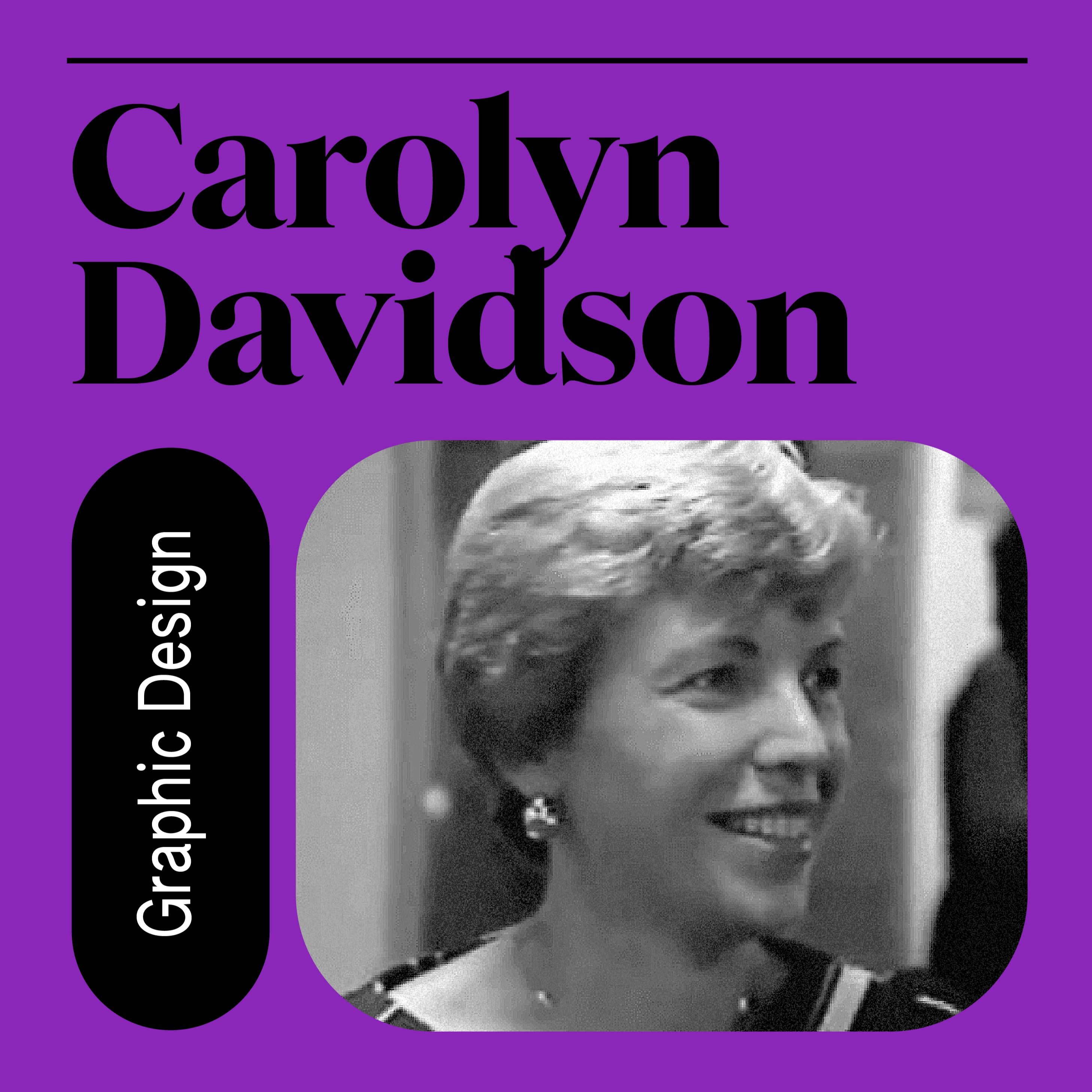
Women Designers You Should Know
049. Carolyn Davidson and Sarah Williams: The Woman Behind the Swoosh
00:47:50
When it comes to recognizable icons, few rival Nike’s Swoosh, designed by student designer Carolyn Davidson for $35. We unpack her quiet career, late recognition, and lasting influence with guest Sarah Williams, Co-CEO of Beardwood & Co. and President of AIGA NY.
Loading summary
Transcript79 lines
- [00:03]
A
Hello. Hello. Welcome back to Women Designers. You should know the podcast where we unveil the female geniuses behind your favorite designs. I'm your host, Amber Ac, founder and creative director of graphic design studio Nice People, and I'm talking with Sarah Williams today. She is co CEO of the branding agency Beardwood & Co. And the current president of AIGA's New York chapter. Sarah's career took her from growing up in Michigan to interning, turning at Landor to becoming one of the earliest hires at Beardwood and Company, where she's helped shape brands like Westin, Colgate and hello Products. Alongside her client work, she's dedicated to mentorship and design advocacy, expanding opportunities through her leadership at AIGA New York. And together, she and I are going to dive into the story of legendary Carolyn Davidson. When it comes to recognizable icons, there are few more well known than Nike. Swoosh. Behind this legendary mark is the story of a designer who was paid just $35 and went on to work with Nike in its scrappy early years. And later, she received a surprising form of recognition that changed her life. So hope you enjoy this conversation. These women pave the way for me and her. Breaking boundaries, building a better world. You should know women designers.
- [01:59]
B
You should know.
- [02:08]
A
Foreign. Hi, Sarah. Welcome to the podcast.
- [02:14]
B
Thank you so much for having me, Amber. It's great to be here.
- [02:18]
A
I'm so excited to be talking to you about your career, your life, all of the amazing, impressive things you've done so far. And of course, we're going to be talking about Carolyn Davidson today. But first, I always like to go way back to your childhood and whatever were your early influences. So you grew up in Michigan, right?
- [02:41]
B
Yes, that's right. I grew up in a very, very small town.
- [02:46]
A
Oh, really?
- [02:49]
B
So a far cry from New York City.
- [02:52]
A
Yeah, I bet that was a big adjustment.
- [02:54]
B
Yeah, it was. The town I grew up in was barely over a thousand people. It's called Saranac, Michigan for anyone who's spent time around there. But it's interesting because sometimes small towns, you know, you get bored. Right. So you have to find your own ways to get creative and pass the time and find yourself.
- [03:18]
A
Yeah. In fact, I remember hearing a story about that you'd spend time recreating album covers in your bedroom before you even knew what graphic design was. Is that right?
- [03:30]
B
Yes. Growing up and then becoming an angsty teenager, you start to get into music. I really started to love punk rock and hip hop, and it was a way to connect to the wider world. I would pour over those Album covers and think about, how can I recreate these? How can I sketch out every single detail? It started to make me think about the art direction, the lettering, the photography. And then you start to go into the liner notes and see who are the photographers, photographers. And it can start to become some sort of powerful medium, especially with punk rock and hip hop. There was this DIY aspect to a lot of the record labels. So it made you feel like you can be involved. People are out there making things happen. So there's something really powerful, I think, that I connected to with that without even really knowing what I was connecting to.
- [04:29]
A
It's funny, I was talking to Louise Sandhouse and we were talking about how graphic design isn't an industry. It's culture. It's all around us. Everybody interacts with and sees and has a part in graphic design, whether they know it or not.
- [04:47]
B
We. We all have to find our ways to connect with that from early on and understand, like, hey, this is something I'm excited about. This is something I'm interested in discovering within yourself. A passion for creativity and wanting to find a career and realizing, hey, this is something I can do. This is possible, and seeing how that can unfold.
- [05:09]
A
Do you remember any of the albums you recreated back in the day?
- [05:14]
B
Oh, my gosh. There was this hardcore band, Minor Threat. They were, you know, had, first of all, the gatefold, this incredibly elaborate photograph that I fully recreated in pencil, the band logo, this little illustration of sheep on the COVID and stepping away from the sheep and breaking away. So things like that, very much coming from a DIY place. Beastie Boys were a huge influence for me. And all of their album art and lettering, that's sort of where those influences started to come in in those early days.
- [05:49]
A
Yeah, I love that. And I love that narrative of just, like, taking everything in around you and starting to really explore it. And so then beyond that phase, you went to Western Michigan University, graduating with a BFA in graphic design in 2001. I'm curious to know what that program was like. Were there other women in the program? Did you learn about women teachers? Did you learn about women designers? How did all of that shape your foundation in design?
- [06:19]
B
Well, one of the things that was incredible about that program is it was led by a fabulous woman, Professor Tricia Hennessy. And she was an incredibly powerful force of nature in terms of shaping that program. So again, we're here at this state school, Western Michigan University, which you wouldn't necessarily think of as a design powerhouse, but she had come with a background from places like RISD had studied with people like Wolfgang Weingart. I think she came to that school and really created a program that was very rigorous, focusing on the foundational craft of design, conceptual thinking, and really set that expectation in terms of work ethic that I think formed so much of how I worked. And many of the graduates from our program worked and actually created a lot of influence in how our program and people graduated. So people going on to work in New York and San Francisco and keeping that flow of talent alive and thriving. When I think about women leaders in design and powerful forces of nature, she really is someone that from very early on taught me so much and influenced me in deep ways. I definitely would not be where I am if it wasn't me.
- [07:48]
A
For.
- [07:49]
B
For her and what she created.
- [07:51]
A
I love that. And I feel like that's rare too. Especially back in the day, it felt like a lot of the industry was led by men around that time. Everything that came in and out was like the top. Were those men controlling that narrative? And then now it's refreshing to hear that there were some women really paving the way and setting people up for success, even though you don't hear much about them.
- [08:18]
B
Yeah, absolutely. We had our design textbooks and design history courses and I think there's still the narrative of the design legends and gods. And when you Google famous graphic designers, it's very male led still. And to be able to come into an environment with her leading the program and also where it was a focused group of students. There were about 20 of us that went through the program together each year in the cohort and being quite balanced, I would say, in terms of the makeup of the class, I think that felt very powerful as well. It was a really unique thing to be able to discover that coming into college, not really even knowing what design was, taking some foundational courses and then seeing there's the really rigorous program that provides a career pathway and taps into these challenges around conceptual thinking and work ethic and truly learning these skills. And also with my little dream of moving to New York someday, had a potential pathway to that. I was just like, oh my God. It was really an incredible thing to be a part of.
- [09:36]
A
Yeah, that's cool. Early on in your career, shortly after graduation, you joined Lander, one of the most established global brand consultancies. So you started as an intern there and then grew into senior designer over the course of three years. I'd love to know more about that experience. What did it teach you about branding and what mindset shift did it Spark from going from a small town of Michigan to, you know, the big city.
- [10:07]
B
Yeah, I feel so grateful for that experience. And there was a connection between my colleagues, college years and going to Landor. One of our alumni, Wally Krantz, was the person who gave me my shot at Landor. He was in the New York office as a creative director and had also been responsible for designing the FedEx logo in his earlier days and at Landor as well. Being an alumni of Western, being at Landor, I'm so grateful for that connection and that opportunity. But having that ability to go to Landor, I think coming from that small town environment, immediately I was surrounded by colleagues from all over the world, which was so inspiring to me. Connecting with all of these global perspectives on design and potential and talent blew my head open to different ways of thinking and approaching the work with Landor. We talk a lot about building brand worlds and brand experiences was foundational to me. I feel like it was my graduate program.
- [11:15]
A
Yeah.
- [11:17]
B
And ultimately it's where I met my business partners, Julia Beardwood and Ryan Lynch. That is truly the greatest gift of all because these two incredibly brilliant, wonderful people have been so important to my life and building our current business together. Yeah.
- [11:37]
A
Tell me. I would love to know that story about Julia more too. So she was at Landor for a while and then stepped away to start her own agency. Right. I think that's so cool.
- [11:50]
B
Yeah. So when I met Julia, she was in a very senior leadership position as executive director and leading brand identity at Landor. She had been at Landor for about seven years at that point and, you know, just kicking butt all around. And I think at that point sort of said, you know, it's time. It's time to maybe step away, try something new. And had that entrepreneurial spirit and drive after taking a little bit of a break too. And her background is in broad strategy and taking on some of these strategic consulting projects. And she deeply cares about her relationships and the people she works with. And she and I stayed in touch. We had worked together on some projects, obviously while I was at Landor. And that conversation unfolded to say, maybe there's enough work here that this might lead to something. At that moment, I was sort of thinking, hey, maybe it's time I think about something new for myself as well and see what else is out there. And Julia had this incredible work ethic, incredible relationship building that opportunity was growing and rising. And knowing that she really cared about building and creating a place that people loved to work and do their best work, it just Felt like, why not be part of seeing what that's like and maybe building and shaping that together and joining in that with her. So it tapped into some of that entrepreneurial spirit within myself as well and just sort of saying, let's see where this can go. And.
- [13:36]
A
Yeah, but you're one of the first employees of Beardwood and Company, right?
- [13:41]
B
Yeah, I was the first employee, I think, hired intern on my first or second day as well. So, you know.
- [13:51]
A
But I love that, like, so scrappy, figuring it out as you go and everything.
- [13:57]
B
Exactly, exactly. You do everything in those days. Right. It's about ensuring you're doing the best possible work for your clients, developing partnerships, finding and building teams. But you're also buying the toilet paper. Right. So it's thinking about all of those things and making sure that as we're approaching growth, it was that organic, steady pacing and, you know, just taking again, every opportunity and thinking about it as that next great chance to show what we could do and create, to bring that next relationship, that next piece of work in.
- [14:40]
A
Yeah. I love how your whole story is so connected, these natural transitions from Western University to Landor and Landor to Beardwood and Company, and how you had all these connections that took you to the next place. So I'd love to know, over the course of your, like, 20 plus career, are there any standout projects that, like, really meant a lot to you, either at Landor or Beardwood and Company, any noteworthy projects to mention to the audience and your involvement in it?
- [15:13]
B
I think at Beardwood, one of the major turning point projects for us was working on the global positioning and global identity for Weston Hotels. And it was really one of those phone calls you get because you're just like, wait, they're calling us, you know, West. Yeah. And, you know, still being in the earlier days of our formation as an agency, I think they had connected to us because we had appeared on some referral lists and forums. Relationships always matter, so you never know where you're going to get referred from. This was happening as the wellness industry was still very much emerging and becoming a much bigger topic. Now it's a massive industry. It really permeates every kind of category, every kind of brand, product and conversation out there, helping and working closely with Weston to articulate that, define that from a positioning standpoint verbally and then a visual articulation, and then doing that on a global scale, thinking about what's universally true and how that can connect and the nuances of that in different global geographies as well, was just you know, an absolutely incredible opportunity.
- [16:38]
A
Yeah, that's so cool. I bet that helped in the growth of the agency. And then fast forward 20 plus years after the formation of Beardwood and Co. Has it been 20 years yet?
- [16:52]
B
Yeah, we're a little past 21 years, which is mind boggling at this point.
- [16:59]
A
So was it just last year that Julia stepped away from Beardwood and Co in retiring and handed the reins over to you and Ryan lynch as co CEO?
- [17:11]
B
Yeah. So Julia is still involved in business as Chief Growth Officer, which is wonderful. You build these long term relationships. There's so much knowledge and care and thoughtfulness that we want to make sure that investment continues on. So being able to have that kind of transition in place and make it as smooth as possible for us was absolutely key. So having her still involved in thinking about how to support our clients in their growth and our continued development as an agency, while having Ryan and myself really officially take that co, CEO, co owner role made for the smoothest possible transition.
- [17:57]
A
Yeah. I'm so impressed. We were just talking about this. I think it was episode 40. I was talking to Jessica Strelioff and we were talking about Tomoko Miho and we got on the topic of these generational agencies that have gone beyond the founders, majority of them are men. This is a monumental moment. The fact that this woman founded agency is now getting passed on to a second generation of people and would hopefully live on beyond Julia and could be one of those 50 year old agencies, 100-year-old agencies into the future. That was all started by a woman. And I think that's incredible and very rare to see.
- [18:44]
B
Well, that's our dream, you know. And I think what Ryan and I are also incredibly excited about is it's not just about us. It's about this incredible team that's helping us think about that path forward, ultimately wanting them to have that leadership and that vision for the future and challenge us in all of those wonderful ways.
- [19:07]
A
Yeah, I love that. Switching over to who we're talking about today. Carolyn Davidson, you mentioned that you want to talk about her because you're a runner, is that right?
- [19:17]
B
Yes.
- [19:19]
A
Love that.
- [19:20]
B
And you are too.
- [19:21]
A
Yeah. Do you run marathons or at what capacity?
- [19:26]
B
You know, I haven't run a full marathon, but half marathons. I try to do one of those a year. I run eight miles, usually about five times a week. It's an important part of my life. Not only, I think for the, the physical health, but just the mental health and the time to feel inspired or just let my mind wander and feel rejuvenated. So yeah, there's so many good benefits from it, but.
- [19:54]
A
Oh, yeah, absolutely. Yeah. I haven't run in a while. It's been a few years, but I do need to get back into it. I have run a couple of marathons, but I don't think I'll ever do it again because it's just too long. But I do like half marathons, so hopefully someday I'll do another half marathon. Okay, so to dive into Carolyn Davidson's story, for those who don't know about her, she was the woman behind the Nike swoosh. It's kind of exciting to think that it was a woman that designed that that helped with the early days of the Nike brand. As we dive further into her story, she almost feels like a one hit wonder because this is her main story. We don't really know much about any other design work she's done. She's in her 80s now and hard to get a hold of. She kind of retired from design and lives a quiet life now, starting way back in her early life. She was born in Oregon in 1943 and went to Portland State University starting as a journalism major. She took a graphic design elective class just to fill her schedule. That was the class that changed her life because she realized she was fascinated by design and wanted more of it and decided to switch majors from journalism to design and got her bachelor's degree in graphic design in 1971. And so it was while she was at Portland State that she met Phil Knight, one of the founders of Nike. He was her accounting professor and overheard her talking about how she couldn't afford oil painting supplies for one of her classes. He approached her in the hallway one day and was like, excuse me, are you the one who can't afford to take oil painting? And at the time he was running Blue Ribbon Sports, what Nike used to be called. He was the US Distributor for Japan's Onitsuka Tiger shoes. He told Carolyn that he needed someone to help with designing charts and graphs and presentations. It wasn't like, hey, I need a logo designer right off the bat. It was definitely just like, hey, I just need someone to help with a few presets presentations. He offered to pay her $2 an hour for some freelance work and she accepted. She took it and had just this steady flow of work way back in the 70s. So then there's this point where Nike breaks away from Onitsuka. That relationship fell out. He decided to start his own line of shoes and had a factory in Guadalajara, Mexico, that was ready to produce these shoes. But he didn't have a name yet or a logo. Carolyn's already in his wheelhouse. He goes to her and asks her to create a stripe of sorts, which was very popular for a shoe logo back then too, and kind of an industry slang for a shoe logo. I think that's just in their own little industries, you know, we need that like Adidas stripe kind of a thing, or the tiger stripe that Onitsuka had. Carolyn later in a story, she recalled how difficult it was. She said, he loved Adidas, he loved the stripes. When you really love something, try to get something to look over here at something different. So she sets up in her studio, starting to figure out this logo and what this logo is going to be, sketching all sorts of options. And she. I loved this part of the process. She would say, sketch on tissue paper and put it over a shoe to see how it would look and fit. He was looking for something that resembled speed too. And she had that in her creative brief. It's so interesting to think about that application and how creative that was to think through. Like, it's not just going to be a logo. It's going to be a logo that needs to fit on a shoe and look good from a distance. It is a really interesting process that she had, don't you think?
- [24:06]
B
Yeah, it's so interesting to think about the origination of that story. And it's that very almost tactical brief that many times we start with, of, okay, I have this product, it's a shoe, I need a stripe to go on it. Speed. It's this kind of very focused vision of I need something to communicate, I need something to get me to launch. I've got this factory ready to go. We've got to get the distribution up and running. I kind of put myself literally in their shoes of the day and thinking about Phil Knight and Carolyn and thinking, we've got to get to launch from those very tactical, product driven, foundational roots. What's so fascinating and mind blowing to me is that she created something that has endured in this powerful way that has lived through so many iterations, incarnations, expansiveness of the Nike universe. We were talking about some of the design gods earlier, and I feel like what she created is so much more instantaneously recognizable to literally almost anyone. You would walk down the street and say, hey, can you think of a logo? Or can you draw the Nike logo? You know, her work has connected on that global scale in that immediate, recognizable, distinctive way, probably almost More than any other designer in history from those roots and that kind of very tactical, urgent need, she's created something that's endured the test of time. And it just blows my mind to think of that origin and how it's lasted.
- [25:59]
A
Yeah. In fact, that probably was a very challenging task to take on. I mean, maybe at that time, she didn't know how big Nike was going to get and that it needed to be globally recognized. But I think the fact that it had to be something that fit on a shoe, it had to be like the Adidas stripes, but not a stripe. Or like, it couldn't even be a stripe, but it has to be like that.
- [26:26]
B
You know, we talk in branding a lot about distinctive brand assets. The Nike logo is in the Nike logo. But coming from a place to create something that feels truly integrated into the product design and at home on the shoe itself now, hundreds and thousands of different shoe designs, but also extrapolated into hundreds of campaigns. It's interesting, as we've been talking about, the connection of women designers and women in sports and their collaboration with together and the line of apparel around Everyone Watches women's sports. That's a recent collaboration that Nike has done and that features Carolyn Davidson Swoosh.
- [27:10]
A
Oh, yeah.
- [27:11]
B
And so the literal miles that's traveled while still feeling from that inception so at home and so integrated into the very original product design is such a incredibly powerful tests of, you know, what she created and the benchmark that we can all be thinking about when we're creating and designing.
- [27:34]
A
Going back to this sketching moment, it sounds like she was sketching for two or three weeks and really trying to make a static image look fluid and fast. She supposedly produced five or six finalists. I was trying to Google this, and I can't find any of those other options. I think there's one thing that I'm seeing, it's kind of this sunburst or it's as if the swoosh is duplicated in this spiral and there's, you know, like 12 of them or something in this spiral. And maybe that was an iteration of it she was going into. And then there's this wavy version of the swoosh too, where there's like six swooshes in a row stacked on top of each other, kind of creating what looks like an ocean wave a little bit. But, yeah, it's interesting. She's really in it with this sketching mode in these first few weeks. And then she presented them in 1971 to Phil Knight and his partners, Jeff Johnson And Bob Woodell. At first she was met with silence, and then they said, what else you got? They circled back to her favorite, which was this curvy check mark or wing like and in motion. Phil Knight's famous words were, well, I don't love it, but maybe it'll grow on me. It's like, can you imagine? Not really.
- [29:03]
B
Yeah, it's. It's funny. I think, you know, we've probably all been in that moment. Right. You know, you're in those conversations where you're trying to create that emotional connection, that story, help people understand the idea and the possibility and the potential. And I think you do ultimately build that meaning into it over time. It is the sum of the parts that go together. Not one aspect of a brand or design can do everything. The name can't do everything alone. The logo can't do everything alone. The photography can't do everything alone, or the graphic elements. It's really like you're saying about how ultimately all of these elements and aspects have to work together to create that greater meaning or that greater storytelling that helps us connect to it and connect to culture. I think kind of going back to the album of COVID art and some of those things that we were talking about earlier in the conversation.
- [30:04]
A
So, like, will other people love it?
- [30:07]
B
Exactly, exactly. And once it's out there in culture. So. But I think we've also all been in those shoes of Carolyn Davidson. But I think the other thing that's exciting and powerful about that is thinking about how early on she was in her career, essentially being a student at that time, being side by side in the room with these founders and that ability to generate and make and ideate and that sketching process and that abundance of ideas that she put forth. I think, think there's something to that that's still so important in how we think about our work and approach our work and that kind of rigor that we put into it to find the right solutions. And also the best and most powerful ideas can come from anyone. It doesn't mean that you have to be the most, you know, senior, experienced, most years in the industry to come up with the best ideas. That's something we really believe on our team and our agency.
- [31:13]
A
That's such a good reminder to young designers that you could think of the same thing that someone 30 or 40 years into their career can think of and to really have that mindset.
- [31:26]
B
Yeah. And. And I also feel like that's a really important role of, you know, a great designer, creative leader, creative director, is to Recognize those gems and those ideas and really help amplify and elevate the great creativity you're seeing from anyone in the room. And you know, that can be coming from a strategist that you're collaborating with, coming from an account person that you're collaborating to, because sometimes they're seeing things from an interesting perspective and opportunity. They may share a word or a phrase that helps you think in a different context as well. It's about taking all of those things in together and bringing that into fruition, into the best potential and best ideas.
- [32:12]
A
Yeah. How many times has a client asked at the very beginning of the process that they want a Nike logo?
- [32:23]
B
Well, I think it is basically the default, like Nike and Apple. Right.
- [32:29]
A
I'm always like, what logos are you drawn to? What inspires you? What kind of a logo do you want? And it's always like, well, you know, something as iconic as Apple and Nike.
- [32:40]
B
Right. And I think there is this inevitable question that can come up of can we ever get to that place where our brand can be as recognizable to use that iconic element without the brand name? So that is an inevitable question in a lot of conversations. And it's the benchmark, right. It's undeniable. And I think that is a really brave and powerful place for a brand to be. But it takes commitment building over years and dedication that Nike has shown.
- [33:12]
A
Yeah. Going back to the swoosh, it's such a mark that everybody knows that everybody wants. It's like the aspirational logo of all time kind of a thing. And so they were up against production deadlines and I thought this part was interesting, but she asked for more time to refine the mark further, but he said, no, it's too close, we need to send this off. I don't know if she ever did later, if it got to where she wanted, or if there was more iterations that she had in her mind that she would take it to. But maybe it stood as that version always. And she gave them her bill for the work. This is the famous part of the story where she's charging $2 an hour. This wasn't a, you know, value based pricing model that she was like, if it's gonna be a logo and you potentially get this big, it should be X amount of dollars. And so she added up her time and it was a little over 17 hours of work at $2 an hour. And so that ended up being like $35, which in today's dollars is somewhere around like 250 to $300. And so, so yeah, like everyone always talks about this story and it becomes this cautionary tale in the design world of don't charge $35 for a logo. And of course it's more like don't charge 300 for a logo today because that's really what she charged. But it comes with its own scenarios too, like the fact that they weren't really big, they didn't have that much spare money. She was, didn't like it, kind of just fit for that time. But I'm curious to know what you think about that money story or undervaluing your own work kind of a thing.
- [35:03]
B
Yeah, I mean, I think we've probably all been there at some point, especially as a student or a young designer navigating early freelance conversations and thinking I should just take this on or help them out. There is something to getting that foundational experience. But I think ultimately considering the value, considering the potential is really, really important when you're thinking about how you're writing proposals and pricing projects. And you know, thankfully Nike did come back and offer her a stock certificate which, doing some research and I'm, I, I'm hoping this is right. But it seems like that ultimately gained some significant value. So hopefully that helped her out. But I think we now know and there's a lot of data out there that the way your brand and brand design appears drives a significant amount of value for business impact and the bottom line. So really thinking about the value that offers, the amount of research, the amount of thought, you know, the amount of distinction that you're creating, the value that that provides and the potential for business impact is key as you're going into that. So yeah, being able to come together with other designers and have conversations, share knowledge, you know, be able to talk about things like pricing and as you mentioned, value based pricing as well. I think having access to that kind of knowledge is really helpful for designers.
- [36:43]
A
Yeah, absolutely. And especially knowing how much they're investing into their production and their product, making sure that the logo is valued comparatively with all of that too. So that you're not charging 300 for a logo and they're investing half a million into their brand. So this, as you were talking about, she received stock as a gift later and I think that was very admirable of them to do. They didn't have to do that, but maybe there was buzz happening at that time and maybe it was starting to look really bad. They went public in the New York stock exchange in 1980. So this is only like nine years after that 1971 logo and the founders became millionaires. They were hitting very successful strides all of a sudden. And by the mid-80s they were a powerhouse. And they were all over, you know, gloves and socks, hats, jerseys and everything. They became a globally recognized brand. The recognition that she got came in 1983. She received 500 shares of stock in Nike. And, and I guess Nike in 1983 was somewhere around $16 a share. So if I did the math, 500 times 16 is $8,000.
- [38:16]
B
I did a little chat GPT search on it and it said the original stock certificate was worth $150. But with the growth, this was via chat GDP PT. We need to cite the sources more that said it had the potential to grow to 2.5 million today. But again, you know, want to make sure that that's accurate information.
- [38:46]
A
Yeah. And like other reports suggest that her stock grew to 32,000 shares worth about 3 million. So in an old interview, one little quote that she said is she's not a millionaire, but she feels, well, PA paid. And so, I mean really, ultimately, at the end of the day, that's what's important is that she feels she got what she deserved in helping with the foundational elements of this huge brand. And so it's nice to know she got those earnings later because if some intern or even a student designer asked for a million dollars for a logo, that absolutely wouldn't happen. So it's one of those rare scenarios where it's like, okay, you got that recogn after. Which was really nice and a very rare moment too.
- [39:39]
B
It's interesting to consider that. And then probably the salaries of the people who are. Yeah, there are marketing and global design. I do think it's good that she's kind of shared some of that later story and, and that there was some of that recognition that came back to her ultimately because she deserves it. She deserves all the recognition.
- [40:06]
A
Yeah. And I think one myth that a lot of people think the logo is supposed to be based on the name Nike, which was named after the Greek goddess of victory, but she actually designed the logo while it was still blue ribbon sports. So it wasn't really Nike yet. Phil Knight preferred the name Dimension six. So that was the name that was floating around. Jeff Johnson suggested Nike. Now the logo's been designed, they have a name and all of that came together. And so I think it's almost coincidental, or maybe they were thinking about it with the name is the fact that that swoosh curved check mark also could resemble a wing for the goddess of.
- [40:50]
B
Victory, bringing your story together once you have all the pieces. And I mean, I think when what's smart is even if they were kind of concurrently creating some of those things, which honestly happens. Right. A lot of times we envision the perfect process.
- [41:08]
A
Right.
- [41:08]
B
We're going to do the strategy and then the name and then the design and it's all going to happen in this perfect sequential process. In reality, a lot of times things have to overlap or move quickly and you are often creating in this much more layered process due to the nature of how things have to happen in our world. Still keeping that eye toward how you can connect the dots. What are the potential for the ways these stories might come together. I can imagine a world today where that logo might rise to the top and it might spark that conversation with the name Nike and how this all might become that unified story, even if that wasn't truly what happened in that room. It's a really interesting opportunity for us to. I'll keep in mind knowing that often the way we work isn't that perfect sequential process. We kind of have to keep our minds open to how we can connect the dots and bring that story together ultimately.
- [42:11]
A
And so then to close out her story, she ended up retiring in 2000. There's this period from 1970 to 2000 that we don't really know much about her career at that point. What we know is that she had a freelance design career and worked as a designer for nearly 30 years and would work on other small business stuff and kept a pretty low profile in Portland where she worked. And so, yeah, that's the funny part is she has this iconic story and yet it almost feels like a one hit wonder. Like because there isn't really much to know about any work beyond that. She doesn't seem to really want to put her work on display or there doesn't seem to be a portfolio of work or legacy beyond this Nike swoosh, which is pretty interesting.
- [43:07]
B
Yeah, you know, I did read some of that as well, that she kind of took this feeling away of feeling that she was able to get a lot of great referrals from her time at Nike and becoming known as the logo lady. But as you're mentioning, not really having that understanding of what else was out there that she'd created. And I, I think that's a interesting thing that we can connect to as well as designers. Sometimes it's hard to talk about our work or tap into that ability to promote ourselves. I mean, now today we have Instagram, we have LinkedIn. But I would say, again, I don't know Carolyn personally, but I even think about myself and this journey toward becoming a business owner and having to make this transition and mindset to, oh, I have to put myself out there. I have to talk about my work, talk about our team, talk about our business. And being someone who maybe isn't naturally have that kind of, you know, exhibition type, I think about her and wonder about that as well. It's. It can feel like this really tricky mindset shift. And a lot of times as designers, we get into this because we're visual communicators rather than verbal communicators. So it can be a tricky thing to make that transition. So I don't know if that's true of her or not, but if so, I can definitely relate it.
- [44:38]
A
Yeah, it does seem like it. And it, it's. It's interesting. I feel like we could do a whole podcast on this topic because the idea of your legacy and making sure your legacy lives on it was something we talked about on a previous episode. I had Sean Adams as a guest. Way back in December. We were talking about Margaret Larson. You know, he's a dean at Art Center. He's been AIGA president and all of that. And he had really good advice and gives advice to students all the time to always document your work and make sure it's out there. Because there are a lot of missing pieces in some of these women's stories, like Margaret Larson, who has now passed on. And there isn't really a way to gather all her work or to identify what she worked on. But at the same time, it's like, well, if it's not important to them, then why does it matter? But then it feels like it's important to. For people after them to like, know, understand and hear those stories and see the fact that these other women were out there and were designing if Carolyn Davidson was listening or if we were able to reach out to her and collect all of the work she'd worked on in those decades, whatever it might be, brochures, pamphlets, books, whatever she might have, and donate that to a library or to hold on to that archive and publish it so that she isn't this one hit wonder anymore.
- [46:10]
B
Yeah, I love that idea. You know, it's something that really helps people see the potentials and the pathways and the opportunity. Right. There's that phrase like, if you can't see it, you can't be it sometimes. And so the more that we can show and tell and shine a light on the opportunities. I think that's really powerful thing. So.
- [46:32]
A
Yeah. Well, thank you so much for joining me today. It was great to hear through your story and Carolyn's story, and so I appreciate your time. Thank you.
- [46:46]
B
Thank you, Amber. This was lovely.
- [46:49]
A
That's it for today's episode with Sarah Williams, Co CEO of Beardwood & Co and President of AIGA New York Work. I loved chatting with Sarah and learning about how leadership and community building are as vital to design as the work itself. That's always a really good reminder. And talking through Carolyn Davidson's journey, which was incredible and such a fun deep dive. She went from quiet student freelancer to the creator of one of the most iconic logos in history and then went back to being a quiet freelancer. But it's a reminder of how design can echo far beyond the moment that it's made. And it's also a reminder of documenting your work, making sure that your legacy lives on, especially if you have a legacy like Carolyn Davidson's. As always, let's redesign history by celebrating women.