Loading summary
Transcript1 lines
- [00:00]
A
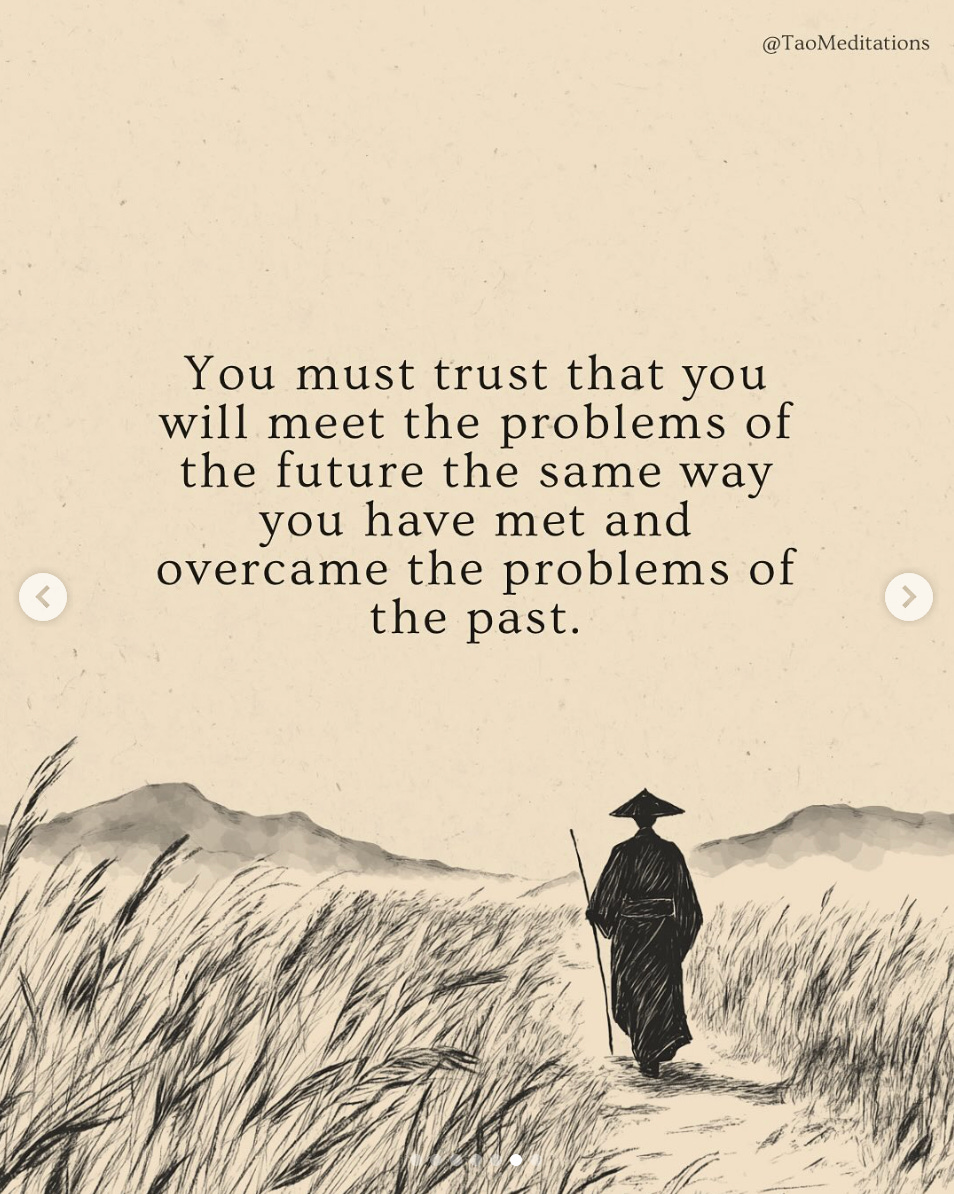
Welcome back to net Net. This is work. And in Net Net we talk about something we find in the news or something we find in social and what it means to us. This is a quote I found, which is I found it on Instagram from Tao Meditations. So if you are looking for meditations to follow on Instagram, you can follow someone called Tao Meditations. But the net net of it is Trust the Process. So the whole scenario is that a young man asked a monk how to stop worrying. And the monk's response was that the reason we worry so much is that you want control. Your mind wants to control. It's trying to control something it can't control. And it is trying to protect you from the future. It's trying to protect you from being powerless and from imagined dangers of the future. So the worry bug is basically your mind trying to exert control over something that it can't control. And the reality is that you can never see the future, right? Like it's an illusion. Control. You can never control everything. You don't control much of anything if being honest, besides your own actions. And there's a great quote that says you'll never see the future for what it will actually bring. The best we can do is to imagine worrying. Is your mind causing itself pain? And that there is really one thing that you can do to get rid of this pain that you are causing yourself, this affliction you are giving yourself, which is trust and trusting the process, which is trusting that you can meet the problems of the future, that you can solve the problems of the future. The reason you can solve problems in the future is because you've solved problems in the past. And I always think, this is a really good piece. I met the guy who said Trust the Process. He's like a Philly investor guy. I forget who he is. I actually liked. I met him through the chairman group. I sat next to him once at dinner and I was like, Trust the Process is a great fucking quote. Sam Hinkey. Sam Hinke's the Trust the Process guy. But I think the reason Trust the Process is important is I think we get like all spun up around the axle about worrying about stuff. And I say this as a total hypocrite. Like, last night, I'm lying in bed at like three in the morning, just like, worrying, worrying, worrying. Like, the reality is sometimes it takes a little bit of a jolt or a shot in the arm or perspective from talking to someone who's wiser than yourself to be like, oh, yeah, yeah. Like, no, Shit, we're. You know, this is gonna happen. This is gonna happen, or this is gonna happen. And there's no point in worrying about the scenarios. You just need to be ready for any one of four scenarios that are gonna happen. And you have to trust that when the scenario hits you, you do the right thing. I think the other piece of this. I spoke to a woman this morning who is joining our board. And sometimes you just have to talk to someone who's a little bit removed from your situation to get better perspective on your situation. So I was, like, kind of explaining to her the situation I'm in and what I'm dealing with and what I feel about it and what I'm worried about. And she was like, kind of like, you moron. Like, it was kind of like, you know, in the Lion King, the. Like, Rafiki. When Mufasa. Is it. No, Simba, I guess Simba. When Simba is, like, worried about stuff and, like, Mufasa just bangs him on the head with the stick. And he's like, you dummy. Like, this is what it's like. I had, like a you dummy moment this morning. But she basically was like, all right. It's, like, super obvious, like, this has to happen, and if this doesn't happen, then nothing can happen. And I was like, oh, yeah, you're right. Like, why am I worried about this? Like, it has to happen, or if it doesn't happen, then this other thing is going to happen. So I think it's great to just remember that you as a human are always looking for control. It is an affliction. The more you can control wanting control. Like my dad would say, the best control is no control. Like, the more you let that go and the more you believe in yourself that you can meet the moment and find the solution. And you may not get it right, and it may not be perfect. The better off you're going to be. I had a conversation with someone last night who basically was like. Was one of the most. It was a bizarre conversation, but the person was basically like, what the fuck have you been doing? And I was like, God, that's been a while since someone asked me a question in that tone of voice. And the reality is, nobody understands your situation. No one understands the situation of a company unless they've been in it. No one could possibly have the amount of perspective or insight that you have about your situation. And the reality is that, you know, in this case of this company, like, hey, we've solved a thousand problems. There's 2,000 problems that we haven't solved. And I'm so proud of the thousand we did solve. I have a lot of ideas for the other 2000, but my point of it is like, problems are everywhere. We're always going to encounter problems. People are always gonna have an opinion about how you tackle your shit and what you do about it or don't do about it, or how you do it or how you don't do it, or how you should have done it. But the reality is they're not in your shoes and they're not stepping through things the way are with the information you have at the time. And if you just believe in yourself that you can make it through to that next place and take that next baby step to solve and, you know, to live the next day and to make it to the next fight, the better off you'll be. All right, so my net net on this is problems are everywhere. What a luxury to be able to have the opportunity to solve so many problems and to tackle so many different things and be encountered with so many challenges every day. Like, what a great life would be so boring without that. The second is that worry is so natural and everybody worries, and it's natural to worry. But worry is an affliction. And the more you let yourself be victim to worry, the more it's gonna hurt you. Worry does not actually help you. It only hurts you. I took a peloton class yesterday morning with Emma Lovewell. I love Emma Lovewell. And then I was reading something somewhere I forget, but that essentially, like Emma Lovewell was saying, and this article was reinforcing that. Like, do whatever makes you a happier, nicer person this holiday season. Like, that was the theme of the Emma Lovewell peloton ride. But if working out makes you less worried than work out, you know, if being with friends and feeling connected to other people makes you less anxious, do that. Like, find the things that you can do for yourself that work for you, that make you feel less worried or less fixated on your worries. And then the last piece is trust the process. Trust yourself that no matter what it is you're going to encounter or who you encounter it with or what exactly it looks like, that you will be able to solve it. And you'll be able to solve it in your own way, on your own time, in your own style. And it won't be perfect and you won't get it right. But you know what? The time after that, you will get it right. And just believing in that will make a huge difference. So those are my three takeaways. Thank you for listening to Net. Net. This is the work podcast. You can find us on Substack. You can find us on YouTube. You can find us wherever. Really? People are talking about work and we'll see you back.