Loading summary
Transcript19 lines
- [00:00]
A
Welcome back to work. I'm here with Suhan. This is underlined, which is part of the Work podcast. And in these episodes we take a quote and discuss what it means, what we think about it, how we apply it, all sorts of good stuff. So Suhan, I'm going to kick it to you for the quote.
- [00:26]
B
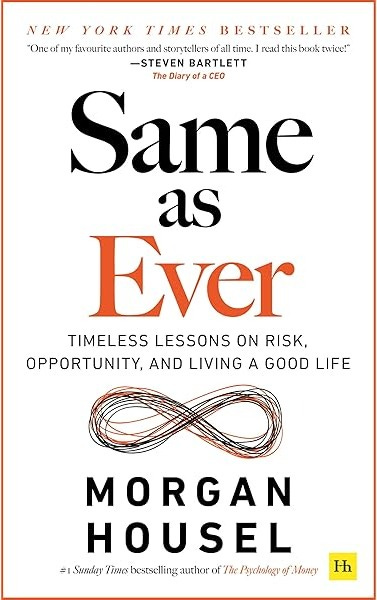
In this episode. The quote we're going to over is going to talk about short term problems versus long term problems and why endurance is technically more important than brilliance alone. And the quote is the trick in any field, from finance to careers to relationships, is being able to survive the short run problems so you can stick around long enough to enjoy the long term growth. And it comes from one of my favorite authors, Morgan Housel Psychology of Money. This is from his book Same As Ever. He got a new book coming out soon. He's known as like the money writer, but to me he's more like a wisdom guy because everything that he writes in there is applicable to, from business to your personal life, to anything you got going on. So the idea here for me was, okay, how do you deal with tough times in business and in your personal life, at least in the short term so you can enjoy the essentially the fruits of your labor later?
- [01:19]
A
Yeah, I think I love endurance. I actually love the word endurance. Like endurance is a great word. Endurance and resilience kind of go together. And I think what happens to a lot of people is you're just capsized by like whatever, whatever is happening right now. And it's very easy to get capsized by whatever is happening right now because there's heavy things happening in your relationships, in your workplace, in your family, in your finances. Like all of it. Like there's, it's all mindset, I think really is that shit happens all the time, everywhere. Some shit is worse than others. But having endurance is important. Endurance is a mindset. Grit is a attribute and a benefit of having an endurance mindset, which is that you are digging it out because one, you believe something better. Like if not this, if not this, then something better. Two is you're willing to and you're tough enough to take on the hard stuff. I think three is that you understand that problems are persistent. Like problems, there's always going to be problems. And you know, I think for me anyways, like just thinking about my time at Food52, like, I think one of the things that was hard when I came in here is it was as though, like, you know, in your house when you have like the junk drawer or you have the like closet or like the junk closet. And like, you're just imagining it open in like a hockey stick and a baseball and a soccer ball and a mop. And like, all this stuff just come. Luggage just comes, like, falling out of it. I feel like this was a little bit of that. And I think it's easy. And I've definitely fell victim to this. It's easy to be like, I'm just gonna, like, shove it back in the closet. I like, not gonna deal with this right now. Shove it back in the closet. But. But the reality is, if you can sort your short term problems, there's a lot of benefit from that. If you have the optimism and the belief that by solving them, something better will happen. And if you don't fall victim to, like, this sucks, which solving short term problems can very much suck, then it helps you stay. It helps you have something left when you're done with that.
- [03:54]
B
So the closet thing, that's real. And then Bill Belichick, the head coach, former head coach of Patriots, he wrote in his book winning, I tell all my players when the season begins, put it in the drawer, meaning all your personal things that you're going on, all that. Put it all in your. All your short term problems, whatever you got, put in the drawer. Because our goal is to obviously win the super bowl and whatnot. And one thing I wanted to ask is I love the. I love endurance myself, because I feel like it's one of those things when you're not athletically gifted. That's something that you can earn.
- [04:28]
A
Yes.
- [04:29]
B
You can go run your miles.
- [04:30]
A
You don't need talent to have endurance. Yeah, yeah, yeah.
- [04:33]
B
I was like, so that's been a big thing for me is like, okay, I can compete with you on effort and endurance. I know I can work on that. Now, the tough part that you just mentioned is the attitude. How do you stay positive during the short term? Like, what do you do to stay positive? I know you might be more naturally. Okay, I'm excited about this, but how do you stay positive?
- [04:53]
A
Yeah, I think there's two things to that. I think that put it in the drawer. I mean, I love Bill Belichick, but used to have. My license plate used to be NEPBB for Bill Belichick. I love Bill Belichick. The only great thing about moving to New York from Boston was that we could get license plates that were Patriots oriented. But whatever. Anyways, truly. But put it in the drawer is important. And it's a little bit different than the closet analogy, but it speaks to compartmentalization which I, I also think is very, very important to be able to compartmentalize. Like I think one of my greatest skills is I'm very adept at compartmentalizing. Like I can do this and then I can go to that and then I can do this and then I can do that and I put the rest of it away while I'm in the mindset of the thing. And working on compartmentalization is super, super important. And it's something to your point, similar to endurance is like it's just effort and reps. Like you don't have to be good at something, you don't have a certain type of personality, you don't have talent, you don't have to be smart, you don't have to be good at this, that or the other thing. You just have to be disciplined to. I'm going to focus on this here and now. So I think that's like an, a sneaky, understated, very important thing at work. Like I find at work I context switch all the time. Like I jam my calendar so full and I'm moving from something like this to something like that to something that's totally different. Being able to compartmentalize is super important. Being optimistic is a choice and it is a choice. It is not like, oh, you're naturally ebullent or you're nice and happy. It's a fucking choice. And the thing about optimism and positivity is you have to choose it. Great leaders, I think, like to the great ones play hurt you, you choose it. Even if you don't feel it, you have to choose it. And I think that's important. I can fall, I can be negative, I can be punishing and negative when I'm frustrated. And it's actually as I've gotten older, I spend more time on like, you know what? We're going to solve this with positivity. Like we're going to solve this with emphasis. We're going to solve this with clarity. But we are going to have a can do, we got this, let's make this happen mindset. Um, and when you bring that energy to something, I find that it, it is so critical because it is the only thing that plus a vision that will get people to go along with you.
- [07:32]
B
The underlying on all that optimism, et cetera is like the energy. I think energy is one of those things that's really infectious. I'm going to give an example of one of your energy. When I first started here, one thing I noticed is every time you come in, I Can hear you way down the hallway. I'm on the other side of the hallway. I hear you. Hey, how's it going? But repeating that all the way up until my desk.
- [08:00]
A
Very loud and sloppy.
- [08:01]
B
But it's the hallway where it's built. I just hear the echoes. It's almost, like, in a loop constantly. And by the time it arrives, I'm just like, oh, okay. Yeah. And then you just say it, and you walk away. So it's not a full conversation. You ask. Then I hear you echoing, because you're making a loop to the other side where our test kitchen is and doing that. That's something that I noticed. I was like, oh, there's something extremely small. She goes around to say hello to everybody. Setting the tone in that sense and doing it. And then I started doing that. Not in terms of necessarily, like, at a huge company or anything like that, but in my personal life, when I'm doing things with dinner with my friends or going on a trip, because sometimes traveling kind of sucks. Like, JFK sucks. Everything is a little tough. You go in there, I'm like, isn't this great? We're here. And then. Then my buddy just like, what are you smiling about? Look at the. Look at the line. I was like, we're here spending time. This is good time to be in jfk. And he's like, it's a horrible time to be in jfk. I'm like, it's a great time to be in jfk. They're remodeling.
- [08:59]
A
Yeah.
- [09:00]
B
And then he's like, they've been remodeling for seven years. Like, they're remodeling.
- [09:02]
A
We're close.
- [09:04]
B
We're almost done. This is where our hard work. Tax dollars going. And then I start picking that up. And I'm. Not necessarily. You made that impact just alone, But I'm. I noticed how important that is to, like, for everyone else who might not feel the same.
- [09:17]
A
Totally. And you can bring people with you with that. Like, it's like. It's funny. Every time I fly, I dress up. I always dress up because I grew up. We didn't have a lot of money. We never flew anywhere, literally ever. And. And to. What a luxury. Like, I. To this day, like, whenever we go anywhere, I am like, I always want to look good in the airport. And not. Because, like, who cares if you look good at jfk? Like, JFK sucks, but. But the. What a luxury to be able to have the freedom and the means to go someplace. And that could be in the back of the bus or you know, that could be in the shittiest airline ever and, or the worst terminal or to the most unsexy destination of all time. But like how you show up is just so important. I had this, I wrote about this in my book, which is like I was a little cross goalie and like not a very good one. And there was this like shrink or like, I don't think is a shrink a bad word. I feel like you can't say shrink. But anyways, there was a therapist who was the assistant coach and she drove me nuts because she was like very touchy feely and I just was like, shut up lady. But she actually stayed with me because she was like, how you present is how you feel. And I, I, as much as it annoys me, it's probably the greatest thing that any coach. Not the greatest thing, but like, but it's a good, it's a good message which is like how you show up is. And in the workplace how you show up is very often how other people feel. And I think one of the hardest things is like when you're faced with people who don't feel the same with you or have very big energy that is different than yours or not positive, but you only can control what you can control. And kind of to the quote is if you can get it in yourself to like show up every day with positivity or a winning attitude and a focus on the job that needs to get done, that's winning in its own right. Like that's enough. And that's I think the greatest takeaway of this. Like there's a great, like one of my kids had a coach that like posted this thing. Coaches like generally psycho, but coaches are psycho. There's a, there's like so much that could be talked about for coaches, but it was like things that require no talent. Showing up on time, having respect, studying, like putting in the effort, you know, making the most of the hour you're gonna spend here. Like on and on and on and on and on. Like being respectful. All the things like takes no talent. It's just an attitude choice. And I think that's the greatest thing from this quote, which is, you know, I'll read it Suhan. You want me to. Who wrote it?
- [12:11]
B
Morgan Housel. Morgan Housel in the book, same as ever. And just as a reminder, let me repeat the quote. The trick in any field, from finance to careers to relationships is being able to survive the short run problems so you can stick around long enough to enjoy the long term.
- [12:27]
A
Growth. Yeah, I love that. Short term problems are learning opportunities and they're experience opportunities and the more you have of them, the bigger your long term growth will be. So that was underlined. Thank you for listening to the Work podcast. This is underlined where we have conversations about topics that are more ethereal and related to quotes that we find inspiring and things that are applicable to people and work. We have net net, which is where I talk about the headlines and what's happening in the world. We have Work conversations, which is where we have interesting conversations with people at work. And then finally we have unsolicited advice, which is where I just really give you my opinion on work questions. And lastly, we have what she Said which is our segment just for the girls. You can follow us on my socials, you can follow Work with Erica, you can watch us on YouTube, you can find us on TikTok, you can see us on Instagram, or you can join Work Like a Girl, which happens in Slack.