← World of Secrets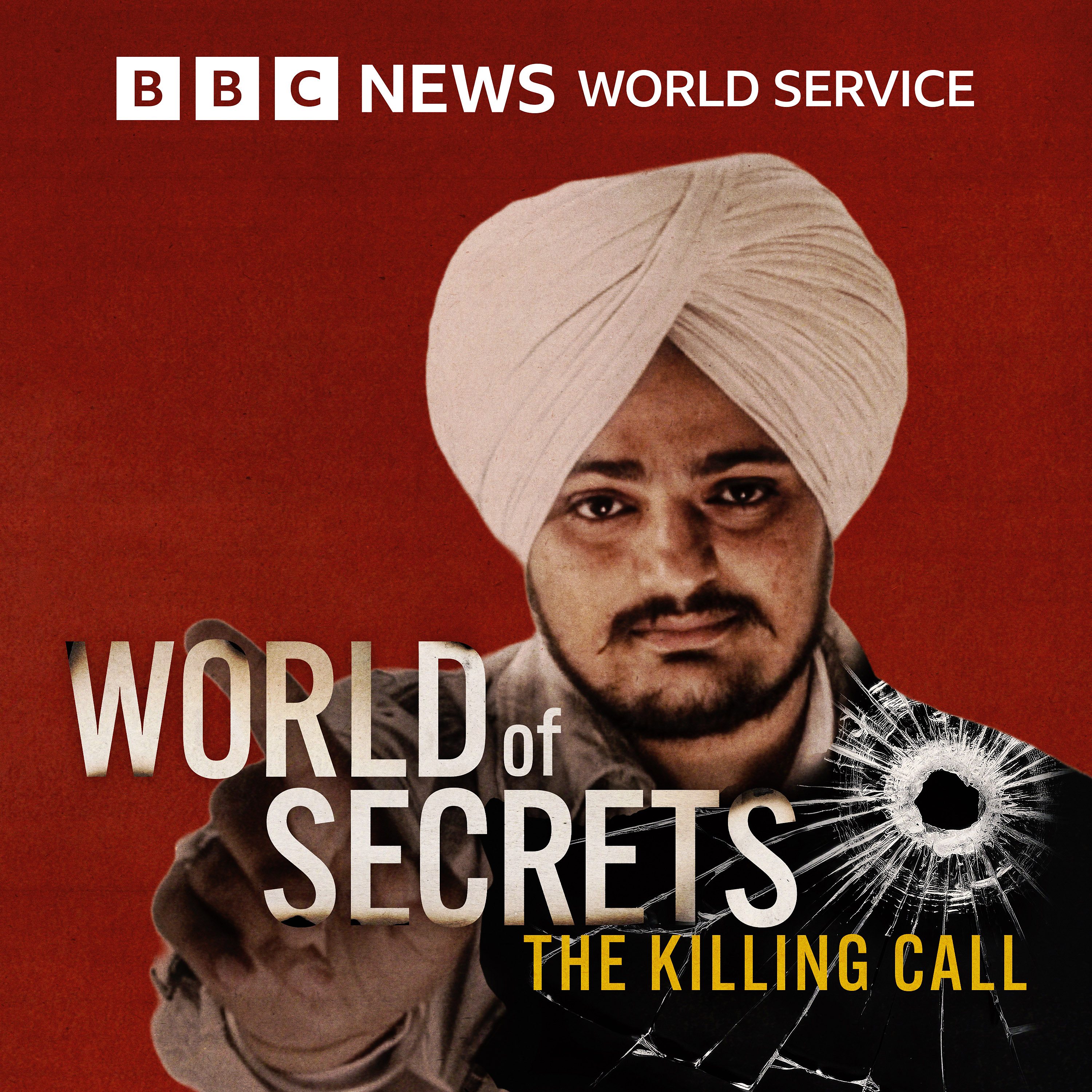
World of Secrets
The Killing Call: 3. The gangsters
00:35:29
Thousands crowd the streets for Sidhu’s funeral, to grieve Punjab’s famous son
Loading summary
Transcript111 lines
- [00:00]
Bobby Friction
This BBC podcast is supported by ads outside the UK.
- [00:06]
Luke Lamanna
Did you know that after World War II, the US government quietly brought former Nazi scientists to America to advance military technology? Or that in the 1950s, the army secretly released bacteria over San Francisco to test biological attacks without alerting the public? I'm Luke lamanna and on my new podcast, Redacted, I uncover hidden truths and reveal these shocking events that those in power have tried to bury. To hear more, follow Declassified Mysteries with me, Luke lamanna, on the Wondery app or wherever you get your podcasts.
- [00:38]
Bobby Friction
Before we start, don't Forget there are seven previous seasons of World of Secrets, the BBC's global investigations podcast. They're available right now and are waiting for you once you've finished this episode. It's two days after Sidhu Mursiala was killed in his small village of Musa in northern India. The streets are swollen with people.
- [01:12]
Ishleen Kaur
Thousands have traveled here for his cremation. Queues stretch along the usually quiet roads in the scorching May heat embarks on the final journey.
- [01:22]
Jhupinderjeet Singh
You see an ocean of fans there who landed up at his village.
- [01:27]
Ishleen Kaur
You know to see people coming from far off places. From all over the country they came. Some may have come from abroad also.
- [01:36]
Millions are tuning into the live news feeds. Among them the journalist Jhupinderjeet Singh.
- [01:42]
Everyone was crying, Ishleen. You could see the tears in the TV broadcasts on YouTubes and everywhere. I think not just me. Every Punjabi that day was glued to the tv.
- [01:56]
Bobby Friction
Suddenly there's movement at the front of Sidney's family house. The crowd surges forward. Sidney's favorite tractor pulls onto the road. Behind it is a trailer carrying a glass coffin. The trailer is covered with flowers.
- [02:14]
Jhupinderjeet Singh
Here we're looking at the final rights that's going to be carried out in just moments from now. This is his last journey.
- [02:23]
Ishleen Kaur
The crowd throws more flowers. There are chance of long live strength, but there's anger too. See the youth from the village raising slogans here. People want to know why wasn't he better protected?
- [02:39]
Gangster
Raising slogans against the government for curtailing his security.
- [02:42]
Ishleen Kaur
And they believe that this was the.
- [02:44]
Gangster
Primary reason for his killing.
- [02:47]
Ishleen Kaur
His parents sit on the trailer beside their son's body, grief stricken, leaning over the coffin, laying their hands on it.
- [02:56]
Jhupinderjeet Singh
Image of the mother taking a good look at Sidhu Mosewala the final time. Wiping off tears from family members has left us really heartbroken.
- [03:07]
Bobby Friction
The funeral procession makes its short but slow journey from the family house to the family field where he'll be cremated. Here thousands more Mourners wait in the midday sun on the scorched brown grass around a pyramid of firewood. This is the funeral pyre where they'll place his body. On the way to the cremation site, something extraordinary happens. Sidney's father stands on the trailer that's carrying his dead son's body. He's above the crowd and thousands of eyes watch as he lifts his turban from his head and holds it out towards the people.
- [04:03]
Ishleen Kaur
You know, his hands were shaking and he took a circle, you know, all around him where he was offering his turban.
- [04:11]
And I remember people around him went like, no, no, no, please don't do this. There's a sense of shock. For many Sikh men, their turban is a sacred sign of their faith. You only take it off in the privacy of your own home, never in public.
- [04:36]
Taking off his turban, he was offering some gratitude he will not be able to offer in births. It was from his deepest inside, you know, something which he can't speak.
- [04:52]
Watching the funeral here in London, that moment, it ripped my heart apart. Because as Sikhs and as Punjabis, we know what that means.
- [05:04]
Yeah, it was a very difficult thing to view. It was a gesture of pleading also, you know, pleading for arrest of the killers, pleading for justice, justice for his son.
- [05:24]
There's so much grief, so much anger, so many questions. We need to find the gangster who says he's responsible for the killing of Sidhu Musiala. We need to find Koldi Brar.
- [05:42]
Bobby Friction
This is World of Secrets Season 8, the Killing Call a BBC World Service investigation.
- [05:53]
Ishleen Kaur
I am investigative journalist Ishleen Kaur and.
- [05:56]
Bobby Friction
I'm broadcaster and DJ Bobby Friction. Episode 3 the Gangsters.
- [06:18]
Ishleen Kaur
Jasphee Tandi and his family live in a modern house with a lawn and a garage on a residential estate in a suburb of Vancouver. Like Sidhu and the many other Punjabis who live here, Jasvir left India to make a new life here in Canada.
- [06:37]
Bobby Friction
Now in his early 30s, with a quick smile and an open, expressive face, he works doing what so many Punjabis who come to Canada end up doing. Driving trucks long distance. And he's doing well.
- [06:58]
Ishleen Kaur
As Jasbir plays with his two year old son in their large open plan kitchen, he tells me how he and Sidhu became friends and how for a while, Sidhu lived here with them for three months. In 2018, just as Sidhu's music career is taking off, this house is the place that Sidhu calls home.
- [07:21]
Jasbir
Even before I met him, I was his fan. And then when I met him, he was so gentle, like a very shy guy. Not like his songs. He was not aggressive like that. So he was very soft and kind hearted guy. To my mom, he was like mad like his own mom.
- [07:45]
Ishleen Kaur
Jasbir just said that whenever Sidhu would come here, he would ask Jasbir's mum to comb his hair, to oil his hair, help him tie the turban. And it is traditionally what, you know, a Sikh mum would do for her child.
- [08:01]
Jasbir
I think he was born rapper, like representing his own life in the songs. He was so inspired. And then he said he's gonna bring Hollywood to Musa pint. And then it's happening. He was so passionate, even like if you go to washroom. He wrote a song.
- [08:17]
Bobby Friction
Sidhu is living with Jaspeer when he plays that show in Edmonton, the one we heard back in episode one where he comes onto the stage and talks about receiving death threats.
- [08:28]
Ishleen Kaur
Jasmin, because you knew Sidhu so well, do you know of any threats that he got?
- [08:33]
Jasbir
Everyone got threats in Punjabi industry, I believe. Yeah. And Sidhu got start from 2018 and that time he sang a song, east side Flow, and he said, so, yeah, that's why he wrote the song.
- [08:50]
Ishleen Kaur
That song that Jaspee is talking about, it translates to, when I wake up with my morning tea, I get an extortion call or I get a threat.
- [09:05]
Jasbir
I'm a truck driver and I used to go to Calgary that time and he came with me on a truck. That Eastside Flow song. He rode in a truck. Yeah. When we left Calgary and then after 45 minutes, he had a song.
- [09:23]
Ishleen Kaur
Did he ever come to you after a call? Did he share anything like that?
- [09:28]
Jasbir
No, he never tell any details. He never tell anyone. Even his parents. He never tell Jasbir.
- [09:37]
Ishleen Kaur
We were talking outside and you said whenever Sidhu would leave your house, he would send you his location. Was he scared of something? What was he scared of?
- [09:46]
Jasbir
No, he was not scared. But he always said that, bro, one day I'm gonna die with a bullet. I know that that was his words. And then he got those bad dreams like, oh, someone is killing him. Yeah.
- [10:03]
Ishleen Kaur
Were you worried about him as a friend?
- [10:05]
Jasbir
Yeah. We always got worried. We told him, but he said, no, no, no, bro, it's okay. It's okay. He was not scared of a death. He said, one day we're gonna die. It's o.
- [10:31]
Bobby Friction
It's around the time Sidhu's living with Jaspir that this gawky Punjabi student is being catapulted from village boy to Global megastar Sidhu Maslala. And with big success comes big money. Now, when he travels, it's in a convoy of cars, stretch limos, sports cars, SUVs. And around him, an entourage of young Punjabi men with freshly groomed beards and dark shades. He's living the life of a star. But fame makes you a target and so does money. Those threatening calls and messages, they just keep coming.
- [11:27]
Ishleen Kaur
When Sidhu's old university friend Pushdeep sees him again two years later, he notices a big change.
- [11:34]
Pushdeep
He had become like a whole lot of a serious guy at that point. I had spent so much time with him, I could look at his face and I could say that from his face that he had some problems.
- [11:46]
Ishleen Kaur
Pushpdeep never imagined that Sidhu's problems could be gangs.
- [11:51]
Pushdeep
He used to tell me to be safe and stay away from this kind of stuff. And I know that he wasn't that kind of guy.
- [11:59]
Ishleen Kaur
But Pushpdeep does feel anxious about the company his friend was keeping.
- [12:04]
Pushdeep
He was ruling the singing industry at that point, and he was on the peak. And people just want to take advantage of his fame. He was always surrounded by so many people that he didn't get a chance to converse properly to all those people that were literally so close to his heart. He was always surrounded by 10 or 12 men, and he couldn't afford to be vulnerable in front of those guys because, you know, he was such a big artist and such a strong artist. And people would think that he's weak, not looking weak.
- [12:50]
Bobby Friction
Bravado, honor, machismo. It's all an essential part of Punjabi male culture. It's been a big part of the gangster rap trend in hip hop. Too.
- [13:08]
Pushdeep
Tired.
- [13:10]
Bobby Friction
In Siddhu's videos, there's big, brawny men looking tough, flexing their muscles. Luxury cars, police chases, guns. So many guns. And there's Sidhu constantly looking down the camera lens, looking directly at you, almost asking you to start it, to bring it to him. You know, there's a move he does where he slaps his thigh. It's a move from Punjab's national sport, kabaddi. We call it a tapi. It's provocative, it's aggressive. It means, come on, bring it on. And all of this playing out in Sidhu's videos sees Sidhu literally playing the role of being a gangster. Violence is something lots of rappers have been asked about in interviews, and Sidhu's no exception. Here, the interviewer asks, people say your songs are about gangsters, about beating people up. They're arrogant how do you respond?
- [14:25]
Gangster
I've been listening to hip hop since I was in the sixth grade and it is violent. But if someone does something wrong after they've been listening, maybe it is the bad company that they are keeping, not the music. I've been listening to hip hop for years and I've never shot anyone.
- [14:46]
Bobby Friction
But the trouble is Sidhu is working in a world where real gangsters operate. Real gangsters, real with real guns, who make threats with real consequences.
- [15:00]
Ishleen Kaur
Sidhu Musabala, in fact was someone who had a certain amount of threat from.
- [15:07]
Gangsters at a time when he was.
- [15:09]
Facing severe death threats from several gangsters in the country. The Punjabi singer was gunned down ever since that day in London when my brother called from Canada and together we were watching the rolling news coverage of Sidhu's death. I've been determined to find out why Sidhu was killed. I've spoken to lots of people about this. His friends, journalists, politicians, people in the music industry. And almost all of them are fearful. I hear it again and again. They were threatening Sidhu. They were asking for the rights to his songs. It's too frightening even to use the word because they means gangsters. I realized the only person who can tell me really what's going on is someone from that world. Someone who is a gangster himself. It's taken me months of chasing, hundreds of messages and calls. But at last, a major player in the world of Punjabi organized crime has agreed to talk to me. We're not going to identify him for security reasons. We agree to meet in a downtown hotel in a North American city to talk. Off the record. I'm there early, not sure if he'll show. I sit waiting, watching the door, my stomach in knots. We've agreed to meet at 9pm the hours tick by. 10 o' clock, 11 o' clock. When he finally arrives, it's one in the morning. He steps into the lobby among the well heeled late diners. He's in his late 20s. He's wearing torn jeans and designer trainers. His eyes burn into me. After we've talked for a few minutes, he asks if he can show me something out of his pocket. He takes an object wrapped in a handkerchief. It's a revolver. He unwraps it and smiles, watching for my reaction. And then he rewraps it and carefully places it back in his pocket. When it comes to recording an interview, he insists he won't do it face to face. So we agree to talk later online. He tells me those threat calls like the ones that Sidhu got are usually made to extort money. Or sometimes when they're talking to musicians to get the rights for songs, the.
- [18:07]
Bobby Friction
Rewards can be huge. Sidhu's music alone has had billions of streams and views.
- [18:17]
Ishleen Kaur
I ask, how do they decide who to extort? We're talking in Punjabi, so an actor is voicing what he says.
- [18:24]
Gangster
I have got a network of people in different cities across India and they give me contacts and information. We never ask for money from people who cannot afford it. But if someone is worth hundred million dollars, then you know we will ask them for 5 million. We never threaten on the first call. We just say politely, we need the money. And if they do it, if they pay, everything's fine. If they don't, well, then we know what to do to get the money.
- [18:58]
Ishleen Kaur
I press him. What does he mean? What do they do? All he'll say is, whatever we want. But we know. Tonight, police are on the hunt for a suspect who opened fire on a residential home in Surrey. There have been too many reports of killings in Punjab and in Canada.
- [19:15]
Bobby Friction
Gunshots were reportedly fired outside singer battle.
- [19:19]
Ishleen Kaur
The note left at the scene of the shooting suggests an ongoing feud involving Punjabi singers and organized crime. And reports of the well to do houses of musicians and businessmen being shot at. I push him. He's killed people. He's a wanted man in India. Shouldn't he be behind bars? Where does all this end? He's cold. He says, we're gonna keep doing this. Everyone's end is death. And is it true that they target musicians?
- [19:54]
Gangster
Yes. Singers get extortion calls and they have to pay. And it's not just singers. Wealthy businessmen get extortion calls too.
- [20:04]
Ishleen Kaur
Then he says something that really surprises me.
- [20:08]
Gangster
We gangsters have a lot of singers who we speak to. They're friends, but that doesn't mean they're involved in gangs. It's like any relationship. We meet, we chat, we mix in the same circles. We help each other. If they need help, they ask us, is that right?
- [20:28]
Ishleen Kaur
Do some musicians and gangsters talk to each other? Are some even friends? He makes it all sound so normal. I ask him, do musicians ever ask gangsters to help protect them against other gangsters?
- [20:46]
Gangster
Yeah, that does happen. They have to pay protection money, of course. And when they get extortion calls, they have to pay. It happens all the time.
- [20:59]
Ishleen Kaur
After speaking for over an hour, we disconnect. I'm exhausted. I'm reeling from what I've heard. If contacts between musicians and gangsters are as widespread as he says they are, could it Be Sidhu was talking to gangsters. Did he know some of them? Did he even count some as friends?
- [21:23]
Bobby Friction
There was public outrage after that press conference on the day that Sidhu died. When police said that he'd been killed because of gang rivalry, people took it as implying Sidhu himself was somehow linked to the gangs. The head of Punjab police came out quickly to say he'd been misunderstood. But did links to gangs play a part in his death? We need to know. Our strongest lead is the person who says he was responsible for Siddhu Musiala's killing the gangster Goldie Brahman. The problem is we're not the only people trying to find him. There's an international arrest warrant out for him. The last anyone heard, Goldie Brar was in Canada.
- [22:07]
Ishleen Kaur
I get in touch with the journalist who got the call from Goldie Brar on the night Sidhu died. That call where Goldie Bra takes responsibility for the hit. He gives me the number that he called Goldie Brah back on that night. I send a message. I explain who I am and why I want to talk to him and ask if he'll speak to me. Then I wait by my phone. The hours turn into days, then weeks. There's silence. Nothing. It's a dead end. Then suddenly, two months later, out of the blue, I get a message back. All it says is, we've got your message. We've passed it on to our brother, Goldie Brar.
- [23:03]
Luke Lamanna
Did you know that after World War II, the US government quietly brought former Nazi scientists to America to advance military technology? Or that in the 1950s, the army secretly released bacteria over San Francisco to test biological attacks without alerting the public? I'm Luke Lamanna, and on my new podcast, Redacted, I uncover hidden truths and reveal these shocking events that those in power have tried to bury. To hear more, follow Declassified Mysteries with me, Luke Lamanna, on the Wondery app, or wherever you get your podcasts.
- [23:43]
Bobby Friction
To understand the gangsters and how they link to Sidhu's journey. We're in Punjab 2018. It's always amazing to see Sidhu Musiala on stage. He's got such presence. But this concert is special. It's his first concert back home. There's huge excitement amongst the young crowd. Greetings, people of Chandigarh. Siddhi tells them, this is my first performance in India and I salute you.
- [24:30]
Raja Sanmanbir Singh
I think he was booked for a few other concerts throughout Chandigarh, but he chose to come to Punjab University first. That was a space that he wanted to capture. I Personally feel Siddhu came to capture the imagination of Punjab's youth.
- [24:44]
Ishleen Kaur
Today, Raja Sanmanbir Singh is a media advisor to some of Punjab's leading politicians. But back in 2018, he was a student at Punjab University and he helped organize the show.
- [24:58]
Raja Sanmanbir Singh
It was amazing. Usually, you know, you prepare for 4,000, 5,000 students. Sidhu probably had more than 12,000, 14,000 students come up. It was way beyond our expectations. We were not prepared for that. 10 minutes before Sidhu showed up, there was just a sea of people standing.
- [25:17]
Bobby Friction
Punjab University has a special place in Punjabi society. It's not just where young people come to study. It's a power center. Somewhere that prepares future political leaders, industrialists, academics, writers and artists. What happens here matters.
- [25:36]
Ishleen Kaur
It's a powerful platform. And for some people, giving that platform to someone like Sidhu could be dangerous. Which is why one university professor tried to stop him performing.
- [25:50]
Raja Sanmanbir Singh
So there's this one professor, he got a stay against Siddhu Muswala from the High Court that he cannot sing any of his songs which glorise violence, gun culture. So all of the songs that he was actually famous for, that people knew him for, he didn't sing a single.
- [26:05]
Bobby Friction
Song standing on stage, Sidhu speaks to the crowd. Recently, people said Sidhu is going to bring guns to the concert, that he glorifies weapons. But this is a democracy. You've got the right to disagree with me. It's fine if you oppose me.
- [26:33]
Raja Sanmanbir Singh
I think that was the first time people ought to see the resistance to Sidhu. There was a faction against Siddhu Mosewara performing in Punjab University. And there was a faction that really wanted him to perform in Punjab University.
- [26:48]
Bobby Friction
The faction that wants Sidhu to perform wins, of course. And when Sidhu steps onto the university stage, even the presence of the police doesn't stop the students going wild.
- [27:04]
Raja Sanmanbir Singh
His music, it was crazy. It's the sort of music that caused a big disruption. The topics he chose to touch, the issues that some would say could be the core issues of Punjab that maybe our politicians today are not addressing. He addressed those issues through his songs.
- [27:27]
Bobby Friction
These days, Siddhi says, you must have seen they're after all of us singers saying we're writing songs about alcohol. Well, I wrote a song today. He holds up a piece of paper, waving it to the crowd. It's called chitta. Do you know what chitta means? It means truth. I'm not taking sides. I'm just telling the truth. He starts to sing. They say there are songs about alcohol on tv but I want to Know, why are there more liquor stores in Punjab than there are schools? Why don't you close the businesses of people making money by selling addiction? You know, we'll stop singing songs about weapons when you have the guts to ban weapons.
- [28:29]
Raja Sanmanbir Singh
Sidhu reached out to those young minds Punjab and especially the youth of Punjab. They're directionless. If a Punjabi Youth who's aged 15, 16, 17, he feels he has got no opportunity in life if he stays back in India, in his village in Punjab, there's this misconception in his head that he flies off to Australia or Canada, anywhere abroad and everything was going to be sorted for him. Siddhu's music, it was a resurgence for them. It provided that motivation that was missing. So yes, everyone's listening to Sadhu Musiala. He really affected the lifestyle, the culture of not just me, a lot of people.
- [29:08]
Bobby Friction
This is the moment that Sidhu Musiala starts articulating what many young people in Punjab want to hear. He's becoming someone they want to listen to, someone with influence.
- [29:25]
Ishleen Kaur
And Punjab University has another role in this story too. It's another busy day in the newsroom at the Tribune newspaper in Chandigarh. Journalist Jeepinderjeet Singh is now the paper's deputy editor. Jeepinderjeet's been covering Punjab's gangs for years.
- [29:46]
Yes, since the advent of gangster. From 2012 onwards, when this menace really took over, every part of India has its own gangs, whether it is Uttar Pradesh or Delhi or Haryana. So gangs are everywhere. It's only that Punjab is, you know, one of the more developed areas.
- [30:06]
It's the opium trade in nearby Afghanistan, Jabindajit says that has fed this growth in Punjab's criminal underworld. The drugs flow south across the border from Afghanistan into Pakistan and then down into Indian Punjab.
- [30:25]
Suddenly Punjab became number one in country as far as drug smuggling was concerned. Before that, Punjab was the transit point for drugs. But you know, from that it started becoming the consumption point also.
- [30:40]
2012 onwards, and with the drugs comes the money. Money that needs to be laundered.
- [30:48]
2012-13 onwards, there was a big boom in real estate in Punjab. Big boom in liquor industry, big boom in sand mining also. These are the businesses which we all feel have lot of black money or unaccounted money. So all these things, you know, and there was a huge tug of war between two main political parties, the Congress and the Akalis. And it was very common them to use, you know, special muscle men, if we can use the word, or even goons. And these were all Youngsters who were taken from colleges and universities, those muscle men came out of student politics and several of them had some kind of a criminal history.
- [31:34]
Bobby Friction
This group includes one particular young student from Punjab University. A man about the same age as Sidhu, from a relatively well to do family. He got involved in student politics, but words became actions, disagreements became fights. There was violence with other student groups.
- [31:56]
Ishleen Kaur
He was, you know, student leader turned gangster and he was involved in several crimes and he was kind of high profile. Profile, but not that high profile, of course. He was. In news for threatening Bollywood star Salman Khan.
- [32:14]
Jhupinderjeet Singh
Impact on Bollywood superstar Salman Khan's death threat. Heavy security has been beefed up at Salman's residence. Images.
- [32:22]
Ishleen Kaur
He was sent to prison in 2014 on charges of attempted murder where he's been behind bars ever since.
- [32:29]
Bobby Friction
His name is Lawrence Bishnoi. And incredibly, being imprisoned doesn't seem to have stopped his criminal career. Quite the opposite in fact.
- [32:40]
Ishleen Kaur
From behind bars, Lawrence Bishnoi is alleged to have grown a criminal network whose activities reached from India to Canada and maybe further. Today on his payroll, his own people say they have several hundred people.
- [32:57]
Punjab has, you know, about 500 gangs which are administered by 10 mother gangs. And Lawrence Bishnui's gang is one of those gangs. Out of these 10 gangs, four are aligned with Lawrence and four are aligned with his biggest rival, the Bambiha gang. And the gang wars which had led to, you know, 16, 17 killings, we had reported those also.
- [33:26]
But then something happens that supercharges Lawrence Beshnowi's profile. Throughout this series, we've heard about the threatening calls that Sidhu was receiving. We can't know for sure who was calling or if they all come from the same source. But ever since my hotel lobby meeting with that gangster, I've been trying to find out if someone in the gangs had a hold on Sidhu. After all, Sidhu was one of Punjab's highest earning musicians. He seems like an obvious target. I've spoken to so many people about this. Finally, sources close to Sidhu have told me that for at least a couple of years before he died, Sidhu was talking to a Punjabi gangster.
- [34:17]
Bobby Friction
Do you remember that phone call that we heard in episode two, the one to a prison in Delhi an hour after Sidhu Musiala was killed. When the caller said, we've killed the Sikh, we've killed Siddhu Musiala. And the prisoner replied saying, cut the call. While that prisoner was the same gang leader that Sidhu Musa had been talking to.
- [34:49]
Ishleen Kaur
That prisoner is the leader of the gang. Goldy Brah is part of that. Prisoner is Lawrence Bishnoi. Why did Lawrence Bishnui become Sidhu Musiala's enemy? That's next time on World of Secrets. This has been episode 305 of the Killing Call, season 8 of World of Secrets from the BBC World Service.
- [35:30]
Bobby Friction
The Killing Call is a BBC I production. Leave us a rating or a review if you can. It really helps and follow or subscribe so you get every episode automatically.
- [35:44]
Ishleen Kaur
World of Secrets the Killing Call is presented by me, Ishleen Kaur and me, Bobby Frixion. It's produced by Louise Hidalgo, Rob Wilson and Eamon Kwaja with script advice from Matt Willis.
- [35:58]
Bobby Friction
Sound design and mix is by Tom Brignall and the executive producer is Rebecca Henschke.
- [36:05]
Ishleen Kaur
The editor is Daniel Adamson and the BBC I series producer is Ankur Jain. Original music by Ashish Zakaria. Fact checking is by Curtis Gallant.
- [36:16]
Bobby Friction
Additional research by Ajit Sarati and Arvind Chhabra. The production manager is Dawn MacDonald and the production coordinator is Katie Morrison.
- [36:27]
Ishleen Kaur
Many thanks to the BBC World Service commissioning team that's behind World of Secrets.
- [36:32]
Bobby Friction
And thank you for listening.
- [36:44]
Luke Lamanna
Did you know that after World War II, the US government quietly brought former Nazi scientists to America to advance military technology? Or that in the 1950s the army secretly released bacteria over San Francisco Cisco to test biological attacks without alerting the public? I'm Luke lamanna, and on my new podcast, Redacted, I uncover hidden truths and reveal these shocking events that those in power have tried to bury. To hear more, follow Declassified Mysteries with me, Luke lamanna on the Wondery app or wherever you get your podcasts.