Podcast
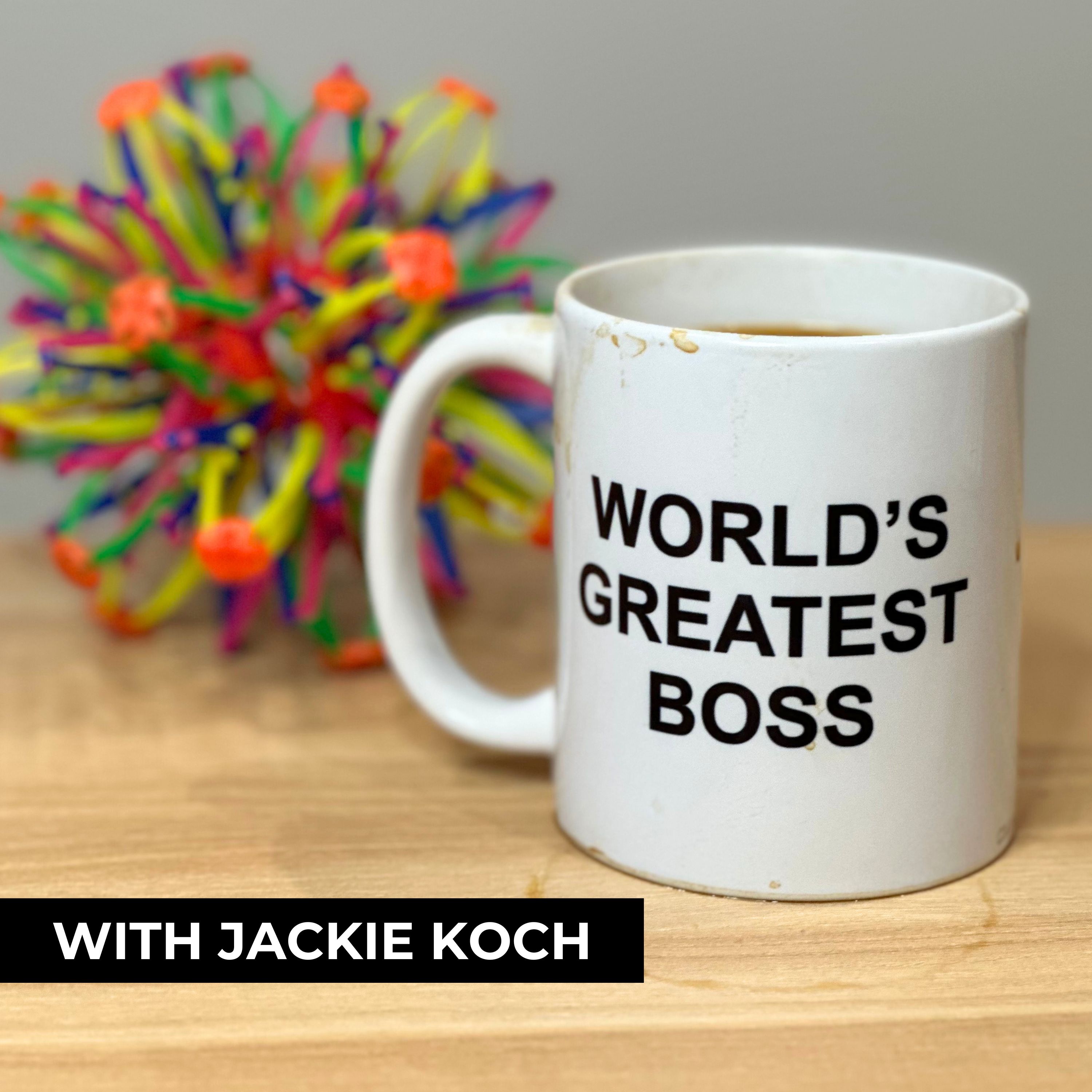
World's Greatest Boss
Hosted by Jackie Koch · EN
Jackie Koch has been in the trenches building the teams that grow companies for over 15 years. She’s hired hundreds of people, navigated countless sticky situations, and earned an MBA along the way. From being deeply involved in the nitty-gritty of team building to now helping others navigate the waters of running a business, she wants to help you avoid the messes she’s had to help clean up.
Listen in and discover insights on leadership dos and don'ts, strategies for effective hiring and team building, and essentials to keep your business in employment compliance. Through solo episodes, guest episodes featuring experts in the field, and candid conversations with her business partner you'll be well on your journey to becoming the World’s Greatest Boss.
11episodes
Episodes
Newest firstAll episodes
238. Why Your Assistant Isn’t Working (And How to Fix It)
Sep 200:17:03Tap to summarizeEveryone loves to tell busy founders, “You need an assistant!” But here’s the problem not all assistants are created equal. And if you hire the wrong one, you’ll waste money, get frustrated as hell, and end up thinking assistants don’t work.In this episode of World’s Greatest Boss, I break down the three main types of assistants: Virtual Assistant (VA), Personal Assistant (PA), and Executive Assistant (EA). You’ll learn exactly what each one does, the benefits and drawbacks, signals that it’s time to hire, and how to actually find the right one. By the end, you’ll know which assistant can buy back your time without making a costly hiring mistake.What You’ll Learn in This Episode:The core differences between a VA, PA, and EAThe biggest mistake founders make when hiring an assistantSigns that you’re ready for each type of assistantThe real costs (and hidden costs) of these rolesWhere to find the right assistant for your needsWhy This Matters:Hiring the wrong kind of assistant is one of the most expensive mistakes you can make as a founder. Whether you’re drowning in repetitive admin tasks, losing weekends to errands, or stuck in the weeds of business operations, the right assistant can give you back your time — and your sanity.Resources and Links:Connect with Jackie on LinkedInLearn more at People PrinciplesDan Martell’s book: Buy Back Your TimeIf you enjoyed today’s episode:Subscribe to World’s Greatest Boss wherever you listen to podcastsLeave a review to help more business owners find the showShare this episode with a founder friend who’s overwhelmed and needs help
Transcribe →237. Managing Workloads and Preventing Burnout with Borja Cuan
Aug 1900:18:06Tap to summarizeIn this episode of World’s Greatest Boss, we dig into one of the biggest challenges service-based business owners face: balancing client growth with team health. My guest, Borja Cuan, co-founder of 415 Digital, manages over $280 million in ad spend every year—and he’s built a thriving business by doing something most agencies won’t: keeping workloads small so his team can go deeper, deliver better results, and stay engaged.Together, we explore:Why hiring ahead of need can transform client experiences.The real reason employee retention is harder than ever—and how to handle it.How to spot overwhelm before it becomes burnout (and what to do about it).Why investing in personal well-being outside of work is just as important as managing workload inside of work.The overlooked power of relationship building and spending non-work time with your team.Borja’s approach flips the typical agency model on its head—and his insights on retention, loyalty, and workload management will challenge how you think about leading your own team.By the end of this episode, you’ll have fresh ideas for keeping your people motivated, building loyalty, and leading a team that doesn’t just survive—but thrives.Connect with me on Linkedin: https://www.linkedin.com/in/jackiemkoch/Find more information on my website: https://peopleprinciples.coConnect with Borja Cuan on Linkedin: https://www.linkedin.com/in/borjacuanFind more information about Four15 Digital: https://four15digital.com/
Transcribe →236. 6 Reasons You Need to Address Performance Issues Early
Aug 1200:17:37Tap to summarizeWhat happens when you know someone on your team isn’t performing but you keep putting off the conversation? In this episode of World’s Greatest Boss, I break down exactly why avoiding performance conversations is one of the costliest mistakes you can make as a leader.We’ll cover six powerful reasons to address performance issues early, from keeping your top performers engaged to protecting your business from legal risk. I’ll also walk you through the most common excuses leaders give for delaying these convos (and why they don’t hold up), plus my simple, no-drama framework for having these conversations without making them confrontational.By the end of this episode, you’ll have the tools to give feedback faster, protect your culture, and actually help your team members improve without losing sleep over it.Quick-hit framework for performance conversations:Be specific. Point to exact behaviors or results that are off track.Connect to impact. Show how the issue affects the team, clients, or business.Collaborate on next steps, Agree on a clear plan for improvement.Document it. Keep a record, even if it’s just a quick note.Resources & Links:Connect with me on LinkedInFind more leadership and HR resources at peopleprinciples.co
Transcribe →235. People Strategy Is Business Strategy: The Essentials You Need
Jul 2900:18:26Tap to summarizePeople Strategy Is Business Strategy: The Essentials You NeedThink HR should handle all the “people stuff”? Think again.In this episode, I’m calling out one of the most common mistakes founders make when trying to scale—treating people strategy like an admin function or annoyance instead of core business strategy. I break down exactly what people systems you need and why this is all a part of your overall business operations strategy, not something else you need to do. We’ll talk through the key systems every small business needs to grow a high-performing team, how to divide ownership between HR, managers, and leadership, and what happens when you avoid the hard conversations and hope someone else will handle them for you.If you’ve ever said, “I just need to hire a strong HR person to manage the team,” this episode is for you.What you’ll hear in this episode:[1:45] Why outsourcing leadership doesn’t work[4:00] The parts of people strategy founders must own[7:20] HR’s real role—and where their responsibility ends[9:40] The essential systems every growing team needs[13:10] The “Owner Map” for hiring, management, and culture[16:25] What happens when you pass off uncomfortable conversations[18:00] Practical steps to lead your team (with HR as a co-pilot)[20:15] Wrap-up: Scaling people is the jobResources + LinksConnect with me on LinkedInGet our HR & Hiring EssentialsNeed help building your people systems? Reach out for a free discovery call
Transcribe →234. Andrew Horn on Using Relational Leadership to Strengthen Your Culture
Jul 15, 202500:30:27Tap to summarizeHigh-performing cultures aren’t built by rules—they’re built by leaders who take full responsibility.In this episode of World’s Greatest Boss, I’m joined by Andrew Horn, executive coach to CEOs at companies like TOMS and Hinge, and the founder of Tribute.co. After scaling his startup to 120 employees and overseeing a successful exit, Andrew now dedicates his work to helping founders, CEOs, and leadership teams master relational leadership—a framework that fosters trust, accountability, and real cultural change.We dive deep into Andrew’s 5-step framework for moving from reactivity to conscious leadership. You’ll learn how to identify your own unmet needs, how to respond to conflict without judgment, and how to create small rituals that lead to big cultural impact.Whether you lead a small team or a growing company, this conversation will challenge you to lead with intention—and give you tangible tools to help your team thrive.What You’ll Learn in This Episode:[04:00] Why Andrew chose to focus on people after exiting his company[08:00] What is relational leadership?[09:45] The 5 core skills of relational leadership[13:00] Why unmet needs create most workplace tension[14:00] The “5 A’s” framework for resolving tension and unmet needs[17:00] Using nonviolent communication to provide feedback[25:30] Rituals and tools for building a culture of growthResources Mentioned:Book: The 15 Commitments of Conscious LeadershipBook: Nonviolent Communication by Marshall RosenbergTool: Bonusly – peer recognition platformConnect with Andrew Horn:Website: andrewhorn.comInstagram: @itsandrewhornBlog: Relational Leadership Substack – new articles every WednesdayRetreats: The Junto – men’s leadership retreatsConnect with Jackie:LinkedIn: linkedin.com/in/jackiemkochLearn more: peopleprinciples.co
Transcribe →233. Don’t Hold Secret Expectations: Why Clarity Builds High-Performing Teams
Jul 8, 202500:16:43Tap to summarizeIf you’ve ever caught yourself thinking, “They should know better” about someone on your team, this episode is for you.In today’s episode I break down a trap that many founders and managers fall into: holding secret expectations—unspoken rules that frustrate you when broken but were never actually communicated in the first place.Whether it’s scheduling mid-day appointments, not replying fast enough, or showing up unprepared to meetings, these invisible standards hurt performance, erode trust, and create unnecessary team drama.I share real-world examples from my HR consulting work, explain why this dynamic happens (even to the best leaders), and give you a step-by-step guide to setting clear, kind, and actionable team operating procedures that support accountability without micromanaging.What You’ll Learn:What “secret expectations” are and how they quietly show up in teamsThe real reason you get frustrated with employees who should know betterHow to turn unspoken assumptions into documented team normsWhy clear operating procedures are essential for scaling effectivelyA framework to reset expectations without eroding trustHow to reflect on your own leadership habits and start freshStay Connected:Connect with me on LinkedinNeed some HR consulting in your business? Check out our services
Transcribe →232. Building a Mission-Driven Team with Rachel Lauren, COO of Debbie
Jul 1, 202500:27:51Tap to summarizeWhat does it really take to build a team that believes in your mission…. and sticks around?In this episode of World’s Greatest Boss, I sit down with Rachel Lauren, the co-founder and COO of Debbie, a platform that flips the script on financial rewards by helping users earn points for good money habits. Rachel and her team have grown Debbie from zero to 70,000+ users and just as impressively, from 2 scrappy co-founders to a 12-person, mission-driven team.We talk through the real decisions startup leaders face when hiring: when to buy vs. build talent, how to manage performance without overcomplicating things, and why frequent feedback actually improves employee output.You’ll walk away with ideas to put in place right now whether you’re managing one person or a small but mighty team.What You’ll Hear in This Episode:[1:00] The backstory behind Debbie and how rewards for good financial habits work[3:30] Why mission alignment matters—and how it helps attract great talent[5:05] Build vs. Buy: How they developed interns into leaders[10:20] A refreshingly simple performance review cadence (and why it works)[18:45] When and how compensation conversations happen—and why they keep them separate from reviews[22:00] Setting promotion expectations, especially with Gen Z team members[25:45] Rachel’s surprising inspiration for leadership: the Dallas Cowboys Cheerleaders documentaryResources & Mentions:Try Debbie: joindebbie.comPerformance management software: Effy.aiBonusly (for peer recognition): bonusly.comPodcast mentioned: Honestly by Bari Weiss, featuring the Dallas Cowboys Cheerleaders docConnect with Rachel: LinkedIn - Rachel LaurenConnect with Jackie:LinkedIn: linkedin.com/in/jackiemkochWant my best hiring resources? Download here
Transcribe →231. Before You Fire Them: Try This First with Brice Jagger
Jun 24, 202500:16:02Tap to summarizeWhat if the person you’re about to fire isn’t the problem… it’s the role they’re in?In this episode of World’s Greatest Boss, Jackie Koch talks with Brice Jaggars, bestselling author of Two Fish in the Tree, about how role alignment and soft skills play a huge role in team performance. Brice shares practical tips for figuring out if someone is in the wrong job, how to spot soft skill mismatches, and what to try before you cut ties with a struggling employee.Whether you’re leading a small team or managing a growing company, this episode will help you rethink how you approach performance issues and keep the right people on board.What You’ll Learn:[1:30] Why performance issues often come down to the wrong role[3:15] The difference between technical skills and soft skills[4:20] The most common soft skill gaps that cause problems[6:15] What to do when you want to keep someone but their current job isn’t working[7:55] A real-life example of reassignment that worked[9:30] Why not everyone can fit into the same mold[11:00] How to decide when it’s time to move on[12:15] Coaching new grads versus managing experienced team members[13:25] Why remote work makes soft skill development harder[14:35] Brice’s inspiration behind Two Fish in the TreeResources & Links:Buy Brice’s book: Two Fish in the Tree on Amazon Connect with Brice on LinkedInConnect with Jackie on LinkedIn: linkedin.com/in/jackiemkochDownload free hiring resources from Jackie at People Principles
Transcribe →230. Great Hires Don’t Come From Job Boards and What to Do Instead
Jun 17, 202500:21:33Tap to summarizeIf you’re still relying on job boards to hire your next great employee, this episode is your wake-up call. I break down why “post and pray” is no longer an effective hiring strategy especially if you’re trying to land top-tier talent.Instead, you’ll learn the three proactive methods recruiting teams use every day to find the right people (and how you can do it yourself as a founder, hiring manager, or business owner). No agency fees required.What You’ll Learn:Why job boards should be used for validation, not as your primary hiring strategyHow to use LinkedIn like a recruiter, even if you’re not oneThe hidden goldmine in your customer base, superfans, and existing networkSmart ways to use Facebook groups, community content, and micro-influencers to identify potential hiresWhat sourcing tools like PIN, Fetcher, and GEM can do and how they can work like a junior recruiter on autopilotJackie’s real-world examples from med spas, product brands, and tech startups using these tactics successfullyFree Resources Mentioned:FREE Hiring Handbook + Interviewing Masterclass 👉 peopleprinciples.co/hiring📲 Connect with Jackie: 🔗 LinkedIn & 🌐 peopleprinciples.co
Transcribe →229. Compressed Workweeks, Culture by Design, and Coaching Your Team Through AI Adoption — with Art Shectman
Jun 10, 202500:33:01Tap to summarizeIn this episode I’m joined by Art Shectman, founder and CEO of Elephant Ventures, a global innovation firm helping companies unlock the full potential of AI transformation. But we don’t just talk tech: we dive into the human side of building and leading a business.Art shares how he intentionally designed a company culture built on dependability, psychological safety, and joyful work. We talk about how his team successfully adopted a compressed four-day workweek, and what it really takes to implement major organizational shifts like AI adoption without sparking panic or burnout.You’ll walk away with a better understanding of how to structure your team for accountability (without toxicity), why empowering employees beats micromanaging every time, and how to lead transformation with honesty, clarity, and how to get buy-in from the ground up.If you’re thinking about hiring across borders, piloting a 4-day week, or embracing AI in your business you don’t want to miss this one. What you’ll hear in this episode:[1:40] How Elephant Ventures helps companies get 20X results from AI - not just 20%[3:29] Why Art started hiring internationally in 2008[4:12] The early struggles of global hiring (and why EORs are game-changing now)[7:17] Why founders must prioritize their “joyfulness battery”[10:17] Building culture intentionally: dependability, kindness, and the value pyramid[14:02] Holding people accountable without being toxic[18:17] How Elephant Ventures rolled out a compressed 4-day workweek[22:15] Lessons from testing and scaling flexible work[24:10] Coaching teams through AI transformation without fear[26:29] Creating psychological safety in practice [30:06] Why vulnerability and consistency matter more than charisma[32:19] Where to find Art’s thought leadership on AI and transformationResources and links:Connect with Art on LinkedIn: Art ShectmanExplore Elephant Ventures’ AI resources: Elevate.ElephantVentures.comConnect with me on LinkedIn: Jackie KochDownload my free HR + Hiring Essentials Playbook: peopleprinciples.co
Transcribe →