← Wow in the World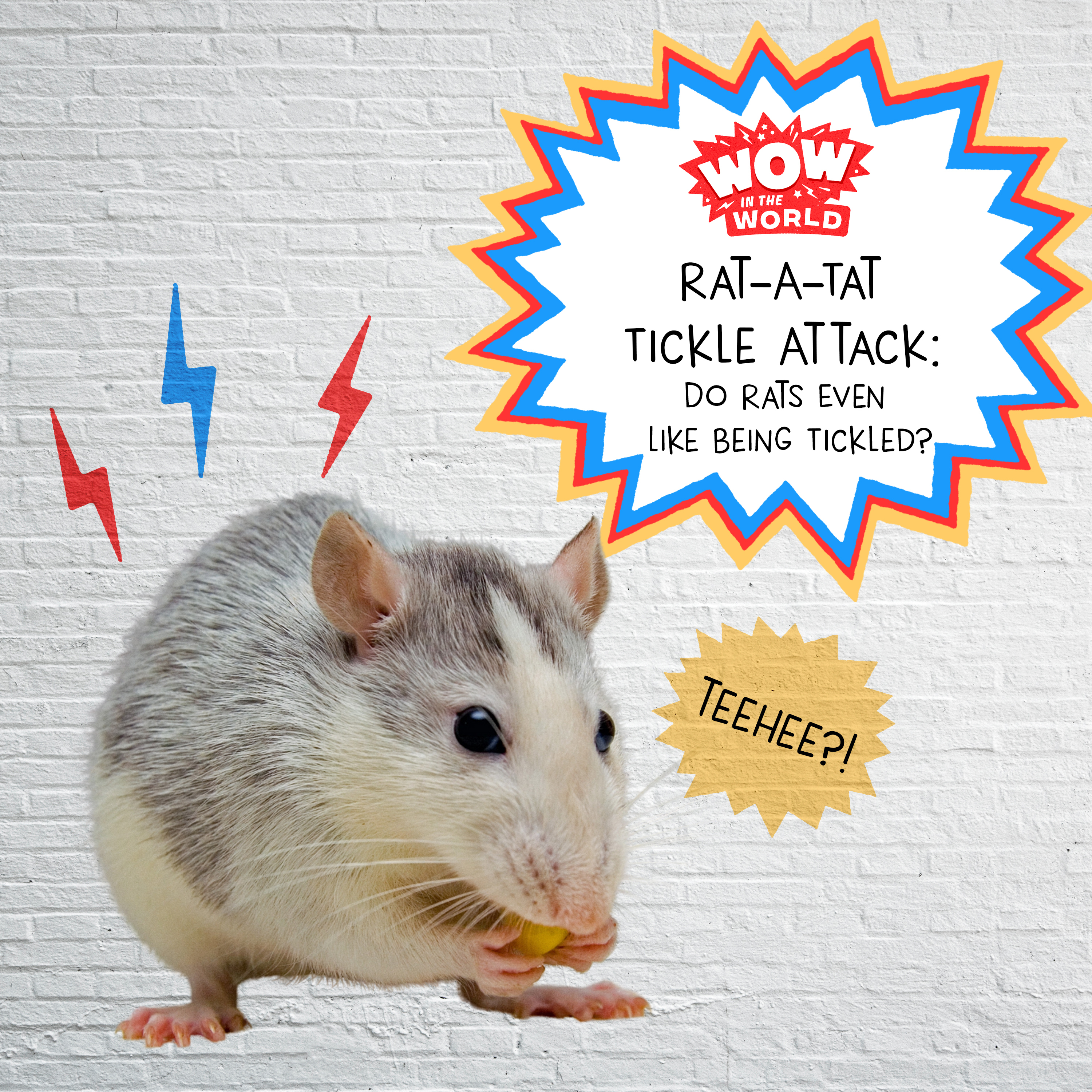
Loading summary
Transcript199 lines
- [00:01]
Mindy Thomas
Hey, Wowzer fams. Mindy here. And before we start the show, we know that March is known for madness, but why not mystery and mischief too? We've pulled some of our favorite mystery episodes from wow in the World. Plus a special bite sized episode with some real mysteries from real kids now playing on the who Win Wow. Podcast feed. And what's a little mystery without a little bit of mischief? Well, we've sent out a pigeon dropping to all of our world organization of wowzer members with ideas for how you can add a little mischief and spread a little wow to the people in your life. So, members of the wow, be sure to check your mailboxes and if you're not a member yet, well, we've also got some fun ideas for how you can add a little mystery and mischief to your month too. Visit tinkercast.com mystery for mysterious episodes, mischievous activities, and more. Wow. That's it. And now back to the show.
- [01:11]
Guy Raz
Proceeded. Three, two, one. Mission. Get ready for an adventure of magnificent proportion. I don't know what you've been told we're in a golden age so many discoveries that are jumping off the page While in the world wow. In the world W In the world wow. In the. Houston.
- [01:45]
Mindy Thomas
Ah, what a beautiful day for fishing, huh, Reg? Just you and me, fishing pole, sitting here on the roof of my gingerbread mansion. Look, I can almost touch the sun.
- [02:02]
Dennis
Wow.
- [02:05]
Mindy Thomas
Oh. Okay, Air Reg, I'm gonna go ahead and thread the line. And while I'm doing that, I need you to attach the bait. What do you mean? What bait? I've got a whole basket over here. Look, I've got some cheese, some cheese pizza, some peanut butter. Well, just take an entire cheese pizza right here, smother it in peanut butter, and then shove it into this hot dog bunny. No rat is going to be able to resist what's on the end of this fishing line, that's for sure. Yeah, I did say rat. You didn't think I was gonna fish for fish, did you, Reggie? My moat is bone dry down there. Okay, Reg, on the count of three. One, two, three.
- [02:58]
Guy Raz
Ow. What was that? Hit me right in the head.
- [03:03]
Mindy Thomas
And now we wait.
- [03:06]
Guy Raz
Ooh. It's a peanut butter cheese pizza dog from the sky. Well, don't mind if I do. How?
- [03:14]
Mindy Thomas
Reggie, stop nibbling on the bait. It's gotta be a rat. I can feel it.
- [03:22]
Guy Raz
So good.
- [03:23]
Mindy Thomas
Oh, baby. This is gonna be a real lunker, huh?
- [03:29]
Guy Raz
Something fishy about this peanut butter cheese pizza dog, but I can't quite wait for it. Wait for it. Hey, what's this? Fishing line. No. Ow. What in the. Oh. Hi, Mindy, Dennis. Hi, Reggie. What are you two doing up here? Fishing. Uh, how do you expect to catch any fish? The moat is bone dry.
- [04:01]
Mindy Thomas
Ugh. Can't you see I'm up here fishing for rats?
- [04:05]
Guy Raz
Ow. Again.
- [04:08]
Dennis
Hey, Mindy.
- [04:11]
Mindy Thomas
Hey, Guy. Razzie, Dennis.
- [04:12]
Guy Raz
Hi, Reggie.
- [04:14]
Dennis
What are you all doing on the roof of the gingerbread house?
- [04:18]
Guy Raz
It's a mansion.
- [04:20]
Dennis
Oh, rice. Sorry, sorry. What are you doing on the roof of your gingerbread mansion? I'm not sure those pretzel rod beans.
- [04:28]
Guy Raz
Are gonna be able to withstand.
- [04:30]
Mindy Thomas
Quick, Reggie, go to the bait basket and get the kale.
- [04:33]
Guy Raz
Mindy, rats won't like kale. The only things that like kale are. Oh, I get it. It's for Guy Raz.
- [04:39]
Dennis
Also, I think you're getting a little too close to the sun up there.
- [04:43]
Mindy Thomas
There we go.
- [04:43]
Dennis
Why don't you come down to the ground where it's a little. Hey. Kale.
- [04:48]
Mindy Thomas
That's it, Guy Raz. Go ahead, take a bite. Okay. Wait for it.
- [04:57]
Dennis
That's some fresh kale. What in the.
- [05:07]
Guy Raz
Oh.
- [05:07]
Mindy Thomas
Hey, buddy.
- [05:08]
Guy Raz
Wow, Minty. Look at that. You caught a freshwater Guy Raz. What is he, like, 70 inches? Gotta be a record. Here, take my picture with him.
- [05:18]
Dennis
What?
- [05:19]
Guy Raz
Hold still, you rascal.
- [05:21]
Mindy Thomas
Say cheese.
- [05:22]
Guy Raz
Cheese.
- [05:25]
Dennis
Put me down, Dennis.
- [05:27]
Guy Raz
Oh, wait, Reggie. Give me that. I'm gonna take a selfie. Cheese.
- [05:36]
Mindy Thomas
Wait, do you hear that?
- [05:41]
Guy Raz
What is that? Could it be?
- [05:46]
Dennis
Huh?
- [05:46]
Guy Raz
Oh, I hear it now. It's like a rumbling, squeaking, teeny, tiny pawing sound. Almost like a chargin hoard of, uh. Oh. What? Rats. Rats.
- [06:04]
Dennis
They must have heard you say cheese.
- [06:07]
Guy Raz
What? Rats love selfies. And now they're all running up the.
- [06:11]
Mindy Thomas
Sides of my gingerbread mansion. I don't need a fishing pole after all.
- [06:16]
Guy Raz
You wanted them up here.
- [06:19]
Mindy Thomas
Whoa. This was not how I expected to catch my rats today. That's for sure.
- [06:26]
Guy Raz
Mindy. Hi, Ra.
- [06:28]
Mindy Thomas
Hey.
- [06:29]
Guy Raz
Hi. You're all welcome. A.J. ah. They're everywhere.
- [06:34]
Dennis
In the dog.
- [06:35]
Guy Raz
They're tickling me. Stop. Please make it stop.
- [06:44]
Mindy Thomas
Okay, okay, I think I can solve this. Reggie, hand me my whistle. Yep.
- [07:00]
Guy Raz
Thank you. Oh, thank goodness.
- [07:03]
Mindy Thomas
Wait, what was that you said, Dennis?
- [07:05]
Guy Raz
Huh? I said, thank goodness.
- [07:08]
Mindy Thomas
No, the other thing. When the rats were tickling you.
- [07:10]
Guy Raz
Oh. I said, ah. Stop. Please make it stop. Help.
- [07:15]
Mindy Thomas
Hmm. But you were laughing.
- [07:18]
Guy Raz
So? That doesn't mean I was enjoying myself. I was attacked.
- [07:24]
Mindy Thomas
Huh? You were attacked with tickles, which made you laugh.
- [07:31]
Guy Raz
I was freaked out on the inside.
- [07:33]
Mindy Thomas
Well, how does that Work. Wait.
- [07:36]
Dennis
I think I know what was going on, Mindy.
- [07:39]
Guy Raz
You do?
- [07:40]
Dennis
Yes. You see, there are millions of tiny sensors under your skin called nerve endings. And when your skin is touched, those nerve endings send signal to the parts of your brain that are responsible for making sense of touch and feeling. And together, those parts of your brain are essentially what create the sensation you're feeling. Dennis.
- [08:05]
Guy Raz
Okay.
- [08:06]
Mindy Thomas
Ah, so, for example, if I were to, say, touch a hot stove or, you know, the sun, those nerve endings would alert my brain, and my brain would send messages back to my hand, notifying it that I have touched something hot and that I should probably expect a bad feeling.
- [08:28]
Dennis
Well, yes. And if you were being tickled, those two parts of your brain would tell you to expect a tickling sensation, which could be good.
- [08:39]
Guy Raz
Good? No, it was torture.
- [08:42]
Dennis
Or it could feel like torture.
- [08:46]
Mindy Thomas
So if the rat's tickling Dennis made Dennis feel like he was being tortured, then why was he laughing?
- [08:54]
Guy Raz
Yeah, why was I laughing?
- [08:57]
Dennis
Well, scientists still don't know for sure, but some scientists who study how humans have evolved, and other scientists who study the brain believe that it could be a kind of involuntary defense mechanism.
- [09:11]
Mindy Thomas
Oh, like your body's way of chilling out a tense situation.
- [09:15]
Dennis
Exactly.
- [09:17]
Mindy Thomas
You know, all of this reminds me of a new scientific study that I just read about rats in tickling.
- [09:24]
Guy Raz
Oh, what a coincidence.
- [09:25]
Mindy Thomas
Yeah, it came from the University of Bristol in England. And in that study, a team of researchers led by Professor Emma Robinson wanted to find out once and for all, do rats like to be tickled?
- [09:41]
Dennis
Oh, yeah. I think I saw something about this study in the scientific journal Current Biology.
- [09:46]
Mindy Thomas
Yep, that's the one.
- [09:47]
Guy Raz
You two read the strangest stuff.
- [09:50]
Dennis
In fact, scientists have known for a few years now that rats are not.
- [09:55]
Mindy Thomas
Only ticklish, but that they giggle when they're being tickled.
- [10:01]
Guy Raz
Now, giggling rats. Well, I've got to hear this. Come here, rats. Here, ratty ratties. Come on, laugh now. Coochie coochie coo.
- [10:11]
Mindy Thomas
Actually, Dennis, rat laughter cannot be heard by the human ear.
- [10:16]
Guy Raz
Ah, but I want to hear it.
- [10:19]
Dennis
Mindy's right, Dennis. You can tickle those rats all day long, but you'll never be able to hear them with your naked ear, because rats laugh at a frequency far higher than human ears can detect.
- [10:33]
Mindy Thomas
Well, rats, unless you're wearing a pair of these high frequency ultrasonic hearing headsets I invented.
- [10:42]
Guy Raz
Ooh, tech accessories. Let me see, let me see, let me see. Oh, uh, do you have them in any other colors?
- [10:52]
Dennis
Uh, Mindy, these high frequency headsets look like old hamburger Buns attached to earmuffs. And what's with all this loose wiring hanging off of them?
- [11:03]
Mindy Thomas
Get careful.
- [11:04]
Dennis
Was that a spark?
- [11:06]
Mindy Thomas
That was the complainy pants detector. And the next person to criticize my high frequency hearing headsets gets mildly zapped.
- [11:15]
Guy Raz
Uh, nevermind. I like them now.
- [11:19]
Mindy Thomas
Here you go, Dennis. A pair for you. And a pair for you, Reggie. Although I do have to say, you already have excellent hearing.
- [11:28]
Dennis
So, Mindy, were Professor Robinson and her team able to hear the rats giggling?
- [11:34]
Mindy Thomas
Well, yeah.
- [11:35]
Guy Raz
Really?
- [11:36]
Mindy Thomas
I mean, sort of. See, they were able to record the rats ultrasonic or high frequency laughter on a special device that would then play the sounds back to the researchers at a frequency that they could hear with their human ears.
- [11:50]
Guy Raz
Oh, boy, I can't wait to hear rat giggles. Oh, right. Reggie's got a point. Wasn't there a question as to whether or not rats actually like being tickled? I mean, that kind of seems important.
- [12:05]
Dennis
Yeah. How were Professor Robinson and her team able to test it?
- [12:10]
Mindy Thomas
Oh, ok. So, for this experiment, the researchers wanted to recreate the kind of tickling atmosphere that the rats would experience naturally when playing with other rats.
- [12:21]
Dennis
And what kind of atmosphere is that?
- [12:24]
Mindy Thomas
Well, just take a look at our rooftop rats here.
- [12:29]
Dennis
It looks like they're roughhousing and tumbling around.
- [12:33]
Guy Raz
Oh, that little rat just jumped on the big rat's back.
- [12:37]
Dennis
Whoa. And now the big rat is flipping around to get the little rat off. And.
- [12:42]
Guy Raz
Oh, now the little rat is on the big rat belly.
- [12:46]
Dennis
And look at their little paws. They're using them to tickle each other.
- [12:52]
Mindy Thomas
Look. And listen.
- [12:55]
Guy Raz
I hear something.
- [12:57]
Mindy Thomas
Is that tickling?
- [13:01]
Guy Raz
Oh, my gosh, it's so cute. I'm going in. Come here. Come here, little Minnie. No, McDonald. Tickle bite, tickle by tickle. Bye.
- [13:12]
Dennis
And guessing that the researchers did not join in the fun.
- [13:17]
Mindy Thomas
Actually, they did, Guy Raz.
- [13:20]
Dennis
What?
- [13:21]
Mindy Thomas
Yeah, see, in recreating this natural tickling environment in the lab, the researchers had to play the role of the other rat.
- [13:31]
Dennis
Of course, because when testing the rat giggles, they couldn't have too many rats or they wouldn't know which rat the giggles were coming from.
- [13:41]
Mindy Thomas
Exact oritos, Guy Raz. The researchers experimented with one rat at a time. So in the spirit of anything for science, they had to tickle the rats themselves.
- [13:54]
Dennis
Anything for science.
- [13:56]
Mindy Thomas
And while they were doing this, they took notes on the rat's behavior and reaction to the tickling. You know, for example, if the rat tried to play with the tickling hand.
- [14:05]
Guy Raz
Or Mindy, Guy, look, I think they like me. They're playing with my hand. Like it's one of them. Look out. I'm gonna get ya. Ooh. Back for more, huh?
- [14:18]
Mindy Thomas
Or if the rat kept coming back for more, or even if it just tried to get away from the researcher's hand altogether.
- [14:26]
Dennis
So just to make sure I'm getting this right, you're saying that the researchers would tickle a rat?
- [14:33]
Guy Raz
Tickle, tickle, tickle.
- [14:34]
Mindy Thomas
Uh huh.
- [14:35]
Dennis
And while they were tickling that rat, they'd be recording the rat's high frequency laughter, or vocalizations on a special recorder that would then translate it into a sound frequency that they could hear with their own ears.
- [14:51]
Mindy Thomas
You know it.
- [14:52]
Dennis
Huh.
- [14:53]
Mindy Thomas
And when they played these giggles back, they compared them to what they observed while watching the rats.
- [15:00]
Dennis
And what did they discover?
- [15:01]
Mindy Thomas
Well, they discovered that the rats who giggled the most also seemed to have the most positive experience. Experience of being tickled.
- [15:10]
Guy Raz
Wow.
- [15:11]
Mindy Thomas
And those were the rats that kept coming back for more.
- [15:15]
Guy Raz
Yo, Again. Well, okay. Tickle, tickle, tickle, tickle, tickle.
- [15:20]
Mindy Thomas
They kept attacking the researcher's hand with what they called joy jumps.
- [15:25]
Guy Raz
Oh, did you see that? It jumped.
- [15:29]
Mindy Thomas
These rats were clearly into it.
- [15:33]
Dennis
So this would suggest that the rats who laughed the most also enjoyed being tickled the most.
- [15:40]
Mindy Thomas
You got it. The researchers also found that not all rats enjoyed being tickled, at least not all of the time.
- [15:50]
Guy Raz
Huh.
- [15:51]
Dennis
Some of the rats were clearly not in the mood to be tickled.
- [15:55]
Mindy Thomas
That's what I'm saying. The researchers found that the rats who showed the least positive experiences were also the rats least likely to giggle when they were being tickled.
- [16:06]
Guy Raz
Mindy, this rat won't laugh when I tickle it. I think it's broken.
- [16:11]
Dennis
That rat's not broken, Dennis.
- [16:13]
Mindy Thomas
Yeah, it's just not in the mood to be tickled.
- [16:16]
Guy Raz
Oh. Like me from before, when the rats were tickling me and I didn't like it. I get it.
- [16:21]
Dennis
So, Mindy, does this research suggest that rats only laugh when they're enjoying themselves?
- [16:28]
Guy Raz
Oh, good question. Cause remember before, Mindy, when I was being tickled and I didn't want to be, but I was still laughing? Do rats do that? Should I not be tickling them?
- [16:41]
Mindy Thomas
Uh, well, Professor Robinson and her team found that rats have a much more honest response to tickling than humans do.
- [16:49]
Guy Raz
Oh, that's good.
- [16:50]
Dennis
So if they're enjoying themselves, they'll laugh.
- [16:55]
Mindy Thomas
And if they're not, they won't. Whereas in humans, it seems to be much more involuntary. We might laugh whether we like it or not.
- [17:07]
Dennis
I see.
- [17:08]
Guy Raz
Hey, Mindy.
- [17:09]
Mindy Thomas
Yes, Dennis?
- [17:11]
Guy Raz
I have a question. Why are researchers tickling rats for science? I mean, aren't scientists usually curing diseases and studying the mysteries and problems of the planet and stuff like that?
- [17:23]
Mindy Thomas
Actually, Dennis, rats and other rodents have been helping scientists to solve the world's problems for over 150 years.
- [17:32]
Dennis
Yeah, and because there are so many similarities between the bodies and brains of rats and of humans, well, rats have played a pretty important role in helping scientists to develop medicines and to understand the human brain and the way it behaves.
- [17:49]
Mindy Thomas
Oh, and I just thought of another thing. Even NASA has rats living aboard the International Space Station. They're working to help scientists better understand life in microgravity.
- [18:01]
Dennis
We actually owe rats a debt of gratitude. They're the unsung heroes of the scientific world.
- [18:08]
Guy Raz
Wow. True heroes.
- [18:16]
Mindy Thomas
Okay, okay. So all of this is to say, Dennis, that this experiment is a step in helping scientists to understand when a rat is experiencing true happiness and when it's not. Okay, that's enough. That's enough. Rats.
- [18:33]
Dennis
Yep. You know what they say. Happy rats, happy researchers.
- [18:38]
Guy Raz
Got it.
- [18:39]
Mindy Thomas
Well, I guess we should probably round up these rats and get them off of my gingerbread roof before they eat it.
- [18:46]
Guy Raz
I suppose. Okay, little ratties, party's over. Time to go.
- [18:53]
Mindy Thomas
Wow, Dennis, you're like a real life Pied Piper.
- [18:58]
Guy Raz
Oh my gosh, you're right. I'm gonna go get my flute. Reggie, don't leave. I need you to take my picture when I get back.
- [19:15]
Reggie
Wow in the World. We'll be right back, grown ups. This message is for you. That's it, back to the show.
- [19:26]
Guy Raz
Wow in the World.
- [19:32]
Mindy Thomas
Hi, thanks for calling wow in the World. After the beep, get ready to record.
- [19:38]
Reggie
Hello, my name is Bevin, I live in Scottsdale, Arizona. And my wow in the world is that the sun has so much energy because of a process known as nuclear fusion, which happens when the nuclei of two atoms join together that releases a whole lot of energy. Like in the sun. It's when two hydrogen atoms join together to make a helium. Bye, Mindy and Guy Von's lovely show. And say hi to Veggie and Dennis for me.
- [20:08]
Guy Raz
Hi.
- [20:10]
Reggie
Hi, my name is Annabelle and I live Denver, Colorado. My wow in the world is the cockeyed squid. It has one normal eye and one eye that points upward. This squid lives in complete darkness. Say hi to Grandma, G Force and Thomas Fingerlike.
- [20:27]
Guy Raz
Sup?
- [20:28]
Reggie
Bye. Hi, Mindy and Gry. Raz. My name's Eden. I'm nine years old and live in Surrey B.C. my wow in the world is that the first computers weren't even machines. They were actually just humans who solved complicated math problems. Say hi to the whole neighborhood for me. Bye. Hi Mindy and Guy Raz. My name is Rory. I live in Brooklyn, New York. And my wow in the world is that ants were alive at the time of dinosaurs. Say hi to Reggie the Annoying Dennis, Gary the Goose and Debbie, Donna, Pam, Carol, Cheryl, Ms. Dixon and Steve. Bye. Hi Mindy and Guy Raz. My name is Rainey and I live in Pensacola, Florida. My wow in the world is that kittens lose their baby teeth. Say hi to Reggie, Carmy. Hi, my name is Julian. I live in Brooklyn, New York. My round in the world is helium is the second lightest element. Say hi to staffman for me. Hi Mindy and Guy Raz. My name is Brooke and I'm from Manchester, Maryland. My wow in the world is that the smallest monkey is about as tall as a toothbrush.
- [21:52]
Mindy Thomas
Bye.
- [21:54]
Reggie
Hi Mindy. Hi Guy. This is Moira and Hannah from Indianapolis. So my wow in the world is that scientists use whales earwax to tell their age. And my wow is that humans and slugs share more than half of their genes. Make sure to say hi to Dennis for us because, well, he's Dennis and Howdy and Grandma G Force and the whole crew. Yeah, just say hi to the whole career for us. Okay, bye. Love your show. Bye.
- [22:33]
Mindy Thomas
End of messages Grown ups. If you like wow in the World, you can listen early and ad free right now on Wondery.
- [22:43]
Dennis
Join Wondery in the Wondery app or on Wondery Kids on Apple Podcasts prime. Members can listen ad free on Amazon Music.
- [22:52]
Mindy Thomas
And before you go, tell us about yourself by filling out a short survey@wondery.com.
- [23:02]
Dennis
Hey everyone. Thanks so much for hanging out with us this week on wow in the World.
- [23:06]
Mindy Thomas
And to keep the wow rolling, consider becoming a member of our world organization of wowzers. Each membership includes episode specific digital activities, science experiments, book lists and more.
- [23:19]
Dennis
Plus you'll get a welcome box including a special edition members only T shirt and an autographed picture of us. Find out more@tinkercast.com there.
- [23:30]
Mindy Thomas
You can also find more info on our upcoming shows, shop our shop and find our New York Times bestselling book, the how and wow of the Human Body.
- [23:40]
Dennis
Wow in the World is written by Mindy Thomas and Tom Van Kalken with help from me, Guy Raz.
- [23:46]
Mindy Thomas
Our senior producer, Jed Anderson brings our show to life with sound design and music editing and is also in charge of wrangling Dennis Thomas, Fingerling Reggie and many of the other silly characters you hear and Grandma G Force wrangles. Grandma G Force. Grandma G Force get out of the credits.
- [24:08]
Dennis
Jessica Bode keeps our facts straight as.
- [24:11]
Mindy Thomas
Our fact checker and Meredith halpernranzer powers the wow at Tinkercast.
- [24:16]
Dennis
Our theme song was composed and performed by three time Grammy nominees. The Pop ups find their music@thepopups.com and.
- [24:25]
Mindy Thomas
Special thanks to the rest of our wow in the World team including Anna Zagorski, Rebecca Caban, Kit Ballenger and Henry Moskal.
- [24:33]
Dennis
Grown ups. You can follow wow in the World on Facebook, Instagram and Twitter owintheworld and our email address is hello@tinkercast.com and if.
- [24:44]
Mindy Thomas
You'Re a kid with a big wow to share with us, call us at 1-888-7-WOW-WOW for a chance to be featured at the end of the show or on an upcoming new episode of 2 what's in a wow?
- [24:58]
Dennis
Also, be sure to subscribe to wow in the World wherever you get your podcasts and you can also ask your smart speaker to play wow. In the World.
- [25:07]
Mindy Thomas
Thanks for listening and until next next.
- [25:09]
Dennis
Time, keep on Wowing.
- [25:11]
Mindy Thomas
Keep on wooding.
- [25:19]
Reggie
Wow in the World was made by Tinkercast and sent to you by Wondery.