← Wretched Radio with Todd Friel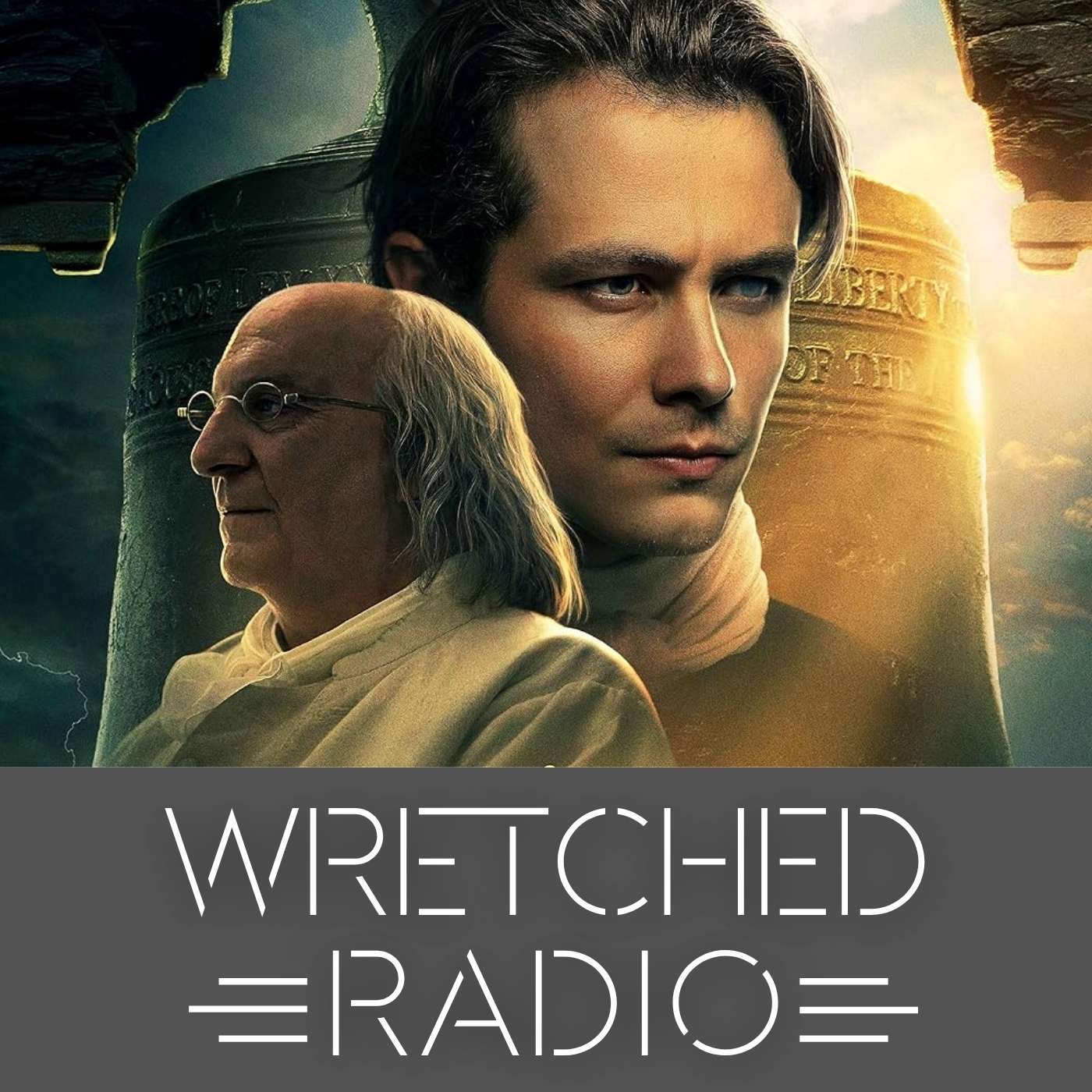
Wretched Radio with Todd Friel
The Great Awakening, True Revival, And Christian Buddhist?
00:54:59
Segment 1 • Todd’s review of the new “The Great Awakening” movie. • What actually brings about true revival? • Why did straightforward, doctrine-rich preaching—not emotional hype—ignite lasting transformation? Segment 2
Loading summary
Transcript63 lines
- [00:00]
Todd Friel
So here's the deal. We are not going to begin the podcast, which features a review of the new movie A Great Awakening, the story of Ben Franklin and George Whitfield, until you participate in the no Retreat matching gift campaign. We just won't. We can't start the show. We won't start the show. You need to give more money. That's what you need to do. You need to give more money. Otherwise, we are not going to start the show.
- [00:22]
Jimmy Hicks
Todd. So you're not Joyce Meyer.
- [00:25]
Todd Friel
You're right. I'm so sorry. That's what she does. She actually does. We are not going to do that. Instead, we would simply encourage you, if you have the opportunity and the means to participate in our spring match giving campaign. It's titled no Retreat. We have absolutely no intention of quieting down. In fact, we're going to get louder with the proclamation of the gospel. It's a matching gift campaign with love, love, love it. If you would partner with us so we can do more, reach more and see the sun exalted more. You can learn more@fortisinstitute.org donate fortisinstitute.org I guess we'll start the show.
- [01:05]
Wretched Radio Announcer
Wretched radio begins in 3, 2, 1.
- [01:12]
Jimmy Hicks
I identify as a transgender woman.
- [01:14]
Todd Friel
I identify as a straight, transgender female. There is no such thing as transgender. You're either XX or xy. But honestly, I don't really identify as human. I'm tired of being humanized for the comfort of other people. God made man male and female. That is determined genetically. That is physiology. That is science. That is reality.
- [01:38]
Wretched Radio Announcer
It's time for Wretched Radio with Todd Friel.
- [01:46]
Todd Friel
This is Wretched Radio, bringing you celebrity infotainment, gossip and such. But it's sanctified because we're like. Caleb will occasionally allude to a Bible verse and therefore make it sanctified. Did I say that out out loud? I didn't mean to. Let's get to a movie review. Did I mention this is fragment Radio went to see a Great Awakening, not the Great Awakening. There were multiple in the US Of A, at least three of them that were substantial revivals. They weren't scheduled like you see on a lot of church signs. Wednesday, 7pm Revival. Because you got to schedule those things because, you know, the Holy Spirit needs to know when to show up and be there. These were very clearly a great movement of God. Now, I think the first awakening, some might argue, actually, I think that the second awakening may have been even greater. The third awakening, I think, lags behind them. Nevertheless, the First Great awakening came underneath the influence of very sound preaching. These were not like 40 minute rock shows and then sort of a flimsy gospel presentation. No, they were just straightforward preaching from men like Jonathan Edwards, John Wesley, and one George Whitfield, who is. Well, I wish he had been in the movie more, to be honest. It was a great film. I, I recommend it. I'm, I, I commend the film to you. You should go see it. Because if you have ever bellyached about bad movies and haven't we all, and you wish, why can't they make anything that I can go see with my family? Go see this, and I suppose everybody will have their perspective and take on it. I thought the production was way better than average for most Christian productions. I thought the storyline at least was not predictable. It had layers to it. It didn't have a ton of characters outside of Whitfield and Franklin, but it did show them growing up. So we were flashing back to show the influences on them and they each came from kind of bad dads, really. Franklin's was different than Whitfield's. Franklin's dad was kind of a religious zealot who apparently could have been a bit hypocritical, according to Franklin. And it influenced it, repelled Whitfield, if you will. Now, no, I'm sorry, Franklin, Whitfield's dad was mia. So we just saw a stepdad who was not a nice guy at all. You get to see that. And so that was decent storytelling. And you see the conversion of George Whitfield, you see Benjamin Franklin. The narrative throughout the movie is Benjamin Franklin. He's dealing with the Constitutional Congress, trying to figure out, hey, it's 1787. Things are not looking great. We fought for liberty. It is not bearing the type of fruit we anticipated. We got to come up with some sort of a constitution. They were fighting, they were wrangling, just like they did during the Declaration debates. And Whitefield kind of led the charge to y' all based on presumably his relationship with George Whitefield. We got to get back to praying like we used to at the opening of these sessions. They did put together the Constitution. The rest is genuinely history. There were storylines, there were narratives that were weaving throughout and not in a great deal of complexity, but better than. Definitely better than average when it comes to Christian script writing. But I think the most effective parts of the movie, I think there were really three. First of all, I thought the conversion of Whitfield was really, really interesting. He bumped into a group of individuals when he Was studying at Oxford called the Holy. Holy Holiness Club. Holy Club. The Holy. Jimmy, would you like the Wesley brothers, John and Charles were a part of it. Now I think it seems to me, if I recall my Reformation history at the time when, when Jonathan Ed. When Jonathan Edwards. John Wesley was in the Holiness Club at Oxford, he actually wasn't saved. My recollection is he was in the Holiness Club really trying to be holy. Self righteously, most likely. I don't mean that negatively. He was just trying to clean himself up and be holy. He went to America, he did some revival preaching. It was on a boat back to Great Britain when he met a Christian on the boat who just seemed different. He was more fervent and he sounded like he actually had a relationship with Jesus Christ. And Wesley was convicted and he was persuaded he really wasn't born again, got saved, went back to England and then of course he did come back to the States to do more preaching. So Wesley is. The two Wesley brothers are at the Holiness Club and George Whitefield was there basically as well. I think this is fair to say a servant academic. He couldn't afford the schooling, but because he had a commendation from a former Oxford grad who was an actor, he could go, Whitfield could go to Oxford, but he had to serve the other students. He had to be really just their, their, their servant. Food delivery, clothes, etc bumps into the Wesley brothers and they show him a great deal of kindness. The, the scene in the movie was they actually washed his feet. Something I didn't need to see, but nevertheless it affected him. They went into prisons, Whitfield went along into prisons and as he was reading the Bible out loud to prisoners with his booming voice, John chapter three. At least this is how the, the movie portrayed his conversion. He was reading John Chapter three and it was about of course the gospel that he didn't come to condemn the world, but he came to save the world. For God so loved the world and you could see him being impacted by it. And I found it very effective. It was like any. See, I'm kind of a softy for that. Anytime I hear a conversion story, I'm like. Because I. It's just seeing God at work in the life of a human being. You saw that on the big screen and I thought that was really, really impactful. Jimmy, you got that info?
- [08:19]
Jimmy Hicks
It's the Holy Club, right?
- [08:22]
Todd Friel
That's what I said.
- [08:22]
Jimmy Hicks
That close enough.
- [08:24]
Todd Friel
I did, but I also, I didn't know if it was Holiness or Holy Club. All right, would you do me another Little bit of research, see if I'm right in my historical recollection. You can ask your AI Machine. Was Wesley in the Holy Club then he got saved, or did he get saved before the Holy Club? I think it was afterwards because he didn't under. The Holy Club was really about being, you know, I'm going to be really holy here. And I don't think he was saved at the time. Let me know what you discover, Jimmy. Second most interesting part, and I'll save the last one as I think the most impactful. I think the conversion story would probably be second in the list. Third in the list would be the relationship between Franklin and Whitfield. This may not make sense, Todd. That's nothing new. But Mrs. Friel and I were out to dinner before the movie, and we were in the restaurant, and as we're leaving, a young man said, excuse me, are you Todd Friel? And of course, my first question is why? He was a gentleman. He said, hey, really nice to meet you. Thanks. Thanks for dining here tonight. I've seen you on YouTube before. I said, is that right? What church do you go to? And he goes, no, I, I, I, I don't. I'm ideologically opposed to your beliefs. And I said, oh, okay. So you are an atheist. He's an atheist. And we just chatted a little bit, and off I went. That's all. It was just an encounter. And the reason I think it struck me is because, first of all, it's never happened before. And second of all, I was happy to be pleasant with the fellow. I just was. It's like I wish I said, do you understand the gospel? Do you know what you're rejecting? Yep. He grew up young. Earth creation, homeschool family has totally rejected the gospel. And it got me to thinking. It maybe just acted as a trigger for me to think about how many relationships I have with unbelievers. And more than that, I had to search my heart and ask, how comfortable am I with that? Can I, if we don't have Christ as our centerpiece in our relationship? Second of all, can I just have a relationship, a friendship with somebody who's not a believer just because. Just because now I'm always going to have an agenda, just like Whitefield did with Ben Franklin, always wanting to convert the fellow. But then when I got to the theater, I saw Whitfield and Franklin genuinely working together. Whitfield saw that this man could be very helpful for the propagation of the gospel. Franklin saw Whitfield as an opportunity to make money by printing his sermons, the tracts, the newspapers, etc. And so it was symbiotic and they worked together and a friendship developed and Whitfield continued to try to witness to Ben Franklin. I think that's historically accurate, but maybe it was because of my encounter in the restaurant. I was thinking, hmm, why do we sometimes struggle to have relationships with people outside of our circles? Now, I do believe our primary relationship should be inside of our circles. I think that's biblical, that we don't want to be unequally yoked with people like bestest friends. But we can be friends. And I saw that modeled and it just caused me to do a little searching to go, hmm, not that I have to go out and go, excuse me, I'm looking for an atheist who wants to be a friend and play ping pong on occasion, maybe watch the Masters golf tournament. Scotty Scheffler, way to go, by the way, with the Comeback. The point is, am I willing to to just have a relationship with somebody who's not a believer? Because I saw it modeled, perhaps, maybe the word I'm looking for. I was a bit convicted, but I think the number one most impactful thing about the A Great Awakening movie is, oh, look at the time. Next on Wretched radio,
- [12:36]
Jimmy Hicks
no Retreat. That's the name of Fortis Institute's Spring match campaign, and here's why. The culture we live in right now has made it pretty clear it has very little interest in the true gospel of our Lord Jesus Christ. We're being told to keep our faith quiet in public or to soften what we believe so it goes down easier. Fortas Institute has no intention of doing either one. We exist to advance the gospel of our Lord Jesus Christ, and this spring we're doing it as loudly and as boldly as we know how. Your gift will help launch two new podcasts. It puts Todd Friel's new book, Go Serve youe King into print through HarperCollins, and it puts the gospel back onto college campuses where it's least welcome and most needed. Our goal is $250,000, and we're asking if you would prayerfully consider helping us get there. You can find out more right now@fortisinstitute.org
- [13:36]
Todd Friel
Would you like the university experience? Without the, you know, university experience? The Masters University invites you to visit their campus. Or you can visit them online at masters. Edu Wretched to discover a Christian college that is biblical, that offers all of the academic excellence you desire. Sports, athletics, arts, communication, all of the activities of, you know, a secular University without the, you know, secular parts. Please consider the Master's University online or of course on campus learning, undergrad, master's and Doctoral programs. It's Master's University, the university with the university experience without the university experience. Masters edu Wretched.
- [14:40]
Wretched Radio Announcer
Know your Church Fathers Origen of Alexandria was a 2nd century theologian who wrote one of the first systematic theology books. Origen observed that heretics twisted a misused scripture by taking verses out of context. However, he refuted them by reading the verses in context and interpreting them in the light of the rest of scripture. This is Wretched Radio with Todd Friel.
- [15:09]
Todd Friel
Arise, oh sleeper, Awaken. That's a voice. This is Wretched Radio. That is an actor playing the part of one George Whitfield, the great Anglican, former Anglican open air preacher. When he visited the States, his voice thundered across the Northeast and tens of thousands of people would come to hear him preach the gospel, which was my favorite part of the movie. I did enjoy the relationship between Franklin and Whitfield. I thought the conversion scene of George Whitfield was very stirring. I wish they'd actually spent more time there because, and I'm sure this was accurate in the movie, that after Whitefield got saved, he still appeared to have a bit of confusion about the Gospel. I wish they had clarified exactly when he got saved because after he got saved he determined he sent a letter to his mom saying, hey, you're not going to hear from me for a bit because I'm going to go fast and I'm going to make the Father proud of me. If I were talking to George Whitefield today, well, he'd be really, really old. But I would say, hold on a second. What do you mean you want to make the Father proud? Tell me exactly what you mean by that. Because if he means that somehow his praying, his fasting, his good deeds would somehow make him more pleasing in the sight of God, I would play the exact same role John Wesley did in the movie and said, dude. Well, he didn't say dude, brother, you're not understanding the gospel. It is Jesus who, if you will, makes God proud of you. They didn't say it like that, but that was the gist of it. It's Jesus who makes you right with God. It is Jesus that causes the Father's love to shine on you because of the Son. And I didn't intentionally do a son play on words right there. Did he get saved then? Not exactly sure. The movie didn't make it clear. I wish they had spent more time there. I personally Because I'm a geek, would have liked a little bit more of the theology. Furthermore, I think there would have been an interesting opportunity to show the difference of theology between Whitefield and Wesley. Wesley was an Arminian, Whitefield was a Calvinist. They were buds and they were friends. Like how did that. There's another one. How did that work out? Whitefield was friends with Ben Franklin, the deist. He was friends with John Wesley, the Armenian. How did those two do that? How did they do that? Would have loved to see a deeper exploration of that. But I would have to say that to me, the part of the movie that was so powerful was when George Whitefield would do open air preaching. I wish they had done more of that. I would have loved to see more of that. This is an aside because I do commend the movie to you. And if you have the ability to go see it, why, it's in a theater that probably supports. It's called Sight and Sound Made the movie. I don't know anything about him, but they did a good work with this. Believe me, it's well done. For instance, when Whitfield was coming from England to America, Ben Franklin is hearing about it, talking about it, and then we see Whitfield coming from England to America. Now they could have just had him arriving on the shores of Boston or Pennsylvan, Pennsylvania. No, I guess you can't alarm on the shores of Pennsylvania. My point is they could have shown him getting off of a boat. They didn't. They showed him in the middle of the ocean on a boat like 1760 style boat, like, whoa. So they spent some money on this, the costumes, all of it. They showed Whitfield going out into the fields to just find some sinners to preach to them. He was so grateful for the grace that he had received. He wanted to share this good news with people. There was a mining scene where he was preaching in the mines. And I don't think it was just Whitfield who did that. My recollection is Wesley did too. They would go do open air preaching. And because these men and women and children who are working in these mines, they were just covered in soot. You could see the white streaks coming down their cheeks from the tears. That's open air preaching. I wish there had been more of that because everything that they had Whitfield preaching, it was very evangelistic. If you've never studied Whitfield at all, he's well worth giving a read. You can go to the Googler machine and you can find all of his sermons there. Okay, I've got this one. This is Whitfield sermons, table of contents. So here on this one, he has 59 sermons. 59 sermons. Oh, I didn't see this one. A farewell sermon. Oh, wouldn't that be interesting to read? I know what I'm doing tonight, but you might want to check into these articles. Not articles, but these sermon transcripts. Because the gospel is coherent, and that's why I wish they had done more of it in the movie. All of the preaching they had Whitfield do, it was. It was more on point, and it was truncated, but it was more on point than most evangelistic sermons these days, which, as has become my latest, like, we got to get better at proclaiming the gospel, y'. All. Issue is, is that we just give bits and dribs and drabs of it, but we never give a coherent presentation. Everything they had Whitfield saying it was about escaping the wrath that is to come. Arise, O sinner. And if you go read some of his transcripts, it's like, man, he's evangelistic, and he definitely wants people to understand the law, and he wants them to understand the gospel. Wesley. I think there's a number of quotes from Wesley and from Whitefield about the use of the law in evangelism. They opened up the law to bring about the knowledge of sin, to silence the mouth, bring the whole world guilty before God, because you cannot know sin but by the law. And he was a law preacher, and then he would preach about the kindness of God and what it caused me to think about. I wish I could find. I went to the YouTube machine looking for a lengthier clip of his preaching. I can only give you brief little snippets of it from the trailer that's out there. Let us proclaim freedom to the captives whom the sun sets free is free indeed. I wish there had been more of that. What struck me with that booming voice is I don't know that there's anybody who preaches like that today. Please note, I do believe eras can have different styles that are appropriate. It might not be received well today, but I personally was so moved by that sort of thunderous preaching, that authoritative. I know what I'm talking about here. Believe the gospel. It's like, whoa, that authoritative, commanding. We don't hear that much anymore. I'm not. I'm not aware of anybody who preaches like that these days, and I don't know that it would. First of all, you got to have that. You got to have that presence. I Think you've got to have that diaphragm that can preach like that. And I don't even know that it would make sense in the 21st century. Not that we're more sophisticated, but stylistically, some things are acceptable. Our type of groovy hipster preaching probably wouldn't have played well in the 18th century. But what happened to preaching that declared the gospel? Everything we do, it seems, we're just trying to persuade people. Is it possible that perhaps the shrinkage that we've seen in evangelicalism is because we no longer preach like that? We're persuading people to pieces, and we're using apologetics like crazy, and none of these things are bad, but when was the last time you heard somebody who didn't sound like a kook? When was the last time you heard somebody from a pulpit command the audience this day to repent because you need the Son to set you free. And if you don't, you will be burned up by the sun. You will be consumed by Him. We don't hear that anymore. And I wondered, hmm, how might we be more authoritative in our 21st century context? How might we be a little bit more commanding in the pulpit in our gospel proclamations that don't have a posture of reclining backwards, like, okay, all right, yeah, okay. I'll just keep hitting me about your problems with Christianity and I'll tell you about it. But no, instead we lean in and tell people, only a fool would decline the offer of everlasting life. And we press into it and we proclaim it, and we don't defend Jesus. We exalt Jesus Christ. I wonder if we wouldn't do well to consider our preaching and how we might maybe to some degree, return to that sort of authoritative preaching. Jimmy, do you got my history? Did I get the history right with Wesley's conversion?
- [24:13]
Jimmy Hicks
Yeah, I think so. He appeared to have joined the holy club before he was saved.
- [24:18]
Todd Friel
Yeah, okay. Then it was over to America. Came back on the boat. All right, so they didn't really show that detail. So it's not equivalent at all. The point of it is, I like the movie. I think you should go see it. And if you can't, go to see it in a movie theater and pay way too much for popcorn, which we resisted, by the way. We did. We actually. We. We mortified our popcorn craving. It's like $25 good popcorn in a soda. It's like, what, are you kidding me? Nuts. So we watched the movie. We enjoyed it. There. There would be one thing that I would say, though, to be careful of, and I don't think this was intentional. The reason a movie was made about George Whitfield is because he's exceptional. Please don't see him as normative. Be careful of that, because you might see a guy like that and go, whoa, I'm just a miserable, awful, terrible Christian. Christian life as a rule is led in the quiet places in the zip code in which you were born, with the people and the skills and the talents and the opportunities that God has given to you. And if you don't go preach in front of tens of thousands of people with a booming voice, it doesn't mean you're not a radical Christian. Radical Christianity is living for Jesus, not necessarily drawing crowds and preaching to minors and having rocks and pieces of dead cat thrown at you. Other than that warning, if you will, I think your heart will be stirred and you're going to have plenty to consider when you talk about the movie on the drive home, at home and maybe in church. This is Wretched radio.
- [26:01]
Jimmy Hicks
And it's now time for your daily Fortis newsbreak, a production of Fortas Institute. The Trump administration freed six school districts recently from Obama and Biden era legal agreements that forced them to allow biological males into girls restrooms. The Department of Education's Office for Civil Rights called those agreements unnecessary and unlawful burdens under the new enforcement. Title IX investigations target girls being injured by male athletes, not teachers who use the wrong pronoun. Not getting the memo. New York City's elite private schools currently mid DEI symposium one session proposes rebranding DEI as quote, universal design were learning after admitting the old label got too politicized. At least they're being transparent about not being transparent. The Royal Canadian Navy hoisted the transgender flag aboard ships at Halifax for trans day of visibility and helpfully warned that online criticism could face criminal prosecution. MsNow, which is formerly MSNBC, found a problem with the heroic rescue of of an American soldier. Pete Hegseth said leave no man behind. And the correspondent pointed out that that could have been a woman. The hypothetical woman. Thanks you for your courage there, Larry. Tennessee Senate passed a bill 266 making it a state crime to remain in the state after receiving federal deportation orders. 90 days to leave or face up to one year in jail. Critics say immigration is a federal matter, but Tennessee says federal law already says go home. They're just adding a little more enforcement to what's already there. In Elk River, Minnesota, they voted unanimously to fly the old state flag over the 2024 redesign, which bears a striking resemblance to several Somali faction flags. Three out of four surveyed residents supported the change. Council members were warned that the old flag would be divisive. Apparently the 75% missed the that memo, too. House Speaker Mike Johnson is reportedly leaving Planned Parenthood defunding onto the next reconciliation bill, even as the organization just reported killing a record 434,000 unborn babies and collecting 832 million in taxpayer funding. The one year ban expires July 4th. Pro life groups say that's unacceptable, and that's hard to argue. Finally, a state study finds people who lose weight rapidly are twice as likely to divorce. The glp. One craze may be reshaping more than waistlines. As one commentator put it, what does it profit a man to change his look but lose his marriage? Hear, hear. And that wraps up today's Fortis News break. I'm Jimmy Hicks. If you want more, you can download Fortis plus or sign up to become a Fortis Insider for exclusive daily content. Both of those things can be done@fortisinstitute.org also. And don't forget, you can subscribe to Fortis News on your favorite podcast app in order to get these updates daily. And until tomorrow, go serve your king.
- [29:04]
Wretched Radio Announcer
Know your reformers. Martin Luther was a German monk and professor who was plagued with doubt about his salvation. When he finally read the Bible for himself, he rediscovered the doctrine of justification by grace through faith. His bold witness for biblical truth was the spark that ignited the Protestant Reformation. This is Wretched Radio with Todd Friel.
- [29:29]
Todd Friel
Oops, left a part out. This is Wretched Radio. A Great Awakening the movie reviewed one last note on it. There was a scene that I thought of the filmmakers was very brave, and that is the scene where George Whitfield was busted by Ben Franklin for owning slaves. Ooftah. One of the early scenes in the movie, it was really actually it was the first scene when Whitfield met Franklin and he asked Franklin to print. This is the first thing I want to have you print. And it was a screed against Southern slave owners that you're oppressing these people and you're withholding the gospel from them. Well, decades later, when he was trying to build an orphanage in Savannah, Georgia, and needed funds, couldn't get the job done. So my understanding is that he actually bought plantations to raise money via slave labor to fund the orphanage. And then he actually became a proponent of slavery. The Deets, the Georgia trustees, they wanted to ban slavery. Whitefield actively lobbied against the ban. And so it is a detail in the life of George Whitfield that they at least put into the movie because they show him in the beginning saying, hey, I'm opposed to slavery. Would you print this? And Franklin said, hey, you're going to set off a powder keg. And he said, well, I didn't come here to tickle ears. And at the end of the movie, when Whitfield and Franklin are kind of arguing a little bit, Franklin exposed him, you want me to be a Christian like you, and you've got slaves. What do you do with that? And I think the answer is, I don't think it's one of those issues where it's like, when it's all said and no matter how you parse feels good. Because even though whitefield was baked into that economy and we are more impacted by the cultural air we breathe than any of us care to admit, he compromised, and he somehow was able to justify it in his mind. And yet he preached to tens of thousands. He was a part of a great awakening. He did proclaim the gospel faithfully. He wrote, well, so you look at that and you go, it's just a radically bad inconsistency in the man's life that we probably see more clearly than probably almost any other generation. Does that give him a pass? Of course it doesn't. But I do believe that the best of men are but men indeed. And this is not to give him a pass on this at all. But if your life were biographied, if they were going to make a movie about you in almost 300 years, which is about the timing of the Franklin Whitfield story, what inconsistencies would be put up on the big screen about you, what about me? So I want to be a little bit careful to condemn, and I also simultaneously want to be careful not to condone and not to simply give a pass to it. And so to the movie makers who at least brought it up, they didn't resolve the issue. They didn't give much time to it. I give them props. But they did have, I thought, a great response from Whitfield, and I'm paraphrasing. He said to Ben Franklin, he was trying to persuade him one last time, please, please turn to the sun. Please don't kiss the sun, lest he be angry. And Franklin was. Was pushing back, and they were debating back and forth. And so when Franklin brought up the slavery issue, Whitefield's response was, do not judge the Christ based on Whitefield or any other man. And that's a good response. That is a good Response, because you will get that objection in some form. If you evangelize, they will simply say, hey, what about this guy? What about that group? What about the Crusades? We want to try to explain it as best we can without condemning or condoning as is appropriate. Because there's details to the story that usually aren't revealed. Nevertheless, we want to make sure. Even so, whatever your feeling is about whether it was Luther's attitude toward the Jews, whether it was Whitefield's owning of slaves, whatever the grievance that you see, do not formulate your opinion about Jesus Christ based on the behavior of some of his followers. Don't do it. Whatever bad behavior you identify in a follower of Jesus Christ, you cannot base the object of our faith based on the actions of some of its followers any more than, let's just say I bumped into somebody that you were pals with in fourth grade and that dude was a jerk, nasty dude, said terrible, used bad words right in my face and called me bad names. Therefore, I don't like you because you were friends with him in fourth grade. You'd go, wait a second. Hold on. That's not fair. You can't judge me because of that association of somebody who turned out to be a rotten egg. Ditto with Jesus Christ. You're going to run into those types of anecdotes, true or otherwise, that people can use. You can deflect it as much as you want to. You just can't apologize for George Whitefield and the slave owning thing. You just can't. I don't think we should try to apologize for Martin Luther's attitude toward the Jews near the end of his life. I just don't think that there's any way to justify that. Now, you can explain it, but that doesn't justify it. And I don't think it helps because people hear that. It's like, whoa, whoa, whoa. That was the attitude to try to defend it in any way, shape or form. I don't think it's the right response, and I don't think it is a winning response. Point them to Jesus Christ. And speaking of responding to questions, Jimmy, you're gonna love this segue. Hey, did you see the interview of the Rolling Stone? He's a Rolling Stone music critic, and he was sitting down very groovy set with Brandon Lake. He's Mr. Hard Won. Hallelujah. Why are you groaning out loud?
- [35:53]
Jimmy Hicks
I didn't see it. I didn't.
- [35:55]
Todd Friel
Well, you're about to. This would be a lesson in obfuscation. This is A lesson in being asked, what would be conceived, what would be perceived these days as a difficult question and just batting it away, like, not really answering it. So this is the non answer answer. The individual from Rolling Stone apparently would call himself a Christian Buddhist. No, he put it up on a T for Brandon Lake. And there's a lot that you could criticize about it. Like, you blew the gospel opportunity, dude. And he also refused to stand firm. But more than that, just from a logic and reason standpoint, from an argumentation standpoint, you talk about just squirreling around the question. Share something personal with you, please.
- [36:39]
Caller/Guest
I'd love to get your take, please. You know, I was telling you, I was raised Catholic, Christian. I still identify as such. But I went through a very trying time in my life a few years ago. And at that same time, for what luck would have it, intervention the universe, I picked up a book about Buddhism by the late Buddhist monk Thich Najat Hanh. He wrote a wonderful book called Living Buddha, Living Christ Too, which I highly recommend. And at that time, as I read it, it illuminated so many answers to me. As I was going through this thing, I had a family member who was sick. And it was. And it really kind of held me, held me together. Since then, I would probably say I identify as Christian Buddhist.
- [37:27]
Todd Friel
Jimmy, I'm firewater.
- [37:31]
Jimmy Hicks
You're what?
- [37:31]
Todd Friel
I'm firewater. I'm hot, cold. That's what I identify as.
- [37:36]
Jimmy Hicks
Those are opposites.
- [37:37]
Todd Friel
I identify as tall, short, what? But he's a Christian Buddhist.
- [37:41]
Jimmy Hicks
Those are opposites.
- [37:43]
Caller/Guest
And I'm not asking for your judgment of me, but I'm just asking in terms of Christianity in the church, is there room for that? Is there room for me and maybe other people who. And I'm serious. And other people who may not identify even remotely Christian. Is there room in the faith and also in CCM and your music for what I just identified as? Or perhaps for someone who is even. Not even a foothold, a footprint in Christianity.
- [38:08]
Todd Friel
How would you answer that question? The specific question is, is there room for me, meaning can I be a Christian Buddhist, or can somebody be a non Christian and be a participant in your faith? It had nothing to do, in my estimation, of whether or not you would be welcomed if you ever darkened the doorstep of a church. Listen to the obfuscation. I would so hope that you felt like the doors were open. Not the question. Jesus would love to sit down with you, would love to have this conversation with. And you can. I would hope the church would also be that open. Do you think George Whitefield would have answered that way? Seriously, this, this is again, this is. This, this backward, this leaning beh. I'm not going to say anything that might be strident in appearance. I'm not going to say anything that has a sharp edge to it. I'm not going to say anything that might offend you. This was a no brainer. Oh, my friend, why don't you tell me what you think Buddhism is then why don't you tell me what you think Christianity is? And when we're done, I think you're going to see that they're simply incompatible. And you need to make a choice. Why would you not have a place here? Even if we disagree on something like is that not what the church is supposed to be? Is. No, not that type of thing. Sure, you can disagree on carpet color, but the teachings of Jesus and the teaching of Buddha can agree on that. The community and when we might go, hey, we believe this. But if you don't agree, why would our doors be closed to you now? See what he did there? Why would anybody's welcome if you're a Buddhist? Come on in, Please come in. We'd love for you to stay, but we don't want you to stay a Buddhist. You can't stay a Buddhist if you're going to be a member of a church. Why? Because Jesus said so. He's the one who said if you don't have the son, you don't have the father. He's the one that said he is the way, the truth, the life. I get it. We want to be winsome with people. We don't want to seem like we're exclusive. Oh, wait a second. Christianity is exclusive. I'm sorry, that response, among other things, cowardly. This is wretched radio.
- [40:28]
Jimmy Hicks
Hey, thanks for listening to wretched radio today. You know what's rare? Finding something that makes you laugh and makes you think at the same time. And that's why we've brought in Gary Varvell. Gary's an award winning cartoonist and every week he draws an original creation just for Fortis Institute. They're sharp, they're funny, and they usually make a point that sticks with you a little bit longer than you expected it to. And something else you'll find. Fortis Institute is Fortas News, which is hosted by yours truly. These are up to the minute headlines that matter to Christians and they're told from a biblical worldview. There's no spin, there's no agenda. It's just the news with a Christian perspective. And both of these things, part of what we're building in Fortis Institute, and both are made possible by our Gospel partners. If you have been helped and you appreciate the content that we're creating at Fortis Institute, would you consider supporting us so that we can reach more people in more places all over the world? It's really simple. We know you have questions, so we have answers at fortisinstitute.org/wretched amazing Grace, Amazing Gospel. You've tried everything. You've sent articles, you've had the conversations, You've probably argued more than you wanted to. But you have a loved one who is still neck deep in the Prosperity Gospel or the new Apostolic Reformation, and nothing you seem to say gets through. It's exhausting, I know, and it's also heartbreaking. Snatch Them from the Flames was made for exactly this reason. Todd Friel and Justin Peters sit down and they tackle why your loved one is attracted to these movements in the first place. Because until you actually understand that, you're just going to be swinging in the dark, then they walk through the things that you can actually say and do to help pull them toward Christianity. This isn't about winning an argument, it's about understanding someone you love and pointing them to something. If you've got a family member or friend caught up in a false gospel and you don't know what else to try, Snatch Them from the Flames is for you. It's streaming for free right now on Fortis Plus. Download the app on your smartphone, your smart TV, or simply go to fortisplus.org Most men don't make one big decision that takes them off course. No, it happens gradually, and eventually you look up and you realize, I've been coasting for years. Well, Dr. Adam Tyson has created Walk Like a Man. It's available now on Fortis Plus. Dr. Tyson knows that's the story for way too many guys right now. And so he gets into God's word and he lays out what it actually looks like to walk with wisdom and live with real conviction. And the way he teaches it, you'll walk away from every episode knowing exactly what to do and why it matters. This is biblical teaching that puts solid ground under your feet and gives you a clear path for forward. It's streaming right now, with new episodes dropping every Monday on Fortis plus for free. Download the Fortis plus app right now. Wherever you download apps on your smartphone, your smart TV, or just go to fortis plus.org and walk like a Man.
- [43:29]
Wretched Radio Announcer
Important dates In Christian history 1735. The Great Awakening under Jonathan Edwards stirs the American colonies with many conversions and individual returns to heartfelt faith. Because of this awakening, a number of divinity schools were founded, including Princeton, Dartmouth and Rutgers. This is Wretched Radio with Todd Friel.
- [43:54]
Todd Friel
Let's find out together, shall we? This is Wretched Radio. So I'm looking at my computer screen. I know what this clip is. Speaking of bad answers, a Canadian astronaut was asked, hey, what's the purpose of life? The purpose of humanity is joy and
- [44:12]
Donald Trump
lifting one another up.
- [44:13]
Todd Friel
Creating together versus destroying. No, that's not it. So I know what that clip is. My response to this astronaut would be, those things sound so nice. Tell me, by what authority do you speak? Who says that that is the reason for human existence? What is your source of authority? I know what that clip is, but this. Okay, wait a second. This clip, I know what this is because somebody sent this in, because we talked about this last week. The iconic moment when Carnac the Magnificent busted up Ed McMahon on something they used to call the Tonight Show. It used to be funny. Once upon a time, he was divining an envelope. What are the contents of the envelop? Having trouble defining this one. Yeah. Sis boomba, sis boomba. Describe the sound made when a sheep explodes clean, funny and they just lose it. Goes on for like another 30 seconds. So I know what that sound file is. Let's see, what else do we have? Oh, this one was interesting. The Decatur street preacher that was arrested, this is, this is a little bit old. You're, you're going to catch the story. And I don't have enough details, but I think that we can use it as a springboard to understand the rules of open air preaching. Everyone. A parking lot preacher arrested not for spreading the gospel, but for being too loud. Disorderly conduct charges are minor, only a misdemeanor, so we don't cover them often. But the viral video of a Decatur woman's arrest has over 400,000 views. WAFA 48's investigative reporter Nick Ballinger joins us now. Nick, the issue is with the speakers she was using Ballinger. So he goes to the Walmart parking lot where this happened. And I couldn't tell if she was on the Walmart parking lot or not because here's. So I'm not, I'm not, I'm not judging the details of the story. I don't know what these people were preaching, but they had a sound system set up. It looked kind of like they were in the lot next to Walmart. But if it's private property, the owner of the property has every right to say, I don't want that on my private property. Think of it like this. You own a home, you've got a front lawn. And if somebody, let's say a Mormon came and did some open air preaching on your front law, you would say, excuse me, Mr. Mormon, first of all, your tie's crooked. Second of all, this is my private property. I do not want that message proclaimed here. Besides, I have guests coming over. Skedaddle. You'd want that. And I think that private property should have the right to do that. Now the question, of course, is what constitutes private property and public property when it comes to institutions, specifically universities. The reality is if any university accepts any money at all from the government, it doesn't keep them private. If they're a private institution and they receive some money, actually it's now public in part, which means it gets tricky. You're going to have a harder time defending it, but you can even be on private institution ground. If they're receiving money from the government, which means they're receiving money from you. Public university, you have every right to be there. Now, there can be sound ordinances that you're bugging people. They're trying to go about their business. We need to have an orderly society. So I get that. I think there's. Besides to ruin somebody's day or not allow them to hear in the classroom, or you set up a loudspeaker or use a bullhorn where people are eating dinner, it's just not cool. And I don't think it supports what you're trying to accomplish. But you do have the right to be at a public institution. You do have a right to be at a private university if they're receiving taxpayer money. But I don't recommend it going to the private university because when the police officer stops you, you can say, well, I know it's a private institution, but technically they're receiving government funding. Therefore I do have. You're probably not going to be very successful. These people that did the open air preaching at the Walmart weren't. It seems the discrepancy was not just about sound, but I also think location. Well, as Bethany Senate says, she does this often, going to parking lots and preaching to nearby shoppers. But on Sunday she was charged with disorderly ducked for unreasonable noise, sparking a
- [48:44]
Jimmy Hicks
heavy debate online
- [48:48]
Todd Friel
three times a week, normal day for us. You'll find Bethany Stinnet and Robert Coughlin here. Now, by the way, here is outside of The Walmart in the parking lot, apparently. But they didn't give that detail, which was a crucial detail. The sign that they're carrying was need prayer. So it wasn't a Turner Burns sort of a message, apparently. It was just need prayer. Hmm. So let me get this straight. If we stand in front of a public place, not a Walmart public place, with a sign about Jesus, we can be shuffled off, but Don Lemon can go into a church in St. Paul, Minnesota, and say that it's his First Amendment right. The Walmart in Athens in their element, doing what they love, that to be saved.
- [49:42]
Jimmy Hicks
Well, we just go into the streets
- [49:44]
Todd Friel
and we proclaim the gospel. We preach the gospel. When she decided to preach outside a different Walmart in Decatur, we felt a
- [49:52]
Jimmy Hicks
call to go to Decatur that day.
- [49:54]
Todd Friel
She had no clue that calling would lead to this. A brand new picture from the Morgan County Jail. Now, there's more to the story, but it's inconclusive for our understanding as to, like, where they were and the volume issue. There are volume ordinances. I think we submit to those. I also think that there's just goodwill ordinances that don't need to be codified by the state, where we just don't make a ruckus, where people are just trying to enjoy a picnic or a sandwich. So I don't know the details of this, but those are basically the rules. You do have every legal right to go to a public place and proclaim the gospel. Now, there are a couple of other rules on university campuses. You can't impede traffic. So don't. Don't gather on a sidewalk. Gather next to the sidewalk. Just don't be on it to impede people's traffic because they have to be able to come and go. Don't be underneath a classroom window making a lot of noise, because now you're keeping the kids from getting what they paid for. And they can shuffle you off. By the way, we were at Georgia Tech. We had a delightful encounter. There was a. I think he was a police officer. Jason would know. It seemed that he was. It said, Georgia Tech police. And he came up and he said, what are you guys doing? You know, because that's his job. And we. Jason just politely explained. I don't think Jason could explain anything without being polite, but nevertheless, he politely explained what it is that we're doing. And the guy was super cool, super cool. And he just let us be, which was the right thing. Now, I was at Georgia Tech some years ago, and a couple of officers, they asked me if I could just move it along. And I said, guys, you know that you don't have legal legs to stand on, right? That I do have the right to be here. And in a moment of transparent cool, they went. And we know, but it would just make our lives so much easier. All right, for you guys, I'll go over there and do it over there. So those are the rules. I know what that clip was about, but. Jimmy 100. What is Trump addresses new demont. What does that say?
- [52:04]
Jimmy Hicks
Well, that's.
- [52:05]
Todd Friel
Well, I'm trying. Wait, hold on. I don't have my glasses. I'm not trying to be funny. New deleted pro now. Yeah, yeah, yeah, yeah. What is it?
- [52:13]
Jimmy Hicks
Well, it's in the. Click the clip. You'll see for yourself.
- [52:18]
Todd Friel
Well, I can't. This is radio. There's nothing to see.
- [52:21]
Jimmy Hicks
Yeah, but you can see it.
- [52:22]
Todd Friel
All right.
- [52:22]
Jimmy Hicks
And you can.
- [52:23]
Todd Friel
Commissioner, President, did you post that picture of yourself depicted as Jesus Christ?
- [52:28]
Donald Trump
Well, it wasn't depiction. It was me. I did post it, and I thought it was.
- [52:33]
Todd Friel
Wait, what is going on here? This is. Okay, this is whatever. This to reporter asking him, Mr. President, did you post or delete the picture? But. So it's a picture of Trump. He's in a white robe with a red stole around his shoulder. There's a flag, and it looks like fireworks behind him. And he's ministering to somebody in the bed.
- [52:54]
Jimmy Hicks
It looks like he's healing somebody in the bed. I mean, the. The claim was that he was. He posted a photo of himself depicted as Jesus. Oh. And it got a lot of backlash.
- [53:06]
Todd Friel
Good. Mr. President, did you post that picture of yourself depicted as Jesus Christ?
- [53:12]
Donald Trump
Well, it wasn't depiction. It was me. I did post it, and I thought it was me as a doctor and had to do with Red Cross. As a Red Cross worker there, which we support.
- [53:24]
Todd Friel
Okay. If Red Cross workers wear clerical robes
- [53:29]
Donald Trump
and only the fake news could come up with that one. So I. I had. I just heard about it and I said, how do they come up with that? But it's supposed to be me as a doctor making people better. And I do make people better. I make people a lot better.
- [53:45]
Todd Friel
Alrighty, then. So that was that. Basically the gist. Yeah. Right there.
- [53:49]
Jimmy Hicks
Yep.
- [53:50]
Todd Friel
Okay. Okay. Here's what I. Here's what I know. I'm looking at the photo. Doesn't look like a Red Cross doctor, but I'll trust the man. Not because he's the president, because I will put the best construction on it. Hope all things. I don't know his heart I'm not gnostic. Now, I do know this. He did use two potty words on his Easter post. Really nasty potty words. Chuck Todd, I think he was from msnbc. He did a little video saying, are there any evangelicals that will denounce that type of language from the president of the United States? Because all you evangelicals seem to do is defend the guy. Isn't there anybody who will denounce potty moth coming out of our presidency? And the answer is, yep, there's one of us. Jimmy. Are there two of us?
- [54:34]
Jimmy Hicks
There are two of us.
- [54:35]
Todd Friel
No excuse for that. Love, love so many of the policies. But when the behavior is subpar for a president or anti Christian, y', all, y', all, we, we, we, we can't be like Brendan Lake is what I'm trying to say. That's exactly what I'm trying to say. Until tomorrow, go serve your king.