← Wretched Radio with Todd Friel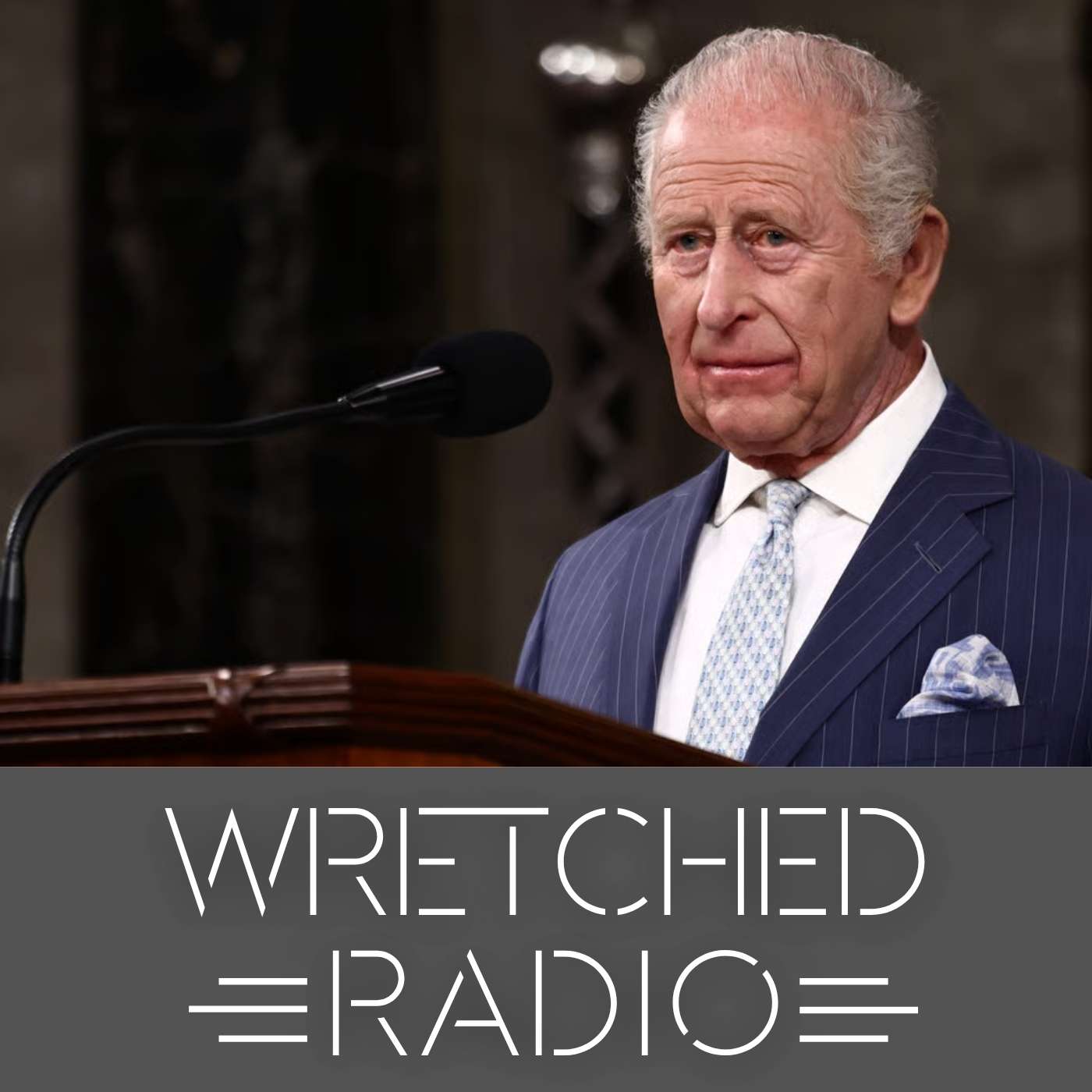
Wretched Radio with Todd Friel
The King’s Speech, Religious Double Standards, And Mistreatment At Work
00:54:59
Segment 1 • Todd reviews King Charles’ recent speech. • King Charles refers to himself as the “defender of faiths”, plural - here’s why that makes a big difference. • If tolerance is the goal, why does criticism seem aimed primarily at Chri...
Loading summary
Transcript137 lines
- [00:00]
Todd Friel
Yes, I'm interrupting again, but count your blessings. I'm not speaking like King Charles. Okay, that wasn't actually speaking like King Charles either. But the point is, we are going to hear from the King. But first, might I encourage you at this time, it's a really important season for us here at Wretched Radio. Would you join the matching gift campaign that we have, doubling your contribution so that we can continue not just broadcasting Wretched Radio and tv, but all of our podcasts, all of our fellows, all of our resources, and all of the future plans that we have? We'd be super grateful. Thank you to everybody who has. You're being very generous and kind. I'm grateful. If you have the ability to give, would you please consider doing so now? It is our no Retreat campaign. And with your gift, I promise you I'll never talk like this again. Fortisinstitute.org donate Richard Radio begins in 3, 2, 1. God told me to tell you this. That's paganism. Do you really expect and anticipate that
- [01:12]
Michael Knowles
the divine voice of God can be heard by you?
- [01:15]
Todd Friel
That's horoscope reading. Standing in the office of the prophet of God.
- [01:21]
Jimmy Hicks
That's reading.
- [01:22]
Todd Friel
Tea leaves can't have a relationship to God. If you can't hear God. That is not biblical Christianity. You want to hear God speak to you, read your Bible. If you want to hear God speak to you audibly, read it out loud. I promise you, 100% guaranteed you will hear him speak.
- [01:38]
Todd Friel (Intro/Outro segments)
It's time for Wretched Radio with Todd Friel.
- [01:41]
Todd Friel
It looks like Christianity, but it's not. This is Wretched Radio. Don't know if you fall asleep. Oh, sorry. What? What happened? What happened? We're talking about King Charles appearing to the US Congress, giving a
- [02:04]
Jimmy Hicks
thought.
- [02:05]
Todd Friel
What? King Charles. He appeared before Congress to give a speech and he talked about his Christian faith. Although if you're listening carefully, you'll notice it was a very subtly crafted speech to import global warming concerns, environmental concerns, diversity equality, inclusion concerns. Very craftily phrased, very slippery. But for our purposes, let's just focus. Sorry. Let's just focus on his discussion about Christianity. King Charles historically prefers to be called the defender of faiths. Not the historical term of the faith, but of faiths. In other words, if you don't have to listen all that hard. He's an ecumenist and Mr. Speaker, for
- [03:01]
King Charles (speech excerpts)
many here and for myself, the Christian faith is a firm anchor and daily inspiration that guides us not only personally.
- [03:16]
Todd Friel
That got a rousing round of applause, but notice he doesn't say it's the foundation of our documents. Even the Democrats stood, huh?
- [03:29]
King Charles (speech excerpts)
That guides us not only personally, but together as members of our community. Having devoted a large part of my life to interface relationships.
- [03:40]
Todd Friel
There it is right there. So he spends far more time on interfaith relationships scolding us for not being accepting of other religions. Are you kidding me?
- [03:53]
King Charles (speech excerpts)
And. Greater understanding. It is that faith in the triumph of light over darkness which I have found confirmed countless times.
- [04:09]
Todd Friel
I'm not exactly sure what that means, but I think that it means Christianity isn't the only exclusive religion we need to understand other religions. They're just as valid as ours. As standard ecumenical fare through it, I
- [04:22]
King Charles (speech excerpts)
am inspired by the profound respect that develops as people of different faiths grow in their understanding of each other.
- [04:33]
Todd Friel
Let's just turn this card around for a moment. How many Christian assaults have there been on mosques? How many Christians in our nation or any other nation that's predominantly, at least on the surface, Christian Arresting Muslims. However, on the other hand, I do have instance in Egypt, this fellow, zoinkskub, he converted from Islam and in July he was arrested in Cairo for terrorism charges. Why? Well, it's not apostasy in Egypt to change faith, but if you change your religious designation on official identity documents, that's then the charge of security threat. And so the guy has been put in prison, the Cairo's 10th of Ramadan prison, where he was reportedly deprived of basic necessities, adequate food, clothing, medical care, and for hours he was hung in a crucifixion position. All right, Prince Charles, King Charles, sorry. Would you deliver this speech in Cairo? Would you condemn them for this atrocious behavior against somebody of another faith? No, it's just a chide against Christianity. Punch Christians, coddle those that actually do assault other religions. Thank you. Thank you very much. Thank you, Congress.
- [06:12]
King Charles (speech excerpts)
It is why it is my hope, my prayer, that in these turbulent times, working together and with our international partners, we can stem the beating of plowshares into swords.
- [06:28]
Todd Friel
That didn't get much applause. Maybe they just had to figure out what that meant.
- [06:36]
King Charles (speech excerpts)
I am mindful that we are still in the season of Easter.
- [06:41]
Todd Friel
Are we?
- [06:42]
King Charles (speech excerpts)
The season that most strengthens my hope. It is why I believe with all my heart that the essence of our two nations is a generosity of spirit and a duty to foster compassion, to promote peace, to deepen mutual understanding and to value all people of all faiths and of none.
- [07:03]
Todd Friel
And since when haven't we done that? And yet in his own country, it is being consumed by Sharia law courts. It is being consumed by violence of one particular religion. Where's the scold? Where's the chide for that? By the way, speaking of Islam and Great Britain, this I, I can't play the clip for you. It's just kind of raucous and loud. It was a guy I don't know anything about, like his theology, but he was in the public square in a town called Watford and he happened to be preaching the gospel and critiquing Islam. And for his troubles, what happened? He was actually arrested Saturday, April 18th. They put him in double handcuffs. They put him in a car, toted him away on what? Suspicion of public order and hate related offenses. In other words, he was critiquing the religion of peace. And so what do the British bobbies do? They arrested him, he was yelling, no offense has been committed here. None whatsoever. You should be ashamed of yourselves for arresting a minister of the gospel. The arresting policewoman said, in the name of Jesus, get in the car. That is the hypocrisy of what you just heard from King Charles. This is a com. This is so typical. It's politics. It's also in religion. Punch right, coddle left, punch Christians, coddle well everything else. When all of the empirical data is clear there we, we don't have a problem with a particular religion. We have a religion problem and it is called Islam. And by the way, kudos to the fellow at tpusa. Actually there were a number of people at the TP USA thing. I think it was a pastor summit. They actually did an entire breakout on the differences between Islam and Christianity and apparently it was pretty transparent about the religion of peace. The issue isn't that we're not willing to be accepting of people practicing another faith. The concern is that they have a mandate to terminate other people who don't agree with them. And yet we get a lecture from King Charles who claims to be the defender of the faiths. Example number two of what sounds like Christianity but isn't this was also at a tpu. Maybe it was actually the same TPUSA event. This one was in Idaho. Young man took the microphone and asked a question of Matt Walsh and Michael Knowles, both of whom are practicing Roman Catholics. I don't know who this kid is. Got quite a personality. He's rather enthusiastic and he asked an excellent question.
- [10:09]
Michael Knowles
But one of the most important questions that I think that we as people need to grapple with is do you know for sure where you will go when you die?
- [10:21]
Todd Friel
Dude, that's an awesome question.
- [10:26]
Michael Knowles
And I would like to see what you guys think about that question. He's going to hell. I hope not.
- [10:33]
Todd Friel
That's not funny.
- [10:35]
Michael Knowles
Would you ask if I know where he's going when he dies? No.
- [10:37]
Todd Friel
You?
- [10:39]
Michael Knowles
Yes. If you do, you know for sure where you will go when you die? I don't.
- [10:46]
Todd Friel
Well, then. Asked and answered. That's not a Christian response. A Christian knows why. Because the Bible tells us so. We can know that we have eternal life. That's what the entire book of First John was all about. You can know that you have eternal life if you believe that Christ is the son of the living God. If you believe that Jesus died for your sins, if you have indeed put your repentant faith in Jesus Christ, you can know beyond the shadow of a doubt you are saved. Michael Knowles. At least he's an honest Roman Catholic. He doesn't know.
- [11:21]
Michael Knowles
I trust and I have hope in our Lord. I trust in Jesus, and I consider hope to be a theological virtue and a demand. Not just a nice feeling, but a demand that goes along with faith and charity with.
- [11:36]
Todd Friel
Now, did you catch that? Did you catch that? He said he's got hope in Jesus Christ. And you go, well, there you go. He's good to go. No, he said it's a command along with charity and excellent love. In other words, he has to believe in Jesus and do stuff that's work, righteousness. That isn't grace alone. Faith alone in Jesus Christ alone. And while it sounds kind of like Christianity, it's kind of not. Why? Because it adds to salvation. Michael Knowles, therefore, cannot know where he's going when he dies because he doesn't know how well he's been doing in that regard. None of us can. And I would furthermore ask, how many of those acts do I need to do to balance out all of the sins that I've committed? And the answer is, the Bible doesn't tell us so. Except to say, if you repent and put your trust in Jesus Christ, all of your sins, past, present, future, will be forgiven. This is wretched radio.
- [12:38]
Jimmy Hicks
No retreat. That's the name of Fortis Institute's Spring Match campaign. And here's why. The culture we live in right now has made it pretty clear it has very little interest in the true gospel of our Lord Jesus Christ. We're being told to keep our faith quiet in public or to soften what we believe so it goes down easier. Fortis Institute has no intention of doing either one. We exist to advance the gospel of our Lord Jesus Christ, and this spring we're doing it as loudly and as boldly as we know how. Your gift will help launch two new podcasts. It puts Todd Friel's new book, Go Serve youe King, into print through HarperCollins. And it puts the gospel back onto college camp campuses where it's least welcome and most needed. Our goal is $250,000, and we're asking if you would prayerfully consider helping us get there. You can find out more right now@fortisinstitute.org donate
- [13:39]
Todd Friel
perhaps you've been wondering, is there a Christian university that isn't woke or that hasn't compromised on important, important biblical doctrines like, you know, the age of the earth? There is. It's the Master's University in Southern California. Beautiful campus. All of the athletics and activities that you've come to expect from universities. But it's more than that. The academic programs are most excellent. Preparing students for the future. The Washington Post just said number six for preparing students for the real world. All that, plus the Master's University isn't woke and it is thoroughly biblical. Would you like to learn more? I encourage you to visit the Master's University at Masters. Edu Wretched Masters. Edu Wretched.
- [14:43]
Todd Friel (Intro/Outro segments)
Know your church fathers. Jerome was a 4th century Christian theologian and one of the original four Doctors of the church. His most important work was the Latin Vulgate, a translation of the Scriptures from Hebrew and Greek into Latin, the vernacular of his day. The Vulgate remained the preeminent translation of the Bible for a millennium. This is Wretched Radio with Todd Friel.
- [15:08]
Todd Friel
Hey, Jimmy, you.
- [15:10]
Jimmy Hicks
Yes?
- [15:10]
Todd Friel
What's the most important thing about adding a comment to a radio segment?
- [15:15]
Jimmy Hicks
Timing.
- [15:16]
Todd Friel
Exactly. This is Wretched Radio. What's your comment about King Charles?
- [15:21]
Jimmy Hicks
I was just wondering if there were any reported no Kings protests while an actual king was here.
- [15:26]
Todd Friel
Not a one.
- [15:28]
Jimmy Hicks
Not a one. Surprise.
- [15:29]
Todd Friel
Yeah, no, not a one. But we moved on from that.
- [15:31]
Jimmy Hicks
Sorry.
- [15:32]
Todd Friel
Timing, Jimmy. Timing. We're at the Turning Point Conference in Idaho. A young man asking, it looks like specifically, Michael Knowles, who is quite free to talk about his religious beliefs regularly. As a Roman Catholic, do you know for sure that you're going to go to heaven? And his answer was, I don't. I don't know where I'm going. And I got to tell you something, as agitating as that is, because of the dogma of the Roman Catholic Church. What a horrible way to live. Oy yai yai. What a joyless way to live. What a laborious way to live. Jesus said his yoke is easy. His burden is light. Why? Because he lifts the yoke of our sins. He paid it all. His righteousness is sufficient. And then we walk in that liberty, joyfully obeying by the power of the Holy Spirit, not in order to be saved, but because we are saved. So poor Michael Knowles, he's laboring under a very heavy burden. He says he has his hope in Jesus, but his hope is mingled with works, which means it's not a confident hope. The Christian hope isn't like, cross your fingers, hope to die, stick a needle in your eye. I better get that. Maybe I will. I don't know for sure, but I hope so. That's not Christian hope. Christian hope is a certainty. It's a verity. It is the assurance that because of Jesus, I am safe, I trust and
- [17:02]
Michael Knowles
I have hope in our Lord, I trust in Jesus. And I consider hope to be a theological virtue and a demand. Not just a nice feeling, but a demand that goes along with faith and charity, without which we have nothing.
- [17:19]
Todd Friel
That is faith plus. And that remains the distinction between biblical Christianity and Roman Catholicism.
- [17:27]
Michael Knowles
However, I know that God respects my free will.
- [17:32]
Todd Friel
I have no idea what that means. I just have no idea what that means.
- [17:38]
Michael Knowles
And so God saves me. I don't save myself.
- [17:42]
Todd Friel
That sounds good, but what he said earlier is, you do save yourself.
- [17:46]
Michael Knowles
Saves me. His grace comes down the mountain and reaches out to me despite all of my failures sins. Then when I cooperate with his grace.
- [17:55]
Todd Friel
Oh, cooperate with his grace. What does that mean exactly? Now, could we endure that statement if it's cooperate in that we believe that you were dead and the Holy Spirit resurrects you, brings you to spiritual life. Okay, but I don't think that's what the Roman Catholic definition is.
- [18:18]
Michael Knowles
My life is really great and then I screw it up. And I screwed up again and again and again. But I know that God absolves me. He gives me a way to be absolved.
- [18:26]
Todd Friel
How?
- [18:26]
Michael Knowles
And he tells us this in the Gospels. He tells to his apostles and to
- [18:30]
Todd Friel
their successors, where's that list?
- [18:33]
Michael Knowles
Says, I give you the receive the Holy Spirit. You have the power to forgive sins. Whose sins you forgive are forgiven and whose sins you retain or retain.
- [18:40]
Todd Friel
Now that is, of course, a disputed dogma. Matthew 16:18. He's talking really, I think, about the priesthood of all believers, not just to Peter and his successors. Furthermore, if it's just Peter and his successors being the Pope and the following pontiffs, how did the priests get that authority? You have to expand the text beyond just Peter, the Pope in evangelical Christianity, we would say the priesthood of all believers. The Kingdom of the Keys doctrine is that when an individual, Matthew 16 and 18, go together, when an individual is being disciplined for their sin, it is brought before the body. And if it is determined that the individual is living in unrepentant, ongoing sin, then we proclaim what has already been declared from heaven. That person isn't forgiven. We do not have the authority to say that you are forgiven. We do have the authority to say, if you have put your wholehearted trust in Jesus Christ, then you are forgiven. Not because I proclaim it or grant it, but because I am simply testifying to what God has said about those who repent and put their trust in Jesus Christ. And so Michael Knowles is going to explain how it is that we go about the business of being forgiven for the stuff that we've committed after we've been baptized. Now, he didn't say that, but that is Roman Catholic dogma, that you get baptized and you are infused with righteousness. But if you go about the business of sinning, guess what? You've got to do stuff to get those sins absolved.
- [20:21]
Michael Knowles
He gives us a visible church and sacraments, and he allows us to take himself into us.
- [20:27]
Todd Friel
Now, I think what he just said is, in order for me to be forgiven for those failures that are ongoing through life, I have to take the sacraments. What is that? That's a work. You got to put the bread in your mouth, you got to chew it, you got to drink that wine. That is doing something that is not how we are forgiven.
- [20:45]
Michael Knowles
The only food that does not dissolve and become like us when we eat it, but it actually makes us into Him.
- [20:51]
Todd Friel
Well, it's not mystical. It's not magical. It is a remembrance of what he has done and that ongoing consideration of what our Savior did for us that then it forms us into his image, but not through some sort of mystical consumption of elements.
- [21:10]
Michael Knowles
I know all of that, and I have great confidence in that. And I know my own frailties. And I pray to God to preserve me from temptation as the Lord teaches us in his prayer.
- [21:19]
Todd Friel
In the Lord's Prayer, by the way. Let me just hold on. All right. We are two minutes into his answer. He said, I don't know where I'm going. And now this is all explaining why he doesn't know where he's going. Or it seems that he's trying to explain the Roman Catholic system in light of the fact that he doesn't know. In other words, this is a pretty substantial amount of chin Boogie.
- [21:46]
Michael Knowles
But I know that I have free will. I know that there are sins, all of which are unrighteous, as St. John tells us. But some sins are mortal. Some sins are deadly.
- [21:55]
Todd Friel
No, all sins are deadly. This is the venial sin business again. This is Roman Catholic dogma, that you can commit some sort of nasty sin that kicks you out of the kingdom and you can't be forgiven. Apparently, according to this dogma, Jesus, death, burial and resurrection was not sufficient to cover some of the cause. He covers a lot, but not those big ugly things.
- [22:20]
Michael Knowles
They can sever that saving grace.
- [22:23]
Todd Friel
No, nothing can sever you from the love of God that is in Christ Jesus.
- [22:29]
Michael Knowles
And so I pray that I don't fall into temptation when I do I say my act of contrition. I pray to God personally in my room and.
- [22:35]
Todd Friel
And do do do do do do do do run off to a box, do do.
- [22:39]
Michael Knowles
A priest who I believe that God has appointed in his stead. He says these words through the sacrament, a sacrament which is a visible connection of the metaphysical to the physical of God, to man, to say, egote absolvo, I absolve you of your sins.
- [22:52]
Todd Friel
That is a man stating that he does not have that authority or power, only Jesus does.
- [22:59]
Michael Knowles
And then I go about and I cooperate with God's grace and life makes. Not only do I look forward to
- [23:05]
Todd Friel
heaven, but you just said you don't know that you're going there, but life
- [23:09]
Michael Knowles
makes a lot more sense in that way. Which is why when I say my act of contrition, I do say I'm sorry for my sins because I dread the loss of heaven.
- [23:17]
Todd Friel
Dread the loss of heaven. In other words, he doesn't have eternal security. This is a bummer. It's a bummer because he has influence on too many people. Furthermore, it's a bummer for Michael Knowles himself. He doesn't have hope.
- [23:32]
Michael Knowles
I dread the pains of hell, but most of all because my sins offend you, God, who are all good and deserving of all my love.
- [23:40]
Todd Friel
You don't have to fear hell. Perfect love casts out all fear. Now, what fear is it? The context informs us it's fear of judgment. The true believer does not need to fear hell.
- [23:53]
Michael Knowles
And I recognize that sin. It's that that sin is always prowling for us. But there are these guard rails that are not just, you know, technicalities, but they, they're a way to preserve a relationship of grace.
- [24:05]
Todd Friel
Wasn't the question, do you know where you're going when you die?
- [24:08]
Michael Knowles
Pure relationship of grace that God offers to me that God willing, I will persevere in to that's a work.
- [24:14]
Todd Friel
So God gives me grace, but I've got, he does his best, I got to do the rest end of my
- [24:19]
Michael Knowles
life such that I can say I've kept the faith, I finished the race and I get to be with God forever.
- [24:24]
Todd Friel
He hopes, but he doesn't know. That's really sad. That's really tragic. And that is the human propensity, isn't it? And that's why the Roman Catholic system bends toward work, righteousness that is kind of built into our fallen DNA. We want to do stuff. Sure, God can do his bit, but we've got to play a part too. That's the offense of the gospel. That's the stumbling block of the gospel. That is the toe stubber that says, no, you can't do nothing. Jesus paid it all so that he can get all of the glory. If we have to cooperate, if we have to persevere, if we have to do acts of contrition, if we have to go, as Michael said, visit a man in a box, then we are contributing to our own salvation. And that's why I, I, I, I know that there's a fair amount of evangelicals that listen to Michael Knowles. He speaks about his Catholic faith quite regularly. And what you just heard, it's the Catholic faith. He did actually a pretty good job of representing the Catholic faith, but that isn't Christianity. And that is why there is still a distinction between Catholicism and biblical Christianity. One is a system of works, works, works. The other is the biblical system of grace. Grace. God's grace. This is Wretched Radio.
- [26:01]
Jimmy Hicks
And it's now time for your daily Fortis newsbreak production of Fortas Institute. Senator Jonny Ernst has uncovered something remarkable at the Biden era Small Business Administration. When officials wanted to discuss forgivable loans to Planned Parenthood, they didn't type Planned Parenthood in their emails. They typed Benghazi. All to hide roughly $90 million in loan forgiveness sent to a group that didn't legally qualify as a small business. Ernst is asking the Justice Department to investigate since concealing federal records can carry three years in prison. Speaking of pro life realities, the Texas Medical Board has now penalize three doctors for the deaths of two pregnant women. You'll remember the headlines blaming Texas pro life loss. Outlets like ProPublica spent years insisting doctors were too scared to act. The medical ward disagreed and found the doctors provided substandard care. One missed a sepsis diagnosis. Another ignored severe stomach pain. None of the required treatments would have violated Texas law. Out again in California, Democratic congressional candidate Esther Kim Verrett went on a podcast and explained why she aborted her third child. She and her husband are, in her words, big environmentalists. So when nature gave them a third baby, they ended that life to protect their carbon footprint. There's a word for treating human life as pollution, and it's not progressive. Better news from Kenya, where the Court of Appeals has overturned a 2022 ruling that invented a constitutional right to abortion. The Kenyan constitution actually states the opposite in plain life begins at conception. Abortion is prohibited except to save the mother's life. The court restored that text. Pro life advocates are calling it one of the biggest legal wins in African history. Across the Atlantic, the British assisted suicide bill has stalled. The House of Lords ran out the clock with more than 1,000amendments before the deadline extended expired. Health Secretary Robert F. Kennedy Jr. Weighed in from this side of the pond, calling assisted suicide laws aberrant. And he's not wrong. Look at Canada, where assisted suicide is now the fifth leading cause of death. Now to your driveway, where things are getting interesting. A federal law passed back in 2021 requires every new passenger vehicle starting in 2027 to include technology that monitors the driver and can shut the vehicle down. Ford has filed patents that go further cameras inside the cab that read your facial expressions, biometric scans that run your face through police databases in real time, microphones that listen to your conversations to serve up targeted ads, of course. And Congressman Thomas Massie tried to fund the mandate. 57 Republicans joined 211 Democrats to keep it. And that wraps up today's Fortis News break. I'm Jimmy Hicks. If you want more, you you can download Fortis or sign up to become a Fortis insider for exclusive daily content, both which you can do@fortisinstitute.org, and don't forget, you can subscribe to Fortis News on your favorite podcast app in order to get these updates daily. And until tomorrow, go serve your king.
- [29:03]
Todd Friel (Intro/Outro segments)
Important Dates in Christian history 863 AD Cyril and Methodius, Greek brothers, evangelize the Serbs. Cyril develops the Cyrillic Alphabet, which remains the basis for the Slavonic used in the liturgy of the Russian church. Even the Alphabet can be a reminder of God's work in the world. This is Wretched Radio with Todd Friel.
- [29:28]
Todd Friel
Hey, Jimmy.
- [29:30]
Jimmy Hicks
Yes?
- [29:30]
Todd Friel
Wanna know what sound this is?
- [29:32]
Jimmy Hicks
What?
- [29:33]
Todd Friel
It's a sound of me resisting temptation. But I think I'm done resisting. This is Wretched Radio. I hold in my never before Nicotine stained fin. A perfect example of the practicality of the Bible. If you perhaps have been wobbling a bit lately about how relevant the scriptures are, does it really apply to every crevice of my life? The answer is a definitive. Yeah, it most certainly is. This was an email that I received and I would challenge you. I challenge you to resist the temptation of not citing First Peter chapter two, because that's what we're preaching on at Alpharetta Bible Church. And I've been kind of overdoing it a little bit. But you wouldn't be able to resist the temptation either. Why? Because this is a fellow who's saying it's tough at work. I'm not being treated very well. He's being robbed of joy. It's not fun to go to work. How does Peter advise a person like this to respond to a hostile work environment? And it is not the way that I would have advised. I know what my response is to ill treatment. It's not what Peter suggests. No, he doesn't suggest. He actually commands it. My American like response is put him up. Come on, put em up. Let's go to the mattresses on this one. You're not gonna abuse me. I'm not gonna suffer underneath your hand. And Peter says something that is counter to my flesh. And perhaps on the surface it looks like, oh, it's kind of a bummer. I don't like Peter's advice very much because it's going to make me unhappy. It is just the opposite when you and I respond to abuse, mistreatment, to persecution and even harsh suffering the way that Peter commands. Oh, it doesn't rob us of joy. It produces peace. And it does produce a vast amount of joy because we are doing something transcendent. Now, caveat is necessary. This is not to suggest that you can't leave your job and find something better. That's not to suggest that you can do that based on wisdom. I think Calvin said that the general principle is stay where you are because that's to what you have been called. You have been placed there by God. But with wisdom, of course, you can better your circumstances. But until those circumstances are improved, or if you commit to just staying there, even though it isn't the environment that you prefer, you can still thrive. Not just survive, you can thrive in that environment. How do you do that? Well, let's tackle this letter and we will let one Peter help us to respond to a workplace environment that just isn't fun. Jimmy, I know you can't relate to that. Because nothing but yucks around here.
- [32:39]
Jimmy Hicks
That's exactly right.
- [32:40]
Todd Friel
My boss writes, this individual who's the owner of the company frequently uses me as the butt of the joke. He critiques me in front of co workers and he's insulted me in front of clients. Okay, that's, that's not fun, is it? These comments aren't just about work, they're personal. He's made public remarks about my weight, called me names and other things that I. It got cut off here, so I can't even tell you what it is. But it seems even worse than that. Because of his leadership style, this behavior is starting to be mirrored by others in the office. Oh, cool. I've spoken to my direct manager which resulted in a company wide email about cautious speech. But the behavior hasn't stopped. When I show that I'm hurt, I'm told I'm thin skinned or sensitive. Other co workers have even approached me privately to say they feel bad about how I'm being treated. Now he has a series of questions. If you're in a situation like that, does that mean that you just. No, I'm just going to bite my lip and not deal with it. No, you can do that. We see, I think a demonstration, an example from Paul that you can call on your rights, you can point out things that are illegal. It doesn't mean that you have to zip your lip. It doesn't mean that you can't say anything or utilize any of the avenues that are available to you to improve the way that you're being treated. So please feel free to point out, potentially even to the boss, sir, I'm concerned that this is a, use this term, hostile work environment, that's legalese for your breaking the law. And that if he's aware of how an organization should be run, he should pick up on that. And so, sir, I would ask you, please could you lead the way in making this a place where I do not feel that hostility. Nothing wrong with doing that. In the meantime, Peter's advice, it is extraordinary. Let's get to the question, shall we? How should a Christian approach a boss who's also the business owner when the behavior is this personal and public? Well, the aforementioned hostile work environment, that is one way that you can do it. Another way that you can do it is to simply ask him again and tell him how it's causing you to not be as productive as you want to be. You can plead with your employer. We see Paul do that. He pleaded, he stated his case, he called on his rights. You can do all of those things. Number two, at what point does a difficult workplace become a situation where the wise choice is to seek new employment? You do that with wisdom. You do that with wisdom. You get the counsel of others. But simultaneously, you do need to remember you're there right now. Doesn't mean you can't leave, but you're there right now because that's where God wants you. Otherwise you wouldn't be there because he's sovereign. And if he wanted you somewhere else, you wouldn't be in the place you are. You'd be there. But he does have you there because that is to what you are called. That is what Peter says. This is what will help you to endure this. You are in your vocation because you have been called to this. First Peter 2:21. To this you have been called. And then he launches into one who is called to that type of submission and suffering. Jesus Christ, who died for our sins, who was woefully mistreated, who didn't open up his mouth, he didn't retaliate. And so we have an example in Jesus. And what do we glean from this? First of all, you are where you're at because it's your calling. Second of all, you are called to suffer. Just like Jesus, who suffered. I think we have a propensity to somehow ignore what should be a pretty obvious truism. Our Savior suffered so that we could be saved. Now, the Master is greater than the servants. We're the servants. Why would we expect that we're going to slide through life and that we're just going to skate away from any problems or difficulties or harsh treatment? We're not. We're called to this. Now, that doesn't mean you put yourself in harm's way. It doesn't mean that you can't get out of these things. But to help you endure when there is no escape, we need to remember that we are called to this. And to help even further, Peter tells us why the Lord calls us to these positions. It's consistent in all of his admonitions that we have holy behavior. The entire book of First Peter is about this very singular subject. And that is God wants to use you to save sinners. God wants to use you to save your boss. God wants to use you, madam, to save your unsaved husband. God wants to use us as citizens to bring glory to himself on the day of visitation. When we submit to a government, even a bad government, he has a reason for us to be there. One of the reasons would be we're called to it. Second, we are following in the footsteps of our Savior. And third, it's evangelistic. You're there because God wants you there. And now the question is, how will I respond knowing that I am here for a purpose? Which is really question number three from this fellow. How do I balance the command to work unto the Lord when the environment feels like it's stealing my joy and peace? I know this maybe sounds a little bit simplistic, but it should actually increase your joy and peace because you are actually. You're not just going to work to perform your function, to make whatever it is that you produce or sell whatever it is that the product is. You're there to be light, you're there to be salt, to endure, just like Jesus did. Read 1 Peter 2:21 and about 4 or 5 verses the description of what Jesus did. And when we are called to suffer like him, it is for the very same reason that he was called to submit and suffer. And that is the salvation of sin sinners. This by the way, applies if you have got a husband who isn't a believer. That is Peter's very same point in the very same context. Now it happens, unfortunately, to go into chapter three, but it's submit even if, especially if you will, you have an unsaved husband. Why that he might be one without a word, but through what? Your demeanor, your behavior and your submission. Knowing that it doesn't mean you ever put yourself or leave yourself in harm's way. But it does mean that you can endure knowing that God has a purpose for your persecution. He has a plan for your suffering because he has loftier goals than we do. In other words, you are called to something eternal. Eternal and transcendent. This is Wretched Radio.
- [40:27]
Jimmy Hicks
Hey, thanks for listening to Wretched Radio today. Let me ask you a question. Have you experienced any type of real change in the areas of your life that really need it the most? Or do you find yourself just getting by, just figuring out a way to manage to the next day Look, a lot of people have gotten really good at managing their anger, managing their anxiety anxiety, managing the habits they've formed. But management is not the same as transformation. That's why one of the world's leading podcasts today is transformed with Dr. Greg Gifford. Greg is a professor at the Masters University and a fellow here at Fortis Institute as well. His whole focus is helping people experience the kind of change that only comes through the sufficient word of God. And this kind of content is only possible because of our gospel partners if you've been blessed by our ministry, I would love to ask you to prayerfully consider joining us as an ongoing monthly gospel partner. I know you have questions about that, and we have answers@fortisinstitute.org wretched amazing grace amazing Gospel Be honest. When's the last time you shared the gospel with a stranger? Not posted something online, not liked a Christian meme, but actually opened your mouth and told someone about Jesus? If your stomach tightened just a little bit, you're not alone. Most Christians would rather do almost anything than evangelize. It's terrifying. What if they get mad? What if I say something wrong? What if they ask me a question I can't answer? Our resource Terrified Too. It exists because Jesus gave us the Great Commission, not the Great Suggestion, and He actually gave us the tools to obey it. And this resource will walk you through how to share the gospel with strangers, even even family members, without needing Pepto Bismol to get through it. You'll still be nervous. That's normal. But you'll also be equipped. And equipped beats terrified every single time. Terrified2 it is streaming right now for free on Fortis Plus. Download the app right now on your smartphone, on your smart TV, or head to fortisplus.org Most men don't make one big decision that takes them off course. No, it happens gradually, and eventually you look up and you realize, I've been coasting for years. Dr. Adam Tyson has created Walk Like a Man. It's available now on Fortis Plus. Dr. Tyson knows that's the story for way too many guys right now. And so he gets into God's word and he lays out what it actually looks like to walk with wisdom and live with real conviction. And the way he teaches it, you'll walk away from every episode knowing exactly what to do and why it matters. This is biblical teaching that puts solid ground under your feet and gives you a clear path forward. It's streaming right now, with new episodes dropping every Monday on Fortis plus for free. Download the Fortis plus app right now. Wherever you download apps on your smartphone, your smart TV, or just go to fortis plus.org and walk like a Man.
- [43:32]
Todd Friel (Intro/Outro segments)
God has given the church many gifts for the building up of the body. One gift is service, the spiritual ability to meet people's physical needs. Just as Christ came not to be served, but to serve. God provides the office of deacon, those who are charged and equipped to care for the physical needs of the church. This is Wretched Radio with Todd Friel
- [43:55]
Todd Friel
2, 3, 4 Timing this is wretched radio. Why do you wait till the break to bring up your very, very. Oh, it hurts. Good point.
- [44:05]
Jimmy Hicks
Well, you were on a roll, Todd. I didn't want to interrupt you.
- [44:08]
Todd Friel
Since when? Since when? All right. You quoted John Calvin regarding work.
- [44:13]
Jimmy Hicks
Yeah, well. So you were talking about the posting that he mentioned. And I preached a sermon on this a couple of months ago.
- [44:21]
Todd Friel
I see. Okay, hold on. No, hold on a second, pal. All the times you bust my chops because I bring up something that I preached in a sermon. Let's mark this day and let's remember it well. Okay.
- [44:34]
Jimmy Hicks
All right, all right.
- [44:35]
Todd Friel
So you were preaching a sermon. Was it First Peter, by any chance?
- [44:38]
Jimmy Hicks
No, it wasn't. It was Genesis. But it was a sermon on work. But I used the illustration that Calvin said that our work. He described the believer's calling as a century post. Yeah, that's the language he used. He said God's assigned every man a station in life and that station's his post. And so, like a soldier doesn't abandon his post, he stays where he's been placed and doesn't leave until God moves him somewhere else.
- [45:04]
Todd Friel
Yeah. And with gleaned wisdom and thinking, so you can. But in general, you are called to where you are. The encouragement is to stay where you are until there is valid and good reason to leave. Now, here's the challenge to that particular illustration which I actually think I used a week ago in preaching about this, although I didn't cite John Calvin. Did you know what. You know what Luther said about. About your work?
- [45:30]
Jimmy Hicks
Oh, Luther said a lot.
- [45:32]
Todd Friel
He said a lot. Yes. He really did, Gene. Edward Beith does a pretty good job of compiling it and gleaning it down for you. But that your work is the mask of God.
- [45:41]
Jimmy Hicks
The Larva Day.
- [45:43]
Todd Friel
What?
- [45:43]
Jimmy Hicks
It's called the Larva Day. The Mask of God. That's the Latin word for mask of God.
- [45:47]
Todd Friel
That's you.
- [45:48]
Jimmy Hicks
Yeah. It was one of the most helpful things I've ever read about work.
- [45:51]
Todd Friel
Is that right?
- [45:52]
Jimmy Hicks
Yeah.
- [45:52]
Todd Friel
All right, then explain it, preacher.
- [45:54]
Jimmy Hicks
So he said that. And I'm paraphrasing, I'm not exactly quoting, but he said that God hides himself behind ordinary workers.
- [46:03]
Todd Friel
That's right.
- [46:04]
Jimmy Hicks
So when you see a baker baking bread, behind that baker is the creator faithfully providing for his creation.
- [46:11]
Todd Friel
That's exactly right.
- [46:12]
Jimmy Hicks
Yeah.
- [46:12]
Todd Friel
And that's a game changer when it comes to work. You are not a computer programmer. You're not a factory worker. That's just a job description, if you will. But you have something loftier you have a vocation. You are called there by God to be the mask of God, to serve God's people, children. That's what you're there for. So you are serving God and you are loving your neighbor. That is a thought. If you can get that embedded into your brain, I'm telling you, that helps you to get out of work, out of bed on Monday morning.
- [46:44]
Jimmy Hicks
Yeah. He said what I read. He said, think about the Lord's Prayer. Give us this day our daily bread. How does God answer that prayer?
- [46:52]
Todd Friel
Through people.
- [46:52]
Jimmy Hicks
He answers it through the farmer who planted the grain, the truck driver who hauled it, and the baker who turned it into bread, and the employer who gave you a paycheck to buy it.
- [47:01]
Todd Friel
Now, back to our military illustration. Here's where I think that illustration needs some additional comments and consideration. Because you might be a soldier who isn't assigned to a very prominent task, or it's a downright menial task. But let's just bore into this military illustration for a moment. Consider a soldier who is in the barracks right now sweeping the floors. Is he not participating in the military effort? Of course he is. You'd go, well, yeah, he is. I mean, it's got to be done so that the other soldiers can. In other words, you don't have to be a general. You don't have to necessarily be on the front line. Whatever it is that you are doing, it is a contribution to God's effort to save sinners. It doesn't look like it. It maybe doesn't feel like it. It is not as fulfilling as I'd like it to be, and I understand that. It doesn't mean you can't pursue something that makes you feel a little bit more satisfied. But you can be satisfied knowing that your work, even though boring and dull to you, is being done for the Lord. Loving neighbor by serving the Lord. That's, I think, Ephesians 6. You do your work as unto the Lord. You're not serving men. You are serving God. You are laboring unto Christ. And so if you're charged with sweeping the barracks, you can find contentment in that. Yeah, it might be dull, might not be your favorite thing, but you can know that it is well pleasing to the Lord, especially when you are suffering in that situation. You've got. You've got a. You've got a commander, a sergeant, what? I'm not sure which branch of the military I'm in right now in my mind, but barking at you, yelling at you, it doesn't have to debilitate you. And demoralize you. You can bear up underneath that. Why? Because you're not doing it for him. You're doing it for the Lord. And you know that you are participating in bigger things than what meets the eye. And that is what we need to remember with everything that we do. You are a priest in God's eyes. You are a royal priest, you are a holy priest, and you have been called out, set aside to do everything unto Him. And that means everything you do is being done as a priest. Typically, where we kind of find ourselves feeling not very satisfied or connected to our faith is simply because we forget that you forget that you are doing it. You are connected to your faith because your faith, it is the impetus of everything that you do. And everything that you do, even when you're not aware of it, is for the Lord Jesus Christ. You just need to remember that. You just need to be mindful of that. And that turns the mundane into the ethereal. It's like, okay, I can cope with this because I've actually been charged to be here. Now, maybe this illustration will help. Let's just imagine for a moment that all of the people. This is going to sound kind of Mormon, but all of the people who are going to be on the planet are appearing before God just as he's going to create the world. Okay, this is fanciful, obviously, and the Lord is assigning duties. And he pulls you out of the crowd and says, your assignment is fill in the blank. Would you kick and scream? I doubt it. You'd be like, all right, Lord, that's where you got it. Let's go, Team God. You would be all over that because you knew that it was an assignment from Him. Well, you can be assured, as silly as that illustration is, that's precisely what has happened. You are there because he has placed you there. Oh, this expands beyond that. How's about you look the way you look because that's the way God wants you to look for his purposes. How do you like them apples? Perhaps you don't like the shape of your nose, your body weight index, whatever it is that bugs you about your body doesn't bug God. Doesn't bug him at all. That's exactly the way I want you, because I have purposes for your body. I want it to be that way because it's going to be for your good. Also, how's about what family you're born into? Oh, those siblings, they could drive me crazy. He has you there because he wants you there, because he's assigned you there. He has Called you to. To this. You were called. This applies to every realm of your life, Jimmy. I just wish somebody'd write a book about this that's coming out in September called go serve your king.
- [51:56]
Jimmy Hicks
I wish they would, too.
- [51:57]
Todd Friel
Yeah, which you can probably. I don't think you can preorder. I don't know. Maybe you can or not. But you will be able to, I guess, in the fall. Because this is what so often, what we forget that causes us to be kind of. Eh. Here's. This is. This is. This is an interesting part of it, too. The reality is, really, who has, like, the perfect job without pressure, without feeling like. It sure would be nice if I could be somewhere else. Who? Nobody. Answer is nobody. You even watch these documentaries on royalty. All they do seem to do is just belly ache about being the king or the queen. Oh, it's so hard. It's so difficult. Okay, well, maybe it is. I can't relate to that. But they are called there, too. I don't mean by the divine right of kings. I mean sovereignly. They have been called. They're no different. Their calling is no grander than that of the peasant in the kingdom. That's something that we fail together. And that is the problem with the divine right of kings. It's the divine right of all of us. We're placed there because that's where God has placed us, and we can then thrive in that environment. Jimmy, it looks like you're dying to say something.
- [53:08]
Jimmy Hicks
No, no, I'm not dying to say anything.
- [53:09]
Todd Friel
Oh, yes, you are. And then what's going to happen is we're going to finish and you're going to go. You know, I was reading when John Calvin said, well, no, no, no. You're going to be too late.
- [53:18]
Jimmy Hicks
I've got a long illustration that I'd like to share, but it's too.
- [53:22]
Todd Friel
Tighten it up, man. Chris, notes go.
- [53:24]
Jimmy Hicks
No, no, no, no, no, no. The only thing that I would say here, though, is just to reiterate and piggyback on what you're saying. Colossians says, whatever you do, do your work heartily. As for the Lord and not for men. So that means the Christian should be the best worker in the building.
- [53:39]
Todd Friel
Yep. Okay. I said Ephesians. It's Colossians. You're correct.
- [53:43]
Jimmy Hicks
Yeah, yeah, yeah. But we should be the best worker in the building because we serve a different master and our master deserves our best.
- [53:49]
Todd Friel
Yeah. And even when. Even when the boss isn't looking, why? Because the Lord is looking. This just transcends our common horizontal view of everything. Turn. Look up. Look up. You're not participating in the rat race. You are sovereignly ordained by God. You are called to the position you are because he has work for you to do. And don't let the world tell you it's meaningless, trivial or trite. It has value. It has meaning. Why? Because it is assigned to us by the Lord. And if you can remember that truism, in whatever realm of life you might be struggling in or feeling unfulfilled about, whether it's body, whether it's finance, why don't you have more money? Because God has called you to this and he has a plan for it. And that transcends our worldly woes and gives life. I'm going to use the word even though it's trademarked purpose. And until tomorrow, go serve your king.