← WW2 Pod: We Have Ways of Making You Talk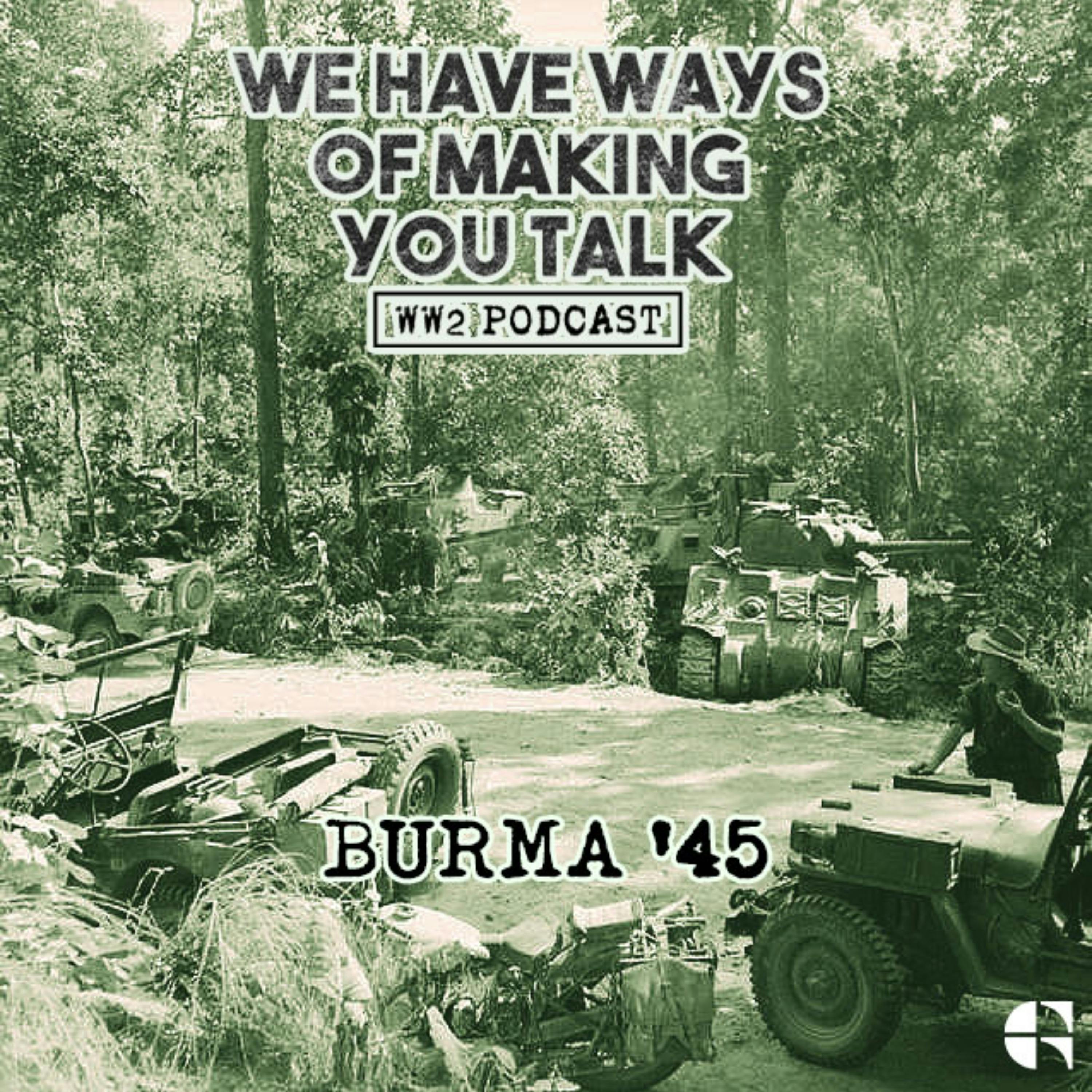
Loading summary
Transcript162 lines
- [00:02]
Al Murray
Thank you for listening to we have ways of making you talk. Sign up to our Patreon to receive bonus content, live streams and our weekly newsletter with money off books and museum visits as well. Plus early access to all live show tickets. That's patreon.com wehaveways.
- [00:24]
James Holland
She'S made up her mind to live pretty smart Learn to budget responsibly right from the start. She spends a little less, inputs more into savings Keeps her blood pressure low and credit score raises she's cutting debt right out of her life. She tracks her cash flow on a spreadsheet at night Boring money moves make kind of lame songs but they sound.
- [00:50]
Al Murray
Pretty sweet to your wallet.
- [00:52]
James Holland
Brilliantly boring since 1865, the summer is heating up with Marvel Studios the Fantastic Four.
- [00:58]
Al Murray
Light em up Johnny Woo on July 25th. Time to save the planet. What's the plan?
- [01:05]
James Holland
Trust me, I hate that. Bad plan. Come on. Terrible. That's a stupid plan. Prepare for fantastic.
- [01:12]
Unknown
We will face this together as a family.
- [01:16]
James Holland
Marvel Studios The Fantastic Four First Steps Only Peters July 25, May PG13 Some material may be inappropriate for children under 13. Get tickets. Now.
- [01:25]
Unknown
You know that one friend who somehow knows everything about money? Yeah. Now imagine they live in your phone. Say hey to Experian, your big financial friend. It's the app that helps you check your FICO score, find ways to save, and basically feel like a financial genius.
- [01:41]
Al Murray
And guess what?
- [01:42]
Unknown
It's totally free. So go on, download the Experian app. Trust me, having a BFF like this is a total game changer.
- [02:01]
James Holland
We were first ashore and we negotiated the mangrove swamp, which wasn't easy. We got to the Paddy and we could see Ill170 in front of us. The Japs opened up on us, but we took the hill fairly easily. But halfway up, there was a young Burmese girl, about 17 or 18, and her baby, a few months old, lying in a pool of blood, her stomach torn open. I thought, was it our shelling of the hill that did that? Was it when we were attacking or when the Japs mortared us? And it occurred to me that it didn't matter very much. She was in her homeland and. And here were two foreign powers fighting each other. And she and her baby had died because of that. And that was Private Victor Ralph of 4 Troop 1 Commando.
- [02:39]
Al Murray
Well, welcome to we have ways of making you talk. Our series on Burma part two. And Jim, in the last episode at Burma 45, I just want to point out in the last episode, we talked an awful lot about Burma 44.
- [02:50]
James Holland
Yeah, we're now very much in 45.
- [02:51]
Al Murray
But you can't do 45 without 44. So we set the scene and we offered the possibility that we would be going to the Arakan and that's where we find ourselves now.
- [03:01]
James Holland
We do with that rather disturbing image. But of course, you know, Burma is a highly populated nation. Yeah. Particularly in, you know, some of these eras in which the fighting's taking place. Yeah. And of course, as we know, the Second World War, you know, it was the civilians that suffered the most. Yeah. And the other thing that I think is really, really interesting about the Allied forces in Burma in 14th army and in 15 Corps who were doing the fighting in the Arakan is, is a sort of, you know, multinational nature of it. And actually, I think we'd be interesting to begin this second episode with the story of Havildar Umrayo Singh, who is an Indian soldier. And on the night of the 15th of December 1944, he's in the Caladan Valley where the 81st West African Division are pushing south. And the Caladan is east of the admin box that we discussed in Burma 44 last year. So it's a little way inland from the Arakan coast, sort of, you know, 15, 20 miles as a crow flies, that kind of stuff. Amrayo Singh at this time, he's 24, he's from the Punjab and he's joined the Indian army back in 1939.
- [04:04]
Al Murray
So he's a professional soldier.
- [04:05]
James Holland
He's a professional soldier in the pre war Indian army. That's very much the area where the Punjabis and the Pathans and all this sort of stuff, and Sikhs, of course, this is the kind of absolute beating heart of old school interwar Indian Army. But he's done well and he's now a sergeant, so a Havildar. And he's in the 33rd Mountain Battery of the 30th Mountain Regiment, Indian Artillery. And he's attached to. His unit, is attached to the 8th 81st West African Division. So Singh has volunteered to take two Mountain Howitzers forward to an advanced position on a jungle clad hill overlooking the River Caledon to support the 8th Gold Coast Regiment. So how international do you want it?
- [04:44]
Al Murray
I mean, this is really illustrates that this is a war of empires, the British Empire versus the Japanese Empire. And the British are using elements from all over the Empire to do it. While in Northwest Europe, the British army is recognizably the British Army. This is a British Imperial force.
- [04:59]
James Holland
Yes.
- [04:59]
Al Murray
Yeah. So this with all those things that implies. So people who are essentially people who are mercenaries. People who couldn't locate Great Britain on a map if they had to. People from parts of Africa where. How do you recruit Africans to fight in Burma? Well, God alone knows, but they've done it. And then how do you motivate them and how do you equip them? How do you train them? All the problems that flow from that language. Language questions. You know, in the last episode we looked, that fellow was doing everything in Hindi and he was the only person who could speak English, so he had to operate the radio.
- [05:23]
James Holland
Yes, yes, yes. John Shipster.
- [05:25]
Al Murray
John Shipster. So this is the interesting texture of it. The British Empire's fighting like this was. The Japanese have a complete inability, really, Or a problem with accommodating people from the land.
- [05:34]
James Holland
Totally. They have a total inability. Well, they can use them as slave.
- [05:37]
Al Murray
Labor, but there's the ina, who they.
- [05:41]
James Holland
Treat in rather the same way that the Germans treat their allies.
- [05:44]
Al Murray
It's fascinating that you have this completely, you know, multifaceted army and operating at the highest level, because the thing about, and this is, post Chindit, there are outfits that are being supplied in the jungle by air in a way that Lord Wingate could only sort of dream of, really, with an efficiency and a battle efficiency and able to maintain critical mass in the combat situation in a way that he actually was unable to pull off because things have caught up with where they're trying to execute things.
- [06:09]
James Holland
So he's moving forward with these two guns. So he's got like a half troop of these 75 millimeter kind of mountain howitzers.
- [06:16]
Al Murray
Well, that's the little pack howitzer that the airborne people use. Which is a mountain gun. Yeah, exactly.
- [06:20]
James Holland
So it's exactly the same thing.
- [06:21]
Al Murray
You break it down into its parts and the mules carry the parts for you.
- [06:24]
James Holland
So he's volunteered to do this. You know, the infantry are pushing forward on this hill. They need a little bit of faster bore. Off you go. So he goes and does this. But getting there is really difficult. It's incredibly, incredibly dense. And he says, you know, it was very difficult terrain. The bamboo was so thick you couldn't actually see anyone. And eventually they set up their guns. They no sooner have they done so than they come under heavy artillery fire from the Japanese 74 millimeter guns, so equivalent of their own. And after an hour and a half of this, they're then attacked by two companies of Japanese infantry. And most of the infantry around them are either the Gold coast guys are either killed in action or run away or Fall back or whatever, but his troop, gun crews on these two on his half troop stay with him. And they keep firing the hiatus straight at the attacking enemy infantry. And Singh is wounded twice by grenade splinters in this action, but they beat off the first attack and this gives them a brief respite. But the situation is obviously pretty critical. They're isolated on this bamboo jungle clad hill. You know, they've obviously got a bit of visibility now. They can see the enemy coming towards them. The infantry's gone. A number of his men have been killed and wounded and they're very isolated and out of ammunition. So the inevitable second attack comes in and he says, you know, we suddenly found ourselves surrounded. So I told my troop to withdraw. They said they wouldn't go without me, so I started to withdraw with them. Suddenly I thought to myself, a gunner never leaves his gun. So I went back again and started firing at the enemy with his Bren gun, which was all. I had this sent on for five hours, firing when someone came within five yards of me. And eventually he runs out of Bren ammunition too, but continues to attack the Japanese as they close with a claw hammer. And he kills three of them this way before being knocked down. But just at this moment, Allied aircraft flow over and sort of strafe the whole area and the Japanese kind of fall backwards. But when the infantry then retake this position, they find him there by his gun, lying prostrate on the ground, but still alive. And so he's rescued, you know, six hours later, and he's discovered with seven wounds and 10 dead Japanese around him and his gun still in working order. So he's then whisked off to hospital. And while he's recovering, he's told he's won a vc, but he's never heard of this, hasn't got the faintest idea what it was. Amazing. And then told it's for bravery. And he says, I thought to myself, I don't know what bravery is. I joined the artillery to fight. And I thought that was just my job.
- [08:39]
Al Murray
Well, I mean, as an encapsulation of what the fighting's like, what the stakes are, what's motivating people. I joined to fight.
- [08:46]
James Holland
But the thing that strikes me over and over again, and particularly with this story of the Arakan, is this is an area which is seriously remote. This is absolutely the back ass of nowhere. This is small, little villages, you know, bamboo huts and the like. You know, this is incredibly difficult to get to. It's an absolute labyrinth of little rivers, mangrove swamps shape Shifting over the years. So you, you look at your Google Earth map and the kind of the rivers compared to the 1945 maps are kind of approximate, but quite often quite changed. This is coastal area. Then you've got hills and jungle clad hills. You know, this is incredibly difficult to get to. There are no asphalted roads or anything like that. This is just sort of dirt tracks and little watercourses and everything happens by sea, you know, from little vessels and boats and little rafts and, you know, and all the rest of it. And what a place to be fighting and what a place to potentially have to give up your life. Yeah, sort of festering, kind of malaria.
- [09:44]
Al Murray
Ridden from all over the British Empire.
- [09:47]
James Holland
It's extraordinary, absolutely extraordinary. But I think we need a little bit of a sit rep, don't we?
- [09:52]
Al Murray
A situation report, the end of 1944. So we have promised you 1945 and trust me, so 14th army has pursued Japanese 15th army across Burma. It's been costly. So Stopford's 33 Corps have led the pursuit up to Tidim, taken on the 6th of October and then on to Kalemyo. This is hard going. Casualties from July to November amount to 80%. 5th Indian Division have only had 88 killed in action, 293 wound in action, 22 missing. But all the rest is illness. And we talked about malaria in the last episode. And Slim himself, having caught malaria, having broken his own rule about bathing after dark. Total casualties in 33 corps, 4 corps are 50,300. But 47,000 of this is disease, is people getting sick. 20,000 of those malaria cases. But it's everything else, though. It's chiggers, it's gonorrhea, which you can, you know, which is in the jungle. It's bad. Bad stuff is absolutely everywhere. Yeah, and jungle sores we talked about, you know, which can go bad very easily. Slim knows that he's got to stay ahead of the disease.
- [10:50]
James Holland
And actually they do. They really, really crack malaria by the spring of 1945. But that in December 1944 is still sort of in the future. And it's absolutely clear that there's a slight pause is needed. You know, they've got across Burma, they've got across the Burmese border. And he also knows that, you know, he now needs to retrain them because once they're across the mighty River Chindwin, Dust bowl, flat area between the Chindwin and the Irrawaddy, which is the main populated corridor of Burma, it's very different terrain and that requires a very different type of fighting. It's an all arms combined, mobile warfare kind of fighting. And that needs training. Plus, you know, they need training in river crossings. And it's not just any old river crossing. These are, you know, the Chindwin's like a mile, Irrawaddy's four miles.
- [11:35]
Al Murray
It makes a Rhine look piffling.
- [11:37]
James Holland
Yes. Like an absolute piece of cake. Yeah. But he's also not, you know, slim is very anxious not to lose the initiative. So he tells General Gifford, who's up until November, is still in position as 11th Army Group Commander. The capital could start as early as November 15, 1944, but only with the help from air transports to resupply the leading units. And that's all in hand. And leading the way down into Burma has been fifth Indian Division, which I think, if I remember rightly, has been going down the tidim Road, and 11 East African Division, again, another Imperial Force unit, which has been going down the Tamu Road, which is to the sort of southeast of Imphar. On 13 November, both divisions join hands in Burma, which is a kind of, you know, it's a big moment. So the northern town of Kahlua and Cabor in the Cabor Valley is taken on the 2nd of December. So these are towns, little, you know, you call them towns, but they're kind of sort of shanty towns. They're not a town as in it's not Layton.
- [12:31]
Al Murray
It's not Leighton Buzzard.
- [12:32]
James Holland
No, it's not Leighton Buzzard. I think that's a fair way to say it. And these are in the north. These are sort of, you know, chin hills, countryside, little rivers, chongs all over the place. And they're running down from those h, down to the flat plain around the Chindwin, and then there's a further plain beyond that which leads to the Irrawaddy. So you're still in the hills at this point?
- [12:51]
Al Murray
Yeah, I mean, it's not unlike looking at a leaf really, is it? With the river as what's left of the stem and everything running down to it. It's all very, very extreme landscape, isn't it? So by 10 December, Sappers have erected the world's largest bailey bridge.
- [13:05]
James Holland
I mean, that's quite something, isn't it?
- [13:07]
Al Murray
Yeah, for the time. Across The Chindwin, it's 1,154ft long.
- [13:11]
James Holland
Yeah. So what's that? That's like 300 and something meters.
- [13:14]
Al Murray
That's incredible. Yeah, yeah.
- [13:17]
James Holland
A 300 meter Bailey bridge.
- [13:19]
Al Murray
Yeah, yeah, yeah, yeah, yeah. Well, and you've had to get it there. Always the thing to remember with Bailey bridges is how many trucks does that take, how many moving, how many parts does that involved?
- [13:27]
James Holland
It's mind boggling.
- [13:29]
Al Murray
Yeah, but it means they've got a cross.
- [13:31]
James Holland
So that Bailey bridge. But anyway, shipped there to Calcutta, then it's put on a train, has to go all along the train, then it has to be shipped across Obamaputra river, then onto a different gauged, narrower gauge railway, then taken down to Dimapore, then transferred onto trucks and taken down from Dimap, Kahima, Imphal and down. And that's about 300 and something miles. So that means that the Japanese are in this, in the Shwebo plain. There's a little town of Shwebo in the north there. And this is that stretch of land, this dusty land of pagodas and low lying areas and paddy fields and all the rest of it's dusty, it's not forested. There are trees, of course, but it's not jungle, it's not hills. And this is where he wants them. What he's hoping to do is force a single battle on the northwestern side of the Irrawaddy. He's assuming that the General Kimura, who's taken over as a Burma armor commander, will want to fight that side of the Irrawaddy, cause to do otherwise is too dangerous. Yeah, that's what he's banking on. It doesn't quite turn out as planned and we'll get to that. But a second operation is taking place in Burma, and one that is considered to be very, very important for the outcome of Slim's 14th army effort with his II Corps, 4th Corps and 33 Corps in the Cerebeau plane or wherever it's going to be. And Gifford has earlier suggested to slim that 15 Corps be taken away from his responsibility. And actually this makes sense. And Slim is completely happy with this because Arakan is separated, you know, it's quite a stretch from this central bit. And what you've got between this central narrow corridor, which, if you think of Burma, sort of long, sort of, you know, fairly long and thin, it runs basically from the kind of northeast down towards the southwest. So it's a sort of slight angle. And that's the sort of big, flat central area, then you've got hills and ridges again, running in a kind of roughly north, south direction, interspersed with rivers which are also running in a kind of roughly north, south direction. And then you've got the coastal bit of the Arakan, which is this sort of area of Chong. These river, these absolute networks or delta of river outlets and mangrove swamps and all the rest of it. So it's quite a stretch away from the central bit. And so logistically trying to command what's going on in the Arakan and be fully focused of what's going on in the central bit, which after all is the main event, is asking quite a lot, in the same way that it was asking quite a lot to Mark Clark to be commanding Anzio at the same time as the Gustav Line. But there you're talking about a difference of kind of 30, 40 miles here, you're talking about hundreds of miles and you're talking about jungle clad ridges and rivers in between. So it makes perfect sense.
- [15:58]
Al Murray
Well, and also the experience in the Arakan is that it's a thing in itself as a battlefront and the British have experienced one disaster there. So they want to be making sure they're getting this absolutely right and they want to be on balance for it basically, rather than off balance, because if they try and pull the two things off as a combined, as a single operation, it's not going to work. The thing to remember is that the bloody nose that's been sustained in the Arakan previously under Noel Irwin is something no one wants to repeat.
- [16:24]
James Holland
No, absolutely. But they've got someone of different caliber here now. He's Philip Christison, he's really good. And actually, funny enough, last week I was up in Melrose at the Borders Book Festival, which is a brilliant event. And while I was there, someone stood up in the audience and said, did you know that Philip Christensen is buried here in Melrose? So I went, okay, fine. So Ned, Daisy, they were with me. Guess where we're going. We didn't find his grave, but we did find a plaque in the church too. Anyway, so that's where Philip Christison bent out his A's. He was a very keen member of that particular parish church and used to sing in the choir. And he lived to a. So he's in charge there. And the key is to get three islands, one all fairly large islands, Aqiab, Ramree and Cheduba. And these are all just off the Arakan coast. And the idea is to drive down in a double pincer movement. So you've got 81st West African Division going down the Caledan Valley, which is sort of roughly running north, south, and that's about. I mean, it's hard sometimes to say where the land ends and the coast begins, but if you sort of think 15, 20 miles inland, as a crow flies, that's sort of roughly what you're talking about going down the only kind of sort of main sort of jeep track there is, which is connecting the kind of sort of north to the south part of Arakan. Meanwhile, a series of amphibious operations are going to be taking place at the same time. So this is very much a sort of anvil and hammer kind of idea. So the idea is you do these amphibious operations get behind the Japanese, the 81st, 2nd are coming from, and then subsequently the 82nd West African division, these two West African divisions are coming down from the north, so they're the hammer. And then these amphibious operations allow for little blocking positions, so the Japanese got nowhere to retreat to. It's island hawking, leapfrogging, all this kind of stuff. But the key thing about these islands is they've either got an airfield, which Aqab has, or they've got the possibility to have airfields. And that's a game changer because it means instead of going all the way up to the Brahmaputra and Dimapore, you can go by ship from the Bay of Bengal or fly it from the Bay of Bengal, from Calcutta, straight across that open bit of sea land at Akyab, and then from there it's a hop and a skip across the hills to get to that central area and support the main thrust of 14th Army.
- [18:28]
Al Murray
Which tidies up your logistic situation. Right, Having to do everything by parachute, which is how they've been subsisting up to this point.
- [18:35]
James Holland
Yeah, exactly. And what it means is you've got multiple sources of routes for your air power, and also means then you've got more room because you've got more airfields. So this is seen as absolutely key to the success of any future operation in the Central Plains.
- [18:51]
Al Murray
Right. Now, we talked about the Burmese caught in the crossfire. We haven't talked about the Burmese really much. Where do they fit into this picture?
- [18:59]
James Holland
What's really interesting is the area of the Arakan as it is to this day, the Rohingya tend to be Muslim Burmese who have emigrated south from what is now Bangladesh. So from Chittagong, Cox's Bazaar, all those kind of places. So they moved down in there. And the British have used these muscle men, as they call them, very, very effectively in the back end of 1943 and into 1944. This is the V Force that we talked about a bit in the last series in Burma. 44 but on paper, the rest of Burma has been behind the Japanese because they want to get rid of the British. But of course, the Japanese have talked loftily about sort of a Greater Asian Co Prosperity Sphere as a sort of anti Western, anti imperial concept where they're all going to be sort of Southeast Asian brothers together.
- [19:45]
Al Murray
Yeah.
- [19:45]
James Holland
But of course, the reality is that Imperial Japan is significantly more cruel than the British and much worse. And so they haven't really harnessed the Burmese very effectively. There are people, you know, Burmese people who are supporting the Japanese on paper, but this is absolutely flittering away as they realize that the Japanese are increasingly beaten here.
- [20:04]
Al Murray
Yeah.
- [20:05]
James Holland
They're kind of thinking, well, maybe the British weren't quite so bad compared to this mob. And, you know, maybe if we support them then they'll be more open to giving us our independence later. In the same way that the kind of Free India campaign has been taking root.
- [20:18]
Al Murray
And it's not unlike people in Ukraine looking one way and then the other when the Germans first arrive. And it's not unlike lots of people in France. I mean, it's as standard a reaction to, you know, the new power shows up and offers you stuff. While the British looked beaten in 1942 in Burma, no two ways about it. So you've got to pick a side, haven't you?
- [20:37]
James Holland
Yeah, but the sham of sort of Burmese independence has really been made absolutely clear. I mean, most of the people working on the Thai Burma Railway are not British and Australians and so on. It's actually been Burmese and Filipinos and other people that have been brought in other prisoners of war. I mean, you know, Malayans and Singaporeans and they've been treated absolutely appallingly, in fact, actually even worse than the white imperialists. So they've had a terrible time and they don't want to return to the British Empire, but they don't want the Japanese either, who are even worse. So back in 1942, there's a Burmese politician called Thakin Tay P Mint. He's crossed into India to ask for British help and he says, you know, we hated the English but disliked and mistrusted the Japanese even more. Burmese irregulars are now increasingly helping the British. You know, they've got the V Force, which, you know, we mentioned a minute ago, made of the Burmese mizzlers, but also the Karens and the Chins up in the northern part have been absolutely invaluable, as were the Nagas at Kahima.
- [21:35]
Al Murray
SOE are super involved in Burma.
- [21:37]
James Holland
Yes. And they're just better are dealing with this, not least, of course, because they've had long years of operating in Burma. They speak the lingo and they know how to deal with these people, understand the culture. So they, you know, they know how to kind of treat them a bit better and tell them things that they want to hear.
- [21:49]
Al Murray
Yes. Grisly stories of people with heads in bags showing up, having, you know, Japanese heads in bags. And also, I mean, the mood in. I don't think anyone's saying it out loud by this point, that basically once the Japanese are gone, the British will leave. There is essentially that that's the sort of the plum that's being. The political plum that's being dangled for. For Burmese people, isn't it? As we get past this and then, believe us, we'll go.
- [22:11]
James Holland
Well, that is certainly what the SOE types are saying.
- [22:14]
Al Murray
Yeah, exactly.
- [22:15]
James Holland
That's what they're saying to him. But there is consternation a bit at the Civil Affairs Bureau, Burma, which was the kind of pre war British government or the means of government which has debunked to Simla up in the hills and is headed by Sir Reginald Dorman Smith, who was the pre war governor of Burma. And if ever you wanted a kind of interwar British Empire type, it's him.
- [22:35]
Al Murray
The point is, is they need the help of the Burmese. So SOE are going to make some promises. They may exceed their bounds and they've been doing that in France anyway. You know, this is how you get people on side. You say, after the war everything will be rosy.
- [22:48]
James Holland
One of the people that was dropped in was Tom Carew, who's a sort of Irish Englishman in SOE who was dropped into France with the Jebras and then came back and then was sent into Burma. And he's the guy that turns Aung San, Aung San SUU Kyi's father and who was, you know, very anti British and fighting on the side of the Japanese. And he comes in and he's absolutely all for it. You know, he's very anti imperialist, sort of intellectual Irish, kind of gung ho warrior in the jungle type with his straggly beard and floppy hat and all the rest of it.
- [23:19]
Al Murray
So I think we've pretty much set the scene. As you said. 81st West African Division is leading the march down the Caledan.
- [23:26]
James Holland
Yes, we should just say that it's Force 136 is the name of SOE in Burma.
- [23:31]
Al Murray
They're commanded by Major General Frederick Loftus Tottenham.
- [23:34]
James Holland
Yes.
- [23:34]
Al Murray
Who took over in August of 44 and it's short of NCOs. There's no British reinforcement, so he promotes Africans because he's got to keep his show on the road hasn't got time to wait. And he's told that the beginning of October, first of October they're going to be supplied entirely by air. And that underlines how much you need these airfields. And they're advancing, they're going to advance in bounds infantry supported by hand carried the little 3 inch mortar. And they take Madok on the 18th of October the clear of the Japanese. And by the end of the month three columns are pushing back the Japanese outposts. By the beginning of December they're pulling up parallel inland, but parallel with Aqyab, this key objective.
- [24:11]
James Holland
And that's really the jump off point for this renewal renewed campaign. So this is just sort of preliminary pushing, getting rid of outposts, sort of establishing the battle lines to come. I mean the Japanese know perfectly well that Akab is what they want. And indeed Ramri and Cheduba.
- [24:25]
Al Murray
Yeah, it's obvious, isn't it? There's this extraordinary diary found on the Japanese soldier who says the enemy soldiers are not from Britain but from Africa. Because of their belief they are not afraid to die. So even if their comrades are fallen, they keep advancing as if nothing happened. They have excellent physique and are very brave. So fighting against these soldiers is somewhat troublesome and we've touched on it. How racism characterizes a great deal of the Japanese approach the people around them. God knows what it must have been like for them losing to Indian and African soldiers, what that must do to their worldview, like having it shattered in front of them. But there's a pause in December.
- [24:58]
James Holland
Yeah, I love this story and obviously I was going to put it in.
- [25:00]
Al Murray
Of course you were going to put it in.
- [25:01]
James Holland
Of course I was going to put it in. So Lieutenant Colonel Ceb Walwin of the 4th Nigeria Regiment challenges Lieutenant Colonel Philip von Straubensee. Sounds a bit dodged. Or the 1st Sierra Leone even regiment to a cricket match in a clearing in the jungle as 81st West African Division are pausing and Straubenzee's 11 make 157 for seven wickets thanks to a fine 88 by Lt. L.C. smith. And then they bowl out Whirlwind's 1109 to win by 48 runs. And literally no sooner have they done this, stumps are drawn in the evening and the Japanese then counterattack. I mean, God, and there's a series of Japanese counterattacks at this time, you know, mid December. And this is when Umreo's Singh wins his vc. But interestingly it's not the only one either because Sepoy Bandari ram of the 16th 10th Baluk Regiment also won't a VC at the office converted commons, which is, you know, a series of Japanese tunnels. I mean, it's such a feature, isn't it, this sort of network of tunnels, you know, whether it be Iwo Jima, the Arakan or Okinawa or whatever. But Bandari Rum attacks a bunker mouth despite multiple wounds, and he crawls within 15 yards and throws grenades into the embouchure of the bunker, killing the enemy and destroying the mg. I love the VC citation Smith, of his superhuman courage and determination. And I think that word superhuman is well used because it's the word that they all started to describe the Japanese in 1942, 43.
- [26:23]
Al Murray
I hope sincerely that he knows what a Victoria Cross is. They're part of the 16th 10th Baluks are part of 51st Indian Brigade, which also includes 8th 19th Hyderabad Regiment, which is commanded by Lt. Col. KS Timmy Timaya, who Phil Craig's book about the end of the war is about.
- [26:39]
James Holland
He features very heavily in that, very.
- [26:40]
Al Murray
Heavily in that, because he ends up a major player later on in Indian.
- [26:45]
James Holland
But that is the first Battalion in the Indian army to be commanded by an Indian and obviously is a sign of the substantial progress which is being made on this front.
- [26:54]
Al Murray
Well, and also the necessity of war is that you're churning, you're going to churn through officers, so you're just going to have to draw them from somewhere else. And if it's the Indian army, where else are you going to draw? You're going to have to draw them from India and that then feeds into what happens post war in India with the Indian army to be and so on.
- [27:10]
James Holland
And I think it's important that, you know this is going on, that, you know, One portion of 15th Corps is going down the coast, another's going down inland. You know, the West Africans, Italians are leapfrogging one another so that you go forward, you fight, you hold that bit of land, then the next one goes through you, goes on to the next hill or the next bit of valley or whatever, and so on and so forth. The pace is set not by the speed at which they can cover the ground, but the speed at which the sappers can operate because, you know, obviously they've got to do bridging, they've got to do clear roads, they've got to clear bits of jungle. You know, this is a war of engineers as much as it is anything else. You said that about Italy, but that is certainly the case here in the Arakan and all the way by now, because the monsoon is over, the skies are clear or much clearer, which means you can bring to bear your superiority in air power, massive superiority in air power by this stage, by the way. And that means that the RAF and the usaaf, you know, are now using bullets, cannon shells, bombs and of course, napalm as well to support these operations and hammer the Japanese deep into their supply lines. But also at the front as well, you know, for example, on the 21st, 22nd of December, the 6th Battalion of the Ox and Bucks, that's another of those sort of DL style regiments that seems to get absolutely everywhere, makes a night march of over 20 miles. I mean, that's extraordinary in these conditions. Heck of a pace. That's a hell of a pace. And it sees his donbike, which is at the very end of the spur north of Yakyab and at the mouth of the Mayu River. And when they enter the village, they find remains of Valentine tanks from two years earlier. And for those who were listening to our Burma 44 series and the battle of the admin box, you may remember the Mayu Range and the Mayou River. So you've got the coast, the Mayu R, the Mayu Range of hills through which the Neaq Yida Pass wove its way through to get to the admin box. This area beyond that, north, south ridgeline. So this is the mouth of the Mayu river and it comes down to a very sharp. It's like a sort of incisor tooth, like the very tip of a sword or something. And that's just to the north of Akyap.
- [29:09]
Al Murray
These valentines are from the fighting in the Arakan the first time around, where they've been well, but delivered in penny packets and not used with effective enough force for bunker busting. We'll take a quick break while contemplating the relics of previous failures. And we'll back with the chong war.
- [29:26]
Unknown
On WhatsApp, no one can see or hear your personal messages. Whether it's a voice call message or sending a password to WhatsApp, it's all just this. So whether you're sharing the streaming password in the family chat or trading those late night voice messages that could basically become a podcast, your personal messages stay between you, your friends and your family. No one else, not even us. WhatsApp message privately with everyone at New Balance, we believe if you run, you're a runner, however you choose to do it. Because when you're not worried about doing things the right way, you're free to Discover your your way. And that's what running is all about. Run your way@newbalance.com Running Ryan Reynolds here from Mint Mobile.
- [30:26]
James Holland
With the price of just about everything going up, we thought we'd bring our prices down. So to help us we brought in a reverse auctioneer which is apparently a.
- [30:34]
Al Murray
Thing Mint Mobile Unlimited Premium wireless everybody get 30, 30 better get 30, better get 202020 get 2020 better get 15151515 just 15 bucks a month.
- [30:43]
James Holland
So give it a try@mintmobile.com Switch upfront.
- [30:47]
Unknown
Payment of $45 for a 3 month plan equivalent to 15 per month required new customer offer for first 3 months only speed slow after 35 gigabytes of network sp z taxes and fees extra see mintmobile.com.
- [31:00]
Al Murray
Welcome back to we have Ways of make youe Talk with me Al Murray and James Holland. We're in the thick of it in Burma here with the basically two coordinated and coordinating thrusts to take out this stretch of the sort of fronds but.
- [31:12]
James Holland
Just unspeakably difficult difficult area in which to operate. It's difficult for the Japanese as well to be fair, which is after all.
- [31:18]
Al Murray
The conditions are militate against everybody.
- [31:21]
James Holland
And what I think is really, really interesting is what you see by kind of the very end of 1944, beginning of 1945 is this new professionalism within Southeast Asia Command, greater cooperation between air, land and sea. You've got huge sophistication in the use of ground controllers, radar for your air forces, all this sort of stuff. But you've also got unbelievable kind of make do and mend on the hoop Jewish parachutes.
- [31:44]
Al Murray
You can't get silk parachutes so they make them out of ju. By the way, in the break I looked up the bridge over the Chindwin, it's single carriageway, sigh of logistic relief.
- [31:52]
James Holland
But also the you know, classic case I think of the kind of make do and mend mentality is the Inland Water Transport Group which is set up in just sort of classic British Burma on the hoof manner, you know. This is commanded by Lieutenant Colonel Alistair McCree who's formerly a pre war Irrawaddy flotilla company captain but now in the Royal Engineers. And Chittagong is McCrae's headquarters but but he runs a bevy of coastal lighters, steamers, river craft rafts and so on. So the Royal Navy's coastal force are hammering any Japanese vessels they can. Hundreds of Japanese vessels are destroyed by the Royal Navy because there's no Imperial Japanese Navy there at all worth talking about. So they are destroying and denying the enemy their ability to resupply, but also ensuring they can support their own groups. And McCrae and his Marine staff officer, who's Captain Stuart Knowles, who's formerly a Hooli river pilot, you know, operating out of Calcutta on the other side of the Bay of Bengal, you know, they using locally built landing craft maintenance vessels which have the grand acronym of lcms, which makes them. Sounds like they're sort of sophisticated, but they're not at all. Plus a further sort of 600 boats of various kinds. And it is absolutely not easy to navigate around here because everything's quite low lying at this point. And it's just, you see some land, it's jungle, and the river sort of disappears.
- [33:11]
Al Murray
Everything looks the same and everything looks.
- [33:13]
James Holland
The same and you know, it's incredibly difficult to navigate, but they kind of somehow manage. And that's why you need people like Alistair McCrae and Stuart Knowles, because these guys have been living this life for the last couple of decades before the war. And they're kind of, you know, they're old river salts. You know, they know how to manhandle a crocodile and how to kind of, you know, get through the mangrove swamp and, you know, negotiate the mud flats and all the rest of it. So you've now got this twin approach. You've got 26th Indian Division on the coast and you've got, you know, going down in leapfrogging, but with the inland water transport Group ferrying them around. And then you've got 81st West Africa Division which is then overtaken by the 82nd West Africa African Division. Don't get confused. You've also got the. Interestingly, you've got the Arakan Defense Force, which had been fighting for the Japanese. But on the 1st of January, they rise up and think, sod this for a game of whatever, kill all their Japanese instructors, go underground and become the Patriotic army of Burma instead. Huracan Division, and they join up with the West African divisions on the 4th of January and go, okay, well, we know where the Japanese are because we've just come from there.
- [34:20]
Al Murray
I mean, I've hedged some bets in my time, but that's an ultimate. I mean, as New Year's resolutions go, rising up, killing your Japanese instructors and.
- [34:27]
James Holland
Going helping the British, but at the same time calling yourself the Patriotic army of Burma tells you what they're kind of.
- [34:32]
Al Murray
Well, tells you what they've been told and what they're being enticed with as well, doesn't it? No doubt about it.
- [34:37]
James Holland
But also what they're intending, yeah, there's.
- [34:39]
Al Murray
A major operation planned for the Katrovaciab. Fans of the Royal Navy, we're growing in number on this podcast. Definitely HMS Queen Elizabeth, which is a battleship with 15 inch guns that have not been used since 1915. And that kind of character how a lot of this campaign's been done. Make do with what you got. Three cruisers, destroyers, gunships, etc. Air support from 10B, 25 Mitchells, five Liberator squadrons, lots and lots of air and 21 fighter squadrons. So tons and tons of air there.
- [35:05]
James Holland
That's 36 squadrons. Yeah.
- [35:06]
Al Murray
It's incredible, isn't it? And D Day is going to be the 18th of February, but they're getting.
- [35:11]
James Holland
Well ahead of themselves. They are massively ahead of that. So the 18th of February is what's sort of plotted in November, because you remember that Slim says he can start this whole operation on the 15th of November in the Arakan. Christensen has been moving down since October, but they're imagining because of the conditions, because it's the end of the monsoon. Even as they merge out of the monsoon in kind of sort of November ish, they're still expecting this to be incredibly difficult and slow and ponderous and lots of Japanese sort of getting in the way of their little bunkers and all the rest of it. But actually they're well ahead of schedule. Yeah, yeah, yeah. And so Operation Romulus, which is the whole Arakan offensive, is going way better. And so a new plan, Operation Lightning, which is very appropriate, has hastily planned for an attack on Akab on the 3rd of January. But before this, and this is just absolutely brilliant, a recce plane noticed that the locals are showing absolutely no anxiety whatsoever. So on the 2nd of January, they drop messages in Urdu and Burmese asking locals to sit on the ground if the island's still occupied or stand with their hands in the air if the enemy is gone. So basically every time you see an aircraft, wave your hands if the Japs have gone. And it's the latter. There's lots of Burmese people on Akiab waving every time the plane comes over. So Captain Jimm Jarrett of Sea Flight of 656 Air Observation Post Squadron, which is actually Army Air Corps, lands to a rousing reception the same day, 2nd of January, and discovers that the Japanese have actually quit on the 31st of December.
- [36:33]
Al Murray
Oh, so all those gun crews on HMS Queen Elizabeth, they're gun drill and for nothing.
- [36:38]
James Holland
Yeah. But they've been expecting an incredibly tough fight and it's a cakewalk. And not only is it a cakewalk because the 18th of February is the expected time of invasion followed by a kind of three week campaign, they're well ahead of the game. And this is a game changer because this means before, you know, Dave crossed it Irrawaddy or got into those central plains up in 14th army, you know, Slim's main event, they've already got AKAB and the airfield. So a beachhead is then seized by 42nd Royal Marine Commando with 44th Marine Commando following. Although they land too far out, straight into thick mud, just sort of underlying that. You've got two enemies here, one's the Japanese and one is just the kind of terrain and location and unknown hazards. There's an Australian journalist called Roy McKee, he's there to watch this and calls it a Sabu, which is a self adjusting balls up. Ek Yev was a wilderness. Trees grew inside wrecked buildings, vines covered roofs, signboards hung on rusty nails in empty streets. So there's a sort of sense of a sort of desolate place, sort of no one's been very interested in for the last few years.
- [37:38]
Al Murray
Sabu didn't catch on. Snafu has cleaned up on the.
- [37:42]
James Holland
I prefer Sabu. Do you? Sabu.
- [37:44]
Al Murray
Okay.
- [37:45]
James Holland
A self adjusting balls up. It doesn't sound American. It sounds very British.
- [37:49]
Al Murray
I think it does.
- [37:50]
James Holland
It's a self adjusting balls up.
- [37:51]
Al Murray
Much more Duke. So Chris, because he's ahead of schedule, he's got to figure out what to do next, can move quickly and they've got to keep their momentum up. They've got to outflank the enemy, block the enemy's line of retreat and set up their own blocking positions. So on the 6th of January the 9th Yorks and Lancasters move by boat to establish a block on the yo river, which is to the east of Akyab. And the Japanese are still there, Ponagun. But with the 4th 18th Royal Garwal Rifles, they clear the area and the Japanese pull back with. I mean they do what you're not meant to do, which is they try and retreat while engaged with the enemy, the Japanese and they get smashed up by the Garwal rifles. So then it's been going 82nd takeover on the 18th of January, so it's this permanent leapfrog moving.
- [38:35]
James Holland
If you're walking a dog, you can't do anything about it while you're listening to this. But if you are sat in front of your desk or whatever or you get a chance to have a look on Google Earth, I really would, you know, what you want to do is put in Akyab and you'll start to see exactly what we're talking about here. Because a lot of the names on Akyab are obviously in Burmese rather than in English, and it's quite hard to kind of follow what's going on. But, you know, I'm conscious there's a lot of Burmese names and they all sound unfamiliar, and it's very sort of hard to get a grip. It was, of course, very hard for people to get a grip of what was going on at the time as well. I mean, you know, this is really, really hard. Very, very difficult place to navigate to come manoeuvre around and about as remote as you could ever not want to be. Yeah.
- [39:14]
Al Murray
There's some quite peculiar characters involved in this, though, because 82nd West African Division, who've taken over from 81st, they're commanded by Major General Hugh Stockwell, who served in the Nigerians regiment in the 1930s. And he's sort of done a new broom thing and sacked the people who think it's useless. And he's brought an RSM with him, who's from the 3rd Nigerian Regiment, but who's a German and who fought for the Germans in West Africa during the First World War. Quite incredible, this, the stalker wrote.
- [39:40]
James Holland
He stayed with me as a personal RSM for a year and a half. He advised me on the Africans, and through him I could find out what they thought of their British officers. He was tremendous. Fine. You know, this is my point. You know, it takes all sorts. Whatever works. Whatever works.
- [39:55]
Al Murray
Now, we haven't mentioned Mountbatten in this episode so far. We talked about him an awful lot in the last one. What's he doing? Because if the situation's moving and changing fast, he's gonna have a say. So isn't he?
- [40:05]
James Holland
Yeah, yeah, yeah. So he conceives Operation Passport and issues instructions to Christensen to get on with this. And this is an idea. An amphibious assault by the 25th Infantry Division, which is taking over from the 26th and 3rd Commando Brigade behind the Japanese retreat on the Maibon river, which is near the town of Kangor. And Maibon, again, is kind of just sort of east of the lower half of Akyap on the sort of mainland, I suppose, but again, is sort of riven by lots of rivers and chongs and all the rest of it. And at the same time, the 26th Indian Division would be landed on the next major island, Ramree island, to stretch further south. So the idea is to try and smother The Japanese, so they have no idea where they're coming from. They're coming left, right and center, all over the place. And their information is that Cap Kangor is only lightly held. So passport is. Operation Passport is hurriedly planned and then launched on the 12th of January, which I think, you know, is impressive when you think about the men you've got to organize, the shipping, you've got to organize, you know, the McCrae's lot, the inland water transport people, you know, you've got to get them organized and supplies and ammunition and food and all the rest of it. And they pull it off. The Japanese have planted stakes on the beaches around the river mouth of the Maibon River. But Coppice, who are also there, remember them, combined operations, pilotage parties, they're on D day and in Sicily and so on, they're out here as well of the sbs, they plant delayed charges on these the night before so they're not alerting the enemy. And they all go off in the morning clearing paths. And it's all done, you know, fantastically efficiently. So The Commandos and 25th Infantry Division, or the leading elements of that manage to get ashore no problem at all. And with pretty light opposition, tanks and guns are also swiftly landed, as well as artillery from Zedcraft, which is another of these innovations. So these are, are LCMS with 25 pounders on.
- [41:52]
Al Murray
Amazing.
- [41:53]
James Holland
So four 25 pounders on these craft all just going boom, boom, boom. You've immediately got firepower because what they realize, there's one thing the Japanese, the Japanese can squirrel into hills and they've got swords and they've got machine guns and they've got a few little sort of mountain pack howitzers. But their firepower, their heavy firepower is absolutely minimal. So suddenly the tank and the offshore 25 pounder become absolutely invaluable, as does the 3 inch mortar, of course. But if you can outdo them in terms of firepower, you've got a much easier job for the infantry, which in this terr location is exactly what you want.
- [42:23]
Al Murray
But as they go inland, it gets more difficult, doesn't it? The commandos have a difficult time on Pagoda Hill and taking Maibon village. They push on though, and with tanks, if the other side haven't got tanks. Tanks are an absolutely fantastic asset.
- [42:35]
James Holland
Yes, because again, the Maibon river comes down as this little sort of narrow finger of a peninsula. So that's what they're doing. When we say pushing on, they're pushing up this little narrow.
- [42:45]
Al Murray
Hold your hand up in front of you and Space your fingers a little. It's that.
- [42:48]
James Holland
It's exactly like that. The zed craft can come up because they can go up the chong, up the river, the sort of you at saltwater river, and support them as they're moving up on land.262 is taken on the 17th of January. The Japanese Mount a series of counterattacks, but they're seen off. But the big fight is about to come. And this is for Hill 170 and Kangor, the town of, or rather village really. It's a village, let's not kid ourselves. And again, this is inland down another chong and you go around a corner and then it sort of goes roughly parallel to the coast and there's two more rivers coming into it. And in the middle of that is a sort of chunk of land. Land with these series of little low ridges on them. The first one runs across it. So again, if you, if you sort of, if you think of a sort of little rectangle, you've got the big chong at the bottom of the rectangle, the sort of the narrower bit. Then you've got roughly two parallel bits either side of it. And running across the width of the rectangle in this low sort of 700 yard, 900 yard long ridge line is hill 170. And of course the 170 is the height, but obviously they're on sea level. So 170 meters is not insignific, you know, to walls like, that's best for 500 foot.
- [43:57]
Al Murray
Yeah, I mean, we are talking a completely remote place. I mean, this is one of the strange things about a lot of this fighting is scrapping over places no one would ever think to go, least of all any of the people involved in the fighting. It's not, it's, it's not.
- [44:08]
James Holland
You can see it really, really clearly if you look online somehow. What we'll do is we'll try and find a sort of, I don't know, maybe give you a kind of Google Maps image of it or something, link to it.
- [44:19]
Al Murray
So what we'll do is we'll put up a Google Maps link when we get the chance. And it. And the plan is three commando brigade will land and secure hill 170. Then 51st Indian Brig Brigade will pass through and take Kangor itself. And they're given there's four days rest, there's a pause after Maibon, and then they attack on the 22nd of January. I mean, amazing this. They land at one o' clock in the afternoon and achieve complete tactical surprise.
- [44:40]
James Holland
Well, how could the Japanese possibly. Guess where they're going to land when you look at Google Earth. I mean, how can they possibly know?
- [44:46]
Al Murray
Yes, but it is broad daylight.
- [44:48]
James Holland
Yeah, I know, but even so, I mean, look at this. I mean, you can't see anyone coming because it's just a massive foliage and mangrove swamps and trees and all the rest of it. It's absolutely hopeless. Anyway, they land at 1pm but the Japanese are actually stronger in this neck of the woods than anticipated. And they begin a series of furious counter attacks against the commandos throughout the night that follows. So this is the night of the 22nd, 21st of January, and we talked.
- [45:15]
Al Murray
About this with Lucy Petrus Dyson.
- [45:17]
James Holland
We did, yeah.
- [45:17]
Al Murray
Whose grandfather was there. Exactly that and had been back. And the stories of the Japanese wearing berets and cream berets and stuff and fight very, very sort of, well, trying anything, basically. Trying absolutely anything to disrupt the commandos. I mean, 28 January, Timmy Timaya, who we talked about, his 8th 19th Hyderabads, they attempt to seize.
- [45:39]
James Holland
Well, yes, 51st Indian Infantry Brigade has landed, plus the 19th Lancer. So they've now got some Lees. You know, these are the sort of early model Shermans, before they become Shermans. Yeah, perfectly good in this terrain.
- [45:50]
Al Murray
Well, they're really, they're a great weapon, incredibly effective.
- [45:52]
James Holland
So this, this is really tough fighting. And there's a series of other hills beyond Dunhill. There's Milford, Pinner, Berwick, Melrose, you know, all with sort of classic kind of British Army, Indian army names. And, you know, this fighting continues over the best part of the next week and into February. But on the 3am, on the 28th of January, the aforementioned Colonel Timmy Timaeus, 8th 19th Hyderabads attempt to seize Dun Hill. But they meet heavy opposition. 19 killed in action, 61 wounded. But with then the subsequent support of the 16th, 10th Baluk, they did secure the Kangor Hills, Milford, Pinner and Berwick. And they get a foothold on Melrose, which is to the east of Cangor, and they think they've captured it, but of course it's one of these false crests. And the Japanese do a furious counterattack, push them off again. And that day, the 28th of January, the Japanese artillery fire 800 shells into the bridgehead, which is the heaviest concentration fired by the Japanese artillery in one one place in the entire Burma campaign. Which actually tells you everything you need to know about how poorly supplied the Japanese are. You know, you think about the 196,000 rounds that are fired on Casino Town. Yeah, yeah, yeah. You know, 16th of March or whatever it was, 1944. I mean this is obviously absolutely child's play but you know, one has to appreciate that you can only fit as many people as you can into a very small area. And this is, this is very constrained tight area where you simply can't, no one can have a huge number of troops because there isn't the space or the wherewithal or the logistics to support any more than that. You have to see it in the context of where they're fighting, I think. So what is absolutely clear now is yes, they've got ashore on this little tiny kind of isolated corner of the Arakan, you know, comparatively safely. But in the days that follow, the Japanese resistance has stiffened. And this is very much like the fighting in the admin box. It's trying to hold the little bits of high ground in amongst the sort of paddy fields and low ground and villages below. And this is already turning into a slogging match. You know, here we are, you know, they landed on the 22nd and now it's the 28th. So six days have gone, there's need for a pause, orders. So they hold the ground that they've got, but the Japanese are kind of fighting back. It's also, it's all very sort of bitty and all over the place. The second second Punjabis are then ordered to secure Melrose Hill which is where Timmy Tamaya's 88th 19th Hyderabads have been trying to take. And for the 16th 10th Baluk to take Kangor village. But the Punjabis are attacking behind a smokescreen. But the last 50ft to the crest involves a mad charge up the slope culminating in bitter hand to hand fighting. In the battalion report it says the Jap asked for no quarter and gave none. And in this desperate struggle it must be said they fought magnificently, you know, so there is this absolute sort of do or die kind of scenario. And again, you know, you just think about how remote they are with these people trying to sort of kill each other, no quarter given. It's absolutely extraordinary. And after this, a hundred dead Japanese are found strewn all over the hill and the Balucs themselves suffer 80 casualties, although fortunately most of them are wounded rather than killed. Lt. Col. S.P. thorett, the commanding officer of the Punjabi says the battle of Melrose was an acid test of our caliber. We fought the Jap on equal terms with the odds, perhaps in his favor. And we beat him and beat him we shall whenever we come to grips. And again you get this sense of this sort of, this shift. They're no longer beatable. The Japanese, you know, we're not only their equal, we're their better. And improving morale despite the kind of difficulties of the environment and which. Well, because they find themselves.
- [49:20]
Al Murray
Well, if you're winning, if you're winning and you're beating this enemy who you thought was going to make you feel good. I mean, it is very, very interesting this, though, isn't it? Because it, it demonstrates this big shift. The Japanese have decided to give no quarter and ask for none. That means you've got to.
- [49:35]
James Holland
Yeah, you've got to do the same.
- [49:37]
Al Murray
You've got to steal yourself to that task. And when you consider this is a. You know, again, the Indian army is.
- [49:42]
James Holland
A volunteer army and your enemies are ones that aren't going to surrender or hold together.
- [49:46]
Al Murray
So you're just going to have to grasp the nettle this way. And, yes, the Allies have more firepower at their disposal, but you've still got to winkle the bastard out.
- [49:54]
James Holland
Yes. And I think there's a sense from the Japanese point of view that, okay, they've lost Akyab, but Ramri and Cherduba are also in danger, and also they're in danger of being cut off from behind because They've got the 82nd West African Division bearing down on them from the north. They're faced with being encircled suddenly. So the best way to rectify the situation, they think, is to recapture Hill 170, split the Allied bridgehead around Cangor, defeat that, and then they can easily, more easily, withdraw further south before the West Africans reach them. So this is why Hill170 turns into this terrible slogging match, because suddenly they launch a heavy Bombardment again on the 31st of January. And then they launched 154th Infantry Regiment in one of the most desperate counter attacks of the entire Burma campaign. And nothing has changed with the Japanese. You know, when confronted with a problem, they just go for it. The banzai charge, the swords being wheeled, you know, shooting from the hip, screaming as they come through the jungle, you know, and it's to terrify your enemy, overwhelm them by the speed of which you're running through the jungle. But it's also obviously incredibly costly. And they also send forward engineer assault parties on the sly ahead of the infantry assault to try and neutralize the Allied tanks. So an engineer assault party blows off the tracks of one Sherman, sets fire to a second, but a third Sherman tank remains unharmed, and with supporting platoon of the 2nd 4th Bomb Bay Grenadiers destroys the Japanese assault party. Which means kills a whole lot of them. Them. And then there is the famous VC action, which is Lieutenant George Noland of first Commando winning his VC at the cost of his life, it has to be said, on Hill 170.
- [51:25]
Al Murray
And this is, I mean, again, superhuman. Yeah, yeah.
- [51:28]
James Holland
It's absolutely astonishing.
- [51:29]
Al Murray
So he has 24 guys and they're being attacked by 300 enemy soldiers. He's doing what infantry subalterns do. He's moving around between his men, he's distributing ammunition, he's making sure their positions are okay. He's contributing with rifle fire, he's to trying throwing grenades at the enemy. He's leading, he's showing the way. This is incredibly dangerous. So when one of the Bren gunners is positioned forward, is wounded, he rushes forward to man it himself. These ranges, the enemy's 10 yards away, but they're below the level of the trench. So he has to stand up to fire. Is it coming up the hill? Is it coming up the hill?
- [52:01]
James Holland
They've got the ridge.
- [52:02]
Al Murray
Yeah. And he carries on firing until his casualties have been evacuated and a replacement gun team that's been sent for, they're injured while they're moving up. So he stays on the gun. I mean, this is just incredible. Then he takes over. She's firing from the hip directly into the enemy.
- [52:18]
James Holland
So basically he's holding it up and just going. Yeah, like that. Firing at him.
- [52:20]
Al Murray
Yeah, absolutely incredible. Then this packs up, he switches to his rifle. He hasn't got time to reload his rifle, they're that close. Grabs a Tommy gun, uses guarded. Yeah. More of the enemy are killed, but at this point he receives mortal wounds. Although half is potential platoon are lost, the remainder hold on and by the time they're relieved, they've held the ground for 12 hours. They prevented the enemy from assaulting 24 men. Yeah, from against two companies, essentially. It prevented the enemy from advancing further on the hill. And the commandos with relentless mortar and artillery fire. So firepower break up the enemy assaults and stop it. But I mean, that's the lot of the infantry subaltern, isn't it, in this situation?
- [52:58]
James Holland
Yeah, it's absolutely amazing. Then overnight, the 7th 16th Punjabis move onto Hill 170, take over from the commandos in the morning, carrying out a sweep of of the mangrove swamps. And for two more days the Japanese are sort of continuing to fire and taking pot shots and stuff. But by 2 February, 700 Japanese dead found on and around the hill. I mean, just imagine what that's like in that temperature that Humidity. I mean, it's just. Oh, my God, it just doesn't even bear thinking about. And the fighting then continues for two more weeks. You know, this is proper attritional stuff. 13th of February, our old friends the Hyderabad Regiment attack Perth Hill. And Lt. Col. Tamia has asked one of his best NCOs, a Nike called Jagmar, to lead a patrol to learn about the enemy on the feature. And Jagmar tells him he doesn't want to lead a patrol, but rather take the entire hill. So Tamiya goes, go for it, then. And he watches him as Jagmar with 20 men, creeps forward, then springs into action. And Jagmar leads three assaults on successive enemy positions. He's wounded a number of times and eventually collapses from loss of blood. But the hill is in their hands. He's taken it with his patrol. They've taken the hill and he's brought back down. And he's still conscious on a stretcher when Tamiya sees him and hysterical with delight that he'd captured the hill. And he says, I took it. I made the Japs run. And a further sort of 25 Japanese are found, you know, dead are found around the hill. So the fighting continues on and around Hill 170. The, you know, the epic battle there lasts 22 days, while at the same time you've got these other hill features sort of further inland are also being fought. So this is. It's a very sort of asymmetric kind of battle, I would say. But the whole battle cost 2,000 men to the Japanese. So, you know, it's got a vibe of the admin box battle, I think, where superior staying power, holding your ground, superior firepower, kind of, you know, the willingness not to cut and run but stand your ground and better supplies just wins the day. But, you know, in comparison, the allies lose 210 killed in action, 760 wounded in action. But, you know, that's a tenth of the 2,000 men that the Japanese.
- [55:00]
Al Murray
And that's an echo of what we've been talking about in northwest Europe, is that the Allies are better at this. They're taking less casualties and they're inflicting more. And that suggests that because the Japanese, you know, it's interesting compared to Okinawa, where they're fighting, they're boxing, really clever. They're still in the banzai charge thing. We're coming to get you, Tommy. See you in a minute. All that stuff, which, yes, it might be terrifying, but it also, it gives the game away rather as to what your intentions Are. Makes things. Makes things easier for the British.
- [55:25]
James Holland
Yeah. And I just. I just cannot stress enough the privations that these men are experiencing, whether you be Japanese, whether you be from West Africa, whether you be from Melrose or wherever, wherever you're from. I mean, this is about as tough and hard and remote as you can ever expect it to be, with all the lurgies and mosquitoes and insects and bugs and snakes and if you're wounded and crocodiles.
- [55:48]
Al Murray
Well, and if you're wounded, there's no hop across the channel.
- [55:50]
James Holland
Well, this is one of the problems there. You know, we're now in sort of, you know, well, middle of February, so there's this great opportunity for the Allies to push on, but supplies and transport are the issue because it's just so flipping remote and there's shortages of everything. Not least water. You know, 4,000 gallons per day of water has to be brought in by these lcms. You know, wheeled vehicles just don't work here. You know, there's. There's no room for that apart from a track, tanks just about, you know, there's not enough Indian Pioneer Corps to do all the. All the supplies that they need or would feel comfortable with this casavac. And everything has to be done by. By manpower. You know, the wounded have to be taken down by stretcher by foot to a waiting lcm, put on the lcm, taken away, whisked away, transferred to a bigger ship out at sea. I mean, you can imagine, can't you? So that's Hill 170. And, you know, frankly, it deserves a whole series all on its own. And maybe one day we'll do that, which Darren Little will be very happy about. But I hope we've done it justice enough, Darren, this series. We've given you a flavour.
- [56:44]
Al Murray
We've given you a flavour. Done our best. So fighting in the Arakan continues in our next episode because we have attempted to stuff a lot of meat into this particular sausage and failed. Regular listeners are familiar with this situation. No plan survives contact with the enemy, basically, in this instance. So join us for more fighting on Arakan and our continued dive into Burma. 45, thanks very much for listening. If you want to subscribe to our Apple Channel offers a class, then you'd be more than welcome. You could listen to this without adverts and hear it all in one hit when it drops, or subscribe to our Patreon, where a similar experience is on offer. Plus live casts, ticket offers and all that sort of stuff. Thanks very much for listening. We will see you immediately, I imagine, because you've all just subscribed. Well done. Cheerio.
- [57:27]
James Holland
Cheerio.