Loading summary
Transcript184 lines
- [00:02]
Al Murray
Thank you for listening to we have ways of making you talk. Sign up to our Patreon to receive bonus content, live streams and our weekly newsletter with money off books and museum visits as well. Plus early access to all live show tickets. That's patreon.com we haveways.
- [00:24]
James Holland
This episode is brought to you by bluehost. You might not be a tech genius, but you want the website for your business to crush it. Thankfully, bluehost makes it easy, customized, optimized and monetized everything exactly how you want. With AI, your site can be up within minutes and the search engine tools even help you get more site visitors. Whatever your passion project is, set it up with Bluehost. With their 30 day money back guarantee. What have you got to lose? Head to bluehost.com to start now.
- [00:53]
Jim
This episode is brought to you by LifeLock. Between two factor authentication, strong passwords and a VPN, you try to be in control of how your info is protected. But many other places also have it and they might not be as careful. That's why LifeLock monitors hundreds of millions of data points a second for threats. If your identity is stolen, they'll fix it, guaranteed or your money back. Save up to 40% your first year. Visit lifelock.com podcast for 40% off. Terms apply.
- [01:33]
Al Murray
The result of the futile and senseless German resistance to the might of the aroused free peoples of the world stands forth in awful clarity as an example to the people of Japan. The might that now converges on Japan is immeasurably greater than that which, when applied to the resisting Nazis, necessarily laid waste to the lands, the industry and the method of life of the whole German people. The full application of our military power, backed by our resolve, will mean the inevitable and complete destruction of the Japanese armed forces and just as inevitably, the utter devastation of the Japanese homeland. That was item three from the Potsdam Declaration. Welcome to we have ways of making you talk with me, Al Murray and James Holland and Jim, Today we are going to try to get the war to end in Japan, aren't we? We're going to do our best.
- [02:23]
Unnamed Speaker 1
Yeah, but I fancy there's a few, few rogues out there in Tokyo desperate to make sure it doesn't happen.
- [02:29]
Al Murray
Exactly. One or two people have got something to say about that.
- [02:32]
Unnamed Speaker 1
I mean, not contemporary rogues. I hasten to add the ones back in 1945, just to add that. That codicil to what we've just been saying.
- [02:41]
Al Murray
But I think, I mean it's. It is an interesting point at the war, this, but you know, because we talked to Gile quite recently about the Potsdam Declaration and what happens about the Potsdam Conference and what happens at the conference and, you know, the various comings and goings of Allied leaders and the change at the top in America and Britain carrying on with its democracy despite everything, and, you know, Atlee turning up. But at the core of it, of course, Stalin, who's the immovable, you know, object at the head of the irresistible force, the Red army, the Soviet Union. But the declaration is, I think, is really striking because you get this. Basically, it's an ultimatum to the Japanese to give up. That is made in the light of the successful Trinity test of the atomic bomb. And, you know, when Potsdam, when they assemble for Potsdam, they don't know if the atomic bomb is going to work. And by the time the conference is up and running, they do. So you can write a declaration that says, you better give up or you're facing the utter destruction of the Japanese homeland. You can make that kind of threat. What's really interesting, isn't it, is that in the tangle, the diplomatic tangle, that is absolutely clear in American, British, British minds that that's what's coming and that there is this awful business of getting the Japanese to take that seriously, isn't there? Yeah.
- [03:59]
Unnamed Speaker 1
I mean, we've spoken so much this year when we've been talking about the end of the war, about delusion. It seems that the closer these nations get to Armageddon, the more deluded they become.
- [04:11]
Unnamed Speaker 2
Yeah.
- [04:11]
Unnamed Speaker 1
You know, whether. Whether that be Hitler in his bunker, whether it be done, it's after he's taken over control, or Wilhelm Keitel going through the. Being driven through the damaged streets of Berlin on his way to sign the surrender at Karlshorst. It's just astonishing. The Japanese have got themselves into a Lavre as well. They've created this death cult, which is effectively what it's become. They've. They've convinced themselves that just so long as they kind of sacrifice ever more young lives and then the Americans will parley by any reckoning. Really, really extraordinary that they should think so. I mean, people say that those who are in a cult, you can't talk to them. They're so convinced, you know, it's people who, like, you know, conspiracy theorists or what, their minds are not open to an alternative possibility. And I think this is what. What has happened to the Japanese leadership. I mean, look around you, people.
- [05:01]
Al Murray
Yeah, yeah, exactly.
- [05:02]
Unnamed Speaker 1
Tokyo is destroyed. You know, 90 cities have been destroyed, 8.5 million people have been displaced, etc. Etc. You know, you are on your knees. The idea that the mightiest nation in the world is going to parley for greater terms for you, the defeated, is absurd.
- [05:19]
Unnamed Speaker 2
Yeah, yeah.
- [05:20]
Unnamed Speaker 1
Yet they have convinced themselves, haven't they? And do they really believe this, or. They must do. They must absolutely believe this to be true. And I think it's because they're in this bubble of grotesque self deception that they can't extricate themselves from it until something forces them to do it.
- [05:35]
Unnamed Speaker 2
Yeah.
- [05:36]
Al Murray
But they're pretty confident in their. In their assessment that, you know, America hasn't got the stomach for a longer fight. What they do know about America is, you know, they can read the newspapers. And of course, because America's, you know, relatively speaking, open society, there are lots of letters, pages with people complaining about their sons being away too long and what's the next phase of the draft going to be and all that stuff. And, you know, the American government also is kind of pretty much convinced this war's got another two years in it if they've got to fight on land in Japan in the wake of Okinawa. So the Japanese leadership is wrong, but it kind of has a case, doesn't it?
- [06:09]
Unnamed Speaker 1
Well, sort of, except that, you know, that's the whole point of Casablanca in January 1943 and the unconditional surrender, you know, and the point of that is to have clarity about the end of the war. It's to avoid compromise with despicable regimes.
- [06:25]
Unnamed Speaker 2
Yeah.
- [06:25]
Unnamed Speaker 1
It is also clearly, I suppose, to show the Soviet Union that they mean business as well, and they're not going to do a, you know, a separate peace with Nazi Germany or anything like that. And so far, they've completely carried through on that. If I was a Japanese, I would be thinking, hang on a minute, the nation's on its knees. We haven't got anything. We got no money, we got no food, we've got no supplies of anything. You know, the nation is starving. Over a million people have been killed. The economy's in death row and we're completely surrounded.
- [06:54]
Unnamed Speaker 2
Yeah.
- [06:54]
Al Murray
But I think part of it has to be the thing that's making up people at the top's minds about what to do next, because they know they can pretty much, they can carry their population with them. They can certainly carry the army with them in whatever they want to do. And the Imperial Navy. There is the clause in the declaration that says there must be eliminated for all time the authority and influence of those who've deceived and misled the people in Japan into embarking on world Conquest. For we insist that a new order of peace, security and justice will be impossible until irresponsible militarism is driven for the world. So that's basically saying to the government, to the people making decisions, you lot are going straight to the gallows. Right. When this comes to it, you know, they're going to come for those who visited cruelties upon our prisoners. This is what's really interesting though, isn't it? Is that you can see in a way the sort of things that the tiny cracks in the rock that the government, the Japanese government are clinging to by their fingertips to justify carrying on as the Americans, as the Allies ratchet up the pressure on them with, with the atomic bomb, they then pivot to another crack and grip onto that to try and hang on. Because essentially what they're trying to do is force the Americans into a sort of suicide pact, aren't they? That will all go down in flames.
- [07:58]
Unnamed Speaker 1
End of July 1945. Is there any circumstance in which this is going to end well for you? Well, no, but even if the Americans do parley, part of the parleying is going to be your heads on, you know, going in the news. I mean, there is nothing to be gained by continuing this. Nothing at all.
- [08:16]
Al Murray
No, no, of course. Of course not.
- [08:17]
Unnamed Speaker 1
3.4 million Japanese dead out of a, out of a Nation of what, 60 million?
- [08:22]
Unnamed Speaker 2
Yeah.
- [08:22]
Al Murray
Unbelievable.
- [08:23]
Unnamed Speaker 1
Or maybe even. No, it's not even that, is it? It's more like.
- [08:26]
Al Murray
No, it's not even that. And I think what's also really interesting is, I mean, we've often talked about how by this stage of the war, the Japanese economy is. It's 88% is being spent on defense or something, but the economy's shrinking so rapidly that even that may sound like a lot, but it's not much. Yes, their priority is entirely defense, but the economy's is titchy. In 1943, they're making 8 million tons of steel. You know, and there's that the argument Adam Tooze makes, that in 1941, you know, the Japanese economy is bigger than the Soviet economy. In effect, by 1945, by the end of the war, they're only produced. They're producing thousands of tons of steel. Yes, their entire economy's turned over to.
- [09:00]
Unnamed Speaker 1
Fighting, but the entire economy is nothing.
- [09:02]
Al Murray
It's evaporated.
- [09:04]
Unnamed Speaker 1
These decisions, these deliberations of Imperial General Headquarters is taking place in Tokyo. Just to remind people, on the night of the 9th, 10th of March 1945 is Operation Meeting House 334 B. 29 S, we've talked about this already. Results in the deaths of at least 100,000 civilians. Could. Could easily be double that. It destroys 267,171 buildings and 16 square miles, displacing a million people, crippling its industrial output. The interesting thing about the Second World War is it doesn't conform to the usual norms of conflict. No, it is truly global. It's on a scale which has never been seen before. But it is really worth reiterating that in the past, people surrender because they've run out of money and they're not going to win. So you think, okay, what's the alternative? Maybe I'll sleep for peace. Neither Nazi Germany nor Imperial Japan follow that particular trend in terms of ending.
- [10:03]
Al Murray
Wars that the Italians do. The Italians. The minute they realize it's not worth it anymore, that government folds, doesn't it? Yeah, yeah, exactly. Creating all sorts of complications for itself in the process, but not getting as many people killed, which is what this comes down to. Because the Americans aren't just firebombing. I mean, one of the things that's worth pointing out is because the Japanese have this sort of workshop industrial culture where people are making stuff in there, in their houses, in tiny workshops where, you know, you'll be making cogs, the guy next door will be making threaded components that when you do destroy an inner city area and kill 100,000 civilians, you're destroying the factories as well as the workers in one fell swoop alongside this LeMay is Min the Japanese waters, and that is having an incredible effect on choking their ability to bring raw materials in. And there's Operation Starvation that the US Navy is running, I mean, which for.
- [10:53]
Unnamed Speaker 1
Once, with an Allied operational name, does what it says on the tin.
- [10:56]
Al Murray
Japan is being comprehensively throttled. And you're right. I mean, if you do negotiate, what is it you're going to get out of the Americans if you do make them play a high blood price? I don't know our Okinawa series recently where we talked about the scale of the bloodshed there and that bloodshed is the way the Japanese are going to bring them Americans to the table.
- [11:14]
Unnamed Speaker 1
Because you rather piffily said peace could only be secured with more bloodshed. Which is a brilliant line. It absolutely sums it up. Yeah, you know, but. But I suppose one of the big problems is also they've been hoisted by their own petard because they've created this sort of version of the sort of Bushido code kind of, you know, which is sort of inherited from the old Shogunate, this idea of honor and sacrifice and that, you know, you know, to surrender is to dishonor one's family as well as oneself and nation and all this kind of stuff. It's a warped, ultra nationalistic version of the Bushido code. It's not the Bushido code of the 1600s that's dominated military culture. It's a bastardised version, a kind of warped version which is folded around a new concept of growth and expansion and racism. Not too fine a point on it.
- [12:01]
Al Murray
Combined with modern military equipment. If you're able to defend to last ditch with a machine gun, the Bushido code is far more deadly for both sides, isn't it? Because after all, the old model is a day's clash of the battlefield, isn't it? Of war all over the world and things are settled basically by the evening. There's none of that on offer here because he's under that enormous cultural pressure to do so.
- [12:21]
Unnamed Speaker 1
What I think is really interesting is that while so many leading Nazis prepared to just discard the ideology of Nazism, the moment that they were sort of threatened by the hangman's noose, the same is not the case in Japan where people have persuaded themselves that, you know, to surrender is dishonorable and, you know, blah, blah, blah, blah, and they're. And they're going to stick with it. That is in sharp contrast to the, you know, to the end of the Third Reich. Whether it's Peleli, which is basically sort of, you know, hardly anyone that I think is taken prisoner at all. You know, on iwo Jima, it's 216 prisoners out of best part of 20,000. On Okinawa, you've got civilians hurling themselves off the cliffs rather than be taken. You know, again, hardly any prisoners taken at all. It's just bizarre to Western minds. But I suppose also, you know, this means that when you're confronting complete and total defeat, you still can't accept it. Which is one of the problems that the Imperial Japanese Command gets into at the end of July, beginning of August.
- [13:17]
Al Murray
Yeah, I think what's interesting is how unrealistic they are, the feelers they send out to the Soviets. Maybe there's a way through this with the Soviet Union, who, after all, they have a neutrality pact in place from April 1941 after Khalkhin Gol, where the Soviets have, you know, fought them two years previously in 1939 and absolutely did. For the Japanese, you know, this is one of the interesting things, is part of the continuity of the Japanese war is this encounter they have with the Soviets in the east, where they lose and conclude a neutrality pact with the Japanese. And obviously that's then kept ticking over by. During Barbarossa, the Soviets know the Japanese aren't going to interrupt them from behind, as it were, when the Germans invade.
- [13:55]
Unnamed Speaker 1
Yeah.
- [13:55]
Al Murray
You know, the Japanese think, well, what we'll do is we'll. We'll send out feelers to the. To the Soviets and see if they're going to stay out still. Because them coming in would make our lives very difficult as things proceed. Even though, as we've already pointed out, Japan is on its knees, it's being.
- [14:10]
Unnamed Speaker 1
Destroyed there they are absolutely on their knees. They're completely destroyed, cities in ruins, surrounded, you know, besieged, you know, no hope of getting supplies. In they go, gosh, life would be difficult if the Soviet Union came in against us. Could you have a more blatant expression of delusion than that? I mean.
- [14:28]
Al Murray
Yeah, sure, you would. It would make things worse. You're absolutely right. I mean, but what's interesting is, of course, the Americans have. They've broken the Japanese purple cipher, the diplomatic code, so they know this is what the Japanese are up to. And also, you know, Truman writes in his diary at Potsdam, brilliant. Uncle Joe's in, UJ is in for the war against Japan. And Stalin makes a promise that in 90 days he will have turned things around, and he sends Zhukov east, gets it all together, and he absolutely delivers to the day on that promise. 90 days later is when the Soviet offensive starts. But, yes, I mean, you're absolutely right.
- [15:02]
Unnamed Speaker 1
Well, don't forget, it's the Soviets that liberate Matthew Wainwright.
- [15:04]
Al Murray
Yeah, yeah, yeah, yeah, yeah, exactly.
- [15:06]
Unnamed Speaker 1
But the Emperor is at the top of his deck of cards, and that is where the Bushido buck stops. And there is, though, a shift in the leadership, isn't it? By this time, it's not just Imperial General Headquarters. There is the Gunji Sangin, the Big.
- [15:22]
Al Murray
Six, the Supreme Council for the Direction of the War. They're a relatively recent configuration that they've been put together in, I think, in.
- [15:30]
Unnamed Speaker 1
April, because Tojo's gone.
- [15:32]
Al Murray
Tojo's gone. Yeah, exactly. There's been a lot of musical chairs. And obviously, you know, the history of Japan during the 20s and 30s is of praetorian Guard coups, essentially uprisings in the army to get what they want, and the state tried to accommodate that. And the idea of the polity, which is called the kokutai, which is this idea that the Emperor is supreme. There's no one in higher authority than him. You do get this thing in absolutist countries where people are doing things for the sake of the Emperor and to preserve his divine will or whatever, when they're possibly acting not in his interests. But in this kind of society, in this kind of political setup, people are open to interpreting what the will of the Emperor might be, particularly when he doesn't say much. And what's striking about this is, and we'll come to it, is this is a moment where the Emperor actually expresses openly a firm opinion and picks a side in an argument which is kind of not really been his style. He's really been going along with everything up to this point, which I think is that when you're trying to locate responsibility in all this. And I think your comparison with Nazi Germany is quite interesting because had the Emperor, you know, removed himself from this process, perhaps the way Hitler had done, you'd have a completely different thing going on here, I think, because there would have been a, you know, a reset at the very top. And what's the will of the successor? They'd have made maybe undergone a similar kind of convulsion in that regard. But anyway, the big six is the Prime Minister who's a retired admiral. Kantaro Suzuki, he's 77. He was commander in chief of the Grand Fleet in the twenties. So these are all absolutely paid up, invested services people. There's the Minister of Foreign Affairs, Shigenori Togo. He's got a wooden leg, hasn't he? Yes, he will turn up on the USS Missouri eventually. There's a spoiler. There's the Minister of the Army Corechika Anami, 58, who is extremely motivated against a peace and very, very, very not keen on.
- [17:23]
Unnamed Speaker 1
On ceding the term warhawk was made for him.
- [17:26]
Al Murray
Any warhawk at this stage of the war, when you're absolutely. You've lost completely.
- [17:30]
Unnamed Speaker 1
Yeah.
- [17:31]
Al Murray
Minister of the Navy Admiral mitsum Yonai, who's 65, chief of the Army General Staff General Yoshijiro Umetsu, who's 63 and chief of the Naval General Staff Admiral Soema Toyoda, who's also 60. So they're all. It's old guys, but people who've been through all of the machinery.
- [17:48]
Unnamed Speaker 1
Yeah, but, but what's interesting about them, with the exception of Toyoda, they're not sort of pinup figures, poster boys, you know, recognized figures.
- [17:55]
Al Murray
Well, I think they're from the body of gray men that have had this whole thing ticking over that you. You may have these standard blob. Exactly Exactly. They're the Japanese war BL.
- [18:07]
Unnamed Speaker 1
He said dismissively. I mean, quite right, too.
- [18:10]
Al Murray
But four days after the Potsdam declaration, on 30 July, the Japanese ambassador to Moscow, Naotake Sato, he writes back to Tokyo and says the only thing on offer is an unconditional surrender. He's read the Potsdam Declaration, he's seen how the Allies are behaving, and he knows that there's nothing on offer. He's also spoken to the Soviets and the Soviets have basically said, we're not going to extend the neutrality pact. It isn't going to happen. This is all they know beyond the Potsdam Declaration, all the diplomatic communication they've had. And what's interesting is the Potsdam Declaration, I think one of those classic Allied documents where it's quite vague in the actual detail, but it's very, very solid on intent. You know, the people who've harmed our prisoners, we're coming for the war criminals. We're not going to destroy your economy unless you make us. We're not interested in being vindictive towards the Japanese people. It's vague. There's no, you know, it doesn't say there will be a new Foreign Ministry and all, you know, or whatever. It doesn't bother with that.
- [18:57]
Unnamed Speaker 2
Yeah.
- [18:57]
Al Murray
However, by four votes to, they reject the Potsdam Declaration, the big six, they said, no, we're not going for it. And what they do, and it's interesting is they release to the public, however, the Japanese government releases a sort of tidied up, barbarized version of the Potsdam Declaration. So the public don't know what terms are being offered, what's what the actual situation is. And they leave out, I mean, this is the really bad bit, they leave out the threat of prompt and utter destruction from their version. And then Suzuki, who's the. Who's the Prime Minister, he says to reporters that in light of the content of the declaration, which was, in his view, nothing new, the government's response will be mokusatsu. And this one word, mokusatsu. And this is the word that you know via all the ways that the Allies are communicating with the Japanese. Japanese communicating with Allies via newspapers, via wireless broadcasts. This is the word that then is sent across the world. Now, what does makusatsu mean? Well, katakana, the letters literally mean silent kill. So silent kill, what does that mean? Like kill with silence. So ignore, right? It could be no comment. It could be piss off, right? It could be makusatsu, mate. Not interested. There's a giant chunk of historiography Arguing about how this word was translated by the Allies at the time and whether they met, whether the people translating it were leaning into the worst translation they could possibly get out of it. To discredit the Japanese government. When you go through the historically, when you shake it down, it looks like actually they did really mean get knotted, just not interested, given their circumstances is really, really kind of amazing. And they say, you know, when the Naval Minister Yonai is asked why the Prime Minister has made this statement, he says if one is first to issue a statement, he is always at a disadvantage. Churchill has fallen. America is beginning to be isolated. The government therefore will ignore it. There is no need to rush.
- [20:49]
Unnamed Speaker 2
Wow.
- [20:49]
Unnamed Speaker 1
I know. It's quite amazing, isn't it?
- [20:51]
Al Murray
It is absolutely amazing. And that said Potsdam Declaration says they will brook no delay in Japan's prompt and utter destruction. It's wild. Absolutely wild. This is the same cabinet who've said, if this costs us 20 million people to carry on the war, fine, you know, a beautiful flower will be broken in the process. But whatever.
- [21:09]
Unnamed Speaker 1
It's just astonishing, isn't it?
- [21:10]
Unnamed Speaker 2
Yeah.
- [21:11]
Al Murray
So that's the state of play and the attitude of the Japanese government before something comes that even they cannot ignore. We'll see you after the break. Are you feeling more fulfilled now that.
- [21:21]
Unnamed Speaker 1
You'Re back to work this Friday?
- [21:24]
Al Murray
No, I need a vacation.
- [21:27]
Unnamed Speaker 1
See the movie that critics are saying is awesome. Look at that crowd pleasing, fist pumping.
- [21:34]
Unnamed Speaker 2
All out brawl of a film.
- [21:36]
Al Murray
Right about that.
- [21:39]
James Holland
They're coming after our family.
- [21:42]
Al Murray
Go fix this.
- [21:43]
Unnamed Speaker 1
Oh my. Nobody 2. Rated R only in theaters Friday.
- [21:50]
Unnamed Speaker 3
She's made up her mind to live pretty smart. Learn to budget responsibly right from the start. She spends a little less inputs pouring through savings Keeps the blood pressure low and credit score raises. She's curtained debt right out of her life. She tracks her cash flow on a spreadsheet at night.
- [22:13]
Unnamed Speaker 1
Boring money moves make kinda lame songs.
- [22:15]
Al Murray
But they sound pretty sweet to your wallet.
- [22:17]
Unnamed Speaker 1
PNC bank brilliantly boring since 1865.
- [22:21]
Unnamed Speaker 4
The Disney Hulu HBO Max bundle plans starting at just $16.99 a month. Catch Limitless live better now season one with Chris Hemsworth on Disney.
- [22:30]
Al Murray
We got a lot of work to.
- [22:32]
Unnamed Speaker 4
Alien Earth on Hulu. This Ship Collected Monsters and Final Destination Bloodlines on HBO Max.
- [22:39]
James Holland
Death is coming for our family.
- [22:41]
Unnamed Speaker 4
The Disney Hulu HBO Max bundle plans starting at 16.99amonth. All these and more streaming soon. Visit Disney/Hulu HBOMaxBundle.com for details.
- [22:55]
Al Murray
Welcome back to Weird Ways to Make youe Talk with me, I'm Murray and James Holland. And we've laid out clearly the attitude of the big six, the men at the top of the Japanese government.
- [23:03]
Unnamed Speaker 1
We've looked at this in some, you know, while we were doing victory 45 and stuff and you particularly. But just going back over it again, it's just hard to get your head around how. Yeah, absolutely bonkers they were.
- [23:16]
Unnamed Speaker 2
Yeah.
- [23:16]
Al Murray
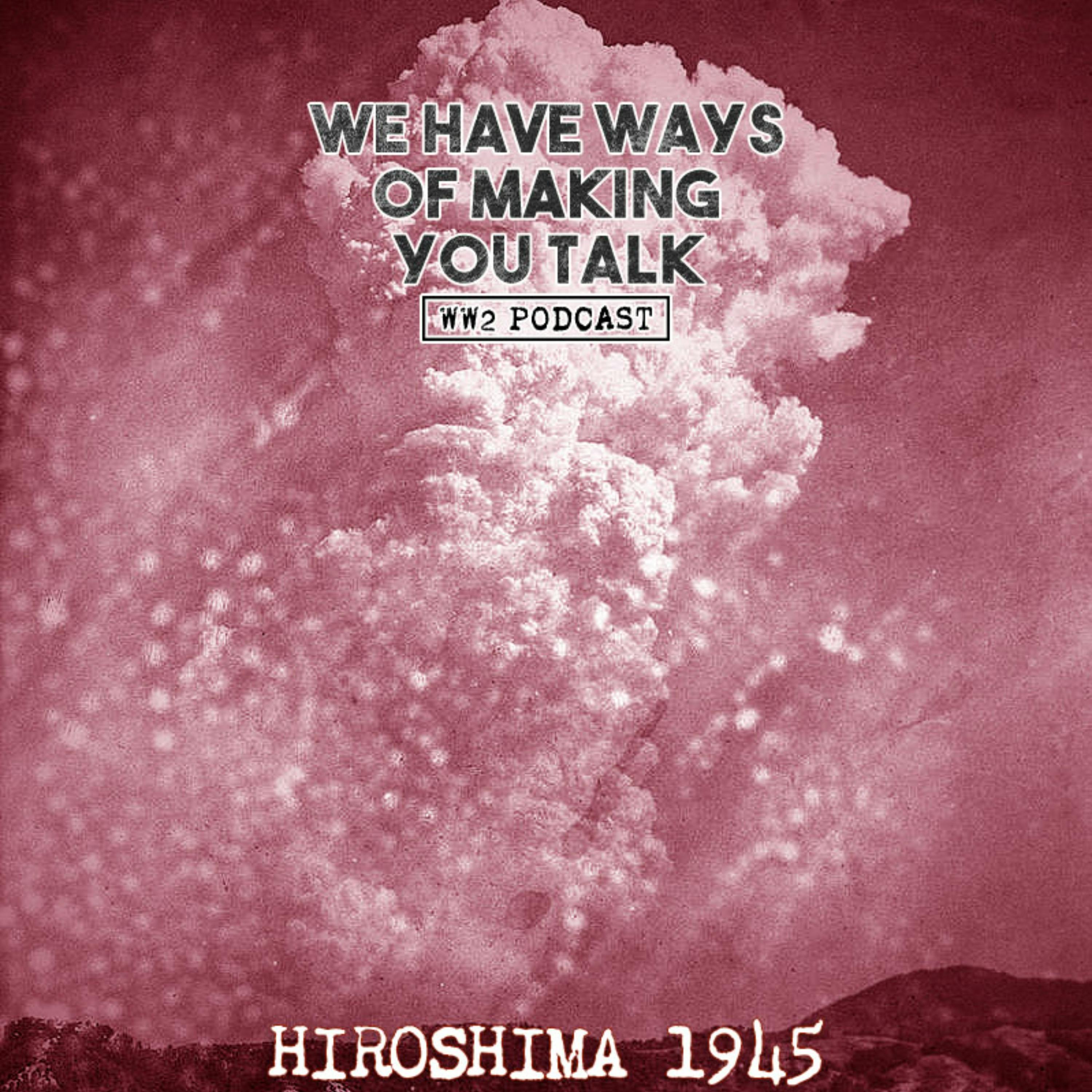
And you know what, what follows is also, is just as crazy. By the way, we have a podcast with Ian McGregor talking about this in particular. But at just after 8 o' clock on 6 August 1945, Enola Gay appears over the city of hiroshima. And at 8:15 following its six minute bomb ramen at 30,000ft drops the four and a half ton weapon, little Boy. This is a fissile atomic weapon, as Ian will explain in that podcast, uranium based. I mean interestingly, it misses its intended target even though they've got Paul Tibbets Jr. Who's the best precision bomber in the entire US Army Air Force. You know, he's the king of precision bombing. That's why he's been selected. You know, he's got his best people, he's handpicked his crews and all that. They still miss. But really it doesn't matter, it's completely academic. Little Boy has the explosive power of about 15,000 tons of TNT. And the US bombing survey, which is conducted after the war, says its duration was probably less than one tenth of a second and its intensity sufficient to cause nearby flammable objects to burst into flame and to char poles as far as 4,000 yards away from the hypocenter. At 600 to 700 yards it was sufficient to chip and roughen granite. Heat also produced bubbling of tile to about 13,000 yards. Untold power.
- [24:27]
Unnamed Speaker 1
And tens of thousands of people were just vapor, weren't there?
- [24:29]
Al Murray
Just vaporized. And of course we don't know. We'll never know because the Japanese population at this point, you know, there's loads of displaced people fleeing the cities that have been bombed and pretty much everywhere has been bombed. And of course one of the reasons Hiroshima is selected is it hasn't been bombed. So they can actually have a proper look at what the bomb will do when it goes off. You know, it's a blank slate. But basically there's just no, no way to know how many people were killed in that first explosion. And the survey says, you know, the dead were killed, as it were, several times over by each lethal agent separately. It's the radiation, it's the he intense heat. It's the firestorm, it's the winds in the firestorm, it's the blast wave. It's everything all at once. If you're near the center and they witnesses speak of a single plane flash of light, clothes simply catching fire and.
- [25:14]
Unnamed Speaker 1
The people that vaporized left burn shadows on the ground.
- [25:17]
Unnamed Speaker 2
Yeah.
- [25:17]
Unnamed Speaker 1
But it's also worth pointing out that Hiroshima was one of 66 cities that hadn't yet been destroyed.
- [25:25]
Unnamed Speaker 2
Yeah.
- [25:25]
Unnamed Speaker 1
Not bombed, destroyed.
- [25:27]
Unnamed Speaker 2
Yeah.
- [25:27]
Al Murray
And the US the Army Air Force makes a film about Hiroshima. If you fancy a grim view, seek it out. It's out there on the Internet. Four square miles in the center of the city contained three quarters of the total inhabitants here. The population density per square mile was slightly greater than Brooklyn, New York. There were numerous one to five man workshops in the commercial residential districts. These provided a fourth of the city's total industrial production. So matter of fact, we're killing people on a scale that people can relate. I think it's very interesting that they put again, they put Brooklyn in time. It you can relate. If you're an American citizen, you can relate to the destruction here. See what it is. Truman has convinced himself it's a purely military target. But given what the war is with Japan, everything's a military target by this stage of the war, isn't it?
- [26:05]
Unnamed Speaker 1
Yeah, yeah, yeah. And he writes in his diary on 25th July 1945. And it's really important to say this. His first responsibility are to the people of the United States of America.
- [26:14]
Unnamed Speaker 2
Yeah.
- [26:14]
Unnamed Speaker 1
Does have a internationalist global view. He wants global prosperity and peace and all the rest of it. But it's his, it's Americans he's got to look after and he has got to end the war as quickly as possible. And this he realizes is his means of doing, however awful it might be, however much that, you know, once he's opened that cross, that particular Rubicon, it changed the world forever. But he writes in his diary on 25th July 1945, the target will be a purely military one. The weapon is to be used against Japan between now and August 10th. I have told the Secretary of War, Mr. Stimson, to use it. So the military objectives and soldiers and sailors are the target and not women and children. Even if the chaps are savage, ruthless, merciless and fanatic. We as the leader of the world for the common welfare cannot drop this terrible bomb on the old capital or on the new. Yes, but it is going on the city center.
- [27:03]
Al Murray
Yeah, exactly.
- [27:04]
Unnamed Speaker 1
I mean, if you're the President of the United States and ultimately it rests with you. How else can you justify it apart from a little bit of self deception? My own view is, I think that's understandable.
- [27:14]
Al Murray
Now, of course, the Japanese reaction to Hiroshima is mixed. So they don't know what it is to start with. Reports are coming into Tokyo of what's happened, but they just don't know. They don't know what it is. And bear in mind they have been firebombed. It's the single plane. That's the sort of thing, that's the, the mystery. There's disbelief on the technical side. So the people who know know this stuff. So there's a fellow called Yoshio Nishina, Japan's leading atomic scientist. He studied under Ernest Rutherford, like everybody involved in sort of atomic weapon thinking. And Niels Bohr in Copenhagen. In 1942, he joins the army's atomic weapon program and they name it after him. He's so central to it. In 1943, it's called nego after him, him. But as we've said, you know, the Japanese economy is being throttled, is driven backwards by the American naval effort in particular. And in April, his building, Building 49, Nigo's building is destroyed in an air raid. And he reports on 28 June to the army. No, no dice. I'm giving up on this. It can't be done. And more than that, in his report he says the Americans are facing, will be facing the same difficulties that we are. And so it's impossible. So they're never going to build it. So by the time, time the Americans have successfully tested the plutonium weapon at Trinity, the Japanese have talked themselves out of being able to build one. I think what's also remarkable though is he's also on the navy, the Japanese navy's atomic bomb committee. He's chairing their committee because after Midway they start thinking, shit, we need something, some good weapons. And they try commissioning a death ray. The scientific community says death ray probably won't work. They said, what about this atom bomb thing we've read about? And Nishina is chairing the Japanese navy's atomic weapons thing. Thing and doesn't tell them the army are building one. I mean, of course he doesn't secret. He siloed. It's secret. Never the twain.
- [28:51]
Unnamed Speaker 1
Nothing like working together.
- [28:52]
Al Murray
Exactly. So the only that actually who the Japanese learn that it's atomic weapon from.
- [28:58]
Unnamed Speaker 1
Is Truman, who announces it and is broadcast day after that day, doesn't he?
- [29:01]
Al Murray
Yeah. And I Think it's, you know, extraordinary, isn't it, because it's so secret right up to the point you use it, and then you've got to say, oh, we built one in secret. It's the greatest effort of all time, industrially and technologically. And it's an atomic bomb. Bomb. Again, he restates the threat, you know, and the Japanese are intercepting all this. But The Dome News Company, 1am on the 7th of August. He restates this threat at the heart of the Potsdam Declaration and how unhappy with Mokusatsu. He says, we are now prepared to obliterate more rapidly and completely every productive enterprise the Japanese have above ground in any city. Let there be no mistake. We shall completely destroy Japan's power to make war. It was to spare the Japanese people from utter destruction that the ultimatum of July 26 was issued at Pottsu. Their leaders promptly rejected that ultimatum. They do not now accept our terms. They may expect a reign of ruin from the air, the like of which has never been seen on this earth.
- [29:52]
Unnamed Speaker 1
Pretty unequivocal, isn't it?
- [29:55]
Al Murray
I know. Then they leaflet the Japanese population extensively, tell them what's been going on. In the meantime, that Nishinai is sent to go to Hiroshima, even though the army are trying. The Japanese army are trying to downplay what the bomb might be. And there's a survey led by General Seito Aritsu, who's from the General Staff Headquarters, 2nd Division. When he arrives at. And Nishina's held up. When he arrives at the airport, he's greeted by a Japanese soldier with half his face burned off. It's absolutely unbelievable. And Nishina writes to a friend saying if Truman's broadcast turns out to be true, then I think the time for all of us related to Nigo, the atomic program to literally cut our stomachs, has come.
- [30:36]
Unnamed Speaker 1
That's one way around it.
- [30:38]
Al Murray
It's extraordinary.
- [30:39]
Unnamed Speaker 1
But I love. I love the story of Flight Lieutenant Marcus MacDilda, which is just extraordinary, isn't it?
- [30:43]
Al Murray
I mean, the sources of information the.
- [30:45]
Unnamed Speaker 1
Japanese have is limited, to say the least. President Truman.
- [30:49]
Al Murray
Well, well, President Truman. Nishina's gut instinct. And then this fellow Marcus MacDill, who's a flight lieutenant, he shot down in his Mustang over osaka on the 8th, and he's passed on to the Kempeitai, who the Imperial Japanese army, basically Japanese Gestapo. They have been handling prisoners of war as well, so. And 350,000 are brought to Japan to work as slave laboratories. Essentially. These are bad people. They're involved in unit 731 in China. The biological warfare established.
- [31:14]
Unnamed Speaker 1
Oh, yeah. This is a vivisection place, isn't it?
- [31:16]
Al Murray
Exactly. And MacDill has been beaten up by civilians when he's paraded through Osaka. And he immediately is being pumped for information about what this bomb might be, what this thing might be. And he doesn't know because. Why would he. Because it's been secret. And there's this absolutely amazing moment in his interrogation. So they hold it, literally hold a sword to his lips, and he tells the Kempeitai that the Americans have a hundred of these things. The next target's Tokyo and Kyoto. But what he tells them is this. As you know, when atoms are split, there are a lot of pluses and minuses released. Well, we've taken these and put them in a huge container and separated them from each other with a lead shield. When the shield is dropped out of a plane, we melt the lead shield and the pluses and minuses come together. When that happens, it causes a tremendous bolt of lightning and all the atmosphere over the city is pushed back. Then when the atmosphere rolls back, it brings about a tremendous thunderclap which knocks down everything beneath it. Right.
- [32:10]
Unnamed Speaker 1
Pull the other one.
- [32:11]
Al Murray
I respect his ability to improvise under great pressure.
- [32:14]
Unnamed Speaker 2
There.
- [32:14]
Al Murray
Let's put it up.
- [32:15]
Unnamed Speaker 1
Me too. That's just masterclass.
- [32:17]
Al Murray
Secret policeman doesn't know any physics, doesn't know any of this. So they. They send him to Tokyo straight away.
- [32:23]
Unnamed Speaker 1
He might be telling the truth.
- [32:25]
Al Murray
Yeah, exactly. 50 prisoners of war in Osaka are then, are then murdered shortly after by the Kimpa Tai. So it saves his life. And what's absolutely amazing is on the. So on the 9th of August, the Chief of the Navy Staff, Toyoda, he still doub atomic bombs. Just don't believe it. I don't believe it, he says.
- [32:42]
Unnamed Speaker 2
Yeah.
- [32:43]
Al Murray
And because the Japanese have not responded to Truman's reiteration of the Potsdam Declaration and his threat to rain destruction from the air, they obviously. And because of Mokusatsu, this sort of intensification of Japanese stonewalling, they drop the second atomic bomb on the 9th of.
- [33:00]
Unnamed Speaker 1
This time, a plutonium one.
- [33:02]
Al Murray
I think this is the bomb that changes the world because it shows the Americans are prepared to do it again. I think do it once, you know, offers no continuity of policy or of diplomatic intent. Right. Or strategic intent. But do it twice, and you're making it very clear that might mean you do it a third time.
- [33:16]
Unnamed Speaker 2
Right. Yeah.
- [33:17]
Unnamed Speaker 1
And the news of it, of its dropping, does reach the big six.
- [33:20]
Unnamed Speaker 2
Yeah.
- [33:20]
Unnamed Speaker 1
Who are already in deep deliberation aren't they?
- [33:23]
Al Murray
Yeah, that's right.
- [33:23]
Unnamed Speaker 2
Yeah.
- [33:24]
Unnamed Speaker 1
About what to do. So they've already having a kind of Is it time to call it quits? Kind of discussion.
- [33:28]
Unnamed Speaker 2
Yeah.
- [33:28]
Unnamed Speaker 1
And they're deadlocked, aren't they? There's an impasse.
- [33:31]
Al Murray
Exactly. So the Prime Minister Suzuki, Foreign Minister Togo and the Minister of the Navy Yonai, they want to accept the terms of the Potsdam Declaration. But they have a condition that the condition they've come up with themselves is that the Emperor remains in place and everyone else so Chief, the Army General Staff, Umetsu Toyoda Anami, they are not interested. They want conditions added quite incredibly that are they remain in government, they're safe from the possibility of being tried for war crimes and that Japan remains armed and able to carry on its, you know, its imperial ambitions in effect. You know, at the same time in the background is the plan Ketsugo, which is the plan for defending the Japanese home islands that they seem to think is actually their option. Atomic bombs or not. These meetings they intensify, they get really, really heated. And at midnight the Emperor, he's asked his opinion by Suzuki, by the Prime Minister, which is an extraordinary thing. So that, you know, they're all having this argument with him sat there listening to it and, and their other problem, and we did talk about this, how they, you know, they're holding on hope that the Soviets will stay out. Their other problem is that that hope has also been dashed because the Red army have come into Manchuku. Manchuria, that's on the same day. I think what's really interesting here is you have a Red army that's super well practiced in, you know, in mobilized mechanized deep war, you know, and a Japanese infantry army in China that's basically been used to fighting Chinese peasants. Essentially.
- [34:55]
Unnamed Speaker 1
Yeah, yeah, yeah. And is screwed anyway.
- [34:57]
Unnamed Speaker 2
Yeah.
- [34:57]
Al Murray
And is screwed anyway.
- [34:58]
Unnamed Speaker 1
And they are totally overwhel suddenly confronted by nearly 1.6 million men, 5,500 tanks and self propelled guns and 27,000 artillery pieces. You know what? It might be time to call it quits.
- [35:11]
Unnamed Speaker 2
Yeah.
- [35:12]
Al Murray
And what's interesting is so that the army been ignoring the reality of the atomic bomb. But here they are losing on a battlefield.
- [35:19]
Unnamed Speaker 1
I mean they were absolutely crushed, weren't they?
- [35:21]
Unnamed Speaker 2
Yeah, yeah, yeah, yeah.
- [35:22]
Al Murray
They just rolled up. So they've got this news as well. The pro peace faction as it was, which is the Prime Minister and so on. They think that they're getting through to the Emperor, Army Minister and army then introduces Flight Lieutenant MacDilla's intelligence about the Lightning weapon to try and say it's not an atomic weapon and that Tokyo's next or something. He's trying anything to keep the war going. And this means. The Emperor then leans forward and says, then I will express my opinion. Despite protests from an army. This is Suzuki's suggestion. The Emperor says he can't spare to see his people suffer anymore. Moreover, he's not sure Ketsugo is going to work. The defence of the Home Islands is going to work. He doesn't think the preparations are ready. And he sides with the Suzuki faction, saying that they will accept the Potsdam Declaration but only if he remains in power. And this is a, you know, a sacred decision and they move to ratify this. And he says, obviously it's unbearable, my subjects are suffering. And it's terrible that his loyal ministers will also now be in the frame of. For what has befallen Japan. But he must swallow his tears and accept the Suzuki faction's proposal.
- [36:29]
Unnamed Speaker 1
It's very magnanimous of him.
- [36:31]
Al Murray
It is very, very big of him, I think. And they then say to him that the disgruntled say, well, you're going to have to answer to your ancestors for what you've done. And he said, well, you know, there it is.
- [36:41]
Unnamed Speaker 1
I'll live with that and I'll live with that until I'm 89 years old.
- [36:44]
Al Murray
Leave that to me. Thanks very much. And immediately, obviously, because then everyone tells their ADCs essentially and word spreads very, very quickly. Quickly, you know, the War Ministry again led by. It's an army who's really, really up to his neck in this. They want to fight on, they want to fight to the end. He's fought in New guinea and Alma Hera, he's. And he. He's invested in the war as a soldier. And from the moment the Emperor has made a decision, an army becomes the focus of what will happen. You then get. I mean, it's extraordinary, this convulsion within the army where obviously what they want is the Emperor to remain supreme. They want to carry on the war, but they can't square those two off against each other. This starts to run towards a coup and they try and stop news getting out to the Allies that the Japanese government, the Big Six, have accepted this accommodation with the Potsdam Declaration and the staff at the Dominie News Network decide that they need to transmit this message to the outside world. So in Morse code on the shortwave, they send out a message that says Japan accepts Potsdam Proclamation.
- [37:47]
Unnamed Speaker 1
Muggled out effectively, isn't it?
- [37:48]
Unnamed Speaker 2
Yeah, yeah.
- [37:49]
Al Murray
And that's spotted and shut down. And luckily the United press in the U.S. hear this and take that piece of news to Truman in Washington at 7:38 3am on the 11th of August, which is the evening in Tokyo on the 10th. Rather than the message that the general staff have drawn up, they've drawn up are like, well, we're not happy about this message, although obviously the Americans don't have third atomic weapon to make their point. Again, what then follows is this extraordinary thing where the officers rise again against the Emperor while at the same time the Emperor is trying to write up what's called the Rescript, you know, prepare his declaration and the Americans in the meantime. And it's Jimmy Burns who's given this job and it's run by the British because the British can cope with the idea of a constitutional monarchy. He writes a thing saying, from the moment of surrender, the authority of the Emperor and the Japanese government to rule the state shall be subject to the supreme commander of the Allied powers who will take such surrender as he deems proper to effectuate the surrender terms. So in other words, words, the Emperor stays in place but he is subordinate to whoever's in the Allied chief is. And this is the thing, if you're a die hard army guy who doesn't want to surrender, they rally round this.
- [38:57]
Unnamed Speaker 1
This is just seen as completely unacceptable.
- [38:59]
Al Murray
Yeah, it's shattering the cockatai, the constitution. And so there's a race now on between the peace faction and the war faction essentially. In Tokyo on the 13th, Hirohito gathers together the Imperial household, so basically all the princes and cousins and all this sort of thing and says, I've made this really difficult decision. We're surrender, we're staying in place. The Imperial family is staying in place. And they all kind of go, God, that must have been really hard for you. There's some tears.
- [39:25]
Unnamed Speaker 1
Yeah, it was, you know, really, what can I do? I have to do this for the people.
- [39:31]
Al Murray
What can I do? The coup attempt is probably worth an episode in itself, so we won't get stuck into it. But basically that there are all these sort of different factions in the army who try and you know, are trying to take control of the situation. And while the Emperor is preparing his speech and then recording his speech in a bunker in the Imperial comp, there is basically a coup going on upstairs where they're trying to find him and stop him, which fails and Anami kills himself. But he sort of botches that, dies very slowly and horribly, has to be finished off by one of his aides. Interestingly, there are lots of people.
- [40:02]
Unnamed Speaker 1
He was driving around for three hours, wasn't he, with his guts hanging out.
- [40:06]
Al Murray
Yeah. But it depends who you read because there are different accounts where someone offs him immediately. In other accounts, he kills himself in a clean go. It's very interesting that, that the histography around that is really muddled, so it's quite hard to tell. But he kills himself basically. And then the Emperor issues the rescript. We talked about Mokusatsu earlier on about the barrier to how Japan communicates.
- [40:26]
Unnamed Speaker 1
Well, and he makes his speech, doesn't he, at 2325. This is on the 13th, is it? 13th of August.
- [40:33]
Al Murray
Yes. Yeah, yeah, that's right.
- [40:34]
Unnamed Speaker 2
Yeah.
- [40:35]
Al Murray
And what's really interesting about it is he uses a form of Japanese, kanbun, kandoki tai, which is not normal conversational Japanese.
- [40:44]
Unnamed Speaker 1
It's like using Old English or something.
- [40:45]
Unnamed Speaker 2
Yeah.
- [40:46]
Al Murray
And no one can understand it. They've never heard his voice before. It's a moment of divine revelation to hear his voice. It's a very high pitched voice. He says the war situation has developed. Not necessarily Japan's advantage.
- [40:56]
Unnamed Speaker 1
I mean, talk about euphemisms. Talk about. Say it as it is. Emperor.
- [41:01]
Unnamed Speaker 2
Yeah.
- [41:02]
Al Murray
656 words doesn't say surrender. But nevertheless, the coup has failed. The war cabinet has conceded. In effect, the Emperor remains in place place. And we have ordered our government to communicate to the governments of the United States, Great Britain, China and the Soviet Union that our empire accepts the provisions of their joint declaration. And that marks the end for Japan's war. It's absolutely amazing. Comes into being on the 15th. He makes it clear the thing that's made his mind up. Moreover, the enemy has begun to employ a new and most cruel bomb, the power of which to do damage is indeed incalculable, taking the toll of many innocent lives. Should we continue to fight, it would not only result in an ultimate collapse and obliteration of the Japanese nation, but would also lead to the total extinction of human civilization. So we should all be grateful to the Emperor Hirito for saving his own neck.
- [41:50]
Unnamed Speaker 1
But it's that line, isn't it? The war situation has developed not necessarily to Japan's advantage. Crikey. One of the understatements of the history of the world, I would say, of all time. Yeah. So he'd surrendered without surrendering, had attached conditions to the unconditional. So a war to conquer an empire of millions resulting in a surrender to save one man, the Emperor.
- [42:09]
Unnamed Speaker 2
Yeah.
- [42:10]
Al Murray
Well, there we are. Well, thanks everyone. For listening.
- [42:12]
Unnamed Speaker 1
Okay, can I just point out that we started this podcast in April 2019, and here we are, it's ended.
- [42:19]
Unnamed Speaker 2
You.
- [42:19]
Unnamed Speaker 1
Know, recording this on the 30th of July, 2025, a mere two weeks or so before the end of the war, 80 years ago.
- [42:26]
Al Murray
Except it hasn't ended, has it, Jim?
- [42:28]
Unnamed Speaker 1
No, it hasn't.
- [42:29]
Al Murray
There's lots more to come. There's, of course, our festival of all the 12th, 14th September. Please do buy tickets and come and join us for a weekend of exactly this kind of chat. And tanks and planes and people hiding in woods.
- [42:41]
Unnamed Speaker 1
We have Wayfest 5V for victory.
- [42:43]
Al Murray
V for victory. Putting the fun into funF, a special edition of Masterminds. All sorts of stuff for you to. To get your teeth into. And of course, our Patreon, if you'd like to join that. Jim and I spent a week looking at Battle of Britain stuff too, and we're really getting into the Battle of Britain. And we'll be returning to the Battle of Britain for the 85th anniversary. That's something to look forward to.
- [43:02]
Unnamed Speaker 1
Literally. Can't wait.
- [43:03]
Al Murray
So thanks everyone, for listening. We will see you all again very soon. Cheerio.
- [43:06]
Unnamed Speaker 2
Goodbye.
- [43:07]
Unnamed Speaker 1
Farewell.