← WW2 Pod: We Have Ways of Making You Talk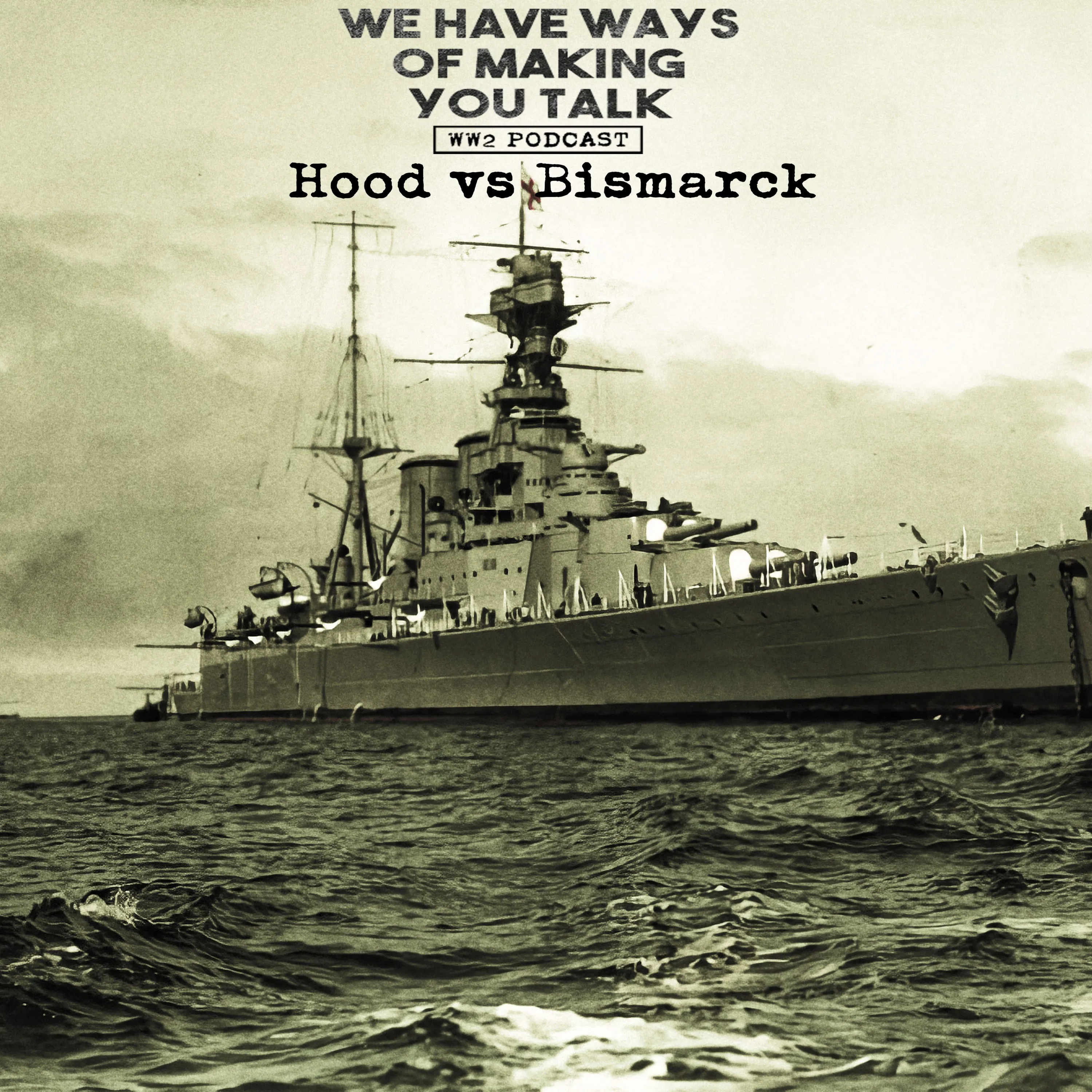
Loading summary
Transcript207 lines
- [00:02]
Al Murray
Thank you for listening to we have ways of making you talk. Sign up to our Patreon to receive bonus content, live streams and our weekly newsletter with money off books and museum visits as well. Plus early access to all live show tickets. That's patreon.com we haveways.
- [00:24]
Stitch Fix Advertiser
Shopping is hard, right? But I found a better way. Stitch Fix online Personal styling makes it easy. I just give my stylist my size, style and budget preferences. I order boxes when I want and how I want. No subscription required. And he sends just for me, pieces plus outfit recommendations and styling tips. I keep what works and send back the rest. It's so easy. Make style easy. Get started today@stitchfix.com Spotify that's stitchfix.com Spotify.
- [00:54]
Mint Mobile Advertiser
Well, the holidays have come and gone once again, but if you've forgotten to get that special someone in your life a gift. Well, Mint Mobile is extending their holiday offer of half off unlimited wireless. So here's the idea. You get it now, you call it an early present for next year. What do you have to lose? Give it a try@mintmobile.com Switch limited time.
- [01:14]
Shopify Advertiser
50% off regular price for new customers. Upfront payment required $45 for 3 months, $90 for 6 month or $180 for 12 month plan taxes and fees. Extra speeds may slow after 50 gigabytes per month when network is busy. See Terms.
- [01:34]
James Holland
I stood on the beach for some considerable time, drinking in the beauty, grace and immaculate strength of her. Beauty and grace seemed rather ludicrous words to describe a vessel of such size, particularly one whose primary function was for destruction. But I can honestly say I never could, nor indeed can even today think of more suitable words to describe her. And that was Albert Ted Briggs, upon seeing HMS Hood as a child.
- [02:00]
Al Murray
Welcome to we have Ways to make youe Talk with Me, Al Murray and James Holland for Hood versus Bismarck, Episode three. We've given you two episodes of Bismarck. Lingering. I mean, if you know.
- [02:12]
James Holland
We're calling this episode the Mighty Hood, aren't we? We're just doing what it says on the table.
- [02:15]
Al Murray
Yes, but I think it was in the Lady Chatterley trial where the judge said, I know pornography when I see it. This is the thing with battleships, isn't it? Is that it can get a bit lingering.
- [02:24]
James Holland
Yeah, yeah, yeah, yeah. This will slightly give you the horn, dare I say it. Particularly HMS Hood. What a beauty.
- [02:33]
Al Murray
Well, this is the thing, isn't it? Obviously we're going to talk about what. What then happens to. To the Hood. It is quite interesting, isn't it, Jim? Because we are dislocated from the age of great battleships quite completely, I think now, I think what the Hood represents to people at the time, I don't think we can relate to. Yes, the new aircraft carriers, the new generation of aircraft carriers, you know, that have come online in the last couple of decades are bigger, but they don't sit in our imagination the way the Royal Navy did 90 years ago in the interwar period. That was the expression of British power, wasn't it? Was battleships going around the world being mighty, basically. And I don't think we, I don't think we're in, we're in touch with that anymore, are we? It's interesting to see here Albert Briggs stirred by seeing the Hood as a child. I find it hard to relate to. It's not something really does something for me, you know what I mean?
- [03:21]
James Holland
Oh, I don't know. I feel I stand a little bit taller when I think about HMS Hood and War Spite and the Repulse and the Rodney.
- [03:29]
Al Murray
Right, okay.
- [03:30]
James Holland
The nature is Nelson. I mean, you know, come on. I mean they're just, they're so fantastic. They're so enormous and mean. But I mean, you know.
- [03:39]
Al Murray
Well, let's, let's talk about her because she's the most famous ship in the world, basically.
- [03:43]
James Holland
She is the most famous ship in the world, you know, bar none.
- [03:46]
Al Murray
And she's known as the Mighty Hood. She's an Admiral class ship, isn't she?
- [03:51]
James Holland
Yes.
- [03:51]
Al Murray
She's not a battleship, she's a cruiser.
- [03:54]
James Holland
Okay, nomenclature of warships.
- [03:56]
Al Murray
I know, I know she's a warship, we can settle on her being.
- [04:02]
James Holland
But she's a battle cruiser. Oh God, yeah, yeah.
- [04:06]
Al Murray
But no, but I mean what's interesting though is, is she's one of a type, is they were going to build a series of Admiral class ships of the First World War and they, and they build the Hood and then there's some stuff that's not quite right about it. So they, so they're dropped as a program. So she's a one off. Which I think is one, one of the things that's quite interesting about her.
- [04:24]
James Holland
Yes, I agree with that. Is interesting.
- [04:25]
Al Murray
Yeah, she's. And there are lots of things I think that are symbolic of the Royal Navy in the Hood. She is symbolic of the Royal Navy, but in every way. In that this is a ship from a previous era, representative of a previous way of looking at naval power before really the maturation of air power in naval warfare. Right. Which is what's happening in the Second World War is. The Second World War is playing out. But she's from 1916. Keels laid down in 1916 in Clydebank in the John Brown yard. And there's been four Admiral Hoods in the Royal Navy.
- [04:59]
James Holland
It's a family tradition.
- [05:00]
Al Murray
It's fantastic, isn't it? There's the Lord who helped Admiral Rodney defeat the French, the West Indies. He sounds fantastic. His brother Lord Bridport who who's with Admiral Howe on the glorious first of June. Admiral Sam Hood who helped Nelson win at the Nile. All these guys sound tremendous. And Admiral Horace Hood who was killed in action at Jutland when the flagship Invincible blew up. So what are you going to do? You're going to name it Hood, aren't you? An Admiral class ship and you're going.
- [05:23]
James Holland
To have it launched by Lady Hood.
- [05:24]
Al Murray
Yeah, his widow that last. Admiral hood's widow in August 1918. It had been a tricky development. So this is the interesting thing is that at the time she's the biggest warship ever built. She's even longer than Bismarck at 860ft but she's a little narrower.
- [05:39]
James Holland
Narrower in the beam.
- [05:39]
Al Murray
That's to make her go quicker. I guess.
- [05:41]
James Holland
So for those of you who've been to the Imperial War Museum, you'll notice that there's two huge guns outside the front.
- [05:47]
Al Murray
Yeah.
- [05:47]
James Holland
And these are naval guns and they're 15 inch guns. And I don't know about you Al, but whenever I walk past them I just go flipping out there. Enormous.
- [05:55]
Al Murray
Yes.
- [05:55]
James Holland
Okay, so the Hood has eight of those. Yeah.
- [05:58]
Al Murray
They're very entertaining items for standing children next to the shells and going look, the shells are bigger than you those guns, aren't they? That's, that's sort of. That's their main function. And she's quick. She could do 32 knots.
- [06:09]
James Holland
Yeah. And that's going some. That is really quick.
- [06:12]
Al Murray
And we were talking a lot in the last episode about being oiled and getting oiled. She's using a ton of oil per half mile. That's a lot of oil.
- [06:20]
James Holland
Yeah, that's quite a lot.
- [06:21]
Al Murray
That's quite a lot of oil, isn't it?
- [06:22]
James Holland
It's a Lora oil, a Laura Lora oil.
- [06:24]
Al Murray
She embodies naval power in that. She's an old ship really. She's being updated. It's got, it's got things.
- [06:31]
James Holland
Yeah, but it doesn't look an old shit. But no, I refer you back to your old. About, you know, it's only 20 years.
- [06:37]
Al Murray
Yeah, I know, I know.
- [06:38]
James Holland
But when people.
- [06:39]
Al Murray
Nothing but when people are Critical of the Royal Navy in the Second World War. They say, look, a lot of the rolling stock is beginning to look a little shabby, some of it, but they're.
- [06:46]
James Holland
They're being updated.
- [06:47]
Al Murray
And that's an issue with the Hood, isn't it? Because they. They try and update her armament or our armor, rather. They update her armament and her armor. She needs more protection because after Jutland, the lesson is you're going to need armored decks because these ships are vulnerable to indirect fire.
- [07:02]
James Holland
Well, yes, and we'll. We'll get on. We'll get on to the. The kind of her upgrading that issue. Yeah. You know, the point about the Hood, of all the ships, she is the most famous because she's the biggest in the world.
- [07:15]
Al Murray
Yeah, yeah.
- [07:16]
James Holland
You know, she is the biggest warship in the world and everyone knows her. And because she's this sort of unique design, because she's very sleek, that beauty and elegance that Ted Briggs was talking about, gracefulness sort of precedes her.
- [07:30]
Al Murray
Yeah.
- [07:31]
James Holland
And so, understandably, the British use her as a means of soft power. You know, it's kind of don't mess with us, but at the same time, come aboard the Hood and have a nice dinner.
- [07:41]
Al Murray
Well, it's not that soft, is it?
- [07:42]
James Holland
No, it's not that soft, but it's sort of, you know, let's do a world tour and go around and visit ports and all the rest of it and see people and, you know, she sews the flag to the Empire around the world and, you know, she goes on cruises to Scandinavia and South America, to the Mediterranean, to the Pacific, Pacific to. To the Old World and. And to the new. And in 1923, 24, she undertakes this world tour in company with Repulse and five cruisers. So basically, they're cruising around going, don't mess with us. We're the top dogs, basically. Yeah. But. Described as the most successful cruise by a squadron of warships in the history of sea power. They visit South Africa, Zanzibar, Ceylon, National Anchor, Singapore, Australia, New Zealand, the Pacific Islands, San Francisco, the Panama Canal, Jamaica, Canada, Newfoundland. Huge crowds every time she comes in. It fills dozens of column inches in the local press of wherever she goes. You know, the mayor of San Francisco is totally overwhelmed by her and says, we surrender our city unto you. We capitulate.
- [08:40]
Al Murray
Yeah.
- [08:40]
James Holland
You know, a girl in Melbourne records in her Dodge because every road and pathway was thick. Only many families are making a day of it, taking out all the children and hampers of food and bowls of beer. The bay was dotted with sailing boats it was a wonderful sight. Something I shall never forget. Everyone cheering and the kids running up and down and the sirens of all the ships in the harbor going off.
- [09:00]
Al Murray
Look at that battleship, mate.
- [09:02]
James Holland
Yeah, look at that. Yeah, it's a fair dinkum.
- [09:04]
Al Murray
Yeah, look at that hood, mate. That's.
- [09:06]
James Holland
I'm not massively into Australians at the moment.
- [09:10]
Al Murray
It's just cricket, Jim. She represents, as you say, British power. But this is, I mean, this isn't. It's not soft power, is it? This very much is. That's a nice Zanzibar you got there. Shame if something would happen to it as the, as the, as this fleet turns up.
- [09:25]
James Holland
Except, you know, Early Bradford, who writes the. Writes a great book on the siege of Malta, also read a biography of the Hood. You know, he made the point that when the ship returned home, they'd strengthen friendships and revived alliances. They become a fireside story. And one ship, her photograph in thousands of homes have become a legend, you know, and obviously that's sort of slightly hyperbolic, but, but not much really. I mean, you know, it's fascinating, you know, and you still, you can still, you know, come up for sale on, in auction houses on menu cards from, From HMS Hood.
- [09:58]
Al Murray
What's interesting, isn't it? This is a thing history can offer you is a glimpse into another world and another world where things really are quite different. Because now battleships don't steam round the world and are met to rapturous receptions. It's not a thing that happens anymore, you know. Where is the power now? You know, it's in nuclear weapons. And what you don't do, unless I suppose you're Kim Jong Un, you parade a rocket up, up the middle of, you know, in a great parade so you could. So everyone could see how powerful you are. What's the equivalent? There isn't an equivalent, is there?
- [10:28]
James Holland
Well, I suppose it's an aircraft, you know, it's a Gerald Ford coming into port, isn't it?
- [10:32]
Al Murray
I suppose so. But it doesn't have the same glamour.
- [10:34]
James Holland
You know, they're flat decks. They're kind of boring, aren't they? Aircraft carriers? I mean, they're just. It's just not like hoods coming into town. No, and also the name and all sorts of stuff. I mean, you know, American aircraft carriers are always called, you know, something, you know, Gerald R.R. ford or whatever, you know, that's all sort of complicated names these days. Whereas HMS Hood, you just.
- [10:56]
Al Murray
Jim's into it.
- [10:57]
James Holland
Nowhere you stand, Jim's into it.
- [10:58]
Al Murray
I'm trying to understand it. It's it's, There's our brief summary.
- [11:06]
James Holland
I just think it's absolutely fantastic. And I, you know, I just know that if I, you know, if I was British in the 1920s and 30s, I would absolutely be totally proud and never doubt our naval dominance and all that kind of stuff. If I saw that ship, you know, I would be like Ken Briggs.
- [11:22]
Al Murray
Which is, after all, the, the point of her is that she's, she's symbolic, which, which maybe is part of the problem too, isn't it? Because she's, she's quick and it's at the cost of deck armor. We touched on the deck armor a moment ago and she's due to have a refit and have her armor strengthened in the mid-1930s, because she's getting on in the mid-30s. But then you have the Abyssinia crisis.
- [11:44]
James Holland
Yeah.
- [11:45]
Al Murray
Then there's the Spanish Civil War, then there's Munich and that basically, you know, and the Royal Navy is very concerned about the Med. And basically you can't pull her out of service for the time required for the refit in peacetime at least, because.
- [11:59]
James Holland
She'S too important, you know, she's too important.
- [12:01]
Al Murray
She's too, too crucial. And so there's a brief refit before the war to upgrade her anti aircraft armament, which adds to her weight. So it slows her down a little by 3,000 tonnes. That slows it down a little. But basically, come August of 39, the whole of the Royal Navy is getting ready. The deck lights are being put away, blackouts imposed, painted plain gray and then they go to war. And I think we talked in the string bags episode about how they're laying down keels for aircraft carriers in this period, you know, 38, 39, you know, it's not just that there isn't time, it might be that there isn't the money actually that they're going to, they need to spend it on new vessels. Well, all.
- [12:35]
James Holland
There isn't the shipping space or the capacity or the, you know, the priority is now aircraft carriers, you know, and don't forget there's also these other brand new battleships coming in.
- [12:42]
Al Murray
Yeah, yeah. And this is going to happen when you're standing things up very quickly, isn't it? Is that things get prioritized so things go to the back of the queue.
- [12:50]
James Holland
Hood is not designed to be super well armored. You know, it's a cruiser was supposed to provide immense firepower and speed and there's lots of places. And actually, you know, the only way you're going to be hit in the deck is Extreme range, because. Extreme range, you're lobbing your shell up and then it's going to plunge onto you.
- [13:09]
Al Murray
Yeah.
- [13:10]
James Holland
And so that's when you're vulnerable. Or of course, you know, you're vulnerable to an, to an, you know, to an aircraft attack from, from, from above. But, but when you're zooming at 32 knots, it's incredibly difficult to hit something moving that speed from thousands of feet up in the air. So it's a calculated risk all the time. Every, every time you put something like the Hood into action, because you're assuming you can get close enough to the enemy without the enemy firing these kind of plunging shots. Because the moment you get closer, the arc of the trajectory of the shell is shallower. So it's not plunging onto the, onto the deck, it's skimming the deck, if it does hit the deck at all. And so the moment of vulnerability, the range of vulnerability is actually pretty narrow because for the most of the time you're out of range and it's only at extreme range that you're vulnerable. That's the bit you've got to kind of try and avoid. But, but, you know, have it. Having weak deck armor is not necessarily an issue. That's the point I'm trying to make.
- [14:09]
Al Murray
Everything's a compromise, everything's a calculation, everything's compromised.
- [14:11]
James Holland
It is, as in all warfare. Right.
- [14:13]
Al Murray
She's been at Emers El Kabir, hasn't she? And damaged as well along the way.
- [14:17]
James Holland
Samuel Somerville's flag at Mersey.
- [14:20]
Al Murray
Yeah, they're upgrading her constantly. And she's due, she's due a sort of full refit, isn't she? One's coming when, however, she is having to take part dealing with the Bismarck.
- [14:33]
James Holland
Well, HMS Repulse, which I think is a battlecruiser, is, is also, you know, it's on its way to. She's on her way to Boston to have a refit, so they're sort of rotating it in and out. But, but right now, on the 23rd of May 1941, she's doing what she's designed to do, which is engage the enemy with her immense firepower on the high seas. I mean, that's, that's the whole point of it.
- [14:53]
Al Murray
Yeah. Right. And now we come to the man in command, Admiral Holland. James. Yes, Vice Admiral Lancelot Holland as well. He's only took command 10 days earlier. He's 54, he's a gunnery specialist. So it's exactly who you, who you might want on board. He has totally white hair, he's reserved at first and warms up quickly. So many of these men are reserved at first, then warm up quickly with a dry sense of humor. I mean, very much a type, isn't it? He's very ambitious. I mean, in 1936, he loses his only son to polio, which is something he never. He never gets over. He's been busy as an admiral. He's been in the Med, where he's been under Somerville. He's taken five cruisers to attack the Italian battlefield at Cape Spartivento. And the Italians run away on that occasion. But this is the point at which the Italian navy is very much trying to not get sunk. Mainly that's its main activity. Since leaving Scapa Flow, he's exercised Hood and the Prince of Wales in range and inclination, practice and signaled tactical intentions. So he's got what he wants. He's a battle. He's got a battle he wants to fight. And they've been rehearsing for the way he wants to fight the battle. And the idea is, if they're together, the Hood of the Prince of Wales, when they run into the enemy, they'll engage.
- [16:10]
James Holland
Talk about the kind of, you know, the Obi Wan Kenobi on his shoulder of Nelson.
- [16:16]
Al Murray
We are absolutely squarely in what would Nelson. He's got his what would Nelson do? Wristband on, isn't he?
- [16:22]
James Holland
Well, yeah, yeah, he absolutely has. And we shall. Trust me, we shall go into this in greater detail in our fourth episode in this particular series, because what happens is absolutely straight out of the Nelson rulebook.
- [16:36]
Al Murray
And the idea is if they're apart, they'll fire independently and report each other full of shot. They're not using radar because they don't want the enemy to. To see that they're using radar and alter course. And they want to engage Abismarch and Prince Eugen. That's their. That's their prime objective. And as Nelson said, preparations have been made. And now all that was left was to wait for the great disposal of events. Marvelous stuff. I mean, it's stirring stuff.
- [17:01]
James Holland
Lancelot Holland, he's just gagging for it. I mean, as. As an admiral, this is all you want. You want. You want to be tested. You want to kind of, you know, he's a gunnery expert. You know, there's nothing he doesn't know about gunnery.
- [17:12]
Al Murray
On board Prince of Wales is a gunnery officer, Lieutenant Esmond Knight, who's stage actor before the war, but he's now a Royal Navy volunteer reserve officer. And he's excited but nervous. I lay on my bunk and Tried to read but the lines refused to register. I sat at the desk and tried to draw a funny picture for the ship's magazine but the idea just would not come. I mean that's absolute like Eve of battle. Yep exactly.
- [17:36]
James Holland
He's absolutely catching it right.
- [17:37]
Al Murray
He can't come up with a funny picture. So there's two days of this unease.
- [17:41]
James Holland
No he's that nervous.
- [17:43]
Al Murray
And then on four minutes past eight on the evening of the 23rd of May the hood picks up the first the Suffolks reports which we saw ping ponging around between different receivers in the last episode. Frozen aerials at first and all this stuff she's, she's got through having de iced her aerials. Holland plots Bismarck's course relative to his little battle groups and orders speed to increase to 27 knots on a course of the 295 degrees and a date with destiny. The way these battles play out is because you have to steam to one another. You have to find one another that they, they've just. The drama's baked in right. You know one brigade, one brigade lines up opposite another brigade and they've got to take a hill. They know where the hill is. This is like looking for the high ground isn't it?
- [18:30]
James Holland
Well the high ground is, is the more advantageous means of firing isn't it? So you want to have your best, best opportunity whilst denying the best opportunity to your enemy. So it's not just a question of finding it, it's moving around. It's a bit like the sort of you know, but where the hunt and the sun is maneuvering yourself around so you've got height and sun behind you. It's the same sort of principles. And actually the sun does come into.
- [18:51]
Al Murray
This and the weather gauge is.
- [18:54]
James Holland
Yeah, yeah, yeah. And whether you're, whether you're coming on the beam or whether you're coming bow to bow or whether you're coming you know parallel broadsides. All this sort of stuff is a whole host of it coming. Anyway should we, should we take a break?
- [19:05]
Al Murray
Yes, let's take a break because I think this feels like the moment for everyone to brace themselves for what's to come. We'll see in a moment. Welcome back to. We have ways of making you talk. Where? Well Admiral Holland is plotting a course of 295 degrees 27 knots because he wants to intercept. He wants to intercept. He wants battle brought because he's looked at his what would Nelson do wristband and what Nelson would do is go at him. So there's A mood of confidence on board the German warships. Of course there must be a huge sense of relief when you actually come to fight. Yes. You're nervous to see the enemy. Yes. Oh God, there he is. But actually there must be a sense of relief. Finally we get to fight. She has been damaged by Norfolk so her forward radar has been smashed up so she's blind going forwards. So Lutzens now signals to Prinz Eugen to move ahead.
- [20:09]
James Holland
Go on, move ahead.
- [20:10]
Al Murray
Then dropping a few knots to let her pass. He's on the bridge and he watches the cruiser inch up on his starboard quarter and signals from Admiral to Capitaine, you have a wonderful ship.
- [20:19]
James Holland
The image that comes into mind is that bit in the Battle of Britain film where they're all kind of, you know, all the fighter pilots are having the, having the lunch and they're all very smug and making sort of aren't we clever sort of pleased with ourselves kind of comments. Yeah, it's the same kind of vibe, isn't it?
- [20:35]
Al Murray
Yeah, it is, yeah. Yeah, yeah, yeah, yeah.
- [20:37]
James Holland
Just a bit too pleased with themselves.
- [20:39]
Al Murray
Tiny bit too pleased with themselves. Now it's finally upon them though. Bismarck's electronic steering briefly jams and they're in danger of colliding. So I mean Brinkman avoids disaster due to his quick thinking. She pulls away on a 40 degree heel on the wheel. Lindeman's not on the bridge at the time but the steering issue's fixed and they don't collide. I mean that would have been anti climactic.
- [21:01]
James Holland
Stopped in the water, Hood turns up blossom out of the sea.
- [21:04]
Al Murray
Exactly. There we are. There we are everybody.
- [21:07]
James Holland
The end. The end.
- [21:10]
Al Murray
But she's, she's now in the lead. Prince Eugen's now in the lead with Bismarck astern and Norfolk and stuff.
- [21:16]
James Holland
This is significant though.
- [21:17]
Al Murray
Yeah, yeah, exactly. North Suffolk chasing 14.
- [21:20]
James Holland
I'm not trying to put too many arrows pointing at this but, but, but you know, is now in the lead and generally speaking you would have. The biggest ship would always be in the lead.
- [21:29]
Al Murray
Yeah. And they're all, they're going flat out 30 knots. So Norfolk of Suffolk are straining to keep up to tremendous vibration and shock of the water in the ships. The engines absolutely pummeling the frames of these ships. In Suffolk's charterhouse the plotting officer, he, he can't keep his pencil really steady because of the vibration of the movement of the ship and I expect his nerves may be contributing to that feeling.
- [21:54]
James Holland
That's some small factor in this.
- [21:56]
Al Murray
And some of the German crew at this point they're wondering why they aren't firing at the British cruisers. What's really interesting is that these rumors, these mutterings reach Lindemann and Blinkmann who separately who both say to their crews orders are not to engage so we can reach the Atlantic in the best shape. I mean that's, that's a, that's an interesting thing to do, isn't it?
- [22:19]
James Holland
Still on the Denmark Straits, don't forget.
- [22:21]
Al Murray
Yeah, yeah.
- [22:21]
James Holland
This is the point.
- [22:22]
Al Murray
Yeah.
- [22:22]
James Holland
In the Denmark Straits.
- [22:23]
Al Murray
Still in the Denmark Straits if you're the Royal Navy. Actually this is all going kind of according to plan isn't it? You've spotted them despite the challenges of the fog, despite the challenges of the weather, you've spotted them. You've got a pair of cruisers chasing you've got you know, battleships coming, coming to meet them.
- [22:39]
James Holland
But also don't forget they still think that the Home Fleet is at Scapafly. They don't think they've been rumble. They know they have been spotted but they don't think the Home Fleet has left scap of so they think the only thing they've got is these two cruisers on their tail who if push comes to shove they can deal with. But let's, let's sprint on, use our superior speed, get clear of the Denmark Straits. Then we'll take a view. We'll either turn around and blast them or we'll then speed on into the open Atlantic. That is our mission is to destroy allied merchant shipping. You know because every time you engage the potential is you're going to take on some damage, you know and QED you've got the, you know the Bismarck's radars in has been damaged in just a few little salvos between the Norfolk and Suffolk and her earlier. So it sort of proves the point rather I think absolutely. So that's. But, but they're really confident they've got superior firepower, they're superior ships, they've got greater speed. You know they can see off these whipper snappers basically.
- [23:42]
Al Murray
Yeah. Yeah. And the chief medical officer on, on the Prinz Eugen Commander Bush says the feeling of absolute security was shared by every man in the ship's company. In our beautiful ship and in Bismarck 2 the men felt safe. They think if they, if they carry on with the, with the, you know with their foot down they'll, they'll get away from the cruisers and then there'll be a cover of night briefly to further, further escape.
- [24:05]
James Holland
Yep.
- [24:05]
Al Murray
And there is some snow, there is some fog patches but however when the sky is clear There they are. And they can't understand why the Suffolk and the Norfolk are keeping up and it's because they don't know that Suffolk now has better radar than Bismarck and Prinz had. So. So that's why they're able to tell them. You do wonder if is that would the right thing been to do fire a few, fire a few shells at them to sort of scare them off and create enough of a gap if that's the result you're after. If you're now mystified by being followed so efficiently.
- [24:38]
James Holland
Yes, I suppose so. But it's a bit tricky isn't it because they're literally behind them. So you know it's aft, stern to bow kind of shooting. Yeah. Which you could do because you got gun turrets firing that way. But I don't know.
- [24:48]
Al Murray
But everyone's action stations this entire time on the Bismarck, Suffolk, Norfolk, Prinz, Eugenia, they're doing things slightly different there at second degree readiness. Readiness which is quite interesting. He's obviously thought no we're just on the run here. We're not, we're not about to go to war.
- [25:03]
James Holland
We're in the league. Whatevs.
- [25:04]
Al Murray
Yeah, exactly. On Suffolk the men are on the bridge, they're having bully beef sandwiches and cocoa on the prinzor and it's soup and coffee. This is amazing isn't it? This snow goose that, that follows.
- [25:16]
James Holland
Time and time again we say, you know if this is Hollywood you kind of think nah that couldn't have happened. Yeah. It's a bit, a bit corny symbolism of it.
- [25:23]
Al Murray
Yeah. Flying over the forecastle and the officers want to shoot and eat it. Of course they do.
- [25:30]
James Holland
But Captain Ellis says no because he remembers, he remembers the rime of the Ancient Mariner and they're a suspicious lot these naval types.
- [25:36]
Al Murray
They certainly are. I mean we've been talking about the ocean as this sort of implacable thing with ice monsters in it that you can see why you might be superstitious.
- [25:45]
James Holland
Right.
- [25:46]
Al Murray
But they are actually now what's happening is that they're getting closer to Hood and the Prince of Wales by steaming as hard as they can away from Suffolk and Norfolk. They are actually steaming hard towards the approaching Holland's task force.
- [26:02]
James Holland
But they have this terrible moment at 10 o'.
- [26:04]
Al Murray
Clock.
- [26:04]
James Holland
10 o' clock at night.
- [26:05]
Al Murray
Yeah.
- [26:06]
James Holland
Suddenly the officers on Suffolk's bridge are tricked by a mirage. Bismarck disappears in a rain flurry and suddenly emerge and appears to be coming straight at them. They're all thinking what that's turn tail and then they realize it is just a trick of the light, you know. Again, you're getting this sense, aren't you, of everyone on edge, everyone at readiness action stations, you know, in this, this, this extraordinary seascape and landscape of ice floes, the distant mountains of Greenland, you know, and I mean, just snow geese kind of flying over them. I don't know, I just. It just feels very sort of dramatic, doesn't it?
- [26:44]
Al Murray
Yeah. On King George V, Tovey wonders whether to signal Holland to allow Prince Wales to go ahead so a better protected vessel could draw fire first. Big ship should go first. Those are the rules. Toby decides against that. It's not up to him to interfere in Holland's local dispositions, is it? It's not his role.
- [27:04]
James Holland
Micromanage.
- [27:05]
Al Murray
Yeah. You don't like. It's the, you know, let him get on with it. What would Nelson do? He wouldn't micromanage Force H. Meanwhile, because the ally, the Admiralty, are following the course of Bismarck and Prinz Eugen very closely, and they're worried that they are actually going to run into a convoy, convoy WS8B, which is two days out of Clyde and heading to Gibraltar. That's a concern because, you know, once they're in the Atlantic, that's always a possibility, isn't it? There's 11 convoys out, aren't there, in total? And that's what they're worried about. So Somerville then sends a signal to Force H. Well, we should just remind.
- [27:37]
James Holland
People that Force H is under Vice admirable James Somerville, based at Gibraltar. So quite a long way away from here. You know, we're in the, in the ice floes of the edge of the Arctic, but Force H is at the Mediterranean. And it's a sense, isn't it, of, I think again of the reach of the Royal Navy. But also the scale of this particular operation. You know, this is crossing entire ocean.
- [28:01]
Al Murray
The importance of the opportunity to deal with Bismarck. You know, this is a fantastic opportunity for the Royal Navy that she's actually turning up to fight. So he sends a signal, Somerville sends a signal to Force H to send them out into the Atlantic.
- [28:14]
James Holland
Yeah, and all the men have to come out of the bars of Gibraltar. They're in the pubs and poor houses and all the rest of it. And it's like, hurry up, get back to your ship. We're sailing cracker. Dawn tomorrow. And it was like, all right, come on, let's go.
- [28:25]
Al Murray
And that's 2,000 miles from the Denmark Straits. I mean, as a sort of literally all hands on deck. That's Quite something, isn't it? And Force H is aircraft carrier Arc Royal, the Renown, which is a battlecruiser destroyer force under Captain Vine. And the plan is for them to be off Brest on the south coast of Ireland in two days time. So steam on, steam hard and get there on the 26th of May. Basically it's belt and braces, isn't it really?
- [28:51]
James Holland
But meanwhile in the southern Denmark Straits the showdown is coming. You know, Bismarck and Prinz Eugen are heading south clear of the Denmark Straits, Suffolk and Norfolk still shadowing them. But Hood and the Prince of Wales are surging north north east from Orkney direction. And as long as the Norfolk and Suffolk can keep can keep track of Bismarck and Prinz Eugen, there is going to be an interception.
- [29:21]
Al Murray
Yeah.
- [29:21]
James Holland
So that night, the 23rd of May, the crews of Hood and the Prince of Wales are told that they should expect to engage the enemy the following morning. You know, so this is it, this is the moment they've all been trained for, but for which of course the majority haven't actually experienced. The men are going to feel the chill of fear in their bowels, a quickening beat of the heart, you know, the dull dead weight of anxiety because most have only experienced routine drills and training and boredom and long stretches of seeing, seeing very little. And we've talked about Ludovic Kennedy and he writes a fantastic passage in his book Pursuit. He says, and everywhere men wondered all but the very unimaginative, the very brave, how it might go for them. Whether they would be mutilated, lose a hand or eye or testicles, whether they would die in agony or without knowing a thing about it, how they would acquit themselves, whether discover untapped reserves of courage and calm or seeing men kill beside them blood and splintered bone and the spilling out of friends insides. They would break down, vomit, scream, they couldn't go on, paralyzed of terror. And they looked at one another, each alone in his cell, hoping, doubting that others felt the same. But none spoke for all were ashamed of their fears.
- [30:36]
Al Murray
That book is absolutely fantastic and it's interesting because the prose is, you know, is up to 11, but it's not somehow, it's not corny and it's not melodramatic. He sort of somehow avoids it even though, you know.
- [30:48]
James Holland
And he's there. Yeah, he was there, yeah, he was escorting the Repulse and the Britannic over to Boston.
- [30:55]
Al Murray
Yeah, incredible. So at 9pm on 23 May, the squadron is brought up to 27 knots in an increasingly Rough sea and it's rougher where they were than where the Bismarck was. So you've got, you've got great big rollers and a great big, you know, proper full on ocean swell and spray over the, spray over the barrel, over.
- [31:17]
James Holland
The, over the brow.
- [31:18]
Al Murray
An hour later the squadron begins preparation for battle. So Esmond Knight goes to the stores he's on. The Prince of Wales goes to get his anti flash gear. White gloves and a white hood protect his face and hands from burns. In all the ships, officers and ratings went to the cabins and messes to put on clean underwear and socks. An old ritual in the navy to prevent wounds from infections. Dirty clothes, you know, the cloth goes into a wound and you get an infection. You've got people writing last letters. Esmond Knight writes two. He takes down his framed pictures and his other breakables, wraps them in bed clothes. These little rituals, eh, Tucks his trousers into his sea boots, puts on two sweaters and a scarf and then goes to action defense position above the bridge with a life belt. Tying a life belt around his chest. He puts on his tin hat, gets his Zeiss Spinos, she bought an Austria before the war around his neck. Then he sits down in a chair to try and compose himself and he tries to think of other things. I mean God, all the time there was a persistent little voice crying out from every nook and cranny in the ship that we were to be in action before many hours and that nothing could avoid it.
- [32:29]
James Holland
Oh God, I don't know about you, I'm feeling nervous.
- [32:31]
Al Murray
You're right, we're there with them, aren't you? And it is this thing that you're steaming on towards whatever's going to happen.
- [32:37]
James Holland
Towards action, towards your, your, your, your fate, whatever that might be. Survival, mutilation.
- [32:44]
Al Murray
Yeah.
- [32:45]
James Holland
A watery grave, you know.
- [32:47]
Al Murray
And the other thing, I think the other thing to consider in all of these ships is there's only a few people who actually got an eye on what's going on. Everyone else is at their station inside the ship. You know, if you're in a gun turret you can't see what's going on, can you? Just concentrating on operating the gun turret, on your role in the turret. If you're, if you're in the engine room you'll never see what's, you know. So there's this very peculiar thing that someone like Esmond Knight has got eyes on what's happening. The vast majority of people on the Prince of Wales don't. So you're steaming towards your Fate that that's like the thing you don't ever get to look at or you know what I mean Jim? It's a very, very peculiar.
- [33:24]
James Holland
Yeah.
- [33:24]
Al Murray
State of affairs. Anyway, she goes to action stations, the squadron goes to action stations. The men close up, watertight doors are closed, ammunition hoists are tested, comms are checked, guns elevated and trained in the gun turrets. You've got the civilian technicians from Vickers.
- [33:43]
James Holland
Unbelievable isn't it on the Prince of Wales you have. Anyway, yeah, they're thinking, you know I didn't sign up for this.
- [33:48]
Al Murray
No, absolutely I'm here, I'm here to help you get the guns working. Then I'm getting off. Thank you very much. In the galleys fires are put out. The cook stamped down. The fires in the galleys in the sick bay and wardroom instruments are sterilized and morphine prepared.
- [34:01]
James Holland
I mean the other thing, I know we've been banging on a lot about Nelson but I mean you know it's no different from the preparation before Trafalgar.
- [34:07]
Al Murray
No, why would it?
- [34:07]
James Holland
Exactly the same thing.
- [34:08]
Al Murray
Yeah.
- [34:08]
James Holland
You know, I mean that sort of sense of continuity, it's just amazing. So signals from Norfolk and Suffolk continue to stream in and at midnight the enemy is estimated to be 100 miles away. So on that current course the squadron would cross Bismarck's track 60 miles ahead at around 2:30am and this would bar the Germans any passage into the Atlantic which is sort of the whole point but would also mean going into action at high speed in the darkest part of the night. And with all the confusion and you know, an obvious uncertainty that will come along with that. The alternative was to turn north towards Bismarck right now and at closing speeds of 50 knots that meant the two forces probably coming together at about 2am so sunset is at 1:51am because we're up in the Arctic.
- [34:54]
Al Murray
Yeah.
- [34:54]
James Holland
You know, and it's May.
- [34:55]
Al Murray
Yeah.
- [34:56]
James Holland
Late May. We're getting close to midsummer. Yeah. So that would leave Bismarck and Prince Eugen silhouetted against the afterglow of the sunset while the British ships could, could approach in you know what is effectively darkness.
- [35:08]
Al Murray
Great.
- [35:09]
James Holland
So that's, that is what you want. Yeah that, that is Holland's plan. So 12 minutes past midnight on the 24th of May, Admiral Holland signals his squadron to turn 45 degrees to starboard. So five minutes later after Ellis's signal time of 0009. So nine minutes past midnight reports Bismarck is hidden in a snowstorm and that Suffolk had maneuvered from south southwest to due south. Holland then turns a further 15 degrees to the north in case Bismarck has also turned due south. Right. This is the problem when the enemy's got a vote and you're trying to second guess the direction because you know a ship can change direction anytime it likes. So you're, you're guessing, you're, you're just trying to put your mind in your enemy's mind and try and second guess where he's going to go.
- [36:06]
Al Murray
So Holland orders battle ensigns to be hoisted and warns his ships to be prepared to engage any time from 1:40am just before sunset. And the plan is to, for the Prince of Wales and Hood to engage Bismarck while Suffolk and Norfolk take on Prince Eugen.
- [36:21]
James Holland
It's a brilliant. You know that is the perfect, perfect, that is the perfect plan and, and you can't really see how that's going to fail.
- [36:28]
Al Murray
Yeah.
- [36:29]
James Holland
Holland sees his chance. This is, this is a chance. He's got four ships to two. He can sandwich them. He can make the most of the setting sun. He's got, he's got the advantage of surprise. He's got collectively superior firepower. This is the dreamboat right? I mean this is, this is exactly what you want. And he's got superior experience, gunnery and he's got Nelson's fighting spirit.
- [36:53]
Al Murray
However Suffolk who has radar loses contact at 28 past midnight. As you said these are the vagaries, the problems, the challenges of keeping chase in the vast expanse of the Atlantic. So they're blind. Holland sends a signal saying if they haven't sighted the enemy by 2:10am he'll turn his squadron south until the cruisers regained contact. So that means if Bismarck has maintained a southerly course Prince of Wales and Hood would still be south of her.
- [37:18]
James Holland
Because while they want the most advantage opportunity to engage. Trumping that is the risk of losing, you know of avoiding the risk of losing them. Yeah. This is a real hammer blow because just at the moment they, you know it's gotcha. They lose Bismarck.
- [37:35]
Al Murray
Yeah. So half an hour passes then another, then another. So an hour And a half, 90 minutes are gone. There's still no news of Bismarck and Prinz Eugen. They've been, they've, they're gone. They've vanished. They disappeared into the vastness of the.
- [37:45]
James Holland
Holland is going yeah you know, he's absolutely cursing his bad luck.
- [37:50]
Al Murray
And he orders to turn to a new course 200 degrees on a new south southwest heading but orders the accompanying destroyers to carry on sweeping north just in, just in case. This is amazing isn't it? It's all going perfectly tickety boo. And you know exactly what you're going to do and then in an instant you've got to start again. Yeah. And in actual fact Holland is leading his ships on a perfect course to intercept. And he's only 20 miles away when at 1:41am German ships alter a little to the west in line with the Greenland ice pack. They kink a little way. Yeah, west. And they pass within 10 miles of Holland's destroyers. But visibility is only three to five miles.
- [38:27]
James Holland
Fagories of weather, what can you do? Yeah, exactly what you gonna do?
- [38:31]
Al Murray
And the ships have been at accident stations for four hours now. And obviously keeping men keyed up for that kind of period of time is a difficult business, isn't it? You know, it's gonna wear people out, wear their nerves out and all this sort of stuff. Two and a half hours basically. After she lost contact with the, with the German ships, Suffolk signals that she's now back in touch with them. She's got Bismarck on her radar screen. She's 35 miles to the northwest of Hood with Hood and Prince Wells just ahead. So now on an almost parallel course but slightly divergent. So battle is now almost certain. But, but in all this confusion Holland has lost his advantageous position that he had originally. So instead of attacking head on he's going to have to converge at an angle and not as quickly as he'd like.
- [39:18]
James Holland
Which after all is exactly how Nelson attacks at Trafalgar.
- [39:20]
Al Murray
Yes, of course, of course. Though things are slightly different in terms of what you can do with your gunnery. And at 3:20am Suffolk then signals that the Germans have made a further adjustment to the west which is going to mean that Hood is vulnerable for longer to these long range plunging shells that we talked about when we discussed her armament at the start of the episode. So there's a bigger window of opportunity for Bismarck to drop shells into, into Hood's superstructure. That window is open for longer. Meanwhile on PRINZ EUGEN At 3 o' clock in the morning, at 3am Prince Eugen's radio room pick up their first report from Suffolk because they're listening out for what the Ron Avia are doing. And he's aware that he's not shaken off. Lutchin's real understands oh no Gotti Nimmel that he's not shaken off. So Suffolk or Norfolk, they're still there still. And then at five in the morning, when's dawn? I mean dawn is dawn has come and gone because it's about an hour and a half a night.
- [40:21]
James Holland
Oh it's coming on yeah, yeah, yeah, yeah.
- [40:23]
Al Murray
They can hear the sound of screws of fast moving, fast approaching battleships. The ships are converging at 5, 5 o' clock in the morning. They're only 15 miles apart. So Jim, I think you should take us through what Admiral Holland does. I think it's only appropriate.
- [40:40]
James Holland
So it's 10 minutes past 5 in the morning of the 24th of May. Vice Admiral Holland signals instant readiness for action. So on the Prince of Wales, Captain John Leach broadcast to the ship's company they would be in action within 15 minutes. And the ship's chaplain says, blasted out across the, through the gangways, through the, across the bridge, over into the gun turrets and all the rest of it. He O Lord, thou knowest how busy.
- [41:05]
Al Murray
We must be today. If we forget thee, do not thou forget us. Chaplin out.
- [41:12]
James Holland
It's very important when you're doing religious stuff that you say lots of vowels even though no one talks like that.
- [41:17]
Al Murray
Even though no one has taught like that ever.
- [41:19]
James Holland
Meanwhile, on the bridges of Hood and the Prince of. Well, all the officers are now, they're all training their binoculars. Captain Leech gives a young 18 year old lad, Knocker White, a pair of binos and a spare coat and goes, come on young scamp, up to the crow's nest with you. The minutes pass, you know, interminably the ships are still surging forward. The agony of the sea is spraying over the bowels of the, of these warships as they're going towards battle. On the bridge, no one is speaking. It is now 7:37am on the morning of the 24th of May 1940. 41. And then from above, enemy in sight. It's the moment binoculars are all trained in unison while 14 inch guns start swinging around in their turrets and slowly but surely twin masts appear on the horizon and the range is actually now 17 miles. And on the bridge of the Prince of Wales, one man, chief Yeoman of Signal, is watching the Hood with telescope as a series of flags run up he goes from Hood, sir, shouted over the wind blew for altar course 40 degrees to starboard. This is a big alteration and it means that the Hood and the Prince of Wales would be attacking at a very fine angle like Nelson was when he cut into the middle of the Spanish line at Trafalgar.
- [42:40]
Al Murray
Yeah, perpendicular course.
- [42:41]
James Holland
Yeah, yes, it's sort of, you know, 90 degrees basically. But what it means is that they won't be able to bring their after turrets to bear. So you have two forward turrets on the, you have, you have the bridge, the superstructure, you have the turret, it's staggered on top of each other at the front and then you have the ones at the back doing the same thing. That means half your main guns won't be able to fire until you've turned to broadside. But this is about getting there quickly. And the reason he's doing it this way is so that you can minimize the time. The time when you're vulnerable to the long range fire this plunging shots. The moment that the moments of vulnerability. So anyway, the alarm bells are rung on Bismarck and Prinz eugenic. Just after 5am A series of long trills hurried activity racing to action stations in the gunnery control position. Binos are being strained. And Lt. Paul Schmallenbach, who is a second gunnery officer, grabs the Handbook of Foreign Navies. And after looking at the book and the approaching warships he said the van on the right is more squat than the van on the left and has a tremendous bow wave. The van on the left is obviously a more modern vessel. I think the one on the right is the Hood. And everyone goes the Hood. You know, they can't believe it. Yeah, Gott in Himmel. But. But Schmallenbach is absolutely convinced and he says to the officer next to him, he said I will bet a bottle of champagne that it is the Hood. And immediately orders are given to load the guns with high explosive shells and impact fuses. And meanwhile on HMS Hood, Admiral Holland is on the bridge and signals the orders. Stand by to fire. Target left hand ship. The battle is now but moments away. Out.
- [44:29]
Al Murray
Find out if Schmallenbach gets to collect his bet on a bottle of champagne that it is the Hood. In our next episode of our series, Bismarck and Hood. Go to our Patreon, become a Patreon member, sign up or our Apple channel and become officer class on the Patreon. There's even more to it. There's live casts, there's ticket offer, there's all sorts of other stuff as a chance to chat to other fellow afflicted enthusiasts as the shells loaded into the breaches of the mighty mighty ordnance on all of these battleships. We will see you very soon for the acrid stench of cordite to the max.
- [45:05]
James Holland
Yes.
- [45:06]
Al Murray
So we'll see you for next episode.
- [45:07]
James Holland
Cheerio.
- [45:08]
Al Murray
Cheerio.
- [45:19]
Shopify Advertiser
Starting a business can seem like a daunting task unless you have a partner like Shopify. They have the tools you need to start and grow your business. From designing a website to marketing to selling and beyond, Shopify can help with everything you need. There's a reason millions of companies like Mattel, Heinz and Allbirds continue to trust and use them. With Shopify on your side, turn your big business idea into Sign up for your $1 per month trial@shopify.com special offer.