← WW2 Pod: We Have Ways of Making You Talk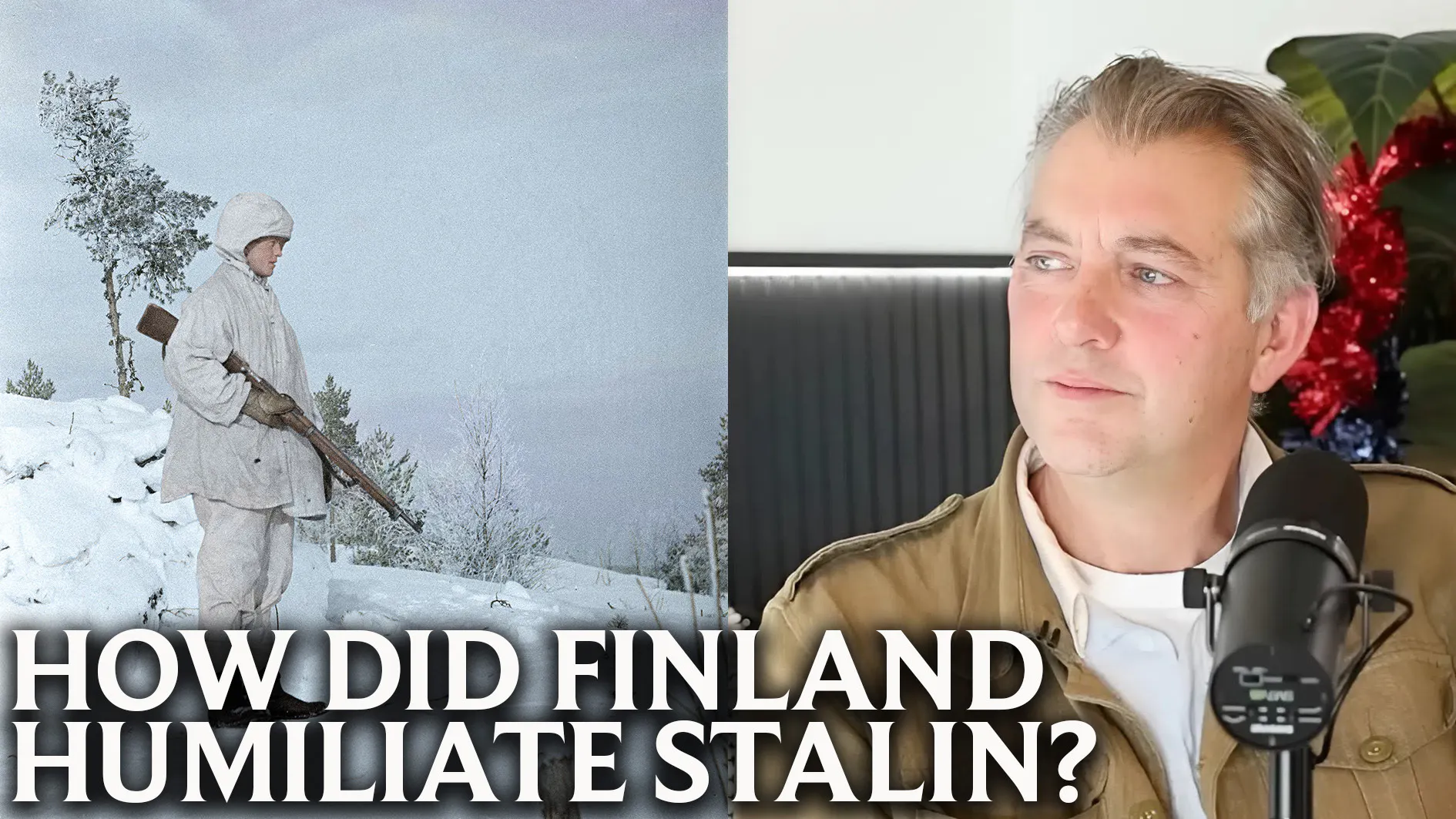
Loading summary
Transcript137 lines
- [00:02]
A
Thank you for listening to. We have ways of making you talk. Sign up to our Patreon to receive bonus content, live streams and our weekly newsletter with money off books and museum visits as well. Plus early access to all live show tickets. That's patreon.com we haveways. At blinds.com, it's not just about window treatments. It's about you, your style, your space, your way. Whether you DIY or want the pros to handle it all, you'll have the confidence of knowing it's done right. From free expert design help to our 100% satisfaction guarantee, everything we do is made to fit your life and your windows. Because@blinds.com, the only thing we treat better than Windows is you.
- [00:45]
B
Don't miss blinds.com's year end blowout sale happening right now. Save up to 50% sitewide, plus a free professional measure. Rules and restrictions may apply.
- [01:04]
A
Achtung. Achtung. Welcome to. We have ways of making you talk with me, Al Murray and James Holland. The old, the old greeting there, Jim.
- [01:11]
B
Yes.
- [01:11]
A
Old school, old school, old school. And we thought we'd, we thought we'd, well, you know, do a kind of on this day in the Second World War. Because one thing we've been doing lately is these series, these very intense series where we look at the, we look at like not a single event, but like a stretch of events centered around somewhere like Malta or the Atlantic War. But, but of course, one of the things to remember about the Second World is it, is this absolutely extraordinary, everything happening all at once. Six years of meanwhile, meanwhile, meanwhile, meanwhile, meanwhile, meanwhile. So we thought we'd do a bit of meanwhile. There's also some AOB that we were talking about string bags quite a lot. And I think, I think it's fair.
- [01:56]
B
To say, yes, I think it's fair.
- [01:58]
A
To say that we have been, we have been kind of grabbed by the string bag, haven't we? By, by the Fleet Air Arm?
- [02:06]
B
Most definitely, yeah.
- [02:08]
A
Yeah, yeah.
- [02:09]
B
It's got a humble nobility to it, hasn't it?
- [02:12]
A
Yes, but also the crews, right. You, you know, obviously what you need for that sort of role is a plane that. Is a plane that can take off and land in any condition and so. In any condition. So that's what they do. And I just find it all.
- [02:28]
B
Do you know what was the worst, worst job in the raf?
- [02:31]
A
What was the worst job in the raf?
- [02:33]
B
It was being a torpedo on a torpedo bomber crew.
- [02:37]
A
Right.
- [02:38]
B
In the Mediterranean, right. So like on a Beaufort or something, you had a 17% chance of getting through your, your first tour. Oh, God. But obviously string bags aren't raf, are they? No. So they're doing the same job.
- [02:56]
A
Yeah.
- [02:57]
B
In an open cockpit string bag as opposed to a proper aircraft where you can actually do something meaningful and get out quickly.
- [03:05]
A
But what's quite interesting though is once they're equipped the anti submarine, you know, with the asw, right. They are used to guide other aircraft onto Italian shipping. So they're sent out with the radar and they're like a kind of master target selecting role where they'll go out, they'll find it. Because I think it had a 30 mile range once it was up and running so they could see over the horizon. Right. It's this whole idea that the Fleet Air Arm is for spotting gunnery. And if you think of the air power as an extension of gunnery and then radar as an extension of the eyeball of spotting, it's like the role continues just with the new technology. It's just so interesting. But one of the things we, one of the things we didn't talk about when we were Talking about Robert LePage in the Arctic convoy is the Raytog Jim, or the Ratog, I don't know how they would pronounce it at the time because the Mark 2 Swordfish has rocket launcher racks. 860 pound rockets. You know, the things on the things on Typhoons, they put metal sheeting on the wing to prevent it catching fire when they fire the rockets. Right. So this endlessly adaptable airframe. So they have this thing called the Ratog, which is the rocket assisted takeoff gear, which is 2, 2 like tubes, snouts, rocket jets projecting under the fuselage. And when they take off, they, they fire it to give themselves an extra punch to get off the deck.
- [04:33]
B
I mean, wow. I mean, what a juxtaposition.
- [04:37]
A
Yeah.
- [04:38]
B
A biplane with struts and stresses.
- [04:42]
A
Yeah.
- [04:42]
B
That can carry radar and be rocket propelled. It's just. It makes no sense.
- [04:48]
A
It makes no sense at all. Absolutely, absolutely no sense at all. I mean, one of the other interesting things here is landing on, as they call it, is really is. That's the dangerous bit. Right. That's the really, really hard part. So what they do in order to reduce the risk of landing on is they extend the range of the aircraft so they're up longer. Right. So you get more out of a patrol. And so in order to do this, as we talked about with the Toronto episode, they kick one of the three crew out, the air gunner gets thrown out because they don't really need him and put a fuel tank in, in the observer's seat and then the observer sits with the air gunner goes. So basically the gunner gets left behind and you know, the accounts are, they're not entirely sad about that. If you're the telegram stagger, you're thinking.
- [05:33]
B
But I don't know how they endured it. I just can't compute what it must be like flying in an open cockpit aircraft biplane from a small escort carrier with icy decks in the Arctic. I just, I just. It's beyond comprehension and I can't understand. I mean we've always said, haven't we, that the British were really ruthless in the Second World War. That's about as ruthless as you can get your air crew, isn't it?
- [06:01]
A
Yeah.
- [06:01]
B
Oh God, don't make a verse. It'll be all right.
- [06:03]
A
Yeah, it really, really, really is. It's the lot you've drawn. It's the straw you've drawn in, in the war's ceaseless lottery, isn't it? And there you are and is, you know, you're in the water for three minutes, you're dead. And there's a story, there's a story from another, from another convoy on Vindex where the. The aircraft is clear. The Swordfish is cleared to take off. As the sea's pitching so much. The aircraft, you know this. Merchant escort carriers doing, you know, doing properly pitching, pitching hard into the, into the, into the rollers and the aircraft's cleared for takeoff as the aircraft carrier is pitching up and by the time he gets to the end of the Runway it's pitching down and he flies straight into the sea. And then it's like, you've got to fish these guys out immediately or they'll be killed by the cold. I mean it's. And they do fortunately in this instance.
- [06:57]
B
But I mean, you know, you and I have been a big. In Hill or Duxford or wherever when they go. It's a bit windy today, you know, we can't go up in a Spitfire. It's like a mild breeze. Try telling that to a Swordfish pilot in the Arctic, in the North Cape in winter with 50 foot high waves. And also, I'm ashamed to say I had no idea, I had no idea about this.
- [07:20]
A
Well, this is the, this is. The thing is, is. Nor did I. And you just kind of.
- [07:23]
B
All these brave, these brave souls who did all this incredible stuff and they're not appreciated because. Yeah, because, well, they are now. But, but you know.
- [07:30]
A
Well, the Arctic convoy was always at.
- [07:31]
B
The back I don't think your book was a bestseller. Was he Le Paige's book?
- [07:35]
A
No, I don't think so, no. But I mean, listen, listen to this.
- [07:38]
B
Yeah, no interest in that. That's the Spitfires.
- [07:40]
A
Yeah. Here's an account of going out on a depth charge patrol, right? It's a guy talking about his first time going out. It was the first time, although it became a frequent experience, that I'd flown out of sight of any vessel and far out of range of land. This brings a special sense of loneliness, especially when in a relatively small single engine aircraft with raid, with radio silence in force, except in emergency, on sight of the enemy. On such flights, the monotony and the vastness of that unending expanse beneath us become so intense that any break is almost always welcome. A slick of oil, a flight of seabirds, a large patch of seaweed, a whale perhaps, or an iceberg. And we would swoop down to examine it.
- [08:19]
B
It's absolutely mind blowing. I just can't stop thinking about it. I can't stop thinking about it. I cannot. I just, I can't. I can't comprehend that kind of scale of endurance. You know, if you're, if you're kind of walking to the South Pole, you've got all the kit, you know what you're doing, you've kind of, you've geared up for. You specially trained for it. Well, you haven't. When you've joined the Fleet Air Arm, you haven't specially signed up, go and fly in the North Cape.
- [08:43]
A
No.
- [08:44]
B
In February.
- [08:45]
A
And listen to this. Landing on.
- [08:47]
B
Different, isn't it?
- [08:48]
A
It's different. It's completely different.
- [08:49]
B
And this is landing on every time. I mean.
- [08:51]
A
Yeah. We completed our search and headed homewards. Akiva still pitching badly, her stern rising and falling some 15 or 20ft as she rode the long Atlantic swell. But my ground speed would be again so low that instead of landing the string bag on the deck, I should practically be able to wait for the deck to rise up and catch the string bag. He's going so slowly into the wind that basically he can wait for the. He can wait for the. I approached with a fair bit of motor, was given the signal to cut, whereupon the deck rose so violently the impact nearly snapped off my tail wheel. I mean, this is like, I. I.
- [09:27]
B
Literally can't think of anything more terrifying. I just, I just, I'm really struggling to understand how they could do this. I really, really am.
- [09:35]
A
Well, you'll be, you'll be relieved to hear that that pilot entered the centurion Club because he'd done 100 deck landings in one go in a row without any instant.
- [09:45]
B
Wow, wow, wow, wow. I tell you what it's made me think about. Do you remember that. That amazing piece in the New Yorker that Paul Fussell wrote?
- [09:52]
A
Yes.
- [09:53]
B
Paul Fussell wrote that fantastic book about the First World War. First World War in memory and some. Whatever it was. But he'd been in that. He'd been in. In 7th army, hadn't he? So, so he was in the 6th army group. It wasn't. It wasn't mentioned officially. William Shara wrote that huge great magnum op on the Second World War and his division isn't even mentioned. And it's made me think about all those millions of people in the Second World War, Spitfire races, for example. And then you think about the people beating around in Swordfish in the North Cape or near Murmansk in February 1944. And you think about the injustice of how we view the Second World War and how subjective it all is and, and how, you know, every historian is constantly making choices about what you include in your podcast or your. Or your. Or your book or whatever, and ignoring a whole host of others. You know, you can't be objective ultimately, because you're always going to leave stuff out, aren't you? But I do think it's responsibility of this podcaster to cast a light onto for the forgotten corners of World War II. And I think you've done a fantastic job in highlighting this experience of LePage.
- [11:12]
A
Those pilots. Pilots are experiencing absolutely every peril of flying that anyone who dog fights in the Battle of Britain does. But. But also in the absolute extreme weather that they've got to fly in the bad weather. They have to. Because. Because the U boat. The U boat will still be taking its punt even in the bad weather, or will be looking to make contact with the convoy or the Condor. What I think has been really interesting about that is that, is that Taranto is without a doubt this extremely glamorous best traditions of the Royal Navy, as we think of it, the aggressive Royal Navy. But the other tradition of the Royal Navy is being out there, you know, in the ocean. Absolutely. Regardless of the cruel scenes. The cruel sea.
- [11:57]
B
Yes. And here you have dogged the. Dogged in relentless stoicism.
- [12:02]
A
Yeah. And of, and, and, And a world of drills and of preparing to come aboard, sir. And absolutely all of your communications being taped down so everyone knows exactly where everything is. And, and everything is completely worked out to the, to the way of making operate safely, but also aggressively in the way the Navy wants to. It's just so. It is so interesting, those air crews. I mean, you know, taking off before dawn, all this sort of stuff. I'm glad we've ended up on this. And I'm glad in a way that it was Taranto that took us to this, because Taranto, like I said, is a glamorous story. Here's the other end of the rut.
- [12:40]
B
The path to the. From Taranto to the North Cape.
- [12:42]
A
Yeah, exact. Exactly. And also there is this. There is this sort of vast churn in the war of all the stuff that comes online in, you know, from mid 42 onwards for through 43, that makes 44 possible. All these crews that are the people training up once the war's up and running, once the roles are being divvied up, you know, how do we deal with this theater? And they work, you know, the trainings worked out, the roles worked out, the airframes decided on the, you know, the, the rocket assisted takeoff gear. The whole thing taking a platform like the string bag and turning it into something serviceable to fly on the way to Murmansk or across the. Or in the air gap in the Atlantic is just unbelievable. And, you know, people want to talk about D Day.
- [13:25]
B
Well, you just have to hope that those who are getting into D Day are then encouraged to go and find out more about other areas, such as people in stringbags in the North Cape.
- [13:33]
A
Now, this is coming out 2026, Al. Yeah, exactly, 2026. Yes. Happy new Year, Jim.
- [13:41]
B
Cheers. And to you.
- [13:43]
A
How was your New Year's Eve? I'm still feeling a bit woolly.
- [13:46]
B
Oh, yeah. Amazing. Amazing. Yeah. On Kangaroo island in Australia.
- [13:55]
A
We need to take a quick break now. Break this war waffle flow. And we'll be back in a second.
- [14:06]
B
This episode is brought to you by State Farm. Listening to this podcast. Smart move. Being financially savvy.
- [14:13]
A
Smart move.
- [14:14]
B
Another smart move. Having State Farm help you create a competitive price when you choose to bundle home and auto bundling. Just another way to save with a personal price plan like a good neighbor, State Farm is there. Prices are based on rating plans that vary by state. Coverage options are selected by the customer. Availability, amount of discounts, and savings and eligibility vary by state.
- [14:36]
A
Welcome back to we have Ways of Making youg Talk with Me, Al Murray and James Holland. Looking at the 1st of January during the war years. And this has set the war waffle tap in full motion. In 1940, as part of the larger Battle of Suomussalmi, Finnish forces defeat Superior numbers of Soviets at the Battle of Raate Road. And accompanying quote with this. The Soviets had been so sure of their victory that a military band complete with instruments, banners and notes had traveled with the 44th Division to perform in a victory parade. The Finns found their instruments among the captured materiel. And we did a bit of the Finnish War last year, didn't we? That battle where there was. Where they were fighting across the ice, across a lake, and basically plucky fins sticking it to the Soviets. The Soviets bodging the whole thing. Botch, bodging and botching the entire thing. Incapable of working out tactically what to do. Pumping men into the problem and then winning in the end, which is incredible.
- [15:35]
B
Well, no, winning, winning. Winning a third, you know, or a quarter or whatever, you know, it's not so very different. Yeah, you know, go to Finland now and they're all pretty, they're pretty keyed up about this and they all know the, the Second World War history, I can assure you.
- [15:49]
A
Yeah, yeah, yeah. Well, I mean, again, again, if you want to make, if you want to make a country, figure out what it is, invade it. I mean, you know what I mean, if you want to galvanize a nation around a cause, I mean, Soviet Union got.
- [16:05]
B
Got a bit of Corellia, didn't they? They got a bit of Corellia and that was it.
- [16:08]
A
Yes. Well, yeah, yeah, that's right. But they did, they did waste countless lives for. For what? And no reason at all. Exactly. For no reason at all. I mean. Yeah, I mean, the, the main, the important takeaway though, from all of that is, thank God the French and British arm. French, British governments decided against joining the, Joining the Finns against the Soviet Union, because that would have made things very complicated further into the war, wouldn't it?
- [16:38]
B
I mean, wouldn't it? Oh, my goodness me.
- [16:43]
A
I mean, but I think.
- [16:44]
B
I think in our hearts we've. We've always been standing shoulder to shoulder to the plucky fins, haven't we?
- [16:49]
A
The plucky fins. Plucky is usually followed by fins, isn't it? I mean, plucky Brits. Plucky Finns.
- [16:55]
B
Plucky Finns, who else? We've now got plucky Swedes as well, haven't we?
- [16:58]
A
Plucky Swedes.
- [16:59]
B
Well, Swedes now.
- [17:00]
A
Well, plucky Ukrainians, I mean, plucky Norwegians. Send in your, send in your plucky nominations on the if and when, if you could. Right, January 1, 1941. As the code breakers struggle, we're cracking The Enigma M codes. The British naval officers are encouraged to search captured enemy vessels to find any material and machines that could help. So, I mean, it works and it, and it. And it works. Yeah, yeah, yeah. But this is the thing, isn't it? Is that the breaking Enigma, getting into those codes, it's, it's no, by no means a foregone conclusion and by no means a sort of straight line is it, to that dominance that by. But by the end of the war, basically, there's just too much of it. They can't read it all. They're trying, they're throwing it away. But you go from. You go from famine to feast, really, with intelligence by, by the end of the war. But at this point, you know, they've got the odd lead here. And the other thing is, is that the Germans, the Germans are well inside British naval ciphers, completely inside it. And British army stuff. And, you know, the British army has very, very lax radio discipline. So the Germans, you know, at this stage of the war, the Germans are absolutely winning the Sigin War hands down, aren't they? And so we won't touch.
- [18:24]
B
I've lost a shoe. I'm returning to pavilion. Love that with the tank.
- [18:30]
A
I mean, you know, any cricket metaphors will do. Right.
- [18:34]
B
Anyway, so one of these days we really should do something on Bletchley, don't you think?
- [18:37]
A
I think we should, but I think we should try and talk about the whole SIGINT war. It isn't like a full.
- [18:44]
B
Because we don't tell it in a balanced way, do we? We're very partisan in narrative of Bletchley.
- [18:50]
A
Narrative is incredibly partisan and it isn't a straight line. It really, really isn't, you know, and there's considerable, considerable to and fro, which, given how sclerotic and collapsed the German intelligence system is, and system isn't really the right word because there isn't one. The fact that the Germans really are doing quite well for quite a long time and the Italians are brilliant at it too. Their intelligence service. Yeah, Sim is really, really. They're really.
- [19:20]
B
Maybe we should do a whole thing. Maybe we should. Yes, we should do something on that as well.
- [19:23]
A
Yeah, because they're really, they're really interesting and what they get up to. I know we have a whole year ahead of us. Here we are drawing up a menu for, I don't know, July Coastal Command.
- [19:32]
B
That's got. That's got to be a priority.
- [19:34]
A
That's got to be done. And I'm going to. I'm sorry, but I'm going to make us do more stringbags in 1942. January 1st, the Declaration.
- [19:40]
B
Every six months we'll come back to stringbacks.
- [19:43]
A
Well, some poor sod doing 80 knots into a 50 knot west. So basically going 30 miles an hour.
- [19:49]
B
You need to find another heroic aircraft to champion.
- [19:51]
A
We'll think of something. I mean, here's the thing. When I was reading all that Fleet Air Arm stuff that one of the, one of the advantages of the Hurricane that didn't have a folding wing when they had the, when they got the Hurricanes onto an adapted one, is that because the wings don't fold, rearming them is that much easier. They could rearm them dead quickly, get the ammunition in the wing that much faster because the wings aren't in compartments. And so the, you know, the swings and roundabouts of when the Hurricane arrives on carriers, which is that basically they aren't easy to put away and stow, but what they are, is easier to turn around. And if what you need is combat air patrols, an airplane you can turn around quicker is a better bet. I mean, well, also, I mean the other thing is an aircraft carrier. You can't fly more planes in from 11 group or 10 group to replace who's been shot down. You can't rotate the squadrons. That squadron on that ship has to do everything constantly. It's hard going. So January 1, 1942 is the declaration by United nations which is signed by the Big Four. Jim.
- [20:56]
B
Roosevelt's been really, really pushing because he was very taken with the notion of the League of Nations. And I think the big problem, the League of Nations that was put forward by President Wilson, one of his predecessors and obviously one of the architects of the Versailles Treaty. The idea of the League of Nations was a really good one that, you know, you're all together and you put checks on military buildup and you'll help one another. And all the rest of these are all kind of noble ambitions. The problem that Wilson had with his utopian dream in 1919, et cetera, was that he didn't take people with him and he was just a bit too self righteous about the whole thing. And Rousseau learns from this, but is a big kind of proponent of the United nations. And in 1942 he is still thinking that post war there, there is a place for the USSR to sort of come into the fold, come in from the cold and do a kind of a softer version of communism which is more kind of more socialist, more, more kind of generous. And he's, he's not saying it's going to happen. But he's hoping this will happen on the basis of the generosity the Americans have shown in the west have shown towards Soviet Union with Lend Lease and all the rest of it. And that comes from Britain as well, of course, and the Dominions. As much as it does from. Well, not as much as it does from usa, but, but the principles are behind it. The is where this is coming from. And with China, it is also, you know, as you know, Roosevelt is very obsessed with China and wanting China to kind of be a bullock against. Against Japan. But of course, the problem is, is that Stalin is an autocrat and Chiang Kai Shek is an autocrat and it's not really going to work. But we still have the United nations, of course.
- [22:29]
A
Yeah, but what, I mean, with the Soviets, why not hope that they go in that direction? You know, because that would be. It's, it's entirely reasonable. Again, you know, in the sort of headbanger sphere, it's like people saying, well, that proves that Roosevelt's a communist because he's like letting Stalin do what he wants. Whereas in fact he's thinking, if we can bring these people in from the cold also it's been good for American business. Let's not forget that there's a future market in the Soviet Union.
- [22:53]
B
Oh, yeah, yeah, yeah. No, that is absolutely at the forefront.
- [22:57]
A
Let's not pretend otherwise that the Americans, you know, having sold, maybe they're thinking, well, the Soviet Union will like, carry on buying our footwear forever because they like our boots or whatever. And I think that's, that's the, and trucks and trucks and they'll need spares for the trucks. And there's trade here.
- [23:16]
B
And we, and we've, and we've bonded by, by defeating a common foe, et cetera, et cetera. I mean, you know, that counts for something, surely, you know, that's, that's the thinking behind it.
- [23:25]
A
The problem, of course, is Stalin. But, you know, you could apply that to any conversation involving Stalin. The problem, of course, is Stalin. It's. And this sort of Soviet thing of, or Russian, traditional Russian thing of a maximalist position which you can't negotiate with. You know, the Russians start. And here we are again, start by declaring what they want and never shift. There is no meeting in the middle. And this is, I think, I think it's understandable that people think this war has been so cataclysmic. Surely part of the outcome is that even rival nations with opposing systems have to understand that we can't go on like this. But that then flips straight into a Cold War mentality afterwards when they realize, well then you're not interested, soldier. I mean this, you know, we, as you say, we still have the UN clears throat about how effective it might be. But there we are then in 1990. I mean, it is interesting though that the UN is in its own ways the product of the failure of the League of Nations. And as you say, you know, Wilson doesn't carry Congress with him, does he?
- [24:34]
B
Well, as I say, he's just too self righteous about it. He doesn't carry him with him, you know, when he goes to Versailles, he doesn't take any Republicans with him.
- [24:41]
A
There's also, there's also in America, there's enough plain straight anti British sentiment, isn't there, that they're suspicious of the deal. There's this idea that Britain tricked the Americans into coming into the war after all. So that isn't there, that we dragged them in under false pretenses, that making them arms and doing business with them and making money out of the war was one thing, but actually fighting it was another. That's the, that's on the British government. Once, you know, once, you know that that idea is abroad. That explains Wilson's sort of failure to make the League of Nations stick in the US and also it explains ongoing American policy towards Britain in the interwar years. You know, a big part of the flavours. We're not getting involved again. They tricked us into it actually. Who is our global competitor? If you're an American politician? The British Empire. You can completely see it. Completely see it. Right. 1943, January 1, 1943. Some good news from our Soviet colleagues. The Soviets declare that they've encircled 22 German divisions at Stalingrad. And on January 31, Paulus would surrender rather than do himself in. Is Stalingrad the turning point? The Second World War? Jim, discuss. There we go. I've rolled that stun grenade into the room.
- [25:57]
B
I don't think it is, I don't think it's the. I think it's a. I think. Because I still think, I think the failure of Barbarossa is more significant. If you're talking about strategic earthquakes. Strategic earthquake 1. Fall of France. Strategic earthquake 2, defeat of the Luftwaffe in the Battle of Britain. Strategic earthquake three. Actually, I've got to say, I think the sinking of the Bismarck is a pretty big moment, actually. And I think because it comes on top of those U boat losses in March, I think it is the end of the. For to all intents and purposes, it's the end of the surface fleet. So therefore that means they are no longer going to be able to stop the Allied supply lines across the Atlantic. They can still inflict damage, but they're not going to win that battle. That campaign is lost to them at that point. So I think that's pretty major then. I think the failure of Barbarossa is a catastrophe from which there is no realistic chance of Germany ever recovering. Because even if they have. Even if they have successes, which they do, obviously in the summer of 1942, they can't hope to defeat the Soviet Union. They can inflict defeats, but they can't annihilate the nation. They're not going to. That's just not going to happen. It's too big. They haven't got the resources, they haven't got supplies, they haven't got the infrastructure.
- [27:17]
A
Well, and in a way, Stalingrad is. Here is the failure of Barbarossa, here's the consequence of the failure of Barbarossa. It's. It's the direct product thereof.
- [27:27]
B
Correct. So I think that that's the sign, the significance of Stalingrad is, oh, shit, we're gonna lose. You know, that I think has already been decreed in the stars, but I think that's the realisation. What follows is the. Is Goebbels infamous Sports palace speech after that in February 1943, where he goes, right, it's total war. You know, we've reaped what we sowed. We're all in it now. There can be no turning back because we've gone down this course and you, you all signed up for it. So don't complain.
- [27:59]
A
Nothing like being made responsible for the decisions someone else has made, right?
- [28:02]
B
And I think that's the big strategic earthquake. I. I think thereafter, I don't think the strategic earthquake's really. I mean, the earthquake is the kind of unexpected, isn't it? It's, it's the kind of. Not the unexpected. It's the kind of. Sort of the big kind of lightning bolt moment where I think, I think from, from that moment onwards, it's all kind of. It's, it's, it's a progression, isn't it, towards the ultimate Allied victory.
- [28:22]
A
I keep saying Singapore and I know, Jim, you can't even hear the word right, so, you know, Singapore.
- [28:28]
B
See, what I'm so excited about, about the Atlantic War is it really does mean that I can do 1941 and we win. Honestly, I've just had a big grin on my face ever since kind of realizing this. It's Just been fantastic, as you say.
- [28:39]
A
It's, they're reaping what they've sown. The failure of Barbarossa is manifest in the mess they've got themselves to in Stalingrad. This is what you do if you embark on a thing that's impossible is you end up in that situation with 22 divisions, so called. And let's not forget it's about to happen again in Tunisia.
- [28:57]
B
I also think that the Red army, the Red army have flattered the Germans in 1941. I mean the Germans haven't won in 1941, but that is despite the kind of gargantuan scale of ineptitude on the part of the Red army and frankly from the Soviet leadership in the opening months of Barbarossa. So, you know, I, I think the whole Eastern Front thing needs a complete, it really needs deconstructing, taking back, stripping back and starting again. How we think about it. Because, because I think the, the, the, the, the well worn narrative of Barbarossa is generally wrong. And, and the guy who's doing the most exciting work about this is David Stahl. Yeah, but by, by miles, I mean, you know, he, he's pioneering.
- [29:41]
A
Well, you, we, we, yeah, I mean the, the Soviets flatter the Germans certainly. But the other thing they also do is because they didn't, because Stalin doesn't care about his people. They encircle and, you know, encircle 300,000 people here, half a million there. He doesn't care.
- [29:55]
B
Well, he cares if they lose, that's the point.
- [29:57]
A
Well, he cares if they lose, but if in the end he wins, he doesn't care. You know, you've got to put on, try and put on the Soviet head to think about the way, you know, those look like staggering.
- [30:10]
B
He doesn't care about the losses, but he cares about the loss of land. And the point is in the loss of prestige. And so he doesn't care about individuals, of course, he doesn't even care about armies, but he doesn't want to be losing this amount, you know, and it is this, and it remains this unconvenient truth for the narrative of the Great Patriotic War, that the only reason Stalingrad is encircled by the Soviet Union by the Red army is thanks to the 75,000 trucks that the Americans give them because otherwise they're not mobile enough. They can't physically do it. So, you know, that is the key to unlocking Operation Uranus and it's American automobile industry. And that's just not part of the narrative anymore. But it's Reality, I'm afraid to say.
- [30:55]
A
Okay. January 1, 1944, the British architect Edward Lutyens dies after a long battle with cancer. And he is, of course, best remembered for the great war memorials, so Tiepval and the Cenotaph in London.
- [31:08]
B
Well, and also for the design of every cemetery. The cross with the crusader sword on it, the Plymph with their name, liveth forevermore. That's also Lutchens. And actually, back in September, my daughter Daisy and I were driving down to Cornwall and we called in at Castle Drogo. You ever been there?
- [31:28]
A
No, but I mean, what a name.
- [31:30]
B
Amazing, amazing country house designed by Lutchens, the turn of a century. A sort of Edwardian piece, but it wasn't finished till after the first World War, and. And the owner's son was killed in the first World War, and there's a shrine there to his son in the house. It's this huge, great, great big granite building designed by Lutchens. It's absolutely remarkable place. Anyway, A truly great architect, you have to say, wouldn't you?
- [31:57]
A
Well, and. And part of the sort of digestion of loss in war in the industrial age, you know, how we. How the country's come to express itself through commemoration and memorial. Like, really hugely important figure culturally. And then January 1, 1945, just a bit of fun for fans of the Luftwaffe. Operation Burden Platter. If you're, say, the Germans and the war's ending, right, and you have still got some gear that works. What do you do with it, Jim?
- [32:21]
B
I tell you what, you launch it in a mass raid and try and make sure that you lose as much of it as possible in one operation. I think that's probably the way to go, isn't it?
- [32:29]
A
Yeah, but, Jim, you inflict considerable damage on the allies that day. I mean, Bowden Platter falls squarely into the, you know, we've got to do something, right, Category of operational art, right? Because they know, I mean, they're lucky. They catch some people on the ground and they achieve surprise.
- [32:47]
B
Well, you know, here's a great one for promising a mass raid of a thousand aircraft. So. So he does this, and I think it flows back to the thousand bomber raids of the British launch in May 1942. And. And I think he sort of thinks, well, I like. Yeah, that's got a ring to it. So don't remember, he promises it, doesn't he? At Operation Lutech at the end of the Normandy campaign, we're gonna have, you know, you're gonna have this huge tank again. It's gonna be supported by a thousand different fighter planes. You know, not a single one turns up. And then. And there's another time where there's going to be a thousand planes and they never turn up. And, you know, it's just, it's just like a sort of catalogue of, oh, on D Day itself, there's gonna be a thousand planes that never turn up. Do they? I think this is sort of in the great tradition of Hitler saying there's going to be a thousand fighter planes, but on this occasion they kind of more or less do turn up, but most of them get shot down or.
- [33:32]
A
A significant enough portion because, I mean, because remember reading the Pierre Klosterman account, which is about how although they've got air supremacy, people are still getting shot down, flak is still making their lives a misery. So you don't need to spunk all these planes on a big, on a big raid. You can keep a tritting and keep, keep, keep chiseling away at the Allied Air Forces. We've, We've heroically covered the 1st of January for every, every 1st of January of the war years.
- [34:05]
B
So what have we got for 90? What have we got for 20, 26? We've got four fighter group. US four fighter group.
- [34:10]
A
Yeah. Yeah.
- [34:12]
B
I'm very keen to do a big thing on Guadalcanal. I think that would be fun.
- [34:15]
A
Okay. Yeah, great. I think I need, yeah, I need to find another aircraft to champion.
- [34:21]
B
You need another aircraft? Champion. I think we should also do Coastal Command.
- [34:24]
A
We won't do Singapore. No.
- [34:26]
B
All right. At some point someday we can do Singapore.
- [34:31]
A
But the Hood versus the Bismarck is our first series out of the blocks on January 6th to start the year off. So this epic naval encounter that I know you're all gonna, you're all gonna.
- [34:44]
B
Love, I think it's generally more naval stuff, don't you?
- [34:46]
A
More naval stuff. Yeah, but, but a huge thank you to everyone for listening through, through 2025. We know that the ranks have swollen and you're all volunteers. No one's conscripted. This is the thing. It's been a, it's been a real blast talking to you about the Second World War. And Jim, it's always, it's always a laugh talking to you about the Second World War, but to have our audience involved with this, to be part of this war waffle continuum is a very special thing. And thanks, thanks to everyone who came to we have Ways Fest. Thanks to everyone who's going to come to the next we have Ways Fest and I'm sure it will be all of you and many, many more.
- [35:21]
B
And here's hoping we get a string bag over.
- [35:23]
A
There's hoping we get str. String bag over. Absolutely. Doing 80 knots into a 50 knot wind. So barely moving. So thanks everybody for listening. Thanks, Jim, for a fantastic year of war. Waffle. Happy New Year, everybody. Have a happy New year.
- [35:37]
B
Happy New Year to you all.
- [35:39]
A
Cheerio.
- [35:39]
B
Cheerio.
- [35:50]
A
Sam.