← Young and Profiting with Hala Taha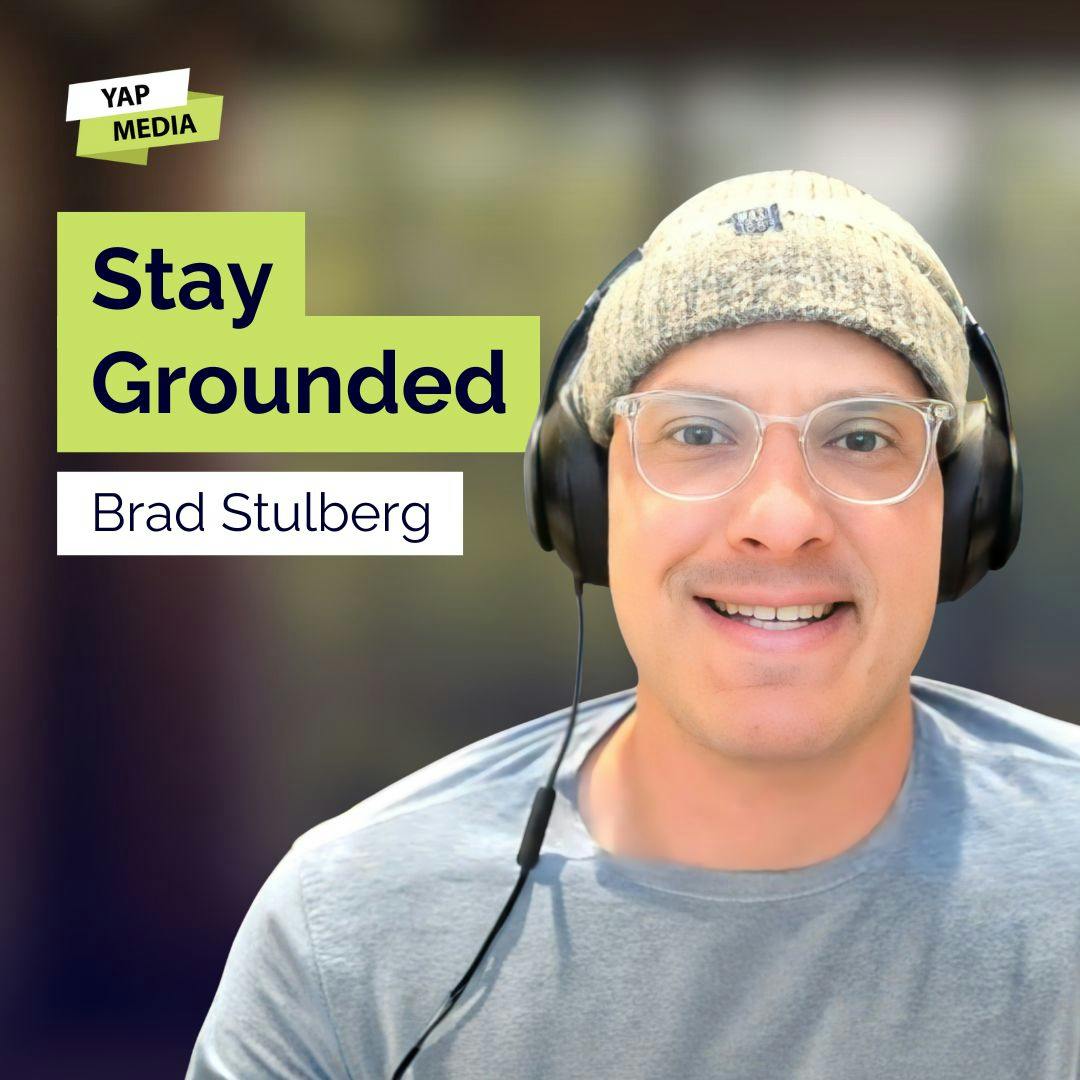
Young and Profiting with Hala Taha
Brad Stulberg: Six Mental Health Principles Entrepreneurs Need to Beat Burnout | Mental Health | YAPClassic
01:10:11
Loading summary
Transcript80 lines
- [00:00]
Brad Stulberg
Foreign.
- [00:12]
Host 1 (possibly a male co-host or sponsor read)
What's Going On Young and Profiters? Today's Yaffe classic is all about redefining success from the inside out. If you've ever found yourself grinding non stop hitting milestone after milestone, yet still feeling like it's just never enough, this conversation is going to hit home. I sat down with bestselling author, researcher and human performance coach Brad Stulberg to unpack Groundedness, which is his research backed antidote to burnout, anxiety and the nonstop chase for more. Brad went from coaching elite performers and writing books on peak performance to privately battling severe ocd, intrusive thoughts and a total mental collapse. That breaking point led him to redefine success around six principles of groundedness. In this episode, Brad shows us how to loosen our grip on heroic individualism, relate to our emotions more skillfully, build deep community, and still pursue big goals without losing ourselves. It's an essential listen for all of us high achievers and young and profiters, especially in the new year. So without further ado, let's get into this interview with Brad Stuhlberg.
- [01:13]
Host 2 (likely female, main interviewer)
I'd love to get more color about your background, so would you kindly walk us through your career path and how you first got into performance coaching and writing and some of your proudest accomplishments?
- [01:25]
Brad Stulberg
Yeah, it's been a really circuitous path, to be honest. I've always just kind of vaguely followed my interests and somehow ended up here. I'll do my best to do it quickly, but it really started all the way back in high school when I fell in love with writing. And like most high school kids I thought, okay, well I'm going to be a writer. And I applied to Northwestern University's journalism school, which is one of the best in the country, if not in the world. And I didn't get in. And again, like most 16, 17 year old kids, I said all right, I guess I'm not going to be a writer. And I went on to a different school. I studied economics and psychology and I then took a job at the consulting firm McKinsey and Company. And throughout school, throughout that first early job experience, what I didn't realize is that I was actually always writing. So even at a place like McKinsey, I was never the person building the financial model. I was always the person doing the memo for the client or coming up with the PowerPoint slide deck telling some sort of story. And when I was at McKinsey and Company, I became really interested in health and healthcare and I got a bird's eye view to all the ways that our health care system at Least here in America is not the best. So that led me to public health school, and it was there that I kind of had this aha moment, at least for myself, that there's really two ways to go about health care. One is the care part, which is often disease driven, and the other is the health part, which is, well, how do we stay healthy, how do we thrive, how do we keep ourselves out of the traditional healthcare system to begin with? And that set me on this path to exploring all things human performance, health and well being. And through a whole bunch of just grind and pitching and getting rejected and getting rejected some more, I eventually got lucky and got some of my writing placed, which led to getting more writing placed. And it's just been an upworld swirl since then, though I still get declines more often than not.
- [03:40]
Host 1 (possibly a male co-host or sponsor read)
That's awesome.
- [03:41]
Host 2 (likely female, main interviewer)
Yeah. And. And you are the best selling author of multiple books, which is awesome. And I love how you talked about using your writing skills even when you were in healthcare and how those skills still translated later on when you wanted to become a writer. Because a lot of people think that when they get into certain fields that they're kind of locked in. But the fact is. And especially writing, writing cuts across so many different things. And I always say this, especially recently as I have a marketing agency and the hardest thing to hire for is people who know how to write well. And I feel like there's this big gap in our society of people who actually know how to write compelling stories. And this storytelling capability, I feel like is so needed right now, especially when everyone's so focused on tech skills.
- [04:24]
Brad Stulberg
Yeah. And what I didn't realize, and what's so interesting in hindsight, is that I was training to become a nonfiction writer at McKinsey Co. Because if you think about what a big consulting study is, a client comes to you and says, we've got this thorny problem and we want you to solve it. And then you do all kinds of research. You interview experts, and you craft a bunch of hypotheses as to how to solve that problem. And then you explore them. And then if you're any good at your job, you come up with a decent solution, and you also tell the client all the ways that you might be wrong. And that is the exact same framework that I use to do my nonfiction writing. I define a problem, I do research, I interview experts to try to get to a solution. And then I also ask myself, well, how might I be wrong? What are some other solutions that could work too? So I never realized it at the time, I certainly wasn't thinking to myself, oh, this is good training to be a consultant, or excuse me, in consulting to be a writer. It's only something I saw in hindsight.
- [05:26]
Host 2 (likely female, main interviewer)
Totally.
- [05:27]
Host 1 (possibly a male co-host or sponsor read)
I love this story.
- [05:28]
Host 2 (likely female, main interviewer)
I love skill stacking and hearing people stacking their skills and how they translated skills from one field to another. It's my favorite thing to talk about. I want to move on, so let's take everybody to 2017. This was a dark time in your life. You were around 31 years old. To the external world, you had everything going on. You were an expert on human performance already training elite athletes and coaching entrepreneurs. You were a best selling author on peak performance, but inside you were suffering and you developed OCD and you actually started getting suicidal thoughts and self harm thoughts and anxiety. And it kind of came up out of nowhere from my understanding. So talk to us about that time in your life because I think that was really the trigger for you to start thinking about success differently.
- [06:13]
Brad Stulberg
Yeah, it definitely did, as you mentioned, blindside me from nowhere. I had no prior history with depression or anxiety, at least not that I knew of. And it was like a switch in my brain got flipped in a devastatingly wrong direction. I was fortunate to have such a stark experience between before and after that. It didn't take me long to get help. I was very quick to go to my partner, Caitlin, and say, like, something is wrong with my brain. This is scary, I need help. And I think that in my story, the pivotal moment was getting help and getting a diagnosis of obsessive compulsive disorder because I thought I had some kind of like unrelenting depression. But it actually is a fairly common theme in OCD to become obsessed with the potential to hurt yourself or to hurt others and constantly have these intrusive thoughts and then try to make them go away and then the thoughts get worse and it's just this vicious cycle. And I was fortunate enough to see a wonderful therapist and psychiatrist that fairly quickly diagnosed me with ocd, began treating me based on the evidence for ocd. And though at the time it felt like forever, each minute felt like a day, each day felt like a year, it was probably about six to eight months where I was really in it before I started to see out of the dark forest and get to the other side. And during that time period, as you said, I began to just reevaluate. Well, what does success even mean? And what does it mean to be excellent?
- [07:55]
Host 2 (likely female, main interviewer)
And.
- [07:55]
Brad Stulberg
And before I had this experience, I thought that I knew what depression or Anxiety, or OCD was. And it's as if you look across a river and you see people on the other side of the river and you're like, oh, I can see what they're going through. I get it. But it wasn't until I myself was on the other side of the river that I actually had any idea what it meant to be depressed, what it meant to be anxious. And it really did lead to, like, a reevaluating of kind of the basic principles that I think and that I write about. And it's not to say that the first two books aren't defensible. The way that I like to talk about it is those books are for when everything is clicking and everything is going well. Groundedness is much more about what's the foundation that is going to hold you, not only when things are going well, but also when things aren't. And what's funny is because it recently came out, everyone thinks it's a pandemic book. So they think I wrote this book because we're all going through this pandemic. And outside of people in book publishing, that makes sense. But the truth is, it takes, like, three to four years to publish a book. So the manuscript was mostly done before the pandemic. And I think what the pandemic has shown is that, yes, while we experience these things differently, suffering is universal and anxiety is universal, and it ebbs and flows for different folks at different times of their lives. And yet it is part of the human experience.
- [09:18]
Host 1 (possibly a male co-host or sponsor read)
Yeah, totally.
- [09:19]
Host 2 (likely female, main interviewer)
And it's funny because when I think of OCD like you just mentioned, you have no idea what it's like. I don't have it. I don't have depression. So when I think of ocd, I think of, like, compulsive hand washing and things like that, but it's way more than that. So can you give us more detail in terms of what OCD really is?
- [09:36]
Brad Stulberg
Yeah, I'm glad that you asked, and I wasn't sure I didn't want to go in this direction because it can take time to explain. But let's do it, because I think it's important. So, as you pointed out, OCD is often portrayed in movies, in books, as hyper organization, or being a neat freak, or having to have everything perfectly in order. While OCD can manifest that way, that's certainly not the only way it manifests, and that's probably not even clinical ocd. So actual clinical OCD is defined by an intrusive thought or feeling that constantly bombards you. So in my Case that intrusive thought was, I might harm myself or I might be like this forever. And then the feeling that accompanies that thought is 10 out of 10, anxiety, despair. So it's this web of like a really shitty feeling with a really shitty thought. And then with ocd, the compulsion is trying to make it go away. So for some people, that compulsion is counting to 10, or if I just wash my hands, then I'll never get sick and I won't die. My compulsion was very internal. So what I did is I tried to problem solve my way out of it. So I go Google depression and suicidal ideation and try to convince myself that I wasn't actually going to do it. And what that does is it gives you relief, maybe for a minute, but then the OCD brain says, well, what if you're wrong? What if you actually are going to do it? Followed by bad depression, bad anxiety accompanying those, and you get into this cycle. So the themes of OCD too, they're really bizarre, but they're really common. And I think it's important just in case listeners might be going through this and are ashamed to get help. So I thought, like, this is nuts. This is just happening to me. There's no one else that's constantly worried about this or constantly questioning the meaning of life. But sure enough, it's like one of the big ten themes of OCD is existential ocd, which is just that, what's the point of it? Another form of OCD that I fortunately have never had this theme, but again, is really common, but people are ashamed to talk about it, is you think that you're going to randomly push someone in front of a car or push someone onto the tracks of a subway so then you don't leave your house. Or when you do, you get so anxious because you think that you're going to do this thing. And the person experiencing that thinks they're a psychopath. They think they're crazy, but actually it's the fact that they don't want to do it and that it's accompanied by so much anxiety that makes it ocd. So to zoom out from the weeds, it's some sort of intrusive thought and feeling that is like 10 out of 10 bad, accompanied by some kind of compulsion that you do to make it go away, which can be something external, like counting, like organizing, like washing your hands, but it can also be something internal, like problem solving or trying to convince yourself all the reasons you won't do that bad thing.
- [12:37]
Host 2 (likely female, main interviewer)
Yeah, thank you for explaining that, because I really think that a lot of people have OCD wrong. So I'd love to learn how you.
- [12:43]
Host 1 (possibly a male co-host or sponsor read)
Pulled yourself out of it.
- [12:45]
Host 2 (likely female, main interviewer)
Was it the writing of this book that really helped you figure it out, or how did you get yourself out of that? Or is it something that you never get out of?
- [12:54]
Brad Stulberg
I think it's a little bit of both. So what I'd say is that I still have ocd, but my experiences of it are much less frequent. And when I have them, I have tools and they're less intense. So if these intrusive thoughts and feelings used to take up 8, 9 hours of a day, and that's what it was like when it was bad, now maybe it's a few hours a month. How did I get there? The short answer is through eight months of therapy and medication. And I am so grateful again that I got the right care. I got in treatment early and now I meet with my therapist about once a month. But now it's more just like a coaching relationship since I do have the skills to navigate the OCD when it comes on. But yeah, for those eight months it was pretty intensive therapy. And then the book helps me make sense of all this. So at first I'm going through this and I want to intellectualize it and I want to problem solve and actually that just makes it worse. So when I was in the thick of it, the thought of writing, I would be faking it, going through the motions. I was not in good enough mental health to create any kind of good intellectual work. When I got to the other side of it, that's when I could look back and examine, hey, here are the things that I've learned in therapy. Here are maybe some of the things that I've overlooked in the past. And oh, when I hear so many people that I work with in my coaching practice complaining about being restless or never being able to turn it off, or constantly checking their email or social media, I now have this new framework to think about it, which are, sure, these aren't extreme clinical obsessions, but so many of the things in day to day life that make us feel restless and anxious are very similar in the fact that they're things that we don't want to be thinking about or we don't want to be feeling, but we feel like we get sucked into them and we're not really sure how. And that became the operating hypothesis on the book. I think something else to say that's really important is about four to five months. Let's see. No, actually it's Closer to seven months into experiencing ocd, I decided to write an essay that went into pretty intense detail about my experience. And the genesis of that was exactly what you said when we brought up this topic. To the outside world, I'm like 31 year old whiz kid coaching world class athletes and executives and a best selling book and another one on the way, but inside I'm totally falling to pieces. And the cognitive dissonance that I felt when I get emails from people along the lines of, how'd you figure it out? Tell me about your path, especially young men, like, how did you get to do what you did? And then I'm feeling like it just that became almost as bad as the OCD itself. And at that point I'm like, I'm either going to stop doing this kind of work or I need to reconcile that this is a part of me, but I can't hide it. And a psychiatrist told me that a huge part of Peak Performance, which was literally the title of my first book, is the Ability to play through the pain. And that really stuck with me. So I wrote this essay saying, hey, some of you might think that I'm a fraud, I'm a fake, you're never going to want to work with me again, but this is my experience, this is what I'm experiencing right now. And I believe that I can know and coach towards these concepts and struggle myself. And I was a little bit scared about the response to that essay, of course, but it was so overwhelmingly positive. And I think that was another aha moment when all these people that I never would have guessed come out of the woodwork emailing me about, oh, me too, or I have bad depression or I've experienced anxiety or oh, I've never felt like this, but my colleague has and you've given me a whole new way to think about it. And that was, I think, that my own experience. Plus that was the juncture that led me to say that, hey, I've spent enough time exploring the evidence based principles for when everything is clicking the top of the metaphorical mountain. Now I want to explore the base.
- [16:58]
Host 2 (likely female, main interviewer)
I love that. That's so interesting. And like you said, you were familiar with doing research already from your previous books and then also your previous career. So what kind of research did you do for this groundedness book to uncover those six principles? Because groundedness turns out it's not really new. There's a lot of like ancient history and traditions that you researched as well.
- [17:19]
Brad Stulberg
I wanted to be really broad in this approach and that's because I wanted to get as close to truth with a capital T. What I mean by that is principles that I can be confident apply to most people in most situations. I thought of the research process as a three legged stool. One leg of that stool was what I'll call modern empirical science. So what are the findings in peer reviewed studies? What are the findings in meta analyses or studies of studies? The second leg of that stool is history and ancient wisdom. What themes are prevalent across various perennial wisdom traditions? Buddhism, Taoism, Stoicism? What themes have applied at some points of history but not others? Then the third leg of the stool is daily concrete practicality. So when I go talk to people that are practicing groundedness out in their lives, that are experiencing a more fulfilling, easeful kind of success, what are they doing? And I spent about a year, just thousands of note cards, laying out all of these findings and themes and boiling down, boiling down, boiling down to eventually these six principles that kept coming up in all three of those areas. So in the modern science and the ancient wisdom in history and in daily practice of people in the world today. And the reason I said three legged stool is if you think about a stool, if it's got three legs, it's sturdy, you can be confident it's going to hold you. It's got two legs, it's wobbly. If it's got one or zero legs, it's not going to work. And since groundedness is all about a foundation to hold you, I felt like I really had to be sure that everything in this book has all three legs.
- [19:08]
Host 2 (likely female, main interviewer)
I love that. And it's really full of, like, amazing material. And I really enjoyed reading this book. So let's get into some of the key phrases that you talk about in this book and some definitions. So you talk about heroic individualism and you say it leads to unhappiness and burnout, and it is perpetuated by modern culture that relentlessly says you need to be better, feel better, think more positively, have more, and optimize your life. I'll confess that Young and Profiting podcast talks a lot about that kind of stuff. So talk to us about heroic individuals and what's wrong with that.
- [19:42]
Brad Stulberg
Well, so you defined it from the book. And I think that the way that I think about it when it becomes problematic is when you're more worried about beating yourself or other people than you are about the actual effort and your level of presence in the moment. And this manifests in what I call if then syndrome. So if I just get 5,000 subscribers to my newsletter, then I'll be happy. If I just publish my first book, then I'll be content. If I just win that NBA championship or that Olympic gold medal, or if I just get that Series B round of funding, then I'll feel like I have real self worth. And that is an illusion as old as time, literally. Stoicism and Buddhism were both in some ways created to address that illusion. Modern science, we call this the Arrival fallacy. And it's just that it's this notion that if I just do this, then I'll arrive. And I think that heroic individualism often can perpetuate that by telling us that we need to get something out in front of us for ourselves to feel whole. And groundedness is not about checking out into a monastery and letting go of striving and desire. What it's about is trying to channel striving, desire, motivation, energy, drive in more skillful, productive ways. So if you think about there's two ways to climb a mountain, and this can be a real mountain, but it can also be a metaphorical mountain. You can think of this as career advancement, relationship advancement, you name it. One way is to constantly be thinking about the top of the mountain and thinking about the selfies that you're going to take when you get there and how good you're going to feel when you finally arrive. The other way is to just be where you freaking are and to even enjoy the view from the side to have fun as you're climbing. And what I argue in the book and what the science supports is not only do you obviously feel better if you're having fun and you're grounded as you're climbing, but you also perform better because carrying the weight of that anxiety to need to get somewhere is never, never, never ever helpful. Whereas if you can be free and you can be both good enough now and truly have self confidence and believe that you're good enough now and want to get better because you're curious and it's fun. That kind of energy and drive is so much more sustainable. The last thing I'll say, because I think that it is such a ripe topic for listeners of this podcast, is it's not all or nothing, right? We're all on a continuum between like heroic individualism and groundedness. And the point of this book is just to help people shift a little bit more towards groundedness. I know this myself. The week that my book comes out, I am spending more time than I want to admit in heroic individual mode. I'm checking my sales rank. I'm trying to get op EDS placed in the New York Times and Wall Street Journal, and I'm constantly checking to see if I got emails back from editors. I did it for a week, but then I put this really hard boundary on it because I know that that's ultimately unhealthy. And I'm using myself as an example to elucidate that. A it's very hard to be like 100% on this and if you get it 60% right, it's good. And then B so much of heroic individualism is the environment that we operate in. So it's all fun and good to say be where you are, so on and so forth. But then when you try to sell sponsorship for a podcast and they're like how many downloads do you have? Well, that number matters. So it's not saying that these end results, these peaks, don't matter. It's just trying to help us feel a little bit better as we strive and have our self worth be something more than an external result. Which again, the big paradox is that gives you the best chance at getting the external result and actually enjoying it when you do.
- [23:34]
Host 1 (possibly a male co-host or sponsor read)
Yeah fam, you just realized your business needs to hire somebody yesterday. How do you find great candidates? Fast, easy use Indeed. When it comes to hiring, Indeed is all you need. Stop struggling to get your job posts seen on other job sites. Indeed Sponsored Jobs help you stand out and hire fast. With Sponsored Jobs, your post jumps to the top of the page for relevant candidates so you reach the people you actually want faster. And it works. According to Indeed data, Sponsored Jobs posted directly on indeed get 45% more applications than non sponsored jobs. What I love about Indeed is knowing that my job post is getting the visibility that it requires. Plus, with Indeed Sponsored Jobs, there's no monthly subscriptions, no long term contracts, and you only pay for results. There's no need to wait any longer. Speed up your hiring right now with Indeed and listeners of this show will get a $75 sponsored job credit. To get your jobs more visibility@ Indeed.com profiting just go to Indeed.com profiting right now and support our show by saying you heard about Indeed on this podcast. Indeed.com profiting terms and conditions apply. Hiring Indeed is all you need. Yap gang. There are certain services you don't think about until they stop working, and Internet and mobile are at the top of that list. When connectivity is slow and unreliable, everything from work to content creation to just basic communication gets so much harder. And that's why Spectrum Business focuses on reliability so it's not something you have to think about. For me, that peace of mind really matters. I want my Internet quietly working in the background while I focus on growing my business. I do not ever want to think about my Internet. I just want it to work. And that's where Spectrum Business really shines. They keep businesses of all sizes connected with fast, reliable Internet, advanced WI fi, phone, TV and mobile services. They also offer tailored connectivity solutions with packages built for your business budget, which matters when you're running a team. But here's what really sold me. If something ever does come up and there's an issue, they offer a hundred percent US based customer support 24. 7 to help you stay up and running. It's no surprise millions of businesses trust Spectrum Business every day. To stay connected, visit spectrum.combusiness to learn more Restrictions apply. Services not available in all areas what's up Yaf Gang? When you start a business, nobody really tells you how many hats you're about to wear. One minute is a creator, the next year the marketer, then you're the finance team and customer support. Before you know it, it can feel like way too much on your shoulders. But that's why I love Shopify and what it does for entrepreneurs. Shopify is an all in one commerce platform that helps you sell online. It's been a real business partner for me as I've grown yap media and launched products like my LinkedIn Secrets Masterclass and my LinkedIn Mastermind. Shopify powers millions of businesses worldwide and 10% of all e commerce in the US. Whether you're a household name or just getting started, Shopify has got you covered. What I appreciate most is how everything lives in one place on Shopify. You can design your store, market your products and track performance without juggling a dozen tools. And you definitely do not need to be tech savvy. Shopify is so easy to use and if you ever do hit a wall, Shopify's award winning 24. 7 support is there to help you think things through through. You don't have to do this alone. You can do it with Shopify. Start your business today with the industry's best business partner, Shopify and start hearing. Sign up for your $1 per month trial today at shopify.com Holla. That's H A L A go to shopify.com Holla. All lowercase again that's shopify.com Holla. You know it's so funny.
- [27:23]
Host 2 (likely female, main interviewer)
I've been doing this podcast for almost four years and the first two three years, I feel like nobody talked about this need for balance and being grounded. And the last year, so many people that I've interviewed have lightly touched on this topic in one way or another. The last question I ask all my guests is, what is your secret to profiting life? And a lot of people will be like, don't get too stuck in the highs and the lows, or like, enjoy the journey. It's not just about the ultimate outcome. But nobody was saying that two or three years ago. Like, this is like some new thing that I feel like everyone is really starting to realize. And I think it's because so many people are getting burnt out.
- [28:00]
Brad Stulberg
Yeah. I think that in the pandemic, which has helped people evaluate their priorities in life, and I think what's really nice about words like profiting or success is you get to define what they mean. And I think a part of the problem is people hear profiting and they think more money or a fancy watch or a bigger house. And people think success and they hear promotion. Whereas profiting can also mean knowing your core values and crafting a life that is in alignment with them. And that might mean turning down a promotion. If you don't want to manage a team of 100 people because you like doing creative work, well, then what's profiting? Having that big manager role and making more money or being able to do the work that you love. So a big part of groundedness is redefining or owning your own definition of success and is an extension in your language of profiting. And this isn't stuff that is worth thinking about if your basic needs aren't met. Right. If you are experiencing homelessness or you're working two jobs at minimum wage, this isn't for you, and it's unfortunate. And there's got to be bigger structural change to help people in that experience. But for many young, old professionals, even retired folks that do have that base level of security and are structurally sound. It sounds like such a cliche, but I often think striving sometimes in the wrong way gets in the way more than it helps.
- [29:30]
Host 2 (likely female, main interviewer)
I totally agree. It's such an important topic. So super happy we're discussing it. So, sticking on heroic individualism, we love actionable advice on this podcast. So what are some questions that we can ask ourselves to see if we are in this frame of mind?
- [29:45]
Brad Stulberg
So there's a few that immediately come to mind. So these are like the key signs of heroic individualism? One is you're exhausted, but you have no idea why, and you're actually sleeping well. Another is that you don't feel good when you're working all the time, but when you try to turn it off, you don't feel good either. This is something that comes up for me when I'm writing. I have a really hard time turning it off. Another telltale sign is that you dread working, you dread going on social media and posting, but you also dread not doing it. So it's a feeling of stuckness. Like I have to keep pushing, but I don't really want to push. But if I stop, I'm scared, but if I keep doing it, I feel like crap. Another is restlessness or inability to focus. So a lot of people will now come to me and say, I don't know what happened to me. I used to love reading and I can't read a book anymore. I'm reaching for my phone every two minutes. I don't have the attention span. And then I think one other one that's really important to mention is feelings of not being enough in a way that isn't healthy and motivating, but in a way that is really self judgmental. So it's one thing to say, hey, I'm at point A and I want to expand and get to point B because I'm curious and I'm going to grow. That's wonderful. It's another thing to say that I'm at point A and I won't feel like I have internal inherent worth until I get to point B. And that is like by definition the wrong way to strive. And we often end up less happy than more even if we get to that place.
- [31:22]
Host 2 (likely female, main interviewer)
Yeah, for me I feel like, I don't feel like I have heroic individualism because I love accomplishing the next goal, accomplishing the next goal. And I don't get this feeling of not like I love the moment and I love accomplishing my next goal. So is there like a personality type thing that we need to be aware of in terms of like who actually gets impacted by this?
- [31:47]
Brad Stulberg
So what happens when you don't accomplish a goal?
- [31:50]
Host 2 (likely female, main interviewer)
I just figure out a new solution to like keep going at it. Like I don't get that low because I've faced a lot of rejection in my life. So I kind of know how to like quickly just figure something else out and either focus on a new goal very quickly or try to figure out how to accomplish the goal that I originally wanted.
- [32:07]
Brad Stulberg
So, and then I hope this isn't like turning into like a personal coaching session. But then how do you define success? How do you define success?
- [32:15]
Host 2 (likely female, main interviewer)
Um, success to me is working on the things that I love and.
- [32:20]
Brad Stulberg
Done. All right, done. I'm interjecting. So that is beautiful. And that's likely why you're not experiencing this. So if you love the work that you're doing, if you love climbing, then, yeah, you want to get to the top of the mountain. And it will feel good if you do, but if you don't, you're going to be like, whatever, I didn't get to the top of that mountain. Maybe it'll hurt, maybe you'll be down for a day or two, but then you'll start climbing again because. Because you genuinely like climbing. Heroic individualism comes into play when you are so worried about the goal that you cannot any longer enjoy the process of getting there. And it's like this. This thing that often creeps in because the path that a lot of people take is you start doing something because it's fun and you like it. You start a podcast. You literally, when you start, have 0 subscribers, but you like podcasting. It sounds like an interesting thing. And then you get good at it, and suddenly you get subscribers and you get media coverage and you get people talking about you. And it's at that point that it gets harder to focus on doing the work itself, to focus on the process of the work, not the outcome. Because suddenly you've got all these bright and shiny objects around you that you can chase. And the job of groundedness is to, if you think of it, on one end, you're just chasing the bright and shiny object, on the other end, you're just focused on the work. Groundedness tries to keep you closer to the end where you're just focused on the work. And I think it's an especially important quality in today's world, because more and more people do have to be their own publicist, and they do have to be their own marketer, and they do have to develop their own brand. So if you want to go into a creative pursuit, it's not like the days of the old where you can just go into a hermitage and write a great book and it'll sell a million copies. If you don't tell people that your book, it's not going to sell any copies. So how do you arm yourself to go out into the world, to swim in this water of dopamine and external validation and results without getting completely drowned by it? Does that make sense?
- [34:17]
Host 1 (possibly a male co-host or sponsor read)
Yes, it does.
- [34:18]
Brad Stulberg
So it's like centering yourself on doing the work more so than the external stuff. But I think that oftentimes too, people get into this trap where they're like, oh, I don't care about results. All I care about is the work. It's bullshit if you're saying that you're projecting because it's normal to care about results. So the goal isn't to be perfect. The goal is just never to let that obsession with results become a more important force than the obsession with the work itself.
- [34:45]
Host 2 (likely female, main interviewer)
Totally. And I think another reason why I'm having trouble kind of resonating with this is because I'm not one to be like, I'm gonna do this in five years. And this is what I just kind of like, go with the flow and just keep making little progress, little progress until it ends up being something big. So I feel like I do probably have my nose to the ground a bit, which helps me stay grounded, I guess.
- [35:06]
Brad Stulberg
Yeah, I mean, that's such a part of it, right? There's a whole section in the book on this notion of consistency compounds. So if heroic individualism loves the all nighter that you post on LinkedIn or the video of you doing CrossFit where you puke at the end, groundedness loves the, hey, I inched myself forward today, but I didn't destroy myself, so I'll be able to pick up again tomorrow. And again, it's such a part of this notion of being in the process. Being present allows you to be consistent. Whereas if you're constantly focused on crushing yourself or crushing it or optimizing all the time, then that might look good in the short term, but will lead to eventually burnout in the long term. So the way that I like to put it is an all nighter every once in a while. It happens. It's fun to talk about it, great. But if your identity becomes, oh, I pull all nighters, that might be great for a year, but try to build a career on that kind of working habits and you're going to burn out.
- [36:05]
Host 2 (likely female, main interviewer)
Totally.
- [36:06]
Host 1 (possibly a male co-host or sponsor read)
So I'd love to get to those.
- [36:08]
Host 2 (likely female, main interviewer)
Six principles that you researched so diligently for your book, they're super interesting. The first two have to do with presence and patience. Patience is something that I really have a problem with. So if there's anything from your book that I really learned from was this patience thing, because I have zero patience. So I'd love to hear about those first two principles.
- [36:28]
Brad Stulberg
So presence is owning your attention and energy. And I think a lot of people hear presence and they think of it as just being where you are. That's true, but it's hard to be where you are if where you are is an environment where you're constantly being distracted. So in the book, I argue that presence actually happens upstream of the moment. And if you can own your attention by designing your environment and you can own your energy by being really diligent about what you say yes to and what you say no to, then that actually gives you a chance of being present in the moment. So I think, obviously there's so much more in the book, but from this podcast, the important thing to take away is we can't just think about present in the present moment. Ironically, we have to think about presence upstream of the moment in trying to design your physical environment and your mental, your psychological environment to allow you to be present if you want to be really present, to meditate. Probably not great to scroll political Twitter for the 20 minutes before you meditate. Yet we think that presence is just this thing that we turn on, but it's actually a lifestyle that again, says, what does it mean for me to be successful? What does it mean for me to profit? And how can I then start building a life that allows me to be present for those things? And for a lot of people, it comes down to identifying the things that distract them, that encroach upon their attention, that are almost like little addictions, where it feels good, the first little hit that you do, but eventually it makes you feel bad, and then trying to gradually make those things smaller parts of one's life. So that's how I think about presence. So patience is really about this paradox that for most big, meaningful projects in life, going slower today helps you go faster tomorrow. So the principal title in the book is Be Patient to Get There Faster. And so often we don't correctly define the timeframe for our endeavors. So if I want to be the best writer or the best coach that I can be, or the best interviewee on podcast like this, for the next month, I would slam four Red Bulls every day and work for 20 hours, and I'd be great for a month. I'd get so much done and I'd be on my game. But what would happen on day 32 or 33 or 34? I'd totally fall apart. Whereas if I define excellence, performance, success, over a year or a decade or a career, suddenly the way in which I work has to look a lot different. So it helps to be able to zoom out and ask yourself, all right, I want to quote, unquote, optimize, or I want to be efficient. That's great. But on what Time horizon, because often being the most efficient I can be today actually is inefficient for the long haul, especially in creativity. We know that creative thoughts and creative feelings happen not when we're doing the work, but when we're daydreaming. So if you're so focused on productivity and efficiency, again, you get a lot out of yourself today, but perhaps you shortchange yourself over the long haul. So the first step of patience is really defining the time horizon that you want to operate on. And then the second part is what you were speaking to earlier about being consistent is having some restraint. So stopping one rep short, you know that you could crush yourself every day, and it feels really good. It's like in a gym workout where you just go to fatigue, you feel so worked, but if you try to do that every day and you chase that feeling in sports, you end up injured. In the business world, you end up burnt out. So patience means stopping one rep short today so that you give yourself a chance of building an inertia and building a rhythm that you can pick up tomorrow.
- [40:16]
Host 2 (likely female, main interviewer)
I love that analogy. That's so good. So I did skip around. I missed the first principle, and that's acceptance. And I think it's super important for us to discuss this as well. So you really have to accept where you are to end up going where you want to go. So can you tell us about that?
- [40:30]
Brad Stulberg
Lots of people struggle to see their situation clearly because you become so close to it. What ends up happening is, for those that are watching on video, is you fuse with your situation. This is the situation you're in. This is you, and there's space between. But sometimes you fuse. And when you fuse, it's very hard to see clearly. If you can't see where you are clearly, then whatever actions you take, whatever habits you try to develop aren't actually going to help because you're working on the wrong thing. You're not starting where you are. So acceptance is really about being able to objectively and clearly see your starting point. Now, how do you do this? If I just said how easy it is to fuse, especially in meaningful emotional situations, researchers call this self distancing. And what self distancing means is creating some space between the thing you're experiencing and your wiser self. A couple ways to do this. One way that I'd love is to pretend that a close friend is in the exact same situation as you and really visualize that friend going through what you're going through, and then give advice to that friend and Then of course, you actually have to take that advice yourself. Another way to do this, if you're making, especially if you're making an important decision that feels really tough, is imagine yourself 30 years down the road, looking back on current you, what is 30 years from you now going to be proud of? And then that's the thing that you should do. A third way to do this is through some sort of mindfulness meditation or contemplative practice where your focus is on the breath. You have a thought or feeling, you recognize it, you come back to the breath. Ultimately, what that's training you to do is to be able to see thoughts and feelings as separate entities from yourself, and it's creating that space. And then the fourth thing to do that is supported both by ancient wisdom and modern science, is to simply name what you're going through. When we name something, researchers call this affect labeling. Back in the Bible, the quote is, if you give something a name, it loses its power over you. And basically what you're doing is once you give something a name, once you put language to something, you allow yourself to wrestle with that thing. And if you're wrestling with it, then it's separate from you. So a big part of what I try to do as a writer, actually, is to help people name things that they're experiencing. Because once you can say, oh, that's heroic individualism, then instead of just being, can be something that you're experiencing or something that you're struggling with, but you're separate from it, and therefore you can see it more clearly and take wiser action as a result.
- [43:04]
Host 2 (likely female, main interviewer)
Yeah, so I interviewed Ethan Cross. He wrote Chatter, and he talks a lot about this, basically, like trying to get out of your head, trying to quiet down the chatter in your head by being objective, kind of taking that wider view, like you said, pretending it's your friend or pretending that it's not necess, and separating you from your thoughts. So I think that's really good advice, but you also need to make sure it's neutral. Right. I think this is a really important part, making that feeling neutral. Why is that important? Can you explain that to us?
- [43:34]
Brad Stulberg
Yeah, well, the. The neutral feeling is important because if you're really charged up, that's going to influence the action that you take. So if you're like in this state of anger or resentment, well, you have to let yourself calm down first, because if you're angry, you're going to give your friend an advice that say, yeah, go punch her in the face, or go punch him in the face. Whereas if you can try to come at it a little bit more neutrally, then again you can be a little bit wiser. And you know, in the book I write about, all these decisions that people end up regretting tend to be like heat of the moment decisions. The one that is the most commonly discussed is like extramarital affairs. And the reason that we make poor choices in those situations is because in that moment you're just completely overwhelmed by passion, by feeling. So whatever advice you're going to give to your friend, you don't even have, your brain can't even turn on. And it's about again, creating that space to then let your brain turn on and make a wiser decision. And that's where meditation is so effective because you strengthen that muscle. So a lifelong meditator is gonna have a much easier time creating space in the moment than someone that's never done it before.
- [44:53]
Host 2 (likely female, main interviewer)
Yeah. And what if we find ourselves kind of resisting accepting where we are right now, like we're in denial or we just can't get ourselves to get to that point. What do you recommend?
- [45:06]
Brad Stulberg
I think the first is just the mindset shift that you're never gonna get better unless you start with acceptance. So it's the first principle of Buddhism is acceptance. In many ways it's suffering exists, which is accept suffering. Stoicism teaches us that we have to be able to see our situation clearly to do anything about it. All the more recent evidence based programs for behavioral change all start with acceptance. I think a lot of people can tell themselves a story that if I just pretend it's not, so it won't be. And what I'm here to tell you is that the research says that eventually you're going to hit bottom. And you might as well realize it now than wait six months to hit bottom and then do something about it. And the last strategy that is perhaps the most powerful is to have people in your life that you love and trust that can say like you're seeing things wrong, you're delusional right now. And then you actually have to listen to those people.
- [46:05]
Host 2 (likely female, main interviewer)
Yeah. So I'd love to go back to patience because like I said, this is one that I personally need a lot of help with. I'm sure a lot of young and profits listening have a problem with patience. In your book you say we need to let things happen instead of always trying to make them happen. And we need to shift from being a seeker to a practitioner. I thought this was really powerful. So I'd love for you to explain that.
- [46:27]
Brad Stulberg
Oh, thank you. That's one of my favorite parts of the book too, probably because I also struggle with it. So, you know, I write these things to help myself figure them out in many ways. So making things happen is, to me, effortful focus. And it is driving, it is screwing the wrench tighter and tighter and tighter and tighter until the bolt locks in. And what the research shows is that strategy gets you very, very, very far, until it becomes the very thing that gets in your way. So these coveted flow states, I'm sure you've talked about this on the podcast before, where everything's clicking, you're in the zone. A big part of those flow states is effortlessness. So once you get really close to breaking through, to peaking in something, the thing that got you that far, the making things happen, the trying, actually becomes the one thing that keeps you attached to your ego, to your sense of self that you have to learn to let go of. This is so hard, particularly in organizational settings, because you get these people that rise to leadership positions by just constantly crushing it by making things happen. They even become known in the organization as someone that can make things happen. Well, if you're an n of 1, that works. If you're leading a team of 10, that works. If you're Leading a team of 1000, that makes you a micromanager that's going to burn out because it's impossible to make things happen across 1,000 people. It's true both in an individual context when we need to learn to just let go to peak, but it's also true when you're in an organizational context where you get better and better and better using this one quality. And then eventually you have to let things happen on their own. The metaphor that I use in the book that I find really powerful is from the mid century psychoanalyst D.W. winnicott, who talked a lot about the good enough parent. And what Winnicott said is that the helicopter parent that is constantly intruding on their kids and doing things for their kids, the kid does not end up well. The negligent parent, the parent that checks out, that kid does not end up well. The best way to parent is to create a space for your kid to unfold and when your kid goes off the path to gently nudge them back on. And while I absolutely love that as a style of parenting, I also think it's a wonderful way to think about how we relate to ourselves and the big projects in our lives. So how can we be good enough to ourselves? How can you be a good enough leader, a good enough writer, a good enough podcast host, which doesn't mean every little thing you need to make perfect and you need to fix right away. It doesn't mean that you check out. It means that you're creating the space for the process to unfold. And when things go awry, you lean in really hard, but you also don't micromanage when things are going normally.
- [49:22]
Host 2 (likely female, main interviewer)
Yeah. Oh, my gosh, that's such good advice.
- [49:24]
Brad Stulberg
I love that word, too. Good enough. It's just like the ring of it. Because I think there's so much perfectionism that especially us, our generation, millennials, suffer from. It must just be something in how we were all raised by our parents. But there's such a big gap between being bad, which is what so many people fear in being good enough. And when you can drop the weight of having to be perfect and having to make everything happen and just let yourself be good enough, not only do you feel better, but you end up performing better because all these principles interrelate, right? Good enough over and over and over again. That's consistency. And when you're consistent, you're focused on the path so you're not caught up in heroic individualism. And when you're focused on the path, you can play the long game, and when you play the long game, you can win. So it's like all these things that we're told are gonna get us there, not only don't get us there, but they make us miserable.
- [50:18]
Host 2 (likely female, main interviewer)
Yeah, this is really resonating with me. What I. What I keep thinking about is me growing my company. You know, I have 70 people all around the world that work for my marketing agency now. And when I first started, it was a team of 10. And I could get away with still being this, like, let's make it happen. Micromanaging, making sure everything's working, even when other people were working with me, now that we're 70 people big, when I do that, I look like a jerk. You know what I mean? I look like a boss who can't let go. Or to your point. So it's also so good for managers to think about how they lead people.
- [50:50]
Brad Stulberg
It's super hard because I want to make it explicit. What made you so successful, what allowed your team to grow was your ability to make things happen. So it's like this thing that is your superpower suddenly becomes your weakness. That's what's so hard about it. And it's really hard to let go of those traits that help us and I think that's just a metaphor for life more broadly is that the more and more I do this kind of work and I write and think about these topics, the more of it I think wisdom is non dual thinking, which means being able to say that this thing has worked really well and now it doesn't work anymore, or this thing works really well in this context and not in this context. Because I think real wisdom is using things until they work and then being able to let go when they stop working. And that is so hard.
- [51:45]
Host 1 (possibly a male co-host or sponsor read)
Yeah fam 2026 is the year I'm fully focused on growing my personal brand. I'm taking it to the next level. For years I was focused on my company. Now I'm focused on building my brand, I'm launching a book and I'm upgrading and updating my website. My website has not been top of mind for years and it drastically needs an upgrade. And when I was talking to my team about what we're going to do, they strongly recommended that we switch our platform to Framer, which they said is a modern way to build websites in 2026. That's why so many companies from leading startups like mine to Fortune 500 brands are turning to Framer. Framer is a powerful website builder and design tool that helps businesses create better websites faster. With Framer, you can design and publish beautiful, high performing websites without ever touching code. It's a visual drag and drop builder with smart AI tools that help you create responsive layouts quickly. And these websites are beautiful and look super custom. Nobody would ever know that you used a drag and drop tool. Everything you need is built into Framer, including SEO, support, analytics and collaboration. So you're never duct taping multiple tools together. It's one of the easiest ways to launch a high performing website or landing page that looks custom, polished and professional on any device. Learn how you can get more from your.com from a framer specialist or get started building for free today@framer.com profiting for 30% off a Framer Pro annual plan. That's framer.com profiting for 30 percent off framer.com profiting rules and restrictions apply. Yap Gang I have become obsessed with the Working Genius assessment. It was created by Patrick Lencioni. He came on my podcast about two years ago and taught me about Working Genius. I took the assessment then and it was a game changer for me individually. But this year I'm taking it to the next level and I've basically implemented Working Genius across my entire company. This is Not a personality test. It's an actual test that helps you understand the way that you work best. There are six types of working geniuses. Everybody has two geniuses. It's a type of work that gives them energy, two competencies. It's a type of work that you may be good at, but over time, it actually drains you. And then you have two working frustrations. It's the work you don't like to do, and it drains your energy. I uncovered that my two geniuses are invention and galvanizing. My two competencies are discernment and tenacity. And then my working frustrations are enablement and wonder. So once I found this out, everything just, like, clicked for me. Number one, I realized why I was butting heads with my executive team, because wonder is the frustration for me, Whereas my business partner has wonder as a strength. I wanted to get things done, rally the group, keep things moving. He wanted to think about the big picture and if this was the right direction at all. And so once we figured out these are our geniuses, we realized we can't build this company without each other and our strengths, and it helped us work better together. And it also helped me uncover gaps within my organization. Turns out that I'm the only person who has galvanizing as a core strength, so I'm always rallying the team, and sometimes that can come off as pushy or aggressive. But now that my team knows that this is a gap, we need to hire people who have more of this galvanizing strength. So it really helped us align on gaps. It'll totally change the way that you do your work. It will totally level up your team's happiness and productivity at work. I highly recommend that you take this assessment, and it's extremely affordable. If you're ready to stop guessing and start working on your actual genius, take the working genius assessment and get 20% off with code profiting at working genius. Com. Now, if you have a company, if you have a team, you get a report that tells you, like, how to take advantage of your learnings and things like that. If you like what you saw and you want to implement it to your team, I highly recommend that as well. So you can get your team map. And I have a code for that too. It's profiting teams. If you use the code profiting teams, you can get 20% off all the assessments for your entire team, your entire company highly recommend it. Again, that's working genius. Com Use code profiting or profiting teams to get 20% off. Hey, young and profiters so two of my business partners are absolutely obsessed with Huel.
- [56:00]
Host 2 (likely female, main interviewer)
So much so that for their birthdays.
- [56:02]
Host 1 (possibly a male co-host or sponsor read)
I try to buy them hu merchandise. They are obsessed with it and that's because Huel saves them time. They don't have to worry about one of their meals for the day. They don't have to think about it. They can just grab a shake that has all their protein goals, all the nutrients that they need, a complete meal and get to drink it really fast. So I recently got into Huell and that's because I had the goal of hitting my protein goals. This year I'm trying to get into the best shape of my life. I recently had Dr. Amy Shaw on the podcast and we played this ranking game where basically I had her stack rank the number one way to get energy in the day. And I gave her all the common things that we hear about. Cold plunges, saunas, sunlight walks. And she talks about this 30 grams of protein breakfast. So I threw that in the mix and it was the number one way that people get energy in the day is having 30 grams of protein in the morning. Now I was like, okay, I've got to do this for 2026. It's part of my New Year's resolutions. But I'm not really a breakfast person. There's no way I'm sitting down and making a 30 gram protein breakfast. I don't have any time. And that's where Huel makes it easy. They've got their black edition ready to drink plant based meal. I love the chocolate flavor. Each one has 35 grams of protein, around 400 calories. It's packed with 27 essential vitamins and minerals. It's a complete balanced meal, not just a shake. It's not just protein. I get all the other good stuff that my body needs for my breakfast. So if you want to be like me and get your 30 grams of protein in the morning with Huel, there's a limited time offer. Grab Huel today with my exclusive offer of 15% off online with my code profiting@huel.com profiting again. That's huge. You gotta use the code profiting at checkout to get that 15% off for new customers only. And thank you so much to Huell for partnering and supporting our show.
- [57:50]
Host 2 (likely female, main interviewer)
So let's move on to the next principle. And this goes back to the email that you are or the article you were telling us about that was triggered by an email from a young man who, who said, you know, I look up to you, you're in your early 30s. How'd you do all this? You wrote a letter or an article like you mentioned explaining that you had ocd. And this really gave you some insight in terms of what it's like to be authentic to your community and how that can really help you be grounded. Can you tell us about that?
- [58:17]
Brad Stulberg
So as I mentioned earlier, what ended up happening is I just felt all this cognitive dissonance between what the sociologist Erving Goffman would say, my front stage self, or the self that the world sees me as, and my backstage self, which is who I actually am. And having that wide chasm just made me feel like. So the first and number one reason I wrote that article was to close that gap. And then I think that once that happened, I realized that a. As I mentioned earlier, so many other people are going through things and every human's going through something. Maybe it's not mental illness, maybe it's physical illness, maybe it's not physical illness, it's relationship problems. Maybe it's not relationship problems. It's feeling of loneliness because I'm still single and the world tells me I shouldn't be and on and on and on. So everyone has their. And we all walk around with armor hiding our. But the minute that someone takes down that armor and shares their, everyone else is like, oh my gosh, you have too. So do I. We can really connect. And man, that is so true. And that experience taught me that. And then in addition to connecting with other people. And Brene Brown, the researcher from Houston who really made vulnerability like a cultural thing, has done such a beautiful job of writing about this benefit of vulnerability, connecting with other people. Something that I explore in the book that is perhaps a little bit different is it also helps you connect with yourself and it helped you have more genuine confidence in yourself. Because if you're hiding something from yourself, you might intellectually know, but your subconscious, it can discern bull from truth. So if you're pushing this part of yourself away, you can't ever really be confident because you know that you're hiding something. Where if you can get to know all of yourself, including your fears and your doubts, then you can be really confident. So the example that so many ancient wisdom traditions talk about is what I would argue is the most universal human vulnerability, and that is death. And we often go through life just pushing death aside, not thinking about death, and in a way doing that. It puts up this wall to something that is going to happen to all of us. And if we can just learn to name our fear and to be with it for a little and perhaps in the company of a friend or therapist or spiritual advisor or counselor, then the edge gets taken off and we can relate to it a little bit differently, which allows us to have more confidence and live more fully. So I think that that's what I really learned. Back to that three legged stool. The spiritual traditions don't mess around. They're not talking about vulnerability in your workplace. They're like, we're all going to die, let's talk about it. So I think we can learn a lot from those extremes and then you can also lift them to the normal fissures in daily lives that bother us.
- [61:12]
Host 2 (likely female, main interviewer)
Yeah, and I've never heard that perspective before. Like sharing what your weaknesses are, what your failures are in order to be more confident. Because like you said, you carry all that in your head and when you release it, it's out of there and you can just focus knowing that you're not hiding anything from the world. And like you said, it really does help people connect emotionally for a living. I help people build personal brands and that's the number one thing that goes viral, is sharing the things that you go through that other people could connect with.
- [61:43]
Brad Stulberg
And I think something else that's really interesting here and you will probably know better than me from your marketing agency, but it seems that there's a difference between performative vulnerability and the real thing. So performative vulnerability is like crafting some Instagram post or tweetstorm because you read my book or Brene Brown's work and you think that being vulnerable is good for you. So now I'm going to be vulnerable so more people follow me. A, that generally feels pretty gross and B, it generally doesn't work versus actual vulnerability, which is like, this is scary. I might even feel ashamed to share this and I'm going to say it and do it anyways. And that's the stuff that makes you feel good, not gross. And that's the stuff that goes nuts whenever someone talks to me about the Internet. And like, oh, you told me to be vulnerable. I want to be vulnerable, to connect with people. People. And like, no, no, no. Like you're trying to use it as an asset, it'll come on its own. You know when to be vulnerable. Like when you don't want to share something, that's the thing that then you should share.
- [62:51]
Host 2 (likely female, main interviewer)
There's this concept you talk about called emotional flexibility. Can you help us understand what that is?
- [62:56]
Brad Stulberg
It's in simple terms, it's the ability to hold two competing, strong Emotions at once. So joy and despair, life and death, anger in love. And it's an extremely counterintuitive thing. But the more that we can embrace the full catastrophe of all these emotions, the more free we become, because we don't resist the bad. And I learned. This is the. That I learned in my OCD therapy, because if you try to resist something, it just gets stronger. Whereas if you can say, like, oh, there's sadness. Sadness is here. Sadness hurts, it's okay to be sad, then it takes the edge off the sadness. And when you experience happiness, you're not scared to be happy. You can fully experience happiness. So it's this ability to be flexible within the course of a year, a week, a day, even within the course of an hour, to be able to have a wave of sadness, let it course through you, feel it, and then be really happy. There's this story that I came across. It didn't make it into the book when researching about the Dalai Lama. And just I think that this exemplifies emotional flexibility is genocide. Came up in a conversation with him, and he just started weeping, just weeping, like, crying, full force. Tears of sadness and sorrow. And then they were brought cookies by his attendant, and he took a bite of a chocolate chip cookie, and the biggest smile came on his face. And within the course of a couple seconds. So being able to hold it all, like the despair and the sorrow of genocide and the joy of a freshly baked cookie, and just to create enough space for all that, that is another capacity of wisdom. I'm not there yet. I intellectually know enough about it to write about it. So much of my own practice of groundedness is this notion of emotional flexibility, of being able to hold everything at once so that I don't get pushed and pulled around by it.
- [65:03]
Host 2 (likely female, main interviewer)
Super, super interesting. All things that I feel like. We haven't really talked much on this podcast, so let's move on to your next principle, which is having a sense of deep community. How does community keep us grounded?
- [65:15]
Brad Stulberg
It's hard to go at it alone. You know, it's hard to stay on the path. It's hard to have fun. It's hard to be consistent. It's hard to accept where you are. It's hard to. To be present. It's hard to be vulnerable. So let's make it easier and more fun. And how do you do it? You find people that get it, that are walking a similar path as you, and you say, hey, let's do this together. So before I get into any of the science, I Like, to say it like that, like, it's just more fun. And on our deathbed, no one remembers that they had 100 million podcast downloads or that they won a gold medal. What they remember are the guests that they had in the show, the training partners, the coaches. It's all about the relationships. And this gets back to this broader theme of heroic individualism. Like, on what time horizon are you looking? Because the most optimal, efficient thing to do in the moment is very rarely community. I got to call someone, I got to meet them. It's Covid times. I got to think about where we're going to meet, who's going to wear a mask, this, that, and the other. It's terribly inefficient. But if you don't make time for that, then come one year, two years, three years, you might find yourself lonely. So our culture of efficiency and productivity so often crowds out deep community. Whereas when you're playing the long game, not only does it make it more fun, but it also supports grounded striving. And I think it's important. There are two ways to build deep community. So one is actual, physical, in person connection. The other is a sense of belonging to. And that can be to a spiritual tradition, to a religion, to a lineage of intellectual thinkers, to a group of other podcast hosts that you kind of have a mastermind group and you're all helping, trying to share a similar message. And deep community is the combination of both those things. So according to the literature, it's not enough just to have people that you see in person, and it's not enough just to feel like you're a part of something larger. Both of those things put together, that's what supports mental health and sustainable excellence.
- [67:13]
Host 2 (likely female, main interviewer)
Totally. I think community is so important. It's been so important on my journey, and especially as an entrepreneur, we have a lot of entrepreneurs that are tuning in, and a lot of you entrepreneurs out there think that you've got to do it all on your own and that, like, everything's just on your shoulders. When you start to have a community and you can bounce ideas, it's to your point you don't have to go at it alone. And I think that's so important.
- [67:35]
Brad Stulberg
So I'd be curious, because you've built your company really fast and you're quote, unquote, successful, how do you balance this tension between pushing, pushing for work and optimizing today versus carving out time and space to cultivate relationships?
- [67:51]
Host 2 (likely female, main interviewer)
Oh, it's. I'm failing miserably. I'm failing miserably. I've lost like in the last three years, I've lost so many friends and I've, you know, it's hard. Like I'm trying to carve out the time to keep my relationship strong. I really only have time for a family because sometimes I'm working 18 hour days. And that's why I kind of called that out to entrepreneurs, because it is really tough. And for me, the relationships I have cultivated have been other podcasters and like, even like my clients and like my team members and my business partners. Because I've created this community around the people that are doing the same types of stuff that I'm doing so that I'm not distracted with my goals and still accomplishing my goals with people who also love podcasting and things like that. So I actually created a mastermind of podcasters with 70 podcasters. And I'm the one who started it. And that's one of my secrets to building community, is to actually be the glue who creates that community. And I'm very good at that. But not everybody has that like natural skill to like get a group together. So I definitely encourage everybody out there to join a group with people with similar interests or start one. If you're, if you're that type of person.
- [69:01]
Brad Stulberg
Yeah, love it. You're alluding to a really an important point here, which is that if you're in a period or a season of your life where you're going all in on something and building a business is a great example, parenting an infant is another good example. Training for a big athletic accomplishment is another good example. Your community can be a part of that endeavor. Just don't go at it alone. So it's okay for a season of your life to perhaps leave behind other sources of community outside of your goal, but when you go towards that goal, have community within that goal. So don't train alone for your Olympic medal, train with a group. Don't just do a solo podcast, team up with someone else. Create a mastermind group. Don't just view your staff as people that you work with, view them as friends, particularly if you also want them to be all in. And then holla, you're not gonna like this advice. But like my advice to you would be do everything that you can to carve out, even if it's just like two hours a week for non work related community. And the reason I say that is because God forbid something happens and you have a huge failure in work, it all goes to, I don't think this is gonna happen. Cause you're great. But let's just imagine that it's so helpful to have another part of your identity that you can lean on when that happens. And I see this all the time with the Olympians that I've worked with is they're so singularly focused on the medal and then after the Olympics, it's just empty because their entire identity was this one thing. So I counsel entrepreneurs, I counsel elite athletes. It's okay to go all in. Part of what makes life meaningful is intensity and building something and giving something your all. Just protect a couple percentage points of yourself, of your identity outside of that thing. It's really hard and really important.
- [70:55]
Host 2 (likely female, main interviewer)
It is really important. I totally agree. I'm on the same page. Speaking of Olympians, let's talk about your last principle. Move your body.
- [71:03]
Brad Stulberg
Don't have to be an Olympian to move your body. Thankfully, this was an interesting back and forth with my publisher because the first five principles are like these broad, ambiguous, but also really aspirational. We get to create our own definition principles. And then it's like you're telling people to exercise. But the reason that I felt really strongly about this is that back to that three legged stool movement comes up in all the recent academic inquiry on mental health and groundedness. When you actually talk to people that are grounded, whether they have always been that way or whether they've experienced heroic individualism and worked their way out of it, or depression or anxiety, what have you, some sort of physical activity is generally a part of their process. Then I got looking to the ancient wisdom traditions and particularly in the West. So stoicism in the Greeks, they didn't separate mind and body. School was the gymnasium and intellect. It always fascinates me because you look back thousands of years and then today there's all this research that shows that when we're regularly in movement practice, we're more creative, we have better emotional control, we remember more. There's studies of kids that show that when they vigorously exercise, they score better on tests. I think that we separate the mind and body at our own peril. And it's actually in the book I write. It's not mind or body. It's not mind and body. It's a mind body system. So if we want to take care of our mind, our psychology, we have to take care of our body, our physiology. Movement does not need to be crossfit. It doesn't need to be powerlifting, it doesn't need to be triathlon. It can be as simple as a brisk walk, just something that elevates your heart rate a little bit and puts you in your body is so, so impactful for your whole being.
- [72:54]
Host 2 (likely female, main interviewer)
Totally. I completely agree. And I think this is especially important in COVID 19. I mean, I look at myself. I work from home. A lot of us are working from home. Some of us are not leaving our apartments, like all week, and we're just like stationary. A lot of us are scared to go to the gym and like, we used to. I'm one of those people. So you've gotta do your little home workouts. Like said, Go outside, take a walk, get some fresh air. I bounce on a little trampoline, and that really helps me. So I couldn't agree more. We are wrapping up, running out of time. So the one thing I want to ask you that kind of wraps this up nicely is your analogy for redwood trees. I think this really summarizes everything very nicely.
- [73:34]
Brad Stulberg
So I was at this beautiful redwood park one day, and it was super windy. And you look up and the overstory of the trees is blowing in the wind. But you look down, and they're held to the ground, and they're solid. And These trees are 100, 200, even the old growth redwoods 300ft tall. What's holding them to the ground are roots. And you don't see those roots. But if those roots aren't nourished and watered, then the tree is going to fall over in rough weather. And the principles of groundedness are really like those roots. These aren't things that you necessarily see when you look at someone. But if you internally take care of patience, acceptance, presence, vulnerability, community, movement, it helps you stand strong throughout all that weather. The second thing that's so beautiful about redwood trees is the roots only run 6 to 12ft deep. So the tree 300ft high, the root structure quite shallow. I'm like, I literally asking the park ranger, I'm like, well, wait a minute. How do the trees hold to the ground? She said it's because the roots intertwine with the roots of all the other trees in the park. They're a system of roots that are all holding each other up throughout all kinds of weather. Man, if that's not beautiful and that's not what we ought to strive for is taking care of our own root system, but also doing it with others so that we can help hold each other up, then I don't know, what's the point of any of it. So that really became the overarching metaphor for the book and for how I try to live my life.
- [75:14]
Host 2 (likely female, main interviewer)
I love that. That is super beautiful. So, last couple of questions I ask on Young and Profiting podcast. What is one actionable thing we can do today to be more young and profiting tomorrow?
- [75:26]
Brad Stulberg
I think define profiting. So what does it mean for you to be profiting? What are those values? Is it a certain amount of money? Is it a certain amount of autonomy? Is it living in a certain geography? Is it starting a family? Is it staying single and curious so that you can explore? The point is there's not a right or wrong. What's wrong is not taking the time to regularly step back and be able to define what profiting means for you. Because how you define that will then dictate the actions that follow.
- [76:00]
Host 2 (likely female, main interviewer)
And what is your secret to profiting in life?
- [76:03]
Brad Stulberg
It's going to be the answer to that forward question. So knowing. Knowing my values and what it means to live in alignment with them. And I find that when I'm not living in alignment with those values, I feel dis ease. And when I am, I feel wonderful.
- [76:18]
Host 2 (likely female, main interviewer)
Amazing. Well, thank you so much. This is such a great conversation. Appreciate your time.
- [76:22]
Brad Stulberg
Thanks for having me. I really enjoyed this.