← Young and Profiting with Hala Taha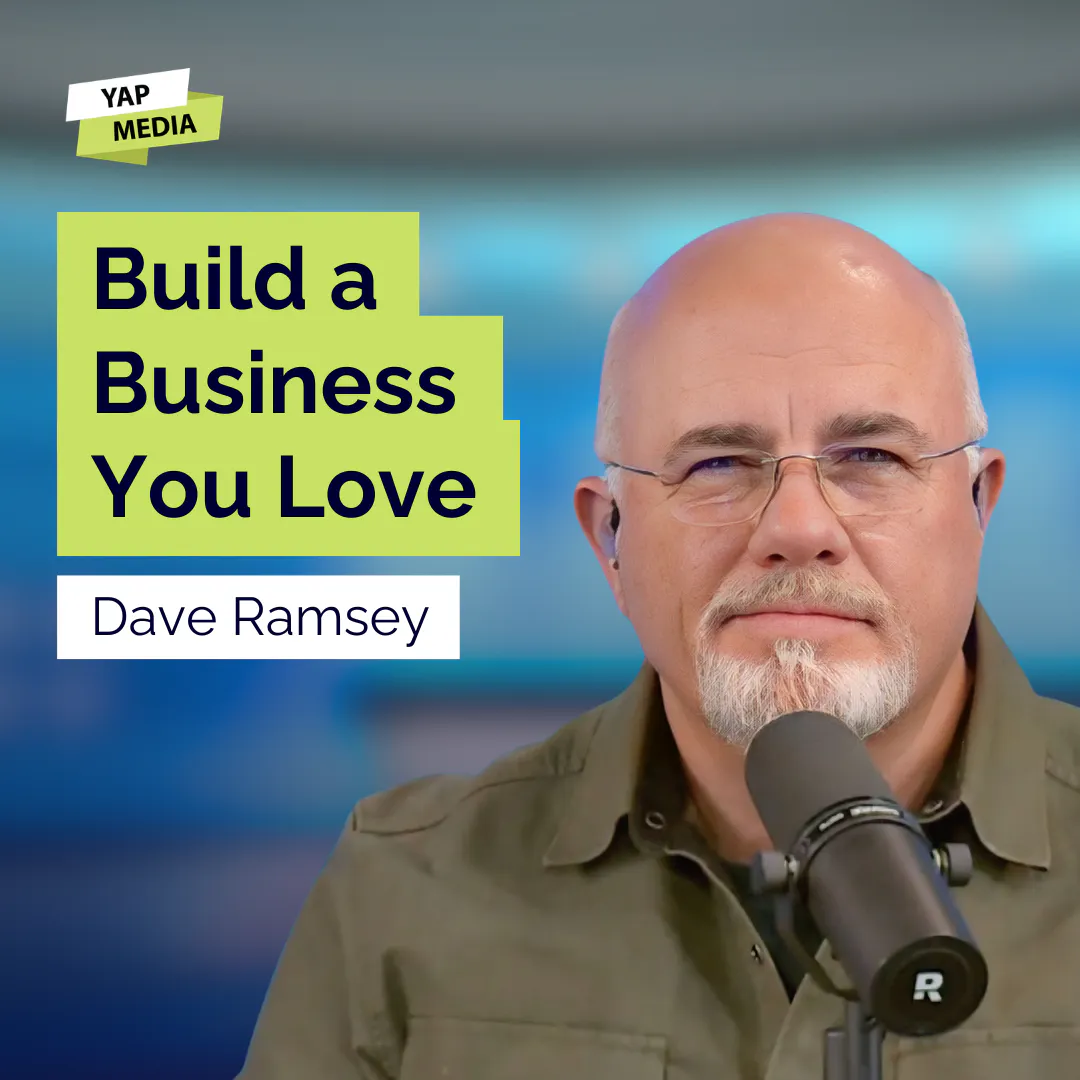
Young and Profiting with Hala Taha
Dave Ramsey: The 5 Stages Every Business Must Master to Scale | Entrepreneurship | YAPClassic
00:58:22
Loading summary
Transcript57 lines
- [00:00]
A
It is the easiest time to start a business, but that doesn't mean it's easy. If your only purpose in business is to make money, you will not last. If you help enough people, you don't have to worry about money.
- [00:12]
B
What are the five different stages of a business?
- [00:14]
A
The first one is treadmill. Everything depends on you. And then the second thing is you start. And then when you've done that, you'll level up and you go into the pathfinder stage. And then we move into trailblazer. The next one is a sweet spot, peak performer. Oh, you're making so much money, everything's going so good that you, you forget to break it. But you better break it before it breaks. And then once you do that, you will naturally roll into the last one,
- [00:38]
B
which is, what advice would you give to an entrepreneur right now who wants to start their own media business? Do it young and profiters. What if building a business you love wasn't a guessing game, but a roadmap you could actually follow? That's exactly what we're getting into in today's YAP classic episode with the one and only Dave Ramsey. Dave isn't just a bestselling author and financial expert. He's built a full blown media empire called Ramsey Solutions and he's helped millions of people with their money problems over the past 30 years. His resume speaks for itself. Now in today's conversation, Dave gets into his book, build a business that you love and he really unpacks what it takes to create something that actually lasts. From the six key drivers behind every successful business to the five stages every entrepreneur needs to move through to get there. This one is a really good one, guys. I absolutely love this episode. It was one of my favorite ones that I recorded last year. You guys are going to love it, especially for you entrepreneurs out there. So let's get right into it. Dave, welcome to Young and profiting Podcast.
- [01:41]
A
Well, thank you for having me. I'm honored to be with you.
- [01:44]
B
I'm so excited for today's conversation. I'm really looking forward to talking about business and not just financial advice because I know that you have so much advice out there for people to look into, but we don't really hear too much about the business side from you. And to warm us up, I, I was thinking, can you give us your core principle for financial freedom? Like, you talk about so many different things, but just so everybody knows what you stand for, what is one of your core philosophies when it comes to financial freedom?
- [02:12]
A
You know, we've Been teaching this stuff for, gosh, almost 40 years now. And I think the thing we've discovered more than anything else is if I can get folks or if we can get folks to just be intentional and just think about, you know, look at what they're doing instead of just, you know, impulsing every single thing in the, in the financial arena and not considering the unintended consequences, not considering the downsides. When you're intentional, you automatically consider the downsides. And when you're intentional, that's going to lead you to being on a budget, that's going to lead you to avoiding debt, that's going to lead you to investing. Because no one says, hey, I want to work my whole life and have no money. That's not an intentional thing. Right. I want to be broke and deeply in debt and hundreds of thousands of dollars of student loan debt and car debt and I can't breathe. No one says sets out for that to be their goal. They fall backwards into it from a lack of intentionality.
- [03:08]
B
Yeah. So you have been preaching financial advice for so long, but I found out that you actually started your career with a radio show, really small radio show. And it all started because you kind of hit rock bottom and this was really like your way out of that, getting this radio show. So talk to us about financial ruin and what happened there and then how you started with your first radio show.
- [03:31]
A
Well, when I got out of college, I got married and Sharon and I were broke. We had no money and I went through a couple of jobs and then I started buying and selling houses, doing flips. And that's before there was cable TV and before Chip and Joanna were born. So this is way back there in the early 80s. And so I was good at it. I grew up in a real estate household and I was doing a lot of flips and making profit, but I borrowed a lot of money to do that and I continued to borrow short term notes to do the flips because we weren't holding the property, we were flipping it. The largest bank we were dealing with got sold and they looked down and said, there's a kid, 26 years old, owes us a million. Two. This is scary. Me and two in, in 1982 with some money and so they called our notes. And then another lender heard we were in trouble because we were in trouble. And so we had to come up with all of the $3 million worth of debt that we were in in like six months. And that was impossible in the real estate business. So it started a crash of foreclosures and lawsuits. And that lasted two and a half years. And finally, with a brand new baby and a toddler and our marriage hanging on by a thread, we hit bottom. After two and a half years, I made $250,000 one year. The next year I made 6,000. I spent the whole year selling everything, trying to pay the bill. And so at 28 years old, I got the opportunity to start over. And I went to buying and selling real estate again. But this time I was just doing it as a wholesaler, just pitching it to other people that I in the business because I had no. And I had no money to eat, to feed the kids. And then gradually I started learning common sense financial principles from old people that were rich and from the Bible, as a Christian, and started telling people to live on less than you make and be on a budget and get out of debt. And that's what Sharon and I were doing to recover, to heal. That started as just a little Sunday school class at my church. And then we went on a broke radio station. As you said, it was talk radio. It was huge in those days, or it was just beginning in those days, and Rush Limbaugh was just coming on the scene, that kind of thing. We went on as just a lark, just for fun. We weren't paid. There was no money. It was just to help people. And we were horrible. We were awful at it. And the accents were super thick and the country fried and hillbilly and if you heard those tapes, you would really get a good Saturday Night Live skit laugh. But that's how we started. And people got helped and they kept calling because they kept getting helped. And that was 34 years ago.
- [06:09]
B
Incredible what you've built with it. It's turned into this whole big empire. So was there any, like, pivotal moments where you're like, wow, like, this is going to be way more than just a radio show? Like, what were some of the key moments that you remember?
- [06:22]
A
You know, I'm like you, I'm an entrepreneur at heart. And so we see a need and fill it. And I'm looking around going, getting people out of debt. This is not exactly a niche market. I mean, this is huge. It's mammoth. And we always laugh and say, me and Jenny Craig got a big job. And so it's like, you know, it's crazy out there. And so we knew it could be huge based on the need. But what I didn't know at 33 years old when I started, 34 years old, 32 when I turned on a microphone that I had no idea how much work it was gonna be to monetize it, to scale it, to build business models and systems and products that would insert them at volume into people's lives. I had no idea how much work and I had no idea what I didn't know. I didn't know what I didn't know. I probably wouldn't have done it if I'd have known how hard it was going to be. But it's a lot of work. We've worked our tails off for a long, long time. But it's fun and we've helped a lot of folks and it's turned into a wonderful, wonderful life.
- [07:23]
B
Yeah. And now you've learned so many principles that you're teaching other to help build a business, not only just gain financial freedom. So you started this, this show, this first radio show in the 90s. And so much has changed over the past 30 plus years in terms of how people consume content. And when I think about your brand, I think of you as like one of the pioneers of creator entrepreneurship nowadays. Like everybody's a creator entrepreneur. They're, you know, on social media, they've got their own personal brand and maybe they have a company. But you are one of the first people to really be a creator entrepreneur in this way, being the face of a company and, you know, running a company, having your own show and things like that. So my first question to you related to this is how have you approached the way that content is consumed over the years?
- [08:10]
A
You know, it's really insightful for you to notice that most people don't. I have to explain it to them. So thank you. That's, that's impressive because we're not talk radio people and we're not podcasters and we're not YouTubers and we're not best selling authors and we're not a live events company and we're not a curriculum company. We are content creators. And so what that means is we have a message that helps people that we believe in and that we're effective at teaching. And once you say that, then the answer is we're platform agnostic. I don't give a crud. I personally, I'm a boomer. I personally detest TikTok. I make fun of it. But aside from my personal flavor, we utilize that medium because we're able to reach a lot of teens, we're able to reach a lot of early 20s Gen Zers that are kicking off. And so we're wearing TikTok out my social Media team. You know, aside from my personal taste of it, I actually don't consume any personal media personally anymore. I check my Instagram a little bit, but that's about it. I've never been personally on Facebook. When Twitter started, I got on it big time because it was a lot of fun way back before it got taken over by the trolls. And I've not been on it since. Its ex. I'm on it, but I'm not on it. So anyway, we're platform agnostic, so talk radio. And then the first thing that happened was in the 90s, two satellite companies put up satellites, one called Sirius and one called xm. And talk radio people were freaking out, like, oh, that's gonna be the end of talk radio. It's gonna take over everything. And then we're like, nah, probably not, but, you know, that's kind of fun. And so we did a deal and got on both of them. Well, they both financially struggled and then ended up combining. And so today I have a whole channel on Sirius xm, but I was one of the first people on there because I'm platform agnostic. And we kept doing talk radio. And then mark Cuban sells Broadcast.com for 11 billion because broadband was actually starting to get some penetration. Of course, when I started on talk radio, there wasn't an Internet. So, you know, when we come along past that, now this thing pops up called the Wild Wild west. Www.daveramsey.com We used to say that it's crazy, the broadband, where you could actually get something that was streaming and it was clean, like you and I are doing right now, and that kind of thing. And so a guy walked into my office, one of my team, and he goes, we need a podcast. I'm like, what? The flip's a podcast? And we were one of the first people in the podcast space. We were there very, very early. We didn't shift the whole business model because we don't really care what it's on as long as we can help somebody with it. And we're not going to abandon all the others. And we're not going to be. We're not radio people, so we don't have to worry about radio. We're not podcasters. We have to worry about podcasting. And if one of them gets mad at us or the other, that's their problem. We're going to be on everything.
- [11:07]
B
I love that. I love that approach. I love how you guys have been just platform agnostic. It's all about the message, just a different megaphone. So I think that's really great. Young and profits. Picture this. You're on Zoom, pitching a huge client. You're in the flow, you're confident, the client seems super interested. And then your screen freezes, the audio cuts, connection is lost. Actual nightmare. That's why I'm very intentional about who I trust for Internet and why I use Spectrum Business. Spectrum Business delivers high speed, reliable connectivity built to specifically for small to medium sized businesses that just can't afford any downtime. The connection is fast and reliable, but what really keeps me loyal is their 247 US based customer support. If something does go wrong, I'm talking to a real person who understands what's at stake, not a bot. Yeah, fam. Growing your business is already hard enough. Your Internet should never be what holds you back. Visit spectrum.combusiness to learn more. Again, that's spectrum.com business restrictions apply. Services not available in all areas. Yeah, fam. Today's episode is sponsored by Bitdefender, a global leader in cyber security. Now, running a small business means wearing a hundred hats at once. Sales, payroll, customers, taxes. And scammers know that especially during tax season, cyber criminals are sending fake audit requests, phony tax documents and emails that look painfully real just to grab access to your accounts while you're so busy doing a hundred other things. That's why I use Bitdefender ultimate small business Security to keep my company safe. It protects every employee device, secures servers with customer data and shields daily activities like email and web browsing, whether you're in the office or working from home. And the part that I think is really smart is their AI powered scam prevention. It's trained on real small business attack patterns, so it blocks phishing, fake websites and shady messages before they ever reach your team. Plus, you also get a Password Manager, unlimited VPN and 247 expert support in one simple dashboard. Big companies have security teams. You don't. Bitdefender can help you fill that gap. Start protecting your business today with Bitdefender's ultimate small business security. Get 30% off your plan@bitdefender.com profiting that's bitdefender.com profiting for 30% off. That's bitdefender.com profitING. Yap Gang, it's confession time. I thought I had my money handled. I thought I had a good handle on everything going on. But I recently checked my bank statements and there was subscriptions everywhere. Streaming apps, random charges. A few of them were billing me for a long time. I didn't even know what they were. And it was a painful uncovering. So I downloaded the Experian app and now it's like I have a financial assistant in my pocket. The Experian app helps you track spending and find subscriptions that you forgot about and you no longer want. With your subscription cancellation feature available with an Experian Premium membership, you securely link your accounts, they scan for recurring charges and you pick what goes and what you want cancelled and then they cancel it. It's as simple as that. They have over 200 eligible subscription types and it's usually done in three to seven business days. If getting your money tight is part of your growth plan this year and you don't want to manually have to do it, this is your move. Young and profits. Get started with the Experian app today. Results will vary. Not all bills or subscriptions are eligible. Savings not guaranteed. Paid membership with connected account required. See experian.com for details. So a question that I have for you is when it comes to becoming a creator entrepreneur, which a lot of entrepreneurs are now content based entrepreneurs and that's a major focus of their business, it's very different from being just like our traditional CEO, right? And I find myself like wearing so many hats two days a week, I'm recording all day, you know, recording my podcast, recording commercials, and it's very hard to balance it all. So what has been your secret of being the face of your company and having to produce content? Not only just being the face once in a while and doing speeches and things like this, but actually having to produce content every day and also managing your business? How do you juggle it all?
- [15:32]
A
You're right. We do three hours a day of talk radio that turns into a podcast and also turns into a YouTube show that's much less than that because there's so stinking many commercials in radio. So by the time we extract those with the algorithm, put it back on, but we're sitting in this seat every day doing a three hour show and have for 30 plus years. So I'm both, you're right, I'm both the product and I am the CEO. And so what do I do? Well, I've got to be able to and master the task of shutting off one and turning on the other. So while I'm on stage talking to 4,000 people in an auditorium, I can't be up there thinking about business strategy. I need to be the best product. And when I'm not up there and I'm doing something else, I can't Be thinking about that stage. I've got to be the best CEO. And so the to compartmentalize and to say, okay, once I get off the radio show, this is what we're doing, or once I get off the microphone, this is what we're doing, we're gonna sit down, I go straight into that meeting. And so today I've done two podcasts and I'll do hour as a guest and I'll do hours. So I've been the product a lot today, but I had an early morning meeting over coffee with one of our team leaders on some stuff we were dealing with as the CEO. And I'll have another meeting after I get off the air today. And so it's just switch on. Switch off is what it amounts to. And what that means is that my calendar has become very, very important. We are very selective and intentional about what I'm going to spend my time on, whether it's being the product. And so I can't go speak to a group of 35 people. I don't have the bandwidth to do that and still run the company. I have to turn that one down. I'd love to. I like the people. I'm not arrogant about it. I just have to be doing the other stuff. And so, you know, my calendar is 15 minute blocks, is 100% full from 8am to 5pm When I'm working, probably out through about August right now that way. So if something gets on there, that means something else got bumped off right now. And between now and that will happen periodically. My personal assistant's been with me 23 years. She helps me manage that so that I don't get all fatigued and stressed out and become a jerk or too much caffeine and become a jerk. But yeah, we just gotta navigate our way through that and manage those time blocks.
- [17:58]
B
Yeah, so I'm hearing time blocking, I'm hearing saying no. Even though you wanna help people, but sometimes you just gotta say no if it's not gonna be, you know, aligned with your priorities. So you've got this new book and it's called Build a Business that yout Love. By the time this comes out, the book will be out. In the beginning of your book, you mentioned an analogy about go and red lights. Can you share that story with us?
- [18:21]
A
Yeah. I went to Scotland recently and played golf. I'm not a good golfer, but I had a lot of fun. And because it's the home of golf and Scotland is famous for its horrible weather. When you're playing golf among the Horrible weather's fog. And so we played one course one day, my wife and I, and it was super, super foggy. And you couldn't see, you know, you couldn't see 40ft in front of you. And so we had a caddy and he would say, just aim it that way, and you're just hitting a ball off into oblivion. You have no idea where it's going, none whatsoever. And it was really, really, really a frustrating experience. And then we went about three days later, it was foggy again, and we went to a different one. And these people had taken bicycle seat lights that were strobes and put them on little posts about every 50 yards out through the fog. And so you couldn't see the hole where you were hitting to, and you couldn't see really a lot of the nuance of the terrain that you were hitting into, but you could see one light blinking in the fog. And so if you could hit the ball towards that light, you knew you were going to be okay. And that changed the whole experience. Exact same weather, but it was nowhere near the frustration, even though it wasn't as enjoyable as being able to see the whole thing and place the ball where you wanted to place it. But at least we had this sense that what we were doing was getting traction and it wasn't just a random freaking chaotic thing. And so you land out there and then you could see the next light and get up onto the green and, you know, and then you got a whole different process. So the point of that is that having a clear path in anything gives you huge hope and energy and belief to move forward. It's very difficult to move forward when you're in the fog, when you can't see and you don't know what you don't know. And it's just, you know, not only do you have all the frustration and the angst of being in business and working your butt off and not knowing, but you can't see where you're going. So one of the things we attempted to do is to lay out a clear path through the process of business that we've observed in our business. And back in about the year 2000, we started coaching small businesses, and we've now coached about 10,000 of them. And as we've coached them, we've watched them go through the same five stages of business. And that's the clear path, that's the light in the fog.
- [20:46]
B
And I can't wait to go over those five stages and the six drivers. It was really interesting to learn about that. But first I want to ask you why you think this book is so important right now. Because I've heard from other entrepreneurs have been on this show that it's the easiest time to be an entrepreneur and a business owner. And then other people come on the show and they say it's a very difficult time. So what is your opinion on that?
- [21:06]
A
It is the easiest time, but that doesn't mean it's easy. That's what it is. I mean, ease of entry into the world of content creation. As an example, you can just decide one morning and you have a YouTube channel. You only have two people watching it, but you can decide and start. You can start a podcast, you can start and print a book today very easily. You can become an author very easily. The ease of entry into, for instance, your world, my world is amazingly easy in terms of the actual tactical things. But starting and running a business is hard. As soon as you become self employed, you realize you have a jerk slave driver for a boss. I mean, your boss will work you to death when you're self employed because they think about it all the time and they think about what you should be doing all the time. And you're just consumed with it and you do stupid stuff and it hurts and you make mistakes, lots of them, and you have to survive them. So ease of easiest time to start a business. That's the tactical thing and all that, but it's still hard because the first prototype you come up with is your sweet little baby. And then you figure out your baby's ugly and it's never even going to make it to market. We've got to iterate this ugly baby and get it because it just sucks. It's awful. And we do that at Ramsey to this day. We're messing with products, we're putting them out for tests, we're doing beta with them, we're doing all kinds of stuff. We'll test stuff on a reel and throw it out there and if the reel goes crazy, we ask ourselves why? And does that indicate we should be in a product lane and all that? No, it's not easy. But it is easiest to start that it's ever been, so you ought to do it. And the other thing that's happening right now too, that's super exciting. I've got 1100 people on our team right now and somewhere around 650, 700 of them are millennials and Gen Zs. Most of them are millennials and Gen Zs, in other words. And those two generations are the most exciting entrepreneurs I've ever seen in my life. They are amazing entrepreneurs. They don't trust the standard way of doing things, and they color outside the lines, and they've grown up with a magic wand in their hand that if they push a button, stuff happens and you can get the answer to anything. And so they believe anything's possible. They have an abundance mentality, not a scarcity mentality. They distrust traditional processes and bureaucrats, which is what every entrepreneur should do. And so these two generations, the ones that you work with a lot and I work with a lot, I'm a huge fan, especially from an entrepreneur standpoint. So you're uniquely suited for this moment in time. Yeah.
- [23:57]
B
Well, that makes me feel good. That is a confidence boost for all the entrepreneurs tuning in who are millennials and Gen Z trying to make it work. But we still want wisdom from you. And you talk about these six business drivers. Can you break that down for us and help us understand why they're so important?
- [24:14]
A
What are the things that drive a business? We started asking ourselves, what are the components of business that we had to continually get better at? And as soon as we got around and got better at each one of them, by the time we came around, it was a whole new set of problems and we got to get better at them all again. So these things spin out. And I would say we've rolled through these six drivers probably somewhere around 10 or 20 times over the years, over the 33 years here. And so there's not a set thing. But the point is, you've got to get good at each, competent in each one. And as soon as you do, you get the opportunity to solve a new set of problems in each one. And so it starts with, most of the time one of us wants to start a business, we have a product or service idea, so we skip ahead and start with product, which is a mistake, but it's normal. It's what most people do. It's, I've got this great idea, and that's what causes you to be a business person, causes you to be an entrepreneur. I've got this great idea, and that's okay. You've got to start working on the prototype. Like I said, it sucks. You're going to get to do it over. But you can start working on the first version of the show, the first version of the book, the first version of what the app, whatever it is, and start getting out there. But really, the first thing that you had to work on before you got there, and you didn't even realize it, number One is personal, the person. And John Maxwell, my friend, one of the top leadership gurus in America today, has written a bazillion books and his bestseller, and my favorite of his is the 21 irrefutable laws of leadership. The third law is the law of the lid. And the law of the lid says that my business will never outgrow my competencies and character. And so I. Personal growth is 1000% necessary to move forward. The person that started Ramsey couldn't even get a job at Ramsey today.
- [26:11]
B
That's me, okay?
- [26:13]
A
The 33 year old version of me. I couldn't even get on here. You know, obviously I'm not the same guy. I've learned a lot from experiences, books, friends, mentors, events, taking notes, learning, learning, learning, learning, learning, learning, learning. So the problem with my business is in my mirror. That's the bad news. The solution for my business is in my mirror. That's the good news. This is a controllable. I can control. I can continually fight, scratch and claw to get better, smarter, faster, wiser, all of those things. So you gotta do that one. The second one is purpose. And if your only purpose in business is to make money, you will not last. Business is too hard, it's too painful. There's too many emotional ups and downs. You work too freaking hard. And if all you want is a stack of cash, as soon as you get a stack of cash, you're gonna figure out it doesn't do it. Now, I want you to make money. I like making money and I believe in making money. I'm not against profit. I'm a capitalist pig. I love. And so I want you to go do that. But it does not get you there. It doesn't fulfill you spiritually, psychologically, anything else. And we always just say, when I was a little kid, I never had lobster until I was like 14 years old. Because I grew up in a redneck neighborhood and Red lobster came to town. That was the first lobster I ever got. But I loved it, it was my favorite. And I thought, man, if I ever get some money, I'm gonna eat lobster every day. No, you won't. If you eat enough lobster, it tastes like soap. If you get enough cars, they're just a stupid car. If you get enough jets, it's just a stupid jet. I mean, you cannot get enough money for the stuff to give you fulfillment. That your spirit is not built that way. So you need a bigger purpose, a reason for doing it. At Ramsey, it's, we provide hope and we get great fulfillment from Giving people instruction and a clear path in this book or in the total money makeover on finances or whatever, we get great psychological income, spiritual income, fulfillment from meeting someone and go, hey, you know, our business was doing 2 million a year. We came through one of your entree leadership programs and we're doing 25 million a year. And that just makes me high. I love that because that means the small business guy who's one of my great love gal, who's one of my great loves in life is succeeding. And I was able to be a helper. I want to help them, I want to give them hope, and I want to give them a process. So that's purpose. And then that leads you to people where you start adding people to your team. Oh, that's so fun. I love my team and there are days they drive me nuts. Hiring and firing is probably the hardest thing a small business person does. And you get better at it and better at it and better at it, but you never really arrive. And building culture inside the team, building unity and loyalty and high levels of communication and conformity to a set of values that we call core values. And if you're not doing those, you're not a we. And you can't stay if you're not a we, because this is who we are. And so, you know, we're working and working and working on the hiring and firing piece. And so we just go all the way around to planning, laying out a strategic plan, a tactical plan, a marketing plan to go to market. Most entrepreneurs don't plan enough. We just go throw something against the wall, see if it sticks, and then product comes up and then profit. Product should be a byproduct of having purpose, of who you are growing as a person, of the quality of your team is gathering around. And in collaboration, we create this product, we develop a plan, and out of that a product comes. But we often start with product and skip over those others. You'll get to do them again. If you do skip over them, you don't really get to skip them. And then the last one is, if you help enough people, you don't have to worry about money. If you put out a really good product or service, people will give you certificates of appreciation with presidents faces on them. Product profit is the byproduct of serving well. It's the applause your customers give you.
- [30:26]
B
Ken Blanchard says, well, thank you for that overview. And you mentioned that these drivers, they're not a checklist, right? They kind of pour into each other and have a flywheel effect. So can you explain that? I know you were kind of alluding to that before, but now that you broke it all down, can you explain how it's not really just a checklist that you go through because you get
- [30:44]
A
to do it again and it does flywheel and pour into each other? You're exactly right. So, you know, for instance, once we get around the wheel of the six drivers, you're sitting on that profit one. Okay. And you're making some money. Well, you're going to grow. And in order to grow, we go back to personal, and the person has to get bigger to grow. And so if you haven't changed since you left the thing and came around, it's going to stall out. You've got to get better. And then you got to drive the purpose deeper into the team and deeper into the client base and deeper into the vendor base than it was before, or it won't spill over and go to the next. And now we're going to get better at hiring and we're going to maybe start developing a second layer of leadership, a higher level of competence, because we're able to hire more people and or better quality people, people that are smarter because now we got a little more money. But it brings with it a whole other set of problems as well as opportunities. And so again, they just keep pouring around. And then by the time you make a little more money and you come around now you've got to grow again. And here the thing cycles again, so it never really stops. And it's not necessarily tied directly to the five stages, meaning it doesn't turn like, once per stage. You know, sometimes you might turn all the way around that three or four times in a stage. That's very possible. I know we have at Ramsey, as we've looked at it.
- [32:07]
B
Yeah. It makes me think, like, now that I have problems, I can be like, well, is this people? Is this product is like, what is the actual problem? Is it me? Right. So, yeah.
- [32:18]
A
What's stalling the flywheel?
- [32:19]
B
Yeah.
- [32:20]
A
Because it is one of those buckets is stopped up.
- [32:23]
B
Yeah. When it comes to personal, I know a lot of entrepreneurs start out being really tactical. Right. We've just gotta be scrappy. We're wearing so many different hats. And then as you grow and like, for example, Now I have 60 people who work at Yap all around the world. I have to become more strategic. But I was, you know, programmed that I do well or like, things good things happen when I'm tactical. So it's sometimes really hard for me to Just like be strategic. So what advice do you have for moving from tactical to strategic?
- [32:52]
A
As an entrepreneur, when I started I couldn't spell strategic. All I was was tactical. I'm an old salesman. And so get up, leave the cave, kill something, drag it home. I mean, that's about as tactical as it gets, right? And so push something. If nothing's pushed, if nothing's shoved, nothing happens. So push something, shove something, kick something. Go, go, go, go, go, go. Lack of activity will kill you. And that's how we start. And you should start that way. And you need to maintain that energy all the time because you should have folks on your team at all times that are doing very tactical things and they need to feel the energy and the importance of that tactical behavior. Because if all we have is an organization that plans, that's called a dreamer. And dreamers live in their parents basement, that's not. We're not going. We don't want to be a dreamer. We want to be somebody that executes dreams. And so you move through the tactical. The tactical has to be there. But I was beating my head against the wall at the treadmill stage and even up into the second stage of Pathfinder. And so because there's only so much tactical will move because it's very inefficient once you start putting some scale to it. If it's not the execution of a plan, you know, it's kind of like getting in the car and slamming on the gas and saying, I'm going to Florida. Oh, wait, where's Florida? I don't have a plan. I don't have a map. And you could end up driving in circles. You could end up driving the wrong direction. It might be a good party. We might have a lot of fun on the road trip, but we really are not very efficient about getting to Florida. If you want to get to Florida, you get the map out and one of the map apps tells us the most efficient way and then we begin to execute tactically on that strategic plan. And so what happened with me was people kept talking to me about this and I wasn't very good at it. And I've learned in the personal to be good at it, but it wasn't my natural. I started hiring. We ended up with some people with MBAs on our team. And 100% of the MBA programs in America, Masters in Business teach strategic thought. If you get an mba, it's one of the things you're gonna get out of getting an mba. I don't have an mba, but I Have observed this and talked to a lot of MBAs that work for me or have worked for me over the years. And strategic thought is one of the things drilled into an MBA's. And so they came on board and they're like, dave, you're missing this. You need to do strategic thought. I'm like, I don't want to do it. I want to get work done. And they're like, no, your work will be more efficient. And I'm like, if you get above it, get a 30,000 foot view, you can actually walk around the barrier instead of running through it. But you just have to know there's a path around it and you can't see it while you're looking at it. You got to get above it. Okay, okay, okay, okay. So we always laugh at Ramsey and make fun of me and say, well, now you know, the MBAs that we hired taught me strategic thought and I adopted it and I taught them how to work.
- [35:50]
B
I love that. I love that. Hey, App fam, question for you. When somebody Googles you right now, are you proud of what they see or would you say ignore that? It's under construction for two years. I've been there. At one point, our site didn't reflect the level we were operating at at all. It felt so outdated, and every small update required way too much back and forth. That's why I love Framer. Framer lets you design and publish a premium professional website without writing a single line of code. It's fast and you can launch pages in minutes. You're in control, no waiting on developers, and the designs look modern, clean and polished on any device. Serious founders know your website is your first impression, so let's upgrade it together. Learn how you can get more out of your dot com from a framer specialist or get started building for free today@framer.com profiting for 30% off a Framer Pro annual plan. That's framer.com profiting for 30 percent off. Framer.com profiting. Rules and restrictions apply. Young and profits. Let me ask you something. Have you ever missed an opportunity from a potential client and felt that drop in your stomach? I know I have. Far too many times. When my business first started scaling, calls were going to one person, texts were going to another, and opportunities kept slipping through the cracks. That's why we switched to quo. Spelled Q U o. Quo gives your team one shared business number, like a shared inbox. Every call and text is in one place. Everyone sees the history. No more pointing fingers. And I thought you handled it going on. Plus the AI logs calls, summarizes them and flags next steps so nothing ever gets missed. Growing teams everywhere are upgrading to systems like this because once you scale, your old setup just doesn't work anymore. If you're serious about building a real company, this is a foundational move. Make this a year where no opportunity and no customer slips away. Try quo Q U O for free plus get 20% off your first six months when you go to quo.com profit again. That's quo.com profiting quo no missed calls, no missed customers. Yap gang here's a hard truth I had to learn the hard way. If you're running a business and you don't have a clear picture of your cash flow, you're flying blind. There was a time when I was approving expenses and making decisions without fully knowing what was going out of my account or when. That's a dangerous place to operate from as a business owner. So as we started to scale YAP Media, I needed a change. And all of it improved when I started using Intuit QuickBooks Bill Pay. It's a bill management tool inside of QuickBooks that brings all of your bills, vendors and payment details into one organized dashboard so you can track and pay everything in one place. With QuickBooks Bill Pay, you can see what's due, control approvals, and understand how each payment impacts your cash flow. Now I make faster and smarter financial decisions because I actually know my numbers. Start paying bills the smart way, not the hard way. Learn more@quickbooks.com BillPay Again, that's QuickBooks.com BillPay terms apply. Money movement services are provided by Intuit Payments Incorporated, licensed as a money transmitter by the New York State Department of Financial Services. Now, I know you've been kind of teasing the stages. So just so everybody is like on the same page and understands all the different stages. And then we can talk through drivers and stages some more. But what are the five different, different stages of a business?
- [39:24]
A
Well, the first one is treadmill, and that's where we all start. And you work your butt off and it's very chaotic and everything depends on you. You set up the microphone, you set up the chairs, you set up the screen. You set up the printing. You create the revenue, and you create the product that creates the revenue. And if you're not at work, nothing happens. You don't really actually own a business. When you're at the treadmill stage. You actually own your own job. Because if you don't come to work, you don't get paid a business, if you don't come to work, you get paid because it keeps running without you. So you really don't own a business yet. And I didn't either. You're just working your tail off. It's exhausting. It's 16 hour days. I would get home, I would flop on the couch and my wife would say, what'd you do today? I said, I have no idea. But I did a lot of it, you know, and we just. You're just working and running and running and running. You don't feel like you're getting traction. That's why we call it treadmill. You don't feel like you're ever gonna get out. And if you don't begin to see a way out of that, you will burn. Not more than burnout, you'll just burn up, you'll fry and. Cause the hours are crazy, the stress is crazy. The weight on your shoulders, the whole thing depends on you. The dream is gonna die if I take a minute off. I can't let it die. I gotta get this done. And it's a lot of fun. You're very important because you are very important. And that's kind of nice. And you can really see the short feedback loop. You get real quick results and real quick answers to your questions because you're it. And that's very rewarding, but it's not sustainable. And so the way you level up to the Pathfinder stage, the next stage is you work on a couple of things. One is you work on time management and you start with the idea of, I have got to do some things that I have to think past Friday. I can't quit. I have to quit thinking short term only. And I've got to start time blocking. And I've got to say, all right, I have to block out time to the discussion we're having to be the product. And I have to block out time to make sure the accounting is done. And I have to block out time to make sure the SEO people are doing their job. With all the social media launches and reels and shorts and TikTok drops and whatever we're doing, I gotta watch over their shoulder as the leader and make sure they're getting that done. And after to block time for that, it doesn't happen unless I block time and I look at it and make sure it happens. So time management is one of the things you do to level up. Very careful time management, time management away from the treadmill. And then the second thing is you start making your first Hires here to where all the production of the actual unit of service or good is not dependent on you. As a matter of fact, you quit doing it. They do it. You might be the product like you and I are, but the, you know, the video, the editing, the placement, the chopping up and sawdusting out of the actual piece of content, in the case of content people is not dependent on you. You're gonna do your thing in front of the microphone, then somebody else is gonna do all that. So we start to put people in place, which is where you are right now. You've done that. And in your case, you usually have 10 to 50 or 60 people at this stage. That would be typical. It's not necessary to be at the stage, but that's about where you are. So you start to delegate the creation of the product and the creation of the revenue. Now you're starting to own a business. And then when you've done that, along with time management, you'll level up and you go into the Pathfinder stage. And Pathfinder is where you discover you've really got to lean into your values and your people that you're starting to hire have to be able to complete your sentences. What would Dave do in this situation? What would Dave say in this situation? And if they can complete your senses, you've got a delegatable environment. But if they don't know what you would do, then they're frozen every time a decision comes in front of them. And so they haven't been trained yet on the values and they haven't been trained on the decision making paradigms. And so we train them, we start to build that level of delegatable people. And then we move into Trailblazer. And Trailblazer is the biggest thing that holds you back in. Trailblazer is the middle. It's the middle one. It is really frenetic. There's a lot going on. It's so fabulous, a lot of chaos. And the thing holding you back now is what got you here won't get you there. And so you've got to implement systems that are more sophisticated than you've ever done, processes that are more sophisticated than you've ever done. Technology's picking up the weight of things that people have been doing on paper. You've been killing two dadgum many trees. We've got to get this digitized. We've got to get this accounting system where it's efficient and automated, not where we have to pull 17 spreadsheets together to make a basic accounting system work. That's ridiculous. But it got us here, but it won't get us there. It's not taking you out, it's not gonna keep you, but it's gonna keep you from moving forward and getting bigger. And so you really start working on systems and processes. I resisted this stage a lot because I didn't wanna be corporate America. I didn't want a bunch of rules, I didn't want a bunch of freaking policies, policy manuals and people saying, well, accounting said we can't do this, or legal said we can'. Bull crap, we gotta get this done. And I didn't want that. And so I resist processes. Cause I like the chaos of entrepreneurism. But it won't get you there. You've got to increase your sophistication level and start to do those things. And this is also the place where you start doing your first real serious strategic planning. Where you really start looking forward. Not just two weeks out, but a good solid six month and one year plan. Probably some rolling 18 strat ops are going to go on where you do strategic operations, you do some off sites, you sit down, you shut everything down. Get the best minds in the room. Where are we going? How are we going to get there? You convert the strategic plan into tactical breakouts of defined objectives. And you get in gear and push it through. And the team is all bought into it. We all know where Florida is and we all know how we're going to get there. And we know George is going to make sure the tires are good and Sally's going to make sure that the car's got gas and Henry's gonna make sure we got lunch in the back and so on. Whatever we gotta do to get there. What are the defining objectives that keep us from getting there if we don't do them? And get us there if we do do them. When you do that, you move up to peak performer, the fourth stage. That might take you 20 years to do that. It's not gonna be 20 months. I don't know how many years. It's not a set number of years. But we have observed that people will move through these things and only to the extent they do the stuff to level up will they move into that next day. But the next one is a sweet spot. Peak performer. Oh, you're making so much money, it's unbelievable. Your team is incredible. They can finish your sentences. Stuff is getting done better than you would have done it because they know stuff you don't know. They're taking you places that you couldn't have thought of. They're teaching you things when you're the owner, the leader, that you didn't even know. And so the six drivers are spinning all throughout this. You can hear them in there as I was doing this, almost. But peak performer is. There's only one negative thing about peak performer. It's so freaking good. Everything's going so good that you forget to break it. But you better break it before it breaks. You better break it before it's broken. You better continue to iterate. You better send a jolt of energy and lightning every so often, shock the crud out of people every so often. Stick a cattle prod on the thing and get it moving, because you will kick back and ride on how cool and how great and how profitable you are, and you'll start to believe you're a big deal. And you're not. You're just doing good. That's all. So this one's real easy to settle in because everything's going so good that you can take your hand off the wheel, put your feet up on the dash, and run the car in the ditch. Don't do that. You've got to keep driving. You got to keep thinking. You got to keep getting better. You got to keep iterating. You got to keep killing bad products and inventing new ones. You got to keep going. And then once you do that, you will naturally roll into the last one, which is where Ramsey is, which is the legacy stage. And that's where we start talking about succession planning. We start talking about how this thing survives the individual, whether it's through a sale, whether it's through a succession plan. In our case, the My children are in their 30s and 40s, and they are the owners of Ramsey, all but 1%. And I own the only voting stock, so I'm still in charge. But anyway, but they, you know, the ownership has already passed. The leadership team can carry this without me. We now have multiple other brands other than me on the stage, on the microphone called Ramsey Personalities. And the show actually gets higher ratings when they're on than when I'm on, which is distressing to me personally. But it was the plan, so it's kind of insulting, but, yeah, it's real. So it means our plan's working. We've been working that for 16 years, by the way.
- [48:29]
B
Wow.
- [48:30]
A
Wow. While we were riding along in Peak Performer, we've been working on how we were going to create a succession plan, how we're going to implement it. We kept asking ourselves, if Dave dies this year, how much of this place survives. When we started, it was 3% would survive 16 years ago because I was 100% dependent on my being the product, even though we were in the peak performer stage. But nowadays it's like 97% would survive without me. And so I've worked myself out of a job, so to speak, which means I'm a fabulous leader. But it also hurts my feelings on a personal level.
- [49:05]
B
Sometimes you gotta get ego out of the way. Right. For what's the business. So when I was thinking about this and learning about all these stages, I was like imagining like our company where we're at. I think we're like somewhere between the Pathfinder and the Trailblazer stage right now. And when I was thinking about being a treadmill entrepreneur, I found myself thinking, you know, I feel like parts of our business have moved back to Treadmill because now it's way slower to hire. The people who used to be directly working for me are now leading departments. And then I find myself again working a lot because we haven't hired fast enough because we have all these new fancy processes. And I used to just go on LinkedIn and poach whoever I wanted and now it's like, might take three months and then that compounds and then suddenly I'm doing grunt work that I wasn't even doing two years ago. Now I'm doing it again. Right. So is it possible to actually move some of your business back to certain stages or like, what are your thoughts on that?
- [50:04]
A
Yeah, any, anything that's new or broken is going to start at treadmill. And so you can have a company, an organization that's running all the way up at Pathfinder. But when you launch a new product, everybody on the brand new product, it starts a treadmill. We're all gutting it until we get the thing up and moving. And when that product starts to monetize or that service starts to monetize, it can start to self. You can fill positions to carry it. But in the meantime, it's somebody's got two jobs, you know, I gotta lift this new baby out of the nicu. But yeah, so anytime you're launching or if you have something that gets in the ditch, we've had product lines that, that they just kind of got the flu and then they got pneumonia and they were sick, you know, and now we had to stop and take care of the ill patient. And then how do you get them going? Well, you know, paddles clear, you know, and you're boom. And you get them going again. And that's like starting a brand new product almost. So yeah, it's going to start at treadmill. The good news is those little, those departments or those product launches are recovering areas. They'll blast through the stages and catch up with the organization pretty quick because the organization's not functioning at that love.
- [51:14]
B
Now I know you were talking about this lid on leadership. The, the note that John Maxwell says, the law of the lid, right. And you mentioned some characteristics about leaders like they're servant leaders, they're humble, they can be godly visionary. How can we start to learn how to be a better leader and start to emulate those characteristics?
- [51:35]
A
What I did was I read every book I could get my hands on of successful people. I read a lot of biographies of business people that were successful. And I started noticing a trend in the leadership literature and in the biographies. The best leaders in the world, the world class leaders are other centered. They're serving. They care about the outcome of the individual and of the organization at the same time and even the personal situation of the individual, the team member. And so I can love my team and one act of love is not allowing them to work here because they're incompetent here, which means they must be competent somewhere else. And so working with them and teaching them and lovingly guiding them and then having a difficult conversation or two or six and saying this is not working. We probably need to find you something else to do because you're not fitting here. This isn't working. We have 1100 team members. We probably have close to 2000 people over 35 years that used to work here. And they either left of their own accord because they got married and had kids, or they left because they moved or they left because they got a better job or they left because we let them go. The vast majority we did not let go. We don't have that many firings around here. But we are not going to sanction incompetence or misbehavior or, or lack of character interacting with each other. We don't have people messing with each other and that kind of stuff. We don't do that here. And you can't be a we if you do that. What it took me a while to figure out was, was that I was loving someone. Well, by not allowing them to sit in the poop, you know, if they're just sitting in the poop, it doesn't work, you know. And sometimes, and we've all been in situations where we're just not good at something and it's just it's frustrating for us. Oh, by the way, it's frustrating for the customer. Oh, by the way, it's frustrating for that person's leader. Oh, by the way, everybody's pissed, you know, I mean, but we're not admitting it because we don't want to do anything about it because it sounds like it's mean to do conflict. It's not mean. It's mean to not do conflict. We say around Ramsey, it's unkind to be unclear. We need to be very kind and clear and very blunt with folks and we don't have to wait to do annual reviews. If we're in the middle of a project and something's not going right because of an individual, we pull the individual aside and talk about it right then we don't embarrass them or shame them in front of the rest of the team, but we don't let this stuff lay around. And consequently we have an incredibly productive, wonderful culture where people trust each other and things move at the speed of trust.
- [54:15]
B
When I was reading your book, I saw that you have a 90 day period for onboarding. We actually do this at yes app and I've been loving it because within 90 days if somebody is not able to get up to speed on a job, it's really great that they know and we know that there's like a prohibitionary period for them and that they can be let go and there's kind of like just no hard feelings. It didn't work out. It's already pre planned that they're going to get evaluated. So talk to us about that and how that's helped improve your hiring.
- [54:44]
A
And it works the other way too, that for the team member, they don't have to sit and wring their hands and feel like they let everybody down or everybody's going to be mad or whatever. This is a probationary period and so we don't require a two week notice anyway. But you don't need a two week notice. You just need to come in and go, you know, I'm just, this isn't working. And we've had some funny ones, some weird ones over the years during that time. You know, we had one guy come to work here about a year and a half ago and he sat down and we do a three day in depth onboarding. And after the three day in depth onboarding, he sat down at his desk and he had like a panic attack, an anxiety thing and he's like, I just can't do this. And we're like, what? He Goes, what I signed up for, I just. And he really even couldn't verbalize what was wrong. But he quit that day. Four days he'd been here.
- [55:40]
B
Oh my gosh.
- [55:40]
A
Well, that's better. You know, it's better than, you know, 40 months of lack of productivity and everybody around him's frustrated and he's angry and he doesn't even know why. He couldn't even verbalize what the panic was from. But that's okay. I get it. I mean, I, you know, everybody gets. But the hilarious one. We hired a kid that owned a landscaping company and he had sold it and he was like 22 years old or something, and he wanted to work in an office. He wanted to work in a white collar setting instead of pushing a lawnmower. You know, we went through the whole interview process, the whole onboarding thing, and, and he was going to be in customer sales, and he put on the headset, sat down, started making calls, started taking calls. And he was there about two hours and he, like at lunch, he ripped the headset off, went running out the door. We never saw him again.
- [56:28]
B
Oh, my God.
- [56:29]
A
It took two days to get in touch with him. And we said, what's the thing? He goes, I just can't work inside. Well, what part of working at our company did you not think was inside? I mean, you know, how did you miss that part in the interview? It's like hilarious, but I can't work inside. So, yeah, we laughed at the HR team and the recruiters. We said, hey, you have to start telling people that we work inside as part of the onboarding. But yeah, I mean, that's okay. Let them go. That's better than the pain of somebody staying in a job they hate. They start to hate themselves, they start to hate the boss, they start to hate the company, they start to detest the very organization that feeds their family, which just betrayal and lack of loyalty. That's ridiculous. And it happens because leaders aren't strong and aren't strong enough to let somebody go during that 90 day period.
- [57:16]
B
On the flip side, there's a lot of internal promotions that are going on, especially when it comes to the trailblazer stage. And you've got to really pull people into leadership. So what are you looking for when you're pulling somebody into a leadership position?
- [57:29]
A
Well, leadership is service. Again, you're, you know, doing a task is one thing. Leading people doing that task is a whole different skill set. Leading people is different than task orientation. And so we've got, you know, probably 500 people on our tech team writing code for software engineers, platform people, architect people, so on all the way through the organization, because everything's digital today. Of course, a lot of those tech guys are. Our gals are really, really good at the execution of the tech. Writing the code, building the code, making the website do what it's supposed to do. That's a whole different skill than leading tech people. Leading tech people is a whole. It's a science unto itself because they're different. Most of them are introverted. And so you're really looking at how we're going to lead, how we're going to love them well. How are you going to serve them well? So in other words, a great salesman might not be a great sales manager, because sales management, leading salespeople is different than making a sale. Now, they can empathize and sympathize with what's going on, naturally, because they've been there. And the natural path is for them to move into leadership from having done the task. But we just have to identify that the rest of the leaders have to train the new leader to be a leader, not just a salesman, not just a tech.
- [58:50]
B
Before we close my last two questions, I want to ask you, what advice would you give to an entrepreneur right now who wants to start their own media business?
- [59:00]
A
Do it. Start it. Don't get married to your first microphone, your first set. I think I'm sitting in my seventh or eighth studio I've built in 30 years. Don't get married to a platform, like we said earlier, platform agnostic. I would be on everything. I wouldn't just be a YouTuber or just be a tiktoker. I think that's a mistake. Now, each of the platforms we all know, watching this or participating in this, they have different personalities and you have to put different versions of you in that. I know that. I'm not saying that at all. But you need to get good enough at all of them and start using all of them. And it doesn't cost anything. Just go do it. You'll mess it up. Well, so what? I'm convinced about 90% of the ideas that we've had at Ramsey, including me during the 33 years I've done this is about 90% of them suck that we survived them. We lost money, we lost reputation. We look back on that stuff and we look, that's pitiful. You were awful. Those old tapes make me laugh. But do it anyway because you don't know which 10% is going to work. Quit doing the stuff that doesn't work, obviously. And every idea I have is a good one. When I'm out walking in the morning or having a cup of coffee, every idea is a good one. But when it hits the market, most of them aren't. So go do it anyway. And keep going, keep going, keep going. Don't stop, don't stop. Never quit.
- [60:29]
B
I love the motivation you taught us so much today. So I'm gonna end this show with two questions that I ask all of my guests. The first one is, what is one actionable thing our young and profits can do today to become more profitable tomorrow?
- [60:42]
A
Make sure you're always wearing your customer shoes. Quit thinking about how you can make money. Think about how you can make their life better, and they'll give you money.
- [60:52]
B
I love that. And what would you say your secret to profiting in life is? And this can go beyond business?
- [60:58]
A
Well, in my case, when we went broke, I had met God on the way up. I got to know him on the way down. And so my walk with God has changed my entire life. I'm a different man. I'm a different dad. I'm a different husband. I'm a different leader. And that faith journey is woven into any story that is a Dave Ramsey story. So that might not be true for others, but that's the answer to my question.
- [61:29]
B
And where can everybody learn more about you and everything that you do?
- [61:32]
A
Oh, it's pretty well everywhere. I think you can find it. But ramseysolutions.com is the mothership website and you can find all the stuff going on there.
- [61:40]
B
I'm sure everybody knows where to find you. Dave, thank you so much for joining us on Young and Profiting podcast.
- [61:45]
A
Honor to be with you. Very good job. Thank you for having me.