← Young and Profiting with Hala Taha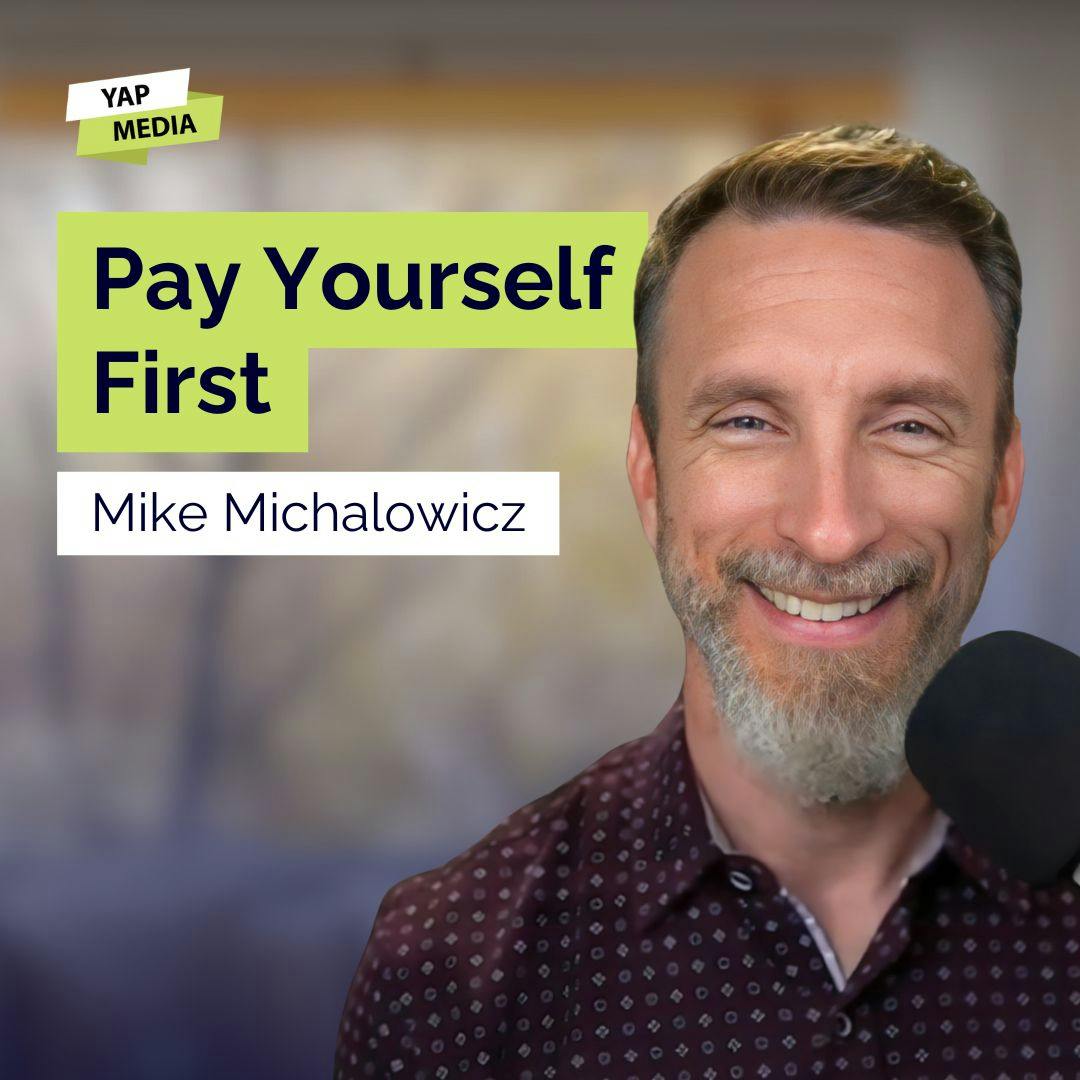
Young and Profiting with Hala Taha
Mike Michalowicz: The #1 Financial Principle for Building a Profitable Business | Finance | YAPClassic
00:47:23
Loading summary
Transcript84 lines
- [00:00]
Hala Taha
Foreign.
- [00:11]
Sam Parr
What's up, Young and Profits? Today, we're unlocking the archives of young and profiting to revisit one of my most impactful conversations on building real financial freedom as an entrepreneur. My guest today is Michael Malicz. He's a bestselling author, serial entrepreneur, and the creator of the globally recognized Profit first framework. Now, this is the first time that Mike came on the show. This replay that we're about to get into now, Mike has been on the show several times, three or four times. I recently interviewed him on Monday. We talked about his latest work. It was an incredible conversation. If you guys want to check out his most recent work, check out Monday's episode or you can watch on YouTube. We actually did the interview in person. So Profit first, which is today's topic, is a globally recognized framework that helps hundreds of thousands of businesses become consistently profitable. Now, we like that at Young and Profiting. And what made this conversation so eye opening for me was Mike's ability to completely flip the traditional business formula and explain why profit can't come last. A lot of us entrepreneurs, we don't pay ourselves. We reinvest back into the business and we pay ourselves last. But he breaks down how prioritizing profit before expenses creates sustainable cash flow, reduces financial stress, and actually rewards entrepreneurs for the risks that that they take. Now, I walked away from this episode with a completely new perspective on profit and cash flow. I actually changed the way that we handle our bank accounts at YAP Media and the way that I pay myself out as a business owner because of this episode. The Profit first framework is something that thousands and thousands of businesses follow. And it's a framework that, even though was launched years ago, is super relevant
- [01:49]
Hala Taha
today and still used till this day and highly regarded.
- [01:52]
Sam Parr
So I think every entrepreneur should be listening closely to this episode and I think you guys are going to get
- [01:56]
Hala Taha
great value out of it.
- [01:57]
Sam Parr
All right, yeah, fam. Let's dive right into the Profit first method. Here's my first conversation with Michael McAllowicz.
- [02:07]
Hala Taha
So, Michael, I'd love to dive right into the topic of today. You've got a classic business book. It's called Profit First. It was released in 2014, and since then it has totally taken the business world by storm with hundreds of thousands of businesses using your method to drive profits. And fast forward. Nearly a decade after its release, I still have many extremely successful entrepreneurs who come on my show and they reference your book. So we've mentioned your name several times on the podcast and there's so many businesses that handle Their cash management using your system. In fact, my company Yap Media, uses your system for accounting. And it's actually considered a bible at Yap Media in terms of our cash management. So let's start off with a basic question. Why do you believe profits come first in a business?
- [02:51]
Michael Michalowicz
Well, because it is human nature. When something comes first is prioritized. And when something comes last, it's ignored, or it's the manana syndrome. And so the analogy I use, Hala, is imagine you love your family, which I know you do, and you imagine saying, I love my family so much, I've decided to put them last. I mean, it's absurd. I love them so much I put them first. I put my health first. Things are important come first. And what I noticed was studying the standard formula, the gap, that generally accepted principle for counting is that profit comes last. And it's called the bottom line in the year end and with execution, what this means, and maybe it's a subconscious response, but most entrepreneurs wait until the end of the year. It's April 15th now, and they're like, I don't have any profit. Maybe next year. So profit is only considered at the end of the year. When we fail to get it, we wait until the next year. What I teach in profit first is that profit comes out of every transaction. So profit is not an event, meaning eventuality. Profit is a habit.
- [03:45]
Hala Taha
I'm going to dig deeper on all of these things. Let's first start about the traditional formula. So it's usually sell as much as you can, take away your expenses, and then the rest is your profit. But you say this doesn't work because like you just said, it goes against human instincts. Because if we are saying that profit comes last, we're going to think of it last. We're not going to think of it first. So talk to us about the Parkinson's law and the primacy effect and how that actually impacts us from being able to use the traditional method and get our profits.
- [04:15]
Michael Michalowicz
You did your research?
- [04:17]
Hala Taha
Yeah, of course I did, Michael.
- [04:19]
Michael Michalowicz
I love it. Those two things are such important behavioral components. So Parkinson, quick history lesson here's. He's a theorist from the 1950s studying human behavior and finds an interesting phenomena as a resource expands in its availability. The more time we have, for example, the more we consume. So if you and I are discussing an agreement and I say I'll get to you in one week, it'll likely take me a week if you and I discuss the same agreement, the same people, the same parameters, but I say I'll get to you in one day. I'll likely get to you in one day. So as we constrain a resource, we become more efficient. It's true for time. It's also true for, like, food. The more food put in front of us, the more we consume. And it's true for money. And that's why so many businesses, as they see their sales increasing and revenue increasing over time, they get really excited. But almost uncannily, expenses are increasing at the exact same rate. Well, that's a natural human response, subconscious response. We don't even realize we're doing it. But more cash means I have more to spend, and we keep on spending. So most businesses get stuck in this loop of constantly trying to sell their way to profitability and success, and they never will get there because of Parkinson's Law. Now, the primacy effect means the next thing we see has a heightened importance. So as money comes in, those deposits come in. We look at it and say, oh, I got some money. Finally I can do. And whatever that do is, is the next important thing. We need to get new technology. We need to hire that employee, and we deplete the account immediately. So those two things in that scenario work against us by taking our profit first. When sales comes in, we take a predetermined percentage of that money as revenue and remove it away. It constrains the supply of cash. Now Parkinson's Law becomes our ally because we're like, oh, I don't have $10,000 deposits. I only have 6,000 available to operate my business. And we constrain and control our spending around that. And that 4,000 has been reserved for profitability. So now we're making Parkinson's Law our beneficiary, or benefactor, I guess is the word.
- [06:07]
Hala Taha
Something else that you teased out is that taking out profits is not an event. It should be a habit. So can you talk to us about how we can actually make this more of a habit? Rather than thinking about taking our profits out five years down the line, I
- [06:20]
Michael Michalowicz
think we look at profit in chunks by default. Like, oh, you know, if I get one more client or I get the big sale, finally we're going to get a chunk of profit. But the reality is profit is something that needs to be a habit or habitual. We build at it. It's kind of like saying, I'm going to go transform my body by going to the gym one time and work out like an animal, and I'm going to come out with a perfect body. We know that to have Transformational effect on our body. We need to exercise regularly for a sustained and perpetual period. Well, this is true for the fiscal body, if you will, of the business. Never. It rarely, rarely happens that you have that huge client and all that money comes in and now you can reserve it and sit back and go on easy street. What we need to do is every transaction, every time there's a deposit, a predetermined percentage goes toward profit. What happens is we start reverse engineering profit. If I want my company to have a 20% bottom line profit and I get a thousand dollars, I know 20% is $200, $200 is hidden away. And now I'm reverse engineering that profitability. I have 800 left. That's what I have to work with to run my business. So by taking out every deposit. Now, in practice, I wouldn't do every single transaction. We usually do it once or twice every two weeks. We allow the money to accumulate. So every couple weeks, the accumulated money, then we take our profit first and then go through these allocations. So it's much more rhythmic. But nonetheless, by taking the profit first, it becomes this habitual reverse engineering of profitability and it assures profitability. You will always be profitable because you took your profit first.
- [07:46]
Hala Taha
And this is really important, guys, because this is actually how you build financial freedom as a business owner and entrepreneur. It's why you got into entrepreneurship in the first place. You didn't get into entrepreneurship to build a job for yourself where you're just on a hamster wheel. This actually allows you to get rewarded, pull out money from your business and build financial freedom.
- [08:05]
Michael Michalowicz
You know, Hala, I was doing a keynote two days ago. I just got back and a large audience, and I asked the audience to say, why did you start a business? And they all shared the same two reasons. And I hear all the time, I started my business for financial freedom. I don't want to worry about bills. And I started for personal freedom. I want to do what I want, when I want. I said, who's experiencing that in this room? And there was 1500 people in the room. I would say six hands went up. No one's experiencing. We all have this dream of financial freedom and personal freedom, and none of us have it. It's the reverse. Most businesses are so financially strapped that you have to work your ass off just to get through the day. To reverse this trend, we simply need to take profit first. And by the way, this is nothing new. It's new to business. But the belief of the pay yourself first principle has been around forever. So I simply took it and established concept in personal finance, pay for your retirement first, reserve for your savings first, live off the remainder. I simply applied it to business and it works.
- [08:59]
Hala Taha
It does work. This is why hundreds of thousands of businesses use it. So at the end of the day, profit first is really a cash management systems. And one of the most innovative parts is the fact that you say you actually need to split up your bank accounts into smaller chunks. And this is something that we've actually adopted at Y Media. We love it. It's really helped improve the things that we do in terms of the transformation. Before we were doing this to. After this, things are running a lot smoother. And peace of mind as a business owner for myself as well, knowing we have like money for taxes, money for this, it's like I'm not constantly worrying about stuff. So for people who are unfamiliar, what is the advantage of actually taking all your money and splitting it up into different accounts and then we can get into the types of accounts and everything.
- [09:43]
Michael Michalowicz
Sure, sure. So the technical definition of this process is called fund pre allocation, meaning we're taking money and assigning it a responsibility before we spend the money. So the concept is that we set up multiple accounts at your bank. And I got to underscore this a million times. That is fundamentally the key. We do this at your bank because it's a behavioral intercept. So most entrepreneurs manage their business by logging to their bank account. We have accounting statements, but we don't read those. We have a simpler system for most of us log into the bank account and see what we have and spend accordingly. By having multiple accounts at the bank determined or designated for different responsibilities, we know what that money is intended for and it will before we spend it. We know how to spend it, and that's the key.
- [10:25]
Hala Taha
And to your point, it causes an extra layer of friction where it's like you actually have to pull money out and put it in different things. Where if you did it like on a spreadsheet and you just bucketed money in this way, it's so easy to just not be disciplined. Wouldn't you say first?
- [10:40]
Michael Michalowicz
Yeah, I don't even look at the spreadsheet. I know what I'm doing. Or I look at the spreadsheet and say, well, let me just play with the numbers and we unwind the whole system. Now the reality is for most entrepreneurs, if they don't have profit first is they have a single primary checking account at their bank, May have another one for payroll or something, but they have one or two bank accounts. What happens is all the funds go in there and they pay all the bills from it. And what I equate this to is imagine Thanksgiving dinner and you cook a turkey or something, and then instead of carving up the turkey, you say to the guests, everyone fight for it. Whoever wants it most wins. Everyone for themselves. And that's absurd. We instead carve the turkey so everyone can get a piece of turkey on their plate. Well, the same thing is with our business. If you've one serving tray of cash and you tell your business whatever needs it next, we need a hire, we need computer technology, fight for it. They will consume the whole turkey and the rest of the business will starve to death. So what we're doing in the system is we're setting up plates for every guest at the business table, which we have all these different accounts for. We carve it up, and that way everyone, the entire business is fed and healthy.
- [11:40]
Hala Taha
Awesome. So speaking of these plates, there's. There's really five plates or five accounts. That's main income, profits, owner salary, taxes, and operating expenses. So I think my listeners are really smart. All of these seem decently straightforward except for profits and owner salary. What's the exact difference between those two? Because especially if you're a solopreneur, you might think profits is the same thing as your salary.
- [12:04]
Michael Michalowicz
It's owner's comp and it's not. Yeah. So profit is a reward for taking the risk of starting a business. Here's the scary statistics. Only 17% of the population will ever take the risk of starting and operating a business. And only 20% will do it successfully for at least five years. So that means 20% times 17%, which is roughly 3%. Only 3% of the world population will ever run a successful business. 97% of the population is looking to work for a successful business. Our job as entrepreneurs is to be a creator of jobs. And the profit account is a reward, is a thank you for taking on this risk that only 3% of the people ever pull off. So just like if you invest in private stock I have or public stock, I own some Ford stock. Ford sends out distribution, check profit distribution. I don't run to the Ford factory and say, oh, I gotta earn this now. And I definitely don't return it to him and say, oh, this is a plowback, let's go for it. I say, I taken risk. I want the value to increase, but it could decrease. This is a reward for doing what almost no one else will do. Our business, we hope the value will increase over time, but we've taken the risk it may collapse. Profit is a thank you for supporting our global economy. Now, owner's salary or owner's compensation is the pay for the work you do within your business. So most small business owners work within their business. And if, holla if I had to replace you, I suspect you're the best salesperson for your organization, you're the best spokesperson, you're the most knowledgeable. You work your tail off for this business. What would I have to pay a person to replace you to do the same thing? $100,000? A million dollars? It's a big freaking number. That's all I know. Well, that's the number you deserve to make because your company found you, it has you. So your company must pay you. And if it doesn't pay you appropriately for what you're doing, it's a matter of time before you resent it. Most business owners say, ah, screw my salary, I got to pay everyone else. And years later, like I hate my company, I am starving here. So owner's salary is to pay you for the work you do. This is what your lifestyle should, should be adjusted to. Profit is the bonus for taking on risk that almost no one will do or take on.
- [13:59]
Hala Taha
So let's talk about how we actually get our tap. So you call this target allocation percentages. So again, the five buckets are main income, profits, owner's comp taxes, operating expenses, and we have to put percentages for each one of them. So why don't we start with profits? How do we determine the ideal percentage that we should allocate towards profits?
- [14:22]
Michael Michalowicz
So what I did, and I'm not trying to be pitchy here, it's in my book, but you can get online for free. I and my team analyze a thousand businesses in all different industries. Media industry, restaurants, manufacturing, professional services. We found that there is a percentage that the fiscally elite, the best performing companies in any industry, will do. Now it's based upon different revenue ranges. So a smaller business, say you're a brand new startup, you make 250,000 less in revenue, which in the service industry is typically a single person operation. If that is your case, you will probably take a diminished profit of maybe 10%. You'll take an expanded percentage of owner salary, maybe 50%. You'll reserve 15 for tax, the tax account and business is your business can reserve your tax liabilities and responsibilities regardless of your formation. So you can have an LLC or sole proprietorship or an S corp and your business can pay your taxes and talk with a tax professional. How you distribute it is unique and different in each case, but the percentage will change. So once you hit a million dollars, you're not putting 50% toward profit or owner's compensation. Where you take a $500,000 salary, it may be reduced. Maybe now it's 20%. Once you get to a $10 million company, maybe the owner's compensation is 10%, about a million dollars a year. So the percentages adjust. What I suggest people do is look at the resources, what we analyze, but don't necessarily start there. If you're an established business, a target is simply where we're headed. You have what we call caps or current allocation percentages. This is your starting point. If your business has never paid a profit before, and we're suggesting you can get to 20% in profit, let's not start there. Let's start next month by going to 1%. After a quarter, let's go to 2 and 3%. Maybe the rollout takes us a couple years to get that 20%, but it allows your business time to digest and adjust to the taps that we're targeting.
- [16:09]
Sam Parr
Yeah fam, you just realized your business needs to hire somebody yesterday. How do you find great candidates? Fast, easy use Indeed. When it comes to hiring, Indeed is all you need. Stop struggling to get your job posts seen on other job sites. Indeed Sponsored Jobs help you stand out and hire fast. With Sponsored Jobs, your post jumps to the top of the page for relevant candidates so you reach the people you actually want faster. And it works. According to Indeed data, Sponsored Jobs posted directly on indeed get 45% more applications than non sponsored jobs. What I love about Indeed is knowing that my job post is getting the visibility that it requires. Plus, with Indeed Sponsored Jobs, there's no monthly subscriptions, no long term contracts, and you only pay for results. There's no need to wait any longer. Speed up your hiring right now with Indeed and listeners of this show will get a $75 sponsored job credit. To get your jobs more visibility@ Indeed.com profiting just go to Indeed.com profiting right now and support our show by saying you heard about Indeed on this podcast. Indeed.com profiting terms and conditions apply. Hiring Indeed is all you need. Yap gang. There are certain services you don't think about until they stop working, and Internet and mobile are at the top of that list. When connectivity is slow and unreliable, everything from work to content creation to just basic communication gets so much harder. And that's why Spectrum business focuses on reliability so it's not something you have to think about. For me, that peace of mind really matters. I want my Internet quietly working in the background while I focus on growing my business. I do not ever want to think about my Internet. I just want it to work. And that's where Spectrum Business really shines. They keep businesses of all sizes connected with fast, reliable Internet, advanced wi, fi, phone, TV and mobile services. They also offer tailored connectivity solutions with packages built for your business budget, which matters when you're running a team. But here's what really sold me. If something ever does come up and there's an issue, they offer 100% US based customer support 24. 7 to help you stay up and running. It's no surprise millions of businesses trust Spectrum business every day. To stay connected, visit spectrum.combusiness to learn more restrictions apply. Services not available in all areas young and profits this year I'm all about not missing opportunities. And for me, that starts with not missing any calls. Because a missed call is money walking out the door. Quo, spelled Q U O is a business phone system that helps you and your team handle calls and texts from one shared number. Think of it as an email inbox. But for your phone, everything stays in one place, so no conversation gets lost and no customer gets ignored. I've seen how much calmer things feel when everybody in your company can see the full thread. All the calls, texts, voicemails all together in one place. Replies are faster, customers feel heard and taken care of and the team stays aligned. Quo even uses AI to log calls, summarize conversations and flag next steps, which takes a lot off your team's mental load. It works right from your phone or computer, lets you keep your existing numbers and grows with your business. That kind of setup makes a real difference. Make this a year where no opportunity and no customer slips away. Try quo for free. Plus get 20% off your first six months. When you go to quo.com profiting that's Q-U-O.com profiting quo no missed calls, no missed customers.
- [19:46]
Hala Taha
So I love that and I want to kind of dive deeper on that point. So you're saying take baby steps. Just start off with saying, all right, I'm going to allocate 1% to profit, 2%. At the same time, we should be reducing our operating expenses by the same amount.
- [19:59]
Sam Parr
Right.
- [20:00]
Hala Taha
So explain to us why we should do that.
- [20:02]
Michael Michalowicz
Yeah, that's the kind of how the equation works is when you take a percentage away for or add it to something, you got to take it away from Something else. So in most cases, not all, but most cases, we will compress operating expenses. What our research has found, and we have over 700,000 companies have deployed profit first to give context. Most businesses run far too rich in operating expenses. They're spending upwards of 95% of inbound income. Was right back out the door to operating expenses, and there's a meager amount left for the owner. What we also found is that the spending is kind of aimless. It's just like, oh, I heard we should be running Facebook ads because other people told me, I'll do this and I'll do that, and there's no concentrated effort in a certain area. What's interesting is we start constraining the operating expenses so we allocate more toward profit and so forth. We reduce that OPEX from 95% to 90 and then 80 and so forth. That the business owner, their behavioral response is interesting. It doesn't reduce the impact that the business is having. Instead, what it does is requires them to focus more on what is having impact and they make bets onto the sure things instead of just randomly testing stuff. They say, you know what, we've had success here, let's do more of that. Or let's bring in an expert that can tell us actually how to do Facebook ads so we just don't blow money out the the window and they start becoming more focused. The greatest surprise for me, I never expected this is businesses that deploy profit first and reduce their operating expenses in the vast majority of cases grow faster than their contemporaries who aren't doing profit first, which I'm saying is most profitable companies grow faster than unprofitable or check by check, surviving companies. So it's interesting, you think it takes money to make money. That's what we've been told. You need to spend as much as you can. And that's not the truth. You need to be innovative as much as possible. And as you control and constrain opex, you become more innovative, more prudent in how you spend that money.
- [21:50]
Hala Taha
Yeah, and I definitely want to go pretty deep on that in a little bit. And it's so true. I think that everybody could look at their operating expenses right now and find 1 to 5% of like quick things that you can do to just streamline things, reduce your costs, and then allocate that towards profitability. And said it could be just cutting softwares that you don't use anymore, looking at user seats on all your different platforms and realizing that you're paying for 10 seats that you don't use and just little things like that.
- [22:18]
Michael Michalowicz
So true. So I started investing in companies again. And we just invested in a social media company. And the first thing we did is exactly said, we said, where's that? We said 10%. We said, where's the 10% we can cut? And we did it within a month. And the business has gone on unabated. There was no damage, no nothing. It's like, oh, we had a subscription that we thought we were using, but we realized we weren't. There's so much of this stuff that is being spent automatically that we were, cut it, we will cut it. And we all went to profit immediately. We brought cash stability to the business within a month just by cutting unexpected or unnecessary costs.
- [22:50]
Hala Taha
So question for you. I've always known that when you're running a business, you really should have three months of safety net money in case something goes wrong. Three months to cover all of your operating expenses so you can pivot, figure like. Like, let's say Covid happens again and your whole business goes. So where do we keep that money?
- [23:07]
Michael Michalowicz
So we set up a. We call it the vault. And the vault is a bank account that we have with a secondary bank. So these bank accounts, we call them the foundational five that you're talking about, we keep it our primary bank. We then set up other bank accounts with other institutions with the intention of making it hard to access. So we don't have online banking typically, we don't have starter checks ever. We don't have an ATM card. And so in our case, we go to the extreme. We have six months of reserves for full operating expenses. And here's something that's interesting. With three months or six months, reserves that can stretch far more than three months. Because if Covid happens, you don't just sit here and just keep spending money. After month one, you're like, oh, this is not going to come back. I need to start controlling costs. So you start reducing your costs, but you still have that Runway. So three months can last six or eight months. Six months can last a year to a year and a half. So we set up a separate account. Now, what we did here at our office is we use an online bank in this case. But Kelsey, who's the president of our company, she has the username for the account. I have the password, but we don't know the other, doesn't know the party, the other's code. So it's kind of like the nuclear keys. Like, you know, to unlock a nuclear system, she has to Enter the username and she blocks it. I enter the password and we're in the system. Then we can access this vault. But no one can make a rash decision. I can't go in there and say I need the money real quickly for the business and take it. Nor can she. So separate account, out of sight, out of mind. Reserve that money for at least three months.
- [24:28]
Hala Taha
I really, really love that advice. I didn't know that. So I'm going to start implementing that at yap.
- [24:33]
Sam Parr
How about debt?
- [24:34]
Hala Taha
What do we do if we have some debt that we need to pay off? How do you suggest that we handle that?
- [24:38]
Michael Michalowicz
The only way to handle debt is by being profitable is the first thing to understand. Because when I present on this, people come up and say, I have debt, I can't be profitable yet. I'm like, oh, you have to be. So just real simple definition. Debt is an expense you incurred in the past that you couldn't afford or chose not to afford, but used other people's money. Only way to pay this is that you make more money than you're spending right now. Profit that you can pay this back, it's the residual leftover that you can use to pay it back. So you have to be profitable. So step one is if you have debt, you have to implement profit first. You still allocate money to a profit, but the tweak is until this debt's away, when the profit distributions come out, we use a large portion of it, sometimes upwards of 95% of that distribution, to eradicate debt. I'm not a fan of having debt, I'm a fan of self funding. That's the position I put my companies in, is that we have debt, we first get rid of it and then we allow cash to accumulate in a vault account so that we have Runway and we can be a bank to ourselves if we have to be. One last tip about debt, and this is not my strategy. This was at least documented by Dave Ramsey. I don't know if he's the creator of it, but he calls it the debt snowball. And it's illogical, but it's very behavioral. The logic is pay your debts with the highest interest rates because that's the most expensive. The behavior though is if we can get early wins, we're more likely to stick with something in his concept. Sort debt by smallest amount due first to your larger debts and get rid of the small debts first because they'll trigger that momentum because you can tear up those bills and get the next one taken care of. So we found deploying that debt snowball effect, sorting by amount do as opposed to interest rate actually gets better momentum in debt eradication.
- [26:10]
Hala Taha
That's super helpful. So let's talk about the profit account again. So I'm a business owner and I have to say I am pretty guilty of never taking money out of my profit. I never do. I always reinvest it back in the business. I pay myself an owner's salary and I sort of just like let this pile of cash sit there. Actually, all my three months reserves is like in my profit account.
- [26:30]
Sam Parr
Right.
- [26:31]
Hala Taha
So I need to pull that out and all of that. So what's your best practices in terms of taking out profits and sort of the mentality? You touched on it a bit in terms of the fact that you need to reward yourself. You're the one who's taking on the risk and everything like that. But I guess like what would you say to me? I'm guilty of it, I'm not taking my profits out. So what would you say to me?
- [26:49]
Michael Michalowicz
It's usually a scarcity mindset that triggers that meaning I'm afraid the business can't do this on its own yet. So I'm going to put the money back in. It's like starting riding a bike with training wheels and every time you start getting momentum. No, no, put the training wheels back on and you never allow yourself to get the training wheels off. Well by reinvesting or plowing back. And those are words I can't stand because what they are, they're soft terms for extra money for expenses. It's basically saying, here's an expense, you're not strong enough or healthy enough yet company not to get by without more expense cash. When you as the owner say take, start taking profit distributions out of the business. The business now can't have the training wheels anymore. It has to sustain on its own. It has to work within its true budget and doesn't get a little extra feed from the owner, the parent. So first thing is it harms a company by replying back money in over and over again. The second thing is we want to empower the entrepreneur. So when you take that reward mechanism, when you get into the habit, you're like, wow, maybe you reward yourself by expanding your lifestyle in certain ways or maybe you like to donate to charities or have an impact in some other capacity. But what it does, it starts empowering you to have a greater impact as an individual. So I really encourage you that profit has to go to you. It's your choice. How do you Use it, but don't put it back in the company.
- [28:02]
Hala Taha
Really great advice. So let's talk about the two buckets or accounts that we should never touch, which is profits and tax. And then also this vault that you just mentioned. I believe that's something we should never really touch.
- [28:15]
Michael Michalowicz
Yeah, never really touch. Except for quarterly. So it's an account that sits aside. So what happens is as we allocate money to a profit, if we leave it at your active business account, it can come become very tempting. Day bills come in, you're like, I can't pay these bills. Oh, I have some profit money. I'll take from there. The day you do this, this becomes a shell game. And now you don't have profit. It's an expense and you just pretended you had profit. So what we're going to do is when profit gets allocated, we're actually going to hide that away too. Taxes, the same symptom can happen. Not only is it take from the tax money. No, no, that's for the government. Let's hide that away. So we set that up as a separate bank. Now we do touch it once a quarter. And there's a reason behind this. Everything I'm teaching in profit first is a behavioral based. There's a behavioral based justification behind it. And the 90 day thing where there's an interesting phenomena around 90 days. 90 days is far enough out that you have to make effort to get there, but it's close enough that you can anticipate it. It is pretty imminent. So it's a good rhythm. If you took profit once a year, it's so long out, people don't even think about it. But since every 90 days is just around the corner, we keep on pushing toward it like, oh my gosh, can we be more profitable? So it builds our energy around it. And this isn't just, just a behavioral principle that I'm suggesting. All major public corporations do 90 day profit distributions or the majority do Ford. Every quarter sends out their profit distribution. And you'll see that with most public companies, they know the number one fiscal discipline is engagement of the shareholders. Get shareholders excited. If you reward them every 90 days, that's the highest level of engagement. Conversely, you'd think, well, why don't take out profit every week? I'll get really excited. No, Then it becomes precedent and expectation. Oh, this is my new life standard. So 90 days is far enough out that we're anticipating it, but we can't get our hands on it right away. So hide that money away. The tax same thing every 90 days is when tax quarterlies are due. That's when the money comes out. You can make your quarterly payments. These are your personal taxes. Your business can pay your personal taxes. Again, talk with an accounting professional. Sometimes they can't pay it directly, may have to reimburse you, but there's ways to do it. But that tax account is the same thing. We want it out of sight, out of mind. And when distribution day comes every 90 days, we do on the calendar, that's when it comes out. And we reward ourselves with profit and we pay our tax bill through the business.
- [30:19]
Hala Taha
I remember at Y Media before we implemented Profit first, our first year in business, we were hit with like such a big tax bill that we weren't expecting and it really hurt us, you know, like just cash flow wise.
- [30:31]
Michael Michalowicz
Gut punch. Yeah.
- [30:32]
Hala Taha
Now you know, taxes around the corner. I'm like, we're candled that, you know,
- [30:37]
Michael Michalowicz
this is the craziest thing. I'm really blessed. I get an email every 15, 20 minutes now from readers of Profit first and my other books. But Profit first, predominantly the number one busiest day of emails. And I'll get one every minute or so is on tax day. So in the US, April 15th. It's unbelievable how many people say I just pay my taxes. My businesses pay my taxes for me. I'm so excited. I thought people will be so excited about profitability and they are. But never having to worry about taxes again. And that bill, that can just shock you. Having your business already accounted for. It seems to be like the biggest relief for people.
- [31:11]
Hala Taha
It really is. That's one of the biggest things that I noticed with that. Okay, so we talked about how to change into this management system. Taking baby steps. Why should we run our business based on what we can afford today rather than what we could potentially afford someday?
- [31:28]
Michael Michalowicz
Yeah. The biggest benefit of constrained spending working within your means is it brings about natural innovation. We talked about Parkinson's Law. There's this hidden. Well, he revealed it. But this hidden secret of Parkinson's law as a resource increases. He says the more supply of something, the more we consume. So if you put more food in front of me, more cookies, I eat more cookies. But what's interesting, he says, as you constrain a supply, we start changing our behavior around it. So if you only put one cookie in front of me, I'll break off a corner, I'll stretch it out a little bit. When we have less of something, we become very innovative. We think of new ways of utilizing it. So by constraining the spend in our business, we become more innovative. One of my favorite stories, and we have lots of them, but this was my favorite. There's a baseball team called the Savannah Bananas of Savannah, Georgia and they are explosively successful. They are a all star college team. In other words, they're in an industry that makes no money except for this one. They've become the Harlem Globetrotters and they are selling out their stadium of 5,000 people every day. They're more profitable on a percentage basis than any team, including major league teams in the world. But what they've done is was they implemented profit first from the get go. And the founder Jesse Cole and his wife Emily reached out and said when we ran profit first, we didn't have enough money in our expenses to maintain. The scoreboard was an electronic scoreboard. So instead of saying we need to borrow money or we got to spend more than we have, they said the system tells us we can't afford it. No scoreboard. And what they did is they brought people from the stands like a boxing ring match. They walk by with a score between before each inning and people loved it. They've engaged the audience in participating in the game and that's one of their secrets for how successful they become. The moral of the story is constraint of cash brings around an explosion of innovation. New thoughts and you'll break the industry rules. You are much more likely to define the industry or redefine the industry.
- [33:19]
Sam Parr
Hey, App fam, I know a lot of you are working hard to hit new financial goals this year, but it can be tough to get ahead when subscription creep is quietly draining your bank account. I can't tell you how many times I thought I canceled something only to realize later they were still charging me, or how many times I tried to cancel but it was so difficult I
- [33:38]
Hala Taha
couldn't figure it out.
- [33:39]
Sam Parr
And if you're like me, you have way too many subscriptions and bills, and you're probably looking for a way to track and manage them all. Lucky for us, Experian handles all that heavy lifting. Check out Experian. Experian Subscription cancellation and bill negotiation. Two powerful features that can help you save with minimal effort. Experian scans the accounts that you link, finds reoccurring charges, and puts the power in your hands. You can keep the subscriptions you want and cancel the ones that you no longer need or use. Experian can cancel over 200 eligible subscriptions from streaming services to entertainment apps and more. And it doesn't stop there. If you want to, also try saving on everyday bills, and experienced expert negotiators could help you by finding better rates on eligible bills you're already paying.
- [34:24]
Hala Taha
The best part?
- [34:25]
Sam Parr
You get to keep 100% of your savings. Get started now with the Experian app and let your BFF Big Financial Friend do all the work for you. Disclaimer results will vary. Not all bills or subscriptions are eligible. Savings not guaranteed Paid membership with connected payment account required. See experian.com for details. Yeah fam starting a business is of course exciting. As entrepreneurs, we love to build, create, invent. But entrepreneurship can be overwhelming, especially in the beginning. When you're first launching your company, it's really hard to figure out like all the steps you need to do. Thinking about these things, they don't give me energy and I don't have passion for it. But that's exactly what Northwest Registered Agent does. Northwest Registered Agent is a registered agent and LLC service that helps you build your complete business identity in one place. They've been helping entrepreneurs for nearly 30 years and they're the largest registered agent and LLC service in the U.S. now,
- [35:22]
Hala Taha
I'm a successful entrepreneur, but I had
- [35:24]
Sam Parr
no idea what a registered agent was. I had one for my company, it was on auto renewal and I didn't realize how important a registered agent is and selecting your registered agent is. For example, my company is incorporated in Delaware, so I have a Delaware address for my registered agent and they collect all my legal and tax notifications and they are supposed to make sure you get all your important documents and you don't miss things like court hearings and things can go really haywire if you don't have a registered agent and it's illegal to not have a registered agent, your company can get dissolved if you don't have one. When I started my company, I wish I had known about Northwest Registered Agent. Apart from helping you form your business initially, they'll help you at every growth stage. So for example, if you need to switch from an LLC to an S corp as your company grows whatever it is, Northwest Registered Agent has your back. You get access to thousands of free guides, tools and legal forms even without creating an account. And if you do sign up, which is free, you get access to lawyer drafted operating agreements, bylaws and meeting minutes all at no cost. Northwest Registered Agent really is your business bestie. Don't wait, protect your privacy, build your brand and get your complete business identity in just 10 clicks in 10 minutes. Visit northwestregisteredagent.com yapfree and start building something amazing. Get more With Northwest registered agent@northwestregisteredagent.com yap free. That's y a p free. And at the very least I hope you double check that you have an active registered agent. It is very important you do so as a business owner. Yeah fam 2026 is the year I'm fully focused on growing my personal brand. I'm taking it to the next level. For years I was focused on my company. Now I'm focused on building my brand new. I'm launching a book and I'm upgrading and updating my website. My website has not been top of mind for years and it drastically needs an upgrade. And when I was talking to my team about what we're going to do, they strongly recommended that we switch our platform to Framer, which they said is a modern way to build websites in 2026. That's why so many companies from leading startups like mine to Fortune 500 brands are turning to Framer. Framer is a powerful website builder and design tool that helps businesses create better websites faster. With Framer you can design and publish beautiful, high performing websites without ever touching code. It's a visual drag and drop builder with smart AI tools that help you create responsive layouts quickly. And these websites are beautiful and look super custom. Nobody would ever know that you used a drag and drop tool. Everything you need is built into Framer, including SEO support, analytics and collaboration. So you're never duct taping multiple tools together. It's one of the easiest ways to launch a high performing website or landing page that looks custom, polished and professional on any device. Learn how you can get more from your.com from a framer specialist or get started building for free today@framer.com profiting for 30% off a Framer Pro annual plan. That's framer.com profiting for 30 percent off framer.com profiting rules and restrictions apply. I love that.
- [38:32]
Hala Taha
Another way to make sure that you're not depleting resources is to make sure that your product offerings are really focused and that you're not all over the map in terms of how you're servicing your clients. So can you talk to us about that?
- [38:44]
Michael Michalowicz
Yeah. Hashtag truth. I mean that's a truth bomb and a half. That's a fact. Hala is that the more variability, the more we dilute our ability to be good at any one thing. So when we constrain cash again, when we reduce our operating expenses, we have become super efficient. The analogy I use here is a doctor Imagine you had a heart Scare and you get rushed to the hospital and the doctor comes to you and says, I'm a heart surgeon. I'm also a neurologist. I started studying geriatric care. I'm thinking about doing pediatrics, doing all these different things. I really enjoy it. I'm thinking about becoming a chiropractor next. What's your confidence in him versus, say, you go into the hospital and the doctor approaches you and she says, I only do heart surgery. In fact, that's the only thing I practice. The exact case you have. I've done 600 operations in the last two years. I have a 99.99% success rate. Who do you choose? The one who's doing everything or the one person that can save your life? Of course, the one person that's proven they can save your life. Now this analogy translates to business. No, we're not necessarily saving lives, but you're transforming lives. You're having a major impact on business. Consumers want. Most consumers want the person who is most effective at curing their biggest need. And the only way to do that is to do the same thing over and over again. That doctor, that heart surgeon, has done the 600 heart surgeries, learned 600 times over how to do it even better. The one heart surgeon, neurosurgeon, geriatric surgeon, has done about three heart surgeries and hasn't mastered it yet. The best customers want the best masters.
- [40:12]
Sam Parr
Totally.
- [40:12]
Hala Taha
That way you'll be able to charge top of market. Your team's going to be like highly trained because you're going to have SOPs for everything because you guys are doing the same thing over and over again. There's no different variables that everybody has to keep track of. In terms of every account is different or every way that you do do it is different. That's how you really get efficiencies.
- [40:31]
Michael Michalowicz
Yes, it's totally streamlined and customers will circumnavigate the world to find you. Like, they'll go out of their way to find you. If you're the world's best heart surgeon, I don't care if you're halfway around the globe, I'll find a way to get there and I'll find a way to pay it. I won't say, hey, does anyone know a heart surgeon in my town? I'm just looking for someone. Listen, there's some customers like that, you know, some customers say, I just need someone to design a crappy website for me. I'll find someone local. But the elite customers that 20% of the best customers say, I need the best website. In my case, for an author who does author websites and knows how to do it better than anyone else. I don't care where in the plant they are. I don't care so much how much they charge if I can't afford it. There's a certain point I have tolerance, but I will pay an absolute premium because they get me. So you can dictate more people will seek you out streamline. And efficiency comes about all by being narrow in what you deliver.
- [41:18]
Hala Taha
Yeah. And by the way, this means turning people away sometimes and telling people, no, I can't help you. I have so many people. I have a agency, I have a podcast network. I have a lot of people who come to me and they're like, you know what your social media services, really expensive. Can I just do three days, not five days. Can you just do this for me and not that? And I just say, no, I can't. This is my product offering. This is how I've established, you know, what profits I make. This is how much I charge for it. And there's no other offer like this is the offer. Because if I just. I made the mistake early as an entrepreneur, just trying to be a people pleaser. Yeah, I could do that. Sure, I could do that. And then it's. Everything's just messy because you're trying to keep track of things and it's just not all the same like you were saying. So you have a great quote in your book. All revenue is not the same. Talk to us about that.
- [42:02]
Michael Michalowicz
All revenue is not the same. Congratulations on discipline. It's one of the hardest disciplines for entrepreneurs, is to decline what we see as an opportunity when it's actually an albatross around our neck. Those small customers usually are the most needy customers. So when someone wants you to charge them less, they see you as value less. So you have to be very careful about that. What we need to do is differentiate between good customers and bad customers. And the nice thing is you can look at your existing customer suite right now and you can identify who truly are the best customers. Not just on the financial basis alone, but also have a good rapport with us and so forth. There's a saying, birds of a feather flock together. And they say that because there's a truth to it. Those customers want to learn more about them. Where do they congregate? Where do they hang out? You're much more likely to find more customers like them. But if you're willing to take on any customer, because everything's an opportunity. You're going to start diluting yourself. You're going to have a very, very type of customer need. You're going to have some people that are very needy at the bottom and it's going to continually anchor your business down. So you have to have that discipline. I encourage people that haven't done this before. Start off with one customer, Start off with one decline. Go to of all your customers, you have to say, I'm sorry we have to discontinue services for you or find a way to politely do it, but get rid of one. Notice the drop in revenue will be unnoticeable, but the improvement in your emotional state will be radical. You'll go to sleep without thinking or worrying about this person. Transformation internally is radical and that starts bringing the strength to do more of this. And as you free up from worry, as you get rid of the low hanging customers now, you concentrate more on your better customers and they often start to flourish. You're more available for them, they may even demand more. So most cases, by eradicating the unfit customers, I'm not saying they're bad people, I'm just saying they're not a fit. Get rid of those unfit customers. Often I see a revenue boost within a few months of that just because the emotional state for the owner and the team has changed. Now they're focusing forward with their best customers.
- [43:52]
Hala Taha
Yeah, I definitely want to talk about an example that I did at my company with this because we had an initiative in 2022. We called it Nice Clients 2022. And that's because we had an influx. When I first started YAP Media, the agency, we had lots of interest and lots of celebrities and big CEOs, billionaires. And these were very egotistical clients. And we ended up with some really big accounts. The profit was great, 20, 30k monthly retainers. It was really hard to just walk away from that money. But I noticed that we were losing employees. The morale was down compared to when we first started. It was getting inefficient. These clients wanted more and more and more. And although they were paying us so much, they wanted us to do everything. And we kind of just felt like we had to answer to every beck and call. And they were calling me on my cell phone and it just was crazy. And so we're like, all right, we're going to have to say goodbye to these big monthly, you know, retainers and do what's best for our company and company culture. And so we actually let go of like two huge accounts and it hurt in the short term, but long term, I was freed up to come up with new, innovative, scalable ideas. I started my podcast network. I started my masterclass. These are all things that have already made up for that revenue, plus some and are more scalable than a talent heavy agency. So it just goes to show that sometimes you gotta eat it in the short term, but it's good in the long term.
- [45:16]
Michael Michalowicz
I have a very vivid memory of myself of getting rid of a customer when my business was at a point where we needed money and it was a substantial revenue opportunity. But this person was so rude to their own employee. We were doing a conference call. So rude. I was shocked. In that moment, I said, I'm not doing business with this person. By the end of the call, I said, I'm sorry, we just can't serve you. I hung up the phone and I felt this relief. I felt panic. Still, I need this money. But I was like, I finally stood up for not allowing that kind of behavior and I would never allow it again. And it became such an empowering feeling. I think when you have that empowering feeling, you also become more confident, which makes you a more effective salesperson. So it starts that upward spiral for sure.
- [45:54]
Hala Taha
I love it. This is such an impactful method. I recommend that everybody go get Profit first. Like I said, it's like a bible at YAP Media. A couple more questions before we close. I know that you mentioned that or we mentioned that this is the path for financial freedom for owners and entrepreneurs. So how can we take this system and then once we get our profits, how do you suggest that we manage those finances and break those apart? I knew that you mentioned that there's like personal accounts that we should have as business owners as well.
- [46:23]
Michael Michalowicz
Yeah, there's personal accounts. Yes. I have a chapter in Profit first called Profit First Life. And there is a parallel between our finances at home and finances at work. Or I shouldn't say link, as opposed to parallel, meaning if I am doing poorly at home but the business is doing well, I will leech off my business and cripple it. Or if I'm doing well financially at home, my business is struggling, I'll start funding it. So both will go down. So we need to have this financial acuity and comfort. Not just a business, but also at home, we do the same thing. My wife and I implement this. When we implemented Profit first for our business, we implemented our house right away. And it brought such clarity in our communication. We used to be saying, hey, can we go on this vacation? And I'd be like, I don't know. And there'd be disagreements and stuff. Well, now we have an account that says vacation. And so my wife will say, hey, I want to go on vacation. She actually just called a week ago and said, I want to go to Cabo. I'm like, okay. I said, can we go? She's like, the account has the funds. I'm like, we're on. So we set multiple accounts for multiple purposes. It could be education for yourself or for your children or grandchildren. It could be vacation or it could be emergency circumstances. Could be repairs or maintenance of your property or homes. So we have, I went a little bit in excess 17 accounts now. But what happens is money flows in my income and then gets pre allocated based upon percentage at home to all these different accounts. And it's brought with me and my partner, my wife, absolute financial understanding and acuity. We both understand where our financials are at home without having to have discussions or sometimes arguments over it. No more. We know exactly where we stand. So it's the same deployment in our personal finances.
- [47:55]
Hala Taha
And just a hot tip for everybody, I use Brex. And it's free to create as many accounts as we want. Are there other bank accounts where it's free to just have as many accounts as you want?
- [48:04]
Michael Michalowicz
Yeah, my favorite bank hands down is called Relay. And what's so interesting about Relay is they've become certified in profit first. So you can go to Relay bank or it's relayfi.com I think financial institution. And you go in there and it will say, do you want to set profit first account? And you click yes and goes. It rolls them out. It's a no charge, no fee bank. And it'll even do now automatic allocations. So you can say 10% of profit, 15% here and you say and it starts doing the allocations for you. So they're a great bank.
- [48:34]
Hala Taha
Awesome. Well, they're not a sponsor of yap, but maybe we'll reach out to them.
- [48:39]
Michael Michalowicz
Yeah, we're going to have a little talk with them.
- [48:42]
Hala Taha
All right. So Mike, you have a new newish book came out in 2021. It's called Get Different. It's a marketing book. What can we expect in that book? Because if it's anything like your past books, I'm sure it's brilliant.
- [48:52]
Michael Michalowicz
Well, thank you. I'm extremely proud of this book. And what I did is I deconstructed what is the most effective marketing for small business businesses under $25 million in revenue. But my sweet spot Is companies under a million dollars in revenue, really small enterprises. We don't have a budget for marketing. How do we do it? And I boil it down to three key elements. Makes an acronym, dad D a D. And subsequently. I heard every dad joke on the planet now, but the first D stands for differentiate. The only way to get noticed and it's all again, behavioral mechanisms, is if something is unexpected. If you ever walk down the street and you do that double take, like, what was that? Because your mind registers something unexpected. So do something unexpected. Now, I'm not saying outrageous, I'm not saying weird. It's something that's inconsistent with the common noise. The second thing is it also must be a attractive meaning. When someone takes a double look, you have them for about a millisecond. Now you have to win them over and saying, oh, that's for me. So what does your audience need to hear first? Usually it's that you acknowledge their pain. Are you feeling this? Or you talk about the benefits? Do you want that? You don't talk about features. Then the last part is direct. And direct is now they have this what action they need to take. And the key is what micro action. What's the first small step that they will safely take? So if I draw into my car lot because I got that flipping balloon thing, and you come in, say, I want a new car. And I say, well, give me $100,000, we'll find it. You're done. Like, are you kidding me? It's so outrageous. If I say, hey, would you give me your cell number? I can send you pictures of our inventory. That's the small first ask that gets the momentum going. So get different talks about how to use the DAD model, differentiate, attract direct for small businesses to start winning over business opportunity after business opportunity.
- [50:31]
Sam Parr
I love that.
- [50:32]
Hala Taha
And we have so many small business owners who listen to the show. So I'd love to have you come back on, give us your marketing advice, and then I can do some sort of like, best of Michael McCallow. It's episode.
- [50:42]
Michael Michalowicz
Oh, my God, I would love to.
- [50:43]
Hala Taha
I would definitely going to do that. All right, so the last two questions that we ask on the show is what is one actionable thing our young and profits can do today to become more profitable tomorrow?
- [50:54]
Michael Michalowicz
Real simple, only set one account. So we talked about the foundational five. You can do this in your personal finances or your business. You choose. But call your bank and set one additional account and call it profit. Then any money that comes into your personal account or any money comes into your business account, take 1% of it and move into this profit account. The reason we do 1%, it's so small, is it's not going to negatively impact your lifestyle or your business lifestyle, but it's going to have a very positive impact on your mindset because you'll start seeing cash accumulating when you see that this can work at such a small level. Just a matter of time before you get momentum and expand it out.
- [51:25]
Hala Taha
That's great. And what is your secret to profiting in life? And this could be relationships, financial, however you want to think of profiting.
- [51:34]
Michael Michalowicz
It's funny. One of the secrets, I guess, is just something I discovered in the last year or so. And I've really been practicing this. I meditate every morning and I have a ritualized morning. And one thing I asked myself, I have stopped asking, will I be successful in life. I've been asking, will I matter in this life when I take my final breath in this planet? I don't know if people say, oh, he was successful as much as Mike mattered. I think that's the more important thing. That's what people remember. So I asked myself every morning, am I going to do something today that matters and that has changed my trajectory and actually brought more energy to being of support to my fellow humankind.
- [52:10]
Sam Parr
I love that.
- [52:10]
Hala Taha
That's so beautiful. Michael, it was such a pleasure to have you on your sh on the show. You are so smart. And this was one of the most actionable, no fluff podcasts that I've had in a while. So I really enjoyed it. That's my goal at Young and Profiting, to be actionable. I think people are going to be taking a book worth of notes. So thank you so much for your time.
- [52:29]
Michael Michalowicz
This has been a joy. Hala, as always, thank you.
- [52:31]
Hala Taha
Thank you, Sam.