← Young and Profiting with Hala Taha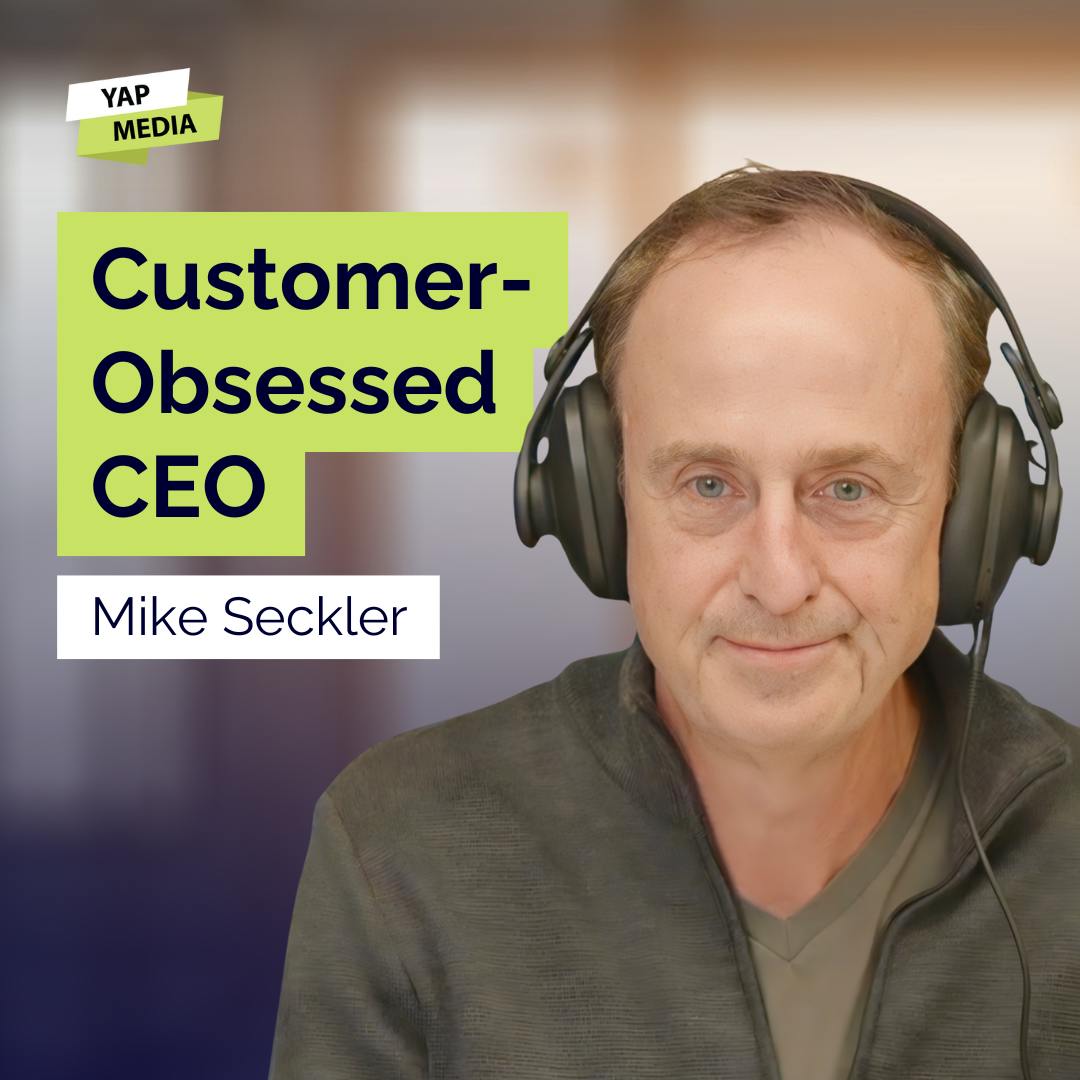
Young and Profiting with Hala Taha
Mike Seckler: How to Build a Business That Thrives When Others Fail | Entrepreneurship | E384
01:04:13
Loading summary
Transcript94 lines
- [00:01]
Mike Seckler
We very much believe that entrepreneurs and small business owners deserve the best. And we feel that our industry has not historically provided them with the best. And so we exist to change that.
- [00:10]
Hala Taha
If you're a founder, leader or dreamer navigating today's fast changing world, this episode with justworks CEO Mike Seckler is packed with insights on resilience, adaptability, and building a business that lasts.
- [00:21]
Mike Seckler
There's a lot of companies that have posters on their walls with value statements that everyone in the company knows don't mean a thing, no one refers to when making decisions. Justworks is not one of those companies. A lot of people who, when they question whether they should be entrepreneurs, overestimate the risk of taking the leap. If you're in your 20s and you go start something, the upside is massive.
- [00:41]
Hala Taha
The downside is, what is so meaningful to you about customer loyalty? Why do you take it so seriously?
- [00:47]
Mike Seckler
If the people with the biggest decision making power are the ones that have the least understanding of what customers want and need, that's gonna lead to a terrible outcome.
- [00:57]
Hala Taha
You've lived through multiple business cycles. Any advice to young entreprene who might be facing their first downturn?
- [01:04]
Mike Seckler
The thing to remember is that these.
- [01:20]
Hala Taha
What's up young and profiters? The business world never stops changing. But some leaders don't just survive the chaos, they grow stronger because of it. JustWork CEO Mike Seckler is one of those leaders. Over the last 30 years, he's lived through the dot com crash, massive pivots and hypergrowth and he still built a 300 million dollar plus HR tech powerhouse that puts people first. In this episode, Mike opens up about all things entrepreneurship. We talk about company culture, we talk about values, energy, management as a leader, and customer loyalty, which he takes really serious. Seriously. But before we get into today's episode, if you're a new listener, don't forget to follow Young and Profiting on your favorite podcast platform and join us every week to listen, learn and profit. Mike, welcome to Young and Profiting Podcast.
- [02:09]
Mike Seckler
Yeah, thanks for having me.
- [02:10]
Hala Taha
I'm so excited to interview you. You know, I don't know if you know this, but Yap Media is a customer of Just Works and so we use Just Works all the time and all my employees get their benefits and payroll through Just Work. So really excited to chat with you and have you on today.
- [02:26]
Mike Seckler
Yeah, thanks for being a customer. I'm very aware that you all are customers. Hopefully you're having a great experience and yeah, look forward to chatting.
- [02:33]
Hala Taha
Yeah, we are having a great experience, but you're not on here because I'm a customer or even you're not one of my sponsors. You're just on here because you're an incredible entrepreneur. And when I was studying you today, I realized that you don't have a business background. You actually went to school, I think for geology and history. So talk to us about this liberal arts background and how that either helped or hurt you as an entrepreneur.
- [02:59]
Mike Seckler
I think when I was in college, I didn't really have a great sense of what I wanted to do with my life. I was attracted to the sciences and being able to apply the sciences to the outdoors. Geology in some ways is applying biology, chemistry, physics to understanding the world around you. And I like that a lot. I thought I might go into a career there and then did some more sophisticated level research and then began to get disenchanted with the sciences and so just went and got a job. After college I had done a lot of quantitative analysis, I knew how to use Excel. That apparently made me employable. And then how I became an entrepreneur from there is a story in itself. I think a little bit of arts education though, in terms of preparing me to be an entrepreneur. I got really good schooling on how to communicate, how to write, how to work through complex problems, and that probably was helpful. But there was certainly nothing about the specific subject matter that was all that relevant to engaging in starting software companies and the like.
- [04:02]
Hala Taha
So there's probably a lot of people tuning in who are in similar positions as you once were. Maybe they didn't get an MBA or they have no business background, but they want to be an entrepreneur. So how did you prepare yourself for entrepreneurship and how did you become an entrepreneur eventually?
- [04:17]
Mike Seckler
So the story of becoming an entrepreneur was, you know, I graduated at a time that might resemble this current time in some ways. So I graduated from college in 1994 and we were using the Internet in college. We were net native and we graduated into a workforce that wasn't yet even using things like email. And that gave us in a way a little bit of a superpower to kind of already be operating within the future. I think folks who are graduating recently might have a similar advantage with AI, for example. But my co founder and I, we went to college together and when we graduated we had our first jobs and we began to feel like a lot of what we were experiencing felt archaic. Filling out forms. There were, believe it or not, envelopes for inter office mail that you would put them in and someone would get them to someone else. And we had grown up using The Internet. And so we began to believe that there might be a way to use the Internet to rethink the way companies employed people and the employee experience. And that was both correct. But what was going to be required to manifest that in a business, I think we were quite naive about, and we were fortunate just to step into it and figure it out along the way. I'm not sure we were prepared because I'm not sure we really knew what we were committing to when we started that first company.
- [05:35]
Hala Taha
Yeah. And that was called Employees, right?
- [05:37]
Mike Seckler
That's right. Employees. Yeah, employee EAs.
- [05:40]
Hala Taha
And you were acquired by ADP, which is absolutely amazing. That's every entrepreneur's dream. And from my understanding, you got acquired and then you ended up being a VP at ADP after they acquired you. So what was that transition like? Did I get that right or.
- [05:57]
Mike Seckler
Yeah, more or less. I mean, we started that company and we built it for 10 years and we navigated the dot com boom and bust and got a lot of very formative business experiences. And then in 2006, in the context of us having a partnership with ADP, where they were distributing our product to their customers, that was going far better than anyone's expectations. We started to become a little bit too important to each other. And it led to a very clean acquisition discussion in terms of me working at ADP after that wasn't in the plan. I always thought if we ever got that business to the point where we could sell it, I would then take a break and go learn how to do something fun like learn how to ski or play guitar or something like that. But we sold that company in October of 2006. And our first daughter, my wife Karen and I, our first daughter was born in November of 06, and my wife had a big career as well. And so it was pretty clear that not working at that moment wasn't going to involve living on the slopes. It was going to be changing a lot of diapers. I mean, that was one bit of reality. And then the other thing was our people were very nervous about the acquisition and how their lives were going to change. And I was concerned that ADP was going to mess up our company. And so when ADP asked me if I would run not just our business, but there was a part of ADP that was supporting our product because we had had this partnership. And then there was another part of their business where they wanted to migrate legacy customers onto our products. So there were three teams, and they asked me to put these teams together, and I took it on And I had no earn out. So there wasn't a financial reason to stay. It was more of a felt like the right thing to do at the moment. And it was a very enriching about two year period that I got a lot out of actually. It was a different kind of leadership challenge and it was really successful in the end. And the legacy of our business now lives on at ADP and a platform there called Workforce now which is the largest part of adp.
- [07:49]
Hala Taha
Oh wow.
- [07:50]
Mike Seckler
And people that came over from our company, number of them are still there, including ADP's current chief product officer is someone that joined us soon after college at employees grew up there, was the number two in our technology organization and decided to build his career there. And there's a number of other people who did that. So I'm very proud that we built something that continues to have a big legacy and impact in the world.
- [08:12]
Hala Taha
So cool. I had no idea that that turned into Workforce Now. I remember I used to work at HP and Disney and we used to use those platforms. So really cool. So you had mentioned briefly that you were able to navigate the dot com cross crisis when 80 to 90% of other companies disappeared at that time that were similar platforms. You were software as service platform. How did you navigate that situation?
- [08:38]
Mike Seckler
Well, in the moment it felt like we were just flying by the seat of our pants, making the best decisions that we could. John Alberg and I, my co founder and I, we were in our mid-20s and the first couple years of that business in the dot com boom, we were rewarded for evangelism, moving fast, raising capital, accessing talent. And then all of a sudden the world changed almost overnight. Capital disappeared and we all have these big burn rates. All these companies that had gotten venture dollars in 97, 98, 99 entered 2000 and capital evaporated. And it required really, really fast decision making to accept that the world was changing. And a lot of people were slow in accepting that, just hoping at some point it would turn or maybe reducing their burn rates by a little to extend Runway. But they didn't extend it by enough. And through a combination of very hard decisions, having to reduce the size of our team by about a third, taking on some diluted financing and making other decisions, we were successful in navigating that extinction event and it was brutal. The thing I will say though is that in retrospect, the lesson was quite profound that in 1999 we felt like we were on top of the world, right? We're getting put on magazines and everyone wants to invest in our company. Everyone wants to join our company, but we were blind to all the risks that were right in front of us. It just felt great. And yet we had 15 well funded competitors and the world was about to change and we were blind to it. And then by about 2003, after we had navigated all these very difficult things, it felt like we were walking through mud. Growth was hard to come by and there were a lot of moments of maybe we should just do something else. Those questions. We woke up one day and realized like all those 15 competitors were gone. They had all either gone out of business or got bought in for parts. And now we were the last one standing and we were able to then dominate our market niche simply by surviving that extinction event. And so things felt best when there was only risk in front of us and things felt worst at the moment there was only upside in front of us. And that was a searing lesson. That's so because my ability to correctly perceive what was in front of me was off.
- [10:48]
Hala Taha
It kind of reminds me of what's happening with AI right now. I think AI is going to disrupt so many businesses. So can you give us advice on how US entrepreneurs should navigate something like AI or things that we should look out for or how we can best prepare?
- [11:04]
Mike Seckler
I don't know what advice I would give. To the extent that this AI cycle plays out, like other technology cycles, you might imagine that it will get even hotter and hotter beyond what people can imagine. And then there will be some reckoning that'll happen and some companies that raise too much money will go away. I mean, that's what has happened in prior cycles. But that doesn't diminish the fact that AI, much like I think the Internet did, is going to change a lot of industries forever. And a lot of jobs that, that have been good jobs in the past may no longer exist in the future. At the same time, some jobs that don't exist today, like new ones, will be created. And so I think the biggest advice would be to just lean into that fact and to not hold on too tightly to the way things used to be, because it's going to change big time.
- [11:50]
Hala Taha
Speaking of that, I know that you have a mentor, an early mentor. It was legendary VC Ann Winblad who taught you about intellectual stamina. Can you tell us about what she taught you and how you use that throughout your journey?
- [12:06]
Mike Seckler
Yeah, I've told this story before. Intellectual stamina wasn't her term. It was what John Albert and I put on as a label of a story that she told us. And so Ann Winbland was quite a legend and still is, although she's perhaps less known because she's less active as an investor now. But she was an entrepreneur, much like you. And women founders at scale, who had great exits in the technology world are still a minority. And she had success doing that in the 70s, built a company, sold it, was a whole owner, and had this great outcome and was close with all the legends of that time, Bill Gates, Steve Jobs. She knew all these folks. And then she joined with John Hummer to start Hummer Woodblad Venture Partners, where Bill Gurley was a young venture capitalist at the time. And so Bill Gurley and Ann Woodblad and John Alberg and I were at a table after they had given us a term sheet, and they wanted us to accept their term sheet. And so the tables, in a sense, had turned where we were done pitching our company, and Bill and Ann were hoping to get us to take their term sheet and not shop it up and down Sandhill Road. And so we took advantage of that opportunity to ask Ann a bunch of questions. And I said, ann, you've seen all these successful entrepreneurs. What does it take to be successful? And she gave a really interesting answer. She said, well, there's really a spectrum. There's different ways to approach this. You have folks like Larry Ellison who can be tough to deal with, and if you don't agree with them, he may choose not to talk to you again. And then you have folks like Michael Dell who are super good at bringing people together, even people with very divergent views and building teams in a very different way. He said, but what they all have in common is this ability to have a clear vision of the world and then to take a couple steps forward and realized that a lot of their vision was not accurate, but to take the 10 to 20% of the vision that remained and recast it anew based on what they had learned and to do that over and over again. And Ann at that dinner said, what I have seen is that to be a truly successful entrepreneur, you have to be ready to go through that process 10 to 15 times over the course of a venture. And it felt like a very wise thing when we heard it, but it was something we always reflected back on when things were, in fact, felt near impossible. It felt like so much of what we had bet on was not panning out the way we wanted, and we had to pivot over and over. And that concept that we dubbed Ann Winblad's concept of Intellectual stamina is still something that I reflect on as we go through these journeys.
- [14:34]
Hala Taha
I remember when I first heard you tell this story you had mentioned you've got to pivot and pivot without a lot of drama. It's just part of the process. And to me, that really stuck with me because when I think about my company, there's certain things that I pivot all the time and it's not really something I contemplate over. It's oh, this is how we have to move so that we can keep getting customers and not really hold on to the past so closely. Even though it's the way that we've done things forever. We need to change. And I like the fact that you had mentioned do it without a lot of drama.
- [15:04]
Mike Seckler
Yeah, it's all about moving fast and learning and then adjusting and anything that I think impedes that, that makes you go more slowly or that causes you to miss a moment when you get a key insight that would suggest maybe you change your approach. Anything that stands in the way of going quickly through those things is going to diminish one's chance of success in any new venture for sure.
- [15:31]
Hala Taha
Yeah, fam, you just realized your business needs to hire somebody yesterday. How do you find great candidates? Fast, easy use Indeed. When it comes to hiring, Indeed is all you need. Stop struggling to get your job post seen on other job sites. Indeed Sponsored Jobs help you stand out and hire fast. With Sponsored Jobs, your post jumps to the top of the page for relevant candidates so you reach the people you actually want faster. And it works. According to Indeed data, Sponsored Jobs posted directly on indeed get 45% more applications than non sponsored jobs. What I love about Indeed is knowing that my job post is getting the visibility that it requires. Plus, with Indeed Sponsored Jobs, there's no monthly subscriptions, no long term contracts, and you only pay for results. There's no need to wait any longer. Speed up your hiring right now with Indeed and listeners of this show will get a $75 sponsored job credit. To get your jobs more visibility at indeed.comprofiting just go to indeed.comprofiting right now and support our show by saying you heard about Indeed on this podcast. Indeed.com profiting terms and conditions apply. Hiring Indeed is all you need. Yap gang. There are certain services you don't think about until they stop working, and Internet and mobile are at the top of that list. When connectivity is slow and unreliable, everything from work to content creation to just basic communication gets so much harder. And that's why Spectrum Business focuses on reliability so it's not something you have to think about. For me, that peace of mind really matters. I want my Internet quietly working in the background while I focus on growing my business. I do not ever want to think about my Internet. I just want it to work. And that's where Spectrum Business really shines. They keep businesses of all sizes connected with fast, reliable Internet, advanced WI fi, phone, TV and mobile services. They also offer tailored connectivity solutions with packages built for your business budget, which matters when you're running a team. But here's what really sold me. If something ever does come up and there's an issue, they offer 100% US based customer support 24. 7 to help you stay up and running. It's no surprise millions of businesses trust Spectrum Business every day. To stay connected. Visit spectrum.combusiness to learn more. Restrictions apply Services not available in all areas yeah fam Starting a business is of course exciting. As entrepreneurs we love to build, create, invent. But entrepreneurship can be overwhelming. Especially in the beginning. When you're first launching your company, it's really hard to figure out like all the steps you need to do. Thinking about these things, they don't give me energy and I don't have passion for it. But that's exactly what Northwest Registered Agent does. Northwest Registered Agent is a registered agent and LLC service that helps you build your complete business identity in one place. They've been helping entrepreneurs for nearly 30 years and they're the largest registered agent and LLC service in the us. Now I'm a successful entrepreneur, but I had no idea what a registered agent was. I had one from my company, it was on auto renewal and I didn't realize how important a registered agent is and selecting your registered agent is. For example, my company is incorporated in Delaware so I have a Delaware address for my registered agent and they collect all my legal and tax notifications and they are supposed to make sure you get all your important documents and you don't miss things like court hearings and things can go really haywire. If you don't have a registered agent and it's illegal to not have a registered agent, your company can get dissolved if you don't have one. When I started my company I wish I had known about Northwest Registered Agent. Apart from helping you form your business initially, they'll help you at every growth stage. So for example, if you need to switch from an LLC to an S Corp as your company grows whatever it is, Northwest Registered Agent has your business back. You get access to thousands of free guides, tools and legal forms even without creating an account. And if you do sign up, which is free, you get access to lawyer drafted operating agreements, bylaws and meeting minutes, all at no cost. Northwest Registered Agent really is your business bestie. Don't wait, protect your privacy, build your brand and get your complete business identity in just 10 clicks in 10 minutes. Visit northwest registered agent.com yap free and start building something amazing. Get more with Northwest registered agent@northwestregisteredagent.com yapfree that's y a P free and at the very least I hope you double check that you have an active registered agent. It is very important you do so as a business owner. So you've lived through multiple business cycles, downturns and recessions and things like this. Any advice to young entrepreneurs who might be facing their first downturn?
- [20:14]
Mike Seckler
Well, the thing to remember is that these cycles, I think, persist across time. It's hard to time exactly when they will turn, but cycles will always be with us. And so it's useful to keep that in mind because when things feel really good, as they did for me originally, my first time through these in 99, it's important not to attach too much to that and to not make decisions that assume it's going to be easy times forever. Likewise, in 2003 it would have been a disaster if we gave up right at the bottom. And so when things are bad to also realize that these cycles will change, even though it feels like an excruciatingly long time can persist as you sit in these moments. So I think that would be one bit of advice. I think being resilient to these downturns requires an acknowledgement that they always can occur. And so we use a four box framework a lot. You think about making a decision yes or no, and then the world gets worse or gets better. There's often a quadrant that's super clear that if you don't make a certain decision and the world evolves a certain way that you have a chance of being out of business. And so I think a good way to make decisions is to always make the decision that puts you in the row where you can't get sunk. That may mean that in the best case outcome you may give up a little bit in terms of how great it could be. For example, if you have debt and one option, you could raise some money and you could pay off the debt. But you say, well geez, if we kill it from here paying off the debt, that might require me to take some equity. So I'm going to get diluted. But if the world evolves bad in a bad way and you haven't paid off that debt, it can sink you. And so the same decision that leads to the best case, outcome and the best circumstances also leads to the one that could be fatal in the worst circumstances. And so I think often the right decision is the one that you give up a little bit of upside in the best case. But what it does is it preserves your ability to be a going concern when things get bad. And it's important to keep that in mind because after four or five good years, it's natural for people to forget that can in fact get bad.
- [22:17]
Hala Taha
Yeah, we're going to play a game later about that, about exactly that. So I can't wait. But before we do that, let's talk about how you got involved with justworks. So you started as a board member, then you were COO and became CEO. Talk to us about your journey and what made you want to get operationally involved with the company.
- [22:38]
Mike Seckler
So I had done two startups with John Albert. The second one was a very different one from the first. It's named Euclidean Technologies. We started in 2008. It uses machine learning and artificial intelligence to invest in the public markets. And it's a great business, but after a couple years it's just a very different kind of business than what employees was. And what justworks is, you don't need huge teams when you're making investment decisions algorithmically. And while I needed a few years of a break from leadership after the employees to ADP transition, I started to really miss it after a couple of years. And I didn't know how to get it back in my life because John still runs Euclidean, loves Euclidean. And the idea of starting a company without John, a more traditional startup felt kind of intimidating. So the way I started to get energy was just to be around builders again. And I just started to get back reimmersed in the startup ecosystem. I ended up sometimes very informally working with some founders and then I ended up on a couple boards and one of them was with Justworks. I met the founder of Justworks 11 years ago. Company had 20 employees, like $300,000 in revenue. And I really liked how the founder of JustWorks thought about things and thought about company building and we just started enjoying being together on that. I wasn't looking for angel investments, I wasn't looking for board seats, I was just looking for energy. And we got to know each other about six month period. And then he asked me to join the board. So I was the company's first independent board member. Well, four and a half years went by and I worked closely with Isaac to support him in making the right decisions and growing the business. And I got a phone call from him where he felt like he wanted help running the company. It had gotten larger, four or five hundred employees, and I was missing leading at scale. And so that conversation is kind of a funny one, how it played out, but it resulted in being invited to come in and help run the company. And that's how I got involved.
- [24:34]
Hala Taha
And once the transition to CEO actually occurred, how did you make sure that it was a smooth transition with the company, with the employees? And how was it to actually lead a company that you didn't found?
- [24:47]
Mike Seckler
I had had a mental block on that idea. I kind of thought after 20 years of working on my own companies, I actually couldn't work in anyone else's company. But when Isaac asked for help that time now, six years ago, six and a half years ago, it was a unique thing in that I'd worked with this founder for half a decade. I knew the business, I knew the investors. And when he asked for help, something in my brain quickly said, whoa, okay. If you don't lean into this conversation, you are definitively saying you'll never be able to work in anyone else's company because it's never going to be teed up like this one is. And when I came in, it was a little bit of an adjustment, for sure. It was Isaac's company, he was still CEO. And I tried to be really thoughtful about how I approached it and I enjoyed it when I came in. To be clear, the expectation was I was going to be the chief Operating officer. It wasn't intended that there was necessarily going to be a two step process where I would ultimately become CEO. To me, what became clear though, soon after I joined is that Isaac did, in his mind, have his mind on a two step process. And we talked about it reasonably soon after I came in once. And then another year later, it became clear that it was something he ultimately wanted to do. And so the CEO transition was smooth, largely because it was on Isaac's initiative and he worked closely with the board and with me to make it very smooth for the company. And when we announced it to the company, it felt like a wonderful graduation from Isaac through running it for a chapter to me. And I think it was incredibly well done and unusually so. I think these transitions typically don't feel as smooth as this one did.
- [26:32]
Hala Taha
How did you guys structure the board and leadership in general? Because I think Isaac is still involved in the company, right?
- [26:39]
Mike Seckler
Yeah, he's on the board. How do we structure the board? Well, I mean, there's how we built the board over time and there's how it works now. But Isaac, he's a close friend and confidant. We've worked together now for a decade. We've had three chapters. I was, in a way, like, mentored him maybe a little bit. I was. Had previously been a successful founder, and then I was his first board member. He was CEO. Then I came in and I reported to Isaac as his chief operating officer. So that was a change, and now I'm CEO and he's on the board. And so we're really in our third chapter of our relationship. But it's been, I think, very much mutually enriching at each step, even if the nature of it has changed.
- [27:20]
Hala Taha
I want to dig deeper on the concept of boards. I think a lot of entrepreneurs that tune into the show are bootstrapped. And I feel like bootstrapped companies especially don't often have a board. One of the reasons why you bootstrap is you don't want to report to anybody else. Talk to us about some of the pros of having a board and how to set one up efficiently so that it gives you the best outcome as a leader.
- [27:44]
Mike Seckler
Yeah, I do think in different settings, the right answer would surely be different. I mean, justworks is a company where no investor owns more than maybe 15% of the business, our largest investor. And so it's a distributed shareholder base. It makes sense to have a board if you have a CEO that has a control position or so forth. The right answer might be something different, but I would just say abstracting away from that consideration. The benefit of having a board is to have a bunch of smart people that bring diverse perspectives to questions about the way the company is governed and the company's strategy. The management team should be managing the business. But in terms of big questions like should we go buy a big company, raise a ton of money, take on debt, should we sell the business, should we go public? Those are things that, when you have a diverse shareholder base, a board is, I think, essential to making good decisions. I think a board also can play a big role in governance to help ensure that the practices aren't in place, that customers interests will be protected, that shareholders will be protected, that bad things aren't happening in the company. Anyone in the company can send a note anonymously to the chairman of. The chairperson of our audit committee happens to be a woman named Chris Leslie. And if there's a concern inside the company, she'll want to talk to me about it. Now, I can imagine a lot of founders are like, well, why would I want that? Well, if you want to create a great workspace for your people, and ultimately, I mean, justworks, we have about 1500 people. It's a big company, so things definitely happen. You want to have mechanisms for people to raise their hand if they see something that they're concerned about, and maybe it's something that they would feel insecure about sharing with their manager. And so how would that information even get to me, let alone to the board? And so I think having some of these structures are actually really wise if you want to build a company that can withstand the test of time. Now, if you're a bootstrap founder, you have 10 employees. I don't know if what I just described makes any sense at all, but certainly having some people that have an interest in the company's success that you can engage with on big questions in whatever form. Board of directors, board of advisors, folks who might invest, but also part of the agreement of them investing is maybe you'll get an hour of their time. Once a quarter, I think is essential. I certainly had moments in my entrepreneurial journey where I felt very alone, that I had no one I could talk to about big decisions, and that's a pretty shitty place to be. And over time, I've learned how to build those structures. I mean, the board is one, but other structures outside of that that I think have been both enriching and have helped me stay in the game and made better decisions.
- [30:29]
Hala Taha
Even just having, like, a support group of other entrepreneurs, I feel like can be really helpful in your entrepreneurship journey. I bootstrapped my company, So I own 95% of my company, so I never really considered a board, But I definitely have a lot of entrepreneur friends who know a lot about my business, and I get to pick their brain from time to time.
- [30:48]
Mike Seckler
Yeah, I have one, too. We found each other. There's a group of 10 entrepreneurs that in the year 2000, when I was feeling alone and overwhelmed with those decisions, with the dot com bust through EO, sister organization of YPO, I found a group of 10 entrepreneurs. Nine guys, one woman. The woman, by the way, is by far the most successful of all of us. In the end, we started getting together monthly and helping each other. And then once a year, we'd go on a trip together. And then as we got to know each other, not only did we help each other with our businesses. But we became very, very deep. I mean, friends even understates it. Cousins, siblings, in a way of the amount of understanding we have of what each other have gone through, both professionally and personally. And that group, we did that for 15 years. In the past 10 years. We still get together from time to time. We were in fact together just a week and a half ago. And it's been an essential part of the support infrastructure that I was able to put in place that has both made life a lot more fun, but also helped me as a leader.
- [31:51]
Hala Taha
So something else that you're known for in regards to your leadership is customer loyalty. And you're really big on that. I read that you actually meet with 10 CEOs every single month. What is so meaningful to you about customer loyalty? Why do you take it so seriously?
- [32:07]
Mike Seckler
There's so many ways to answer that question. I'll just share one example that crystallized something for me about the need to be intentional on this. So when we sold that company to ADP, I was one of two people under 40 in the top leadership group. Maybe there were like 60 or 70 of us. And I was meeting all these people that I was at first a little intimidated by. People that ran these, thousand person CS organizations, thousand person sales organizations. But then what I began to realize within that community is that none of them really talked to customers. You know, they got their information through the chain. And growing up as an entrepreneur, I mean, I was talking to customers and prospects every day because that's how you get your business going. And that just become a habit. And I realized in that moment that I had a superpower that because I was talking to customers all the time, I knew better than anyone else in the room where the market was, where it was going. And I could speak to it with not only a confidence, but with storytelling and specific examples that could win people over. And what I began to reflect on is that when a company's small, if you think of it like a balloon, when a company's small, there's no one inside the balloon that's that far from the edge. And if the edge is where you meet the customer. But when a company grows and you get this balloon gets bigger and bigger, a higher percentage of the people are further away from the edge of where you meet the customers. And typically the most senior people tend to be the ones at the center of that balloon, the ones furthest from customers. And that's a concern because if the people with the biggest decision making power are the ones that have the least understanding of what customers want and need, that's going to lead to a terrible outcome over time for the company. And so because of that, culturally, it just works. We emphasize a key leadership principle here, is that we obsess over customers. The expectation very much is that if you're going to be a leader here, you're not just looking at customer data. You are talking to customers and prospects, and you are in the market all the time. And you should have your own primary perspective on where we're strong, where we're weak, where the opportunity is, where the puck is going. And if you don't have that, you can't be a leader here. So obviously, in my role, I have to model that. Not just to model it, but also because when I go weak and I'm not talking to a customer, I instinctively feel, like, out of touch. I start to feel nervous that something's happening that I don't understand. And so I talk to way more than 10 CEOs a month. I put that out there to start tracking it two years ago. And I do way more than that, just as a matter of course. So tomorrow I'll be at a dinner with 30 customers and prospects. I receive a lot of escalations, and I make sure they get to the right place. But every week, I'll take one all the way through and I'll talk directly to that customer who's having a difficult moment and make sure I understand why. I think that is good to model for our team, that no one's above this. This is actually the work. And I think it does send a signal to our customers when our leadership team and CEO is getting involved in making sure that. Well, one, that we take their issues seriously and that we're. We'll be involved, start to finish, to make sure that it's resolved to their satisfaction. I don't think a lot of companies do that. Certainly not a lot of our competitors do that. And I think that leads to something pretty special in the market.
- [35:30]
Hala Taha
I've been actually thinking about this so much. My company, I'm my own client. And so I have a social media podcast agency, LinkedIn, marketing company, I have a podcast network. So I have a team, a subset of our team runs my account and runs client accounts and does the same thing for me for our clients. Same thing with sponsorships. I get sponsorships. We do it for our clients. And so I have this really unique position where I am the customer, so I know everything that's going on and I can always make things better. And I'm just in that seat, and I have a lot of entrepreneurship friends, and sometimes I'm like, how do they even know what's going wrong? Because they're not their own customers. Some of them have no experience even in the industry that they're in. So talk to us about how not everybody's in my seat where they're their own client. How do you actually get information from customers? You just mentioned a dinner, but what are some other things that you do to make sure you get that feedback?
- [36:25]
Mike Seckler
You know, it's interesting. I mean, when JustWork started out, we looked a lot like our customers. And so we were getting that information just because in the community, we would go out and our peer organizations were also our customers. And so our sense of the market was naturally intuitive. But as we've grown, 1500 employees, larger company, our average customer. We start with customers when they're often really small, less than 10 employees, just a few employees. And we work with customers till they have hundreds of employees. But we're bigger than our largest customer right now. And so we've needed to put in more deliberate mechanisms to stay in touch with the market. As a company, we do that through customer advisory councils by being out in market and hosting events. We have a research team, so we're always doing quantitative research and surveys and so forth. But again, for me, looking at my calendar, it's making sure that there's a good balance of my time that's going to, obviously things that are inside the company, but making sure I'm never out of balance with that. And then I'm always creating space to do customer escalations from time to time, to go out and meet with customers, to meet with prospects, to go join a salesperson on a call to get out in the market. And when we're hosting an event, we do a lot around south by Southwest. I went this past year, probably talked to 100 of our customers and 500 people that are not yet our customers, but should be, and learned a lot, right? There's two venture capital events I go to every year where they invite their founders and their CEOs together. And inviting me to an event like that is a little bit like inviting the fox to the henhouse, because everyone, I mean, there's some truly scaled leaders there that maybe they're using something else because we're not. Justworks isn't about helping large companies. We're focused on small and growing businesses. But 90% of the founders and CEOs there should be our customer. And often a lot of them Are. And I can hear from them. Hey, how are we serving you today? How do you wish justworks could serve you better? If we ever drop the ball for you, give me feedback. And then others are using competitor platforms. Why did you choose them? Why do you like them? What do you wish they did differently? And those anecdotal stories put me in a position to engage with our team in a way more compelling way than it would be just if I had some data. The data's good, but the data and the anecdote, when they come together, that's where real conviction builds. For me at least.
- [38:47]
Hala Taha
Yeah. And I love that you're like not letting your ego get in the way. You're the CEO of this huge company, but you'll get on a sales call and you'll talk directly to the customer. I feel like that's a really important part.
- [38:58]
Mike Seckler
Ego is such a weird thing. Can we talk about that for a second?
- [39:01]
Hala Taha
Yeah.
- [39:02]
Mike Seckler
I was with my group of entrepreneurs you talked about. You have a group. I was with my group a week and a half ago and everyone in this room has had successful exits and done multiple things, had a lot of success. We had this amazing conversation where each of us had a similar story. Where earlier in our career, it was clear that some of our initial success was very ego driven. And we were like your sense of self and your confidence and you just drive it. But all of us, either through work challenges or personal challenges at some point, started to get that ego be cracked a little bit. And those moments when your ego gets cracked, they are unpleasant. And for me, that.com bus period was for sure one of those. It was quite humbling. And while those periods are unpleasant and you never want to go through them again, the benefit in our lives, all of us had stories that rhymed about this, was that when you start able to live in a way that you just know you're more connected to the world around you, you're not this closed off thing. It is a way better way to live. And by the way, I think it also has made each of us, and certainly me, a better leader. Because when you're leading from a place of deep connection and care, as opposed to a place from ego, is better for all the humans around you. And the idea that something, anything, and if it's ego would get in the way of a CEO or a founder spending time with their customers, then that would be a statement that ego would be the biggest enemy to entrepreneurial success. And so overcome that first before you do anything else.
- [40:28]
Hala Taha
I feel like this is a great place to pivot into mission and values. So what is the mission of justworks?
- [40:36]
Mike Seckler
So justworks exists to help small businesses grow with confidence. And we are a very mission driven company. The way to think about our architecture is we have a purpose, a mission and a vision, and then we have values and we can discuss. But our purpose is to help people realize their potential. And there's a whole bunch of stories about how deeply authentic that is to the company's founding. There are internal manifestations to that in terms of what we want justworks to be for the people that work here, how we want this to be a place that, more so than any other place they work, can be a place where they can grow not only as a professional, but also as a human being. The external manifestation is in that mission statement, which is in terms of helping people realize their potential. We want to help these small businesses realize their potential. What we believe at Just Works is that entrepreneurship, small business ownership, this is the hardest, most honorable work out there. You're out there, you're trying to manifest your dream despite all the odds. And you know, you got the whole world conspiring to make your life difficult. And yet when these entrepreneurs persevere through that period, this magical thing happens, which is out of nothing, out of thin air. They create jobs for people to give meaning to their lives, right? They create the fabric for healthy communities and a great society. And so we very much believe that entrepreneurs and small business owners deserve the best. And we feel that our industry has not historically provided them with the best. And so we exist to change that. And the last thing I'll say about our vision is to make starting, running and joining a small business a more accessible option for all. And just to explain what that means, clearly this route to small business success is a hard road for anyone who goes on that road. But it is an even harder and steeper road for folks in certain communities, because access to capital, access to know how, access to mentors are not evenly distributed. And so justworks, the way we want the world, the way we envision the world being better from us having played a role in it, is a world where we have in fact made those things change so that these things are more accessible to more people.
- [42:41]
Hala Taha
And then when it comes to actually driving company goals forward, do you align that with your mission and purpose? How are those types of things structured?
- [42:50]
Mike Seckler
Well, all those things need to be structured and aligned that way because to the extent that what we're focused on and what we're doing doesn't align to mission and vision and values, then they disappear. These things come alive through action and through people seeing how I behave in certain settings, seeing how our leaders behave in certain settings, the way we make decisions. There's a lot of companies that have posters on their walls with value statements that everyone in the company knows don't mean a thing and that no one refers to when making decisions. Justworks is not one of those companies. And so how do you cascade those things through? I mean, our North Star begins with our mission and our vision. We obviously have financial North Stars and waypoints along the way around what it'll mean to realize this vision over time. We serve less than 1/2 of 1% of the small businesses who could help us today. So we had a long way to go. And so we set these intermediate waypoints and then we cascade our goals around them so that everyone's working towards them. But in it, our values of camaraderie, openness, grit, integrity and simplicity, we reinforce them at Company All Hands. Our company awards are the Camaraderie Award, the Openness Award. We do that around our values so that it's an opportunity for storytelling. It's not these abstract things. It's like, here's what camaraderie looks like. Here is an example of someone who is confronted with a need to change and their openness to that need created this breakthrough new initiative at Just Work. So we celebrate individuals who are demonstrating things that are aligned with their values to make them come to life and to give people a very specific set of understandings around what they mean in practice.
- [44:36]
Hala Taha
Hey, young and profiters. So two of my business partners are absolutely obsessed with Huel. So much so that for their birthdays, I try to buy them Hewell merchandise. They are obsessed with it, and that's because Huel saves them time. They don't have to worry about one of their meals for the day. They don't have to think about it. They can just grab a shake that has all their protein goals, all the nutrients that they need, a complete meal, and get to drink it really fast. So I recently got into hul and that's because I had the goal of hitting my protein goals. This year I'm trying to get into the best shave of my life. I recently had Dr. Amy Shaw on the podcast and we played this ranking game where basically I had her stack rank the number one way to get energy in the day. And I gave her all the common things that we hear about. Cold plunges, saunas, sunlight, walks. And she talks about this 30 grams of protein breakfast. So I threw that in the mix and it was the number one way that people get energy in the day is having 30 grams of protein in the morning. Now I was like, okay, I've got to do this for 2026. It's part of my New Year's resolutions. But I'm not really a breakfast person. There's no way I'm sitting down and making a 30 gram protein breakfast. I don't have any time. And that's where Huel makes it easy. They've got their black edition ready to drink plant based meal. I love the chocolate flavor. Each one has 35 grams of protein, around 400 calories. It's packed with 27 essential vitamins and minerals. It's a complete balanced meal, not just a shake. It's not just protein. I get all the other good stuff that my body needs for my breakfast. So if you wanna be like me and get your 30 grams of protein in the morning with Huel, there's a limited time offer. Grab Huel today with Mike. Exclusive offer of 15 off online with my code profiting@huell.com profiting again. That's huell.com profiting. You gotta use the code profiting at checkout to get that 15% off for new customers only. And thank you so much to Huell for partnering and supporting our show. Hey, App Fam. I know a lot of you are working hard to hit new financial goals this year, but it can be tough to get ahead when subscription creep is quietly draining your bank account. I can't tell you how many times I thought I canceled something only to realize later they were still charging me. Or how many times I tried to cancel but it was so difficult I couldn't figure it out. And if you're like me, you have way too many subscriptions and bills and you're probably looking for a way to track and manage them all. Lucky for us, Experian handles all that heavy lifting. Check out Experian subscription cancellation and bill negotiation, two powerful features that can help you save with minimal effort. Experian scans the accounts that you link, finds reoccurring charges, and puts the power in your hands. You can keep the subscriptions you want and cancel the ones that you no longer need or use. Experian can cancel over 200 eligible subscriptions from streaming services to entertainment apps and more. And it doesn't stop there. If you want to also try saving on everyday bills, experienced expert negotiators could help you by finding better rates on eligible Bills you're already paying. The best part, you, you get to keep 100% of your savings. Get started now with the Experian app and let your BFF big financial friend do all the work for you. Disclaimer results will vary. Not all bills or subscriptions are eligible. Savings not guaranteed. Paid membership with connected payment account required. See experian.com for details. So when it comes to your values, sometimes values can get misconstrued. For example, you mentioned that one of your values is grit. But if you don't define what that means, that could lead to people overworking or burnout and things like that. So how do you actually define your values and make sure that people understand exactly what those values are? And at what point do you ever reassess what your values are as a company?
- [48:25]
Mike Seckler
Well, working backwards, our values have been consistent since the start of the company. So we have talked about them, but we haven't changed them. But you ask such a great question both in terms of how we make sure these values are correctly interpreted and you focus on the one that I think has the opportunity to. Most dangerous interpretations could be around grit. Because grit, you can imagine, could be weaponized by a manager to push employees to levels that are beyond reasonable expectations, right? And so when we talk about grit internally and we give out the grit award, we contextualize it, we explain, hey, listen, everyone needs to have some semblance of balance in their lives. That's for sure. True. At the same time, we are in the business of helping small businesses, these folks who are trying to overcome enormous odds with things that are essential to how they manage their companies, how people get paid, the benefits that they provide to attract talent, the way they stay in compliance with all these things so that they can stay focused on what really matters in their companies, right? So if there's something tough going on that's going to impact our customers ability to do those things, then sometimes that requires us to go the extra mile. Even if it's not our job or even if it's after hours, we will show up for our customers in their times of need and we'll have the grit to do so. But that certainly doesn't mean that people need to work 100 hour weeks here as a matter of course. But that might mean sometimes people do need to do extraordinary things because extraordinary moments have called. And the people that we celebrate, I think, and the way that we celebrate them I think makes it clear about what grit means and what it does.
- [49:59]
Hala Taha
Not mean for us. We had to recently reassess our values. So I started my company four and a half years ago and one of our values was scrappy, right? We had to be scrappy, we had to be resourceful, we had to be fast, just get it done no matter what. And as we grew and he had more resources, I realized that I needed to like redefine that. We're scrappy, but we're not sloppy, you know, And I had to add a new one right the first time. Like we've gotta be right all the time and take our time, not just run, run, run. So I do feel like, especially for brand new companies, there's a certain point where you can't operate like you did when you first started. Once you've gotten some success and some resources.
- [50:40]
Mike Seckler
100%. I agree with that. I think that we have not changed our values since we started. However, I think it would be wrong to never inspect them and intentionally decide to maintain them. I do think it makes sense from time to time to evaluate them all and then decide whether they continue to support you or not. And I think that's a cool story that you just shared and that it makes sense to me that you would have made that decision.
- [51:04]
Hala Taha
So what are some other ways that you keep your employees engaged at JustWorks?
- [51:09]
Mike Seckler
I think the biggest gift to an employee and the biggest way to keep them engaged is to provide them with an extraordinary manager and extraordinary leaders that are skilled in helping them grow. Obviously doing that at scale is non trivial thing. Some of it is selection, some of it is who you decide to promote, some of it is how you train people. But all those things can be laddered up to a set of leadership principles that are operationalized in training programs, in talent calibration processes, in promotion conversations, so that the right people are getting in the right places of influence, so that a very high percentage of employees can have a very enriching experience with the person that they're reporting into.
- [51:53]
Hala Taha
And what do you do to guide your managers and your leaders to make sure that your employees have a great experience? How do you think about leadership and energy management?
- [52:03]
Mike Seckler
We have a set of leadership principles that we train against and that we measure people against. They include obsessing over customers and innovating fearlessly, building winning teams, fueling personal growth, acting like an owner. We also have engagement surveys and we do a lot of 360 reviews here. So you get a lot of information in different ways. So from the engagement surveys you get really specific on where people are feeling optimistic and where they're not, where they feel like, they have clarity and where they don't and where they are supported and where they don't feel supported. Sometimes engagement will drop when a leader's driving an org through transformation, because change is hard for people. And it's important to, like, be aware of the context in which these engagement scores come in. If you have a leader who's trying to elevate the talent and they're part of an organization, you might expect engagement to drop for a while as the leader goes through that. But ultimately, you should expect an organization once it's at its desired state. You should see very high engagement scores that people feel supported, they feel like they're in an environment they can grow. They have clarity on their future growth trajectory. They believe in the future of the company. They don't anticipate looking for another job in two years. They don't. We measure all those things. And you can do that down to the team level, certainly the division level.
- [53:17]
Hala Taha
How do you make sure that you show up as the best leader possible? What are the things that you do or pay attention to to make sure that you're showing up as the best leader you can?
- [53:26]
Mike Seckler
My understanding of what that question even means has evolved over time. When I was entrepreneur for the first time, I was super young. I didn't have a lot of management experience. I was naive about what good management was and what it meant to show up. Well, I had this realization probably when I was seven years into leading. The way I would describe it is that I would kind of notice sometimes the company. I was unhappy with the company, and I was unhappy with the attitude of things. And what I came to realize was that when I was stressed out or visibly frustrated, the whole company would tend to be stressed out and visibly frustrated. And when I was optimistic and high energy, the whole company would tend to be optimistic and high energy. And I began to see something that should be obvious or should have been obvious to me way sooner, was that there's this energy flow that goes in two directions. And it often started with me, but I was blind to that. What I was feeling was actually just my own energy getting reflected right back in my face. And so the first thing that I reflect on is how I am showing up and how are the conditions that I'm experiencing. Maybe just simply a reflection of my own energy. That's one lens. The second thing is I was naive when I was a young manager to the question people would say, well, what's your management style? Or questions like that. And I came to realize it's almost Like a trick question. Because the best managers and what I aspire to be now as I'm further in my career, realize that every person that works for you is a different human being who may need really different things to realize their full potential. Some people want to get a lot of feedback. Some people need to stumble on their own before they learn things. Other people really care about being able to get a drink with you after work. Other people, it's like the last thing in the world they want to do is have a drink with their boss after work and really trying to learn about the team and realize that each one might require a little creativity. Each individual about how to coach them to their best is, is something else that took me a little bit too long to learn, but I put a lot of thought into that and how I'm going to be a good partner to each person that reports directly to me to help them be great.
- [55:35]
Hala Taha
I also learned that you're a very early riser. Is it true that you wake up at like 5:30am?
- [55:41]
Mike Seckler
Listen, I mean, my wife and I, we have three girls. So growing up with a full house and trying to do big professional things, the only time I could reliably have alone time is probably from 5:30 to 7, maybe 7:15. And so going back to your earlier question around how I preserve my energy or how I show up, getting time to exercise, getting time to think, getting time to meditate a little bit, get my mind right is essential. And so when I was earlier in career, I wouldn't put as much intentional focus on that. Maybe drink a little bit more, get by in less sleep, because you could do it. Those things have costs beyond just my own health. Right. They would have cost in my patience with people, they would have cost in my thoughtfulness, my ability to sit with other people's discomfort. And what I've learned over time, both as a leader but also as a father of three daughters, the ability to sit with people when they're going through wild emotions, when they're scared about something or excited about something, and be relatively even keel is a superpower that is a great gift to both the company and to a family. And for me to do that well, I realized that I needed to do a certain amount of intentional self care on a regular basis by waking up early generally and doing those other things to show up the way I would be proud of.
- [56:59]
Hala Taha
Well, let's switch gears a little bit and head into our game. So something that you were alluding to earlier is that smart leaders, they fix the roof when it's sunny. So you don't just wait until things go wrong. You actually want to try to fix things while things are going really well. And that's the best way that you can kind of make sure that your company doesn't get a storm when you're at least expecting it. So we're going to play a game called Fix It Before It Breaks. I'm going to read a prompt and you tell me what could be the hidden risks that we're not paying attention to or like, what should we think about even when things seem good, you know, what could be going wrong that we need to actually pay attention to? Does that make sense?
- [57:42]
Mike Seckler
Yeah.
- [57:43]
Hala Taha
All right, let's start with the first one. Your NPS customer satisfaction score just hit an all time high. Everybody is celebrating at the company. How do we make sure this sunny day doesn't turn into a storm? What might be the risk hidden in this perfect score?
- [58:01]
Mike Seckler
Well, there's probably different ways of collecting Net Promoter score information that lead to better results or results that are suboptimal. So that might be one thing just to make sure that you're actually getting the right signal in that data. That would be one risk. The other risk, of course, is that people might perceive that you're better than you, in fact, are. It might be useful to compare that Net Promoter score to your competitor's net promoter score. Plus 30 or plus 40 might sound great, but if you're competing with folks that are at least as good, maybe that's not such an advantage. And you're going to have to be even better to get new business and retain your customers.
- [58:36]
Hala Taha
Your exec team is aligned, calm, and there's zero friction. What would you watch out for in a team that seems way too aligned?
- [58:45]
Mike Seckler
This is pretty easy. I mean, a team that isn't engaging in the hard conversations where there's a lot of things that people are feeling that they're not saying, that actually would be a really big warning sign if the team felt overly aligned and overly cordial because you're going to be growing something great. It's going to be hard and smart people will see things differently. And so the only way forward is to, like, get those great ideas on the table, have the friction, have productive heat, and then have a means of deciding when there's been enough debate, and then do align quickly on an answer, even if some people disagree. Right. That's what I think.
- [59:22]
Hala Taha
You've got a marquee customer who's your loudest advocate and your largest source of revenue. What's the risk of being loved by a customer? Customer too much.
- [59:32]
Mike Seckler
I see this actually with a lot of startups where they have a vision of how they're going to serve a certain segment, and then they get a really big customer that gives them a lot of revenue and the customer loves them and the whole company pays a lot of attention to them. But that customer may not be representative of what it's going to really take to fulfill your vision and your mission. They may not be representative of the kinds of customers you're going to serve ongoing. And so if you over pivot your whole company to building product to meet that one customer's needs, you may find you have a really narrow market for what you're building. That's one risk. There's probably a couple others right behind it.
- [60:08]
Hala Taha
You've hit every revenue target for three years straight.
- [60:12]
Mike Seckler
Revenue targets are too low. Love that.
- [60:17]
Hala Taha
Okay, one more. You just landed a Top Company culture award. What do leaders sometimes miss when everything feels positive inside the company?
- [60:27]
Mike Seckler
A lot of times culture feels great and people feel great during good times. The question really, though, is how resilient is that culture going to be when things start to break? And even in the best successes, things are going to break because the way that you're organized might work for, let's say, from 50 to 200 employees, but some point the way that you do things is going to have to change. And so the big question isn't just how great it can feel when you're on top, but how resilient is your culture and the things that you hold most dearly in your values. How resilient are those things going to be when things are difficult?
- [61:00]
Hala Taha
As we close out this interview, I just want to ask you a couple general entrepreneurship questions. One of the questions I really wanted to ask you before you go is that you've said many founders overestimate risk early on. Can you talk to us about what you mean by that?
- [61:14]
Mike Seckler
Well, I'm not sure I mean it that all founders overestimate risk. I think a lot of people who, when they question whether they should be entrepreneurs, overestimate the risk of taking the leap. And I think that's particularly true when you're early in career. The specific example I'll give to make this point, my wife was a senior executive at a company with a big brand. And so we got to go to cool things. And we're at the Seal concert, met Heidi Klum. It was wonderful. And there are all these MBA interns there. This MBA intern engaged in Conversation with me. She says, oh my gosh, you started two companies. That's so cool. I'm like, thank you. She goes, you know, I've always kind of wanted to be an entrepreneur, but I don't think I could because I'm too risk averse. And I said without thinking. I said, well, I don't know. I think I became an entrepreneur because I'm risk averse. And she's like, does not compute. And upon reflection, I think I said that because I wanted to be more in control of things, control my environment, build a workplace I wanted to be in. Like, you go work at a company, there's a lot of things out of your control that may be really suboptimal. And the other thing I'd say on the risk thing is that if you're in your 20s and you go start something, the upside is massive. The downside is you got incredible experience that makes you probably more employable, probably makes your business school essay better. That risk reward equation can change once you have a big family and a big burn rate, but certainly before you have those things. I think that people way overestimate how risky entrepreneurship is.
- [62:39]
Hala Taha
And nothing's permanent either. I remember I was an entrepreneur right out of college. I was like 27 when I got my first corporate job. And I thought I was going to be so behind everybody and I get into corporate and I was doing great in corporate, even though I started as an entrepreneur. So you can be an entrepreneur, go back, be an entrepreneur again.
- [62:56]
Mike Seckler
Like, there you go.
- [62:57]
Hala Taha
Nothing's permanent. So I end my show with two questions that I ask all my guests. The first one is, what is one actionable piece of advice that you can give our young and profiters today to become more profitable tomorrow?
- [63:12]
Mike Seckler
I think if you look at all the money that you're spending money on, it'll be pretty clear that there's 10% of those dollars that is essential that you can't touch, and that there's probably 10% of dollars that maybe you don't need to be spending today. And then there's a lot in the middle. And so one way to be more profitable is simply to be a little bit more efficient with your resources. Look at all the subscriptions, all the software you use, look at all the employees that you have. And are they all playing at a high enough level? There are sometimes teams with 10 people that would be better with eight people, because coordinating things with eight people is easier than with 10 people. And your highest performers get a lot more energy when they're surrounded only by high performers than with people that aren't as committed as they are. And so I think there are often opportunities to improve profitability by asking questions like that.
- [64:00]
Hala Taha
I love that. And what would you say your secret to profiting in life is? And this can go beyond just business.
- [64:07]
Mike Seckler
I think that it gets back to this ego and ego cracking thing. Like what I've realized is that and this is going to sound, I don't know how it'll sound, but what I've realized is like the more energy I can just put out there to employees, to friends, to our customers, to the world, just sending energy out without a transactional mindset, without expecting anything back, the more energy comes back to me, often in very unexpected ways and sometimes with great time delays. Like people that I did something business wise 10 years ago where I could have optimized for the transaction, but instead I just made sure that they felt good about things coming back 10 years later with a new opportunity that wouldn't have existed if they felt anything less than great about our interaction. So there's so many things now that I'm 50ish where just putting great energy out there on a routine basis, not being so focused on what is going to come back to you is the way to be. Try it out. I think you'll see the universe works in mysterious but wonderful ways when you do that.
- [65:12]
Hala Taha
I hear you on that. Basically optimizing for relationships and not necessarily the bottom line every time. I think that's so important as an.
- [65:19]
Mike Seckler
Entrepreneur, but I think it helps the bottom line over the long term. Like those things can hurt the bottom line in the near term for sure, but over time it always comes back, sometimes multiple times over.
- [65:29]
Hala Taha
Mike, where can everybody learn more about you and everything that you do Well.
- [65:33]
Mike Seckler
I encourage you to visit justworks.com to learn about our company because this is where I'm focused. But you can also see me on LinkedIn. Michael Sechler at LinkedIn, CEO of JustWorks. And thanks for listening today. Thanks for having me on.
- [65:45]
Hala Taha
Yeah, it was, it's really cool to.
- [65:46]
Mike Seckler
Be able to talk to you and thanks again for being a justworks customer. I mean, you're a very successful entrepreneur and that you choose us means a lot to me.
- [65:54]
Hala Taha
Thank you. This is such an awesome conversation. Thank you for all your wisdom and thank you for coming on the show.
- [65:59]
Mike Seckler
Awesome. Thank you so much for having me.
- [66:05]
Hala Taha
Well, young and profiters, there you have it. What an incredible conversation with Mike Seckler. A true masterclass on resilience, adaptability and leadership. Without ego, Mike reminded us that entrepreneurship isn't about getting everything right the first time. It's about developing what he calls intellectual stamina, the willingness to take a few steps forward, learn fast, and pivot without any of the drama. Growth happens when you move with curiosity instead of fear, and when you stop treating course corrections as failures and understand it's just part of the process of being a successful entrepreneur. He also showed us what customer obsession really looks like. Even as a CEO of a $300 million plus company, Mike still spends time every week talking directly to customers, joining sales calls, handling escalations himself from time to time. Because when leaders lose touch with the people they serve, the company will lose its compass. So stay close to your customers no matter how big you get. Like Mike said, the edge of the balloon is where the truth lives. And I also loved his honesty about ego and energy. He said surviving the dot com crash cracked his ego wide open, and that humility turned him into a better leader. The best founders don't lead from pride. They lead from purpose. They make hard calls with transparency, they protect their teams during downturns, and they take care of themselves so they can show up calm and grounded for everybody else. So here's your challenge this week. Yeah, fam audit how you lead. Where do you need to pivot faster? How can you spend more time listening to your customers? And are you managing your energy like the leader your business deserves? If you take just one insight from this episode, let it be this. Success isn't about avoiding the storms. It's about learning to fix things before they break. All right, Young and profits, that's all the time we have for today. And now I want to give a special shout out to one of our amazing listeners who keeps this community throw thriving. Muhammad J. Rashid, who shared I initially started following Hala on LinkedIn and then I started listening to her podcast. I enjoy listening to it and I always feel like I'm learning something new and getting value. Muhammad, that's exactly why we do this, to bring value to driven learners like you. So thank you so much for listening to the podcast and if you want a chance to be featured in our next outro, be sure to drop us a five star written review on Apple Podcasts or Spotify and tell me what you're loving most about the show. All right, guys, until next time, this is your host, Hala Taha, AKA the Podcast Princess, signing off.