← Your Money, Your Wealth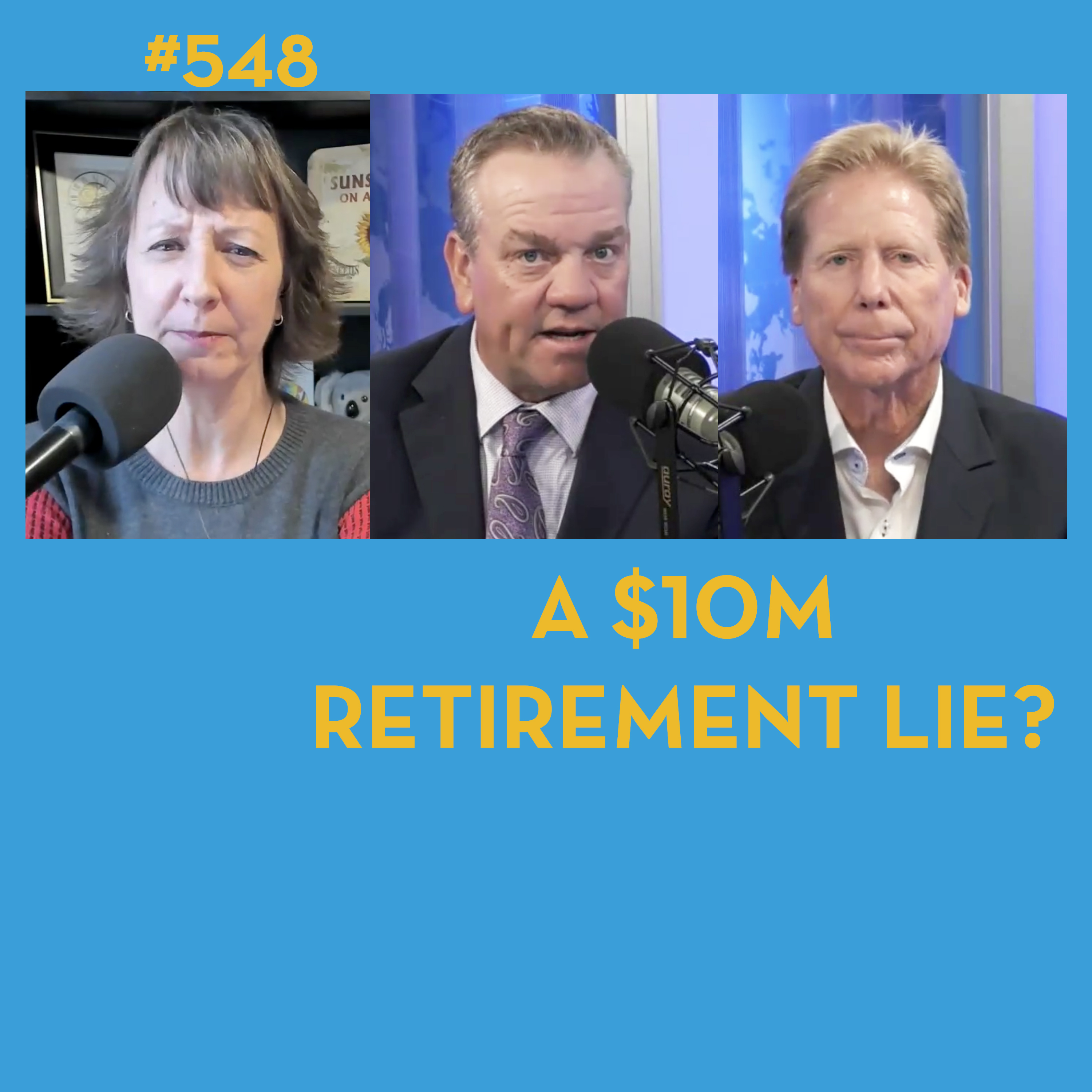
Your Money, Your Wealth
Is Financial Software Giving You False Retirement Confidence? - 548
00:47:56
Wendy and Joe in Colorado ran the numbers, and their financial planning software says they'll have over $10 million when they pass. Wendy's wondering if they should continue converting to Roth while working, despite their high tax bracket. But has the...
Loading summary
Transcript325 lines
- [00:00]
A
Wendy and Joe in Colorado ran the numbers, and their financial planning software says they'll have over $10 million when they pass. Wendy's wondering if they should convert to Roth while working despite their high tax bracket. But has the software lulled them into a false sense of security? That's today on youn Money, you, wealth podcast number 548. Plus, which is smarter for Kurt and Courtney in New York? Aggressively paying down their mortgage or putting their extra money to work in the market before Kurt retires early in 20 years? Finally, when does it stop making sense for High Ear Tim and Faith in Boston to contribute to their Roth? The fellas duke it out on this one. And we figure out, based on our earliest musical interests, which era we're each children of. I'm executive producer Andi Last. And here are the hosts of youf Money, you, Wealth, Joe Anderson, CFP and Big Al Clopine, cpa.
- [00:50]
B
Let's kick this thing off. First off, happy birthday, Andi Last.
- [00:53]
A
Oh, thank you. Thank you very much. 52. Starting my 53rd year, 53 is my lucky number. We'll see how that works out for me.
- [01:01]
C
Oh, well, congratulations.
- [01:03]
A
Thank you. Thank you very much.
- [01:04]
B
Don't look a day older than 25. Dang.
- [01:07]
A
Thank you, Joe.
- [01:10]
B
All right, speaking of 25. Hi, Joe, Big Al, this is Wendy from Lumber, Colorado and my husband Joe. I'm 57. My husband's 54. My husband drives a 2019 Chevy Colorado. I drive a 2025 GLE 450E Mercedes Hybrid. Okay, well, that's a. Sounds like a nice car. I think it is probably GLE450E. All right.
- [01:36]
C
Yep.
- [01:38]
B
Our home is worth $1.1 million. We still owe about $500,000 with an interest rate of 2.5. Husband. He recently lost his job and would like to be completely retired. I expect to continue to work at least until age 60. We currently have $579,000 in a taxable account, $2.2 million in tax deferred, and another half a million dollars in a tax free account. I would love to get my tax free bucket much higher. All right. I know I should do Roth conversions when I retire. We have had both been doing full Roth 401 contributions as well as after tax contributions of roughly $10,000 each. And converting that into a Roth, despite our high tax bracket, given the fact that we started late in the Roth game, I am still continuing to do these for as long as I continue to work. I don't think you agree with this. All right, why not?
- [02:32]
A
Yeah, well, because of the high tax bracket.
- [02:34]
B
Well, that doesn't matter.
- [02:36]
C
Well, we'll unpack that in a second.
- [02:37]
B
Yeah. Total savings per year is around $64,000 with around $12,000 being tax deferred. Company profit sharing rest is the Roth 401 NHSA. I've considered moving my IRA to my 401K to allow us to do a backdoor Roth for the next few years since my husband has no opportunity for contributions to a retirement account. That's if I wait to do Roth conversions when I retire and need my taxable bucket for both living expenses and tax payments on the Roth conversions, I think I'll run out of those funds pretty fast. Our spending is hard to figure out. When we first got married in 2017, our AGI was around $300,000. It has grown over the last and peaked at $587,000 into 2024. I expect 2025 to be similar given my husband had 13 months severance. But in 2026 will go down. His gross income was around $230,000. All right. We have run financial planning software and plugged in around $170,000 for living expenses for the first few years until we have Medicare. Then reducing that to around $160,000. It says we'll have over $10 million when we pass. Of course, who knows? Our Social Security is expected to be around 3,700 at full retirement age. For both of us, it's about the same. Also, we do not have any intentions of keeping the house that we currently have. We're thinking about moving to the villages. Oh, boy. Good old villages.
- [04:10]
C
Yeah. That comes up a bit, doesn't it?
- [04:11]
B
Yeah. People love the villages. I think Aaron Townsend's going to retire to the villages.
- [04:17]
C
I think you're right.
- [04:18]
B
Yeah. A lot of crazy stuff goes on in the villages. They're going to hang out there. And the winners? Looking to spend about $500,000 on a house there and having a second one probably. Colorado still all to be determined, but wanted to make sure you had all the information as well. I would consider working to 62, but prefer 60. If I'm going to have $10 million, I can certainly spend more. I'm a big fan of both books. The Power of Zero and Die with Zero. Wow. Not necessarily zero dollars, but zero regrets. Thoughts? How we looking?
- [04:58]
C
How you looking? Okay.
- [05:00]
B
Wendy get her golf cart yet? Hang out in the villages. Who is that in the villages?
- [05:07]
C
Wasn't it Smitty Schmitty?
- [05:09]
A
You actually moved from Oregon? Roseland Oregon to the Villages in Florida.
- [05:13]
B
I don't think. You think Schmitty still listens to the show?
- [05:16]
C
No, I think he. I think he's dropped off.
- [05:18]
A
I think from the podcast survey, we've determined that the majority of people listen for one to five years and then they're out.
- [05:25]
B
Man, he's gone.
- [05:26]
C
Yeah, I would think so.
- [05:27]
B
Totally.
- [05:27]
C
We haven't heard from him for a while. That's why I say that.
- [05:30]
B
Yeah. All right. Okay.
- [05:33]
C
Well.
- [05:34]
B
So, Wendy. Yeah, well, Wendy, if you. If you run into Schmitty at the.
- [05:39]
C
Villages, ask him if he's still listening.
- [05:41]
B
Just tell him we said hi.
- [05:43]
C
So, Joe, let me do a little math here. So we got about 3.3 million. If she wants to retire at 60, that's about three years from now.
- [05:50]
B
Yep.
- [05:51]
C
Let's just say 6%. I added 30,000 a year. They're saving 60 now, but husband's not working anymore, so I just cut that in half just for something. So I end up about. They end up with about 4 million liquid at that point. They want to spend 170. Today, three years at 3% inflation. I got 186. That's about a 4.7% distribution rate. It's a little rich. At age 60, however, that's the gap to Social Security. Yeah. That doesn't include 90 grand of Social Security, which they'll be getting. So.
- [06:22]
B
So then that's going to be about 130,000, 140, probably distribution with Social Security, given inflation.
- [06:30]
C
Yeah. Yeah. For seven now, she could work a little bit longer. I'm not sure how she's going to end up with 10 million.
- [06:38]
B
There's no way that. I mean, the future planning software, I think, gives so much false confidence.
- [06:44]
C
I know it.
- [06:45]
B
Yeah, because you're running a straight. So here's another argument that I was thinking about, Alan, is that. That I know you'll agree with, but maybe I keep saying it wrong. So last week when I was trying to make the point of like, all right, well, this is the amount. And then you're like, yeah, with no growth.
- [07:04]
C
Yeah.
- [07:05]
B
Right. And then we went back and forth on that.
- [07:07]
C
Yeah, you just say it differently.
- [07:09]
B
But here's the point, though, and that's why I want to look at that number. Because you can't use a straight line rate of return when you're taking money out.
- [07:17]
C
Right.
- [07:18]
B
So when we're doing calculations to say, hey, you're saving X amount of dollars and you want to retire in five or 10 years, you could use a 6% rate of return. Because as long as you average 6%, and at the end that dollar figure is going to be true, you can average 6% when you're taking money out.
- [07:36]
C
Yeah.
- [07:37]
B
But if, if you take you, you'll have a totally different outcome depending on when those returns hit that account and how much money that you're taking out.
- [07:45]
C
Right, right. I agree with that. Yep, I agree with that.
- [07:49]
B
So when you look at this, you're using a straight line inflation, straight line rate of return, because, hey, I'm only pulling 4.7% out of my portfolio, but I'm growing my portfolio at 8.
- [08:04]
C
At 8, right. Or 10s. And P has done 10.
- [08:08]
B
And so you get that compounding growth over and over again, which will never, ever happen. And then that's why you have these imploded balances. And it will say 10 billion at age 90, 95. But she's 57 or 55 years old. You take the president value of that 10 million, you're now you're right back to where you are, which is all false anyway because of the assumptions that you're putting into the software.
- [08:29]
C
It's all about assumptions.
- [08:30]
B
It's 100% assumptions. You can make that thing look as good or as bad as you want. And so I think as you work through financial planning software or as you work with advisors and if they're using software, you have to truly understand the assumptions and how they're making that advice based on the assumptions that they're using. Because it's like, all right, well, if you do these, or if I manage your portfolio, or if you do this with your portfolio, or you're just working on your own and doing it yourself, I mean, retirement income planning is totally different to say, hey, well, I have enough money roughly, you know, when I retire.
- [09:09]
C
Right, I agree with that.
- [09:11]
A
So how do you work around that? What do you do about the fact.
- [09:14]
B
That if you're working, you can't just look at it? She's 57. She's like, all right, I'll have $10 million at age 90. And she's like, who knows? And I know she doesn't actually think she'll have 10 million, but it's given her confidence that she can retire today. Right. You have to look at this every single year, and what is the distribution plan and how much money that you should be taking out given market given expenses, given taxes, given inflation, given all these different variables that she's putting in in one year and extrapolating that over the next 40 years, I think that.
- [09:48]
A
Get together with your advisor every year and consider worst case scenario and absolute best case scenario.
- [09:54]
B
Yeah, well, yeah, I'm not saying I'm not advocating for her to hire an advisor. I think she sounds like she enjoys doing it herself. She. I don't know how many people just kind of play around with the financial planning software. That's not in the actual business of playing with financial planning software.
- [10:08]
C
True.
- [10:08]
B
Right. So if you're going to play with the software, just make sure you're playing with it a lot more than you may want to. But she's chilling in the Villages. I mean.
- [10:18]
A
Or will be.
- [10:20]
B
Yeah, she will be.
- [10:21]
C
Yeah.
- [10:21]
B
Yeah. You know, she wants to buy two homes. She's going to sell the house. She's got a million dollars, 500 in the, I don't know, $500,000 home in the Villages. But that's outside of Orlando, isn't it?
- [10:31]
C
I don't know. No idea. So I know we've heard it before. So here's what I would say. Wendy, I think your plan is good. If it were me, I would probably, if I wanted to spend at this level, I'd probably work to at least 62 just to give myself a little bit more cushion and. Or I might try to reduce my expenses a little bit until I got to Social Security, full retirement age. Realize your husband is three years younger, so he's going to be three years behind you receiving his benefits. So there's a pretty big stub period of trying to. Trying to bridge the gap between Social Security and your wealth. So I would just be a little bit careful there. I agree with you, Joe. I think that financial planning software, you can pick whatever percentage you want. You can create whatever answer you want. Really.
- [11:20]
B
Right. Do I want to retire? I'm just going to throw these numbers in there and it's going to be, hey, look, I'm 6%.
- [11:25]
C
No, 8. Oh, yeah. Okay, let's get 8 then. Yeah. So just be careful of that second thing. I would say putting money into Roth right now, even in a high tax bracket, you're actually, you, your husband isn't working. I know there's a year severance, but you'll be in the 24% bracket. I'm okay with that. I think that's a decent tax rate. To get money in Roth, I would keep doing that. Putting your IRA into 401 to do backdoor Roth. Yeah, that's a great idea. Right. Nothing wrong with that.
- [11:51]
B
But here's where she's confused, I think is with the back door or with the after Tax contributions, fully fund the after tax and convert fully. Yeah, fully funded because it's the same as saving the money into a brokerage account or your savings account. It's already after tax dollars. But you're allowed to supercharge the amount of money that you put into a Roth IRA. So if you're only putting $10,000 into the after tax component of the 401, it may allow you to put a lot more money than the $10,000. Well, don't do the hassle of taking the IRA, moving it into the 401 to do a $7,000 backdoor Roth. You could continue to do after tax in your 401 plan and convert that out. It's the exact same thing. If you want more dollars to go in the Roth. Yeah. Then put the money into the ira, do a backdoor Roth IRA contributions as well as fully fund the after tax contributions. I would do that every single year. And then you're going to say, well you know what, I don't think I can probably afford to live because our paycheck is going to be that much lower and Big Joe here is not working. My husband. Well, you have a lot of money in after tax already. You would just have to spend some of that, put that into savings to be a cushion to get more money into the Roth ira. So it's almost, if you think of it, taking the dollars from a brokerage account and putting it into the Roth IRA. If we could do that at 20, 30, $40,000 a year, we would do that without blinking an eye because then all future growth would grow tax free versus all future growth is subject to capital gains. So you want to think about maneuvering the assets to get it into the Roth IRA with the least amount of tax possible. If you're already putting in the after tax, keep doing it, max it out. Because let's say you stop the after tax, those dollars are still going to be taxed and then they just go into your checking account or then you save it into your brokerage account. You want to get it into the Roth.
- [13:52]
C
Yeah, and here's another comment. She's talking about when she retires doing Roth conversions and paying for that tax and then also living on the non qualified for expenses and she's going to run out of money, not going to be able to spend any money. Well, you have to stop thinking about money as like just your non retirement accounts is all you can spend. All you're doing when you're doing this is you're taking a whole bunch of non qualified assets and getting them into a Roth. Yeah, you could spend that. That's the whole. This is all your money. Right. So don't think of it. You're out of money by doing this. You're actually doing a great job. Getting more money to a Roth ira.
- [14:30]
B
Yeah. If you think of it, people silo their investments or I have a brokerage account, retirement account, a Roth account, and then I look at them a little bit differently. Then I have all this cash and so I got my cash account. No, just look at your liquid assets as your liquid assets and then find the overall asset allocation, the tax strategy to figure out how can I get it in the right spot with the least amount of tax. And for me, the right spot would be the Roth. And if you can do that by spending down your non qualifying a little bit, you want to be careful with liquidity and everything else. But if it comes out of the Roth, you're never paying tax on those dollars again.
- [15:06]
C
Yeah, that's right. I mean, at a minimum, you keep an emergency fund. Right. And then keep some extra for you want to buy a car from time to time or pay for a vacation. I get that. Right. But you don't have to have a giant non qualified account.
- [15:19]
B
Right. What? She's got 2.2 in deferred. Yeah, in deferred. So yeah, the more you can get it out of there with the least amount of tax is the right strategy. What's our thoughts about DAI with zero, there's few of us or a few listed.
- [15:39]
C
We've had that a lot lately.
- [15:41]
B
The power of zero. Not a fan of the power of zero with the life insurance and the Iuls and fully funding that stuff. But I do like. Who's that? McKnight. Brian. No, Brian McKnight's a really good singer.
- [15:58]
A
David McKnight.
- [15:59]
B
David McKnight.
- [16:00]
C
Oh, there you go.
- [16:00]
B
Yeah, probably Brian's brother. No, Brian McKnight is legit. No, it's David McKnight's. Fine. But the life insurance and fully funding the life insurance and some of that stuff I'm not a fan of at all. But you know, he's a smart guy when it comes to conversion strategies and understanding tax. But there's a little, you know, tax rates are going to go to 90%. So you want to have the power of zero.
- [16:30]
C
Got it. Okay. I do like zero regrets. Live the life you want to live if you can afford it.
- [16:35]
B
There you go.
- [16:36]
A
When you think about retirement, you might dream of a tropical beach or a cruise ship, but don't let that cruise ship turn into the Titanic. Get ready to confront the hard truths of retirement on this week's brand new episode of youf Money, you, Wealth tv. As Joe Anderson, cfp, and Big Al Clopine, cpa, talk about managing market volatility and inflation, unexpected life events, and what to do about your Social Security benefits and taxes. And it's not just about money. The fellows also tackle the truths about longevity, health issues, boredom and loss of identity. They've got the solutions to help you get ready for all the hard truths of retirement. Get even more help by downloading our free Retirement Readiness Guide. Learn how to create a sustainable retirement income control taxes in retirement and things to do now to be ready for those hard truths in the future. Just click or tap the links in the episode Description to watch 4 Hard Truths about retirement you need to face on YMYW TV and to download the Retirement readiness Guide. All yours. All free, courtesy of your money, your wealth and pure financial advisors.
- [17:39]
B
Let's go to where are we going now? New York, Upstate New York. Hi, Joe, Big Al and Andy, I've got a question for you. Would love a spitball. All right, thanks for taking my question. I appreciate your opinions. Whatever analysis you have for me as a child of the 90s, you could call my wife and I Kurt and Courtney. No, Kurt and Courtney Corbain Cobain, Courtney Love. Yep. We live in rural upstate New York. When you say the child of the 90s.
- [18:12]
A
Yeah. I'm assuming he means that he was listening to that music in the 90s.
- [18:16]
C
I would say he was born in the 80s.
- [18:18]
B
So if I'm a child of the 90s, though, like, what is child is.
- [18:22]
C
That you're kind of 16 or maybe 10 to 18, I don't know. Somewhere in there.
- [18:30]
B
Got it.
- [18:31]
C
What are you child of Walker?
- [18:34]
B
He doesn't want to say. No, probably I was a child still in the 90s and the eight, probably more.
- [18:39]
C
You probably an 80s child.
- [18:41]
B
Yeah. But I do know Kurt and Courtney quite well.
- [18:45]
A
Yeah, I, I was impressed that Al knew.
- [18:48]
C
I, I, I, I like Nirvana a lot.
- [18:51]
B
Oh, wow.
- [18:52]
C
Yeah. Yeah.
- [18:52]
B
Big Nirvana fan, huh?
- [18:53]
C
Yeah, yeah, yeah. And I'm, and I'm a fan. I'm a child of the late 60s, 70s. I was.
- [19:02]
A
Joe, when did you first start, like, paying attention to music and stuff? For me it was 1983. That was the year that I started actually really digging music.
- [19:10]
C
Maybe that's the year. You're a child of a decade. I know. For me it was 1970.
- [19:15]
B
Wow.
- [19:15]
C
There you go.
- [19:16]
B
I Can't remember the exact date and.
- [19:18]
C
Time, but you were, like, 2 years old.
- [19:20]
B
I don't know. I like.
- [19:22]
A
For me, it was Michael Jackson and the Stray Cats. Both of those. 1983. That was the year.
- [19:27]
B
Okay. When did Purple Rain come out? That's 87.
- [19:33]
A
84.
- [19:34]
B
Oh, 84. Okay.
- [19:36]
C
Yeah. You're a child of the 80s, then.
- [19:38]
B
Yeah. Purple Rain and then what Thriller came out in probably thriller was 83.
- [19:43]
A
Yeah. Michael Jackson. That, for me, that was. That was the beginning of it all.
- [19:46]
C
All right. We're getting some clarity.
- [19:48]
B
Yeah. When did New Edition. That was. That was one of my favorite little albums. You had Bobby Brown.
- [19:58]
A
New Edition's first album, Candy girl, was in 1983.
- [20:01]
B
Yeah.
- [20:01]
A
So there you go.
- [20:02]
B
Yeah.
- [20:03]
A
Yep.
- [20:03]
B
Yeah. Candy Girl. That was a good song.
- [20:05]
C
I remember that song.
- [20:06]
B
Okay, so. Yeah. Right. I'm right there with you, Andy. Right there. All right, so Courtney drives a 2017 RAV4. And I drive a 2014 RAM 1500. All right. With a light pantania of rust.
- [20:24]
A
Patina.
- [20:25]
B
Patina. Oh, patina.
- [20:26]
A
It's got a bit of patina of rust.
- [20:28]
B
Yes. I knew what patina of rust is. The best truck to own is the one you own. All right. Put that on your koozie.
- [20:37]
C
Out. I'm going to.
- [20:39]
B
My drink of choice is any beer with a rebate attached.
- [20:43]
C
Do you like rebate beer?
- [20:44]
B
No, I've never seen a rebate beer.
- [20:48]
C
Well, it's just beer that's on sale, I think.
- [20:52]
B
If you're buying. I like bourbon. Courtney doesn't drink much, but does enjoy a little dry red wine from time to time. I've been listening to YMYW for too long.
- [21:02]
C
You could stop now.
- [21:03]
B
Okay. Actually, the first time I saw a picture of Joe and Big Al was when I recently visited the website. Now. Not what I expected. I kept envisioning Joe as a Fat Pete. Fat Pete Godfather kind of guy.
- [21:18]
A
That's what he said.
- [21:19]
B
What the hell is Fat Pete Godfather?
- [21:23]
A
No idea.
- [21:25]
B
Big Al is a bespeckled elderly child wearing glasses.
- [21:32]
A
Yes.
- [21:33]
B
Sorry, guy. What the hell is a Fat Pete Godfather?
- [21:38]
C
I just can't get past Fat.
- [21:43]
B
And Pete. I don't know.
- [21:44]
C
Who's Pete?
- [21:45]
B
Who the hell's Pete? Bespeckled elderly gentleman.
- [21:49]
C
Yeah, sorry.
- [21:50]
A
In the Godfather movies. Pete. Fat Pete Clemenza is a capo regime in the Corleone crime family, known for his loyalty, his cooking skills, and the famous line, leave the gun, take the cannoli.
- [22:02]
B
Okay. All right, onto the numbers. I, Kurt, just turned 40. Courtney, 38. I work in my annual salary is 150,000. My income will escalate to around $190,000 in 2030 and I will receive modest annual increases thereafter. Courtney works in our home raising our two children and maintaining our household and earns no income from this important labor. We have a home that we purchased at about $450,000. That was in 2022. We still own around 5 or 350,000 on a 30 year loan. Our mortgage rate is 4.75. All of this became. This will become important shortly, I promise. Courtney and I have the following saved for retirement. $250,000 in Roths. We max these out $120,000 into a 401K. We have $12,000 in Courtney's old 403B. 5,000 in our brokerage account, $65,000 in cash. But we are in the process of buying some land surrounding our property. So you cut that figure in half. Let's just give us half the number, Fat Pete.
- [23:05]
A
I will point out that he also mentions that they're maxing their Roth IRA accounts and will continue to do so forever and ever and ever and ever.
- [23:14]
C
Okay, sounds good. That's a long time.
- [23:16]
B
Courtney may or may not go back to work. If she does, it will all be gravy. If not, no problem. We don't need to have our income for our finances to work during the unforeseen. Courtney and I will both be able to collect minimal New York State pensions when we retire. We can estimate that the total value of these pensions will be $12,000 annually. Combined. I could retire with a five figure pension and 100% health care coverage in retirement at age 57. But I don't expect that I'll want to. My plan is to retire at 62. Which brings me to my main question. What are the pros and cons of paying off a home early? All right. By the time I retire at age 62. So he wants. That's the question. All of this for that question? For that question.
- [24:04]
C
And then it keeps going.
- [24:05]
B
You got to be kidding. You just asked, should I have a mortgage in retirement? Love, Kurt and Courtney.
- [24:15]
C
And leave out the Fat Pete.
- [24:17]
B
Godfather, you old bespeckled bastard. Oh, my God.
- [24:24]
C
You know, my mom told me, if you can't say anything nice, don't say anything. Don't say it. Yeah, you can think it, just don't say it.
- [24:31]
B
Sometimes it's hard.
- [24:33]
C
Yeah, true.
- [24:34]
B
Could it be advantageous to knock out that debt? Or is there more advantages if I put those extra mortgage payments to Work in the market and just pay the loan off in the regular course. As much as I can predict, we expect to spend, adjusted for inflation, around $150,000 per year in retirement if our house is paid off. If not, we would expect to pay around or spend around $172,000 in retirement until the mortgage is paid off. According to my bass. AKA what's bass Best estimated big Big ass spreadsheet. Big ass spreadsheet? Is that what.
- [25:10]
A
Keep reading. Just read the rest of the sentence, Joe.
- [25:13]
B
Oh, I'm sorry. He says according to my bat. Oh, AKA my big ass spreadsheet. Is that why you're doing this?
- [25:18]
A
Yes, that's why I was going.
- [25:20]
C
Keep going.
- [25:21]
A
Read the rest of it.
- [25:22]
B
Sorry. We'll have around three and a half million dollars saved by the age of 62, given my expected annual contribution return. And so what do you think? Does your spitball show that we're on track? Would you pay out the house early or would you sock away the additional dollars in Old Roth 401k? Appreciate any information you can provide. Thank you so much. Kurt Courtney.
- [25:48]
A
So they do want a spitball, an overall spitball. And as a part of that, the major part of that is should they pay off the house before he retires at 62. And what about Roth?
- [25:57]
B
Did you run some numbers on this?
- [25:59]
C
Well, I did. So they have about 400,000 right now, Joe. And I just said 400,000 7% saving for 22 years. I did the math. They're saving about 28,000 a year.
- [26:12]
B
Yep.
- [26:12]
C
So that comes out to about 3.1 million. That's pretty close to 3.5 that he thought. So yeah, I'm good with that. He says he could retire with a five figure pension and 100% health care at age 57, assuming he could still get that and more at age 62. So yeah, I think the numbers look fine based upon spending. What are they?
- [26:32]
B
You want to spend 150 or 170.
- [26:34]
C
Yeah, I think that works with a, with a, with a 5 fig pension? Well, I don't know. I guess it could be 10,000 or it could be.
- [26:41]
A
Well, he's saying he doesn't want to take that.
- [26:44]
B
Well, it's going to be still five figures.
- [26:46]
C
He'll take it at 62. He could take it at 57.
- [26:49]
B
Is it stick figures at 62?
- [26:51]
C
Maybe he didn't, he didn't say. I, I think the numbers are probably okay, but I mean we don't really have quite enough information to make that determination. But as far as paying off the mortgage, I would say, Joe mortgage, the 4.75, you know, that's a little bit higher rate than you might like for a long term mortgage. I think you can run all kinds of analysis and it will tell you to not pay off the mortgage. But psychologically, as someone who did pay off their mortgage, it does feel good. So I'm, I'm fine with paying off the mortgage. Maybe obviously continue investing just like you're investing, just have a little like extra going to your mortgage. I'm totally fine with that. And over 22 years you can probably get that thing paid off.
- [27:37]
B
Yeah, I think it's, this is another danger zone for the financial planning software.
- [27:44]
C
Right.
- [27:44]
B
Because he's got a mortgage of 4.75% and then you run analysis and he's running his rate of return at 7%.
- [27:51]
C
Yeah.
- [27:52]
B
So that's arbitrage.
- [27:53]
C
Yeah. And so you would never pay it.
- [27:55]
B
Off with that because you're making money off of, instead of paying off the debt, you're making 2% on that or doing some change.
- [28:01]
C
Market has a 20% decline and then you're thinking, I should have paid it up.
- [28:06]
B
Yeah, I think this is the sleep at night formula here. You're 40 years old, so you still have a ton of time. I would be, it's not like $1 million note hanging over their head.
- [28:18]
C
Right.
- [28:19]
B
They, he makes good income. He's going to have really nice fixed income in retirement.
- [28:24]
C
Right.
- [28:24]
B
Given his Social Security and his pension. You know, since you, you already have a fairly large floor when it comes to your income once you do decide to retire, I wouldn't be in a huge rush to pay it off. Yeah, same when you turn 50, it's like, okay, well now where we're at, are you making more income now? The kids are maybe out of the house in school and then maybe your wife is working and then all of that gravy that you have, maybe you throw the gravy against, against the mortgage.
- [28:56]
C
Yeah.
- [28:56]
B
But compound interest right now and if you can get that working for you today at age 40 is going to be a lot better for you if you wait until 50. So if I were you at your at 40, because I was just there, I would not pay out the mortgage.
- [29:14]
A
You were just saying, listening to Belle Biv Devoe.
- [29:16]
B
I can still see, I can still see 40, still see her.
- [29:21]
C
I'll just say you're closer to 40 than me, but I don't know, Al.
- [29:26]
B
Going through a little midline. I'm gonna buy that red Convertible here.
- [29:31]
C
I'm a bespeckled elderly gentleman. Respect your elders.
- [29:34]
B
I'm like, I'm a fat Pete.
- [29:37]
C
That's why you have no manners like a fat Pete.
- [29:43]
A
This is, this is the commercial. I've never listened to the podcast so that, you know what we all look like.
- [29:49]
B
This is, that's why I never listen to the show. Because it'd be, well, like, wow, who's that?
- [29:54]
C
We have a hard enough time doing it, let alone hearing it again.
- [29:59]
B
Go through repeat.
- [30:00]
C
Yeah, right.
- [30:01]
B
This is not a rewatchable show here. But no, I would go to the Roth ira. I would put all the money that I possibly can, save as much as you can, get that compounding working for you. Buy as many shares of whatever mutual fund, stock, ETF that you can, the retirement accounts, brokerage account, Roth accounts, and then I think I'd reassess at age 50, say, all right, well, maybe you refinance at that point. Maybe mortgage rates will be down. 4.5% is still a really good rate comparatively to a lot of people that have seven or higher.
- [30:30]
C
Yeah, sure.
- [30:31]
B
Or other. On the other side of the spectrum, people have still 2% rates.
- [30:37]
C
Here's what I would do. I would say I got 22 years to pay off the mortgage and how much more do I have to increase my payment to get it paid off when I retire? I would at least look at that. Maybe you start that at 40 and then fast track it at 50. Maybe you don't do anything, Joe, like you said, tell 50 and you save more. I don't know. But I'm fine with not having a mortgage at retirement. In this example.
- [31:00]
B
I think paying off the mortgage too. It's really good for savings. It is for some people. They need that. It's like, here, I need to pay this mortgage out. Because they have certain levels of anxiety with debt and you know, that debt drives them more crazy than their, you know, portfolio value goes. Right. They would much rather have lower portfolio value.
- [31:22]
C
Yeah.
- [31:22]
B
A lot less debt.
- [31:23]
C
Right.
- [31:24]
B
Because maybe they have a discipline problem. Maybe they just hate debt or whatever the case may be. But if you have discipline, which he does.
- [31:31]
C
He does.
- [31:32]
B
Because, you know, you have done a really good job. Savings. You're thinking about this and it's like, hey, in the back of his mind, he's like, man, maybe I get rid of this debt. Should I pay this thing off or not? What do you guys think? I mean, since you're already have that mindset, I don't think he's going to have a hard Time paying it off or waiting 10 years then to aggressively pay it off at that point.
- [31:53]
C
Right.
- [31:54]
A
The when and how and whether to pay off the mortgage question is what we get with some regularity on ymyw. In the episode description, you'll find links to playlists that I've created in both YouTube and Spotify of YMYW podcast episodes where Joe and Big Al have addressed these questions. So you can take a deeper dive now. As we just heard, financial software absolutely should not be your final arbiter when it comes to your retirement decisions, like whether to pay off the mortgage. However, software can be a starting point to see if you're way off in the woods on your path to retirement. Our free self guided financial Blueprint tool is a good example. Just input your current cash flow, assets and projected spending for retirement and it'll calculate a detailed report with three scenarios to help you determine your probability of retirement success. It'll also provide actionable steps you can take now to help you achieve those financial goals. Click or tap the link in the episode description to calculate your financial blueprint for free today.
- [32:52]
B
Let's keep cruising here. We got Tim and Faith from Boston, Massachusetts. Boston? Never been to Boston. I can't believe there have been.
- [33:00]
C
You haven't. Well, have not been a couple times.
- [33:04]
B
Yeah, I gotta get there, but man, it's so far away from. That's the farthest place from San Diego.
- [33:09]
C
It's pretty far. Yeah. I mean, Maine is a little further.
- [33:12]
B
Yeah. Yeah.
- [33:13]
C
All right.
- [33:14]
B
Hey, Joe, Big Al. Looking forward to hearing your spitball hit the wall. Looking to hearing your spitball hit the wall. Been a listener for about a year and learn a great deal about Roth IRA considerations. As you work through listener scenarios. While you can study the idea of conversions or tax brackets, hearing real life examples is tremendously helpful. It also saves my husband from listening to my endless hypotheticals. Your podcast saved the day in so many ways. Awesome. Here we go. I'm 47. My husband's 49. We live in Boston suburb. Favorite beverage at the moment is a Dirty Mare. Dirty Mare?
- [34:05]
C
No, it's a ginger infused dry cider.
- [34:09]
B
Oh, by Citizen. What the hell? I don't know.
- [34:14]
C
Never heard of that.
- [34:15]
B
I saw that on the shelf.
- [34:17]
C
You did? Oh, you did.
- [34:18]
B
No, if I did. If you did not sure I'd grab it.
- [34:22]
C
I'm pretty sure you wouldn't.
- [34:23]
B
Knowing you, not sure I'd grab the old Dirty Mare.
- [34:26]
C
You know, I get some good ginger Joe into your body. Maybe that would be good.
- [34:30]
B
Yeah. I don't know. I Used to have, like, I drink like. Is that like a Moscow Mule? Isn't that like ginger beer?
- [34:36]
C
Yeah, ginger beer. Yeah.
- [34:37]
B
So ginger.
- [34:38]
C
The first Moscow meal I ever had was really good. And then I've had like three or four since then and haven't liked a single one.
- [34:46]
B
Yeah, not a fan either, but Tim and Faith are yum. My hubby likes a sip of Sunshine beer. God, no wonder I've never been in Boston drinking Dirty Mares and Sunshine beer.
- [35:02]
A
Have you ever heard of Sip of Sunshine?
- [35:04]
B
No.
- [35:06]
A
That's what it looks like.
- [35:07]
B
Well, there you go. I don't drink it.
- [35:09]
C
Oh, you don't like IPAs? That's easy. That's why you don't even know about it.
- [35:14]
B
Sip of sunshine, huh? Someone handed me that and be like.
- [35:18]
C
You would give it to me.
- [35:19]
B
Yeah, that thing is going to get warm quickly. A glass of wine is always a good idea during dinner. Out and away from the kids. Ages 9 and 16, call us Tim and Faith. Well, Tim and Faith hill. Yeah, Tim McGraw. Have you seen that movie that they're in? The Yellowstone prequel?
- [35:40]
C
I have not.
- [35:40]
B
79, no.
- [35:42]
A
I went to Google them to get a picture to show on the podcast. This is what they looked like in 2006. They look like completely different people in 2021. That's the most recent photo that I found just on a quick search. But, yeah, they've been married, I think, 25 years.
- [35:55]
B
They look awesome.
- [35:56]
C
They do. Yeah.
- [35:56]
A
I didn't say that they look bad. They look just like completely different people. But, yeah, they still look awesome.
- [36:01]
B
We did the country swing at our wedding and we'll be celebrating our 24th anniversary in a couple short weeks. Well, congratulations.
- [36:09]
C
Yeah, that's great.
- [36:11]
B
Wonderful. First question, is Roth related? Of course. I've been concerned that we don't have enough money in a Roth IRA, but we're in the 32% tax bracket. 35% effective rate. It feels punitive for 2025. Hubby switched from qualified a Roth 401 at work. Now, I'm reconsidering if that's the correct choice with the amount of money in the brokerage account, which is likely to continue to increase substantially over the next five to 10 years. We got vesting RSUs. I'm wondering if it would be a better idea to stick with tax deferred retirement savings. Second question is if we're on track for retirement. All right. Tim would like to retire when he reaches age 55 or 60. I'm currently at home after working full time for 15 years, so she's at home grinding Tim with like, scenarios, right?
- [37:05]
C
And he's got this enough already, you know?
- [37:08]
B
He's like, man, I just want a happy sunshine up my sickness. Super sunshine sip of sunshine. He just wants to sip.
- [37:17]
C
Yeah.
- [37:18]
B
She's like, honey, will you just please listen to this other story?
- [37:20]
C
And he's saying, come on, just get a dirty mayor. This will all be fine.
- [37:26]
B
Oh, come on. Faith again tonight. Tim's current income is 1.2 to $1.5 million.
- [37:36]
C
Wow.
- [37:37]
B
Not bad. It's got a brokerage account of $1 million. Unvested RSUs, three year vesting schedules, 2 million bucks. Tim's retirement accounts 401700 Roth 401 $10,000 traditional IRA, $128,000. Roth IRA, $55,000. Faith's retirement account, 401A 403 is $368,000. Roth IRA, $65,000. Shared $175,000. Savings, $460,000. HSA $55,000. Permanent residence is $2,200,000. $700,000 loan, second home, $900,000. No mortgage, Social Security, $60,000 a year for Tim, $26,000 a year at $70,000 for Faith. I drive a 2019 Lexus RX 350. Tim's got a 2015 Subaru Legacy. You know, I wasn't expecting Tim with the old Subaru. I was thinking Ford F150 maybe.
- [38:37]
C
You know, I was kind of thinking that too.
- [38:39]
B
Maybe it's. Yeah, Subaru legacy.
- [38:42]
C
Yeah. Right.
- [38:43]
B
Is he in Seattle? No, he's in Boston. We don't have any other debt or loans and live modestly except for what feels like exorbitant private school tuition for the kids. Our second home is in New Hampshire. We plan to make this our post retirement home base, expecting retirement expenses at $12,000 a month.
- [39:07]
C
Okay.
- [39:08]
B
All right, so he's got a lot of RSUs. That's why his income is at 1,200 to 1,500,000. He still has another $2,000,000 coming. So his income is going to be in the million dollar range probably for the next three, four years.
- [39:24]
C
Yeah, with three year vesting, yeah, you bet. Yeah. They're gonna, I believe, end up with a lot of money, Joe. Yeah, yeah, I think I just said.
- [39:34]
B
But he's what, 48 and 49 or something like that?
- [39:37]
C
49 wants to work till 55 to 60. So here's what I did. I just said I just started with the liquid assets, not including the RSU. So 3.1 million, saving about 30,000 a year, 7% over 10 years. I just said, okay, let's pick the Midpoint, you know, 57, something like that. Retirement age, that's 6.8 million plus, whatever the RSUs are. So I just said 2. It's probably more than that. So let's just say they have 8 or 9 million at that point, you know, he's 57. You know, you could do a 3% distribution rate, three and a half, whatever. I just did three and a half. I get 300,000 of potential spending. What they want to spend is 144,000. Inflated for 10 years is 195. So there's plenty of cushion here to do whatever they want. And that's even before any Social Security.
- [40:29]
B
They got $1.3 million in tax deferred accounts at 47, 49 in the top marginal bracket.
- [40:37]
C
Yep, yep, yep.
- [40:38]
B
Effective rate is pretty high too, because of the million dollar income. He switched to Roth 401 because she feels, hey, we need more money into a Roth.
- [40:50]
C
Right.
- [40:50]
B
The math depends again on the assumptions. Here's a couple things from a tax savings perspective is that, yeah, you probably want to go pre tax because you're going to save that. On the other hand, you're going to have a ton of money. You're probably going to always be in a pretty large tax bracket.
- [41:10]
C
Sure.
- [41:10]
B
Most of that's probably capital gains, depending on how they invest 730 in the 401. It's not like, well, maybe the 401 can still get to a few million, you know, several million dollars, because they probably don't even have to spend that because they got a ton of money in brokerage accounts.
- [41:26]
C
Yeah, yeah, yeah, yeah.
- [41:27]
B
You could wait and do the conversions later or you could say, you know what, you're not going to think you're 47, 49. You're not going to think about, oh, we paid a little bit extra more tax in these years. You're going to be pretty happy you have all that money into a Roth IRA when the time you need it. But I think mathematically speaking, it probably is going to make sense to go pre tax. But there's an argument to go Roth.
- [41:55]
C
Yeah, and I think that's a good argument because once it's in the Roth ira, Joe, you don't miss it. Right. You pay that tax. However, this is what I would do in this case. I would go pre tax until Tim retired. 57, 60, whatever it may be. Let's say he retires at 60, then you still got 15 years before the RMD is at age 75 to do conversions. And you got a lot of non qualified dollars. You can afford the tax and live off those funds. And I think you can get a lot converted. So that's what I would do. I would do pre tax right now on the contributions and do conversions after retirement.
- [42:33]
B
Yeah, I'm doing the opposite. I'm going wrong.
- [42:36]
C
Okay.
- [42:37]
B
I'm very close to the Tim and Faith here.
- [42:40]
C
Oh, you got a couple million of income a year.
- [42:43]
B
My RSU's are crazy. Several billion dollars of income per year. But I like, because the compounding tax free could make up for the additional tax. It depends on, again, the assumptions. But for me, it's like in 10 years from now, I'm going to be pretty happy that money's in a Roth IRA versus in a retirement account.
- [43:09]
C
Yeah, there is an argument there. I'm not disagreeing. I wouldn't do it, but I get it.
- [43:14]
B
That's why, I mean, the Roth 401k is genius in a sense because it would be hard for them to convert because then they have to cut a check to pay the tax.
- [43:22]
C
Yeah. And here you just get a smaller net and he's got such a high salary anyway. You won't even miss it.
- [43:29]
B
My paycheck dropped by 7 cents.
- [43:34]
C
Yeah, I mean, there's an argument there. I don't think I would do it. I think I would do what I said, but. But that's why I think you're in a high enough tax bracket. I. I'd get the tax deduction day, but realize I'm a cpa, and so I'm going to kind of have that bias.
- [43:50]
B
All right, that's it for us today. Hopefully you enjoyed the program and keep the questions coming. How big of a backlog?
- [43:59]
A
We have about 50 pages.
- [44:01]
B
That's it.
- [44:03]
A
That's all? Yeah, we're cruising.
- [44:05]
C
Do you want to start?
- [44:06]
A
We got kind of into May, I think, today.
- [44:08]
C
Okay.
- [44:09]
B
All right, that's it for us, hopefully. Enjoyed the show. Thanks again for, for writing and really good questions. So hopefully we helped you out there a little bit. Andy, Good day, mate.
- [44:20]
A
Good day.
- [44:21]
B
Good day. Big Al. You're going to be in Hawaii next week?
- [44:26]
C
Yeah, I'll be recording the podcast from Hawaii next week.
- [44:29]
B
Anything, Anything exciting that you're watching or streaming besides the Hallmark Channel?
- [44:37]
C
Let's see, what did, what did we see recently?
- [44:41]
B
Like recommendations?
- [44:42]
C
Yeah, I got nothing.
- [44:45]
B
Got nothing.
- [44:46]
C
I've been. I've been watching YouTube videos, so I'm trying to get better at golf, I'm relearning guitar. Even though I played it for years, I'm learning, you know, I think I played the ukulele. Well, I do that too, but. But now I'm back on guitar. I've been playing guitar since I was in college, but. But I've got some gaps in my knowledge. So I'm actually doing lessons online.
- [45:04]
B
And that's what you're doing? YouTube golf lessons?
- [45:08]
C
No, well, no, I'm doing real golf lessons, but. But I get. I get sent them and I watch them on the tv.
- [45:14]
B
Oh, got it. Yeah, got it.
- [45:15]
C
Yeah.
- [45:15]
B
You're studying and he's doing YouTube guitar.
- [45:17]
C
Videos and I'm learning Spanish.
- [45:19]
B
Oh, my God.
- [45:22]
A
You know, since I've been here, I've watched the entire Star Trek original series. That's been my. My thing in the evenings to relax. And all six of the Star Trek movies with the original cast, Shatner and Nimoy and all them.
- [45:33]
B
Wow.
- [45:34]
C
I will say we did, and you won't like this at all, but All Creatures Great and Small. We just finished that series. Season number three, that was. Don't worry about it.
- [45:45]
B
Is it like a discovery?
- [45:47]
A
I'd probably love it, right?
- [45:49]
C
It's a PBS. It's a story about this vet from World War II days. It's actually. It's actually really good. Well, see, that's why I don't tell you, because what's the point? It's like I could tell you all these really cool things I saw, and I just get that. So I've learned over the last 20 years. Forget it.
- [46:13]
B
All right, we'll see you next time. Joe's got your money along.
- [46:16]
A
Next week on ymyw, Joe and Big Al are spitballing a Roth conversion and retirement withdrawal strategy for Harold and Maude in Durango, Colorado. And Matt, more withdrawal strategies for Joe at the Beach, Joco in Virginia. And Bill, from our YouTube comments, you should join us over there on YouTube, too. The link is in the episode description, so you can watch us do youo Money, you, Wealth and shoot that link to a friend, too. You've worked hard to build your wealth and you've got a lot to lose. You know that relying on spitballs from Joe and Big Al or financial software, or worse, doing it all by yourself is a great way to risk your entire financial future. Stop guessing and start strategizing with the experienced professionals on Joe and Big Al's team at Pure Financial Advisors. They'll help you navigate the complexities of managing significant assets from optimizing your portfolio to minimizing your tax burden and creating a retirement income plan for life. Get this professional, in depth review of your finances in the way that's most convenient for you, whether that's in person at one of our 13 offices around the country or online via Zoom. Schedule your free, no Obligation assessment with the Pure Team now. Just click or tap the free assessment link in the episode description or call 888-994-6257 to get started. Tell them you heard about it on the youe Money, you, Wealth podcast. Pure Financial Advisors is a registered investment advisor. This show does not intend to provide personalized investment advice through this podcast and does not represent that the securities or services discussed are suitable for any investor. As rules and regulations change, podcast content may become outdated. Investors are advised not to rely on any information contained in the podcast in the process of making a full and informed investment decision.