← Youth Inc. with Greg Olsen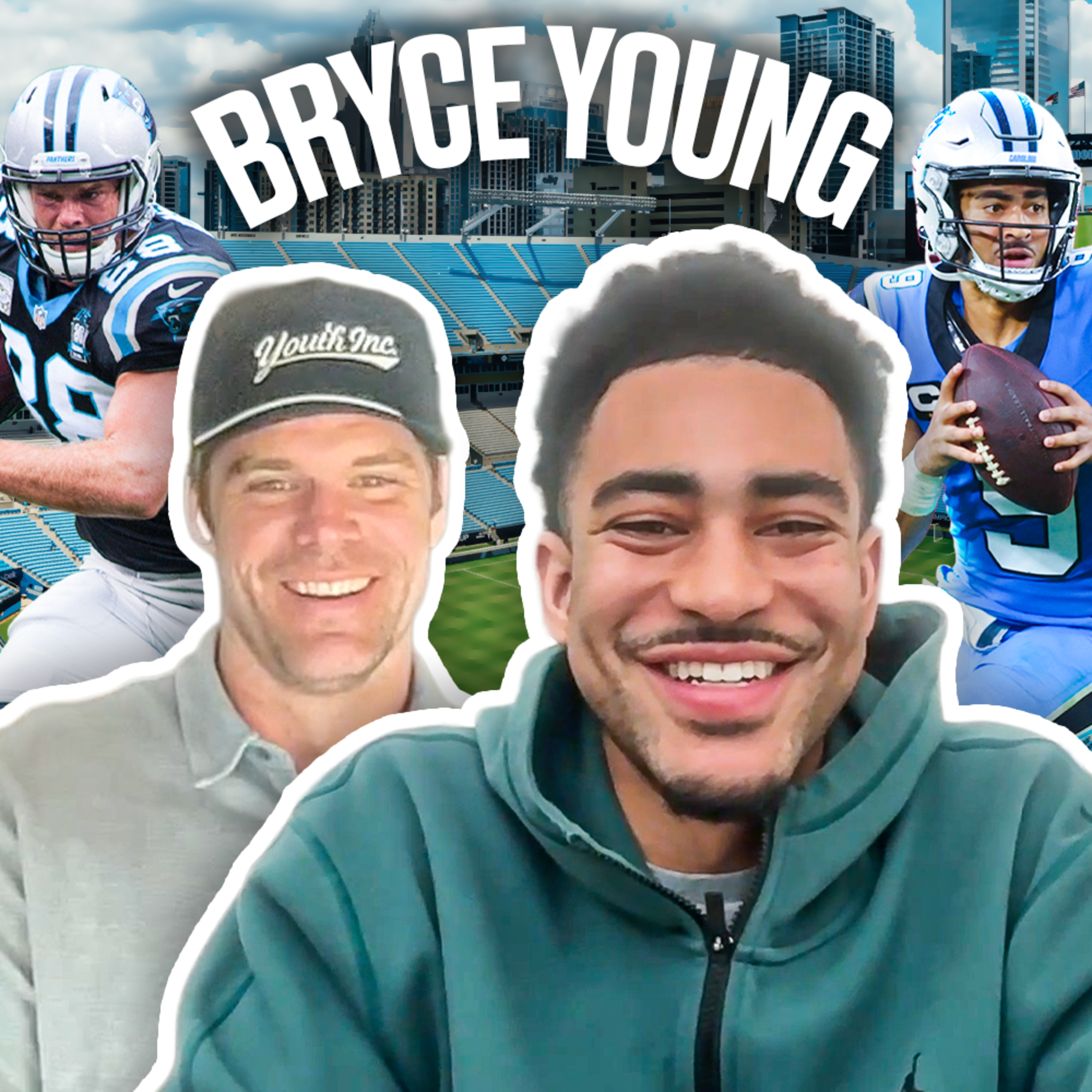
Youth Inc. with Greg Olsen
Bryce Young Tells Greg Olsen About His Comeback Season & Future in Carolina
00:48:15
Loading summary
Transcript58 lines
- [00:00]
A
I think that one of the things that it opened me to was just finding joy in the journey, you know, because coming in my, my first year especially, you know, it was rough, you know, I hadn't lost that many games probably in my life combined from a.
- [00:13]
B
Football standpoint, you definitely didn't.
- [00:15]
C
Youth sports in America are at a crossroads, and I'm here to help lead the conversation forward. I'm Greg Olson. Each week we're sitting down with top athletes, coaches and more to talk about what's working, what's broken, and what's next.
- [00:28]
B
Welcome to you think. What's up, everybody? Welcome back to another episode here on you think. And a guy that I've gotten to know really well. Former number one overall draft pick, national champ, Alabama quarterback, five star. We are going to cover the entire journey to start to NFL quarterback, but, man, just one of the best dudes. My two boys, probably favorite player in the entire league. Bryce Young, starting quarterback, Carolina Panthers. What's up, man?
- [00:57]
A
How you doing? Thanks so much for having me on.
- [01:00]
B
Oh, dude, I'm so happy I've told you this every time I've been around you. I had a chance to sit down with you before the playoff game when you guys hosted that thriller against the Rams. I had a chance when we sat down for the pregame show. I told you, man, of all the guys that we've rooted for you, if I have one guy that I want my kids to look up to, follow, model themselves after, dude, you are at the top of the list. Just the way you carry yourself, the way you do everything. And when I told my boys I was interviewing, they were very excited.
- [01:30]
A
Thank you. That really means a lot. You got to tell them I said hello.
- [01:33]
B
So let's start from the beginning. Obviously, we saw you those years at Alabama kind of dominate the national football scene. We saw you be the number one overall draft pick, played in your first playoff game, hosted that great game, the wild card round, this past season. But I want to go back further. I want to go back to modern day. It's a national powerhouse. You're growing up in California playing ball. Just give our listeners an idea of, like, what did the early sports experience look like for you as a kid?
- [02:04]
A
Yeah, you know, I was, you know, I just always loved the game. I always loved sports. I always loved competing. I was always super active and hyper as a kid. So my parents were just like, you know, let's just use that energy and put it into sports. Growing up, I went to a school a little closer to where I lived. For my first two years of high school and I had a lot of, you know, it was a great time for me. I got to develop. I got to play on varsity in high school as a freshman. I got to play in a system with a lot of really cool athletes, throw the ball a lot. And that was one of the really more fun times for me that were just, as a young guy, super validating. It. It allowed me to kind of just start that, that quest for the, you know, that, that chase. And then after my second year, I kind of had had a fair share of offers. I knew that that was kind of taken care of. So I then just kind of turned my focus on wanting to get better and improve. And that's, you know, why I transferred. I transferred to modern day high school, which was a good bit further from where I lived. Was a very different environment. Very different. Yeah, it was in a different county. It was just very like. It was very new for me and it was definitely uncomfortable at first. You know, it was a top high school in the country, still is playing national schedule. I went somewhere where the expectations were super high. It was like, you know, if you don't win the state, you know, if you don't win a state championship and really like a national championship, you know, it's kind of like a lost season. So I think that was one of the really formative parts of my journey where it was just like, I just saw a different side of, of. Of football. I just saw the more competitive side. I, I saw just how, how, you know, how big of a jump it. It is and how serious you can get. And I think it was cool that I kind of transferred there without knowing what I didn't grow up. Kind of always seeing myself being. I didn't like, oh, I'm going to be an NFL one day, or like, oh, I know I'm going to be this big recruit. You know, I've honestly, you know, I've kind of been like, you know, undersized my whole life. So I think that I kind of. When I was younger, before I happened to go to Bama and get the recruits, I kind of had that chip on my shoulder of like most people are like, oh, yeah, you know, oh, he's a really talented kid. But yeah, he's just small. You know, especially. It's. It's changed a lot more now. But especially when I was very young, you know, quarterbacks looked a certain way and, and especially certain height and it was just kind of like a, you know, I wasn't, I Wasn't sure how things were going to go. And I think that was one of the most validating times where I was like, you know, I'm playing at the highest level and still being able to have success and still have the work ethic to try to, you know, keep going. And then I think that kind of catapulted me into college. Doing a similar thing of going somewhere uncomfortable, going somewhere new, just trying to seek out the best, whatever was, I felt like going to push me the best. And, you know, those are things that I've tried to stand by my entire career.
- [05:01]
B
I want to dive more into that. And, you know, I think it's just remarkable in this day and age. You can be a five star recruit at arguably the number one football program in the country, then go to Alabama. Obviously it doesn't get much higher than that, especially in the time that you were there. Number one overall draft pick a team, you know, the Panthers trade significant resources because they believed in you trade up to make you the number one pick. And oh yeah, he's not six, five. Oh yeah, he's not 240 pounds. Like, I just think it's so remarkable. And I want to hear just about your mindset. And you mentioned even when you were little, like, you were never the big guy. You were never the physical specimen for a guy to have your journey along the way and not necessarily have like those prototypical, like physical measurements. Like, I think that says so much about who you are as a competitor. Your routine, your discipline, your competitiveness, your athleticism. Just take us back. Like, when did you first wrap your head around? Okay, there's going to be an approach that I'm going to have to take because in your words, quarterbacks were supposed to look a certain way. That certainly wasn't you as a young kid. Like, when did you develop that mindset that I don't care how big I am, I don't care how tall I am, but I'm going to be the best player? Because the journey you went on from that point is, is pretty unique.
- [06:22]
A
Yeah, I think that's something that I, I really embraced at a really young age. I was always playing up, always playing older. And when I was young, my parents, they would always. Actually a lot of it was really through basketball, but they'd always kind of before the time where a lot. Now it's a lot more common to have like, you know, have trainers and to be always doing something. And you know, back then as a kid, it was a lot less, you know, you kind of Just played and, you know, you showed up to the game, and you showed up to practice. And my. My parents. My. My dad definitely allowed me to kind of. He would always let me work out and train with older guys where they were like, specific trainers. And being exposed to people that were older kind of made it the norm for me to. To. To not compare the people I was around. And it's just, try to keep chasing, man. I was. When I was young, I got a really good piece of advice that it took me a really long time to understand. When you're younger, I feel like. And when you're a kid, I feel like how hard of a worker you are is kind of decided by what you do. You know, it's like, how many workouts are you doing? Are you practicing? You know, are you. You know, did. Did you get to. You know, and, you know, when you're a kid and you have parents and they kind of dictate that, of course, out of your control, it's like, oh, are they taking. You know, are they taking you to practice here and there? And then once you get older, it's not what you're doing, but it's how you're doing it. And, you know, it's like, once you especially you get to college, you get to the pros, it's like everyone's doing variations of the same lifts in the off season. Everyone has the same. Whether you're trying to get fast or explosive, it's that, you know, whatever your skills training is, there's not a crazy variance once you get to a certain level. It's just about attention to detail in that and how much you're getting out of it. And I think when I was younger, I just was stressed the. The importance of kind of shifting to that. Of, like, is it like, oh, I showed up to go and lift weights and like, you know, when you're in high school for an hour, and it's like, oh, yeah, I worked. Or it's like, all right, I'm here for the hour, but I'm gonna make sure I get the most out of this hour that I can out of everyone here. And even. Not even comparing other people, like, just. I know I can't. How much can I push to know I'm doing all the right things? And that was something that. Just from a young age, like, I just. It was like, the competitive nature in me, like, I felt like I was competing against myself, and everything that I did, I felt like, you know, I felt like I would be doing myself with people who believed in me a disservice if I didn't give everything. And again I was very blessed to be able to have success. And you know, it's always easier when you're, you know, you do get success with that and get there and you know, you kind of get that instant gratification and you kind of get to go back and forth. But, but yeah, I always thought that, yeah, it was also like you said, it was very necessary for me. I understood from an early age. Like I, I, I'm not, you know, I'm, I'm blessed with, with a lot of, with talents. Don't get me wrong. I grateful but you know, like you said, I was never the prototype. I was never the strongest arm, fastest. I was never the, the big, I never won the, the eye test when you walk out the butt. So it was like I, I wasn't used to, I didn't want to fall back on that. I wasn't used to falling back on that. So it's like, you know, that's cool. But for me I have to master myself and you know, master being the best version of what I can be. And that was just maximizing all that. And I, I still try to keep the, that approach.
- [09:36]
B
I just, I find it so incredible. You're obviously very talented and you're armed talent and you're off platform and you're athletic but man, I just think you haven't just been good at every level. You were the best high school quarterback, national champion Alabama number one overall pick. Like to, to do all that. I just think it's a testament to, to all of those lessons and all of those things you just laid out. But I want to dive deeper into that. So take us back to like high school like freshman, sophomore Bryce Young, everyone nowadays, you mentioned it, they've got trainers, they've got specialization, they've got a spe, a strength coach, a quarterback coach. They've got it all. Give us an idea of what you had. Like what did your preparation look like as a young high school athlete? Not Alabama Bryce Young, but like pre modern day Bryce Young just getting onto the scene. What can you share with our listeners that give them a little inside look into what you did? Because my guess is it's going to look a little bit different than what kids are doing today.
- [10:36]
A
I still had a, was able to have like a QB coach which was definitely a blessing. I was able to do that and I was grateful. My, my, my parents a lot of times, you know, depending on who was available would, would Be able to. To take me to go there and work out on the weekends. Yeah, it was a different time. You know, I would try to watch, you know, I would, I would try to just, you know, during the season I try to watch as much film as I can. And it's funny looking back on it because it's like, you know, it's like I thought I was, you know, 10 steps ahead watching the film and in reality it's like, oh, I didn't know nearly as much film. Yeah, exactly. I barely even knew I was looking at. But during the season I was like, that was really commonplace. But we still had huddle and I was like, I want to watch, you know, I want to watch finally see what they do. I want to go and study film. And it was like kind of at that time it was a lot more. It was a lot, you know, just different. You know, it was like everyone's like, you're watching like, dude, just show up on Friday and play. Like it'll be fine. I would have like, you know, I had like a warm up routine that has progressed, but I was like, I would do all that stuff that again at a time where it was like every time I go to warm up and do like a little arm care routine before practices, before games, like my whole team would just make fun of me for doing it. Everyone laughing.
- [11:46]
B
It's like, who taught you that stuff?
- [11:49]
A
From my quarterback coach who actually I'm still, you know, I still still work out. And I was super, super blessed again. I was able to get in with a really good group. They, they train a lot of NFL guys now and they did back then. And I was able to, to through some great connections they will find a way to connect with them. And then. And I think that one of the biggest differences that I look back at just trying to like reflect and put myself in like those shoes. The resources were so hard to come by even when I was a kid. And I can imagine, you know, it'll probably for your journey would be, you know, even more where you know, we had a little bit of YouTube but social media wasn't the same way it is, you know, YouTube, it was like entertainment. Not like there's these informational stuff. And now it's like you can legitimately like there's so many more, so much more access to resources of, of. Of stuff and how it could be hard to kind of we was, you know, to, to weed out what's right and what's wrong to hear. But you can go and watch people Break down film of NFL quarterbacks. You can go and watch people discuss, you know, you can go and watch people discuss mechanics, and you can go and watch people like, hey, what are these habits? And, and you can, you can get this stuff that I was like, itching for when I was younger that I was able to kind of like, maybe get a piece here or there for. And I think for me it was just like that, that, that one, it was that like, hunger for knowledge. I was like, I wanted to be better, anything I could do to grow. And then also, I think the biggest thing was like, not being afraid to, like, I didn't really want to look at other people and compare. And I didn't care too much about fitting in when it came to working. Like, you know, when I was younger, I was around a lot of really talented people and not, not just quarterbacks, but, you know, teammates and stuff and not everyone. Like, you know, I was a, you know, we were in young and it wasn't always cool to work or to try or to work hard or to go and do the extra stuff or to study or to, yeah, like to, to, to warm up and should do all this. You know, the stuff that your strength coach or your, you know, your position coach said is like, watch, when you guys get older, this is going to be important. Like, and it was always like, you know, it wasn't cool to do that. And I think the biggest thing for me was like, I always put the. What I felt like was the best for my process and my journey above the opinions and, you know, it takes, it takes. It's not easy to do. You know, it's easier now that we're, you know, we're grown and now it's like. But especially when you're in high school and when you're, when you're young, when you're in middle school, whatever, and all your friends are. I can't even imagine how it is now with social media. You know, it's like everyone has opinion on things. It's not easy to not be afraid to go and be different. And I think that, you know, I think that that was a big part of, like, me in my journey was just making sure that I was doing what I felt like would give me the best shot, regardless of like, kind of what it would look like or bring.
- [14:35]
B
But I think that's such a great lesson and for our families and our listeners, we have a. Of like, young kids that listen and follow but like, talk more about that. So, yeah, it's not cool as A high school kid. If instead of going out to a party with your buddies because I got to wake up to, you know, in college, that became normal for us. But here you're saying you started adopting kind of this approach as a young kid early in high school and then obviously throughout the rest of your high school years. But talk a little bit more about that because my assumption is in high school you were surrounded by a ton of other dudes who went on to play college ball. So just talk about the importance of. It's one thing to be talented, but then to be able to have the habits and the routine and the consistency. We've both played with a million guys probably more physically talented than us, and you've never heard from them. So just talk a little bit about that approach in, in the world of high level athletes. For you. It started way back as a young player in high school. Your ability to separate yourself because you were willing to do maybe what these other guys weren't willing to do.
- [15:36]
A
Yeah, yeah. Like you said, it was a really cool for me transfer and that was such a big eye opening experience because for so long I felt like I was kind of the one on that mission and on that journey and you know, you obviously you had people here, there that were working really hard with you, but you know, it felt like it was, it definitely wasn't the, the norm. And then being able to go to a, a big high school where it was a lot of talented people and it sim. It kind of emulated college a lot more where it was a lot less separation and everyone was fighting. So it was a lot more encouraged to do that, that extra stuff, you know. Yeah. Like you said, it allowed me to, to kind of learn that earlier and prepared me for college a lot of. But I, I think that, you know, I would just encourage any like, you know, any, any younger athletes just to one understand that like, you know, it's at, at any. And you can, you can ask anybody at any high level of any sport. You know, the people who are working hard and doing the extra are always the ones that are respected. That at a certain level that always is going to become what's encouraged and what's, what's looked up to. And I know it takes time and it takes maturity for that to be the consensus, but it doesn't have to take that, that for an individual to, to, you know, to adapt that, you know. Yeah, one of the, yeah, exactly. That you know, I kind of said a little bit before but like just the way you approach things, how you were, you know, the, the higher level you get, the smaller that level of, you know, smaller the differences, you know. And like you said, you see it in the NFL all the time, where it's like, you know, you look at a guy that has this breakout year and I can imagine from the outside looking in, it's like, whoa, this dude just completely, you know, man, he was offering. He must have just worked hard and changed his whole trajectory. And like, when in reality, you know, the. Maybe you just had a different circumstance, the situation, and then maybe you had that 1%, maybe not. But that's just the margin of error. That's just how, how, how slim it is the competition is at the highest level. And you know, one of the things I was, I was taught, again, it's like when you're. There's certain things you can't access to a certain age, and there's certain things that you can't. And the work ethic, your, Your approach, you know, that, that making it. It normal to go that extra mile, that stuff that if you learn early, you know, it can set you, set you up really well. And also it's kind of, it's kind of cool. I always kind of looked at it one way. I kind of always knew it's like, well, at a certain point, everyone's going to be doing it. At a certain point, you know, it's going to be, you know, it's going to be normal. Just go and work super. But now I, I always look, try to like, rephrase. It's like I have this rare opportunity where, you know, obviously I'm not the only person, but it's, it's rare that people are really pushing. Rare. The people. I really get to try to make some separation early and then if I could take that separation now and I can continue to make sure I push and p. And, and. And you know, you know, I'm not, I don't ever let up. It's like, you know, maybe I can make sure that people can never catch up or whatever it is. I just, that was always my edge. And it's, you know, it's never always that cut and dry, but that was just how I thought of it. So that it gave me that, that kind of encouragement to, to keep going, keep pushing myself, because it is a long, It's a long race. But everything does add up at the end. You know, everything does, you know, everything does come into fruition at the end. So that was just always kind of my approach.
- [18:47]
C
This episode of you think is brought to you by Academy Camps, a camp for today's. To learn more, I spoke with the camp's executive director, Mike Murillo.
- [18:56]
B
Just for people that don't know, just kind of give us a little background on what exactly is Academy Camps.
- [19:01]
D
Yeah, so we are a sleepaway camp experience. We offer one week and two week sessions. We have a real focus on obviously developing young athletes. What makes us pretty unique though is we create a really well rounded experience.
- [19:16]
A
So the way we talk about it.
- [19:18]
D
Is half the day you're getting better at the sport you love. The other half a day you still get to be a kid. At camp we offer 12 different sports. Our campers come in and say, you know what, baseball is a sport that I really want to improve in this summer. So they will train twice a day, every day for about an hour and a half in each session with our, our professional coaches and the other athletes that are there for baseball. But then the second half of the day, which, which to be honest makes up another, you know, eight or nine hours a day, they get to choose from lots of different, other activities. Other sports. We get into mindset development, wellness, obvious strength and conditioning. But depending on which campus you're on, you can also go fishing or you can do wall climbing or ropes course. And we get into traditional camp stuff like color wars, which is actually a great platform to learn how to be a teammate where we're competing as an entire camp against, against each other. So it really is about bringing those two worlds together. Sports specific camp and a traditional sleepaway camp. You know, we meet our athletes wherever they are in their journey as a young athlete. So, you know, if you want to come in and say, I played lacrosse for a year and I love it and I want to get better, you know, absolutely. Come to Academy campus. If you've been a soccer player playing at the highest academy level and you've got aspirations for college, absolutely.
- [20:36]
B
Come to a trip.
- [20:36]
D
Academy camps, you know, we, we don't in any way kind of segment our athletes in that way. What that also means is that our coaches have experience in coaching that full spectrum.
- [20:47]
B
It leads to the next part of my conversation that I want to have with you because you, you come out of modern day, you're surrounded by all these real high achievers, these guys that have goals similar to yours and you guys all elevate. Well, now you find yourself going to Alabama and what modern day was to high school football. You find yourself now at the equivalent or more even at a higher level. Nick Saban legendary program National Championship expectations. So with all those, you came into Alabama with sky high expectations. Talk a little bit about how you've dealt with that, because throughout your career, whether it's been as a five star, whether it's been as a returning starting quarterback at Alabama national champion, or just you're the number one overall pick, Right. With all of these things comes significant attention, significant expectations. How have you handled that maybe when you were young compared to maybe how you handle that now?
- [21:39]
A
Yeah, honestly, it's always been really similar. You know, I've. It's kind of been crazy how my life has worked out where, like you said, it's kind of every level is different and it takes you to the next step, but it's kind of a lot of my paths have kind of mirrored each other where I've come into places with high expectations. I've come in with a certain amount of. Yeah, exactly. Expectations. And, you know, I. It's allowed me to have some experience with it. And, you know, the biggest thing that I've learned is just I'm big on just focusing on what's tangible. And for me, you know, the stuff that I can't control is, is that. Is the expectations is, oh, how is someone doing? Measuring of the outside noise. And, you know, again, I'm. I'm human. Of course. It's, you know, it's. It's natural to want to try to live up to. Natural to want to always be looked at in a good light. But, you know, at the end of the day and, you know, especially the higher level, you go, you know, it's. It's. It's something that's just, you know, just out of your control and something that gets a lot harder and harder to accomplish as is and to make reality. So for me, I, I embrace it. I don't run from it. And I've never tried to convince myself that, oh, no one's, you know, of. Of my situation. But also I've, you know, accepted and they figured out, all right, tangibly, what can I do? Okay, well, this is a new environment, you know, but what. What can I do to try to succeed? You know, for college it was like, all right, let me make sure that I'm doing all the, you know, let me make sure that I'm, you know, I'm showing up early to everything. Let me make sure that I'm, you know, I didn't know what my role was going to be my freshman, freshman year. I wanted to try and go and compete, and I was able to. Let me take this Practice by practice. Let me. What are the things that they're going to look at that they. Okay, they're going to. I'm, you know, I'm a freshman, so what are they going to? Someone who doesn't know the playbook, someone who doesn't know the play, someone that isn't well versed in the little, you know, the communication. All right, how can I limit that? Let me make sure I'm spending extra time in the, in the, in the film making sure that I had before we get to the first meeting. Let me make sure I've gone over that install at least three to four times. Let me, Let me go up and, you know, I know how our QB coach was at the time. He's going to go and, hey, get up there, recite it and then go through, you know, the mechanisms. So let me go and do that on my own at night when it's just me in the QB room and let me go act it out so I can feel whatever it is that I can combat those, you know, But I always kept it in the building. I always kept it tangible. I always kept it as, all right, what, you know, what can I do? I didn't have a great practice. All right, how can I now what do I need to do to bounce back where they look? All right, probably, you know, I want to see how I respond, whatever it may be. But I always try to just fill my mind with something I could do. And then for me, that takes away that angst of like, okay, what. What are people thinking? What are people saying? Stuff that I, I can't control, like, just personally, I always just try to focus on. On things I can.
- [24:18]
B
You know, you played in college for arguably the greatest coach of all time, if not the greatest college coach of all time, and Nick Saban. And we now, now get to kind of hear him on, you know, college game day, and he's sharing his philosophies and leadership and he's spoken and we're kind of, we're all now getting a better look behind the curtain of what made Nick Saban and, And obviously his program so, so good. But obviously you saw it at a. Right, you. You saw the, the behind the scenes like nobody else. Give us an idea of, of what made that program, what made you guys so consistent, what made him, you know, the, the coach that he was like, what. What are some of your first interactions with Nick Saban where you said, okay, th. This is, this is just different. I can tell why this program is, Is, you know, at A different level than everybody else.
- [25:08]
A
It's very apparent when you get in there, and it's hard to describe while you're in it at first, but I think once you're in there long enough, then you kind of get away from. You really understand. You know, coach, while he was there, he made the. He made it very. It was very intentional about the environment that it was. When you stepped into the building, you know, for us at our facility, you know, there's our, you know, college. You know, you have your campus and you get to live your life. But the moment that you stepped into the building, you felt. Oh, wait, you felt a responsibility. You felt the accountability that he held everyone to, he held himself to. And he was very intentional at setting that environment. And, you know, while you're, you know, when you're first, you're young, you're just. You don't. You don't really know what it. You're just like, I don't know, but I. I gotta be great, you know, I gotta be competitive. I gotta go win every. And it's just like, it permeates throughout the building. And it's the way that he talks to us, the way that he talks to his staff, the way he's super regimented, you know, the expectations of the building. You know, it's. It's like, you know, if you're not five minutes late to. If you're not five minutes early to every meeting, you're. You're late. And it's like, you know, there's just little. Little things that. That get set up that really just prime us to be at our best, to be competitive. And then one of the things that, honestly I learned, I didn't. I didn't per se necessarily go to Alabama for coach saving, so. And I'm from California originally, so from outside looking in, I was just like, I don't really know. You know, I'm not really sure how to feel. I'm not really sure if this dude's like. If he's a good dude. Like, I know he's a great coach, but, like. And, you know, I was able to be on leadership for my, you know, my last two years there and able to get to build a relationship with him and also just got to observe a lot and there are a lot of isolated incidents and that, you know, once you understand it more, made me realize how much he really cared about his players, which was one thing that, like, you know, from the outside, you just see someone going on these ranch and you see someone, you know, cussing someone out. You're like, you know, does he care? Does he. But. But he really does. That's his best way. One to prep us for the next level. Because obviously, as you know, it's like, there's no handholding. You know, there's no, oh, could you please come to meetings? You know, we want you to, you know, there's no, you know, there's no. Let's. Can you practice hard, please? Like, we want it. Like, you know, there's. It's the next man up and he, he gets us ready for that. And, you know, that transition feels smooth when you get to the league of. As far as operationally and just the expectations. And then also that's just his. His, you know, that's his way of holding us accountable. And not just on the field, but as people, you know, as one of the things he'd always talk about, like, he would be very honest with us and be very upfront is like, you know, like, like, do I, you know, do I use my degree like, no do. If, if football goes well for everyone, you know, will they use their degree? Probably not. But why. I'm going to make sure you're monitoring your class and why I need, you know, why I care about your grades. He was always, the way you do. Way you do. Anything's the way. Do everything. So if you show up late for class and, you know, you're sitting in the back and you're not paying attention and you have a, you have a C in a class that you could show, you know, you have a D in a class you easily could get a B or A in because it's not that hard, you know, if I can't trust you do that, then in the fourth quarter, you know, when, when you just, you know, when you're. You got beat before, so your mind's out of place, you know, how could I trust you to. To communicate, you know, us, you know, communicate a whatever switch in the secondary. How can I make sure. And he's like that, you know, know that stuff is. That stuff matters through life, you know, all the. The way you approach life, you know, you can't just turn it on and turn it off as well as you think you can, you know, when you're young and you're in high school, it's like, man, what are you talking about? Like, I could.
- [28:47]
B
There's no such.
- [28:49]
A
Exactly. Like, I'll, you know, when I'm here. I got my two hours. But he's like, that's not, you know, your body results to happen, especially in those high pressure situations, in those stressful moments. And it's like you have to, if you don't have attention to detail in these other aspects of your life, like, you're not going to have it when, when, when the game's on the line, when you're pressing. So things like that. Whereas like real life lessons that he would, you know, take the time out to explain to us and make sure we knew. And he was always doing that as well. He was always. It wasn't, it wasn't just this blind, like get on the line and run. It wasn't just this. You know, it might be that in the moment, but when he brings it up at the end of practice, he's going to tell you why he was on someone. He's going to tell you why he thought the offense had a bad day. And a lot of times it's not going to just be, oh, you know, we missed a throw or there's drops. It's because of concentration, our attention to detail, you know, stuff that is as is things that, you know, convert all the way to life. So, yeah, I was super, super grateful to be able to play with them. And I learned a lot, not just on the field, but off as well.
- [29:49]
B
That's awesome. And then, and then the final part of this journey and obviously I live here in Charlotte, you're the number one overall pick, the Panthers trade up to get you. And I think again, I just have so much respect for everything you've accomplished, the different levels, the level of consistency and greatness that you've been. But for a guy that was a five star recruit, Alabama starting quarterback, number one overall pick, I think one of the coolest parts about your story and I know when I look back on my own kind of career, I look back on like, the adversity, the ups and downs and those are where like all the growth is. It's easy to be the five star that everybody wants. It's easy to be the number one overall pick. It's easy to win the highest bit. Like all that stuff is easy. But who are you when things don't go your way? And I think that's why, why so many people but myself at the top have so much respect for the way you've carried yourself. You come in with high expectations and a. In a franchise here in Carolina that was struggling and it gets put on your back and coaching changes and different situations and it hasn't always been easy. But now this past season, I was there in the booth watching you Guys have that place packed. First home playoff game in 10 years. Just talk about that transition from Alabama, number one overall. Pick some ups and downs early in your career in the pros, and now, now here you are making your playoff debut, putting all those questions to bed, and really one of the teams that people are most excited about moving forward and that being the Panthers.
- [31:17]
A
Yeah, like you said, it's definitely been a journey, probably from. From high school on and even a lot of times younger, there was. Yeah. Not a crazy amount of adversity when it comes to that from a football standpoint. You know, I've been on a lot of winning teams. I was able to have a lot of individual success, and I definitely don't feel like I took it for granted, but. But, you know, you're. You're always looking for more. You know, you're always trying to not be complacent and pushing. And NFL was just a time for me to. You know, it gave me that ability to reset to. To see things from a different perspective and the ups and the downs, you know, especially at. At the lowest. I think, you know, I'm a man of faith, and, you know, I. I was very grateful just to be able to experience myself and experience my faith and experience everything in a very different setting. You know, when I got benched, I wasn't playing. That was something different for me. That has never happened to me at any level, any sport or anything like that. And it was just a different way to challenge myself, a different way to try to work, to. To find new goals, to set new things, to again, experience everything in just a different light. And I'm super grateful for the journey. You know, I think that's also one of the things that I've learned for sure, is, like, the importance of. Of loving the journey and finding ups and finding positives in the journey. You know, I was, you know, coming from Alabama, moderate when I was in high school. It was very like, look, the goal is to win a championship, and if you did not win a championship, you failed, and if you lose at any point, you failed. And I kind of adopted that in life. Really. Like, it was very like, you know. You know, I wasn't a negative person at all, but it's very. You know, I didn't. We didn't celebrate a lot of wins. We didn't celebrate a lot of. There. There weren't times I was very like. It was always just this, you know, good, good job, everyone. Congrats. But refocus. Let's focus on the bad. So that we can push to be even better. And of course, you know, you need that, you know, in moderation too. But I think that one of the things that it opened me to was just finding joy in the journey, you know, because coming in my, my first year especially, you know, it was rough. You know, I hadn't lost that many games probably in my life combined from.
- [33:33]
B
A football standpoint, you definitely didn't.
- [33:35]
A
It was so honestly, like, surreal to me. Like, it took a long time for me to even understand how to react and how to feel and how to like, process like losing. And then I remember, you know, the few wins we got that season and the, you know, and even last year when things started to improve a little bit, my second year, I had to also learn how to process the victories because like, there is definitely a time of like, you know, if you look at it from a full, you know, our first win. I think my rookie year was like our maybe like, like week eight, week nine. So it's like, how do you feel about going from 0 and 7 to 1 and 7 or, you know, whatever? And it was just like I didn't even understand how to like, should we be happy? Like, should I celebrate? You know, it's like it is like during the week, you know, it's like we had for, for in Alabama was like, you know, I could count the times we lost and the times that we lost those, not even just the game, those weeks after the loss was like, like you. There's no joy, like practice, there's no joy like until you can get that taste out of your mouth. And then the next week, okay, we're back on track. We're back on track. But it's like Alabama was like, you, yeah, you lost that. You're not, you're not smiling from that Saturday night till the next Saturday when you actually get to try to write the wrong. And it was just like, you know, you lose a couple in a row and it's like, well, I can't go a month of like straight not having any, you know.
- [35:02]
B
Yeah.
- [35:02]
A
Not having any joy.
- [35:03]
B
And that process isn't going to work exactly like that.
- [35:07]
A
That's not going to like, you can't. So I think it was, it was really eye openening. It allowed me to experience things, allowed me to grow. Yeah. Like you said, you know, I think that it's great. You know, we all have our own stories. Like, it's, it's really cool to see just, you know, how, how God has all of our lives ordained and you know, for Me, it's just like I've, I've learned to try to find, enjoy to find the positives in everything and you know, obviously I don't think I could even if I wanted to. I couldn't lose that competitive edge and that, that, you know, that disdain when things don't go your way. But just figuring out how to balance it and you know, knowing that it is okay to celebrate the positives when they come, I definitely got a lot more grateful for those. So yeah, it's been, yeah, again, it's definitely been a blessing.
- [35:50]
C
We'll be right back with more from Bryce Young. But first a quick word from today's sponsor sponsor Academy Camps. To give you a sense of the top tier coaching at the camp, we sat down with their executive director of soccer, Rick Warren.
- [36:02]
E
My name is Rick Warren. I am the director of soccer here at Academy Camp. Just love teaching kids the game. This is a game I love to play. You know, I've played for most of my entire life. And so being able to teach it to these kids that are eager and love the game as well and to also, you know, share that passion with them on in the summertime and, and also seeing them grow each day is unique in itself like your ability and the understanding the tactical part of the game and when I explain it to them and then doing the technical stuff that they need to do as well. So I think that just watching and there's not just a high level set of kids, right? There is level of all different levels. But we try to break it down where we are able to touch each kid at the level that they are and more about working together to get better and helping each other and caring about each person that. Is there just a friendship that develops within a week?
- [37:09]
B
Yeah. It's amazing how the shift from result oriented to process oriented can really just change your perspective on how to approach every day and every. Listen, we want to win. Don't get me wrong, we everybody wants to win. But if, if you're living and dying with the end result at all times, it could be, it could be a great strength and obviously you guys won a million games in high school and college, but it could also be a very humbling, humbling experience at the same time. The last thing before I let you go and I know this is something that's really important to you, you, I know how important your family is, I know how important your parents, how big of a part of your journey that they have played all the way up to today, you know, from all the Way from when you were young, all the way through high school, college, and now at the NFL level. I know how important your family is. I know how important is your foundation, the Young Now Foundation. Just, I, I think it's so important for, for our families. They hear about Heismans and they hear about number one picks and they hear about championships and all that, but I also think it's important for them to know, like, behind all that, this, there's people, there's a humanity, right? There's a family. Along this journey, there's an impact that you're looking to make. So I love. Just take a step back, remove your athlete hat and just talk about the value of your family and the importance of them being alongside your journey, your parents, your family and. And obviously now the impact that you're trying to make through your foundation.
- [38:28]
A
Yeah, yeah. I mean, you. You said it. I mean, the. My. My family has been so instrumental in, in everything that I've done that I've accomplished, I've gotten through. You know, we're. I'm a, you know, I'm a quarterback through and through. I'm grateful for my position. I'm grateful for what, you know, the privilege, what I get to do. But, you know, obviously I'm a human being outside of that. And, you know, there's for. For certain people and for a lot of the world, you know, I only really get to be that one side. And then when I get to go back to, you know, just being a human being, a believer, being a. Being a son, you know, trying to be a, you know, all that stuff, it's like resetting to. That has been. Sometimes it's been. It's. It's something that I have to think of consciously. It's something that I work on to get better at year and year out and to be able to have the stability in my, My, My family, my parents specifically, being the ones that have always been there for me through. At all parts of life, you know, at all times. And they've been along this journey with me as well, which I, I couldn't be more grateful for. And then, yeah, my. They're also super instrumental and all play major roles in, you know, and, and we all Young Nine Foundation. It focuses on mental health for all ages, but especially the youth in, you know, providing resources and also just having conversations and working to destigmatize mental health. And that's something that I'm super passionate about. Us as a family, we've always been super passionate about psychology kind of runs in Our blood. And I've been grateful to be able to be exposed to that at a young age. And I feel. Feel like just the importance of, of, you know, that exposure has been. Is really formative for me. And I feel like, you know, as we're going into this new time, the more people can talk about it, the more people can discuss the ups and down. You know, it's not always just the, the negative. You know, there's a lot of ups as well that come with mental. Just. It's. It's something that unites all of us. It's something that we all, you know, we all battle with, we all have our great days with. It's just something that, you know, doesn't discriminate with all the separation in this world. You know, it's. It's something that I, I feel like the more that comfortable talking about and learning about, the better you're off in that journey. So we're all passionate about that message. It's another thing that we're able to do together and bring us together, you know, and a lot of my family, my, My aunt does a great job and, and works super hard with, with all that stuff as well, but yeah, without my family, I'm. I definitely wouldn't be. Wouldn't be here, wouldn't be the person I am. And, you know, I'm grateful for that, that, that rock to, to fall back on.
- [41:04]
B
And I commend you for that because, you know, especially in today's day and age, everyone's got a quarterback coach, shooting coach, a dribbling, a batting instructor, a pitching. There's a coach for everything. And we're probably all guilty. I look at myself as just a father raising three now teenage kids. And I look and I say, like, we spend so much time on the skills. We spend so much time on the physical elements of sport and life in general. But do we spend enough time on the mental side? Do we. Do we teach them? Do we give them the tools? We give them the tools to feel the ground ball, but do we give them the tools to handle when it goes between them legs? Right? Like, there's that. That is something you have to train. That is something you have to talk about and cultivate. So I applaud you for that. I know your dad is, is listening behind the scenes here. Can you give us like, end us with one good dad story? You get like a get out of jail free card. Give us like one youth dad story. I know if I, my. The stories I tell of my dad, he was My high school football coach, he coached at the school me and my brothers played at for 30 years. Old school school, super intense and still coaches with me with the kids here in town. But like, give me your best. End us with a good dad youth sports story for us.
- [42:16]
A
Yeah. So, you know, actually one, one funny one was. So my dad coached me a lot up until like seventh grade. I want to say he was, he was the coach for most of it. So obviously we're always talking and you know, he's always around and a lot of times he was calling plays and stuff. So then fast forward we get to 8th grade and beyond and high school. It always. And again I was, I was blessed that I was kind of like, you know, I was a quarterback and doing well. So, you know, you get a little more, you know, you get a little more pull. My dad is like a super people person, so he has great relationships with all the people I, I know and then with a lot of the coaches. So he would always find his way to the sideline. For every single game that I played. He was never not on the sideline. And I, at one point he would not come into like the, he wouldn't come to where the players were, but he'd just be past where the, where the players should go. He'd be at like by goal line and he, and he would pace back and forth intensely the entire game, which was the funniest thing in the world to me. I would watch like every once in a while my eyes would just like cut to him if it was like, you know, if I needed like a reset or whatever. And watching him just like intensely pacing and just like completely locked in like this mixture of like nerves and like annoyance because something didn't go the right way and he was probably mad at something was just, just like the funniest thing in the world to me. And then. So that was how he watched every single game for my entire life until I went to college. And I was like, hey, like pro.
- [43:52]
B
Like, just didn't let him on the sideline.
- [43:54]
A
Yeah, like, just like, I don't even, I don't. I hope you're not even going to try to finesse your way on because like I could tell you early it's not going to happen. And it was, it was just really funny that he had to learn. It wasn't until college that he sat next to my mom and then any other family member who came game for the game. My mom was, I don't think my mom has missed my parents. I don't think I missed. They missed one game. I know my dad is listening right now. He doesn't want me to tell you that they missed one game. He doesn't. He's not proud. He. He always tries to let it slide.
- [44:24]
B
We'll let it.
- [44:24]
A
There's an excuse. It's a valid reason. And I didn't play. So he was at every single game.
- [44:29]
B
That's awesome.
- [44:29]
A
And my mom was the same way. So they would always watch him, watch them, watch me play in different settings. Like, my mom would be in the stands, my dad would be down. So that was all the way up until college. And, man, I remember when I first got to college and then started playing, my dad would. Was like, I don't know. I have to handle. Like, it wasn't always just my mom. It'd be, you know, maybe other family ever came, but, like, I don't ever want to hear anyone talk when I'm here. Like, I have to, like, you know, I just, like, I'm just used to being dead silent. And he had to, like, you know, now obviously he watches it with my family, so it took him a second to, like, change into, like. There was a time where I remember they were telling me, it's like, we can't talk to, like, your dad for. For during the game. Like, we just have to, like, we have to whisper to each other. And then he got a lot better and was able to, like, you know, he's still very particular about how he watches a game, but he's as. He should be able to, like, accommodate a little more. But that was.
- [45:20]
B
I respect that.
- [45:21]
A
Yeah, that was a funny journey. Funny.
- [45:23]
B
Nobody wants to watch a game with me, and nobody for sure wants to ever watch anything with my dad. So I know he's listening, but he don't feel bad because that was my dad. Dad through and through. He would come to my college games. There's a funny story of him. I dropped a pass. My first ever start against Florida State. Yeah, the first third down of the game, they threw me the ball. I dropped it. He took off his glasses. He shattered him in his hand, threw him on the ground. My kids now still make fun of him because that story comes up a lot. So he watches like, in his own world and probably mumbles and curses under his breath and everyone just says, we're going to. So I. I respect that. Listen, being a sports parent is not easy. Easy. Being invested in every waking second of your kid is not easy. It's something I know. I'm still trying to Learn. Like I go to a girl's 6 7th grade basketball game and I like, I'm a, I sit in the stands and I just like want to jump out of my skin. So I, I respect it and I appreciate it and I'm not judging because I'm the same exact way, man.
- [46:23]
A
I know.
- [46:23]
B
Again, I, I, I have to tell you this every time I'm on with you. You have a household here, you have a city here that has nothing but admiration for the way you carry yourself, the way you present yourself, the way you've handled things, things cheer for you, root for you, want to have you, see you do incredible things. You have a big fan and me a big fan and a lot of people around this city. And it's more than just because you throw touchdowns. It's just a lot of the other things. And I think it's cool for our listeners to get a look behind what makes you tick and what's made you special your whole life and appreciate you joining us here on youthink again.
- [46:55]
A
Thank you for having me. I really appreciate it.
- [46:57]
C
A special thank you to Academy Camps for sponsoring today's episode. To learn more, visit Academy. Before we wrap up, let's hear from someone who's experienced camp firsthand.
- [47:07]
F
My name is Harrison Zimmer. I'm from Rye, New York and I just attended Academy Camps for the first time in the summer of 2024. Definitely went in trying to like, build up my confidence and work on my technique more, which I definitely accomplished because after that, going into my high school season, I definitely felt like I could be on the ball more, just dribble and ended up being successful for me as I made my varsity team. It definitely felt like Academy Camps helped me a lot to like, discover my ability on the ball. It's definitely an experience very unique and that probably they haven't experienced before with the food and the nutrients and then having like a blast with like your friends. Made a lot of friends. I've kept in touch with a few and trying to like, figure out, figure out to go this year, like what session and kind of like organizing that just so we can be together again. I think you should come to Academy Camps because it gives you a chance to create new friends and new memories.