← Youth Inc. with Greg Olsen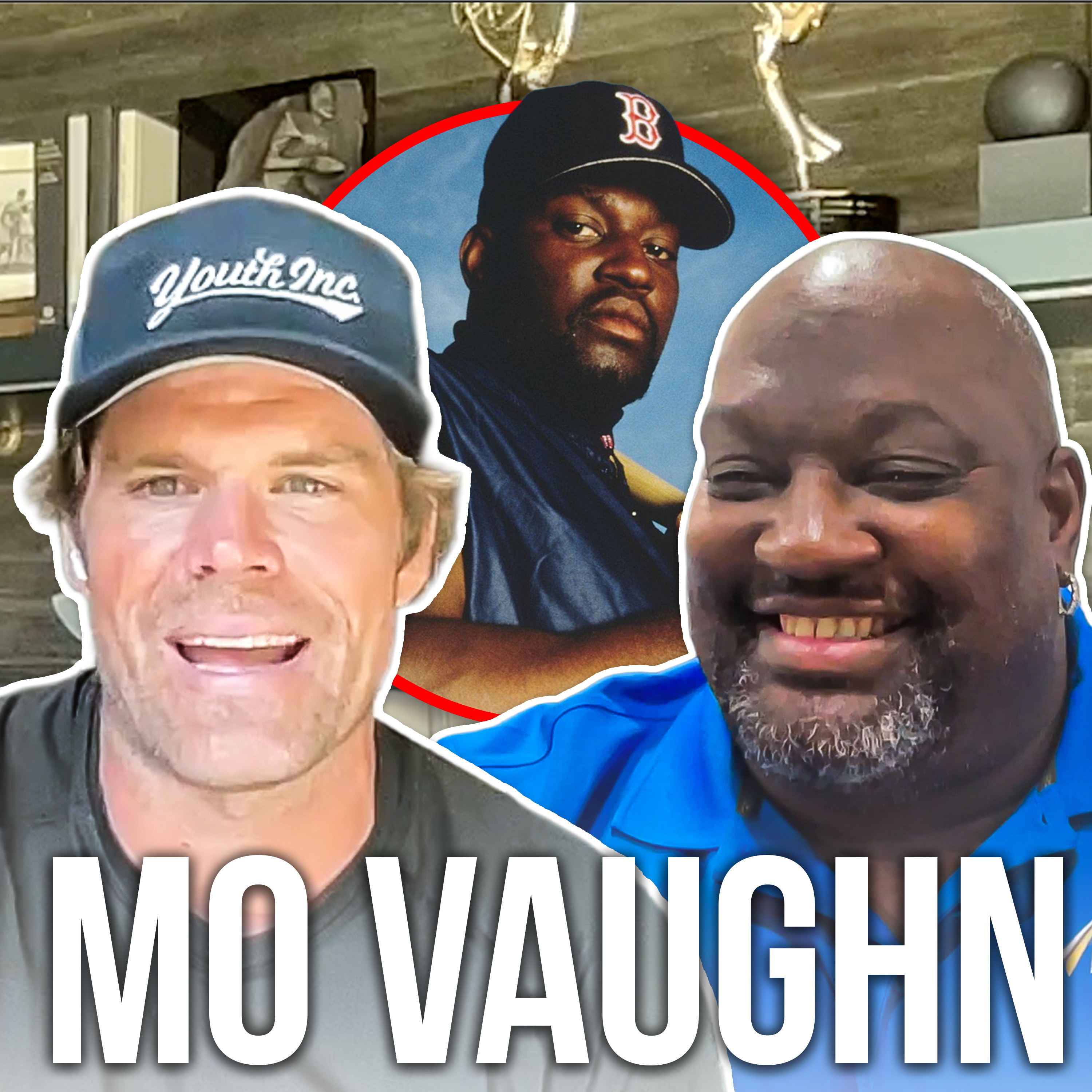
Loading summary
Transcript39 lines
- [00:00]
A
Make sure you subscribe to both our YouTube channel and our RSS feed for all future conversations here at youthink. What's up everybody? Welcome back to another episode here on you Think Today. Super pumped about our next guest, three time all star AL mvp, one of the best hitters in the history of Major League Baseball, Mo V. Someone who I know who is very involved in the world of youth sports. So, Mo, we're really thankful for you joining us here at you think and appreciate your time.
- [00:28]
B
Greg, thanks. Thanks for having me. I look forward to having a good show with you. I'm happy to be on.
- [00:35]
A
Awesome. Well, I know you got a little youth sports pod of your own, so give us a little sense of what you're doing. Give us a little sense of why you care so much about this crazy world we're living in in youth sports.
- [00:48]
B
Well, I'm in. First of all, I've been able to be in a partnership with Perfect Game, which probably is the largest, you know, youth baseball organization across the world. I have a son who's 13 year old, 13U. So I've been actually on the field coaching for six years now. And it's just a really necessary thing that you got to do. We provide, you know, with Perfect Game. There's so many things that we're doing on the field with these opportunities. Showcases different things that are happening. I just thought it matched, you know, what I was doing, you know, correct some narratives. So it's, it's been a really good time. All in all, the whole thing. Perfect Game, Vaughn Sports Academy, the podcast, it's been great for me.
- [01:39]
A
You say you want to fix some narratives. Obviously there's a lot. So we'll stick with the baseball world. There's a lot of conversations right now in the baseball world about is it too much, too fast and are we bringing this showcase level to too young of an age? Are we skipping over a lot of these important developmental years? What, what do you say to those people? What, what are you guys at Perfect Game especially doing to balance, giving kids opportunities to, you know, to present themselves and showcase themselves, but also making sure that it's age appropriate.
- [02:10]
B
Listen, you said the right word. It's balance. And you need to have balance when you're doing this. Baseball's a game, you know, And I know, you know, Greg, you're tremendous, tremendous athlete. I don't know if you played baseball or other sports, but you had to have been. You're just too good of an athlete not to. We need time to practice and we need time to let youth minds grow. Yes, I love, I love and I, and I tell our guys I love the showcases and I love the opportunities, but we need structure to develop the game right now. You know, I don't know how you feel on the football side, but I tend to feel like in the youth baseball side we're losing a lot of the coaching aspects. Guys are coming to the ballpark not understanding really how to play. And I think for perfect game now, our job is to not only show these events, but try to get into some regional things that really teach the game. Because it's, it's, it's, it's. This is all about money and paying monthly fees. Coaches are all, all worried about getting that monthly check and they're not really, really worried. And all parents, parents don't know. All they want to do is play, play, play, play, play, play. So if you take that model, then that's all you can be doing on in most organizations is collecting that monthly monthly fee as a coach and play, play, play. You can do some things. But I just think that we all in perfect, you know, you know, us in perfect game. We understand this. There needs to be more teaching and there needs to be more time to grow. I feel that, you know, you don't know what's going to, going to happen, especially in this game. There could be late bloomers, there could be guys that come on that, you know, they're great at 12, but they're not great at 14. There are people that are not good at 12, 13 and 14 could be good at 15, 16, 17. So it's, I call it the highway. When you're going to, you know, make that entrance to the highway. It's all different times. People grow at different times and at different sizes. And we all need to be cognizant of it, of it when we're going down that path of playing youth baseball.
- [04:35]
A
Well, yeah, I mean, you're spot on. And we, I mean, we see it on the ground here with our own kids in our own, you know, hometown here, and we've gone to all the biggest events that PG has to offer all around the country. And I think there's so much of what they're doing that is really good. I mean, we, we, I, my team just played in one this weekend here in Charlotte. I do think though, there is a little bit of a slippery slope going on with the awards and the select fests and the showcase teams at 12 and 13 years old. The high school kids is a different animal in my mind that you're getting ready for college. That's a whole different world. But at the middle school level, you know, even, even something as simple, and I love your point about like, they need to practice more, there needs to be more development. Very few, as, you know, very few of these teams actually practice together. Very few of these teams are actually a team, as opposed to just a bunch of kids that meet each other in Atlanta or meet each other in Florida to play a given weekend and then the next weekend they're playing for somebody else. So how do we get, how do we find that balance between competitive and getting the best kids and getting the best competition to improve, but also continuing to foster an environment where there is team, there is consistency in our rosters, there's consistency in who's wearing this jersey every weekend and that every tournament I go to, I don't see the same kid in a different uniform.
- [05:59]
B
That's hard because I think parents are caught up in play, play, play. So they're looking, you know, you know, to maximize. It's all about, it's all about learning what's really necessary. And I think there needs to be more and more guys that really understand the game and what it takes to be successful. Yes. You know, I even, I even got into it. I was big into the development and I have, you know, 100 plus teams at different levels. You know, we have some teams that, that, that just play USA because it's a certain level. Then we have some teams that play, you know, you know, the Cal Ripken and some leagues, some teams that play just Little League. And then we have teams that play that, that, that, that majors, that majors, competition of, of, of, of, of perfect game. And you got to pick and choose when it's time. Like me, my son, you know, he's going up the path. He started at a level where he wasn't there and I wasn't forcing it. And then as he's developed, you know, we're going for it. But it's, it's hard because everybody's saying showcase, showcase, showcase. And everybody feels it's so necessary. But a 13 to me or a 14 year old showcase, is that really necessary? Because kids haven't even hit puberty yet.
- [07:26]
A
How do we pump the brakes on like I always say, like we're not, we gotta stop anointing 12 year olds. We're like crowning 12 year olds like they're the first baseball player we've ever seen. How do we stop that culture that.
- [07:40]
B
Is, that is internal? I do it all the time with my Squad. I've had some of my kids since they were eight years old. They're all enamored with, you know. You know, they just went to 13. In fact, I had them at 13 playing up. They just went to 13. So now, just right now, they're going, oh, man, this is 60, 90. Now, that guy that was hitting home runs at 12U, those are puff lies. And I go, this is why I tell you and your parents to keep your head down and work. It's all about you, you know. You know, Greg, it's all about the magic's in the work. That's, that's the way that it is. But we need. And I think, and I think parents are starting to come around and see that. Oh, man. Wow. My kid was. My kid was banging out of the park at 46, 65, 12U. We just went to, you know, to 60, 90. Can't even seem like you can run around the bases.
- [08:40]
A
Oh, I couldn't agree more. My young team that I coach, we just played our first 6090 fall tournament this weekend. So we, you know, we went through that exact same field. I mean, we've been practicing on it. We've been throwing bullpens at 60, 90, getting ABS and doing infield. But first time you play in a real game and the kid hits it, it's like, it felt like I was never, you know, we're getting thrown out stealing third. We're getting. We're trying to score on base hits from second, and we're trying to show them here in the fall, like, okay, we're. We're not really worried about the end results, the wins. We're getting used to this. So in the spring, you guys can all go make your middle school teams and play, you know, play real ball. But, like, we're getting thrown out by 20ft from second base. Like, it's just a whole different animal. So everything you're saying is so spot on. Let me ask you this. How often do you draw on your playing days, in your messaging, to your kids teams?
- [09:32]
B
I draw everything. Everything I've taken in my life from the game of baseball, and I was lucky enough to play in a very, very tough environment. What caused you to step up and be a man and answer questions in a level that some people didn't have to? And I take my time at the Red Sox and things I learned at the Angels and things I learned at the Mets, and I use all of that to coach. And I demand a certain mindset. I demand there's a way to play I demand there's a way to wear your uniform. I demand everything about the game to help you to become a better person. And all of the, the good, all of the bad, all the hurt, all the things that happened in my career, I pull that at different times out to make my teams understand that first and foremost, if you're not ready to handle adversity, this is not the game for you. No doubt time to move on to something else. If you're not ready to be a good teammate and be supportive and that the scouts and people that come around in high school, they're looking at you when, when you fail. They want to see how you react when negativity, negativity strikes. It's easy to play when things are going well. How do you play when things are going wrong? And I use every inch, every fiber I have in baseball to present that number one to my son and to number one to his, to his team and all my teams.
- [11:07]
A
What's up, guys? Do you want custom fanware like this cricket shirt? For Charlotte Christian School, we've got premium apparel from your favorite brands. The best part about it is I don't have just wear it to Charlotte Christian's events. I can wear it to golf. I can wear it to lunch. It's turned into my uniform. Go right now over to youth.in Sign up for our newsletter. It talks about our podcast for that week, our interview guests, all the breaking news across the landscape of youth sports. And you can win one piece of merch for your school by going to sign up today. And remember, it's not dot com, it's Youth Inc. Now back to our episode. It's so true. And again, I. I didn't. I played baseball as a kid. I didn't play in high school. I didn't play. I've learned baseball now just through the lens of coaching my kids teams and being around other people that know the game well and trying to learn from them. What are some things that we all can do as coaches? We can talk about, you know, handling adversity. We can talk about, you know, what do you do when you strike out. But like, how do we actually implement those practices? Like, how do we actually. I know how to teach somebody to feel the ground ball. I know how to teach somebody how to hit and how to do a double cut. Like that stuff's easy. How do we teach kids the mentality of baseball? Or can we?
- [12:19]
B
You can, definitely. But it's all about the team. Can you hit behind a runner? Are you willing to sacrifice? Are you willing to cut that swing down to put the ball in place so your team can score a run? It's all about. Baseball is an individual game played together as a team. How can we best suit our suit? Be in a role that's going to be helpful to the team? If you know how to, that's great. The fact that you know all these things already, the double cuts, the, you know, the different things, teach them how to play together. I think that's what the most important is. Give yourself up, die for that ball, you know, run the bases. The little. It's all like, I feel baseball is all about the little things that you do.
- [13:19]
A
I love it. How do you approach kids on your team that want to play other sports? Whether it's your own kid or kids on your team? How do you guys handle that?
- [13:27]
B
I would tell kids and parents, play what you want to play and play these sports because ultimately it makes you a better athlete. I never did strengthen condition of speed and agility, but I played football, basketball, baseball, basketball. We got to turn around and slide, and those are all the things that we were doing. But if you want to go to that elite level, I think it's hard now, I think it's hard now to concentrate on two or three, two or three things without losing some steam when you're playing all three sports. And that's just my reality. I think I heard Bo Jackson say something like that a few months back, that it's very, very hard now to do dual or triple things as an athlete because the guys that are, that are for, like my son, he plays one sport. I wish he could play other sports. But you know what, Greg, you know, two days a week, strength and conditioning. Two days a week skill work. Two days a week he's working with me hitting. And then there's two days a week that he's on the field. Where's the time? You know what I mean? And if you want to complete at that high level, I think you got to really put your time in nowadays.
- [14:43]
A
How do you. And that's what you're describing is the reality that most kids are feeling. That's what parents are feeling. And that, that, that does seem to be the reality now. I guess my question is, how do we make that determination that that's the best sport, that's the sport they're going to love at 17. That's the sport that best suits them, size wise, height wise, skill wise. Like, how do we know at 12 that football is their best sport? How do we know at 12 baseball is their best path. Like, how do we, we didn't have to make those. You and I didn't make those decisions till we got into high school. And the decision kind of made itself for me.
- [15:22]
B
Right?
- [15:22]
A
Like, it wasn't like a conscious thing that I said, okay, I got to get ready for football. Football chose me.
- [15:27]
B
Right.
- [15:28]
A
I was always better at football than I was the other sports. I still played them. How do we know at 12 years old what path to put all of our eggs in?
- [15:38]
B
We don't, I think, you know. You know, we don't know. It's a hard, it's a hard thing to, to, to look at. I think we, we that you and I have a, an eye for what we're looking for because we've reached the highest level in our sports. So we have the ability to, to see something that parents that don't play athletics don't get to see. So I think in that way we have an advantage. But there, there, it's, it's very, very hard to do and it's a very, very tough decision to make and hopefully you could get some information that allows you to make a good, conscious decision. But it is very, very, very hard now if you haven't stepped on that arena. Like, you know, I was, you know, I look at my son at, you know, 12, 13 years, you know, his body is type, you know, he's got speed, power, he, you know, he does so many more things that I could ever do. And you're able to see that. But you're right, it's a difficult choice to make at that age. But it's also, you got to get there because at some point in time, people are going to continue to inch away from you if you're not staying in line with the skill and the strength and what you got to do for the competition. Love it.
- [17:04]
A
No, listen, what you're saying is spot on. My kids struggle with it. You know, my older son, he's playing football right now, also playing fall baseball on the weekends with his travel ball team. My younger son's playing football and on his travel ball team, you know, have a daughter. And then right from there my older son will try out for the basketball team and then from there there'll be school tryouts for spring baseball. And it just, it's non stop and it's, it's hard to give the time. When we were growing up, the kids you went to baseball training with were all walking onto the baseball field after basketball season ended, right? We were all kind of in the Same boat. None of us had touched our glove or our bat since baseball the previous year. So we were all kind of on the same playing field.
- [17:47]
B
Exactly.
- [17:47]
A
Those days are over.
- [17:48]
B
Over.
- [17:49]
A
The kids you're competing against have only been doing that. So if you have any aspirations of playing on a good team or at a good school, if you're not really, really gifted and just a really unique athlete, it's going to be very hard.
- [18:02]
B
They're very hard. Correct. I believe that.
- [18:04]
A
No, I think you're spot on. What. What? 13. You team. What team does your son play on?
- [18:10]
B
We are. He plays on the VSA National. 13.
- [18:12]
A
Oh, yeah, I know. VSA.
- [18:14]
B
Yeah, that. Those are. Those are my. That's. That's me. Those are my guys.
- [18:17]
A
Oh, you guys. Oh, okay.
- [18:19]
B
Yeah.
- [18:19]
A
Okay. I didn't realize. What? I didn't realize the initials. Yeah.
- [18:22]
B
Yeah.
- [18:22]
A
We play a bunch of teams from down in Florida. We play like a bunch of, like the Cane Scout and. Yeah, we play a bunch of those Florida teams. There's a bunch of good ones in that age group. Well, Mo, I can't. I appreciate you. Your perspective. I mean, you're living it. Your boots on the ground, you're practicing, you're grinding everything that you're doing in the world of youth sports, man. We appreciate it. We appreciate you joining us here on you think and really enjoyed the conversation.
- [18:47]
B
Listen, man, thank you for having me. Anything you need, get in touch with me, hitting, whatever. I'll help you out any way I can.
- [18:53]
A
I'll take you up on that. We can use all the help we can get. We'll catch you again next week right here on you think.