Podcast
Z47 Moments
Hosted by Z47 · EN
Zero to Infinity, by Z47, is a podcast series dedicated to the founders, startups, and all within the ecosystem through candid conversations on what we think it really takes to survive in this wild startup world. In a world where we are endlessly engulfed with information in all its forms and sizes, this is our attempt to create, curate, and bring to you the insights and reflections that we have had the luxury of having learned the hard way through all the years spent in truly understanding what it takes to build and nurture a startup from ground zero.
26episodes
Episodes
Newest firstAll episodes

255: From PhD to 26 FDA Clearances: Building AI in Healthcare | Prashant Warrier
2w ago00:35:14Tap to summarizeWhat do you do when you've built the technology first and the first customer who tries it tells you it's not working at all?Prashant Warrier is the first PhD and the first scientist on Unstarted. A steel-town kid from Bhilai who went from IIT Delhi to a PhD in AI, he came back to India because of a stolen passport — and built Qure.ai, whose AI reads chest X-rays for TB and lung cancer across the world.In this episode, Avnish and Prashant attempt to answer: 1. How do you identify a unique problem is it about passion or market cap?2. How do you know the technology is actually working? 3. How can founders assess whether they're early, late, or correctly timed for a market? 4. Will frontier AI kill vertical businesses or is there domain-specific stuff left to build? 5. Why build a cutting-edge AI company from Mumbai?This episode is in partnership with TEAM — Tech Entrepreneurs Association of Mumbai.Chapters 00:00 Introduction1:41 Steel town to IIT to a PhD in AI3:20 SAP, and the stolen passport that sent him home6:32 Freedom over the US visa rat race8:17 The 2012 breakthrough that started the company11:43 A research lab with no business plan13:33 "A solution looking for a problem"16:52 The reality check & the real bottleneck19:20 TB screening: 4 weeks to 30 seconds21:43 Detecting lung cancer early with AI24:23 Moats, ChatGPT & the future of AI in healthcare32:04 Why Mumbai, and advice to founders
Transcribe →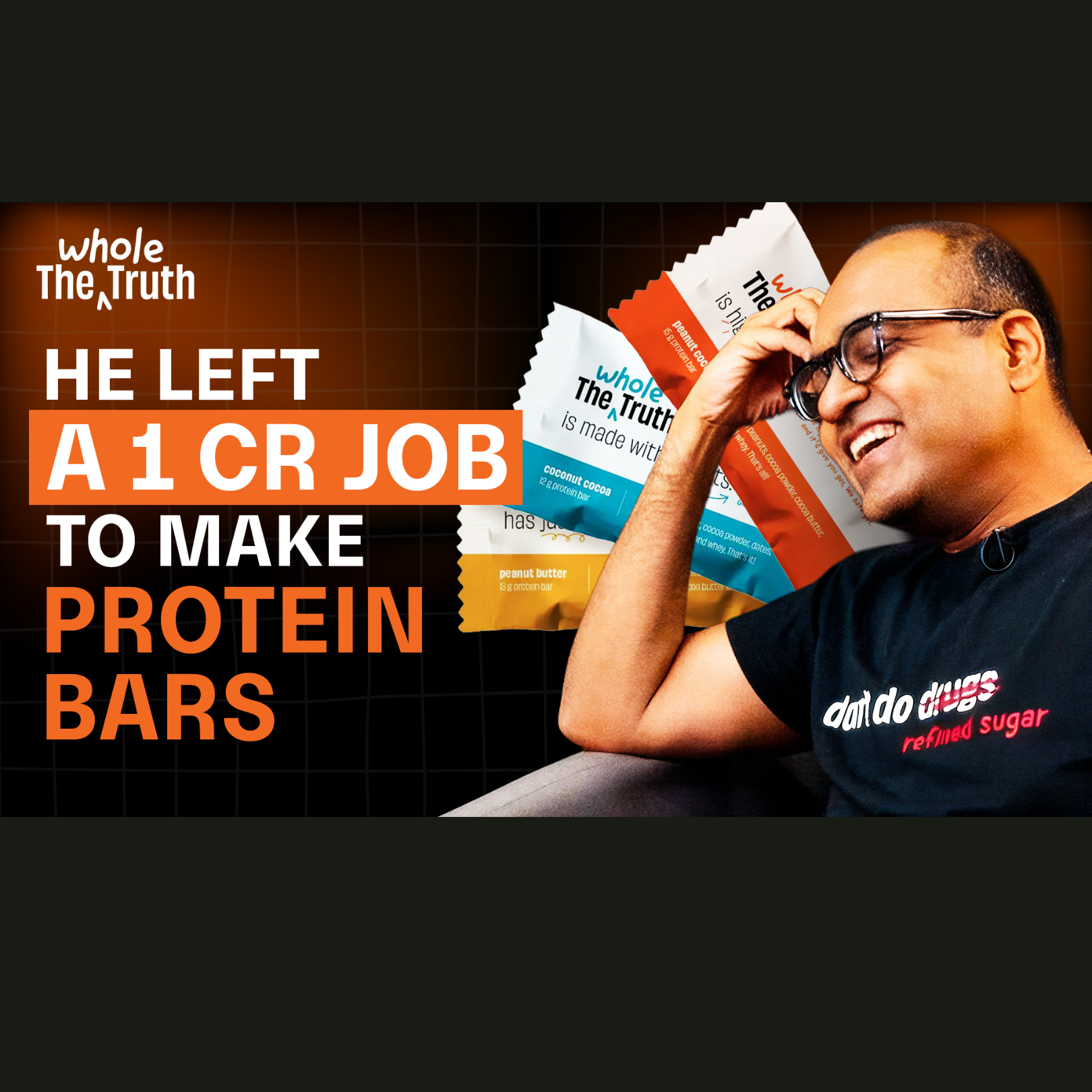
254: Secrets of building The Whole Truth | Shashank Mehta, Founder and CEO | Unstarted
3w ago00:52:19Tap to summarizeHe built a ₹100 crore brand from scratch in two years. His company rated him 2 on 5. So the question stopped being am I good at this? and became am I even the right kind of person for it?Shashank Mehta is the founder of The Whole Truth, one of the best consumer brands built in India in the last decade. We backed him early, off the strength of a blog whose readers became the company's first customers.In this conversation: 1. What do you do when you build something from zero and still get rated below the person who grew an existing brand by 5%?2. How do you tell the difference between being bad at a job and being the wrong category of human for it? 3. Is it risk that stops you from leaving — or is it fear wearing risk's clothes? 4. Why does writing your worst fear down on paper shrink it? 5. Can a single founder build a company that outlasts the founders who have co-founders?A conversation about self-knowledge as the real moat — and why the fear that freezes you is almost always smaller on paper than the life on the other side of it.Chapters 0:00 Welcome & introducing Shashank Mehta3:00 Middle class Delhi, mom's tears and the pressure to study8:00 HUL, the startup bug & discovering he's a creator14:00 First leap — joining Fasos, failing and coming back20:00 The blog, the rage and the protein bar made at home27:00 Risk vs fear — writing down what actually scared him33:00 The 2/5 rating that built a ₹100 crore brand38:00 Co-founders — why chemistry beats skill every time43:00 Brand first vs revenue first — the 20 year argument47:00 Building culture on trust and inspiration not fear and greed
Transcribe →
253: The Harvard Grad who quit her job to build a deodorant for women | CEO, Laani | Unstarted
4w ago00:33:14Tap to summarizeNirja Bhatt looks intimidating on paper: Columbia, Harvard Business School, strategy consulting. But she calls herself "a duck in water” i.e you never see what’s moving beneath the surface. It took her two years of analysis paralysis, ten abandoned ideas, and learning to normalize embarrassment before she could finally start.Nirja is the founder of Laani, a pre-launch personal care brand for women, built around the categories nobody talks about. In this episode, she and Avnish go back to the very beginning.They get into: 1. How do you start when you have ideas but no capital? 2. Why validate a problem, not an idea? 3. How do you make peace with betting your own savings on yourself? 4. Should you raise money before you have a product? 5. And what actually separates the founders who make it?6. An honest conversation about the part of the founder journey nobody photographs.Chapters00:00 Intro: Meet Neerja Bhatt, founder of Laani01:30 Growing up in Baroda, raised by grandparents03:00 Rejected by every dream school: the USC detour04:30 How a professor's letter got her into Columbia07:30 Q1: How do I start with no capital and too many ideas?08:30 Analysis paralysis: 10 ideas and the HBS trap11:00 Moving back to India: the waste management chapter16:30 Q2: Passion vs. market gap — how to pick your problem19:00 Talking to 200 women: customer validation done right21:00 Q3 (Gubbachi founders): Hero products vs. commodity staples26:30 To raise or not to raise: funding pre-launch29:00 Final advice: persistence and eating a lot of shit30:00 Outro
Transcribe →
252: How Country Delight grew its revenue to ₹200 Cr a month | Chakradhar Gade | Unstarted
Jul 200:34:51Tap to summarizeChakradhar Gade had the résumé everyone's supposed to want: engineering, CFA, a hedge fund, and felt like he'd lost himself inside it. So he walked away to sell milk.This is the story of how a finance guy who once mapped "the IRR of a cow" learned that the spreadsheet was a lie, lost all his money proving it, and rebuilt Country Delight from first principles, one customer relationship at a time.Avnish Bajaj and Chakradhar get into the questions most founders sit with alone: 1. What do you do when a successful career leaves you with "a huge loss of identity"? 2. Should you bootstrap and survive, or raise aggressively and run? 3. How long does it really take to learn a business you've never been in? 4. How do you tell real customer love apart from people just being nice to you? 5. When the model that "looked very beautiful in Excel" collapses, what replaces it?A conversation about chasing meaning over status, why bootstrapping bought six years of depth, and why, in Chakri's words, "there's no downside" to starting.Chapters 0:00 Welcome & introducing Chakradhar Gade1:35 Growing up in Guntur, Infosys & chasing meaning4:43 From MBA to Wall Street — why he chose finance7:33 The decision to quit New York and become a doodhwala12:05 The IRR of a cow (and why Excel lied)14:51 Bootstrap or raise? The real answer17:00 Raising from friends & family without ruining relationships21:02 From ₹80 lakhs to ₹200 crores a month23:01 The milkman model & month 60 retention32:34 Final advice: take more risks, there is no downside
Transcribe →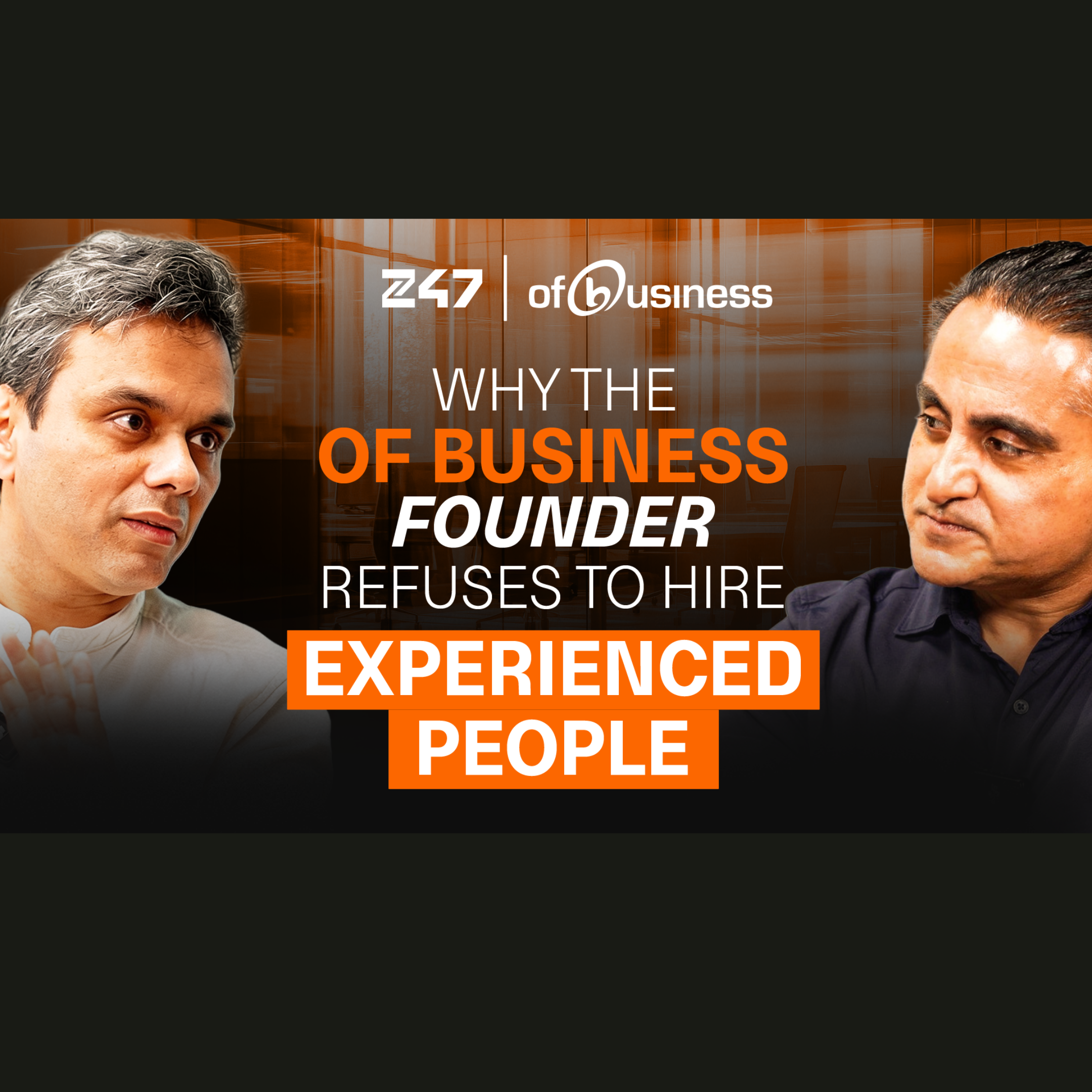
251: Running two profitable unicorns in India | Asish Mohapatra, OfBusiness | Unstarted
Jun 2500:39:24Tap to summarizeAre entrepreneurs born or made? Asish Mohapatra is certain it's the second and he'll tell you plainly he's good at maybe 3 of the 10 things a founder needs.Asish is the co-founder of OfBusiness and Oxyzo, which he built into one of India's largest B2B commerce and lending businesses. But this conversation with Avnish isn't about the scale, it's about the intellectual honesty underneath it.In this episode, they get into:1. How did you get comfortable in your own skin? Was there a trigger?2. Are entrepreneurs born or made, and how do you decide which skills to build vs. buy?3. How do you pick a co-founder (and run a company with your spouse)?4. Why would you never hire someone at their last salary?5. Do you have to go public and when?6. A conversation about failing early, being honest about it, and finding the 🎧 New episodes of Unstarted every Thursday. For founders. By founders.Chapters00:00 Cold open01:30 The boss he fired, the mentor he kept03:30 The 10% you keep for life07:30 Are founders born or made?08:30 Why I got comfortable failing08:45 Build it or buy it?15:30 Picking a co-founder (and a wife)19:00 Why I work 20-hour days19:35 Baby is six days older than the company22:45 The vulnerabilities he leads with28:00 Never hire at their last salary30:30 Always the next IPO?35:00 Be yourself. Keep building your superpower.
Transcribe →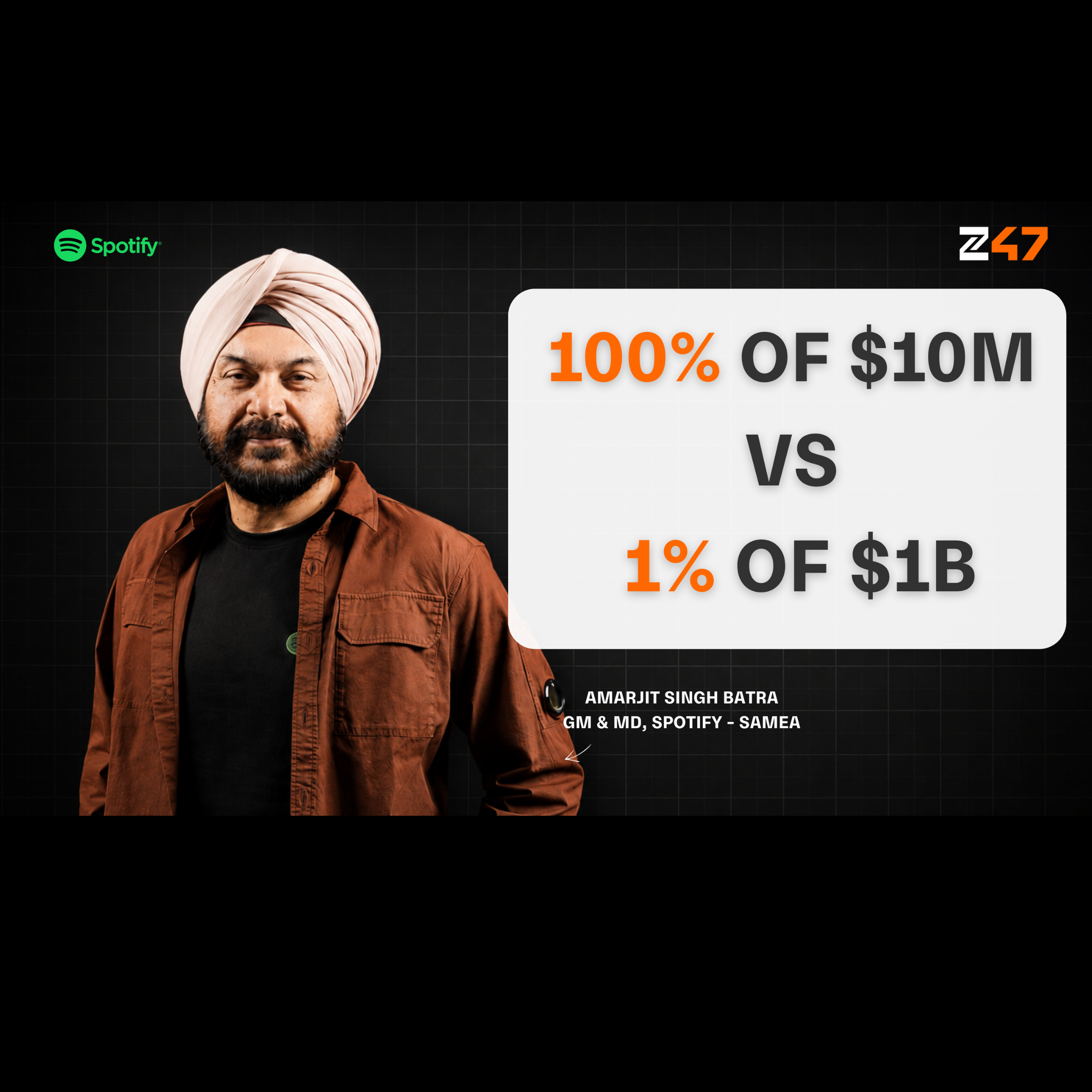
250: What sports taught the Head of Spotify India about building a business | Unstarted
Jun 1800:44:15Tap to summarizeCan you be a founder without ever founding anything?Amarjeet Batra has spent 25 years building other people's companies, first Baazee, eBay, OLX, and now Spotify India, and never once thought of himself as an employee. He's what Avnish calls "professionally unstarted": a founder from within.Avnish and Amarjeet get into the questions most operators never say out loud: 1. If you have the skills, the confidence, and the network, but not the one big idea, what do you actually do with that? 2. Is raising a fund a solution, or a responsibility you take on before you've found the problem?3. Why would you choose 1% of a billion-dollar company over 100% of a ten-million-dollar one? 4. How do you build a category when ten players already exist and you've arrived last? 5. When is a difficult problem worth solving, and when does the market simply not care enough to pay?6. This is a conversation about range over specialisation, ownership without a cap table, and why some of the most entrepreneurial people you'll meet never start a company of their own.Chapters00:00 Cold open01:30 The professionally unstarted founder02:55 Baazi, the born-again moment05:10 Why I broke every rule of specialization08:30 The eBay epiphany: time to do something bigger09:43 China, and the scale that humbled me18:26 The power of moving last20:05 Building the category nobody built21:15 Is there still a marketplace to win?22:56 Disruption, distribution, and the AI shift23:58 Q: How do you actually scale an events business?26:15 Q: (cont.) Why your event might be the wrong product28:14 Q: Should we build a place to apprentice under founders?31:32 How to actually reach a busy operator34:20 Q: Difficult problem, or one nobody will pay for?35:09 Problem-first, and the willingness-to-pay test36:37 Vitamin or painkiller39:01 Play-front music: a business model flips41:09 Why success looks overnight
Transcribe →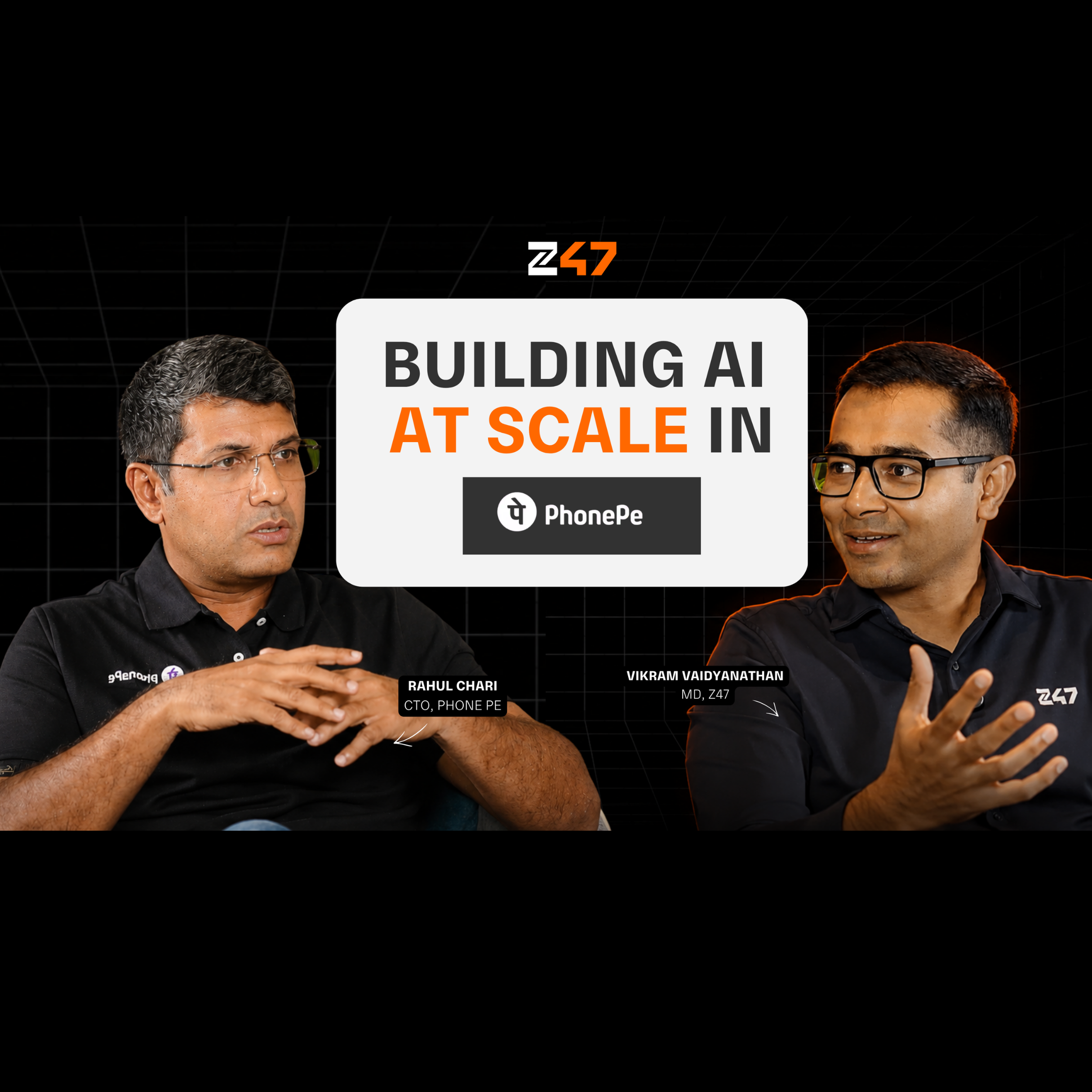
249: PhonePe CTO on how they are using AI at scale | Rahul Chari | Intelligent Indians
Jun 1600:48:52Tap to summarizeWhat does it actually take to build AI for 70 crore users?Vikram sits down with Rahul Chowdhury - co-founder and CTO of PhonePeto talk about how India's most scaled fintech is approaching AI. Not with hype or a top-down mandate, but with a quiet, deliberate, engineering-first philosophy that started four years ago with a small team focused on making developers happier.Rahul shares the inside story of PhonePe's AI journey from building their own LLM gateway and Agent Hub, to launching AI search with Microsoft, to betting on on-device models for privacy and cost. And it ends with the biggest idea of all: India's DPI stack has spent a decade making data AI-ready. The opportunity now is to use it to build the bank branch of one — truly personalized financial products for every Indian.If you're a founder, engineer, or product leader trying to understand where India's AI story is really headed, don't miss this.What you'll learn🔹 Why PhonePe avoided output metrics in year one of AI and why it worked🔹 How to build an AI culture without a top-down mandate🔹 What an LLM gateway is and why every scaled company needs one🔹 Why on-device models are the right bet for consumer AI in India🔹 How DPDP will reshape how companies think about AI and data🔹 Why India's role in global AI is in applied AI — not foundational models🔹 How DPI × AI creates the opportunity for hyper-personalized financial productsChapters0:00 Intro & who is Rahul Chowdhury02:30 PhonePe's AI journey: tinkerers to transformers06:00 The DevX team: why developer happiness came first10:00 Don't rush into AI — the engineering first mindset14:30 Building the LLM gateway & data stack18:00 Agent Hub: PhonePe's internal marketplace of agents22:00 AI Search with Microsoft & on-device models26:00 Why India needs edge models, not foundational ones30:00 DPI × AI: the bank branch of one34:00 Conclusion
Transcribe →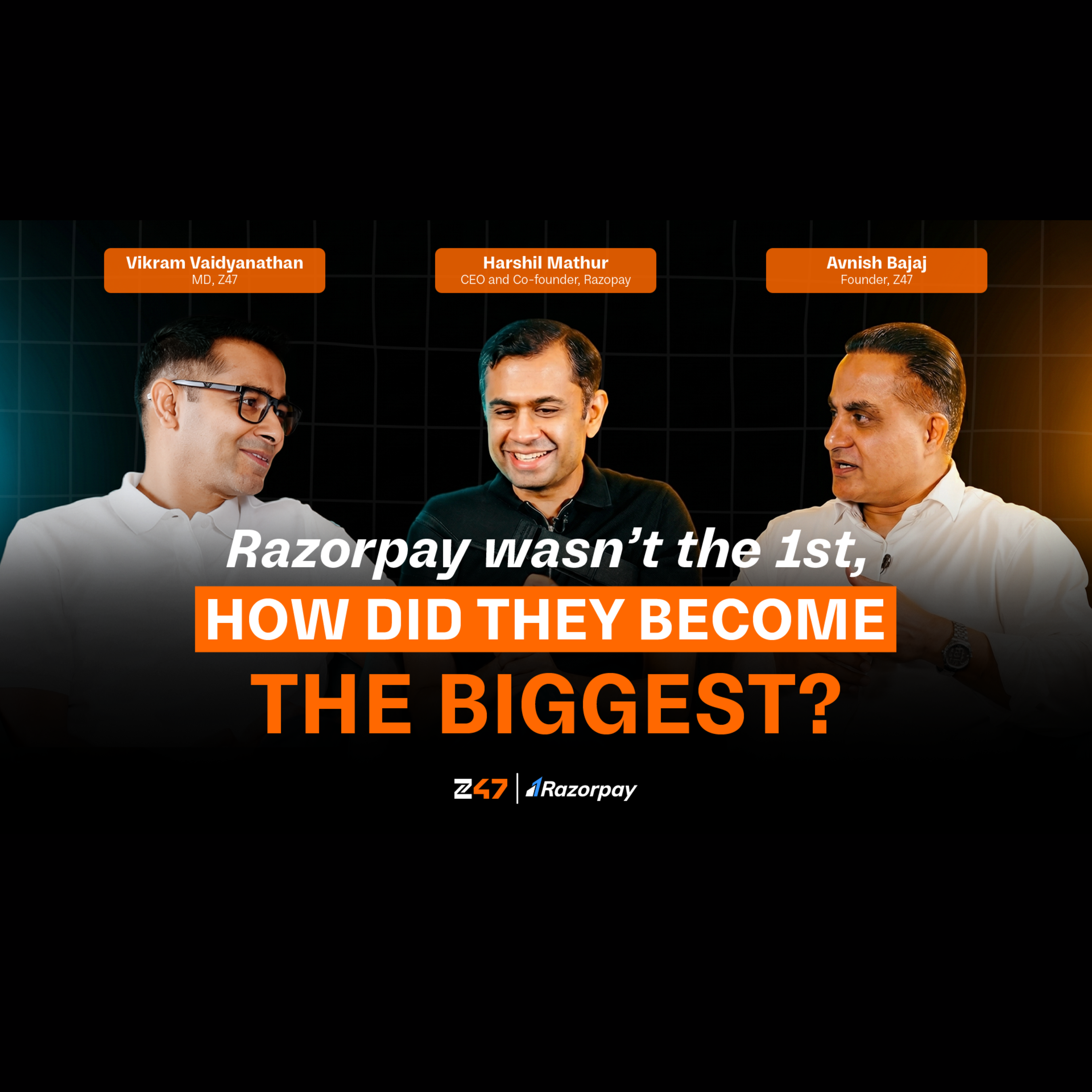
248: Got Rejected from 100 banks and then built a $7.5 Billion company | Razorpay Story | Harshil Mathur
Jun 1101:06:05Tap to summarizeHarshil Mathur started Razorpay after quitting the highest-paying job on his campus, a role his whole family had just celebrated, because he walked in on day one and realised he was a guy who wanted to sit and code, not step onto an oil field.Then he spent a decade away from that: walking into bank after bank getting laughed out of the room, surviving the grind no funding can fast-track, and the night Yes Bank froze with customer money stuck inside it. This is the founder story, lived experience as an edge, why the rejections compounded in his favour, why the grind always comes, and the values that made the hard calls simple.And then the thing that pulled him back: agentic AI. "It went from being an assistant to an execution engine." Six years after he last wrote real code, Harshil locked himself in a room, asked "if I were to start Razorpay today, how would I build it?" — and rebuilt everything.The second half is an operator's view of what that shift actually changes: 1. Why AI magnifies an org's weaknesses instead of fixing them2. Why an agent with no plan drifts exactly like a company with no plan3. How Razorpay flipped its leadership hackathon and the bet behind Agent Studio4. Hosted by Avnish Bajaj with Vikram Vaidyanathan this is a conversation about building, walking away from it, and being pulled back, and what that says about where AI is headed.Chapters00:00 Introduction02:15 Growing up in Jaipur & coding since 6th grade05:30 IIT Roorkee, SDS Labs & building without permission10:45 Quitting a $100,000 Schlumberger job in 6 months14:20 The Facebook comment that sparked Razorpay18:00 100 banker rejections & how rejections compound24:10 Getting into YC with zero expectations35:30 Yes Bank freezes — one decision defines the culture40:00 Going back to coding after 6 years — AI changes everything52:00 Rebuilding Razorpay from scratch with AI agentsFollow Z47Website - https://www.z47.com/Instagram - https://www.instagram.com/z47.vc/LinkedIn - https://www.linkedin.com/company/z47-vc/
Transcribe →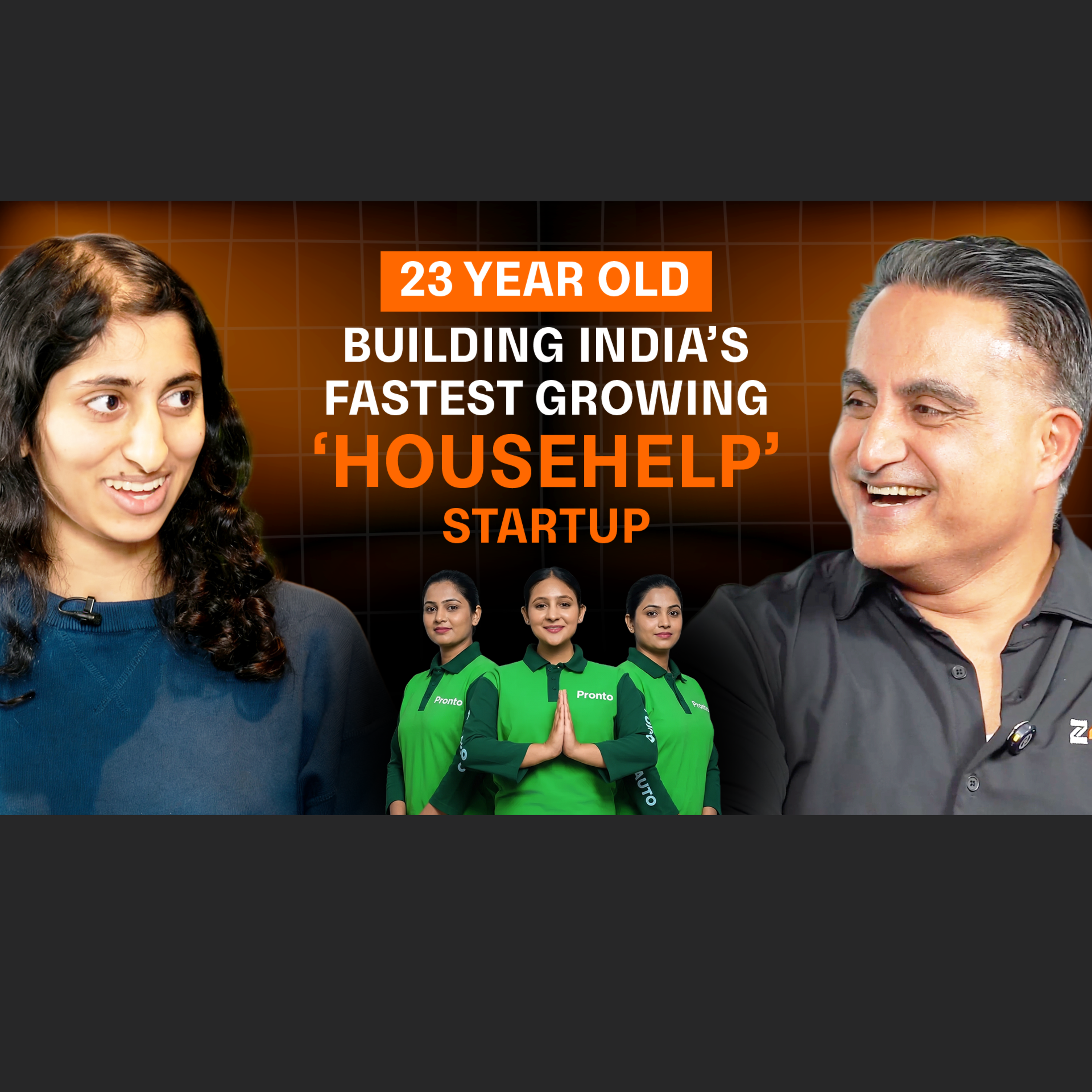
247: 23 years old and raised $45M in series B to build Pronto | Anjali Sardana | Unstarted
Jun 400:36:06Tap to summarizeAnjali Sardana grew up in northern Virginia, studied biology at Georgetown, worked at Bain Capital — and then, without telling her parents, flew to India and founded Pronto: a platform building the world's largest labor organization network, starting with home services.In this episode of Unstarted, Anjali breaks down how she picked an operations business over a product business (and why), why she sees India's informal labor market as a trillion-dollar opportunity, and the founder mindset that got her through the messy, chaotic, sleep-deprived early days.She also gets brutally honest about faking confidence, hiring missionaries not mercenaries, and why she thinks most human limitations are completely made up.Chapters0:00 Intro — Meet Anjali Sardana1:20 Growing up in Virginia, studying biology at Georgetown3:10 The evolution framework that shaped her business thinking5:00 Product vs. operations vs. distribution — how she chose8:30 Why India? The labor-market thesis12:00 Moving to India with zero experience — and hiding it from her parents15:40 Fake it till you make it: raising a seed round at Bain Capital19:15 Running pilots, vibe-coding the app, and getting the first bookings24:00 The Kapil story — recruiting 30 workers in one afternoon28:00 Operating 24/7 with 5 people, sleeping in shifts31:30 Building culture: missionaries vs. mercenaries36:00 Urgency as a core value — actions beget information39:30 Conviction vs. market signals — how to balance both
Transcribe →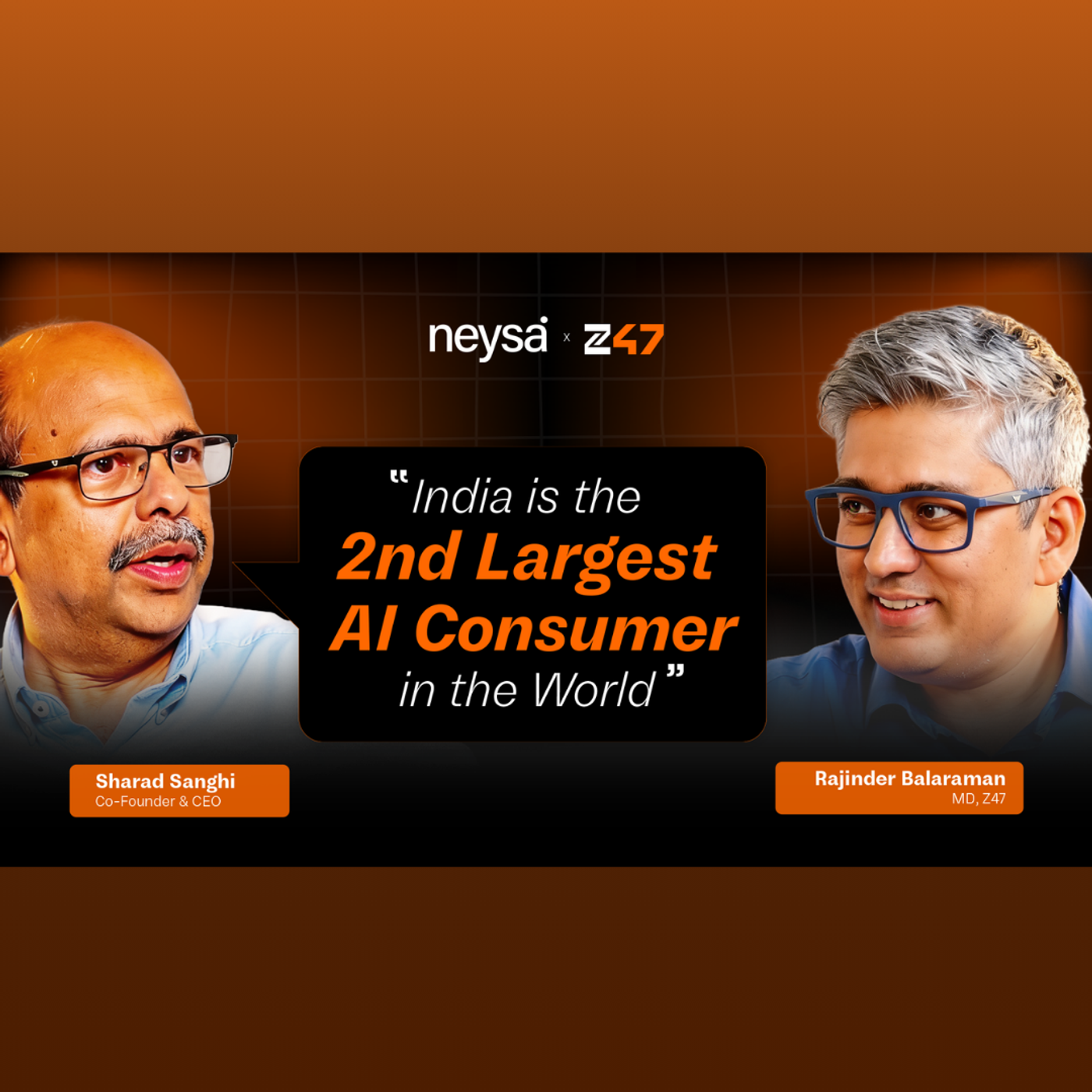
246: He built India's #1 Data Centre and is now building its AI backbone | Sharad Sanghi, CEO - Neysa
Jun 200:37:04Tap to summarizeIndia's GPU footprint is on track to grow 40x by 2030, from ~50,000 today to a couple of million. That number is bigger than any public forecast. Sharad Sanghi has the unusual standing to make it: he built Netmagic into India's most significant datacenter business, and he's now running Neysa, the only neo cloud in India that Semi Analysis has rated, backed by Blackstone.In this episode of Intelligent Indians, Rajinder Balaraman and Sharad cover:1. Why neo clouds exist as a category, and what hyperscalers structurally can't do for one market 2. The ITQ case study: how to define ROI before infrastructure 3. The three infra mistakes that quietly cost AI teams 10x their compute spend 4. Why power, not GPUs, is the real bottleneck, and why 50% of India's data centre capacity sits in one city 5. What India's AI Mission could actually unlock in the next phaseIf you're building AI infrastructure in India, tracking the space as an investor, or working on policy in the area, this is the operator view. From someone whose entire balance sheet depends on getting the call right.Chapters 00:00 India's AI Moment The Big Picture02:00 Welcome Introducing Sharath of Neysa03:30 How He Built India's First Data Centre with NetMagic06:00 How ChatGPT Sparked the Idea for Neysa18:00 India is 2nd Largest AI Consumer 21:00 50,000 GPUs Today. 2 Million by 2028 24:30 Neysa vs AWS, GCP, Azure 28:00 Why Indian Banks Are Early AI Adopters31:30 Financial Services, Healthcare, Manufacturing 35:00 PhonePe, Perfios, Hungama - Real AI Use Cases in India38:30 Why Most AI Projects Stay in Pilot and Never Reach Production52:30 GPU Obsolescence Risk — How Neysa Manages It55:00 Healthcare, Education, Agriculture — Where Founders Should Build58:30 IIT Bombay and the Bharat Gyan Project1:01:00 Why India Needs to Keep Its AI Talent at Home1:04:00 Why He Refused to Flip the Company Outside India1:06:30 What It Takes to Make India the AI Research Capital of the World
Transcribe →