Loading summary
Transcript280 lines
- [00:00]
A
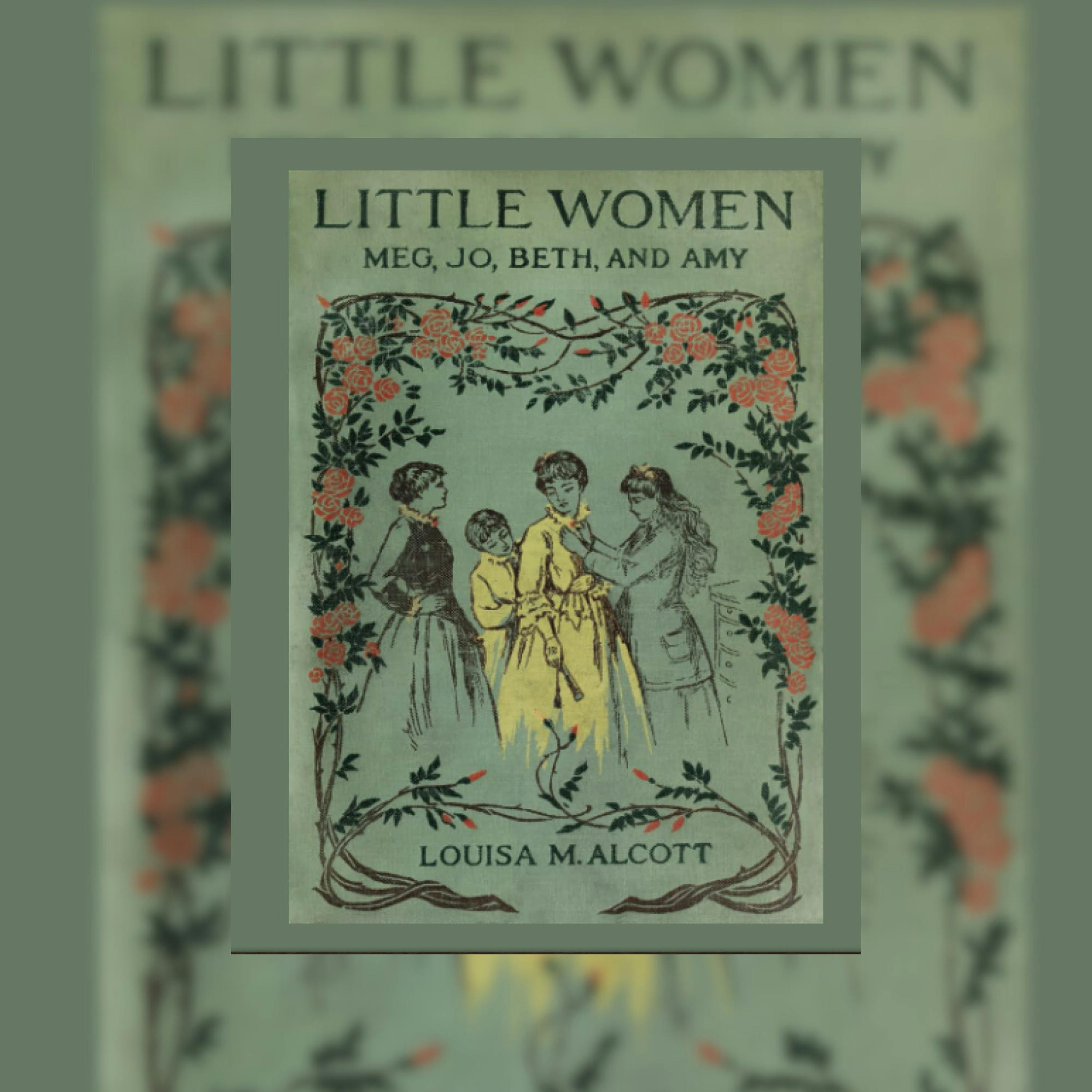
This season of zero to well read is brought to you by thriftbooks.com today we're talking about Little Women by Louisa May Alcott. There are more than 1300 editions available to choose from on thriftbooks.com I'm going to pick out two if you're a collector. If you want something really special, there's Little Women, the complete novel by Louisa May Alcott. This one is published by Chronicle Books in October of 2021. You can get it new for $30 at Thriftbooks. That's more than $12 off the full retail price. What makes this one special? It's beautifully bound and calligraphy. But in the edition, there are the actual letters and diary entries. You can like pull them out and read them. Adds a sense of reality to it. So that's a really special one. If you're looking for a reading copy, something that's some introduction that you can put in your bag, not worry about messing it up, I suggest the Penguin Classics Edition, January 1989. You can get it for as few as $7 on thriftbooks.com you get free shipping on orders over $15 in the US over 19 million books to choose from. Plus every purchase gets you closer to a free book through the reading Rewards program. Thanks to Thriftbooks.com for sponsoring Zero to well Read. Welcome to Zero to well Read, a podcast about everything you need to know about the books you wish you'd read. I'm Jeff O'. Neill.
- [01:23]
B
And I'm Rebecca Schinsky. Welcome to 2026, everybody. Happy new Year.
- [01:27]
A
Happy New Year. It feels kind of like a new year book. It's more of a Christmas time book, but holiday season very much in the air for what we're doing this week. Which is what, Rebecca?
- [01:36]
B
Well, tie on your bonnet, Jeff, and get ready to mind your manners because we're talking about Little Women by Louisa May Alcott. And before we jump in, we wanna welcome our new friends who are watching us on YouTube. We're doing the whole thing here at zero to well read. You can also subscribe to our free newsletter or on Patreon. To get early ad, free episodes and access to exclusive content, just go to patreon.com 02 well read. That's where it all lives. The free newsletter and the subscription for early ad, free access and options for bonus content.
- [02:09]
A
You could also find there links to our brand new TikTok and Instagram accounts. We'll be doing clips, maybe some other stuff. Rebecca, you know, around the books. We can, you know, find some Other things that don't quite fit in. We're going to play around over there, help people find the show. Also, yeah, that newsletter is going to be free. There's going to be, you know, addendums, extra material for each episode that comes out. We're going to talk more about what's in that as we keep going and we figure out what works there. Thanks again to everyone who's turned in, turned in, tuned in. It's one of those Fridays, Rebecca, for the first season, shared it with your friends, made the show a success. There was a review on Apple Podcast today that I texted Rebecca, like, in the middle of the night, like, this is exactly what we want. It's doing it. People like it.
- [02:55]
B
We're so delighted that y' all are reading along with us. I'll say. If you're one of the readers and listeners who's been dying to know what we're going to talk about in advance, the way to access that list is by joining us on Patreon. We will share upcoming reading assignments for, you know, the real ones.
- [03:09]
A
Yeah. And if you've got a minute to rate or review the show, wherever you're listening to it, that's always appreciated. Hit the follow button and subscribe there. Okay, enough self promotion, because we are talking today about Little Women by Louisa May Alcott, which is a it's a classic, for sure, but it's an, it's an interesting one in like 900 kinds of ways. And it's experienced a revival, really, following the 2019 Greta Gerwig adaptation, which is excellent, by the way. We're not going to spend a lot of time talking about it, but it's super, super good, and it does some of the things that make kind of the story around Little Women and Louisa May Alcott as interesting, maybe more interesting to certain modern readers than the book itself.
- [03:57]
B
Rebecca yeah, this one is a really interesting one because it is a it's a reader classic, like, beloved by generations and generations of readers. But only relatively recently was it taken seriously by the literary critical establishment. I don't really know of this book being taught like it's labeled as for ages 8 through 12. If you look at online retail, it's positioned and it was originally positioned as a book for young girls. Louisa May Alcott was asked to write it, commissioned by a publisher to write a girl's story. And I don't know if it's that that it's like, thought of in some ways as a children's book or that the critical establishment has taken a while to catch on because of, you know, institutional sexism that this is a book to take seriously. But I don't see this come up in the academy very often. So interesting to dive into this one where a lot of the books that we've talked about up until this point are things that in both cultural hits and really beloved critical classics, except for maybe Twilight.
- [05:00]
A
And so one thing we're trying to do with this show is cover the books people have heard about, maybe they read and loved, and it's been a while they wouldn't have a chance to re. Engage with. And Little Women is special in several different ways. And one of those things that you just mentioned is that it has continued over time, even in a moment where sensibilities about, especially around gender representation in books are changing. And so many books from, let's face it, 150 years ago, a little rough. And this one's not perfect by any stretch of the imagination. But there's a lot here for a modern reader, again, especially in the context of who Alcott was, what her publishing career looked like, how subversive and not subversive this book managed to be at one and the same time. And I think there's a lot of like a spoonful of sugar helps the medicine go down here and because, you know, we'll talk about this in a little bit. But like, Alcott didn't want to write this book. She didn't enjoy writing this book, didn't think it was going to be excess and. And yet. And it's one of those stories where, you know, William Goldman said this about Hollywood. No one knows anything. I'm not saying no one knows anything, but it's so hard to predict. And often the end result of what a book becomes over decades, over centuries at this point is unknowable at the time and really outside the bounds of like an editor, agent, the critical establishment, the author themselves.
- [06:16]
B
And Alcott even gets into that in the text of this book through the lens of one of the characters, Joe, who is a writer and who experiences some tension, the kinds of things that she wants to work on artistically, what her real true artistic vision for herself is, and the kinds of books that sell and her own feelings about the literature that is commercially viable. There was something really fun and kind of grounding about discovering that the kinds of things that some people grumble about today with popular commercial fiction and genre hits are things that people have been grumbling about since at least 1868 when this book came out.
- [06:53]
A
Let's Tag team. A little bit about the overview and synopsis. I'll talk about the publication date a little bit here. So this was loosely based on Alcott's own childhood experiences. What childhood experiences? They were growing up in and around Concord, Massachusetts. Her family moving around all the time in the mix with the Hawthorns and the Thoreaus of the world. Her parents were destitute transcendentalists, which. You know what, sign me up. It sounds great in a lot of ways.
- [07:20]
B
The Venn diagram is a circle.
- [07:22]
A
It really is really tough to the point where Alcott eventually was entrusted with teaching the children, including the Hawthorne children herself. So a really established person and in the mix for the high minded ideals of the time. This particular book was published in 1868 and the sequel, Good Wives came out in 1869. But if you pick up a copy of quote unquote Little Women, especially if you're in America, that's both text put together. We're going to talk a little bit more about the plot and what happens and where that break is and how those two things do feel. They're related, of course, but they're different and different things are happening at the same time. So really since 1880. I didn't find this note. Rebecca, you found that good note. I didn't. I couldn't find the year of when they were presented as one text in the uk. Apparently they're still presented as two volumes. Good Wives is the second. And if you pick it up, you see it at the bookshelf. It's a big old book, right? I did on my iPad reading. I have a copy, but it's easier for me to take notes and highlight things. But it's like 700 pages. It's like super big. So it's really something you sink into.
- [08:26]
B
Yeah. I read the Penguin Classics edition that has an introduction written in 1989 by Elaine Showalter and that is rich. It's longer and much more detailed than a lot of the introductions that you get into these classic books. A lot of scholarly exploration about how the critical establishment came to consider Little Women, where it stands among feminist literature and how feminist readings of it have evolved over time. I highly recommend if you're looking for a hard copy, to pick up that Penguin Classics edition.
- [08:56]
A
Yeah. Showal Walter is a legitimate, serious, respected academic and I kind of wish I had read that myself, though I don't mind just picking up a Gutenberg public domain text and just ripping it in there a little bit too well.
- [09:10]
B
That's one of the interesting things about the book is that it's really hard to pin down how popular it is by sales numbers because it's been in the public domain for almost a century already. So we have documentation that points to about 10 million copies total sold. But it's been free for almost a hundred years. And that means that it's amazing, right? Like, just about every publisher has a version of Little Women. And you can also get it, as you said, from Project Gutenberg. Like, I would guess that that 10 million sales total is way, way low. Like, for some context for folks, the Great Gatsby is thought to have sold about 40 million copies. And if I had to guess, I would put little, at least equal with Great Gatsby and book sales just based on vibes and professional expertise. But a hundred years of virtually undocumented sales history, it's almost impossible to guess.
- [10:08]
A
Well, it's also. I mean, this is a really interesting way of thinking about this because at this point, it's beyond sales, both literally and figuratively, because it's at the library. Every library has a billion copies. You can get it for free. If I down I download this through Apple Books for free in a Project Gutenberg edition. Is that a sale? What is that? That's just a read, right? Like, it doesn't even count as a sale. And this is a good time. Good chance to shout out our friends at Thriftbooks here a little bit, but I'll say more later. Would you like to guess how many editions of Little Women are available to sell on Thriftbooks?
- [10:42]
B
This is just a daily point for you. I can make this guess because I went looking for the best covers. It's like at least 1300 different editions, right?
- [10:50]
A
It's a huge 1,367, including 20 collectible edition. And I just saw there was one that came out last year. This is the one I'm looking at now. Was it last year? 2023. It's a really premium deluxe edition with, you know, all the trimmings. Right. And you can find anything that you want here. There's a masterpiece library edition. So, you know, this one has really become. It's beloved in a way that I don't think any book we've talked about so far is beloved. And I think that's important to talk about its staying power. And when we get into the experience of reading the text, it is doing a different thing for a reader than certainly the Great Gatsby or Never Let Me Go or even Twilight here. But this is an affirming read for A lot of people, and I'm going to pass it off to you for the synopsis here. But I will say the signal achievement of this book, the signal imaginative construction, is Jo March herself, who is a version of of Alcott. And I think that, I think Joe is the center around which many people's, if not most people's affection, you know, revolves.
- [12:04]
B
This episode is sponsored by Cozy Earth. This year I'm getting really intentional about resetting my home, especially my evening routine, because that five to nine window is the part of the day that really matters to me. I've been building this little nightly ritual with Cozy Earth and honestly, it's becoming my favorite part of the day. I start with a bubble bath, obviously I'm reading a great book, and then I wrap up in one of their luxe bath towels which are so unbelievably soft, but they also dry you off really quickly. After that, I slip into Cozy Earth's bamboo stretch knit pajamas, which are the kind of comfort that feels effortless and still looks put together. And then there's the bedding. Climbing into fresh, luxurious sheets at the end of the night makes my entire space feel calmer. It's the easiest way to signal to my body that it's time to slow down, to rest deeply and to reset for the next Cozy Earth also makes it easy to try. There's a 100 night sleep trial and a 10 year warranty, which says a lot about their quality. If you're ready to start the new year with a true reset, head to cozyearth.com and use code BOOKRIOT for up to 20% off. And if you get a post purchase survey, be sure to mention you heard about Cozy Earth right here. That's cozyearth.com using code bookriot for 20% off. Cozyearth.com code bookriot yeah, and I mean, you and I both run in pretty literary nerdy circles. But as I mentioned to friends that this was the one that I was reading right now, I was on the receiving end of so many wonderful stories about the first time people read little women, about what little women meant to them. Multiple people told me that Jo was their queer awakening that they didn't realize until later, but that she really symbolized something that they were learning to unlock and understand about themselves. At the very least, what it is to grow up a girl who doesn't feel like the stereotypical girl in her community. There's something about books that we read when we're kids that really connect and that lends as you were saying, like, there's an extra layer, a really special quality to people's connections to this book. And it was really fun to just find out that, like, people I've been casually mentioning books to for a decade in my personal life have an affection for this book that I never knew about before.
- [14:23]
A
The Mount Rushmore of bookish tween role models is something like this. I'm just coming with this off the dome. Rebecca, so help me. You can shoot us an email zero to. Well, read.com if you've got something that I've missed. Or. I think it's Elizabeth Bennett. I think it's Jo March. I think it is Rory Gilmore in a more popular way. Not as a writer, but as a reader. And I'm trying to think. I think those are the three, but shoot us an email, because I think especially Elizabeth Bennet and Jo March are one in the same now. Joe is a writer, whereas Elizabeth Bennet is a great reader and so are all the Bennett sisters. But, like, the kind of person that. Especially for the kinds of folks from the beginning that responded to this book like a tween bookish kid, you see Joe and you see yourself now, again, a white reader of a certain class in education. That's very important. We'll talk a little bit more about that. But that has been an ongoing sort of moment of recognition to see someone who cares about books, who cares about ideas, who doesn't, is not as interested in fitting in or doing the expected thing. That tends to resonate with the kind of person who's gonna curl up with a book on a Saturday afternoon by themselves all day.
- [15:39]
B
Yeah. Who's gonna grow up to be a person listening to a podcast like this or making one? Right, right, right. So let me tell you a little bit about what it's about. The book, again, came out in 1868. It is set in Concord, Mass. In the mid-1860s. We know this is the timeline because we're with the four March sisters, Meg, who is 16, Jo, who's 15, Beth is 13, and Amy is 12. They're with their beloved mother. They call her Marmee. And the family is missing their father, who has gone off to fight in the Civil War. The marches are poor, or they consider themselves to be poor. And this is a fact that they discuss often and with, like, really remarkable matter of factness. They talk about their poverty in a really just open way. They talk about money and the realities of not being able to afford things in a way that a lot of parents don't do with their children today. And in a way that is considered like, kind of gauche in many circles of American society. The girls, a couple of them, the oldest girls, Meg and Jo, have already started to work outside the home to help the family make ends meet. Because again, they're aware that the family doesn't have much money. Marriage is not yet on these girls minds, but it's really not that far away, especially for Meg. She's the oldest, she's the pretty one, and she really does long to be part of fine society. She's contrasted with Jo, the next in line, who's rebellious. She, as you said, is an avatar for Louisa May Alcott herself. And Jo chafes against the confines of femininity. She wants nothing more than to be a writer and maybe not to have to be a girl. And the gender stuff, read through a 2025 lens, is fascinating, but trying to like, take yourself back to what Alcott might have been trying to say about gender and what it meant to be a woman in society. There's this rich, handsome boy who lives next door. His name is Laurie. He's lonely and the sisters feel bad for him. So they like, absorb him into their little merry band and he becomes a member of the family.
- [17:36]
A
One of my favorite parts is like the Laurie sort of being. I love that, those sequences.
- [17:41]
B
It's wonderful. Yeah. One thing you and I have talked about for years now is that there aren't enough platonic friendships between boys and girls or men and women in fiction. And this is a truly delightful. Jo and Laurie just become really dear friends. And there are moments where it looks like it might turn into something more. There are some times where it's maybe unrequited on one side or the other, but ultimately a really beautiful friendship. The book is Alcott giving us vignettes of the four girls lives and of Laurie's life. She's really quilting the fabric of family life, of sisterhood, of the tension between the girls desires for connection and their craving for independence. There's like humor and heartbreak, really touching moments. And there is some moral instruction on the page.
- [18:28]
A
Oh, really? There is Rebecca Yellow.
- [18:30]
B
Yeah, just a little touch. Little touch of moral instruction on the page here. Then again, as you mentioned, also the second section, which was originally titled Good Wives, it picks up three years later. Alcott was not stoked about writing the sequel. She said, quote, I don't like sequels and don't think number two will be as popular as number one. But publishers are perverse and won't let Authors have their. So my little women must grow up and be married off in very stupid style.
- [18:57]
A
Very stupid style.
- [19:00]
B
I just like, what a real one.
- [19:02]
A
I know Alcott is a real. Was a real one. Really, really, really a super interesting person. I know there have been some Alcott, like, focused projects, but I think this is. And again, the 2019 Gerwig kind of does an Alcott. Like, there's a little bit more meta stuff about publishing, but there's a lot of that in the book. Rebecca, do you. I'm gonna let you continue with the synopsis here in just a second. One stray thought I had, I think, is a good place to put it. Here is, what is this book? Like, if Alcott writes it? Like, it's just for her and she's writing about her family. Do you have any sense of it? I don't think that's a TV show.
- [19:46]
B
I really want to.
- [19:46]
A
I don't have a sense. Yeah, right.
- [19:48]
B
It's like, if it really is this girl growing up among Nathaniel Hawthorne and Henry David Thoreau and these Transcendentalists and these feminists. Feminist thinkers. And her father is, like, thinks himself a genius, and the family thinks that he's a genius, but all the other Transcendentalists are like, this guy is a total failure. Her dad, like, couldn't launch a utopian commune. Then again, that's harder than it sounds. But also did have some successes. He was a teacher. He was the first educator in Massachusetts to allow a black student into his classroom. Like, this family is radical, and we're kind of troublemakers in Concord, Massachusetts. Like, Emily Dickinson is living not far away at the same time that Louisa May Alcott is growing up, and Emily's father is a politician, and she's getting lessons in how to be a proper woman, you know, and then, like, escaping to her room to write her weird Sapphic poetry. And, like, not that Sapphic poetry is weird. Emily Dickinson is weird. And, like, that family also is fascinating. We know a little bit more about them or it gets, like, depicted more. Yeah, but, I mean, I would love. This book is wild if it is about Alcott's actual experiences. But it also would not ring the bells that the publisher had asked her to ring with a girl's story that's really supposed to fill in, like, social, spiritual, interpersonal education between girlhood and adulthood.
- [21:14]
A
And that second volume really is written in demand for what readers were asking of Alcott and the publishers. Like, what happens to all these? Like, who did they marry? Like, ship culture was alive and well in 1868. It just was Rebecca. There's no. There's no other way to put it.
- [21:28]
B
Annoyed. Alcott is so annoyed by this. There are sections from her letters in the introduction by Elaine Showalter again. And she's like, why does everybody want to know who they got married to? These girls are so much more interesting than just the marriage plot. She was not excited about having to do the marriage plot. The publisher wanted her to get Jo and Laurie together and she refused. And that is hero shit right there.
- [21:54]
A
Yeah, I mean, I think there are compromised subversive moments throughout the book. And again, as you said, if Alcott doesn't make these concessions, I don't think it becomes the cultural phenomenon it has become. And if she doesn't get in her little commentary. Not little. Her pretty serious commentaries and satires of different people and places and practices. I don't think it ages very well. It just becomes sort of an overly saccharine, you know, confection of a certain kind. And I think I want to talk a little bit more about what she does to keep it from being overly sweet. And one of the things is the real life events. And here's a spoiler alert here. And we're not going to do this very often, but this is a big one. If you don't know this, it doesn't happen in the first volume. It happens in the second half of the book. It happens in Good Wives, but Beth dies from lingering complications of scarlet fever. Alcott herself had a sister who died a little bit older, but under not dissimilar circumstances. And Beth is largely patterned on her. And then from there, it's pairing off the girls. Right. Beth dies and you start pairing off the girls and see what happens. And each one of them is like a slight wrinkle on what. A more formulaic version would be who marries who and why and how old they are and what their pretty poor representation of dialect on the page are, let's say. That's one of my notes for Alcott. We need to work on our dialect, but. But it's interesting and different, if not feeling exactly revolutionary or edgy.
- [23:23]
B
Yeah, that second section, Good Wives, opens with Meg's wedding. It's primarily concerned with her settling into wifedom. She becomes a mother. The other girls go and make their matches. Laurie falls for Jo, but Jo does not have feelings for Laurie. And Laurie ultimately ends up with Amy, who is the youngest sister. She's the artist. Jo marries an older German professor and goes on to run a school for boys out of their Home. So they are kind of making either unexpected or unconventional matches here. There are surprises for the reader. It's definitely Alcott subverting the things that readers asked her to do. And I couldn't help but think about how, like, one of the things that we say about kids movies today is that they work on two levels. The good ones work on the level where the kids get the jokes, but also there's another level where there's something there for the adults. And I think Alcott does that really well in Little Women, that if you're a child and you're just reading this and falling in love with these girls, and there are four different kind of Jungian archetypes of different kind of girl you could be, you can map yourself on to one of them. But then there's also that, like Alcott's sharp commentary for the adults, if you're willing to read it. And I think that that's part of what makes this age so well is that especially women readers who read this as kids kind of. It's a tag yourself moment. Like, you decide that you're a joke.
- [24:44]
A
Are you a Miranda or Carrie, for those of you who are in the 90s and 2000, very similar in that regard.
- [24:49]
B
Yeah. And as you grow up, you can. As you become an adult, you can revisit this book and still identify with those characters. But also see the criticism that Alcott has layered on about the marriage plot, about expectations of women in society, about the constraints on femininity. And even though the particulars of it haven't aged super well into 2025. And like I mentioned on a book Riot Instagram video that I was reading this for this show and a couple commented, like, wish I could show that to my daughters, but it doesn't align with our values anymore. Like, I get that. And also, there are ways into talking about criticism and commentary and progress from this book.
- [25:31]
A
Yeah, I think, I mean, that's one of the projects of this show, is to give the context. The context is like, this was a subversive story at the time, and it's better that it existed than it didn't for all kinds of reasons. If you read it just as a straight text now, it's not the same. And some of the things Gerwig does in the modern version, I mean, again, it's set in the same time. It's not like bringing little women into, like, 2015 or something like that is uses the kind of moral and ethical DNA and makes it a little more recognizable to a modern person. Who's sympathetic to issues of gender equality and autonomy and, you know, especially stuff around money and class. For sure. I like this here, that this is kind of maybe the female myth. That's one of the interesting things that literature and stories can do is provide models for people's imaginations. And even as they allow new ways of thinking, they also then shape it at the same time. So, like, it's harder to break out of that new myth. But that new myth also then gives you something else to do. And that's one thing that's very much going on is these girls and their parents, too, for. For not for nothing, are trying to figure out how to exist in the world in which they're in, but also do it their own way. Right. This is not the boat rocker scene where they're, like, storming out and, like, doing everything in Field of Dreams, but they're also not just bowing their heads and going along to get along. They're finding a compromise that allows them to live peacefully without being sort of imprisoned and make a meager living, but also define for themselves their own ethic, their own morality. And that was very much in the water of this romantic period. And especially as Alcott is growing up pre Civil War, like, it's hard to remember now how important the abolitionist movement was as sort of an on the ground situation to get people to start the Civil War. Like, we're not going to let this happen anymore. And women were at the forefront of this. And people like the Alcotts. So, like, this kind of, like, emergent critical consciousness that is found in small ways in this book. Book are the building blocks on which later, like, Alcotts to suffrage. I have to believe that this book mattered in the acceleration of the women's suffrage movement over the next 30 years. I don't know how much, but a lot of the people that were reading and cared about women's suffrage were literate women. And this was a fantastically important book to the people that would be 20 and 30 by the time we get into the early 20th century, when that really picked up steam. So, again, I can't draw a straight line. But I don't know, Rebecca, Is that. I mean, is that overstating it? But I kind of feel in my bones it has to matter.
- [28:14]
B
I think it does. You know, she's not just Alcott's not just a suffragette. She was the first woman to register to vote in Concord, Massachusetts.
- [28:22]
A
That's right, yeah.
- [28:23]
B
Like, just truly a groundbreaker, an outspoken feminist. She was a spinster she never married. She wrote for decades, but felt really pigeonholed into the kinds of books that Little Women was because of her professional. But she chafed against that the whole time because she was again, raised by and around these really radical thinkers of the time. And she's like, Little Women is implicitly about what it is to be poor and white. It's overtly about class. It doesn't talk at all about race. Even as they mention that father is off fighting the war. There's no discussion on the page of what the war is over or the rights of black people or the horrors of slavery or any of that stuff. But we know that Alcott personally was concerned with it because her family is so intimately involved in the abolition movement and that she continues her father's work forward as an educator and a writer. And not only that, like this inspired countless women activists and writers ever since. Simone de Beauvoir cites Little Women. Ever heard of her as an important influence on the other end of, like, the pop culture spectrum? Nora and Delia Efron both cite Little Women as important. Barbara Kingsolver, Jane Smiley, Ann Tyler, Mary Gordon Jhumpa, Stephenie Meyer, Ursula K. Le Guin and Elena Ferrante, just to name a few. Like, we could do another hour on women writers who said that they were influenced by the works of Louise May Alcott and Little Women specifically. And that that list is so diverse in, like, the racial makeup, in the cultural backgrounds, in the political perspectives that those women write about in the milieus that they work in really says something about. Like, there is something almost universal about the appeal of the book.
- [30:13]
A
And the publication showed this. Like, the initial print run of 2000 sold out almost immediately. The printer and publisher had extremely difficult time keeping it in print. One of the notices is the literary sensation of the season. I guess they still had seasons, or they'd already invented seasons. In 1868 and 1869. There was an omnibus edition. 1880. Very interesting subplot here where there was a boulderized version. If you don't know that term. It means sanitized. So took out a lot of Alcott's language and dumbed down the literary references. And there's a lot of zero to well read bingo here. Rebecca. And things we could get to in the future. A lot of Shakespeare references. We get some Keats and then stuff that has faded away, which I might talk about a little bit later just to see. But really fascinating to see how literary these young girls are. I have a hot take about this coming up. I Don't know if you looked at the notes, but we'll get to that in a little bit. Let's see. There we go. AI generated editions. I'm just not going to touch this in the notes. I'm not talking about AI generated editions. Rebecca. I don't want to do this.
- [31:15]
B
It makes it tough. Like, that's just along with the fact that it's been in public domain for so long. Like, the book's been in print for 157 years since its publication. It has never fallen out of print. And the existence of public domain and now AI is just another one of the things that makes it hard for us to know exactly how widespread Little Women is. I just think we should assume that these estimates of sales and estimates of popularity are way under reality.
- [31:43]
A
Yeah, we talked a lot about Alcott here, I think picking up a couple things. The rest of her life, she never married. She wanted to be a writer. And she wrote for money, explicitly. She wrote these lurid thrillers. And there's a little bit of that in the second section right where she is out getting money and feeling. I'm sorry, Joe. And now conflating them like millions of people have. And that's okay, but let's get it right. Thank you for that. And she kind of feels ashamed about getting the money. This is a book about being a writer. The second half, especially in like, the. The economic realities and also the opportunities there. I. I say, you don't want to know the inflation adjusted money Joe was getting for some of the stuff, because she's getting bank Rebecca. She got like a hundred bucks for this one story. And like today's dollars. I think that's like 10,000 bucks if I have this right. Anyway, there's a lot of tough out.
- [32:32]
B
There for freelance writers. Also, like a real side note for the options that were available to women and the economic viability of being a writer over time that both Alcott and Jo are looking for. And the thing that they choose is writing is writing.
- [32:48]
A
Yes, yes.
- [32:49]
B
And that is. That is the pathway to financial independence for both of them, which much more difficult today. Almost every writer that you see on a shelf, even many bestsellers, are working day jobs. They're teaching. A lot of them just have office jobs. It's tough to be a writer who can fully support themselves just on their writing income. And like, I mean, the options were really limited to Alcott and to Jo, but interesting that they were both, like, willing to take a kind of mercenary approach to writing fiction and write whatever paid at Least for a time and.
- [33:23]
A
And, and out of circumstance. Right. They did not have a comfortable middle class or upper middle class existence they were not interested in. You know, I, I don't know what even the availability of being like a high artist and write for nothing, I guess as a hobby or try to get published in other places on um. But it's very much a story within a story about making it work and finding some compromise. I'm going to keep using that term between a literary life and putting food on the table. And some realpolitik happens there. Alcott herself. This is one of those situations where the book gets away from the author in this regard, which she continued to write but never really had another hit like this. And people start to think of her and I think we start to think of her. I'll say this. I think people don't know how radical Alcott and her circle were and how interesting of a thinker and writer and person the world Alcott is. Because Little Women has sort of softened into embroidered pillow of a people's reading experience or understanding of it. But it's not that. I mean it isn't, it isn't that. At the same time, I think that.
- [34:27]
B
I think you're onto something there that like sort of the popular cultural imagination of Little Women is like a live Laugh Love poster. And it is so much sharper than that. And Jo has especially sharp elbows that she's not afraid to throw. Alcott throws some elbows at the publishing industry, at the institution of marriage. Yeah. At readers, at conventions of modern society. There's a lot of things and institutions take strays through Little Women in a way that I mean to take us into our first exposure. I first read this book when I was 8. I think it was right for my reading level at the time, but wrong for being able to actually connect to the story. So this, like I have felt on the outside of that community of women who love this book.
- [35:16]
A
Cause you were what, three or four years too early, do you think? Is that. Or just. I think so what if you had read it when you were 13 or 12?
- [35:22]
B
I think if I had read it at 12 or 13 instead of like at that point I had already jumped into all of the Oprah Book Club picks. I think that I would have connected to Jo and that like, sense of independence. But so many women have lifelong connections to this book. I've always envied them. And this was my first reading of it since. And I really appreciated how sharp Alcott is. And like, I kind of expected this to feel like homework for me. Of like we should cover, like a.
- [35:48]
A
Museum piece of a kind.
- [35:49]
B
Exactly, exactly. But it felt much more alive than I expected to. And that was really wonderful to find.
- [35:55]
A
Yeah. For me, I think I was 12, maybe 11. I remember picking it out at the library. I've told this story before on the Book Riot podcast, but I went through a phase when I was in fifth and sixth grade of wanting to read all the longest books in my elementary school library. I read Last of the Mohegans. I read some other stuff. And this one, because it was an omnibus volume, was a big boy. So I picked it up and I read it. And let's just say Joe was very important to 12 year old me at that moment. Joe's important to everyone. I don't remember having seen a character again, even at that point. Point I was like, whoa, that's. That's something else going on right there. I think I was also. I was reading Formidable character. Yeah, I like Joe. I also read a bunch of Nancy Drew's when I was. I was real sick for a couple weeks and I read like 30 Nancy Drew books in a row. And then I read Little Women. I was like, oh, Joe, Joe, Joe. Greater than sign Nancy drew for me.
- [36:48]
B
30 Nancy Drew books in a short period of time will rewire your brain, though.
- [36:52]
A
Yeah, right. Like everyone's trying to murder me and why is everyone so well dressed all the time? What's it like to read this now and what is it all about? So what was your experience of reading it there? What did you. What did you take away? What were some of the big things that you got from this?
- [37:05]
B
I found it to be so warm.
- [37:07]
A
Yeah.
- [37:08]
B
You used the word affirming earlier and I hadn't thought of that, but it feels right. As a person who doesn't have kids in my real life, I love to be dropped into like the warm chaos of someone else's family. Like, I've experienced this coming to visit you.
- [37:24]
A
Yeah, I know. I was going to say this is. Are you just at me? Next time, Rebecca. Thank you very much.
- [37:28]
B
To visit, you know, other friends whose kids I adore being around and dropping into this book felt a lot like that of just being kind of sitting on the couch while family life happens around you. It's. I mean, it's just really love. Really lovely. I expected it to be again, like a live Laugh Love pillow. I expected to find that it was like too sweet. It wasn't that at all. The sharpness of the commentary and the consistency with which that happens. It's not like Alcott just drops in one or two lines, like almost every time a character is having to make a choice or is bumped up against performing conventional expectations. Alcott gives us something to tell us that either she doesn't love that that's what's happening, or the character herself doesn't love that that's what's happening and wishes something bigger like, there's still like women's situation has improved a whole lot since 1868. But there is still something familiar for a modern woman reader in these characters of feeling the pressures of external definition and of what it is to have society respond to you when you make an unconventional choice. I probably don't have to explain my childlessness nearly as often as Louisa May Alcott or Joe would have had to, but there's a common thread there that I was surprised and really pleased to find.
- [38:54]
A
Find I would love to know. I looked and again, there weren't 13 year old contemporary reactions. But I would love to know what a 13 year old reader's experience of this was in 1869 when they see Joe explicitly say, if I do that, you know, go marry and have kids and do that thing, I don't get to do X, I don't get to do. I don't get to be a writer. I don't get to run around and roll around in the fields and have idle thoughts and do like, I wonder how much that blew people's hair back at 13 and 14 and 1869. I'd love to know that. Maybe I should bring back a bit I used to do. I can't remember what this was for. If you could get back in the DeLorean and go to around the time this book came out, what question would you ask a reader? I think that might be my number one thing for girls especially who loved this book and thought of themselves as literary or wanted something for their life that they maybe even couldn't imagine at the same time. Like, did they have a shock of recognition there? And what was that like?
- [39:50]
B
I love this question. Do you think this drove parents crazy? Like more conservative parents who bought what looked like a typical girl's story? Do you think, like girls got inspired to be a little bit rebellious by this and their parents were like, ah, that damn little women?
- [40:05]
A
Yeah, I think it's just because of the ultimate marriage plot resolution. I think some of that is sanded off, but it's still implicitly in there. And especially, especially there are future books in this series. I say we haven't talked about this all. She goes on to write Little Men and some other things in the long future of the March sisters. I don't know that history, but I know that Joe and Professor Baird do end up having kids. And it's not all settling into a Norman Rockwell painting. Norman Rockwell actually more subversive than people think. But that's a whole nother podcast series we should do. But I do think I have to believe it, right? Because even now I feel a little bit of. Of like echoes of electricity through time. The quote I was thinking about immediately is, this is from the movie Wonder Boys. I think it's in the book, too. But, you know, Tobey Maguire and Michael Douglas's characters are breaking into someone's house. Weirdly, it's too complicated to explain. And Tobey Maguire's like, this is just nice. And he can't really articulate what it is. In Grady Trip, as Douglas character says, it's the kind of house you want to wake up on on Christmas morning. And I think that captures it. And we wake up on Christmas morning. That's where we start in that hustle and bustle, in that charming, exciting, affirming, beehive like quality that can happen around the holidays where there's a lot going on, energy is high. And anxiety. There's a twinge of anxiety, too, but also a fellow feeling and productive enveloping activity at the same time. Things happen in this book, Rebecca, but there is not a plot. This is charting these girls through a couple of different series of years in their lives. Insofar as there's a plot, it's what's going to become of these girls. Right. That's the plot. And we start to figure out more and more, but there isn't a big whatever. We wonder, is Mr. March going to come home? I'm going to talk about that a little bit more in a second. What? And we get to the second volume. Is Beth going to be okay? Like, she's very sick in the first volume. She recovers. But we get the sense that this is still pretty bad. And some other things happen, but, like, there's not really a plot. And you're experiencing snapshots of life spending time with this family presented in this particular way. Bad things happen. It's a family saga for kids. Bad things happen and people behave badly.
- [42:26]
B
And then they apologize.
- [42:28]
A
Yeah. Radical Candor. Did Elizabeth Alcott invent Radical Candor?
- [42:32]
B
I did think about Kim Scott and Radical Candor while reading this.
- [42:36]
A
Yeah, the mischief the play people make up there's a lot of forgiveness. Forgiveness is one that they do. They behave badly. I think. Amy destroying Joe's manuscript is one of the top six worst things anyone's ever done that didn't land someone in prison or with physical injury. Like, a lot of caveats there. Yeah. I mean, but it was. It's bad. Is. It is bad.
- [43:00]
B
They're. They. I mean, and this as a person who is a sister and has a sister, this feels true to me, to what sisterhood can be. That it can be explosive in your anger for each other and also all consuming in your love and affection for your sister. And that sometimes those things are trying to coexist where you have done something horrible in a moment of anger and you need to go and make repair. They also, all of these characters, again, because moral instruction is on the page. Page. And they're inspired overtly by Pilgrim's Progress. Like, they do a lot of self reflection there. Each of the girls is trying to identify what their personal moral flaws are or their biggest weaknesses. What is your worst tendency? Is it selfishness? Is it that you, like, crave nicer things than the family can afford? Is it that you're not content? And then they're all trying to, in their own ways, work through those things and, like, early on, self help, really. Personal development, moral aspiration. There's a lot about virtue and how that plays out in family life. Their parents are teaching them directly about what kind of person they want to be in the world, about what the family's values are. And then each of the girls has her own moment at least once with Marmee, where they go to their mother and say, either like, here's this bad thing that I've done, or here's this thing that I'm worried about, or here's this thing that I found in myself and what do I do about it? Because I want to be good. But it's hard. It's hard to be good. And their parents do a lot of that work with them. If it is hard to be good, and here's what we think it means to be good, how are you going to square the complexity of what we think it means to be good with these things that you want, and which one of those is going to win out?
- [44:46]
A
I think Mr. And Mrs. March are the most archetypally perfect parents in any novel I've ever read.
- [44:58]
B
Same one.
- [44:59]
A
Because they get along. Their instruction of their kids is gently firm. They've got real ideas. They don't dominate the story, but they're There. But they're also subject to sadness as well. And, like, you know, at one point, Marmee, which is the. The name they call their mother, you know, she is told that Mr. March is very sick and she needs to go take care, you know, go to be with him. And she kind of falls apart for a second. And she's like, children, children, help me bear it. So she's real at this moment. And I think my favorite quote is down here that I have this idea of the sublimated female anger. And she says, I am angry very nearly every day of my life, but I have learned not to show it. And I still try to hope not to feel it, though it may take me another 40 years to do it. So, like, they're real people, Rebecca. But they're also successfully, as you say, they don't think they're going to be perfect, but they think they can. And a real spirit of, like, American Puritanist go get, you know, moral go getterdom. It's like, I can. I can. I can overcome this. It may not. You know, I'm a recovering angry person. Like, can we use alcohol? I'm never going to be over it. And it's an everyday not to feel it. But I think that that quote probably best encapsulates the two ness of Alcott as anything I can find. Like, the anger and the subversiveness is there, but also the tamping down and the control that, you know, she's modeling and trying to. I don't know if this made it more, you know, digestible for readers or this is how Alcott thought about herself, but I think that is an extremely fascinating passage for this, because Jo is wrestling with her own anger that's elicits this response. She's like. She is so angry at Amy for this. She's like, I can't. What am I gonna do? I lose myself in these moments. How do I deal with this? She's unmade by her own emotion. And her mom says, yep, I was like that, too. And it's still there. But you don't have to always be subject to it all the time. There are ways of getting through this. I see that. Completely fascinating at the same time, and.
- [47:09]
B
Really resonates with the progress part of Pilgrim's Progress, that the book itself is a trajectory, a travel traveling, like, from hell to heaven through a purgatory of, like, a journey into trying to be a good and actualized person.
- [47:25]
A
Yeah. John Bunyan's early 16th century allegory for sort of a Christian's Trials and Tribulations. They each get a copy of this for Christmas and are happy with it.
- [47:36]
B
And they're so happy.
- [47:37]
A
They're so. I mean, they're. Books are expensive. Rebecca. That may be the most unbelievable moment for me where they were all uniformly overjoyed to get a single copy of John Bunyan's Pilgrim's Progress. Hard out there, I guess, for a reader. I also have here that the everyday goings on of life are life. And this is, I think, a more modern sensibility in some ways. But there was a realist movement going on in American literature and English literature at the same time, really starting the mid-19th centuries of presenting everyday people doing everyday things. And this is certainly in that category here. Let's see, what else do you want to talk about from what you pulled out?
- [48:19]
B
Real quality of neighborliness. Like, just also to speak to the warmth of the book. The family really are in community and they have this interdependence. Like the Lawrence family living well. Laurie and his grandfather next door are so wealthy, much more so than the marches. But the March family has something to offer them. And the Lawrences are offering financial support. But at one point, the March girls, like, help pack up. Is it on Christmas that they pack.
- [48:46]
A
Up like the Hummels? Interesting.
- [48:48]
B
Yeah. And the big Christmas breakfast. And they take it over. They take all of this food over to another family in the community. Jo cuts off her hair to make money to help support the family and other members of the community. There's. There are always people coming and going. Like, there's a kind of a real open door policy in this community. Community folks are just dropping by. And I loved seeing that. I think that is something that people connect to today in this story because we crave it. Like, this is a year of interminable headlines about a very real loneliness epidemic. And this book is a model showing us an illustration of the way that it has been, the way that it could be what it is to be really in community and to have something to offer. Even if the thing that you can offer is not financial.
- [49:37]
A
Yeah. The other thing that's important about the Hummels is it shows what real destitution looks like. Because they talk about being poor. But Alcott also includes in the text for us an example of what the marches are not, which is destitute. It's not really ever presented to us as they're not gonna be able to eat. They maybe have one dress and maybe it's out of fashion, but that's different. Than the humbles, where they have, like, open windows. Right. And they don't have enough to eat. And that Christian charity here, which is a largely secularized morality. That's like, one thing that happens here as we move from the Bible to Pilgrim's Progress. And this itself, this book itself is a kind of moral instruction, but it's including modern fictive elements and concerns and really make it to secular. But I think the presence of the Hummels, Beth's sickness, and I think, crucially, initially for the book, because that those two other things are there at the beginning, but from the beginning, we know that Mr. March is away at what war. And that sharpness, that darkness, I think, really cuts. What would be too sweet, could have been too sweet otherwise, even with all the aversive stuff, like the specter of tragedy is always around all of us, all the time. But here, it's very much for them. And even this moment, Beth says, we've got Father and mother and each other, Said Beth contentedly from her corner. Four young faces on which the firelight shone brightened at the cheerful words, but darkened again, as Joe said sadly, but we haven't got Father and shall not have him for a long time. She didn't say perhaps never, but each silently added it, thinking of Father far away, where the fighting was. So we get this very snow globe Christmas moment, but right away, instantly, it's also. And yet. Right. And yet the devil is at the door. And this moment is made more precious by how special, special, contingent, and fleeting its circumstances really can be.
- [51:31]
B
It also really sets a baseline of the expectation of sacrifice and a point of comparison that they're not doing struggle Olympics here, but they do remind themselves, like, this is a small sacrifice that I can make because father is off fighting at war or because our neighbor lost his son in the war. It is literally very much harder in other places and other ways of life. And so this little thing that I'm being asked to do that feels like a big deal, like, they find a way to validate that for themselves, that it is painful or it's hard to make this sacrifice. And also it could be a lot worse. This is kind of a. This is the least that I can do while people are out there fighting and dying.
- [52:15]
A
Yeah. Which I don't think actually works on people a lot, but it works here like it does. So many people have it back.
- [52:20]
B
The magic of it.
- [52:21]
A
It feels like it should work, but emotionally, often, and it doesn't work at the same time. Speaking of Beth, I have a question for You. I was thinking about this a lot. Is Beth's death the saddest moment in English literary canon? I'm sure there's sad, sadder things that happen in books people don't reference. But I'm talking about the kinds of books people. The kinds of moments that people might have experienced. I'll give you the candidates I thought about. If you've got other candidates, people can email us at 02 well read@bookriot.com Sophie's Choice. If you don't know what that is, do not Google it. It's a tough one by William Styron and it was made into a movie starring Meryl Streep. There's all we're spoiler people here. So maybe fast forward a few minutes if you don't want to know what happens in books that have been out for 100 years. But here we go. Charlotte dying in Charlotte's Web.
- [53:13]
B
That. I mean, that might be the top of my list because you're so young the first time you read it that it's just.
- [53:18]
A
You could be six. You could be. I'll include both of the immortal dead dog books here. Where the Red Fern grows an Old Yeller. Old Yeller gets bonus points because the kid has to shoot his own dog. That's.
- [53:28]
B
I know. I have read these books and I have wiped them both from my memory. I can't.
- [53:31]
A
That's a trauma trance. Rebecca, that's okay.
- [53:34]
B
Yes, it's fine. My body has kept the score. We're not talking about Old Yeller.
- [53:37]
A
I'm including the endings of Bridge to Terabithia and Tale of Two Cities. It's two of the saddest endings of books of all time. The thing that's different about Bethdis, it's like right in the right.
- [53:47]
B
It's not the kind of matter of fact. The girls, like, recognize that it's coming. They have this quiet moment. Jo and Beth have this quiet moment together where Jo realizes that Beth is dying and that Beth has known this for a while. And Beth acknowledges it to Jo. And it kind of seems that Beth is like fading away and starting to be this ethereal creature. And she goes gently and they're all.
- [54:12]
A
You almost have to read it twice. Wait, wait. She just died. She's dead. Beth just died right there. That's it. That was it.
- [54:17]
B
That's one of the things about Little wig is like so many terrible things happen that get like a one sentence mention where I had a lot of notes of like, this is the like original trauma for an entire novel in 2025.
- [54:29]
A
I also have Kiowa's death in the Things They Carried by Tim o'. Brien. That's a more of a modern one, if you know that book. I think we will get to Things They Carried at some point.
- [54:36]
B
We're gonna cry through that entire episode someday.
- [54:39]
A
That's a shared special book for both of us. And then that scene in Beloved, and that's more of a horror scene, I would say say, but certainly traumatic. But in terms of just straight sadness, I think this is the saddest one I previewed. I didn't see you put a hot take here. Would you like to say what your hot take is?
- [54:57]
B
I think that, I mean, truly a hot take, just to antagonize, is that it's the saddest moment in English literature. Is actually Amy burning Joe's manuscript.
- [55:06]
A
That might be the most enraging. Again, within the.
- [55:10]
B
I'm not a big crier. And especially with books, it takes a lot to, like, get me going. And I did know, like, there was the prickle of tears happening.
- [55:18]
A
The mucus membranes were fired up. They were warming up there.
- [55:21]
B
Yes. And when I realized that that's what was going on with Jo and Beth. It's hard to beat Charlotte dying, I gotta say.
- [55:29]
A
But this is the one that gets me choked up just thinking about. I didn't include it here because I think this is maybe too dad or parent core, but the end of the last Winnie the Pooh book where Christopher Robin talked about how he's not gonna be able to come back anymore. And I'm like, oh, my. I was reading that to my kids, and I literally start crying when they were like.
- [55:45]
B
Like, I never even tried to do that. Because every parent I know has been like, oh, my God, the Pooh killed me.
- [55:53]
A
All right, we're moving on to idle thoughts. I've got a few here. These are things. So if you don't know. These are things we don't necessarily believe. We're not arguing this, but we don't not believe. We don't not think. Maybe at the same time, they occurred.
- [56:09]
B
To us while we were.
- [56:10]
A
They occurred to us. Us. We are indeed dumber. Now, if you look at the inventiveness and creativity of the kids to entertain themselves. They make a newspaper, they put on plays. They're making stuff all the time.
- [56:25]
B
They're going to perform Hamlet.
- [56:27]
A
They're just going to perform. They're learning fencing so their home production of Hamlet will be better. Rebecca. Yeah, we're dumber now. You're Dumber now.
- [56:37]
B
Yeah, we're going to rubber stamp that one. We are.
- [56:39]
A
Okay.
- [56:39]
B
We are dumber now.
- [56:42]
A
Got. Are we sure Alcott wouldn't like another crack at the dialect? Both bears. Hannah's some other people. She's trying to capture a mix of European accents. No, Professor Higgins. Is she. I will say for the representation.
- [56:57]
B
It's a little tough. It's a little tough.
- [56:59]
A
This is a. Did you. This is a real random one.
- [57:02]
B
Did you Google this or did you just hear it?
- [57:04]
A
No, I didn't. This is an idle thought. I don't spend time on the idle thoughts. They're just here. When were pools invented that you like, have rich people would have in their house because they're around. By Gatsby. People have pools. And there's a moment here where I thought Lori was actually by a pool because they have this big house and there's something about him laying around. And I immediately imagined Lori by a pool somehow. And I was like, wait, no, they don't have pools. My guess is some combination of chemical understanding how that could keep that stuff from killing you. But just having open bodies of water and you needed electricity for a filtration system. So sometimes sort of after Edison. But anyway, that. That was a strict.
- [57:38]
B
Somewhere between 1868 and 1920.
- [57:41]
A
Yeah. Somewhere in there we have pool. So that's a book I would read about the invention of the leisure pool. The long term stability of freelance writer rates. Joe gets a dollar a column, which as far as I research is equal to about $100 today. And a side note, she writes. The publication she writes for is the Spread Eagle. Rebecca.
- [57:58]
B
Incredible.
- [57:59]
A
What is that? When did the Spread Eagle become perverted verse?
- [58:03]
B
Well, I mean, one of the things that she's asked to write is a romance that's short and spicy.
- [58:08]
A
So how spicy was her romance column for the Spread Eagle?
- [58:13]
B
These are unanswerable questions.
- [58:15]
A
Unanswerable questions. I'd get in the DeLorean and get an addition to the Spread Eagle just to see. See what?
- [58:20]
B
This sustaining membership subscription to this Spread Eagle.
- [58:24]
A
This is another idle thought. So Pride and Prejudice is written 50 years before this 1813, I think. I'm pretty sure this is the life that the Bennet sisters were afraid of falling into. Represented by the marches. Like they have this estate, you know, they need to all get married because it's entailed to this other person like it's a whole thing. But they're afraid into following into a position where they've got to work. They have to be a governess They've got to sew, they've got to take in washing. And it's just interesting to see, like, that's what is seen to these landed gentry. Minor landed gentry. This is where what they see as being like a horrible fate that you can't even speak of. I just thought that was interesting to talk about. You've got a couple here.
- [59:06]
B
Yeah. I mean, I've said it already, but I think Joe and Laurie's vibe as co conspirators is real friendship goals. And like, co conspirators is what they felt like to me. They are just delighted and mischievous with each other. Each of them frees the other one up to a mode of expression and a mode of being that they don't have really with anybody else in their lives. It is just so much fun. And I will count Alcott as a hero for not putting them together. In the end, I understand why readers of Little Women wanted Jo and Laurie to get together. And I was so, so glad that there was no kissing between the two of them and that they have the difficult conversation. He's in love with her.
- [59:48]
A
It's a great scene. It's a great scene. Like, we have to have it out because it's sort of been hanging between them since before they can even remember.
- [59:55]
B
And she's just like.
- [59:56]
A
And he just got.
- [59:57]
B
And she's like, it's never gonna happen. And he says, can't you try? And she's like, I don't want it to be that way. I don't wanna have to try to love somebody. This is like, this friendship that we have is the thing. And that's what I want from you. And that he comes around and, like, comes to see that he can treasure their friendship and that can be enough for him. From Jo. It's just so good. It's so, so wonderful. Also, I personally, as the kooky aunt, found Aunt March, it.
- [60:29]
A
You're not much of a. She's a drag man. You don't want to be Aunt March.
- [60:33]
B
No, she's. I mean, she is very critical. She's kind of a drag, but she's also like the rich aunt who will take you to Europe. She is a little kooky. She does, like, take the girls in at different points in their lives. Like, I don't want to be that kind of drag. But she's an interesting model for estate.
- [60:50]
A
It's so interesting what happens to the estate, right? Because in the end, she eventually leaves it to the ground girls and what they choose to do with her. Estate versus what she did. It was sort of rattle around it in her by herself and judge people, which is to open up and use it. I mean, I think her. She's not the villain, but she. She represents largely conventional morality. She's allowed to see the things that the readers know to be the quote, unquote, right thing to do in any situation with these.
- [61:15]
B
But she's. She's an archetype of like, kooky aunt who's gonna. Like. Often these characters are double edged swords. Like, they're gonna unlock some things for you and they're gonna be difficult to be around. I would like to be the kooky fun part of that.
- [61:27]
A
Yeah, I think you can keep the structure and leave the scold.
- [61:31]
B
Back to your note about, like, we're dumber now. I also have, like, no wonder the outcasts were fighting for education reform because there is a casual mention in a scene when Amy's at school of the teacher seeing 50 pairs of eyes pointed at him. 50 kids in one class is way too many.
- [61:46]
A
Whoa. Way too many.
- [61:47]
B
Just way too many.
- [61:48]
A
Yeah. The ratio there wouldn't pass the State Board of Accreditation at.
- [61:52]
B
At this point, this stray thought I could not let go of was like, does Marmee actually let it go too far when she lets the girls fuck around and find out it's just a bird?
- [62:01]
A
Rebecca. I don't know what to say. The bird.
- [62:03]
B
She lets the bird die.
- [62:04]
A
Better the bird than your kids.
- [62:06]
B
She's like, the girls don't want to do their chores. And she's like, fine. See what it's like to be all play and no work. And this includes that they forget to care for their pet bird and the bird dies. And Marmee's just like, well, that's what happens.
- [62:20]
A
I really respected that. I don't think I would have the temerity as a parent to let this happen. Happen. But one does wonder. One of. One of the reasons we do not have pets in my household is because I would be tempted to be like, I'm sorry you didn't feed the cat for six weeks.
- [62:32]
B
Oh, my God, Jeff. No.
- [62:34]
A
Butterscotch ate it today. She's.
- [62:36]
B
That is the sound of you going onto the SPCA watch list.
- [62:40]
A
No, I'm not. That's. I'm saying I. You. You keep chips out of the house because you know you're going to eat them. You hear what I'm saying?
- [62:48]
B
We got to get off of this one to save your reputation.
- [62:50]
A
Let's do parents talk to their kids about how to choose partners like this today. I think this is an unbelievable question. And I've got some parenting stuff going a little bit later, but why don't you take this one for a second?
- [62:59]
B
I wondered this a lot because the parents, especially Marmee, talk so much with the girls about what to look for in a husband. And like, yes, money is nice, but it's okay if you start off poor with someone who is a good person and be good partners with each other. I do think Marmee gets it wrong sometimes. There is a moment where Meg has had a fight with her husband because she's been, like, toiling away in the kitchen all day and he brings home a dinner guest unannounced, and she has just. She loses her shit. And he's like, could you. Could you just exert yourself a little and, like, rustle up some grub for us? And Marmee tells her it's her fault and that she has neglected her husband because she's caring for twins and she needs to, like, make the house so pleasant that he won't want to leave.
- [63:48]
A
And I was like, you tough for Marmee?
- [63:51]
B
Marvie failed us on that one.
- [63:53]
A
I think a more modern version of this would be for young parents that you need a date night. Like, you need to make some time for yourself, but it shouldn't all be on Meg's platter. And John does a good job a little bit later, which I'm gonna talk about.
- [64:03]
B
He does. They catch up and they figure it out. But I just did wonder this, like, I guess, I mean, marriage is much more optional now for most middle class people than it was in 1868. But I just wondered, like, how do parents talk with their kids? Are parents talking with kids in their teens and about, like, what you're looking for for in a partner? I suppose they are, but it's so direct here.
- [64:27]
A
I mean, I think, and I'll speak for my own sort of little part of culture, whatever, however you want to define that. I don't think it's specific, but there is much more discourse amongst the people I know about dating and being in a relationship with people about they need to respect you, you need to protect yourself. Like, you know, you get to be you. And I think there's a lot of that here. I think what's interesting about this book in the March 20parents. And again, I have to imagine it was super unusual for the time is they were encouraging their kids to their daughters to think about love, to think about partnership in a family. But also it Was okay if they just decided not to. Like, they keep saying, I'd rather have a loving, happy daughter than an unhappy married person. Like, essentially, they don't quite say it in those terms. The spinsters. Big shouts to spinsters from Alcott. Which I guess was. Would make sense. We're moving on to notable quotes here. I invented a subsection which is if there is someone out there with a little woman tattoo, I bet is one of the following four, and then I want you to tell me which one do you think is most likely and. Or were you had you to get a little woman tattoo, which one of these would you get? Because you. You're much more tattoo friendly than I am. So this is not. This is not outside the realm of possibility here.
- [65:42]
B
Yes, I have one literary tattoo, but we're not there yet.
- [65:45]
A
We're not. We don't have to talk there yet. Let's go. Okay, ready? First one. I Want to Be great or nothing. So this is when Amy is really, like, being hardcore about she relatable, I have to say. She goes to Rome and she's like, oh, this is what really being good at something looks like. And so she's despondent there. I hate fussing. Feathers. So this is Laurie talking to Meg where she. I don't know that she is the subject of a prank, but the subject of real condescension in the first form of her attire at a party. And it is an interesting cutting that Alcott does where Lori's sensibility about what he values about them is not that there's some lesser version of higher status people. Like, seeing her all dolled up. He's like, oh, you really. I just hate fuss and feathers. I love that phrase, fuss and feathers. I am not afraid of storms, for I am learning how to sail my ship pretty good. And the last one is settle your wig. And that's just. Calm down.
- [66:46]
B
I mean, I feel like you put settle your wig on this list just because you knew that's the one that I would pick.
- [66:51]
A
I didn't. I think. I think it's the funniest one, and I wasn't sure. Is Jo wearing a wig after she cuts her hair off? Is this a literal or is this a figure of speech?
- [66:59]
B
I read it as a. Yeah, I read it as a figure of speech.
- [67:02]
A
I did, too. Maybe.
- [67:03]
B
Maybe it's literal. I googled just to see what Louisa May Alcott tattoos people have. And in indeed I Want to Be great or Nothing is on a Pinterest board out there in the world. I Would get settle your wig. One of my girlfriends and I refer to that Miranda Lambert song about fix your makeup girl. And, like, that's fix your makeup. Deal with it. So I think settle your wig is in that same zone. Just, like, get on with it, take care of business.
- [67:29]
A
Do you think that people who got the I want to be greater nothing tattoo know that Amy March fails as a painter? No.
- [67:38]
B
The grand tradition of literary tattoos is that they have to be decontextualized.
- [67:42]
A
I actually think having a tattoo from a book is a. Is inversely correlated to you having read the book. That's a hot take for everyone out there right now.
- [67:51]
B
Oh, really funny. Other notable quotes. Alcott describes Marmee as a stout, motherly lady with a can I help you? Look about her. And I just loved that can I help you Look? Um, when you feel discontented, think over your blessings and be grateful. Like, Alcott is giving the girls this lesson, but kind of the original gratitude journaler in a lot of ways. Um, at one point, one of the girls mispronounces something and says, it's only a lapse of lingy. I was like this. It's a lapse of lingy is going to be my new term for brain fog. Like, I get the word wrong. Just a lapse of lingi.
- [68:29]
A
Yeah. Senior moment. But for tweens.
- [68:31]
B
Yeah.
- [68:33]
A
I have a whole separate document I didn't even put in here that I'm trying to pick and choose from. Let's see here. So at one point, Jo is writing and she gets some feedback that, say, humor and pathos make it alive, and you have found your style at last. So this is a tragicomedy. And I don't know the history of that term, but it made me wonder, when did we start getting the idea of. Of tragic comedies? We get a lot of mentions where, if we were in a book, X would have happened, but we are not. So Y happened, but we are in a book. Like, we get a little meta vertigo here. So here's one quote. Now, if she had been the heroine of a moral storybook, she ought at this period of her life, to have become quite saintly. But you see, Jo wasn't a heroine. She was only a struggling human girl like hundreds of others. And she acted out her nature being sad, cross, listless, or energetic, as the mood suggested. So even in the text, it's pointed out that Jo's not like other girls, but, like, in the real original way, which is really crazy to think about.
- [69:36]
B
Actually. Here's the one I would Get a tattoo of for to be independent and earn the praise of those she loved were the dearest wishes of her heart.
- [69:42]
A
That's too long. I mean, well, you can't. You can't do that. You can't have punctuation.
- [69:49]
B
O' Neill's rules of.
- [69:51]
A
Listen, I have punctuation in my last name and I know what a millstone it is. Don't do that to me.
- [69:55]
B
That apostrophe is an albatross.
- [69:58]
A
Horrible. Let's see. Here we go. So John Brooke and Meg's dust up. I want to dive a couple of quotes here. So at one point, did John Brooke invent cry it out parenting? Because Meg has no idea what to do with Demi, who seems like the worst kid that's ever existed. And also, we need to work on the kids dialect like that. I don't know what those kids are saying. I don't even know what she's trying to get them to say. And they're like, kids speak. That's come a long way.
- [70:31]
B
I could do without the kids on the page personally.
- [70:34]
A
Yeah, it was. But like. So John and Meg's like, you gotta keep him and shush, Em. He's keeping. He's like, I'm gonna sit here until that kid cries and he falls asleep and it works. And Meg's like, oh, my God. And then he comes out. And so once Meg has made these overtures, he thinks to herself, she is trying to like politics for my sake. So I'll try and like millinery for hers. That's only fair. That seems super unusual in 1868 where the man in a relationship would be like, I want to have an equal relationship. And this is something that the March adults model for them. It's like there's a give and take here. It's not all me and your service to me. I'm going to take an interest, not because I care about millinery, but I care about caring about you. And this is. I'm going to show up for this. I thought that was funny.
- [71:17]
B
Esther Carell is out there making billions of dollars teaching people to do this right now. Take an interest in the things you your partner is interested in. Oh, I did find it.
- [71:26]
A
Yes. Go ahead.
- [71:26]
B
My actual tattoo from this is hope and keep busy. That's the one. That's the one I would get.
- [71:30]
A
Hope and keep busy. I do like that. Apparently we've having this dynamic amongst relationships of all stripes. At least for 150 years. She would not ask him to stay home, but felt injured because he did not know that she wanted without being told entire forgetting the many evenings he had waited for her her in vain.
- [71:52]
B
I also love. I almost wish I hadn't any conscience. It's so inconvenient.
- [71:57]
A
I, I, that is terrific. This is Beth talk. She somehow she knows she's going to die, which is also just horrible. And she says, joe, I'm not afraid, but it seems as if I should be homesick for you even in heaven. Rebecca, what is that? Come on, Louisa May, you can't do that to us.
- [72:16]
B
It's, I mean, really tugs at the heartstrings.
- [72:19]
A
We talked about Fitzgerald being especially good at trying to capture like, the, the unspoken things between people. And this is mostly a dialogue book, which is one reason the adaptations for this are generally wonderful. But they, we do get a few moments. So here's another one. This is between Laurie, excuse me, between Joe and Beth. When, you know, they both know that they both know about what's going to happen. They did not feel it yet neither spoke of it. For often between ourselves and those nearest and dearest to us, there exists a reserve which is very hard to overcome. Jo felt as if a veil had fallen between her heart and Beth's. But when she put her. Put out her hand to lift it up, there seemed something sacred in the silence and waited for Beth to speak. Like, why can't you have a fight? Why can't you say something like, there's like a weight there? Like, that's a really good encapsulation of that. This is Jo. This is the best encapsulation of her in the earlier parts. I'm as happy as I am. And I love my liberty too well, to be in a hurry to give it up for any mortal man, I guess the divine, maybe she'd consider, but any mortal man, we got no shot there. Anything else?
- [73:21]
B
I don't think she's terribly interested in the divine either. Yeah, no. This is eminently quotable. We could be here all day. All right. How do we know if it's for you?
- [73:33]
A
If you like a warm read that still has stakes, like you don't know that everything is going to be okay and it isn't, but it also kind of is, right, ultimately. Yeah. I think that you're, you're going to enjoy this. If you like fun dialogue, I think if you like the historical elements. To read the try to try to read this through the eyes of a contemporary 1868 is a fascinating experience. How would this have landed in intellectual distance?
- [74:00]
B
On the slip, Rebecca. Yeah. Not for you. If you're looking for something that resonates line for line with contemporary feminism or I like this note that you have. If you can only read with an adult size and not at least to some degree with a child's heart. The book was written for girls. And that's important. You can pick it up as an adult. But trying to bring something childlike and fresh and open. There's a real openness and kind of a wonder to it.
- [74:28]
A
Yeah. The immortal questions that Art asks here are the questions that we have used to structure some of this. Thinking about the big questions that these books tend to be concerned with. Here are the candidates. What is the good life? What do I know my neighbor? How do I know what I know? Is this all there is? How to deal with the certainty of death? What else might there be? And what's the deal with good and evil?
- [74:52]
B
I mean, Alcott hits on all of these, but this is really concerned with what is the good life.
- [74:58]
A
That's exactly. I think that's number one also with.
- [75:01]
B
What do I owe my neighbor? But as a subset of how you build the good life. A little bit with how do you deal with the certainty of death? But that comes back to what is the good life? Living in a way that you can deal with the certainty of death. There's a little bit about bad people or good and evil and why we do difficult things. But largely this is a book about what is a good life and what does it mean to be a good person.
- [75:26]
A
I think that's one thing that's different about books like this. And it's. And I don't know if it's because it's four kids or the Alcott ness of it or whatever, but in a lot of the great works that we talk about, these questions are posed differently or they're investing in questions. I think here they're kind of answered right. That's why it's a moral instruction to be productive and care about people and try to self improve and, you know, find some space for yourself within the structure. Like they're all. They're. We're given answers and model. There's not like a big hand hanging thing. Even Beth Death's like, we're all gonna die. There is a heaven. Like there is no question about what happens really about after death is sort of lightly put there. There's actually no question about what to deal with good and evil. Evil is there in sort of the Christian sense, but it's pragmatic dealing, not like what's the Deal with it. It's like this is how you get through it.
- [76:13]
B
Yeah. And I think because Alcott is so warm and so open and like the parents are non judgmental about the kids and so you get the vibe that Alcott is also non judgmental. The moral instruct in a way that is really hard to pull off. Like she doesn't feel preachy to me. But there's a real grounded quality to it.
- [76:35]
A
This was too easy. Are we sure this is about art and writing? Like absolutely.
- [76:39]
B
A thousand percentage absolutely about art and writing. And especially with Joe as an avatar for Alcott.
- [76:44]
A
100 million percent both the artistic. Both as a pursuit but as a way of being and as a way of like finding a way to be in the world that gives you some. I mean I think that's one thing art can provide for people intellectually. But art, art and writing, many of the arts have also provided alternate ways of being in the world because it doesn't neatly fall into sort of commercial industrial complex stuff. Like it doesn't follow patterns, it can't be mass produced, at least not yet. And it can provide a pressure release valve with consequences and it's by no means guaranteed but it can present other ways of being and thinking in the world. That's what literature's metaphor. This is where I try to pick out one either overt metaphor or something in the book that I think is interesting think about for its own. I love their quote unquote post office that they build where it's this little. It's almost like a little free library kind of looking thing is how I imagine it where they see from each other like yeah, out on the hedge outside of. So I think this is a pretty good encapsulation of this amongst. In between finding space amongst the. There's the real post office that you can use for official business but you also create your own little post office where you can send notes, you can have private community communications, you can be silly and fun and create your own identity. And I just love that idea of their own post office. Very sweet there. Could you get most of the gist of this from watching the signal adaptation? Have you seen this one?
- [78:03]
B
I have not. I was hoping to have time to watch the gurweer.
- [78:05]
A
That's fine. I just didn't want to throw it to you.
- [78:07]
B
I have not, you know, I haven't seen either of the. The.
- [78:09]
A
I will say yes, I think so. I think the 2019 version is especially good. I do recommend it. I know a lot of people have the affection. Affection for the 1990s version, which I saw at absolutely the wrong time as a 17 year old.
- [78:22]
B
Oh, boy.
- [78:22]
A
So, I mean, I didn't hate it, but I was like, okay, that's fine. But 2019, I watched with my kids. Both my kids loved it. And it's about as, quote, unquote, up to date as can be, you know, reasonably expected without slipping into sort of moral anachronism.
- [78:36]
B
If anybody do that, it's Gerwig. And we're going to see her do it again with Lionel.
- [78:41]
A
I am super interested. Like, we're getting more. And she's like, increasingly difficult. Christian allegories. Gerwig's attitude. Adaptation.
- [78:48]
B
Fascinating. A fascinating career unfolding.
- [78:50]
A
And one of the reasons it so lends itself to adaptation, because it's so talky and dialogue is probably. Of the things that happen in books, the easiest thing to represent on screen. Interiority is the hardest one. There's not as much of that. I think you would get less of Alcott's witty asides about how in the normal stories you just don't get that kind of a stuff. Sure.
- [79:08]
B
But yeah, you can voice over with it, but it's not. You don't need it. Yeah.
- [79:12]
A
Okay. Every kind of adaptation has been made of this. There's been multiple operas, there's been TV series, there's been musicals, there's movies. So we left with Muppets. So in a Muppet version of this, how would you. How would you handle this?
- [79:25]
B
I want to gender bend this a little bit and have Animal be Joe.
- [79:30]
A
So just completely inarticulate rager, just rocking out.
- [79:35]
B
We get so much from Jo about wishing that she could be a boy in. In the 1868 expression of it, I read that as really wishing that she weren't constrained by all the trappings of femininity. I don't think this is a story about gender dysphoria, but animal is this, like, so wild and so free. And there is, I think, like, this level of play and chaos that Jo could access if you really let her go. So that would be my. That's my Muppet casting.
- [80:05]
A
Yeah, we have. We have a casting problem with the Muppets. We don't have enough lady Muppets. We've got, like, Janice and Piggy and then maybe the chickens. And I'm out. Like, I don't even know who else I've got.
- [80:15]
B
And the Internet has not yet recovered from the mental image of Miss Piggy karate chopping Bunny off the cliff in the Secret History. So we're putting Piggy on the shelf for a little bit.
- [80:24]
A
Miscellaney, trivia, adaptations, rumors, mistreats, misattributed quotes, et cetera.
- [80:29]
B
Much like you're so vain. There were a ton of rumors about who Laurie was based on, including mentions that maybe it was Henry David Thoreau or maybe it was Nathaniel Hawthorne's son Julian. But the best clue that we have is that on a trip in 1868-1865 to Europe, Louisa May Alcott met a Polish musician named Ladislaw Wisdom. I'm sure I'm butchering.
- [80:53]
A
You're doing the best you can.
- [80:54]
B
And she nicknamed him Laddie. They ended up spending two weeks together alone in Paris. Which that alone is a big like quelle surprise for an unmarried woman. And Harriet Reason, who wrote a biography of Alcott, contends that Laurie was based on Laddie. Which the names alone are an interesting clue.
- [81:13]
A
Yeah. You don't have to do sort of JFK assassination level conspiracies to jump over.
- [81:19]
B
There to get there.
- [81:21]
A
Hot takes this. You have an unbelievable one.
- [81:24]
B
Little Women is actually a book about how most mainstream fiction is bad.
- [81:28]
A
Incredible. You've got evidence here, you've got receipts. Rebecca, do it.
- [81:31]
B
There are so many quotes. That class of light literature in which the passions have a holiday and when the author's invention fails, a grand catastrophe clears the stage of one half the dramatis personae, leaving the other half to exalt over their downfall. The then later. Sorry, you could find nothing better to read. I write that rubbish because it sells and ordinary people like it. Like Alcott is negging her.
- [81:53]
A
I think she is. I think she's a little bit. Oh, reader. Yeah.
- [81:57]
B
I see you then in like for in those dark ages even all perfect America read rubbish. And they.
- [82:02]
A
That's probably the most portable quote. All perfect Americas read rubbish.
- [82:07]
B
Yes. And then you know Joe's publisher saying tell her to make it short and spicy and never mind the moral.
- [82:12]
A
Incredible.
- [82:14]
B
Just the. The entire publishing industry and the reading public just taken major hits like one after the next from Alcott here. Also middle aged women took a lot of strays. In Little Women.
- [82:26]
A
Alcott was trying to hold some space. Like there's like two lengthy defenses of unmarried women. And still it's tough. I think. I think she maybe realized that it was.
- [82:35]
B
They're like overt descriptions of Marmee as like saggy and gray by the time she's like 4:40.
- [82:42]
A
Just tough. I don't think Marmee was doing a lot of self care. I don't think she had a regimen.
- [82:49]
B
Yeah, but my real hottest hot take here is that this is a book about how most mainstream fiction is bad.
- [82:54]
A
Yeah, I already did mine about the saddest and how John Brooke invented crying it out. Further Reading There's a bunch here.
- [83:01]
B
So much.
- [83:02]
A
Where do you want to go? I've got a couple. Why don't you leave?
- [83:04]
B
You can read Alcott's sequels to Little Women. Little Men is one, Joe's Boys is the next. Joyce Carol Oates wrote a bloodsmore romance which was inspired by Little Women. March by Geraldine Brooks is a retelling from the father's perspective, which is good.
- [83:20]
A
I read a long time ago and that's all I remember is that I really liked it. Ask me no further questions at this time, but I remember liking it.
- [83:27]
B
Less well known but on the same tip is Marmee by Sarah Miller, which does the POV flip and tells the story from mom's perspective. And then in my research I came across More to the Story by Hina Khan, which is a middle grade retelling about sisters in a Muslim. Then if you want the nonfiction more exploratory like lit crit side of things. Meg Jo Beth and the Story of Little Women and why it Still Matters by Anne Boyd is a collection of essays that ties Little Women to all kinds of contemporary works, including Gilmore Girls and Sex and the City, which both we've already mentioned here today, I think.
- [84:01]
A
I mean these two have been yoked really since they both existed. But Anne of Green Gables has a similar, you know, interesting, headstrong girl taking her her life, you know, life in concern. Seriously for a this isn't structurally similar, but I think the you're you're dumped into a warm mess of a family who you find affection for. There's a series called Evanderbeakers of 141st street by Karina Jan Glaser. It follows a family, mixed race family in Harlem set in contemporary times. It's a middle grade to maybe upper middle grade book. It gets older as a series goes. I don't want to spoil anything here, but like bad things happen. Like things happen, much like they happen in Little Women. And in reading aloud to my family or we were listening to the audiobook, I guess there's one moment we're all crying and that's part of it. It has the sunshine and shadow but presented in a really fun way and they get up to mischief and the parents are they're available and they're agents but they're not Centered. They're kind of like they're playing goalie to keep anything really bad from having happening. But other than that, you know, they're kind of left to kill the bird.
- [85:08]
B
That series has been really important to your family.
- [85:10]
A
It's been extremely important to my family. Their cocktail party Crib sheet. Three to five takeaways I have. Alcott was a real one. Abolitionist, advocate for women's suffrage and fiercely independent.
- [85:21]
B
Yeah, I said this near the top of the show, but she was a real hero for refusing to get Jo and Laurie together and defying her publisher there. And also really genius in her ability to deliver on a girl's story that both presents the kinds of lessons about how conquer themselves that her publisher wanted her to tell and also provides instruction in subverting those expectations at the same time.
- [85:44]
A
Did we. I don't know we mentioned this, but maybe here. If. If I did. I'm sorry for the repetition. Neither she nor her publisher had a lot of hope for the story. Little Women, the first volume, but then they gave it to, like, nieces and other girls in their milieu and they loved it. So there was like. Did they invent focus groups? Rebecca, Is this something that happens?
- [86:03]
B
I wouldn't put it past Louise May.
- [86:05]
A
Okay. Yeah.
- [86:06]
B
Final beat, early beta readers.
- [86:08]
A
Beta readers, Final beat. A zero to well read score. Each one gets a score from 1 to 10, with 10 being the highest. We evaluate according to these vectors. Historical importance, readability, current relevance of central questions, book nerd, read cred, and oh, damn factor. This is a super hard one. I was looking at this and, like, we'll just have to take it. I mean, nine. Like, how are we doing this?
- [86:28]
B
Nine, both for itself and for how much work and other future writers for general generations it Inspired. It's a nine.
- [86:37]
A
Now. Readability, depending on how we. This is a 10 because it's not hard at all to read. I think I would demerit it that the second volume is shaggy. I think I would take a point off for that.
- [86:48]
B
She wrote it really quickly too. Like, she didn't want to write it. She got it out, just cranked it out. It is a little shaggy, but it's super readable. It's easy.
- [86:55]
A
So there's a part where it drags. So keep it from being like, I was talking about reading the Murder on the Orient Express the other day. Like, that's a 10, but this is an eight and a half or nine just because of the length. Again, that's a kind of an artifact of it being in two volumes. But that's what we have now. So there we go. Current relevance of central questions. I think in a micro way it's low, but in a macro way it's super high.
- [87:14]
B
Yeah. I think really a 9 or a 10. Like, what does it mean to be a good person? What does it mean to be in community? How do you find the compromise between self sacrifice and going after what you want? What should we look for in partners? What does it mean to be unconventional? Like sort of being willing to go against the tide and take the consequences of that? There's a lot going on here.
- [87:38]
A
I might bump it down to a seven or eight. Just because it doesn't have central questions, has answers. And I tend not to like that as much.
- [87:45]
B
I can live with an eight on this. Yeah.
- [87:48]
A
Book nerd read credit is pretty low. Not because of anything. Well, I guess because it's a kid's book read. Grand Cred is not what we think. It's kind of what you get from the open world.
- [87:59]
B
I don't think. Although to the flip, like, in my career in publishing, when I have mentioned to people that I like haven't really read Little Women as an adult or I don't really remember having read it as a kid, they're like, oh, my God, you have to read Little Women.
- [88:13]
A
So you get no points. But a demerit if you haven't read it. That's an interesting way of thinking about it.
- [88:17]
B
So I think it's. I would give this like a six. Like to tip it past the halfway point.
- [88:22]
A
Yeah. Oh, damn factor. This one's tough, too. I think there is not a. Outside of Marmee saying that thing about the anger, I wasn't surprised once. Now I have read it and it's out there. But in terms of like, whoa, look at her go. It doesn't really do that. And I think that's what we're trying to capture with the odam.
- [88:44]
B
And it's also not like, often the odam factor comes from, like, the beauty of. Of the writing.
- [88:49]
A
Yeah.
- [88:50]
B
And this is what we learned.
- [88:52]
A
This is our school.
- [88:52]
B
This is not a book about that at all. And Alcott knew it. Like, again, she's negging people for buying this kind of book. So I think like a three.
- [88:59]
A
Three. I think that's fair. Anything else, Rebecca? I think we did it. That was fun.
- [89:05]
B
We did do it. It was fun. I'm glad.
- [89:07]
A
Was it better or worse than you were expecting to? It was better because we. I want to get. I wondered. I don't want to make you say that at the top of the show when people were asking people to listen for 90 minutes that you hate. Hated reading it.
- [89:16]
B
No, I enjoyed it. I'm glad to have this, like, in my adult reading belt now.
- [89:21]
A
Yeah, it was good, I think, the reading. But also you need to get the side dish here of the stuff about Alcott and everything else in the publishing.
- [89:29]
B
That really, I do think that really shaped it for me that if I had just picked up a copy that was just the text and I hadn't gotten that show. Walter introduction. Here's. Yeah, like, here's why the feminists care about alcohol was helpful for me. That grounding and historical importance.
- [89:44]
A
You can find show notes. Actually, we don't want you to go there anymore. We want to go to the Patreon. What's the Patreon again?
- [89:50]
B
Patreon.com 02wellread.
- [89:52]
A
You can also email us at 02wellreadbookriot.com Happy New Year, everyone out there. Zero to well Read is produced by you and I, you and me, Jeff o' Neill and Rebecca Schinsky. Thanks to Caitlin Brehm for editing and Vanessa Diaz for editorial support. Zero to well Read is a proud member of the Airwave Podcast Network, and we'll be back next week in several more weeks in a row of talking about books. Rebecca, a pleasure and a joy.
- [90:19]
B
Have a good one.