Loading summary
Transcript250 lines
- [00:04]
Rebecca Schinsky
When did making plans get this complicated? It's time to streamline with WhatsApp, the secure messaging app that brings the whole group together. Use polls to settle dinner plans. Send event invites and pin messages so no one forgets. Mom 60th and never miss a meme or milestone. All protected with end to end encryption. It's time for WhatsApp message privately with everyone. Learn more@WhatsApp.com so good, so good, so good.
- [00:32]
Advertisement Voice
Just then, thousands of winter arrivals at your Nordstrom rack store. Save up to 70% on coats, slippers and cashmere from Kate Spade, New York, Vince Ugg, Levi's and more.
- [00:42]
Rebecca Schinsky
Check out these booths.
- [00:43]
Jeff O'Neill
They've got the best gifts.
- [00:45]
Rebecca Schinsky
My holiday shopping hack join the Nordiclub.
- [00:48]
Advertisement Voice
Get an extra 5% off every rack purchase with your Nordstrom credit card. Plus buy it online and pick it up in store the same day for free. Big gifts, big perks. That's why you rack.
- [01:03]
Jeff O'Neill
Welcome to Zero to well Read a podcast about everything you need to know about the books you wish you'd read. I'm Jeff o'. Neill.
- [01:10]
Rebecca Schinsky
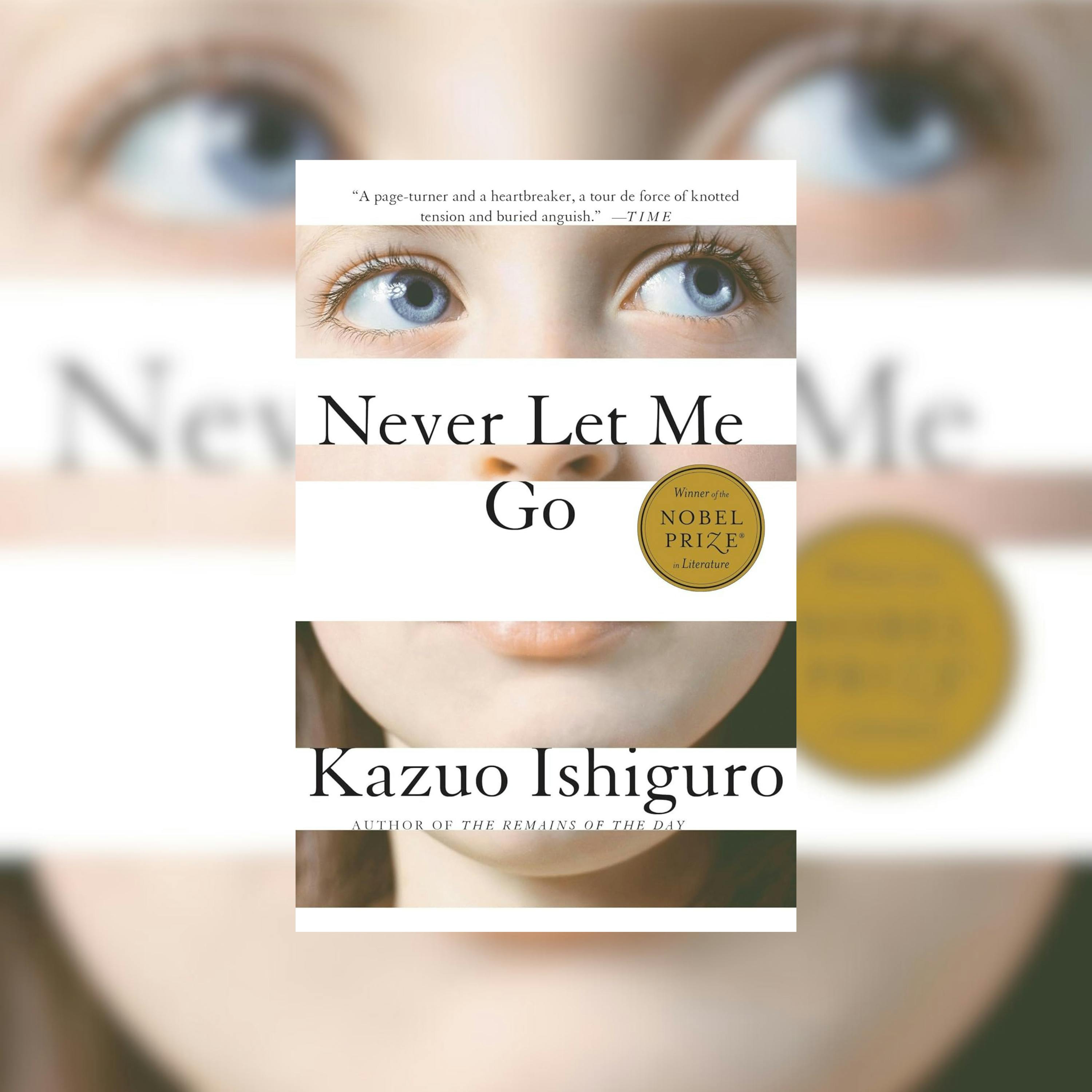
And I'm Rebecca Schinsky. In this episode, we're going back to the future with Nobel Prize winner Kazuo Ishiguro's dystopian novel Never Let Me Go.
- [01:18]
Jeff O'Neill
Which turns 20 this year, hasn't aged a day. Rebecca.
- [01:22]
Rebecca Schinsky
It hasn't.
- [01:22]
Jeff O'Neill
Not to spoil. It hasn't aged a day.
- [01:24]
Rebecca Schinsky
It holds up better than almost anything you could pick up. That was 10, 20, 30, even more years than that old. It reads. It's so present, it is so relevant. It's hard to imagine a moment in the world where this would not feel relevant and relatable even as the technology that we'll get into. And maybe the specific moral questions that Ishiguro explores change and evolve. The heart of this book is, I think, timeless. And that's one of the many reasons we're talking about it in this inaugural season of Zero to well Read.
- [01:57]
Jeff O'Neill
This episode of Zero to well Read and our first season is sponsored by ThriftBooks. ThriftBooks.com you can find more than 19 million books, new used collectibles, cheap paperbacks have been through the ringer a few times. You can throw in your beach bag and not worry about to special editions that you're going to put on your shelf and treasure forever. And they've got editions of Never Let Me Go. There's a beautiful collectible Never Let Me Go edition from every man's library that's got a chronology, a bibliography, really nice edition For a scholar someone's going to reference it over and over again. You can get the more modern never let me go that you see that you can buy new. You can get that right now used for $6.59. Very good deal there. If you like a movie tie in edition you can get the one that has the stars of the film on it. You can find I found a first edition hardcover for $7 now. Not in very good shape but you can see what it looked like then and collectible editions as well. Thanks to Thriftbooks.com for sponsoring the show. Free shipping in the US on orders over $15 and every purchase gets you closer to a reading rewards that you can turn in for a free book. I'm moving around a little bit so why talk about this now? It's a 20th anniversary I guess that's a nice easy news peg on it all. There was a new edition in Ishugo wrote an introduction that which we're going to pull from a little bit. I see you did the same. Some of the same research that I did in reading about also was really high on the list of the New York Times best books of the century so far. I believe it clocked in at number nine. Something like that. And it's number one. We had votes in that. We talked to Gilbert Cruz about that process and I think in the course of that we both had it on our list and maybe if we were forced to rank those it would have been number one. Rebecca.
- [03:49]
Rebecca Schinsky
It would be high up there. I don't know. I'm not willing to like completely nail myself down. Gilead still exists in the world. But this is I realized in prep for this episode this is the book that we have read the most times together. Most books we read only one time together. A few we've read twice for various projects and this is I think the fourth time that we have read Never Let Me Go Together.
- [04:15]
Jeff O'Neill
I was trying to remember how many times we've done it and I was trying to remember how many times it's all all blurred now. I've read this more. I think this is fair to say I've read this more than any other book published in the last 25 years. Now some we've been podcasting about it but I've reread Gilead a few times. I don't think I've reread it as much as I've reread this.
- [04:31]
Rebecca Schinsky
I think that's right for me as well. I think I've read Gilead three times, maybe four so it might be tied with Never Let Me Go, but this is right up there. And if the frequency of going back to a book is an indication of a favorite and of my my admiration for a title, then this is at the top of the list.
- [04:49]
Jeff O'Neill
Ishiguro, of course, then won the 2017 Nobel Pulitzer Prize for Literature and not for nothing and this Matters. Followed it up or his subsequent career has been very interesting, but his most recent book was a big hit and one of our favorites too, Claire and the sun. What's two or three years ago now? I can't even remember.
- [05:04]
Rebecca Schinsky
2021, 2022, something like that.
- [05:08]
Jeff O'Neill
So very present for us. And as we think about this show and what we're trying to do, modern books are a part of the conversation as well. This, this may be the most modern book we talk about for a while. In looking at the calendar, I didn't do the math, but that would make sense.
- [05:23]
Rebecca Schinsky
Might be an Ishiguru, certainly one of the most accomplished and celebrated contemporary novelists. He's written eight novels and five of them have been nominated for the Booker Prize. Five out of eight.
- [05:35]
Jeff O'Neill
Pretty good hit rate.
- [05:36]
Rebecca Schinsky
Yeah, he won in 1989 for the Remains of the Day, which I made some folks on the Internet angry recently saying that Never Let Me Go was one of the books you need to read in order to be read. I didn't say anything about Remains of the Day, but some folks were, you know, wanted to let me know that they thought Remains of the Day is absolutely Ishiguro's signal work. There's certainly a case to be made for it, and that book will show up, I imagine, on a future season of this podcast. Also really wonderful. But that five for eight out of the Booker, and that lets us gives a nice entry point here to say that Ishigura is a British novelist. He was born in Japan in 1954, but his family moved to Britain when he was a young boy, I think five or six years old, and he writes from a very British sensibility in in so many ways restrained and subtle and quiet, and has been celebrated as one of the great British novelists of contemporary writing.
- [06:29]
Jeff O'Neill
I read his early work before I knew much about him, and the first two novels, Pale View of the Hills and the Artist of the Floating World, are both set in Japan. And I thought he was a Japanese writer in Japan. I was also kind of reading Murakami, so I kind of threw them in together, which was both unfair and understandable if those two things can coexist at the Same time, but over time, I think it's sort of obvious the British sensibility, you know, Remains of the Day is like maybe the most British novel ever written.
- [06:58]
Rebecca Schinsky
In a lot of ways, incredibly British. And he talks about himself as Shigeru does, a sort of imagining Japan for those first two novels, that those were really grounded in what he guessed a life in Japan would be like, not in his own personal experience. And I think there is something very tangible about his felt and lived experience as a British person that comes through in the novels. The rest of them are set in.
- [07:20]
Jeff O'Neill
Britain and we're never letting go. Never Let Me Go sits in his corpus, is pretty fascinating. He talks about this a little bit of. He had written books that got turned into movies. And his. His early books, he thought of them as, like, they were so readily translatable into film that why am I even writing books? I want to do book things only books can do. And I know that's for you and I, that's something we're aspiring especially interested. Initial Girl Might. It's interesting that he's both a master and a conscious master of it. Like, he came to that, I mean, organically, but it was sort of not built into his DNA from the very beginning that, like, just what he did, like, he consciously was thinking about using what novels can do that other mediums can't. And if someone asked me about that question, I would pull this book and Remains of the Day off the shelf. Like, these are. These are exhibits A and through Z for me, of what that actually means.
- [08:15]
Rebecca Schinsky
Yes, I agree. And maybe that is even more deeply illustrated by the fact that the movies, while great, like Remains of the Day, is wonderful.
- [08:23]
Jeff O'Neill
They're both very good.
- [08:24]
Rebecca Schinsky
Never Let Me Go is very good. They do not capture something ineffable that the book is able to get at. And it's not because of, you know, that old book nerd like, well, the book is just always better.
- [08:38]
Jeff O'Neill
We don't believe that, by the way, if you're new to us, we don't believe that.
- [08:41]
Rebecca Schinsky
Friends, if you love Field of Dreams, I invite you to read Shoeless Joe and come back to me.
- [08:47]
Jeff O'Neill
Please don't. Please don't do that and try to continue. She does not. That's not a good invitation. Do not accept that invite.
- [08:53]
Rebecca Schinsky
But you will no longer declare that the book is always better if you've had that experience. But there is something about these books that are impossible to capture fully on film. The feeling of the sort of gradual revelation of what's happening in an ishiguro story. And this is, in my experience, true of all of his novels that I've read that there is this.
- [09:14]
Jeff O'Neill
Oh, and you've read. You've added one. There's another notch in your Ishiguro belt today, which we're going to talk about in a different week.
- [09:19]
Rebecca Schinsky
I have finally read the Buried Giant. But there's this slow revelation of what's happening in the world that he's created. There's not an introductory chapter ever that lays out, here's where we are, here's how the world functions. These are all the rules. These are all of the characters. We come to slowly have a full picture of things. And it's very difficult to do that on film because you are dropping people fully into an imagined world in the first scene of a movie. You can keep some things back. And they do keep some of the revelations of never let me go back to an appropriate place in the movie, in the adaptation. But it's. There is something magical. And I would like every novelist to be writing with this intention that Ishiguru has of let my book do something that only books can do. I do think that is why, or one of the reasons why these are so special.
- [10:09]
Jeff O'Neill
I was thinking over the last couple weeks as we were preparing for this and I was rereading Never Let Me Go and thinking about Isha, Go writ large, and we will get into the specific book here in a minute of trying to describe the feeling of an Ishiguro novel. And you can agree with me now or not, but in the books that I've read and I remember well, I've read them all, but I don't remember Pale View of the Hills very well. The Unconsoled is a little bit different, but of the ones that are my Ishiguro canon, they have a similar feeling. And the best way I can describe it is. Is that they're thick with consciousness. They just feel thick with consciousness. I mean, speaking of Field of Dreams, when Terrence Mann says, it's so thick, you could brush it. You could feel like you could brush it away with your face. When I'm in a Gershon novel, I feel like I'm enveloped by the sensibility of the narrator. Usually that's how he tends to work is there is a principle or rotating narrators. And he does that because that is the best way to get into another consciousness. And other mediums cannot do that because you do not have direct access to thoughts and feelings as they are articulate them on the page, which is We've agreed that this is just what this is, this sort of free, indirectish discourse that novels do, especially from a narrator, that they're. That is what they are thinking and feeling as best can be put down on pages. But they're all. I mean, the Berry Giant is a lot different, but there's a thicknesses of consciousness even. It's about the loss of consciousness and memory in a way. And everything's about memory. That's the other thing you're gonna learn about. It should grow. But there's a thick. There's a heaviness, there's a. There's. There's a humidity of consciousness that when you're in is. It's. It's enveloping.
- [11:39]
Sponsor Announcer
It is.
- [11:39]
Jeff O'Neill
And I'm not sure that's intoxicating, but has. It's potent, I guess, is another way.
- [11:43]
Rebecca Schinsky
Of thinking about it in the enveloping. I always talk about these books as being fully realized and that from the first page of an Ishiguro novel, you know that you are in good hands. You won't know all the things that are happening, right? Yeah. You won't know all the things that are happening. You won't know what everything means. You're not supposed to, but you feel so sure that it's okay that you don't know those things and that he's going to tell you everything you need to know in the time that you need to know it and that. That will feel right when it happens. And these worlds are just complete, I think enveloping, absorbing. I would not say Ishiguru goes down easy. Like it's not page turning in the beach read. Breezy sense. These are not breezy books, but they're also like. They're. They're not heavy, they're substantial, but they're not difficult to read because like the language is straightforward. He's not trying to pull any tricks over on you. He's not trying to impress us with his vocabulary like these. This is not flowery language like we were talking about with Fitzgerald a few episodes back.
- [12:50]
Jeff O'Neill
That's. That's a great point.
- [12:51]
Rebecca Schinsky
It's very kind of plain spoken for the most part. But in service of allowing us to really inhabit the character's consciousness and experiences.
- [13:01]
Jeff O'Neill
The Kitamura is a close example. I was thinking I got down this of like this thick with consciousness thing. I think Kitamura and audition and intimacies and separation are similarly. And some of that is the control, right. The ability to hold that sort of concentration of experience and not Break it, not get in the way of it. I had this idea for a segment of like a revealing, terrible Goodreads review and I was looking at, I was looking at Goodreads review of this and you know, one of them that like, I get it. It's like, you know, I hear all these things. Booker Prize winner, Nobel Prize, a cast with big stars. I expect excitement, expect brilliance. I expect storytelling, I expect craft. I'm like, yep, you're not going to get that. You're not. I mean, in a way that is in all of this sort of, this is going to sound patronizing. I don't know how to put this, but like all of the typical good writing traits, I think a lot of them aren't here. It's very difficult to describe and pinpoint what makes Ishiguro good. You kind of have to take the thing as a whole.
- [14:02]
Rebecca Schinsky
Yeah, there's not a lot of razzle dazzle to what he does. And I think that that's the selling point that like these are novels that really ask us to think about things, but the way the novel is written is not what you have to spend your time thinking about. It's not like, let's parse these sentences or figure out what a difficult syntax means or like, you know who's talking, you know where they are, you know what they're concerned about. And Ishiguro, I think it's dis. Deceptively simple is the way that I would talk about it that like he lets those things be what they are on the surface so that we can do the deep work that he wants us to be here to do, which is really to examine these questions. And maybe that's a good entry point into what happens in this novel.
- [14:49]
Sponsor Announcer
Today's episode is brought to you by Hachette Audio, publishers of the audiobook Gone Before Goodbye by Harlan Coben and Reese Witherspoon. Now this is an unforgettable suspense novel that combines the storytelling talents of Academy Award winning actor Reese Witherspoon and internationally best selling author Harlan Coban. Gone Before Goodbye is the story of a woman trapped in a deadly conspiracy where uncovering the truth could cost her everything. So we have Maggie. Ms. Maggie McCabe is teetering on the brink, honey. She's a highly skilled and renowned army combat surgeon. Yes. But she has always lived life at the edge where she could make the most impact. And it was going nice. It was going well until it wasn't. So now she is halfway across the globe. She has agreed to provide some rather unconventional medical assistance to this person and this person, her patient suddenly disappears while still under her care. Now Maggie must become a fugitive herself or she will be the next one who is Gone before Goodbye. Okay, make sure to pick up Gone before Goodbye. Give it a good listen and you will not be disappointed. Thanks again to Hachette Audio for sponsoring this episod. Today's episode is brought to you by Rakuten Kobo. For a limited time, you can earn 10% cash back on Kobo E reader and accessory purchases, plus new Rakuten members earn a 20 welcome bonus. The offer ends October 31st. Terms and conditions do apply, so let me give you more tea on this promotion. It's a collaboration between rakuten kobo and rakuten.com to get in on it, readers will need to join or log into rakuten.com, this enable cash back by clicking the Shop now button on the page or through the Merchant page. Get redirected to us.kobobooks.com There should be a redirect pop up and then make an eligible purchase. The offer is available to both existing and new members, but new Rakuten.com members also receive the $20 welcome bonus. This welcome bonus offer is available only to new Rakuten members who are residents of the US. To find out more, go to bookriot.com Again that's bookriot.com K O B O thanks again to Rakuten Kobo for sponsoring today's episode. Today's episode is brought to you by Simon Teen, publisher of Cold Wire. By Chloe Gong From Number one New York Times bestselling author Chloe Gong comes the start of a daring new YA dystopian series. It's perfect for fans of Severance and Black Mirror. So in a near world future where humanity is divided between the glittering virtual reality upcountry and the deteriorating physical world down country, two young soldiers on two parallel missions start to suspect they are puzzle pieces in a larger conspiracy. And the closer they get to the truth, the closer their worlds come to a shattering collision. Let me just say dystopian YA is back with a vengeance and Chloe Gong is here to make the genre feel new again with the cyberpunk world of Coldwire. Coldwire has not one, but two soulmate level slow burn romances that are synonymous with Chloe Gong. And the twists and turns don't stop with Cold Wire. It's just the first book in electrifying new series and we love having something to look forward to. Make sure to pick up Cold Wire by Chloe Gong. And thanks again to Simon Teen for sponsoring this episode.
- [18:28]
Jeff O'Neill
Well, I. So on the tin. It's a very high concept idea. Right. And we're gonna. It's not a spoiler because I think this is mostly what's out. This and this. The pale of spoilers. If you're. If you're worried about going in cold, you should stop listening now, I guess. But it's set. Well, the narrator is reflecting back on her life. As we come to find out, it started. The beginning of the end of her life is starting. And we'll talk about what that means. But she begins sort of going back. And as she's driving around, you know, she's driving around the English countryside, I guess, in the late 80s, early 90s, by the time we catch up with the present day Kathy, who's the principal narrator here, she's recalling her time as a student at this boarding school called Hailsham, and her time there and her relationships there and her relations with her teachers. And as we come to find out, it's a special school for a special kind of student who are genetic clones who are being bred, raised, kept, so that eventually they can donate their essential organs to. We don't really learn, we assume, wealthy patrons as a part of the National Health Institute of England. The details of how this process works are beyond Ishiguro's interests. Right. Like a different version of this gets very. It becomes a very hard science fiction kind of. It's very beside the point. All you really need to know is understand that. And it should be. It should be noted that in the course of this, the students understand this to be normal.
- [19:57]
Rebecca Schinsky
Yes.
- [19:58]
Jeff O'Neill
Another thing that does not happen is they do not. They do not volunteer as tribute and take up arms against. Was it Sector one? I can't remember what. I can't remember the names of it. What is it? Section 13 group. I can't remember the name. The units of the odds do not.
- [20:13]
Rebecca Schinsky
Need to always be in their favor.
- [20:15]
Jeff O'Neill
Yeah. So. But it's. And so it's her recalling her life in friendships. Right.
- [20:21]
Rebecca Schinsky
And we meet.
- [20:23]
Jeff O'Neill
What that means is extremely fascinating.
- [20:25]
Rebecca Schinsky
We meet the kids at Hailsham, at this. This boarding school. We know from the jump that they are set apart for some reason, and we know that they know that they are set apart. But Ishiguro gradually reveals to us that it's this cloning thing and that this is just part of the world that they live in. They don't question it. As you were saying, they don't think it's Unjust. They've just been told their whole lives like, this is. This is what you were created for and this is what will happen to you. You will, you know, leave the school and go on and eventually you will become a carer. Like, this is a self contained system, is what we know, that students grow up and first they become carers for people who are in the process of making their donations. And then eventually they become donors who will be cared for by other recent graduates and by their late 20s to early 30s they will have completed.
- [21:14]
Jeff O'Neill
I think that's right. It's hard to know how old they are. Sort of.
- [21:17]
Rebecca Schinsky
Kathy's 31 when the book opens and we find out that she's been a carer for longer than is common because.
- [21:24]
Jeff O'Neill
She, she gets a longer life than.
- [21:25]
Rebecca Schinsky
Most because she's really good at it. The kids are gradually told this as they're growing up, what the details are. And one of their guardians tells them, you've been told and not told. And so we start to understand that there's this tension. Some of the adults in this world believe that these kids have not been given enough information or really direct information about what their life is going to be like. And they wrestle with this over time like it's a real source of questioning for them. Were we told enough? Were we able to prepare for a good life for however long we have our lives to ourselves? The story rolls out in these three main sections where we're at Hailsham, when Kathy is young. We're with her and her best friends, Ruth and Tommy. Her friendship with Ruth is very volatile. Tommy, we know, has like a big temper and some behavioral problems. And Ruth and Tommy become a couple. And later on in life, Kathy encounters them. They go to. They graduate from Hailsham. Everyone splits up. You go to the Cottages, which is just kind of like a two year, ish holding area where they're supposed to.
- [22:35]
Jeff O'Neill
Be writing an essay. It's not really clear to me what's happening right there.
- [22:38]
Rebecca Schinsky
They've never been out. None of these kids, we find out, have ever been away from their boarding schools before. So they're like completely bewildered and overwhelmed by adventures out in the world. They're in these Cottages.
- [22:48]
Jeff O'Neill
They don't have jobs, they don't have anything to do.
- [22:50]
Rebecca Schinsky
So they're told to write these essays. Probably like big dissertations is what they sound like.
- [22:54]
Jeff O'Neill
Like probably just to keep them busy, sit graveyard reading. Daniel Deronda, totally normal behavior for everyone.
- [23:00]
Rebecca Schinsky
Sound like the worst.
- [23:02]
Jeff O'Neill
It's pretty cold though. They're always looking for kerosene yeah, they.
- [23:05]
Rebecca Schinsky
Well, the houses like this is one of the ways that Ishiguro gradually tells us what this world is really like, that they're in these cottages. They've experienced the boarding school as you know, their whole life being told that Hailsham students are very special. But at the cottages we find out, like, there aren't enough space heaters and there's never enough kerosene for the space heaters. And they're always freezing cold. And when they sneak into each other's rooms at night to have. Have sex, sometimes they're not even under real blankets. They're under like scraps of old carpet and curtains. And so then you get the, the dawning moment of like, oh, they're not.
- [23:37]
Jeff O'Neill
Given nice things, they're living in squalor, right. You know, they're not caring for them cage free chickens here, they're not organically grown alpaca, right?
- [23:44]
Rebecca Schinsky
These are what, 16 or 18 year olds whose entire purpose, the entire reason that they exist is to be organ donors for other people. Other people, presumably, as you were saying, wealthier, more privileged people. And so the world is not spending resources on them. But they also don't know what, what any other experience might be like. So they're not angry about it. No one is mad that they're constantly freezing. No one is mad that they're sleeping under carpet scraps. And all of that just adds up to help us understand this world that Ishiguru has created.
- [24:16]
Jeff O'Neill
And we come to learn that Hailshim itself was an experimental school. Like the, the climax of the book really is when they go. It's not a confrontation. They go looking for an answer, right? And there's this rumor that's gone around that if you show, oh God, I'm gonna start crying. I mean, it's interesting how the book is put together because it's Cathari relaying. And this is, I think important is there's an assumption on the narrator's part that we know about the system. We may be even participating it. Maybe you're a carer, if you've been ever been a carer. I don't know how it was for you, but like, like it is not free, indirect discourse in that way. Like there is some kind of sense that this is talking to someone within or at least with knowledge of the system. But they come to and she tells us banal sort of vignettes, right? Like, as you would if I was to tell you stories about me, as in junior high and grade school, some of them, you'd be like, that only matters to you because you were there that particular day on the Four Square. You know, asphalt and then some would be very moving and meaningful to you. And this is similar here. And this is one of the complaints is like. Like, stuff just sort of happens. Like, well, she's remembering for herself. She's not trying to make it interesting, she's trying to recall that it's so.
- [25:25]
Rebecca Schinsky
Banal but also so compelling.
- [25:28]
Jeff O'Neill
That's one of the magic pieces.
- [25:29]
Rebecca Schinsky
Such a testament to how good Ishiguru is that we are. Like, when we're at Hailsham. The big, like, drama of their lives at Hailsham revolve around two primary things. One is that they need to make art. Like, they've told that it's important that they're creative. They need to make art. And then every now and then, this woman that they refer to as Madam comes to the school and she looks at the collected, sort of curated best bits of everyone's art and she takes them away to her Gallery. This is kind of all the students know. They don't know what function the Gallery serves, why it's important. But, like, very much is made of, you need to be creative. We need to demonstrate that you are creative. And some of Tommy's issues come from the fact that he's not good at art. Like, Tommy had a bad time in art class. Kids have made fun of him. He doesn't know, like, why.
- [26:18]
Jeff O'Neill
I feel you, Tommy.
- [26:22]
Rebecca Schinsky
I'm totally screwed if my ability to, like, draw a good painting has anything to do to draw a good painting. First of all, as a sentence should tell you that I'm totally.
- [26:32]
Jeff O'Neill
Yeah, you're on. I think that's right. That's what the experts say.
- [26:34]
Rebecca Schinsky
That's how you make a painting.
- [26:36]
Jeff O'Neill
And you squish sculptures. You squish them.
- [26:38]
Rebecca Schinsky
Yeah, you've got it. So you have to be creative. And, like, the art making is a big thing. And then they have the sales where students basically get cast offs, kind of stuff that's been donated. Maybe it's leftover items from past organ donor students who have now completed. But the big deal is, like, who's going to get the shiniest pencil case from the items that come in for the sale. And they each student sort of forms these collections of little items that they get. This is how they get their clothing. They're also able to buy each other's artwork and poems. And, like, Kathy has some. Spends some time reflecting on why did we all care so much about that year that Susie wrote Pretty Terrible poetry. But we all wanted her poetry instead of whoever else's stuff. So, like, that's their lives. And we get, I don't know, 85 pages of this.
- [27:30]
Jeff O'Neill
Yeah. The first third of the novel is essentially colored.
- [27:33]
Rebecca Schinsky
And then they go off to the Cottages and they read Deronda. Sitting in a cold field. And we don't learn a whole lot much else about the world.
- [27:41]
Jeff O'Neill
It's kind of their poor college kid zone. I mean, one of the strange things about the book is you can roughly, or not so roughly, maybe quite elegantly map their experience onto a certain kind of educational experience. Right. Of boarding, especially in the uk, where boarding school is more common. Boarding school, university and sort of early adulthood. But it's all compressed because, as we come to find out, they have a circumscribed lifespan. Right. It's not exactly. Right, sort of. They're going to be asked, told, required to give their donations at certain points in the future based on some kind of demand. We don't understand, nor do they. But it's just sort of how it.
- [28:22]
Rebecca Schinsky
Is, how it works.
- [28:24]
Jeff O'Neill
And the. The denouement is, there's been this rumor going around that if you can prove that you're actually truly in love, that you can get a few years of deferral. Not even out of the system, Rebecca. Like, that's just. Their imagination is so. So limited, curtailed, that the. The biggest dream they can have, the biggest fantasy they can allow themselves to even wonder about maybe being possible, is a few years living in the White Mansion with, you know, someone. Your. Your high school sweetheart, essentially. And that your art is proof. Because anyone can just say you're in love. Right? You got to show that your poems or your art, you know, was a glimpse into your everlasting soul. And that was enough to purchase a few more years on this mortal coil.
- [29:13]
Rebecca Schinsky
Yeah.
- [29:13]
Jeff O'Neill
And what's more heartbreaking than that. I know what an idea that this.
- [29:16]
Rebecca Schinsky
System doesn't exist is the really heartbreaking thing. And as the reader, you kind of feel the whole time that it's not going to work out that way, that when there's students at Hailsham and this idea of deferrals comes up, up, no one, like no adult ever confirms that this exists. No one ever tells them. When you grow up, if you fall in love, here is the office to which you submit your request for deferment.
- [29:39]
Jeff O'Neill
Here's the form, right? Here's the form.
- [29:40]
Rebecca Schinsky
Here's how these interviews go. They just have this vague sense that demonstrating that you're in love Might have. Might be a way to kind of save yourself a little bit. And that demonstrating that you're creative is important for some reason. The big reveal we get out of their time at the cottages is that everyone wonders about the person from whom they were cloned. They're original. And there's a big kind of. There's a big dispute over like one of the other people in the cottage thinks that maybe Ruth's original. He spotted her working in an office in town that has big windows. And they all make this field trip to go into Norfolk and to see is this her original? Does this woman look like who Ruth might be? The whole time they also are dreaming of what their futures could be like, maybe someday I will grow up and work in an office while also knowing that's never going to happen. Like that they're never fully able to wrap their heads around, or maybe their hearts around this. This reality that they are at least at this point, that they are going to die in not very many years and they're never going to do the kinds of things that they dream of. And in that scene there's a. The tension, the big moment of conflict is when Ruth says, like, we all know that we come from trash that like it's believed in the culture and we don't know for sure, but it's believable, given how our cultures work, that the people that are donating DNA to have it cloned and become people like our main characters are, you know, like sex workers and drug addicts and people who must need money to do that.
- [31:16]
Jeff O'Neill
Outcast, underprivileged, you know, something where the undesirable, the unclean, and if that's where.
- [31:22]
Rebecca Schinsky
You'Re from and already many people believe like have. Have weird feelings about the clones even which are not referred to as clones in the book, we should say like that word hardly ever comes up.
- [31:33]
Jeff O'Neill
It comes up a couple times. We're not. We have no access to how I think they're described. Normals is. The non donor class talks about them. There is a sense that they are unclean, untouchable. Like Madam, who is even sympathetic in the extreme to their plight in life, you know, shrinks from them. Their physical touch is anathema to her. So you can imagine what sort of the wider world thinks and we're given to understand later that there were some experiences that Hailsham's success, existence and some other things that happened actually reminded people of this. The horror, the beyond questionable ethics of this. So they're even more put into the background Even more kept out of sight, out of mind. Let's not ask where your new pancreas is coming from. So let's not worry about the rights of those who we have brought into being to service us. And like they do it, I say.
- [32:30]
Rebecca Schinsky
All those components come together in the last section of the book where Kathy is a carer and she's caring now for Ruth. They have reconciled after this dispute that they had as young people. Ruth and Tommy have sort of been in more touch than Kathy has been with Tommy. And after Ruth completes, Kathy becomes Tommy's carer. And they finally have a romantic relationship that we understand they've both been wanting and waiting for since their childhoods. And so they're now they're going to see if this is all real. Can we go to Madam? Can we get a deferral? Tommy's been making art in his adult life to try to make up for the art he didn't make it so heartbreaking to try to make up for the art he didn't make as a child. And like, if we come from trash, can we prove that we are human, that we have souls, that you should give us a deferral for these couple of years? And as you were saying, Madam tells them, like, this is what the art existed for. Hailsham was experimental and very progressive, and Madam and her cohort were trying to give these kids as good of a life as they could have to give them a childhood. And then we start to really understand that the kids who were born for this purpose and raised elsewhere throughout the country and in other schools like, encountered, or many of them encounter, terrible treatment.
- [33:50]
Jeff O'Neill
That Hailsham was, you can only imagine, like these institutional kid farms. Oh, my God.
- [33:56]
Rebecca Schinsky
Right? It's. It's just awful. And that Ishiguru lets that just hang and lets us imagine what that must be like rather than telling us is, I think one of the other pieces that really indicates how masterful this book is. But Madam has to tell, has to tell them. We were having you do art because we were trying to prove that you have souls. There is no deferral process. And the most heartbreaking detail of all is that, like this rumor about deferrals based on whether you can prove you're in love or not seems to spontaneously regenerate with every now and again class of students. It's kind of whack a mole that there's never been a deferral. They can stamp it out, this rumor from time to time, but then these kids who don't know much about the world or their lives or how else they might get deferrals, how else they might get out of this ultimate end that is unavoidable and that they've been told to accept. But clearly something in them is pushing against. They're looking for some way to avoid it. Everyone reaches for, well, maybe it's about love and if we could just prove that we're in love, maybe we could get a deferral. But that, that, that reveal is so painful where she's like, this just keeps coming up and we can't squash it. And they don't think it's that students are like passing it down from one generation to the next, but that these young people keep coming up with this on their own.
- [35:22]
Sponsor Announcer
Today's episode is brought to you by Cider Mill Press, publisher of True Facts that Sound like bs. Well, Cider Mill Press has a new book for you to know about, a collection that comes just in time for spooky season. You grew up reading fairy tales and watching movies about prince and princesses with magical happy endings, but have you ever heard the original stories? These battles between good and evil are tales as old as time, but they might have just a little more evil than you're expecting. So this collection unmasks the true endings of these famous stories, inviting you to explore the shadowy histories of fairy tales across the globe. You can learn more@cidermillpress.com scary again that's cidermillpress.com scary now. This collection offers a refreshing take on traditional fairy tales by revealing their original darker narratives. And it appeals to both fans of folklore and horror. So make sure to pick up the Scary Book of Fairy Tales by Tim Rayburn. And thanks again to Cider Mill Press for sponsoring this episode. Today's episode is brought to you by Grove Atlantic Publishers of the Unveiling by Quan Berry, people's number one must read book of the Fall. The Unveiling is an astonishing ghost story about the masks we wear and the truths we hide, even from ourselves. Stryker, a black film scout on a mission to find a location for a big budget movie about Ernest Shackleton, finds herself on a luxury cruise in Antarctica surrounded by wealthy, mostly white tourists. When a kayaking excursion goes horribly wrong. Stryker must survive a hostile environment, inner demons and deadly secrets. Exploring abandonment, guilt and the limits of human connection. Barry affirms there's no such thing as haunted places, only haunted people. So this is a hotly anticipated new title from the author of We Ride Upon Sticks. The Unveiling is again people's number one must read Book of the Fall A Town and Country Best Book of the Fall and named a most anticipated book a fall from literary hub YA girls and boys and non binaries and book riots and Time magazine. So make sure to pick up the unveiling by Quan Berry. And thanks again to Grove Atlantic for sponsoring this episode. Today's episode is brought to you by Harlequin, a leading publisher of romantic fiction delivering feel good high stakes and heart pounding stories across every kind of love. No matter what kind of romance you love to read, Harlequin has it for you. And in one of their latest books, Accidentally Wedded to a Werewolf by Isabel Taylor, we've got some snowed in goodness. We've got some small towns and some unusual residents. So when a snowstorm hits during her travels, Luna Stack finds herself stranded in Clawhaven, Alaska, a cozy small town with more than a few unusual residents. Well, things go from bad to complicated when Luna accidentally drinks a potion that tethers her to Oliver Musgrove, the local grumpy innkeeper who also happens to be a werewolf. Now these two opposites are stuck spending the winter together while they wait for the antidote. And although they might not want anything to do with each other, the bond says otherwise. Make sure to pick up Accidentally Wedded to a Werewolf by Isabel Taylor. And thanks again to Harlequin for sponsoring this episode.
- [38:54]
Jeff O'Neill
It reminds me, I don't know if it's a Marx quote, it's, it's someone but like if God didn't exist, we'd need to invent him. Like there's an element to that here of this is a natural organic manifestation of a central desire slash denial of their own mortality. Right? Like there's got to be some. There's got to be more to this than just this. There's got to be some outrage. We can't just die into nothingness and oblivion. It's just not just here because of random atoms crashing together. There must be some higher purpose, some other place, a heaven or a creator or something else like that and the terrible cold logic of it all they both know and find unsatisfying if true. And I think that's one of those places where the temptation with this book and I do it and I think it's not just a temptation. A necessary and natural read is to analogize into other things. I also think it's worth taking it just for what it is because part and this is down to my hot takes. It's not really a hot take but like you can get distracted with this book about the logistics of this sci fi conceit, this dystopian horribleness. But this is a book about relationships. This is a book about memory. This is a book about art. I mean, we didn't have to ask this about art. It's obviously and manifestly about art here. And the conceit allows, like I think the most interesting to me sci fi does not to have lightsabers. That's, I mean, that's cool and whiz bang, but to refract, condense, give a different perspective on other known, familiar experiences. Yeah.
- [40:33]
Rebecca Schinsky
When he was awarded the Nobel and the Nobel Prize, citations are like notoriously short and concise. The citation for Ishiguro acknowledges him as someone who wrote novels, in novels of great emotional force has uncovered the abyss beneath our illusory sense of connection with the world. And all of his books are about that. This is certainly about that, about, about. These students desire to be connected to the world, their sense of connection with each other and of how weighty these seemingly low stakes things are in their lives that, like, whose paintings are going to get taken from Adam's gallery? Where did you find the shiniest pencil case? This, like one tape that Kathy has that she loves and then she loses becomes such a huge symbol to her because their lives are so small, so even the tiniest details mean so much to them.
- [41:28]
Jeff O'Neill
And Freud's narcissism of minor differences and the thing that's magic that Ishiguro does is it's a condensed version of our own existence, right? Like, why do I care what jeans I'm gonna buy or what kind of car I'm gonna drive or you're gonna die someday. Is my beard scruff the right length? Is my video lighting right? Like you're still gonna die someday. What does it matter? What does it matter? And how much shucking and jiving we do to forget, to distract, to entertain. And Kathy especially, I think, and Tommy and Ruth too. And this is something we see. It's like, it's like a sped up version of other narratives that we see where only at the end, at the deathbed, at the reunion, at the funeral, at the, you know, I don't know, others, these kinds of places here. Where do you finally have to come to terms with what mattered, what didn't matter, what you did and didn't do, what you regret, who you missed, the connections you've lost. And that goes right to the title, right? This sort of never let me go ness of it, which is heartbreaking itself. But like the forgetting that we see these characters do. It's so easy for us to say these why do these kids care about buying each other's paperclip statues? Or whatever the shit is, is. And it's like, but, but where go we, you know, where but for. I mean, we're doing the same stuff just in a different register. And it's so. It has such a vertiginous experience if you think about it in those terms. Like how different is it really? It's just not that different.
- [42:58]
Rebecca Schinsky
And Kathy, she is only 31 when she's narrating this book, but she is at, as you said, the beginning of the end of her life. We know that she's about to start making her donations and so she is staring down this cold hard reality that, that her life is going to end. And one of the remarkable things about her narration of this is that Ishiguro is so concerned with empathy, but he doesn't very often use the word empathy. He just lets us see his characters do it. And as Kathy reflects on all of these moments, especially big like moments that felt explosive to her and to her peers, especially with Ruth and Tommy, moments that fractured their friendships, she. She always takes pains in every recounting to try to imagine like the most generous interpretation of maybe I got it.
- [43:45]
Jeff O'Neill
Wrong or maybe it's different, but I think this is how it happened.
- [43:48]
Rebecca Schinsky
Maybe her motivation was something different than I thought it was. Maybe Tommy was going after something that I didn't understand. Always make space for the possibility that her take on something that her experience of it wasn't the, you know, it was subjective.
- [44:04]
Jeff O'Neill
Right. She acknowledges her, she understands her subjectivity from an early stage. And that's why I think, you know, in the introduction he says that he tried a couple different narrative point of views. I'm assuming it was Ruth, Tommy and Kathy. And that he first showed it to his wife and said, which one of these do you like? And he concurred that Kathy was the perspective. You can imagine versions of it. I think that makes a lot of sense. I think Tommy's would be extremely interesting to read at some point. But yeah, that they. She Fast forwards. It's life on fast forward. I mean, this condition, this legit, this logistical condition that they are born into is a fast forward. I've thought a lot about this. One of the blurbs calls it one of the great horror novels ever written. And I agree with that. Where the monster is never really shown and the monsters, of course, the donations, of course, that you are going to be cannibalized to elongate other people's lives. But I think the signal difference is from this idea of that just speeds up a human lifetime and condenses and gives us issue grows. This other sort of sandbox to explore is the circumscription of it. The knowing in this that that's the thing that's the most different than our own existence. Right. We all know we're going to. We don't know the conditions, we don't know the time. But the poss. The doors are open to have many different experiences that you have some control over. You know, you could be an actor, you could have a. You could have kids, for example. That's one thing. They're not allowed to have kids. I assume they're, you know, spayed and neutered like dogs and cats at an early age. I don't really know. But the thing that I find the most terrifying is that they don't have any agency at all. The only agency they have, and this is why I think it matters to Kathy, is in their interpersonal relationships. That's where the drama, that's where the narrative. And so it makes perfect sense that that's where her attention and heart and soul are going to focus.
- [45:54]
Rebecca Schinsky
And that's also the only and entire outlet that they have for the feelings that they develop about this condition that they live in. You can see that each of these characters has anger under the surface, that this is how their life is going to go. That the closer they get to leaving the cottages and to beginning work as a carer and ultimately to encountering what it is to see the donation up close and to know that you're headed down that road, there is this simmering anger that they are powerless and the only outlet they have for it because again, they've not encountered the real world at all. They don't know that revolution is a thing they might reach for.
- [46:33]
Jeff O'Neill
Writing your congressperson or, I don't know, the lords and ladies of the House, you know, in.
- [46:39]
Rebecca Schinsky
In any moment they turn on each other, that the rupture happens in relationship because of the anger that they can't. They can't express anywhere else. They have nowhere to put it. And they've been told so clearly this is what your life is going to be. That when they really have to face up to it and that does want somewhere to go, you know, like if you want to stick with Freud, it has to come out of the unconscious and go somewhere.
- [47:03]
Jeff O'Neill
Somewhere. Yeah.
- [47:03]
Rebecca Schinsky
They put it into their relationships with each other. And they say horrible things to each other, but then they ultimately have no choice but to. To resolve those conflicts because they're bouncing off the walls.
- [47:13]
Jeff O'Neill
But eventually they're just gonna settle right back in the same room. There's nowhere else for them to go except that then when they go out and when they leave the cottages, it's not exactly clear what happens, but they go. Do they go? They go. They can be a care. We don't know like where Kathy is sleeping at night while she's a care. We know she's driving. I mean, Ishiguro casts a mist over that. I guess, to use some buried giant language. He's not concerned with it, except that she's in this liminal state between, you know, being grown and being slaughtered. And it provides her this time to think. I think that's another thing that I noticed this go around is that one of the reasons it's her is she has this. A long period to sort of exist between these stages in which something like, if not a critical consciousness, then a con, you know, a meta consciousness about her own life and her own thinking. She's thinking about thinking, which is metacognition at its basic level. Level. And that provides her this moment to narrate to the void. There's, you know, one thing underneath this is why is Kathy doing this? Even in her own mind as she's driving around is like that impulse to tell the story, like to capture it. She wants somehow to capture. She doesn't know what she's doing for us is capturing this, you know, make believe dystopia, but she wants to capture Ruth and Tommy. Like, this is one of the art making impulses too, that we, you know, Kilroy was here, even for fictional characters is a real impulse. And she doesn't even know that's what it is, but she wants to remember, she wants to think, she wants. She wants there to be a place where these things go. Her lost tape, this. This corner of Norfolk, which they joke, doesn't really exist because they never saw a picture of it because their teacher didn't have a picture when they were talking about the. The counties in England. But like, she wants there to be some place where meaning is stored and resides and endures. And that's. It's sort of beautiful and sad at the same time to think of it in those terms.
- [49:00]
Rebecca Schinsky
She wants that more and more potently as she gets closer and closer, as she starts to see what her donors experience, as she starts to tell us. And then presumably as she starts to really grok that that's where she's headed too. Like, one of the ways that this feels like a horror novel is Kathy telling us that Tommy's in, like a pretty decent facility. He's in a recovery place. It's pretty decent. Some of the other ones aren't so great. They don't even have space for, like, not all of the rooms can accommodate a wheelchair. And Ishiguro just drops that in as a reminder.
- [49:36]
Jeff O'Neill
And you can imagine, right. Like, wait, it can't accommodate a wheelchair. Right.
- [49:39]
Sponsor Announcer
Oh, right.
- [49:40]
Rebecca Schinsky
Because they're going to have an organ taken and then they're going to have another organ taken. And at some point, getting around is going to become very difficult. So, yes, of course they would need wheelchairs. But again, he hasn't laid out all the mechanics of the world. He's just dropping in these little details. And then Kathy tells us about the them. So matter of factly.
- [50:00]
Jeff O'Neill
Yeah, yeah.
- [50:02]
Rebecca Schinsky
And when she, when she and Tommy finally start sleeping together, it's after he has made one of his donations. And there are like bandages and maybe, you know, scarring or stitches that they have to work around. And that's also not remarkable to her. It's just that this is, of course, this is the state that his body is in because this is the state that everyone's body will be in at some point in her world world. And so if she wants to have that intimate experience with him, that's what it's going to be. And it's not horrifying. There's nothing that she has to like. They don't have to negotiate that at all. It's just the reality of the moment. And it's both really beautiful and really, really heartbreaking.
- [50:42]
Jeff O'Neill
And they. It's funny because, like, you know, the, the real life analog is aging. Right. Like, these are, in a way, you could see them as assisted living facilities, senior center. And depending on your socioeconomic status, your experience of those can be remarkably different. I'm guessing that the nicer ones, maybe you, if you sign up for the donor program, you put some money into it, and based on what class of service you bought, your, your, Your donor gets better. I mean, it's not clear. That's the only thing that I try not to make too much sense of it. But how to account for these differences? I think it doesn't matter in so much as that it reflects real world differences in how people experience end of life care. Because, like, they go out to have like an old person's outing, which is to look at this boat that's been abandoned in a marsh. Right. And like, they can barely get there and there's a fence, but they enjoy each other's time. And it's wistful and mournful, but also kind of beautiful. And they do the best they can, but Ruth is like, barely able to make it over. And if you said they were 89 instead of 29, their experience of it may not be that different. Of trying to have relationships, of trying to reckon with what they've done to and with each other and trying to. To, you know, Ruth eventually tries to atone for having kept Tommy and Kathy apart. And that's not. That's not unusual to see in late life situations where people want to tell the truth about what happens and they want to. They want to let it go. They want to be forgiven, I think is really want. But they want the story to be out there. And, you know, if you change a few of the details, it would be very recognizable as a different kind of narrative.
- [52:19]
Sponsor Announcer
Yeah.
- [52:20]
Rebecca Schinsky
And it is, you know, one of the only things that's guaranteed in life is that we will die. And Ishiguro is always concerned with what are the things that make us human? What is it to be human? What do we long for? What do we need? What do we feel? And that it's all ultimately about connection is at the heart of all of his books.
- [52:41]
Sponsor Announcer
And.
- [52:41]
Rebecca Schinsky
And one of the reasons that he's deserving of a Nobel Prize and the kind of acclaim and the career that he's had is that in lesser hands, a body of work that is fundamentally about how people all need each other could be cloying and corny and it.
- [52:59]
Jeff O'Neill
Could be a pillow. Rebecca. It could be live laugh.
- [53:01]
Rebecca Schinsky
Love.
- [53:01]
Jeff O'Neill
It really could.
- [53:01]
Rebecca Schinsky
It could be embroidery. It could be your live laugh.
- [53:04]
Jeff O'Neill
Donate.
- [53:04]
Sponsor Announcer
Right.
- [53:05]
Rebecca Schinsky
Live laugh. Literature.
- [53:07]
Jeff O'Neill
Yeah.
- [53:07]
Sponsor Announcer
Right.
- [53:08]
Rebecca Schinsky
And he just does not go there at all because he trusts us to put together the pieces, that this is what his characters are doing. There's not a sentence in this book where Kathy says, and I ultimately realized that all we have is each other and all we need is each other and love is all there is.
- [53:25]
Jeff O'Neill
But.
- [53:25]
Rebecca Schinsky
But we get to arrive there on our own. And that's what a good writer lets you do.
- [53:29]
Jeff O'Neill
Yeah, a couple of things from the intro. So, you know, this 20 year, this book has sold consistently over time, even though it would have been hard to imagine its publication, that it would overcome the remains of the day, because that was so lauded, but it sold quite a bit more than that. Continues to get read I think one reason it does is he even talks about this introduction like he was a transitional figure from sort of just literary fiction, capital L, capital F, being concerned primarily with contemporary realistic work, representations of life. And he talks about his relationship with Alex Garland, who he sort of met through touring in the 80s and into the 90s, getting to know David Mitchell. We should add Cloud Atlas to the list here. But anyway, and sort of seeing them unapologetically reference Pynchon, Ursula K. Le Guin, science fiction writers that Ishiguro, in his education was seen as people. If you liked Philip K. Dick or Bradbury, you didn't really talk about it. You were talking about Henry James or Hemingway or Dickens or. Or something like. Or Jane Eyre or Dostoevsky, people he likes. But it really opened his mind to other ways of writing and other exploratory modes he could have. Because what's fascinating about this book is you would think the idea would be, what if there were clones that were bred to donate? But that wasn't it. He wanted to tell a story about kids, about students being educated who had something special about them and they knew where they were special and different. And over time, it was a real shower thought apparently, like, you know, it's kind of in the water, but. But like he had this idea of like, okay, well, I can connect it. I can use these sci fi elements. And like an early draft was like students who were hitchhiking and they got picked up by a truck, I think, carrying nuclear missiles across America or something.
- [55:10]
Rebecca Schinsky
Yeah. And there's one like, would it be a virus? Would it be exposure to nuclear material? He failed to write the novel twice.
- [55:18]
Sponsor Announcer
Right.
- [55:18]
Jeff O'Neill
And it was sitting around. It's called the student's Novel. Like in his drafts or something, like.
- [55:21]
Rebecca Schinsky
In 1990 and 1995, he fails to write this and set. Sets it aside and he writes books that become the unconsoled. And when we were orphans. And in that time period, then in 1997, Dolly the sheep is cloned. And cloning technology is all we can talk about in the news. And as you were saying, where are.
- [55:40]
Jeff O'Neill
We at with cloning? How many clones have you had made? 6. You know, we were so worried about cloning. What happened to that?
- [55:47]
Rebecca Schinsky
We were so worried about cloning. And at the same time, he, like having these intellectual encounters, as you're saying, with Alex Garland, who, like, yes, the filmmaker Alex Garland. The Alex Garland.
- [55:57]
Jeff O'Neill
I remember reading the beach and the Tesseract blew my mind. Yeah. Those books blew my mind when they came out.
- [56:02]
Rebecca Schinsky
And David Mitchell and the idea of genre fiction is swirling around him in a new way. And so then it's like, ah, yes, maybe it will be cloning. And he does never let me go. And it finally comes out in 2005.
- [56:17]
Sponsor Announcer
Today's episode is brought to you by Amazon Publishing, publishers of Sarah's Riches by Tanya BOLDEN in early 1900s, Oklahoma, Sarah Rector became a wealthy oil heiress at just 11 years old. Her story of sudden fortune and racial scrutiny reveals a complex chapter in American history. You can read or listen to the short story by award winning author Tanya Bolden now with prime and Kindle Unlimited. It's about wealth, race and power in Jim Crow America. Sarah Rector's sudden transformation from poverty to wealth Highlight Black prosperity was often met with hostility and exploitation during this era, but there's also resilience and legacy. From a two room shack to hosting cultural icons like Duke Ellington, Sarah's journey shows resilience and the enduring impact of unexpected opportunity. Make sure to pick up Sarah's Riches by Tanya Bolden and thanks again to Amazon Publishing for sponsoring this episode.
- [57:14]
Advertisement Voice
This episode is brought to you by State Farm. Listening to this podcast Smart Smart move. Being financially savvy smart move. Another smart move Having State Farm help you create a competitive price when you choose to bundle home and auto bundling. Just another way to save with a personal price plan like a good neighbor, State Farm is there. Prices are based on rating plans that vary by state. Coverage options are selected by the customer, availability, amount of discounts and savings and eligibility vary by state.
- [57:45]
Jeff O'Neill
I'm Scott Hanson, host of NFL Red Zone. Lowe's knows Sundays hit different when you you earn them, we've got you covered with outdoor power equipment from Cobalt and everything you need to weatherproof your deck with Trex decking plus with lawn care from Scotts and of course Pit boss grills and accessories, you can get a home field advantage all season long. So get to Lowe's, get it done and earn your Sunday Lowe's Official partner.
- [58:12]
Rebecca Schinsky
Of the NFL such an interesting journey that that introduction to the 20th anniversary edition is wonderful. And I wonder. I watched his Nobel lecture, which is also really wonderful, where he talks about what he's trying to do. That his work has always been about the small and the private and that the essential thing with these characters is that they communicate feelings and they appeal to what we share as human beings across borders and divides. That his writing is informed by Forster's distinction between two and three dimensional characters and this revelation early in his career that if he attended to the Relationships between his characters. Characters would take care of themselves.
- [58:55]
Jeff O'Neill
Yeah. It gives you binocular vision, right. That other perspective. If they have to be in relation to something, it gives you like, you know, it gives you something you can, you can navigate by. You exist in three dimensions if you have these other characters you have to deal with.
- [59:07]
Rebecca Schinsky
And that he had previously worked with homeless people earlier in his life and.
- [59:11]
Jeff O'Neill
His career, met his wife.
- [59:12]
Sponsor Announcer
Yeah.
- [59:13]
Rebecca Schinsky
And then he talks about what that experience was like. And you can see how reaching for humanity and empathy and connection for members of society that are often pushed to the side and dehumanized. What that reaching and that emphasis on their humanity did to inform his work in this book, certainly, but in a lot of the future ones as well.
- [59:34]
Jeff O'Neill
And it's so common in his books that the, the narrators are in the systems or in the mess of whatever their system or condition is, but they're not masters of it. They don't have the full picture. Their, their vision and understanding an agency is compromised in some meaningful way. And I think that can be a frustration for people who read expecting there to be a revolutionary or the president or the, the head of the lab that, that, you know, that do this like. No, these are, these are people existing within and making their way in the world as best they can and trying to understand it. And you know, I think that's well put in his Nobel lecture is like to see them, to see anyone as a fully formed human. And it goes back to this idea of, you know, if you're in love, maybe you can be forgiven or you know, pardoned or whatever. Your salvation, your humanness is in some way defined by how you relate to other people in the manner and number, duration, intensity of your relationship with other people. He gets two groups of questions. He's I'm sure, answered a million questions. I'm sure if I had interviewed them or we had interviewed him as regardless, we'd have something similar said. There's two basket of questions. The first may be summarized by this. Given the awful fate that hangs over these young people, why don't they run away? Or at least show more signs of rebellion? The second group of FAQs is slightly harder to characterize. These are verbatim from Mishearcuro's introduction, but essentially comes down to is this a sad, bleak book or is an uplifting positive one? It seems to me that these most asked questions about Never Let Me Go arise because tensions concerning its metaphorical identity. Is this story a metaphor about evil man made systems that already exist? Today, or an imminent danger of existing ushered in by uncontrolled innovations in science technology. Or alternatively, is the novel offering a metaphor for the fundamental human condition? It may be both the strength and weakness of this novel that often wishes to be both of the above at the same time, thereby setting certain elements of the story in conflict with one another. So if it were a story of, like, resistance rebellion in like, kind of a 1984 situation, or the Hunger Games, Hunger Games to continue that, that would suggest that were we to tear down this system, utopia lies on the other side. I don't think that's what Shigiro thinks. I think life should. I think life can be improved. You know, you don't volunteer in homeless shelters. You don't think things can be better, better. But I do think, like most of us who are classically educated of the West, I'd say believe that there is. We are imperfect beings, and that imperfection is going to rear its head. It may have different manifestations over time, but some of the same ego, power, lust, you know, anger. All the things that make us humans in bad ways and sometimes make us humans in our most rich ways. Ways they are going. This is what this is. This book is but one manifestation of those things, of exploiting the powerless. There isn't going to be a durable structure that's going to get rid of that forever. I've talked about this before in the Gospel. One of my hardest. The hardest scripture for me was when Jesus says, the poor will be with us always. When I think Judas says, we shouldn't be spending all this money on perfumes and shit. Like, we should just. Shouldn't we be giving this to the poor? And Christ says, the poor will enjoy me while I'm still here, the poor. With this, I was like, boy, even Christ isn't gonna get even. Christ isn't giving up. But over time, I've come to understand that, or at least reckons again, I'm no longer a practicer of that particular. But I think what I understand about that is Utopia is out there, like Thomas Moore, that utopia is no place. If you know the origin of this, it means no place. It means it doesn't exist. The idea that. And this is a fantasy of many dystopian novels, I think Hunger Kings amongst them, which is, if you beat the bad guy, everything's good, right? This is the fantasy of superhero movies, right? And this is the same fantasy that.
- [63:28]
Rebecca Schinsky
Many dystopians, most dystopian states are products in the stories that we tell of attempts At Utopia.
- [63:36]
Jeff O'Neill
That's right.
- [63:37]
Rebecca Schinsky
That maybe we could cure cancer if we just had a supply of organs for everyone. But where are we going to get them? And what does. What does that do? Or like The Giver was my first encounter with dystopia when I was 12.
- [63:52]
Jeff O'Neill
Shirley Jackson's the Lottery. We can all. We can all be absolved. We just got to murder one person with rocks once a year.
- [63:57]
Rebecca Schinsky
We can have a perfect world if one person will hold all the painful memories for everybody else and we control all of the things that make someone human. That utopia doesn't and can't exist. And I think Ishiguro believes that that utopia doesn't and can't exist. But it's still interest in what is. As you were saying, what does a better version of the world look like? And I think that's a really good way to answer the question for yourself of whether this is a book that is for you or not. That if, if your response to is this a bleak book or is it a book about like, you know, the hopefulness of the human condition? If your answer is porcaino los dos. Like this is a book for you if you can. If you want that tension and you like it and can exist in that place. Place. If you want something that feels like genre. Genre where there's a lot of action or a clear statement of what kind of world we're in. Where the characters have a clear moral take on the world that they exist in and are going to push against it because we know and they know on some level and the author knows that this is a bad deal that they've gotten. You will be unsatisfied by this book.
- [65:09]
Jeff O'Neill
Yeah. There's not even really a plot. Right. She's recounting their story. I mean there. There is ebbs and flows and it leads to a point. If there is a plot, it's really about it revolved. It would. You'd have to say it revolves around the. The love triangle. Right. Because that's a. This is a coming of age story. It's a campus novel. It's a sci fi novel. It's a novel of social critique in some ways. It's dystopian novel in terms of teaching. It has a Swiss army element to it. Like you can teach it in so many different sort of classes and in certain different contexts. I think that's one of the reasons it's become so beloved and I think will endure for some time. But yeah, if you're looking for plot action and that's what you associate with science fiction. This is doing something else. All right, let's do immortal questions Time, Rebecca. So here are some of the big questions that are asked. And then we like to think, which of these are primary? What is the good life? What do I owe my neighbor? How do I know what they. What I know? Is this all there is? How to deal with uncertainty of death? What else might there be? What's the deal with good and evil? So.
- [66:09]
Sponsor Announcer
All of them, Maybe a whole.
- [66:11]
Rebecca Schinsky
Lot of these bells. Definitely. What is the good life? Definitely. Is this all there is?
- [66:17]
Sponsor Announcer
Absolutely.
- [66:17]
Jeff O'Neill
What do I owe my neighbor? Relations, you know, like, you know, how do I deal with other people?
- [66:21]
Rebecca Schinsky
Absolutely. How to deal with the certainty of death. Like, that question could be an alternate title for this book.
- [66:28]
Jeff O'Neill
Right, right, right. What else might there be? Of course, I think actually the only one that doesn't seem interesting for me, and maybe that makes it the most what's the deal with good and evil? And that kind of goes back to what I said for a moment, is like, Ishiguro doesn't think in that kind of binary term. I don't think. I mean, clearly, this book is an indictment of a system that doesn't exist, but it's an indictment of systems that even resemble it in any kind of way. So I don't think it actually is that interested in. In that. That's not a question for Ishiguro so much.
- [66:59]
Rebecca Schinsky
Yeah, he's not interested in that. None of the characters anywhere really issue judgment about these systems.
- [67:05]
Sponsor Announcer
They.
- [67:05]
Rebecca Schinsky
We hear that some of the other schools are terrible and people wanted students to live in better conditions, but that's the closest to any kind of, like, pushback or revolution we ever get is, let's make the life for these students, for these organ donors, better. We never get. What if we didn't have them? We get some indication that, like, well, the public just would not accept walking back now that they know what it's like to live in a world without cancer. And so this is how we've got it. This is where we're gonna be. Let's make the best of it. But I don't think he's interested in declaring anything good or anything purely evil. Those are also too. I just think they're too simplistic. And that one of the additional hallmarks of someone, a writer of the caliber of Ishiguro, is that he. He's trying to answer so many of these questions in this book. Like, we will read books for this show that do one or two of These questions and that do them very well, and that's why we'll be talking about them here. But that he's going for like five of them and doing all five of them with incredible skill.
- [68:06]
Jeff O'Neill
And I think the, the tangled fishing knot that he's most interested involves how to deal with the certainty of death. What do I owe my neighbor? And what is the good life? Because I think the answer is kind of all, all the same or the, the, the answers emanate from the same source, which is. It's each other, right? It's other people it's being connected with. You know, it's the EM Forster just connect. But I also think the book is not an indictment of these kids for not connecting. It's not even indictment for us. It's a recognition of. Is messy. Yo. Like, it's not easy in those moments when someone has done something painful. You don't know what you want. And we're all imperfect. And how do you, how does your relationship endure? How do you come back to each other? How do you deal with a relationship that's moved on? I mean, Ruth has this very sort of realpolitik moment, which, you know, I think some of us struggle with. I'll clue myself in there. It's like she talks like, you know, I may not be with Tommy forever and. But that doesn't mean this was wrong. Just means that was for that moment and we moved on. And I think that's one thing, a subliminal message here is like, you can have different relationships at different times and that's okay. You can let things go. And that always needing to be with the same people or have the same feelings about them is its own kind of. Its own kind of stultification and death. And so that never let me go of the title. Right? So like it's a made up song, but based on the real title of a real, of a real jazz song I was listening to a couple times this week. Couple different verses. It's pretty good. But Ishiguro says just like the title, but like this, this knowledge that never letting go is impossible. Like that's what we all want, right? We, we want never to be let go. So. But we also know it's possible. And that is kind of the rub.
- [69:46]
Rebecca Schinsky
Yeah, that's the whole ball game that he sees this. I don't think he even hears the song he sing. He sees the title on an album.
- [69:52]
Jeff O'Neill
Yeah, he says he never. I can't believe he's never listened to it.
- [69:55]
Rebecca Schinsky
But that's another Version, the never let me go idea. The quote from that introduction to the 20th anniversary edition is the sheer impossibility of what was being requested. There are times when we human beings wish from the depths of our souls for something we know to be beyond anyone's reach. And that asking someone to never let go of us or promising someone that we will never let go of them are things that. That's not available to us as humans. There will be.
- [70:22]
Jeff O'Neill
Not even the wedding vows say that until death do us part. Right? That's. That's beyond never.
- [70:26]
Rebecca Schinsky
There will be an end. There will be some kind of letting go. And we watch Kathy reckon with that. We watch her let go of the two people that she is closest to. And also how quiet and matter of fact it is. The ending of this book is devastating because she and Tommy don't have a big tearful goodbye before he goes to make his final donation and complete. They just have a day. Like they talk about it a little bit and then he leaves and she leaves and she finds out later how it went. Went. And that's all there is to it.
- [71:02]
Jeff O'Neill
Well, isn't that the other fantasy we have about the relationships in our lives, right? Like the ones that are compromised or lost or broken? Is that. But for the right monologue delivered at the right time, it could be redeemed. Right? And this book is not. It does not find closure to have a messianic quality or ability to. It just doesn't believe. Believe that I'm not sure what is Agora himself says. But, like, that is not presented as. And I was finally okay with me donating my liver to landed gentry in Oxfordshire because Tommy and I said that we loved each other and looked longing into our eyes and we had that time. Like, it's not. That's not enough. That's. That's not gonna. Whatever it is we need to do to be whole, complete, docile and actualized full, fully. It's not someone saying, you know what? I'm so sorry, Kathy. I did keep you guys apart. Because Ruth tries it and it doesn't.
- [72:00]
Rebecca Schinsky
It doesn't change anything.
- [72:01]
Jeff O'Neill
I mean, it's not as bad, I guess, but it's not.
- [72:04]
Rebecca Schinsky
You can change the quality connection, right? But you cannot change your material circumstances.
- [72:09]
Jeff O'Neill
You can't. You can't change it. Are we sure this is about art and writing? No, it absolutely is. I mean, it just manifestly.
- [72:14]
Sponsor Announcer
Absolutely.
- [72:15]
Rebecca Schinsky
About the fact that art and connection are the things that make us human.
- [72:20]
Jeff O'Neill
Yeah. I mean, I don't know. I'm. I'm not sure I was trying. What do I have interesting to say about. I don't know that I have anything.
- [72:25]
Rebecca Schinsky
It's right there on the page.
- [72:28]
Jeff O'Neill
I guess subtly, slyly, Ishiguro may be making a case for written word as an art form over sculpture or drawing just because of the. Communicate the. The thickness of consciousness. Right. I mean, just that it's idea. There's a lot of. I mean, this is my favorite medium, so I'm going to be a Homer for it. But like. And I like other arts. I love lots of other arts. But the thing that writing can do that others can't is the thing I most want, which is this. As close as you get to the interior of another person as you're ever going to be able to.
- [73:03]
Rebecca Schinsky
Kind of an invitation to imagine a different version of the world these students live in, where instead of trotting up to Madam with your best paintings for her gallery to prove your humanity or to prove that you're in love with someone else else. Like, could you write a beautiful.
- [73:19]
Jeff O'Neill
Well, what if it was this document? I thought about this, right?
- [73:22]
Rebecca Schinsky
Could you tell this story and give the insight of your human relationships and that you see people and love them and that you desire to be loved and you get all of this and that it's the getting it that makes you human.
- [73:32]
Jeff O'Neill
At the end of the watch. At the end of Watchmen by Alan Moore, like the. The comic, like this story, Watchmen is left for someone at the end with the idea that it'll be discovered and has this sort of revolutionary potential. Potential. There's a version of this where you can see that Kathy has been writing this all down and she mails it to Madam or she mails like it gets sent off as some message in the bottle. Even like one in a billion shot of changing the world that Ishiguro leaves us that little bit of like breadcrumb of hope about revolutionary. He doesn't do that. But you could imagine a version of that because this document has document like qualities, right? Where she's like, I need to go. I'm going to get to that in a minute. She's like imagining in the future what I'm going to tell you about. Like, it has a very textual presence, even though we're not told what physical form it has.
- [74:15]
Rebecca Schinsky
Right. It also reads like it could be a transcript of some conversation that she's having because she just sort of constantly walk up to this, a mention of something. But like. But I'll get to that later. Let me come back to it or.
- [74:25]
Jeff O'Neill
That'S not as important to understand this first before I get to that.
- [74:28]
Rebecca Schinsky
It's very discursive in that way.
- [74:31]
Jeff O'Neill
The lines themselves on a sentence level are not things you're going to put in amber or you know, put in sentence music. But I think some of them do as elliptical as this. Sometimes the characters come out and make their revelation that we're talking about here. So it never occurred to me that our lives until then so closely interwoven, could unravel and separate over a thing like that. But the fact was, I suppose there were powerful tides tugging us apart by then and it only needed something like that to finish the task. If we'd understood that back then, who knows, maybe we have kept a tighter hold hold of one another and that. That exponentially. I think that's true for me and so many other people that you have these friendships and relationships, that part of your life that at the moment it seems unbreakable, it seems durable. And it's a. It's not a facade necessarily. I guess they're. They're strong but brittle. Like that distinction is interesting one to make. But if you knew that at the time, you could do some prevention stuff. Like if you knew at the time how brittle and. And fragile those things really were, you would watch out for the crack in the foundation, right? Because that's what it turns into, a crack. And suddenly you got to move the house and like the thing goes away. And the most regretful absences and losses in my own life that are relationships aren't. Aren't really big blow ups. They are the accrued erosion of day after day and time after time, until which time the ship has floated so out far to sea you don't know how to signal to shoot sure anymore. Yeah.
- [75:57]
Rebecca Schinsky
There's a moment when one of the teachers is telling them, your lives are set out for you. You'll become adults then, before you're old, before you're even middle aged, you'll start to donate your vital organs. That's what each of you was created to do. You're not like the actors you watch on your videos. You're not even like me. You were brought into this world for a purpose. And your futures, all of them have been decided. And she thinks that she's doing them a kindness by being right this direct about it. And it is Ishiguru being very direct on the page about what's going to happen in this book, what the central tension will be, what the moral questions will be. And as I've Read this now four, maybe five times and thought about it a lot. Like one of my frequent complaints about more modern contemporary literature, like more books of the last couple of years, is how overt the point is. And I think that what makes this an exception to that is that the characters know what all these questions are before we do. And they're not actually informing each other of the moral questions, of the issues, of the concerns. We're watching them reckon with it. And sometimes the narrator or Ishiguro comes in via one of the characters to make sure that we really see what's happening. But I never feel like I'm being talked down to by Ishiguro. And I never feel like he doesn't try trust that I can get where I need to get as a reader to. To reckon with these big questions and these ideas that he's asking us to sit with. And I don't know what to say about like what makes him so masterful other than that, that he can even do the thing and be very overt. That normally cheapens a reading experience, but he's figured out a way to do it and a way to say like what is at the heart of these books that enriches it and stuff said well.
- [77:44]
Jeff O'Neill
And I think even these moments of, I don't know, ontological clarity are not simple. I think that's the other thing. These are not simple statements. They are still even shrouded to some degree. They are obfuscated by our limitations. Right. It's like, okay, maybe if I know there's. There's. There's such a ripple of regret through all of it that it's hard, it cannot be close. It just can't be at any time. It's impossible for it to be. We've done some of the trivia and stuff. Rebecca, what else do you want to say about sort of errata?
- [78:20]
Rebecca Schinsky
I just think it's interesting that Never Let Me Go is his best selling novel. He says in the Nobel lecture it really quickly surpassed the Remains of the Day. Even though Remains of the day had a 16 year head start and had been made into like an award winning movie. And that. I wonder about that. Like this sounds maybe more commercial than the other novels because it has this dystopian horror thing.
- [78:44]
Jeff O'Neill
At least until you get up the hook is really enticing.
- [78:47]
Rebecca Schinsky
Until you get to Clara and the Sun Remains of the Day is much shorter. It's a little elliptical.
- [78:54]
Jeff O'Neill
We're just much more of a character study.
- [78:56]
Rebecca Schinsky
I mean this is much more of a character Study. I think these are both masterful. I'm not mad at you. If you want to make the case that Remains of the Day it's is his best work, but Never Let Me Go is the one that really settles it. And I don't know that he wins the Nobel without Never Let Me Go. That Remains of the Day had existed for a long time before we get to 2017 and he wins the Nobel and Never Let Me Go was much more recent. Having just read the Berry Giant, I don't think it was the Berry Giant that clinched the Nobel.
- [79:25]
Jeff O'Neill
I do think. I think the genre exploration is a fact and that you get Never Let Me Go and bury Giant coming off of some books that feel. Feel more traditional within a tradition rather than traditional where these. Each one issue grows in the zone. You don't know what you're going to. I mean, you know, it's going to be issue grow, but tone, format, time condition is going to be. Going to be quite wild. So that's pretty amazing. At the same time, I think the other thing that strikes me about it is the, the degree to which that the concern was about interiority, right? That like he was thinking about students and we didn't talk about this, but this idea of education itself being a topic. When do you know? We know. I think when we talked about Never Let Me Go before. The analogy I made is like, when did you figure out that you were mortal, they were gonna die. Some people have a, this is. There's no Santa Claus moment with their own mortality. Most of us don't. Most of us, we see goldfish die and then grandparents, then movies and then TCs. And we make, we may, we, we make the logical leap to people die. I'm a person, ergo I'm going to die someday. Of all the times we sit down, you sit down, have your sex ed tech with your kid or, you know, about consent or all, you know, all the modern sort of well meaning parent talks that you have. You know, what's not on that punch list replacement?
- [80:53]
Sponsor Announcer
Rebecca?
- [80:54]
Rebecca Schinsky
That you're gonna die someday.
- [80:55]
Jeff O'Neill
That you're gonna die someday. And I don't know why. I guess the answer is maybe we, we asked the world to do that education for us. Maybe it's the one we can't. We don't have an answer to. Rowan and I just talked the other day about like, you know, if she lives to be 87, she'll live into the 22nd century.
- [81:13]
Sponsor Announcer
It's wild.
- [81:13]
Jeff O'Neill
Cool idea, right? It's a wild idea, right? And I'LL be like at that point. Well, you could say my dad was born two centuries ago.
- [81:18]
Rebecca Schinsky
Yeah, I'm from the 1900s.
- [81:20]
Jeff O'Neill
I'm from the 1900s. But implicit with that is like, we weren't talking about, I'll be gone. I'm not going to be around when you're 80. It's just not going to happen.
- [81:26]
Rebecca Schinsky
It's Freud, right? That like, we are. It's terror of death. That is the reason we do all the things. It's the reason that we have sex, it's the reason we have relationships. It's the reason that we make art. That we are trying to convince ourselves that we are alive and that facing the end is too devastating to actually do. And that some people at different points in their life do come to a deep acceptance of that reality, that life will end. But most of us, most of the time, are operating at some level of denial that that's true. Because we couldn't function if we had to walk around with a real felt awareness of it all day, every day. And we see that in these characters in this book that, that they, more than normal humans, have to face the reality that they will die because it is the thing they were born to do. That's their only reason for existence, existing. And even they can't look at it that closely. It's just kind of out of the corner of their eye. Like when the moon is full and the time is right and the vibe is good and you can, you can look at it just. Just enough to start to think, maybe I should apologize for that thing or maybe I want to tell this story to somebody. But I think Ishiguro gets his finger onto something here that like most of us can't come very close to it. And even when your life was created just for the purpose of ending, we still can't come close to it. That this is why we need or one of the things that drives us to connection and to create art is to convince ourselves that that's maybe not true. That we could avoid it somehow. That there's some magical deferral.
- [82:59]
Jeff O'Neill
Right? There's some magical deferral. If we just make a good enough snail drawing, it'll be fine. Hot takes. I don't have a lot of hot takes. I did one already, which is do not get distracted unduly and totally about the sci fi conceit. That's a mean. It is a means to an end. It is not the end.
- [83:18]
Rebecca Schinsky
Yeah, I think if you've never read a sci fi novel in your life, you can read this because the sci fi pieces are not that component and are not that central. And if you are a hard sci fi reader and you aren't very familiar with literary fiction, you can read this as well because the language is not. This is not high literary in a challenging writing kind of way. Like for whatever genre, perhaps reference reason you think this might not be a book for you, you can probably give it a try. Ishiguro finds a way to be accessible from both sides of genre or literary. I was. I think sometimes, like, does he have a crystal ball? Like this cloning stuff has not come true or like the. The fears that he had about it in 2005 have not been realized in this way. But the like AI driven imaginary or the AI driven frame friends that he imagines in Clara and the sun. Like we're basically there. We don't have them running around in robot bodies everywhere. But we've got people having relationships with AI chatbots. And it's that prescience about what humans will do. I think like this is actually my hot take is that it's not that he's really good at looking at technology. It's just that he has a really good sense of what humans are after and what we will do with any kind of technology or what we might do with a scientific advancement that lets these stories feel like they're prescient but also timeless. That you can't open this and it feels just as fresh today as 20 years ago.
- [84:46]
Jeff O'Neill
I have one more hot take I didn't put here. It's too hot to write. Tell me if this is a one star book for you. I don't know how to talk to you about books. I can. I. It's not quite beyond good and evil, but. But if this is. I'm not saying you have to have a plea again. You people have whatever reading experience they want. I'm not interested in adjudicating that. But in terms of relating to me and like being inhabitants of the same country, when it comes to what we're looking for in books, one star suggests that even the attempt is uninteresting. And I. We're going to have to play a different game with each other if that's where. That's my hot take on this one. If you hate this. But if you hate this book, hate it. Like, there's no. You're like, I don't get it. There's nothing here for me. It's whatever. I'm not saying you're wrong. I'm just Saying that we are going to be speaking a different artistic, ethical, anesthetic, moral, philosophical language.
- [85:43]
Rebecca Schinsky
Yeah. This goes back to what we said in the first episode of this podcast that this isn't even about what we like and what we don't like or our personal reviews though we love this one of the these books though this is a shared favorite. It's right. It's about why. Why do these books matter? What are they trying to do in modern literature? Why? How? Why? And how are they in conversation with other forms of art, with other contemporary books, with other things that are in the zeitgeist? Like if the stuff that underpins contemporary dystopian writing is interesting to you, there is something for you in this book.
- [86:18]
Sponsor Announcer
Book.
- [86:19]
Rebecca Schinsky
Even if what you would prefer is a revolution against the capitol and a plot driven, you know, like attempt to have an adventure and solve the love triangle and do the whole thing, they're like the hearts of those ideas reside here too. And I would encourage folks to give that a shot.
- [86:38]
Jeff O'Neill
I didn't have a lot of read you likes your books inspired. I had this thought experiment for you though. Did you have anything.
- [86:43]
Rebecca Schinsky
I mean I was just to say if you want to do read alikes it's not about plot but it's read other Ishiguru books and see what he can do.
- [86:51]
Jeff O'Neill
Yeah, I had one of like what would Ishiguro do with this other sci fi conceit. I was like okay, what would I like to see? And I really like the TV show Severance.
- [87:03]
Sponsor Announcer
Yes.
- [87:03]
Jeff O'Neill
But I can't help imagining an Ishiguro novel with the same concede being really.
- [87:08]
Rebecca Schinsky
Incredible that be would be incredible. Like what are we do? And it's that show comes pretty close. Like all they're ever concerned about the Enies or the Audis is connection with each other and what does it all mean? And am I really alive? And what are we doing here like.
- [87:27]
Jeff O'Neill
Or a Never Let Me Go version of Directed by Ben Still. Written and directed by Ben Stiller. Same conceit. Like that's a fascinating.
- [87:34]
Rebecca Schinsky
That would be incredible. If you're going to your imaginary cocktail party where you're worried that a Shigeru is going to come up. I think all you need to say is that he helps us explore what makes us human by putting characters into dehumanizing and inhuman positions and that the work is always about the need for connection and empathy and finding meaning. Whether you're talking about Never Let Me Go or the Remains of the Day or Clara and the sun or I'm hot off of the Buried Giant. Like, it's always fundamentally about what makes it us human and our relationships with each other.
- [88:06]
Jeff O'Neill
All right, last thing. Zero to well read score 01 to 10, with 10 being the highest of these five factors. One is historical importance. What would you give this historical.
- [88:15]
Rebecca Schinsky
I give this individual novel like a 6 or a 7, but I give Ishiguru's body of work a 9 or a 10. Like, I don't think you need to have read any one Ishiguro novel to do the whole thing, but you need to have some Ishiguro under your belt.
- [88:30]
Jeff O'Neill
Yeah. If Shakespeare, like, you know, if. If one of the AAA Shakespeare is a 10, this just doesn't have 50 years of, you know, if this becomes 1984. Right. That the. The. The number could go up. It could. It very well could. Readability. Interesting one.
- [88:46]
Rebecca Schinsky
I think this is a nine. This book is readable. It's easy. Like the. The language here is easy.
- [88:51]
Jeff O'Neill
The plot and character, though, that a lot of people look for in readability. Think score is a little low. It's not difficult. It is short. Like your eyes can get over the sentences without friction. I guess if that's.
- [89:02]
Rebecca Schinsky
Do you want to come to what, like a seven?
- [89:04]
Sponsor Announcer
Yeah.
- [89:04]
Jeff O'Neill
Somewhere in there.
- [89:05]
Sponsor Announcer
Okay.
- [89:05]
Jeff O'Neill
It's not a page turner. Right. If. Maybe that's the ultimate. A page Turner is a 10. Current relevance is central questions. I mean, this for me is a 10.
- [89:13]
Rebecca Schinsky
I agree.
- [89:14]
Jeff O'Neill
I don't know. I don't know. There's. There's nothing else.
- [89:16]
Rebecca Schinsky
This is as central as it gets.
- [89:18]
Jeff O'Neill
Yeah. Book nerd read credit. I think it's pretty high.
- [89:20]
Rebecca Schinsky
I do two. I think it's pretty high.
- [89:23]
Jeff O'Neill
Something like that.
- [89:24]
Rebecca Schinsky
Eight or nine. Like then that it scored so highly in that New York Times Best of the century indicates this. That like hundreds of literary professionals.
- [89:33]
Jeff O'Neill
Yeah.
- [89:34]
Rebecca Schinsky
Can come to an agreement that this is one of the best of the last hundred years. Having this book on your shelf and in your brain. It does make you more conversant in some rooms than otherwise.
- [89:46]
Sponsor Announcer
Eight.
- [89:47]
Rebecca Schinsky
Yeah, I think eight.
- [89:48]
Sponsor Announcer
Eight.
- [89:48]
Jeff O'Neill
Oh, damn. Factor the je ne sais quoi of reading experiences.
- [89:53]
Rebecca Schinsky
Oh, there's not a big explosive O damn. But just the quiet emotional cruise devastation. Like how many times in the last two weeks as we've been reading this and preparing for the show, has one of us been like, oh, my God, my heart. I just can't take it.
- [90:08]
Jeff O'Neill
I know. I mean, it elicits by the end of an emotion. I don't quite know how to retain Articulate.
- [90:14]
Rebecca Schinsky
Yeah.
- [90:15]
Jeff O'Neill
I mean, and maybe that's the highest compliment. I mean, if you're not going to get a 10 for that.
- [90:20]
Sponsor Announcer
Yeah.
- [90:21]
Rebecca Schinsky
There's not like a palette cleanser you can go pursue after Never Let me go to Shake it. There is no amount of tick tock scrolling that will get you off the emotion of. Oh, but in. It's just such a good.
- [90:35]
Sponsor Announcer
It's a.
- [90:35]
Rebecca Schinsky
It's a good. Heavy.
- [90:37]
Jeff O'Neill
Yeah, substantial. Maybe an 8 there just because if it crystallized in like a real. A couple of showstoppers or one of the great. I mean this has a good ending, but it doesn't have one of the great sort of memorable endings of all time. I'll give it an 8. So that's a 6, 7, 10, 8. 8. So we've got 26. We're looking at a 39.
- [90:56]
Rebecca Schinsky
39 out of 50. Pretty good.
- [90:59]
Jeff O'Neill
Pretty, pretty good. You can find the show notes@bookriot.com listen can shoot us an email at 0 to wellroad read@ bookriot. Com. That email will also be in the show notes. Zero to well Read is a proud member of the Airwave podcast network, Rebecca. Until next time. We'll talk to you later.