Loading summary
Transcript266 lines
- [00:00]
Jeff O'Neill
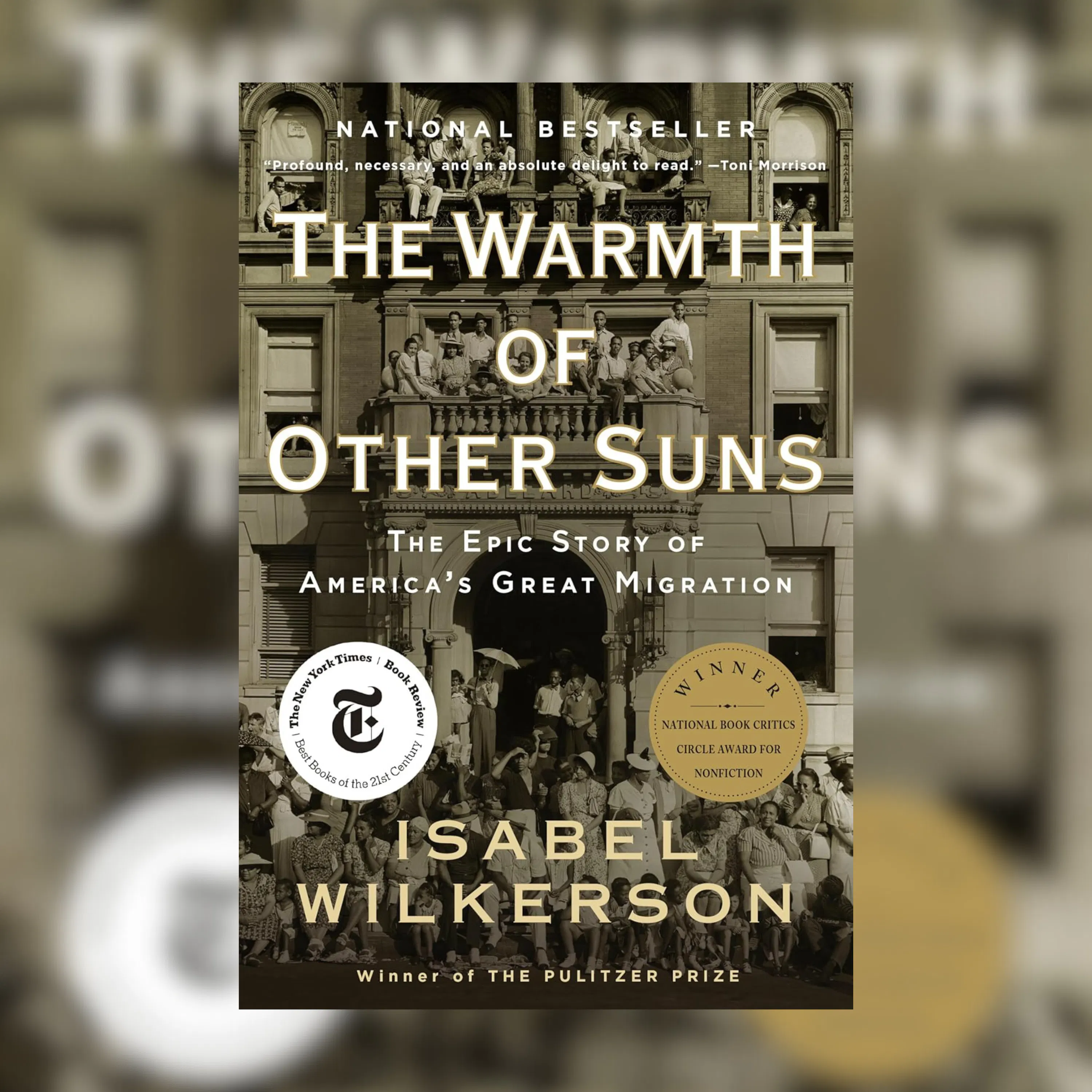
This episode of Zero to well Read is sponsored by Thriftbooks.com with more than 19 million books, both new and used, in addition to games, movies and gifts. Find everything you need@thriftbooks.com today on the show, it's the Warmth of Other Suns by Isabel Wilkerson. Again, there's not that many editions. There's really three. There's the original first edition hardcover. There was a hardcover that came out that had like New York Times notable book and some other stickers on it and, and then of course the paperback there. So really pick which one of those you want. I don't see any first editions available right now, but you can set an alert and find it. I'd go ahead and get that hardcover. Even though it's not a first edition, it just feels more substantial and the thicker the book, the more I want in a hardcover for reading and as keepsake. That's something I keep on my shelf and come back to over and over again. Thanks to Thriftbooks.com for sponsoring this episode and this season of Zero to well. Ready?
- [00:54]
Sponsor Voice
Ugh.
- [00:55]
Rebecca Schinsky
You said you were over him, but his hoodie's still in your rotation. It's time. Grab your phone, snap a few pics and sell it on depop. Listed in minutes with no selling fees. And just like that, a guy 500 miles away just paid full price for your closure. And right on cue, hey, still got my hoodie? Nope. But I've got tonight's dinner paid for start selling on Depop where taste recognizes taste list. Now with no selling fees, payment processing fees and boosting fees still apply. See website for details.
- [01:24]
Jeff O'Neill
Foreign. Welcome to Zero to well read a podcast on everything you need to know about the books you wish you'd read. I'm Jeff o'. Neill.
- [01:35]
Rebecca Schinsky
And I'm Rebecca Schinsky. Today we are delighted to have our colleague, Sharifah Williams. She is Book Riot's Executive Director of content joining us as we dive into Isabel Wilkerson's award winning oral history of the Great Migration, the Warmth of Other Suns. Sharifah, welcome.
- [01:50]
Sharifah Williams
Thank you. Thank you for having me especially to talk about this book.
- [01:54]
Rebecca Schinsky
You know you are responsible for this book happening at this time on Zero to well read because you read this back in the fall and you raved about it in several places across Book Riot. And then as I was looking for some big signal nonfiction to incorporate into this season, it was right top of mind. So thank you for giving us an excuse to read this right now.
- [02:13]
Sharifah Williams
That's wonderful to hear. I am so glad that Me talking endlessly about this book which is so special, did something positive because I feel like I want to throw this book at everybody I pass by on the street lately.
- [02:27]
Jeff O'Neill
Yeah. Yeah. We'll ask you when we get to our section about how we first encountered it or whatever. I want to hear more about or I read more about your story about why now and how your experience. But that combined, as we said, this is our first foray into nonfiction for zero to well read. And we'll say here down a minute in the why it's important section scores very highly on New York Times best books of the century list, the highest ranking nonfiction coming in at number two. So I think that says something about the steam with which it's held. And by the same token, I think Sharif is alluding to it under known in some parts. And I've got some takes about. Well, I think we could surmise why that might be in some ways but a wonderful book to talk about. We're going to get into it here in a minute. Let's do a little housekeeping first. There'll be a link in the show notes for our free newsletter blog. Vanessa Diaz is curating some further readings, some favorite quotes, some resources that we have used, kind of a syllabi companion piece and standalone all at the same time. It can be anything that Vanessa, it's really fun. She's doing a great job, doing a terrific job. And I actually am now to the point where I'm looking forward to what she has found that we have not. When I see the newsletter come out on a Tuesday. So that's free for anybody.
- [03:40]
Rebecca Schinsky
She does this little section where she pulls quotes from our conversation out of context and a good like 85% of the time I'm like, I get, I don't remember saying that.
- [03:49]
Jeff O'Neill
Wow. Yeah, that's a lot of fun. There's also subscription paid tiers that get you at one level early ad free episodes and another that gets you bonus content. Sharifah will be sticking around with us. We call it office hours. We do another 20, 30 minutes of more free flowing. We take off our tweed jackets and we put our feet up on the desk and talk about the book there. Patreon.com 0to well read. And if you have a moment, and I know you do because it's going to be a long show. At any moment you're taking a bathroom break, you have to pause. You can rate and review the show right there in Apple podcasts or Spotify or jump over to one of those places from overcast or whatever else you might be listening really helps keep the show going, gives us more chances to talk about more books over time and make stuff we enjoy and we think you will too. And always email us@02 well read bookriot.com I think we're going to be due for some sort of mailbag something as.
- [04:48]
Rebecca Schinsky
We have a mailbag episode that will be recording in mid March, coming out a couple like a handful of weeks after this episode airs.
- [04:56]
Jeff O'Neill
Yeah. So with that I will pass it to the Queen of Synopses, Rebecca, who is better than anyone I know at the synopsis.
- [05:05]
Rebecca Schinsky
The pressure is on now. So Warmth of Other Suns is about the Great Migration which happened here in the United States between 1915 and 1970. So multiple generations, more than 6 million Black Americans fled the Jim Crow south in this movement that we understand now to be the Great Migration. But as we'll get into when we talk about these individual stories, many of the people who participated did not see themselves as part of a movement. They were just making the best decision that they could for their life at the time. They followed interstate systems and railroad lines to go west to California and north to Chicago, Detroit, D.C. philly, New York, cities that promised them freedom from racist oppression and the violence that was really an ever present part of life in the south for black people under Jim Crow and coming out of the period of slavery. And these cities promised them opportunities for economic and social mobility that they'd never had access to before. How true that turned out to be, or not is a large part of the conversation. The realities that they found in these new promised lands. And I think that's the right way to think about these, that they understood this to be an exodus of sorts into a new kind of opportunity. They were difficult. They were complex, not always obviously better than the lives that the migrants left behind. And their lived experiences were individual, varied. Their stories were rarely told. So beginning in 1960, 1996, I'm sorry, journalist Isabel Wilkerson interviewed nearly 1200 of the remaining participants of the Great Migration. Really astonishing. And over the course of the next 15 years, she synthesized their stories into the Warmth of Other Suns. And she presents this first comprehensive oral history of the movement through the lens of three key subjects. Sharifa, I know you have so much affection for these three folks. Do you want to tell us? I feel like these are members of Sharifah's family at this point because the way she talks about them is so warm and lovely. Do you want to tell us about Ida Mae, George and Robert?
- [07:12]
Sharifah Williams
Yeah, so we're following the lives of these three individuals. Ida Mae Gladney, George Swanson Starling, Robert Joseph Pershing Foster. I feel like when you can recite their full names and they have long names, they are like, it doesn't come.
- [07:28]
Jeff O'Neill
Instantly, but you get it eventually. Eventually. Like I just now oh, it's an item. A section. Oh, yay. Oh, it's a Foster section. Oh, yay.
- [07:36]
Sharifah Williams
And as Rebecca mentioned, they do come from very different experiences, different backgrounds they had. Their life stories are so different, but we follow them from their earliest days in their hometowns in the south all the way through the end of their lives. So you really get to know these people. And the memories they share of their experiences, the details, the nuances and complexities of each of their journeys is so profound and so detailed that it really does give you this incredible picture of just how singular these different, you know, experiences of traveling from the south to the north, the reasons why, the motivations, why they made the move. It just helps you really understand how singular these stories are.
- [08:38]
Sponsor Voice
Today's episode is brought to you by Sourcebooks, Landmark publishers of where the Wildflowers Grow by Tara Shelton Harris. This is one of the most anticipated books of 2026. It is by the author of Long After We're Gone. It is a triumphant Southern story that tackles grief, hope, redemption, and what it means to truly live, not just survive. Now let's get into it. Lee is the last of the wilds, haunted by the past, hardened by loss, and certain she doesn't have a future. When a prison transport crashes and she's the sole survivor, Lee disappears into rural Alabama and finds unexp refuge on a flower farm, of all places. The work is quiet, the people kind, and the man who runs it just might see the truth of her. But peace can't grow on buried secrets. And when the past resurfaces, Lee must choose. Run again or finally fight for the life taking root around her. Make sure to check out where the Wildflowers Grow by Tara Shelton Harris. And thanks again to Sourcebooks Landmark for sponsoring this episode.
- [09:43]
Jeff O'Neill
We heard you nine years of Bring back the Snack Wrap and you've won. But maybe you should have asked for more. Say hello to the Hot Honey Snack Wrap. Now you've really won. Go to McDonald's and get it while you can. I'm Micah Sargent, Co host of iOS today alongside Rosemary Orchard, and we help you get more from your iPhone, from your iPad, from your Apple watch, from your Apple tv. All of it, apps, tips, clever tricks, and the updates you should know about. It's informative. Informative. It's fun. It's full of things you'll want to try right after the show and have a few laughs about as well. Check it out at Twitt TV iOS. That's Twit TV iOS.
- [10:27]
Sponsor Voice
Yeah.
- [10:27]
Rebecca Schinsky
So our three main characters are Ida Mae Gladney. She was a sharecropper from Mississippi. She goes first. She leaves for Chicago with her husband and their small children because they've determined that they're no longer safe in their small town. This is like early 1930s, I believe, when Ida May leaves. Then there's George Starling, who thought he had escaped Florida when his father allowed him to go to college. But the money ran out. He was forced to return home. And then he returns to Florida. He works as a fruit picker and he begins organizing other laborers to strike for better wages. And this of course, attracts unwanted, negative, scary, threatening attention from local officials, from white people in power, from the folks who own the farms where he is picking. He flees in fear for his life and lands in Harlem in 1945. And he has then a lifelong career working on the railroads, traveling up and down the east coast, or if you are an East Coaster like Sharifah and I, now up and down basically the 95 corridor on the train. And then in 1953, the final of our three main characters, Robert Foster. He's a young physician who leaves Louisiana for the shiny promise of California. And he eventually becomes a local celebrity of sorts, a pillar of his community, the personal doctor to raise Charles.
- [11:45]
Jeff O'Neill
Why, when I first read that, I was like, wait, is this real? Am I having a stroke? Like, what is happening right now?
- [11:49]
Rebecca Schinsky
I had an out loud, holy shit.
- [11:56]
Sharifah Williams
Who could have expected that?
- [11:58]
Rebecca Schinsky
Just fascinating characters and fascinating, real people with real lives. And that's. I think one of the things that makes this book so special is that it's not a just the facts history. This is history through the real experiences of people who. Who can tell us about it first person and give us that detailed specificity that is just really, really wonderful.
- [12:24]
Jeff O'Neill
If I could just say another note about the amount of work she did and the structure she uses and the people she has picked to feature here belie how elegant and beautiful the structure of the book is. Because I think maybe Sharif has a note down further. I can't remember. But each of these people are both specific and representative. And each of falls along one of the three main arteries of the Great Migration. As Wilkerson figures them from Louisiana out to Texas. That's Foster from Florida and the Atlantic seaboard up to New York, that's George Starling. And then from the Central south through Mississippi, Alabama, up through the industrial Midwest, up sort of Chicago, St. Louis, Detroit, Ida May ultimately lands in Chicago. And so these structural pieces sort of feed back on each other in a way that if you don't really think about it, it feels so natural, which is beautiful. But I just want to highlight for people how amazing it is because I'll get down to this in a minute. Of reactions like the amount of work, you know, that goes into this, the amount of nonfiction all of us have read, none, very little of which is as elegant and plain as this, also are as readable at this. At the same time. And how she's done it and what it is go hand in hand. And you can't talk about one thing after the other.
- [13:48]
Rebecca Schinsky
I don't think this is such an accomplishment and a real joy to read. And if you are a person listening who's like put off by the idea of a 650some odd page nonfiction book. And there are a lot of reasons that you might be. A lot of nonfiction is really difficult and pretty dry. First of all, only 550 pages of the paperback are text. You get like 100 pages of notes. So there's that. But this is the highest caliber of readable and enjoyable. It's like, it's enriching and it is incredible on the sentence level. Wilkerson is a great researcher, but also just a really terrific writer.
- [14:27]
Sharifah Williams
Yeah. And as somebody who has really been repelled by US History because of high school textbooks and the way we were taught in the classroom, I have found that reading a story like the one Wilkerson writes, where she's bringing together these broader concepts and these broader pieces of history and putting them beside these individual stories. The puzzle work is amazing here.
- [15:00]
Rebecca Schinsky
It really is.
- [15:01]
Sharifah Williams
But it really helps you remember like these pieces of history that are so important to have in mind as, you know, we are in current day even. And I thought it was really successful at educating while also, I don't even wanna use the word entertaining, but really helping you feel immersed in the history and the story.
- [15:28]
Rebecca Schinsky
Immersive is a great word for it and like, boy, it goes down easy. Like, I never wanted to step away. I felt like that. Like I missed these people. When I had to put the book down and I initially was planning my reading and I was looking at those 550 pages like, all right, this is how I think I'm gonna chunk this out over the Course of a couple of weeks to fit in all the other things that I needed to be reading. And I ended up just putting everything else to the side. Like, once I fell in love with these people and was so enchanted by Wilkerson's writing, it was like, well, this is just what we're doing now, because why would I leave them? It's so compelling.
- [16:03]
Jeff O'Neill
All right, we gotta move on. We're gonna talk about what it's like. I mean, this is all gonna map onto each other. But I think what you have both just said leads quickly into why it's important and the accolades it got. I think people saw what this took, right?
- [16:15]
Rebecca Schinsky
Yeah.
- [16:17]
Jeff O'Neill
It was very much recognized at the time as being a remarkable work. So it won the National Book Critics Circle Award for nonfiction, nyt, New York Times for people that don't know the acronyms that we use or maybe don't think in acronyms. And Publishers Weekly both had in the top 10 overall for the books of the year in 2020. As I said before, it was number two in the New York Times retrospective. New York Times, 100 best books of the 21st century. I guess we should say here that the three of us had votes in that. That poll, and I voted for this. And I do not. I don't know if you want to. You. We didn't talk about review. We talked about our ballots before. I guess at this point, Sharifi, you hadn't read it, and Rebecca, you hadn't either, so you couldn't have voted for it.
- [16:59]
Rebecca Schinsky
I had no.
- [17:00]
Jeff O'Neill
So having read it, do you think your votes would have changed?
- [17:05]
Rebecca Schinsky
Yes. Yeah.
- [17:07]
Sharifah Williams
This could have ended up there.
- [17:09]
Rebecca Schinsky
I almost went back to my notes about my ballot to see what I would have kicked off for it, but, yes, absolutely. And I don't care for the number one pick on the New York Times list. So as far as I'm concerned, we can call this the best book of the 21st century so far.
- [17:26]
Sharifah Williams
And I'm pretty sure that subconsciously, because I spent so much time poring over that 100 best books in the 21st century list, that that was one of the reasons I ended picking up this book when I was thinking about nonfiction to read.
- [17:39]
Jeff O'Neill
I mean, it makes a ton of sense, and it does speak to the power of these kinds of lists. And that list, as a quick aside, has been uniquely influential in content making, like a lot of people suddenly realized. And I will throw book right into the mix here because we're doing a list or sort of a series of best books of the century. So far in various genres, because it's not a very genre heavy list. There's some, but I've seen video games, I've seen movies, I've seen tv, I've seen sports moments. So people reckoning with that a quarter of century gives us a chance. So these lists matter, gatekeeping matter, curation matters. I mean, these are all things that feed on each other. So when we have a chance to talk about something and get other people to think about it differently, that's part of the culture work and it's very interesting. And part of what we're trying to do with the show here, and I think maybe most importantly here, is that it really does fill in a hue insofar as one book can. There are like 10 books, I'm sure Wilkerson could write in this. Like, I kind of want a whole book about Foster. I'll get to that when we get to the hot takes and straight thoughts. But thinking about this tidal wave of humanity over decades and its relationship to racial politics in the US basically touches every factor of American life. Even with some cameos by future stars in American politics who then go on to affect other countless counterreactions in American life. It feels so germane even now, and so under reported, understood, misunderstood, that I think it just does like history work. It's a historically important document, which we can't really say because it's different when we talk about literary history. But this is like actual life important, not just art life important.
- [19:24]
Rebecca Schinsky
Yes, actual life important. And one of the things that blew my mind about it because like Sharifah, I had less than stellar experiences with history classes in educational career, was not just that the migration was shaped by the infrastructure of the country. People went where there were interstates and railroad lines, which makes sense when you think about it. But had I ever thought about it? Indeed I had not. And then they reshaped the country and the politics of the country as well, that what the landscape of the cities is like becomes very different. Cities go from being 1% black to being 40% black. Cities that had large populations of European immigrants experience all kinds of interesting and scary tension when those immigrants are faced with the migrants coming up from the South. And it's not just the story of black people going into white cities. It's really melting pot. Like all American. Like every issue of American life is present in the stuff that Wilkerson is documenting here.
- [20:27]
Sharifah Williams
Yeah, and I will say also, like as an African American person, like the whole idea of studying your genealogy is like so out there for Us. But, you know, I am a product of the Great Migration. And even as somebody who is a product of the Great Migration, I didn't have all of that information about like, where everybody ended up moving, how some, like my family can end up from North Carolina to Oakland. Like, how does that happen? And so this was so eye opening. It does absolutely speak to the broader American population, but it also gives something to the African American population of like, well, this is a way to help you start understanding the story of your own lives and your own families and how you got where you are.
- [21:23]
Jeff O'Neill
The figures here even are startled by Wilkerson sort of telling them they're part of this larger story. They're like, I didn't really think of myself as being part of a Great Migration. Like, that sense of like being a part of something else and you're not alone, and this is a broad piece of history is quite powerful and I think illuminative in so many different kinds of ways. And it feels like Wilkerson maybe was uniquely positioned to write this book and reading her biography, she herself is a product of the Great Migration. She's in Chicago, she's the bureau chief of the New York Times. She was at Howard and was the editor chief of the newspaper here. So like she was around these people as a black woman, but also in these circles and in these moments and started to get a sense from her own life that there was a story to be told and took a long time telling it. And I think, yeah, I kept thinking that when I had was rereading the book, it's like, could anyone have done this? No. Could any. Well, and tales have done this? I mean, there could have been other versions of this, but I have this down there in Stray Thoughts and maybe it's worth saying here. I think it's so important that she's a journalist first and not an academic in terms of the way this is presented. Her sort of inductive reasoning, sort of taking individual stories and building and building and building out of that and then thinking from a journalist's eye for story and shape and character. An academic could write this book about the Great Migration and maybe do the same kinds of research, but not be as interested or not believe or have been taught, I should say, about certain kinds of modes about perspective and individual and specificity that I think will make this book readable and resonate for generations in a way that an academic book can matter but wouldn't be read by normies like us. You know, 10, 15, 30, 50 years.
- [23:13]
Rebecca Schinsky
Down the Road and the warmth of other suns kind of astonishingly did not win the Pulitzer, which I don't understand.
- [23:21]
Jeff O'Neill
I don't understand.
- [23:22]
Rebecca Schinsky
We can have a moment about all of that in a little while. But Wilkerson won the Pulitzer before she wrote this. She was the first black woman to win a Pulitzer for journalism in 1994 for coverage of big 1993 floods in the Midwest and then also profiles of teenage boys living in Chicago that she had written. And after she wins the Pulitzer, she said someone came and asked her if you could write a book, what it would be about. I assume this is an editor who was like, who is this Isabel Wilkerson who's winning Pulitzers for journalism? And she already knew that it was going to be the great migration, that her parents left Virginia, moved to Washington, and that's where she was raised. And she grew up hearing details of their stories, but not the whole story, which, like you were saying, Sharifah, that seems like a pretty common experience among children of the folks who migrated, that they didn't necessarily talk about it that much for all kinds of reasons. And then having an opportunity to tell Wilkerson their story, to read the book. I listened to an interview that Gilbert Cruz from the New York Times did with her last summer around the time of the big 21st century list coming out, and she said that, like, this is going to make me cry. She heard from families of some of her participants, some of these 1200 people who said, your book was the last one my parent read before they passed. And it gave them a new sense. It's really incredible, a new sense of really what it meant, that what they did with their lives and this risk that they took.
- [24:48]
Sharifah Williams
Well, I know what I'm going to listen to.
- [24:54]
Jeff O'Neill
She's a fascinating. She's a fascinating person and she doesn't have 25 books. She came to writing books a little bit later. She's a long career as a journalist, and I hope over time, Caste was very well regarded. A fascinating book. You can see her wheels turning in similar. Through a parallel motion, but on a broader global spectrum there as well. And sort of capped off with the National Humanities Medal by President Barack Obama in 2016. Quite a moment there. Bo himself makes a cameo appearance at the end of this book in a very fascinating and moving way with Ida Mae going to her local police precinct meeting and a young Illinois senator comes to press the flesh there. Okay, let's get personal for a second. Talking about our first reading experiences. Sharifa, we've teased this. Tell us about how you picked this up and what it was like to come to this the first time.
- [25:50]
Sharifah Williams
Yeah, I mean, I have been thinking about a lot about U.S. history and politics lately, and I have always felt like I sort of had a lot of gaps in my education about this country's history, and I have been wanting to fill in those gaps, but there are so many books out there and, you know, and. And finding one that I, a person who does not read a lot of nonfiction, could sink my teeth into felt like a insurmountable task. But I kept seeing this book brought up. And I will also say that our former colleague Amanda Nelson's. There was one post, and I cannot remember what of the millions she has put up, but there was a bunch of comments of people recommending this book. And I was like, okay, this is it. This is like my final signal. I needed to pick up the book and just like, be ready to sit down with a doorstopper. And the minute I started it, I was like, I have made the correct decision.
- [27:03]
Rebecca Schinsky
What a good feeling.
- [27:05]
Sharifah Williams
It was so satisfying. And now I feel like I just want more. It opened a whole door for me.
- [27:15]
Jeff O'Neill
That's the delightful and terrible thing about a book like this, where it's singular in a lot of ways, and so there's not a lot of amazing read alikes, which we'll talk in. This is not something you find every day, even as we wish we could. Rebecca, so this was a little bit more work homework for you. I mean, I know you were looking forward to it and wanted to read it. What was your reading experience like?
- [27:38]
Rebecca Schinsky
Oh, my. It was. This was incredible. I'd had it on my list forever. I missed it. And I wasn't working in books full time in 2010. You know, I was a marketing person, so this was not on my radar until I started working in books and hearing about it. And we read so much of new releases all the time, like Jeff and I. That's a huge part of our jobs. That going back to a 650 page book from several years ago is just not something that I make time for that I feel like I have time for. And this podcast has been a wonderful opportunity to, you know, create excuses for myself to pick up things that I have been wanting to read to make it a priority. And it was this specific timing was a product of Sharifa picking it up, raving about it. And like Sharifa not known to just be effusive about all kinds of things, like, it's meaningful.
- [28:30]
Jeff O'Neill
A high signal to noise ratio.
- [28:32]
Rebecca Schinsky
Yes. So when There are Sharifah exclamation points and they appear in multiple newsletters and multiple posts on the site. And she's just kind of talking about it. I pay attention and I'm so glad that I finally got a chance to read it.
- [28:48]
Jeff O'Neill
Yeah, I read it the year it came out. This was a weird. Not a weird. It was a specific moment in my reading life. I guess they always are between when I was done with grad school and before we started BR and I had kids. So I had like a two year window where it's like free range reading, which was. I wish I had a better list of all the books I read then so I could kind of read whatever I was interested what was in the news. And this was in the news for sure. And I was very interested as a. A student of African American literary history. The Richard Wright title and then the idea of it. And then I should say too, I think it matters that we were in the Pax Obama back then too, in 2010. And we were especially, I think, interested in these stories. They were more welcomed into the market. People were looking for them. Now, of course, this was not a reaction to that moment because it was 15 years in the making. So I do think there was some zeitgeist timing that really mattered for its popularity. I think it would have been critically acclaimed and the work is the work no matter what. But I think it entered into warm waters and I was one of those people that you know narrative nonfiction. Rebecca and I have talked about this in the BR pod and other places. Like this is not something you get a lot in school. And some one thing that happens to people that do become lifelong readers or maintain lifelong readership is discovering narrative nonfiction that they like. You know, we talk about what is it Born a Crime by Trevor Noah. Rebecca. Like we wish more people knew books like that existed while they're in their formative reading years. Because you can find. And this is not like this, but it's more along the lines of this than a big sort of the kind of book that wins the National Book Award for History, which is like a history book. This is a story. This is a reading experience that happens to be nonfiction that can delight and amaze and astound and sustain all kinds of readers. So that's when I read there and I was completely awestruck by it there. It's tax season. And at lifelock. We know you're tired of numbers, but here's a big one. You need to hear billions. That's the amount of money and refunds the IRS has flagged for possible identity fraud. Now here's another big number. 100 million. That's how many data points LifeLock monitors every second. If your identity is stolen, we'll fix it, guaranteed. One last big number. Save up to 40% your first year. Visit lifelock.com podcast for the threats you can't control. Terms apply.
- [31:11]
Leo Laporte
Every Wednesday, we talk about Microsoft with two of the best Microsoft journalists in the business, Paul Ferrat and Richard Campbell. Hi. This is Leo laporte inviting you to join us for Windows Weekly. This week we celebrate 35 years of id software and talk about some memories. Remember Daikatana? Very good news for Windows users. 26H1 looks to be a winner and the Xbox Excellent awards. Plus, Paul announces his newest book, all that and more this week and every week on Windows Weekly. You'll find it at our website, TWiT TV, WW, or wherever you get your podcasts. Hey everybody, it's Leo laporte. I hope you'll join me and Steve Gibson every Tuesday for security. Now, this week we talk about an antivirus program that infects its own users. That's not good. The notepad hack. That's really not good. And how MongoDB has lowered the hacking skill level bar to the floor. It's just too easy to hack. Every week Steve Gibson tells you everything you need to know about security on Security now you'll find it at TWiT, TV, SN or wherever you go. Get your podcasts.
- [32:21]
Jeff O'Neill
What's it like to read this? What's it all about? I think it's a little bit different for us, Rebecca, because it's about what it is about. We don't do a lot of like English major bullshit to be like, here are the main themes and whatever. So maybe we can talk about like what the reading experience and the notable sort of theses that she has. Throughout the course of the book. Srifa, we talked a lot about can you put into qualitative prosecution what it is like to read this book and the virtues and the kind of ups and downs. Not in terms of quality, but she takes you on a journey, I guess. And it's a different kind of journey than we're used to being taken to in a book, I think.
- [32:59]
Sharifah Williams
Yeah. I mean, immersive is definitely the word I felt in my bones while I was reading this because it felt like I was truly transported to these times and places I have never been and experienced. And it really felt like I was in the mix in the lives of these Individuals and feeling the suffering they went to, the frustrations they experienced, the terrors of living in the Jim Crow south, and also the huge uncertainty of migrating to a completely different place with only like the worst of family and friends who have been out there before and, you know, whatever papers they could find about, like, trying to convince them to move out there and really just starting their lives over again. So it was a very powerful experience to like, go through, like you said, this journey with them and an unforgettable experience.
- [34:09]
Jeff O'Neill
Rebecca, you have a note here about this. Oh, yeah, Maybe you were.
- [34:11]
Rebecca Schinsky
Yeah, it's just like, really? I'll talk about that too. But I found it just along the lines of what Sharifah was saying. This really potent and unusual mixture of harrowing and hopeful. Like when Robert Foster leaves Texas or leaves Louisiana to drive across and ultimately go to California, and he's driving for like 24 hours straight because a survival.
- [34:35]
Jeff O'Neill
Thriller horror novel in like 15.
- [34:37]
Rebecca Schinsky
Sorry, yes, you can leave the Jim Crow south, but it's not like as soon as you cross over into a non Jim Crow state, everything is hunky dory and safe for you immediately. And just like how detailed and terrifying that experience was and how Wilkerson renders it, it does feel like you're on the edge of your seat. Toni Morrison, also not known for just blurbing stuff willy nilly, called it profound, necessary, and a delight to read. And I think that totally captures it. But to me, the structure is the magic that Ida, May, George and Robert live and migrate at different. But rather than showing each of their stories individually or dropping us in to visit them at various points on the timeline, which is a way that a lot of these kinds of books work, it's like, here we are in 1940 and Ida Mae's doing one thing and George is doing something else, and Robert would be doing something else. The thing Wilkerson does is organize their stories by seasons of life. So we see all of them as young people together, and then we see all of them at the moment that they decide to leave. And then we see all of them as they have made the journey and all of them becoming established in their new lives. And that makes it easier to connect and follow what's happening because the emotional arc points in one direction. And I just thought that was such a genius choice. And I haven't seen anybody do that with a book like this.
- [36:04]
Sharifah Williams
Great point.
- [36:05]
Jeff O'Neill
And roughly the first third is this. And so their stories are interleaved, the three main. I don't want to say characters because they're real people. But we'll use characters here, because I don't have a better word for it right now, are then interleaved with some historical context.
- [36:19]
Rebecca Schinsky
Protagonists.
- [36:20]
Jeff O'Neill
We do, yeah. Protagonists. We do get quotes from other scholars. We do get Wilkerson's remarkable archival work. This is another interesting thing about the genesis of this book. It was a transitional time in terms of research. She didn't have access to Google and jstor. Like, she was doing more of the traditional archival stuff that some of us. I'll throw us all in the same basket here, though I'm a little bit older. We're doing in, like, high school school, right? Or would have done in some of our college papers before the technological innovations we have today, which is the grunt work, the gumshoe detective. But of reportage is really important there. And so you do get how she connects these individual protagonists to the larger stories. And because she has done such copious interviews, she has the ability to pick sort of the perfect troika to show the diversity of experience, but also shared experiences at the same time. And that's what she's really trying to do. She's saying these are representative of larger conditions, larger experiences, and you spend time with them at different points of their lives, where by the time they sort of strike out, you're like, oh, my God, I totally get it while you're doing this. Right? And then the middle third of the book is them sort of surviving, coming to north, finding their place of the world, making it or breaking it. And the last third is like the consequence of that integration or lack thereof. And what has changed and what hasn't in their own relationship to their lives in the south and sort of where they die. I had forgotten that. How emotional I got in the last third as these people exit stage right. And it is not a story of the migration, the Great Migration, being triumphant, nor a disaster. It is the story of humans on the move and all that entails, and some of them are highs and some of their lows. It was not an unalloyed success, nor was it a mistake for all these characters. And I think that truth is part of the bittersweet beauty of it. And I'm not sure, Sharifa, how did you find your experience as you come to the end? Was there a lesson here? Did you buy Wilkerson's argument? Did you have sort of an emotional or intellectual takeaway from the book?
- [38:32]
Sharifah Williams
Well, it was interesting because I definitely found that Wilkerson was sympathetic to these individuals without, you know, obscuring Their flaws. And you know, Robert's ego, for instance, and his, the gambling, the jitterbug surgeon, you know, all of that, that stuff. And then like when you come to the ends of their lives, there isn't this sense of like intense satisfaction. Like everything is, there's so much closure, everything is, is put neatly away. They got what they're, they wanted. But that was, that was better for me because it is, it's a complex story that deserves to be told honestly. And there was no sort of neat thesis for me at the end of this book. It was just that this was something that was huge and is still rippling across our timeline and it will continue to affect the generations that follow these individuals after they leave us. And, and you see that even in the, you know, sort of mention of the children of these people. And it's not like we see their stories fully fleshed out. But you know, because you've been through the whole thing with them, that those stories, their lives are affected by their parents decisions and how they chose to move on or not.
- [40:12]
Rebecca Schinsky
It's a like rule of fiction that specifics are what help you convey the universal. And Wilkerson, I think, ports that over wonderfully here, that the specifics of these three characters, these three protagonists, the varieties of their motivation and experience, serve to remind us that the people who made these moves were not monolithic. And it invites you to consider, if this is what it was like for three different people, how many other millions of versions of that experience were there? Sharifa, I love the note that you have in our outline talking about this and the other things that Wilkerson is inviting us to consider, if you would talk about that a little bit.
- [40:55]
Sharifah Williams
Yeah. One of the things that really stood out to me was that you are not only getting the story of the people who were, whether they knew it or not, participants in the great migration, you are also getting the stories of the people who chose not to move north, who chose to stay in the South. And you see that in different ways in the different stories of these people. Like, you know, Ida May goes back home at the very end of the book and she sees some old friends from her past life and she sees how they have, how things have turned out for them. And then Robert has this more stark situation where, you know, the family he married into, the Clements, are established in the south in Atlanta. And Dr. Clement is doing big things in the south for black people.
- [41:52]
Rebecca Schinsky
Working against WBE B. Du Bois.
- [41:54]
Sharifah Williams
Yes, right.
- [41:55]
Rebecca Schinsky
Getting him, you know, kicked out of the university like that is Bold, no big deal.
- [42:01]
Sharifah Williams
Just like making a huge name for himself. But Robert really feels like he has to, to prove himself that his choice, his decision was correct in moving to the West. And he sees his brother setting up this practice and helping people in his hometown, community in the south who do not get the care they need. And so there's this tension. And there's also, like, the way the established Northerners, the black Americans in the north, look at their incoming kin from the South. There's so much there. There's this tension and friction, and there's. You could write a whole other book about the people who chose to stay.
- [42:46]
Jeff O'Neill
Yeah. And there's so many specific details. I think this is the journalist, Iowa. She knows a good illuminative detail when she sees one. So, you know, getting your car washed a mile outside of town when you're coming back for Easter so that you put on the right show. You get George talking to post Jim Crow, sort of trying to figure out which of the black passengers on the train would be amenable to hearing. You don't have to move when they come, say you should be moving and doing this. The most sort of complicated social negotiation I can frankly imagine for sort of moderate stakes. Like, it's dehumanizing, but it is actually just moving from train car to train car. It's not like Underground Railroad, but it's part of his work. It's part of his life's mission. It's part of his service to black people and as part of his history. And then you also see that Wilkerson has chosen three protagonists from various socioeconomic backgrounds to try to get some breadth. Where Ida May is more working class. George, for the time, is more of a middle class. You know, working on the train is more of a middle class job. And then Dr. Foster is sort of upper class, as you can get at this moment, and into sort of the real meaningful upper class in California, later, gambling addiction aside, there at the end. I think another thing that is so fascinating, too, is to see her weave in history and academics, but also the art, the poems and stories and quotes and newspaper articles. Like, there's a multitextual element, multi textual element to this that I think really captures or does as well as you can, captures the broad impact of this movement on all walks of absolutely black American life, but American life in total. And there's one moment that I marked, and I don't actually think I highlighted it, but she includes a lengthy excerpt. She doesn't do many lengthy excerpts, but one is a Survey, I think it was in the Chicago Defender asking folks who had come north to sort of talk about their experience. And the first question is, why did you come? And there's like 12 answers. And the first 11, the first word is free. Freedom. Freedom. Freedom, freedom, freedom, freedom, freedom. And I think that is the thing that she is trying to capture, that freedom is the thing. But what are all of the other ramifications of that move? And it's not simple and it's not always and maybe mostly realized. But this is a story about people looking for freedom. And one of my favorite ideas from this book that I found so beautiful, meaningful and illuminative is this was the first affirmative movement by black Americans to seek their own freedom at scale. This moving from one place to another and the effects of who, what kinds of black people, because not all black people are the same. Even these certain kinds of personalities and experiences and dreams led some kind of people to move and some to stay. And that had ramifications for who remained in those communities. And then it affected the cities to which they moved. And I think that for me is like kind of the most brain opening, mind expanding idea especially. And I'm not sure which of us I had this thought, but I think one of you wrote it about, boy, is this idea about who is migrating and who isn't and how we think about migrants and new people in the community. Today, when a lot of people are walking out and sitting home, it feels so fascinating to think of how this is not just a specific experience, possibly, but this is a data point. This is another river in the idea of how we think about this, how people want to move towards freedom and opportunity and how people react to people coming for freedom of opportunity. So I don't want to do a whole thing necessarily myself. I don't feel qualified or ready to do it, but I certainly felt it in my gut, especially as I was getting ready this morning. So I'm not sure if there's anything else there, but I thought I would mention that.
- [46:34]
Rebecca Schinsky
I want to just touch back briefly on what you were saying about how she incorporates so much from other history and other pieces of black arts. Like Isabel Wilkerson has read all the books. Like she has read all the books, she has read all of the journals, she's read all of the academic articles. And this book never, ever feels like an author going, look how much research I've done. And that in itself is astonishing. I also think that, like choosing to put all the notes at the back, there are no footnotes on any of these amazing choice. There are not even any numbers in the text to tell you where there's a note in the back. Like you can find all of her resources, but that the reading experience is uninterrupted from start to finish. And you just know, well, there's a hundred pages of references at the back. If I want to go there, you can, but that is such a smart choice and not nearly enough nonfiction writers do it.
- [47:29]
Jeff O'Neill
And a super quiet flex like, I've got the receipts and I don't feel the need to put them on every page.
- [47:35]
Rebecca Schinsky
I mean, it's just, it was wonderful. It was one of those things that occurred to me, like, near the end of the reading experience where I was like, oh, right, she's referring to, to so much other research into such a deep body of already, you know, academic investigation and also drawing on these people's life stories and like the train thing as well. I just, I'm like picking up threads from your last comment, Jeff. We spend so much time on trains, so many trains. And the specific stories that she chooses on the trains, really, I thought illustrated the absurdity of Jim Crow in a way that we don't get specifics of very often. Or like, I grew up in the Midwest hearing stories about, you know, like, I grew up in Kansas and black people and white people could drink from the same water fountain, but if you go 20 miles east into Missouri, they would have had to drink from different ones. Like, that's theoretical knowledge. But when you watch this, or watch or read the scene in this book where you see, like, Wilkerson walks us through the train, crosses the Mason Dixon and people get up and reshuffle. And if you're going north, that's great because then you can sit wherever you want, but maybe you're afraid to move. And if you're going south, it becomes really absurd that black and white people had been sitting next to each other on the train and they cross an invisible line and someone gets up and puts a sign into a holder that says whites here and blacks here. And people have to move themselves to do it. And having that illustrated and the moments like that happen dozens of times throughout these stories. But the way that Wilkerson just lets her protagonist show us these things, like the whole book is an exercise in show, don't tell, but really drives home the absurdity.
- [49:20]
Sharifah Williams
Yeah. Some of the most eye opening scenes for me was, were from George's perspective as a porter on the trains and seeing all these goings on and as somebody who was used to, and who found it natural to rise up against what he saw around him. You know, unionizing and gathering together as a community and going up against things and, you know, having to secretly let people in on that they didn't have to move. And, you know, doing the calculus of, like, who do I tell and who do I keep it from? And I thought there was this really great quote Wilkerson had about George and the porters, where she writes, he and other colored porters were men in red caps and white uniforms, but they functioned as the midwives of the great migration, helping the migrants gather themselves and disembark at the station and thus delivering to the world a new wave of newcomers with each arriving train. And I thought that was just so beautifully told because so much of the motion of the migration, Even though Robert had a very different journey in his car, a horrible journey. Like, a lot of that happened on these trains. And a lot of what George saw, people putting their pinkies up when they were drinking because they were acting like they thought the northerners did. And just these little interactions, these little details that told you so much about the expectations of migrating and, like, just the uncertainty of what life would look like for them and how they should act in this new world, I thought.
- [51:03]
Rebecca Schinsky
Was astounding and just, like, how scary this must have been and how much courage it took to do it, you know, to get, like, now if we want to move across the country, you can Google to within an inch of your life. You know what the neighborhoods are, which one has the coffee shop, shop that you want, which neighborhood is the right vibe for me. You can look on Facebook and see if you know people who are there. But a lot of these folks are the first people in their families and their communities to get on a train and make this move or they're going. But the only person they have a connection to in their new city is, like, some neighbor's cousins, friends who they.
- [51:41]
Jeff O'Neill
Maybe lost the address for, and they have to spend a couple days on the couch to remember.
- [51:45]
Rebecca Schinsky
And that also. But that, like, that. That that person was ready on the other end to receive them. That you could arrive in a new city and be like, we are connected, but like, 19 degrees removed. And they would help each other out. And that level of community commitment is a form of activism in itself. Just individual, one to one helping. In addition to, like, the kinds of stuff that George gets into repeatedly over the course of his life organizing for labor, he becomes kind of a grassroots organizer multiple times over. But it gave me Some insight into how steps along the way that we have become disconnected from each other in the political process, that our communities, especially black people's community, to make this kind of move used to require a willingness to help people you didn't know and a willingness to trust people you didn't know. And that those were, those acts of trust were born out here is really just really powerful. But the bravery that it took to get on that train, like Ida Mae has two little babies when she makes, makes this move. And then shortly after she makes the move, she's pregnant and she, she goes back to the south to have her babies because she doesn't trust doctors in the North. And I thought like, oh my God, being super pregnant on a train, going back into a place where you felt unsafe to try to like, try to keep your family safe and make a move. There were no good choices. And the ways that these, these people made these decisions, um, specificity is the word that I keep coming back to and that we keep circling around. But it is really just astonishing.
- [53:21]
Jeff O'Neill
I think Wilkerson does a necessary and important and good job. And this is a note I have here is like, every time I'm reeducated about the racial violence of slavery and reconstruction and Jim Crow and into the, even the present moment of the book, I'm sort of appalled anew. Like my, my moral immune system keeps rejecting the memory of these stories. Like I kind of can't keep them in because they're so horrible. And she gives us the stories both as education but also to show the human motivation of these people to get away from this really like Dante level Hieronymous Bosh. Like almost the imaginative cruelty of white racism in America boggles the mind. And that's just something to know. And I have this in a. Maybe not for you. If like, it's important to fit those things square, but it is not easy and it's not for the faint of heart. And it will turn your stomach and turn your soul. And we get those because they're important as a historical document. But they stand alongside to understand why George has to get out of Dodge when the people are like, we've got someone who's like a proto unionist. We understand Robert Foster wetting himself on a train because he's afraid of using the wrong bathroom. Or Ida Mae taking her kids on a very sort of dangerous unknown journey because the alternative is worse.
- [54:41]
Rebecca Schinsky
Or the like Ocean's 11 level organization that had to happen to smuggle some people out of the south in coffins.
- [54:49]
Jeff O'Neill
Wilkerson couldn't help herself. She's like, that is too much. I have to put that in there.
- [54:53]
Sponsor Voice
Yeah.
- [54:54]
Rebecca Schinsky
Wilkerson smuggled them out in coffins with the participation of undertakers on both ends of the trade lines.
- [55:01]
Jeff O'Neill
The morticians, baby. We didn't even know. No, just.
- [55:05]
Rebecca Schinsky
I just blew my mind. What a great story.
- [55:09]
Sharifah Williams
Yeah. That was a historical anecdote I will never forget in my whole life. Yeah, I have a hard time even, especially when we're thinking about, like, the things they had to accomplish to get where they got and, and the, the way things had to work out. It's hard to fathom today how that, how any of this would work, like, how it would be possible because you do have to have that big, deep rooted community. You do have to have that trust. You do have to have that, I don't know, ability to fling yourself into the unknown. And it's just not something that I, I feel exists in the modern era. Like that sentiment and that willingness.
- [56:03]
Leo Laporte
If you're into iPhones and MacBooks, you'll love Mac Break Weekly. All the Apple news every Tuesday. Hi, I'm Leo Laporte. Join me, Andy Inocco and Jason Snell. This week we talk about all the new Apple products just around the corner, including MacBooks, new iPads and yes, even AirPods with cameras in them. Them Jony, I've designs the new Ferrari and iPhones are going to the moon. That and a whole lot more this Tuesday and every Tuesday. Join us for Mac Break Weekly. You'll find it at TWiT TV, MBW, or wherever you get your podcasts.
- [56:34]
Jeff O'Neill
I'll spoil one of my reading suggestions that I was going to unleash on Rebecca to see what you thought, because I know we both love Solido by Javier Zamora, but that book I kept thinking about, it's like, okay, you know how you would imagine it? What are the pathways that people from Latin and Central America are using to get to wherever they're going? Like, what is the story of Somalis in Minneapolis? They're going to be different in specifics, but I'd be fat in reading Solido. Like the people, the coyotes, the people you knew, the trust in other people. You were hazarding your life in a lot of different ways. But also you had some sense of the odds. And the odds were that their people wanted you to succeed on the other end of the line or along the line line. And it's different. It's different, but I think it's so similar. The homologous structures of Feeling and structure are so remarkable, too. And, like, Wilkerson does a really good job. And this is a problem of history and frankly, a problem of understanding the world, for me, I'll say, is trying to bridge the gap between sort of each individual's experiences and motivations and big structural wheels of time stuff. Right. Because both are part of.
- [57:42]
Sponsor Voice
Of it.
- [57:42]
Jeff O'Neill
And I think it's dehumanizing to just do the system stuff, and it's too weird and idiosyncratic to not do the system stuff. And I think this is about as close as you can get to trying to sort of take the bull by the horns of that and ride it a little bit.
- [57:55]
Rebecca Schinsky
So, yeah, it's one thing to be like, there are established systems that shape people's lives and there were racist structures, and they are. Many of them are still in place. But Wilkerson, like, shows us that it's.
- [58:06]
Jeff O'Neill
Just not the same. Like, one story of someone mailing himself in a box and being put upside down accidentally for six hours, Powers, I feel like, is more impactful than structural racism is real, even though structural racism is more sort of, quote, unquote, important or effectual there. So I think that's one of the other sort of, I guess, narrative political lessons of the book, is how you deal with that reality at one. At the same time.
- [58:30]
Sponsor Voice
All right.
- [58:31]
Jeff O'Neill
I think this is my favorite section of the show, Sharifah, our stray thoughts section. Would you like to lead off with a stray thought here?
- [58:39]
Sharifah Williams
Oh, my gosh, I had a lot of stray thoughts. But, I mean, I already mentioned Ida Mae George's and Robert's memories and the way they were able to tell their story in such a. I don't know. I wish I had this memory. I can't tell you what I did yesterday.
- [59:00]
Jeff O'Neill
Sharifa has two twin toddlers right now, so we. She is probably not at her highest memory point right now. It gets. It won't always be this way.
- [59:10]
Sharifah Williams
Yeah, I hope not. But I think, like, one of the. One of the things that really struck me as I was reading was this feeling of, like, it must have been hard to live up to these expectations that you made this big move and now you have to prove yourself. Like, all you have to almost prove that you got success, whether or not you did. Like, sending more money than you really have to support yourself back home so you can show your family. Yeah. And I had been reading a while before I picked up the Warmth of Other Suns, Mules and Men by Zora Neale Hurston. And there's in the introduction to the book she's talking about. She's actually saying, I know that when I go down to Eatonville to collect, you know, African American folk tales, people aren't going to really be running up to my car to see how fancy I am and stuff. But I was thinking about like that you even have to say that, like, because it was a big deal to show up, people did, as you said, you know, wash their car before they, they went back to their hometown. They had to show up like they were on top of the world. And, and it must have been so difficult not only to migrate, to go up north not knowing what your future looked like, but to have to kind of fake it till you made it in a way so that you could tell yourself and your family and friends that you did the right thing.
- [60:52]
Rebecca Schinsky
I just always astounding. Just like the ultimate in imposter syndrome for some of them. Like, Robert never feels like he has succeeded when by all outward measures he has. But that's just a bottomless pit that he's trying to shovel assurance to himself and his community into and what an impossible position to be in.
- [61:11]
Sharifah Williams
Yeah, Robert is one of the most successful of them when it comes to money, you know, wealth and, and place in society. But I think Ida May ends up being the most satisfied of them. And you know, she comes from this really blue collar background and almost made the trip up north because she had to, because her husband had made the decision. And you know, it's this sort of like, how do you find satisfaction? How do you find, how do you settle yourself, like in your soul with this new life and this new place you've moved to? Is a question I'm, you know, I'm still grappling with after reading this book.
- [61:55]
Jeff O'Neill
Book, yeah. What is Isabel Wilkerson up to right now? Was my number one stray thought. Like when, when I kind of warmed back up to the book and reminded my. I was like, oh my God. And I had read Cast and Cast is very good, but I don't think it didn't hit me in the same way this particular book did. And I don't, I mean, I have no idea. When she mentioned that her father was a Tuskegee airman, I'm like, I would read, I mean, I will read whatever she wrote, but it made me think, I wonder black people in the military over time, because that's one of the specters of influence if you're of people going to war, but also the war. But it could be something else. Like with Cash, he's taken a wider spectrum to look at caste and how that affects cultures around the world. I would believe anything at this point, but I would certainly be excited to see it. I also the thought that a companion anthology of poetry and primary sources by itself would be a landmark work. You know, firsthand accounts, diary entries, poems, plays, oral histories, like, you know, kind of the Shoah project for the Holocaust, but for the Great Migration, we a fascinating document and museum or whatever else. I mean, it could sustain its own museum within American history as well.
- [63:08]
Rebecca Schinsky
That takes me to my most repeated stray thought through this reading experience. Release the tapes. Yeah, release the tapes. Like, I want to hear some of these interviews. It made me think about, like, enhanced audiobook experiences that I wondered about the audio.
- [63:24]
Jeff O'Neill
None of us did this on audio, right?
- [63:26]
Rebecca Schinsky
No, I mean, this would take a billion hours on audio.
- [63:28]
Sharifah Williams
I went between the physical book and the audiobook.
- [63:31]
Jeff O'Neill
Oh, you did?
- [63:32]
Sharifah Williams
I was doing.
- [63:32]
Rebecca Schinsky
So how is that?
- [63:33]
Sharifah Williams
It was fantastic on audio. It was so good. And I did not find it. It didn't slow me down in any way. It was. It was actually really helpful to be able to go between the two. But, you know, I am a specific reader.
- [63:49]
Rebecca Schinsky
Okay. Yeah. I love the idea of, like, a version of this audiobook that is Wilkerson narrating some of the structure and then getting to hear Ida May or getting to hear George or hear Robert or even, like, we get little tidbits of stories that are presumably from the others of the 1200 people that she interviewed. Like, it would be so wonderful. And like, what a gift they are. Like, those tapes are somewhere. Where are Isabel Wilkerson?
- [64:16]
Jeff O'Neill
I hope they're in an archive somewhere. Like, where are these archives or wherever they're going?
- [64:21]
Rebecca Schinsky
I want the tapes. And the other thing that I spent a lot of time thinking about is that it is just absolutely criminal that this book didn't win all of the awards the year that it came.
- [64:29]
Jeff O'Neill
I mean, I love Patti Smith, but. Oh, boy.
- [64:31]
Sponsor Voice
Right?
- [64:31]
Rebecca Schinsky
Like, Patti Smith won the National Book Award for nonfiction that year. The rest of the finalists are books that we have not thought about since 2010. Like, what were we doing? What were we doing? Eric Foner won the Pulitzer for history in that was awarded in 2011 for 2010 books for a book called the Fiery Trial that was about Lincoln rethinking and examination.
- [64:54]
Jeff O'Neill
Boner's great, but that's the kind of book I didn't want. That's the kind of what I was trying to think.
- [64:58]
Rebecca Schinsky
People love history books.
- [65:00]
Jeff O'Neill
Yeah. That's what I'm saying, like, that's for, like, people who like to read history books. I think this is the kind of book that people who just are interested in reading will try. Yeah. Like, they find approachable.
- [65:09]
Rebecca Schinsky
What were we doing? If you were on the 2010 National Book Award Committee, you owe us some apologies. And I kind of wondered, like, Patti Smith is an adored artist and there was a lot of hype around just kids, so I understand that. But on a broader level, I wondered if the fact that Wilkerson makes it look so easy is part of what worked against her, maybe for this. Not to mention all of the ways and reasons that publishing consistently undervalues black stories. But this is like, an impossible task. It is so hard to do what she did, and she did it, and she does it seamlessly, and she makes it enjoyable and immersive. And when you pull off a magic trick and you make it look that easy, I think it's often underappreciated.
- [66:00]
Jeff O'Neill
Also, this was her debut, which is hard. She didn't have a lot of cache, which. So when we talk about the great debuts of all time, like, she's won a Pulitzer for journalism. So I don't want to yada yada that. But in terms of a book construction, it is. I. I would imagine Wilkerson herself would be the first to say and the time it took to write that this a different kettle of fish. But still, no one knew who Isabel Wilkerson was when this came out. So I do. Well, they do know Patti Smith. And sometimes this certainly happens. The Oscars, you win it for, like, the movie after the movie, you shouldn't have won it for a lifetime achievement kind of thing. But.
- [66:31]
Rebecca Schinsky
And the National Book Awards can be a little artist giving other artists, you know, congratulations.
- [66:39]
Jeff O'Neill
But any other stray thoughts we need.
- [66:41]
Rebecca Schinsky
To, like, retroactively fix.
- [66:44]
Sharifah Williams
I know. I think retroactive awards should be a thing just for this book.
- [66:49]
Rebecca Schinsky
Like, I just learned. I just learned this. That, like, one of. I can't remember which sport it is. Jeff, maybe you can help me. But one of the sports has, like, the hall of Fame voting. And then it. That the journalists do the voting for. And then years later, like, there's another board that can come back and be like, you know what? The journalist got this one wrong and.
- [67:09]
Jeff O'Neill
This is the legacy board. Or, like, you know, it's the. It's the real heads.
- [67:14]
Rebecca Schinsky
It would be the people of publishers and bookdom decide, like, we need to do some retroactive National Book Awards and some retroactive Pulitzers, because, come on, just give this Woman, all the trophies.
- [67:25]
Jeff O'Neill
My last straight thought I had is this is one of the great titles of all time. And if you're a novelist or a nonfiction writer, I implore you to use a snippet of a poem as your. It just this, this is. This is work. This works. This worked for Faulkner, this works for Hemingway, this works for Isabel Wilkerson. Just find a snippet of a poem and use it for your title. It works every time.
- [67:51]
Rebecca Schinsky
And how many book titles are taken from Shakespeare poems?
- [67:56]
Jeff O'Neill
But also this idea of the warmth of other suns that Richard Wright, who's writing about, it's an unbelievable, beautiful, evocative sentiment. And I think her bringing in the poetry from poetry poets. And I don't know if she was doing this intentionally to write it pretty plain, like, let this back. I mean, it's well written, don't get me wrong, but there's not a, like, individual sentence you're gonna look at just for like, sentence level stuff. She's navigating ideas and people in detail elegantly and difficultly. But then she kind of like lets the poets do the poetry part, which is kind of amazing to.
- [68:28]
Rebecca Schinsky
I had this in trivia, but since you're on, Richard. Right. I'll. I'll read it now. That the title in the epigraph of the book come from Richard Wright's Black Boy, where he says, I was leaving the south to fling myself into the unknown. I was taking a part of the south to transplant in alien soil to see if it could grow differently, if it could drink of new and cool rains, bend in strange winds and respond to the warmth of other suns and perhaps to bloom.
- [68:52]
Jeff O'Neill
I misattributed that. I thought it was from 12 million black voices, which also gets included here. Yes, but that's Black Boy is Richard Wright's autobiography, and that is a writer doing writerly things with those sentences. And Wilkerson doesn't do that her, herself, but she'll bring it in when she sees one. That's hell of a curator, particularly. Oh, really good there.
- [69:10]
Sharifah Williams
Great taste.
- [69:11]
Rebecca Schinsky
Let's do some more quotes. Sharifa, you've got some good stuff.
- [69:13]
Jeff O'Neill
Yeah, that's a good transition to quotes.
- [69:16]
Sharifah Williams
Yeah. When I was thinking about, you know, why it's important to read this book now, one of the quotes that really stood out to me was about violent clashes involving groups that are pitted against each other. And in this case, Wilkerson was talking about poor white Southerners who were also migrating north around the same time. And she writes, they were essentially the same people except for the color of their skin. And many of them arrived into these anonymous receiving stations at around the same time, one set against the other and unable to see the commonality of their mutual plight. And I just thought, you know. You know, and I think this is why I wanted to read Casts as well, because I just thought this is such a profound part of the American experience is just like everybody is chasing a slice of the American pie. And so often there is this feeling that there is not enough for all of us, so we have to fight over it, like, within our communities, against other communities. And. And that just like I had to sit with that quote for a while and think about it in relation to our times.
- [70:40]
Jeff O'Neill
Yeah. This thing that should be or could be a source of solidarity is this sort of separation. Like, that's one of the great tragedies of American life. And I'm sure. And I think she definitely talks about that in Cast as well. Like, that's a dynamic that's not just an American story. It plays out in American ways.
- [70:57]
Rebecca Schinsky
But one of my quotes, what few people seem to realize, or perhaps dared admit, was that the thick wall of the caste system kept everyone in prison. The rules that defined a group's supremacy were so tightly wound as to put pressure on everyone trying to stay within the narrow confines of acceptability. It meant being a certain kind of Protestant holding a particular occupation, having a respectable level of wealth or the appearance of it, and drawing the patronizingly appropriate lines between oneself and those of lower rank or either race in that world. And you can, when you get to cast Sharifa, which is wonderful, like you see in Warmth of Other Suns, all the seeds of it. But her choice, the very beginning of telling this story and then the subtitle of Caste is the Origins of Our Discontent, that it's not just race, but this caste system that the country is built on, of which race is a part, a significant part. But she's doing such a holistic thing here. And it's woven throughout the text.
- [71:55]
Jeff O'Neill
Yeah. I'll do one long one. I've got a bunch, though I didn't highlight as many as in our fiction just because I think you get ideas. We're talking about ideas and strategies much more than individual sentences, though we could have probably, if we had done it differently. It's like our 10 most fascinating anecdotes or mini stories could have subsided further quotes.
- [72:15]
Rebecca Schinsky
I don't want to spoil anything for anybody, though.
- [72:17]
Jeff O'Neill
Yeah, no, that's a great point. That's a wonderful point. Here's my lengthy one over the decades, perhaps the wrong questions have been asked about the Great Migration. Perhaps it's not a question of whether the migrants brought good or ill to the cities they fled to or were pushed or perhaps uphold to their destinations, but a question of how they summoned the courage to leave in the first place, or how they found the will to press beyond the forces against them and the faith in a country that had rejected them for so long. By their actions. They did not dream the American dream, they willed it into being by a definition of their own choosing. They did not ask to be accepted, but declared themselves the Americans that perhaps few others recognize, but they had always been deep within their hearts. So doesn't get a lot more evocative and weirdly patriotic and indicting at the same time at the same go Any other quotes you all want to make sure we enter into the official record before we move along down the line?
- [73:10]
Rebecca Schinsky
I mean I love near the beginning they did what human beings looking for freedom throughout history have often done. They left. Then she contextualizes the participants of the Great Migration inside like all of the migratory movements that happened before it, all of the groups of immigrants that have come to the United States, the groups of immigrants that are still coming to the United States and the ways that we see people immigrating, seeking better lives all across the globe and that versions of this tension happen everywhere that that takes place. And we're like we are seeing it right now in Minneapolis. We're seeing tension between various communities and the government trying to enforce certain things. I think this book is especially relevant like a lot of historians and political commentators are talking about ICE right now as being like a modern version of slave patrols and the warmth of other suns gives you a lot of context for understanding how we got from the end of slavery to this place 150 years later where it's still happening. Versions of it are still happening.
- [74:15]
Jeff O'Neill
A lot more missing links to in this book than I ever knew about about even after after enduring Reconstruction, trying to keep black people from moving north and sort of these weird quasi legalistic machinations to keep people or prevent them from going just frankly ripping up black people's train tickets like in front of them so they can't go. So it's not just slave patrols. Everything's cool ice. There are a lot the flame has been kept alive unfortunately in a lot of different ways. And I think Wilkerson does a really fascinating job of tracking these other modes of oppression and control that aren't illegal or legal. They're Just there and enforcement is part of the deal at the same time. Okay. The for your Is it not for you? Who would like to go on the Is it for your where do you want to go?
- [75:04]
Rebecca Schinsky
I think honestly, unless you're already deeply familiar with this moment in American history, you should seriously consider reading this.
- [75:12]
Sharifah Williams
Yeah. And I think that like I said before, if you do not think that you will like US History because you also have that memory of textbooks, then you should absolutely read this because this will change your mind and help you to. I know it's singular, but it's still an example of how history can be told in a really compelling way.
- [75:37]
Rebecca Schinsky
You could have a reparative experience there.
- [75:39]
Sharifah Williams
Yeah, exactly.
- [75:41]
Jeff O'Neill
I'll take the con. It's not a con. It's just I guess warning signs look out for if you're not an American. It will be interesting for sure. And all the things we said about Wilkerson's trade craft still exists, but it may not hit you as viscerally as to those of us who live here and are interested in whether we want to be or not in these concerns. Also, it's worth noting terrifying, true stories of racial violence that Dante would have been like, whoa. About that's part of the story, as bad as it gets and worse than you can imagine at moments. So I'm not sure what else to say, but we like to let people know what they're walking into. And that is part of the deal in American history and this book as well. Interesting to turn to our mortal questions that are asked for Rebecca. We haven't applied these to nonfiction before. I have not previewed this to my own self. So we'll see how we go. Sharifa can help us translate if this makes sense. Which of the primary questions here. What is the good life? What do I want? My neighbor? How do I know what I know? Is this all there is? How to deal with the certainty of death? What else might there be? What's the deal with good and evil and a new addition to our ranks? Free will or not so much as I read those, wildly applicable even to.
- [77:02]
Rebecca Schinsky
This, it seems to me, yes, because I mean, these people are asking these questions in making the decision to change their lives in this way. They are looking for the good life. They're showing up for their neighbors. They're relying on their neighbors. There's a little bit less of the existential like metaphysical how do I know what I know? Is this all there is stuff. But they certainly have to reckon with the certainty of death. What else Might there be. Be is a real question. Their spiritual lives do sort of come into play, especially for Ida May. I mean, and what's the deal with good and evil written all over this one? But free will, real or no? Like, this is a solid. Yes, fascinating free will.
- [77:41]
Jeff O'Neill
Yes, fascinating free will is here. You've got it. It's like free will, but also everyone else is behaving similarly to you in similar circumstances. So is that really your individual opportunity where you're not Sharifah? Did any of these speak to you as a reader of this book, as being especially interested in what this book is about?
- [78:00]
Sharifah Williams
I think. I mean, it is the very obvious what's the deal with good and evil? It just like that is the story of this book. And I mean, also the what do I owe my neighbor? Because that's so important to the story of these people moving across the country and able to accomplish what they accomplished is they really had to rely on their neighbors and their friends and their family and people they did not know. So that was a big one.
- [78:32]
Jeff O'Neill
I was thinking about this a little bit, I think, when you're talking about the free will question. And what was which book was that? Was it the last. I don't remember where we.
- [78:40]
Rebecca Schinsky
It was Go tell it on the mountain when we were talking.
- [78:42]
Jeff O'Neill
Go tell on the mountain. Yeah, right. I had a thought, and maybe this is the right time to entertain another edition. Maybe eventually, by the time we've done 100 books, we'll have a hundred questions. But like, how did we get here?
- [78:54]
Sharifah Williams
Oh, I like that.
- [78:55]
Jeff O'Neill
One is a question that a lot of texts ask. And this one is very much. I mean, if this was in the record, probably this would be primary or one of the top three here. But how did we get here is very much in play for a lot of the books that we care about that speak to us over time and place. Are we sure this isn't about art and writing? Sharifa? I'll tell you, I'm not sure if you've heard us talk about this before. The joke here is that most of them are, even if they don't seem about that, the craft of Wilkerson's writing and the work that goes into it is fascinating. But in terms of the stories and the words we get on the page, how much is this or not about art and writing, Sharifah, to your estimation?
- [79:37]
Sharifah Williams
That's a good question, because in some ways it feels like it really is because there is so much art, there is poetry here mingled in with these stories and historical facts. And so it is employed in the telling of this story. I don't know if this feels like. Yes, this is about art and writing to me, though.
- [80:06]
Rebecca Schinsky
So, yeah, I think one of Wilkerson's thesis statements of the book is that these stories have to be written down and transmitted and understood. And so it's maybe about writing sort of implicitly, but not about. But not like there's nothing artsy fartsy about the words of other suns at.
- [80:25]
Jeff O'Neill
All, except the title and the poetry.
- [80:27]
Rebecca Schinsky
And anyway, sorry, yeah, it's artistic and beautiful, but not artsy fartsy.
- [80:32]
Jeff O'Neill
I mean, if we turn it just a little to make it to say, about stories, then it's absolutely about stories. And that is the unit of history that she understands as each individual story. Could you get the most of the gist from watching the signal agitation, Rebecca?
- [80:46]
Rebecca Schinsky
There is not one. There is not a signal adaptation.
- [80:50]
Jeff O'Neill
Which then leads us to this question, Rebecca, which would be if we were to make a signal adaptation. Movie, musical, musicable. That's not a word. Movie, musical, TV series or Muppets.
- [81:02]
Rebecca Schinsky
I mean, I also had Ken Burns in my marginalia. Jeff, I see your Ken Burns bat signal in the notes.
- [81:08]
Jeff O'Neill
Yes, the bat signal. Where are you? A bad haircut Silhouetted in the sky.
- [81:13]
Rebecca Schinsky
This would make for such an incredible documentary, and if you infused it with the music of the time as we follow these people through, would be incredible. What did you think, Sharifah? How do you wanna see this?
- [81:24]
Sharifah Williams
Well, now that we've been talking, I initially was like, oh, yeah, an adaptation inspired by the book. Like, you know, make it a little bit more film. But now I'm like, when we're thinking about all of these tapes out there, I'm like, like a serial podcast, please. And you could just like, you know, this American Life it. Or some. You know, you could really do a lot with the. All of the stuff that Wilkerson has collected over the course of interviewing these individuals.
- [82:01]
Rebecca Schinsky
I thought about this a little bit more this morning. I was thinking about the Apple TV adaptation of Pachinko, which is like multiple generations of people in the same family.
- [82:10]
Jeff O'Neill
And.
- [82:10]
Rebecca Schinsky
And I think if you had Apple, like, I'm not really interested in a fictionalized version of this, but if somebody wanted to do it, and you could get the Apple bajillions of dollars and make it gorgeous and sort of set the structure up in that same way where we move between timelines and we walk in and out of these people's experiences. The worlds would be rich and colorful and also horrible. Like, horrible. And Horrifying. Like watching the Barry Jenkins adaptation of the Underground Railroad at times. But it could be done. But I think I'm on the camp with Sharifah here. Just release the tapes. Just give us the tapes, man. That's all I want.
- [82:52]
Jeff O'Neill
Yeah, I think it doesn't have to be Ken Burns, but I would take a multi part documentary because one thing, I have this down in Trivian adaptations. But the final editor didn't want the book to be intimidating, sort of on the Barnes and Noble shelf to people buying it because they thought they had something here that a lot of people that it could be a crossover hit into sort of non history readers. And so she asked for the pages to be thinner, the actual thinner pages, so the actual physical object is smaller dimensions. And one thing I was surprised by when I read it the first time and I have my addition here, is there's not like a middle section with a bunch of pictures because you know, Wilkerson has them and the music and the stories and the racular nature and her tapes. I think she's got all the raw materials for one of those kinds of stories. So I'd like to see that there. Also a nonfiction doc about the making of the book I think would be a fascinating document of itself.
- [83:48]
Rebecca Schinsky
Yes, that would be amazing.
- [83:51]
Jeff O'Neill
Miscellaneous trivia adaptations, rumors, misattributed quotes and et cetera. These are unsigned by us, so I'll leave you to pick who entered what here.
- [84:00]
Rebecca Schinsky
Well, I talked already about the origin of the title and the epigraph. Also, in that wonderful interview that Gilbert Cruz did with Wilkerson, she talked about using the Grapes of Wrath as a template for telling the story. Makes total sense. Yeah, so that was really interesting to hear. Sharif, I think you have a couple others.
- [84:18]
Sharifah Williams
I don't know if I put any down.
- [84:20]
Jeff O'Neill
Oh, I think these are maybe mine. Sorry, I should have signed them. That's why we assign these to avoid this sort of awkwardness. My bad.
- [84:26]
Sharifah Williams
I will say that I did clock while I was researching this book that an editor wrote that the book was basically fine, but that it didn't take into account how much this country has done to bridge the racial divide. And I laughed out loud and was like, I really hope that critic looks back on that criticism and feels a little bit of shame.
- [85:03]
Rebecca Schinsky
A lot of shame. Penalty box with that person, they can go stand with the National Book Award Committee.
- [85:09]
Sharifah Williams
Yeah, in hindsight, I know, but. Oh my goodness, that's a take that took me a while.
- [85:14]
Jeff O'Neill
I'm sure there's some stories to tell about People who help. But boy, oh, boy, that's kind of reading the room incorrectly. I've got a few here. There was one other main story that was sort of the last to get cut. A woman named Ruby who had. And I didn't write the name down, so I apologize to Ruby and her kin that had about six middle names in. Wilkerson said that gives some indication of her life and marital history. That would make for an amazing story. So that must have been extraordinarily difficult. When you have a lot of good information, like making a show like this and a book like this, leaving stuff out is maybe the most painful and difficult part to do because you have so much. Both the editor at Random House who acquired the book and the subsequent editor left during the editing and publication process. And that's just because I don't think that's anything about the book or them. There's a lot of turnover in. People move around at that side too. And I told my story about the pages being thinner. Hot takes these. We did sign.
- [86:09]
Sharifah Williams
Yes.
- [86:11]
Rebecca Schinsky
Just put Isabel Wilkerson in charge of the curriculum. I don't care what she wants to write about next. I just want her to pick another important thing and I will read her books and about it.
- [86:21]
Sharifah Williams
I am right there with you.
- [86:23]
Jeff O'Neill
Yeah, I think this would be another good episode for maybe the Brpod or a Patreon or something. Which courses of living people we'd want to take when we're retired and we're just taking courses for no reason. Isabel Wilkerson's creative nonfiction course might be number one on my list. Like, how the hell do you. How would you tell me, a neophyte anything about how to accomplish something like that? Rebecca, you said that, but I think Sharifah maybe did. You were making a similar take, but a degree or two hotter even.
- [86:53]
Sharifah Williams
Yeah, because I was thinking, like, if I did have to assign required reading to everybody in the US this would definitely be at the top of my list. I feel like there is nobody in this country who couldn't benefit from reading this book. And I would hazard to guess that a lot of this would be news to a vast majority of Americans.
- [87:20]
Jeff O'Neill
Yeah, I agree with that. I think the actual subject matter is clearly important, the most important, but I think equally important was like the sensibility in worldview. And the way of seeing Wilkerson as bringing to the story is part of what would make that so powerful. My hot take is this should sit right alongside the power broker as a clout farming big American history. Read that people are performative about. Let's get people performative reading Warmth of other Suns. We've done the powers.
- [87:48]
Sharifah Williams
I agree. Yeah.
- [87:49]
Jeff O'Neill
Yeah. I'm not sure it's as hot as Sharifa's. It's just more specific. So there we go. Further reading Read alikes book inspired by this one. Sharif, you have cast here the Origins of Our Winter. Did you read that, too? I know Rebecca did. Have you read that or. Yeah. Do you know read that yet?
- [88:07]
Sharifah Williams
I have not read it. This was my first Wilkerson and now I'm just. I can't stop re. I just want more of her writing. And so I'm hoping that this will, you know, help me feel less sad about saying goodbye to them.
- [88:25]
Jeff O'Neill
You're done. Yeah, I know.
- [88:26]
Rebecca Schinsky
Like, how many more years we might have to wait for another Isabel Wilkerson.
- [88:30]
Sharifah Williams
Right? Exactly. And I mean, opinion. Oprah ended up choosing it for a 2020 book club pick. And she, like, there's a quote from her saying, every book I've ever chosen for Oprah's book club selection, I've done with care and with passion. But I don't think there has ever been another pick that has been as vital as this one. So I was like. And this book might. Might well save us. I'm like, I. I guess I gotta read that book. I was already sold. But on extrasold, it's one wonderful my.
- [89:01]
Rebecca Schinsky
Read alikes, especially stuff we've talked about on the show already. Their Eyes Were Watching God by Zora Neale Hurston for a story set in the Jim Crow South. You know, the main characters of that book stay in the south, but this is happening around them in their lives. Go tell it on the mountain for auto fiction about the first generation of kids in New York after the Great Migration. And then something more recent, between the World and Me by Ta Nehis Coates certainly feels like a descendant of this generation of writers and thinkers. And then for an incredible narrative nonfiction experience on a totally different topic. But since we were talking about that at the top of the show and how reading experiences like this are pretty rare if that's what you sank your teeth into and you want more, like, show me that I can love nonfiction, that it can have a compelling story. The Emperor of All Maladies by Siddhartha Mukherjee, which is a big biography of cancer, as he describes it, came out the same year it won the Pulitzer for general nonfiction in 2010. So, like, other side, hot take. Was 2010 the best year for Pollock for narrative nonfiction. We've had this century. Like, you get the emperor of all maladies and the warmth of other suns in the same year.
- [90:14]
Jeff O'Neill
Yeah, you defanged. I was ready to have a hot take about what was the Pulitzer doing in 2020, 2010. And I saw this. I'm like, oh, no.
- [90:22]
Sponsor Voice
Oh, no.
- [90:23]
Jeff O'Neill
What would I say have done?
- [90:25]
Rebecca Schinsky
I mean, Wilkerson could have won the history one that year, and she did not.
- [90:30]
Jeff O'Neill
I have Immortal Life of Henrietta Lacks, which came out around the same time. Again, it is telling the story of a particular black person, but also a wider phenomenon of black people in medical research, in the history of science and cancer that sold extremely well, got made into a movie. Oprah has her fingerprints all over a lot of these books we're talking about. She picked cast for the Oprah Book Club. I don't know if Sharifa mentioned that before.
- [90:51]
Rebecca Schinsky
Ava DuVernay adapted cast for a film.
- [90:53]
Jeff O'Neill
Yes, and something that I never. And it sounds like they integrated some of Wilkerson's own personal story into that. They did a bit of a meta thing, which always sounds interesting, but I have not watched it.
- [91:03]
Rebecca Schinsky
The adaptation is called Origin, but it is based on cast.
- [91:07]
Sharifah Williams
Oh, my goodness. I didn't.
- [91:09]
Jeff O'Neill
I was gonna. Surprise. Yeah, I know. That's one. The one problem you have, Sharifa, when you switch titles, is that happens even the interested stuff.
- [91:15]
Rebecca Schinsky
But the main character of the movie is Isabel Wilkerson, like, as she is researching cast.
- [91:21]
Jeff O'Neill
Yep. I was going to surprise everyone with Salito by Javier Zamora, but I could not. I shot my powder. I couldn't keep my powder dry for that one. I think that it's an individual. It doesn't have the historical elements, but it's a poet's heart and his own story of being a migrant and coming up from Central America and the harrowing experience there. And it's been a while since I read this one, and I'm not sure it's received some criticism in the later years that I think is worth taking seriously, but maybe, maybe not. Something that disqualifies is Bury My Heart at Wounded Knee by. By Dee Brown, which is the story of American expansionism in the American west and what happens to Native American people there. So in terms of, like, velocity, like vector, it's kind of the opposite of migration. Black people leaving white spaces or leaving certain white spaces for others. This is the encroachment of white space pieces, white spaces on an extant population. There again, also takes its title from a poem. So, you know, there are some other similarities going on there. A bestseller for many, many years. All right. Ten for Cocktail party crib sheet, two to three takeaways. Who wants to go first? Anybody?
- [92:36]
Rebecca Schinsky
Sharifah, you take it.
- [92:38]
Sharifah Williams
Okay. Well, I just, I just have one here and I think, think that this was the, the. This is the thing I would take away from this book is that Jim Crow is not a relic of US history. It really does. And as you read this book, you realize it represents the systemic ways we have and continue to oppress black Americans to enrich the white ruling class. It is so. It becomes so obvious when you read this book. So I thought that was an easy one to use out there. There.
- [93:10]
Rebecca Schinsky
We touched on mine a little bit through the show, but I think Wilkerson really captures that the personal is political even when we don't recognize our personal choices as being political. And she's using really intimate portraits here of people who participated in the Great Migration to remind us that historical moments and political movements are made up of individuals who are making countless decisions, big and small that change their lives, but that literally change and reshape the world. And the way that she moves between these individuals and the impact that they had on the U.S. their cities, like every layer of community is really incredible.
- [93:49]
Jeff O'Neill
I've kind of previewed mine a little bit. Sometimes a media anecdote gets people hooked. So maybe tell the story of the logistics of the Jim Crow train cars, which are horrible and specific. And if they weren't so horrible and specific, they would be silly and ridiculous in like a theater of racism, like almost a chaplain esque theater of box bias that seemed so arbitrary in the time. I was thinking Rebecca about something you said earlier hadn't occurred to me at least I think we grew up with sort of similar well meaning but flawed educational backgrounds when it came with U.S. history. The dominance of the drinking fountain as the symbol of Jim Crow is a weird. I'd never thought about it before and I guess that's the point of these kinds of hegemonic avatars where it seems sort of arbitrary because often the drinking fountains were right next to each other. And it does show the arbitrariness of Jim Crow. But I also think it defangs these other moments where like how dangerous it was. And the one that caught me this time that I don't think I'd ever heard before is sort of the unwritten politics of four way stop signs where if you're black and the white person gets there first or even close, close like all the gymnastics you have to do that are unwritten, as far as I can tell of how Jim Crow Seeped into all of these other places. So, like these specific moments. And then the racial violence stuff. The one that got me this time too was the. The Mississippi journalist. I. I'm sorry, I can remember the guy's name who was challenging segregation. And he just got institutionalized.
- [95:23]
Rebecca Schinsky
He just did.
- [95:24]
Jeff O'Neill
Just put him in an institution. There was extra. There was no. There was no pretense that it was. Has anything to do with anything other than wanting to silence somebody. That the drinking fountain is so banal that it has come to be a metonym for this structure that actually isn't representative like a metonym is supposed to be.
- [95:42]
Rebecca Schinsky
In my Midwestern education, the way the great Migration was spoken of was like. And then black people moved and they.
- [95:49]
Jeff O'Neill
Got better names and to make P51 Mustangs during the war, to make, you know, to be riveters because we needed.
- [95:57]
Rebecca Schinsky
It was like a straight, easy line from Emancipation Proclamation to Reconstruction, shruggy man to like, black people had freedom and they got on the train and they just went to New York or Chicago and then things were better and Jackie.
- [96:13]
Jeff O'Neill
Robinson in Motown and we fixed it. Great job, everyone.
- [96:17]
Rebecca Schinsky
Yeah, you're. You're pointing out the way that, like, a powerful anecdote can get people hooked. Gave me this mental image of like. Like maybe Sharifa, so that we can achieve this goal of getting everyone to read this. The thing we all do now is we all have to go to dinner parties and we bust out these anecdotes. And when people are like, oh my God, we just reach under our chairs and we're like, you get one and you get one.
- [96:36]
Sponsor Voice
You just have one.
- [96:37]
Jeff O'Neill
And you can just keep them on your person at all times.
- [96:39]
Rebecca Schinsky
Everybody's invited to my house once a month on Friday night or something. Like, you don't know it, but you're going home with Isabel Wilkerson.
- [96:48]
Sharifah Williams
Yes, I think that that should. Absolutely. I'm going to order my extra copies.
- [96:52]
Rebecca Schinsky
I'm to going vigilante reading recommendations. Let's do it.
- [96:58]
Jeff O'Neill
Our final B. Here is our zero to well read score. Each one of these categories gets a score from 1 to 10, with 10 being the highest. The five categories are historical importance, readability, current relevance of central questions, book nerd read, cred, and oh, damn factor 10.
- [97:14]
Rebecca Schinsky
Can we just give her tens across the board?
- [97:16]
Jeff O'Neill
Well, again, this is really constructed for a sort of a literary document. So, like, the importance of the history in this book is a 10. So I don't know, the book. Book itself then by nature also gets a 10. I don't see how a way.
- [97:28]
Rebecca Schinsky
Yeah. This is an. It will continue to be an important historical document. Yeah.
- [97:32]
Jeff O'Neill
Readability is fascinating. It's long. There's multiple interweaved individual stories along with historical and archival research. So I guess Sharifa, just to orient ourselves, the ultimate 10 is like a patron mystery that you all you take down in one gulp. This is not that, but it's not that far away from that. Do you have a sense of what you would do, Sharifa?
- [97:54]
Rebecca Schinsky
Do it. Do it.
- [97:57]
Sharifah Williams
I have such a hard time not giving this a 10 because it was a 10.
- [98:02]
Jeff O'Neill
Rebecca knows I'm not gonna step on that since you were the inspiration for us to get that.
- [98:07]
Sharifah Williams
It's just like I had such a hard time putting it down. It read like that.
- [98:13]
Jeff O'Neill
That's a 10. That's a 10 for you.
- [98:15]
Rebecca Schinsky
I think I even want to say, like, we need to stop being like, this book is like, long. Like, just think of it as value over replacement. Two novels you were going to read that won't be as good as this.
- [98:25]
Sharifah Williams
Yes. Yeah, that's a good way to think.
- [98:27]
Jeff O'Neill
Current relevance of central questions.
- [98:30]
Rebecca Schinsky
45, maybe 700.
- [98:35]
Jeff O'Neill
Just yes. Just yes. Another 10 book nerd read cred. So this one for if your first time listening, like, if you said, oh, I've read that, how impressed will other people be? How. How much shine will you get off your freshly cleaned reading Buick when you roll into town? Having read the Warmth of Other Suns, I don't think this one is a 10, but I think it's an 8 at the very least.
- [99:02]
Rebecca Schinsky
It only has 117,000 Goodreads ratings.
- [99:05]
Jeff O'Neill
I don't like that, Rebecca.
- [99:06]
Rebecca Schinsky
I just don't say that. Which means that having read this is much, much rarer than it should be. Now, it does also have an average rating of 4.48 stars, which is incredibly.
- [99:15]
Jeff O'Neill
High you get for anything with a meaningful number of.
- [99:19]
Rebecca Schinsky
That's a really high average. So I think the read cred is higher because it is relatively. If this number is any indication, it's relatively under read.
- [99:26]
Jeff O'Neill
I. I still think we have a title recognition thing like where a lot of people maybe will have heard of it, but could they tell you what it's about or who wrote it? Again, this is. This is about optics, not about reality. So eight. Eight and a half somewhere in there.
- [99:39]
Rebecca Schinsky
I'm going 9.9.
- [99:41]
Jeff O'Neill
Oh, my God. Okay, great. Inflation.
- [99:45]
Rebecca Schinsky
Sorry, you're just not in charge today.
- [99:47]
Jeff O'Neill
All right, that's fine.
- [99:48]
Rebecca Schinsky
Sharif and I are just banging the gavel. It's so nice to have buddy Sharifa.
- [99:54]
Jeff O'Neill
I didn't think this was going to go this way. Sharifa.
- [99:56]
Sharifah Williams
I'm here to give Wilkerson 10 across the board.
- [99:59]
Jeff O'Neill
So this is a real position I want to be in. Is like maybe it should be a nine and I'm the bad guy. And I'm the hater.
- [100:05]
Rebecca Schinsky
Oh, Jeff. This is how you get aggregated.
- [100:07]
Jeff O'Neill
This aggregate. Yeah, yeah, great. It's a real look I want to be having right now. Odam factor. The 10 just fine. 10.
- [100:17]
Sharifah Williams
There you go. There you go.
- [100:20]
Rebecca Schinsky
Wasn't that hard.
- [100:22]
Jeff O'Neill
I think what I found is my zero to well read score dictum does not hold up very well to a titanic work of nonfiction. That's what I'm thinking right now. It's a little bit different. But look, it's a fantastic book. I don't know what to say. What a pleasure to get to talk to you both about it and have an excuse to read it again. And I think because it is even at the moment, it was both timeless and timely. For as long as race is a factor in American life, this is going to be a signal work and important in a monumental work.
- [100:53]
Sharifah Williams
Absolutely.
- [100:54]
Jeff O'Neill
So we're going to stick around for a few minutes for our office hours listeners. Here you can find patreon.com jodewellred for detailed show notes, the free newsletter and the membership options that include signing up to listen to us have what I'm sure will be a rollicking discussion. Discussion. I've got a couple of questions in the bank for Sharifa and Rebecca that they don't know about. Should be fun to spring upon them. It'll mostly about how I am right and they are wrong. No, I'm kidding. Follow us on socials. It backfires. Right? That's. I really wiley Coyote myself with that kind of stuff. You can shoot us an email@zero to well read bookriot.com I want to thank Thriftbooks for sponsoring this season of Zero to well Riot and mention that Zero well Read is a proud member of the Airwave Podcast Network. We did it, Sharifah. We did it. Rebecca. The Warmth of Other Suns by Isbil.
- [101:45]
Rebecca Schinsky
Come back soon, Sharifah.
- [101:47]
Sharifah Williams
Oh, I will.
- [101:59]
Leo Laporte
Monster Energy. Everybody knows White Monster Zero Ultra.
- [102:03]
Jeff O'Neill
That's.
- [102:03]
Leo Laporte
That's the og it kicked off this whole zero sugar energy drink thing. But Ultra is a whole lineup now. You've got Strawberry Dreams, Blue Hawaiian Sunrise and Vice Guava. And they all bring the Monster Energy punch. So if you've been living in the White can branch out. Ultra's got a flavor for every vibe and every single one is zero. Sugar Tap the banner to learn more.