Loading summary
Transcript380 lines
- [00:01]
A
This episode is brought to you by Jack Daniels. Jack Daniels and music are made for each other. They share a rhythm in the craft of making something timeless while being a part of legendary nights. From backyard jams to sold out arenas, there's a song in every toast. Please drink responsibly. Responsibility.org Jack Daniels and old number seven are registered trademarks. Tennessee Whiskey 40% alcohol by volume. Jack Daniel Distillery, Lynchburg, Tennessee.
- [00:26]
B
This episode is brought to you by State Farm. Listening to this podcast Smart move. Being financially savvy. Smart move. Another smart move having State Farm help you create a competitive price when you choose to bundle home and auto bundling. Just another way to save with a personal price plan. Like a good neighbor, State Farm is there. Prices are based on rating plans that vary by state. Coverage options are selected by the customer. Availability, amount of discounts and savings and eligibility vary by state.
- [00:55]
C
Foreign.
- [01:01]
A
Well, read a podcast about everything you need to know about the books you wish you'd read. I'm Jeff o'. Neill.
- [01:06]
D
And I'm Rebecca Shinsky. Put in your fangs and roll on your body glitter, friends. Today we're throwing it back to 2005 with Stephenie Meyer's blockbuster Teen Vampire romance Twilight. Before we jump in though, if you're enjoying the show so far, we'd appreciate it if you would share it with friends and leave us a rating. A review on Apple Podcasts, Spotify or wherever you're listening helps us grow. And that's the point here.
- [01:28]
A
We're very lucky to have with us today Vanessa Diaz, our managing editor of Book Riot, and Kelly Jensen, senior editor at Book Riot, who both have perspectives on Twilight to bring Vanessa, I'd say is the closest to a fan. I'm doing air quotes here. In my mind you can't see those. And then Kelly knows more about YA than all the three of us put together. So here from historical cultural context when it comes to to young adult literature we're going to get into. You may be surprised to see this in your feed that we're going to talk about Twilight and I want to talk about that. That's the first thing we're going to do here at the beginning. Rebecca lets you and I talk for a minute says as we conceive the show and this really goes back to my initial thing I did 10 years ago, the zero to well read idea of one of the things I value. Your definition of red may be different listener, just stay over there. You're fine. It's okay. I'm not attacking you. My own definition includes Being aware, conversant with, exposed to big books phenomenons. And there's no, no one can deny this was a phenomenon. And so this in the spirit of that idea that we want to have, we want to touch the heat, we want to, we want to burn our fingers on the stove of these white hot phenomenons. Rebecca. So that is why we're here talking about Twilight, right? I mean, this in our adult reading experience. It's like this is one of the top five phenomenons.
- [02:52]
D
Oh, yes. And it gives way to other phenomena that happened more recently, including, you know, 50 shades of gray. And I think you can draw a straight line from Twilight to today's romantasy phenomenon. So talk about being conversant in not just what's currently happening in books, but how we got to where we are today. It's been 20 years since twilight and this has shaped quite current young adult literature, but also some things that are happening in adult fiction more than any other series has. It's really incredible. And the book Riot philosophy has always been that we want to have an understanding of what's happening in the world of books and reading. And whether you're a fan like Vanessa or you have maybe a critical appreciation of what a book has done in culture, which is probably the perspective that the rest of us are coming more from, I think Vanessa's maybe coming along with us there too. That's why this made it onto the list. Also, the 20th anniversary is a really convenient hook to hang this on. The movies are going back into theaters this year in celebration of the book's 20th anniversary. So this would have been, I think, on our launch season, no matter what, for zero to well read, because it is one of the signal works of our bookish careers. But that's why we're doing it specifically right now.
- [04:05]
A
This episode and all of season one of zero to well Read is sponsored by Thriftbooks. And if you're looking for an edition of Twilight to add to your collection, maybe you've got some already. This is the kind of book people own multiple copies of. They want it in different languages, they want different kinds of covers. Maybe they do want the movie edition cover. This is one of the books where I think that's as desirable as some of the original. Of course, you can find them used in acceptable condition all the way from $4.09. That's the least expensive one I can find right now. But you know what, you can also splurge and get a new deluxe collector's edition set of the whole series. That's out now and you can get even a little bit of a discount. Those are off. You can get 10 or 15 bucks off a lot of these things here. Even new, there are hardcovers of Twilight still. The original first edition in the series, the first installment in the series. You can get that in hardcover new, if that's what you want. You want a nice clean hardcover copy also, all languages. I didn't know this right now, but the German title is Bite at Dawn. It actually means dawn, but I guess if you put the emphasis on the first word bis, it could be beit bite at dawn. Nice little synchronicity there between what's going on in the book and the title. Thriftbooks you can find really any book. You need more than 19 million in stock. And if you spend $15 or more, you get free shipping in the U.S. thanks to them for sponsoring zero to well read. I will also say this. Spoiler alert. I did not enjoy my reading experience with Twilight. This is my first time reading it. But it's a lot of fun to think about. And I think that's maybe what we're gonna. We're gonna dive into a little bit here, I think. Kelly, I'd like to kick it to you just for a minute. I know you've got some other notes here, but as we do the mea culpas about why we're talking about us. Help us out with where Twilight sits a little bit in the sort of the modern history of young adult literature. Sort of what you understand about what it did and didn't do 20 years ago and into today.
- [06:05]
D
Sure.
- [06:05]
B
So as Jeff and Rebecca have said, this is the 20th anniversary of Twilight. It hit shelves in, I believe it was October of 2005.
- [06:14]
A
That makes sense. A fall book.
- [06:15]
B
Yeah, yeah, yeah. It was either end of September or early October. I can't remember the exact date, but it started out kind of like your average YA book at the time. So YA had had this real golden period in the late 1990s, early 2000s. We had authors like Walter Dean Myers, we had Stephen Chobsky, we had Laurie Halsey Anderson. They all published huge books in 1999. And these are books that are still classics today and books that fall out of like, this first quarter of the century. So I think it's really important to note that because then it gives some context to why this book is so important because it came out several years later. It was far more commercial than a lot of the books that were being put out. And the thing is, the big takeaway for Me and I think for why this is such an important book is that it really helped shape the future of the mid list of YA literature. You know, the sales of this book, it brought in major money which allowed for a significant investment in YA literature in the mid 2000s and into the 2010s even, which really allowed the growth and expansion into so many other types of books that hadn't yet hit ya. And it brought a lot of marketing money for those books. In addition to that, we had like a huge spike in reading. Reading culture expanded and this was happening at the same time that social media was expanding. So people were sharing their love of books and reading. And this one really caught on in those early days. Certainly, you know, if TikTok had been around then we would have seen this. Yeah, yeah.
- [08:08]
D
Can you imagine Jacob, Team Edward, all of the like there would have been weeping TikToks.
- [08:14]
E
Yeah.
- [08:14]
B
And there already was that with blogs and with early like Twitter. It was huge. Then it would have been just like. It's hard for me to imagine what it would have looked like in if we had today's social media then. Which is to say today's social media is a lot different, I think in part because of how critical people have read Twilight and looked at Twilight and the way that we read and approach why literature is so different now than it was in 2005. And I don't think that's a bad thing. So I don't think that this is one of those books that could have taken off that way on social media today. But if we had taken social media back then for sure. And the other thing I think that's really important to point out here is that Stephenie Meyer took so much heat for this book for so long. And you know, there's valid criticism. I know we're going to get to that. But man, there's a lot of women hating and hating on girls.
- [09:14]
A
It went beyond just the I didn't like the book.
- [09:16]
E
Right.
- [09:17]
A
It just goes beyond that stuff.
- [09:18]
D
It did launch like a thousand op EDS about the trouble with young adult fiction, but really like the trouble with teen girls.
- [09:25]
A
Right.
- [09:26]
B
And trouble with women who found love in reading this series or found that they loved fanfiction about this series or were showing up to the movie in droves. Like I remember I was working as a teen librarian right after this book came out and during the time that the movies started to come out and how many headlines were about know grown women showing up to the theaters and filling out all the seats and weeping throughout and I'm like, I think this is something we should be celebrating and not criticizing. People are having a really great social experience over a book. We could talk about the issues with the book, but I think in general, like getting people out and active and social in the context of books and reading is pretty great. But one of the big criticisms was, you know, women. And I always like to point out one of the things that people don't tend to talk about is how supportive Stephenie Meyer was of other women's work. There were a series of stories that came out and this must have been, I don't know, 2013, 2014, 2015. In that era, Stephenie Meyer put a lot of money into trying to develop more adaptations of stories by Whitman, and she was successful in at least one of them, which was Lois Duncan's classic Down A Dark Call, which she made into a film. Stephanie Meyer produced that she used her money to bring a YA classic by a female author to the big screen. And those sorts of things I think are really important for why this book is important. The book is itself as a text, not something I enjoyed reading, but for what it did, for what the author did, for the power it brought into pop culture and into reading culture and into the world of supporting more YA stories, supporting a mid list, and supporting the development of more adaptations by women. I think you can't deny the importance of this book.
- [11:27]
C
Today's Episode is brought to you by Rakuten Kobo. For a limited time, you can earn 10 cash back on Kobo e Reader and accessory purchases, plus new Rakuten members. Members earn a 20 welcome bonus. The offer ends October 31st. Terms and conditions do apply, so let me give you more tea on this promotion. It's a collaboration between rakuten kobo and rakuten.com to get in on it, readers will need to join or log into rakuten.com then enable cash Back by clicking the Shop now button on the page or through the merchant page. Get redirected to us.kobobooks.com There should be a redirect. Pop up and then make an eligible purchase. The offer is available to both existing and new members, but new Rakuten.com members also receive the $20 welcome bonus. This welcome Bonus offer is available only to new Rakuten members who are residents of the U.S. to find out more, go to bookriot.com Kobo Again, that's bookriot.com K O B O thanks again to Rakuten Kobo for sponsoring today's episode. Foreign is brought to you by Simon Teen, Publisher of Cold Wire By Chloe Gong from number one New York Times bestselling author Chloe Gong comes the start of a daring new YA dystopian series. It's perfect for fans of Severance and Black Mirror. So in a near world future where humanity is divided between the glittering virtual reality upcountry and the deteriorating physical world down country, two young soldiers on two parallel missions start to suspect they are puzzle pieces in a larger conspiracy. And the closer they get to the truth, the closer their worlds come to a shattering collision. Let me just say dystopian YA is back with a vengeance and Chloe Gong is here to make the genre feel new again with the cyberpunk world of Coldwire. Coldwire has not one, but two soulmate level slow burn romances that are synonymous with Chloe Gong. And the twists and turns don't stop with Chloe Coldwire. It's just the first book in electrifying new series and we love having something to look forward to. Make sure to pick up Cold Wire by Chloe Gong and thanks again to Simon Teen for sponsoring this episode. Today's episode is brought to you by Amazon Publishing, publishers of Sarah's Riches by Tanya BOLDEN in early 1900s, Oklahoma, Sarah Rector became a wealthy oil heiress at just 11 years old. Her story of sudden fortune and racial scrutiny reveals a complex chapter American History. You can read or listen to the short story by award winning author Tanya Bolden, now with prime and Kindle Unlimited. It's about wealth, race and power in Jim Crow America. Sarah Rector's sudden transformation from poverty to wealth highlights how black prosperity was often met with hostility and exploitation during this era. But there's also resilience and legacy. From a two room shack to hosting cultural icons like Duke Ellington, Sarah's journey shows resilience and the enduring impact of unexpected opportun. Make sure to pick up Sarah's Riches by Tanya Bolden. And thanks again to Amazon Publishing for sponsoring this episode.
- [14:49]
A
We talked about this in relation to Rebecca, both in relationship to Colleen Hoover and Rebecca Yarros. And then in thinking about those things, we read those for the pod. Didn't enjoy those either, but we're going to take them seriously. And part of that is thinking about they exist and you said it or I said it. One of us, we talked about this thing that always surprises literary culture whenever there's a huge phenomenon that books for women that feature a love story. Oh my, I can't believe they did so well. We've been doing this since 1713 with Jane Austen, like, that has just been a story over and over again. And so I think part of taking Twilight seriously is to put a data point on your scatter plot of, like, do not be surprised when this happens again. Do not be one of those idiots that's surprised when there's another giant cultural phenomena that starts as a book or starts at fan fiction that centers women's feelings, especially teenage girls women's feelings. Do not be shocked. Do not be surprised. Do not think this is a new thing under the sun, because it's very much of a part and parcel of that. We were all different ages. I was, you know, I was in my late 20s, so I was looking at, as I was exactly the wrong age to take Twilight seriously. And I was in grad school and all the other things that go along.
- [16:00]
D
It doesn't matter in a PhD.
- [16:02]
A
Yeah, that's not where that wasn't. It wasn't in my wheelhouse. Let's put it that way. I do remember. Good.
- [16:08]
B
I. I was gonna say, it's funny you say that, because I. I was in library school to be a teen librarian when this was going on. So for me, it was like I had to know what it was about and I had to understand.
- [16:20]
A
Coming down the mountain.
- [16:21]
B
Yes, exactly.
- [16:22]
D
I was a bookseller. I worked at Barnes and Noble at the time, and I was doing community events. I think I came on board, like, during New Moon or Eclipse, one of those, in that era. So Twilight, as Kelly was saying, it kind of started quietly. It was similar in my experience as a reader to, like, how kind of the first Harry Potter book that started quietly. And then people started catching on and it became the phenomenon that it became. And I was like, well, I guess I have to know what's happening in these so I can plan some events about them. And I did tear through them. I didn't love them at the time, but I remember getting it, like, these are page turning. I totally understand. Teenage girls are into them. And as we'll get to a little bit later in the show, they are also, like, very much relics of a specific moment in American culture and the way that we were thinking about teenage girls and sexuality as well. But just to, like, really linger on the point about girls and women buying books and building a communal experience around them. The Twilight Saga, it's four books. They have sold more than 160 million copies in the last 20 years. And just to put that in perspective for you, that is more than twice the total number of books Colleen Hoover has sold in her lifetime. With like 20 books to her name.
- [17:38]
A
It's hard to describe what the bookstores felt like in 2007. Right. We're in the middle of the series. Like there were whole things and the movies were coming out. Like it was a big deal. And the 20 year anniversary is interesting in this way too. And Vanessa, I'm getting ready to throw to you, so be ready. It's been 20 years. Kelly could probably tell me a little better. The person who was most excited, who was most in the middle of Twilight Fandom in 2005 was what, 14? Is that sort of right? Would that be the right age or like what age bracket are we talking about? This really being pitched to Kelly?
- [18:10]
B
Yeah, I would think like that 14 to 16 year old demographic, you know, they're published, I believe every year, 2005, six, seven.
- [18:17]
D
It's like every two years.
- [18:18]
B
Yeah, I was, I was going to say I think they were published for ages 12 and up. I'm looking in my copy real quick.
- [18:23]
D
Oh, the later books are real spicy for age 12.
- [18:26]
B
Well, they may, they may have aged them up. I don't have a copy in front of me. But you know, one of the things that has always been true in when it comes to YA books is that people, young people tend to read up. So if it's sold for 14 and up, you're gonna see the 12 year olds, the 13 year olds excited to read it. And Bella is a junior in high school, so she's 17, but Jacob is like 15. 15, which is like. I'm gonna dig into that later because. Because that was the thing that was.
- [18:55]
A
That the most problematic age gap for.
- [18:56]
D
You, Kelly, 15 to 17, not 100 to 17?
- [19:01]
B
No, it wasn't that. That's a different story.
- [19:04]
D
But I.
- [19:04]
B
The movie, right? Like you look at the casting of that movie, you're like, what 15 year old looks like that?
- [19:11]
A
He looks like a. I mean there are some people that look 30, like he's like, he's got the John Ham gene. He's looked like he was 35 since he was about 14. But the point I was making there is like 20 years. Those people who are 14 to 17 are now 34 to 37. Now they're becoming the prime book buyer in America. Women 34 to 37 who read books as kids. I would imagine, and I don't want to tell anybody ages here except my own, I'm 47. That if you're a book reader now as an adult, like, you know, books are part of your life, especially if you're A woman. You had to reckon with Twilight when you were a tween, whether you liked it or not. Vanessa, talk to us. I think you're as close to a fan. What was your first reading experience? What is your sense of it? Did we get any of this right in our long prologue? Oh, yeah.
- [19:56]
E
For you, I mean, I was absolutely not 14. I was a smooth 24. Clearly going through something because these were extremely my shit.
- [20:03]
A
We don't know any 34 year olds. We're all too old. We don't know any of those.
- [20:07]
E
No, I was 24 years old. I was going through a major reading slump. I was in that part of my career where I was just like, you know, I used to be in a very different career. I was in sales and I was working like something stupid, you know, close, like 90 hours a week, not whatever issues with boys. And a friend of mine literally did that thing where she slid this book to the side and was like, there's this movie coming out with a book. And like you might like this because you like stuff like that because you know, I liked fantasy. So I read it and then just I. Again, I'd be lying if I said I didn't suck.
- [20:34]
A
Were they all out already? So it was like after the series was done. So you're.
- [20:36]
E
I think, I don't know that they were all out, but I know they're at least new moon, possibly eclipse. I know Breaking dawn had not been because I remember going to like buy Breaking dawn on my own. But like I. Even then I think I knew what I was reading was cheesy, but I didn't. It was like it was targeted to somebody who wanted to read a story about a girl and love and a guy that like wanted to protect her and you know, in ways that again, we will get into that. I'm like, girl, what you needed was therapy. But at the time a sparkly vampire book filled whatever that little void was. And I understood what the fascination was and it made a lot of sense to me in a way that again, we can interrogate the health of later. But it. I was primed to devour that story and unapologetically it's fine.
- [21:16]
A
And when something becomes a phenomenon of the side, it has to be bigger than 14 year old girls. Like it just has. There's just not enough of those people to make it. Where it sells 160 million copies worldwide. The five films together have made three and a half billion dollars. Stephanie Meyers can't seem to stop writing versions of this book from that perspective, and we're gonna gender flip and whatever. She. She. She remains committed to it, I don't think. Kelly, we got your first reading experience. When did you. Did you first read it when you were in school?
- [21:42]
B
Yes, I think most of the books had been out at that point. And like, here's. Here's really the memory I have. I was sitting in a database class. Again. I was in library school, so I was taking a database class over the summer. I was one of those people who they. They say, you know, in grad school, you should only take one class over the summer. Like, that's enough. I took three because I wanted to graduate early. So I was taking three totally scans for you.
- [22:07]
E
My shocked face. I know.
- [22:09]
B
Well, I was loving this database class. And I was in it with one of my good friends in grad school. And she's like, I've been reading this series. It's so good, I can't put it down. And she's telling me about it. I'm like, this is so not my jam. But she kept going on and on and on. And I was like, all right, well, I'm going to read it because this will probably be relevant to the work I want to do. So I remember vividly reading whatever one. I don't know if it was Twilight or the second one, New Moon, on the bus to campus. And I had it with me. And she said something to me along the lines of, guess what I've got? And I was like, I don't know.
- [22:40]
D
What do you got?
- [22:41]
B
And she said, I have Midnight sun in my email and I'm going to send it to you now. For those who are like, what's Midnight Sun? It is the leaked copy. From Edward's perspective, it was a huge to do that this thing had gotten leaked at some point. And to this day, it's still in my inbox because I haven't been able to get rid of it. Like, I think about this moment all the time. I never finished the series, so I'll start with that. So I never read it, and I never had interest in reading it. And yet, like, that moment of I'm getting something that excites somebody else that, like, also, what the heck is going on? Like, how did this get leaked? And it was. It was a big scandal at the time, but I haven't been able to get rid of it. So I've got it in my inbox. And I remember when Stephenie Meyer announced, it must have been five years ago at this point, that she was including the Edwards perspective in the anniversary edition. I was like, I wonder how different it is from the one that's sitting in my inbox.
- [23:36]
A
That's.
- [23:36]
D
Well, I mean, incredible.
- [23:37]
A
When something becomes a phenomenon, you start to get those weird tertiary stories like a leaked email or someone put the lay down date two weeks early or something. You know that there's so much sort of cultural pressure that cracks start to happen in the public.
- [23:50]
D
You're gonna get accused of plagiarism. Which she did at least one time. Someone was like, but I too thought of a teenage vampire romance. Even though I've never met Stephanie Meyer or communicated with her at all. She stole it from my brain.
- [24:02]
A
There's so many of those. Okay, before we get much further, for those who really don't know much about Twilight, I mean, if anyone, the minimum cultural sort of awareness you might have Twilight is probably from seeing a clip of a movie or something, right? Sparkly vampires, Stewart and Pattinson and maybe big trees. Rebecca, would you like to do our very quick.
- [24:21]
D
Oh, I'd be so delighted.
- [24:23]
A
Let's do Shinsky's notes here.
- [24:25]
D
So our main character here is Bella Swan. She is a terribly clumsy. Which we hear about, is she.
- [24:31]
A
She's clumsy.
- [24:33]
D
It's Chekhov's twisted ankle. Jeff, just.
- [24:35]
B
But it's like she didn't get this clumsiness until she met Edward. Let's be real, there was no clumsiness until that point.
- [24:42]
D
She's 17, as we said. She moves from Phoenix, Arizona to Forks, Washington, which is one of the wettest, cloudiest places in the United States to live with her dad because her mom's new boyfriend sucks. On the first day at her new school, the only open seat in her biology class is next to the hottest guy she's ever seen. His name is Edward Cullen. He is tall. His skin is like beautiful stone, his sweater perfectly hugs his sculpted pecs. And he wants nothing to do with her. Like, she doesn't know what the deal is. It's kind of. It reads like one of those deodorant commercials where someone is like, oh my God, is it me?
- [25:17]
A
And she.
- [25:17]
C
Yep.
- [25:18]
D
She's like, he's sitting as far away from her as he can get at their little table. And she's so offended, especially because this guy is so hot, he gets up and bolts out of the room at the end of class. They have not spoken. She has no idea. But she gets the idea that he hates her. It turns out that Edward is a vampire and that he was so tempted by her delectable scent that He. I'm so sorry that I just said that, guys. I'm like, I'm so sorry.
- [25:44]
A
It's not a metaphor for anything, though.
- [25:47]
D
Definitely not.
- [25:48]
A
No.
- [25:48]
D
He's so tempted by her scent that he couldn't bear to be near her. In fact, he tried to get himself transferred out of class. We also come to find out that the thing about vampires not being able to during the day is a myth. They can, but they can't be out in the sun because they sparkle. So they have chosen forks, this wet, cloudy place, because the climate is great, there's not much sun. You're not going to be at risk of being caught sparkling very often.
- [26:15]
E
Don't ever let anyone dull yourself.
- [26:16]
D
Caught sparkling. The Bella Swan story and danger, now at least calamity is maybe a better word, has a way of finding our girl Bella like she is. Not like other girls, as we find out so many times throughout the book. And Edward saves her from a couple perilous situations. They have maybe one halfway substantial conversation in the process, and then they conclude that they're in love with each other, which is a problem because he's immortal and he has superhuman strength and she is very fragile, which he repeatedly reminds her.
- [26:49]
A
So fragile.
- [26:51]
D
And this is a really dangerous combination, dare I call it the danger bone. They cannot have sex. It would be too dangerous because he's so strong and she is so fragile. And that's not really even on the table in this first book. Kissing is barely on the table here. So that's an important point. The book is short on spice, but it's really, really long on yearning.
- [27:16]
B
It's just really, really long. You got to stop there.
- [27:20]
E
They yearning.
- [27:21]
D
It has a lot of nods to classic romance tropes. There's forbidden love. You have this like brooding, dangerous hero, an unremarkable, but also like manic pixie, dream girl kind of heroine. This push pull tension between them. Their communities disapprove of it. And later in the series, we do indeed get a multi species love triangle.
- [27:41]
A
Yeah, I was Wikipedia, what happens in the rest of the series last night. And I was like, okay, I did.
- [27:48]
D
I did finish them when the books, as the books were coming out. And I remember being like, what kind of drugs did Stephenie Meyer get access to as she wrote? The third and fourth ones.
- [27:56]
A
Yeah, well, I mean, this goes into the backstory money. Yeah, well, I mean, part of the mythology is Stephenie Meyer's mythology of this, right? Of like it came to her in a dream. She was a stay at home mom. She's a Mormon and she had an English degree from BYU and like we get nods to classic literature here. Like in, you know, apparently she named Edward after, you know, Wuthering Heights and some other things. Classic literature. Bella's already read Faulkner. I don't know if everyone. Did anyone catch that? That she's already read all the books.
- [28:26]
D
Bella's already done all the homework for all of the classes in her new school.
- [28:30]
A
All the homework. None of the push ups has Bella Swan done also.
- [28:33]
D
She's just not like other girls.
- [28:35]
A
Not like other girls. And then she, you know, Meyer writes this quickly and you know, they get normal rejection stuff, but gets a huge advance for all three books. $750,000, which is, you know, inflation being what is more than a million. A seven figure advance at the time. And there's the mythology of like this sort of spontaneous origin of this series sort of came from her brain. And I think that's one of the things. And people can do all sorts of stuff they want with it. Is it. And is it a metaphor for the Church of Latter Day Saints? Is it a critique of the. Is it, you know, it can do all that kind of stuff that you want. I guess what I want to talk about first before we get into our own reactions is do the thing of one thing that reading these phenomenons that I don't particularly vibe with teaches me over and over again is usually there's a thing. The rest of the book can be a mess, it can be bad, it can be boring, it can be long. But if it has a special something that can pull everything through, whether it's the Da Vinci Code or Harry Potter, whatever. And the special thing here, Kelly, I think is the yearning. Is that what it is? Is that the central thing, like what made. Why? Why Kelly?
- [29:46]
D
Why the faces that are happening?
- [29:48]
E
Visual medium.
- [29:49]
C
Yeah.
- [29:49]
E
Kelly just like looked like that cat clock where the eyes.
- [29:52]
A
The people who were enthralled to this, what was it that they were reacting to?
- [29:57]
B
I mean, it had to be the forbidden love, honestly.
- [30:01]
C
Right? Yeah.
- [30:03]
B
Not for me.
- [30:04]
A
Right.
- [30:04]
B
But I'm also saying that as somebody who is much older than the target demographic rereading it now, you know, this many years on. But yeah, my guess would be the forbidden romance is really what the hook was. It was something different. It was something at the time that was edgy in terms of like romance in ya. You know, you had a lot of romance in ya, but not so much this like paranormal romance element.
- [30:29]
A
And the copycats came hot and heavy too.
- [30:31]
B
Oh yeah.
- [30:32]
A
In the para World name, it's paranormal.
- [30:34]
D
I also think this is really inseparable from the cultural moment that it's coming out in the late 90s and the early 2000s are rife with purity culture in the mainstream that like talks about the expectation that teens would save themselves for marriage had extended outside of churches and were just kind of all over the place. Like, you know, you can read Britney Spears memoir and get some of this. And Stephenie Meyer is writing in that moment and writing from a. A particular religious tradition that really emphasizes that and continues to emphasize it. So you've also got all these teenage girls who are filled with all the hormones and curiosities and desires that teenage girls are filled with. Pumped full of messages about like you will want about temptation. The book opens with a quote from Genesis about not eating from the tree of knowledge or good. And like, I spend more time than I would like to admit this reading being like, but who is this?
- [31:28]
A
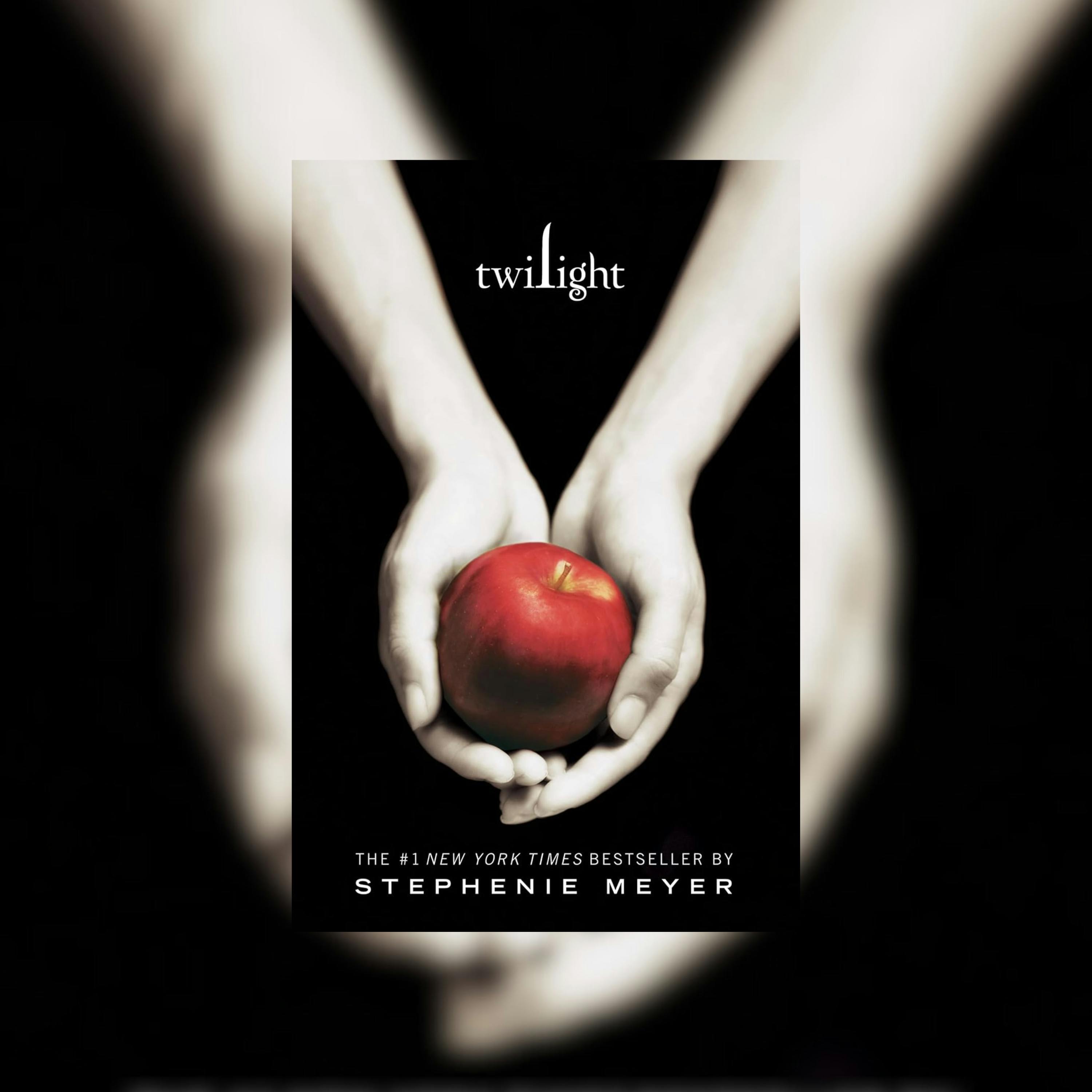
Well, there's an apple on the COVID There's no ain't an apple in the book, but there's an apple on the COVID The.
- [31:33]
D
The danger of temptation, that temptation makes you willing to put yourself in harm's way and take major risks. And the real, like glamorizing of waiting and of purity and of not giving into temptation becomes a thread throughout the rest of the series. Like, Edward refuses to sleep with Bella until they are married and later on they do get married and they do have sex and somehow she survives. But that. That they're talking about it and that there eventually is an overt conversation about waiting until marriage was one of the selling points. When I was a bookseller, moms would tell me, and it was always moms, because dads are not shopping with their teenage girls looking for books like this in the. In 2005, maybe they are today. But it was always moms saying that they really liked that they could give their kids a romance, but that it was clean, that they knew it wasn't going to have sex in it.
- [32:27]
A
I think too. And I'm. I'm picking up like, sort of echoes of what I could imagine the reading experience is like. There's kind of an element of the desire, the withheld desire maybe kind of is too much of an equivocation almost like when you. When you. When you feel the fever blister in your mouth, like, why do you do that? It's sort of that pleasurable pain. And there's some of that here. It's like the exquisite pain of being so flipping horny and not being Able to do anything about it, like, living right on that edge, like. Like putting. I don't know what part of a body. Edward didn't put his cheek on. A Bellas, like almost every single party put his cheek on. And that. That being right in that moment for 300 pages, essentially in this book. I don't think that's a bug. I think that's a feature.
- [33:11]
D
I think that Exquisitely Horny would be such a great alternate title.
- [33:15]
A
That's just what it is. And it's. It's almost painful how horny they are. And they can't. They won't. They can't. It's not allowed. Stephenie Meyer won't let them. Allowed. Vampire code. I'm still lost on the morals of vampire codes here a little bit, but that is where you spend most of the book. And after a while, I find it to be quite tedious. But I think that elongation of the withholding is the. That's the juice. That's the juice to a lot of this book. Let's talk about vampires.
- [33:42]
D
What a pivot.
- [33:43]
A
Because vampires have long been symbols of all kinds of stuff. Sex desire, you know, the occult, whatever else is going on here. These are versions of vampires, but they're sparkly vampires. And that was much derided. I think one of the first blog posts on book riot was, YA is more than sparkly vampires. So even 10 years later, that was a trope that was invented that people were feeling like they needed to go against. The paranormal was new too. But this is pretty. This is pretty light, and it's more mysterious. I actually kind of like, if I had a favorite part of this book, I guess by definition you have to have a favorite part. I like these early chapters where I can imagine reading it for the first time. You really didn't know what was going on. Like, it's hard to remember. Like, did people, like, what the hell is going on with these people that are, like, amazingly beautiful? Like, by the time you were reading it, Vanessa, did you know the deal where, like, you kind of knew they were vampires, or did you have, like, I don't know what's going on here moment?
- [34:40]
E
It was hard not to know because, again, I had watched it basically because the film was about to come out and someone was like, hey, you like stuff like this, like, vampires, occult, whatever. And I was like, okay, cool. So, like, I did, but I. Yeah, I don't know, maybe. Kelly, do you remember whether, like, the vampire thing was super clear when the books were first coming out?
- [34:55]
B
I don't really remember, but I do know. You know, one of the things that often comes up when adults talk about YA more broadly is, you know, they find themselves bored with YA or frustrated because they know how the story is going to go. They see how this is gonna happen. They've seen this play out and it's like, okay, but a 12 year old doesn't. And the book's written for the 12 year old who hasn't read 5,000 other books like this. And so I can absolutely see even now, young people who pick this up being kind of like knowing that it's a vampire book but not knowing how that part plays into it because they haven't seen it play out over and over again. They haven't read the vampire classics, they haven't read the books that have come, you know, in the wake of this one. And like, that is one of those things that is hard when I read to remember. Like, okay, you know, I'm reading this as an adult who's well read and knows literature, but if I'm a 12 year old picking this up for the first time, my experience is totally different because maybe I don't, maybe it is all new and surprising and fresh to me.
- [35:58]
D
I have a question. Do we think Stephanie Meyer has read the vampire classics? Because to me this reads like someone who is writing an ode to what she says she's writing an ode to. Like there's some Shakespeare, there's some Jane Austen, there's some Wuthering Heights. The vampire parts read to me like she did a 2005 Google.
- [36:16]
E
I think she did what Bella did where she chose her favorite search engine and then landed at vampires A to Z. And that is more or less how she came. Yeah. Like, it doesn't feel like the history.
- [36:25]
D
Of vampire literature is smutty as hell.
- [36:27]
E
Yeah, super.
- [36:28]
A
Yeah. Yeah.
- [36:29]
D
And I don't. This doesn't read like somebody who's into those components.
- [36:33]
A
And yeah, I think that part is interesting. I mean, she's aware enough. And maybe you don't, I mean, I don't know how much you really have need to know Dracula or the original stuff that even Dracula was based on in Balkan mythology. But I did find myself not knowing the, the general shape, but not knowing the plot. I wasn't sure who, if any, in Cullen's little mini vamp vampire cult would any of them turn on him. Like, there was some questions to me about how that piece was going to go because it's a little farther outside of, of the norm. Like I've done interview with a vampire and some of those kinds of things. But those questions were out there. I also don't know that and I don't know if this is. This is a marketing decision. So this is really going to be a Kelly question. Was it market as a. Were capital R romance readers picking this up at the time? Where did the adults get in on the romance thing earlier? I'm not sure how that would happen because I. I guess the question I guess has the answer in it, which I guess it can't be a capital R romance from the beginning because we don't know that they're going to be happy for now I guess is where they end up at the end.
- [37:35]
B
Yes. And also I can't answer your question because I don't remember.
- [37:38]
A
I don't remember. Yeah, yeah, yeah. But I think that part is interesting to see as well is that I don't want to as much. We talked a lot about ya. I don't want to ignore the romance piece of this. Like it's a. It's a romance. It's a love story that turns into a romance.
- [37:54]
D
How romance and how like YA with love stories were marketed in like in at least 2007, 2008 when I was a bookseller were pretty different. Like we're sitting here in 2025 in a moment where there's a lot of crossover between romance and fantasy. YA has really robust romance fantasy and YA subgenres that are part of mainstream reading and are marketed to mainstream YA readers. And that's new relatively. And it's partially or really to a great extent a product of this like romance was pretty siloed still in 2005. Like pre the blogging boom where romance readers found each other and created online communities. It was its own like little section of the bookstore.
- [38:39]
A
Much more clinch covers and spinner wraps.
- [38:41]
D
With the mass market paperbacks like we were. The idea that the some of the best selling books in the country in a given year we're going to be mainstream trade paperback romances would not. Would have blown our minds in 2005. I feel pretty comfortable guessing that there weren't a lot of just like adult romance readers picking up Twilight because it.
- [39:03]
A
Was certainly like they would today. Certainly not like they would be doing today.
- [39:07]
D
Yeah, today they'd be. It would be marketed right into that. Into that market. But that market exists because Those people were 14 at the time and they're 34 now.
- [39:18]
C
Today's episode is brought to you by Grove Atlantic publishers of the unveiling by Quan Berry People's Number one must Read Book of the Fall. The Unveiling is an astonishing ghost story about the masks we wear and the truths we hide, even from ourselves. Stryker, a black film scout on a mission to find a location for a big budget movie about Ernest Shackleton, finds herself on a luxury cruise in Antarctica surrounded by wealthy, mostly white tourists. When kayaking excursion goes horribly wrong. Stryker must survive a hostile environment, inner demons and deadly secrets, exploring abandonment, guilt and the limits of human connection. Barry affirms there's no such thing as haunted places, only haunted people. So this is a hotly anticipated new title from the author of We Ride Upon Sticks. The Unveiling is again people's number one must read Book of the Fall, A Town and Country Best Book of the Fall and named a most anticipated book a fall from literary hub YA girl and boys and non binaries at Book Riots and Time Magazine. So make sure to pick up the Unveiling by Quan Berry. And thanks again to Grove Atlantic for sponsoring this episode. Today's episode is brought to you by Hachette Audio, publishers of the audiobook Gone Before Goodbye by Harlan Coben and Reese Witherspoon. Now this is an unforgettable suspense novel that combines the storytelling talents of Academy Award winning actor Reese Witherspoon and international best selling author Harlan Coben. Gone Before Goodbye is the story of a woman trapped in a deadly conspiracy where uncovering the truth could cost her everything. So we have Maggie. Ms. Maggie McCabe is teetering on the brink, honey. She's a highly skilled and renowned army combat surgeon, yes, but she has always lived life at the edge where she could make the most impact. And it was going nice. It was going well. Until it wasn't. So now she is halfway across the globe. She has agreed to provide some rather uncomfortable, unconventional medical assistance to this person. And this person, her patient suddenly disappears while still under her care. Now Maggie must become a fugitive herself or she will be the next one who is Gone Before Goodbye. Okay, make sure to pick up Gone Before Goodbye. Give it a good listen and you will not be disappointed. Thanks again to Hachette Audio for sponsoring this episode. Today's episode is brought to you by Cider Mill Press, publisher of True Facts that Sound like bs The Cider Mill Press has a new book for you to know about, a collection that comes just in time for Spooky Season. You grew up reading fairy tales and watching movies about princes and princesses with magical happy endings, but have you ever heard the original stories? These battles between good and evil are tales as old as time. But they might have just a little more evil than you're expecting. So is this. This collection unmasks the true endings of these famous stories, inviting you to explore the shadowy histories of fairy tales across the globe. You can learn more@cidermillpress.com scary again. That's cidermillpress.com scary now. This collection offers a refreshing take on traditional fairy tales by revealing their original darker narratives. And it appeals to both fans of folklore and horror. So make sure to pick up the Scary Book of Fairy Tales by Tim Rayburn. And thanks again to Cider Mill Press for sponsoring this episode.
- [42:58]
A
Is there anything else we'd like to cover before we do a round robin of what it was like to read it over the last. Whenever y' all read this. Anything else we want to. Any. Any contextual cloth, throat clearing setup, backstory? We have. We have our normal things to do, but I think what we're ready for is what was it like to read this now? Anything else? No? All right, I'm seeing shaking heads. Rebecca, you're first in the document, so why don't you tell us what your experience was like of picking Twilight back up again?
- [43:23]
D
I was really glad that it reads fast.
- [43:28]
C
Fair, fair.
- [43:30]
D
You know, it opens, as I said, with this quote from Genesis and the purity culture stuff is all over it. And that's something that I had experience with in the late 90s and early 2000s and have a very critical personal reading of today. So it's impossible for me to, like, extricate that from my individual experience of this book. Also, this trope of like, a domineering man who's controlling and protective, but it's for your own good and because he loves you is so repetitive and also just not for me. This is not my flavor and it is just so repetitive. There's so much unnecessary description. Like Bella telling us about how she walked to the car and then she cranked it and then it was cold and she put her jacket on and she sat there shivering.
- [44:15]
A
One of the great car logistics books, by the way. Whose car are we taking? How are we getting there? Who's driving, how fast we're going, which highways we're on. It's unbelievable.
- [44:24]
B
But you got to remember this was a big deal in YA literature. It was a big deal to have a car. It was a big deal to drive. Like, that is what gave you your independence. We don't see it as much now, you know, for a lot of reasons. But like in 2005, like car culture and teen driving was a huge, like, that's true cool factor.
- [44:45]
A
That was like the first big reveal, right, is that her dad had bought her a car like that. She was shocked. And that was, that was very cool to see.
- [44:50]
D
And she is glad that she's not gonna have to rely on him because he's the police chief in town and otherwise she's getting dropped off at school in the cruiser.
- [44:58]
A
It's amazing.
- [45:00]
D
It is just there's a lot of like funny little details that I think are unintentionally funny in the book. The story structure moves a lot more slowly than the big YA hits that I've read from today, which admittedly are very limited. But I spent a lot of time in this reading thinking about what the like construction of a book for young adults reflects about the other kinds of media that young adults are consuming at the time, like the dopamine addiction from today's social media. I think we can't separate from how quickly and how there are constant cliffhangers in a lot of the big YA books. And there's, it's just like peril galore and something big is happening. And There are like three big things that happen in this book across 500 pages and only one of them is really like heart pounding at all. Most of the book feels like kind of low stakes and very everyday where in Bella's just ordinary experience. And some of that is also really pleasant. Like, oh yeah, I remember what it was like to be a teen girl in the 90s and just to go dress shopping with your friends. And it's refreshing that they don't have phones and they're not engaged in social media. Bella Waitsley, like four days after she makes the move from Phoenix to Forks, before she even checks her email to see if her mom has written something to her. Like, imagine four days without your email and that, that's just normal. Like some of those time capsule things were really enjoyable to me, but I landed really where Elizabeth Spires, who reviewed it for the New York Times in 2006, landed where she said the book suffers at times from over earnest, amateurish writing. A little more showing and a lot less telling would have been a good thing. Especially some pruning to eliminate the constant references to Edward's shattering beauty and Bella's undying love. Not the worst reading experience I've had in the last year though.
- [46:53]
A
Oh, that's a tease. Vanessa or no Kelly, you're up next on the document. We're going to be honest here. That's what people are listening for. So go for it.
- [47:01]
B
So I've got like four big things and the first is that I thought that reading this was like pulling teeth. There was one big thing worth addressing and it how much we really do get a teenage girl here. That's something that Rebecca sort of talked about. Bella is a bit of a mess, to put it nicely. But the way that she begins falling for this dangerous boy and the one who is ultimately controlling and annoying, always there to keep an eye on her partner, isn't beyond what it is to be a teenager in a new environment, especially after your life's been totally pulled out from beneath you. He's terrible, but he's stable, even if he's unpredictable. So there's some grounding, you know, that a 170 year old teenage vampire has when you're 17 and your parents are pretty much MIA, your husband or your mom's new husband is stealing her away from you and you've moved from one of the hottest and sunniest places in the US to the land of perpetual gloom.
- [47:51]
D
So like in the TikTok lingo, Bella is very parentified. Like yes, no one's ever taken care of Bella. She is raising her parents totally.
- [48:00]
B
So the second thing, and I, I, I think I touched on this very briefly before class was really interesting here and I wish that Meyer had kept at it before letting the story fall into the romance. Bella comes from very little and does a lot of remarking on her new classmates, on the cars they drive, on the lives they live and compares it to her situation. I wish it had gone further. I wish we'd had more because it was interesting and it was really interesting to think about those discussions in the 2005 context because they weren't happening quite as much. You know, there was, there were stories about poor kids, there were stories about rich kids. But like, what about those kids who are really actively like engaging with this difference in class and what it means? I, it's a point three, I wanted to know more about the people that Bella basically wrote off immediately. Like I wanted to know more about Mike, the first guy who spends time with her.
- [48:52]
A
Mike?
- [48:53]
B
Yeah, yeah. I wanted to know more about the female friend she went shopping with. There was a lot of opportunity here and I can't help but wonder if, if Meyer, were she given the opportunity to rewrite the story now in 2025, we'd see more of that, particularly given her own experiences supporting other women in the art.
- [49:12]
A
Interesting because, and then things go great for Bella at this high school. Like people are super Nice to her. Like, I have a son starting high school right away. Like I. And everybody thinks she's where you're sitting at the table right away. She gets invited to sit with the people. And I don't if they're cool kids or not. I don't care. There's kids and they want to talk to her. Everyone starts asking her out because apparently she's super hot. I guess she got like four.
- [49:35]
B
She got like four invitations to the dance.
- [49:37]
A
It was almost like a myth where you keep turning down the. The prince's hand in marriage until the vampire gets you. But, like, things were going great for Bella. And Fork. She didn't need.
- [49:45]
C
Right.
- [49:45]
A
Word. That's one of my hot takes, by the way. She didn't need Edward.
- [49:49]
B
My. My last point is, is one I know I brought up earlier and that I never realized Jacob was two years younger than Bella. And again, we're talking about this in the context of her and 170 year old vampire, right? And like, but I think it matters because there's a big difference for teens between the ages of 15 and 17.
- [50:06]
A
Like, you won't socialize with them. Like, it's a completely different humans in that level. I agree with you. I didn't think about that.
- [50:12]
E
Right.
- [50:12]
B
And so, like, it's not just age, but it's maturity. And I also don't think it was cast that way in the film at all. Which, like, like, as I'm reading it, you know, I can't help but continue to see, you know, the characters as the people who played them. And I, in my head, I'm like, but that's no 15 year old. That's no 15 year old. Yeah, that's where I'm going to end that.
- [50:32]
E
I'm.
- [50:33]
B
I'm more struck by the 15 to 17 year old age difference than the 17 to 170 year old age difference.
- [50:39]
D
I just now want to subscribe to an entire podcast of Kelly that's called a Scorpio revisits Twilight.
- [50:47]
A
Vanessa, we're gonna go to you. I'll. I'll hit clean up here. So why don't you go next, Vanessa?
- [50:50]
E
Okay, great. Well, as I already said, 20 something me clearly needed therapy is my, like, hot take because I was so interested.
- [50:55]
A
When was the last time you didn't. When was the last time you read this?
- [50:57]
E
Since I honestly hadn't read it. Again, since I was a teen, I've watched the movies a ton because I, again, I'm a person who, like, unironically and unapologetically loves the Fast and the Furious franchise if that tells you anything about me. Like, I don't need a thing to be good to enjoy it.
- [51:08]
C
It's.
- [51:09]
E
And that's. That's how I feel about a lot of Twilight. But I hadn't read the books in a really long time to the point where I even said to a. A coworker, I was like, did I actually read this? Because it doesn't feel like I would have because I found it such a slog. I will give you one to two pages of I'm a bad boy. I'm bad for you, and like, no, I love him. But this. I. We got that refrain, what? Like, every three pages, it felt like. And over and over again like, I'm bad for you to stay away from me. I'm gonna hurt you, but. But I can't, because I love you, so I may as well. And they. The fact that they say I love you to each other after saying maybe seven sentences to each other. How much repetitive talk about his cold lips and whatever, but his. She calls him a God and a Lord. I don't know how many times as an angel, I know I had to remind myself over and over again, as Kelly said. And that's when I came back around to, like, not being as harsh on it, that we are talking about a teenage girl. And that that whole daddy, I love him energy is not only appropriate for that age, but a thing that I think I probably experienced in my own life. I've talked about the fact that I was raised in, like, a conservative Mexican Catholic household, and it felt like I went from. From a parent raising me that way of like, no, you can't do this. You can't do that. Give me the keys to your car. You can't go anywhere. So that when I went out and forward, you know, into the dating world, I found that kind of concept romantic in a way that makes me now, but at the time I thought was cool. And when I read Bella, I do remember being like, oh, my gosh, she has so much more agency than I felt like I had as a teen. Because she. Yeah, like, as Rebecca said, she was parentified. Like, she was cooking for her dad the second she got in. She makes all the meals. She has her car. She goes and comes as she pleases. Is her dad is off on fishing trips, and so she can go have, you know, vampire sojourns in the woods. And I. I can see why I liked it at the time. I'm trying not to judge young Vanessa for Being as into it as I was. But adult me is like, why on earth would you sign up to be high school age forever? That sounds terrible. Have some.
- [52:54]
A
Yeah. Why? Why the. They couldn't have been junior editors at a newspaper for 10 years. Yeah, like. Like high school is like the worst. Like every three years you're gonna age out. That was the stupidest thing I've ever heard in my life. What about for 400 years? They're so dumb.
- [53:10]
D
Yeah. One of my notes is that vampires would have a better cover than this.
- [53:14]
A
And when did the doctor vampire go to medical school? Right, because he's this.
- [53:18]
D
Medical school is continuing ed.
- [53:21]
A
Germ theory didn't exist in 1917 during the Spanish flu. He doesn't know anything. He never went to medical school. He doesn't know anything.
- [53:28]
B
Look, Jeff, he's still doing better than a lot of people in charge of health right now, thank you very much.
- [53:33]
A
Maybe I want you to do a lot worse than your vampire doctor who got his medical education in the 17th century, I guess at that point. So. Yeah. So finesse. I think that's interesting because I was trying to imagine too, you know, I'm not trying to put myself into anyone's shoes, but like, I do remember when I guess we're just gonna get personal, or at least I am. I've been with the same person since I was 17. And I remember at 17 being in a serious relationship, or what I thought was a serious relations felt like being an adult. It felt like the most important thing in the world. And some of that for me was that my home life was not the most amazing thing it could have been at that moment. So it was a refuge for me. And it has been for, I think, as you hope it is to be refuge in the time. So that part I did get the. You're in this new place and you feel safe with someone. The thing that strikes me about that though, is that she doesn't feel safe. Safe with them from her initial attraction is so physical because they don't say anything to. They don't know each other at all. The way that love, desire, or whatever is formulated here is beyond primal. It's elemental, almost super. It is actually supernatural because it's some factor of whatever is vampire, whatever is combined with whatever pheromone she's shooting off whatever is in her blood. Like it's not even sort of about their personalities. Right? Like there's almost like a DNA or genetic thing happening where she is so attracted to him as prey, I guess, is what we're supposed to understand is that if he wasn't reformed, he would have just drank her blood. And like, that's, that's the desire. Like, it's so mad.
- [55:01]
D
We can talk about reformed vampires. We didn't even mention that.
- [55:04]
A
Well, that's what I think. I think that idea was super cool. This idea that reformed vampires, but like the reformed saints, reformed vampires. That's so strange to think about. Like versions. Like, the perfected version of this other thing is so wild. I. I do think there's an easy way of understanding most phenomenons, cultural phenomenons of being about a fantasy of some kind. Superheroes about a fantasy of power and agency for yourself, the ability to fix things. This one seems to be principally the fantasy of a teenage girl, let's say heterosexual, able bodied. All the stuff that goes into it here, of a certain kind of wanting, wanting to be wanted. Like almost a profound, that perfect way of wanting to be wanted. That person who is a paragon of control, even they cannot resist you because you've just got it. Whatever it is, is so. Whatever. You're so valuable, so hot, you're so interesting, you're so desirable that it breaks down the defenses of someone who's trained themselves to defend against this very thing and they still are subject to it. And they're in, you know, like, it's the Tom Haverford thing. He says, like, there's nothing sexier than a girl finding me sexy. Right. There's something to that here. There's nothing, there's nothing hotter than someone who's unattainable, who's so good looking, who should have a stock portfolio managing Warren Buffett's because they've been in the market so long, I hope they bought some index funds in the 70s. But like, he represents kind of a pure, ideal, problematic form of male desire. And she's the object of it, no questions asked. Who doesn't want to do that for a living?
- [56:41]
D
Yeah, there's a lot of like 90s teen movie in this as well. Like the 90s teen movie trope.
- [56:45]
A
She's all that.
- [56:46]
D
Yeah, right. If she just took her glasses off, we could realize. Everyone would realize how hot she is. And here it's just, she needs to move somewhere else and be with new people who haven't known her her whole life. And they see her the way that she's always desired to be seen. Everybody thinks she's a total smoke show. As Kelly said, four guys ask her to the same dance, she's like beating back.
- [57:07]
A
They just didn't have Those pheromones in the Northwest, she brought those Arizona pheromones at every turn.
- [57:12]
D
She's already done all the homework for all of the classes. Like, she is flying by. And the hottest guy in school, who normally doesn't socialize with anybody, wants to be with her and is willing to fight his own nature. Like, this goes back to the purity culture stuff. There was integral to that was the idea that girls are temptations that boys constantly have to resist. And that the. The best thing you can do as a girl is not be a temptation to a boy. And the most caring, loving thing you could do as the boy would be to resist the constant temptation that just the presence of a woman brought into your life. And they enact that dynamic so repeatedly here, where he's like, I can't bear to be around you, but I will bear it. Like, at one point, they're very, very close to each other. And she's like, I'm sorry, I'll move away. And he goes, no, it's bearable. And it's like what every girl dreams of.
- [58:06]
A
Vanessa, can we do Pacific Northwest corner for a second? Can we talk about.
- [58:09]
E
This is where I break out into.
- [58:11]
A
Because some of it was pretty cool. Like. Like I said before, the first 150 pages, when she's in News Place, you know, kind of navigating, as Rebecca said, it reads very quickly and some of it is very easy to read. And I don't mean that as pejorative. Like her sense of Bella walk getting through the world. She's pretty good at locating us in space and time and how things are put together. Like, I kind of felt like I knew that world a little bit. What did you think of a representation of our rainy, cloudy Pacific Northwest here?
- [58:37]
E
Yes. Because I was very much delayed. Sunny Southern California. And at the time that I read this, I remember I've always, I think, wanted to live eventually in a place with trees. So I found it alluring. Even if it was described as being super, you know, bleary and wet all the time. It seemed like it was. Yeah, sort of cinematic and like. And this could also be colored by the fact that the film had just come out and I hadn't seen it, but I'd seen the promo for it, and, man, you give me, like, a landscape of a bunch of trees with some fog, and I'm in, like, it doesn't necessarily matter. So reading it really sunk me into that, and it made me want to come and visit. Like, it. It worked on me, and it definitely set the Scene for all the things that we eventually get and was very convenient for.
- [59:16]
A
You know, I do think it makes it stand out like a Pacific Northwest setting. Like, the iconography is pretty recognizable. I've got a couple of weather notes for Stephanie Meyer. I don't know if she did any research here. If all the trees and roads are covered in ice. School is canceled. No one's getting in a car and driving to school. They're not doing that. And another thing that happens is two months after there's black ice, there are no wildflowers in a meadow in the mountains. We're six months away from that. So that's just my Pacific Northwest. Northwest notes there. All right. Anything else about reading experiences? Is that when you get out there, is there a version of this that's 100 page shorter? That's 40% better?
- [59:52]
D
200 pages shorter, maybe?
- [59:55]
B
Yes. Yes to that.
- [59:57]
A
Yes. Okay. How do you know if it's for you, Rebecca?
- [60:00]
D
I think if you're curious about the origins of some of the biggest trends in publishing today, Twilight is a must read for all the reasons that we cited at the top of the show. It paves the way for 50 Shades of Gray, which is Twilight fanfic inspired by Bella and Edward's relationship. That opens the door to spicy romance being in the mainstream in a really serious way. Those things combine and lead to what we have happening with Romantasy today. So if you really want to understand, like what the building blocks were in not just a theoretical sense that we're giving you here, but in the having read the books, you should pick up Twilight. If you like the trope of the really normal girl and an extraordinary guy, that's a thing in romance. You're gonna get a lot of it here. And if you want the yearning, if that is what you're looking for, there is just so much yearning. So much yearning and so much longing. If you prefer that to having the sparks fly or you're leaning more towards, like a closed door romance, this first book is for you. The door does not stay closed for the rest of the series.
- [61:05]
A
Yeah, I think that's fair. So, Vanessa and Kelly, one thing we do here is we're talking about modern classics or classic classics. What questions that are asked and which of these are messed with here? I'm not actually sure. This should be an interesting segment. What is the good life? What do I owe my neighbor? How do I know what I know? Is this all there is? How to deal with a certainty of death? What else might there be? And what's the deal with good and evil. We could also, if there's a different question that it. That it's interested in, we could enter it here. Do any of these seem central to this?
- [61:39]
B
I think a couple of them do. I think your last one there. What's the deal with good and evil? Certainly plays a role here.
- [61:47]
A
And what is the deal with good and evil here?
- [61:50]
E
I think the vampire thing really gets. I'll let Kelly.
- [61:53]
A
I mean, agency is part of it, right? Like, you can choose.
- [61:55]
B
Yeah, yeah. I mean, that's a big part of it. I also just think good and evil when it comes to, like, what your desires are. I think to the other question you bring up here, how to deal with the certainty of death is a central theme.
- [62:12]
A
Exactly. Yeah.
- [62:13]
E
Welcome it.
- [62:14]
A
Which is what? Like there's a way out. Like this fantasy of there being a way out.
- [62:19]
B
Yeah. I mean, I guess the immortality of.
- [62:23]
A
Vampires is generally perceived by the vampires as that curse, right? Like, if you're mortal, you think, well, that's cool. And the vampire's like, I'm not so sure. And that's always an interesting one. I think that's an issue of dealing with that same question of, like, how do we wrestle with our own human mortality? And it's a. It's a contra example. It's a negative example. Like, what it would be like if you really weren't mortal. What would the consequence of that look like? I think there is a. What is the good life here, right? There is a. Is it love? Is it running away with the one true whatever and leaving my. My friends and my family and my education and my personal will and agency, all for, you know, a God, a walking God amongst us. I think what else might there be is interesting, right? Because as soon as you enter in a world in which they're vampires, the whole world is different than what you thought. There is so much beyond this mortal coil to explore and experience. And I do wonder at some point, understanding her desire for Edward is a desire for the knowledge of the rest of the world, of seeing the big. Seeing everything that's out there and what might be there. Rebecca, you're smirking at me.
- [63:25]
D
Well, I mean, Edward as knowledge of the rest of the world is really like, is Edward the snake in the Eden? You know? Well, that's construction.
- [63:32]
A
I was gonna get to that. Right.
- [63:33]
D
Because is he the fruit of the tree?
- [63:36]
A
Do we think that the book thinks they are weak for desire? Like, are we supposed to be pulling for them? We're supposed to be pulling for them to get together, right?
- [63:45]
D
Yeah, but we're supposed to be pulling for them to get together and then be strong enough to not have sex until they get married.
- [63:51]
A
That's what we're pulling for. Okay. That's really what it comes down to. That's so beyond my pale of caring that I forget that people care about that. Anything else about the immortal questions?
- [63:59]
E
I was just gonna say that, though. What else might there be? And the certainty of death reminded me of the conversation that I had with Rebecca and Danica about another vampire book, which is Bury Our Bones in the Midnight Soil. And the way we compared it to the boom and, you know, huge release of Sinners. The concept of those books treating death as, like, freedom. And that is very much how, like, as far as, you know, is that all there is? That, I think, is how Bella has viewed her entire life. She on a lot about that over the course of four books, is her looking at her clumsiness and her state of being and how awkward she's been is all leading up to this moment of her being destined for some bigger purpose. And that bigger purpose is being undead, where she welcomes it with this, you know, romantic paint job. That obviously is interesting, but I don't know, I just love the way it meditates on a theme that we see a lot in vampire fiction.
- [64:46]
A
This might be the easiest version of this question. Are we sure this isn't about art and writing? I'm pretty sure if we're ever going to do this, I don't think this is about art and writing. Am I wrong? I'm not even gonna torture.
- [64:54]
E
I think we're good there.
- [64:55]
A
Okay. I don't know who put. Oh, actually, I do. Let's do best and worst lines.
- [65:02]
C
Are.
- [65:03]
A
Is there a good line? Did we put these? Any of these are in there for good reasons? No, I'm not. That sounds terrible, but I don't have any good ones. No, I don't think we put any good lines.
- [65:11]
D
None of the ones I entered were because of the goodness.
- [65:14]
A
Kelly, you put one in. Why don't you talk about the one you put in?
- [65:16]
B
Oh, yeah, the one I. I. Every time she talked about smoldering in reference to Edward's eyes, I. My eye rolls were causing some smoldering.
- [65:29]
E
On my end, but they were topaz. Kelly, never mind that topaz comes in, like, five, six different colors. Or topaz colors unless they were black.
- [65:36]
D
Unless they were hungry.
- [65:37]
A
Are you gem tone? Are you gem tone shading her? Come on. Let's be careful.
- [65:42]
E
Sorry. No Of a quote that didn't make it in here, but because she just said it, which there's literally a quote where she says, I have noticed in my by observance, and it's usually men that when they're hungry, they're grumpier. Like, that is an actual thing that gets said in this book.
- [65:52]
A
Did Stephanie Meyer invent hangry? Is that what you're saying, Vanessa?
- [65:56]
E
That's hot. Take.
- [65:57]
A
Anyway, she's the first one to spot that low blood sugar.
- [65:59]
E
But, Kelly, we need the quote. Please give us the quote.
- [66:02]
A
Please give us the quote.
- [66:03]
C
What?
- [66:04]
E
Read the quote. I have to. I have. Somebody has to read it on the podcast.
- [66:07]
A
The top one.
- [66:08]
D
Oh, the top one is mine.
- [66:10]
B
I only. I only put one in there.
- [66:12]
D
Gather round, friends. Friends.
- [66:13]
E
My bad. Yes.
- [66:14]
D
About three things I was absolutely positive. First, Edward was a vampire. Second, there was part of him, and I didn't know how potent that might be, that thirsted for my blood. And third, I was unconditionally and irrevocably in love with him.
- [66:31]
A
Tough.
- [66:32]
E
I have known him for two weeks. I am 17.
- [66:35]
D
I recited this to my husband the other night, and he just looked at.
- [66:37]
A
Me like, have you had a stroke? You. I don't know how many times perfect muscles were described. This is. It's almost to the point where an editor should have caught it. Like, can we do something else with describing the muscles? Like, that happened a lot. There was estrogen rush. Vanessa. I. I guess I for. I maybe skipped over this as I was rushing through this one.
- [66:57]
E
Yeah, she's a really bad friend to her girlfriends. And, like, as Kelly said, I wish we would have spent more time talking about, like, her girlfriend shows, especially because they're all so receptive to her. Like, they're kind. They welcome her in. They're, like, trying to make her a part of things. And the minute Edward so much as glances in her direction, she's like, bye. But she does go on this girl's night out for a shopping trip for dresses. And she says it had been a while since I'd had a girl's night out and the estrogen rush was invigorating. And I am absolutely going to say that to any group of women that I hang out with. Like, do. Do we feel it? Is the estrogen rushing? Is it.
- [67:27]
A
I'm telling you, pheromones. This is all pheromones and hormones.
- [67:31]
D
Pheromones. The number one crime that was committed in this book is Bella or Edward saying to Bella, if you didn't smell so appallingly luscious.
- [67:43]
E
And that's where we all leave.
- [67:44]
A
I'm bringing one thing for you, everyone. Today. The number one quote from Twilight on Goodreads, the most liked quote by a factor of ten.
- [67:54]
D
Hit us.
- [67:55]
B
Wait, can I guess?
- [67:56]
A
Yes, please do.
- [67:57]
B
Kelly, is it the line about the lamb?
- [68:00]
A
No, that's second. Very good guess. Excellent.
- [68:03]
E
Why didn't I put that in here? Oh, my God.
- [68:04]
A
The first one is, I like the night without the dark. We'd never see the stars. Which is like that brand of faux poetry.
- [68:12]
C
Yeah.
- [68:12]
A
Like, everyone literally knows this, but I guess there's a tween somewhere that hasn't encountered that line before.
- [68:18]
B
We all put that kind of line.
- [68:19]
A
I know.
- [68:20]
B
Aim away messages.
- [68:21]
A
That's right. Yeah. It's like they always say, someone's born every minute that hasn't seen the Flintstones Stone. Someone's born every minute. The second one is. And so the lion fell in love with the lamb, he murmured. I looked away, hiding my eyes as I thrilled to the word. What a stupid lamb. I sighed. What a sick, masochistic lion.
- [68:41]
E
If you've not seen the synagogic version of this, I entreat you to do so immediately.
- [68:45]
A
I was going to ask you. We got to. We got to run through some of the rest of this. Vanessa has the best note of any of us here. Dicing double question mark enchiladas, triple question mark.
- [68:55]
C
I.
- [68:56]
E
Okay. I always do this thing where I'm like, okay, you are from one part of Mexico. There are many parts of Mexico. There are many parts of Latin America.
- [69:02]
A
Hashtag not all enchiladas.
- [69:04]
D
Bella Swan is not from any of the parts.
- [69:06]
E
I spent an hour on the good YouTube trying to find somebody making enchiladas with diced chicken because she talks about how she's dicing chicken for enchiladas. What are you talking about? Like, enchiladas do not have to be with chicken, but if they're with chicken, it is shredded chicken.
- [69:20]
A
Vanessa, I'm sorry to tell you that. That my white people have done things to enchiladas your people cannot imagine.
- [69:26]
E
I was so angry. Like, unnaturally angry. What do you mean you're dicing chicken for enchiladas? The part that I did laugh, that I did not put in here is the part where she reheats lasagna for her and her dad and then does the most Vanessa thing there ever was, which is to pour each of them a glass of whole milk. I felt seen, but that's the kind of thing that generally gets me labeled a serial Killer. So I just wanted to call that.
- [69:45]
D
Out for like lasagna and a glass of milk. What psychopath paths are these?
- [69:49]
A
I don't think Mormons are lactose intolerant. That's what I learned. So much that Jean doesn't.
- [69:53]
E
That's so much dairy.
- [69:54]
A
That's my, my night.
- [69:56]
E
So much dairy.
- [69:57]
A
Above re appalling Stephen Meyer. You can tell he's in your 30s. Cuz the dad here must have been his 40s. No, 40 year old dad who's been working all day is coming home to a hot huge plate of lasagna and a glass of whole milk. It's not happening. We're going to the hospital if that happens.
- [70:11]
E
They ran out of fish.
- [70:13]
A
There was no they ran out of fish. I have a question for you here, Vanessa, that I want to add to our ongoing agenda. Rebecca. So we'll try it out here. Could you get most of the gist of this thing having watched the prime adaptation of it?
- [70:28]
E
Yes, because I watched it immediately after to ask myself that question. It varies very little. There are some little key bits that they get rid of, but I could have just watched that instead of reading this. And I would like down to some of the uncomfortable quotes like she doesn't dice the enchiladas. I would have saved myself that part. But almost of the major quotes, quotes, the cringy stuff like the repetitive. I guess we don't maybe get as much of the monologue about her finding him gorgeous. But as far as the actual gist.
- [70:53]
A
Of what happens, even the screenwriter couldn't handle saying that they were.
- [70:57]
E
Yeah, again the masochistic lion bit. If you could outrun me. Like it's a whole thing. But yeah, it's, it's. It's a thing.
- [71:06]
C
Today's episode is brought to you by Harlequin, a leading publisher of romantic fiction delivering feel good high stakes and heart pounding stories across every kind of love. Love. No matter what kind of romance you love to read, Harlequin has it for you. And in one of their latest books, Accidentally Wedded to a Werewolf by Isabel Taylor, we've got some snowed in goodness. We've got some small towns and some unusual residents. So when a snowstorm hits during her travels, Luna Stack finds herself stranded in Clawhaven, Alaska, a cozy small town with more than a few unusual residents. Well, things go from bad to complicated when Luna accidentally drinks a potion that tethers her to Oliver Musgrove, the local grumpy innkeeper who also happens to be a werewolf. Now these two opposites are stuck spending the winter together while they wait for the antidote. And although they might not want anything to do with each other, the bond says otherwise. Make sure to pick up Accidentally Wedded to a Werewolf by Isabel Taylor. And thanks again to Harlequin for sponsoring this episode.
- [72:16]
D
When did making plans get this complicated? It's time to streamline with WhatsApp, the secure messaging app that brings the whole group together. Use polls to settle dinner plans. Send event invites and pin messages so no one forgets mom 60th and never miss a meme or milestone. All protected with end to end encryption. It's time for WhatsApp message privately with everyone. Learn more@WhatsApp.com Imagine fast hydration combined with balanced energy. Perfectly flavored with zero artificial sweeteners. Introducing Liquid Ivy's new energy multiplier, Sugar free. Unlike other energy drinks, you know the ones that make you feel like you're glitching, it's made with natural caffeine and electrolytes so you get the boost without the burnout. Liquid IV's new energy multiplier, Sugar free hydrating energy. Tap the banner to learn more.
- [73:12]
E
Yes.
- [73:12]
A
All right, we're on to trivia adaptations, rumors, mischievous quotes, whatever. I don't know who put this in here. Let's popcorn it. Anyone want to take anything?
- [73:18]
D
Oh, yeah. This top one is me. Twilight fans still flock to Forks, Washington. I was there a couple of years ago in the Olympic Peninsula. And you can go to a diner that sits on the line that marks the division between vampire territory and werewolf territory, which we learn about later in the books. There are also tons of stores that have like Twilight art and memorabilia. I have a picture of my face and a little cardboard cutout of Bella and Edward's wedding scene. And my favorite one is that you can go to the restaurant in Port Angeles, which is slightly smaller town where Bella and Edward go on their first date. And you can go to the restaurant or like something similar to where they go and reenact the first date, which as recently as 2022 is a thing that people were still doing. Folks at our hotel told us about it and the way the couple young couples would do this is go to this restaurant and the girl would order the mushroom ravioli or like whatever the closest thing on this menu is. And the poor guy would just sit there and not eat anything because Edward is a vampire, so he doesn't need food. So if you're reenacting, if you're cosplaying the first date, because if you don't.
- [74:22]
A
If you ordered something, you'd be like, well, maybe that guy isn't a vampire. You may not be.
- [74:26]
D
Right.
- [74:27]
E
Gotta commit to the bit.
- [74:28]
A
What else do we want to hit here?
- [74:30]
E
Mine's related. I'm just gonna jump in real quick. Which. Is that the actual house, like, that's. It's not in Forks, but the house, the Bella house, the Charlie house, is an actual.
- [74:37]
A
From the movie.
- [74:38]
E
Yes, from the movie. Yeah. That you can actually stay in. It's not in Forks. It's actually in the same town that you can go to that is Halloween town. Like, the recreation of, like, that movie. So, like, if you're just wanting a.
- [74:50]
D
Bunch of fall Kelly's Googling airline tickets.
- [74:52]
B
Right now for Halloween, I have gone.
- [74:54]
E
It is absolutely ridiculous. Ridiculous. But I. Yeah, the house is there. And of course, they've got it kind of cordoned off. So a bunch of looky loos don't bother you if you're staying there, but you can actually go stay at the house.
- [75:02]
A
I did have this question while reading. I don't put this in here, but the mythology of the local native folks, I was like, I'm sure that wasn't handled super great. And it turns out that wasn't the.
- [75:11]
D
Way that Bella first starts to learn that Edward is a vampire is when she first meets Jacob Black and she and a bunch of kids are down at the beach. Jacob is a member of one of the local indigenous tribes, and he starts. Starts telling her that there is mythology going back generations in his community about how his people descended from werewolves, and they have this ongoing battle against the cold ones and that the cold ones are vampires and that many people believe the Cullens are indeed cold ones. Stephenie Meyer did get some criticism and some hot water from the actual Quileute people today for misappropriating their mythology. But also, I think that was much more common in fiction in 2005 than it is today. This would be like a cancel culture conversation, like, end. Stephenie Meyer now is the thing that would happen if somebody really took a story like that to the extent that she did, but pretty common for 2005. And I think she, you know, discussed it and made repairs to the degree that you can when the books are already out the gate.
- [76:10]
A
All right, it's time for Hot Takes. Rebecca, you're up first.
- [76:14]
D
The 50 Shades fanfic that was inspired by this. It really did take a lot of heat, but the relationship dynamics of Fifty Shades of Gray are actually healthier than what happens in Twilight. That's my first hot take.
- [76:29]
A
My only hot take I didn't write here is related, which I didn't really get why 50 Shades happened until I read this. Like, I get it now. I get if you were a fan of this book, you're like, just flipping bone. Just come on, let's go. And I get it. I see you, E.L. james. Understand it. Not my choices, not my body, but I get it. I understand. Kelly.
- [76:54]
B
Yeah. I don't know why I've got extra letters before my name on this.
- [76:58]
A
It was so hot. Your fingers were burning.
- [77:00]
B
I had a lot to say. I have two hot takes, so my first one is, you know, we have talked about all the reasons that this book is important, but I think you can get away with not reading it and still be web read as long as you know the context, history, and related outcomes of the book. And so that leads to my second hot take, which is that back when I was a teen librarian is when the graphic novel for Twilight came out. And I remember. I remember reading it and thinking it was really quite good.
- [77:27]
A
You know what? I believe that because there's less dialogue.
- [77:30]
B
There's less dialogue and you get the images right? So I would say if you're going to read it, to be well read, try the graphic novel and see how that goes for you.
- [77:41]
A
Diaz, you didn't have one here, Anything.
- [77:44]
E
No, the one hot take that I have, which is not super hot take, but if you just want to laugh, is that obviously Stephanie Meyer has been asked whether or not her Mormon faith, like, informed the book, and she has gone on record as saying no. But I, you know, I. I think your experience just bleeds into the art you make, if we want to call it art. And if you just.
- [78:00]
D
There's two bits.
- [78:01]
C
Shade.
- [78:01]
E
Shade. I'm so sorry. But if you pay attention to the clothes that she describes and then go look at what Tumblr was doing to those characters.
- [78:08]
A
I had a khaki skirt moment. Moment.
- [78:10]
E
Kathy start with a blue top, and then she describes Edward as having, like, a collared shirt on, but then he goes into the meadow and reveals himself to her and unbuttons it. But she talks about it being sleeveless. So there's some really great Tumblr mashups of what both of those outfits would look like. And I implore you to go look for them and have a nice cackle. So, yeah, and that's fine, girl. Like, that's. It was a product. That's your culture. Of course, you, like, wrote it into your books. But, like, let's be real. The Purity. Culture alone is something to reckon with.
- [78:35]
A
I was thinking about, is there a version of this? Where could you remake the movie today? Would there be an appetite for this? Because we're getting remakes of stuff that's not that old right now. This launched a couple careers. We're not doing the movie here. But, like, I think you could remake this now and again. I think it still works. I think.
- [78:55]
B
I think you can. Honestly, I think you can skip remaking it and just throw it back in the theaters. Just what's happening? Well, yeah, yeah. I mean, as we're recording this, Jaws hit theaters for the 50th anniversary and was like one of the top box office hits of the year. I think that we'll see the same for Twilight.
- [79:13]
E
Yeah, Yeah, I think so.
- [79:15]
A
Read alikes. Where should we go?
- [79:18]
B
I am happy to jump in on this one. Take it, Kelly. I've got two here. I would call them less read alikes and more read alongs with this one. So I wrote a story for School Library Journal two months ago about the pop cultural like staying power of Twilight. And it talked to a bunch of librarians and authors as well as folks in the publishing industry about what they remember from when Twilight came out and how it impacted them and their art and their work to this day. And I talked to a couple of authors who were never fans of Twilight. And honestly, I thought that their answers were as interesting, if not more interesting than the folks who were like, super into this. And so these two recommendations come from two of those authors that I talked to. The first being Man Made Monsters by Andrea L. Rogers. Rogers was inspired to write a vampire book. So this book that did everything exactly the opposite of how Twilight did it.
- [80:17]
A
She Costanza ed it.
- [80:19]
D
What if no.
- [80:20]
B
Yeah, yeah, exactly. So this is the what if no book. And then the other one I wanted to recommend is Sunhead by Alex Hassan. This is a graphic novel that came out last year and it's not. Not solely inspired by Twilight. The author is not a fan of the book. But it is this really interesting coming of queerness graphic novel that grapples with a lot of the same topics as the series, including relationship dynamics, society's expectations of gender, and then how queer folks interact with heterosexual texts, which is something that has a long history in the Twilight fandom. So that would be the other one. So Man Made Monsters by Andrea L. Rogers and Sunhead by Alex is Hannah.
- [80:58]
E
I have one.
- [80:59]
A
Yes, go for it.
- [81:00]
E
Yeah. Midnight is the Darkest Hour by Ashley Winstead, which is kind of a murder mystery. Thriller, but it is also a meditation on feminism, on obsessive love, religious zealotry and class. But the book is both a little bit inspired by Twilight, but like one of the main characters, she is this basically the 17 year old daughter of a pastor in a conservative small Louisiana town who reads as they're described as heretical texts. One of them is Twilight. She looks to Twilight as a bit of like a love roadmap, which is obviously wrong for several reasons, but it is an interesting mix of Spiral by Twilight. Kind of digs into the problematic parts of Twilight and what it might be like if you took that kind of text as something to. To follow. It was a really interesting read.
- [81:39]
A
I didn't write mine, but mine here is if you want to do the classic version of it. I couldn't help but think about Pride and Prejudice the whole time because the Bennet Darcy dynamic is I think much more interesting. But he is extremely wealthy, right? He is the vampire of like these kind of. He's like he's got everything. He's almost all powerful. Like the whole town revolves around just him being in town because he's got so much money and he treats Bennett so coldly, like he's just a stone the whole time. And he falls in love with her so hard that he can't help but be like he says, he says if I could, I would not love you so much. And like the famous Matthew McDonald hand clinch and 1990, like that is there. And then Elizabeth Bennet herself is like charming. Like you kind of get it right. Like you're supposed to sort of fall in love with her, her as. As she falls in. The difference of course is like the reason she ultimately cares for him is because of something he does. Like he does an act of sort of quiet generosity versus just Edwards. I think the muscles were described as perfect. I'll have to check my notes on this if that's how they're described. But like it's physical of course, to some degree, but it's much more of a meeting of the minds kind of a situation and the flirtation is the dialogue, the, the action in those books, books between them is the dialogue between those two characters. So if you love Twilight as a tween and never have made it back to Pride and Prejudice for whatever reason, again, classics are classics and it's 300 years old. It's kind of all that stuff that goes with it, but the, the virtues and delights there are not, they're not, they're not different species of attraction which.
- [83:10]
D
I think is a compliment to Stephanie Meyer because she was so inspired by it.
- [83:14]
A
Yeah. I mean he's like is it a compliment that said you did the thing but worse?
- [83:19]
D
I don't know, maybe you executed on your influences.
- [83:24]
A
I guess or I guess I didn't completely miss that. Like that. I'm saying it suggests that she sort of hit the target in some degree. All right, is your to well read score? Each ones gets a score from 1 to 10 with 10 being the highest historical importance. Let's see. So it's not 2,000 years old. Like this is not a classic. Classic. So it can't be a 10 or an 8 or 9 really. But I think based on what Kelly says in my own cultures I think this is like a five or six. Six. I think it's. It's up there. Like it's. It's going to be hard to be a seven but I'd say five or six for a modern reader.
- [83:54]
D
And like for Yalls reference we gave Gatsby Like a 7 or an 8.
- [83:58]
A
Yeah.
- [83:58]
E
Oh, interesting.
- [83:59]
A
Like a 10. You have to be like the Bible. Like you have to be just sort of a pillars of the earth sort of a situation. Kelly, any thoughts about a five or six there?
- [84:06]
B
Yeah, I mean I was going to say seven only because it is so historically important to ya and what YA has been. But if we're looking at it from a broader perspective, I would give it a good five. Five and a half.
- [84:17]
C
Yeah.
- [84:18]
E
Okay.
- [84:18]
A
I think that makes sense. Go with the 5 readability. I mean this one's interesting. It's. You can blow in a way. It could be a 10, Vanessa, because you just blow through it.
- [84:29]
E
That doesn't sit well with.
- [84:30]
B
Not all of us blew through it.
- [84:31]
C
Oh you didn't.
- [84:31]
A
Okay. I mean I was flipping through now maybe some of that was. And I wasn't looking at everything.
- [84:35]
E
Well, there's blow through it. Like can you do it quickly? And there's blow through it like was this. Is it? Because it was just so readable. And what is. Yeah, I'm. I can't go 10. I'm.
- [84:44]
A
No, no, I know.
- [84:46]
E
Yeah, yeah, I'm.
- [84:47]
D
But you're not read and compelling read are not the same.
- [84:51]
E
Those are. That's a better way to put that.
- [84:53]
A
So maybe a 6 somewhere. 7.
- [84:57]
E
6.
- [84:57]
D
7. Let's go 7.
- [84:59]
A
Current relevance of central questions.
- [85:04]
E
That's a toughie.
- [85:05]
A
That's a tough one.
- [85:08]
C
Four.
- [85:10]
A
Four.
- [85:11]
C
Okay.
- [85:13]
A
Because it's about some stuff but also totally not.
- [85:16]
C
Yeah.
- [85:16]
E
And the regression of purity culture isn't.
- [85:18]
A
Something I book nerd read cred. I have. I want to try something out on you guys for this. And I don't know if this is fair. I don't know if this is centralizing whatever, but I think if you're a dude that has read this, you get more read cred than if you're a woman who's read this. And I don't know that that's.
- [85:37]
E
Yeah. I'm trying to think if I know a single in my own and, like, whether I would have ascribed that. I do. Yeah.
- [85:43]
A
I think because, like, if someone said to you, like, I read this because I want to see what it was about, you'd be like, well, that's kind of interesting.
- [85:47]
E
Yeah. Whether or not that's. Read this.
- [85:49]
B
I was going to say we need to talk about that.
- [85:52]
E
Excellent note.
- [85:52]
A
Excellent note. Yeah, but putting that to the side, just straight up, you know, you're filling out a form what books you've read. It can't be a one. Three, Four. Three.
- [86:08]
E
I'm going with four.
- [86:10]
D
Four for me to be good with four.
- [86:12]
A
Okay. The oh, damn factor. This one takes a little explanation. This is. Can you believe books can do this? I was blown away. Transcendent.
- [86:21]
D
Kelly's laughing.
- [86:22]
A
You believe that she's what you're waiting for. Kelly. So 10 for Kelly. Kelly gives it a 10 on OJ.
- [86:27]
B
Time's all the way down for this one. I'm going to give it, like, if I'm being realistic, I don't know, one and a half to ye.
- [86:34]
D
I think a one, one, one or two.
- [86:36]
A
Okay.
- [86:37]
D
Okay.
- [86:37]
A
All right. All right. So that 12, 16, 21, 50, our lowest score to date, but not a surprise. Not a surprise. But I think that does maybe argue for bumping historical importance change over time. Because recency bias can be. No, it's not recency bias. Like things that are closer to us in time. Especially when it comes to cultural phenomenon, I think I'm willing to bump that up to like a 7x. When I think about it that way, just in terms of the yaedness of the romance, the romantasy paranormal romance, like all the things that happened after, I think it has to be higher than a 5.
- [87:09]
D
It is such an important domino. Like if this domino doesn't fall, I really don't know that we get to 50 shades of gray. Well, we don't get to 50 shades of gray because it's directly inspired by this. But I don't know that we get to spicier romances going mainstream and that that leads the way. To romantasy also for all the work.
- [87:28]
E
That Kelly laid out about the It's YA alone.
- [87:30]
B
I just feel like you have to go seven. Yeah, I mean I, I think back and I think that this is important context too. If we had not gotten Twilight, would we have seen we need diverse books happen? Would we have seen a growth in diversity? You know, I think about a book like Ash by Melinda Lowe, which came out in 2009, I believe and I believe believe she's written or talked about. If it weren't for Twilight, publishers wouldn't have taken a chance on her books. She was published. I think that book was published by the same publisher. So they had Twilight money to take chances on the kinds of titles that weren't really being picked up before because.
- [88:10]
A
Like there's gold in them, their hills worthless. Scratch a lottery ticket. Maybe those will be the next Twilight one of these YA stories.
- [88:15]
D
Right, right.
- [88:16]
B
Well and like I said before, it really built up a true mid list. And if we look at YA right now, the mid list is shrinking because they have not had the kind of juggernaut that Twilight has been. You know, there's been big sellers. I don't want to say that there haven't been, but it's very different now.
- [88:35]
C
Yeah.
- [88:35]
D
The big landscape sitting behind Colleen Hoover and Rebecca Yaros and Sarah J. Maas.
- [88:40]
A
Now with adult fiction and with science, I mean the science is, you know, eventually someone's gonna discover nuclear fusion. Right. Like, you know, they have. There's inexorableness to that. Whereas with art it's different. Like if Stephenie Meyer didn't write Twilight, it's not like someone's gonna write it two years later. This was not inevitable. This is gonna be a thing. Yeah, it's very voice is so historically contingent.
- [89:01]
C
Yeah.
- [89:01]
D
I think it's very like Stephenie Meyer walked so that Rebecca Yarros and Sarah J. Maas could run.
- [89:05]
A
I think Stephanie Meyer ran with the bag for a while. I think she's doing okay. I don't think she was just walking on that particular. Well, this, it's.
- [89:12]
D
It's metaphorically.
- [89:13]
E
Yes.
- [89:14]
A
Metaphorically, yeah. What a phenomenon. Again, if you weren't around in 2005. It's. It is very difficult to describe how much a phenomenon. We haven't seen anything like it in the last two decades. I don't think even the fourth wings onyx storms of the world haven't had the same sort of cultural weight that Twilight.
- [89:30]
D
Comparing their book sales like of that 160 million copies that Meyer has sold in the last 20 years. 60 million of them were in in two, in two years together. She was the best selling author in the US in 2008 and 2009. Like 28 and 29 million books per year in each of those years.
- [89:49]
C
Wow.
- [89:50]
D
Unparalleled.
- [89:51]
A
I was talking not even close to.
- [89:52]
D
Like what fourth wing did I was talking or fourth wing didn't even come close to her.
- [89:55]
A
Our middle school librarian now is having conversation. People are still picking up at the library. The tweens are still picking it off the shelf and it seems like sort of comes in waves every few years. And I don't know what that is but, but it's going to be around for a while. Kelly, thank you so much. Kelly Jensen, Vanessa Diaz, thank you so much. I had more time talking with you about the book than reading the book, but that's why we're doing this to some degree. Thank you so much for joining us. Show Notes Book riot.com Listen, you can email us at 0towell read.com 0to well read is a proud member of the Airwave Podcast network.