
Podcast
1001 Radio Crime Solvers
Hosted by Host Jon Hagadorn. All stories in public domain. · EN
Welcome to 1001 Radio Crime Solvers - where you can enjoy the best radio detective stories from the golden age of radio. This was a time when TV was still in its infancy and radio was in its creative heyday- using top writers and top talent to capture huge audiences, and shows featuring hard boiled detectives like Sam Spade, Richard Diamond, Philip Marlowe, and Johnny Dollar competed for prime time with mental sleuths like Agatha Christie's Hercule Poirot, G.K. Chesterton's Father Brown, and Arthur Conan Doyle's Sherlock Holmes. And here you'll find standouts -like Dragnet's Joe Friday, Vincent Price's 'The Saint', and Michael Waring's free-lance troubleshooting investigator 'The Falcon'- to name a few. We release new episodes every Sunday at 5pm ET.
We're a proud part of 1001 Stories Network. www.1001storiespodcast.com.
188episodes
Episodes
Newest firstAll episodes

THE BIG WANT AD and THE BIG SHOPLIFT
Yesterday00:56:52Summary ready1001 Radio Crime Solvers Show Notes – Dragnet: "The Big Want Ad" & "The Big Shoplift" THE BIG WANT AD In this tense and tightly wound Dragnet case, Friday and Smith find themselves chasing a criminal who hides behind the most ordinary disguise imaginable — a classified advertisement. When a series of "help wanted" ads begin leading unsuspecting job‑seekers into danger, the detectives uncover a pattern of fraud, intimidation, and escalating violence. The suspect is clever, manipulative, and always one step ahead, using the anonymity of the newspaper to lure victims with promises of easy work and fast money. As Friday and Smith dig deeper, they discover that the man behind the ads isn't just running a scam — he's building a trap. The investigation becomes a race to stop him before his next ad brings in another victim. "The Big Want Ad" is Dragnet at its procedural best, showing how even the most harmless corner of everyday life can hide a predator waiting for the right moment to strike. THE BIG SHOPLIFT A routine call from a downtown department store turns into a surprisingly complex case when Friday and Smith are asked to investigate a sudden spike in shoplifting. At first, it looks like petty theft — a few missing items, a nervous clerk, and a store detective who's convinced he's dealing with amateurs. But as the detectives interview employees and examine the evidence, they begin to suspect something far more organized. The thefts are too clean, too consistent, and too profitable to be random. The trail leads them to a professional ring that uses decoys, distractions, and carefully timed movements to strip stores of merchandise without leaving a trace. Friday and Smith must untangle the network, identify the ringleader, and shut down an operation that's been bleeding local businesses dry. "The Big Shoplift" is a sharp, methodical episode that highlights Dragnet's ability to turn a simple crime into a layered investigation — and to show how even small thefts can reveal big criminals.
Summary
THE BIG SOUR and THE BIG SEPTEMBER MAN
4d ago00:51:48Summary ready1001 Radio Crime Solvers Show Notes – Dragnet: "The Big Sour" & "The Big September Man" THE BIG SOUR In this classic Dragnet case, Friday and Smith are handed a mystery that begins with a single, bitter complaint — a man who insists the police aren't doing enough to help him. What starts as a routine interview quickly turns into something far stranger. The complainant is angry, unpredictable, and convinced he's being wronged, but nothing he says seems to add up. As Friday digs deeper, the case shifts from annoyance to danger, revealing a man whose bitterness has curdled into something explosive. "The Big Sour" is a sharp reminder of Dragnet's strength: the way ordinary people, ordinary grievances, and ordinary days can suddenly turn into something deadly when the wrong mind snaps at the wrong moment. THE BIG SEPTEMBER MAN A quiet neighborhood is shaken when a young girl reports that a strange man approached her on her way home from school. Friday and Smith take the call, expecting a simple interview — but the details are unsettling, and the man's behavior suggests something far more serious. As they canvass the area, they uncover a pattern: similar incidents, similar descriptions, all pointing to a predator who has been slipping through the cracks. The investigation becomes a race against time as the detectives work to identify the suspect before he escalates. "The Big September Man" is Dragnet at its most gripping, capturing the tension of a case where every minute matters and every detail could be the one that stops a tragedy.
Summary
THE BIG SCREEN and THE BIG WINCHESTER
6d ago00:58:09Summary ready🎙 1001 Radio Crime Solvers Episode: THE BIG SCREEN Summary: Los Angeles is dealing with a strange epidemic — not of illness, but of crooked television repairmen. Complaints are pouring in from honest citizens who brought in perfectly fixable sets and walked away with outrageous bills, unnecessary parts, or TVs returned in worse shape than before. Some repair shops are honest. Others are running a racket. And Friday and Smith are tasked with sorting out which is which. When an elderly woman loses nearly a month's pension to a repairman who "diagnosed" a nonexistent problem, the detectives launch a sting operation. Working undercover, they carry a perfectly functioning television into a series of shops to see who will tell the truth… and who will try to make a quick buck. What they uncover is a pattern of fraud, intimidation, and a few repairmen who are far too comfortable lying to vulnerable customers. Inside the Episode: A wave of complaints that exposes a citywide consumer scam Friday and Smith's undercover work — posing as confused customers Honest repairmen who help the investigation, and dishonest ones who dig themselves deeper A shop owner whose greed finally catches up with him A satisfying takedown that restores trust for the victims Why This Episode Works: The Big Screen is Dragnet at its socially conscious best — a reminder that crime isn't always violent, but it's always harmful. It's a story of everyday people being taken advantage of, and the detectives who step in to protect them. 🎙 1001 Radio Crime Solvers Episode: THE BIG WINCHESTER Summary: An elderly man is found dead in his home, a rifle nearby, the scene suggesting suicide. It looks straightforward — tragic, but straightforward. But Friday and Smith have seen enough "suicides" to know when something feels off. And something about this one does. The position of the body. The angle of the shot. The lack of powder burns. The detectives begin to suspect that the old man didn't take his own life — someone helped him. As they interview neighbors, family members, and the people who knew him best, a picture emerges of a man who was lonely, vulnerable, and possibly targeted. The investigation shifts from a routine death report to a full‑scale homicide case. Inside the Episode: A suspicious "suicide" scene that doesn't match the evidence Forensic details that quietly contradict the initial assumption A family member whose story changes under pressure A motive rooted in greed, resentment, or long‑buried conflict A final reveal that turns the case from tragedy to betrayal Why This Episode Stands Out: The Big Winchester is a classic Dragnet slow‑burn mystery — a case that begins with a simple explanation and unravels into something far more sinister. It's a study in patience, detail, and the quiet clues that separate suicide from murder
Summary
THE BIG SOPHOMORE and THE BIG LATE SCRIPT
1w ago00:58:37Summary ready🎙 1001 Radio Crime Solvers Episode: THE BIG SOPHOMORE Summary: A string of petty thefts has been plaguing a quiet neighborhood — small items, low value, nothing that screams organized crime. But when a nervous young man named Harry Dunbar, a college sophomore, walks into the station and calmly admits to every one of them, Friday and Smith know something isn't right. Harry isn't evasive. He isn't defensive. He isn't even asking for a lawyer. He's simply… ashamed. And terrified. As the detectives dig deeper, they discover that Harry's confessions don't match the pattern of the crimes. Some details are off. Others feel rehearsed. And when they press him for a motive, Harry shuts down completely. No anger. No excuses. Just a quiet plea: "Please don't ask me why." Inside the Episode: A young man burdened by guilt — but not for the reasons he claims A series of thefts that suddenly take on a darker meaning Friday and Smith's patient, methodical unraveling of Harry's story A family dynamic that explains everything Harry is trying to hide A final confrontation that reveals the heartbreaking truth behind his "confession spree" Why This Episode Resonates: The Big Sophomore is a classic Dragnet morality tale — not about hardened criminals, but about the quiet pressures that push ordinary people into desperate choices. It's a story of fear, loyalty, and the lengths a young man will go to protect someone he loves. 🎙 1001 Radio Crime Solvers Episode: THE BIG LATE SCRIPT Summary: Tony Richmond is a respected businessman — steady, successful, well‑liked. So when he vanishes without warning and a $20,000 ransom demand arrives, the case explodes into a high‑priority kidnapping investigation. Friday and Smith are pulled into a frantic search that begins with a suspiciously calm wife, a business partner who seems too eager to help, and a ransom note that raises more questions than answers. The detectives soon uncover a trail of financial stress, hidden dealings, and a timeline that doesn't quite add up. As they chase leads through offices, warehouses, and late‑night phone calls, the case shifts from a straightforward kidnapping to something far more calculated. Someone is lying — and someone is running out of time. Inside the Episode: The tense discovery of Tony Richmond's disappearance A ransom note that may not be what it seems Interviews that reveal cracks in Tony's business empire A suspect who tries to manipulate the investigation A dramatic rescue attempt that exposes the real motive behind the kidnapping Why This Episode Stands Out: The Big Late Script is Dragnet at its procedural best — a tight, escalating mystery where every clue matters and every character has something to hide. It's a story of greed, desperation, and the dangerous consequences of a plan that spirals out of control.
Summary
THE BIG RUN and THE BIG CLIFF
2w ago00:58:44Summary ready🎙 1001 Radio Crime Solvers Episode: THE BIG RUN Summary: A quiet evening drive turns into a nightmare when a double hit‑and‑run leaves two victims fighting for their lives and a city demanding answers. As detectives sift through a trail of skid marks, conflicting witness accounts, and a suspiciously well‑timed alibi, the case widens into something far more calculated than a panicked driver fleeing the scene. What's Inside: Good detective work Why This Episode Hits Hard: The Big Run blends classic radio‑era suspense with modern investigative tension, pulling listeners into a case where every detail matters and every second counts. 🎙 1001 Radio Crime Solvers Episode: THE BIG CLIFF Summary: An elderly man wakes to find his wife dead beside him—no struggle, no witnesses, no clear cause. Within hours, he becomes the prime suspect. But as detectives dig deeper, the case begins to fracture: Was this a crime of passion, a tragic accident, or something far more sinister hiding beneath decades of marriage? Why This Episode Stands Out: The Big Cliff is a slow‑burn mystery that tests the limits of trust, memory, and motive—an intimate crime story where the truth is anything but simple.
Summary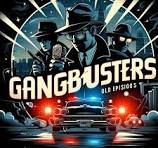
THE CASE OF THE ALCATRAZ PRISON RIOT, THE KIDNAPPED PAYMASTER GANGBUSTERS
2w ago00:50:51Summary ready1001 Radio Crime Solvers – Gangbusters Episode Show Notes 1. The Case of the Alcatraz Prison Riot Show Notes This explosive Gangbusters episode dramatizes one of the most dangerous uprisings ever attempted inside America's most infamous penitentiary — Alcatraz, "The Rock." The story follows the real events surrounding a violent revolt staged by a group of hardened inmates who believed they could overpower guards, seize weapons, and break free from the island fortress. The episode details how the riot began with a calculated ambush: inmates overpowering guards, stealing keys, and attempting to breach the gun gallery. But Alcatraz was designed to withstand exactly this kind of assault. As the prisoners' plan unravels, chaos erupts — gunfire in the cell blocks, desperate attempts to break through steel doors, and a tense standoff as federal authorities surround the island. Listeners follow the coordinated response of prison officials, Coast Guard units, and federal agents as they work to contain the uprising before it spreads. The episode builds toward a dramatic final confrontation in which the ringleaders are cornered, the riot is crushed, and order is restored — but not without casualties. Highlights: The inmates' carefully planned ambush and seizure of weapons The desperate attempt to break out of the gun gallery Federal forces mobilizing around the island A tense standoff inside the cell blocks The final assault that ends the riot Themes: The illusion of escape from an "escape‑proof" prison How discipline and coordination stop a violent uprising The high stakes of maintaining order inside America's toughest penitentiary 2. The Case of the Kidnapped Paymaster Show Notes One of the most suspenseful and fast‑moving episodes in the Gangbusters series, The Case of the Kidnapped Paymaster recounts the true story of a brazen daylight kidnapping engineered to steal a company's entire payroll. The crime begins when a paymaster — responsible for delivering wages to hundreds of workers — is abducted by a gang of armed men who have studied his routine down to the minute. They seize him, force him into a car, and attempt to extract the payroll location and safe combination. But the paymaster refuses to cooperate, buying precious time for authorities. As the gang scrambles to improvise, police launch a massive search, interviewing witnesses, tracing the getaway car, and piecing together the kidnappers' movements. The tension builds as detectives close in on the hideout where the paymaster is being held. A dramatic rescue follows, ending with the capture of the gang and the safe recovery of the payroll. Highlights: The gang's meticulous planning and ambush The paymaster's refusal to give up the payroll information Police tracing the kidnappers through witness accounts A race against time to locate the hostage A final raid that frees the paymaster and captures the criminals Gang Busters is an American dramatic radio program heralded as "the only national program that brings you authentic police case histories." It premiered on January 15, 1936 and was broadcast for more 21 years through November 27, 1957.[1] History Magazines of the true crime variety were highly popular in the 1930s and the film G Men starring James Cagney, released in the spring of 1935, found a large audience. Producer-director Phillips H. Lord believed that there was a place on radio for a show of the same type. To emphasize the authenticity of his dramatizations, Lord produced the initial radio show, G-Men, in close association with FBI director J. Edgar Hoover, who was not favorable to the idea of such a program, but U. S. attorney general Homer Stille Cummings contributed his full support.[2] Phillips H. Lord created the radio series. G-Men dramatized FBI cases, but Hoover insisted that only closed cases would be used. Hoover also demanded that he or a top-level aide review and approve every script. Hoover preferred that scripts downplay gunfights and car chases and spend more time on systematic investigation and legwork, with agents depicted as intelligent, hard-working and essentially faceless cogs in his technically savvy crime-fighting organization.[2] Those restrictions hampered Lord, who saw his creation as a public service, but one that had to entertain as well as inform. The first program dramatized the story of the notorious gangster John Dillinger,[3] who was pursued and killed by FBI agents in 1934. The second covered Lester Joseph Gillis, a.k.a. Baby Face Nelson. Although the shows were a hit with the general public, some[who?] deplored this sensational new style of radio show. Hypersensitive to any criticism, Hoover proved difficult for Lord and almost squelched the project altogether.[4] G-Men, using only FBI cases, was subject to Hoover's whims and restrictions. Gang Busters, however, featured interesting and dramatic crimes from the files of law-enforcement organizations all over the country.[2] G-Men aired on NBC Radio from July 20 to October 12, 1935, sponsored by Chevrolet. The second series of Gang Busters programs debuted in mid-January 1936. The opening sound effects became even more elaborate and aggressive,[5] including a shrill police whistle, convicts marching in formation, police sirens wailing, machine guns firing and tires squealing. An authoritative voice would then announce the title of that night's program, followed by more blasts from a police whistle. This intrusive introduction led to the popular catchphrase "came on like gangbusters." Joan Banks was a regular cast member of the radio series. To lend an extra air of authenticity to the presentation, Lord had Norman Schwarzkopf Sr., former head of the New Jersey State Police, deliver a brief introduction to lead into the actual dramatization.[5] That authentic voice became even more important after Lord ended his connection with the FBI. After about 1945, New York City police commissioner Lewis Joseph Valentine replaced Schwarzkopf as the authoritative opening speaker.[5] Gang Busters aired on CBS from January 15, 1936 to June 15, 1940, sponsored by Colgate-Palmolive and Cue magazine. From October 11, 1940 to December 25, 1948, it was heard on the Blue Network, with various sponsors that included Sloan's Liniment, Waterman pens and Tide. Returning to CBS on January 8, 1949, it ran until June 25, 1955, sponsored by Grape-Nuts and Wrigley's chewing gum. The final series aired on the Mutual Broadcasting System from October 5, 1955 to November 27, 1957. Gang Busters often featured prominent names in radio broadcasting, many of whom also starred in films and television, including Richard Widmark and Art Carney. Joan Banks, who later played many television roles, was a regular cast member, and her husband Frank Lovejoy also appeared often. Larry Haines was another regular on the show and would later enjoy an extensive career in television soap operas.
Summary
THE CASE OF AL SIMEONE and THE CASE OF THE RUMBOLT VAULT GANGBUSTERS
2w ago00:44:54Summary ready1001 Radio Crime Solvers – Gangbusters Episode Show Notes 1. The Case of Al Simeone Show Notes This Gangbusters episode tells the true story of Al Simeone, a small‑time hoodlum whose ambition far outstripped his talent — and whose attempt to climb the criminal ladder led to a violent spree that put him squarely in the sights of law enforcement. Simeone begins with petty rackets and neighborhood intimidation, but soon graduates to armed robbery and extortion. His reckless methods and growing arrogance make him a danger not only to the public but to his own associates. When Simeone's gang commits a series of bold robberies, detectives begin to see a pattern: the same getaway style, the same stolen goods, and the same willingness to use a gun at the slightest resistance. The episode follows the painstaking police work that eventually corners Simeone — stakeouts, informants, and the slow tightening of a net around his hideouts. When Simeone finally makes a desperate break for freedom, the result is a tense confrontation that ends his criminal career for good. Highlights: Simeone's rise from petty crime to armed robbery A string of holdups that trigger a coordinated investigation Informants who risk retaliation to expose the gang A dramatic chase as Simeone tries to outrun the law The final arrest that brings his violent spree to an end Themes: How ambition can turn a petty criminal into a dangerous one The importance of patient, coordinated police work The inevitable downfall of criminals who rely on intimidation 2. The Case of the Rumbolt Vault Show Notes One of the most suspenseful episodes in the Gangbusters catalog, The Case of the Rumbolt Vault recounts the daring attempt to crack a high‑security vault belonging to the Rumbolt Company — a vault believed to be impregnable. But a clever gang of professional burglars thinks otherwise. The criminals plan the job with military precision: studying guard routines, timing deliveries, and learning the vault's mechanical weaknesses. Their goal is simple — break into the vault, steal a fortune, and vanish before anyone knows what happened. But the gang makes one mistake: they underestimate the vigilance of local police and the determination of detectives who refuse to let a major heist unfold on their watch. When officers notice unusual activity around the warehouse district, they begin surveillance that slowly reveals the gang's elaborate setup. The episode builds toward a tense climax as police close in on the burglars during the break‑in itself, catching them in the act and preventing what would have been one of the largest vault robberies in the region's history. Highlights: The gang's meticulous planning and reconnaissance The vault's security features and how the criminals attempt to defeat them Police surveillance that uncovers the plot A dramatic raid as officers interrupt the burglary in progress
Summary
THE CASE OF MATTHEW CEZZARA and THE CASE OF BLACKIE THOMPSON GANGBUSTERS
3w ago00:52:24Summary ready1001 Radio Crime Solvers – Gangbusters Episode Show Notes 1. The Case of Matthew Cezzara Show Notes This hard‑hitting Gangbusters episode tells the true story of Matthew Cezzara, a ruthless criminal whose rise in the underworld is built on intimidation, violence, and a willingness to eliminate anyone who stands in his way. Cezzara operates a multi‑state racket that blends extortion, hijacking, and strong‑arm tactics — and for years, he manages to stay one step ahead of the law. But when Cezzara's gang commits a series of brazen robberies, federal and state authorities launch a coordinated investigation. Through patient surveillance, informant work, and the slow tightening of a multi‑agency net, law enforcement begins to dismantle Cezzara's operation piece by piece. The episode follows the dramatic pursuit as detectives track Cezzara across state lines, uncover his hidden associates, and finally corner him in a violent showdown that brings his criminal empire crashing down. It's classic Gangbusters: gritty, procedural, and rooted in the real work of American law enforcement. Highlights: Cezzara's rise as a feared racketeer A string of hijackings that trigger federal involvement Undercover informants who risk their lives to expose the gang A multi‑state manhunt coordinated between police and federal agents A final confrontation that ends Cezzara's reign of terror Themes: The slow, methodical dismantling of organized crime How intimidation keeps criminal networks alive — until someone talks The power of coordinated law enforcement in the pre‑FBI era 2. The Case of Blackie Thompson Show Notes One of the most dramatic episodes in the Gangbusters catalog, The Case of Blackie Thompson recounts the violent career of a notorious Oklahoma outlaw whose crimes span robbery, jailbreaks, and cold‑blooded murder. Thompson is a volatile mix of charm and brutality — a man who can talk his way out of trouble one moment and pull a trigger the next. After a series of armed robberies, Thompson is captured and sent to prison, but his story is far from over. He stages a daring escape, vanishes into the countryside, and resumes his criminal rampage with renewed ferocity. His crimes escalate, drawing the attention of state police, federal agents, and local sheriffs who refuse to let Thompson terrorize their communities. The episode builds toward a tense manhunt as officers close in on Thompson's hideouts, interview terrified witnesses, and follow a trail of violence across Oklahoma. When the final confrontation comes, it is swift, deadly, and inevitable — the end of a criminal who lived by the gun and died by it. Highlights: Blackie Thompson's early robberies and violent reputation His dramatic prison escape and return to crime A multi‑agency pursuit across Oklahoma Witnesses who describe Thompson's unpredictable brutality A final shootout that ends his criminal career
Summary
SPIDER BOY and THE PHANTOM OF THE LIGHTHOUSE THE SHADOW
3w ago01:02:29Summary ready1001 Radio Crime Solvers The Shadow – Episode Show Notes ⭐ Episode: "Spider Boy" Series: The Shadow Starring: Bret Morrison (The Shadow), Margot Stevenson / Grace Matthews (Margot Lane) Episode Summary "Spider Boy" is one of the strangest and most haunting episodes in The Shadow canon—a tale that blends pulp horror, psychological manipulation, and the eerie presence of a young boy whose mind has been twisted into something dangerous. It's a story where innocence becomes a weapon, and only The Shadow can see the truth behind the web. Story Overview A series of bizarre attacks strikes the city—victims found trapped, bound, or immobilized in ways that resemble the work of a giant spider. Witnesses report seeing a small, pale boy lurking near the scenes, watching with unsettling calm. Lamont Cranston and Margot Lane investigate: They discover the boy is under the control of a criminal mastermind The villain has manipulated the child's fears and fantasies The "spider" motif becomes a psychological trigger used to commit crimes Each attack is part of a larger scheme involving blackmail and terror The Shadow must confront not only the villain but the boy himself—whose fragile mind has been weaponized. The final confrontation is chilling, as The Shadow uses his voice, his presence, and his mastery of fear to break the villain's hold and free the boy from the web he's been trapped in. Key Themes Innocence corrupted by manipulation The Shadow's unique ability to fight psychological crime Fear as both a weapon and a prison The noir idea that evil often hides behind the unexpected Why It Resonates "Spider Boy" stands out for its eerie atmosphere and emotional depth. It's a reminder that The Shadow wasn't just about gangsters and gunfights—it was about the darkness that can take root in the human mind. ⭐ Episode: "The Phantom of the Lighthouse" Series: The Shadow Starring: Bret Morrison Episode Summary "The Phantom of the Lighthouse" is a classic maritime mystery filled with fog, fear, and the supernatural. When strange lights and ghostly figures appear around an isolated lighthouse, The Shadow is drawn into a case where superstition and murder collide on the storm‑lashed coast. Story Overview A remote lighthouse becomes the center of terror when its keepers report seeing a phantom figure drifting through the fog. Ships begin to wreck on the rocks, guided by false signals. Rumors spread that the lighthouse is cursed. Lamont and Margot investigate: They uncover sabotage disguised as supernatural activity A criminal plot to wreck ships for profit A terrified lighthouse keeper who believes the phantom is real A hidden enemy using the fog and isolation to mask deadly crimes The Shadow was one of the most popular radio shows in history. The show went on the air in August of 1930 and stayed on until the early 50's "Who knows what evil lurks in the hearts of men? The Shadow knows!" The opening lines of the "Detective Story" program captivated listeners and are instantly recognizable even today. Originally the narrator of the series of macabre tales, the eerie voice known as The Shadow became so popular to listeners that "Detective Story" was soon renamed "The Shadow," and the narrator became the star of the old-time mystery radio series, which ran until 1954. A figure never seen, only heard, the Shadow. along with his lover and partner Margot, was an invincible crime fighter. He possessed many gifts which enabled him to overcome any enemy. Besides his tremendous strength, he could defy gravity, speak any language, unravel any code, and become invisible with his famous ability to "cloud men's minds." Learn more about your ad choices. Visit podcastchoices.com/adchoices
Summary
THE HIDING PLACE and THE CLOAK OF KAMEHAMEHA ADVENTURES OF PHILIP MARLOWE
3w ago01:01:04Summary ready1001 Radio Crime Solvers The Adventures of Philip Marlowe – Episode Show Notes ⭐ Episode: "The Hiding Place" Series: The Adventures of Philip Marlowe Starring: Gerald Mohr Episode Summary "The Hiding Place" is a tight, shadow‑drenched mystery that begins with a missing man and ends with a revelation buried beneath layers of fear, greed, and betrayal. Philip Marlowe is hired to find a man who has vanished—only to discover that the missing person may be hiding from more than danger. Story Overview A worried client comes to Marlowe with a simple request: find a friend who has disappeared. The man left behind a trail of odd behavior, nervous habits, and cryptic hints that something—or someone—was closing in on him. Marlowe starts digging: He interviews people who knew the missing man, each offering a different version of who he was He uncovers a secret tied to a past crime He finds evidence that the man was being hunted He discovers that the "hiding place" is not a location—but a desperate state of mind The investigation leads Marlowe through dingy apartments, back‑alley bars, and a final confrontation where the truth comes out in a burst of violence. The missing man's fate becomes a commentary on how guilt and fear can imprison a person long before the law ever does. Key Themes The psychological toll of living in fear How guilt creates its own prison Marlowe's ability to read human weakness The noir idea that hiding from danger often leads straight into it Why It Resonates "The Hiding Place" is classic Chandler territory—lonely rooms, frightened men, and a detective who sees through every lie. It's a story about the places people hide, and the truths they can't escape. ⭐ Episode: "The Cloak of Kamehameha" Series: The Adventures of Philip Marlowe Starring: Gerald Mohr Episode Summary "The Cloak of Kamehameha" is one of the most exotic and adventurous episodes in the Marlowe radio canon. It blends noir mystery with Hawaiian legend, stolen artifacts, and a deadly hunt for a priceless royal cloak. Marlowe finds himself in a case where history, greed, and murder collide. Story Overview Marlowe is hired to recover a stolen artifact—the sacred cloak of King Kamehameha, a priceless relic woven from thousands of rare feathers. The cloak's disappearance has set off a chain reaction of fear and violence among collectors, smugglers, and those who believe the cloak carries a curse. As Marlowe investigates: He encounters a collector obsessed with Hawaiian history A thief who knows the cloak's value extends far beyond money A rival who will kill to possess it A trail of clues that leads from Los Angeles nightlife to hidden caches and secret deals The case becomes a race against time as Marlowe tries to recover the cloak before it disappears into the black market forever—or before someone else dies trying to claim it. The Adventures of Philip Marlowe was a radio series featuring Raymond Chandler's private eye, Philip Marlowe. Robert C. Reinehr and Jon D. Swartz, in their book, The A to Z of Old Time Radio, noted that the program differed from most others in its genre: "It was a more hard-boiled program than many of the other private detective shows of the time, containing few quips or quaint characters." In 1948, the series moved to CBS, where it was called The Adventure of Philip Marlowe, with Gerald Mohr playing Marlowe. This series also began with an adaptation of "Red Wind", using a script different from the NBC adaptation. By 1949, it had the largest audience in radio. The CBS version ran for 114 episodes. That series ran 26 September 1948 – 29 September 1950. Learn more about your ad choices. Visit podcastchoices.com/adchoices
Summary