
Podcast
3 Takeaways™
Hosted by Lynn Thoman · EN
3 Takeaways™ features insights from the world’s best thinkers, business leaders, writers, politicians, scientists and other newsmakers. Each episode ends with 3 key takeaways to help you understand the world in new ways that can benefit your life and career. Hosted by Lynn Thoman. A global top 1% podcast.
101episodes
Episodes
Newest firstAll episodes

Your Brain Is Hiding the Truth From You (#314)
4d ago00:20:59Summary readyWhat if your brain isn’t showing you the world as it truly is?Journalist, professor, and author of "A World Appears: A Journey into Consciousness" Michael Pollan explores one of the deepest questions of all: why do we experience anything in the first place? He discusses:What consciousness actually isWhy the brain predicts reality instead of simply taking it inHow perception may be a kind of “controlled hallucination”Why we may see the world in the most useful way, not the most accurate wayWhat animals, plants, and AI reveal about consciousnessWhy feelings may be central to being consciousWhy attention may be one of our most precious resourcesHow social media and AI are putting consciousness under siegeWhy consciousness is something we may need to protect and cultivateThe world you see may feel solid, obvious, and real.But Michael Pollan explains why the experience of being conscious is far stranger, more fragile, and more mysterious than most of us realize.
Summary
Putin’s Real Enemy Isn’t Ukraine (#313)
2w ago00:19:53Summary readyWhy would the world’s largest country risk everything to destroy a smaller neighbor?What is it about Ukraine that poses a greater threat to Vladimir Putin than any army?Pulitzer Prize-winning historian and The Atlantic writer Anne Applebaum has spent decades studying Russia, Ukraine, and authoritarian regimes. She argues that the war is being fought over far more than territory and that the outcome will reshape democracy, military power, and global politics.She discusses:● What Putin was really trying to prevent when he invaded Ukraine● Why nearly everyone underestimated the Ukrainian people● How architects, engineers, and entrepreneurs began reinventing modern warfare● What drones have revealed about the future of war● The first warning sign that a democracy is beginning to fail● How modern propaganda works without persuading anyone● Why leaders often become dramatically richer as democracy weakensThe maps don’t tell the whole story of this war.Anne Applebaum explains what’s actually at stake, why Putin hasn’t achieved what he expected, and what Ukraine may reveal about the hidden strengths of democracy.
Summary
The Wild True Stories Behind History's Greatest Art Thefts (#312)
3w ago00:21:08Summary readyHow does someone steal the Mona Lisa from the Louvre and simply walk away? And how did an even more brazen crew rob the same museum in broad daylight last year with just a cherry picker and some power tools?The real stories are stranger than Hollywood and best-selling author Noah Charney knows them all. One of the world’s leading experts on art crime, he has advised museums, governments, and law enforcement agencies around the world. It turns out that stealing priceless art is often surprisingly easy. It’s turning the art into money that’s nearly impossible.He explains:◼ How a thief had unwitting Louvre workers help him walk out of the Louvre with the Mona Lisa◼ How a brazen team used a cherry picker, power tools, and high-visibility vests to rob the Louvre in broad daylight◼ Why most real art thieves are nothing like the elegant masterminds portrayed in movies◼ How Napoleon turned art looting into an organized instrument of empire◼ Why criminals steal art and how they get themselves apprehended◼ How movies, fiction, and even the media can unintentionally help art criminals
Summary
Alphabet (Google) Chairman John Hennessy on The Future of AI, Human Intelligence, and Leadership (#311)
4w ago00:21:29Summary readyArtificial intelligence could change almost everything.John Hennessy thinks we're still asking the wrong questions.As Chairman of Alphabet and one of the pioneers of modern computing, Hennessy has helped shape some of the biggest technology revolutions of the past half century. He explains what today's AI can - and can’t - actually do, what would qualify as artificial general intelligence, and why the greatest impact of AI may come from amplifying human capability rather than replacing it.He discusses:The one capability that still separates humans from machines.What would have to happen before we can truly say we've reached artificial general intelligence (AGI).How AI could transform scientific discovery.The real risks that concern him most.Why leadership and human judgment may become even more valuable in the age of AI.How to prepare for a future where AI becomes part of almost every profession.Few people have witnessed as many computing revolutions as John Hennessy. This episode explores what the AI conversation is getting right - and what almost everyone is getting wrong.
Summary
How Charisma Really Works (#310)
Jul 1400:25:07Summary readyWhy do some people instantly draw us in?Olivia Fox Cabane reveals that charisma is not a gift. It is a skill - and most of us misunderstand what creates it.In this episode, you’ll learn:The three qualities that make someone charismaticWhy introverts can be highly magneticHow people judge you before you speakWhy presence matters more than performanceThe surprising link between confidence and self-compassionSimple ways to become more charismatic immediatelyCharisma is not just how people feel about you.It is how you make them feel about themselves.Olivia Fox Cabane is the author of The Charisma Myth.
Summary
Beyond Silicon Valley: Where the Next Breakthroughs Will Come From (#309)
Jul 700:18:35Summary readyEveryone knows where the last generation of great technology companies came from.The more interesting question is where the next generation will.Mehran Gul spent years studying the world's most successful innovation hubs to understand why some places repeatedly create breakthrough companies while others never quite do.He shares surprising insights about China's rise, Silicon Valley's future, and why artificial intelligence could reshape the global map of innovation in ways that few people expect.
Summary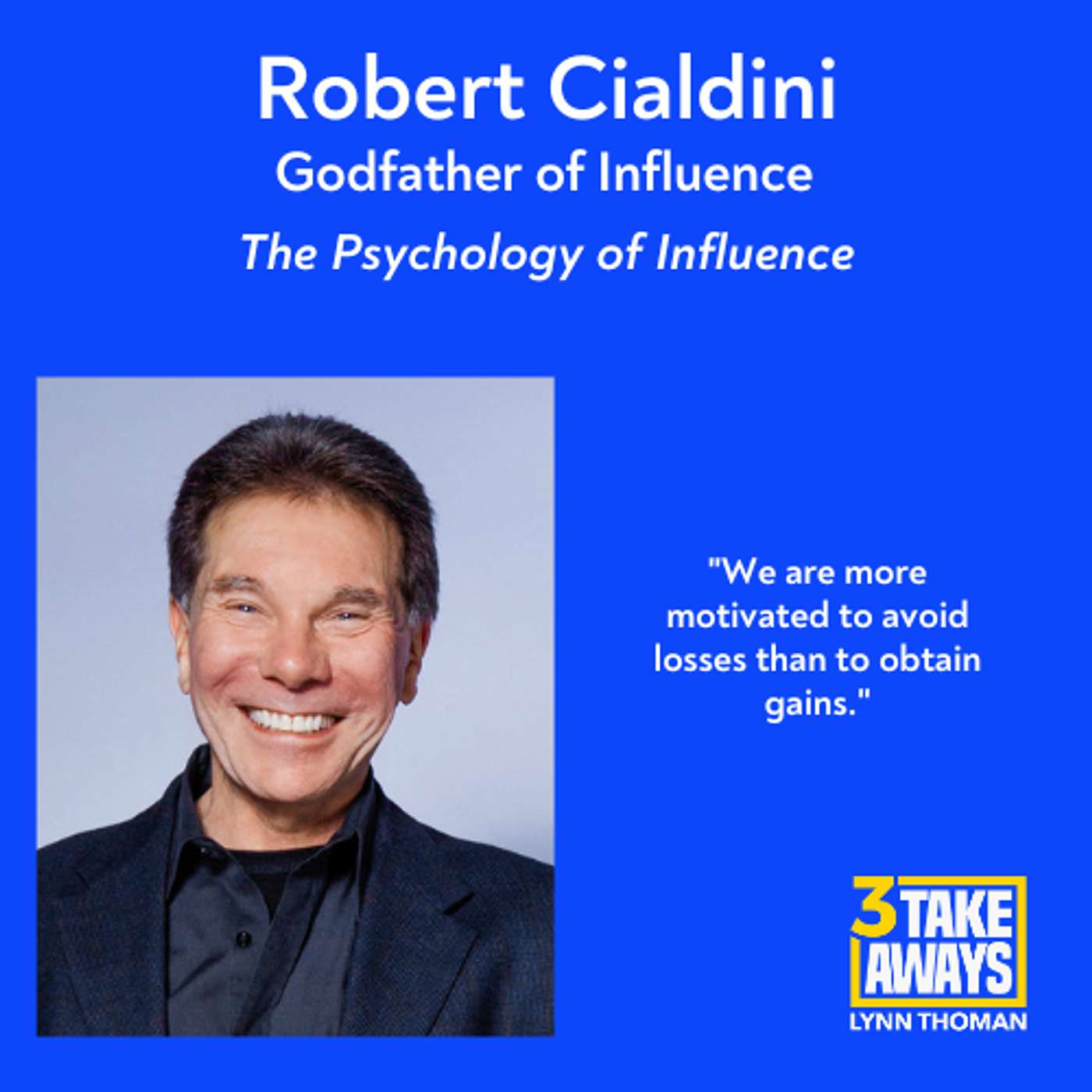
The Psychology of Influence with Robert Cialdini (#308)
Jun 3000:23:47Summary readyDr. Robert Cialdini, author of Influence - 5 million copies sold, and one of the most important books Warren Buffett says he's ever read - has spent decades studying why people say yes. He reveals the psychological forces shaping our decisions, why tiny changes can dramatically influence outcomes, and how the most effective communicators get people to yes without anyone feeling pushed. Once you understand these principles and hidden triggers, you'll start seeing them everywhere.
Summary
Mark Cuban: The Hidden Companies Controlling Healthcare, the Future of AI, and Why Not Me? (Part 2) (#307)
Jun 2300:20:05Summary readyMost people think healthcare is broken by accident.Mark Cuban says it isn't.In part two of our conversation, he explains the hidden companies who really control healthcare, where AI is headed, and the biggest opportunities most people are missing.He also shares the advice he gives young people, the three “superpowers” he believes matter more than talent, network, or money, and the one question he thinks everyone should ask themselves.
Summary
Mark Cuban: The NBA Thought It Was in the Basketball Business. It Was Wrong. (Part 1 of 2) (#306)
Jun 1600:20:01Summary readyThe NBA thought it was selling basketball.Mark Cuban thought it was selling something else.That insight shaped how he has built companies, evaluated opportunities, and challenged entire industries.The lesson starts with basketball. It ends somewhere much bigger. He also shares the skill he values most in entrepreneurs, and how AI is changing the way ambitious people learn.
Summary
Once Upon a Stranger: Can Small Talk Lead to a Bigger Life? (#305)
Jun 900:20:00Summary readyWhat if those brief conversations - with a barista, a neighbor, or someone sitting next to us - matter far more than we realize?Gillian Sandstrom, a University of Sussex psychologist and author of Once Upon a Stranger, explores why we're so reluctant to talk to people we don't know, what happens when we do, and how seemingly small interactions can add up to a richer, happier, and more connected life.
Summary