Loading summary
Transcript28 lines
- [00:01]
Adam Bandt
The draft decision on the World Heritage status of the Great Barrier Reef has confirmed all of the hard work that everyone has put in to continue to protect this wonderful natural asset.
- [00:12]
Daniel Jones
The Great Barrier Reef has avoided being placed on UNESCO's endanger list.
- [00:16]
Adam Bandt
For now, we're backing practical action alongside farmers, local councils and communities to ensure it continues to be that wonderful icon of Queensland. And we're backing it in with a record investment in water quality.
- [00:32]
Daniel Jones
But the warning hasn't gone away. UNESCO says Australia still needs to do more to protect the reef, saying much of the damage to the reef begins far inland when bushland is cleared and soil washes into the rivers that flow out to the coral.
- [00:46]
Adam Bandt
The UN body did raise utmost concern over declining coral cover following recent mass bleaching events. It also said poor water quality was a worry, asking for a progress report by 2028.
- [01:00]
Daniel Jones
The Australian Conservation foundation says bulldozing for beef production is a major driver of that run off. And now Australia's new national environment Watchdog has opened its doors with more than 100 potentially illegal land clearing cases already on its books. But as labor promises stronger nature protection and faster approvals, will the new laws actually stop the clearing or just speed up a broken system? I'm Daniel Jones and you're listening to 7am today CEO of the Australian Conservation Foundation, Adam Bandt on the first test of Labor's new nature laws and whether they can make an impact before it's too late. It's Friday, July 17th. Adam Bant, thanks for joining us.
- [01:52]
Adam Bandt
Pleasure. Thanks having me on.
- [01:54]
Daniel Jones
The Federal Environment Department says it had over 100 open cases involving alleged breaches of national environment law, many around land clearing that was never referred for assessment. So can you start by telling me what kind of clearing we're talking about here?
- [02:08]
Adam Bandt
We're talking about clearing of forest and bush, primarily for beef, for burgers and patties that are sold in fast food restaurants and in supermarkets. And the scale of the problem in Australia is really huge.
- [02:25]
Daniel Jones
More than half of the Australian continent is used for grazing livestock. And there's been a growing push to stop deforestation linked to beef.
- [02:33]
Adam Bandt
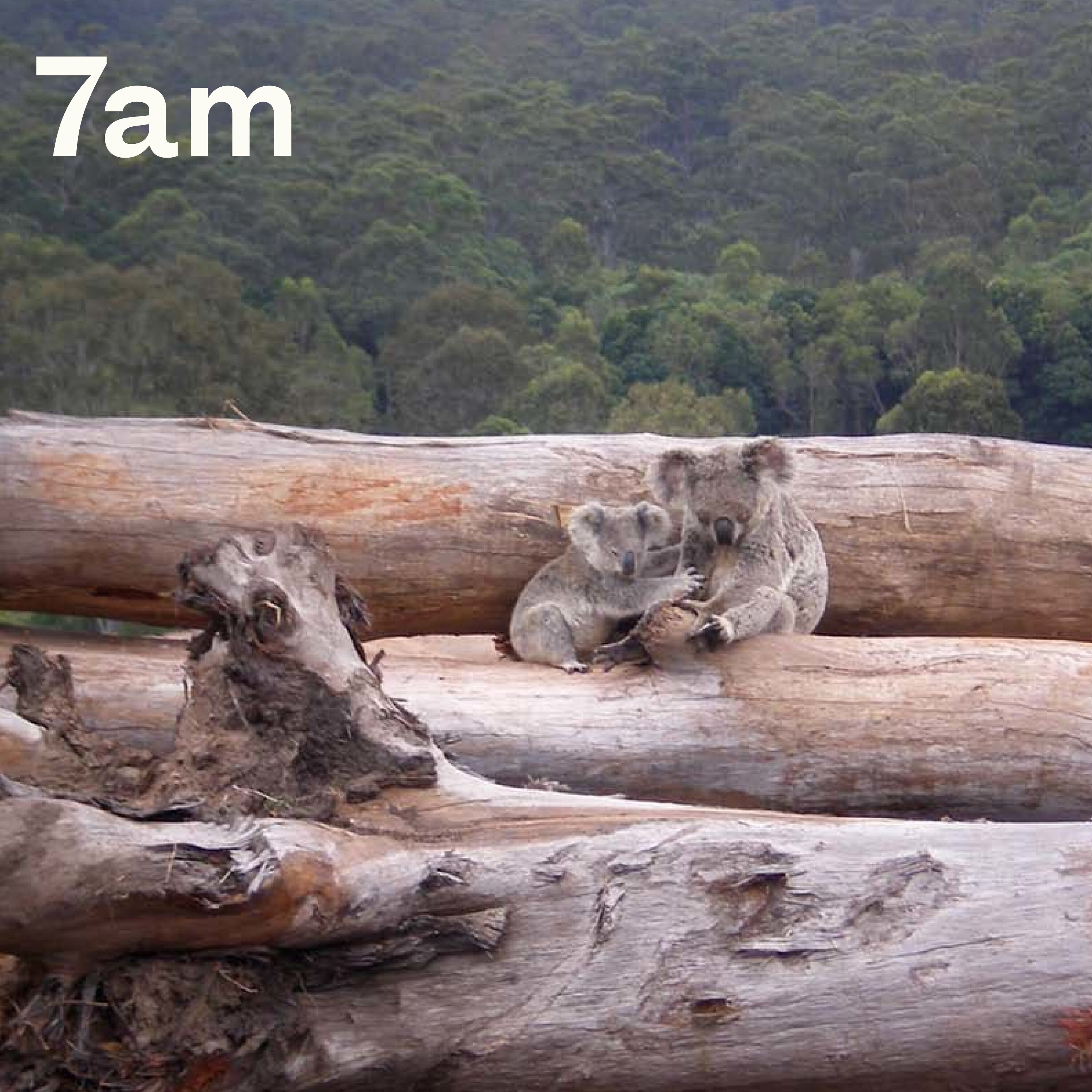
People know about the effects of clearing for palm oil of forests in Indonesia. Well, in recent years, more forest has been and bush has been cleared in Queensland, there's in Indonesia for palm oil. It's why Australia is one of the global deforestation hotspots in Queensland alone, shamefully, analysis from the Wilderness Society shows that every four minutes threatened species habitat. The scale of Sydney Harbour Bridge area is bulldozed for beef every four minutes and with half of Australia zoned for agriculture, this supermarket and fast food corporation driven clearing that we've been seeing is a big part of the reason that we now have koalas on the threatened species list in parts of the country. So it's destruction of koala habitat and of course other species as well. Regent honeyeaters, gliders that are, that are being pushed closer to extinction. We are one of the only developed countries in the world still driving large scale deforestation on nature. Our record is tragically one of the worst. They're losing their homes. And in Australia it's being driven by this deforestation crisis.
- [03:54]
Daniel Jones
So we're talking about hectares of land, how much and over what timescale? And is this a thing that is speeding up?
- [04:01]
Adam Bandt
Look, we're talking about a small number minority of landholders who are doing this. You're talking about around about 200 across the entire country responsible for about half of this kind of deforestation. But in terms of the size of the area, look, since 2019, lost an area about the size of the act. Part of the problem is that a lot of the surveying and monitoring of this is being done by groups like acf, through citizen science, through our investigates process. And it has been something that over many years federal governments have really not paid attention to.
- [04:38]
Daniel Jones
So a lot of the monitoring to date has relied on a lot of citizens.
- [04:42]
Adam Bandt
Yeah, that's right. There are people on the tram on the way to work looking at their mobile phones. Some of them might actually be stopping bulldozers because ACF runs a program, ACF investigates where citizen scientists can. Anyone can jump on the phone and compare before and after pictures from satellite data. And we've got it down to sort of more or less close to real time around about two weeks, as you're looking at the before and after pictures. And in our most recent round of ACF Investigates, we had about 1600 citizen scientists from across 39 countries who were monitoring this data. And that's resulted in some of these cases that have been referred to the government. And you said that the new EPA will have about just over 100 cases on its books. About a third of those have been referred by acf. And a lot of that has come through people on the train on the way to work comparing the before and after pictures on their phones. And we've been taking those to the government department. Historically, federally and indeed in many of the states. It was often met with a bit of a shrug of the shoulders. But that's changing now with the laws that have been Changed. Now this kind of bulldozing of the bush has to now go through the federal processes, especially if you're in one of the Great Barrier Reef catchment areas in Queensland.
- [06:01]
Daniel Jones
Yeah. So before the clearing takes place, what is supposed to happen before the bulldozers come in, what is the process? Can you just lay it out for us a little bit?
- [06:09]
Adam Bandt
So to rewind a little bit was understood sort of across the board, that the previous rules didn't have strong standards in them to protect vulnerable species and vulnerable areas. And one of the things that the recommendation, when looking at reforming those rules, said was you don't know what is meant to be protected and there aren't strong standards in the legislation that say this is what counts as real protection. And it was all like. A lot of it was left up to discretion. Historically, there was an exemption for what was called continuous use. It was, if you'd done it before, you were allowed to keep doing it. In a nutshell, in certain respects, that's now gone. And similarly, one of the new parts of the law requires that if you're within a 50 metre area of one of the watercourses that feeds into the rivers that go out into the Great Barrier Reef and you're wanting to clear forest in there that's over 15 years old, then you have to go through the application process. Now that's a huge step forward. And this is why the National EPA is now going to be looking at a number of these cases to determine whether or not they should have gone through the process of seeking a permit before doing it. But there's still a second part to it, which we're waiting on the Federal government to actually set out what the rules are against which these applications are going to be assessed. That's still to be laid down in law by the Environment Minister, Murray Watt. And the draft that's out at the moment doesn't do the job, doesn't protect nature. The draft that's out really just says if a developer says they've looked at how they can protect the environment, then by and large, that's going to be enough. Now, that's the legal advice that we've received about the effects of the legislation. It becomes very much a process question. As long as you go through a certain process and tick a box, then you'd comply with the draft standard as it's out at the moment. That's our real concern, is that we go back to process, we go back to a ticker box approach, and those really strong standards with teeth just won't be in them.
- [08:26]
Daniel Jones
Still to come, can Australia really build the clean energy transition without clearing more habitat?
- [08:44]
Adam Bandt
We now have a strong regulatory toolkit. We have stronger powers for environmental protection. We have expanded auditing framework. We have increased penalties for serious and deliberate environmental harm. It means you get consistency. It means you get transparency. It means you get integrity in environmental decision making at a national level. The EPA will be a strong independent regulator.
- [09:12]
Daniel Jones
Adam, this watchdog is one part of a much bigger reform. There was broad consensus that Australia's nature laws weren't fit for purpose. Conservationists said it was failing nature and business said it was slow and uncertain. Is that the basic contradiction that the government is trying to fix here?
- [09:29]
Adam Bandt
That's certainly how the government expresses it, but really what we just hope that that's not code for is that standards are too strong. Like, what we want to make sure is that yes, decisions can be made in an efficient way, but really what it comes down to is what are they going to be assessed against? If they're strong and often nature real protection, then I imagine you could make a number of assessments quite quickly. But in the context where the new laws allow some of this decision making to be handed off to state governments, where we know state governments don't always have a great track record on this front and in many instances, like historically, you look back, it's been the federal government that's had to come in over the top of rogue state and territory governments. Well, if these state and territory governments now are given the power to decide under the federal laws whether a process can go ahead, then that's all the more reason why there has to be really strong, clear and precise standards. Because then, yes, you could make a decision quickly that, no, this is going to push some threatened species closer to extinction and so it's not allowed to go ahead. But if it's still just essentially a tickerbox exercise, then you could end up with the worst of both worlds.
- [10:41]
Daniel Jones
Is another tension that if the watchdog is actually tougher, doesn't that mean that some projects will be slower or get knocked back at a time when the government is hoping to speed up approvals for housing, renewables and other infrastructure?
- [10:55]
Adam Bandt
Look, we're in an extinction crisis and we have got iconic species threatened with extinction. Australia's already a world leader in mammal extinction and we've now got the climate crisis coming along as a massive threat multiplier. The government's Environment Department has been saying for years now that climate crisis is the number one threat to Australia's biodiversity. And so really how much more can nature take in Australia? It can't take anymore and it's already on the brink. So now's the time to actually invest in protecting nature, which is the life support system for us all. And decisions that get made now will reverberate for generations. And once biodiversity and ecosystems are gone, that could be very difficult to recover. And once a species is extinct, like extinct is forever. And so we would say there's no argument for saying you've got to speed up decisions that are going to. That's going to result in some species being pushed a step closer to extinction, because once that happens, it could be irreversible.
- [12:00]
Daniel Jones
And finally, Adam, I think the question that really sits at the heart of all of this is we do need transition to renewables at speed, which requires large infrastructure and transmission lines. How do you realistically do that quickly and still protect these habitats?
- [12:18]
Adam Bandt
Luckily, Australia's pretty blessed with a lot of space, a lot of sun and a lot of wind. And you can build the renewables in places that's good for nature. And we've done the work and know that you can build them in those places. Now, that's going to involve a bit of. Require a bit of planning from the government about saying, well, you know, Developer X, you might want to build it over here, but actually we're going to ask you to move it to a different place to ensure that it's not a threat to biodiversity. Again, I think these are the challenges that are there with any project and they're challenges that can be solved because of the size of Australia and the amount of resources that are available. I mean, ultimately, this is a scientific and a planning question and it shouldn't be driven by the dollars. It should be driven by, let's get the renewables built, but let's do it in a way that's good for nature. And we firmly believe you can have both. We're going to call out any kind of development, whatever it is, if it poses a threat, but we believe you can have both. And we hope that as this evolves, as we see what kind of decisions get made by the minister and the state governments under this new legislation, that that's what they think, too.
- [13:31]
Daniel Jones
Adam, thank you so much for joining us.
- [13:33]
Adam Bandt
Thanks a lot.
- [13:46]
Daniel Jones
Also in the news, a federal inquiry into racism against Aboriginal and Torres Strait Islander people will hold a public hearing in Alice Springs today. Warlpur elder Ned japanjipa Hargraves is expected to give evidence about the death of his grandson, Kumjaya White. He died while being restrained by plainclothes police officers in an Alice Springs supermarket last year. The inquiry will also hear from Robin Jepanyanko Granites, the grandfather of five year old Kilmingai little baby, who was found dead near Alice Springs in April. During hearings in Darwin this week, Aboriginal organisations called for stronger laws against hate speech and for racial motivation to be treated as an aggravating factor when courts sentenced violent offenders. The inquiry is due to report back to Parliament in September and the federal Department of Agriculture, Fisheries and Forestry has confirmed a second petrel has tested positive for the H5 strain of bird flu in New South Wales. Testing by the CSIRO confirmed the virus in a bird found at Hawk's Nest on the state's mint north coast 12 days after another petrel found nearby tested positive. There have now been 15 confirmed or presumed positive detections of H5 bird flu in Australia, 14 of which have been in migratory seabirds. Authorities say there is still no evidence of mass deaths and that the virus has not been detected in poultry or agricultural production. Thanks for listening to 7am we'll be back tomorrow.