Loading summary
Transcript36 lines
- [00:01]
Daniel James
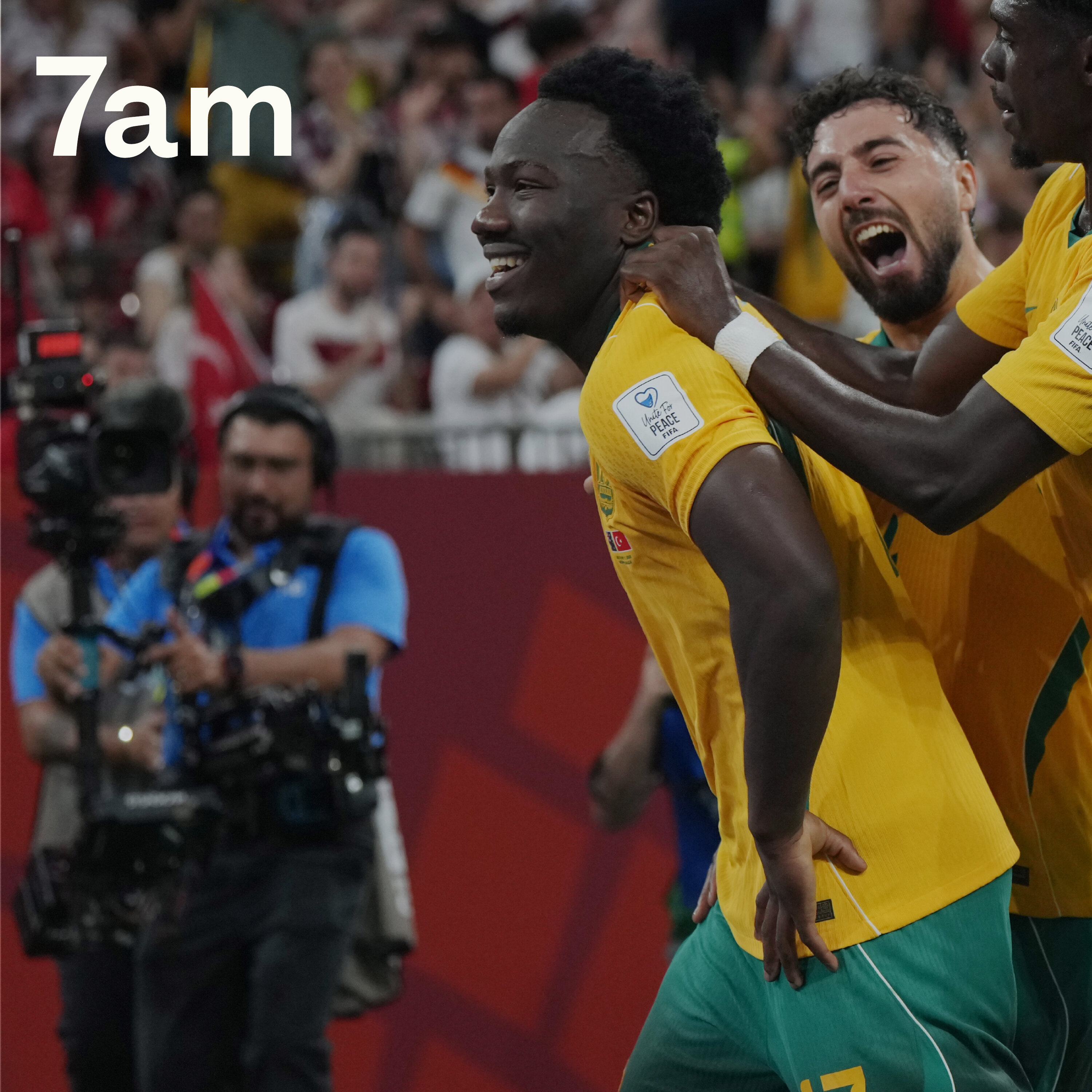
I'm Daniel James, and you're listening to 7am. This week, Pauline Hanson called for multiculturalism to be replaced with monoculturalism. At the same time, the Socceroos were capturing the hearts and minds of Australians everywhere on their biggest stage of all, the World Cup. It's a team filled with players from multiple cultural backgrounds, and one that, if Hanson's vision of the nation came to bear, simply wouldn't exist today. Former Socceroo and refugee advocate Craig Foster on the team that's quietly challenging one of the most divisive debates in the country simply by taking the field. It's Friday, june 19th. Craig, good to have you. On 7am in the middle of Refugee Week, Pauline Hanson addressed the National Press Club and laid out her vision of Australia, a cultural hellscape where SBS would be abolished. The ABC subscripted. People who come here to make a lie for themselves are told to leave their heritage behind and presumably only speak in their native tongue in hushed tones. How does that equate to the Australia you grew up in and the country you proudly represented on the world stage?
- [01:20]
Craig Foster
Well, it's Pauline Henson's trying to turn the country back to the 1920s, 1930s, if that, maybe even her vision's worse. And, you know, in the early 70s, Australia rightly said that people, you know, want to be able to respect their heritage and their ancestry. And what Pauline Hanson is doing is a frontal assault on Australian football, the game that I love. It's a frontal assault on the Socceroos, that's for sure. It's a frontal assault on Matilda's and on the very meaning of Australia, in my view, and I think in millions of, of Australians in the football community. It's completely nonsensical to me, but it's also very, very dangerous. And Refugee Week comes at an important time during the World cup when the Socceroos are beautifully representing Australia and talking about what Australia means to them and their families, particularly those who weren't born here and the opportunity that Australia's provided. That's a vital part of our Australian national story, and that's not going to be destroyed by Pauline Hanson.
- [02:27]
Al Wamnabil
And Australia is a very multicultural country, and that's what makes it the best country in the world. In my opinion, it's the best country in the world because of that.
- [02:35]
Daniel James
Al Wamnabil, a refugee, had a very different message from that of Pauline Hanson's when he spoke at a press conference about the value of multiculturalism in the country.
- [02:44]
Al Wamnabil
You have the whole world in one place, and the Socarroos now is a representation of that.
- [02:51]
Daniel James
How powerful were his words at this moment in time?
- [02:55]
Craig Foster
Really beautifully put and I think immensely powerful because he's now on a stage where Australia is looking at the Socceroos. You know, they've got the focal point on them. Marvellous result against Turkey only increases that focus. Australia's in love with this team and it's time to have that conversation about what they represent and who they represent and how they feel about being Australia. It's clear that they're immensely proud to wear the green and gold and wear the Australian emblem. But he also talks very passionately and beautifully about their background and about the story of his family.
- [03:35]
Al Wamnabil
You know, I have a story of there was war in my country, so my parents flee my country and then Australia took. Took us in through a humanitarian visa. You know, so that's how I was able to go to Australia. And many others have their way of going to Australia and their reasons. So, you know, for me, it's a refugee week and it's a. It's a week that, you know, I would like to say to anybody that is misplaced all over the world that, you know, we are with you and we are in a world stage right now, in a big tournament and just to tell you everything is possible. So.
- [04:14]
Craig Foster
And these are stories that, you know, are woven into the fabric of Australian life. You know, people who came here either for employment or people that came here fleeing conflict, like Les Murray, my, you know, loved colleague and late friend and legendary broadcaster, or indeed, people like Arwen Abill or people like me who were born here, you know, over multiple generations, you know, who cares? There are important conversations to be had nationally about a whole range of things, but what I don't understand in Australia is why we can't just actually have the conversation about them without vilifying entire groups, which is just stupid. It makes no sense. You know, we should be beyond this by now, but I think our media environment, you know, has to be accountable for this as well. The over concentration of media, you know, there's a whole range of factors also. Let's say, you know, the Australian. Multiple Australian governments, including this one, you know, leaving Australians behind. So we know that, you know, economic inequality, exclusion of people, they feel left out of the Australian dream. We've seen this in America and what that does is it provides very fertile ground for division and for hate and for vilification, because it becomes about those people there are undeserving and I'm deserving. So all of these factors are Coming together. And we need to work out a way to have national conversations about a whole range of issues without delving, you know, into this sort of stuff.
- [05:48]
Daniel James
Craig, if you look at the story of the current Australian team, AWA is one of four refugees representing a country that has been proudly multicultural throughout its history. More than half of the Socceroos in this team come from migrant backgrounds. What can you tell us about some of their stories?
- [06:05]
Craig Foster
Well, I mean, you've seen the, you know, Burundian refugee nest are here in Kunda as well, and, you know, staying in refugee camps for, you know, many, many years. And for Australians, it's difficult to understand. For me, it's difficult to understand. You know, I've been to the biggest refugee camp in the world, Cox's Bazaar twice, obviously. You know, I worked with refugees, I played with refugees, and I think this is the difference of the. The world game as well. We actually play with refugees, like, you know, every week, and including with Australia. Right, so, and so these guys left their countries for a whole range of reasons and ended up here, you know, came to love the country, love the opportunity that we provided to them, and they returned that, you know, with immense love and passion by wearing the national shirt.
- [06:52]
Socceroos Player or Team Representative
No matter where you come from, football's for everyone. No matter where you come from, football's for everyone.
- [06:57]
Craig Foster
The idea of multiculturalism is not that we are a whole range of different countries. I think this is what Pauline Hanson is getting wrong, it seems to me, anyway, you know, we are one country. I think what the Socceroos have done is encapsulated that perfectly, actually, in their pre tournament video. And what they say is we have many different backgrounds, but one purpose.
- [07:17]
Socceroos Player or Team Representative
The Socceroos are the best representation right now of what Australia is. You got people from all different kinds of backgrounds, you know, born not only all over Australia, but all over the world. When you wear this shirt, you represent every Australian.
- [07:31]
Craig Foster
But, you know, this concept of trying to reduce Australia to just one kind of, you know, monolithic view of the world where everyone speaks only one language, you know, it's ridiculous. Like, are we supposed to all just eat meat pies? Or, like, what do we do? Do we stop all the Greek restaurants? Do we get rid of the Gyroses? Do we get rid of, you know, the Turkish restaurants? Like, where does the line end here? I'm just not clear. Like, what is monoculture supposed to actually mean? And again, our Australian values has to mean not leaving anyone out, not allowing people to be homeless. It has to be including everyone in the project of Australia. And I think we've forgotten that. I think we've been, you know, you look at the gas lobbies, what's happening, you look at the billionaires, lobbying, you know, all of these issues, I think are a part of this puzzle that Australia is trying to work out right now. So, yes, Australians, every Australian should have a shared purpose because we all, for different reasons. Whether you started here or you ended here, it's of no consequence. But this country is doing something for all of us. So that's why we love the Matildas and Socceroos so much, because when we play this sport, we all feel together.
- [08:55]
Daniel James
Coming up, can the Socceroos shift the dial in the migration conversation? Craig, this all comes at a time when anti migrant rhetoric is on the rise in this country and around the globe. Do you think the stories of the Socceroos and the Matildas can make a difference in this debate?
- [09:15]
Craig Foster
I think it is making a difference. It's not the solution, it's not going to turn Australia around, but it is providing conversations. And again, these are conversations that have been long avoided as well. So what sport does is it brings us together in a shared space and it's a safe space because everyone can just like stand next to someone they're told they're supposed to hate, you know, at Fed Square. Well, I'll be for the games and in that moment when the Socceroos do well, we all start hugging and, you know, and we're high fiving and everyone feels the same emotion and that's, that's critically important because it doesn't happen that often in Australian life anymore.
- [09:55]
Daniel James
I guess, I guess there will be some One Nation supporters watching the game tomorrow. Craig, do you think that the game could be a moment of quiet reflection for them?
- [10:07]
Craig Foster
For many it could possibly be. I think it's important. Representation is vital. So, you know, when you've got, you know, a number, I think eight Socceroos of different African backgrounds, including Lucas Harrington, Zimbabwean and the like, that's incredibly powerful. For those who want to hate, they're going to hate anyway. It doesn't matter what the Socceroos do and whether they cheer them on or not, you know, is immaterial. But I think for the mass of Australia, these are very important moments for us to reflect and it is good for people to watch Nesteri and Kunda doing that and then to have a think about, okay, if Nestere wasn't a footballer or if Awe wasn't a footballer and was walking down the street. Am I looking at them any differently to what I am now. So, in other words, just because they play football doesn't mean they're a different person. It doesn't mean they have different rights, it doesn't mean they have different value. They're the same person. They might have been a scientist or they might have been a mechanic. Who cares? That's the point that we need to make sure we understand through this World Cup. Just because they're kicking a ball, you shouldn't be treating them differently. And if you are, please think about that, reflect on that, because Aware, speaks beautifully, is clearly a very intelligent, young, proud Australian who cares if he plays football or not. That's what he is, and that's the way that we should see him and that's the way that we should treat him, and it shouldn't change.
- [11:34]
Daniel James
Craig, you touched on this earlier, but how much of an indictment on the political and media classes is it that the responsibility for fighting this divisive rhetoric is falling on the shoulders of young men who, through no choice of their own, find themselves at the centre of the debate while trying to meet the expectations of the country and represent their nation on the field?
- [11:54]
Craig Foster
Well, that's often the case with sport. And, you know, athletes are put in situations because they're so loved, so revered, so respected that, you know, they're often expected to either stand up for their particular Australian communities or to talk about these broad issues. You know, refugee play, former refugee players are obviously a critically important one because Australia's been tortured in our refugee policy for, you know, 20 a while, but at least 26 years now, since 2001, since Tampa. And, you know, we're still struggling a bit with it today. So you don't expect athletes to have to talk. They can tell their own story in their own way. Their job is just to go and play football. They don't have to be an icon of anything. They don't have to be a symbol of anything. They can inadvertently become that. They don't need to accept it. But when they do, and when they, that rare person who has the acumen, has the intelligence, has the ability to articulate in key moments, it can be even more powerful. And I think we've seen that from Awi. He's maturing, he's growing, and he's obviously feeling more comfortable to be able to talk about these issues. That's, you know, when that happens, it's very, very powerful and I would say, really timely.
- [13:11]
Daniel James
And finally, Craig Foster, we can't have you on the program without asking you about Tomorrow's big game against the United States. They've been giving us a bit of smack talk, saying that we're average at best.
- [13:23]
American Commentator or Analyst
What are they drinking over there? Because they got no shot of doing anything at the World cup, right. And. And they're the weakest team in the group, we and the US Although they've got their weak.
- [13:32]
Daniel James
Do you think it's possible that another upset could be on the cards for these quick talk and smack talking Americans?
- [13:39]
Craig Foster
Yeah, they just talk utter garbage. This guy Grella, I mean he's a former player, he should know better. I like that he's done it, you know, because I like when Australians are engaged in football. So, you know, the idea, the thing for me is if we're upset at the US and we want to beat them more, happy days. As far as I'm concerned, because I love football, I want every Australian to watch the game. So as soon as it came out of his mouth, I'm like, yeah, you beauty. Right?
- [14:01]
American Commentator or Analyst
There's no shot Australia, Australia could compete with the US So the only way they can play is in defense and try to keep nil.
- [14:07]
Daniel James
Nil.
- [14:08]
American Commentator or Analyst
And that's the only.
- [14:08]
Craig Foster
And I think it does in a way reflect the arrogance of us in the world, you know, and their declining position that they've not quite understood yet. I think the rest of the world is looking at them very differently now and Grella probably encapsulates that. At the same time, they are the favorites in the game. They are actually an outstanding team. I think they are the strongest in the group. The problem with Grella's comments is that they just don't make any sense. So in other words, we played them in October, was only 2:1. So a team that you beat 2:1 is obviously very, very close. We could have got back in the game. We had chances and therefore there's very little between the teams. And also the problem with Grella's comments is that, yes, we actually have won a continental title, the Asian cup against South Korea, a country who went to the semi final of a World cup, which the US hasn't done since 1930. The problem with Greller is that, you know, he's speaking from a position of weakness because us also haven't won a World cup and us haven't been past the quarterfinal for like, you know, almost 100 years. But I must say, given Greller's comments, geez, we really seriously want to win this. You know, like, we like taking on the US anyway. But this has put a bit, bit extra spice in it. And I reckon seriously, the roof of Australia is going to lift off if we actually win this game. It's a big challenge, but of course we can do it. You know, if you're we're ranked 22 there in the late teens, that's that simply means that there's very little in the game and either of the teams can win.
- [15:44]
Daniel James
Craig, thank you so much for your time and go socceroo.
- [15:48]
Craig Foster
Indeed. Go boys.
- [16:00]
Daniel James
We'll be back with more 7am tomorrow. Former Rudd and Gillard advisor Sean Kelly joins us to share his thoughts on what Pauline Hanson's toxic press club performance says about the current political moment and why she likely won't face any consequences for the things she said.
- [16:16]
Sean Kelly
It pains me to say this was a strong performance in the sense that she does have a certain level of political charisma. She, you know, looks the journalist in the eye, she takes them on, she makes her points. She doesn't back down. And I don't say that in an admiring way. I say it as a warning. People should be frightened. There isn't an obvious thing, an obvious weakness that is going to suddenly tear Pauline Hanson down off the Australian stage.
- [16:47]
Daniel James
That'll be in your feed tomorrow. I'm Daniel James.
- [16:49]
Podcast Host or Closing Announcer
Thanks for listening.
- [17:06]
Thumbtack Advertiser
Thumbtack Presents Uncertainty Strikes I was surrounded the aisle and the options were closing in. There were paint rollers, satin and matte finish, angle brushes and natural bristles. There were too many choices. What if I never got my living room painted? What if I couldn't figure out what type of paint to use? What if I just used Thumbtack? I can hire a top rated pro that knows everything about interior paint, easily compare prices and read reviews. Thumbtack knows homes. Download the app today.