Loading summary
Transcript38 lines
- [00:01]
A
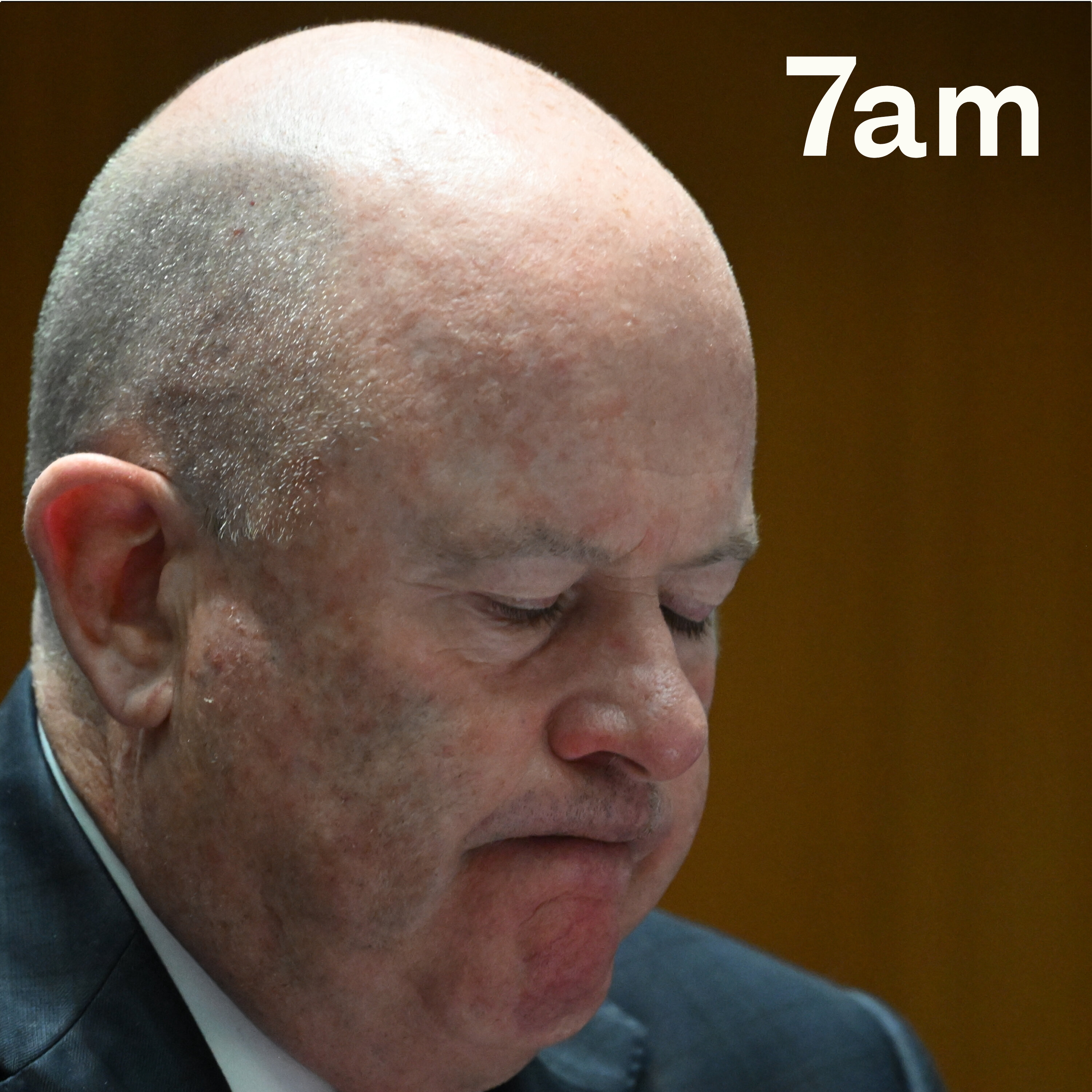
I'm Daniel James and you're listening to 7am. KPMG is one of the biggest, wealthiest and most powerful consulting firms in the country, auditing and advising everything from major companies to governments. It's trusted with some of the most sensitive information in Australia. Now that trust is at the centre of a major scandal. A whistleblower has raised concerns that confidential client information was being used to chase new work. What followed has forced out senior executives, exposed the treatment of the person who spoke up and raised bigger questions about the firms governments have come to rely on to do the work once done. Inside the Public Service today, ABC business reporter Daniel Ziffa on kpmg, the scandal inside one of the Big four consulting firms and why the fallout reaches far beyond one company. It's Monday, june 29, So let's talk about the scandal. That's before on kpmg. There's been a string of senior exits at kpmg, including the CEO. What have we seen? Where did all this begin?
- [01:19]
B
So all this began about two years ago when a senior member of KPMG who worked in Audit noticed some issues about the misuse of confidential data. There's essentially three separate instances. You would describe this person as a model whistleblower. They went to their boss, they went to their boss's boss, they used the internal whistleblowing service, they went to the CEO, they went to the board, they went to independent members of the board, they had independent directors like New South Wales Premier Mike Baird, who were there, and they were being told by the chair, oh, if you get an email from this whistleblower, just send it to hr. It's not important. Don't worry about it. When all of that failed, when after two years, they had been essentially treated as a minor workplace grievance, they'd left the firm under sufferance, forced to sign a deed of release under very unfavourable terms. When they couldn't get anywhere, they finally lobbed up at a Senate committee where they gave that information and Labor Senator Deborah o' Neill read it into Parliament under the protection of parliamentary privilege, which is how we know about it.
- [02:28]
C
I've taken great care to verify via documentation the authenticity of the matters I'm putting on record here in the Senate of the Australian Parliament tonight. In the words of the whistleblower, on 30 May 2024, I provided information to an eligible recipient within KPMG Australia.
- [02:44]
A
And what was it that the whistleblower
- [02:46]
B
was first alleging, essentially the misuse of confidential information. So they took information from Lend Lease who they audited the books of and who they've audited for 68 years. They took information from that to try and win the audits at other companies, including Dexus and Westpac.
- [03:04]
C
The matters concern, audit independence failures, misuse of confidential client information, corruption of ASX audit tender processes, knowingly misleading a Senate inquiry.
- [03:14]
B
They also left open a laptop in a room and joked to another team that, hey, there's some information there you could use. That's probably the least bad of the three things we're talking about. The one that probably crystallises it is this. The team that did the audit for telecommunications company Optus. Information from that audit was taken to try and win the vastly more lucrative contract for Optus rival Telstra.
- [03:39]
C
These massive consultancy partnerships had put profit before professionalism and used their privileged access to both business and government to grow their own wealth.
- [03:48]
B
So they're taking information that they are only privy to because they are auditors, because they have this trusted position where they need to know, where they need to be able to get in and interrogate the numbers, and they're using that in an underhanded way to try and win more business.
- [04:04]
C
Why does it all matter? Well, I'll leave it to the last words here from the actual whistleblower. If tender processes are compromised, competing firms are disadvantaged and audit committee decisions are distorted, if ethical walls are breached, confidential audit information is misused and independent safeguards become performative rather than substantive.
- [04:26]
A
So how many people have we seen leave or get sacked as a result of this scandal?
- [04:30]
B
Well, the whistleblower left under sufferance, under threat of not having a reference. From the top of the tree, we've seen the CEO, Andrew Yates, one of
- [04:40]
C
Australia's Big Four consulting firms, has had a major leadership shake up. KPMG Australia's chief executive, Andrew Yates and audit boss Julian McPherson have abruptly resigned. Their sudden departure relates to the treatment of a whistleblower after the firm admitted its handling of that whistleblower's complaints fell short of its own standards.
- [05:00]
B
Mike Baird and the other independent directors who were in front of Parliament basically said that they had quit, in part due to the treatment of this whistleblower and due to the way that KPMG had dealt with it. Two senior audit partners have left, I think a few other smaller people. And then finally, after Friday's quite explosive hearings, the chair, Martin shepherd, kind of read the room and decided that he would exit in a timely period. Probably prompted by the fact that several members of the committee stood up at the end of the day and Said he had to go.
- [05:32]
A
And while these allegations were being investigated, as you said, KPMG's treatment of the whistleblower became a scandal in itself. What happened to the person who raised the alarm?
- [05:41]
B
We finally got to hear their words, not in person, but read out by a former KPMG executive in this hearing on Friday. They talked about the toll it had taken, basically said they wouldn't do it again. The lack of speak culture, the culture of fear, retribution and revenue growth at all costs is not acceptable. The irony of course is that one of the many things that KPMG does is run a white label whistleblower service. Which means that for institutions including the Reserve bank or re tendering that one, they run their whistleblower service. They can't even run their own whistleblowers, but they are paid handsome sums by government and business to run whistleblower services for others.
- [06:23]
A
Is this the point where it becomes a question of culture and systems inside kpmg, not just one partner doing something that they shouldn't have?
- [06:30]
B
It's important to note that a huge number of people who work at KPMG, really smart people at 99 point something percent of them, would have absolutely nothing to do with this scandal. You know, so yes, it's clearly down to questions about conflict, questions about culture. These are questions that other consulting firms have had to answer in the past. KPMG itself has the dubious honour of one of the most ironic scandals of all time where they were caught out for widespread cheating in a compulsory online examination about ethics. You know, you kind of can't make this stuff up. For example, they also got busted for people using AI to cheat in a compulsory online exam about AI. You know, there are issues here with companies that are trying so desperately to increase market share to fight for finite number of clients. In an economy like Australia, that is where we're at. But the pursuit of cash is very real in this one. These are people who are paid very well, but one of the things they have to do is chase more work. And they have been chasing it so hard that they have not just bent, but broken the rules.
- [07:48]
A
Coming up, how widespread is the rot inside the Big Four. La Playa can sound like for others it's.
- [08:06]
B
But this is our Playa. Corona La Playa awaits. Relax responsibly.
- [08:12]
A
Corona Extra Beer imported by Crown Import, Chicago, Illinois. Dan, this isn't the first time we've seen something like this. There was the PwC scandal a few years ago which basically saw taxpayer funded tax Avoidance courtesy of PwC execs is this just how business is done in these big firms?
- [08:31]
B
These are the outliers. But a lot of the ways that these businesses are set up, they're set up in a partnership structure and that creates a lot of the problems. So just a quick recap on PwC. One of their top tax experts, Peter John Collins, was drafted in along with other experts to help the government formulate laws to try and tax multinational companies better. Mr. Collins took that information, reverse engineered a way around what he thought would be the government's laws. PwC globally sold that plan to Big Tech, made millions for doing so, for selling this plan to avoid as yet unannounced taxes from the Australian government and then gloated about it in internal emails. They ended up with about a third of the firm that dealt with ongoing government contracts was sold for a dollar. PwC is vastly smaller and less powerful now. They are still not bidding for government work and the stench around them remains terrible. KPMG is going down the same route. And despite having three years of essentially a what to do and what not to do guide with the PwC scandal, they've done everything the same. The executives have grimly held on long after it was obvious that they were the they would need to leave. They've attempted to minimise the scandal, they've attempted to rubbish the person or people who have raised it. It's been an amazing look at just how dumb, very clever people can be.
- [10:00]
A
And after the PwC scandal, the federal government promised to clean up its relationship with the big consultancy firms. Now it has KPMG and says it won't be able to bid for new Commonwealth work until the end of September. But KPMG still has hundreds of active federal contracts. That seems like a pretty weak response from government. What have you made of it?
- [10:21]
B
It's kind of all they could do. I mean, they said they won't by agreement, they won't bid for any work till September. You don't need to say, oh, we're not going to bid for anything. Don't worry, no one's put you on the list. KPMG has a big problem. It would not surprise me if the part of KPMG that deals with government contracts, particularly in the Defence Department, which is a huge earner for them if that gets hived off into a different or if audit gets separated out. But what government has done since PwC is they've reduced their reliance on it. The Morrison government in particular largely outsourced huge swathes of the public service and enormous and much greater than if they just employed people expense to these firms. We're talking about billions of dollars here. I think again, this is probably just another chance where the federal government will use this opportunity to screw down the bill and probably trim in their use of consultants. But there's a lot of things they need them for.
- [11:17]
A
Why does the government rely so heavily on firms like KPMG in the first place? What are they doing that the public service can't do or doesn't do itself?
- [11:26]
B
What they're doing is jobs that used to be done by the public service largely. But over time, as the public service has been hollowed out, they haven't had that specific skill. There is an element that the way that people are paid in the public service doesn't allow them to be paid enough to maintain some of those really high skills. There's a particular consulting firm in Canberra that gets $200 million a year and they have like a two room office and you're like, what are they doing in there? Well, what they do is they're essentially a recruiter for the Australian Signals Directorate, our code breakers. Now, if you want to be a public servant hacker, they just can't pay you enough. And so they essentially get these people in as contractors, they pay the contracting company, they clip the ticket, and then your good ethical white hat hacker goes and works for our code breakers. But if you just employed that person as a public servant, you wouldn't be able to pay them anywhere near what the market rate is for that highly specific skill. Government could take a choice to bolster the public service. I think this government has to try and retain some of that knowledge and keep some of that kind of corporate memory and allow them to grow. But one of the reasons that the consulting firms, the Big Four, have grown like Topsy in the past decade or so is they've just been given a huge amount of work that used to be done by other people, mainly public servants.
- [12:49]
A
And finally, Dan, is the uncomfortable truth that governments created this dependency over decades and now it can't unwind it quickly enough. And what would real change look like? Wouldn't an adequately funded public service go some way to reducing the dependence on the Big Four?
- [13:05]
B
Well, obviously I've had an immense conflict here because I am a public servant and I work for a modestly funded broadcaster.
- [13:11]
A
I've heard of it.
- [13:12]
B
It's got three letters. Yeah, it starts with A. So there has been a degradation of the public service where a lot of that corporate memory, a lot of those elder well paid people have just not been kept around, they haven't recruited, they haven't been able to compete on the market for talent and as a result there's been gaps. Business is the same. I mean, consulting firms actually face not quite an existential threat, but a really serious one from AI, because one of the things that consulting firms are best at and create a lot of their money from is answering business problems. Well, man, I've got four different AI models that can, I can pump my problems into and get some solutions. So, you know, they do have an issue into the future. Where can they charge as much for the knowledge that they have and the advice they can give? Probably not. So how is that model going to be sustained where you have this pyramid of all the toilers and, you know, a cabal of partners at the top who get paid based on how much the firm works for and earns in revenue? Is that going to last in a long time? There are some really serious challenges for the firms as well.
- [14:24]
A
Well, Dan, Ayla could never replace you.
- [14:26]
B
Thanks for coming on 7am AI is working on it. It will be quite easy.
- [14:42]
C
Tomorrow on 7am how coal and gas giants are spending tens of millions of dollars targeting Australian children in school and sports programs being labelled the new Dolomites.
- [14:53]
B
Imagine you're in a classroom and you're so excited. You get your Vegemite sandwiches and your sprinkles, you go, oh, this is so excellent. And then you find out, oh, they're
- [15:02]
C
actually teaching us how to drill for oil.
- [15:05]
B
That's the situation in Perth classrooms with a Woodside sponsored program that was delivered during Science Week to primary schools.
- [15:13]
C
That'll be in your feed first thing tomorrow morning. I'm Ruby Jones.
- [15:17]
B
Thanks for listening, Sam.