Loading summary
Transcript38 lines
- [00:01]
A
Hey, orange pig. America first.
- [00:04]
B
Oops.
- [00:04]
A
Oh, boy. That was the slogan you stole. But Bibi's pulling strings.
- [00:08]
C
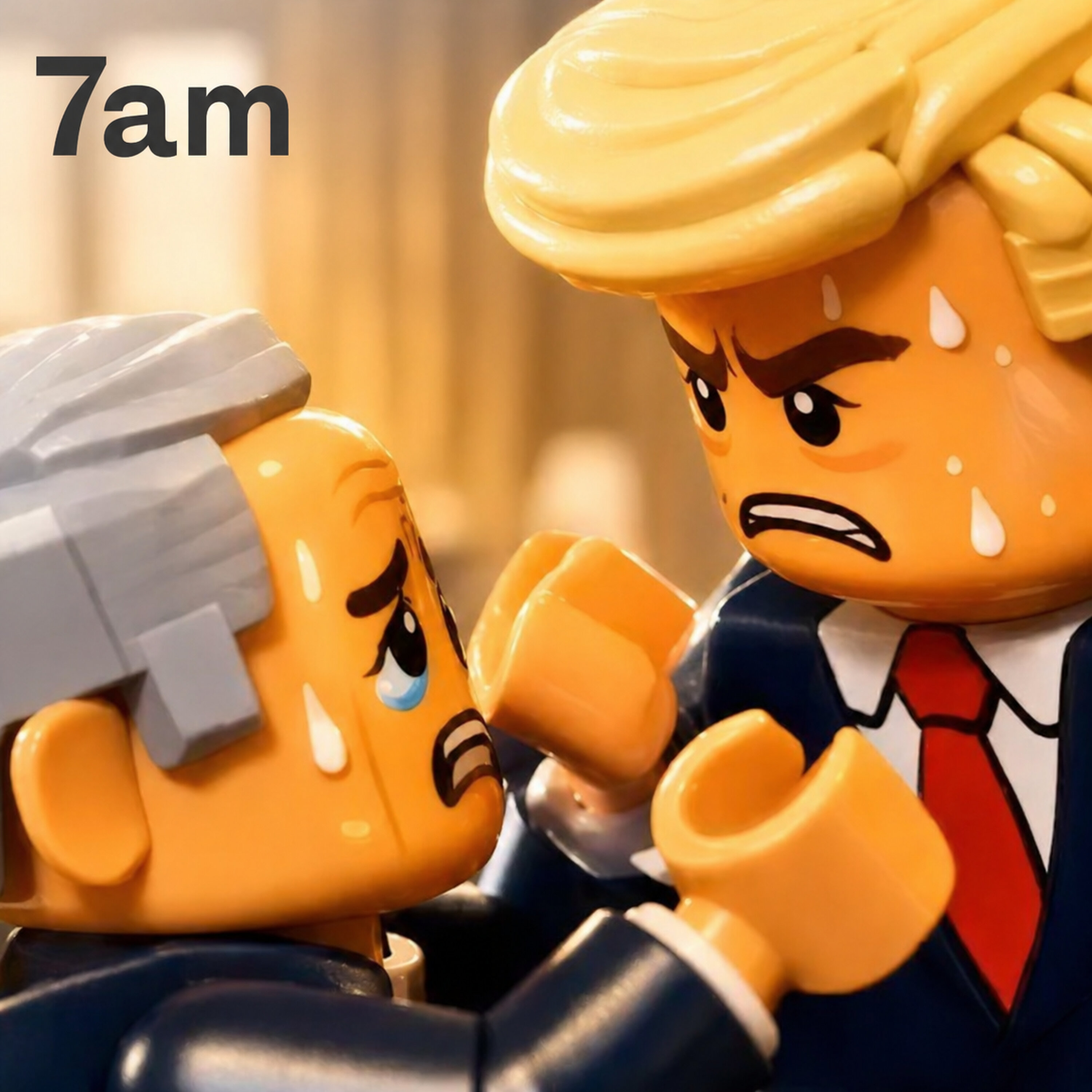
Iran's wartime propaganda videos featuring AI rap music and Lego characters are getting millions of views online. They praise the Islamic Republic and mock Trump, but their message is also dark, anti Semitic and leaning into conspiracy theories.
- [00:25]
A
Make Israel great again. Your government is run by pedophiles. They ordered you to die for Israel. They voted you to die for Israel. They lied to you. We saw everything.
- [00:41]
C
So how's a regime that shut down the Internet and isn't known for its sense of humour captured the zeitgeist so well? I'm Nicole Johnston and you're listening to 7:00am today. Holly Dagres, an Iranian American analyst from the Washington Institute on Iran's viral meme war and what it tells us about the regime. It's Thursday, April 30th. Holly, I've got to say, I've become a bit addicted to watching these Iranian Lego videos over the last couple of weeks, and they really seem to have taken the world by storm. But before we get into who made them, what's behind it, let's talk through a couple of them. What's one that's really stuck out to you?
- [01:33]
B
I think that the one that really stood out to me recently was the one about Secretary of War Pete Hegseth.
- [01:40]
A
Pete Hegseth, this one's specially for you.
- [01:43]
B
So rap, Afarsi, or Persian language. Rap is big in Iran and so it doesn't surprise me that they would take rap and make it a medium, especially since it also has us pop culture residents now.
- [01:58]
A
You, secretary. What a joke, bro. Cheated on wives, multiple affairs, kids in the mix. Family man, hell no. Handsy with women at Fox. Drunk on the job, your own team say, yo, this dude toxic.
- [02:10]
B
I think this was purely for an American audience. At least the Lego videos, because they're very US centric.
- [02:17]
A
We hitting the bow, worshiping Epstein island crew, the ones who hurt the kids. Revenge for every American soul you and Trump's dirty crew oppressed and did.
- [02:28]
B
Of course, there's this nod to the Jeffrey Epstein files, and that's also a very popular theme that you see in these Lego videos highlighting the hypocrisy of elites in America and the corruption and the lack of accountability in the US While they're wagging their finger at Iran, Russia, China about human rights abuses.
- [02:52]
A
Yeah, Make America great again. Now you will see what happens. Yeah, watch this. Sacred defense we protect.
- [03:03]
B
Each and every one of them has a lot of attention to detail, not just in this video specifically, but other ones as well. Like it depicted President Donald Trump as a gambler. And actually that was a nod to IRG secret force commander Ghassem Soleimani, who was actually killed by the first Trump administration in a U.S. airstrike in Iraq. And Soleimani famously used to describe Trump as a gambler.
- [03:27]
C
We were talking about one earlier. It goes through Trump's business deals in the Gulf. It's got Jared Kushner in it. And then it lists this long list of US wars around the world. I mean, the creators have really done their homework.
- [03:42]
B
Yeah. And I think it really leans into this anti imperialism lens. So the Islamic Republic, I would say in very simple terms, sees itself as the rebels in Star wars and the US as the empire.
- [03:55]
A
You thought you took them out, thought the fire was dead. But another common day is standing ahead. Yeah, you strike one down, we just shatter your brain. We put another in the lit common again.
- [04:07]
B
The US Has a history, especially in the Middle east and to the east of Iran and Afghanistan, where they've had these forever wars that they have not successfully been able to win. The team behind these videos, explosive media is honing in on these U.S. historical contacts. And so it's not surprising to me that they would focus on that to say, yes, this is yet another failed US war in the Middle east that could be a potential forever war where American troops are killed. And these are real sensitive issues for the American public, especially the MAGA base, who are mostly isolationists and opposed to these kind of wars, because it should be America first. We shouldn't be going back to wars in the Middle East. And so this really clashes with what the President's been saying.
- [05:02]
C
Holly, how has Israel featured in the videos? Because one of the most striking images that I've seen recently has Israeli soldiers looking over US citizens in chains in a bombed out America. That was the final sort of scene of one of the recent ones.
- [05:22]
B
Well, I think that there's a lot of anti Semitism that are present in these videos. It basically is saying that Israel's controlling the strings of the United States. They're depicting Israeli Prime Minister Benjamin Netanyahu drinking the blood of, I assume, children. I think they even had the devil wearing the Star of David. So it's really leaning into that antisemitism that unfortunately the Islamic Republic's been known for.
- [05:50]
C
Holly, you're American, but you have an Iranian background. Can you give us any insight into why you think they chose Iran Lego for these videos?
- [06:00]
B
So my understanding, because the one of the team members behind Explosive Media said that it's because Legos globally resonate, but I think just unpacking why it's so surprising that they're able to lean so well into these themes that resonate with Americans. And of course, if there's also these Iranian embassy accounts that are posting memes, some of which are just related to viral moments, it's because they're of that access and it's because there are young Iranians that are curious about the outside world. I know that Iran's relatively isolated from much of the world, but Iranians have to use circumvention tools to get online historically. Unfortunately, now there's a Internet shutdown, the longest in modern day history since the war began. And so I don't necessarily think that everybody that will be working on this team is pro regime, but are in it perhaps for the money because they have a real good understanding and sense of American pop culture, the news cycle, and of course English language skills. That being said, Explosive Media has said that they are a customer of the Islamic Republic, so they're not really as independent as they had initially suggested. So I wouldn't be surprised if the company that's behind these Lego videos are also behind the Iranian embassy accounts. And even speaker of Parliament Mohamed Baghrer Khaliboff, who's also been very cheeky in his tweets in recent weeks.
- [07:36]
C
I mean, how different is this to the type of propaganda that Iran and the regime would have put out in the past?
- [07:44]
B
Well, I'll just give you another example that you might not have seen. But when there were the American pilots that were downed in their jets a couple weeks ago, there were all these AI generated pictures of like a US soldier marrying a local woman from a tribe in Iran making kebab. And it was to hint at the hospitality of Iranians. And these were depictions by the Iranian diaspora. They instantly made a Lego version where these local tribesmen from the Lur ethnic minority were chasing a pilot with guns. And so it was like to counter the narrative of, well, this is an enemy, we're not going to be hospitable. But the Islamic Republic has been behind the times for a while now. They've tried to really lean in hard into the narrative of the bloody eight year war with Iraq in the 1980s and the notion of martyrdom. But it really doesn't resonate with Iranian Gen Z that weren't alive when that war happened. And so I think over time they realized that actually there's a way to do this. And Perhaps they might have even been inspired by the current Trump administration's White House account, which has been using AI generated videos with themes like Call of Duty, Labubu dolls, and honing in on topics like ice raids, the Iran war. And so perhaps they finally looked at that and were like, hey, I have an idea. Why don't we counter their narrative with this kind of narrative? And, and I think that's how it resonated, but it's really because it spent a lot of time on social media and understanding the information space and understanding how the American public thinks and feels in this moment.
- [09:45]
C
Coming up, the hidden hypocrisy of the Lego memes. What do you think the reaction would have been to these videos inside the country from both pro and anti regime people? And I also know, Holly, that you really focus on young people in Iran. So do you think they would in some ways be sort of loving this attention and this propaganda war, or are they just really focused on trying to survive?
- [10:22]
B
Well, I think pro regime Iranians, if they can understand entirety what was being said, I think it would resonate because some of those things like the Epstein files or having that deity fall or the reference to Trump as a gambler, these are themes that we actually see in the pro regime rallies, like the 1979 revolution anniversary that happens annually in February. And so I think that would resonate, but for the average Iranian that's anti regime, I think they would just scoff at it because for them in this moment, they're trying to get by the little bit that I've been able to connect to Iranians inside Iran, separate from the war, they're still processing the unprecedented massacre of Iranian protesters in January. Amnesty International is sounding the alarm over Iran's crackdown on anti government protests that have swept the country. The human rights group says Iranian authorities have committed mass killings on an unprecedented state scale, with security forces routinely using lethal force against unarmed protesters. And so I think that this is not going to be a focus for the average Iranian while all of this
- [11:36]
C
propaganda war is happening. The actual war is still in this very fragile stage. It's hard to know where it's at.
- [11:44]
B
Neither Tehran nor Washington seem to want to move at the moment. And meanwhile, the Iranians have sent the Foreign Minister Arachi to Russia. While Trump is keeping the door open
- [11:54]
C
to diplomacy, A. Ragshi blames the United
- [11:56]
B
States for the last round of negotiations falling apart.
- [11:59]
C
What do you think that the regime wants at this stage? Is it a ceasefire, or do you think that they could actually be prepared to drag out this war for much longer.
- [12:11]
B
Well, we're dealing with the new face of the Islamic Republic, one that's more hardline and more repressive. And I think this new leadership is willing to take more gambles. And I think that they're willing to escalate because they recognize that this is an existential threat and that they also want to make sure that another war doesn't happen again. And so that's why, you see, even on this blockade, there have been entertaining talks, but they haven't decided to go to Islamabad. And so basically, they're calling Trump on his bluff. And I think that for them, they want to make sure this is the war that ends all future wars. And unfortunately, if and when that does happen, I think if they had their druthers, they would go all the way and try to develop a nuclear weapon to make sure that a future conflict doesn't arise, because they see it as a form of deterrence.
- [13:10]
C
Finally, Holly, if we could look inside Iran now, Trump initially urged Iranians to rise up against the regime. That didn't happen during this war. And if anything, some analysts are saying Iran could become even more repressive with the Revolutionary Guard so firmly entrenched now. What do you think?
- [13:31]
B
Well, you know, I keep saying that Trump, I think, was hoping for a Venezuela deal, but he's created a North Korea instead, a regime that's more hardline, more repressive, more emboldened. And unfortunately, the Iranian people are caught in the middle. An overwhelming majority want the Islamic Republic gone. And the situation has created a place where now Iranians are worried about the Islamic Republic taking revenge on the Iranian people. Just earlier in March, there were at least 1500 arrests. Those have been growing every day. There's been at least half a dozen executions. And some of them are protesters tied to the January anti regime uprising. But they're really trying to win the propaganda or narrative war. And I think it's important to emphasize we're in the longest Internet shutdown in Iranian history that's been state imposed. Meanwhile, these accounts are able to freely post online while the Iranian people are really struggling to get online, or they have to buy these really expensive VPNs that are, I would say, shady because they are likely tied to the clerical establishment's security apparatus or they're just really struggling even to get connectivity in these moments. And so it's clear to me that this is part of a narrative war where they're trying to show them a different face to the outside world while they repress their own people.
- [15:10]
C
Holly, it's been great talking to you. Thanks for joining us.
- [15:13]
B
Thank you for having me.
- [15:27]
C
I'm Nicole Johnston and this has been my last week filling in for Ruby Jones, who'll be back in the 7am hosting seat next week. It's been great bringing you some of the biggest stories of the year so far, from the beginning of the Iran war to the arrest of Prince Andrew, to getting out and speaking with protesters at the explosive rally against Israeli President Isaac Herzog. Thanks so much for listening.