Loading summary
Transcript35 lines
- [00:01]
A
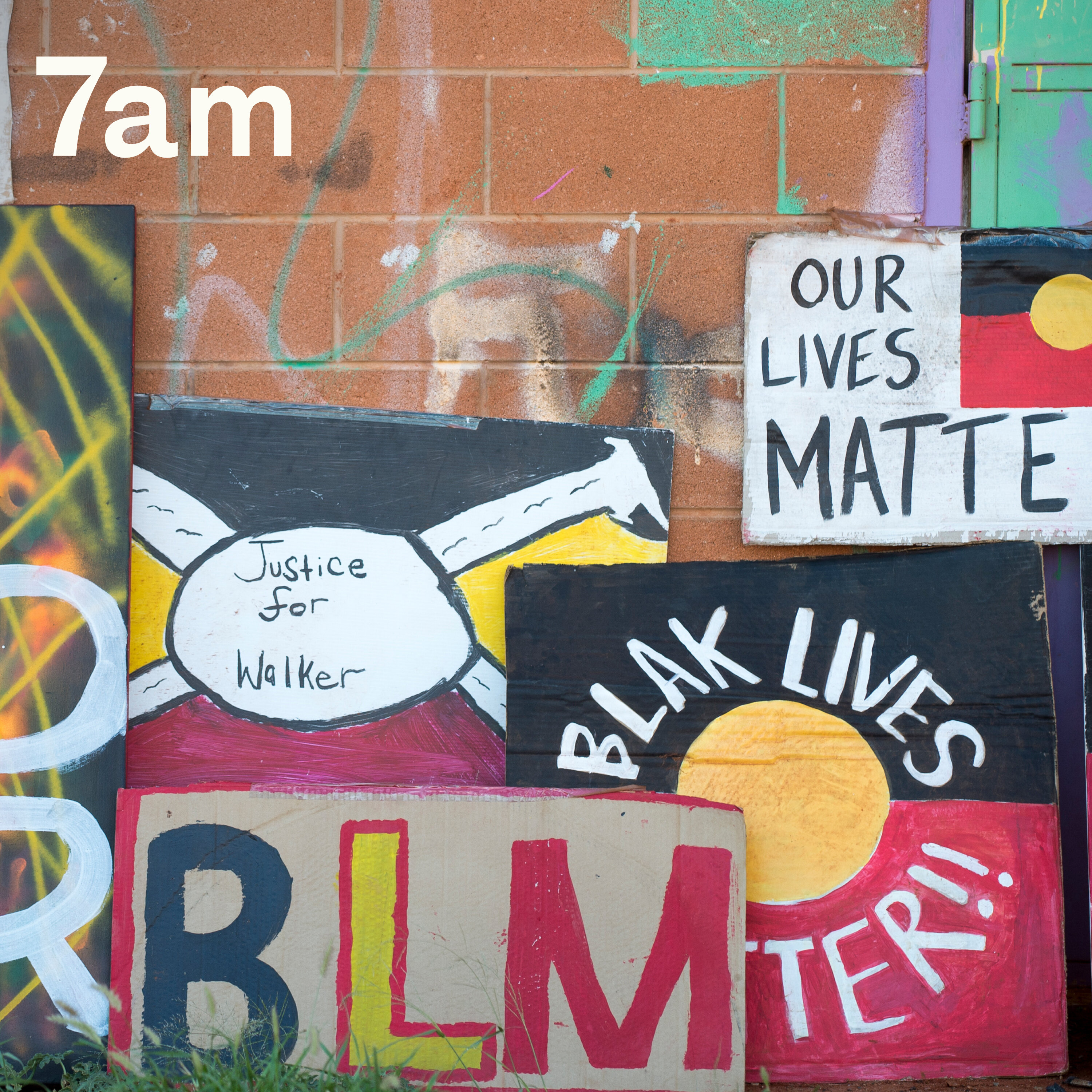
On the 9th of November 2019 in Yuendumu, Kumanjay Walker, a 19 year old Walpuri Luratshire teenager, was shot and killed by former constable Zachary Rolfe.
- [00:14]
B
It's been one year since Kumanjaya Walker's family gathered to hear coroner Elizabeth Armitage share her finding into his death.
- [00:21]
A
Having considered all the evidence, including Mr. Rolfe's explanations and justifications, I found that Mr. Rolfe was racist and that he worked in and was the beneficiary of an organisation with hallmarks of institutional racism.
- [00:38]
B
In 2022, Rolf was found not guilty of Kilminjaya Walker's murder. But his family have always maintained that Rolf's racism played a role in Walker's death. Coroner Elizabeth Armitage said she couldn't rule that out.
- [00:52]
A
That I cannot exclude that possibility is a tragedy for Kumin Jae's family and community who will always believe that racism played an integral part in his death. And it is a taint that may stain the NT police.
- [01:11]
B
I'm Daniel James and You're listening to 7am today. We're bringing you an episode recorded just after the inquest was investigative journalist Kate Wild. His book the Red House examines Kuminjo Walker's death and how the racist culture of Northern Territory police enabled Zachary Rolfe to act with impunity. It's Sunday, July 5th. This episode was originally published in July 2025. Kate, this particular inquest, can you tell me about its scope and about the coroner's approach, the questions that she was seeking to answer?
- [01:50]
C
So the coronial process is designed to determine the place and cause of a person's death and the identity of the person who's died at its. At its most basic. But it's also designed to figure out what has contributed to that death in order to prevent similar deaths in the future. And that was really the task that Elizabeth Armitage set herself was to look more deeply at this conflict between a young Aboriginal man and a young white police officer in a single house in a remote community in the Northern Territory. What led them both to be in that house at that moment? What were the forces, the cultural and attitudinal forces driving each of them, and what made that a fatal moment of contact? One of the things that has been most impressive about this inquest is the way that Elizabeth Armitage has run her courtroom. It's been one of the most inclusive and informal processes that I've seen. For instance, the coronial opened with a Warlpiri interpreter sitting next to Libby Armitage on the bench and interpreting everything that she said. So from the beginning, Warlpiri language and law and culture were sort of placed at the same level as the most senior Western legal person in the room. And those singular acts of sort of rebellion against the way that things have always been, and taking the risk of making a change like that, that risk of being taken by someone in a position of power, I think maybe that's the kind of thing that is going to bring the sorts of change that we all want to see, but don't necessarily believe can come just from a single report.
- [03:27]
B
And so why has it taken so long for this report to be handed down?
- [03:31]
C
So the coronial started in September 2022, about six months after Rolf's trial finished and he was acquitted. Almost immediately, Zachary Rolf's legal team started making objections to the kind of evidence that he should be made to give. So having to give evidence about racism within the Northern Territory police force, Rolf objected to giving evidence about his use of force history, about his record in the military, about text messages that were found on his phone, and about his disciplinary history in the Northern Territory police. And those legal appeals are far and away the biggest reason for delays for it going from what should have been a few months to almost three years.
- [04:15]
B
So let's go to what the coroner found. When Judge Armitage read out her report, she said that having considered all the evidence, including Mr. Rolfs explanations and justifications, that she found that Mr. Rolf was racist.
- [04:28]
A
While it is not possible for me to say with certainty that Mr. Rolf's racist attitudes were operative in his decisions on 9 November or were a contributing cause of Kumanjai's death, I cannot exclude that possibility.
- [04:43]
B
And she went on to say that racism may have been a contributing cause of Kuminjayi Walker's death, insofar as it may have influenced his actions that night, that is something the Walker family have maintained to be the case. How significant is a finding like that from the coroner?
- [05:00]
C
I think it's significant, I don't think, to anyone who has been in the Territory or following this inquest closely that it would have been a surprise. It may have been a surprise that the coroner stated it so clearly. I think what was more of a surprise was that Judge Armitage expanded the scope and the influence of racism to the police force more generally as well. To say that yes, definitely, Zachary Rolfe was racist and his attitudes and his beliefs would have influenced his approach to that night and could have been a factor in Kumanjay Walker's death, but also that some of the responsibility for that lay with the Northern Territory Police Force, which was an organisation that showed the hallmarks of institutional racism. And that because there were senior members within the police force who were responsible for Zachary Rolf and who were sort of colluding with him in his behaviour and encouraging him in it, he was left immune to any kind of censure. He was sort of encouraged to keep going. No one ever told him that what he was doing was not OK.
- [06:02]
A
In disturbing evidence on at least five occasions, Mr. Rolfe recorded on his phone body worn footage was of his forceful arrests of Aboriginal men. He replayed the body worn video to colleagues and forwarded the phone footage to family and friends. It is clear that a significant motivation for doing this was because he was proud of, was boasting about and wished to be celebrated for his physical feats of tactical skill or ability. He thought that using force against arrest targets and causing them serious injury was funny.
- [06:44]
B
And how do you think that the Northern Territory Police Force is grappling with the need to reform itself?
- [06:48]
C
I think that's been one of the most interesting things for me to watch over the sort of. Now almost six years since Kumanjai Walker's death. It was really evident during Zachary Rolf's murder trial that there was a sort of internal battle going on within the Northern Territory Police force for who would rule the culture. And it was a battle between, you know, what are known up here as bush cops and town cops. They're really loose terms, but bush cops, you know, people who work out in remote communities and are much more focused on community policing, which is based on relationships and de escalation. They still face some really dangerous situations, you know, often in really isolated settings, but it's a much more humanistic approach, I would guess you could say. Whereas the. The loose term town cops, which really in this instance sort of refers to Zachary Rolfe's style of policing of sort of cowboy Rambo, we're the tough guys, we're dominating sort of culture. There's been a battle between those two groups since Kumanjay Walker's death to see who will gain the upper hand within the Northern Territory police force. The coroner certainly in her findings has supported the bush cop culture. The. The Northern Churchill Police Force executive has come out and said that that is definitely the kind of culture that they want to promote and that they want to be known for as the Northern Churchill police officers. But they have a real fight on their hands because that's not how all frontline police officers want a police.
- [08:20]
B
After the break, the change Kumandaya Walker's family is calling for.
- [08:32]
C
Today's not a very. It's not a really happy day for us.
- [08:38]
B
It's another sad day. So Kate, when Zachary Rolfe was acquitted of Kumanjaya Walker's murder, his grandfather Ned Japan Hargraves called for a ban on all guns in Aboriginal communities. No guns. No guns in the remote community. We don't want no guns.
- [09:02]
A
Enough is enough.
- [09:04]
B
There are several other calls that have come from the Uwindamu community. They want an independent police ombudsman, self determination, investment and alternatives to prison. What hope do you think the family has now that this inquest has finished and the report has been handed down? Will it get them closer to any of those outcomes?
- [09:24]
C
I mean, one of the strongest findings that the coroner made was that the Northern Territory police should work with the Yuendamu leadership to work out the circumstances in which police don't carry guns in community.
- [09:34]
A
I have recommended that the NT police engage directly with the Yuendumu leadership groups to develop mutual respect agreements including when it would be appropriate for police not to carry firearms in community. And I've made other recommendations concerning the use of long arm weapons.
- [09:52]
C
So certainly they've been supported by the coroner in that desire for sort of more self determination. No guns in remote communities.
- [09:59]
A
I have made recommendations on recruit training and cultural inductions. Specifically, I have recommended that the circumstances of Kuman J's death be incorporated in training on officer induced jeopardy to NT health in an effort to both prevent and address trauma experienced by young people like Kumanjay. I have recommended a strengthening of its developmental screening programs for children under 5 years to strengthen relationships and the cultural competency of clinics. I have recommended that work be done with the local health advisory groups and other community groups and I have recommended a strategy be developed for the delivery of sustainable mental health services in Central Australia. Australia, including in New Dummu.
- [10:48]
C
But I guess the community is at the mercy of powers greater than them. Government's willingness to support change, to fund change. I think there's a level of cynicism and resignation that all of this paperwork and all of this talking happens and then that's the end of it. So I think a lot of people don't have a lot of expectations but I think there's reason to have hope that at least a position like the coroner's is very much in support of what the community has asked for. I think there's an extra layer of grief at the moment because there's been another death in custody of a young Warlpiri man quite recently, and that sort of on its own, has opened up a lot of old wounds. But sitting listening to the coroner reader some of her recommendations and findings yesterday, in which she also went back through quite a few of the details of Kumanjay's actual death, I think those wounds were really reopened again in a very visceral sort of way to Kumanjay's family
- [11:50]
A
and to the community of Yuendumu. I am sorry for your profound loss. I now hand down my findings.
- [11:57]
C
There was no reaction from people when the coroner finished speaking at the end of about 45 minutes of a presentation, and people just sort of melted away reasonably quickly and the space was left kind of. Kind of empty.
- [12:13]
B
It's been almost 30 years since the royal commission into aboriginal deaths in custody, and we've known so much about these issues for decades, Kate. And governments have really sat on recommendations to fix this, but it's been a long, long time and it keeps happening. So do you believe that there'll be a case or a report that finally makes governments act?
- [12:34]
C
No, I don't. I don't think reports. I mean, I think they're worthwhile. I think what the coroner has produced is a. Is a slab of history and a story that bears witness to one of the latest chapters in the Northern Territory's history of relationships between first nations people and the police. But, you know, there are supermarket trolleys full of reports all over the country into things like this, and none of them have managed to make the changes that are necessary. I don't know what will make that change other than continued pressure from the broader community on the political system. It feels like a really lame answer, but I don't know that anyone has the answer to what will make the change happen, otherwise we'd be doing it.
- [13:22]
B
And in terms of that idea of the community placing pressure on government to act, what toll does that take on a family to have to do that over years and years?
- [13:32]
C
Enormous. It's an enormous toll. But that's a toll that first nations people around the country, and I would say, in my experience, particularly in remote communities, carry every day. The lives of people in Yuendumu are political every single day, and so they are constantly carrying that weight that their lives are controlled, hemmed in by laws and regulations and decisions that they don't have any part in and they don't have any power over. And so fighting against that is a part of daily life for people in remote communities, and it takes an enormous toll.
- [14:15]
B
Kate, thank you for talking to me today.
- [14:17]
C
It's a pleasure.
- [14:31]
B
7am will be back tomorrow with special guest Bernard Fanning. He's hitting out at the federal government over a rumored dirty deal with AI companies. It would see them given access to music like his. There is something that Australian music has brought to, especially contemporary music in the last 60 years that is really unique. It's really unique and that should be preserved. And this idea that our music can be traded as an economic token or our ideas are somehow able to be our property is able to be traded away is ludicrous. I'm Daniel James, and thanks for listening.