Loading summary
Transcript46 lines
- [00:01]
Ruby Jones
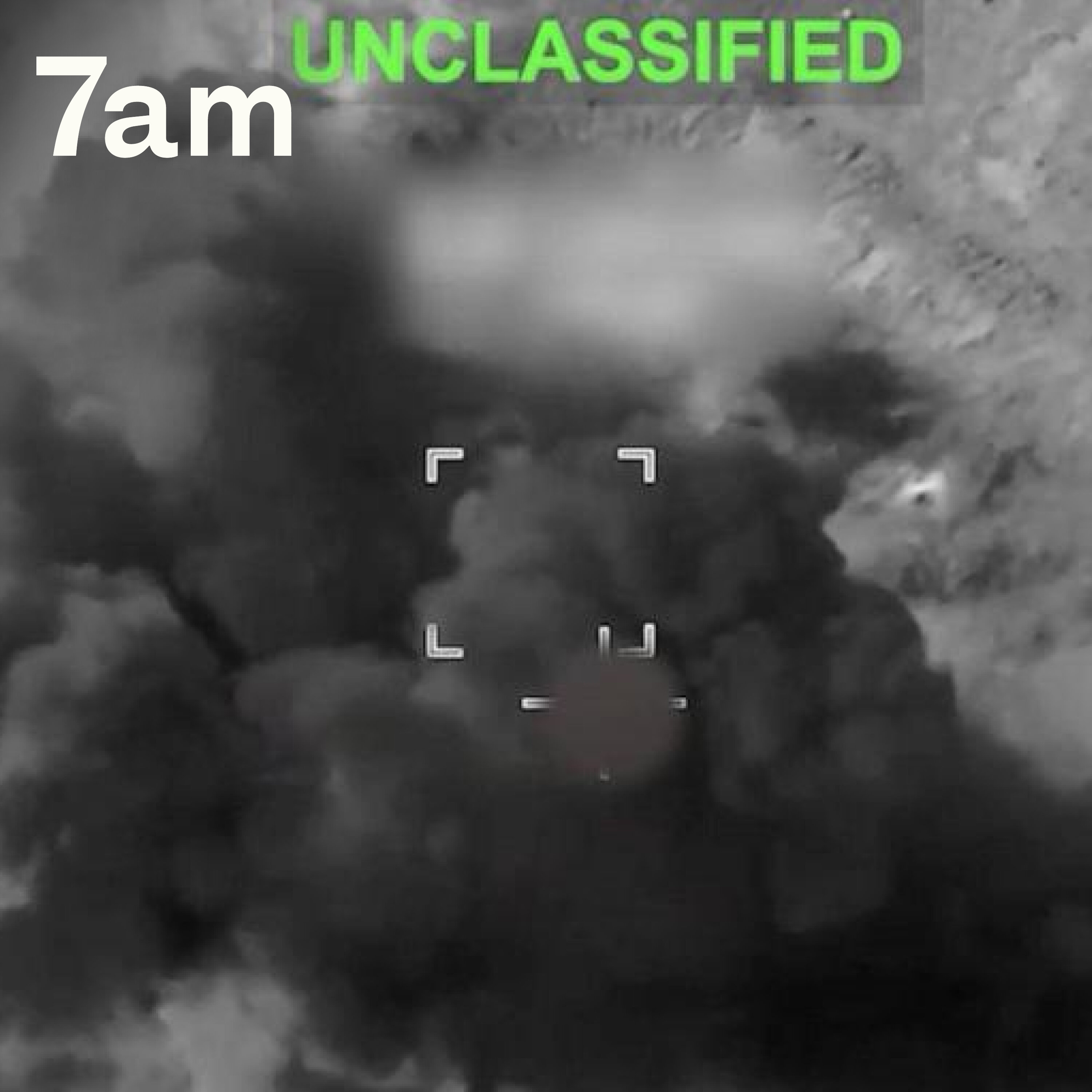
For more than a week, Donald Trump has ordered strikes against Iran in a worsening cycle of attacks, including on civilian infrastructure.
- [00:08]
Akbar Shahid Ahmed
We hit him very hard again tonight and we did that in honor of the probably three. It's probably three, as opposed to two great patriots.
- [00:19]
Ruby Jones
Trump has defended the strikes as honouring the deaths of up to three American service members in an Iranian attack. But the real goal is to get the Strait of Hormuz open again, something that looks increasingly unlikely. So with the region once again on a knife's edge, the US Appears locked back into an escalating war unless the interim ceasefire deal can be salvaged. I'm Ruby Jones and you're listening to 7am today. Diplomatic Correspondent at notice, Akbar Shahid Ahmed on the threat of all out war and who is really in charge of what happens next. It's Wednesday, july 22nd.
- [01:06]
Interviewer (Ruby Jones)
So, Akbar, the United States has now carried out more than a week of strikes on Iran. American troops have been killed. Iran is attacking US Bases and allied countries. Traffic through the Strait of Hormuz has almost completely stopped. So take us through what's happened over the past few days and how close things are again now to an all out war.
- [01:29]
Akbar Shahid Ahmed
It's really been a stunning, stunning sort of spiral back into open conflict. Not an unpredictable one. Certainly. Whatever deal the US And Iranians were able to reach in June was quite shaky. It depended on two sides that have more than 40 years of enmity and a lot of that blood extending well beyond the Trump administration. However, what's happened sort of in this 10 day period where now is really focused on one specific issue and one specific dispute between the US And Iran, which is the Strait of Hormuz. That's that strategic waterway between the Arabian Peninsula and Iran's southern coast through which a large proportion, about a fifth of the world's oil and gas supplies travel in a normal time of peace. The Trump administration and Iran are arguing over how this should be operated.
- [02:25]
Interviewer (Ruby Jones)
The battle to control the Strait of Hormuz continues as the United States launches its seventh consecutive night of strikes on Iran.
- [02:33]
Akbar Shahid Ahmed
Under no circumstances and in no way we will allow the United States as a foreign and extra regional country to interfere in the Strait of Hormuz.
- [02:42]
Donald Trump
Breaking news. The Pentagon says two US Service members are dead and a third is missing after Iranian attacks in Jordan.
- [02:48]
Akbar Shahid Ahmed
It comes as another wave of strikes against Iran, marking the 10th consecutive night of attacks. Explosions have been reported. So it's really been a bit of an escalating tit for tat. And that's what experts on conflict are really worried about in a period like this where you just go and wind things down, you only keep ratcheting up.
- [03:07]
Interviewer (Ruby Jones)
And so tell me a bit more about the targets hit, because Donald Trump has long threatened the mass targeting of civilian infrastructure. Back in April, he threatened what he called Power Plant and Bridge Day.
- [03:20]
Donald Trump
Every power plant in Iran will be
- [03:23]
Akbar Shahid Ahmed
out of business, burning, exploding, and never
- [03:27]
Donald Trump
to be used again.
- [03:27]
Akbar Shahid Ahmed
I mean, complete.
- [03:29]
Interviewer (Ruby Jones)
So is that what we're saying here?
- [03:31]
Akbar Shahid Ahmed
Look, the Trump administration has been quite clear about their view of international law. International law, including the law of war, says you cannot target civilian infrastructure. However, President Trump has really openly said, well, I don't really think these rules apply to the US I don't need international law.
- [03:46]
Chumba Casino Announcer
Do you feel your administration needs to abide by international law on the global stage?
- [03:50]
Akbar Shahid Ahmed
Yeah, I do.
- [03:52]
Donald Trump
You know I do.
- [03:53]
Akbar Shahid Ahmed
But it depends what your definition of international law is. And so, yes, we are now seeing the US Target civilian infrastructure.
- [04:02]
Interviewer (Ruby Jones)
The Iranians have come back, though, and talked about several areas of civilian infrastructure that they say have been hit, including five bridges, an airport, and a railway station. And that eight people were killed in these attacks. The US has not commented on on these allegations.
- [04:18]
Akbar Shahid Ahmed
Are these potential war crimes? Certainly international law experts and people inside the government. Ruby, who I've spoken with, are concerned about that risk that, yes, U.S. officials may be implicating themselves in violations of international law on a daily basis. And this is that ratcheting up that President Trump has indicated. Part of that is what's making this escalation look so scary to observers, because it looks like the pattern of US Strikes is almost targeting Iran's ability to use its own forces within its territory, raising the question of not only are we breaking international law here, are we moving towards an American ground invasion of parts of Iran? So is this targeting of bridges about not just instilling fear, creating panic, all of that scaring the Iranians, but leading to a bigger war?
- [05:09]
Interviewer (Ruby Jones)
Well, let's talk a bit more about what the goal here might be, because Washington and the Trump administration's rational, Nile, it's been fluid this whole time. It was initially presented as preventing Iran from acquiring a nuclear weapon, destroying its missile industry and navy, giving Iranians a opportunity to overthrow their government. What is the administration actually saying now about what it's trying to do, what it's trying to achieve?
- [05:37]
Akbar Shahid Ahmed
It's so important that you brought up this previous administration argument of freeing Iran and advancing principles of human rights, and the idea of perhaps they're going to get a regime change away from this really autocratic regime in Iran, which, of course, has killed hundreds of their own people, if not thousands in protests just earlier this year. A lot of that language has been abandoned. And instead, what we've seen in this period is a race to the bottom by the US and also by Iran, by the way, which has targeted civilian infrastructure in Arab countries across the region, like water desalination plants, really, essentially. So what we're seeing instead is the might makes right approach from both sides. So the Trump administration has given us reporters who are constantly pressing the White House and the State Department for explanations. The basic thing seems to be President Trump can't let go of the idea that more military pressure will lead to more concessions from the Iranians. Now, initially, what he wanted concessions on was the nuclear enrichment. That's totally off the table now. And that kind of speaks to the bigger moment of crisis we're in where now what the concessions Trump wants are over the Strait of Hormuz, and we've pivoted.
- [06:48]
Donald Trump
Now, what we're doing is assuring that oil and gas and other products can flow through the Strait of Hormuz with or without Iranian cooperation. And we've continued to degrade their offensive military capabilities. The president is always looking for the diplomatic off ramp. President Trump wants to end it with a peaceful agreement with Iran, but it
- [07:09]
Akbar Shahid Ahmed
takes so any sort of settlement would just address the strait, leaving open those underlying issues and disputes between the US And Iran, and leaving open the question of would the US Go back to an attack, which from the Iranian standpoint, they're saying, well, why not just escalate fully right now, rather than wait six months or a year for another joint US Israeli attack over the nuclear program, over their other problems with us.
- [07:37]
Interviewer (Ruby Jones)
So the administration says it wants to keep the Strait of Hormuz open, and it says it can do that with or without Iranian cooperation.
- [07:45]
Donald Trump
If they're ready to do that, that's the way it'll end. If not, we will continue to assure flow of traffic through the strait without Iran's cooperation.
- [07:54]
Interviewer (Ruby Jones)
But shipping remains at a fraction of its normal level. So can the US Actually bomb its way to having the strait open?
- [08:02]
Akbar Shahid Ahmed
Look, Ruby, I have been talking to a lot of military officials, service members in the region, American troops who are being deployed, and more are traveling to the region at this moment, actually to sort of ramp up the American presence. They are not feeling that they're equipped for the mission that the administration is putting out there and sort of implicating that in. And making them vulnerable in. So a lot of People on the ground who are being told, yes, you're going to do this, to sort of take back control of the Strait of Hormuz. This was never an issue prior to this war. This was a war of choice in which the Trump administration chose to create a new status quo in the region, failed to do so, and is now trying to go back to a pre war approach of free navigation that most analysts, most observers believe is not coming back. I don't think that the way this trade gets resolved is through some US Application of pressure. It's most likely through a new deal between the us, Iran and some of the US aligned countries of the region, Oman, Qatar, United Arab Emirates, that anything within that would not take us back to February 27th before Trump launched this war. So effectively, he's accepting a loss.
- [09:19]
Ruby Jones
Coming up, Donald Trump and the Madman Theory.
- [09:30]
Chumba Casino Announcer
Tyler redick here from 2311 racing the rush of racing. Nothing beats it, but Chumba Casino comes close. Chumba's got fast spins, fun games, daily bonuses, and all the action you can handle. Now that's a ride. Ready to hit the throttle, get in the driver's seat and head to chumbacasino.com let's Chumba. Sponsored by Chumba Casino. No purchase necessary VGW Group void where prohibited by law 21 terms and conditions apply.
- [10:01]
Interviewer (Ruby Jones)
Akbar, you've reported on Trump's use of the madman theory. So the idea that Iran will concede because it can't predict how far he will go, who is actually shaping policy inside this administration and how much of this strategy comes down to Trump's impulses.
- [10:19]
Akbar Shahid Ahmed
The president certainly has a really strong conviction that a madman approach works. He thinks that it has made him successful in business, has made him successful in politics. If you look at his ideological shifts on so many issues, I mean, abortion, gay rights, a whole range of things, he's really flip flopped. People around him, Ruby, are trying to influence his thinking, but they're also very sort of driven by their own agendas. Right? So you look at someone like Secretary of State Marco Rubio and Vice President J.D. vance, who have differing views on the war to a degree, Vance being a little more skeptical of the war than Rubio. They're also both trying to set themselves up to take the mantle from Trump. So the question then becomes, are they giving Trump their best advice or are they giving Trump the advice they think he wants to hear to get his endorsement for the Republican presidential primary in the future? And these are kind of the factors that are drawing what's around him from people I know who are briefing him in the room with him. He is personally often more hawkish than those around him, including even Rubio, a longtime hawk on Iran. Trump's kind of determination to demonstrate his strength is very, very much driving the show right now. And then of course there's Secretary of Defense Spiet Hegset. Again, Oseri very interested in this idea of if we just apply more force, we'll get better results. But I really draw this out to kind of pre Trump patterns in U.S. foreign policy in that presidents have not been asked to rein in their war making power for a very, very long time, especially in the kind of post 911 era where wars have dragged on in places like Yemen, Pakistan, Somalia, without any check and without any clear strategic rationale while causing huge strategic and human costs.
- [12:13]
Interviewer (Ruby Jones)
So when you look at what's happening and the fact that neither Iran or the US appear willing to accept the other's terms, is there still an off ramp here or are we looking at this escalating open ended war scenario?
- [12:27]
Akbar Shahid Ahmed
That's a real cost. You know, I mean hundreds of Iranians have lost their lives already, including many civilians, including children. Iran is in a deep, deep economic crisis. So there are voices within Iran saying we need to reach some sort of concession with the US on the American side. The price is not quite being felt yet. Yes, more service members have been killed. It's now come out that the Pentagon was not releasing some of the injuries among American troops. I think that's going to become a bigger story and a bigger concern of our American safe. It's raising bigger questions about US bases. But no, I think right now we're not in a phase of an off ramp. While we do know that a new diplomatic framework has been proposed by Qatar, one of the regional mediators, there's no kind of indication that it's sort of feasible. I mean there's no sense that either the Trump administration or Iran wants to be seen right now as shaking the other side's hand.
- [13:26]
Interviewer (Ruby Jones)
And Akbar, this isn't just the US's war. Trump has brought his allies, which includes Australia, with him. So how surprised are you that those relationships seem to be holding up despite the increased chaos and the changing objectives of this war?
- [13:43]
Akbar Shahid Ahmed
I am truly as like a diplomatic correspondent in D.C. now for almost 15 years. I'm truly shocked by the degree to which foreign partners are willing to embarrass themselves for Donald Trump's foreign policy. And I continue to be shocked. I mean the, the cost that this war has had on the global economy. On growth rates is just tremendous. And certainly what I hear from officials is they're still resistant to the idea of openly challenging Trump. All of that said, I also hear that governments, including Australia, are kind of quietly hedging their bets and building these relationships that are outside their US Dependence. Right. So not just relying on the US as their partner. And I think you'll see more of that if Trump does, as expected, do very poorly in the US Midterms, I think you'll see more of allies kind of openly challenging him the way that Spain and some countries have so far. And certainly you've seen some European leaders speak up a little bit about international law, that it's been a position of fealty largely.
- [14:48]
Interviewer (Ruby Jones)
And does the level of unpredictability here mean we're in the most kind of unstable era of this conflict at the moment?
- [14:55]
Akbar Shahid Ahmed
What's scary is that President Trump has genuinely considered a huge range of escalations. And also the Iranians have a lot of options for escalation that we haven't seen them activate so far. So of course, Trump could go for ground invasion, he could go for even broader and bigger bombing campaigns, and the Iranians could pursue targets not just in the Middle east, but beyond that. So, yes, I think with the breakdown and with the real distrust, particularly on the Iranian side, and the kind of lack of direction on the US Side, the US Side just doesn't seem to have a clear understanding of where they want to go for a while. The idea was like in Venezuela, we want to pick a partner in Iran and work with them. But who would that be at this point when the US has been sort of perceived as a traitor on the Iranian side? And I think then the fundamental questions of kind of broader US Policy in the region are still open. Right. So you still don't see an answer to US Policy in Gaza, an answer to US Policy in Lebanon. You see in Yemen, where the Iran backed Houthi militia has opened up another front potentially by saying we're going to block the other key energy route out of the Middle East. So it's not just about the US And Iran. This is now actually a regional war and the US Administration really needs to sort of take the reins of it. I, I spoke with one really well, well connected official last week and I said sort of who's going to, who's going to deal with this? And they said, well, some grown up has to come out and take charge of it. And the question is who? And I think we're sort of waiting for that answer.
- [16:34]
Interviewer (Ruby Jones)
Akbar, thank you so much for speaking with me.
- [16:36]
Akbar Shahid Ahmed
Thanks a lot.
- [16:37]
Chumba Casino Announcer
Ruby Foreign. And I was on a flight the other day playing one of my favorite social spin slot games on chumbacasino.com I looked over the person sitting next to me and you know what they were doing? They were also playing Chumba Casino. Everybody's loving having fun with it. Chumba Casino is home to hundreds of casino style games that you can play for free anytime, anywhere. So sign up now@chumbacasino.com to claim your free welcome bonus. That's chumbacasino.com and live the Chumbalife Sponsored by Chumba Casino. No purchase necessary. VGW Group Void we're prohibited by law 21 terms and conditions apply.
- [17:21]
Ruby Jones
Also in the news today, analysts are warning oil prices could climb back above US$100 a barrel and hit Australians at the fuel pump as new fronts open in the Middle east in response to Yemen's Houthi rebels threat to block Saudi oil shipments. Saudi Arabia says it will keep the waterway open and respond to any attacks. Oil prices have already climbed to a one month high with Brent crude settling at just under US$90 a barrel. And Muslim and multicultural groups have welcomed parts of the Albanese government's long awaited response to a national report on Islamophobia, but say it doesn't go far enough. The government has accepted 35 of the report's 54 recommendations, including an education task force, new requirements for universities and expanded AFP community liaison teams. But it hasn't agreed to an independent review of counter terrorism laws or inquiries into Islamophobia and anti Palestinian and anti Arab racism. I'm Ruby Jones, this is 7:00am thanks for listening.
- [18:26]
Donald Trump
Foreign.
- [18:34]
Chumba Casino Announcer
Looking for a little Hollywood style fun? Check out Ryan Seacrest 10K Ways exclusively at Chumba Casino. There's 10,000 ways to play get spinning for free at champacasino.com no purchase necessary. VGW Group Void we're prohibited by law. CTS and C is 21 sponsored by Chumba Casino.