Loading summary
Transcript43 lines
- [00:01]
Narrator/Reporter
The People's Republic of China carried out what is believed to be the largest compromise of election data in history, resulting in China's illicit acquisition of 220 million US voter files.
- [00:17]
Ruby Jones
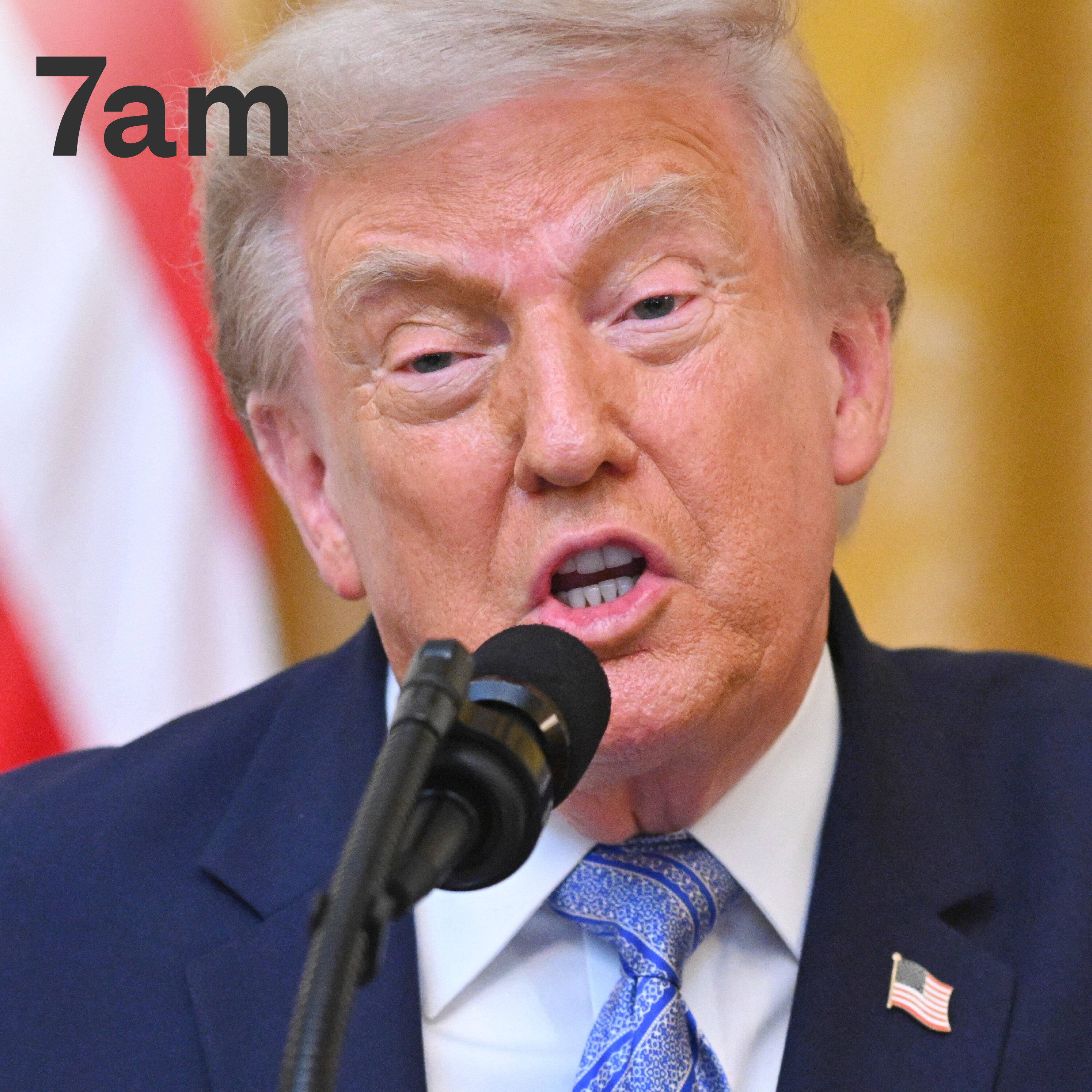
In the East Room of the White House, Donald Trump makes an extraordinary accusation of election interference, claiming Beijing had illegally obtained the voter files of 220 million Americans. He also accuses US intelligence agencies of hiding the extent of China's activity.
- [00:34]
Narrator/Reporter
Members of the deep state, very, very famous group of people. Many cases in our intelligence agency work to actively suppress and downplay information about the extent of China's sinister election meddling.
- [00:50]
Ruby Jones
Later, Trump claims a Homeland Security review had found around 278,000 non citizens registered to vote.
- [00:57]
Narrator/Reporter
Even this limited analysis found more than a quarter of a million foreigners illegally registered to vote. Put together these disclosures reveal an election system so broken and so vulnerable that no one can possibly defend it.
- [01:14]
Ruby Jones
Trump's motivation, critics say, is to sow doubt ahead of the upcoming midterm elections, which he's already made several attempts to reshape, from redrawing maps to restricting voting to firing the entire Electoral Commission. I'm Ruby Jones, and you're listening to 7am today staff writer at the Atlantic, David A. Graham on Trump's campaign to tilt the midterms and what he could still do before, during, and after Election Day. It's Friday, july 24th. David, Donald Trump recently delivered a pretty unusual primetime address from the White House. He said that China had stolen voter information and that intelligence officials were covering up election interference. Take me through. To begin with, the claims that he was making there.
- [02:09]
David A. Graham
So there's a mix of things. Some of them are claims that are based on real evidence that he was exaggerating. So, you know, he talked about China and other countries trying to interfere, but overstated what they've done.
- [02:22]
Narrator/Reporter
220 million US voter files. That information includes names, addresses, phone numbers.
- [02:30]
Ruby Jones
We do not know where the President got those numbers from. And we should point out to our viewers that US intelligence found no evidence of Chinese meddling in the 2020 election.
- [02:41]
David A. Graham
You know, there's heavily redacted documents that the White House provided, but they don't really clearly back up what he said.
- [02:47]
Ruby Jones
ABC News reviewed the documents and found they describe efforts to obtain, not alter, voter records. Many voter records can already be legally obtained from states.
- [02:57]
David A. Graham
In some cases, he exaggerated other things. So he claimed a great deal of, you know, attempts to fraudulently register to vote in the state of Michigan. This is something that is true, but it's something that was found out at the time and has been referred for prosecution. Some of the things are innuendo or he didn't have the evidence to back it up. So it's a mix of vague claims and things that are simply not true.
- [03:21]
Ruby Jones
Okay. And so there was this one claim that 278,000 non citizens were registered to vote. Trump hasn't provided any evidence for that. So why is he telling this story, though? What does he want Americans to believe about the upcoming election?
- [03:36]
David A. Graham
I think there are three things going on. One is this kind of fear mongering about immigrants is part of Trump's core political appeal and has been for a decade. Part of it is Trump, I think, has never fully gotten over losing the 2020 election, nor has he really made peace with the idea that although he won the presidency in 2016, he did not win the popular vote. And so a lot of these things are sort of designed to make some excuse or to claim that in fact he did win those elections and he won the popular vote. I think he is also trying to lay the groundwork to contest or to cast doubt on the 2026 election. So all of these are things that might convince people that the system doesn't work or that the wrong people are voting or that somehow something is going wrong and they can't trust the results.
- [04:22]
Ruby Jones
And tell me, I guess, about the relevance of this happening before the midterms. The timing here. What changes is Trump hoping to be able to put into place?
- [04:31]
David A. Graham
Trump has had a kind of long standing attempt to do a bunch of things.
- [04:36]
Ruby Jones
The president signing an executive order directing his administration to create a list of confirmed U.S. citizens eligible to vote in each state and to ban the postal Service from mailing voters ballots unless they are on a state's official absentee voter list.
- [04:51]
David A. Graham
He has issued these executive orders that tell states, you know, when they can count votes and how they can count votes, which are things that he doesn't have the power, as the president, to do.
- [05:00]
Ruby Jones
The order requires voters to show documents proving their citizenship in order to register to vote in federal elections, and it demands all ballots be received by Election Day.
- [05:10]
David A. Graham
He has gone after some of the governmental panels that sort of assist with elections, whether that's cybersecurity or just general procedure. He has attempted to acquire voter rolls from a bunch of states, you know, suing the states to try to demand this information.
- [05:27]
Ruby Jones
Department of justice filed a lawsuit against Washington Secretary of State Steve Hobbs.
- [05:31]
David A. Graham
The DOJ wants a federal judge to compel the state to hand over voters full names, dates of birth, residential addresses, and Even their state driver's license numbers or the last four digits of their Social Security numbers. And he's also pressed Congress to pass a law that would overhaul some of the way voting works. And in particular, he would require voters to provide proof of citizenship in order to register to vote. And that's something that has passed the House, but has been stuck in the Senate. And he has been very frustrated by his inability to get them to get it any further. They think that this law is too sweeping and wouldn't solve the problem. If you talk about providing proof of citizenship, first of all, there is no problem. There is not widespread non citizen voting. And there have been years of efforts to try to find it. And it has not produced evidence that this is a widespread problem, certainly not on the scale to change elections. And I think some of these senators are hearing from Republican election officials back home in their states who are saying we don't have the time or the wherewithal to do this before the November election. If we try to switch the system now, it will create really serious chaos and be a problem. And I think they're reluctant to do that, which is good.
- [06:40]
Ruby Jones
Okay, can we talk a little bit more about the voter rolls? Because these roles, they have private information that's not normally made public. So what are the kind of fears here, the administration demanding that data?
- [06:55]
David A. Graham
I think there are a couple things. One is privacy, as you say, this is full of identifiable information, Social Security numbers, addresses, all sorts of other things. And it's not clear how the federal government would store this information, what sort of information security it has. I think it's a sort of basic privacy concern in that respect. And as related to that, some voter advocates are afraid that this will intimidate people into not wanting to vote or not wanting to register to vote. The other question is what they will do with this in terms of non citizen voting. So we have seen in the past efforts to match voter rolls against other databases to prove that there are, you know, tens of thousands or hundreds of thousands or who knows how many ineligible voters who are voting. And we've seen this happen a bunch of times. There are a lot of claims about this. And every time this happens, it ultimately turns out that the claims are overstated to the point where there is almost no evidence of noncitizen voting or noncitizen registration. It'll be false matches and bad data. And so the big concern is that that's what will happen again. Once again, there'll be a claim of many non citizens voting. And actually it Won't be true at all.
- [08:08]
Ruby Jones
Okay, wait and see on that. What other avenues are still open to Trump ahead of Election Day in terms of trying to exert influence?
- [08:16]
David A. Graham
So he's continuing to try to get Congress to pass this Save America act, which seems like it won't work, but you never can tell. I think he can continue this effort to sow doubt and to make people think that the elections are not safe. He can continue to try to bully state authorities or demand voter rolls from them. Then the question is, what happens on Election Day and afterwards? And I've talked to a number of experts who are concerned that the government might send out armed troops or armed federal law enforcement in ways that would interfere with people voting. Whether that was sort of just like an intimidation factor or actually getting in the way of polling places, nobody really knows. It's kind of speculative, but that is a concern.
- [08:58]
Ruby Jones
Would that be legal doing that?
- [09:00]
David A. Graham
It would not be legal. The law says you cannot send armed men to a polling place except in case of an insurrection. So the worry is maybe there's a workaround. Maybe Trump sends troops into the streets, as we saw in cities, for immigration purposes over the last few months, and that achieves the same effect, even though it's not ostensibly to mess with polling places. The other question is, you know, we've seen Trump do things where he kind of bends the law and waits to see if somebody stops him, and it's not clear who would stop him in this circumstance or if they could do it quickly enough. If we're talking about Election Day, where things move quickly
- [09:38]
Ruby Jones
coming up, could Trump's team smooth the way to overturn the election results?
- [09:50]
David A. Graham
Hi, Uncle Lazer here. America's built on fast cars, fast food, and even faster women. Moto Casino's built in America. You know what they're fast at? Fast cash prize redemption. You see, only Moto is US Owned and operated. Moto. It's American made. That's who we are and that's who we care about. Play for free at Moto Us. Moto Casino is the social casino. Boy, we're prohibited. No purchase necessary. Visit Moto US for more details. Must be 21/ Moto Casino America Social Casino.
- [10:22]
Ruby Jones
David, you mentioned the 2020 election result. Trump wanted to overturn that at the time, but officials in his own administration resisted those demands. How much has changed since then in terms of the people that Trump has surrounded himself with and who is in the position to make those decisions now?
- [10:40]
David A. Graham
I think, for one thing, he has many people around him who are not willing to tell him no. People who don't have the same sort of buy into the old system that some of those officials did and who are sort of more on board with the Trump movement, so those people are less likely to stop Trump. He has brought many people who were election deniers in 2020 into positions of power, including in the Department of Homeland Security overseeing election integrity. There's also been changes at the state level that I think are important and the local level, where people who are Trump affiliated or Trump supporters have entered these local offices and these state offices, and so they have power that they didn't have six years ago. And some of the Republicans at the state level who stood up to Trump have left office or have been defeated by Trump supporting candidates. So there are a lot fewer safeguards all around than there were in that election.
- [11:32]
Ruby Jones
And what about after the election? What avenues are there for people to challenge the count or delay certification, ultimately affect who is elected?
- [11:43]
David A. Graham
Yeah, so there are a bunch of things, you know, we always get some level of lawsuits, challenging results. And this is what we saw in 2020. And for the most, I mean, that worked. We saw a bunch of lawsuits. They didn't have evidence, they lost in court. So we saw that process function the way it's supposed to. Even if many of these lawsuits were spurious, one of the things that we heard talk about in 2020, later, there was a discussion inside the administration about potentially seizing voting machines, and that's something we've heard more about. I think that would be a real danger. It would make it hard for people to know, to trust the count. We wouldn't be able. We wouldn't have sort of a chain of custody for ballots. And so we wouldn't know really who won or whether we could believe the results. I think that is a danger. We could also see Trump, you know, trying to prosecute election officials for not doing what he wanted. I think we're likely to see him pressuring officials in the way he did in 2020, you know, calling up officials and saying they needed to find votes for him. He did that in 2020. He didn't really face any consequences for it. And so I would expect he would try something like that again if he thought it would be helpful for him.
- [12:48]
Ruby Jones
Okay. And I suppose that goes to this bigger idea here, which is that, sure, some of these measures might work, some might not, some might get blocked, but ultimately, the idea that a president can or should be able to influence election outcomes, I mean, that wasn't something that existed before 2020.
- [13:07]
Narrator/Reporter
Right.
- [13:07]
David A. Graham
Exactly. I mean, it's meant to be that a president can politic, but they shouldn't be interfering with the results. And here we have him threatening to or in the past, you know, going into parts of the government where he has no statutory authority, trying to get officials to do things that are illegal and that don't match up to the evidence and, you know, undermining general faith. And I think that the 2026 elections are a difficult one for Trump to influence in a serious way. A presidential election is, you know, it's kind of 50 separate elections, but there's kind of one big event. But a congressional election is we have 435 House seats. It's very hard to interfere with a lot of those and switch the result unless it's really close, unless it's a margin of, you know, two and three and five votes or seats. So I think that makes it hard for Trump to materially impact the result. But I think there's a lot of ways for him to create mischief and to do things that are improper and possibly illegal.
- [14:05]
Ruby Jones
Well, David, thank you so much for your time.
- [14:07]
David A. Graham
My pleasure.
- [14:19]
Ruby Jones
Also in the news, Pauline Hanson says her comments on domestic violence have been deliberately taken out of context by the media. The one nation leader has been widely condemned, accused of victim blaming for saying women who were subject to abuse shouldn't put up with it and that it's a two way street.
- [14:35]
David A. Graham
Well, it is wrong, but it's also a two way street. But I'm not saying that just men and women can lose their cool as well.
- [14:46]
Ruby Jones
Hanson insists people should listen to the full interview and Australian workers will be able to escalate workplace disputes like underpayment claims to a new fair Work court. The Prime Minister has announced that the reinstatement of the specialist workers court for the first time since John Howard abolished the last one almost 30 years ago. He says the court will be headed by expert judges in consultation with the Fair Work Commission. Its aim is to resolve workplace disputes faster and at lower costs. I'm Ruby Jones, this is 7:00am thanks for listening.
- [15:36]
David A. Graham
Moto Casino America Social Casino welcome to Moto Casino where the excitement never ends with thousands of the hottest free to play social casino games. Fastest payouts and the best promotions in the industry. No tricks or gimmicks. Owned and operated in the usa, Motoccasino is a free to play social casino. No purchase necessary. 21 plus to play Void War prohibited. Sign up today for a generous welcome bonus. Download the motocasino app today.