Loading summary
Transcript44 lines
- [00:01]
Daniel James
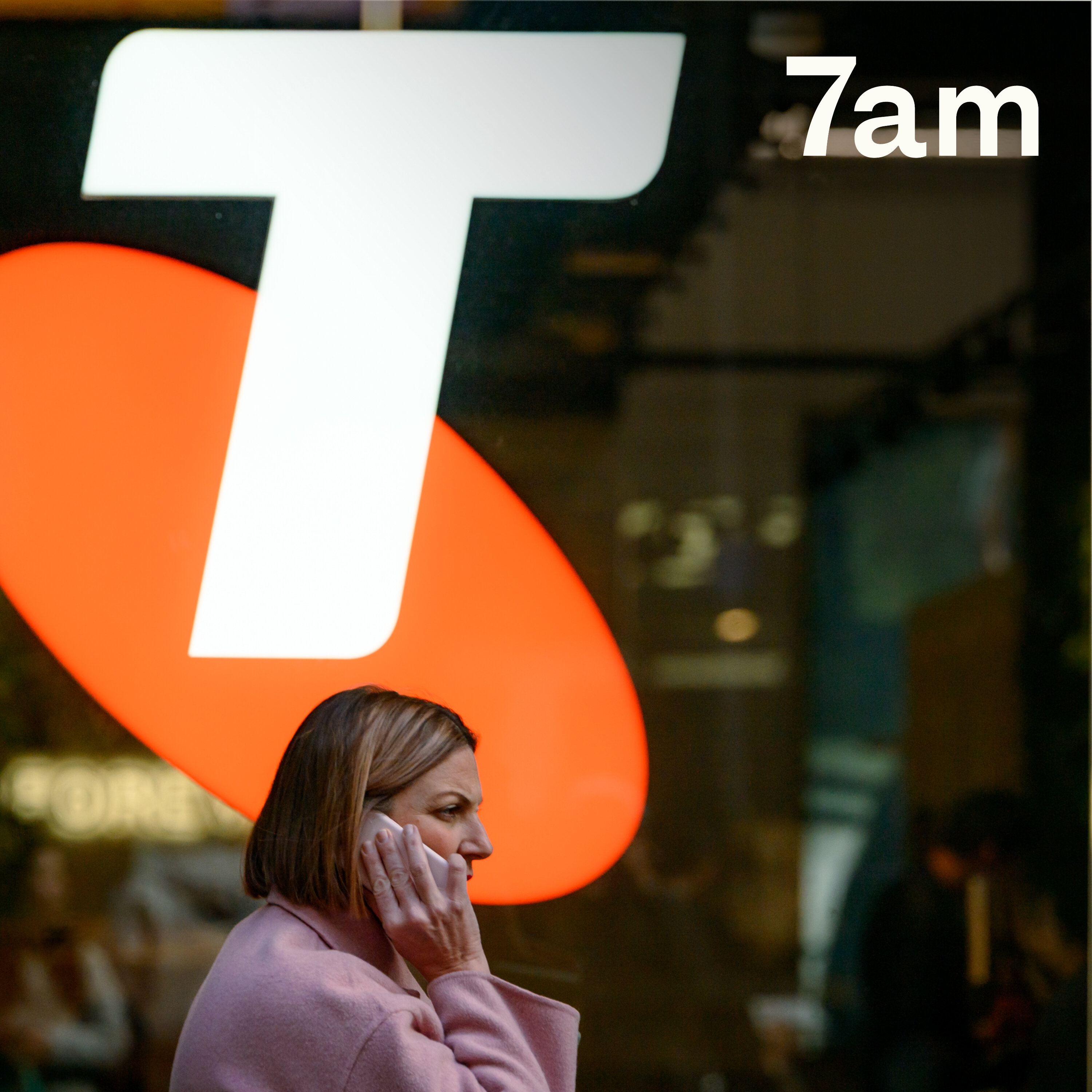
I'm Daniel James and you're listening to 7am. Another major telco outage has raised the question what happens when you call 000 and the call doesn't get through? This week, Telstra blamed a software defect for a national outage that disrupted phones, payments and transport and Left more than 300, 000 calls failing or unable to connect. The communications watchdog is now investigating, but this is first time Australia's been here. Last year, Optus had its own catastrophic failure after a 13 hour outage blocked hundreds of emergency calls across South Australia, Western Australia and the Northern Territory and was linked to deaths. ACMA opened an investigation into Optis but still hasn't published final findings. So today we're bringing you Ruby Jones's conversation from last year with journalist and crikey contributor Michael Sainsbury on what went wrong in Optus and how the government's choices led us here. It's Sunday, July 12th. This episode was originally published in September 2025.
- [01:17]
Ruby Jones
So, Michael, last week hundreds of Australians discovered that they couldn't get through when they tried to call Triple zero with catastrophic and we now know some fatal consequences. So tell me about what we know about what was happening with Optus Network while this was going on.
- [01:35]
Michael Sainsbury
So it was just a regular network upgrade. And the telco networks, they do thousands of these a week, so there's all sorts of stuff they're doing every day. There's obviously thousands of base stations across the country. They're very sophisticated software systems that connect those things to the fiber optics underground, to the big computers that go out to your phone. So that's a. They're very complex networks and there's always stuff going on. This was a regular sort of upgrade that went wrong.
- [02:04]
News Reporter
Today it was revealed the deadly outage, the result of a botched firewall upgrade that lasted 13 hours. 600 customers across three states without access to triple zero.
- [02:16]
Michael Sainsbury
The outage only affected people in the Northern Territory, Western Australia and South Australia. Initially they thought it affected about 600 calls made to emergency services.
- [02:28]
Ruby Jones
Good evening. We have a major story developing as we go to air. Just moments ago we learned that three people have died during a major Optus Network outage that affected Triple Zero calls.
- [02:40]
Michael Sainsbury
Something in their processes was either bad, could have been a badly written piece of software or it could just have been a very simple human error where things just weren't followed properly and weren't checked. If it had been a national thing, again, that may have been picked up more quickly by a system. But do those systems have Enough red flags, it sounds like they don't.
- [03:02]
Ruby Jones
Okay. And, I mean, you can see how these things might happen, but you would assume that in the case of human error or, you know, a bad update, that there would be a backup, something would kick in if a network, you know, isn't working like this, particularly when it comes to triple zero calls. So what should have happened?
- [03:20]
Michael Sainsbury
Well, there is actually a backup across all of the networks in Australia, where if for some reason your networks aren't connecting to the 00 system, the calls will be routed into Telstra or Vodafone so they can access that system. Now, the OOO system is actually run by Telstra under contract to the government. So all the calls go into a call centre at Telstra which is known as AAA or the Emergency Call Person. Officially, what seems to have happened is that the customers on Optus were able to call, make normal calls, but they weren't able to make triple zero calls. And this wasn't flagged immediately. There were also people who rang and at least five people, possibly more, rang Optus call centres to tell them that the triple O wasn't working. And again, there was a failure of process there that that wasn't escalated straight
- [04:16]
News Reporter
away, that customers tried five times to warn the company that emergency calls were not going through.
- [04:23]
Ruby Jones
In the past few hours, Optus has confirmed those complaints were received by its offshore call centre.
- [04:29]
Michael Sainsbury
Now, I've spoken to an engineer of one of the other networks and he said, look, the Triple O, when they've got a checklist of network upgrades, Triple O is absolutely the top of the list and it should be the first thing that's checked and double checked before anything happens. And that didn't happen.
- [04:44]
Ruby Jones
So in the wake of all of this, there are a lot of questions being asked about Optus and about its governance. So tell me about the company and how it is responding to this particular outage.
- [04:54]
Michael Sainsbury
Most people probably know it's the second biggest telco in Australia, it's the second biggest mobile network, it's owned by Singapore Telecommunications, so it's not a publicly listed company in Australia. And the Singapore Telecoms is owned by the Singapore government. So ultimately, Singapore's responsible for everything that happens at Optus. But this is not the first time this happened to Optus. This happened with Optus two years ago.
- [05:18]
Ruby Jones
We have more on that. Breaking news on the massive Optus outage.
- [05:21]
News Reporter
10 million Optus customers are still without mobile and broadband services amid a massive nationwide outage. There is a lot developing.
- [05:29]
Michael Sainsbury
There was a government inquiry, the federal
- [05:31]
News Reporter
government has released the terms of reference of an investigation into this month's major Optus outage.
- [05:37]
Michael Sainsbury
There were 18 recommendations handed down.
- [05:39]
Ruby Jones
At its core is ensuring the integrity of the Triple Zero service and that it continues to operate effectively in the
- [05:45]
Michael Sainsbury
interests of all Australians. That process hasn't been finished properly. Only about two thirds of those recommendations have been implemented and some of the key ones had not been implemented. And then a year before that outage, they had that dreadful data breach where the Data of about 9 million people was stolen. The head of Optus says she is devastated by the cyber attack which has
- [06:07]
News Reporter
potentially compromised the personal information of nearly 10 million customers.
- [06:12]
Michael Sainsbury
Yeah, Optus now has got very much a reputation of being a company that is kind of making some big technical fails every couple of years. Stephen Roo is the CEO. He was brought in about nine months ago. They got rid of the last CEO who was in charge of those last two disasters. He came from nbn, so he's pretty familiar with telecommunications networks and he's pretty familiar with dealing with government. So it's kind of a dent in his record early on. I want to offer a sincere apology to all customers who could not connect to emergency services when they needed them most. But nine months is not a hell of a lot of time in a big company like Optus to fix things. There's obviously some deep seated cultural problems at oftis that allow these sorts of process issues to happen.
- [07:09]
Ruby Jones
Nevertheless, we did hear the Prime Minister, Anthony Albanese, saying that he would be surprised if Stephen Roux, the CEO, wasn't considering his position.
- [07:17]
News Reporter
I'd be surprised if that wasn't occurring.
- [07:21]
Ruby Jones
We also heard from the Communications Minister, Annika Wells, talking about accountability and consequences. Optus and all telecommunications providers have obligations under Australian law to make sure emergency services calls go through. The South Australian Premier, Peter Malinowskis, called it incompetence.
- [07:39]
News Reporter
I mean, the fact that optists were crafting media statements and arranging press conferences
- [07:44]
Daniel James
without alerting South Australian Ambulance Service about this.
- [07:47]
Ruby Jones
Tell me what you make of the political response.
- [07:49]
Michael Sainsbury
It was pretty fast and it was pretty brutal. Look, people died. So I think political leaders feel as though they have to react. But we, we are, as you know, living in a world where it's very much blame first, asked questions later. And I think, I just don't think it's terribly helpful. When you've got politicians, you know, talking about significant consequences, they want to sound tough. There's a whole lot of legislation around these sorts of things and there are some pretty hefty fines that companies can Get. And I think Optus has been fined 10 and $12 million, I think, for the last two of its problems. That being said, for big companies like these, with billions of dollars of revenue every year, yeah, those sorts of fines are kind of slaps on the wrist too. So we've seen problems in banking, we've seen problems with Qantas, and there've been some pretty hefty fines, but they don't really make a big dent in these big companies. But this triple zero problem keeps coming up and when governments tend to just coast along and people say, well, yeah, this is very serious, people could die. Until someone dies, nothing seems to happen. So they tend to be very reactive. And I think it's probably time that the government had a bit of a bigger look at this. So you've got inaction by the government on quite a lot of things as well as the telcos. So it's really. It's kind of a joint responsibility in a lot of ways. But ultimately, for something as critical as this, the government kind of got to be the last person standing.
- [09:28]
Ruby Jones
Coming up, why the government is dragging its feet on recommendations that could have prevented this. Michael, I want to talk a little more about the Government's role here, because while it is clear that Optus failed, what is the government's responsibility in ensuring that triple zero calls can always get through?
- [09:56]
Michael Sainsbury
Once upon a time, and it wasn't terribly long ago, we had one telco, which was Telecom Australia, that turned into
- [10:02]
News Reporter
Telstra last year, Australia's telecom invested more
- [10:05]
Michael Sainsbury
in Australia and Australian made products than any other company. It was privatised into how government competition was introduced before that, which is how we got Optus. And we've had a reasonably competitive environment in the telecommunications sector, although, you know, the incumbent still is the one that makes all the profits. But, yeah, these sorts of critical infrastructure services like telecommunications, energy, there was a lot of privatisation that went on without enough accountability coming back. I mean, we did have the inquiry into Optus, but the fact that 18 months after that all of those recommendations have not been fulfilled, supposed to have occurred. They haven't. And this is all about a lack of urgency. I think most of the funding for triple zero comes either directly from the government or from a government levy that's put on the telcos. So that triple zero stuff is actually government responsibility and improving that system was part of what came out of that, the previous office outage. And the government, you know, let it linger. And so I think they do bear some responsibility here.
- [11:17]
Ruby Jones
Yeah. Tell me more about that, as you say, when this happened in the past, it triggered an inquiry, the Bean review. So why do you think it is that that has not resulted in the change that would be needed to have prevented what has just occurred?
- [11:31]
Michael Sainsbury
Yeah, there were 18 recommendations about a whole bunch of stuff. The harder stuff was still not being implemented, particularly this setting up of the OO custodian inside the department. And that, to me, seems like a really key recommendation that you've actually got someone that is really having a good look at the system, talking to the telcos, making sure their testing's right. Now, I think, Annika, well said. Oh, that has been set up, but it's actually not yet underway. What that actually means, I don't know, but clearly it's not working yet. And you would think that 18 months after something like that happened for that not to be in place after 18 months, I think is. That's a little bit of a shame.
- [12:15]
Ruby Jones
You on the government and the communications Minister, Annika Wells, she's fairly new to that portfolio, so what sense do you get of her of how likely she is to look into these issues?
- [12:30]
Michael Sainsbury
Well, it's certainly going to sharpen up her interest in the portfolio. Look, people inside the sector have said that she's not as engaged with the sector as the previous minister who did have a background in telecoms. Indeed, if you look back to the previous ministers, we had Paul Fletcher for quite some time in the coalition government, before Michelle Rowland, Mitch Fifield before him and Malcolm Turnbull, all of those people did have quite a lot of experience or background in either telcos or technology. Amateur. Wells doesn't have any of that experience. And telecoms is a very complex business. I mean, as we've talked about, just with the mobile network, then you've got landline networks and that you've got to run Internet services, there's customer call centres, there's marketing, there's office and Telstra have a bunch of shops. So they're vertically integrated businesses with lots of different moving parts. And it requires a very engaged minister and staff and department to make sure that the companies that are looking after telecommunications are doing their jobs properly. And this incident, and it's such a dreadful thing when, you know, people are dead because infrastructure fails. But this incident really should make, I think, the government have a very good look at what's happening in telecommunications. It's always been problematic because we have such a huge country with not too many people, so it's expensive compared to somewhere like Hong Kong or Singapore to provide communications infrastructure in Australia. The only thing that can stop this happening is for companies like Optis and Telstra and Vodafone and the other big telecommunications companies, tpg, to make sure they got all their processes work to make sure they've got fail safe and backup and all that sort of thing. And just look at it through what happened with the nbn. Successive governments were very frustrated that the big telecommunications companies weren't rolling up out fast enough broadband quickly enough. So they took the decision in the end to use public money to build the nbn. Perhaps they need to have a look at the mobile networks as well, which would take a lot of the pain away from companies, you know, trying to service a handful of people very far away. That costs a lot of money and just to take some of that financial pressure off the network so they can really focus on getting these things right, the things that they're supposed to be doing.
- [15:11]
Ruby Jones
Well, Michael, thank you so much for your time.
- [15:13]
Michael Sainsbury
Thank you very much.
- [15:14]
Daniel James
Ruby. 7am will be back tomorrow with an interview with New York Times journalist Jonathan Swan. His revealing new book, co authored by Maggie Haberman, takes us inside Donald Trump's second term, a presidency that he says is more disciplined, more secretive and more dangerous than the first.
- [15:40]
News Reporter
When you understand it through the lens of, you know, I want to be Napoleon. I'm being slightly glib saying that, but not really. I want to be the capital G, great man of history of our time. I want to expand the American landmass, make Venezuela into a 51st state with a pliant leader who's more like a governor, take their oil, reshape Iran, take Greenland, you know, whatever. You start to understand why he's willing to roll the dice in the way that he's rolling the dice this term, which he certainly wasn't willing to do in the first term.
- [16:11]
Daniel James
I'm Daniel James.
- [16:12]
Ruby Jones
Thanks for listening, Sam.