Loading summary
Transcript43 lines
- [00:01]
A
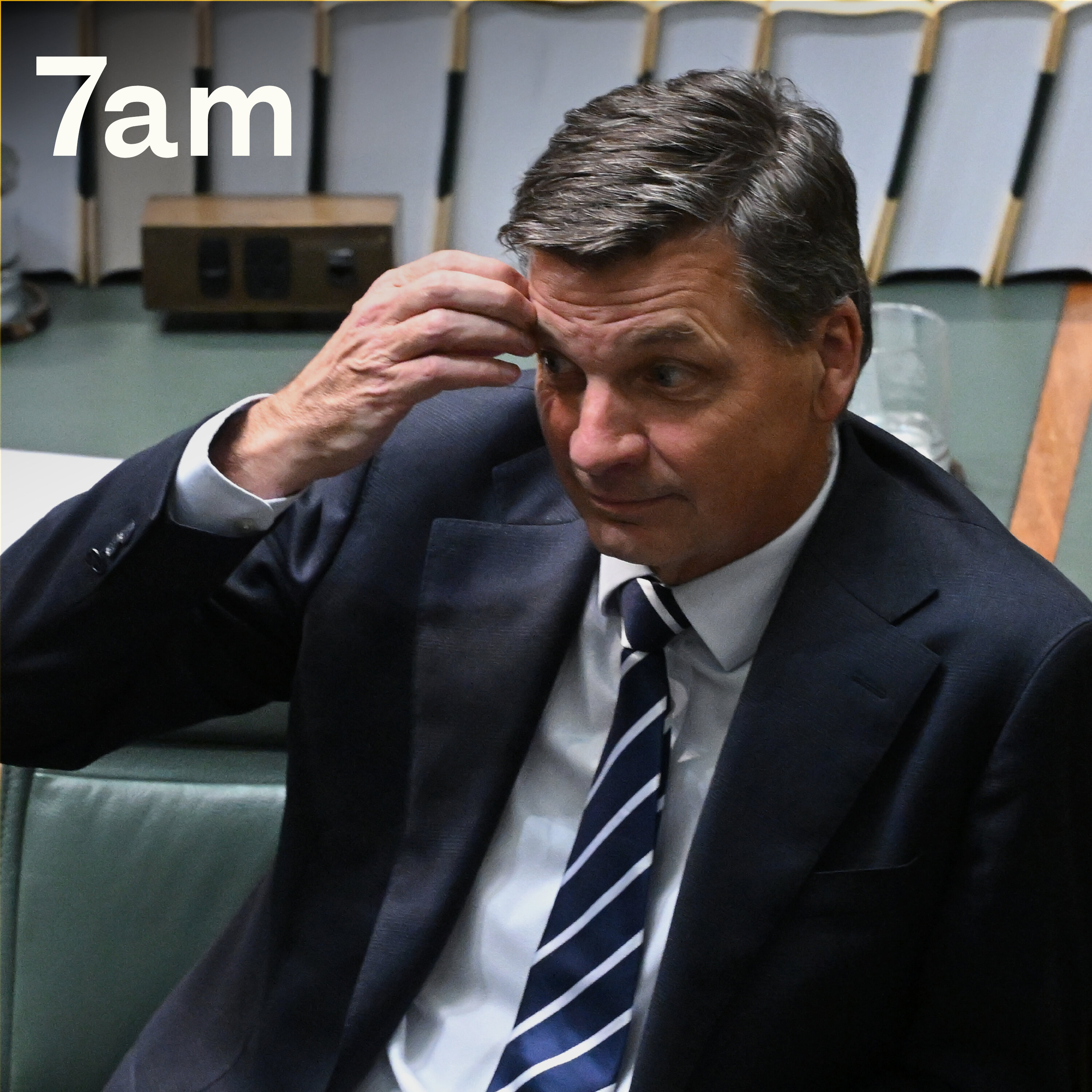
I'm Daniel James and you're listening to 7am. Pauline Hanson's call for Australia to become a monoculture was meant to draw a line around national identity. Instead, it opened up a new split inside the Liberal Party. This week. The idea left opposition leader Angus Taylor looking bewildered, unable to say clearly where he stood on multiculturalism. Andrew Hastie took the opposite approach in navigating the challenge presented by one nation, launching a full assault on one nation from inside the coalition party room. And as the right fights over Hanson's rise, a new party from two teal independents is trying to offer voters another way out. Today, news.com political editor Samantha Maiden on a week of conservative confusion, one nation pressure and the teal independents trying to turn disillusionment into votes. It's Saturday, june 27th. Sam, good to see you again. Pauline Hanson spoke more about her infamous monocultural idea in a Senate speech this week. Apparently, Italian pastor and Chinese takeaway are okay in the monoculture. So are 80s icons Paul Hogan and Norman Gunston a personal favourite.
- [01:24]
B
Bring back Paul Hogan and Norman Gunston. These are the essential features of Australian modern culture and there's nothing remotely exclusive, exclusively exclusionary about them.
- [01:33]
A
And the Socceroos are actually an example of the monoculture, even though it goes against everything that they actually stand for. Did that clear things up for you, Sam? Because they didn't really clear things up for me.
- [01:45]
B
Look, I'll tell you what I think, and you might not like it. I think that what Pauline Hanson is doing right now is really politically diabolically smart because she's come up with this word that drives progressive Australia, left wing Australia, absolutely bonkers. And then everyone comes out of their hidey hole to debate it and discuss it. And I'm not saying you shouldn't do that. Like it's a free country. And I think it's legitimate to question our political leaders and what they say. But the more people do that, the more we're just. Everyone's talking about Pauline Hansen. So that's exactly where she wants to be. And so I suppose if you go looking for coherence and you know, like a policy agenda, that is, is completely logical, right? Well, you're going to get sad and angry and then the media is just going to keep talking about Pauline. I mean, she actually started, I think she first said it in the press club, right? And then. But then Angus Taylor gets asked about it. He doesn't have a proper answer. On the same day, actually, before Angus Taylor's press conference, Andrew Hastie comes out, you know, jumping into the coalition party room with his war paint on and says, you know, I'd rather go out in a box than bend the knee. To Pauline Hanson. It was like real law. Tarzan act, right? And then Albo's in Parliament accusing Angus of not being as strong as the member for Canning, who, of course, Andrew Hastie. And everybody's talking about Pauline, right? And that's exactly what she wants.
- [03:29]
A
Isn't the risk, though, Sam, that people are gonna get bored of it, though? I mean, we're still two years out from election. If we're all talking about Paula, he, like, we are constantly at the moment after the NPC address, that we'll actually get bored over time by the repetition of it.
- [03:46]
B
I don't think that they're gonna be able to maintain this level of support all the way to 2028. Right. So I think that they're hitting their straps at the wrong moment in the political timeline in Pauline Hanson's favor. You know, like right now they're raking in the donations, right? That's going to help them build a really strong war chest for, you know, the fight that they're going to have in the future. But she's pulled out. I mean, I don't know how much she would have paid on those fire the lie trucks, and then she's parking them out the front of Parliament House and then she's having the blues with the journos. So it's all very Trumpesque. But I'm not sure that wind is going to be in her sails at the right moment. That doesn't mean that, like, she wouldn't pick up seats at the next election. I'm sure she could and would and will, or that she won't prove a terrible problem for the Liberals. But I don't think that she's in a position to form government, and I don't think there's any poll that suggests that. And so I think that when people run around going, pauline Hanson is going to be the pm, I think that's rubbish. I think what would be really fascinating is if, you know, if an election was held right now, she would emerge as the new opposition, right? And that would be, wow, a big change. But I think the more accurate reflection of what's really going on in Australian politics right now is it's. It's more closely aligned with the uk. So you're getting that thing where everything's divided a third, a third, a third. The labor. The labor government is on a really low primary. The Conservatives are completely shot to smithereens and don't really know if they're Arthur or Martha. And then you've got this resurgent Reform UK under the Nigel Farage banner. It's really the same thing in a lot of ways.
- [05:33]
A
Really is. One of the things that this discussion around monoculture has done, as you alluded to, Sam, has really tie Angus Taylor up in knots.
- [05:43]
C
People coming to this country must adhere to these values.
- [05:47]
A
They.
- [05:48]
C
That is what I want to see.
- [05:49]
B
We will discriminate, coexist with multiculturalism is the question.
- [05:53]
C
Well, I don't quite know what you mean by that question, but what I mean, I can tell you what I mean.
- [05:58]
A
He sidestepped five questions earlier this week about whether he supported multiculturalism. What did you make of that?
- [06:05]
B
Oh, I thought it was a hot mess. Just to be clear, Mr. Taylor, do you believe Australia should be a monoculture?
- [06:12]
C
You explained to me what you mean by that. You see, there's all these vague words running around. But I tell you what, the one thing I want all of Australia to share is those core Australian values.
- [06:23]
B
The problem that they've got is that he's trying to run all this anti immigration stuff, you know, like he's trying to say the numbers are too high and the quality is too low, whatever that means. Right. You know, like how does he come at?
- [06:38]
A
Pauline, you do support multiculturalism. Seems like a pretty straight question.
- [06:41]
C
Do you want to define it for me, Sweezy?
- [06:43]
A
I just wonder if that's a problem for you, that you can't actually.
- [06:46]
C
We can have people from all over the world, right? That is not a problem. Let me finish. Now you got me going here, so let me have a. We can have people from all over the world, of all races and religions in this country, but they must share those core values. I don't know how much simpler it can be than that.
- [07:07]
B
It's a really tricky problem for him. But the fact that he's scared, he doesn't know how to do it kind of makes me wonder a little bit as well if he doesn't really believe it all. I just wonder about that, you know, because I think that, you know, Angus Taylor is an economic conservative. Is he really been someone who's like a ranging anti immigration person his whole career? Like I'm not sure if he is and I'm even a bit fascinated by the hasty thing, right, Because Hastie has run lots of anti immigration stuff, right? So when, when Hastie comes out and he's like, yeah, I rather get taken out in a box. Sorry, I'm doing it again. I'm doing my ridiculous business. But when he's Bolshy, like, you know, like, man the barricades, you know, we fight One Nation at dawn.
- [07:55]
A
I mean, he even came out and quoted Paul Keating by saying that he wanted to do One Nation slowly, because
- [08:01]
C
I want you slowly.
- [08:03]
A
I want to do you slowly. That's a tremendously different approach to his leader. So are we hearing anything about Angus Taylor's leadership at the moment, given how Bolshy Andrew Hastie has been this week?
- [08:18]
B
Yeah, like, I think that there's definitely. I've spoken to Liberal MPs in the last week who aren't sure whether Angus Taylor's going to go the distance. That said, at this stage, at least they've got the brains to say, well, we're not going to neck him now. Why would we do that? Right. I still think the kind of problem with Andrew Hastie is that he's quite brittle and he's got quite a thin skin. And, you know, like, he gets really offended when people criticize him. And I think he has had a really tough time with the criticism that has erupted over the Ben Roberts Smith stuff. Like, I won't go into all the detail, but, like, the short version is that, you know, he was obviously in the sas. He didn't like what he was hearing about Ben Robert Smith, and he tried to support people that were complaining about it and gave evidence in the defamation trial. And as a result of that, he's been attacked by Ben Roberts Smith's mum, by Gina Rinehart and by Pauline Hanson. The ladies are ganging up.
- [09:17]
A
They're all Ben Robert Smith's mother, in a way.
- [09:19]
B
Yeah. And young, you know, handsome young Andrew Hastie is being bashed by ladies. I think he's going berserk about One Nation, in part because of this male fragility issue that he's got around being called a traitor. He loses his bottle and he's like, how dare you, Pauline Hanson, gang up on me with Gina about this stuff. Like, I'm gonna take you all out. Right? And it's personal for him. We got up in the party room and talked about having to upgrade security because there are all these nutters on the loose now who are targeting him and his family and online threats. So it's really personal. And I think that he believes that supporters of One Nation are kind of drumming that. And I think that's what explains it.
- [10:15]
A
Still to come, will Littiel's new political party gamble pay off? Sam, let's talk about the deal the government did with the Greens this week to get its negative gearing and CGT changes through the Parliament. Is that the end of the debate over the tax changes or just the beginning?
- [10:38]
B
Oh, I don't think it's the end. I don't think it's the beginning either. Like, I think that they're open to doing more tweaks and I think that they've made that clear. I think that there's a danger in all the color and movement and frothing that people don't really see what the government has done here. First of all, what they've done, which is really fascinating, is they've pretty much got an Australian consensus on the idea that negative gearing had to go for existing properties. No one seems to be really arguing about that. That's actually a huge victory. That's a big change. It's something that's been debated for, you know, over a decade and they've got that through. The CGT changes are messier and they're a bit more complicated. They've obviously made it more tricky by widening it out to take in shares. That's opened up a whole new sort of layer of losers. And you know, they keep having little things come up like the so called widow's tax and stuff that they need to tweak. But the complete value of these changes is in the out years. But in the next four years, I think it raises about 3.9 billion, about $4 billion. And the reforms that they've put in or the backdowns, concessions, whatever you want to call it, cost the budget about 375 million. You know, when you think about it, $4 billion over four years, not nothing, not huge. But the benefit is the better footing, it puts the budget into forever. $375 million in concessions, possibly going to be some more. There is obviously though, a concern that the. One of the concessions the Greens have got is to delay the NDIS changes and have this Senate inquiry. And there's been these reports in the AFR this week that that could cost up to $1.5 billion a month. Now, it's a bit of a rubbery figure, right, because it's basically saying we could save that if we did it faster or if we implemented it on the current time frame. That is true. But also I'm sure there'll be reforms and changes and things that'll happen to that as well. So it might not be quite that much. But, you know, I suppose that's the criticism is the Greens, they Got their committee to spend longer pouring over the NDEs staff. But there's obviously a cost to the budget if they delay that.
- [12:51]
A
We also saw the long awaited teal party launch this week with Zali Steggle and Allegra Spenders. Community Strong Australia. What do you think about that? Will they be stronger or weaker together without the independent tag?
- [13:04]
B
Okay, I can't even remember. It's too many words. It's so blemange. It's like it would have been better if it was just independent or something. I don't know, it's just it, it feels, I mean it's a bit, it's a bit rat shit, isn't it? Like community. I still can't remember it. Can you tell me the gang.
- [13:24]
A
Community Strong Australia.
- [13:28]
C
Okay.
- [13:28]
B
I think it's terrible, that's what I think. And like all it does is make everyone go. This criticism, which I don't think is necessarily fair but you know, half of them are in and half of them are out and half of them are like, oh, we wish them the best but we're not joining.
- [13:42]
A
I guess the, the idea is to give an alternative to one nation for those who are disillusioned with the major parties but don't necessarily.
- [13:48]
B
With a really bad name and a really kind of like unclear agenda.
- [13:53]
A
Is there room for an Oshman like that, do you think? Whether it's these guys or someone else,
- [13:58]
B
yeah, if it wasn't run by people that choose the most boring name for a party on earth. Maybe One nation is really clear. Right? And it's also one nation, dare I say it, monoculturalism. It's clear what they stand for and they've been around for 20 years. Community stronger Australia is just, it's terrible.
- [14:19]
A
Aside from the name, do you think they're going to be able to cut through? Do you think there's a space for them in the current political landscape?
- [14:26]
B
No, because look, one of their strengths I think is that they're a whole bunch of different individuals and I think that the strongest one of them is probably Allegra Spender because she's got such an interest in tax and she's got a really, I mean like even if they were sort of more like the Liberal Democrats or something, like it's just, it's so wishy washy. Look, I think they're great, don't get me wrong, look, I think Allegra Spender's great. I think a whole bunch of them are really interesting. But I don't think that this is politically smart because I just don't think it's very effective.
- [15:05]
A
Well, on that note, Sam, thank you so much for your time.
- [15:07]
B
Thank you.
- [15:19]
A
7:00am is a Daily show from Solstice Media. It's made by Arielle Richards, Atticus Bastow, Chris Dengate, Crystal Keller, Ruby Jones, Travis Evans, Zoltan Fetcho Jr. And me, Daniel James. Our theme music is by Ned Beckley and Josh Hogan of Envelope Audio. Thanks for listening to 7am this week. Have yourself a great weekend.