Loading summary
Transcript50 lines
- [00:01]
A
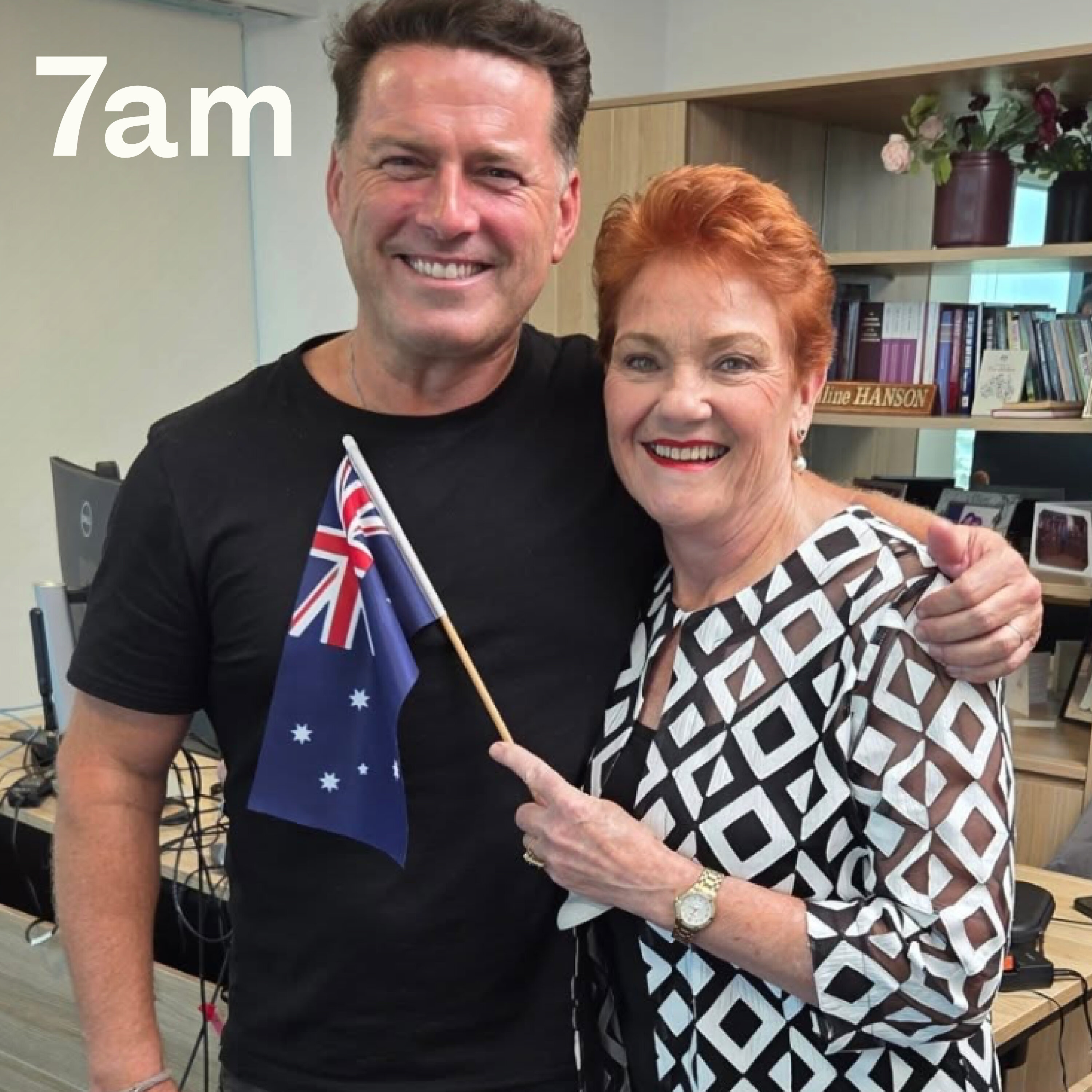
I'm Daniel James and you're listening to 7:00am Pauline Hanson went to the National Press Club with the party polling like a threat to the old order. Then she had to explain what the party was actually for. Since her appearance, One Nation's federal support has slipped. The speech, with all its talk of monoculture and its familiar targets, migration, the ABC renewables, gave voters a clearer look at the movement behind the momentum. But the story doesn't end there. In Victoria, where the state election is now months away. One Nation is polling better than the labor government. And now Hanson's message is being carried by a loud cast of celebrity sympathisers. Today, founder and CEO of Cheek Media, Hannah Ferguson was a bold prediction on how one of those celebrity sympathisers could join Pauline Hanson's ranks. And what happens when One Nation is no longer just a protest vote? It's Saturday, July four. Hannah, good to see you again. The first major poll since Pauline Hanson's Press Club speech show One Nation slipping. What do you put that down to? Was it the monocultural line, the comments on workplace rights or parental leave? Or just that when put under scrutiny, her whole platform starts to look a little bit shaky?
- [01:25]
B
Well, yeah, I think it's a combination of those things. I think that this is really one of the first times at the National Press Club that Pauline Hanson has been allowed and invited to speak without kind of that 15 second soundbite moment that she craves and that she thrives in this sort of grievance politician kind of space where she can walk away from a journalist, sort of trash them, and then kind of get out of the room without actually having to offer tangible policy solutions. In saying that, I think that her Press Club speech landed well with her existing base. I think that the Pauline Hansen stronghold is as strong as ever. I do think that people who are maybe One Nation curious were turned off by that speech. And actually I think it might be more Gina Reinhart's comments at the National Bush Summit later that same week that turned more people off Pauline than Pauline might have realized lives too.
- [02:09]
C
We need an orange bulldozer. Let's hear the noise.
- [02:16]
A
Yeah, let's talk about those comments. How much do you think the closeness to Gina Reinhart matters in this moment?
- [02:22]
B
I think it matters a lot. I think that, you know, Gina Rinehart is the clear communication that Pauline Hansen is not an outsider to the system that is fighting for the Aussie battler to be backed by Gina Rinehart and have Gina Rinehart publicly coming forward and Saying on stage in Townsville that she wants to sort of have Israel move in and build war drones for the
- [02:41]
C
Israelis and transport here for their skilled people, immediate families and equipment and encourage the Israelis to develop and build their
- [02:52]
B
advanced war drones to give islands off Queensland's coast to Elon Musk for free to use for SpaceX where there aren't
- [02:59]
C
high end tourist facilities offer to Elon. I think you all know that name, don't you? At no cost for his SpaceX satellite construction and launches.
- [03:12]
B
These are not sort of small moments. These are clear threats that Pauline Hanson is a representation figurehead of Gina Rinehart, which she is her biggest backer. So I think we cannot take lightly the impact that that will have on Pauline's growth and continued survival and popularity in Australian politics. And I think that the more we let Gina speak, the more that that becomes clear to the Australian population too.
- [03:34]
A
So do you see this latest polling as a bit of a wobble or a potential warning about one nation's ceiling, or is it too early to tell?
- [03:41]
B
I think it's too early to tell, but I think it's a really important reminder that we are a long way from a federal election right now. And people keep saying May 2028, but it could be as early as September next year. That's still more than 12 months. And we know that the Australian political landscape changes week to week. And it also feels very much like Pauline Hanson's bubble. And success is largely, I feel, driven by this obsession with weekly pol polling and this sort of exploration of every one point, two point move that's occurring. Journalists are pushing out into the public sphere, which only seeks to further impact those polling results. So, so much of Pauline Hanson's career and popularity right now is built off how the mainstream media is platforming her without accountability, without pushback, without actual critical thought and analysis. So I don't think it's a wobble. I think we're going to see a lot more sort of in the ups and downs from Pauline, but we've got a long road ahead.
- [04:35]
A
Yeah, I guess the next real world test is the Victorian state election and there's been some polling around that. And we know that polls tend to change as we get closer to elections. People start to actually think about what they're voting for. The poll in Victoria shows that one nation is polling better than the the labor government and the coalition. Do you think one nation's polling would die off when it comes to actually making a decision at the election? Do you think that the closer we get to the polls. The, the more that people think about the elections, the more the polling will sort of fade off for One Nation.
- [05:08]
B
I think we've just got to remember that elections are about local issues still. Every single election is about an individual representative in an electorate. I think that we are falling into the trap as Australians of looking at leadership as the measure of how to win seats. But every individual seat in this country is fighting for different issues and has different demographics. And right now we don't know really any of the One nation Victorian candidates. I actually looked up their website this morning. They have one announced candidate for November. November election.
- [05:36]
A
Yeah, she. She said that she knows who the leader's got to be, but she's not telling us yet.
- [05:41]
B
Yeah, again, the sort of caginess and secrecy is not a good look for structural management of a party. And again, I think Australians are fed up with the system and are looking for new players. So I think that will. That she will be received well. And I do think that One Nation will win seats. But percentages at a national level don't communicate. Every single seat in this country and how they will be shaped by the issues in the candidate that's run in each. And we know that One Nation also has a history of putting up people with shady part. There are lots of people within the One Nation team. They've had a convicted rapist be hired to manage their last federal campaign. So we actually need to see the people they're putting forward, the background checks that they're doing and the issues that they're fighting for in their individual electorates too. So I do think One Nation will find success. I do think we'll see a significant surge in the Victorian state election later this year. But I think we've got to remember how local our politics are and that Australians do care about who is representing their individual communities too.
- [06:33]
A
The other thing that's happening around Hanson is that she's being amplified by this new ecosystem of celebrity media figures. The Carl Stefanovics of the world. Kyle Sandilands, Dave Hughes, you know, the truth tellers. What are you making of what's happening there, Hannah?
- [06:50]
B
Are you feisty? Of course I'm feisty.
- [06:53]
C
If I wasn't feisty, you wouldn't be here.
- [06:56]
A
Let's put this orange bulldozer through this government and just get rid of the waste. Vote for Pauline. The orange wave.
- [07:02]
B
Over 50,000 people who don't want to give up their citizenship of their home country. He's given them our money to buy houses in Australia. I know, mate. But, you know, it's not a lot of truth happening, is there? I mean, it's no, you know, so no laughs for me on the front of seeing these three men in particular, Dave Hughes, Kyle Sanderlides and Carl Stefanovic on the rise. What I will say is that, you know, it's this perfect sort of storm for this right now. There is this surge of sort of a copycat behavior from the US and the UK that is entering Australia. And we are always a couple of years later to kind of follow the model. So what we're seeing is entirely expected and normal. I think watching how these players are monetizing the work that they're doing is incredibly important. Pauline Hanson is courting them or they are courting Pauline Hanson. I absolutely expect that at least One of these three figures will be a One Nation candidate by the 2028 federal election. I would be extremely surprised if we didn't have that come out as, as a, as a next move for at least one of them. They're already outwardly speaking about supporting Pauline Hanson and interviewing and SPE people in this space. Dave Hughes to a lesser extent, he's just clearly going after the budget in particular. But between Karl and Kyle, these are media heavyweights that want to throw around their popularity with the general public.
- [08:18]
A
Now, Hannah, you said one of the three might be a one nation candidate come the next election. Which of the three do you think is most likely to become a one nation candidate?
- [08:29]
B
I would say Carl Stefanovic. My guess would be Carl Stefanovic in the New South Wales Senate and that Pauline will put Barnaby up for, you know, the lower house again. I would suggest that someone with a national profile like Carl's and that someone who can be positioned as a man scorned and a man who's sort of part of this conspiracy of the mainstream media. Like, I absolutely see that as a really clear sort of underdog narrative, which is incredibly strange from someone who's hosted breakfast TV for 20 years. Who is the anything but an underdog in Australia?
- [08:56]
A
Culture, Mr. Mainstream. Yeah, well, he's got to pay off that harbourside mansion that he's building anyway, so, you know, maybe the New South Wales sentence the ticket.
- [09:05]
B
Thoughts and prayers for Carl. Thoughts and prayers.
- [09:07]
D
Yeah, yeah, yeah.
- [09:08]
A
Thoughts and pr. Coming up, could the curious combo of Amanda Vanstone and Bob Katter hold the key to combating one nation?
- [09:29]
D
Hey, real quick, since you didn't pay to skip ads, we're going to assume that you like to save money. And for the sake of this ad, we're also going to assume that you have a cat or a dog.
- [09:38]
A
Okay?
- [09:39]
D
Lemonade pet insurance can save you up to 90 on vet bills. You definitely know that vet bills can pile up fast, which is why Lemonade settles half of all claims instantly super fast. And we definitely know that you just want to get back to whatever it is you were just listening to. Which is why we'll also settle this ad like now get a've@lemonade.com Pet
- [10:01]
A
Hannah so if one nation's rise is partly about grievance and partly about the media ecosystem that rewards it, how do you think politics and the should be responding to this moment?
- [10:12]
B
I think one of the scariest things that I see every single day is the way that every poll, like I said, but also every one nation sound bite is reposted and repurposed on social media by mainstream media outlets in this country without critique, without pushback, without anything, but almost like a highlights reel of every crazy thing she said. And every time a journalist or a media platform does this, I find myself thinking, how dare the mainstream media attack every independent outlet or, you know, content creator in this country for being a softball interviewer approach or not being, you know, having this sort of journalistic code of ethics that everyone speaks to. Meanwhile, they are doing everything in their power to allow Pauline Hanson to go unchecked, to allow every single one of these players to go unchecked. I mean, the word monoculture has been used in Australia for the last three weeks. I'm not sure if Pauline Hanson knows what monoculture means, let alone the media that continues to push out that word without any accountability or exploration of what it means or the insinuation which is blatantly racist. So I think my frustration continues to be with this kind of absolute hypocrisy of the mainstream media in Australia claiming to be serving the people and claiming to be, you know, speaking truth, but actually doing the exact opposite, which is courting power in ways that benefit the clicks that they want to receive for their advertisers.
- [11:25]
A
Earlier this week, in one of the interviews for the ages, former Liberal Party minister Amanda Vanstone gave her two bobs worth on the rise of Pauline Hanson and she didn't hold back.
- [11:36]
E
Aye, this eye that I went. You know, she says Aussies are lazy. They don't go to work. She, she bloody pissed off and didn't go to estimate. She doesn't go to parliament, she doesn't go to work. It's all about her. Oh, they like me out. They like to see me. It's all about me.
- [11:51]
A
So was it a bit of a masterclass on how Angus Taylor could actually be handling one nation and should be handling one nation?
- [11:57]
B
I was really thrilled to see what Amanda had to say. I loved watching that interview and I rarely agree with her and I just absolutely was enthralled seeing her comments around Pauline Hanson.
- [12:06]
E
She's going to implode. It's all about her. It's not about us. She doesn't give a rats about you. She's just mouthing off your fears, fanning them and saying I'm the only one that understands.
- [12:17]
B
What a crock of as I was about seeing Bob Katter on I think 2gb yesterday or the day before, kind of speaking to the fact that Pauline Hansen is again a reinforcement of the existing system and the sort of wealthy elites in Australia in his famous Bobcat Away.
- [12:32]
F
So you're just a stalking horse for the Liberal Party firstly and secondly, I don't get invited to Mar A Lago, you know, and I don't get $2 million airplanes. I don't represent the rich and powerful. No, but obviously One Nation does.
- [12:48]
B
I don't agree with the guy on much, but it's nice to see him continue to be himself in at every single possible opportunity, genuinely representing his views in his electorate. I do think that Angus Taylor is entirely incapable of taking notes, to be completely honest. I think that Andrew Hastie is an interesting option for the Liberal Party leading up to the next election, but I'm not sure if they're capable of making the change in time either.
- [13:09]
A
Well, let's talk about Haster. He's also come out swinging against One Nation, telling supporters he's ready for war, saying preference deals with one nation are a sign of weakness, and even telling the party room he'd rather get taken out in a box than bend the knee to one nation. How big do you see the divide inside the Liberal Party right now when it comes to tackling this new orange menace?
- [13:30]
B
I see that this is just a broken party. I just. I'm not sure that they can make a comeback. They've been completely bulldozed by One Nation. And I think that Angus Taylor was not the person to replace Susan Lee. I think Andrew Hastie was. I think that was a big mistake and I think it's because Andrew Hastie can connect with all sides of politics on certain issues. There are certain things that Andrew Hastie has said in the last 12 months that I found myself agreeing with across the aisle and openly speaking to. And I think a leader like that even with a lot of disagreement on a lot of issues, is someone that could actually move the Liberal Party forward with a lot of people across, especially that sort of teal, independent space. And I think if the Liberal Party want to have a chance in the next two years, they actually need to wake up and start taking notes from people like Senator David Pocock or Monique Ryan. I think Allegra Spender. These are the people they need to be focused on emulating the policies of not one nation chasing them down the drain effectively.
- [14:20]
A
We're living in incredibly tumultuous times, Hannah. The populist right has managed to organise itself around grievance. While the progressive side hasn't been able to really benefit from the anger and the movement amongst the electorate in terms of where they put their allegiances at the moment. Why haven't they been able to benefit from the same anger about housing and cost of living, for instance?
- [14:43]
B
This is a complicated question. And to be completely honest, I think that what the Greens are failing to do is come forward with tangible policies rather than language that feels more performative than actionable. So I think that what David Pocock has really succeeded in is sort of dropping the language of ideology and just speaking to Australians as things like the Fairness Agenda, humanizing stories, actually putting forward policy that's about a fair return for Australians actually looking research and evidence and leading through that lens rather than through sides or culture wars. And I think that the Greens have unfortunately for the last few years leaned too heavily into those and sort of distanced and alienated a lot of Australians. I also think that there's a challenge the Greens are struggling to overcome. I actually don't know how they could with just the sort of brand baggage of the Greens movement in Australia as what a lot of Australians see as a non viable leadership option. And I think that, that maybe it's this struggle that we're having right now to have hard conversations about how to emulate Zorin Mumdani's campaign in the US or the UK Greens and their rise. I almost wish that the Greens could step forward and start tomorrow, as in establish the party tomorrow. I think they'd have a fresh start where Australians would see this as a new exciting option.
- [15:54]
A
So are they capable of the reset?
- [15:56]
B
I don't think so. And I want to say, I say that as someone who intends to run as an independent candidate. So there's a clear bias there too do. But I, I do not think the Greens in their current form are actually coming forward policy. I think they're using language rather than tangible action. And I just don't think they're capable of escaping it, to be honest.
- [16:11]
A
I mean, when it comes to language, is there hope for them if they start using plain, simple language that appeals to people about the issues that are affecting them in the places that they live, rather than some of the more sort of, you know, esoteric type language, the culture war type language that we've kind of come accustomed to from them?
- [16:32]
B
I think they're trying. Like, I can see the change. I can see the change, especially on social media, in the way they're approaching talking about, you know, the wealthy elites versus the everyday battler. Like, I can see these movements and these concerted efforts to sort of pivot the language, but it's not necessarily accompanied by clear policies as to how they're going to do that. I think if they had clear, actionable solutions, there would be a change, but always it's where there's plain language. There may not be a solution that's on offer in the same breath. And I think that combination is important.
- [17:01]
A
Well, Hannah, thank you for your insights once again and enjoy the motel room.
- [17:05]
B
Thank you. It's really lovely here.
- [17:20]
A
7:00am is a Daily show from Solstice Media. It's made by Ariel Richards, Atticus Bastow, Chris Dengate, Crystal Keller, Ruby Jones, Travis Evans, Zoltan Fetcho Jr. And me, Daniel James. Our theme music is by Ned Beckley and Josh Hogan of Envelope Audio. Thanks so much for listening to 7am this week. Have yourself a great weekend.