Loading summary
Transcript23 lines
- [00:01]
A
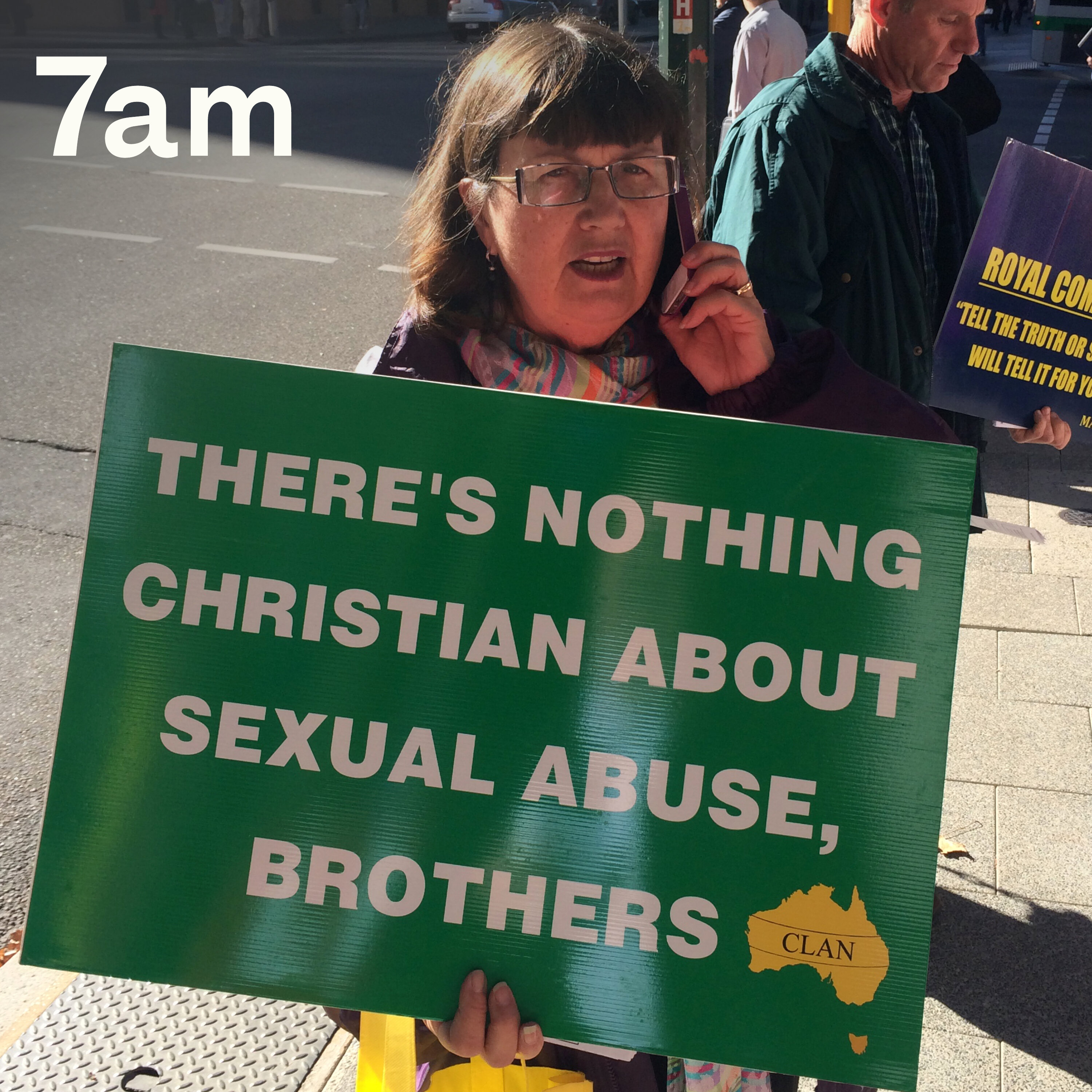
I'm Ruby Jones and you're listening to 7am. Survivors say it's like being stabbed in the back. Some were just days away from finally having their day in court against the Christian Brothers when their cases were suddenly put on hold. The Catholic religious order is crying poor, saying it doesn't have enough money to pay child sexual abuse victims the compensation they're owed. But it's been revealed that billions of dollars worth of that could have been used in the payouts were instead transferred just out of reach of survivors. Today, managing partner at Mark lawyers, Michael Bradley on the multi million dollar properties sold off for just a dollar. And the crushing court decision that's left victims in the cold. It's Thursday, July 9th. So, Michael, the Christian Brothers, this religious order, they recently turned up in the Supreme Court in New South Wales where they had what sounds like a fairly big win. Things went in their favour. Tell me what they were seeking.
- [01:14]
B
Yeah. So the, the Christian Brothers approached the Supreme Court of New South Wales and asked for a moratorium on all current civil claims in process against the order. And the Supreme Court has awarded that moratorium, meaning that all those current cases that are unresolved are put on pause. And the basis for that application was that the Christian Brothers said, we're running out of money, we don't have enough money to cover all of the anticipated payouts and we're proposing to enter into some form of scheme with our remaining creditors, including these, these claimants, to, to arrange payments that presumably will be substantially less they might, might have been ordered to pay by the court.
- [02:05]
A
Right, so they're saying they don't have the capacity to pay out the claims that are being made. Before we get into that, into the money side of it, can you tell me a bit more about the Christian Brothers? Who, who are they and, and what do we know about what happened in the institutions that they ran?
- [02:21]
B
Yeah. Christian Brothers are an order of the Catholic Church. They were established as a sort of primarily educational order of Brothers to educate boys. Quite a lot of schools in Australia, as elsewhere have been Christian Brothers schools. Waverley College in Sydney, Trinity College in Perth, St Joseph's Nudgee College in Brisbane are some of the, the better known ones in Australia.
- [02:54]
A
I'm here to announce that I will be recommending to the Governor General that a Royal Commission be appointed to inquire into institutional responses to instances and allegations of child abuse in Australia.
- [03:10]
B
The Royal Commission identified that a number of orders within the Catholic Church had particularly appalling records of institutional child abuse.
- [03:21]
A
Commission members heard from more than 8,000 people who told them of abuse in churches, orphanages, sports clubs and schools.
- [03:29]
B
And Christian Brothers was one of the absolute worst. It was the worst in terms of raw numbers. So well over a thousand complainants came forward to the Royal Commission and said that they had been abused as children in Christian Brothers schools from the 1950s onwards. After every other Alder boy practice. In 1975, before dropping me home, Father Ryan would sexually abuse me every single time I was 10 years old, 483 were named as perpetrators of child sexual abuse. What that meant was that of everyone who had been an ordained Christian brother from 1950 until the royal commission, 22% of them were named alleged perpetrators of child sexual abuse.
- [04:27]
A
Okay, and so what was the recommendation that came out of that then? What was supposed to happen once this was made public by the Royal Commission?
- [04:37]
B
The Commission identified they had allowed serial predators to operate for many decades under their umbrella and predate on children in lots of different locations over long periods of time. The Commission didn't have any power to resolve claims. What it did was set up as part of its outcomes, a scheme, what they call the National Redress Scheme, which is still operating but is coming to its end, was set up for 10 years and the idea was for victims of these institutions to get access to compensation without having to go through the courts. And that was sort of the main practical outcome of the commission. There have been many, many cases that have run through the state civil courts since the Royal Commission. They're currently paying out an average of $1.7 million a week. So this is in settled claims or adjudicated claims. And they say that They've got about $23 million left, which would mean they're going to run out of Money in about 11 weeks, 12 weeks time, at the current rate. But there's still hundreds of unresolved cases in the system. There's about 32 current cases in the courts, 540 still in the National Redress Scheme. So we've still got many hundreds of survivors still with unresolved claims. And obviously, according to the Christian Brothers, there's vastly insufficient funds to cover that.
- [06:09]
A
That's not the whole story though, is it? Tell me what's come out about their properties.
- [06:14]
B
That is not the whole story. So the Christian Brothers, like many parts of the Catholic Church, hold or held vast amounts of property in Australia. That's obviously incredibly valuable land. And in 2007, a new entity was established called Benjamin Rice in Australia. Edmund Rice was the founder of the Christian Brothers. So they set up this new entity and the schools were essentially transferred from the Christian Brothers order to this new entity. And huge amounts of property that were owned by the Christian Brothers, 26 properties were transferred for $0 or $1 each. Net result of that is ERA is now a massive landholder at it reported assets of $2.3 billion two years ago. And Christian Brothers, which used to own all that land, now doesn't and is now poor. And Christian Brothers is saying, well, this is all we've got left because we've given most of our assets away. You know, if this happened in the building industry, so, you know, in the construction industry, there's a, well trodden path of, you know, what's known as phoenixing, where you create an entity to build a building, the entity goes broke and you then create magically another entity appears with the same directors and same shareholders and carries on business and has no liability for the losses of the previous one. And that's kind of really what's happened here. The ERA was created by the Christian Brothers. There may have been good commercial or whatever strategic reasons to do that, but the effect is the same as a feening singer.
- [08:03]
A
Right. And so what do the Christian Brothers say about why they have transferred, well, actually, essentially given these properties to Edmund Rice, Education Australia.
- [08:15]
B
The story is that at some point a strategic decision was made to restructure the organization, set up this separate entity and, you know, for it to take over the good works of the Christian Brothers in education. EREA has been very clear in its public statements that, you know, it's an independent entity, it's not legally responsible for anything that Christian Brothers have done. And presumably part of the logic or the rationale of that comes from what the Christian Brothers ultimately said to the Royal Commission, which was one of the things they said was, oh, it was a bit of a mistake putting all these completely untrained brothers in charge of lots of small boys. So they've sort of set up a more professionalised organization as the educational institution. And then, and I guess, you know, logically then, if the EREA is running the schools, it should own the schools and own the land that the schools is on. So that's what we've done nothing to see here. It all made logical sense and had nothing to do with the fact that they were sitting on a powder keg of claims that were absolutely going to be coming their way from children they'd abused.
- [09:42]
A
Still to come, will the Christian Brothers get away with its creative accounting? So, Michael, what does this ruling mean for the Survivors for the people who, up until this point were still trying to get compensation from the Christian Brothers
- [10:02]
B
through the courts, I mean, it's a crushing blow. The only thing the courts, unless, you know, the legal system can offer them, is compensation. And it's the only thing that the institutions are willing to provide because they're clearly not actually sorry. So for that to be closed off, to be told now, well, actually, you're not going to get your day in court because the defendant is crying poor. And then to learn, oh, actually, the reason they're poor is because they've given all their assets away from their right hand to their left hand. And I'm sorry, you can't get out the left hand. It'd be an absolutely devastating blow to the remaining survivors who are now looking at, you know, probably recovering a fraction of what they should be entitled to.
- [10:51]
A
And you get the sense from the point of view of the Christian Brothers that they are trying to safeguard the future of their religious order. Right. By making sure it can continue on under this other organization. But I just wonder how you can weigh that up against the damage that something like this does to the reputation of a religious group when it becomes clear that, you know, the, the money that should go to victims of abuse isn't going to them. And it seems like the Church wants to, I guess, bury any kind of accountability that it might have towards people that were done wrong by them.
- [11:35]
B
Yeah, I think there's a couple of things going on here. One is, in the broader context of the Catholic Church, what the Church has consistently demonstrated before and since the Royal Commission is its unwillingness to accept responsibility for the harm that it has done through, in Australia, for example, through, you know, the leadership of George Pell and the Melbourne Response. And it's used all kinds of legal tactics through the courts in recent years. The one thing it hasn't done at any point is stood up and gone. You know what? This is on us. The other thing is that there's a kind of pragmatic argument that seems to be run out, which is a sort of. Yeah, well, if. If the church paid the full financial price, it would go broke and that would be a bad thing because the church is a good thing. So the same applies in sort of smaller scale to the Christian Brothers. Christian Brothers is a good thing because it. It's a religious order that does good in the community, runs church schools and whatever provides pastoral care. It's not in the public interest for it to cease to exist, which it would do if it went broke. And Some people think that's a good argument. The counter argument for that is, well, if that is the actual consequence of the wrong they've done, then that should be right. Like if it's not the institution paying the price, it's the victims.
- [13:03]
A
And is that likely to be the end outcome here in this case with the. With the Christian Brothers? Are there any other avenues open to the victims or is it kind of cut and dried from this point?
- [13:15]
B
I mean, look, it's, you know, it's hypothetically possible that there could be attacks made on the restructure, depending on how it was done. It sounds to me like it was done sort of early enough and in a way where it's probably legally immune, they've probably succeeded in quarantining those assets away from the hands of their victims. But, you know, I don't know enough of the facts to hold any particular opinion on that. And I'm sure lawyers for abuse survivors will be exploring whether there is an avenue for trying to use legal process to get at the REA's assets. You know, there's a legal principle which supposedly deals with the Phoenix situation, which is that if you restructure your affairs for the purpose of avoiding your creditors, then that can be unwound and the courts have significant powers to do that to unwind transactions so as to, you know, enable creditors to get their hands on assets that were there and are now gone. And, you know, sometimes that works, but it's. It's very complex area of law and it fails more often than it succeeds. But yeah, you know, it's possible, but I would say faintly possible.
- [14:42]
A
Well, Michael, thank you so much for speaking with me.
- [14:44]
B
My pleasure.
- [15:00]
A
Also in the news, Telstra has apologised after customers across Australia experienced widespread phone and data outages yesterday with 000 calls, regional train services and payment systems all affected. Anthony Albanese said the outage was concerning and disruptive and that investigations were underway. But there was no evidence of malicious actors at this stage. And the US military has unleashed a new wave of strikes against Iran and revoked a license allowing the country to sell oil after three tankers were hit in the Strait of Hormuz, putting pressure on an already fragile sea swing fire. The US military says it hit more than 80 targets during its latest strikes. Iran's top joint military command has said that Iranian armed forces would deliver a crushing response. I'm Ruby Jones. This is 7:00am thanks for listening.