Loading summary
Transcript28 lines
- [00:01]
A
Hey, Brisbane, you know what? Make all this more awesome.
- [00:04]
B
What?
- [00:04]
A
More me. All we want to do is hear that sound.
- [00:08]
B
All we want to do is hear that sound. They were some of the biggest stage productions in the country, starring some of the biggest names in the business. Natalie Bassing, Great. Just a gift.
- [00:18]
A
What a performer.
- [00:19]
B
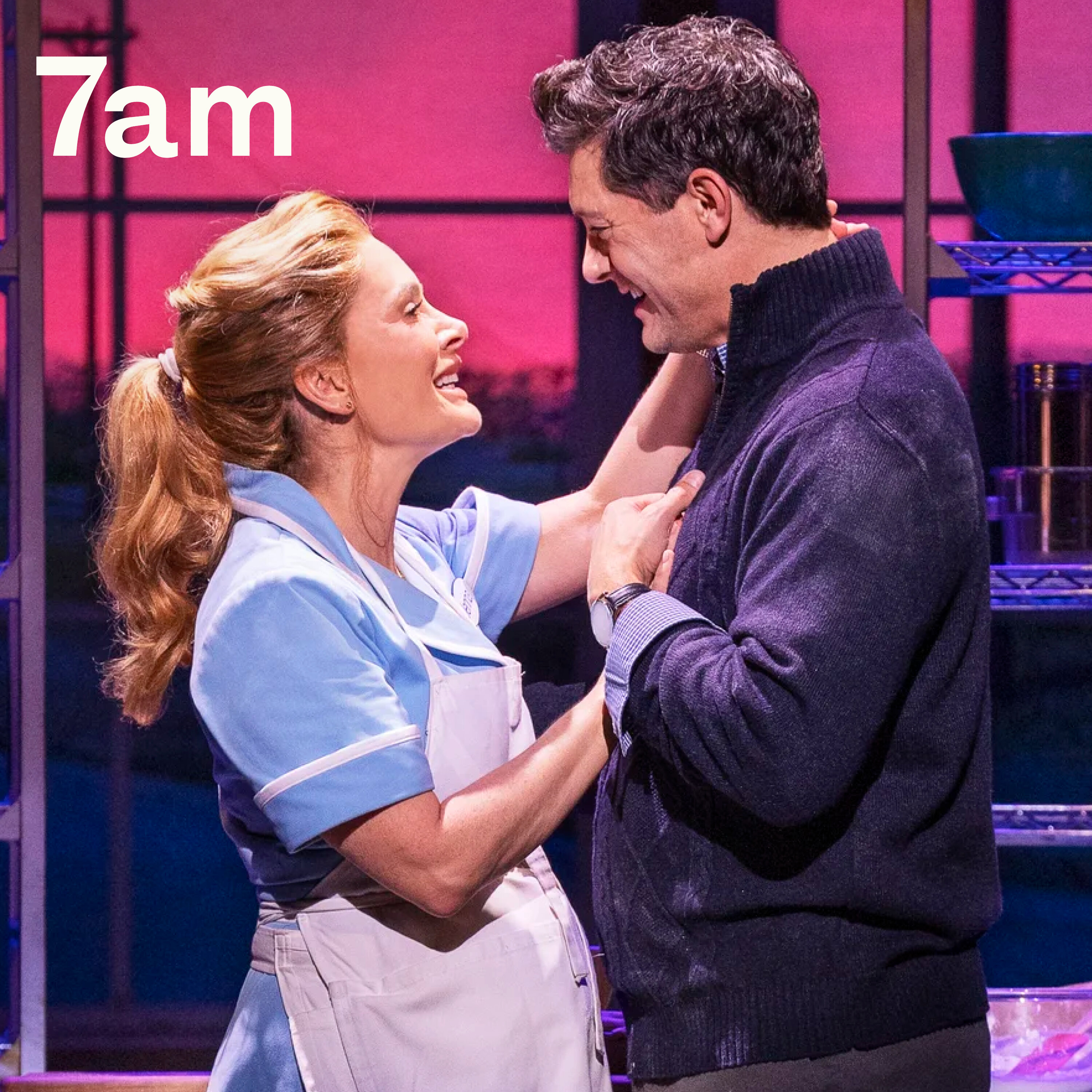
I was blown away. The peak of Australian musical theater right now. Rob Mills, so phenomenally talented, perfect for the role. But in the space of just two weeks, Beetlejuice and Waitress the Musical have both had their tours cut short. The cast left devastated. The amount of work and effort that every single person in this cast and crew and company have put into this show is devastating that it comes to an end so abruptly now. Stars like Natalie Bassingthwaite are sounding the alarm as the industry struggles to stay afloat amid rising costs and weakening sales. Oh, my heart, it's hurting so much for this industry of ours across the board. You know, it's not just musical theatre, it's theatre, it's festivals, it's shows of any kind. The arts is dying in this country and that hurts my heart beyond anything. I'm Ruby Jones and you're listening to 7am today. Arts executive John Glenn on the crisis threatening the future of theatre and live shows and what can be done to save the industry. It's july 1, So, John, in the last two weeks, two big musical productions, Beetlejuice and Waitress, were both cancelled without much warning. So to begin with, tell me a bit about what we know about why those decisions were made.
- [01:50]
A
Oh, it's not just that one. It was also Back to the Future recently and just last week, Aida, the opera that was gonna be coming to Australia exclusively, has cancelled for the second year in a row. So it's definitely a trend at the moment with major productions. And I'm not sure that people understand the scale and the cost of these productions. There's multi millions of dollars that go into getting a show ready for its first performance in its first season. When you think about building sets, company management that then does auditions, does the casting and setting up, the lighting design, sound design and then going into rehearsals and all of that costs millions and millions of dollars to get just to the very first performance of the very
- [02:42]
B
first season was reckless. Just enough who gets heard, but who learns how to toughen up when she's
- [02:54]
A
bruised Once you get performing, there's also hundreds of thousands of dollars per week in running costs for salaries and venue costs and labor costs and all those sorts of things. So the theory of a music theatre production is that once you get on stage, you want enough ticket sales to pay for the weekly running costs, but to then start chipping away at the initial cost of the production that millions have already spent. And I think particularly with productions like Back to the Future, Beetlejuice and Waitress. I mean, Beetlejuice is a very expensive show. The sets and costumes are very expensive. It would have a very expensive weekly running cost. And so, you know, all of the economics of that just don't add up if you. You don't have enough in the box office when you start your season.
- [03:54]
B
So it sounds like these productions are getting locked into a bit of a death spiral here. With rising costs, low sales. How bad does it have to get for the call to be made to actually cancel a show's run? I mean, producers would have to be really looking down the barrel of significant financial losses.
- [04:11]
A
Yeah, well, you can imagine if their sales are not strong upfront. It's the spiral, as you say, of not having sufficient sales up front and then not seeing much of an advance advance starting to appear in other cities. The other problem was the routing. So being able to secure a sensible route for a tour across the country. And a big musical survives on the success of their season in Sydney and Melbourne and certainly Brisbane as well. Now, before you even consider other markets like Adelaide and Perth, you need to see those advanced sales. You need to know that you can seamlessly go from one market to another. There's actually. It's extraordinary how expensive it is to move a production like that from one city to another. It's not even joking when I say it's in the millions just to move. So all of a sudden you potentially haven't paid the running costs of a production in your first season. You're not paying down the debt. You know that you're just about to add another million or $2 million just to move. And the advance is not that great in other cities. That's when you start making pretty tough decisions to shut a show down, because it's much better to shut it down than to. To increase your debt.
- [05:21]
B
And it sounds like with a lot of these productions, the cast and the crew didn't have any warning that this was coming. So that's a lot of people who are pretty unexpectedly put out of work 100%.
- [05:33]
A
And it's not just the cast and crew, it's a lot of theaters will have massive gaps in their schedule now because of the shutting down of these productions. These productions are booked literally years in advance in order to get the dates in the Diaries of these theatres. But when a show cancels a tour at sort of fairly late notice, the chances of filling those dates in those theaters is very low. All of the people who are employed in these venues, who rely on casual work, front of house, food and beverage staff, back of house, technical staff in all these venues are going to start losing work. The restaurants, the sort of economic activity around these venues is very significant. When you've got eight shows a week in those venues, all of a sudden restaurants and bars start flourishing because people are coming into those areas. So there's a massive economic impact that this has on the cast, the company, the venues and the sort of associated allied industries as well.
- [06:33]
B
And theatre executive Graham Kearns, he said that he expects theaters to be dark for 30 weeks over the next 10 months. How unusual is that?
- [06:43]
A
It's extremely unus unusual. Degree's a fantastic operator. He and Stephen found run the two of the major venues in Sydney, in the Capital and Lyric. And, you know, traditionally they're just not empty. They're literally not empty. They might be just two or three weeks a year when they're empty. For him to say that they're going to have 30 weeks dark is devastating for the business, devastating for staff and particularly devastating for casual staff.
- [07:07]
B
And in terms of ticket sales, of people not kind of being able to afford perhaps to go to the theater right now, how long do you think that that's been, I suppose, a trend in the making? Have you sensed worry in the industry around this for a while?
- [07:22]
A
Yeah. I think it's. It goes back a long time. I'd probably say 10 or 12 years ago, we would be looking at the economics of a show and, you know, the average ticket price was about $85 or, you know, just maybe slightly over 100 for a premium ticket. Now we're talking sort of in the 100, maybe even up to sort of 220. $230 for a premium ticket price to go and see a musical. So if you work out a family of four going to see. I mean, I'm just using a family show as an example, like Matilda. All of a sudden they're spending somewhere around $700, $800 for the four of them to see a show. I knew people who could see every single musical that came to qpac and there's probably five or six per year. They're now realising that it's so expensive that they're making a choice to see two or even one
- [08:10]
B
coming up. What can be done to ensure the survival of the Arts. Live music venues are struggling to keep up with increasing costs. Several venues, including the Sewing Room, have shut up shop in the past 12 months.
- [08:33]
A
An iconic Sydney music venue is set to disappear. More than 1300 venues closing their doors around Australia. While nighttime economy businesses also face higher costs and cost of living. Pressures biting into people's hip pocket.
- [08:47]
B
So, John, it's not just musical theatre that's struggling right now. There's festivals being cancelled, touring artists are pulling out of shows, venues are closing around the country. So when it comes to live performance in general, general in Australia right now, how worried are you?
- [09:03]
A
I am worried. I've been. In the last two or three years, I stepped out of venues and I've been actually creating and touring shows. So we've actually got a show on the road at the moment called the Lark, starring Noni Hazelwurst. It's just Noni in the cast as she's the only person on stage, you know. But the economics of that, it cost us about. It was a $250,000 investment to put one person on stage for a show. We could have certainly charged more to see someone of the caliber of Nani Hazlehurst on stage. But our rationale was keep your ticket prices reasonable and you'll sell well and hopefully you'll make some money. The other thing about small venues closing, I've been very connected to the contemporary music industry in Adelaide through my. I've been on the board of Music SA and I've seen very small venues which are incredibly important for emerging artists to sort of cut their teeth on. A lot of them are closing down because the other trends that are happening at the moment, in particular in contemporary music venues, is young people are not drinking as much. And so when they go out, the venues who are used to sort of making a lot of money on the bar, they're not seeing that revenue. So the old model of just opening up a venue, charging a ticket to come in, but also making a lot of money on the bar, those sort of models are starting to fall apart as well. And that's why sort of venues is closing, particularly in the conservative music industry.
- [10:25]
B
And this is obviously a particularly critical moment for the industry. Do you think there's going to be flow on effects once audiences leave? Do they tend to come back?
- [10:36]
A
One of the things that Covid taught people is they can stay home on their big screen TVs and be entertained by streaming a show. Good example of that is you can sit home on a big screen and watch Hamilton now. So you can do that. For 15, $20 a month, whereas to go and see Hamilton will probably cost you at least $150 a ticket. So a lot of people are staying home for their entertainment.
- [11:00]
B
Okay, so what do you think can be done then to try and make sure that live theatre and live shows survive? And why does it matter that they do?
- [11:07]
A
Yeah, I think there's a few things. One thing that I think is very important is people have been talking about government concessions, particularly tax concessions for music theatre producers and other theatre producers. There's a good example where in the West End, the UK government gives a 40% tax rebate to producers of major theatre in the West End. And I think that is not just a government handout, it's actually a way of increasing economic activity in the West End, which then turns back into tax revenue. There are many studies about the impact of live performance on people. The fact that people get an experience that they can't have anywhere else. In the world of AI and everything that's happening across all industries at the moment, one thing that we can well and truly say is AI can't impact on a life performance experience and the importance of a performing arts centre to advocate for social change. You know, it's not just about entertainment. It's about exploring themes that sometimes might be challenging about diversity and inclusivity. Performing arts play an incredibly important role for community to have different voices, different coloured skin on stage telling their stories. And it's incredibly important for those stories to be told.
- [12:30]
B
John, thank you so much for speaking with me.
- [12:33]
A
Thank you very much.
- [12:47]
B
Also in the news, two employees from Big Four accounting firm Ernest and Young have been sacked after the Prime Minister Anthony Albanese's personal banking information was allegedly accessed while they were working at Commonwealth bank. Police say two Sydney men aged 21 and 25 were charged after Commbank detected unauthorised access to restricted information belonging to a federal politician. Only one of them was a sacked Ernst and Young employee. Both men are charged with accessing restricted data without authorisation. And the younger man also faces a charge of distributing personal information in a way that could be seen as menacing or harassing. And the Australian Competition and Consumer Commission has launched legal action against Amazon's prime streaming service in the federal court. The watchdog alleges that contract terms left customers facing the choice of either paying more or receiving ads that weren't included as part of the service. Customers initially signed up for. The ACCC is alleging that Amazon relied on five unfair contract terms over two years with close to 1 million subscribers affected. I'm Ruby Jones, this is 7am thanks for listening. Listening?