Loading summary
Transcript28 lines
- [00:01]
A
The Dolomites have arrived from outer space.
- [00:04]
B
For decades, the Dolomites program turned school children into customers.
- [00:08]
A
A Dolomite Go further in a Dolomite account at the Commonwealth bank, which bank
- [00:15]
B
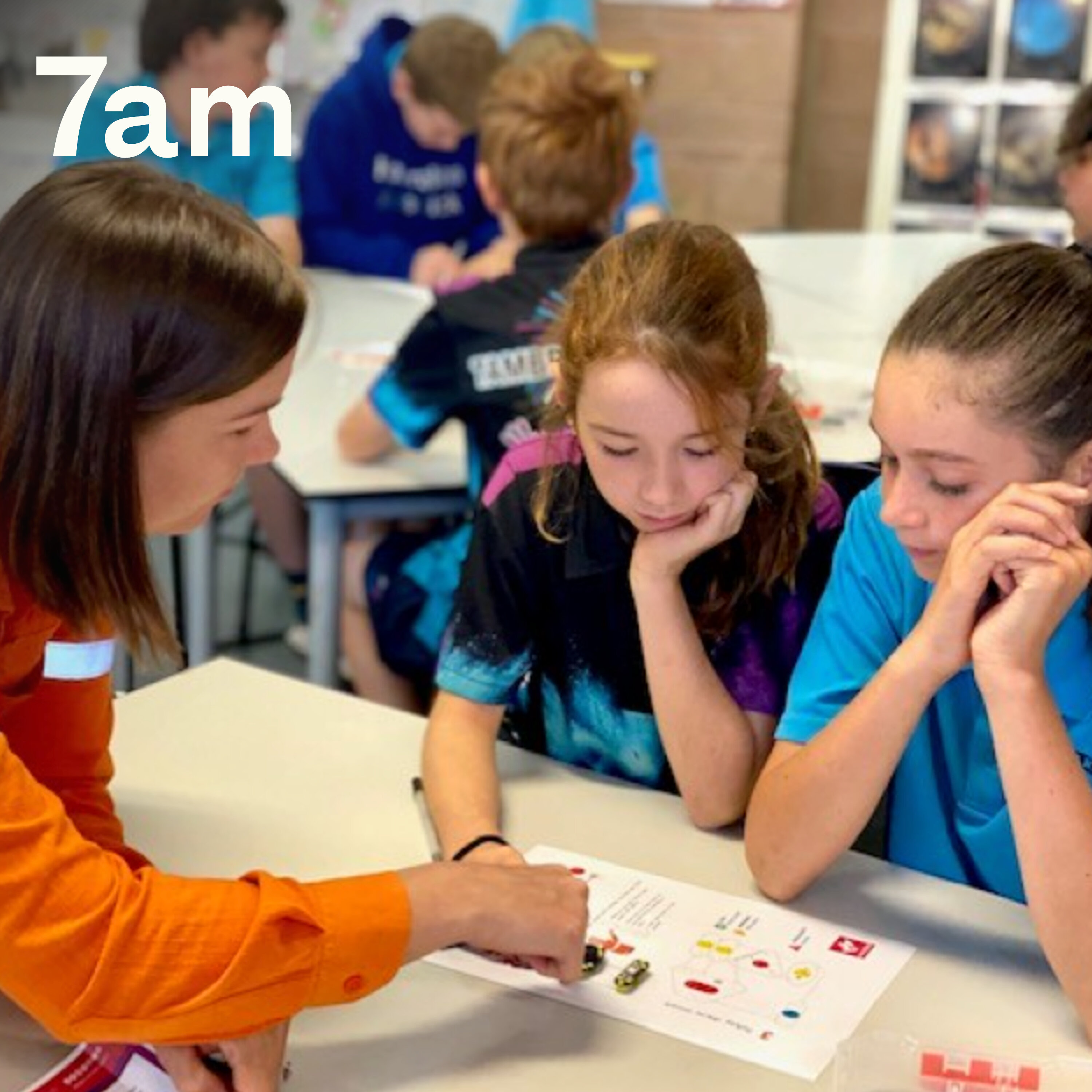
the controversial scheme now axed gave Australia's biggest bank access to kids classrooms and their cash under the guise of teaching financial literacy. Now it's happening again. A new report has found the country's biggest fossil fuel companies are using the same strategy with multi million dollar programs and sponsorships targeting millions of Australian children. I'm Ruby Jones and you're listening to 7am today comms declare founder Belinda Noble on how the tentacles of big coal, oil and gas are reaching into Australian classrooms and manipulating students. It's Tuesday, june 30, So Belinda, I thought we could start in the classroom of one particular primary school because the report describes children using bread and Vegemite and sprinkles to model offshore drilling as part of this Woodside linked classroom activity. So tell me what was happening there exactly?
- [01:26]
A
Yeah. Imagine you're in a classroom and you're so excited, you get your Vegemite sandwiches and your sprinkles, you go, oh, this is so excellent. And then you find out, oh, they're actually teaching us how to drill for oil. That's the situation in Perth classrooms with a Woodside sponsored program that was delivered during Science Week. Two primary schools. So kids were taught to drill for oil and they put the straws down and they have to suck up the Vegemite and then they're told, be your own exploration company and find the best places to drill for oil. And it's teaching them. We would argue that exploring for gas and drilling for gas is a fun, positive activity. You can rest assured that no part of that activity included talking about how drilling for gas is the main cause behind global warming. It's part of an all around all encompassing marketing movement aimed at children from the coal, oil and gas companies. But you know, you've got to give them credit. They're reaching kids in the way that is most engaging. I do know of another very similar program produced by another organization that includes drilling for oil using Chocky Milk and Tim Tams.
- [02:43]
B
And so what is the scale of this, Belinda? How many programs are operating around the country and who are the companies behind them?
- [02:50]
A
Our investigation found at least 260 programs where coal, oil and gas companies are marketing in children's institutions. Those institutions can include schools, museums, sports teams, mentoring programs, scholarship programs, photography competitions, an extraordinarily wide range of activities that fossil fuel companies are Sponsoring the ones involved? Well, Santos was the most involved that we could find. Woodside, Chevron and BHP were also in the top five. So he said these are companies that are actively extracting fossil fuels. And obviously we would argue these programs are a way of maintaining their social license, influencing the next generation and normalising what is, you know, an incredibly dangerous polluting activity.
- [03:44]
B
And it's not just the companies who are showing up in the classrooms or museums themselves, is it? A big part of this seems to be about providing resources to teachers. So lesson plans and professional development and classroom materials. How does that work?
- [04:00]
A
Yeah, this is something that we're more surprised by. So we have fossil fuel companies sponsoring teacher education programs. One even has two Woodside members on its board and they produce education materials for teachers that teachers then take into the classroom. And again, as you can imagine, they're fairly favorable to extraction. They're fairly favorable and showing that coal, oil and gas companies are future focused and, you know, greening their operations. But there's less information about the damage that they're doing and the fact that we need to phase those products out in order to have a safe climate.
- [04:43]
B
Ok, and so how is climate change presented in any of this education material?
- [04:49]
A
In the materials that we found, fossil fuel extraction is presented as inevitable. Climate action is presented as an individual action or something that can be solved by technical fixes. They do mention climate change. They do. Some of them say that coal and gas create climate change, but it's a very narrow focus. They're not mentioning that solar is cheaper than coal. They're not mentioning that electric vehicles are better for the planet than diesel vehicles. You know what I mean? So it doesn't give the broad view that you would expect in a scientific education.
- [05:29]
B
And kids of primary school age aren't going to know what it means to have classroom materials that are backed by the fossil fuel industry. And I suppose that's the danger here. It's that these are institutions that children trust and parents as well.
- [05:44]
A
Yeah. And in particular in the communities where extraction is a large part of the economy, these companies are so embedded in institutions to the point where we have fossil fuel corporations co sponsoring state government education programs and BHP co sponsors education in the Pilbara to the point of not $40 million. But we believe it's something that really has to change if we're going to change the economy. Move to a clean economy, Take the advantages that are presented by moving to renewables in Australia. You know, how are kids going to do that if all they're taught about is how great coal and gas is.
- [06:30]
B
Still to come. How do we disentangle oil and gas giants from kids spaces? Belinda, you've spoken about these fossil fuel companies being essentially embedded in educational institutions in Australia. So are there any safeguards around that?
- [06:52]
A
That's a really good question. We haven't been able to find any. That doesn't mean they don't exist. But like I said, there's very little transparency. There's no federal oversight of what they call curriculum adjacent materials such as the ones being produced by the resources sector and the fossil fuel industry. So it really is up to, I guess, parents, teachers and principals about what they allow into their school. And look, we know teachers are time poor and we've heard this from teachers. You know, if someone gives them a resource that gives them a fund lesson plan and it happens to have, you know, a Chevron logo on it, then so be it. You know, it's the fossil fuel industry using its profits and its clout to buy social license, to buy time with kids and to basically market to kids.
- [07:44]
B
You're calling for a Senate inquiry, what would that do?
- [07:47]
A
A Senate inquiry would establish the facts, it would look at any governance gaps and what reforms are needed to ensure kids are protected. Because we want children to learn and play in environments that are free from fossil fuel influence. And we do believe a Senate inquiry is needed to establish what's actually going on here. We do know, for example, that banks are banned from producing materials for schools. They were thrown out of schools a couple of years ago after an ASIC investigation. So why indeed coal, oil and gas companies given carte blanche to go into these schools and you know, without any oversight that we can see.
- [08:29]
B
Yeah, that's the obvious comparison, isn't it? The Dolomites that used to be in schools.
- [08:33]
A
Yeah, 100%. And that ASIC investigation, which is extremely thorough, found that children are vulnerable to marketing, particularly children, you know, under six or under eight. They don't recognise marketing information from school information. They just, they take it on as given equal weight and you know, you shouldn't be able to use schools as an acquisition channel. That's what the banking programs are doing.
- [08:59]
B
The report by the corporate watchdog into school Banking released last year found school banking providers were unable to demonstrate the program improved savings behaviour. Children were exposed to sophisticated marketing tactics. Providers failed to effectively disclose their strategy was to acquire customers and payment to schools encouraged greater participation.
- [09:21]
A
And these fossil fuel companies, particularly the ones in those particular extraction communities, are using it as an acquisition funnel. They make children feel positive about their industry. And then later on in high school, they've got all the programs that try and get them to work in the fossil fuel industry. So it's a recruitment funnel and a
- [09:42]
B
lot of these programs, they're in regional communities where schools and sports clubs need money. So is this story also about gaps in public funding being filled?
- [09:54]
A
Certainly is part of the puzzle that we'd really like investigated. We did some polling which found that 87% of parents and grandparents would prefer that schools are funded by governments instead of coal, oil and gas companies. If there was a fair 25% tax on gas exports, we could more than make up the education funding shortfall in this country. I think the issue isn't actually whether we can afford it. The issue is if we want to rely on polluting businesses in order to deliver education, science education, mentoring programs and sports programs.
- [10:30]
B
So if fossil fuel companies have become so embedded in children's lives that their presence in a classroom or a museum hardly even registers, what does that tell us about how kind of accepted and how powerful this marketing has become?
- [10:45]
A
We know that marketing works, right? These companies spend hundreds of millions of dollars a year on marketing. What it tells that children are receiving incomplete and biased information through these programs. It teaches us that, you know, fossil fuels continue to delay pollution cuts. And this is what these whole programs are about. They're about maintaining their business, it's about maintaining their social license, so they continue to operate. And, you know, if I see a billboard by a big fossil fuel company, I don't necessarily feel persuaded by that. But if I'm a child in a classroom hearing information about how great and fun fossil fuel industry is, then maybe I do believe it. I do know that there's education materials in WA have been going since the 90s. We've had a teacher there tell us about that. We do know that particularly in Western Australia, there's a very, very deep engagement with the resources sector in education. And when I say deep, I mean the Premier's science prize is spons sponsored by gas corporations. When I say deep, I mean they're co sponsoring education in the Pilbara with bhp. It's so entrenched and it is quite extraordinary. And I think people certainly on the east coast don't realise how entrenched it is in wa. We were surprised and I think if there is a Senate inquiry, and we hope there is, that they will have hearings in WA to hear exactly what's going on there, because I think a lot of parents would be shocked.
- [12:31]
B
Well, Belinda, thank you so much for speaking with me.
- [12:33]
A
Thank you.
- [12:48]
B
Also in the news, the Royal Commission on Anti Semitism and Social Cohesion has started its third block of public hearings in Sydney over the next fortnight. The hearings will focus on how antisemitism spreads within online communities, with representatives From Meta, Google, LinkedIn and TikTok being granted leave to appear. However, the council assisting the royal commission says some tech platforms, including Elon Musk's X, have not engaged with the inquiry. The Royal Commission will also be examining antisemitism in traditional media and broadcasting, with representatives from the ABC and SBS also due to face questioning and the World Health Organisation says more than 1300 excess deaths have been recorded across Europe since June 21, linked to the extreme heat wave across the continent. In France, the National Health agency says around 1,000 excess deaths were recorded, most of those involving people aged 65 and over. Scientists from the World Weather Attribution Group say it's the most severe heat wave ever recorded across Europe and would have been virtually impossible without human caused climate change. I'm Ruby Jones, this is 7:00am thanks for listening.