Loading summary
Transcript27 lines
- [00:01]
A
I'm Ruby Jones and you're listening to 7am. Bird flu has reached Australia with cases first confirmed in WA and now in South Australia. The strain detected in three migratory seabirds is H5N1, a deadly form of the virus that has swept through wild birds overseas, forced farmers to slaughter millions of chickens, spread to mammals, and in the United States, infected dairy cows and farm workers. Authorities in Australia say the risk to the public is low. But for wildlife, an outbreak could be devastating. Experts fear it could become the tipping point for species already endangered or close to extinction. Today, CEO of the Invasive Species Council, Jack Gough, on the race to stop bird flu becoming a wildlife disaster in Australia. It's Thursday, june 25th. Jack, welcome to 7am thanks for coming on the show.
- [01:11]
B
Great to be with you.
- [01:12]
A
So, Jack, yesterday, South Australia confirmed our third case of the H5N1 virus. That's after two cases were found in WA. Authorities are trying to work out whether this could spread through Australian wildlife. So at this point in time, how serious do you think the threat is?
- [01:30]
B
This is a really serious development in Australia. We know that the H5N1 strain of bird flu has been circulating in the Northern hemisphere and causing absolute devastation to wildlife wherever it's gone. It's also meant hundreds of millions of poultry via the diet or had to be slaughtered. And unfortunately it is very virulent and spreads very quickly. So it was always going to probably turn up in Australia, but that theoretical risk is now a real, absolutely real risk. And whether or not this particular outbreak is contained, we can be sure it will turn up here again, whether it's from migratory seabirds coming from the north of Australia, or it's coming up as this one seems to have, from birds that have been in contact with other species in Antarctic waters and particularly from those Heard and McDonald Islands. So this is, you know, worst case scenario for a wildlife massacre. That's really what we're looking at in Australia once it takes hold. That's been the experience everywhere around the world. And the chances are this could be worse in Australia than it has been in the Northern Hemisphere because we haven't had other varieties of high pathogenicity avian influenza circulating before in this country.
- [02:43]
A
Right. So there's not much immunity there in the bird population. Tell me about the response from authorities so far. What happens when these first birds arrive? What's the response on the ground?
- [02:53]
B
Yeah, so the government should really be praised for the response. And the reason it's been very effective is because there's been two years of really dedicated Preparatory work.
- [03:01]
A
We have been getting prepared for this for some time. We are the only continent that is currently free of this H5 bird flu.
- [03:11]
B
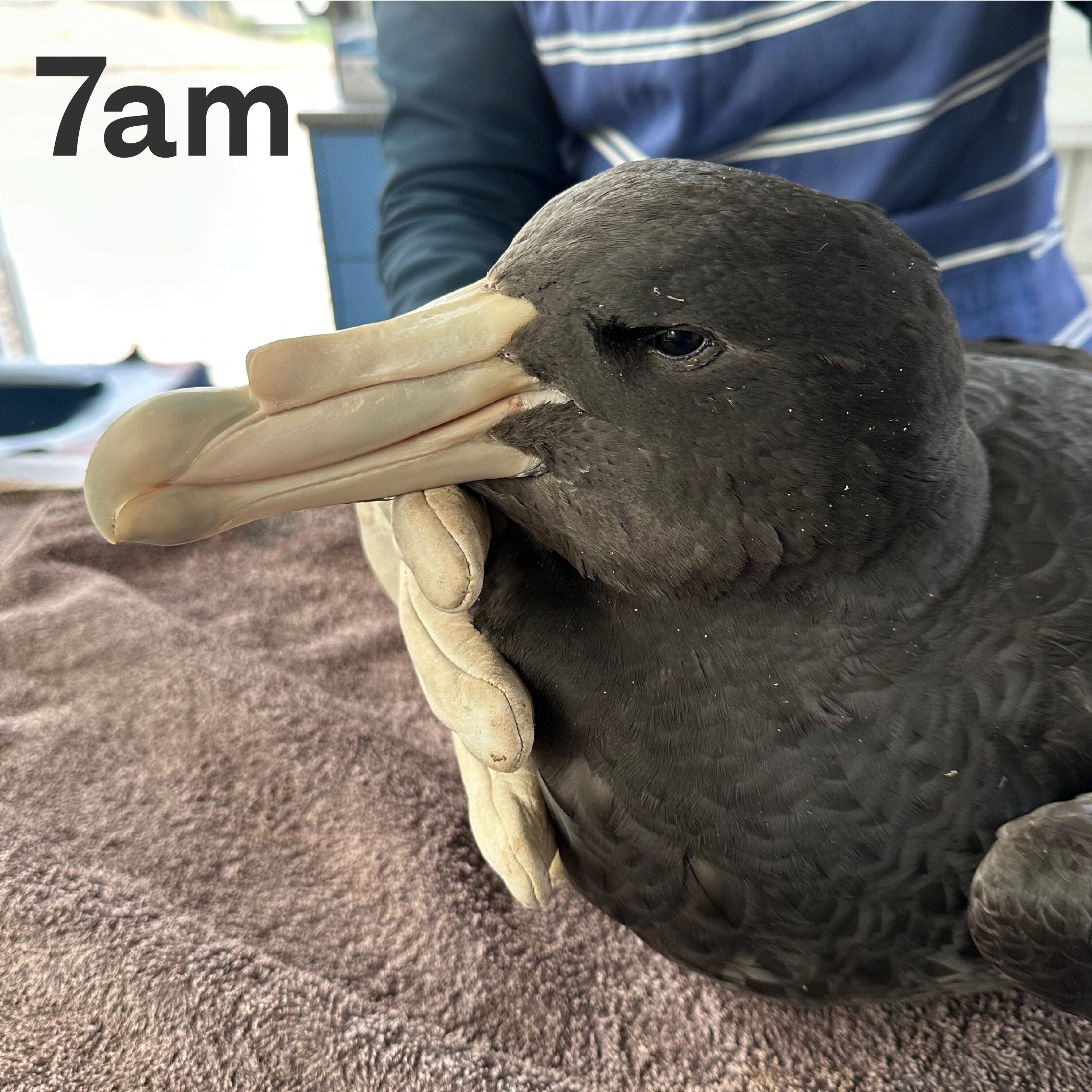
We understand that this was initially a great skewer found by a vet on a remote southern WA beach near Esperance. We set it up on the examination bench after we'd put our personal protective gear on to have a look at it. It couldn't stand up. It was trying but it was very wobbly. They were very quickly able to determine that this was actually this H5N1 variety of bird flu. Since then there's been a huge response from governments all around the country. So I've been on calls with hundreds of people from different agencies all around the country. Industry groups as well as environment groups coming together and that' unprecedented.
- [03:52]
A
So myself, Minister Watt, Minister Butler and Minister McBain are involved primarily in making sure that right across the Federal government, we are coordinating the response at the national level.
- [04:03]
B
This is the first time we've had a large scale preparatory work for a wildlife disease. And that means that Australia really is in the best possible position to slow the spread. Because just like Covid, the aim here is going to be slowing the spread of this virus so that populations can deal with the impact, will not be able to eradicate it if it has taken hold.
- [04:28]
A
Right, so you're saying even at this point, containing the virus is unlikely?
- [04:32]
B
Oh, look, it may be possible that we can contain it, but I think what we can say is whether we're lucky this time or not, it's no longer theoretical that this H5 variety of bird flu will turn up. It'll turn up at some point and when it does, the experience from overseas is devastation.
- [04:50]
A
A 90 day national health emergency in Peru and Ecuador as migratory bird flu from North America bring with them the highly contagious avian, or bird flu.
- [05:00]
B
So it spread through the entire South American continent within six months back in 2023 and then skipped over to Antarctica. A virus that once spread mainly among birds has now crossed into a new environment.
- [05:13]
A
And now thousands of seal pups have become victims of a changing disease landscape.
- [05:18]
B
The year before, about a 1% death rate for baby elephant seals went to a 95% death rate and you had tens of thousands, thousands of dead mammals. We know that overseas it's been in the millions of birds that have been killed in the UK, for example, about a 30% loss of their breeding shorebirds, terraces of breeding guillemots, puffins, sandwich and roseate terns are rarest breeding species. And the bodies of the Dead dot the island wherever you look. And we can expect pretty serious devastation in Australia. We don't know exactly how it will behave. It's been a pretty interesting virus, I guess you could call it in terms of the way that it behaves in different colonies, being quite different. But devastation seems to be absolutely the name of the game and fast spreading as well, which means that it's a pretty concerning virus to have here.
- [06:14]
A
And the obvious fear that arises with any kind of serious animal borne virus is the potential for it to mutate and to become dangerous for other animals and also for humans. So where is the kind of possibility of, of that?
- [06:27]
B
Yeah, look, at the moment there's no evidence that this is a serious risk to humans. The government risk assessment is very low for humans. We have seen just under a thousand cases worldwide and the death rate for humans who have caught it has been around 50%. So serious when people catch it. But it seems at the moment people need to have very high levels of contact in order to get the virus. And in a country like America, where in dairy workers there's been over 70 cases, much lower death rates than we've seen in, for example, in Southeast Asia, with health care systems able to respond to it. But flu viruses are notoriously good at mutating and combining their genes. And so one of the things that the government has been saying to people is make sure you go out and get your flu shot because it is actually going to be helpful in reducing the risk of those recombinations of genes in people if this disease gets passed on. And the message if you do see sick birds is really clear. Avoid them, don't go and disturb them or touch them. Record it. You've got a, you know, a biosecurity fighting tool in your pocket when it comes to a phone and then make sure that you let the authority authorities know through the emergency animal diseases hotline.
- [07:47]
A
Still to come, is Australia ready for an outbreak? Jack, you mentioned that the bird population here doesn't have the same immunity as in other places. Can you paint a bit of a picture for me of how this could play out, what a kind of worst case scenario might be for our bird populations?
- [08:09]
B
Yeah, look, when this H5N1 variety starts to spread, it really is going to be a numbers game for our wildlife. And unfortunately, this pressure could be something that tips some of them over the edge on that one species. Where there has been some work done studying it has been the black swan, that iconic Australian bird species, which is actually very abundant. But unfortunately in captive black swans overseas, 100% of them died within a few days when they caught this virus. And there seems to be evidence that they don't produce an immune response to the virus. And so it's one of the ones that governments have, have said, look, could be really under threat, as well as some of the birds that aggregate, like pelicans and ibises, that you might not think of as threatened in Australia. And then of course, eagles and, and falcons and the like, as well as some of our mammals that consume carrion, Tasmanian devils, Australian sea lions that have these other pressures. This really could be one of the things that pushes them over the edge. And so that's why with BirdLife Australia and the Australian Marine Conservation Society, we've been pushing hard with governments to say biosecurity response is one thing and you're doing that well. But on the other side, we do need a huge scaled up effort that local population or entire species can persist in the face of this threat.
- [09:28]
A
Yeah, I mean, the Australian government would say that it has been preparing for this. It's spent more than $100 million. There's this national task force, there's increased surveillance tools to kind of track the risk. So do you think that there's adequate resources going into the response?
- [09:45]
B
Look, I'm very impressed. I mean, we work very closely over the last three years with governments. I must say, three years ago we saw a huge amount of complacency in governments around this issue and we started to raise the alarm in the media as well as behind the scene. And I must say it was a couple of people within the Prime Minister's office and a couple of bureaucrats within the Department of Agriculture federally who went, actually, this is serious, we do need to prepare for it. And a lot of good work went on behind the scenes to put together that hundred million dollar package. And that's meant that, you know, vets are trained, that the diagnostic capacity is there, that there's already been scenario planning and scenario testing. Go on. But on the flip side, the second part of this is the wildlife resilience side of things. And unfortunately we have had a declining environmental spend when it comes to on ground programs. It's nowhere near the scale of responding just to the existing threats that we have. And if there isn't a huge scale up in the funding for on ground work to protect wildlife populations from other threats, then we can say that the biosecurity response is going well, but the impact is not actually being mitigated by the government. So this is something that Murray Watt, the Environment Minister I know, is taking seriously, but he's going to have a job of work to do, convincing treasury and Finance that this needs to be a priority and it needs to be an urgent priority.
- [11:09]
A
So you're concerned that the virus could be a tipping point for already threatened wildlife species?
- [11:15]
B
Absolutely. That's been the experience overseas and unfortunately, we know that when it comes to wildlife populations, it's the accumulation of threats that tends to lead to extinctions. Extinctions tend to happen quite slowly until they happen very quickly. I'm very concerned that when you add the pressures of already having introduced predators like cats and foxes, you've got climate change impacts, habitat destruction, all these things together already putting a huge level of pressure on so many species. Adding bird flu on top of that could absolutely be the straw that breaks the camel's back or that sends the Tasmanian Devil extinct. That's something I know Australians don't want. And it's going to come down to, can we slow the spread of this virus? And also, can governments invest in the other things that they can do so that we can have the best, healthiest populations of our wildlife for when this virus rips through those populations and causes devastation?
- [12:15]
A
Well, Jack, thank you so much for speaking with me.
- [12:18]
B
Yeah. Look, a difficult topic, but happy to chat about it. Thank you.
- [12:31]
A
Also in the news, Energy Minister Chris Bowen says he's asked the Australian Competition and Consumer Commission to investigate whether power companies are breaching the law by increasing some prices from July 1. It comes after retailers sent notices to customers foreshadowing higher rates, including daily fixed charges, rising by as much as 86% for some households. That's despite the Australian energy regulator's final offer for 20, 26, 27, showing households in most parts of the country should see prices fall by up to 10%. I'm Ruby Jones. Thanks for listening.