Loading summary
Transcript53 lines
- [00:00]
A
Want to get more work done with less effort on TikTok, creators are sharing AI automation tips that save time and deliver better results. Tap to discover. Try TikTok now.
- [00:16]
B
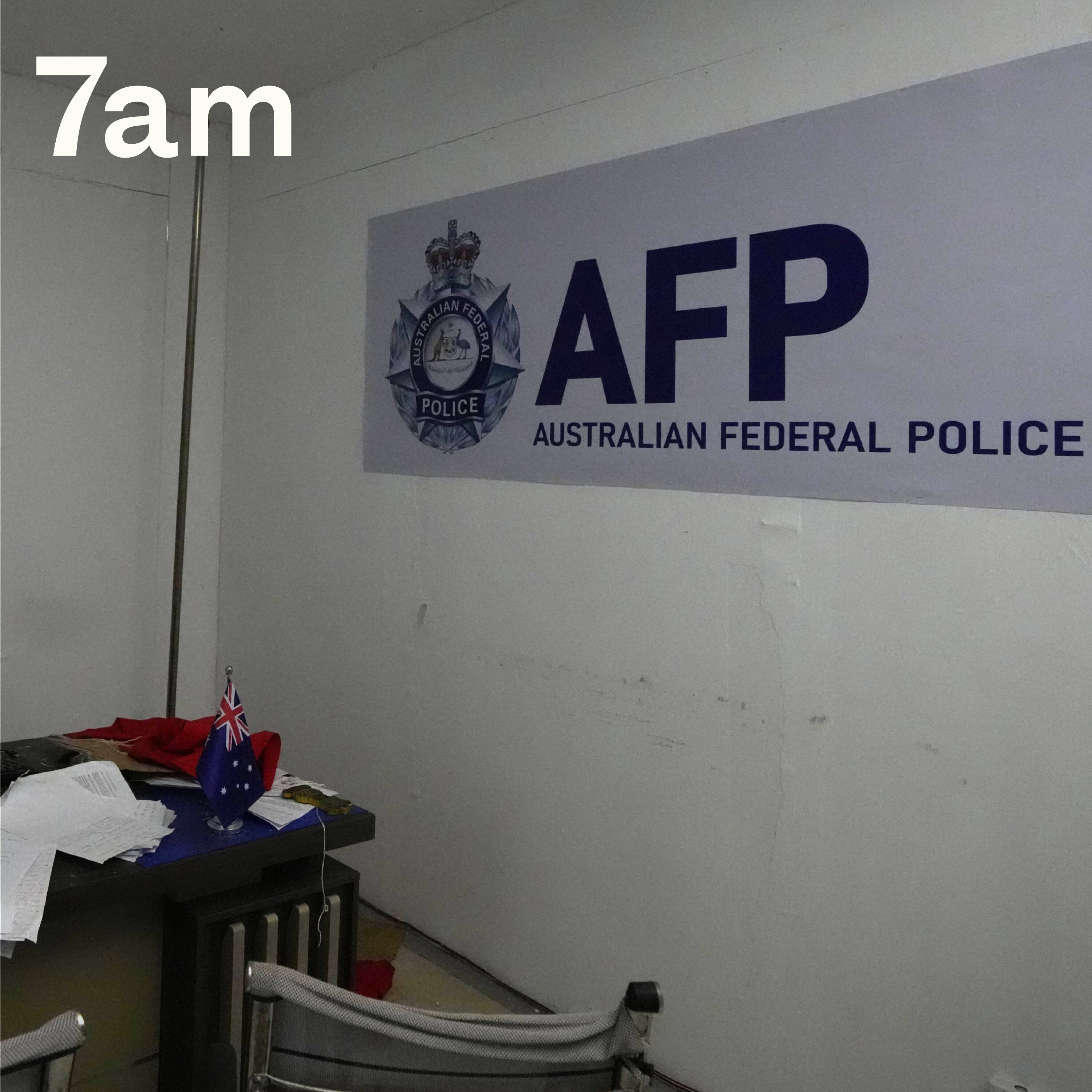
I'm Daniel James and you're listening to 7am. Earlier this year, authorities found something extraordinary inside a Cambodian scam compound. A fake Australian Federal Police office. There were Australian flags, AFP logos and desk staged to look official. All part of a six story compound used by scammers impersonating police forces from around the world. It was a reminder that the scam messages Australians receive are often connected to a far more sophisticated and exploitative criminal industry. New figures show Australians reported more than $2 billion in scam losses last year. And a recent UN report has detailed how people are trafficked into scam cent, held against their will and forced to target strangers online. Today, we're bringing you an episode from last year with Ben yeo. In early 2024, Ben and his wife were kidnapped and trapped inside one of these Cambodian scam factories. This is the story of how they escaped and why so many others can't. It's Sunday, June 7th. This episode was originally published in March 2025.
- [01:36]
A
Well, first of all, thank you again for coming on the show and for talking to me. I really appreciate it.
- [01:40]
C
You're welcome. You're welcome. Sorry, I'm a bit nervous this morning.
- [01:45]
A
No, that's okay. It's very understandable. So to begin with, had you ever heard about scam compounds before?
- [01:54]
C
I have heard of these compounds, but I didn't know that it was so widespread. I didn't know there was like few hundred thousand people working in the industry. There was. So not until I actually got into one myself.
- [02:07]
A
Yeah. And I suppose you would never have thought something like this would happen to you.
- [02:11]
C
Oh, of course. Never.
- [02:16]
A
Ben's ordeal started in early 2024, shortly after he got married. Ben's Malaysian and his new wife is Filipino. And they were looking for a change in scenery in a third country. Until that point, Ben was a freelance business consultant who had worked across Southeast Asia. But after that, work began to dry up during he was open to something new.
- [02:37]
C
So what happened was me and my wife, we decided to, you know, go to Cambodia to start our life over there. And so my wife, she was a croupier. She's a casino dealer. She does like blackjack and poker. And she got a friend who introduced her to this job posting on a human resource agency. One of the ads was croupier and the other says business development. So we responded to the ad, they did a first interview, second interview, they were quite convincing. They asked all the right questions which a normal HR would ask, you know, and they talk about our salary and stuff like that.
- [03:21]
A
Ben also looked into the company who owned the casino and saw they had all the right government approvals and licenses. There was nothing to suggest the job wasn't real.
- [03:31]
C
I felt hopeful at that point, you know, I thought, we are going to a country which I know I'm familiar with, I speak the language. So, you know, I was kind of confident. Before leaving for Cambodia, we gave up the house, you know, I sold my car. We thought that we would be there for a couple of years, you know.
- [03:51]
A
Okay, and so then what happened next?
- [03:53]
C
So we got on a plane, we flew down to Cambodia. They told us there would be a pickup at the airport. And when they picked us up and drove to this place called Buet, which is about three, three to four hours drive away, it's just right at the Vietnam border. So another reason why we felt that the job was real was because Bavet is a special economic zone for casinos. But when we got to Bavette, they brought us to a compound which is behind the casinos. The arches to the compound was about two stories high, barbed wired. It was heavily guarded, just like a prison, you know. So they told us before going in, they told us it was just like the staff quarters, you know. And so we believed them. And we walked in just like that. And when the door closed on us, they brought us to our quarters. And from there they told us that the job that you applied for, it was just a lie. You are now in a scam camp. And if we want to go home and we want to leave, we have to pay them to the tune of US$10,000.
- [05:11]
A
That must have been a very frightening moment for you and for your wife to realise that you couldn't leave the compound.
- [05:18]
C
Yes, it was quite shocking. And we couldn't sleep for about three days. I think we tried to take all of it in, watch how other people behave.
- [05:29]
A
Were other people also tricked like you?
- [05:32]
C
I think half of them at least were scammed into the compound. But most of them were from India, Pakistan, Bangladesh, Nepal. Some of them applied as a nurse, some of them applied as teachers, I think engineers, IT workers. Most of them didn't have a choice. Most of them are stuck there, you
- [05:55]
A
know, they were stuck inside a self contained city. It even had its own grocery store. The compound had around 200 bungalows which each housed about 50 people. And it's from these compounds that workers are forced to run cyber scams on gruelling shifts with tough targets. Each compound specialised in a different scam. For example, there are entire compounds dedicated to scamming Australians using love fraud. But Ben says he and his wife found themselves in a compound targeting people in India with a credit card scam and that some local police were in on the scam.
- [06:31]
C
So they will call the Indian people, do a spam call and inform the victim that he has outstanding balance with his credit card. So from credit card department, they will pass to the police and the police will frighten them, saying that, you know, their bank account has been linked to drugs or murders and things like that. And that's how they, you know, pry on the week.
- [06:58]
A
At first, because of his language skills, Ben was asked to teach the other workers English. But he says after two weeks, it was his turn to pick up the phone and start scamming. But Ben refused to cooperate. And that's when the guards turned violent.
- [07:13]
C
They isolated us, me and my wife. They finally brought me into a room. It was a specially made prison, so they cuffed me to the floor, they handcuffed me to the floor so I couldn't stand. Of course, they didn't give me water and food. It was really challenging at that time because I worried for my wife. You know, I was handcuffed. There were so many guards.
- [07:40]
A
And what were they saying to you about what they wanted you to do to make that end?
- [07:47]
C
They wanted me to pay US$20,000 for them to release me and my wife. All I could do was pray. You know, in the darkest hours, I think that's where, you know, I found God.
- [08:03]
B
Coming up, how Ben and his wife escaped.
- [08:12]
D
Whether it's slots or live dealers, Spinquest.com has the fun and action you're looking for with Spinquest exclusives. Blackjack, roulette, baccarat and even live dice with craps and bubble craps. The games never stop so you don't have to. And right now, new users get $30 coin packs for just 10 bucks. Play now@Spinquest.com SpinQuest is a free to
- [08:36]
C
play social casino void where prohibited. Visit spinquest.com for more details.
- [08:43]
A
Ben, you were held in isolation for 10 days because you refused to do any scams. You were essentially held to ransom. How did you actually manage to get out?
- [08:54]
C
We managed to hide a phone so that we would be able to give my parents the location of the place and you know, what to tell the embassy on where we are at. So I believe the communication through the Phone between my parents and my wife. That's how he managed to get the police to come.
- [09:15]
A
But the police coming to the compound was just the beginning. The whole ordeal of trying to get home would take months. Before the compound guards released him to the police. They forced him to record a video saying he had been well treated, that he hadn't been kidnapped. Once he'd done that, he was able to go with them. But again, at the police station, he was made to sign a statement again saying he hadn't been trafficked. Ben says a representative from the company was there in the room as they demanded he signed.
- [09:47]
C
I was pretty afraid on that day itself.
- [09:50]
A
What did you do?
- [09:51]
C
Well, we had no choice but to sign it. And it was from there I tried to get some legal support, but it was really expensive and we really lost everything going there. So it was quite tough. There were so many things going through our minds. Are we going to be safe?
- [10:09]
A
Even in police custody, Ben was right to be afraid. Later that day, a car came to pick him and his wife up to take them to the bigger provincial police station and hopefully one step closer to home. But on their way there, the police car broke down, or it seemed to. Ben realised something was up and he started recording.
- [10:31]
C
They faked a car breakdown. They took a car that wasn't working and the car broke down halfway. No problem. No problem with me. I found that that police station was already compromised and I was just a few minutes away to being sold back to the company. Now go to police. Go to police. Province wedding.
- [11:01]
A
Ben was able to use his phone to call for outside help, to intervene and put pressure on the police. From there, he and his wife Moira spent nearly three months living in housing supported by an NGO in Cambodia. He was constantly questioned by the government and made, he says, to feel like a criminal rather than a victim.
- [11:20]
C
The line of questioning of the police, you know, wasn't, who were these people? How did they kidnap you? They were basically asking, like, okay, so when you were there, did you do any transactions? Do you ask money from anyone? There was no mention of the perpetrators and you know how they look like and things like that.
- [11:42]
A
Okay, so no interest in pursuing the people who trafficked you and kidnapped you and kept you in the compound against your will?
- [11:53]
C
Correct.
- [11:54]
A
Ben and his wife made it out of Cambodia, but the experience left him destitute. With no home to go back to. Ben was at first living in a church and he lived in fear.
- [12:06]
C
Sometimes I'm worried for my life, you know, we get threats sometimes.
- [12:10]
A
What sort of Threats do you get?
- [12:12]
C
I get very funny calls on my phone. Sometimes I have a feeling that someone from the compound is trying to reach out to me. Maybe it's just my ptsd, you know. Yeah. But yes, I'm afraid sometimes that, you know, they will come after me. They have all the financial resources to do that. Yeah.
- [12:35]
A
It's rare to hear from people. You don't often hear from people like you who have been in these compounds. Why do you think that is?
- [12:44]
C
I think the first problem would be it's really hard to stand up for yourself as a victim over here because there were so many stigma that goes around, you know, survivors. Even my own government and my own police. When I got back, you know, they thought that I was a scammer and I just needed help to get out. So I think there's not many much support. That's why not many people would actually be brave enough to come and talk about it.
- [13:13]
A
But it's the testimonies of survivors that have forced governments to act. In the last few weeks, 7,000 people were rescued from scam factories in Myanmar by Thai authorities. A week later, 215 more people were freed by Thai and Cambodian police from a town along their shared border. What would you want the people in Australia who are getting these scam calls, what would you want them to know and to understand about the reality of what's actually going on? And the people who are placing these
- [13:47]
C
calls for the Australian people scam camps are real. The people who are calling, most likely they are victims as well and they were forced to do their jobs. Right. But for the average Australian citizen, I would suggest to you, if there was any call pretending to be a bank or a post office, you know, basically anything that requires registration, please go to the branch itself and check before committing financially to any of these scams. And don't fall for anyone online unless you know them for years.
- [14:26]
A
Thank you for sharing your story and I'm glad that you managed to escape. Good luck with everything.
- [14:33]
C
Thank you. Thank you so very much.
- [14:37]
A
For more of Ben's story, plus others, have a listen to Scam Factories, a three part investigation from the Conversation Weekly. Search for the Conversation Weekly. Wherever you get your podcasts,
- [15:00]
B
I'm Daniel James. Thanks for listening. 7am will be back tomorrow with an episode on Australia's booming AI data center industry. Governments say it could help power a new wave of productivity and investment. But as these projects demand more and more electricity, the gas industry is starting to see dollar signs.
- [15:18]
D
There is a project in New South Wales called cloud carrier that has a 700 megawatt gas fired power station project attached to it. Just the emissions from that project alone would wipe out all of the projected emissions reductions in New south Wales in 2028. To give you a sense of the stage scale of the climate impact of this facility, these are massive new fossil fueled power stations.
- [15:41]
B
See you tomorrow.