Loading summary
Transcript26 lines
- [00:01]
A
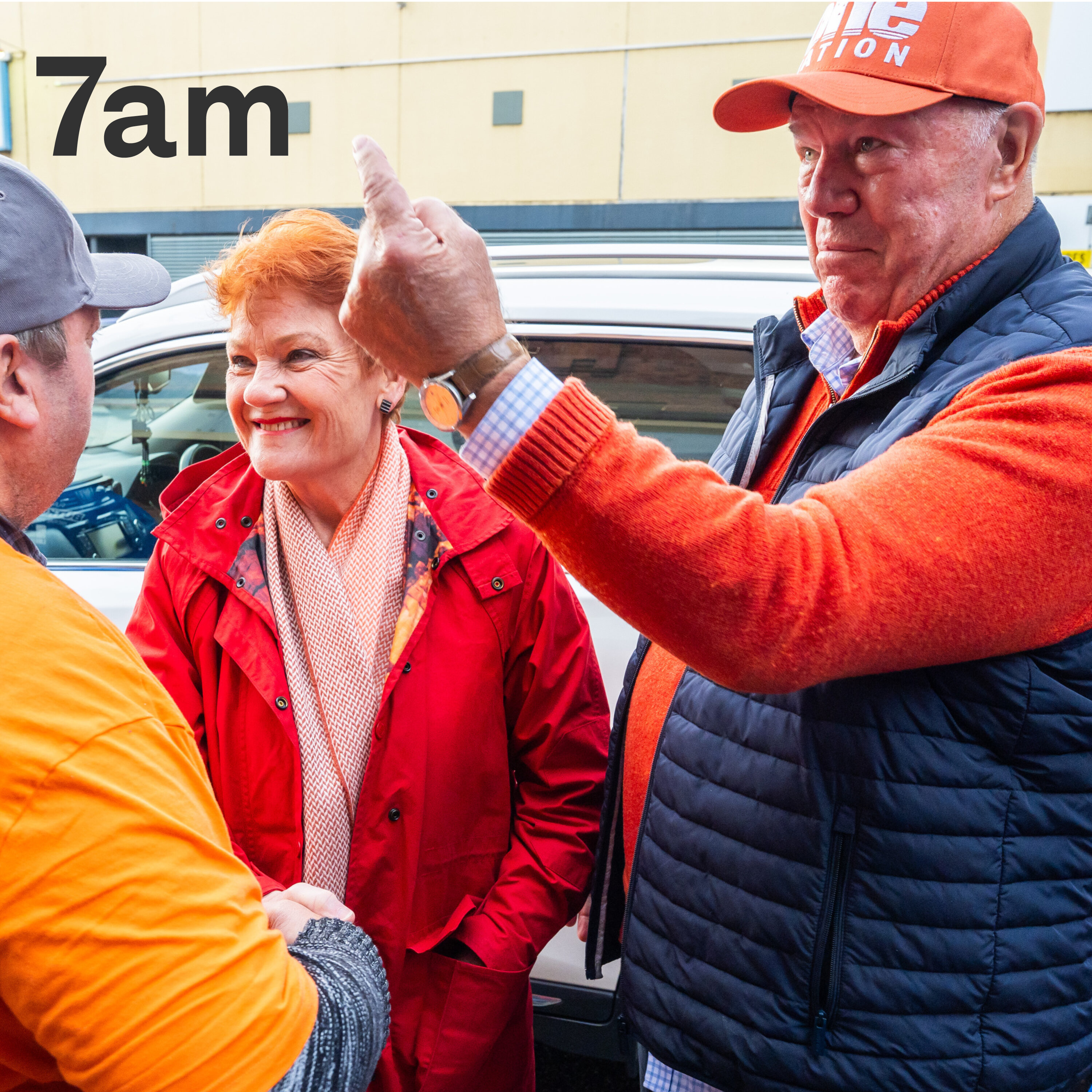
I'm Ruby Jones and you're listening to 7am. The seat of Farah in New South Wales has been empty since the resignation of former Liberal leader Susan Lee. Today, a new member will be elected. And while the race is tight, One Nation's David Farley is ahead in the polls. He'll be picking up coalition preferences, but faces a strong challenge from independent Michelle Millthorpe. So will One Nation win its first ever federal lower house seat? And if so, what will that signal for the future of conservative politics? Today, ABC election analyst Casey Briggs on the fight for Farah. It's Saturday, may 9th. Casey, hello and welcome to 7am It's
- [00:55]
B
a pleasure to be with you on a very big day in politics.
- [00:57]
A
Absolutely. So people in Farah are heading out to the polls this morning and this by election, I mean, it's not going to change the balance of power right now. But obviously in the context of the rising popularity of one nation, every by election is important. Every by election is being watched with a lot of intensity. So tell me about where things lie.
- [01:19]
B
Yeah, we normally say the political consequences, the national implications of by elections are pretty small. Right. Because the government's not on the line. There are lots of different issues, lots of different candidates. In this case, Labor's not even contesting this election. So we're not getting the sort of true picture of the national support of any parties here. But having said that, this is clearly a more important by election than we've seen in a very long time in Australia because it's this important test to see how voters, particularly on the conservative side of politics and particularly in regional parts of Australia, thinking about their options when it comes to elections. One nation is desperate to prove itself. After more than one in five people voted for one nation in South Australia's election in March, they won four lower house seats in that election. One nation's that desperate to prove that it can win a federal lower house seat. If it does, then this will be its first ever lower house electoral win at the federal level. And so that would be a very significant moment. But it's such a sort of complicated contest, Ruby, because you've got this independent, Michelle Millthorpe taking a second crack at this seat. She came within about 6% of winning this seat, came closer to winning the seat than labor has in 50 years.
- [02:32]
A
I'm really passionate about regional equity and making sure that people who live in the country can stay there doing what
- [02:40]
B
they love the most. She now would need to tap into the remaining, find more people to pull into her camp while The Liberals and Nationals, coalition partners, are also going at this election and competing against each other. But everything that we're hearing out of the leadership of the two parties is sort of suggesting that they're feeling pretty pessimistic about their chances.
- [03:01]
A
Can we talk more about the seat itself? Because the reason this by election is happening in the first place is because of Susan Lee, the former Liberal leader. Her resignation, she was the member for Farah for 24 years. So traditionally, obviously a very safe coalition seat.
- [03:16]
B
I mean, this is a seat that the coalition's always held. It's never been anything other than a Liberal or a national seat since it's been created in 1949. And it's got some pretty big, big names associated with it. Obviously Susan Leef, a former leader of the party and her predecessor was Tim Fisher, who's a giant of the Nationalist Party. So the Liberal Party feel, you know, some ownership over this part of the country because it is quite literally where the Liberal Party of Australia was sort of founded, if you can point to any one place. But the other thing is this is a huge seat, 126,000 kilometres. It's bigger than many small countries, bigger than South Korea, Iceland, it's almost the size of Greece. And it means there are many, many local issues and sub local issues that are at play here. And it means we may well see different candidates doing well in different parts of the seat. And so what we might end up seeing is this dynamic where Michelle Millthorpe, as she did last time, is going to take a big chunk out of what would formerly have been the Liberal Party vote, especially in a city like Albury where Mitchell Millthorpe won last year. But outside of Albury, one nation might end up doing really well and clobbering what would otherwise have been, you would think Nationals vote. And so it's this demonstration of the squeeze that you've got on both sides of the coalition of independents and, you know, more moderate voices in on one flank trying to sort of peel away one part of the traditional Liberal broad church, while you've got one nation and other sort of populist parties and candidates on the other flank trying to pull away other parts. And then you've got the coalition stuck in the middle trying to work out what to do with that. And that is a microcosm, a little mini diorama of what we're seeing nationally, different levels in different seats. But we're getting a good sense of that national squeeze just playing out in this one seat. And that's what's Making this election so interesting and so significant because it may well inform the strategies that Matt Canavan, that Angus Taylor, that Pauline Hanson and One Nation, and that the independence movement all take from here.
- [05:16]
A
Can we talk a little more about One Nation's campaign? Because there's also been these signs that have appeared expressing support for Ben Robert Smith, who has of course been charged with war crimes. So what do you make of that?
- [05:29]
B
Yeah, we're seeing an interesting complicated mix of local issues. This is a local by election, where local people are campaigning to be a local member of Parliament. Overlain with lots of national issues as well, and national, you know, polling surge. It's undeniable that a large part of One Nation's growth and support is not about the individual local candidates. It's about Pauline Hanson and her profile and her ability to cut through where other politicians haven't. And yeah, we're seeing issues like this. The Ben Robert Smith posters, which we saw as well in Nepean in the Victorian state seat on the Mornington Peninsula. There was by election there a week ago. We saw the same signs appearing at polling places. But for One Nation, they see this as a winner and it's a way to cut through. They have made it a virtue of the fact that One Nation is supporting Ben Roberts Smith through his war crimes trials and seem to think that that's gonna pull people and grab attention and pull people over to their side.
- [06:23]
A
And what about this disagreement, I guess verbal altercation that James Patterson, the Liberal senator, got into with a One Nation volunteer? Tell me what happened.
- [06:34]
B
Yeah, we saw this incident on the pre polling centre during the week. Are you getting a video? Yes, I am. Video me. James Paterson is one of many, many Liberal frontbenchers that have been coming through Albury and the Liberal Party have deployed this sign showing the One Nation candidate, David Farley, sort of pulling apart his shirt to reveal a Labor kind of logo T shirt underneath it. And it spilled over into a very public altercation between James Patterson and an angry One Nation volunteer. What's your name, by the way? What's your name, mate? You know what my name is. Say it. Say it. What's your name? I'll walk away. That's assault. You're a liar. You have just committed an assault. You. I had never assaulted anyone. Yes, you did. You just grabbed my phone. I grabbed your phone because you don't have permission to video seeing that happening as our sort of political world fragments. But it's also interesting, Ruby, to look at. You know, we've had this interesting relationship between the Liberal Party and One Nation through the campaign, where on the one hand they've been attacking One Nation, they've been attacking their candidate, but the other hand they're recommending preferences toward One nation rather than the independents. It's a complicated puzzle to unpick and I do wonder what voters make of that, you know, seeing these sort of mixed messages out of the Liberal Party at the moment.
- [07:52]
A
Coming up, the tension between PA Pauline Hanson and her Farah candidate. Casey, can we talk a bit more about the substance behind that polling booth fight? Because Dave Farley, one Nation's candidate, he does have a kind of mixed political history that's come out. So tell me a bit more about his allegiances over the years. What do we know?
- [08:21]
B
Yeah, so we know he's a former Nationals member. He's admitted to flirting with the idea of joining labor or running as an independent. You know, he does seem like he's been a bit of a sort of free thinker in more of a way than many other One Nation candidates have been in the past. He's certainly been running a more visible campaign. Secure Farah's future with someone who will listen and work for you. Vote David Farley. You know, a lot of the time in South Australia, for example, we saw One Nation candidates largely take a back seat and let Pauline Hanson and Cory Bernardi do the campaigning work. It's been a very different sort of one Nation campaign to watch. And as I understand it, David Farley didn't inform One Nation of his, you know, previous considerations and chats with labor before being pre selected, which is, you know, probably not the wisest thing to do if you're running. He's also, you know, met with Michelle Millthorpe, his main rival in this race. They've discussed water policy and from the sounds of it, it seems like those discussions have influenced those policies of the, of the candidates, particularly Millthorpe's policy. But obviously now Farley has a real shot. Could David Farley, if he's elected, become a thorn in Pauline Hanson's side? You know, we've seen Pauline Hanson and Barnaby Joyce are being asked questions about what their candidate is saying and how they're not in line with, you know, national one nation policy. So you don't believe there is any issue of trust or transparency here?
- [09:50]
A
None whatsoever. None whatsoever. He's going to be very beneficial on the floor of Parliament working with Barnaby Joyce.
- [09:57]
B
We've seen Barnaby Joyce talk about and refer to him as the sort of, you know, the stumbles of a first time candidate and the sort of mistakes they can make.
- [10:05]
A
And what did you make of David's comments that 300,000 migrants wasn't too many goes against your one nation policy, Nick?
- [10:13]
B
Look, I think that that's the pressure of a campaign. You know, I was having a yarn to David and it's look, that just happens during campaigns, people, it's clearly causing them issues. Whether there are strong enough issues to actually affect this election result, don't know.
- [10:29]
A
And Dave Farley is considered the front runner for the seat and that is largely thanks, as you say, to the Liberal Party and the National Party's preferences. They've chosen to preference one nation. So why are they doing that?
- [10:42]
B
Yeah, I wouldn't rule out Michelle Millthorpe at this point, but certainly they're the two front runners. Now why is it the coalition preferencing one nation? I mean in some respects they're putting their money where their mouth isn't saying, look, if we can't be elected ourselves, we'd like our next preferred party to be elected. The truth is that we don't want to see teal policies for FARA or for this country. Do you want to see one nation policies? Because if you don't one nation, we want to see coalition policies. Understand that the question is then what politics is at play as well behind that. And given how much they're attacking one nation as well, you do have to think that there is an element of politics here that the Liberals think in order to win government again in the future. It's very hard to do that without a sort of wind running through the seat of Farah. And it might be easier for them to dislodge a one nation incumbent versus an independent incumbent because we've seen there's a history of people falling out with Pauline Hanson. You know, they may be betting on this one nation surge not lasting forever. You know, there are many reasons they might think that one nation would be easier and easier opponents to take on in a few years time versus the independent Michelle Millfork. So Liberals preferencing one nation is now consistent with what they did at the federal election last year, what they did in the South Australian election in March. What they seem to be thinking about doing in the Victorian election come November. There seems to be the policy at the moment is sort of by default. They will preference one nation over other independents over other parties. And you know, nothing seems be to be changing that.
- [12:12]
A
And I know you're saying at this point, Casey, it's still too close to call but let's say that Dave Farley, he does take Fara. If that happens, what will that say to you about the power, the growth, the popularity of one nation and where would that leave the Liberals and the National Party?
- [12:30]
B
Well, it would set us that one nation truly has become a real political force in this country. Now, it wouldn't necessarily tell us a whole lot about the results of the next election, but it will tell us they're definitely in the hunt to win a significant number of seats, especially nationals held seats, because they may be the ones that feel this the most. You know, worth remembering, most of the seats around Farah that touch Farah are nationals held, not liberal held. And so it would tell us quite a bit about the battle between one nation and the nationals. And it would prove that this polling surge we're seeing at the federal level like we saw in South Australia is real and is converting into votes and they need to be taken seriously as a political force. What it doesn't tell us is what do one nation do with the power once they are elected it right. We'll get to see over the next, you know, couple of years how the seven one nation members of Parliament South Australia use their jobs and do they stay together and how effective are they as a parliamentary party. This one nation surge we've seen has happened in the course of less than a year and the next election is more than a year away. So, you know, there is plenty of time for things to change still. But it's an important point in time marker. It tells us something real about the support of one nation and that the populace. Right. And I will have thought that all political parties, including labor, we should say, would all be taking that result very seriously and thinking about the implications for their own parties, their own campaigns and for the government, how they govern because there are risks here for labor as well, especially in the outer suburbs of some of our capital cities.
- [14:02]
A
Well, Casey, thank you so much for your time. A busy weekend ahead, I'm sure.
- [14:06]
B
Thank you.
- [14:16]
C
Save on family essentials at Safeway and Albertsons this week at Safeway and Albertsons, fresh cut cantaloupe, watermelon, pineapple or melon medley bowls 24 ounces are $5 each and wild caught lobster tails are $4.99 each. Limit eight member price plus selected sizes and varieties of Doritos, Lays, Cheetos, sun chips and Kettle cook chips are $1.99 each. Limit for member price. Hurry in. These deals won't last. Visit safewayoralbertsons.com for more deals and ways to save.
- [14:50]
A
7am is a daily show from Solstice Media. It's made by Atticus Bastow, Ariel Richards, Chris Dengate, Daniel James, Crystal Keller, Travis Evans, Salt and Fetcho and me, Ruby Jones. Our theme music is by Ned Beckley and Josh Hogan of Envelope Audio. Thanks for listening to 7am See you next week.